Chindia Alert: You’ll be Living in their World Very Soon
aims to alert you to the threats and opportunities that China and India present. China and India require serious attention; case of ‘hidden dragon and crouching tiger’.
Without this attention, governments, businesses and, indeed, individuals may find themselves at a great disadvantage sooner rather than later.
The POSTs (front webpages) are mainly 'cuttings' from reliable sources, updated continuously.
The PAGEs (see Tabs, above) attempt to make the information more meaningful by putting some structure to the information we have researched and assembled since 2006.
Pou Chen makes footwear for the likes of Nike and Adidas, but says it has suffered from a lack of orders as global value chains strain under the impact from the virus
Chinese workers moved to Vietnam to help set-up new factories as the company expand its production, but have now become expendable
With the likes of Nike and Adidas closing retail stores around the world to comply with social distancing requirements, analysts also said orders plummeted 50 per cent in the second quarter, although the company declined to comment on the media reports. Photo: Bloomberg
A group of 150 Chinese workers believe the world’s largest maker of trainers used the coronavirus as an excuse to fire them, having helped Taiwanese firm Pou Chen successfully expand its production into Vietnam for more than a decade.
Pou Chen, which makes footwear for the likes of Nike and Adidas, informed the group in late April that they would no longer be needed as they were unable to return to
from their hometowns in China due to the coronavirus lockdowns.
“We believe we contributed greatly to the firm’s relocation process, copying the production line management experience and successful model of China’s factories to Vietnamese factories,” said Dave Zhang, who started working for Pou Chen in Vietnam in 2003.
“Now, when the factories over there have matured, and there is a higher automation level in production, our value has faded in the management’s eyes and we got laid off, in the name of the automation level.”
Rush hour chaos returns to Vietnam’s streets as coronavirus lockdown lifted
The group claims the firm began to fire Chinese employees several years ago, with the total number dropping from over 1,000 at its peak to around 400 last year.
“We 150 employees were the first batch of Chinese employees to be laid off this year. We are all pessimistic and expect more will be cut,” added Zhang.
In its email on April 27, Pou Chen said it was forced to terminate the contracts of the Chinese employees across five of its factories due to an unprecedented decline in orders and financial losses.
The Chinese employees, many of whom have been working for the shoemaker for decades, said the compensation offered was unfair and below the levels required by labour law in both Vietnam and China.
In a further statement to the South China Morning Post, Pou Chen stood by the move as the coronavirus pandemic had reduced demand for footwear products and so required an “adjustment of manpower.”
“[The dismissals were] in accordance with the relevant labour laws of the country of employment … and employee labour contracts,” added the statement from Pou Chen, which employs around 350,000 people worldwide.
Company data showed Pou Chen’s first quarter revenues tumbled 22.4 per cent year-on-year to NT$59.46 billion (US$1.99 billion), the weakest in six years.
With the likes of Nike and Adidas closing retail stores around the world to comply with social distancing requirements, analysts also said orders plummeted 50 per cent in the second quarter, although the company declined to comment on the media reports.
Last month, the company was also mulling pay cuts and furloughs that would affect 3,000 employees in Taiwan and officials based in its overseas factories, according to the Taipei Times.
Andy Zeng, who had worked for the firm since 1995, said the group were “very upset” when they received the news last month as the impact of the coronavirus pandemic began to reverberate around the world, disrupting global value chains.
“Most of us joined Pou Chen in the 1990s when we were in our late teens or early 20s, when the Taiwan-invested company started investing and setting up factories in mainland China. Now more than two decades have passed,” he said.
Zeng was among the first generation of skilled workers in China as Pou Chen developed rapidly, enjoying the benefits of cheap labour, although the workers themselves were rewarded with regular pay rises.
The company needed a group of skilled Chinese workers to go to its new factories in Vietnam. I said yes because I thought it was a good opportunity to see the outside world – Andy Zeng
“I worked at the Dongguan branch of Pou Chen for 11 years from 1995.” Zeng added “In the 1990s and early 2000s, the company expanded rapidly in Dongguan with a growing number of large orders, and every worker had to work hard around the clock. I remember I earned 300 yuan (US$42) a month in 1995, and my monthly salary rose to 1,000 yuan (US$141) in 1998.”
Zeng’s salary eventually rose to over 3,000 yuan in 2005 as China’s economy boomed, leading Pou Chen to seek alternative production sites in Vietnam and Indonesia where labour and land were even cheaper. However, in the early 2000s, the new locations lacked skilled shoe manufacturing workers like Zeng.
“The company needed a group of skilled Chinese workers to go to its new factories in Vietnam. I said yes because I thought it was a good opportunity to see the outside world and the offer of US$700 per month was not bad.” Zeng said.
“We actively cooperated with their plans. Over the past decade, we have been away from our families and hometowns, and followed the company’s strategy to work hard in Vietnam.
With no deaths and cases limited to the hundreds, Vietnam’s Covid-19 response appears to be working
“In 2005, the company sent me to its newly-built factory in Vietnam. This year was my 14th year in Dong Nai in Vietnam. I have witnessed the company’s production capacity in Vietnam become larger and larger. When I arrived, there were only a few production lines, and now there are at least dozens of them, employing more than 10,000 workers in each factory.”
According to a report in the Taipei Times on April 14, citing both Reuters and Bloomberg, Pou Chen was ordered to temporarily shut down one of its units in Vietnam over coronavirus concerns, according to Vietnamese state media.
The company was forced to suspend production for two days after failing to meet local rules on social distancing, Tuoi Tre newspaper reported.
“We Chinese employees actually were pathfinders for the company’s relocation from China to Vietnam,” said Zhang, who was in charge of a 1,700-worker factory producing 1.7 million shoe soles per month.
What our Chinese employees have done in Vietnam for more than a decade can be said to be very simple but very difficult – Dave Zhang
“We were sent to resolve any ‘bottlenecks’ in the production lines that were slowing down the rest of the plant, because during the launch of every new production line, Vietnamese workers would strike and get into disputes. As far as I know, there were over a thousand Chinese employees managing various aspects of the production lines in the company’s Vietnamese factories.
“In fact, what our Chinese employees have done in Vietnam for more than a decade can be said to be very simple but very difficult. That is to teach Vietnamese workers our experience of working on a production line, improve the productivity of the Vietnamese workers, and help the factories become localised.”
Overall, Pou Chen says it produces more than 300 million pairs of shoes per year, accounting for around 20 per cent of the combined wholesale value of the global branded athletic and casual footwear market.
“Because of cultural shock and great pressure to expedite orders, Vietnamese workers were not used to the management style of Taiwan factories,” Zhang added.
“Many of our Chinese employees were beaten by Vietnamese workers [due to cultural differences about work]. During anti-China protests in Vietnam, we were still under great pressure to keep the local production lines operating.”
Millions of Chinese children are raised by their grandparents but some seniors are demanding compensation
For generations in China grandparents have provided childcare, but some are no longer willing to do so for free. Photo: Shutterstock
The traditional role of grandparents in caring for China’s children has been called into question with two recent lawsuits sparking debate about whether seniors should be paid for their efforts.
Two grandmothers took their demands for compensation to court in separate cases which have highlighted the reliance of Chinese workers on their parents to provide childcare while they pursue professional advancement.
A woman in Mianyang, in the southwestern province of Sichuan, was awarded more than 68,000 yuan (US$9,500) by a local court after she sued her son and daughter-in-law for the costs of raising her nine-year-old grandchild, according to Red Star News.
The woman, identified only by her surname Wang, had been the child’s full-time carer for eight years after his parents left home to seek better-paid jobs elsewhere. Wang said she had taken care of most of her grandson’s living expenses and had decided to seek compensation when his parents said they were considering a divorce.
They should respect our contribution. Grandmother Wang, Sichuan province
“I only want to let them know through this lawsuit that it’s their obligation to raise their children,” she was reported as saying. “The young ones should not take it for granted that old people ought to look after their grandchildren. They should respect our contribution.”
Despite winning the case, she has not received a penny and the boy still lives with her.
In another case, three months ago, a Beijing court supported a woman’s demand for compensation for helping to raise her granddaughter since her birth in 2002.
The stories of the two women generated a public reflection on the Chinese way of childcare which, for generations, has involved leaving most – if not all – of the burden on grandparents.
One of 60 million: life as a ‘left-behind’ child in China
From a cultural perspective, it has been a matter of course in a country with a long history of several generations living under one roof, for grandparents to participate in child rearing, according to Xu Anqi, a researcher specialising in family studies at the Shanghai Academy of Social Sciences.
“Today, as people face fierce competition and great pressure from work, it’s still common to rely on their old parents to look after their children,” she said.
While rapid urbanisation in recent decades has broken up multi-generational households, Chinese elderly still take an active role in child rearing, with many relocating to their children’s cities to take on the job.
Millions more families do it the other way round – with parents leaving children in their hometown with the grandparents while they seek better paying jobs in the cities. In August last year, according to the Ministry of Civil Affairs, China had nearly 7 million “left behind kids”, as they are known.
My little granddaughter is adorable, and generally I enjoy doing all this.Li Xiujuan, grandmother
“Many grandmothers like me would joke that we are ‘unpaid nannies’, but at the same time we feel it’s our responsibility to help them out – they would be in financial stress if one of them quit or they hired a nanny,” said Li Xiujuan, who relocated from her hometown in the central province of Henan to Shanghai two years ago to help look after her granddaughter.
“I’m a 24-hour nanny for my grandkid. I prepare food for her, wash her clothes, attend early childhood classes with her, take her for a walk in the park twice a day, sleep beside her at noon and night …” she said.
“I never cared for my daughter when she was little like I do her daughter now. You know, it was also her grandmother who mainly took care of her daily life when she was young,” Li said, laughing.
“My little granddaughter is adorable, and generally I enjoy doing all this. The hard part is that I miss my friends and relatives back home. We don’t have friends here. I have plenty of things to do at home, but here, nothing but babysitting. People are polite, but it’s difficult to make new friends,” she said.
‘Left behind’ sisters cry when parents leave home to go to work
In a 2017 study of about 3,600 households in six major cities including Beijing and Guangzhou, the Chinese Society of Education found almost 80 per cent of surveyed households had at least one grandparent as carer before children began primary school.
The study also showed that 60 per cent of parents still relied on help from grandparents after children were old enough for primary school at the age of six.
Whether grandparents should be compensated for their efforts split a poll of 49,000 users conducted by social media platform Weibo in late June, with half believing that the older generation should be paid for raising their grandchildren. Only 2.3 per cent said babysitting grandchildren was “an unalterable principle” for the elderly.
“This arrangement could be well managed and improve blood ties if children reward the elderly in their own ways, such as sending gifts on holidays and taking them on trips,” Shanghai researcher Xu said.
I think what they need more is words of appreciation, which many of us have neglected. David Dai, Beijing parent
Grandmother Li agreed: “I think regular payment is a little awkward, but I do expect some kind of reward, like cash gifts on festivals and daily necessities as presents.”
David Dai, a 30-year-old white collar worker in Beijing, said how to reward grandparents for their contribution depended on the financial situation of each household.
“My parents are farmers – they are in good shape and not so old – in their late 50s, and if they didn’t come all the way from my hometown in Anhui to Beijing to look after my son, they would still be taking some odd jobs,” he said.
“Therefore, besides covering their living costs at my place, I give them cash gifts on their birthdays, the Spring Festival and other important occasions, because babysitting their grandchild means they lose the opportunity to work,” he added.
“In some families, the grandparents might have retired and have a good pension. They don’t lack money and enjoy spending time with their grandkids. I don’t think they need to be paid. I think what they need more is words of appreciation, which many of us have neglected,” Dai said.
China boosts childcare and maternal health services in bid to lift birth rate
But for those who never show any gratitude, their parents have every reason not to offer child rearing help or to demand payment, Xu said.
Zhang Tao, a lawyer at the Hiways Law Firm in Shanghai, noted that as long as at least one parent of a child was living, the grandparents had no obligation to help with childcare.
“The grandparents should be compensated for the money they have paid for the child’s education, medical fees, and accommodation from the beneficiary,” he said.
But whether they should be paid has become the latest controversy as more grandparents find it a burden.
China’s three biggest airlines are demanding compensation from Boeing over its grounded 737 Max fleet.
Air China, China Southern and China Eastern have filed claims for payouts, according to state media reports.
China’s regulator was the first to ground the fleet in the wake of two deadly crashes involving the US-made aircraft.
It comes on the eve of a meeting of global aviation regulators that will provide an update on the troubled jets.
The Chinese airlines are seeking compensation for losses incurred by the grounded fleet, as well as delayed deliveries of the 737 Max jets, according to reports.
China operates the largest fleet of Boeing 737 Max aircraft and was the first country to take the jets out of service after the Ethiopian Airlines 737 Max 8 crash in March.
The disaster killed all 157 people on board. In October, 189 people were killed in a Lion Air crash involving the same model.
Both crashes were linked to the jet’s Manoeuvring Characteristics Augmentation System, a new feature on 737 Max planes, which was designed to improve the handling of the jet and to stop it pitching up at too high an angle.
The planemaker’s entire global fleet of 737 Max aircraft has been grounded since March and the firm is anxious to prove it is safe to return to the skies.
The move by China’s top airlines to seek compensation comes ahead of a closely watched summit of aviation regulators in Texas on Thursday.
The US Federal Aviation Administration (FAA) is due to provide an update on reviews of Boeing’s software fix and new pilot training.
The meeting in Texas will involve 57 agencies from 33 countries, including China, France, Germany and the UK, as well as the European Union Aviation Safety Agency.
But it is unclear if the planes will be back in the air before the end of the critical summer travel season.
Foreign lifestyle experiences are becoming more popular as citizens seek to escape pollution, food and medicine safety worries and authoritarian government controls
Citizens encountering more barriers to their dreams of travelling abroad, with severe limits on moving money overseas and restrictions on visiting foreign countries
Thailand, including the likes of Chiang Mai, the United States, Australia, Canada, New Zealand are popular destinations for Chinese families. Photo: Shutteratock
Xu Zhangle and her husband and their two children are a typical middle-class couple from Shenzhen, and along with 60 other Chinese families, they are going on an extended holiday to Thailand in July, where they hope to enjoy an immigrant-like life experience.
The family have paid a travel agent around 50,000 yuan (US$7,473) for the stay in Chiang Mai in the mountainous north of the country, including transport, a three-week summer camp for their daughters at a local international school, rent for a serviced apartment and daily expenses.
Zhangle loves Chiang Mai’s relaxed lifestyle and easy atmosphere and wants to live as a local for a month or even longer, instead of having to rush through a short-term holiday.
“It would not be just [tourist] travelling but rather a life away from the mainland.” she said.
Recently, upper middle-class citizens have increased their efforts to safeguard their wealth and achieve more freedom by spending more time abroad.
They have invested considerable amounts of money in overseas properties and applied for long-stay visas, although many of their attempts have ended in failure.
Chinese citizens are encountering more barriers to their dreams of travelling abroad, with severe limits on moving money overseas and restrictions on visiting foreign countries.
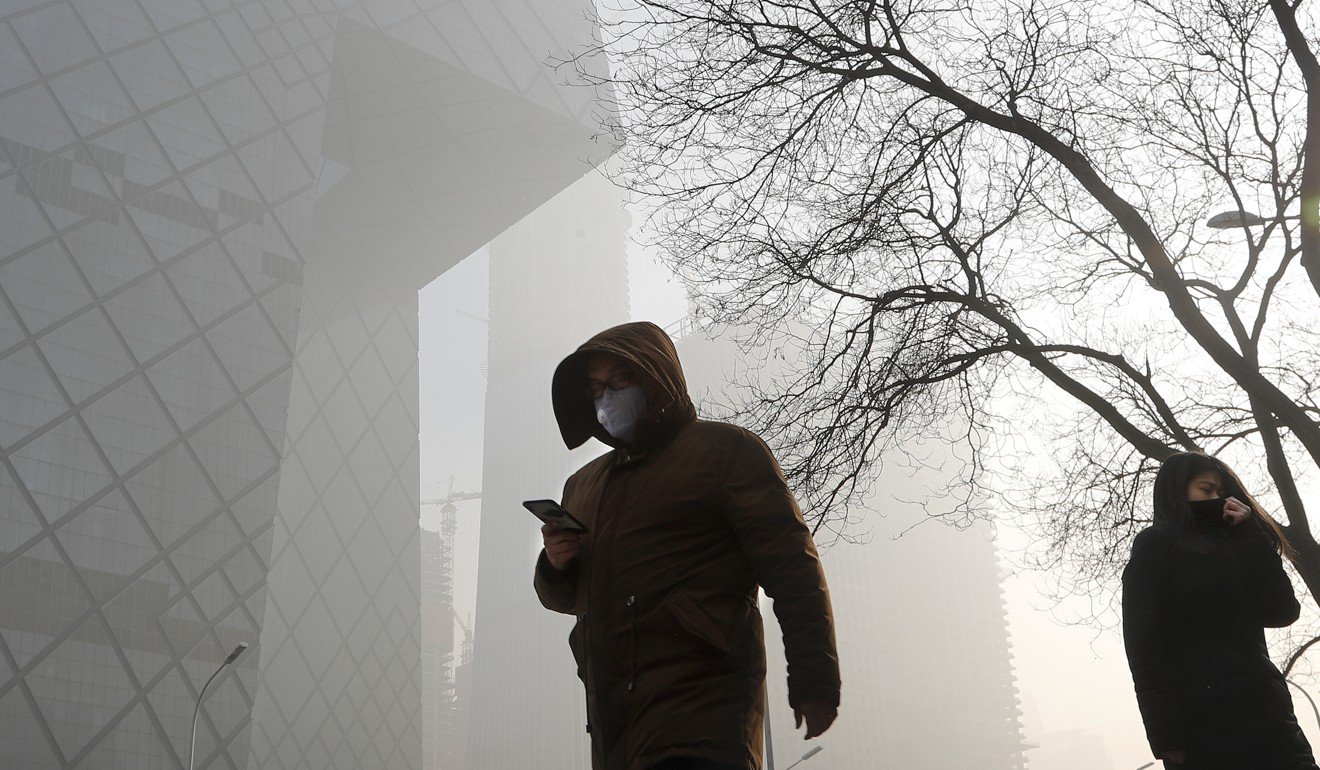
Still, growing anxieties about air pollution, food and medicine safety and an increasingly authoritarian political climate are pushing middle class families to look for new ways to circumvent the obstacles so they can live outside China.
Among the options, there is growing demand for sojourns abroad of a month or more, to enjoy a foreign lifestyle for a brief period to make up for the fact that their emigration dreams may have stalled.
“I think this is becoming a trend. Chinese middle-class families are facing increasing difficulties to emigrate and own homes overseas. On the other hand, they still yearn for more freedom, for a better quality of life than what is found in first-tier cities in China.
They are eager to seek alternatives to give themselves and their children a global lifestyle,” said Cai Mingdong, founder of Zhejiang Newway, an online tour and education operator in Ningbo, south of Shanghai.
“First, the availability of multiple-entry tourist visas and the sharp drop in air ticket prices have made it convenient and practical to stay abroad for from a few weeks to up to three months each year.”
Blacklist labels millions of Chinese citizens and businesses untrustworthy
Now, many well-to-do Chinese middle class families can get a tourist visa for five or even 10 years that allows them to stay in a number of countries — including the United States, Australia, Canada, New Zealand and other Asian countries — for up to six months at a time.
“In 2011, a round-trip air ticket from Shanghai to New Zealand cost 14,000 yuan (US$2,000), but now is about 4,000 (US$598),” added Cai.
This opens up the possibility for many middle-class families who are not eligible to emigrate, to live abroad for short periods of time.
Many wealthy Chinese middle class families can get a tourist visa for five or even 10 years that allows them to stay in several countries including the United States, Australia, Canada, New Zealand and other Asian countries, for up to six months at a time. Photo: AP
Chinese tourists made more than 140 million trips outside the country in 2018, a 13.5 per cent increase from the previous year, spending an estimated US$120 billion, according to the China Tourism Academy, an official research institute under the Ministry of Culture and Tourism.
“In [the Thai cities of] Bangkok and Chiang Mai, there are more and more Chinese who stay there to experience the local lifestyle, which is different from theirs in China. The life there is very different from that in China,” said Owen Zhu, who now lives in the Bangkok condo he bought last year.
“The freedom, culture and community are diversified. The quality of air, food and services are much higher than in first-tier cities in China, but the prices are more affordable.
“In Bangkok, in many international apartment complexes where foreigners live, the monthly rent for a one-bedroom [apartment] is about 2,000 (US$298) to 3,000 yuan.”
China’s richest regions are also home to the most blacklisted firms
A one-bedroom apartment in Shenzhen in southern China is twice as expensive, with rents continuing to rise rapidly.
There are global goods, and it is easy to socialise with different people from around the world,” Zhu added
“Many Chinese people around me, really, come to Thailand to live for a while and go back to China, but then come back again after a few months.”
Both Cai and Zhu said they discovered the new phenomenon among China’s middle class and decided it was a business opportunity.
Growing anxieties about air pollution, food and medicine safety and an increasingly authoritarian political climate are pushing middle class families to look for new ways to circumvent the obstacles so they can live outside China. Photo: AP
Zhu is in the process of registering a company in Bangkok and plans to build an online platform to service the needs of Chinese citizens living abroad who do not own property or have immigration status, especially members of the LGBT community.
Cai said dozens of Chinese families in the Yangtze River Delta had paid him to send their children to schools in New Zealand or Europe for around three or four weeks in the middle of the school year, while the parents rent villas in the area, with New Zealand and Toronto in Canada among the most popular destinations.
Last year, Zheng Feng, a single mother and freelance writer from Beijing, rented a small villa in Australia for a month for them, a friend and their children to escape Beijing’s pollution and experience life overseas.
“To be honest, I don’t have enough money to invest in a property or a green card in Australia. But it’s very affordable for me and my son to pay about 30,000 yuan (US$4,484) to live abroad for one or two months.” Zheng said.
China says 2018 growth was worth more than Australia’s whole GDP
Zheng will join the Xu family in Chiang Mai later this year and she is also planning a similar trip to England next year.
Zheng’s friend, Alice Yu, invested in an American EB-5 investor visa a few years ago, and plans to make one or two month-long trips abroad each year until her family is finally able to move to the United States.
Demand for the EB-5 investor visa in China seems to be waning given heightened uncertainty about the future of the programme and US immigration law in general under US President Donald Trump.
Approval for the visa can now take up to 10 years, resulting in a huge backlog that has further dampened interest and led to a significant dip in investment inflows into the US from foreign individuals.
A one-bedroom apartment in Bangkok can cost around bout 2,000 (US$298) to 3,000 yuan a month. Photo: AFP
“Maybe it will soon become standard for a real Chinese middle-class family to have the time and money to enjoy a long stay at a countryside villa overseas,” said Yu.
“Regardless of whether we can get a long-term visa for the United States, I want my children grow up in a global lifestyle and with more freedom than just growing up on the mainland. So do all wealthy and middle class Chinese families, I think.”
Karen Gao’s son started studying at an international school in Chiang Mai in June, at the cost of about 70,000 yuan (US$10,462) a year, after she quit her job as a public relations manager in Shenzhen and moved to Thailand on a tourist visa.
For better or worse? China’s complicated employment explained
“A few months each year for good air, good food and no censorship and internet control, but cheaper living costs compared to Beijing, it sounds like a really good deal to go,” said Gao, who has now been offered a guardian visa to accompany her son, who has already been given a student visa.
“In Shenzhen, I wasn’t able to get him into school because I had no [local] residence permit.
“It would be the best choice for us because we feel so uncertain and worried about investing and living in the mainland.”
Last year, Gao, like thousands of other private investors mostly middle class people living in first-tier cities, suffered significant losses when their investments in hotels and inns in Dali, Yunnan province, were demolished amid the local government’s campaign to curb pollution and improve the environment around Lake Erhai.
“We were robbed by the officials without proper compensation,” Gao said.
BBC: “A Chinese woman is suing a local authority who sent her to a labour camp for the loss of her personal freedom.
Tang Hui was sent to a re-education camp by Yongzhou’s local authority for “disturbing social order” last August, state-run news agency Xinhua reported.
She had been campaigning for harsher punishments for the seven men who raped and kidnapped her daughter, and forced her daughter to work as a prostitute.
Her case sparked a public outcry, and she was released after nine days.
Tang Hui is suing the Yongzhou authorities for 1,463.85 yuan ($236, £152) for her detention, Xinhua news agency reported.
She had taken her case to court after the Yongzhou re-education-through labour commission rejected her demand for compensation, Xinhua added.”
At its annual session in March, the National People’s Congress, China’s parliament, adopted the government work report, in which the country lowered its GDP growth target to 7.5 percent this year after keeping it at around 8 percent for seven consecutive years. The change was made in the face of global turbulence and pressing domestic demand for economic restructuring.
02 Medical reform meets three-year target
The State Council in March issued an implementation plan for reforms in the health and medical care sector in the next three years. According to official statistics, as of the end of 2011 the basic medicare insurance system covered over 1.3 billion people in China, more than 95 percent of the total population, marking the realization of the previous three-year target for the 2009-2011 period to form a universal medicare system.
03 Bo Xilai under investigation; Wang Lijun convicted
The Central Committee of the Communist Party of China (CPC) on April 10 decided to suspend Bo Xilai’s membership in the CPC Central Committee Political Bureau and the CPC Central Committee, as he was suspected of being involved in serious discipline violations in the cases of Wang Lijun and Bogu Kailai. The CPC Central Commission for Discipline Inspection put him under investigation. Bo was later expelled from the CPC and public office and the case was turned over to prosecutors for investigation.
In August, Bogu Kailai was sentenced to death with a two-year reprieve for intentional homicide by the Hefei City Intermediate People’s Court in Anhui Province.
In September, Wang Lijun was sentenced to 15 years in prison for bending the law to selfish ends, defection, abuse of power and bribe-taking by the Chengdu City Intermediate People’s Court.
04 China vigorously protects maritime rights
In response to some foreign countries’ actions infringing upon China’s maritime rights and interests in the South China Sea and East China Sea, China has vigorously launched campaigns to protect its legitimate rights.
Since April, China has dispatched government ships and planes to monitor Huangyan Island in the South China Sea.
Five months later, the Chinese government announced the base points and baselines of the territorial waters of the Diaoyu Islands and their affiliated islets and started continuous patrols in waters around the Diaoyu Islands.
In December, China reiterated its claims in the East China Sea by presenting to the UN Secretariat its Partial Submission Concerning the Outer Limits of the Continental Shelf beyond 200 Nautical Miles in the East China Sea.
05 China’s first female astronaut participates in successful manned space docking mission
In June, China sent three astronauts, including the country’s first female astronaut, Liu Yang, into space for the nation’s manned space docking mission.
The three astronauts successfully completed an automatic and a manual docking between the Shenzhou-9 spacecraft and the orbiting Tiangong-1 lab module in space before making a safe return to Earth.
06 Manned submersible sets new national dive record
Also in June, China’s manned submersible, the Jiaolong, set a new national dive record after reaching 7,062 meters below sea level during its fifth dive in the Mariana Trench in the Pacific Ocean.
07 First aircraft carrier commissioned
In September, China’s first aircraft carrier, the Liaoning, was delivered to the People’s Liberation Army Navy and put into commission after years of refitting and sea trials. Last month, the country successfully conducted flight landing exercises on the aircraft carrier, where the home-grown J-15 fighter jet made its debut in a landing and take-off exercise.
08 New CPC leadership and new targets
The CPC convened its 18th National Congress between Nov. 8 and 14, when the Party’s new leadership was elected, including Xi Jinping, who was elected general secretary of the CPC Central Committee. The congress also set new targets for the country such as efforts to complete the building of a moderately prosperous society in all respects.
09 Full coverage of pension scheme
The Ministry of Human Resources and Social Security announced in November that China’s urban and rural pension insurance systems covered 459 million people at the end of October and that as many as 125 million elderly people receive monthly pensions. The State Council had previously decided to make pension insurance available for everyone in urban and rural areas.
10 New CPC leadership rejects extravagance, bureaucracy
The newly-elected leadership of China’s ruling party has pledged to reject extravagance and reduce bureaucratic visits and meetings, in a bid to win the people’s trust and support.
In a meeting of the Political Bureau of the CPC Central Committee on Dec. 4, members vowed to shorten meetings and documents, reject bureaucratism in domestic and overseas visits, reduce road closures for official activities and support more practical content in news reports. The leaders also promised to take the lead in putting these requirements into practice.”
Having seen the success of ‘nail house’ resisters in gaining better compensation, we now have ‘nail graves’. Wonder what will come next.
SCMP: “A villager refusing to concede to a property developer’s demands to move a family gravesite off a piece of land left construction workers no choice but to dig around the grave, leaving behind a bizarre sight that has since spread on social media.
The solitary grave, which now sits on a mound of earth 10 metres off the ground in the middle of a construction site in Taiyuan, Shanxi province, has been given the term “nail grave” by netizens.
The term is a play on “nail house”, which was coined by developers for homes belonging to people – “stubborn as nails” – who refused to move even after being offered compensation.
Media reports speculate that developers had offered to pay about one million yuan (US$160,400) to move the grave and headstone.
The construction site, which once served as a public graveyard for local villagers, is giving way to a residential complex expected to be completed in April.
Since construction started in 2009, most villagers had already moved their family’s graves after compensation agreements with the developer.
In the face of China’s rapid economic development, Chinese property developers have been meeting much greater public resistance to what many see as forced land-grabs. Most are compensated with amounts less than their property’s net worth.
“Nail graves are an inevitable product of our country’s progress…the souls of the dead can not rest in peace,” wrote one blogger on Sina Weibo, China’s main microblogging site.
Although China has long encouraged cremation due to an alleged shortage of land for burials, ancestors are traditionally held in deep respect and many in the countryside continue to construct tombs in accordance with culture.
A similar incident occurred last month when authorities from the city of Zhoukou, Henan province, were forced to stop a campaign to clear graves for farmland after the demolition of more than two million tombs sparked an outcry across the country.”
Not what he asked for but more than originally offered – ends the stand-off.
BBC: “A five-storey home marooned in the middle of a new road in China for more than a year because its owner refused to leave has finally been demolished.
The road, in China’s’s eastern Zhejiang province, was built around the house because duck farmer Luo Baogen was holding out for more compensation.
Mr Luo, 67, said he had just finished the home at a cost of $95,000 and had been offered only $35,000 to move.
Officials say he finally accepted $41,000, and the bulldozers moved in.
Media attention
The home had earned the nickname “nail house” because, like a stubborn nail, it was difficult to move.
China’s official Xinhua news agency said Mr Luo and his wife had accepted the new compensation offer and had moved to a relocation area with the help of relatives on Saturday morning.”









 space docking mission.
 Also in June, China’s manned submersible, the Jiaolong, set a new national dive record after reaching 7,062 meters below sea level during its fifth dive in the Mariana Trench in the Pacific Ocean.


 CHINDIA ALERT: You'll be living in their world, very soon
Coronavirus: Chinese workers in Vietnam cry foul after being fired by Taiwanese firm making shoes for Nike, Adidas
A group of 150 Chinese workers believe the world’s largest maker of trainers used the coronavirus as an excuse to fire them, having helped Taiwanese firm Pou Chen successfully expand its production into Vietnam for more than a decade.
Pou Chen, which makes footwear for the likes of Nike and Adidas, informed the group in late April that they would no longer be needed as they were unable to return to
from their hometowns in China due to the coronavirus lockdowns.
“We 150 employees were the first batch of Chinese employees to be laid off this year. We are all pessimistic and expect more will be cut,” added Zhang.
In its email on April 27, Pou Chen said it was forced to terminate the contracts of the Chinese employees across five of its factories due to an unprecedented decline in orders and financial losses.
The Chinese employees, many of whom have been working for the shoemaker for decades, said the compensation offered was unfair and below the levels required by labour law in both Vietnam and China.
“[The dismissals were] in accordance with the relevant labour laws of the country of employment … and employee labour contracts,” added the statement from Pou Chen, which employs around 350,000 people worldwide.
Company data showed Pou Chen’s first quarter revenues tumbled 22.4 per cent year-on-year to NT$59.46 billion (US$1.99 billion), the weakest in six years.
With the likes of Nike and Adidas closing retail stores around the world to comply with social distancing requirements, analysts also said orders plummeted 50 per cent in the second quarter, although the company declined to comment on the media reports.
Andy Zeng, who had worked for the firm since 1995, said the group were “very upset” when they received the news last month as the impact of the coronavirus pandemic began to reverberate around the world, disrupting global value chains.
“Most of us joined Pou Chen in the 1990s when we were in our late teens or early 20s, when the Taiwan-invested company started investing and setting up factories in mainland China. Now more than two decades have passed,” he said.
Zeng was among the first generation of skilled workers in China as Pou Chen developed rapidly, enjoying the benefits of cheap labour, although the workers themselves were rewarded with regular pay rises.
The company needed a group of skilled Chinese workers to go to its new factories in Vietnam. I said yes because I thought it was a good opportunity to see the outside world – Andy Zeng
What our Chinese employees have done in Vietnam for more than a decade can be said to be very simple but very difficult – Dave Zhang
Posted in 50 per cent, accordance, Adidas, adjustment of manpower, around the world, automation level, below the levels, Bloomberg, boomed, bottlenecks, Chaos, cheaper, China, China’s economy, Chinese employees, Chinese workers, closing, comment, Company, compensation, comply, contributed, cooperated, coronavirus, coronavirus lockdowns, Covid-19 response, cry foul, cultural shock, deaths, decade, decline, declined, dismissals, disputes, Dong Nai, Dongguan, employee labour contracts,, expand, expendable, factories, families, financial losses, fired, footwear, furloughs, higher, hometowns, impact, Indonesia, Labour law, lack of orders, land, Mainland China, making, management experience, management style, media reports, Nike, opportunity, orders, pay cuts, pessimistic, plans, plummeted, Pou Chen, production, production line, relocation process, requirements, retail stores, returns, Reuters, Rush hour, second quarter, set up, shoe manufacturing, shoes, skilled, Social distancing, south china morning post, strain under, streets, strike, Taipei Times, Taiwan, Taiwan-invested, Taiwanese firm, Uncategorized, unfair, unprecedented, Vietnam, Vietnamese, Virus, workers, world’s largest maker of trainers | Leave a Comment »