Archive for ‘education’

08/04/2020

Internet giant Tencent pledges to invest in Wuhan as city emerges from coronavirus lockdown

  • Wuhan, where the first cases of the novel coronavirus were detected, is ending a 76-day lockdown
  • A day before the lockdown was fully lifted, Tencent announces a slew of initiatives focused on helping to revive the digital industry in the city
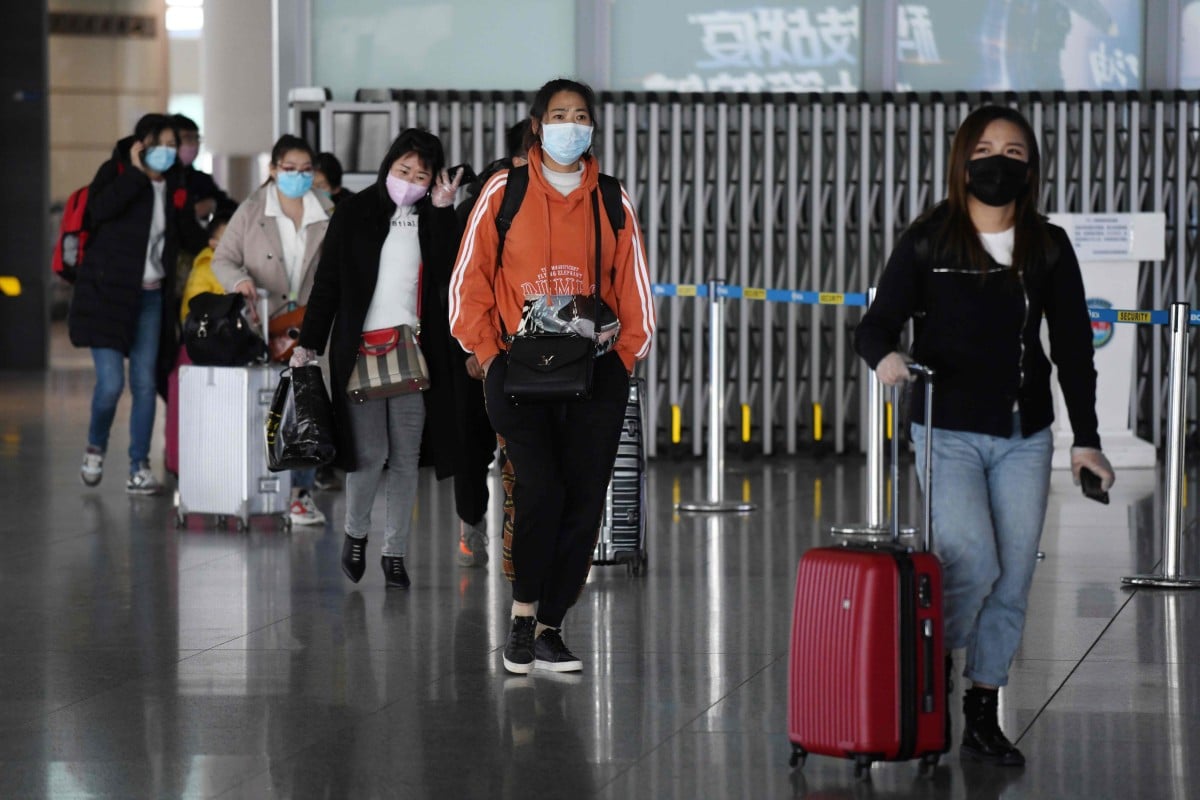
Passengers leaving Wuhan city are pictured at the Hankou Railway Station in Wuhan city, central China's Hubei province, on Wednesday morning, April 08, 2020. Photo: SCMP/Simon Song
Passengers leaving Wuhan city are pictured at the Hankou Railway Station in Wuhan city, central China’s Hubei province, on Wednesday morning, April 08, 2020. Photo: SCMP/Simon Song
A day before China lifted a months-long lockdown of Wuhan city, the initial epicentre of the coronavirus pandemic, Chinese internet giant Tencent Holdings pledged to invest in digital government, online education and artificial intelligence (AI) in the city, among other fields.
“During the epidemic, Tencent has been supporting Hubei and Wuhan’s fight against the virus through funds and technology,” the company best known for its gaming business said in a statement posted on Tuesday on WeChat. “In the future, we will also fully support Wuhan’s post-pandemic reconstruction and continue to support the development of Wuhan’s digital industry.”
China’s major tech companies have played a big role in the fight against the coronavirus, and are now playing their part in the economic recovery of Wuhan and other areas that have suffered under extended travel restrictions and business closures.
Last week, China’s biggest e-commerce services providers Alibaba Group Holding
JD.com

and Pinduoduo each announced their own initiatives to help revive sales of farm goods from Hubei as the province emerges from its months-long lockdown.

Popular mobile payments app Alipay also created a dedicated section for Wuhan merchants to allow users to buy from merchants in the city, and offered loans to small local merchants in need of financial support, according to an Alipay statement. Alipay is operated by Ant Financial, an affiliate of Alibaba, which owns the South China Morning Post.
How tech has helped China in its public health battle with coronavirus
23 Mar 2020

Wuhan, an industrial powerhouse for the steel, semiconductors and automotive sectors, is emerging from an unprecedented lockdown which began on January 23 and prevented people from moving in and out of the city.

Since restrictions began easing gradually in late March, business activity has shown signs of recovery: Tencent’s mobile payment platform WeChat Pay recorded a 162 per cent increase in offline transactions in a 10-day period from March 25, compared to the same period the previous month, according to a separate statement by Tencent on Wednesday.

Searches for “work resumption certificates” – which businesses need to submit to local authorities to prove their staff can safely restart work – also increased 320 per cent on Baidu, China’s biggest search engine, in the past month, Baidu said in a report on Wednesday.

Tencent declined to provide specific details regarding the size of its latest investment in Wuhan or a timeline for its implementation, but said in the statement that it will involve closer cooperation with city authorities in the areas of digital government, education, smart mobility, AI and cybersecurity to help the city with its digital industries.

Among these initiatives, it will push ahead with a plan to build a headquarters focusing on digital industries in Wuhan, specifically digitalisation for the government and smart city initiatives.

It will also establish a base in Wuhan for its online education initiatives, set up an AI lab and cybersecurity academy and build a school focusing on smart mobility in collaboration with Chinese carmaker Dongfeng Motor Corporation, the company said in the statement.

Source: SCMP

06/04/2020

Coronavirus: Beijing offers to fly Chinese students home from the US – but would it rather they declined?

  • Embassy says those flown back must pay for themselves, and praises the US health system, in a departure from the war of words with Washington
  • More than a million Chinese students remain overseas, but China is on alert against the threat of imported infections
China has drastically cut flights to try to prevent people who arrive from abroad importing the coronavirus. Photo: AFP
Chinese students could be flown home from coronavirus hotspots such as the United States but will have to pay their own expenses, amid efforts by Beijing to persuade some to remain overseas rather than risk bringing the infection with them.
A statement posted on the website of China’s Washington embassy on Monday said that the Chinese government was aware that many school and university students had encountered difficulties in travelling back to China and was taking steps to arrange charter flights for those who needed to return urgently.
With the initial coronavirus outbreak appearing to have been largely contained in mainland China, some Chinese students have travelled home despite soaring air ticket prices and the requirement that those who have been overseas enter quarantine.
Students brought back on charter flights would still need to pay for the ticket and the costs of the mandatory 14-day quarantine upon arrival in China.
Trump says US approaching a ‘horrendous’ time as coronavirus death toll rises
More than 1.6 million Chinese are studying overseas, including about 410,000 in the US. At least 1.42 million Chinese students remained overseas, vice foreign minister Ma Zhaoxu said on Thursday.
Having initially boasted of its success in stopping the virus, Beijing has become notably cautious in recent weeks about welcoming overseas students back home, especially with imported cases continuing to rise.
China’s foreign ministry and its overseas missions have urged students considering travelling home to exercise caution. The embassy in the US issued a notice on Friday speaking highly of the American medical system and its response to the pandemic, in a marked departure from Beijing’s narrative, which has included pinning the blame for the pandemic on the United States.

Friday’s embassy notice also dismissed rumours that Chinese students had been targeted because of the coronavirus during the closures of universities, and pledged help if students had trouble communicating with universities about campus accommodation.

China advises foreign diplomats to stay away from Beijing until May 15
3 Apr 2020

Ma said that most overseas students had heeded his government’s advice and chosen not to go back to China, but an online survey late last month that was cited by Caixin magazine on Saturday showed nearly 60 per cent of Chinese students in the US wanted to return home.

Most of the 4,000 students polled said they were unable to make the trip because of concerns about contracting the coronavirus during the journey and air fares that had more than doubled recently. Both China and the US have drastically cut back long-haul international flights.

After weeks stranded in Peru, 65 Hongkongers return home

6 Apr 2020

Students under 18 years of age who want to return to China are required by the embassy to register online.

The initial evacuation plan announced on Monday proposed to prioritise school-age children whose parents were not in the US with them. The proposed arrangement appeared to include students from Hong Kong, Macau and Taiwan.

Source: SCMP

01/04/2020

China postpones all-important gaokao university entrance exams because of coronavirus

  • Education ministry says they will be held a month later than planned – on July 7 and 8 – when there is ‘a lower risk’ for students and staff
  • It will also give them more time to prepare after months of online learning due to school closures
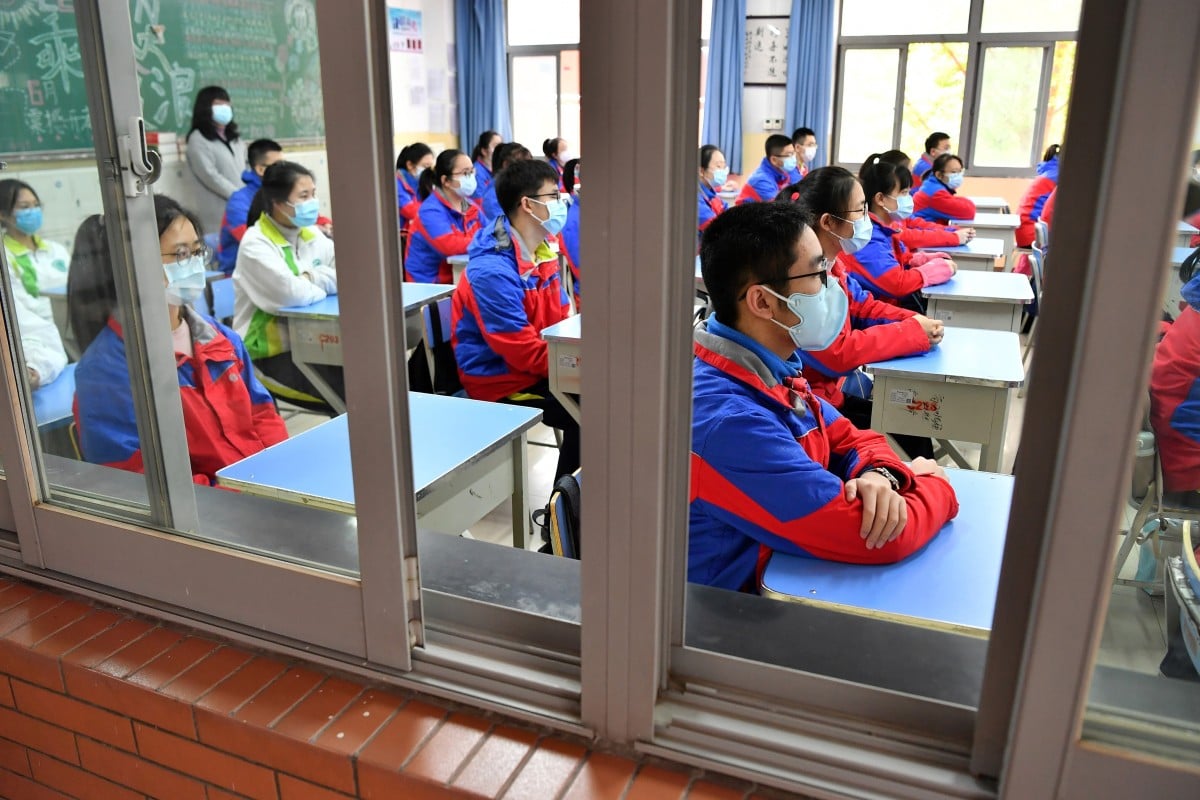
Students were back in class at the Xian Middle School in Shaanxi province on Monday after a nationwide closure because of the coronavirus outbreak. Photo: Xinhua
China’s all-important annual college entrance exams have been postponed by a month because of the coronavirus crisis – the first time they have been disrupted since the Cultural Revolution.
Universities in mainland China base enrolments solely on the results of the gruelling examinations, known as the gaokao, and they are seen as tests that can make or break a student’s future.
This year, they will be held on July 7 and 8 for most of the country – a month later than planned, the Ministry of Education announced on Tuesday.
A date has not yet been set for the capital Beijing or for Hubei, the province worst-hit by the virus. The ministry said authorities in the two places would decide later when they would hold the gaokao, based on their public health situations.

Wang Hui, a ministry official who handles the university sector, said 10.71 million students were expected to sit the exams this summer.

He said the ministry decided to postpone this year’s gaokao to put students’ “health and fairness first”.

Coronavirus: Decoding Covid-19
Wang said although the spread of the coronavirus had slowed to almost a halt in the mainland, there was still a risk of isolated cases and localised outbreaks. China’s focus now is preventing imported cases among people who arrive in the country from overseas.

“[Disease control and] prevention experts suggest that if the gaokao is postponed for a month, there will be a lower risk from … the epidemic,” Wang said.

“We must adopt the most appropriate and the least risky plan in order to protect the safety and health of the students as well as the staff involved in the tests.”

The ministry official said the delay was also about fairness, by giving students more time to study at school and prepare for the exams.

“We hope to reduce the impact of the epidemic on students, especially those from rural and poverty-stricken regions, as much as possible,” Wang said.

“Third-year high school students have had to stay home [because of the coronavirus outbreak] so their preparation for the gaokao has been affected,” he said. “The internet [access] divide between urban and rural areas means some students in rural and poorer regions have been more affected by this epidemic.”

With schools remaining closed during coronavirus outbreak, China launches national remote learning platforms

18 Feb 2020

Beijing imposed a nationwide school closure after the Lunar New Year holiday in late January as the pneumonia-like illness rapidly spread. Schools were told to postpone the new term that was due to start in mid- or late February, meaning millions of students – from primary school to university – had to turn to online learning. Several provinces began reopening schools this month and more are set to follow in early to mid-April, but authorities in Beijing and Guangdong have yet to set a date for classes to resume.

The last time the gaokao was disrupted was during the Cultural Revolution, a decade of political and social turmoil that ended in 1976. It was cancelled during this time and since it resumed in 1979 until 2002 it has been held nearly every year from July 7 to 9. From 2003, the ministry moved the gaokao forward to June 7 and 8 to avoid hot weather and potential natural disasters. The severe acute respiratory syndrome outbreak (Sars) in 2002-03 did not delay the exams.

China’s university entry exam, gaokao: elliptical, obscure and confusing

8 Jun 2018

According to an online survey conducted by microblogging website Sina Weibo on Tuesday, some 537,000 users said they were “shocked” by the ministry’s decision and were “experiencing history”.

About 282,000 people said it was a good thing for students since it gave them more time to prepare for the exams. But it was bad news for another 153,000 users, who said they would have to endure an extra month of exhausting preparation.

Source: SCMP

16/03/2020

Alibaba’s Ma donates coronavirus test kits to US

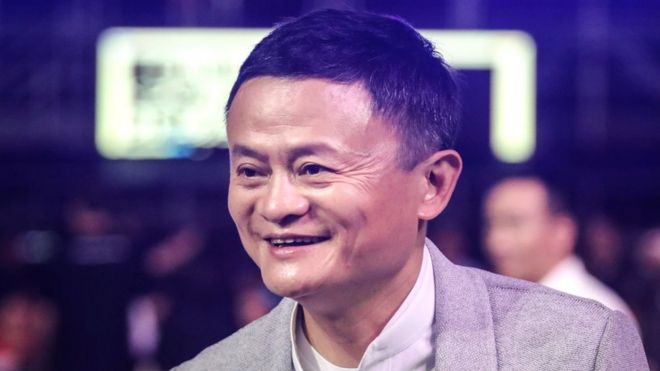
Co-founder of Alibaba Group Jack Ma .Image copyrightGETTY IMAGES

Alibaba co-founder Jack Ma has sent the first shipment of surgical masks and coronavirus test kits to the US.

The Chinese billionaire tweeted two pictures of the pallets of goods being loaded on to a plane in Shanghai.

Earlier this month he said he would give 500,000 testing kits and one million masks to America.

Mr Ma is also sending consignments of medical supplies to Europe as he called for international cooperation efforts to combat the pandemic.

In his first tweet, Asia’s richest person posted photos of a China Eastern Airlines jet being loaded with boxes of coronavirus test kits and face masks as they were shipped to the US.

It comes after the Jack Ma Foundation and the Alibaba Foundation last week announced that they had prepared 500,000 testing kits and 1 million masks to be sent to America.

They also said that they had already donated supplies to other countries including Japan, South Korea, Italy, Iran and Spain, with two million protective masks pledged for distribution across Europe.

The first consignment of 500,000 masks and other medical supplies such as test kits, which was destined for Italy, arrived in Belgium on Friday.

He joins other high-profile technology executives in pledging support for coronavirus research and disease prevention.

Microsoft co-founder Bill Gates, who is the world’s second-richest person, has announced that the Bill and Melinda Gates Foundation would give $100m to help efforts to stop the spread of the virus.

On Friday Mr Gates announced that he was stepping down from Microsoft’s board to spend more time on philanthropic activities. He said he wanted to focus on global health and development, education and tackling climate change.

Chinese tech giants, including Tencent, ride-hailing company Didi Chuxing, and TikTok owner ByteDance, have all pledged money and resources to fight the coronavirus outbreak.

Source: The BBC

20/02/2020

‘We’re like cash cows’: stranded Chinese students upset after Australia’s coronavirus travel ban

  • A government task force has estimated a US$5 billion loss if Chinese students – angered and frustrated by the ban – cannot enrol for university
  • The tourism sector is also likely to be hit by restrictions on travel from the mainland as Chinese visitors spend about U$8 billion in Australia each year
Some 150,000 Chinese nationals are enrolled at Australian universities, making up around 11 per cent of the student population. Photo: Shutterstock
Abbey Shi knows first hand the anger and frustration felt by Chinese students left stranded by the Australian government’s decision to ban travel from the mainland in response to the coronavirus outbreak.
Shi, general secretary of the Students’ Representative Council at the University of Sydney, is in contact with more than 2,000 Chinese students who went home for the Lunar New Year holiday and now cannot return to Australia with just weeks to go until the start of the new academic year.
“There is a lot of confusion about the ban and anger towards the government,” said Shi, an international student from Shanghai. Currently in Australia, she is sharing information with the stranded students via WeChat.
How to beat the coronavirus? Re-creating it in Singapore, Australia is vital first step
3 Feb 2020
“The education sector in Australia is being commercialised and students are being treated like cash cows,” she said. “Universities don’t care about our affected career path, life, tenancy issues, our pets at home.”
Prime Minister Scott Morrison on Saturday announced that non-citizens – excluding permanent residents and their immediate family members – who arrived from or passed through mainland China within the previous 14 days would be denied entry to Australia as part of efforts to halt the spread of the coronavirus, which was first detected in December in the Chinese city of Wuhan.
Other countries including the United States, Singapore and the Philippines have introduced similar travel restrictions in response to the outbreak, which has sickened more than 19,000 people in at least 26 countries and territories outside mainland China and claimed 425 lives.

The travel ban, which is due to be reviewed on February 15, has upended the plans of numerous Chinese students who were due to begin or return to their studies from late February following the summer break.

Tony Yan, a mathematics undergraduate at Australian National University (ANU), said he had been left out of pocket for several weeks’ rent after being stranded in his home province of Jiangsu, but hoped he could return before classes started on February 24.

“I think the Australian government should have given a few days earlier notice,” Yan said. “I haven’t paid the tuition yet, many others haven’t as well.”

About 150,000 Chinese nationals are enrolled at Australian universities, making up around 11 per cent of the student population – a far greater proportion than in Britain and the United States, which came in at 6 per cent and 2 per cent respectively, in a 2017 report from an Australian think tank.

Coronavirus: Australia evacuates 243 people from China as deaths mount

3 Feb 2020

ANU Vice-Chancellor Brian Schmidt on Saturday described the travel ban as “disappointing”, pledging that the university would be “generous and flexible in supporting our students” through the coming weeks.

Monash University in Melbourne has delayed the start of its academic year, while other universities are exploring options such as online tuition and intensive summer courses.

Australian universities, some of which rely on Chinese students for nearly one-quarter of their revenue, are bracing to take a major financial hit due to the ban.

Phil Honeywood, the head of a government task force initially set up to manage the reputation of Australia’s international education sector in the wake of the country’s bush fires crisis, on Sunday warned the ban could cost universities A$8 billion (US$5.34 billion) if Chinese students could not enrol for the first semester of the year.

Coronavirus: what we know so far about the outbreak spreading in China and abroad

Education minister Dan Tehan on Monday met with peak body Universities Australia to discuss ways to minimise fallout for the sector.

“Australia will remain an attractive study destination for Chinese students, but it may take several years for Chinese student numbers to recover,” said Salvatore Babones, associate professor at the University of Sydney and adjunct scholar at the Centre for Independent Studies. “Students who are already in the middle of a degree are likely to return at the first possible opportunity, even at the cost of missing one semester, but students who have not yet started may make other plans.”

But ANU tertiary education expert Andrew Norton said there remained too many unknowns, including the number of Chinese students stranded abroad, to gauge the impact of the ban.

How the coronavirus spread anti-Chinese racism like a disease through Asia

17 Feb 2020

“This travel ban is a short-term policy to minimise the risk of disease spreading, which would be a more serious problem than a disruption to university timetables,” he said. “One of Australia’s major [education] competitors – the US – has a similar policy, and due to travel restrictions within China and the cancelling of commercial flights to and from China Australia’s competitors are unlikely to be able to take advantage.”

Norton noted that the sector had weathered previous outbreaks such as the 2003 outbreak of severe acute respiratory syndrome (Sars), and “although there were sometimes short-term dips in numbers, none of them have changed the long-term trend towards growth”.

The ban has also sent jitters throughout the tourism industry, which relies on Chinese visitors for a quarter of international spending. Nearly 1.5 million 

Chinese nationals

visited Australia in 2018-19, Australian Bureau of Statistics records show, accounting for about one in eight arrivals.

Nearly 1.5 million Chinese nationals visited Australia in 2018-19, according to Australian Bureau of Statistics records. Photo: SCMP / Alkira Reinfrank
With Chinese tourists spending about A$12 billion (US$8 billion) in Australia each year, according to Tourism Research Australia, every month the travel ban remains in place could amount to billion-dollar losses for the sector.
Tourism Tropical North Queensland on Monday said the outbreak had already cost operators for Cairns and the Great Barrier Reef 25,000 direct bookings worth A$10 million. Chief executive Mark Olsen said the situation constituted a crisis for the industry that called for “unprecedented action” by the government.
David Beirman, senior lecturer in tourism at the University of Technology Sydney, said the ban was especially damaging for the industry as it came on the heels of devastating bush fires that had kept visitors away.
Coronavirus: how Facebook clickbait fuels a perfect storm of fake news
15 Feb 2020

“There is no doubt that the coronavirus outbreak following on so closely to the bush fires will combine to hit international tourism to Australia very hard,” Beirman said. “Later this month the Australian Bureau of Statistics will reveal the December 2019 tourism figures, which are expected to show at best a 25 per cent downturn in international visitor arrivals compared to December 2018. January 2020 is likely to be far worse as the impact of coronavirus will certainly be a factor.”

Others have raised concerns about the impact of the travel restrictions on public attitudes toward Chinese and Chinese-Australians, warning they could stoke latent prejudices.

“This is an overreaction from the Australian government, and in many ways it feels like it is a form of racial targeting,” said Erin Chew, national convenor of the Asian Australian Alliance. “When previous viruses happened such as mad cow disease or the swine flu, Australia didn’t ban non-citizens from Britain and the US. Nor was the blame placed on the people in [those countries].

“Since the coronavirus outbreak it has been coined that this virus is the fault of Chinese people, not just in mainland China, but really all over the world.”

Source:, SCMP

22/12/2019

Economic Watch: Smart economy fledging in China as AI empowers industries, individuals

BEIJING, Dec. 21 (Xinhua) — Ask the silver-haired residents of the elderly care community Yinheyuan in central Beijing what they know about artificial intelligence (AI), and they will probably throw the question to the smart speakers within their reach.

These smart speakers, capable of interacting with users with voice-recognition technologies, are also part of the answer. Via voice command, senior residents can control lights, TVs and other home appliances, order food or ask for help.

AI is no longer a technical term used exclusively by professionals in China. Both young and old are enjoying the benefits of the growing smart economy.

After personal computers (PC), PC internet and mobile internet, the growth focus of China’s digital economy is shifting to smart technologies like AI, said Baidu Chairman and CEO Robin Li at the World Internet Conference in October.

In the smart economy era, Li predicted a declining reliance on cellphones and a rising popularity of other smart devices. AI chips, cloud computing services, among others, would become the new digital infrastructure, while innovative businesses will flourish as transport, health, education and other sectors go smart.

Wearable devices, smart home appliances, autonomous driving and smart cities are among the fastest-growing fields in the smart economy.

China is the largest smart speaker market in the world, accounting for 36 percent of global shipments in the third quarter of 2019, according to global market firm Strategy Analytics. It found in a July and August survey that 63 percent of Chinese people without a smart speaker planned to buy one within the following year. Another 22 percent planned to make a purchase later on.

Chinese firms are stepping up investment in 5G, AI and the Internet of Things to gain a foothold in the emerging field. By end-June, China had over 1,200 AI-related enterprises, according to the Ministry of Industry and Information Technology.

Baidu launched its autonomous driving open platform ApollBo in 2017 to coordinate cross-sector efforts in this field. It has launched several L4 autonomous driving vehicles in partnership with leading automobile companies, and a fleet of Apollo-powered robotaxis are now taking test runs in central China’s Changsha.

Nurturing a smart economy is also on the government agenda. China has passed a guideline to boost the integration of AI and the real economy this year, and plans to build some 20 national AI innovative development pilot zones by 2023.

The country’s AI sector is forecast to be worth more than 160 billion yuan (about 22.83 billion U.S. dollars) in 2020, spurring related sectors to exceed 1 trillion yuan, said Lin Nianxiu, deputy director with the National Development and Reform Commission, citing industrial data.

Lin said China would focus on 100 firms dedicated to AI technologies and relevant applications, improve the industrial ecosystem, facilitate the deep integration of AI and the real economy, and intensify its international collaboration on AI technology, standards, industries, laws and regulations and ethics.

Source: Xinhua

14/12/2019

Xi holds talks with Micronesian president

CHINA-BEIJING-XI JINPING-FEDERATED STATES OF MICRONESIA-PRESIDENT-TALKS (CN)

 Chinese President Xi Jinping holds a welcome ceremony for President of the Federated States of Micronesia David W. Panuelo before their talks at the Great Hall of the People in Beijing, capital of China, Dec. 13, 2019. (Xinhua/Wang Ye)

BEIJING, Dec. 13 (Xinhua) — Chinese President Xi Jinping on Friday held talks with visiting President of the Federated States of Micronesia David W. Panuelo, calling for joint efforts to advance bilateral ties and better benefit the two peoples.

The two sides should maintain exchanges at all levels, expand communication and exchanges between governmental departments and legislatures, and enhance mutual political trust, Xi said.

Xi welcomed Panuelo’s visit to China as the two countries celebrate their 30th anniversary of the establishment of diplomatic ties, and spoke highly of Panuelo’s commitment to developing bilateral ties and firmly upholding the one-China principle.

China sticks to the path of peaceful development, maintains that all countries, no matter big or small, are always equal, firmly opposes unilateralism and hegemony, and advocates that all countries should work jointly to build a community with a shared future for humanity, he said.

For the past 30 years since the establishment of diplomatic ties, the two countries have respected, trusted and supported each other, and carried out pragmatic cooperation on the basis of equality and mutual benefit, advancing bilateral ties and bringing tangible benefits to the two peoples, Xi noted.

China respects the Micronesian side’s right to take the development path that best suits its national conditions and supports Micronesia’s efforts in maintaining national independence and boosting development, Xi said.

He called on the two sides to complement each others’ advantages and further expand cooperation in such fields as trade, investment, agriculture, fisheries, infrastructure construction and tourism under the framework of the Belt and Road Initiative.

He also welcomed Micronesia to export more products with competitive advantages like tuna to China, make full use of the policies and measures China has announced on cooperation with and support for island countries, and carry out more pragmatic cooperation projects benefiting people’s livelihoods.

“China is willing to offer economic and technical assistance to Micronesia within its own capacity,” he said.

The two sides should take the signing of the visa exemption deal for those holding diplomatic and service passports as well as passports for public affairs as an opportunity to enhance people-to-people exchanges, deepen traditional friendship, and achieve more practical results on local cooperation, Xi said.

He also called on the two sides to strengthen communication and continue to step up coordination on major issues including climate change and marine affairs.

Panuelo said the Micronesian side spoke highly of Xi’s proposal of building a community with a shared future for humanity, which would play an important role in promoting world peace and stability.

Micronesia, as a small country, is appreciative of the equal treatment and respect offered by China, he said, noting that China was the first country to provide support to Micronesia’s national independence and liberation movement as well as assistance to its national development.

He reiterated Micronesia’s stance on abiding by the one-China principle and maintained that Hong Kong, Xinjiang and Tibet affairs are China’s internal affairs and brook no outside interference.

“I have had a personal experience of China’s time-honored history and remarkable development achievement during my visit,” he said, expressing his delight over China’s achievements and confidence in China’s bright future.

Hailing the two countries’ cooperation for the past 30 years, Panuelo pledged to further expand cooperation in economy and trade, infrastructure construction, agriculture, education, and jointly build the Belt and Road.

The Micronesian side spoke highly of China’s important role in global issues like tackling climate change, Panuelo said, hoping to continue strengthening coordination and cooperation with China and playing an active role in promoting ties between China and Pacific island countries.

The two heads of state witnessed the signing of several bilateral cooperation deals after their talks.

Panuelo is on a state visit to China from Dec. 11 to 18.

Source: Xinhua

27/11/2019

China, Suriname establish strategic partnership of cooperation

CHINA-BEIJING-XI JINPING-SURINAME-PRESIDENT-TALKS (CN)

Chinese President Xi Jinping holds a welcome ceremony for Suriname’s President Desire Bouterse before their talks at the Great Hall of the People in Beijing, capital of China, Nov. 27, 2019. (Xinhua/Yue Yuewei)

BEIJING, Nov. 27 (Xinhua) — China and Suriname on Wednesday decided to upgrade their relationship to a strategic partnership of cooperation.

The announcement came as Chinese President Xi Jinping held talks with Surinamese President Desire Bouterse at the Great Hall of the People in Beijing.

During the talks, Xi said Suriname is one of the first Caribbean countries to establish diplomatic relations with China. The relations can be considered a model of friendly relations and equal treatment between countries of different sizes.

The development of bilateral ties is in an important historical period, and China is willing to work with Suriname to take the opportunity of the Belt and Road cooperation to uplift the ties to new heights, said Xi.

Xi stressed that the two countries should maintain support on issues involving each other’s core interests and major concerns.

Xi called on the two sides to deepen cooperation in areas such as infrastructure construction, agriculture, forestry, fisheries, communications and energy, and explore cooperation in new areas such as new energy, digital economy, tourism and ocean economy.

“China encourages more capable Chinese companies to invest in Suriname,” said Xi.

Noting that Suriname is one of the countries with the largest overseas Chinese population in the Caribbean area, Xi said it is necessary to promote cultural exchanges, facilitate personnel exchanges and strengthen cooperation in areas such as education and law enforcement. China will also send a medical expert panel to Suriname.

The two sides should maintain communication and coordination on global issues, practice multilateralism, build an open world economy and safeguard the common interests of both countries and all developing countries, said Xi.

China is willing to continue to speak out from a sense of justice for Suriname on multilateral occasions and work together with the international community including Suriname to constructively participate in the multilateral process on global climate issues, he said.

Xi added that China has always respected the right of Latin American people to choose their own development path and supported the process of Latin American integration and the handling of regional issues through dialogue and consultation.

China is willing to work with Latin America to promote the construction of the Belt and Road and deepen China-Latin America cooperation by the principles of equal treatment and mutual benefit, said Xi.

Bouterse extended congratulations on the 70th founding anniversary of the People’s Republic of China, and said under Xi’s leadership, socialism with Chinese characteristics will be a success and will bring benefits to the Chinese people and people around the world.

Underscoring the historic and political significance of his visit, Bouterse said Suriname will firmly uphold the one-China principle and support China’s national reunification.

He said Suriname is grateful for China’s help in his country’s economic and social development, and ready to work with China to enhance exchanges at all levels, cement political mutual trust, expand economic and trade cooperation, deepen people-to-people exchanges and take the joint construction of the Belt and Road as an opportunity to upgrade bilateral strategic relations.

Suriname stands ready to work with China to safeguard multilateralism, international law and basic norms of international relations, Bouterse said.

After the meeting, Xi and Bouterse witnessed the signing of several cooperation documents.

Source: Xinhua

17/11/2019

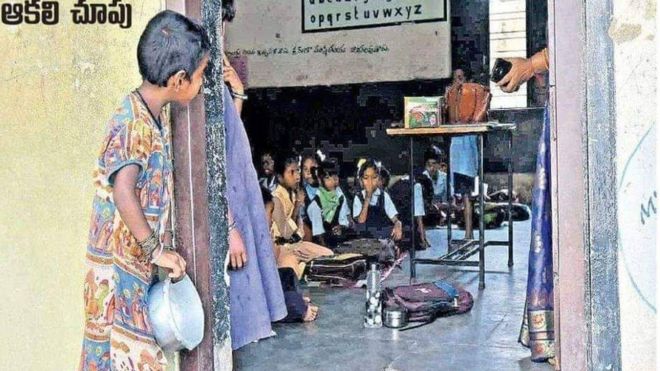
The truth behind India’s viral photo that got a girl into school

The viral photo in the newspaperImage copyright EENADU NEWSPAPER/A SRINIVAS
Image caption The photo that sparked an outcry

A five-year-old in the southern city of Hyderabad was enrolled in school after a photo of her peeking into a classroom sparked an outcry. BBC Telugu’s Deepthi Bathini reports on why the photo doesn’t tell the full story.

Divya is something of a local celebrity in the slum where she lives. The shy five-year-old was the subject of a recent photo which went viral – it showed her clutching a bowl and peeking into a classroom at the local government school.

The touching image was published in a Telugu newspaper on 7 November with a caption that translates from the Telugu as “hungry gaze”.

It quickly grabbed people’s attention: a children’s rights activist shared it on Facebook, lamenting that yet another child was being denied the right to food and education.

It had such an impact, the school enrolled Divya the following day.

But her father, M Lakshman, says the photo and the outcry it provoked was in fact unfair to him and his wife, Yashoda, who works as a sweeper.

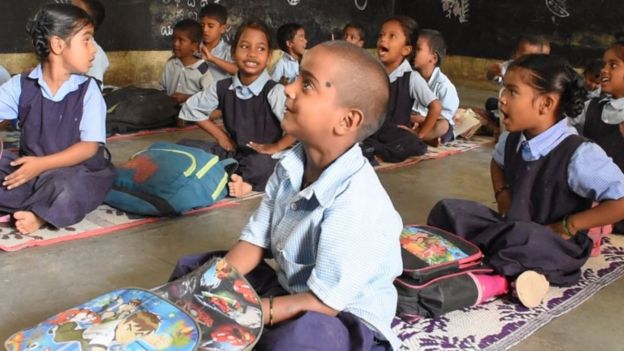
Divya in school
Image caption Five-year-old Divya enrolled in school after a photo of her in a newspaper went viral

“I felt sad when I saw the photo,” he told the BBC. “Divya has parents and we are working so hard to give her a good future – but she was portrayed as a hungry orphan.”

Mr Lakshman says he was waiting for Divya to turn six so he could enrol her in a government hostel where his other two daughters are studying. The couple also have a son, who has finished school and is now applying to college while helping Mr Lakshman, who works as a rag picker.

Breaking the cycle

Divya and her parents live in a one-room hut in a shanty town in the heart of Hyderabad. The slum is about 100 metres from the government school, where Divya was photographed. Most of the 300 families living here are daily wage labourers and their children attend the school nearby.

The home is sparse and plastic and glass are piled outside, ready to be sold for recycling. He says between him and his wife, they earn about 10,000 rupees ($139; £108) a month, which pays for their food and clothes. Education, however, is free for the children, since they are all enrolled in government-run schools.

Mr Lakshman knows what it is to struggle: he himself grew up without parents and always battled to earn a decent living. “I never wanted my children to have the life I had. So I made sure they all go to school.”

The photo, he adds, was especially hurtful because he has also been taking care of his brother’s five children.

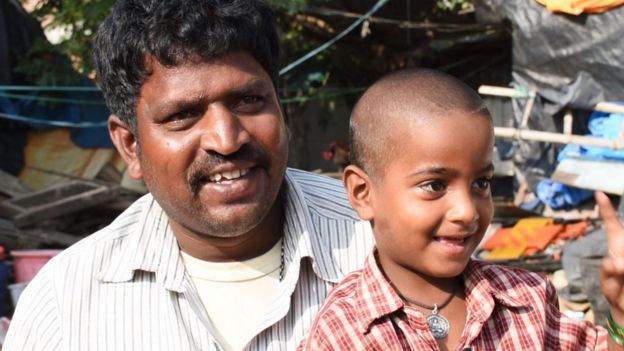
Divya with her father
Image caption Divya’s father said the outcry over the photo was “unfair” to his family

“My brother and sister-in-law passed away sometime ago. I didn’t want their five children to grow up as orphans. So, I enrolled all of them in a hostel and I take care of them.”

When asked why Divya had gone to the government school with a bowl in hand, Mr Lakshman explains that a lot of the younger children from the slum go there around lunch time to take advantage of the free midday meal – a government programme which provides cooked meals to children in more than a million schools – which they know about because their older brothers and sisters are already enrolled.

“Divya doesn’t go every day but she happened to go on that day and someone photographed her,” he explained.

This was confirmed by teachers at the school who told the BBC that some children brought lunch from home, so leftovers over from the free meal scheme would be given to the younger children who had not yet joined.

“Children are children. And there is no day-care centre, so a lot of these children hang around the school anyway,” says one teacher, who spoke on the condition of anonymity.

Divya in her new school
Image caption Divya says she’s excited to go to school

Mr Lakshman and his neighbours acknowledged the lack of an anganwadi, or government-sponsored day-care centre, in the neighbourhood was a major problem as parents had no place to leave their children so they could go to work.

The local school inspector, SU Shivram Prasad, says he hopes the attention generated by the Divya’s photo will hasten the process of setting up one up.

“It will help the parents and the children can eat a nutritious meal,” he adds.

Teachers at the school also hope that the media spotlight will improve facilities. They say there is an acute shortage of staff and teaching materials, and the school did not even have a compound wall, which meant they have to constantly watch the children during their breaks.

Divya, however, is excited to be going to school. She insists on taking her school bag with her everywhere, even to the playground. Other than saying her name, she does not answer any questions.

“She is a very calm child,” says Mr Lakshman, as his daughter holds his hand and kisses it.

And he admits that despite everything, the photo did do some good.

“Now other children who are Divya’s age are also enrolling in school. So that makes me happy.”

Source: The BBC

08/11/2019

Xi Focus: Xi’s trip to Greece, Brazil to advance bilateral ties, BRICS cooperation

BEIJING, Nov. 7 (Xinhua) — Chinese President Xi Jinping’s upcoming visit to Greece and Brazil is expected to intensify China’s relations with the two countries and enhance BRICS cooperation, officials said here Thursday.

At the invitation of Greek President Prokopis Pavlopoulos, Xi will pay a state visit to Greece from Nov. 10 to 12, said Vice Foreign Minister Qin Gang.

This will be the first visit to the European country by a Chinese president after an interval of 11 years, which will exert a historic influence of China-Greece ties and push forward China-Europe relations and Belt and Road cooperation, Qin said.

He noted that China and Greece, both with old civilizations, are trustworthy and helpful friends respecting and supporting each other on core interests and major concerns.

Greece is among the first European Union (EU) countries to sign an intergovernmental cooperation document with China to jointly construct the Belt and Road, Qin said, adding that Greek prime ministers attended the first and second Belt and Road Forum on International Cooperation in Beijing.

The two sides have conducted fruitful cooperation on the principle of mutual benefit and win-win cooperation and witnessed increased bilateral trade and investment, Qin said.

“The Piraeus Port project, a flagship project for the Belt and Road cooperation, has made important contributions to the local economic and social development of Greece and played an important role in advancing connectivity in various regions around the globe,” said the vice foreign minister.

Speaking of people-to-people and cultural exchanges, Qin said peoples of the two countries respect each other and advocate openness and inclusiveness in their close interactions.

“Both China and Greece hold that different civilizations should respect each other and facilitate experience sharing, mutual learning and conversation among civilizations,” he said.

China and Greece are new friends of the “17 +1” cooperation. In April this year, Greece became a full member of the China-Central and Eastern European Countries Cooperation Mechanism, adding new opportunities to the development of this mechanism, which is also conducive to developing China-EU relations and China-EU connectivity, Qin said.

Greek Prime Minister Kyriakos Mitsotakis led a delegation to the ongoing second China International Import Expo (CIIE). Xi met with him, and the two leaders visited the Greek pavilion, Qin said.

According to Qin, in Greece, Xi is scheduled to hold talks respectively with Pavlopoulos and Mitsotakis, in a bid to consolidate political mutual trust and traditional friendship between the two countries, intensify pragmatic cooperation in trade, investment, infrastructure and other fields, uphold multilateralism and free trade and build an open world economy.

Besides, Qin noted that the Chinese and Greek leaders will conduct cultural exchanges and advocate dialogues among civilizations.

The two sides will issue a joint statement on strengthening the comprehensive strategic partnership, draw up a blueprint for the development of bilateral ties, sign intergovernmental cooperation documents on investment and education, and ink commercial agreements in such fields as ports, finance, and energy.

Greece, in the West, and China, in the East, are heirs of ancient civilizations. Noting that both China and Greece are faced with the mission of rejuvenation and prosperity, Qin said the two countries can enlighten the world to deal with various problems and challenges.

Xi’s upcoming visit to Greece shows respect and appreciation of the ancient Chinese civilization to the ancient Greek civilization, as well as the expectation of jointly building a community with a shared future for humanity, Qin said.

It is believed the visit will elevate the level of bilateral cooperation in an all-round way and inject new impetus to the development of China-EU relations with fruitful results, Qin stressed.

According to Vice Foreign Minister Ma Zhaoxu, at the invitation of Brazilian President Jair Messias Bolsonaro, Xi will attend the 11th BRICS summit in Brasilia, the capital of Brazil, from Nov. 13 to 14.

BRICS is the acronym for an emerging-market bloc that groups Brazil, Russia, India, China and South Africa.

Xi is scheduled to attend the closing ceremony of the BRICS business forum, closed and public meetings of the BRICS leaders’ meeting and the BRICS leaders’ dialogue with the BRICS Business Council and the New Development Bank. The leaders’ declaration is expected to be released, Ma said.

Xi will hold talks with Bolsonaro, sign cooperation documents in various fields, and hold bilateral meetings with leaders of other participating countries to exchange views on ties and BRICS cooperation, Ma said.

As the world is undergoing changes rarely seen in a century and confronted with unprecedented opportunities and challenges, BRICS countries have drawn ever-growing attention worldwide, Ma said, stressing that China appreciates the efforts made by Brazil in its preparation and stands ready to jointly prompt the meeting to achieve fruitful results.

He voiced expectations of the Chinese side.

“The Chinese side hopes that BRICS countries will further enhance political mutual trust, boost mutually beneficial cooperation and forge a more comprehensive, closer and broader partnership,” Ma said.

As for safeguarding multilateralism and strengthening global governance, Ma voiced China’s determination to make joint efforts with other BRICS countries to safeguard the rules-based multilateral trade system, the international order based on international law, and the international system with the UN at the core.

This aims to promote a more equitable, open, transparent and inclusive global governance system and safeguard common interests and development space of emerging markets and developing countries, Ma said.

“China believes the five BRICS countries should follow the trend of the new industrial revolution and facilitate economic transformation and upgrading,” Ma noted.

As an important outcome of last year’s Johannesburg meeting, the BRICS partnership for a new industrial revolution has progressed well in the past year, he said, adding that China is willing to work with concerned parties to accelerate the development of the partnership and tap more potential for cooperation projects, so as to propel high-quality development of the five countries.

“China looks forward to more cooperation on economy, trade, finance, political security and people-to-people exchanges, with projects meeting the development needs of the five countries and serving the interests of their peoples,” he said.

The Chinese side believes that with concerted efforts of all parties and under the political guidance of the five countries’ leaders, the 11th BRICS Summit will be a full success, Ma said, stressing that the BRICS countries will continue to contribute to world peace and development and the building of a community with a shared future for humanity.

Source: Xinhua

Law of Unintended Consequences

continuously updated blog about China & India

ChiaHou's Book Reviews

continuously updated blog about China & India

What's wrong with the world; and its economy

continuously updated blog about China & India