Chindia Alert: You’ll be Living in their World Very Soon
aims to alert you to the threats and opportunities that China and India present. China and India require serious attention; case of ‘hidden dragon and crouching tiger’.
Without this attention, governments, businesses and, indeed, individuals may find themselves at a great disadvantage sooner rather than later.
The POSTs (front webpages) are mainly 'cuttings' from reliable sources, updated continuously.
The PAGEs (see Tabs, above) attempt to make the information more meaningful by putting some structure to the information we have researched and assembled since 2006.
The statement, issued on 27 April but only reported this week, singles out stadiums, exhibition centres, museums and theatres as public facilities where it’s especially important to ban plagiarism.
“City constructions are the combination of a city’s external image and internal spirit, revealing a city’s culture,” the government statement says.
It calls for a “new era” of architecture to “strengthen cultural confidence, show the city’s features, exhibit the contemporary spirit, and display the Chinese characteristics”.
Image copyright STR / AFP / GETTYImage caption – Not the Arc de Triomphe, but a college gate in Wuhan
The guidelines on “foreign” architecture were mostly welcomed on Chinese social media.
“The ban is great,” wrote a Weibo user, according to state media the Global Times. “It’s much better to protect our historical architectures than build fake copycat ones.”
Another recalled seeing an imitation White House in Jiangsu province. “It burned my eyes,” she said.
Image copyright OLIVIER CHOUCHANA / GETTYImage caption Thames Town, an English-themed town near Shanghai, pictured in 2008
In 2013, the BBC visited “Thames Town”, an imitation English town in Songjiang in Shanghai.
The town features cobbled streets, a medieval meeting hall – even a statue of Winston Churchill – and was a popular spot for wedding photos.
“Usually if you want to see foreign buildings, you have to go abroad,” said one person. “But if we import them to China, people can save money while experiencing foreign-style architecture.”
Image copyright WANG ZHAO / GETTYImage caption – Raffles City, Chongqing, in 2019 – mimicking the Marina Bay Sands hotel in Singapore
China, of course, is not the only country to borrow – or copy – other countries’ designs.
Las Vegas in the US revels in its imitations of iconic foreign architecture including the Eiffel Tower and Venetian canals.
Thailand also has developments that mimic the Italian countryside and charming English villages, mainly aimed at domestic tourists.
A factory which allegedly made up to 41,000 fake AppleiPhones has been raided in China, with nine arrests.
The operation reportedly involved “hundreds” of workers repackaging second hand smartphone parts as new iPhones for export, with counterfeit phones produced worth 120m yuan ($19m).
The factory was discovered on 14 May but was revealed on social media by Beijing’spublic security bureau on Sunday, according to reports.
The operation was set up in January.
It was led by a husband and wife team, on the northern outskirts of the Chinese capital, according to Beijing authorities.
They said they had been alerted to the factory by US authorities which had seized some of the fake phones.
The reports come amid an official Chinese crackdown on counterfeit goods, with authorities pushing firms to trademark their goods.
China has also agreed to work with the US authorities to try to stem the large quantities of fake goods flowing between the two countries.
The discovery of the factory comes four years after fake Apple stores were found in Kunming city, China.
Discovered by blogger BirdAbroad, the fakes were so convincing she said many of the staff themselves were convinced that they were employed by the US electronics firm.
It seems that Kunming in the southwest corner of China is the world capital of knock-off shops.
Apple recently found five counterfeit versions of its stores there after blogger BirdAbroad posted photos of one online – and now a fake Ikea has surfaced.
It’s called 11 Furniture and is a 10,000 square metre, four-storey replica that’s virtually identical to the Swedish-made version.
It copies Ikea’s blue-and-yellow colour scheme, mock-up rooms, miniature pencils, signage and even its rocking chair designs. Its cafeteria-style restaurant, complete with minimalist wooden tables, has a familiar look, although the menu features Chinese-style braised minced pork and eggs instead of Ikea’s Swedish meatballs and salmon.
This knock-off Ikea store is emblematic of a new wave of piracy sweeping through China. Increasingly sophisticated counterfeiters no longer just pump out fake luxury handbags, DVDs and sports shoes but replicate the look, feel and service of successful Western retail concepts — in essence, pirating the entire brand experience.
‘This is a new phenomenon,’ said Adam Xu, retail analyst with Booz&Co. ‘Typically there are a lot of fake products, now we see more fakes in the service aspect in terms of (faking) the retail formats.’
It will go down as one of the most audacious attempts at Chinese fakery yet: a bid to forge an entire government.
That is what police claim happened in Dengzhou, a city 480 miles northwest of Shanghai, in Henan province, with more than 1.5 million inhabitants.
Three of the city’s farmers were this week facing charges of forging official documents after allegedly trying to build a parallel and entirely fictitious government for reasons that remain obscure, the local Dahe News Online website reported.
The “counterfeit government” began operating last September when Zhang Haixin, Ma Xianglan and Wang Liangshuang, three villagers, proclaimed themselves the leaders of the self-styled Dengzhou People’s Government.
The trio reportedly accused the incumbent Communist Party administration of “dereliction of duty” and opened their own headquarters just around the corner from those of the city’s real governors.
Wielding certificates that read “special pass of the United Nation‘s maintenance forces’ general headquarters” and “work permit for global maintenance and liaison of world peace,” the two men demanded the release of a prisoner on bail for medical treatment.
They presented their release permits approved by the nation’s top leaders to Yueyang prison officers, Yangtze Information Daily reported, threatening to call Beijing’s Zhongnanhai leadership compound.
The prison guard doubted their story and requested backup while pretending to cooperate with the UN officials.
When the relevant authorities arrived, one huxster reached for his phone and said he was calling a top official in Beijing, flashing photos of the leader and himself at bemused officers.
Police investigators said the conmen had been hired by the prisoner’s relative for their far-reaching connections and ability to solve problems.
The Global Times started it. The headline in the Communist Party controlled newspaper ran: Soccer fever kicks off fake sick notes.
Citing the painful 11-hour time difference between China and Brazil – meaning games kick-off sometime between midnight and 06:00 – the article suggested that opportunistic online wheeler-dealers were offering the fraudulent diagnoses to enable fans to take the day off.
There are certainly a lot of football fans in China.
The national team may be a long-running embarrassment, having only ever qualified for one World Cup, back in 2002, but the passion is still there.
The time difference with South Africa wasn’t all that much better than Brazil but China still accounted for the largest single-country audience for the 2010 tournament, with an average of 17.5 million tuning in for each live match.
Chinese are known for their love of football
For a relatively small fee, a sick-note can be arranged
A veritable peoples’ army of genuine football craziness, no doubt. But an army of sick-note slackers and skivers?
China’s artistry for fakery has been well documented. Fake bags and watches, fake cars even, are old news. Recent reports uncovered the existence of a fake UN peacekeeping force.
So it is not surprising, and not at all difficult, to find the online services offering bogus medical documentation.
Within minutes we were being asked what ailment we preferred, and from which hospital we would like the diagnosis to be provided.
An hour or so later and our very authentic-looking sick-note was delivered by a man on a moped. Fee charged, roughly $16 (£9).
But is demand for these services really, as the Global Times suggests, soaring as a result of the World Cup?
Our dealer denied it, but we did find another one who suggested that business of late was unusually brisk.
There’s a chance though that it might not be down to devious football fans at all, but rather an upsurge of journalists, like me, trying to prove just how easy sick notes are to obtain.
Following a quick scan of the foreign media I’m saddened to report that the Telegraph’s man in Shanghai has gone down with a respiratory tract infection, the reporter for US National Public Radio has a bad bout of gastroenteritis (beginning this coming Sunday) and someone in NBC News‘s China office has been diagnosed with chronic appendicitis.
“China has seen its share of counterfeits, from fake Apple stores to fake reporters to fake Gucci. Now add fake government to that list.
State media recently reported that a “People’s Government of Dengzhou” set up in central Henan province was toppled after it was found, in fact, to be a fraud.
According to reports, the government was set up late last year by three residents who had gone so far as to counterfeit fake government seals and issue papers in the bogus government’s name. They also tried to build up their own “civil service,” sending out recruitment ads that attracted more than 10 applicants before the real government shut it down.
Apparently the trio wanted to independently annul their existing government on the basis of its “nonperformance.” They located the headquarters of their faux government adjacent to the real one.
This isn’t the first time Dengzhou has made headlines for unusual political news. Four years ago, government mouthpiece China Daily wrote a story about the city titled “Democracy takes root in rural areas.” It chronicled Dengzhou’s measures to involve more residents in the vetting of proposals relating to villages in the region, in what the publication called an “innovative experiment” that was also hailed at the time by then-Vice PresidentXi Jinping.
No one, evidently, thought the farmers would get quite so innovative.
In the end, the would-be bureaucrats were outed after they served a property developer a suspension notice and tried to levy penalties for illegal construction in the area. The developer got suspicious, and the trio were rounded up. They have been charged with the forging of government documents. Attempts to reach them for comment weren’t successful.
“China is known worldwide for its pandas, its cranes, and unfortunately, its forged goods. According to a UN report, 70 percent of the world\’s counterfeit goods produced between 2008 and 2010 originated from China. The forgeries have found their way into markets and stores around the world, and even, it was revealed this month, into China\’s own museums.
On Monday, authorities in Hebei Province shuttered Jibaozhai Museum after announcing that many of the Chinese historical artifacts it displayed were forgeries. An official from the Hebei Provincial Cultural Heritage Bureau told Global Times that the museum\’s license had been revoked and its managers were currently under investigation.
The deceit was initially revealed in a July 6 blog by Chinese writer Ma Boyong on the Sina blogging platform. As Shanghai Daily reports, Ma had posted photos of the forged pieces, which included items purportedly signed by Huangdi, the Yellow Emperor, in simplified Chinese characters. However, such characters did not come into use until the 20th century, 4,500 years after the Yellow Emperor died.
According to the report, another vase had a label identifying it as dating back to the Tang Dynasty-era (618–907 AD), even though the five-color wucai technique it displayed was not invented until the Ming Dynasty (1368–1644 AD).
When the hammer came down at an evening auction during China Guardian’s spring sale in May 2011, “Eagle Standing on a Pine Tree,” a 1946 ink painting by Qi Baishi, one of China’s 20th-century masters, had drawn a startling price: $65.4 million. No Chinese painting had ever fetched so much at auction, and, by the end of the year, the sale appeared to have global implications, helping China surpass the United States as the world’s biggest art and auction market.
But two years after the auction, Qi Baishi’s masterpiece is still languishing in a warehouse in Beijing. The winning bidder has refused to pay for the piece since doubts were raised about its authenticity.
“The market is in a very dubious stage,” said Alexander Zacke, an expert in Asian art who runs Auctionata, an international online auction house. “No one will take results in mainland China very seriously.”
Indeed, even as the art world marvels at China’s booming market, a six-month review by The New York Times found that many of the sales — transactions reported to have produced as much as a third of the country’s auction revenue in recent years — did not actually take place.
Just as problematic, the market is flooded with forgeries, often mass-produced, and has become a breeding ground for corruption, as business executives curry favor with officials by bribing them with art.
Fraud is certainly no stranger to the international art world, but experts warn that the market here is particularly vulnerable because, like many industries in China, it has expanded too fast for regulators to keep pace.
In fact, few areas of business offer as revealing a view of this socialist society’s lurch toward capitalism as the art market. Like many luxury businesses in China, the explosion of buyers for art here has been fueled by the pent-up consumerism of the newly rich. The demand is so great that last year, in a country that barely had an art market two decades ago, reported auction revenues were up 900 percent over 2003 — to $8.9 billion. (The United States auction market for 2012 was $8.1 billion.)
While the luxury-buying habits in China often mimic those in the West, the demand for art reflects uniquely Chinese tastes. While the rest of the world bids up Pollocks and Rothkos, Chinese buyers typically pursue traditional Chinese pieces, some by 15th-century masters, and others by modern artists, like Zhang Daqian, one of many who have chosen to work in that old style.
Ceramic vases and jugs dry before being fired in the kilns at the Xiong Jianjun factory, one of China’s best-known makers of reproductions, in Jingdezhen, the ancient center of porcelain making. ADAM DEAN FOR THE NEW YORK TIMES
This very reverence for the cultural past is now contributing greatly to the surge in forgeries. Artists here are trained to imitate the old Chinese masters, and they routinely produce high-quality copies of paintings and other works, such as ceramics and jade artifacts. That tradition has intersected with the newly lucrative art market, in which reproductions that so many have the skills to create are often offered as the real thing. It would be hard to create a more fertile environment for the proliferation of fakes.


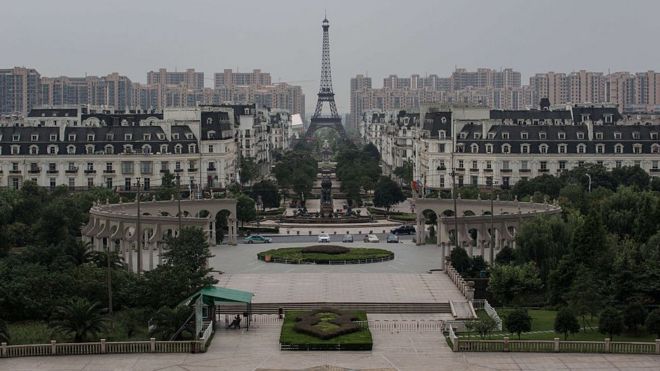 Image copyright GUILLAUME PAYEN / GETTY
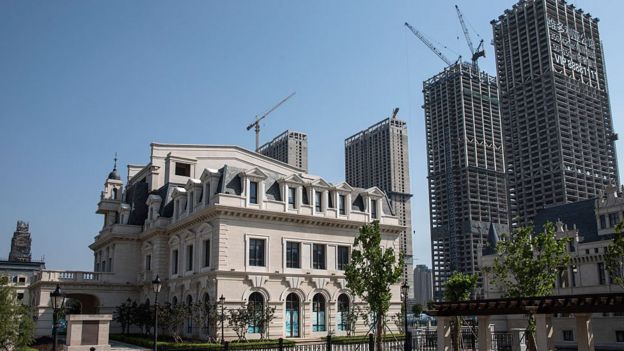 Image copyright THIERRY FALISE / GETTY
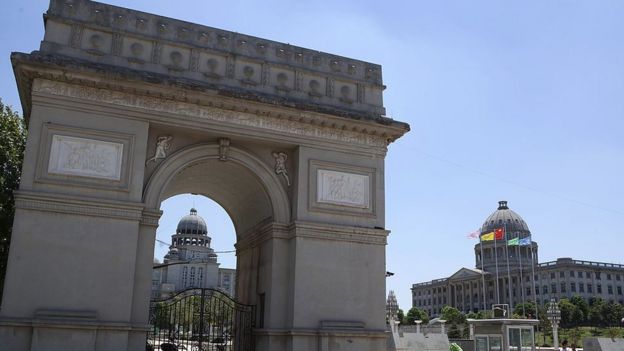 Image copyright STR / AFP / GETTY
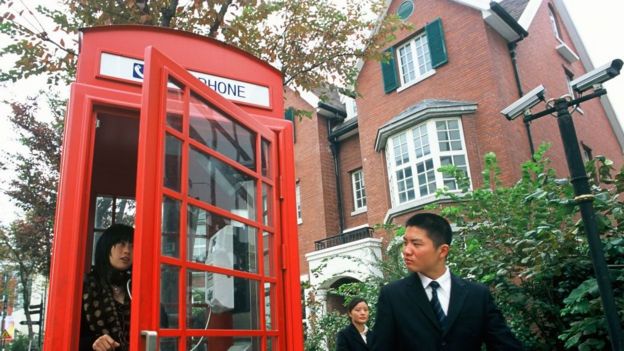 Image copyright OLIVIER CHOUCHANA / GETTY
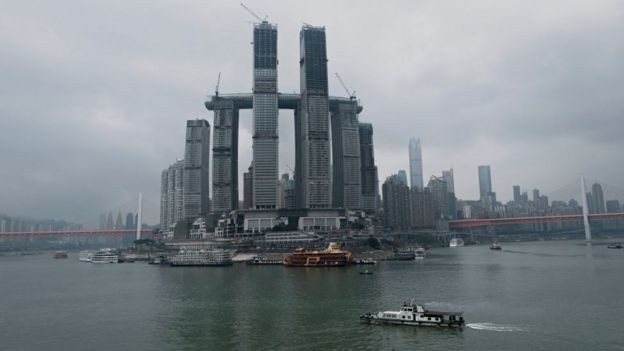 Image copyright WANG ZHAO / GETTY


 CHINDIA ALERT: You'll be living in their world, very soon