Archive for ‘Population’

28/05/2020

India coronavirus: Trouble ahead for India’s fight against infections

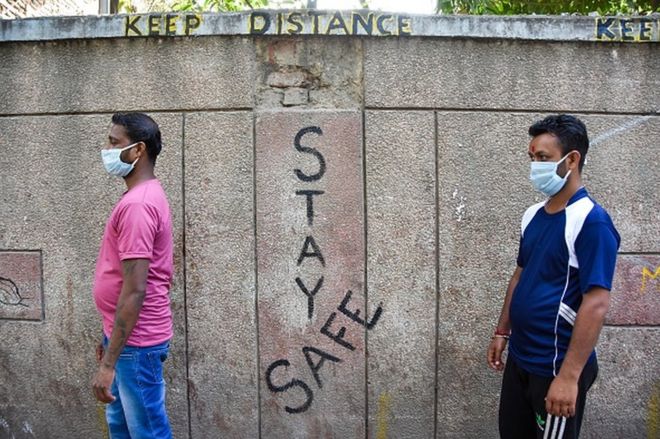
Coronavirus in IndiaImage copyright GETTY IMAGES
Image caption India has more than 150,000 reported infections

On the face of it, things may not look bad.

Since the first case of coronavirus at the end of January, India has reported more than 150,000 Covid-19 infections. More than 4,000 people have died of the infection.

To put this in some context, as of 22 May, India’s testing positivity rate was around 4%, the death rate from the infection around 3% and the doubling rate of infection – or the amount of time it takes for the number of coronavirus cases to double – was 13 days. The recovery rate of infected patients was around 40%.

All this is markedly lower than in the countries badly hit by the pandemic.

Like elsewhere in the world, there are hotspots and clusters of infection.

More than 80% of the active cases are in five states – Maharashtra, Tamil Nadu, Delhi, Gujarat and Madhya Pradesh – and more than 60% of the cases in five cities, including Mumbai, Delhi and Ahmedabad, according to official data.

More than half of people who have died of the disease have been aged 60 and older and many have underlying conditions, hewing to the international data about elderly people being more vulnerable to the disease.

The more than two-month-long grinding lockdown, official data suggests, has prevented the loss of between 37,000 and 78,000 lives. A paper published in Harvard Data Science Review appears to support that – it shows an eight-week lockdown can prevent about two million cases and, at a 3% fatality rate, prevent some 60,000 deaths.

“Infection has remained limited to certain areas. This also gives us confidence to open up other areas. It is so far an urban disease,” says VK Paul, who heads the medical emergency management plan on Covid-19.

This is where such claims enter uncertain territory.
India testingImage copyright GETTY IMAGES
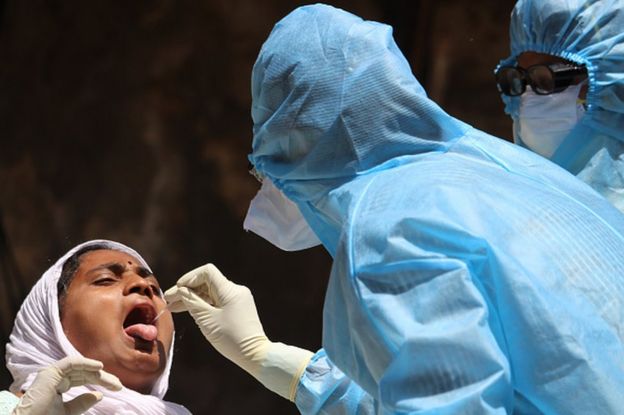
Image caption India has conducted some 180,000 tests so far

India is now among the top 10 countries worldwide in terms of total reported infections, and among the top five in the number of new cases.

Infections are rising sharply, up from 536 cases on 25 March when the first phase of the world’s harshest lockdown was imposed. The growth of infections is outpacing growth in testing – tests have doubled since April but cases have leapt fourfold.

Epidemiologists say the increase in reported infections is possibly because of increased testing. India has been testing up to 100,000 samples a day in the past week. Testing criteria has been expanded to include asymptomatic contacts of positive patients.

Yet, India’s testing remains one of the lowest in the world per head of population – 2,198 tests per million people.

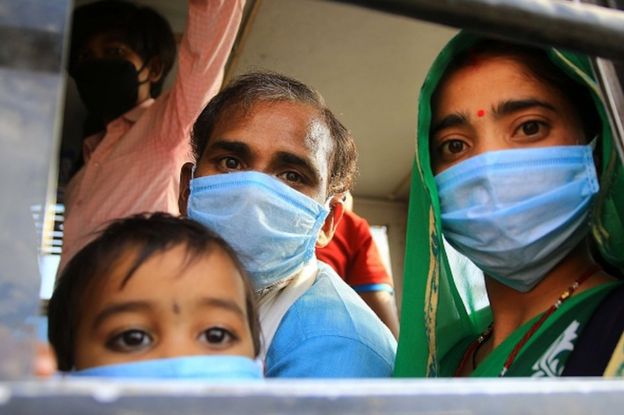
The bungled lockdown at the end of March triggered an exodus of millions of informal workers who lost their jobs in the cities and began returning home in droves, first on foot and then by train. Some four million workers have travelled by rail from cities to their villages in more than half a dozen states in the past three weeks.

There is mounting evidence that this has already led to the spread of infection from the cities to the villages. And with the messy easing of the lockdown earlier this month, there are growing fears of infections spreading further in the cities.

Rising infections and a still-low fatality rate possibly points to milder infection in a younger population and a large number of asymptomatic cases. The focus, says Amitabh Kant, CEO of the government think-tank NITI Aayog, should be “bringing down fatalities and improving the recovery rate”.

But if the infection rate continues to grow, “things are going to get pretty grim in a few weeks time,” a leading virologist told me.
India lockdownImage copyright GETTY IMAGES
Image caption Millions of workers have fled the cities and returned to their villages after the lockdown

Doctors in the capital, Delhi, and the western city of Mumbai tell me they are already seeing a steady surge in Covid-19 admissions and worry about a looming shortage of hospital beds, including in critical care.

When the infection peaks in July, as is expected, a spike in infections could easily lead to many avoidable deaths as hospitals run out of beds for, or delay treatment to, infected patients who need timely oxygen support and clinical care to recover.

“That is the real worry. A critical-care bed needs an oxygen line, a ventilator, doctors, nursing staff. Everything will be under pressure,” Dr Ravi Dosi, who is heading a Covid-19 ward at a hospital in Indore, told me. His 50-bed ICU is already full of patients battling the infection.

With the lockdown easing, doctors are feeling jittery. “It’s a tactical nightmare because some people have begun going to work but there is a lot of fear”, says Dr Dosi.

“One co-worker sneezed in the office and 10-15 of his colleagues panicked and came to the hospital and demanded they get tested. These are the pressures that are building up.”

One reason for the confusion is the lack of – or the opacity of – adequate data on the pandemic to help frame a strategic and granular response.

Most experts say a one-size-fits-all strategy to contain the pandemic and impose and lift lockdowns will not work in India where different states will see infection peaks at different times. The reported infection rate – the number of infections for every 100 tests – in Maharashtra state, for example, is three times the national average.

“The infection is not spreading uniformly. India will see staggered waves,” a leading virologist, who insisted on anonymity, told me.

The lack of data means questions abound.

What about some 3,000 cases, which are not being assigned to any state because these people were found infected in places where they don’t live? (To put this into context, nine states in India have more than 3,000 cases.) How many of these cases have died or recovered?

Also, it is not clear whether the current data – sparse, and sporadic – is sufficient to map the future trajectory of the disease.

There is, for example, no robust estimate of carriers of the virus who have no symptoms – last month a senior government scientist said at least “80 out of every 100 Covid-19 patients may be asymptomatic or could be showing mild symptoms”.
coronavirus victim burial in IndiaImage copyright GETTY IMAGES
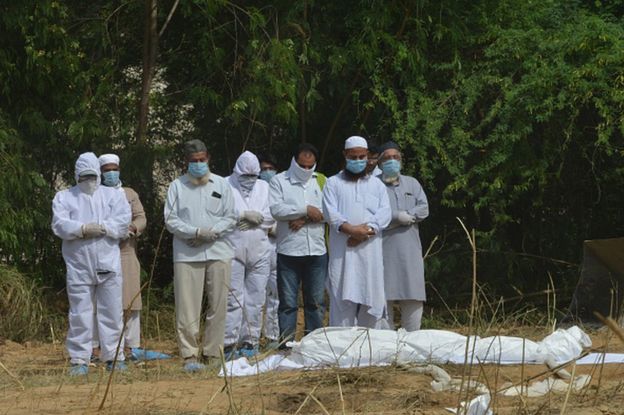
Image caption More than 4,000 people have died of Covid-19 in India

If that is indeed true, then India’s fatality rate is bound to be lower. Atanu Biswas, a professor of statistics, says the predicted trajectory could change “with the huge inclusion of asymptomatic cases”. But, in the absence of data, India cannot be sure.

Also, epidemiologists say, measures like the doubling time of the infections and the reproduction number or R0 have their limitations. R0, or simply the R value, is a way of rating a disease’s ability to spread. The new coronavirus, Sars-CoV-2, has a reproduction number of about three, but estimates vary.

“These measures are good when we are in the middle of a pandemic, less robust with fewer cases. You do need forecasting models for at least a month’s projection to anticipate healthcare needs. We should always evaluate an aggregate of evidence, not just one measure, but a cascade of measures,” Bhramar Mukherjee, a professor of biostatistics and epidemiology at the University of Michigan, told me.

Others say even calculating the number of recorded infections every day is “not always a good indicator of how an infection is spreading”.

A better option would be to look at the number of new tests and new cases every day that would provide a “degree of standardisation”, K Srinath Reddy, president of the Public Health Foundation of India, told me.

Likewise, he believes, a measure of how many Covid-19 deaths have occurred compared with the size of a country’s population – the numbers of deaths per million people – is a better indicator of the fatality rate. Reason: the denominator – the country’s population – remains stable.

In the absence of robust and expansive data, India appears to be struggling to predict the future trajectory of the infection.

It is not clear yet how many deaths are not being reported, although there is no evidence of large scale “hidden deaths”.
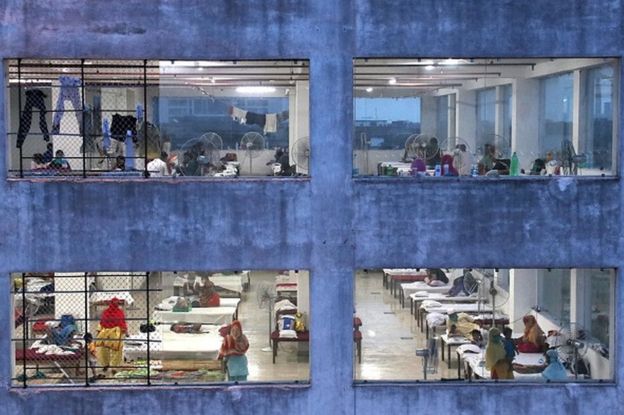
Coronavirus isolation ward in KolkataImage copyright GETTY IMAGES
Image caption A Covid-19 isolation ward in India

Epidemiologists say they would like to see clearer data on deaths due to pneumonia and influenza-like illnesses at this time over the past few years to quantify excess deaths and help with accurate reporting of Covid-19 deaths.

They would also like to see what racial disparities in infections and deaths there are to help improve containment in specific community areas. (In Louisiana, for example, African Americans accounted for 70% of Covid-19 deaths, while comprising 33% of the population.)

What is clear, say epidemiologists, is that India is as yet unable to get a grip on the extent of the spread of infection because of the still limited testing.

“We need reliable forecasting models with projection for the next few weeks for the country and the states,” says Dr Mukherjee.

Epidemiologists say India needs more testing and contact-tracing for both asymptomatic and symptomatic infections, as well as isolation and quarantine.

There’s also the need to test based on the “contact network” to stop super-spreader events – frontline workers, delivery workers, essential workers, practically anybody who interacts with a large group of people.

“We have to learn how to manage and minimise risk in our daily lives as the virus is going to be with us,” says Dr Mukherjee.

Without knowing the true number of infected cases India is, in the words of an epidemiologist, “flying blindfolded”.

That can seriously jeopardise India’s fight against the virus and hobble its response in reviving the broken economy.

Source: The BBC

24/05/2020

Xi Focus: “What is people first?” Xi points to how China saves lives at all costs

Chinese President Xi Jinping, also general secretary of the Communist Party of China Central Committee and chairman of the Central Military Commission, takes part in a deliberation with his fellow deputies from the delegation of Inner Mongolia Autonomous Region at the third session of the 13th National People’s Congress (NPC) in Beijing, capital of China, May 22, 2020. (Xinhua/Ju Peng)

BEIJING, May 23 (Xinhua) — “What is people first?” Chinese President Xi Jinping asked, before offering his own answer when he was talking with lawmakers at the ongoing national legislative session.

“So many people worked together to save a single patient. This, in essence, embodies doing whatever it takes (to save lives),” he said.

Xi, also general secretary of the Communist Party of China Central Committee and chairman of the Central Military Commission, is a deputy to the 13th National People’s Congress.

During his deliberations with fellow deputies from Inner Mongolia Autonomous Region on Friday, “people” was a keyword.

Xi referred to a story told by another deputy that morning. Luo Jie, from the COVID-19 hard-hit province of Hubei, told reporters at the session how medical workers in his hospital spent 47 days saving an 87-year-old COVID-19 patient.

“About 10 medical workers meticulously took care of the patient for dozens of days, and finally saved the patient’s life,” Xi said. “I am really impressed.”

In the COVID-19 pandemic, health workers around the world got to know the elderly are the most difficult to treat and require the most sophisticated medical resources. China has given every patient equal treatment irrespective of their age or wealth.

Chinese President Xi Jinping, also general secretary of the Communist Party of China Central Committee and chairman of the Central Military Commission, takes part in a deliberation with his fellow deputies from the delegation of Inner Mongolia Autonomous Region at the third session of the 13th National People’s Congress (NPC) in Beijing, capital of China, May 22, 2020. (Xinhua/Huang Jingwen)

In Hubei alone, more than 3,600 COVID-19 patients over the age of 80 have been cured. In the provincial capital Wuhan, seven centenarian patients have been cured.

“We mobilized from around the nation the best doctors, the most advanced equipment and the most needed resources to Hubei and Wuhan, going all out to save lives,” Xi said during the deliberations, adding that the eldest patient cured is 108 years old.

“We are willing to save lives at all costs. No matter how old the patients are and how serious their conditions have become, we never give up,” Xi said.

Xi joined political advisors and lawmakers on Thursday and Friday in paying silent tribute to the lives lost to COVID-19 as the top political advisory body and the national legislature opened their annual sessions.

This year’s government work report said China’s economy posted negative growth in the first quarter of this year, but it was “a price worth paying” to contain COVID-19 as life is invaluable.

“As a developing country with 1.4 billion people, it is only by overcoming enormous difficulties that China has been able to contain COVID-19 in such a short time while also ensuring our people’s basic needs,” the report said.

Epidemic response is a reflection of China’s governing philosophy.

The fundamental goal for the Party to unite and lead the people in revolution, development and reform is “to ensure a better life for them,” Xi said.

The nation’s average life expectancy reached 77 years in 2018, more than double that in 1949, when the people’s republic was founded.

Chinese people are not just living longer but better lives, with more material wealth and broader choices to pursue individual dreams. All rural poor will bid farewell to poverty this year as part of the goal of building a moderately prosperous society in all respects.

The Party’s long-term governance, Xi said, rests on “always maintaining close bond with the people.”

“We must always remain true to the people’s aspiration and work in concert with them through thick and thin,” Xi said.

Source: Xinhua

20/04/2020

Educational situation in China’s Xinjiang much improved: scholar

KATHMANDU, April 19 (Xinhua) — A German scholar has recently found that the right to education for Uygurs and people of other ethnic groups is well protected in China’s Xinjiang region, as young people there enjoy increasingly better opportunities.

Michael Heinrich, who has been teaching German in Minzu University of China for more than five years, said in an article published on Online Khabar news website in March that he has “paid close attention to the development of Chinese education in recent years, especially the education situation in ethnic minority areas.”

Heinrich said he has taught a Xinjiang Uygur student, who often talks with him about the education situation in her hometown and appreciates government policies on education.

The Uygur student has told Heinrich that she lives in a place where she receives Islamic religious education and China’s nine-year compulsory education, and the Uygur students in Xinjiang can enjoy preferential policies, such as extra points in college entrance examination, special policies for college admissions, and employment policy support.

In recent years, the Chinese government has intensified policy support on education in Xinjiang Uygur Autonomous Region, and increased investment in educational resources, especially those on vocational education, the article read.

“Through vocational education, more Uyghur Muslim students can enhance their survival skills and work harder by themselves and improve their living standards with these hands,” it said.

For some time, Xinjiang has been plagued by terrorism, religious extremism and separatism, according to the passage, and carrying out vocational education and training in Xinjiang is an effective measure to promote the rule of law and a practical action to protect the vital interests of people of all ethnic groups there.

It is also a just move in fighting extremism and terrorism to contribute to the stability in Xinjiang, it added.

Some Western media outlets as well as some U.S. politicians often slander the Chinese government under the guise of “human rights,” which does not only disregard the facts but also interferes with China’s sovereignty, Heinrich pointed out.

The situation in Xinjiang that they saw was completely different from the stories told by some Western politicians and media, Heinrich quoted some people who have visited Xinjiang and witnessed its development as saying.

The rights to life and development of people of all ethnic groups in Xinjiang are protected to the largest extent, Heinrich added.

Source: Xinhua

15/04/2020

Coronavirus: China launches study into asymptomatic cases and shared immunity

  • Residents of nine regions, including Wuhan, Beijing and Shanghai, to be sampled using both nucleic acid and antibody tests, state media reports
  • Research ‘very important as it will help us to direct our countermeasures in the future’, molecular virologist says
China is using dual testing to determine how many people have been infected with Covid-19 but recovered without showing symptoms. Photo: AP
China has begun a major survey to determine how many people might have been infected with the coronavirus and then recovered without ever showing symptoms, while also assessing immunity levels within different communities, state media reported.

The research will be conducted in six provinces, including Hubei which was the focus of the initial outbreak, as well as Beijing, Shanghai and Chongqing.

Wuhan

, the capital of Hubei and home to about 60 per cent of all infections reported in mainland China, is taking the lead in the study, which involves giving both nucleic acid and antibody tests to 11,000 of its 11 million residents, state news agency Xinhua reported on Wednesday.

Health workers collected throat swabs and blood samples from about 900 people randomly selected from eight subdistricts of the city on Tuesday, Ding Gangqiang, head of the Wuhan epidemiological survey team, was quoted as saying.

“The purpose is to learn about the immunity level in communities and provide scientific support on how we should adjust our disease control strategies,” he said.

Professor Lu Hongzhou, a specialist in infectious diseases who heads the Shanghai Public Health Clinical Centre where Covid-19 patients are being treated, said he supported the research though the collection of samples had yet to start in the city.

“We haven’t received notification from the top [to start],” he said. “The number of infections [in Shanghai] is not very big, but I think we’d better do this so as to have an idea of the scale of asymptomatic carriers.”

Professor Jin Dong-yan, a molecular virologist at the Li Ka Shing Faculty of Medicine at the University of Hong Kong, said that the use of both nucleic acid and antibody tests would enable scientists to determine those people who had been infected but recovered without medical aid and without showing symptoms.

The study into asymptomatic infections got under way in Wuhan in Tuesday. Photo: Simon Song
If a person tested positive in a nucleic acid test, it meant they were carrying the virus, and if positive in an antibodies test, it meant that they had contracted the virus and had recovered, he told the South China Morning Post.

“This is very important as it will help us to direct our countermeasures in the future,” Jin said.

“If we find, say 60 per cent, of the population has acquired immunity, then lockdowns will no longer be meaningful. If it turns out that there are many people with a high viral load but without symptoms, then we should be on high alert and take stricter measures.

“For people in Hubei, the tests can also save them from discrimination when they get back to work – those who prove to have developed immunity are very unlikely to get infected [again] for at least a year,” he said.

Wuhan hotel owners say they’re on the brink of going bust

15 Apr 2020
Beijing began adding asymptomatic cases

to the nation’s daily infections tally at the start of April amid concerns that such people could trigger a second outbreak once the widespread lockdowns in cities like Wuhan and elsewhere were lifted.

China reported 103 new coronavirus infections on Wednesday, of which 39 were imported. Of the total, 57 people had no symptoms, including three of the imported cases.

Since the outbreak began, China has reported 82,295 cases, of which 95 per cent have recovered and been discharged from hospital.

Source: SCMP

01/02/2020

India steps up farm support, offers tax cuts to revive faltering growth

NEW DELHI (Reuters) – India sought to boost growth in a federal budget on Saturday that raised spending on farms and expressways and offered cuts in personal taxes, but the measures fell short of market expectations and battered stocks.

Prime Minister Narendra Modi’s government is grappling with the country’s worst slowdown in a decade, with falling employment, consumption and investment ratcheting up the pressure to revive growth.

The government estimates growth this year to March 31 will slip to 5%, the weakest pace since the global financial crisis of 2008-09. It also warned an expected rebound the following year might entail a blow-out in fiscal deficit targets.

Finance Minister Nirmala Sitharaman, presenting the budget for the financial year beginning April 1, said 2.83 trillion rupees ($39.8 billion) will be allocated toward agriculture and allied activities, up 5.6 percent on the previous year.

The funds will be deployed to help farmers set up solar power generation units as well as establish a national cold storage system to transport perishables.

Sitharaman also vowed to spend $50.7 billion in coming years on a federal water scheme to address challenges facing one of the world’s most water-stressed nations.

Agriculture accounts for near 15% of India’s $2.8 trillion economy and is a source of livelihood for more than half of the country’s 1.3 billion population.

Sitharaman announced a new personal tax system including cuts for those ready to give up a myriad of tax breaks. She also abolished payment of dividend distribution tax by companies to spur investment.

“People have reposed faith in our economic policy,” Sitharaman said to the thumping of desks in parliament. “This is a budget to boost their income and enhance their purchasing power.”

Opposition parties slammed the budget, saying it had failed to address the slowdown in consumer demand and investment. “The government is in complete denial that the economy faces a grave macro economic challenge,” said former finance minister P. Chidambaram.

But higher government spending has put pressure on public finances, prompting caution from rating agencies. Sitharaman said the fiscal deficit for the current year would widen to 3.8% of GDP, up from 3.3% targeted for the current year.

Gene Fang, associate managing director, sovereign risk at Moody’s, said: “India’s 2020/21 budget highlights the challenges to fiscal consolidation from slower real and nominal growth, which may continue for longer than the government forecasts.”

GOVERNMENT SPENDING

For fiscal 2020/21 Sitharaman set the fiscal deficit at 3.5 percent. Moody’s said India’s government debt is already significantly higher than the average for Baa-rated sovereigns, a product of persistent fiscal deficits.

To help finance government spending, Sitharaman set a target for selling stakes in state firms at 2.1 trillion rupees for 2020/21, more than three times the amount expected this year.

She said the government will sell a part of its holding in state-run Life Insurance Corp, the country’s biggest insurance company.

But many experts said the measures did not go far enough to address the slowdown and structural flaws.

“In a normal scenario this budget would have been considered as good providing tax benefit to the common man, corporate and focus on farmers’ incomes, but the situation required more,” said Vinod Nair, head of research at Geojit Financial Services in Kochi.

Indian shares slid to a more than three-month low after a special trading session on Saturday, dented by what analysts said was a lack of sufficient stimulus measures. The NSE Nifty 50 index .NSEI closed 2.5% lower while the benchmark S&P BSE Sensex .BSESN fell 2.4%

“Markets had very high expectations from the budget … these expectations have not been met,” said Deepak Jasani of HDFC Securities.

The government also announced higher duties on a host of imports from walnuts to phone parts. Taxes on imports of pre-assembled printed circuit boards were raised to 20% from 10% and there were new taxes on mobile phones ringers and display panels in a bid to boost local manufacturing.

In its annual economic report released on Friday the government predicted growth would rebound to 6.0% to 6.5% in the fiscal year beginning April 1.

Some economists say global trade tensions and the outbreak of coronavirus in China pose a new risk to economic recovery by hitting cross-border commerce and supply chains.

Source: Reuters

25/01/2020

French citizens to be bused out of Wuhan to escape coronavirus, consulate says

  • Evacuation plan outlined in email as diplomats look for ways to protect foreign nationals
  • Paris earlier reports three cases on its soil – the first to be identified in Europe
The French consulate in Wuhan is planning to evacuate French nationals from the city to escape the deadly coronavirus. Photo: AFP
Foreign diplomats in Wuhan are scrambling to assess the situation in the coronavirus
-plagued city, with French officials planning to evacuate French nationals trapped by the Chinese government’s lockdown.
The plan would allow French people who want to leave Wuhan, the capital of Hubei province, to travel by bus to Changsha in neighbouring Hunan province, according to an email seen by the South China Morning Post.
“The consulate general, in collaboration with local authorities, plans to set up a bus service to allow French nationals … and their Chinese and foreign spouses and children to travel from Wuhan to Changsha,” it said.
The email, sent by the French consulate, also asked anyone who received it to pass the notice on to other French nationals. It was not clear which bodies received the email and the date of the planned evacuation was not specified.

The consulate could not be reached for comment on Saturday.

France, the United States, Britain and South Korea all have consulates in Wuhan, according to China’s foreign ministry.

The South Korean consulate said in a post on its website that it would suspend all visa applications “indefinitely until further notice”.

A diplomatic source said several foreign embassies in China were considering plans to evacuate their nationals from Wuhan.

First coronavirus case ‘had no links to seafood market’

25 Jan 2020

It is not known how many foreigners remain in the city, which has a population of about 11 million and has been under a government-imposed lockdown since Thursday morning.

French Foreign Minister Jean-Yves Le Drian said in a statement on Friday that Paris was monitoring the crisis and “can increase the power [to respond] if necessary”.

There have so far been three confirmed cases of the new coronavirus in France, in Paris and Bordeaux.

French Foreign Minister Jean-Yves Le Drian said on Friday that Paris was monitoring the crisis in China. Photo: AFP
The US said earlier that most of its consulate staff and their families had been pulled out of Wuhan.

An emailed inquiry to the British consulate in the city received only an automated reply, saying: “Wuhan is now in crisis mode. We may not be able to answer your emails for some time.”

The consulate would be closed for the Lunar New Year holiday until January 31, it said.

Meanwhile, British citizen Kharn Lambert told the BBC on Thursday how he had been “trapped” in Wuhan.

The PE teacher said he was afraid to leave his house for fear of catching the deadly virus.

“If you saw the street behind me at night time where I normally live … if I show you out there now, it’s dead,” he said.

More than 1,280 confirmed cases have been reported across China, of which more than 700 were in Hubei, according to local government figures released on Saturday.

The death toll in Hubei stands at 39, with two other fatalities reported in the provinces of Hebei and Heilongjiang.

Tens of millions of people in Hubei are effectively on lockdown since a travel ban was imposed on most of the province.

Flights, trains, buses and ferries connecting Wuhan to other cities in Hubei have been suspended. Rail authorities in Wuhan, which is a hub for several major high-speed lines, said operations at 61 stations and more than 400 train services had been suspended until further notice.

Source: SCMP

27/11/2019

China, Suriname establish strategic partnership of cooperation

CHINA-BEIJING-XI JINPING-SURINAME-PRESIDENT-TALKS (CN)

Chinese President Xi Jinping holds a welcome ceremony for Suriname’s President Desire Bouterse before their talks at the Great Hall of the People in Beijing, capital of China, Nov. 27, 2019. (Xinhua/Yue Yuewei)

BEIJING, Nov. 27 (Xinhua) — China and Suriname on Wednesday decided to upgrade their relationship to a strategic partnership of cooperation.

The announcement came as Chinese President Xi Jinping held talks with Surinamese President Desire Bouterse at the Great Hall of the People in Beijing.

During the talks, Xi said Suriname is one of the first Caribbean countries to establish diplomatic relations with China. The relations can be considered a model of friendly relations and equal treatment between countries of different sizes.

The development of bilateral ties is in an important historical period, and China is willing to work with Suriname to take the opportunity of the Belt and Road cooperation to uplift the ties to new heights, said Xi.

Xi stressed that the two countries should maintain support on issues involving each other’s core interests and major concerns.

Xi called on the two sides to deepen cooperation in areas such as infrastructure construction, agriculture, forestry, fisheries, communications and energy, and explore cooperation in new areas such as new energy, digital economy, tourism and ocean economy.

“China encourages more capable Chinese companies to invest in Suriname,” said Xi.

Noting that Suriname is one of the countries with the largest overseas Chinese population in the Caribbean area, Xi said it is necessary to promote cultural exchanges, facilitate personnel exchanges and strengthen cooperation in areas such as education and law enforcement. China will also send a medical expert panel to Suriname.

The two sides should maintain communication and coordination on global issues, practice multilateralism, build an open world economy and safeguard the common interests of both countries and all developing countries, said Xi.

China is willing to continue to speak out from a sense of justice for Suriname on multilateral occasions and work together with the international community including Suriname to constructively participate in the multilateral process on global climate issues, he said.

Xi added that China has always respected the right of Latin American people to choose their own development path and supported the process of Latin American integration and the handling of regional issues through dialogue and consultation.

China is willing to work with Latin America to promote the construction of the Belt and Road and deepen China-Latin America cooperation by the principles of equal treatment and mutual benefit, said Xi.

Bouterse extended congratulations on the 70th founding anniversary of the People’s Republic of China, and said under Xi’s leadership, socialism with Chinese characteristics will be a success and will bring benefits to the Chinese people and people around the world.

Underscoring the historic and political significance of his visit, Bouterse said Suriname will firmly uphold the one-China principle and support China’s national reunification.

He said Suriname is grateful for China’s help in his country’s economic and social development, and ready to work with China to enhance exchanges at all levels, cement political mutual trust, expand economic and trade cooperation, deepen people-to-people exchanges and take the joint construction of the Belt and Road as an opportunity to upgrade bilateral strategic relations.

Suriname stands ready to work with China to safeguard multilateralism, international law and basic norms of international relations, Bouterse said.

After the meeting, Xi and Bouterse witnessed the signing of several cooperation documents.

Source: Xinhua

28/07/2019

Senior official underlines drinking water safety in poor areas

YINCHUAN, July 27 (Xinhua) — Hu Chunhua, a member of the Political Bureau of the Communist Party of China Central Committee, has urged more efforts to address weak links in the country’s poverty alleviation campaign, including drinking water safety in the impoverished areas.

Hu, also chief of the State Council’s leading group of poverty alleviation and development, made the remarks during an inspection tour from Friday to Saturday in the city of Guyuan in northwest China’s Ningxia Hui Autonomous Region.

After visits to some impoverished villages, Hu said efforts should be made to ensure compulsory education, basic medical care, and housing for the rural poor, while drinking water safety should be guaranteed.

The country’s central authorities should speed up the implementation of poverty relief policies, while local governments should increase fund use efficiency, he said.

Source: Xinhua

29/05/2019

China showing signs similar to Japanese housing bubble that led to its ‘lost decades’, expert warns

  • China’s housing market showing signs of bubble similar to that seen in Japan in 1980s, says Asian Development Bank Institute dean and CEO Naoyuki Yoshino
  • China’s loose policy following 2008 global financial crisis laid foundations for current housing bubble, with US-China trade war adding to concerns
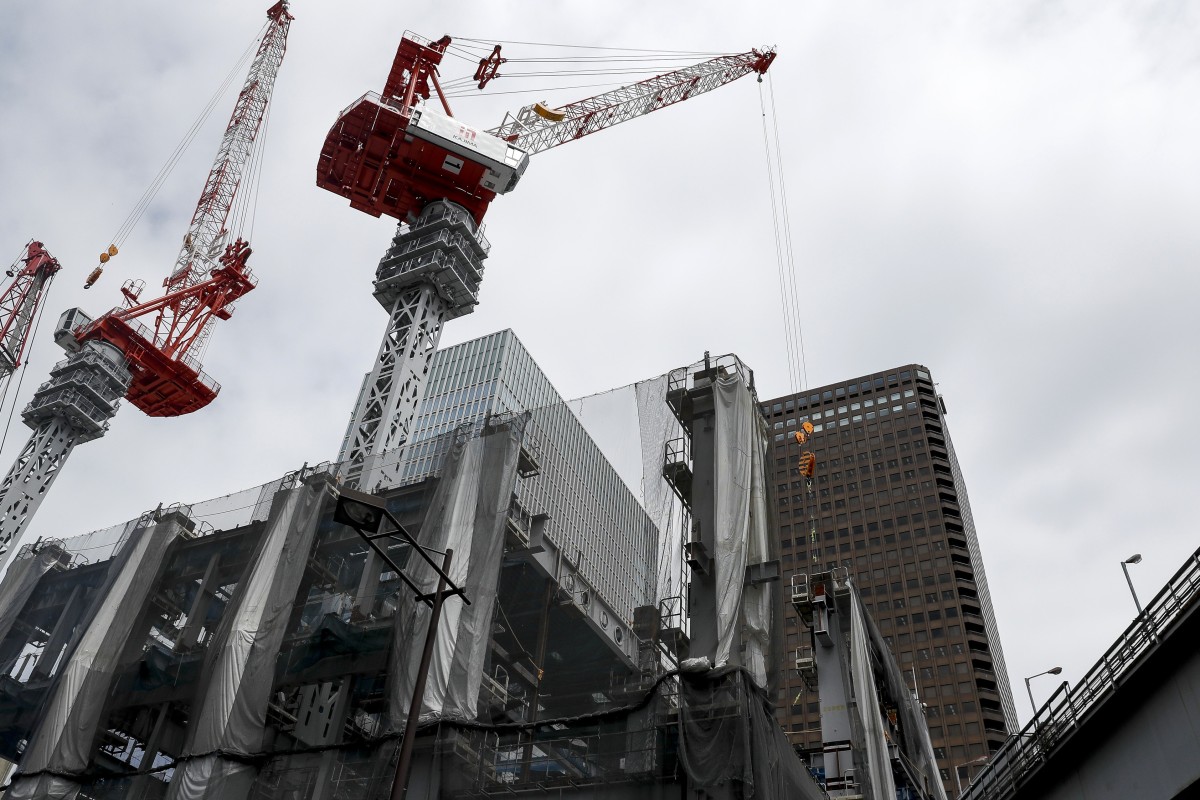
The average price of a home in Beijing has soared from around 380 yuan (US$55) per square feet in the early 2000s to the current level of well above 5,610 yuan (US$813) per square foot, according to property data provider creprice.cn. Photo: Bloomberg
China must exercise extreme caution in handling its housing sector because it is showing signs similar to those witnessed during Japan’s bubble period of the 1980s that contributed to the collapse of Japanese asset prices and its subsequent “lost decades” of weak economic growth and deflation, a Japanese financial system expert warned.
The parallels between China’s current landscape and Japan’s three decades ago are readily apparent, stemming from a loose monetary policy that laid the foundation for the expansion of a housing bubble, said Naoyuki Yoshino, dean and CEO of the Asian Development Bank Institute.
China flooded its economy with credit in response to the 2008 global financial crisis, fuelling rapid growth in mortgages, real estate borrowings and investments over the past decade.
In the same vein, the Japanese government’s relaxed monetary policy in the 1980s triggered an economic bubble that eventually burst and sank the economy into a recession that 
lasted almost 25 years,

with the Bank of Japan continuing to still keep interest rates at or below zero per cent to this day in an attempt to spur inflation.

The Japanese government’s relaxed monetary policy in the 1980s triggered an economic bubble that eventually burst and sank the economy into a recession that lasted almost 25 years. Photo: Bloomberg

Japan’s experience could serve as a lesson on how to avoid a housing market collapse that would be especially detrimental to China’s financial sector and real economy, according to Yoshino.

“I’m very much concerned that if land prices keep on rising and if the population starts to shrink along with aggregate demand, then China will experience a similar situation to that of Japan,” Yoshino said.

There are already several strong signs of a housing bubble in China, according to Yoshino, firstly the astronomical surge in property prices in recent years.

I’m very much concerned that if land prices keep on rising and if the population starts to shrink along with aggregate demand, then China will experience a similar situation to that of Japan Naoyuki Yoshino
Home ownership is one of the few ways for Chinese families to generate wealth because of limited investment opportunities. The average price of a home in Beijing has soared from around 4,000 yuan (US$578) per square metre, or 380 yuan (US$55) per square feet, in the early 2000s to the current level of well above 60,000 yuan (US$8,677) per square metre, or 5,610 yuan (US$813) per square foot, according to property data provider creprice.cn.

The increase has also lifted the housing price to income ratio sharply from 5.6 in 1996 to 7.6 in 2013, well above the Japanese rate of 3.0 at its peak in 1988. The price to income ratio is the basic affordability measure for housing.

According to the Global Times, a reasonable home price should be three to six times the median household income. That means a family with an average income can buy a house with three to six years’ annual income. The house price to income ratio in China is above 50 in the first-tier cities and 30 to 40 in the third- and fourth-tier cities, the newspaper said in October. There are four levels of cities in China, defined by a number of factors including gross domestic product (GDP) and population, with Beijing, Shanghai and Shenzhen considered tier-one cities.

Another worrying sign, according to Yoshino, is that China’s financial sector has lent more heavily to the real estate sector than did Japanese banks during their bubble period.

Thirdly, the ratio of Chinese housing loans to the nation’s GDP has consistently been higher than Japan’s by about three times more.

Ever since US President Donald Trump started imposing tariffs on Chinese imports in July, worries have been mounting that China’s property bubble and its record debt level would make the economy vulnerable to the impact of rising trade tensions, leading to a sharper-than-expected economic slowdown.

Despite a government crackdown on debt and risky lending over the last several years, housing prices and bank lending to the sector have continued to rise, pushing homes beyond what the vast majority of people can afford, as well as putting many property developers deeply into debt.

The Chinese Academy of Social Sciences, a top government think tank, said in a report last week that the growth in housing prices in China’s bigger cities, caused by a relatively short supply of new homes, is likely to push up costs across the country.

“The government should closely monitor these cities to avoid overheating,” said Wang Yeqiang, a researcher at the Chinese Academy of Social Sciences who co-authored the report.

Property developers have begun a debt-fuelled land-buying spree just as urban housing demand is entering a long-running structural decline, said Julian Evans-Pritchard, senior China economist at Capital Economics. The potential supply of property that could be built on developers’ land reserves jumped last year to a record high, meaning the risk of a glut of new housing is real, Evans-Pritchard added, if developers were to convert all their land reserves into housing tracts.

“Since real estate drives around a fifth of GDP, a sharp downturn in this sector would be contagious, resulting in a jump in defaults across a wide swathe of the economy that could quickly erode bank capital buffers,” he warned.

China’s corporate debt stood at 155 per cent of GDP in the second quarter of 2018, much higher than other major economies, according to data from the Organisation for Economic Cooperation and Development. In comparison, Japan’s corporate debt level is 100 per cent of GDP and is 74 per cent in the US. China’s corporate debt includes issuances by its 

local government

vehicles which by extension is mostly credit with an implicit guarantee from the central government.

Since real estate drives around a fifth of GDP, a sharp downturn in this sector would be contagious, resulting in a jump in defaults across a wide swathe of the economy that could quickly erode bank capital buffersJulian Evans-Pritchard

China’s imbalance between housing supply and demand may worsen because it faces a similar economic transition that is already well underway in Japan – a

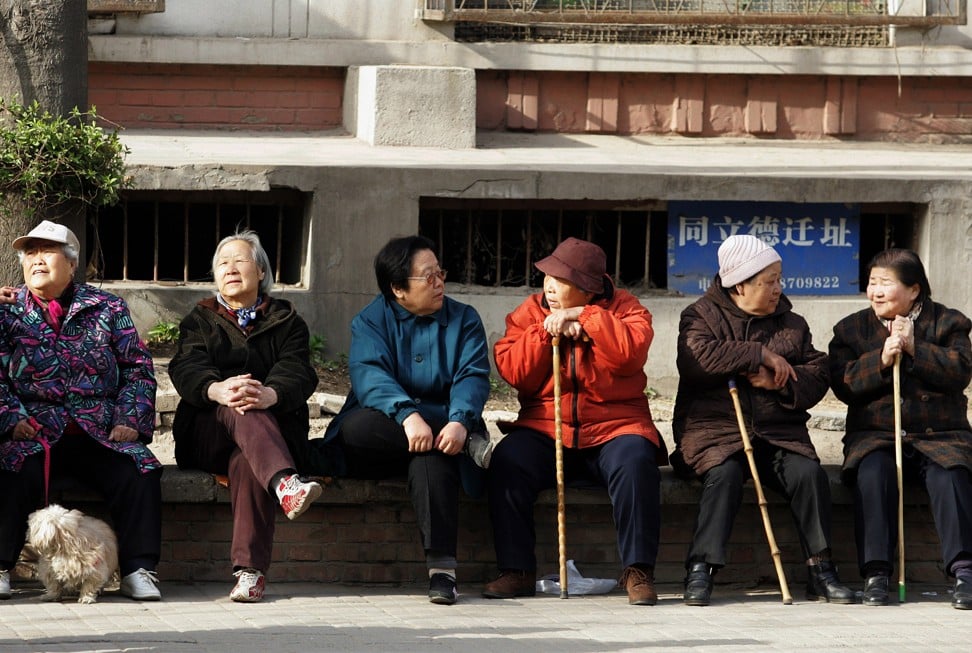
rapidly ageing population

and

shrinking workforce

that led to Japan’s long-term deflation problem, said Yoshino, who is also the chief adviser to the Japan Financial Services Agency’s Financial Research Centre.

Even if rising housing demand due to urbanisation were to push China’s housing prices higher over the near term, the country faces risks from an oversupply of housing in the longer term due to its increasingly unbalanced demographic structure, he said.
The government has proposed that China’s retirement ages of 45 to 50 years for females and 55 to 60 years for males introduced in the 1980s be gradually increased to 65 years for both by 2045 due to a rapidly ageing population.
The rising population of retirees will consume fewer goods and services compared to younger families with children, and in turn, could dampen business investment given lower expected rates of return.
At the same time, more retirees means a bigger burden on the younger generation of taxpayers, which would reduce their wealth and change patterns of consumption. This is especially worrying on the back of China’s high debt level and pension funding gap, similar to the situation in Japan, Yoshino said.
In Japan, benefits from government pension schemes account for an increasing share of the country’s accumulated debt as spending on social protection programmes now represents more than a third of the government’s total budget.
China’s national pension fund is forecast to peak at 6.99 trillion yuan (US$1 trillion) in 2027 before it gradually runs out by 2035, according to the Chinese Academy of Social Sciences. Photo: AFP
The strain is also evident in China with the

national pension fund

forecast to peak at 6.99 trillion yuan (US$1 trillion) in 2027 before it gradually runs out by 2035, according to the Chinese Academy of Social Sciences, forcing the government to start to transfer assets from state-owned companies to fill the funding gap.

Against the broader economic slowdown, compounded by the trade war with the US, policymakers are also expected to carve out a highly expansionary fiscal budget for this year, with the broad deficit surging to 6.6 per cent of China’s GDP, up from 4.7 per cent last year, according to Larry Hu, head of China economics at Macquarie Capital.

Alicia Garcia Herrero, Asia-Pacific chief economist at Natixis, noted that the US criticisms of China’s unfair trade practises and currency manipulation were reminiscent of the US-Japan disputes in the 1980s and 1990s.

Because Japan was politically and economically dependent on the US at that time, it inevitably implemented economic policies to reduce its current account surplus. Subsequently, Japan suffered from the bursting of its asset price bubble, which led to deflation and the lost decades.

However, Herrero said that the modern China is less dependent on the US and so is in a better position to resist pressure to adjust its economic policies to create demand for American products.

Wang Yang, one of the seven members of China’s elite Politburo Standing Committee, said the US-China trade war could slash one percentage point off Beijing’s economic growth this year. Last year, growth expanded at its slowest pace since 1990, while corporate bond defaults hit a record high and banks’ non-performing loan ratio hit a 10-year high.

Source: SCMP

15/02/2019

Fire alarms “faulty” at Delhi blaze hotel, prompting mass reinspections

NEW DELHI (Reuters) – A hotel that caught fire in the Indian capital on Tuesday, killing 17 people, passed safety checks 14 months ago, but an investigation has revealed breaches of regulations, such as faulty alarms, prompting a mass reinspection of other hotels.

Poorly enforced regulations lead to thousands of deaths in fires across India every year and officials in New Delhi say an overstretched fire service is hampering safety efforts.

The Hotel Arpit Palace passed a fire safety check in December 2017, but a copy of the initial police investigation seen by Reuters showed several breaches of fire regulations, including a lack of signs to guide guests to exits and fire alarms that did not work.

Delhi’s fire service, which is responsible for safety inspections as well as fighting fires, is now reviewing certificates issued to more than 1,500 hotels in one of India’s tourist hubs, a senior fire official told Reuters.

“Fire officers have to do a lot of work,” said Vipin Kental, Delhi’s chief fire officer. “We have to be inspectors and fight fires. We do not have the manpower.”

The city has around 1,700 firefighters, he said, which is less than an eighth of the number in New York, a city with less than half of Delhi’s population.

PREVENTABLE TRAGEDY

The fire is believed to have begun on the hotel’s first floor, spreading quickly through wood-panelled corridors, police say. Among the dead were members of a wedding party from Kerala and a two Buddhist pilgrims from Myanmar.

“From the outside, the building looked intact, but inside everything was completely charred,” a police officer told Reuters.

Two of the 17 died after jumping out of windows in desperation after failing to find emergency exits, added the officer, who declined to be named as he is not authorised to talk to the media.

“Fire preparedness is a matter of shockingly low priority in most parts of the country,” said an editorial in the Indian Express, one of the country’s leading newspapers.

A 2018 study by India’s home ministry that found the country had just 2,000 of more than 8,500 fire stations it needs.

More than 17,000 people died in fires in 2015, according to data from the ministry, the last year for which figures are available, one of the largest causes of accidental death in India.

Fire safety is an issue for shanty towns and some of the country’s most expensive real estate.

A day after the Arpit Palace disaster, more than 250 makeshift homes were destroyed in a slum in Paschim Puri, a poor area of New Delhi, though no one was killed.

In 2017, 14 people were killed during a birthday party at a high-end bar in India’s financial capital Mumbai.

In several upscale neighbourhoods in Delhi, police shut hundreds of shops and restaurants last year for trading on floors meant for residential use, though many continue to operate illegally, residents say.

By the boarded-up Arpit Palace in the Karol Bagh area of New Delhi, wires from adjacent hotels still trail across the street, though staff there told Reuters they were complying with fire regulations.

Adding to the safety problems, poorly paid staff in the hotel and restaurant industries are often unable to help guests when fires break out, Kental said.

“They are not trained. They don’t know what to do in the event of a fire,” he said.

Source: Reuters

Law of Unintended Consequences

continuously updated blog about China & India

ChiaHou's Book Reviews

continuously updated blog about China & India

What's wrong with the world; and its economy

continuously updated blog about China & India