27/04/2020
- Pupils given headwear modelled on a style worn by officials a thousand years ago to reinforce the message that they must stay a metre away from each other
- One legend says the hats were given long extensions to stop courtiers whispering among themselves when meeting the emperor
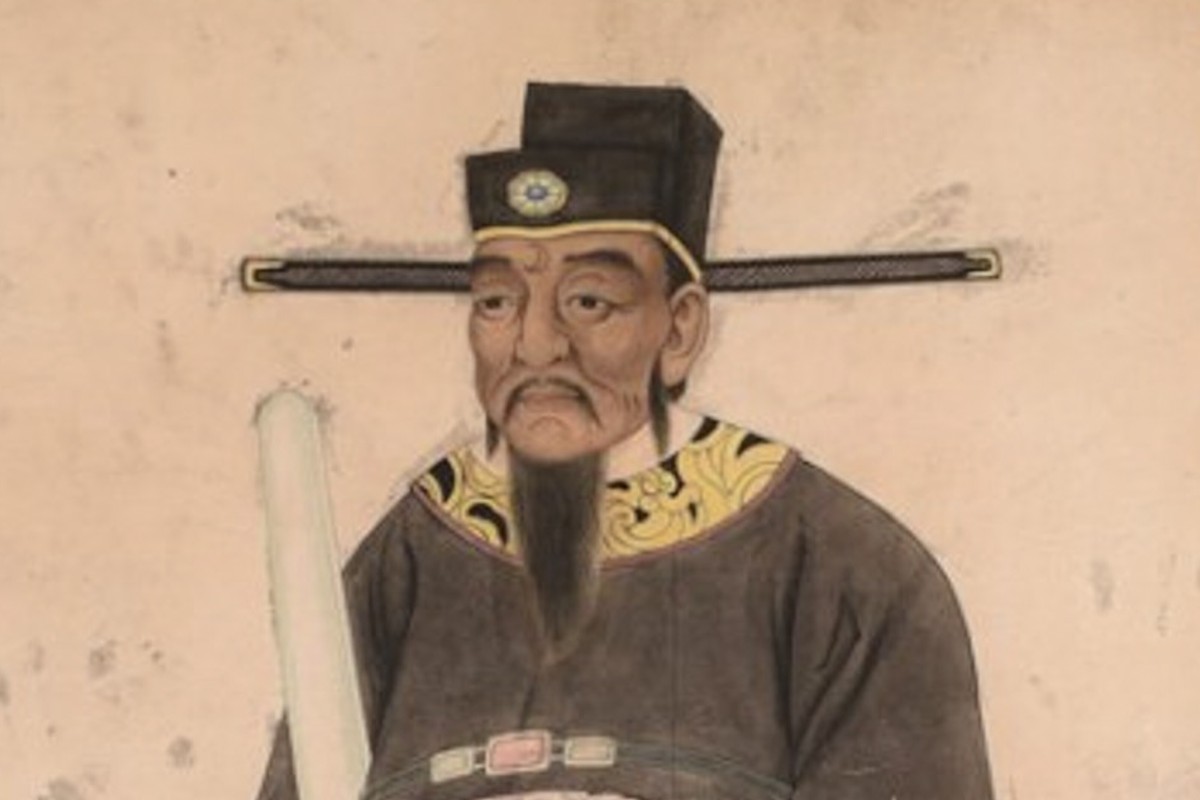
Hats with long extensions were worn by officials during the Song dynasty. Photo: Handout
An ancient Chinese hat has joined face masks and hand sanitisers as one of the weapons in the fight against
Covid-19.
A primary school in Hangzhou in the east of the country took inspiration from the headgear worn by officials in the Song dynasty, which ruled China between 960 and 1279, to reinforce lessons on social distancing.
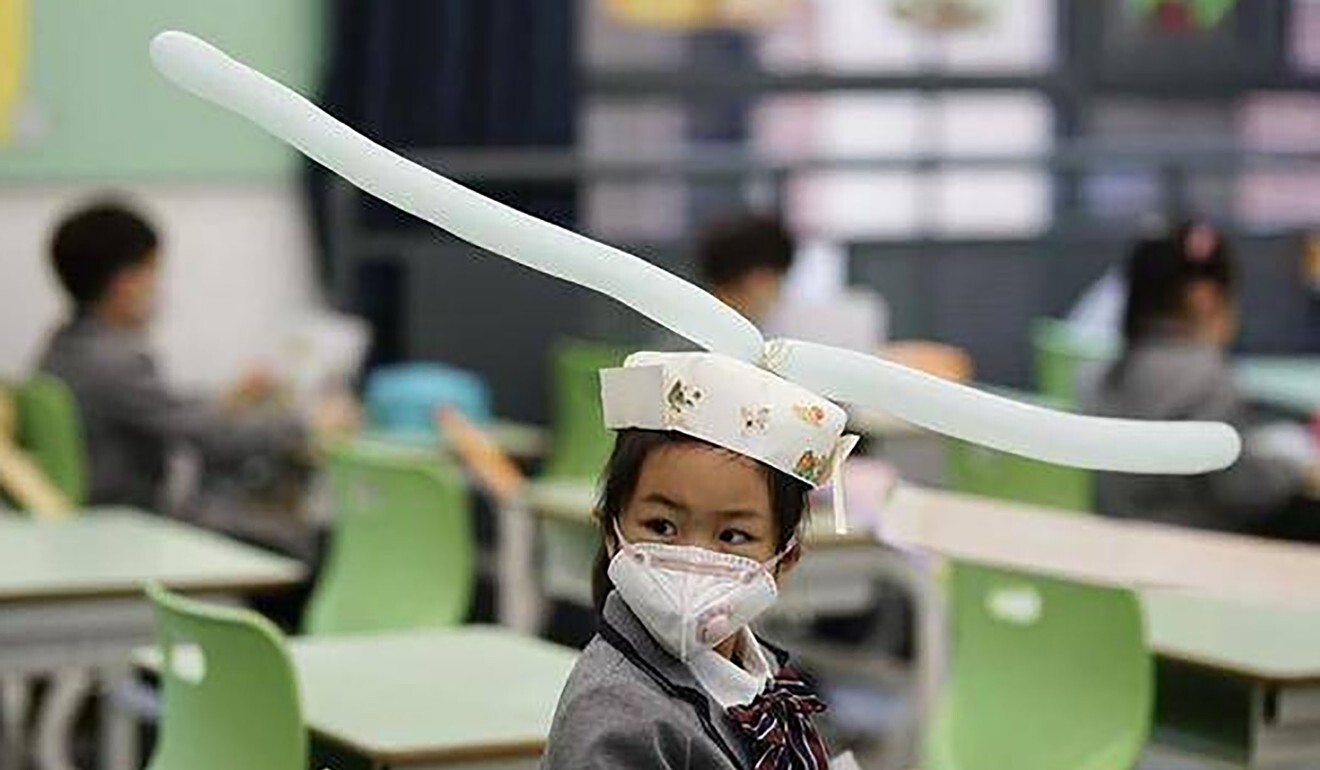
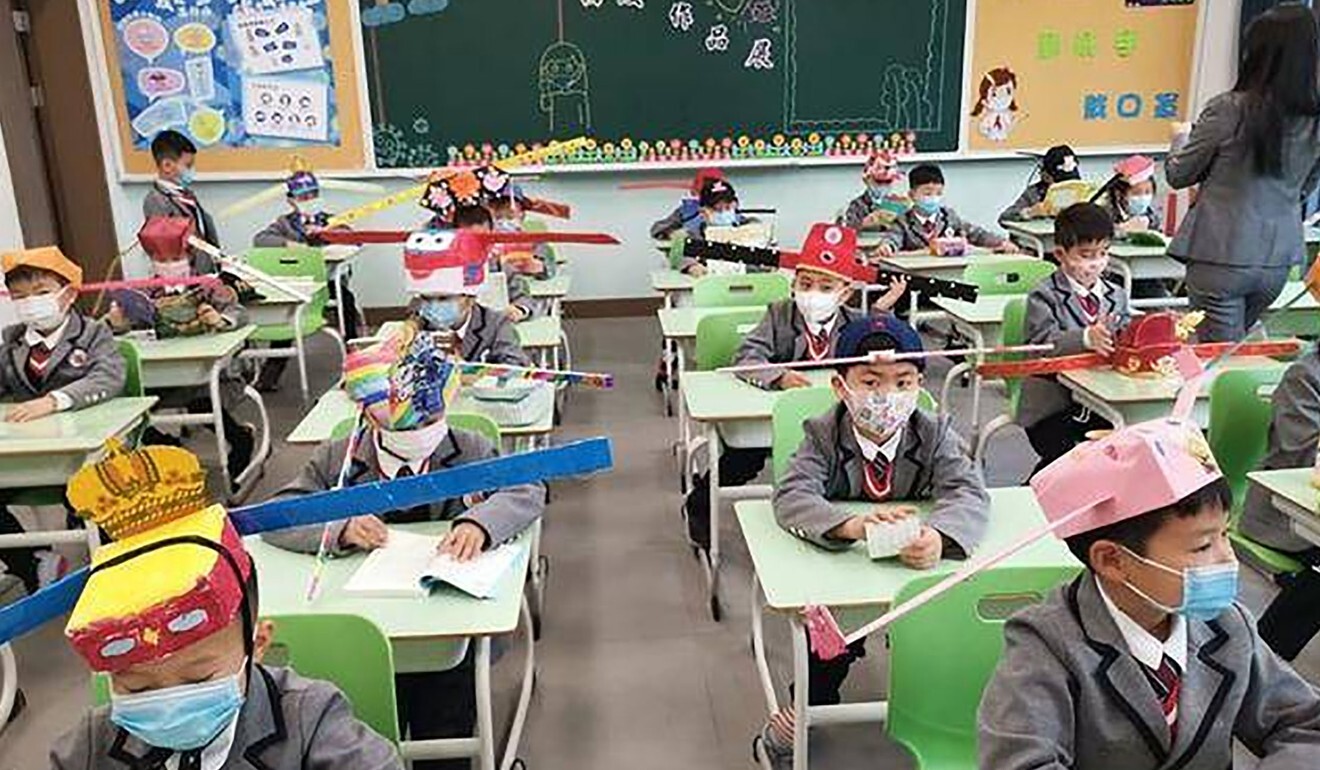
Pupils at the school wore their own handmade versions of the hats, which have long extensions, or wings, to keep them at least a metre (3ft) apart when they returned to school on Monday, state news agency Xinhua reported.
One legend says that the first Song emperor ordered his ministers to wear hats with two long wings on the sides so that they could not chitchat in court assemblies without being overheard, according to Tsui Lik-hang, a historian at City University of Hong Kong.
Pupils at a school in Hangzhou made their own versions of the hats. Photo: Weibo
However, he warned that this story came from a much later source, adding: “The Song emperors, in fact, were also depicted to have worn this kind of headwear with wing-like flaps.”
The World Health Organisation recommends that people stay at least a metre apart to curb the spread of the coronavirus that causes Covid-19.
Coronavirus droplets may travel further than personal distancing guidelines, study finds
“If you are too close, you can breathe in the droplets, including the Covid-19 virus if the person coughing has the disease,” the global health body advises.
An early childhood education specialist said the hats were a good way to explain the concept of social distancing to young children, who find it difficult to understand abstract concepts.
The pupil’s head gear is designed to drive home the social distancing message. Photo: Weibo
“As children can see and feel these hats, and when the ‘wings’ hit one another, they may be more able to understand the expectations and remember to keep their physical distance,” said Ian Lam Chun-bun, associate head of the department of early childhood
Using pictures of footprints to indicate the right distance to keep when queuing, standing, and even talking to schoolmates was also helpful, said Lam, who recommended visual aids and aids that stimulate other senses, such as hearing and touch.
“We can use sharp colours or special textures, like tactile paving,” he added.
Source: SCMP
Posted in 1279, 3ft, 960, abstract concepts, according, among, ancient, apart, assemblies, at least, away from, between, breathe, causes, Chinese hat, Chinese school, chitchat, City University of Hong Kong, coronavirus, coughing, Country, court, courtiers, COVID-19, curb, depicted, Disease, distance, droplets, each other, East, emperor, EXPECTATIONS, extensions, face masks, fight, further, given, gives, guidelines, hand sanitisers, handmade versions, Hangzhou, hat tip, hats, headgear, headwear, historian, how to, inspiration, keep, legend, Lessons, long, long wings, meeting, message, metre, modelled, Monday, must stay, officials, overheard, People, person, personal distancing, primary school, pupils, recommends, reinforce, remember, reported, returned, ruled, school, sides, Social distancing, Song Dynasty, Song emperors, spread, state news agency, stay, stop, style, their, themselves, thousand, to teach, travel, two, Uncategorized, weapons, when, whispering, wing-like flaps, wings, without, World Health Organisation, worn by, Xinhua, years ago |
Leave a Comment »
13/06/2019
- Han costumes are enjoying a renaissance across China, buoyed by a call to nationalism backed by President Xi Jinping
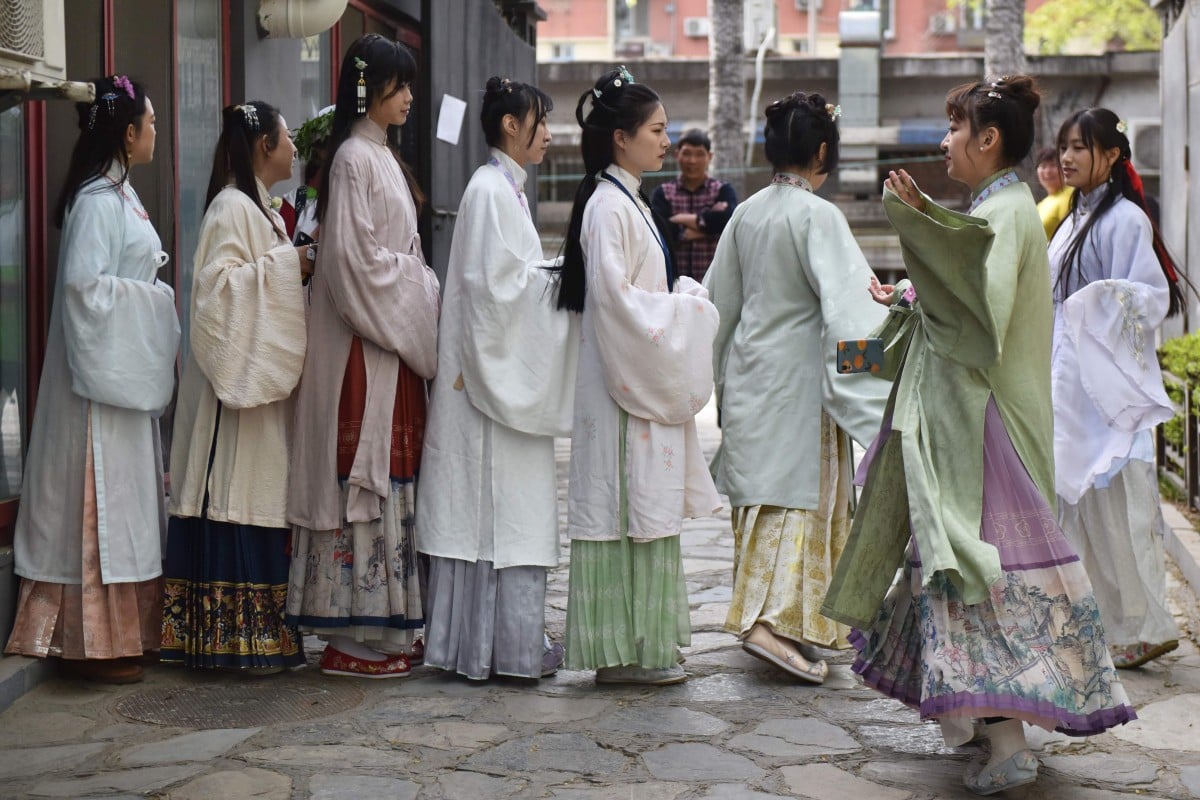
Women wear Han-style clothing in Beijing as part of April’s Traditional Chinese Costume Day celebration. Photo: AFP
Dressed in a flowing robe adorned with beaded floral embroidery from a bygone era, stylist Xiao Hang looks like she emerged from a time machine as she strides across the bustling Beijing metro, attracting curious glances and questions.
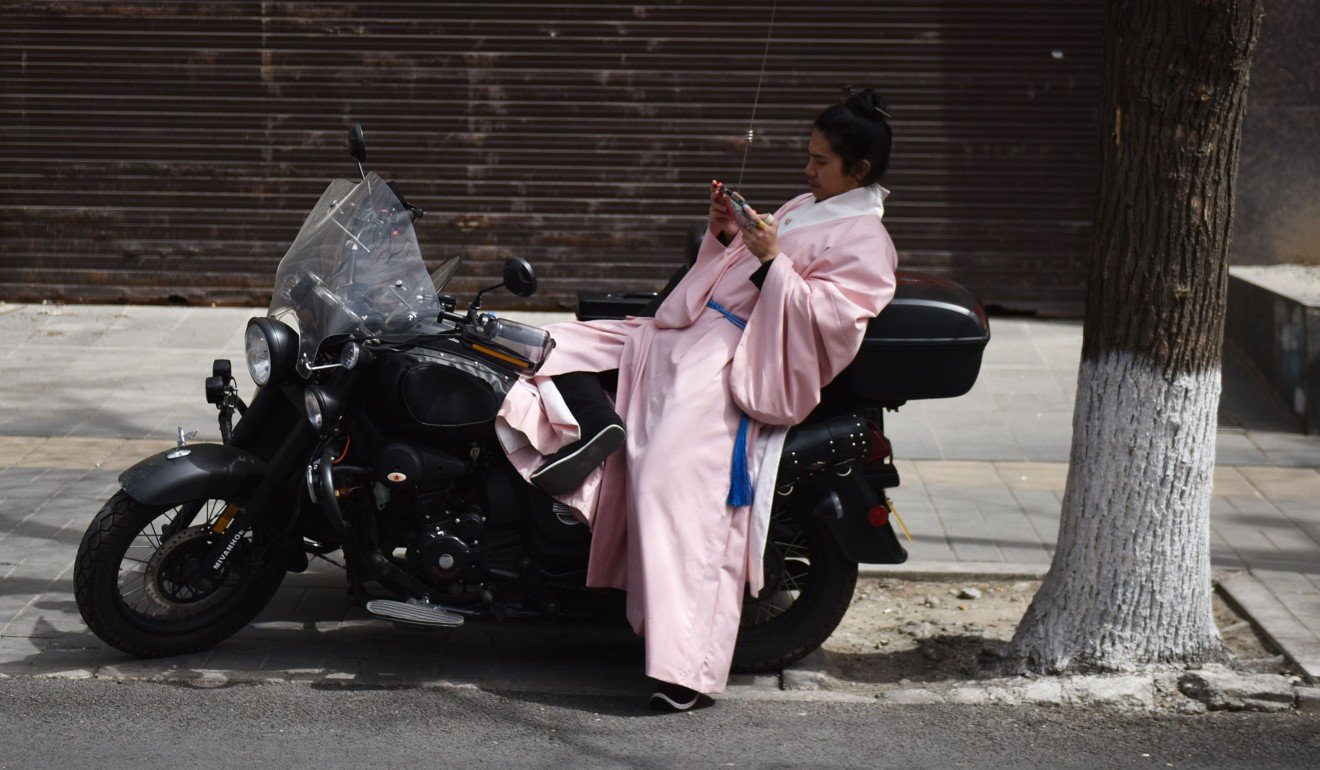
While China embraced Western fashion as its economy boomed in recent decades, now a growing number of young people like Xiao look to the past for their sartorial choices and have adopted hanfu, or Han clothing.
The costumes of the Han ethnic majority are enjoying a renaissance in part because the government is promoting traditional culture in an effort to boost patriotism and national identity.
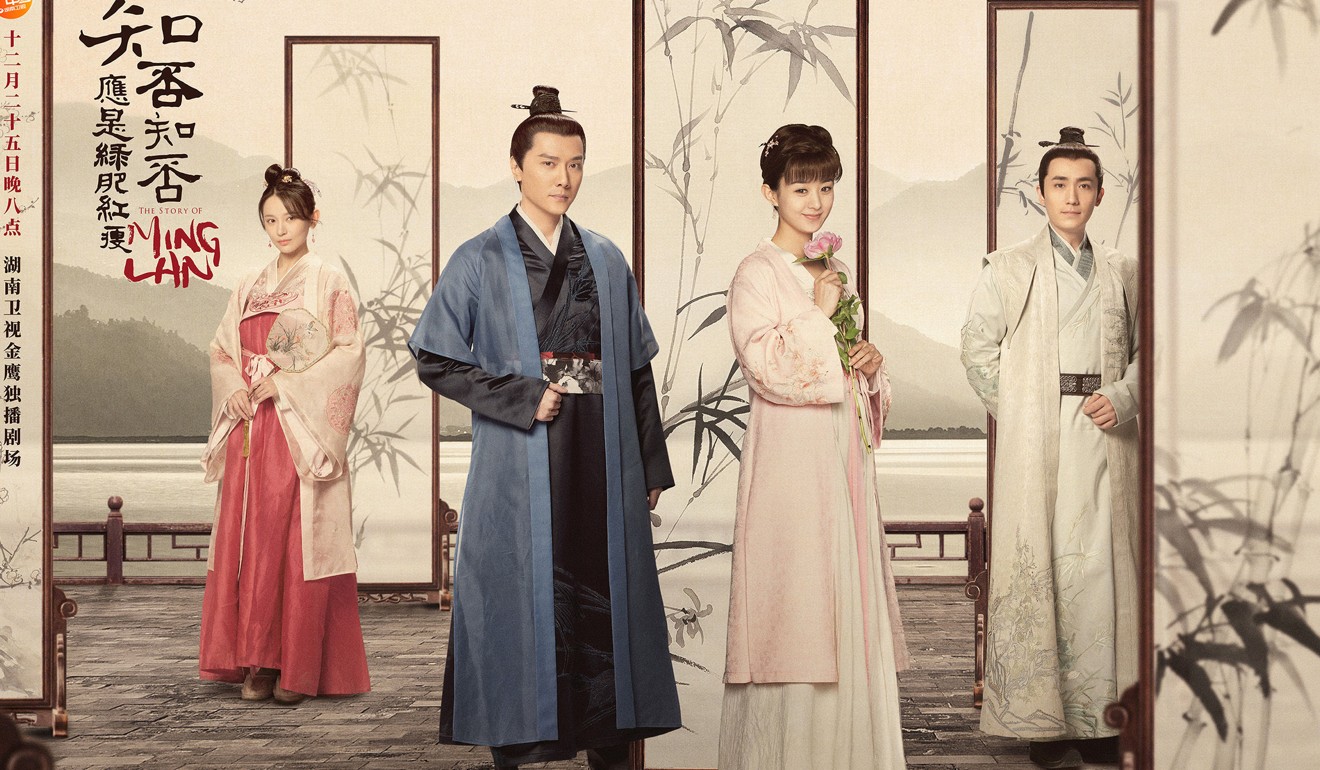
Like the film, television and comic book productions that have inspired cosplay fans in the West, period dramas on Chinese TV have contributed to the surge in interest in traditional clothing. The Story of Minglan, a series set during the Song dynasty, attracted more than 400 million viewers over three days when it was first shown this year.
The success of television drama The Story Of Minglan this year reflects China’s interest in its Han heritage. Photo: Baidu
While each Han-dominated dynasty had its own style, hanfu outfits were generally characterised by loose, flowing robes with sleeves that reached the knees.
“When we were little, we would drape sheets and duvets around ourselves to pretend we were wearing beautiful clothes,” Xiao said.
Once a worker at a state-owned machine manufacturing company, Xiao now runs her own hanfu business, where she dresses customers for photo shoots and plans hanfu-style weddings.
The Hanfu fashion revival: ancient Chinese dress finds a new following
In modern China, the hanfu community includes history enthusiasts and anime fans, students and young professionals.
Yang Jiaming, a high school pupil in Beijing, wears his outfit under his school uniform.
“Two-thirds of my wardrobe are hanfu,” he said, decked out in a Tang-style beige gown and black boots, adding that his classmates and teachers were supportive of his fashion choices.
A government-supported revival in Chinese culture has energised the hanfu community. Since he entered office in 2012, President Xi Jinping has supported the promotion of a Han-centric vision of Chinese heritage.
Fans of traditional Chinese clothing dare to mix old and new, and hanfu is not the preserve of women. Photo: AFP
In April, the Communist Youth League of China launched a two-day conference celebrating traditional Chinese garb, which included hanfu and took in Traditional Chinese Costume Day.
A live broadcast of the event drew about 20 million viewers, alongside an outpouring of emotions.
“Chinese people have abandoned their own culture and chosen Western culture. The red marriage gown has now become a wedding dress,” wrote a user of Bilibili, a video-streaming platform popular among young anime, comic and gaming fans in China.
Clothes were the “foundation of culture”, said Jiang Xue, who is part of Beijing-based hanfu club Mowutianxia, which has received funding from the Communist Youth League.
“If we as a people and as a country do not even understand our traditional clothing or do not wear them, how can we talk about other essential parts of our culture?” she said.
Forget K-pop and US missiles, Korea is back in fashion with China thanks to live-stream shopping
The style has not yet gained mainstream acceptance in China.
In March, two students in Shijiazhuang Medical College, in northern Hebei province, were reportedly threatened with expulsion for wearing the outfits to class.
Others said they were put off by the reaction they got while wearing hanfu in public.
“I used to be very embarrassed to wear [hanfu] out,” screenwriter Cheng Xia said.
The 37-year-old said she overcame her reservations after going out dressed in a full outfit last year.
Meanwhile, the movement to revive Han ethnic clothing has prompted questions about nationalism and Han-ethnocentrism – a sensitive issue in China, where the government is wary of conflict between ethnic groups.
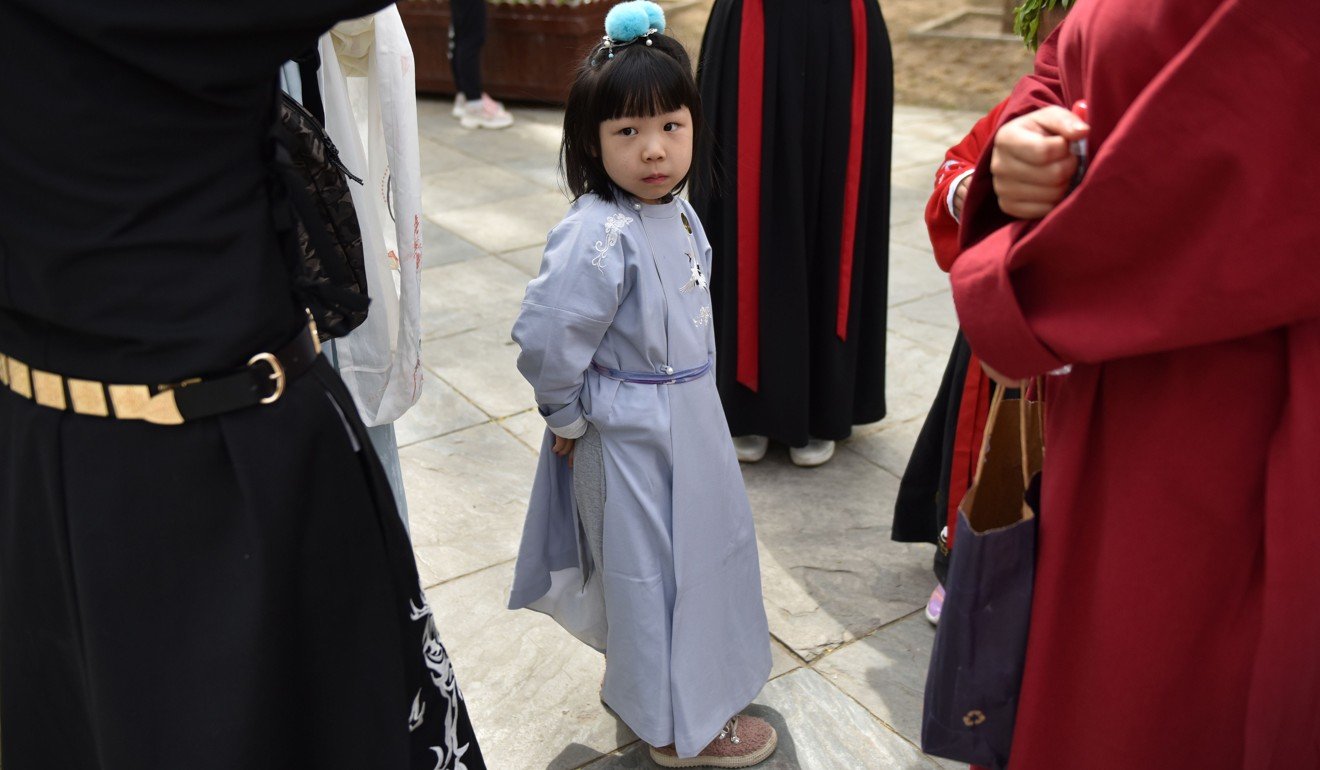
High school pupils and young children are drawn to China’s hanfu trend. Photo: AFP
For instance, within the hanfu community there is long-running opposition towards the qipao, the high-collared, figure-hugging garment that was once a staple of women’s wardrobes.
Known as cheongsam in Cantonese, the qipao – meaning “Qi robe” – began as a long, loose dress worn by the Manchu, or Qi people, who ruled China from the 17th century until the early 1900s.
Its popularity took off in 1920s Shanghai, when it was refashioned into a fitted must-have, favoured by actresses and intellectuals as a symbol of femininity and refinement.
“Some people … think that the cheongsam was inspired by the Qing dynasty, which is not enough to represent China. There are nationalist undertones in this issue,” Chinese culture scholar Gong Pengcheng said.
Master of a dying art: traditional dressmaker recalls golden era of cheongsam in Hong Kong
“It is a good trend to explore traditional culture and clothing culture … There are many things we can talk about, and we need not shrink to nationalist confrontation.”
Yang, the high school pupil, was more upbeat. He said: “At the very least, we can wear our own traditional clothes, just like the ethnic minorities.”
Source: SCMP
Posted in Beijing, cheongsam, Chinese clothing, Communist Party, Communist Youth League, Communist Youth League of China, Han clothing, Han costumes, Han ethnic clothing, Han ethnic majority, hanfu, Hebei province, Korea, Manchu, Mowutianxia, nationalism, President Xi Jinping, Qing Dynasty, qipao, renaissance, revival, Shanghai, Shijiazhuang Medical College, Song Dynasty, supports, Tang-style beige gown, The Story of Minglan, traditional, Traditional Chinese Costume Day, traditional Chinese garb, Uncategorized, Western culture |
Leave a Comment »




 CHINDIA ALERT: You'll be living in their world, very soon