Chindia Alert: You’ll be Living in their World Very Soon
aims to alert you to the threats and opportunities that China and India present. China and India require serious attention; case of ‘hidden dragon and crouching tiger’.
Without this attention, governments, businesses and, indeed, individuals may find themselves at a great disadvantage sooner rather than later.
The POSTs (front webpages) are mainly 'cuttings' from reliable sources, updated continuously.
The PAGEs (see Tabs, above) attempt to make the information more meaningful by putting some structure to the information we have researched and assembled since 2006.
WASHINGTON (Reuters) – The U.S. military said it sent two Navy ships through the Taiwan Strait on Wednesday, its latest transit through the sensitive waterway, angering China at a time of tense relations between the world’s two biggest economies.
Taiwan is one of a growing number of flashpoints in the U.S.-China relationship, which also include a bitter trade war, U.S. sanctions and China’s increasingly muscular military posture in the South China Sea, where the United States also conducts freedom-of-navigation patrols.
The voyage will be viewed by self-ruled Taiwan as a sign of support from the Trump administration amid growing friction between Taipei and Beijing, which views the island as a breakaway province.
The transit was carried out by the destroyer Preble and the Navy oil tanker Walter S. Diehl, a U.S. military spokesman told Reuters.
“The ships’ transit through the Taiwan Strait demonstrates the U.S. commitment to a free and open Indo-Pacific,” Commander Clay Doss, a spokesman for the U.S. Navy’s Seventh Fleet, said in a statement.
Doss said all interactions were safe and professional.
Chinese Foreign Ministry spokesman Lu Kang said Beijing had lodged “stern representations” with the United States.
“The Taiwan issue is the most sensitive in China-U.S. relations,” he told a daily news briefing in Beijing.
Taiwan’s Defense Ministry said the two U.S. ships had sailed north through the Taiwan Strait and that they had monitored the mission.
Taiwan President Tsai Ing-wen said there was no cause for alarm.
“Nothing abnormal happened during it, please everyone rest assured,” she wrote on her Facebook page.
U.S. warships have sailed through the Taiwan Strait at least once a month since the start of this year. The United States restarted such missions on a regular basis last July.
The United States has no formal ties with Taiwan but is bound by law to help provide the island with the means to defend itself and is its main source of arms.
The Pentagon says Washington has sold Taipei more than $15 billion in weaponry since 2010.
China has been ramping up pressure to assert its sovereignty over the island, which it considers part of “one China” and sacred Chinese territory, to be brought under Beijing’s control by force if needed.
Beijing said a recent Taiwan Strait passage by a French warship, first reported by Reuters, was illegal.
China has repeatedly sent military aircraft and ships to circle Taiwan on exercises in the past few years and worked to isolate it internationally, whittling down its few remaining diplomatic allies.
The U.S. Defense Intelligence Agency released a report earlier this year describing Taiwan as the “primary driver” for China’s military modernization, which it said had made major advances in recent years.
On Sunday, the Preble sailed near the disputed Scarborough Shoal claimed by China in the South China Sea, angering Beijing.
The state-run China Daily said in an editorial on Wednesday that China had shown “utmost restraint”.
“With tensions between the two countries already rife, there is no guarantee that the presence of U.S. warships on China’s doorstep will not spark direct confrontation between the two militaries,” it said.
Military exercises this week meant to foster image that Beijing can win a war over the island, analyst says
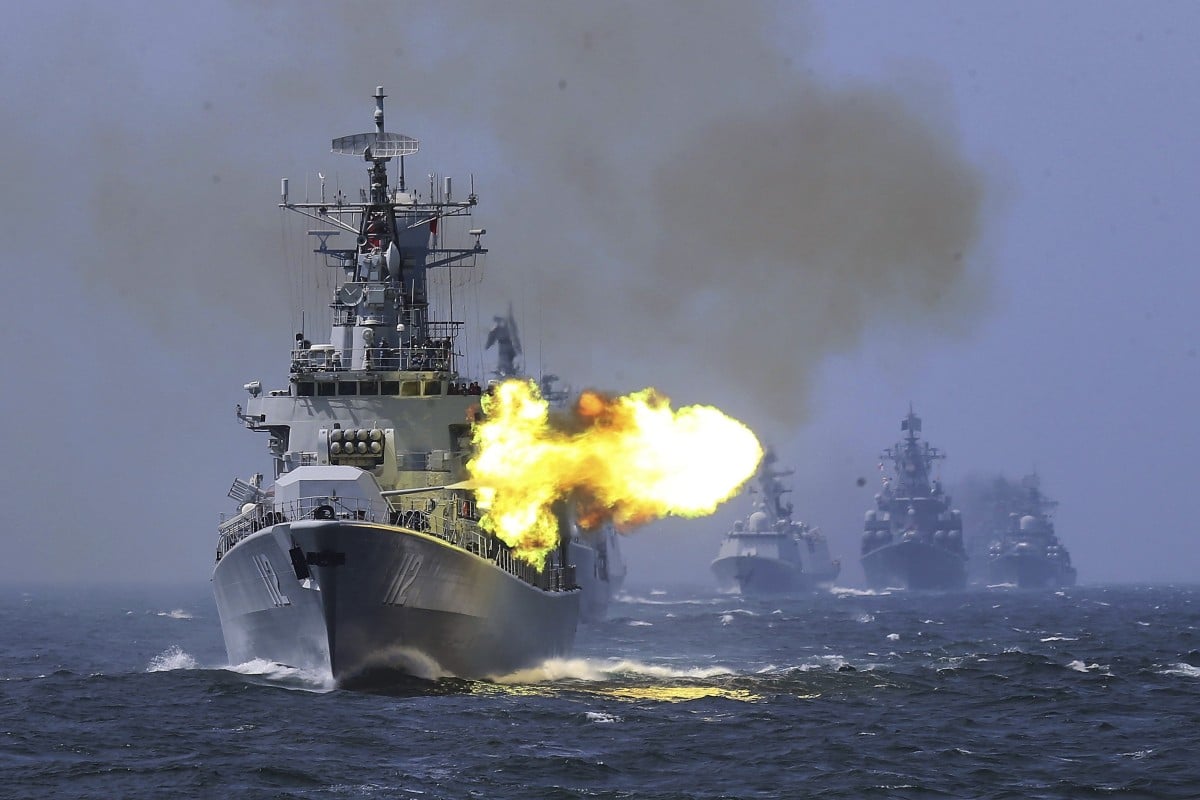
The PLA is staging live-fire drills at the northern end of the Taiwan Strait this week. Photo: AP
Beijing is conducting live-fire military drills at the northern end of the Taiwan Strait as it signals its resolve to thwart “pro-independence forces” in Taiwan.
Authorities in the small city of Yuhuan, Zhejiang province, notified the public on Sunday that a “no-sail zone” and “no-fishing zone” would be in effect in the area until Friday night.
It said the drills were part of the People’s Liberation Army’s “annual regular exercise plans” and would involve “actual use of weapons”.
“According to the annual [PLA’s] regular training plan … live-fire exercises involving the use of real weapons will be organised … in the designated areas from 6am on May 5 to 6pm on May 10,” the authorities said.
Collin Koh, a military analyst from the S. Rajaratnam School of International Studies at Singapore’s Nanyang Technological University, said the stress on the live-fire manoeuvres suggested the six-day exercise would simulate real combat conditions.
The drills come hard on the heels of an annual report by the Pentagon warning that China was preparing options to unify Taiwan by force, and there was a need to deter, delay or deny any third-party intervention on Taiwan’s behalf.
Under the Taiwan Relations Act, the United States is bound by law to help defend the self-ruled island. Washington is Taipei’s main source of arms, selling the island more than US$15 billion in weaponry since 2010, according to the Pentagon.
Beijing ‘loses all hope for Taiwan’s Tsai Ing-wen’ as she rallies Washington
Taiwan is one of a growing number of flashpoints in the China-US relationship – along with a trade war, Beijing’s growing influence in emerging economies, and its stronger military posture in the South China Sea. On Monday, two guided-missile destroyers, USS Preble and USS Chung-Hoon passed within 12 nautical miles of Gaven and Johnson reefs in the Spratly Islands, drawing immediate criticism from Beijing.
In addition, Taiwan will hold its annual Han Kuang live-fire drills from May 27 to 31 and held a computer-aided one just last month.
A Taiwan affairs analyst from the Chinese Academy of Social Sciences said the drills off Zhejiang were meant to show Beijing’s determination to defend its position on Taiwan.
“Beijing is trying to build up an image that China can win a war over Taiwan and Beijing’s key goal is to contain pro-independence forces, which are the biggest threat now to the peaceful unification process,” the analyst said.
Koh agreed, saying the drill sent a signal to external and domestic parties after the recent high-profile transits of US warships through the Taiwan Strait.
“The messaging to domestic audience is necessary because Beijing can’t be seen as weak following those reported transits by foreign warships – especially the Americans who are seen as supporting Taipei,” Koh said.
“And regarding external audience, the messaging is quite obviously to demonstrate that Beijing is ready to respond more resolutely to future such transits, following the tough verbal responses from Beijing, including its statement that it considers the strait under its jurisdiction and comprise its internal waters.”
Beijing ‘tones down’ response after US warships sail through Taiwan Strait
Relations between Beijing and Taipei have plunged since Tsai Ing-wen from the independence-leaning Democratic Progressive Party won the presidential election in 2016 and repeatedly refused to accept the “1992 consensus”, which Beijing says is the foundation for cross-strait dialogue.
In response, Beijing ramped up pressure against the island, including conducting more military exercises and establishing diplomatic ties with Taipei’s allies.
Chinese Premier Li Keqiang (R) meets with Vietnamese Prime Minister Nguyen Xuan Phuc, who is here attending the Second Belt and Road Forum for International Cooperation, in Beijing, capital of China, April 26, 2019. (Xinhua/Liu Weibing)
BEIJING, April 26 (Xinhua) — Chinese Premier Li Keqiang on Friday met with Vietnamese Prime Minister Nguyen Xuan Phuc, who is here attending the Second Belt and Road Forum for International Cooperation.
Li said China is willing to enhance high-level contacts with Vietnam, deepen pragmatic cooperation, and better align the Belt and Road Initiative (BRI) with Vietnam’s “Two Corridors and One Economic Circle” plan.
China is willing to expand bilateral trade and achieve balanced and sustainable development in trade with Vietnam, and welcomes the entry of quality Vietnamese products into the Chinese market, Li said.
China supports Vietnam in assuming its role as the rotating chair of the Association of Southeast Asian Nations in 2020, and is willing to work with Vietnam and other parties to steadily advance the consultations on the Code of Conduct in the South China Sea, the premier said.
Nguyen Xuan Phuc said Vietnam actively supports the BRI and is willing to build greater synergy of the two countries’ development strategies.
Vietnam is willing to work with China in implementing the high-level consensus and safeguarding the long-term stability in the South China Sea, he said.
Chinese Premier Li Keqiang (R) meets with Philippine President Rodrigo Duterte, who is here to attend the Second Belt and Road Forum for International Cooperation, in Beijing, capital of China, April 25, 2019. (Xinhua/Li Tao)
BEIJING, April 25 (Xinhua) — Chinese Premier Li Keqiang on Thursday met with Philippine President Rodrigo Duterte, who is here to attend the Second Belt and Road Forum for International Cooperation.
China and the Philippines are neighbors facing each other across the sea, and their development and stability is closely related, Li said, adding that bilateral relations had achieved positive turnaround and consolidation, and had been progressing on the right track, after the joint efforts of the two sides over the past three years.
China is willing to see new achievements in the economic and social development of the Philippines, and align the Belt and Road Initiative (BRI) with the “Build, Build, Build” program of the Philippines, he said.
Peace and stability in the South China Sea is in line with the common interests of China, the Philippines and other countries in the region, Li added.
China supports the Philippines in fulfilling its responsibilities as the country coordinator for China-ASEAN relations, and expects negotiations on the Code of Conduct (COC) in the South China Sea to be completed soon, Li said.
Li also expressed confidence that countries around the South China Sea will be able to jointly safeguard peace and stability in the region with wisdom, adding that it is necessary to properly manage existing issues through dialogue and consultation, so as to realize common development.
Noting the contribution of the BRI to global prosperity and connectivity, Duterte said the Philippines is ready to deepen the cooperation with China under the BRI framework.
The Philippines will further improve its business environment, and welcomes more investments from Chinese companies, said the president.
Duterte said the Philippines will firmly make the South China Sea a sea of peace, friendship and cooperation, and is looking forward to working with other parties to conclude the negotiations on the COC as soon as possible.
QINGDAO, China (Reuters) – Warships from India, Australia and several other nations arrived in the eastern Chinese port city of Qingdao on Sunday to attend a naval parade, part of a goodwill visit as China extends the hand of friendship despite regional tensions and suspicions.
China on Tuesday will mark 70 years since the founding of the People’s Liberation Army Navy, where it will show off new warships including nuclear submarines and destroyers at a major review in the waters off Qingdao.
China says warships from about a dozen nations are also taking part – one diplomatic source with direct knowledge said it was 13 countries in total – and the PLA is putting its best foot forward to welcome them.
India, which has been at odds with China over their disputed land border and Beijing’s support for India’s regional rival Pakistan, has sent stealth guided-missile destroyer the “INS Kolkata” to take part, along with a supply ship.
“We bring to you one of the best ships that we have made. It is the pride of the nation and the navy, and we are very happy to be here,” Captain Aditya Hara told reporters on the dockside after disembarking from the ship in Qingdao.
A source familiar with the situation told Reuters the “Kolkata” had sailed through the Taiwan Strait to get to Qingdao, a sensitive waterway that separates China from self-ruled Taiwan, claimed by Beijing as sacred Chinese territory.
“We headed on a direct route and we are very happy that we were facilitated by the PLA Navy and they ensured that we had a safe passage to Qingdao,” Hara said, when asked if they had sailed via the Taiwan Strait.
Australia, a close U.S. ally, has sent the “HMAS Melbourne” guided-missile frigate to Qingdao, though officials declined to make the captain available for interview.
China and Australia have sparred over Australian suspicions of Chinese interference in the country’s politics and Australia’s banning of China’s Huawei Technologies Co Ltd from supplying equipment for its planned 5G broadband network.
Japan has also sent a destroyer to Qingdao, in the first visit of a Japanese navy ship to China since 2011, according to Japanese media.
Ties between China and Japan, the world’s second and third-largest economies, have been plagued by a long-running territorial dispute over a cluster of East China Sea islets and suspicion in China about Japanese Prime Minister Shinzo Abe’s efforts to amend Japan’s pacifist constitution.
But they have sought to improve relations more recently, with Abe visiting Beijing in October, when both countries pledged to forge closer ties and signed a broad range of agreements including a $30 billion currency swap pact.
The other countries taking part include China’s close friend Russia, and three countries which have sparred with China over competing claims in the disputed South China Sea: Vietnam, Malaysia and the Philippines.
Pakistan, a very close Chinese ally, is not on the list of countries officials have provided which are sending ships to the parade.
Deputy prime minister Yannis Dragasakis hopes ‘logic will prevail’ ahead of EU-China summit
Affirms Greek support for Beijing’s belt and road plan for global trade
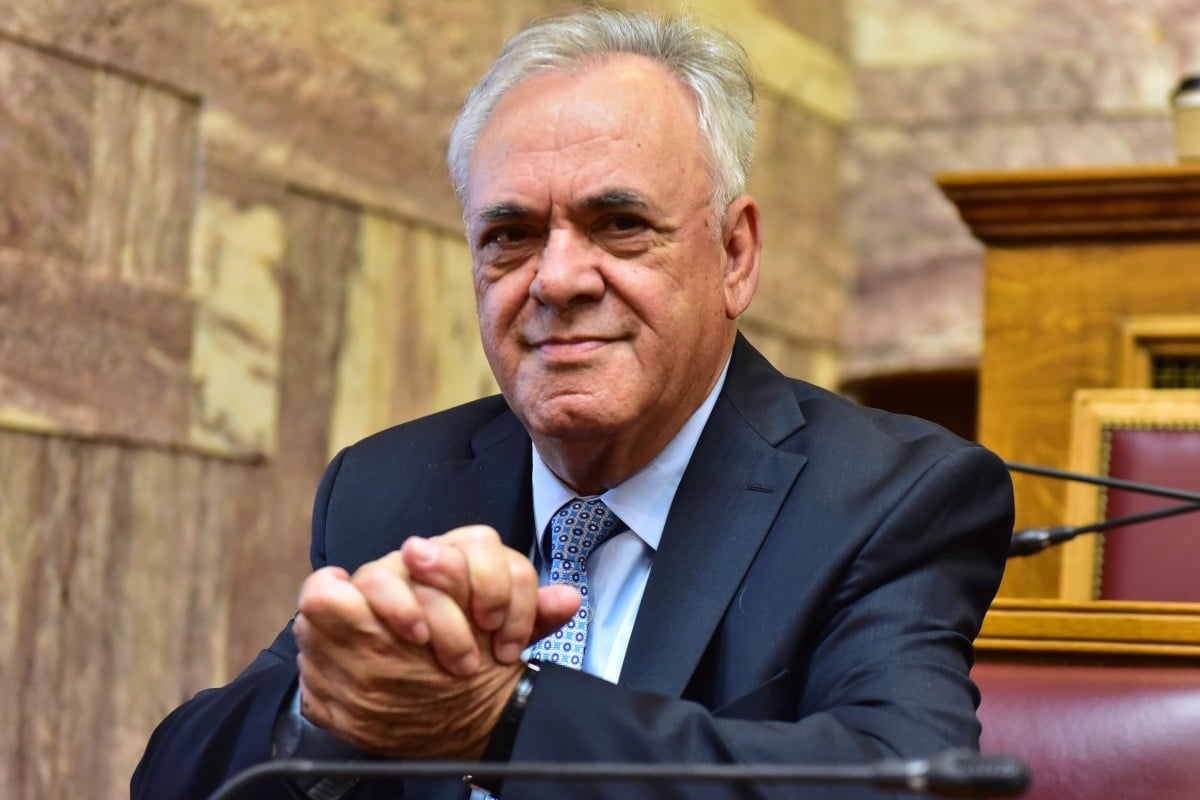
Greece’s deputy prime minister Yannis Dragasakis says the European Union’s suspicion about China is in danger of becoming a “self-fulfilling prophecy”. Photo: Alamy
The deputy prime minister of Greece has warned that European Union suspicion of China is in danger of becoming a “self-fulfilling prophecy” while reaffirming his country’s support for Beijing’s controversial “Belt and Road Initiative”.
In an exclusive interview with theSouth China Morning Post in Athens on Monday, Yannis Dragasakis said he hoped logic would prevail in the EU’s relationship with the world’s second-largest economy.
“We would like to see the EU having good relations with China,” he said.
“Seriously, we should start [the discussion about China] from the opposite end, which is, what are the needs and problems that we can work on with China?”
Dragasakis was speaking ahead of the annual summit between the EU and China in Brussels on Wednesday, which this year will take place against a backdrop of suspicion among some EU countries over Beijing’s political and commercial ambitions in the region.
Europe has been divided over whether to work with China’s enormous belt and road plan, which aims to link China by sea and land with southeast and central Asia, the Middle East, Europe and Africa, through an infrastructure network along the lines of the old Silk Road.
Italy becomes first G7 nation to sign up for China’s belt and road plan
Washington has criticised the scheme as a “vanity project”, and the EU looks set to refer to China as a “strategic rival”, with some European leaders fearing Beijing’s diplomatic manoeuvres could derail unity among member states.
Last month Italy, which is grappling with its third recession in a decade, became the first G7 nation to join the belt and road programme, in a bid to boost exports and upgrade its port facilities.
Last year Greece – ranked second lowest in economic competitiveness within the EU by the World Economic Forum in 2018 – signed up to the scheme, after years of relying on China to help it through its own financial crisis.
Chinese state-owned shipping company Cosco bought a 51 per cent stake in Pireaus Port, Greece’s most important infrastructure hub in 2016 with an option to buy another 16 per cent after five years.
China aims to make the port the “dragon head” of its belt and road programme, serving as a gateway for its cargo to Europe and North Africa.
Will Greece be China’s bridge to the rest of Europe?
With its warming relationship with Beijing, Athens has, at times, departed from EU positions on China.
In 2016, Greece helped stop the EU from issuing a unified statement against Chinese aggression in the South China Sea. The following year, Athens stopped the bloc from condemning China’s human rights record. Days later, it opposed tougher screening on China’s investments in Europe.
Dragasakis was clear that the EU should not devise any policies that may hinder Greece’s ability to revive its economy.
“Greece badly needs investment. We hope logic will prevail at the end of the day, which means we should take advantage of all opportunities and build on these prospects to further our collaboration,” he said.
“Greece will keep following a multidimensional policy, an inclusive policy, without excluding anyone.”
Dragasakis hit back at France and Germany for treating China as a geopolitical rival, while simultaneously signing up to trade agreements with Beijing.
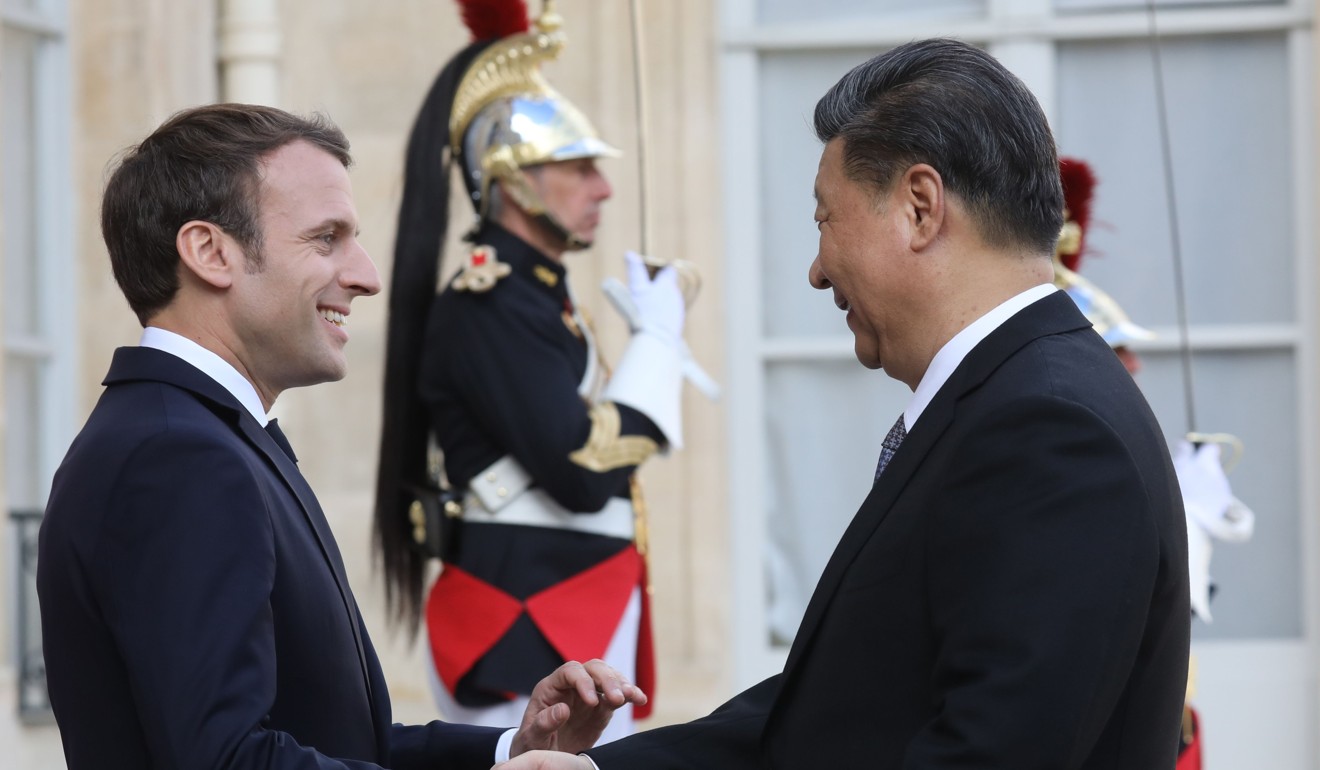
Days before receiving Chinese President Xi Jinping in France last month, President Emmanuel Macron declared that the “time of European naivety” towards China was over – a remark the Greek deputy prime minister described as “interesting” during the interview.
“It’s so interesting, yes. Mr Macron, despite his statement, actually signed very large-scale agreements with China,” he said, adding: “Germany, the same”.
French President Emmanuel Macron welcomes Chinese President Xi Jinping to the Elysee Palace in Paris last month. Photo: AFP
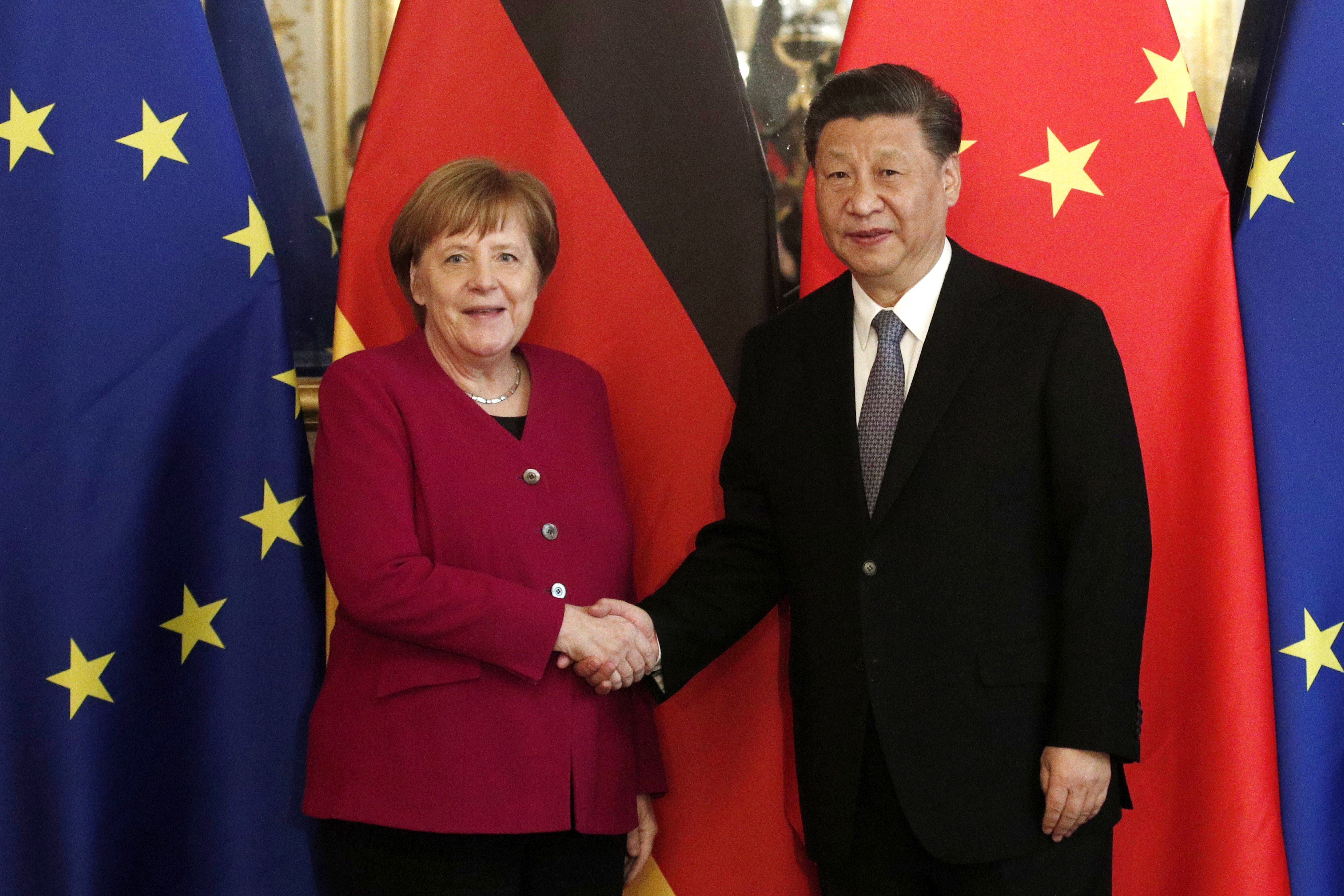
Macron invited German Chancellor Angela Merkel and European Commission President Jean-Claude Juncker to his meeting in Paris with Xi, where the four sought to reassure each other over economic cooperation between the European trading bloc and China.
Dragasakis said Greece’s relations with China were based on “very solid ground” with the two countries sharing complementary interests, particularly through the belt and road plan.
Greek Prime Minister Alexis Tsipras is understood to be considering joining Foreign Minister George Katrougalos at the belt and road summit in Beijing, which will be hosted by Xi later this month.
More than 40 heads of state are expected to attend the summit, with China’s foreign ministry recently saying that Europe had started to see the value of the scheme.
If confirmed, Tsipras’ presence at the summit will be interpreted as an attempt by Greece to consolidate Chinese support in the wake of Italy’s joining of the scheme.
He will also need to mend ties with Beijing, following a recent decision by Greece’s archaeological body to block a plan by Cosco to upgrade facilities at the Piraeus port, throwing the future of the multimillion euro privatisation deal into uncertainty.
Portugal’s support for China’s belt and road plan ‘bad news’ for EU
Dragasakis said there were strong prospects for the future relationship between Greece and China because of the two countries’ reciprocal interest.
Relations with other Asian countries, while not yet as close as Greek ties with China, would continue to be developed, he said.
Dragasakis said Athens would not adopt discriminatory policies against any country as it looked to shore up foreign investments to boost its economy.
India, for instance, has set its sights on Greece as a potential business partner, with President Ram Nath Kovind becoming its first titular head of state to visit Greece last year.
“Relations with India are lagging behind – they are not at the same level as with China, but of course we are mulling further developments with India,” Dragasakis said, adding that Greece would also work more closely with Japan, South Korea and Vietnam.
EU leaders hold out olive branch to China over belt and road
Read more
China will not divide Europe, senior diplomat says
Read more
Beijing calls for ‘objective’ assessment of human rights record.
Philippines’ foreign ministry weighs in on controversy over presence of Chinese fleet near contested Thitu Island
Manila has ‘consistently manifested its … objections or concerns over illegal, tension-raising or coercive activities’, statement says
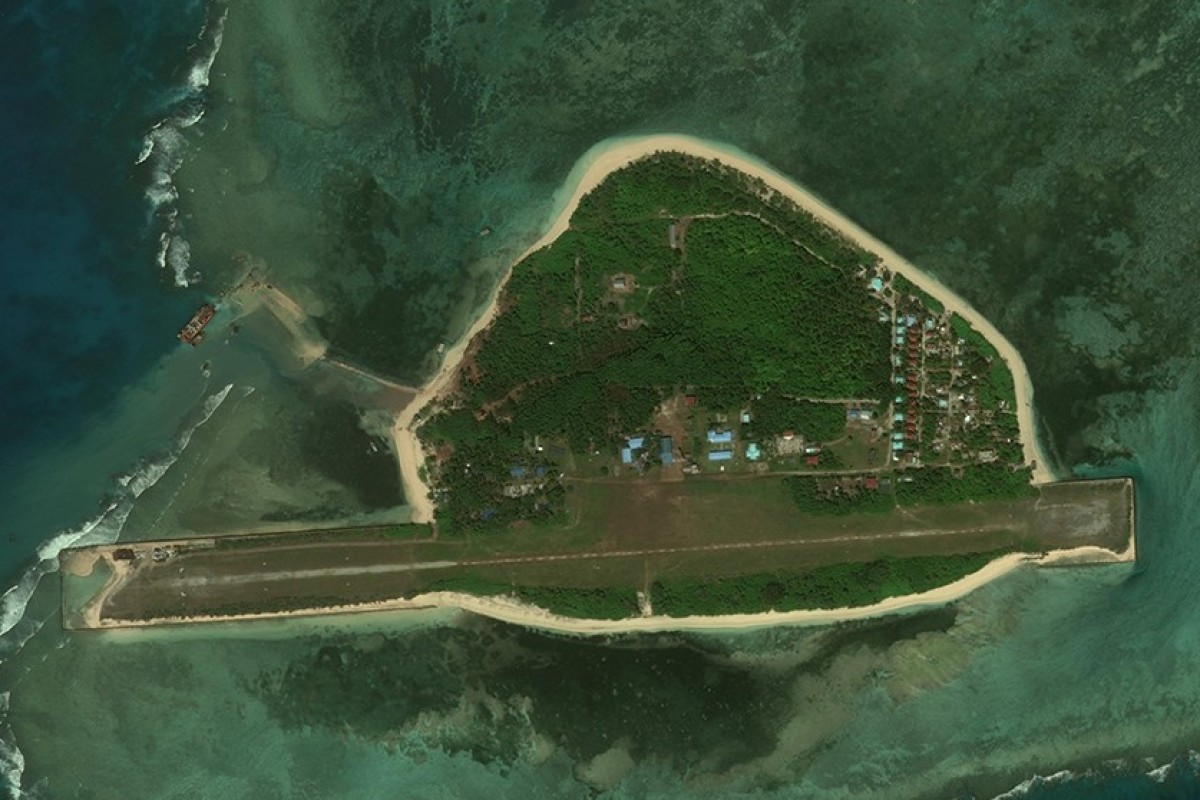
The Philippines is angry about the presence of a Chinese fleet close to Thitu Island in the South China Sea. Photo: AMTI
The Philippines’ foreign ministry on Thursday accused Beijing of violating its sovereignty and jurisdiction by allowing hundreds of vessels to sail close to an island claimed by Manila in the South China Sea.
described China’s growing presence in the disputed waters as “very concerning”, saying on a trip to Washington that it was encroaching on the Philippines’ exclusive economic zone.
, which Manila calls Pag-asa, in the disputed Spratly Islands.
The Department of Foreign Affairs in Manila said the Philippines “has consistently manifested its position on Pag-asa … and its objections or concerns over illegal, tension-raising or coercive activities, through diplomatic actions … and in meetings with the Chinese side”.
The statement said Thitu is part of the Kalayaan island group – the local name for the Spratlys – and an integral part of the Philippines, over which it has sovereignty and jurisdiction.
“The presence of Chinese vessels near and around Pag-asa and other maritime features in the KIG is illegal,” it said.
US, Philippines in talks on rocket system to deter Beijing
“Such actions when not repudiated by the Chinese government are deemed to have been adopted by it,” it said. “The presence of Chinese vessels within the KIG, whether military, fishing or other such will thus continue to be the subject of appropriate action by the Philippines”.
The foreign ministry said earlier it had filed a diplomatic protest about the presence of more than 200 Chinese vessels near Thitu between January and March.
Satellite images captured in February by the Asia Maritime Transparency Initiative under the Washington-based Centre for Strategic and International Studies show almost 100 Chinese ships apparently hampering Philippine construction work on Thitu.
The fleet, dispatched from the nearby Subi Reef, includes naval and coastguard vessels, as well as dozens of fishing boats.
Manila was planning to upgrade its military facilities on Thitu, including the construction of an airstrip, but the project was suspended because of the Chinese interference.
The defence chiefs of the US and the Philippines reaffirmed their security alliance on Monday in Washington. As well as agreeing to boost cooperation, the US promised to increase its support for Manila’s military modernisation – a move seen as a response to Beijing’s increasingly assertive posturing in the South China Sea.
Philippine President Rodrigo Duterte says he will not confront China over the South China Sea dispute as doing so would end in war. Photo: AP
said on Wednesday that Beijing wanted to be friends with Manila and that he would not confront China over their competing claims in the South China Sea because it would end in war.
The foreign affairs department in Manila also sought to sound a positive note in its statement, saying the maritime dispute was not the “sum total” of Philippines-China relations, and should not exclude mutually beneficial cooperation in other fields.
US more likely than Philippines to end up in ‘shooting war’
A day after the two nations wrapped up their latest meeting on the South China Sea, Chinese foreign ministry spokesman Geng Shuang said on Thursday the two sides had reaffirmed their differences but would continue to seek a resolution.
“China looks forward to working with the Philippines to make active efforts to safeguard the overall interests of China-Philippines cooperation and peace and stability in the South China Sea,” he said.
Hong Kong-based military expert Song Zhongping said the presence of the Chinese vessels near Thitu was a clear statement of Beijing’s intent.
“Beijing believes Thitu Island is Chinese territory, so any work there should be done by China, not the Philippines,” he said.
It also wanted to stop Manila “opening the door to dangerous people” he said, referring to the Southeast Asian nation’s announcement about allowing the US access to five more of its military bases.
HANOI (Reuters) – Vietnam is seeking clarification of how a fishing boat came to sink this week in the contested South China Sea, the Foreign Ministry said on Saturday, days after a local rescue agency said it was rammed by a Chinese vessel.
Vietnam and China have long been embroiled in maritime disputes in the potentially energy-rich stretch of water, called East Sea by Vietnam.
The boat sank on Wednesday near Da Loi island in the Paracel Archipelago, the ministry said in an emailed statement. It said all five fishermen on board were rescued by another Vietnamese fishing boat.
“Vietnamese authorities are continuing to clarify the cause of the incident,” the ministry said, without elaborating.
Next month’s nautical spectacle will allow country to show off its most advanced warships to an international audience
More than a dozen foreign navies are expected to join in, including the United States
Chinese navy’s 70th birthday parade showcases rising sea power
1 Mar 2019
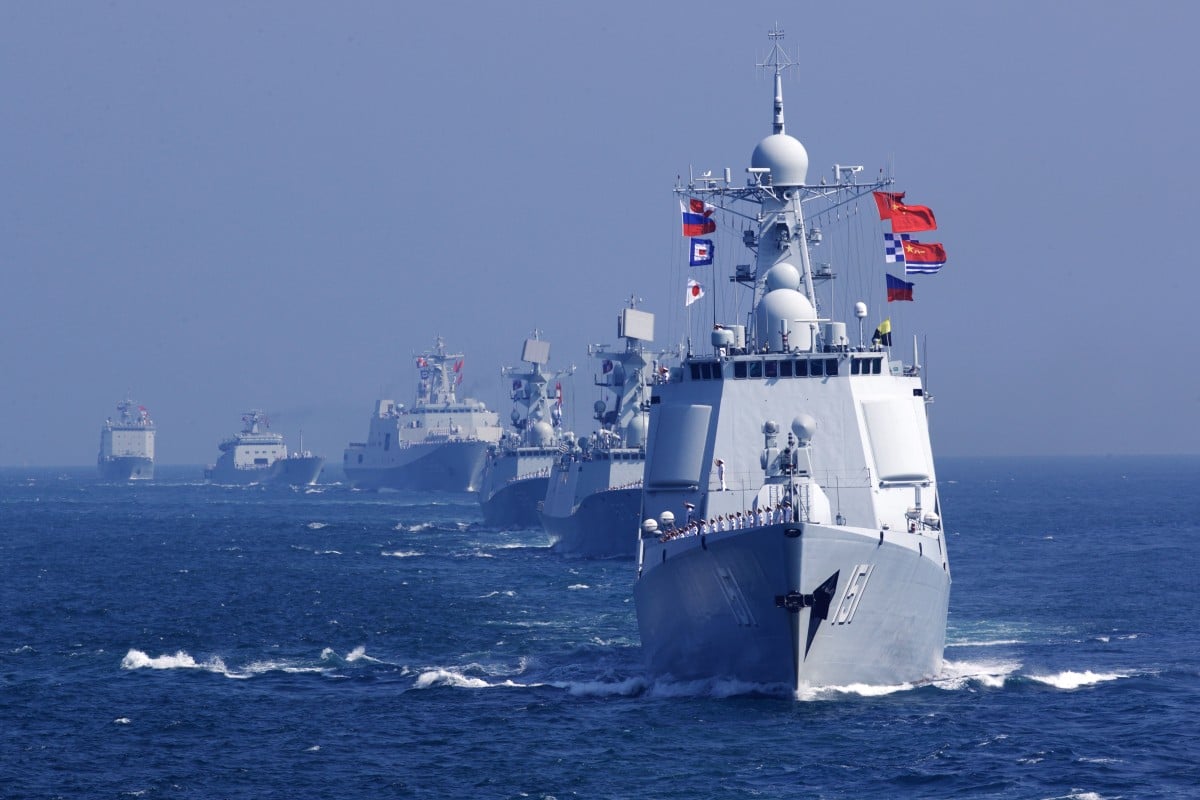
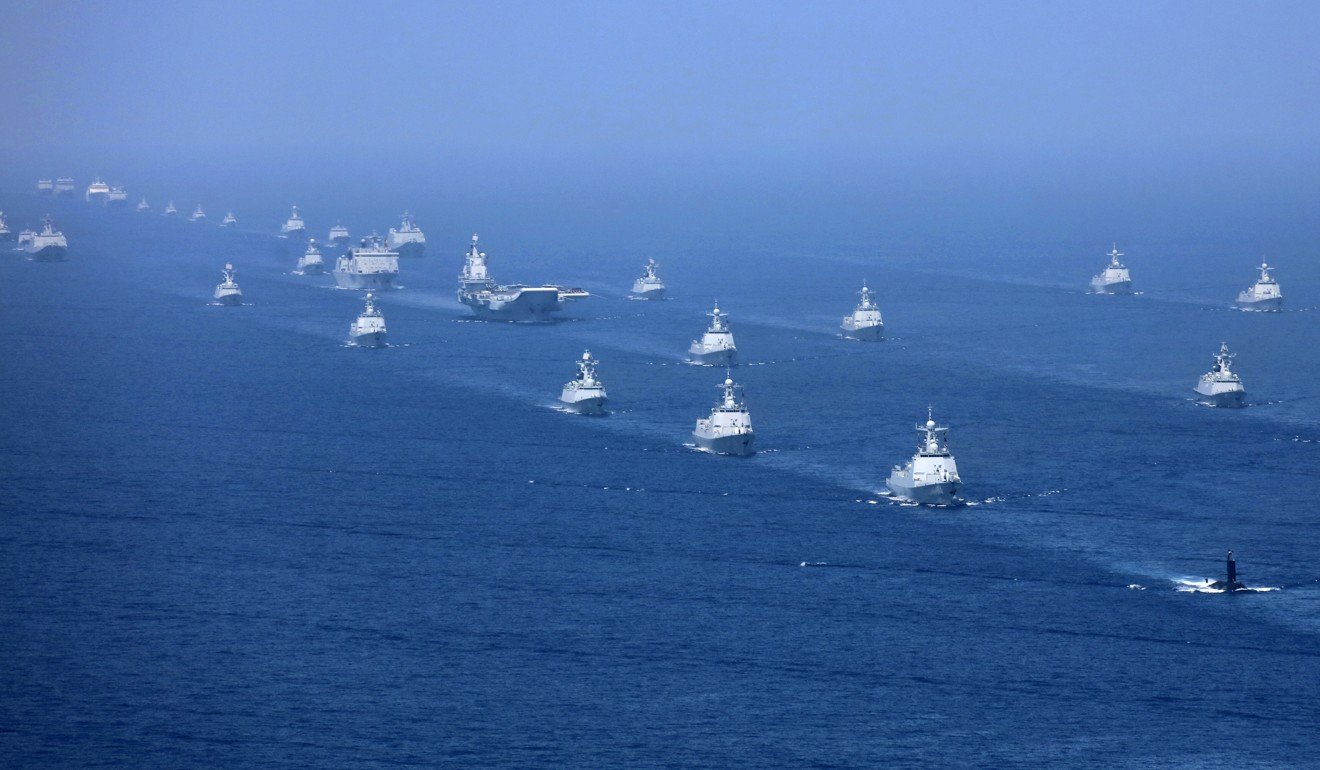
Chinese warships pictured at the end of joint exercise with the Russian navy in 2016. Photo: Xinhua
China will hold a naval parade next month to mark the 70th anniversary of the founding of the People’s Liberation Army Navy and will invite more than a dozen of foreign navies to participate.
The parade will take place on April 23 in the Yellow Sea off the coast of Qingdao in Shandong province, Ren Zhiqiang, a spokesman for the Ministry of National Defence, said on Thursday.
Ren did not provide further details of the parade but military analysts said the exercise would give the navy the opportunity to display its rapidly growing strength and show how that has increased in the past 12 months.
‘No-go zone’ in Yellow Sea for Chinese aircraft carrier sea trials
In April last year a naval review in the South China Sea featured a total of 48 vessels and 76 planes, including China’s first aircraft carrier, the Liaoning, its Type 094A and 095 nuclear submarines, 052D guided missile destroyers and J-15 fighter jets.
The experts expect that next month’s event will provide a showcase for several new and more powerful vessels including its home-grown aircraft carrier Type 001A, the Type 055 – Asia’s most powerful destroyer – and several nuclear submarines.
“The fact that China is holding the naval parade just one year after the South China Sea review shows the great importance [the leadership] attaches to the development of China’s maritime interests, the navy and its expansion,” navy expert Li Jie said.
Chinese President Xi Jinping joined the crew on the deck of the cruiser Changsha following last year’s naval review. Photo: Xinhua
Share:
China also held a major naval parade in 2009 to mark the navy’s 60th anniversary.
It was smaller in scale than the upcoming extravaganza with 25 PLA vessels and 31 fighter jets taking part.
Fourteen foreign navies sent ships to the 2009 parade, including the USS Fitzgerald from America and the guided-missile cruiser Varyag from Russia. France, Australia, South Korea, India and Pakistan also joined in the event.
More foreign countries are expected to join the party this year as the PLA has become more active internationally and China has sold more warships to foreign navies.
China’s new veterans’ law to be reviewed at National People’s Congress next week
“The parade is more like a birthday party for the PLA Navy and the participation of foreign navies is a matter of diplomatic courtesy with few military implications,” said Yue Gang, a former PLA colonel.
Yue said the US and its allies would attend despite the rising tensions between the two sides.
Since 2015 the US and Chinese navies have engaged in a series of confrontations in the South China Sea as China strengthens its military presence in the region and the US has sought to challenge Beijing’s claims to the waters by conducting what it describes as “freedom of navigation” operations.
“I don’t expect they will send any of the warships that have taken part in such operations [to the parade],” Yue said.
China has greatly expanded its naval capabilities in recent years. Photo: AP
Share:
It has been reported that the Japanese Maritime Self-Defence Force has expressed an interest in joining the parade and the Philippines – which has a rival claim to the South China Sea – is planning to send a vessel to the event for the first time.
Li said militaries such as the US and Japan would not want to miss the chance to observe the PLA Navy closely.
“In addition, greater transparency [through the parade] will also help reassure smaller regional partners such as the Philippines that China is a friendly power despite its growing military strength,” he said.
China held its first naval parade in 1957 and April’s display will be the sixth such event.
Sailors also took part in the parade through Tiananmen Square to mark the foundation of the People’s Republic on October 1 1949.
BEIJING (Reuters) – China struck an upbeat note on Monday as trade talks resumed with the United States, but also expressed anger at a U.S. Navy mission through the disputed South China Sea, casting a shadow over the prospect for improved Beijing-Washington ties.
White House senior counsellor Kellyanne Conway on Monday also expressed confidence in a possible deal. Asked if the two countries were getting close to a trade agreement, she told Fox News in an interview, “It looks that way, absolutely.”
RELATED COVERAGE
The United States is expected to keep pressing China on longstanding demands that it reform how it treats American companies’ intellectual property in order to seal a trade deal that could prevent tariffs from rising on Chinese imports.
The latest talks kick off with working level discussions on Monday before high-level discussions later in the week. Negotiations in Washington last month ended without a deal and with the top U.S. negotiator declaring work was needed.
“We, of course, hope, and the people of the world want to see, a good result,” Chinese Foreign Ministry spokeswoman Hua Chunying said at a news briefing in Beijing.
The two sides are trying to hammer out a deal before the March 1 deadline when U.S. tariffs on $200 billion (£155 billion) worth of Chinese imports are scheduled to increase to 25 percent from 10 percent.
Trump said last week he did not plan to meet with Chinese President Xi Jinping before that deadline, dampening hopes that a trade pact could be reached quickly. But the White House’s Conway said a meeting was still possible soon.
Escalating tensions between the United States and China have cost both countries billions of dollars and disrupted global trade and business flows, roiling financial markets.
The same day the latest talks began, two U.S. warships sailed near islands claimed by China in the disputed South China Sea, a U.S. official told Reuters.
Asked if the ships’ passage would impact trade talks, Hua said that “a series of U.S. tricks” showed what Washington was thinking. But Hua added that China believed resolving trade frictions through dialogue was in the interests of both countries’ people, and of global economic growth.
China claims a large part of the South China Sea, and has built artificial islands and air bases there, prompting concern around the region and in Washington.






 CHINDIA ALERT: You'll be living in their world, very soon