12/09/2019
NEW DELHI (Reuters) – India will only sign a 16-member Asia-Pacific trade pact if its local industry is protected and if the deal would not lead to indiscriminate imports, the trade minister said on Wednesday.
Talks are ongoing to negotiate the China-initiated Regional Comprehensive Economic Partnership (RCEP), Piyush Goyal said, without specifying whether India would sign the deal in 2019.
New Delhi had asked South Korea and Japan to review free trade agreements with India, he added.
Posted in China-backed, India alert, industry, Japan, New Delhi, protected, Regional Comprehensive Economic Partnership (RCEP), South Korea, trade deal, Uncategorized |
Leave a Comment »
18/08/2019
- Beijing will be watching as leaders of African nations and international organisations gather for development summit in Yokohama later this month
- Tokyo is expected to use the conference to articulate how its approach to aid and infrastructure is different from Chinese projects
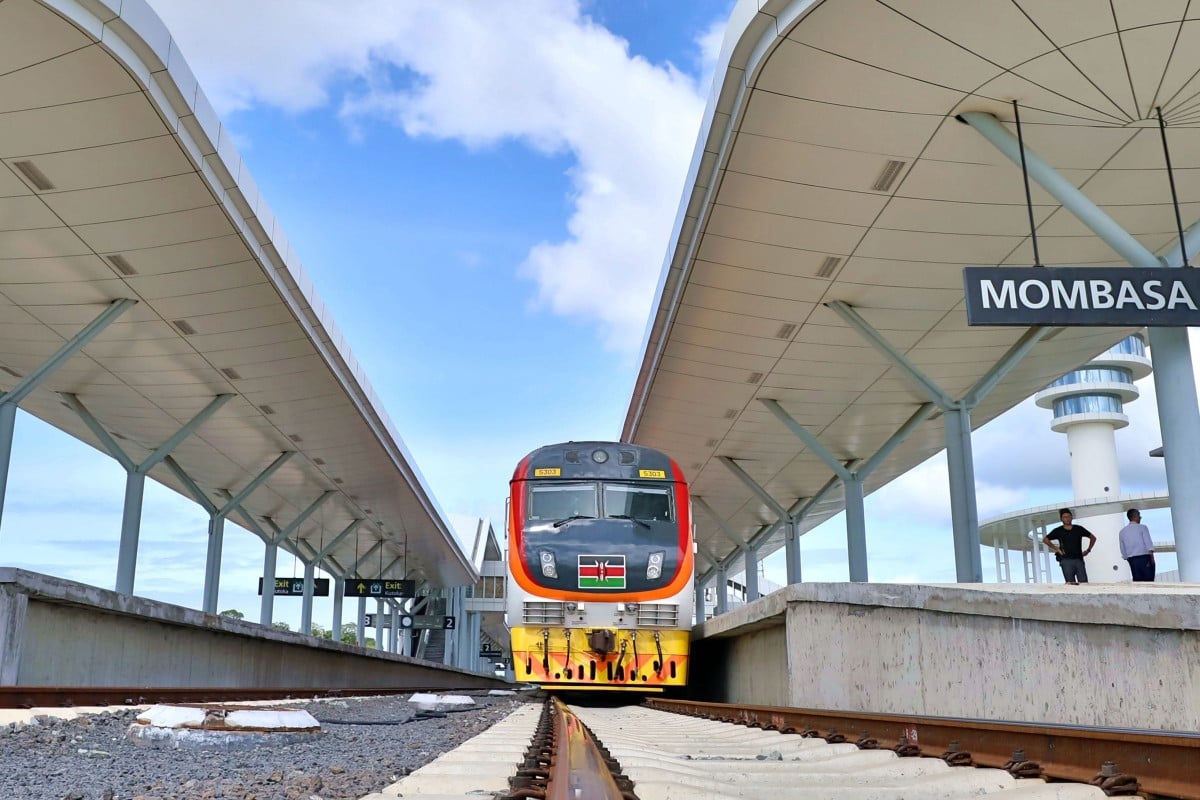
The Mombasa-Nairobi Standard Gauge Railway, funded by China, opened in 2017. Japan has criticised Chinese lending practices in Africa. Photo: Xinhua
The long rivalry between China and Japan is again playing out in Africa, with Tokyo planning to pour more aid into the continent and invest in infrastructure projects there.
Beijing – which has for decades funnelled money into the continent – will be watching as the leaders of 54 African countries and international organisations descend on Yokohama later this month for the seventh Tokyo International Conference on African Development (TICAD).
Japan reportedly plans to pledge more than 300 billion yen (US$2.83 billion) in aid to Africa during the conference. While that might not be enough to alarm China – which in recent years has been on a spending spree in the continent – it will be paying close attention.
Japan has in the past used the meetings to criticise Chinese lending practices in Africa, saying it was worried about the “unrealistic” level of debt incurred by African countries – concerns that China has dismissed.
This year, analysts expect Tokyo will use the conference to articulate how its approach to African development is substantively different from that of the Chinese.
“So, look for the words ‘quality’, ‘transparency’ and ‘sustainability’ to be used a lot throughout the event,” said Eric Olander, managing editor of the non-partisan China Africa Project.
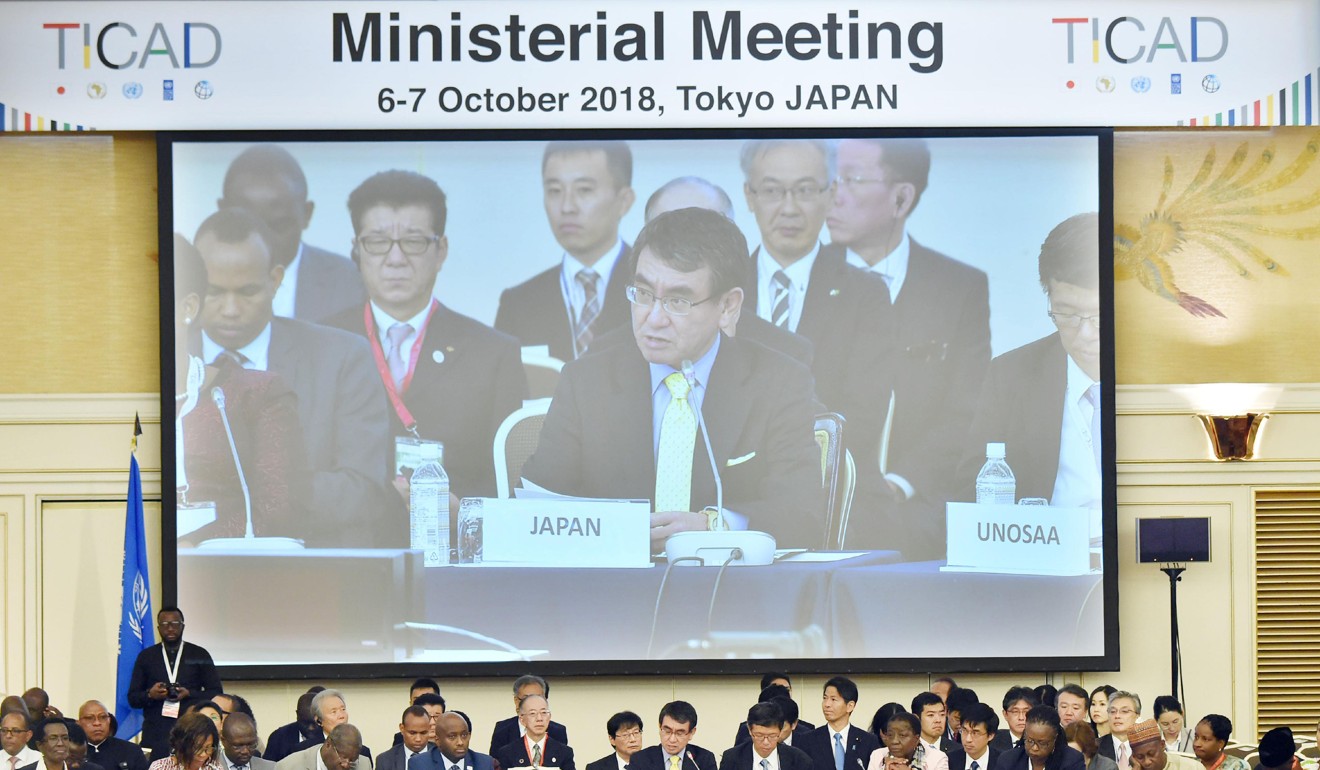
Japanese Foreign Minister Taro Kono gives a speech at the TICAD in Tokyo in October. Japan will reportedly pledge US$2.83 billion in aid to Africa this year. Photo: The Yomiuri Shimbun
Olander said Japan often sought to position its aid and development programmes as an alternative to China’s by emphasising more transparency in loan deals, higher-quality infrastructure projects and avoiding saddling countries with too much debt.
“In some ways, the Japanese position is very similar to that of the US where they express many of the same criticisms of China’s engagement strategy in Africa,” Olander said.
But the rivalry between China and Japan had little to do with Africa, according to Seifudein Adem, a professor at Doshisha University in Kyoto, Japan.
“It is a spillover effect of their contest for supremacy in East Asia,” said Adem, who is from Ethiopia.
“Japan’s trade with Africa, compared to China’s trade with Africa, is not only relatively small but it is even shrinking. It is a result of the acceleration of China’s engagement with Africa.”
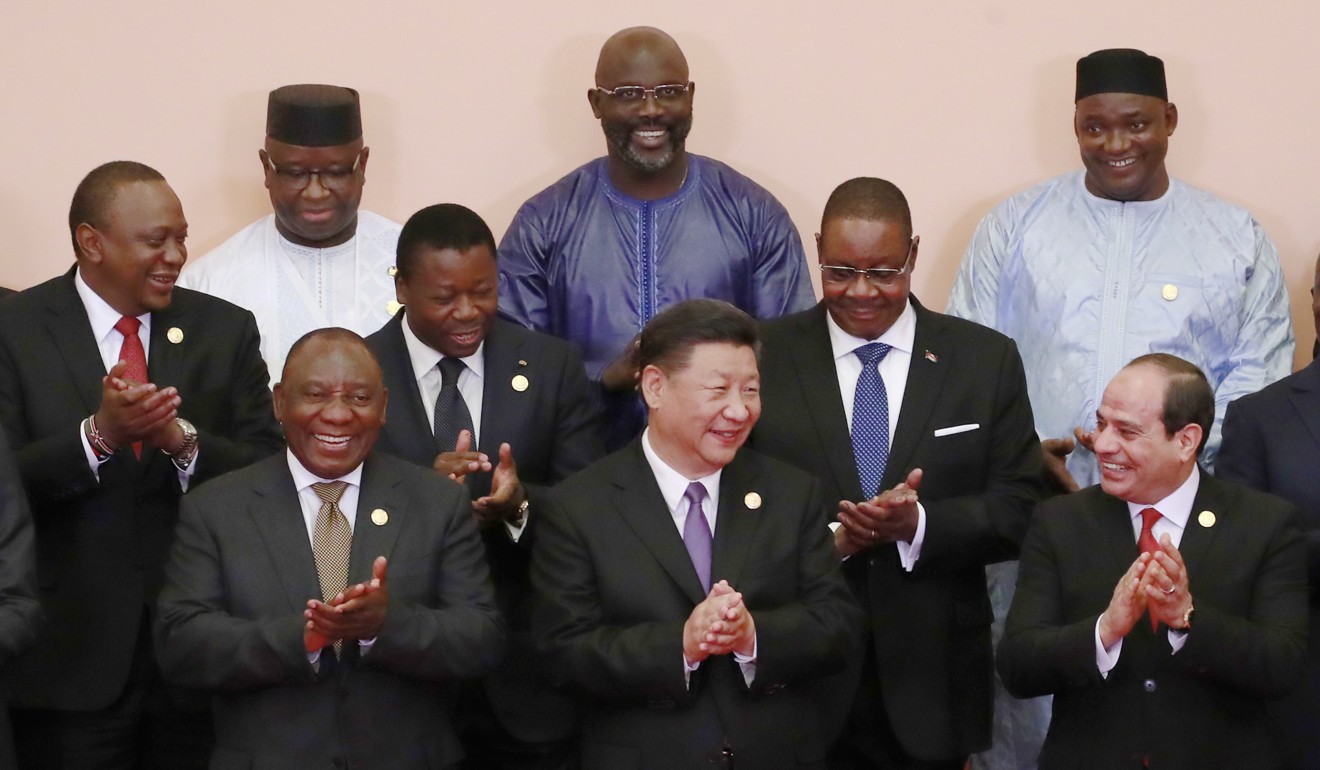
Chinese President Xi Jinping attends a group photo session with African leaders during the Forum on China-Africa Cooperation in Beijing last year. Photo: AP
Japan launched the TICAD in 1993, to revive interest in the continent and find raw materials for its industries and markets for products. About a decade later, China began holding a rival event, the Forum on China-Africa Cooperation.
It is at heart an ideological rivalry unfolding on the continent, according to Martin Rupiya, head of innovation and training at the African Centre for the Constructive Resolution of Disputes in Durban, South Africa.
“China cast Japan as its former colonial interloper – and not necessarily master – until about 1949. Thereafter, China’s Mao [Zedong] developed close relations, mostly liberation linkages with several African nationalist movements,” Rupiya said.
Beijing had continued to invoke those traditional and historical ties, which Japan did not have, he said.
“Furthermore, Japan does not command the type of resources – call it largesse – that China has and occasionally makes available to Africa,” Rupiya said.
Although both Asian giants have made inroads in Africa, the scale is vastly different.
While Japan turned inward as it sought to rebuild its struggling economy amid a slowdown, China was ramping up trade with African countries at a time of rapid growth on the continent.
That saw trade between China and Africa growing twentyfold in the last two decades. The value of their trade reached US$204.2 billion last year, up 20 per cent from 2017, according to Chinese customs data. Exports from Africa to China stood at US$99 billion last year, the highest level since the 1990s. Meanwhile, through its Belt and Road Initiative that aims to revive the Silk Road to connect Asia with Europe and Africa, China is funding and building Kenya’s Standard Gauge Railway and the Addis Ababa-Djibouti Railway. Beijing is also building major infrastructure projects in Zambia, Angola and Nigeria.
Japan’s trade with Africa is just a small fraction of Africa’s trade with China. In 2017, Japan’s exports to the continent totalled US$7.8 billion, while imports were US$8.7 billion, according to trade data compiled by the Massachusetts Institute of Technology.
How speaking with one voice could help Africa get a better deal from China
But Japan now appears eager to get back in the game and expand its presence in Africa, and analysts say this year’s TICAD will be critical – both in terms of the amount of money Tokyo commits to African development and how it positions itself as an alternative to the Chinese model.
Ryo Hinata-Yamaguchi, a visiting professor at Pusan National University in South Korea, said the continent was “economically vital to Japan, both in trade and investments”.
“Moreover, Japan has established some strong links with African states through foreign aid,” Hinata-Yamaguchi said.
“Japan’s move is driven by both economic and political interests. Economically, Japan needs to secure and maintain its presence in, and linkages with, the African states while opening new markets and opportunities,” he said.
To counter China’s belt and road strategy, Japan has launched the Asia-Africa Growth Corridor project, an economic cooperation deal, with India and African countries.
Tokyo meanwhile pledged about US$30 billion in public-private development assistance to Africa over three years at the 2016 TICAD, in Nairobi. But China offered to double that amount last year, during its Forum on China-Africa Cooperation in Beijing.
Still, Japan continues to push forward infrastructure projects on the continent. It is building the Mombasa Port on the Kenyan coast, while Ngong Road, a major artery in Nairobi, is being converted into a dual carriageway with a grant from Tokyo.
Japan is also funding the construction of the Kampala Metropolitan transmission line, which draws power from Karuma dam in Uganda. In Tanzania, it provided funding for the Tanzania-Zambia Railway Authority (Tazara) flyover. And through the Japan International Cooperation Agency, Tokyo also helps African countries improve their rice yields using Japanese technology.
There are nearly 1,000 Japanese companies – including carmakers like Nissan and Toyota – operating in Africa, but that is just one-tenth the number of Chinese businesses on the continent.
Are Chinese loans putting Africa on the debt-trap express?
Olander said Japan’s construction companies were among the best in the world, albeit not necessarily the cheapest, and that Tokyo was pushing its message about “high-quality” construction.
XN Iraki, an associate professor at the University of Nairobi School of Business, said Japan wanted to change its approach to Africa on trade, which had long been dominated by cars and electronics.
“[It has] no big deals like China’s Standard Gauge Railway. But after China’s entry with a bang – including teaching Mandarin through Confucius Institutes – Japan has realised its market was under threat and hence the importance of the TICAD, which should remind us that Japan is also there.”
Source: SCMP
Posted in Addis Ababa-Djibouti railway, africa, African Centre for the Constructive Resolution of Disputes, aid and infrastructure, alternative, Angola, Asia, Beijing, Belt and Road Initiative, Belt and Road Initiative (BRI), best in the world, carmakers, cars, cheapest, China Africa Project, China alert, Chinese President Xi Jinping, Chinese projects, colonial interloper, Confucius Institutes, construction companies, continent, counter, debt-trap express, development summit, different, Doshisha University in Kyoto, dual carriageway, Durban, East Asia, Electronics, Ethiopia, Europe, flyover, Forum on China-Africa Cooperation, Forum on China-Africa Cooperation (FOCAC), Forum on China–Africa Cooperation, high-quality development, ideological rivalry, Japan, Japanese Foreign Minister, Japanese technology, Kampala Metropolitan transmission line, Karuma dam, Kenya’s Standard Gauge Railway, Kenyan coast, largesse, leaders of African nations organisations, leaders of international organisations, Mandarin, Mao Zedong, Massachusetts Institute of Technology, master, Mombasa Port, Mombasa-Nairobi Standard Gauge Railway, Nairobi, Nigeria, Nissan, Pusan National University, quality, resources, rice yields, rivalry, seeks, Silk Road, South Africa, South Korea, Standard Gauge Railway, Sustainability, Tanzania, Tanzania-Zambia Railway Authority (Tazara), Taro Kono, TICAD, Tokyo, Tokyo International Conference on African Development (TICAD), Toyota, Transparency, Uganda, Uncategorized, University of Nairobi School of Business, watching, Yokohama, Yomiuri Shimbun, Zambia |
Leave a Comment »
16/08/2019
SEOUL (Reuters) – Top diplomats of South Korea and Japan plan to meet their Chinese counterpart in Beijing next week amid a flare-up in tension over trade and history, Seoul’s foreign ministry said on Friday.
Foreign ministers Kang Kyung-wha of South Korea, Taro Kono of Japan and Wang Yi of China will meet from Tuesday to Thursday, the ministry said. The last such gathering was three years ago.
Kang and Kono are also expected to meet separately on the sidelines of the event, for the first time since South Korean President Moon Jae-in on Thursday urged dialogue to mend ties. The ministry said the two-way talks had not yet been finalised.
Ties between the neighbors are arguably at their lowest ebb since their relationship was normalized in 1965, hit by a heated feud over the issue South Korean forced labor during World War Two which spilled over into a bitter tit-for-tat trade row.
In a speech marking Korea’s independence from Japan’s 1910-45 rule, Moon toned down his recent stringent rhetoric regarding Japan, saying Seoul would “gladly join hands” if Tokyo chose dialogue and cooperation.
At the meeting, the ministers are also expected to prepare for a summit planned later this year.
From 2008, the three countries had agreed to hold a summit every year to foster regional cooperation. But bilateral tension, including that between China and Japan, has often intervened.
“We expect the meeting will help reinforce the institutionalization and substantiate the foundation of the three-way cooperative scheme,” the ministry said in a statement.
Relations between South Korea and Japan worsened sharply after the South’s Supreme Court last year ordered Japanese companies to compensate some wartime forced laborers. Tokyo says the matter was settled by the 1965 treaty normalizing ties.
The talks come at a sensitive time ahead of the Aug. 28 date when Japan’s decision to end South Korea’s fast-track trade status takes effect, a move that prompted South Korea to follow suit.
As a countermeasure, Seoul has also warned it could consider scrapping an intelligence-sharing pact usually automatically renewed on Aug. 24 every year.
The accord, the General Security of Military Information Agreement (GSOMIA), eases three-way intelligence gathering with Washington which is pivotal in dealing with North Korea’s nuclear and missile threats.
In a separate statement, the South Korean foreign ministry expressed concern over Kono’s reported remarks that Moon should “exert his leadership” to resolve the dispute, saying they were unhelpful for stable management of two-way ties.
Source: Reuters
Posted in Beijing, China alert, foreign minister, General Security of Military Information Agreement (GSOMIA), history tensions, hold talks, Japan, missile threats, North Korea, nuclear threats, President Moon Jae-in, Seoul, South Korea, trade tensions, Uncategorized, Washington |
Leave a Comment »
14/08/2019
- Researchers at academy of science believe electromagnetic wave model is key that will herald new era in radar detection and avoidance for military ships and aircraft
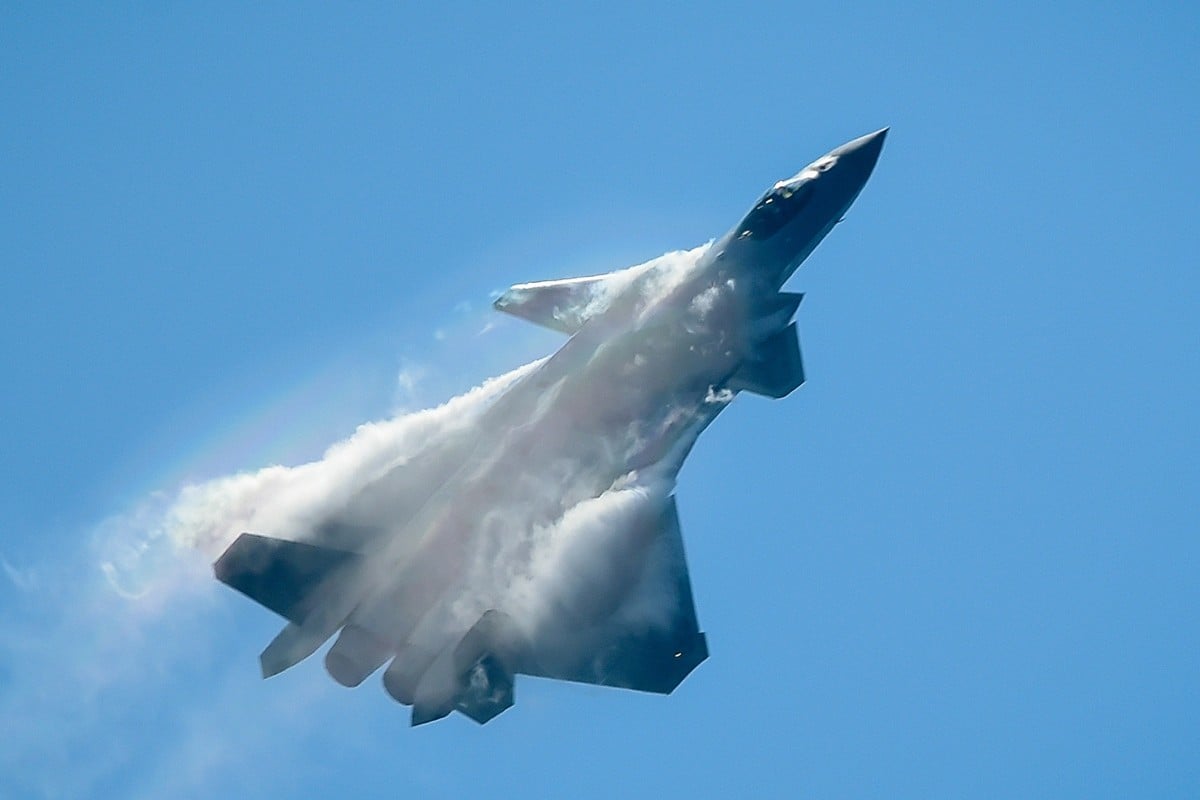
China’s J-20 stealth fighter. Photo: AFP
Chinese scientists have achieved a series of breakthroughs in stealth materials technology that they claim can make fighter jets and other weaponry lighter, cheaper to build and less vulnerable to radar detection.
Professor Luo Xiangang and colleagues at the Institute of Optics and Electronics, Chinese Academy of Sciences in Chengdu, Sichuan province, said they had created the world’s first mathematical model to precisely describe the behaviour of electromagnetic waves when they strike a piece of metal engraved with microscopic patterns, according to a statement posted on the academy’s website on Monday.
With their new model and breakthroughs in materials fabrication, they developed a membrane, known as a meta surface, which can absorb radar waves in the widest spectrum yet reported.
At present, stealth aircraft mainly rely on special geometry – their body shape – to deflect radar signals, but those designs can affect aerodynamic performance. They also use radar absorbing paint, which has a high density but only works against a limited frequency spectrum.
In one test, the new technology cut the strength of a reflected radar signal – measured in decibels – by between 10 and nearly 30dB in a frequency range from 0.3 to 40 gigahertz.
A stealth technologist from Fudan University in Shanghai, who was not involved in the work, said a fighter jet or warship using the new technology could feasibly fool all military radar systems in operation today.
“This detection range is incredible,” the researcher said. “I have never heard of anyone even coming close to this performance. At present, absorbing technology with an effective range of between 4 and 18 GHz is considered very, very good.”
China’s new radar system could spot stealth aircraft from at long range
The lower the signal frequency, the longer a radar’s detection range. But detailed information about a moving target can only be obtained with higher frequency radio waves. Militaries typically use a combination of radars working at different frequencies to establish lines of defence.
The Medium Extended Air Defence System, Nato’s early warning radar, operates at a frequency range of 0.3 to 1 GHz. The American Terminal High Altitude Area Defence system, the missile defence radar that caught Beijing’s attention when it was deployed in South Korea in 2017, operates at frequencies around 10 GHz.
Some airports use extremely short-range, high-frequency radars running at 20 GHz or above to monitor vehicle and plane movements on the ground, but even they might not be able to see a jet with the new stealth technology until it is overhead.
“Materials with meta surface technology are already found on military hardware in China, although what they are and where they are used remains largely classified,” the Fudan researcher said.
Professor Luo Xiangang. Photo: Baidu
Luo and his colleagues could not be reached for comment. But according to the academy’s statement and a paper the team published in the journal Advanced Science earlier this year, the stealth breakthroughs were based upon a discovery they made several years ago.
They found that the propagation pattern of radio waves – how they travelled – in extremely narrow metallic spaces was similar to a catenary curve, a shape similar to that assumed by chains suspended by two fixed points under their own weight.
China tests stealth ‘invisibility cloaks’ on regular fighter jets
Inspired by catenary electromagnetics, the team developed a mathematical model and designed meta surfaces suitable for nearly all kinds of wave manipulation.
These included energy-absorbing materials for stealth vehicles and antennas that can be used on satellites or military aircraft.
Zhu Shining, a professor of physics specialising in meta materials at Nanjing University, said the catenary model was a “novel idea”.
“The Institute of Optics and Electronics in Chengdu has conducted long-term research in this area which paved a solid foundation for their discoveries. They have done a good job,” Zhu said.
“Scientists are exploring new features of metal materials, some of them are already in real-life applications.”
Source: SCMP
Posted in Advanced Science, aerodynamic, airports, American, blind, body shape, breakthroughs, catenary electromagnetics, Chengdu, Chinese Academy of Sciences, Chinese scientists, discovery, early warning radar, fabrication, fighter jets, Fudan University, ground, hail, incredible, Institute of Optics and Electronics, invisibility cloaks, J-20 stealth fighter, materials, Medium Extended Air Defence System, membrane, meta surface, Military, Nanjing University, NATO, paint, performance, plane movements, radar absorbing, radar systems, Shanghai, sichuan province, South Korea, stealth breakthrough, Terminal High Altitude Area Defence system, Uncategorized, vehicle movements, warship |
Leave a Comment »
10/08/2019
- Three-year-old security treaty between US and two key allies under threat as tensions between Seoul and Tokyo continue to escalate
- End of General Security of Military Information Agreement risks undermining Washington’s influence in the region
South Korean protesters hold signs saying “No Abe” during a rally demanding the abolition of the General Security of Military Information Agreement. Photo: AP
The possible termination of a military information-sharing pact between South Korea and Japan would be a symbolic victory for China, a security analyst has warned.
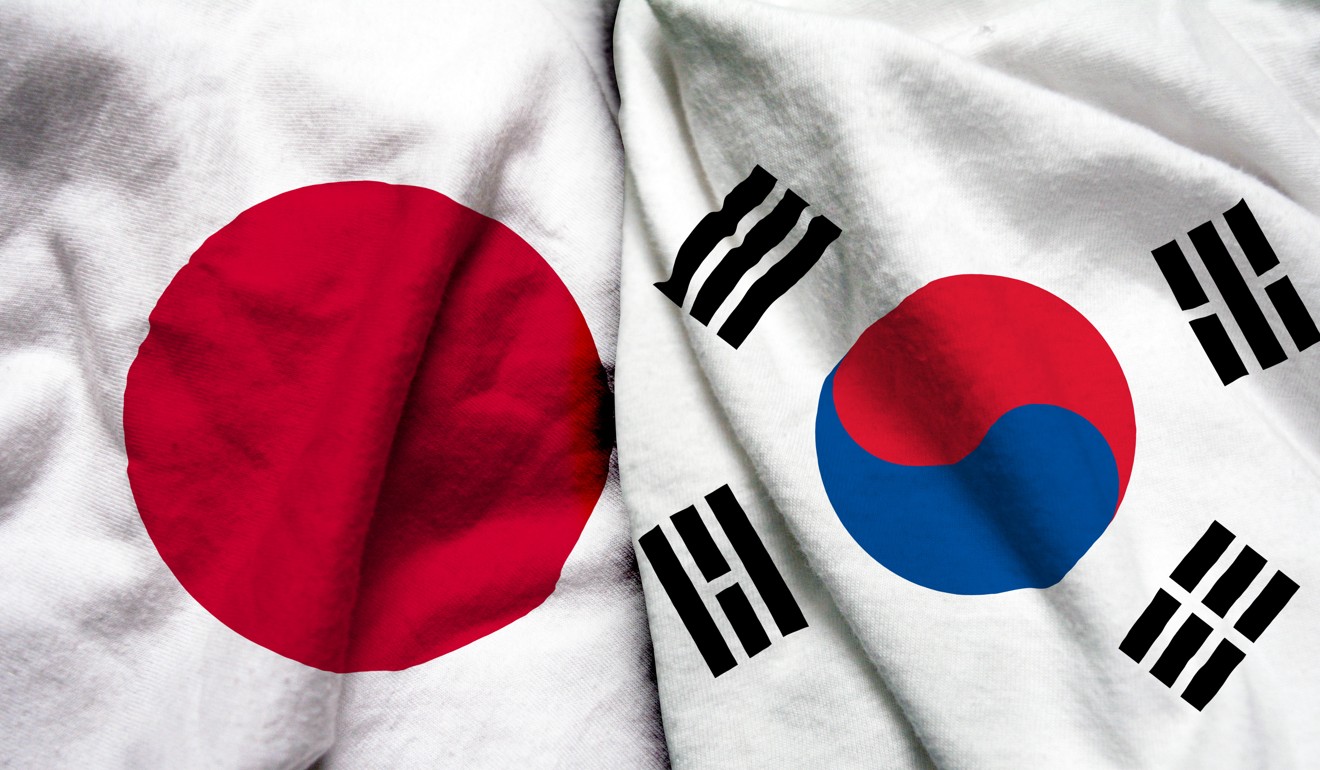
Recent tension between the two countries recently threatened to spill over into the sphere of intelligence after Seoul signalled that it may pull out of the General Security of Military Information Agreement (GSOMIA) pact.
The agreement signed in 2016 enables three-way intelligence gathering between the US and its two allies and provides a crucial framework for coping with North Korea’s nuclear and missile threats.
But the escalating trade dispute between Seoul and Tokyo, prompted by a dispute about Japan’s colonial legacy, has left the future of the deal in jeopardy as the annual deadline for its renewal looms.
Japan approves first hi-tech exports to South Korea since start of ‘trade war’ – but with a warning
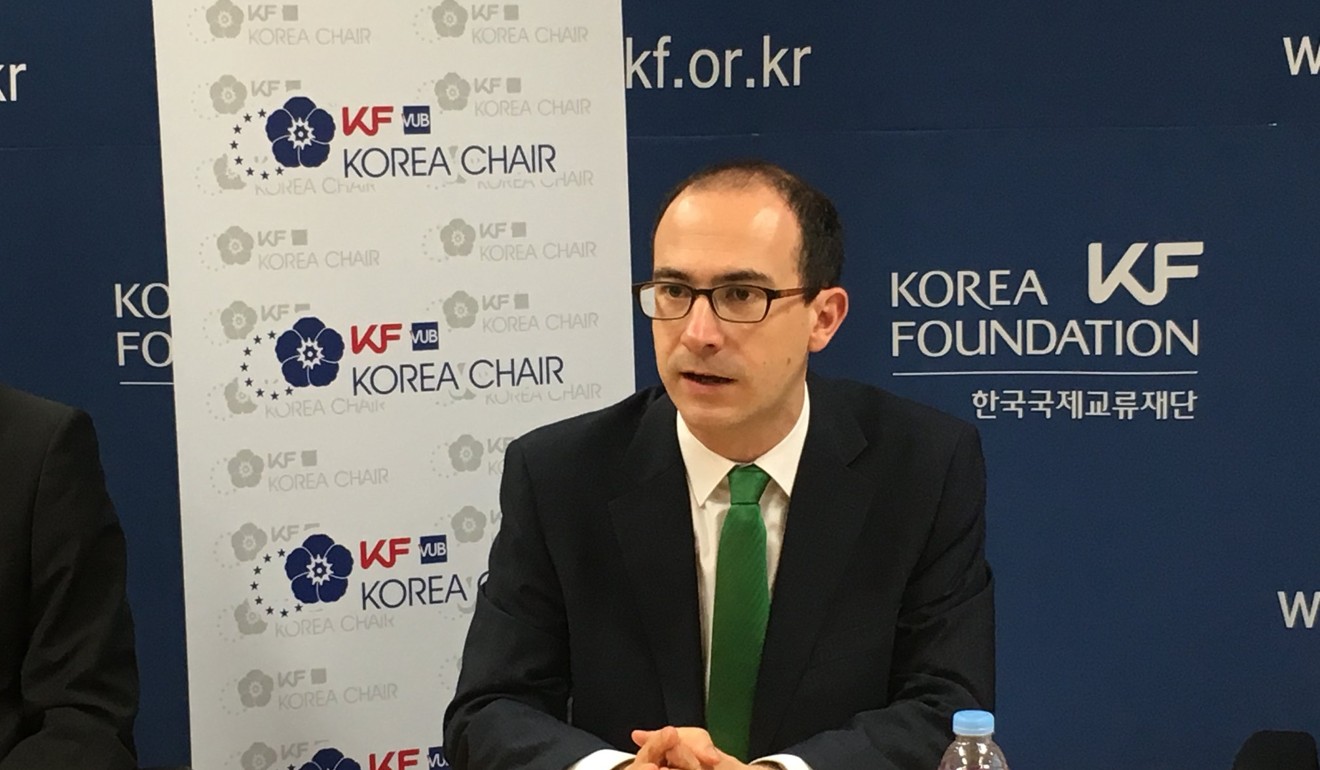
Ramon Pacheco Pardo, the first Korea chair at the Institute for European Studies at Vrije Universiteit Brussel in Belgium, said scrapping the pact would help strengthen China’s influence in the Asia-Pacific region at the expense of the US.
“It is undeniable that termination of GSOMIA would dent the US-South Korea-Japan alliance. The alliance system in northeast Asia will be weaker, strengthening China in relative terms in the process. “This could embolden China and Russia to strengthen their military cooperation in northeast Asia, said Pardo, a member of the non-governmental EU Council for Security Cooperation in the Asia-Pacific.
“Ending GSOMIA would signal that South Korea and Japan are not ready to follow Washington’s lead in the way the latter would like, given the political capital that successive US administrations spent in convincing both countries to share intelligence.”
Ramon Pacheco Pardo said the collapse of the pact would have a largely symbolic impact on China. Photo: Facebook
But Pardo also stressed that the intelligence alliance was not directly targeting China.
“While it is true that GSOMIA serves to connect the weakest link of the US-South Korea-Japan security triangle, ultimately South Korea’s security posture and the capabilities of each country independently mean that it is difficult to argue that the agreement is a concerted effort to contain China.”
“After all, Beijing does not share any significant information on North Korea’s nuclear and missile programmes with South Korea, Japan or the US.
“This is not going to change any time soon. So the good news for China would be symbolic rather than substantial.”
US missiles, jittery neighbours and South Korea’s big security dilemma
Beijing warned on Tuesday that it would take “countermeasures” if the US deployed ground-based missiles in either Japan or South Korea, and Pardo argued that scrapping the intelligence-sharing pact would expose the weaknesses in their co-ordinated approach towards China.
The security deal is automatically renewed every year unless one party decides to pull out. To do so, it must notify the others 90 days before its expiry – a deadline that falls on August 23.
The trade row was sparked by a recent South Korean court ruling that Japanese should compensate individual victims of wartime forced labour. Tokyo believes it settled all necessary compensation under a treaty signed in 1965, but Seoul believes that individual victims’ right to file a claim has not expired.
Relations between South Korea and Japan have deteriorated following a court ruling over forced labour in the wartime era. Photo: Shutterstock
Last week Japan said it would remove South Korea from its “white list” of countries with preferential trade status. Seoul has threatened to respond in kind, but also warned that it may reconsider whether to renew the intelligence-sharing pact.
Both the US and Japan have said they want the arrangement to continue, but Pardo said the effect of the termination would remain largely symbolic.
South Korea has already been investing in its own satellite and anti-submarine programmes to monitor the North’s activities, while Japan has also been developing its own intelligence programmes.
“This shows that neither South Korea nor Japan wants to rely on each other or third parties, namely the US, when it comes to monitoring North Korea’s military activities,” Pardo said.
But he argued that this behaviour already indicated that the alliance was weakening and suggested that terminating the treaty would increase China’s room for manoeuvre.
South Korea buys helicopters worth US$800 million after Trump seeks contribution for US presence
Since the 1990s successive US administrations have pushed for intelligence-sharing arrangements with Japan and South Korea to help build a framework to check Chinese and Russian military expansion in the Pacific.
“Beijing and Moscow are clearly moving in the direction of closer cooperation anyway. GSOMIA or not, military cooperation will continue … as long as Xi Jinping and Vladimir Putin lead each country and most probably even beyond then,” Pardo said.
China and Russia flexed their muscles in the region last month as the trade dispute between the two key allies intensified.
Russian and Chinese long-range military aircraft conducted their first-ever joint air patrol over the Sea of Japan – also known as the East Sea – and the East China Sea.
“The East Asian security landscape would be reshaped insofar that China, North Korea and Russia would see that their main opponent in the region – the US – is unable to convince its two key allies, South Korea and Japan, to cooperate on a key issue,” Pardo said.
“The current dispute between South Korea and Japan will need a negotiated solution … In any case, Japan will have to learn to live with the fact that former colonisers will, from time to time, receive criticism by many of their former colonies, criticism that sometimes will escalate.
“It happens to former European colonial powers, for example, and it is only logical because the interpretation of the past is always in flux.”
Source: SCMP
Posted in anti-submarine programmes, Asia, Belgium, China alert, collapse, colonial legacy, countermeasures, escalate, EU Council for Security Cooperation in the Asia-Pacific, General Security of Military Information Agreement, General Security of Military Information Agreement (GSOMIA), GSOMIA, helicopters, hi-tech export, influence, Institute for European Studies, intelligence pact, Japan, jittery neighbours, military cooperation, missile threats, North Korea, nuclear threats, own intelligence programmes, President Trump, region, Russia, satellite programmes, security treaty, Seoul, South Korea, symbolic victory, Tokyo, trade war, Uncategorized, undermining, US, US missiles, Vrije Universiteit Brussel, Washington |
Leave a Comment »
08/08/2019
SHANGHAI (Reuters) – Food giant Nestle (NESN.S) on Thursday started selling Starbucks-branded (SBUX.O) coffee in mainland China, seeking to tap growth in a market where it says coffee consumption per capita remains low compared to global standards.
Nestle last year paid $7.15 billion for exclusive rights to sell the U.S. chain’s coffees and teas globally, and began selling Starbucks-labelled products in Europe, Asia and Latin America in February.
The world’s largest food company will start selling 21 Starbucks-branded capsule and instant coffee products on Chinese e-commerce platforms like Alibaba’s (BABA.N) Tmall and JD.com (JD.O), as well as to offices and hotels in tier-1 cities, both companies said.
“We believe China is the most exciting market in general but especially for coffee because… per capita cup consumption is quite low as compared to Asia,” said Rashid Aleem Qureshi, Nestle’s chief executive officer for the Greater China region.
“Right now the overall soluble coffee in China is growing between 3-5% (a year) and we believe that by bringing this exciting new business opportunity we should be able to grow faster than that,” he said, referring to a category that includes capsule and instant coffee.
Nestle’s move comes as the Swiss company experienced a slower first-half growth in China, its second-largest market, where other categories like mainstream baby foods have struggled compared to pricier options.
China’s per capita coffee consumption is about 6 cups a year, compared to 400 in Japan and 300 in South Korea, Nestle said.
The partnership with Starbucks would help Nestle add a premium coffee option to the range of products it already sells in China, such as Nescafe instant coffee range and Nespresso capsule coffees, Qureshi said.
Starbucks China CEO Belinda Wong said the Nestle deal would open two new avenues to sell its products in China, where it has been investing heavily in its store network and delivery amid tougher competition from local startups.
Source: Reuters
Posted in Alibaba’s (BABA.N), Asia, China alert, coffee, companies, Europe, Greater China region, hotels, Japan, JD.com (JD.O), Latin America, Nescafe, Nespresso, Nestle, offices, selling, South Korea, starbucks, Starbucks-branded, Swiss company, tier-1 cities, Tmall, Uncategorized |
Leave a Comment »
07/08/2019
- 46 countries agree protocol aimed at using mediation instead of legal action
- Singapore set to capitalise on the naming of the convention, at Hong Kong’s expense
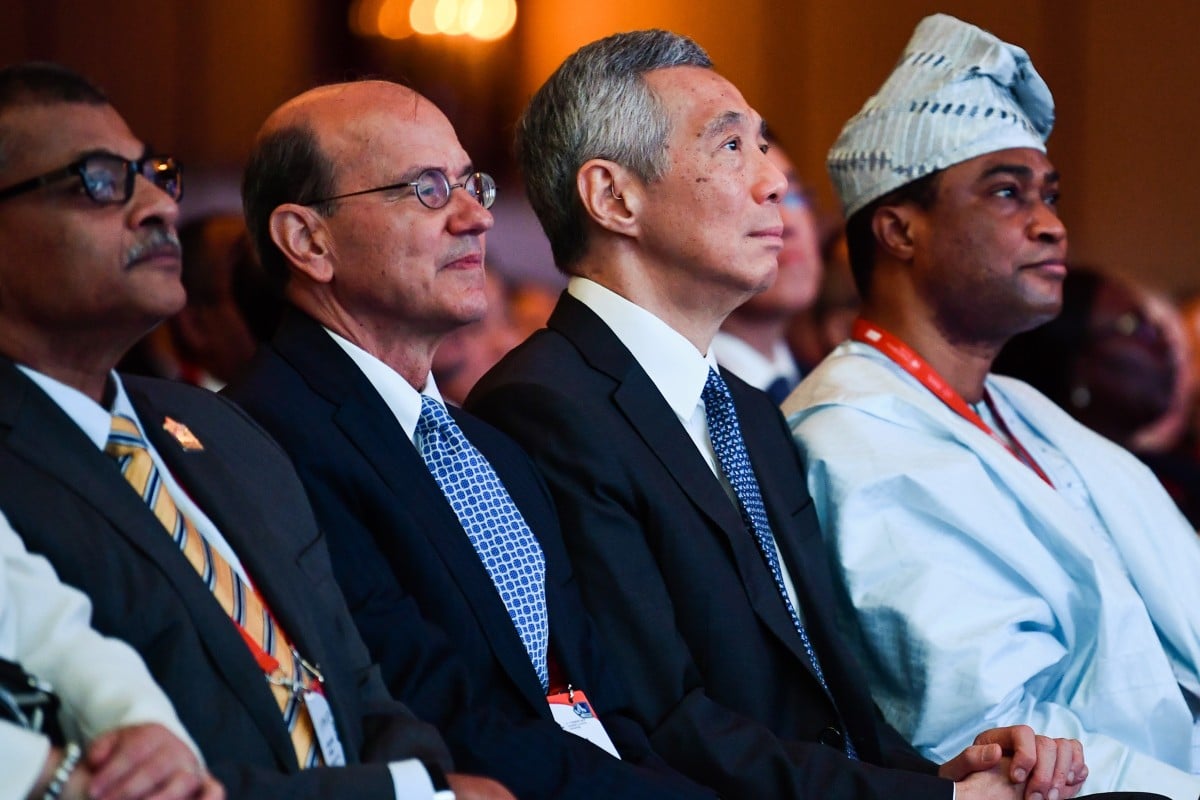
Singapore Prime Minister Lee Hsien Loong attends the signing ceremony of the Singapore Convention on Mediation. Photo: Handout
China and the United States have briefly put aside their escalating trade war and joined 44 other countries in signing a new global protocol on mediation aimed at settling cross-border trade and commercial disputes.
The
Singapore Convention, under the United Nations framework, will allow mediation agreements to be recognised and enforced in the courts of all 46 signatories, which include South Korea and India. European Union nations are expected to sign in the next phase.
It was agreed against a backdrop of ongoing tensions between China and the US over tariffs and currency manipulation, and a trade dispute between South Korea and Japan
Singapore Prime Minister Lee Hsien Loong addresses delegates at the Singapore Convention on Mediation event. Photo: Handout
Speaking at the signing ceremony, Singapore Prime Minister Lee Hsien Loong said the protocol demonstrated that countries are capable of achieving consensus through effort and creativity, and are open to binding commitments.
He also observed that the established world order of multilateralism is “under pressure”.
“Existing multilateral institutions are not perfect, many are in need of urgent reform, suffer from a loss of confidence, or have practices and structures that are no longer fit for purpose,” Lee said, without elaborating which bodies he was referring to.
He added that the solution would not be to abandon these bodies, but to improve them through reform and bringing them up to date.
“We must make sure they reflect current economic and political realities, and ready them to deal with the new issues created by the progress of technology and globalisation.”
Stephen Mathias, the UN’s assistant secretary-general for legal affairs, said the agreement helped unify mediation rules and remove uncertainty in enforcing mediation agreements.
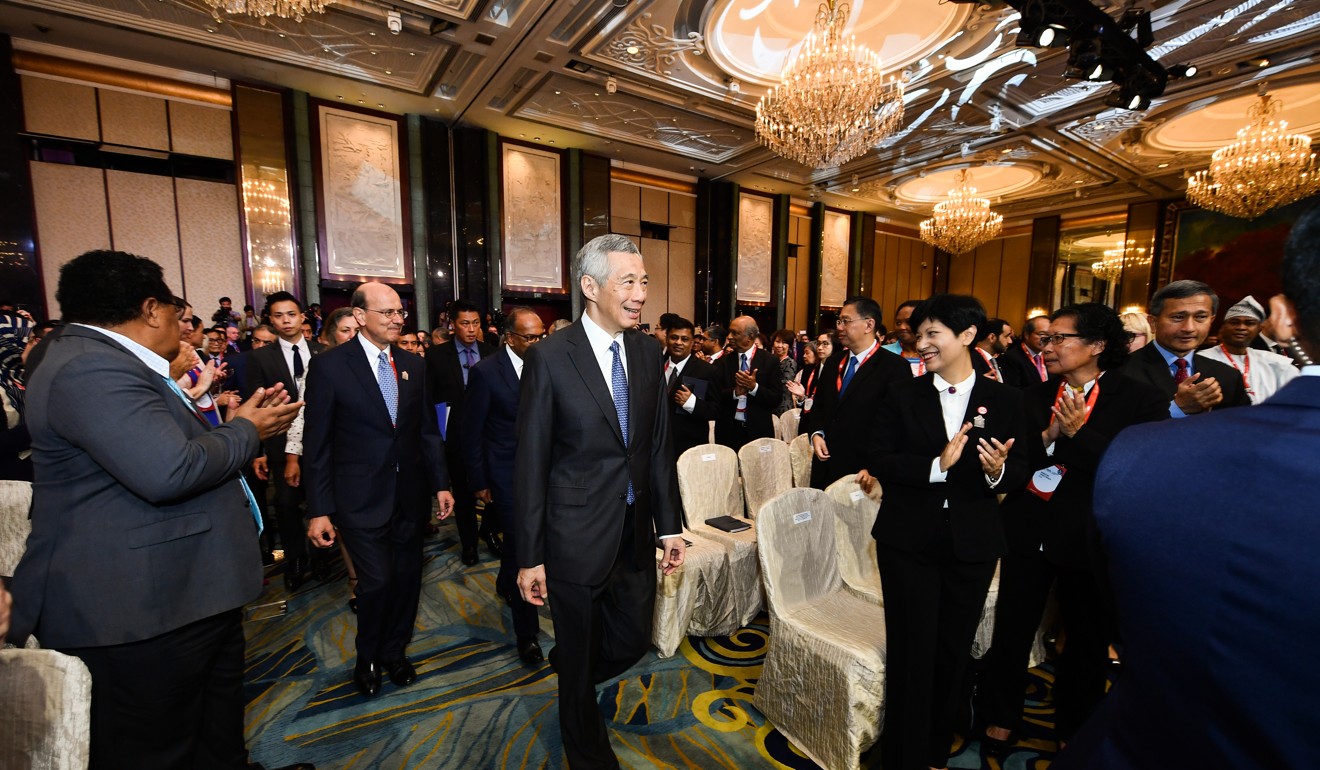
Delegates attend the signing ceremony of the Singapore Convention. Photo: Handout
The protocol contains standardised terms to apply mediation agreements across jurisdictions, and is expected to bolster the use of mediation rather than legal action to resolve trade disputes.
This rare example of international cooperation can be likened to the New York Convention on arbitration, which was adopted by the UN 60 years ago and is now applied by 160 countries.
Singapore has also capitalised on the naming of the convention, positioning itself as the legal hub in the region, in competition with Hong Kong.
The UN’s Commission on International Trade Law, for instance, has signed a memorandum to establish an academy in international dispute resolution in Singapore.
Hong Kong or Singapore: who to trust on belt and road disputes?
Mediators in Hong Kong said the convention only served to promote their rival city, as Hong Kong professionals remain competitive in the market.
“Lots of cases with a ‘Chinese element’ would pick Hong Kong,” said lawyer Christopher To Wing. “For instance, a US or British firm runs into a dispute with a Chinese firm, they will choose Hong Kong, as the city is close to China.”
But he conceded that more support and funding from the Hong Kong government is needed to catch up with similar promotion efforts by the Singapore government.
Source: SCMP
Posted in belt and road disputes, China alert, Commission on International Trade Law, Cross-border, European Union, Hong Kong, India alert, Lee Hsien Loong, mediation, sign, signing ceremony, Singapore Convention, Singapore Prime Minister, South Korea, tariffs and currency manipulation, trade and commercial disputes, trade dispute, UN protocol, UN’s assistant secretary-general for legal affairs, Uncategorized, United States, US |
Leave a Comment »
31/07/2019
- Some of those weeded out had been recruited under programme to use immigrants’ vital skills
- New vetting process has delayed enlistments by years, turning more than 1,000 recruits into unlawful immigrants with expired credentials
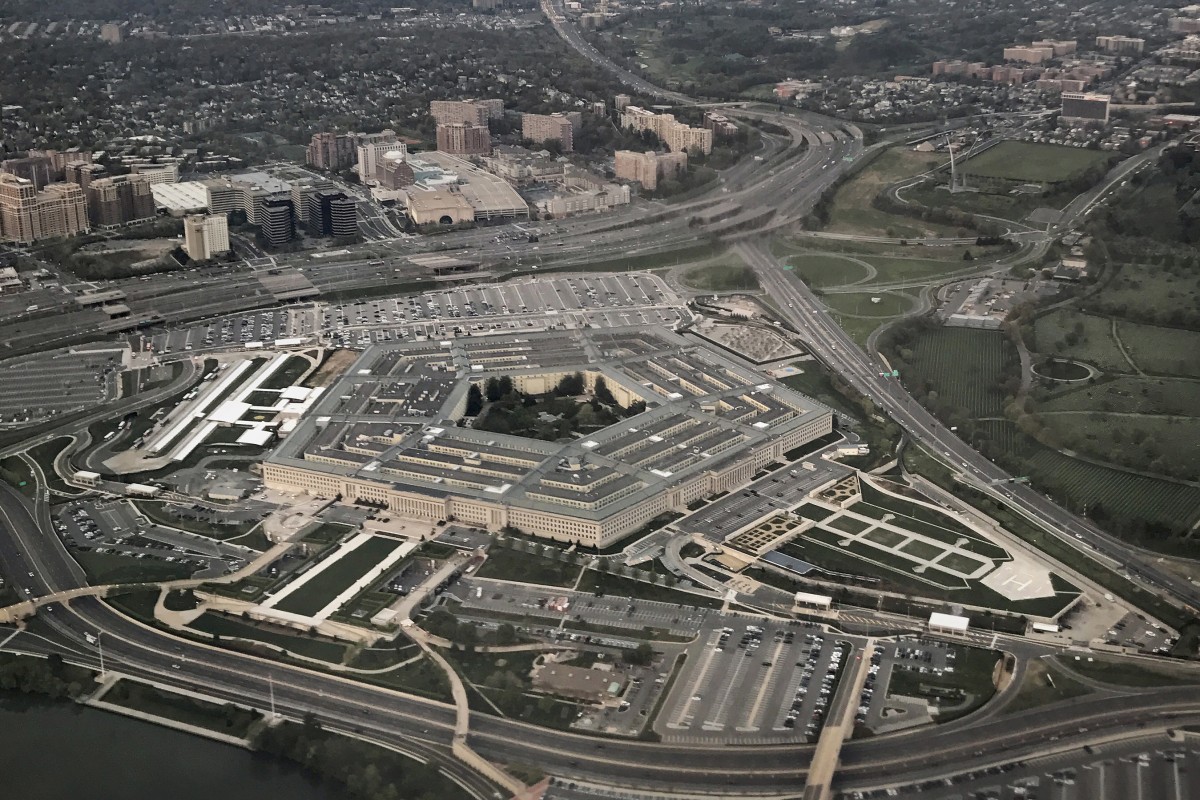
The Pentagon needs recruits with foreign language skills. Photo: Washington Post
In the past month, the Pentagon booted two Chinese recruits from the enlistment process because of their dead grandfathers, who had lived very different lives.
One recruit’s grandfather, whom he never met, served in China’s Communist Party military. Another recruit was removed from the programme after drilling for three years because of the polar opposite – Zicheng Li’s grandfather fought against, and was tortured by, Communist Party agents, defence officials wrote.
Screening documents obtained by The Washington Post detailing reasons that these and other foreign recruits were removed from the military reveal a pattern of cancelled enlistments and failed screenings for rather innocuous fact-of-life events and, often, simply for existing as foreigners.
Immigrant enlistees have been cut loose for being the children of foreign parents or for having family ties to their native country’s government or military.
I’m shocked and numb. They use anything they can to kick us outZicheng Li, US Army recruit
In some cases, they have relatives who served in militaries closely allied with the United States. Those removals raise questions about the Pentagon’s screening process and why it has weeded out precisely the recruits defence officials said they needed.
The Pentagon programme they were recruited under embraced a simple idea: the military would enlist immigrants to make use of strategic language and medical abilities in short supply among US-born troops, designating the skills of immigrants a national security imperative.
The programme was even named in that fashion – Military Accessions Vital to the National Interest, or Mavni, which enlisted more than 10,400 foreign-born troops in the past decade, with the promise of fast-tracked naturalisation that would take weeks. Speakers of Mandarin, Russian, Arabic and other languages have been in demand by defence officials.
But then denials began to quicken since stricter screening was instituted in late 2016, a lawyer for immigrant recruits said, pointing to family ties as a common reason.
He’s an illegal Chinese immigrant – and a US soldier on Mexico border
Li, who arrived in Minnesota from China in 2012 to study aerospace engineering, said that his US Army enlistment processing had crawled since February 2016. In that time, he attended drills as a selected reservist and received his uniform and an ID card that grants him access to army installations.
Then this month, after three years of waiting, an enlistment denial justification letter arrived in his postbox, containing two sentences about family history.
Li told investigators that his since-deceased grandfather’s torture decades ago by Chinese Communists prompted worry of reprisals if the Chinese government learned of Li’s enlistment.
“You revealed that you fear for your family’s safety,” officials wrote in a letter, saying his suitability for enlistment was adverse, documents show.
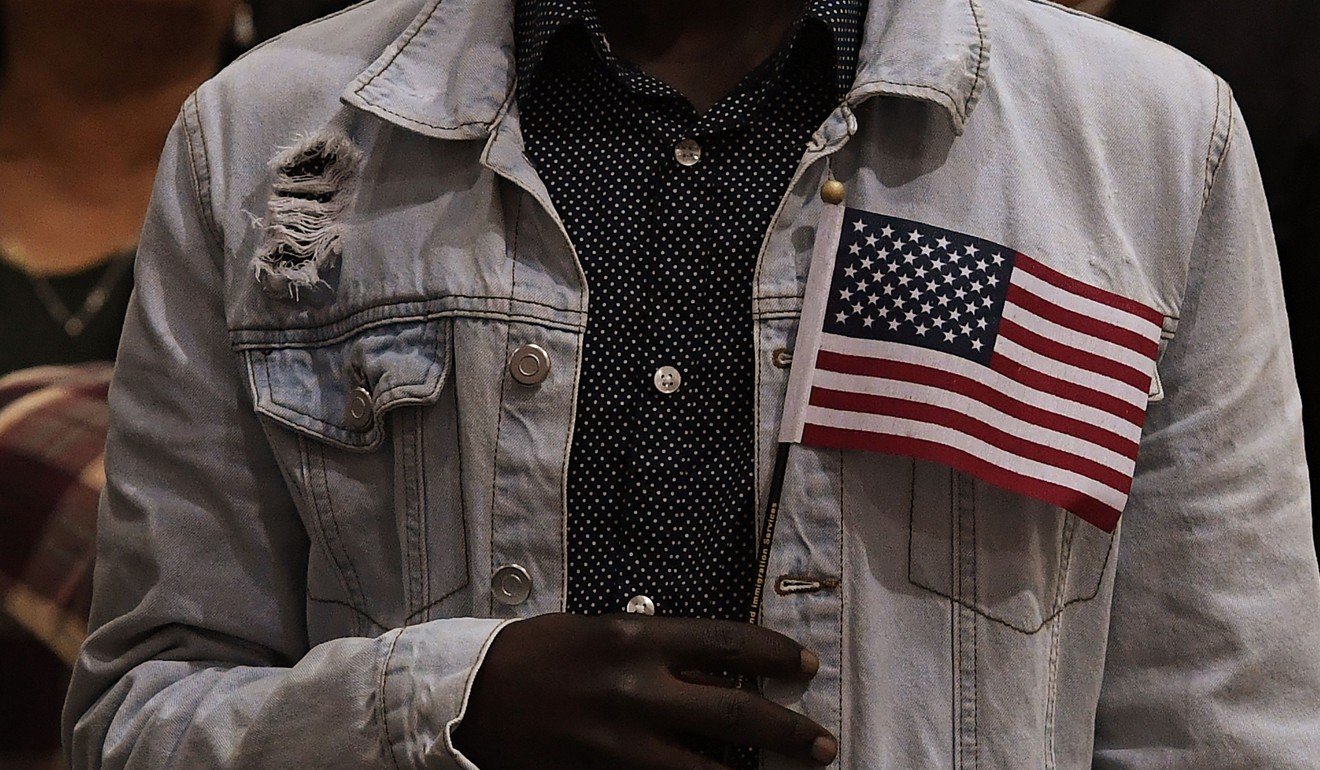
A new citizen pledging allegiance to the United States at a naturalisation ceremony in Los Angeles. Photo: AFP
“I’m shocked and numb,” Li said. “They use anything they can to kick us out.”
The new vetting process has delayed enlistments by years, and the wait has turned more than 1,000 recruits – who enlisted as legal immigrants with visas – into unlawful immigrants whose credentials expired as their screenings tumbled into bureaucratic limbo.
The Pentagon has acknowledged in court filings that none of the thousands of recruits who later naturalised from the programme have been charged with espionage-related crimes, though one Chinese recruit has been accused of failing to register as a foreign agent. The new vetting procedures did not play a role in his detection, court filings said.
It is unclear how many immigrant recruits have been turned away as recruits or discharged as soldiers in recent months. In a spate of lawsuits alleging misconduct and violation of equal protection laws, the Pentagon has reversed decisions and halted discharges.
Chinese women join US Army to obtain green cards
Defence officials have not offered public insight into how the vetting works or what kind of oversight exists. The results are typically explained in one or two sentences.
Another Chinese-born recruit, who declined to provide his name out of fear of reprisal to his family by the Chinese government, said he was denied enlistment last month because his father and grandfather served in the Communist military, though the report about his relatives’ positions was inaccurate, he said.
His grandfather died before the recruit was born.
“I don’t know what’s the harm for me to finish my contract and gain my citizenship,” he said.
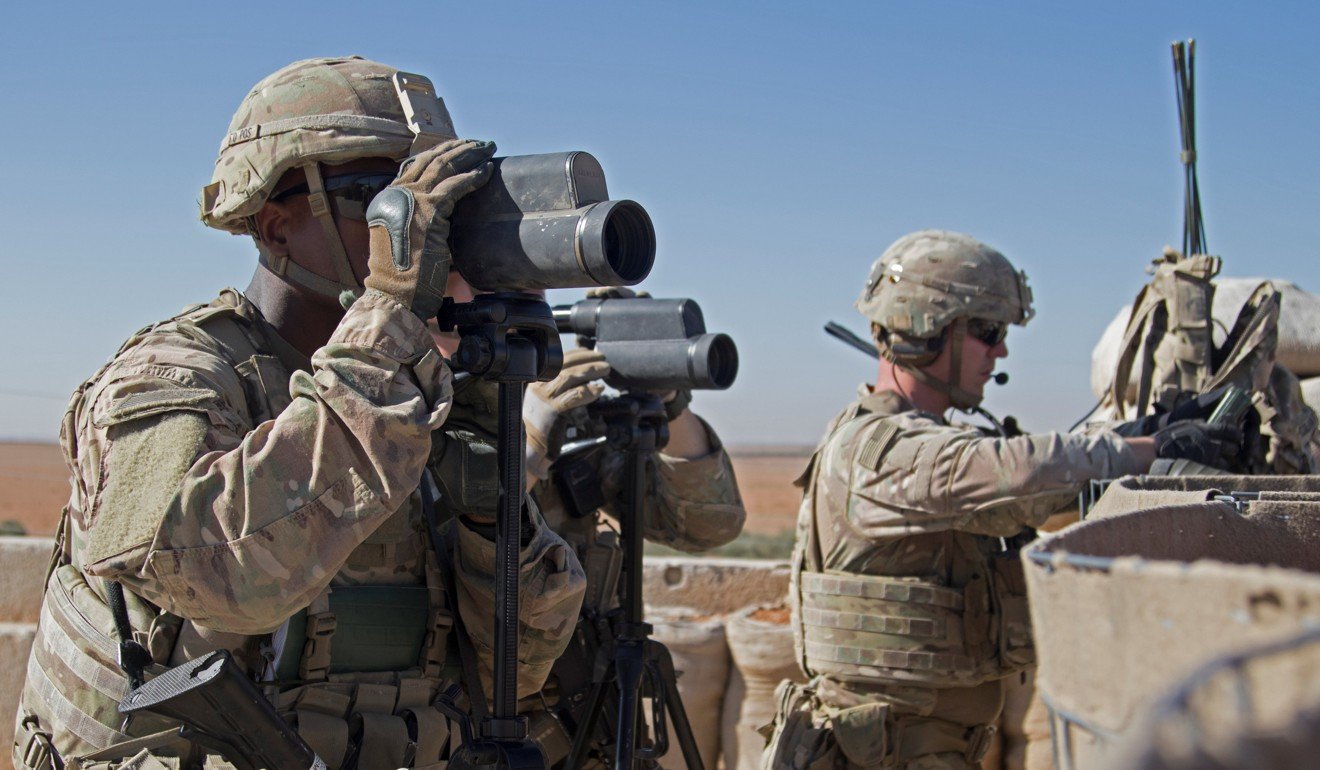
The US has recruited more than 10,000 foreign-born troops in the last decade. Photo: US Army via Reuters
Mavni screening can be “time-consuming due to our limited ability” to verify information from home countries, said Jessica Maxwell, a Pentagon spokeswoman. She declined to address questions about the process itself and whether screeners adjust expectations of foreign ties if they are screening foreign-born recruits.
She also declined to say how many Mavni recruits are still waiting for their screening to finish, citing litigation and privacy limitations.
Margaret Stock, an immigration lawyer who has represented Mavni recruits, including Li, said the Pentagon has scuttled millions of dollars and years of time to produce unclear reasons why it separates immigrants the Defence Department itself determined it needed.
“This is what they come up with? Your grandfather served in a foreign army before you were born?” Stock asked. “What is the threat to national security? They can’t articulate it here.”
New Pentagon chief’s mission: confront foreign threats, manage Trump
Other rejections point to speculative or seemingly benign information for immigrants living typical lives.
“You revealed that you maintain routine contact with your father and mother who are citizens of and reside in China,” said one document.
An Indian-born recruit was cut loose after an investigation determined that family members “work for or have worked for the Indian army”, according to one document, even thought India and the United States share a defence relationship.
Recruits from South Korea, a key US defence ally, have been penalised because their fathers are required by conscription to serve, Stock said.
Maxwell declined to say why a family member’s involvement in a friendly military would raise suspicions.
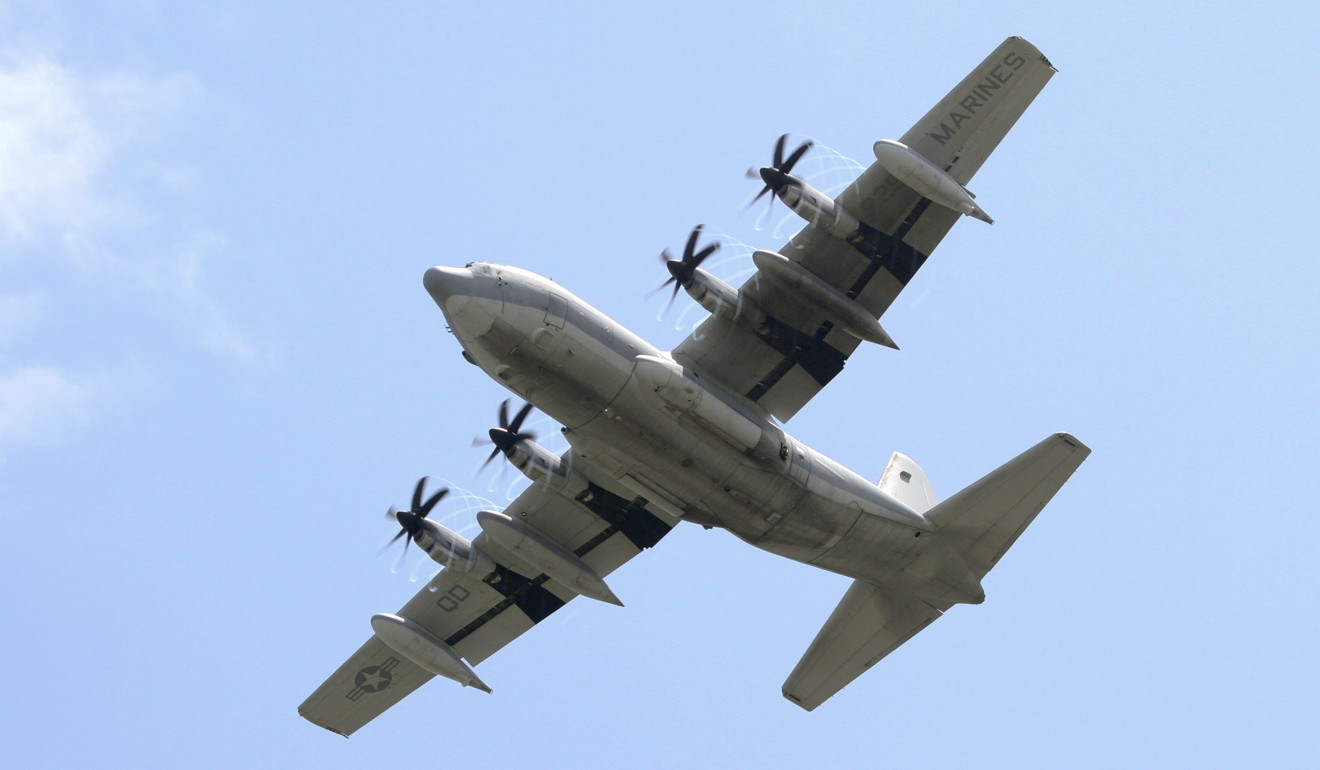
Zicheng Li is hoping to become a Hercules pilot. Photo: EPA
Another enlistee was rejected for “multiple wire transfers” through US banks, though the screening review did not describe the nature of the transfers or whether they were unlawful.
One recruit, a Chinese doctoral student, was turned away because a screener with no medical experience said that the recruit had Asperger syndrome – on the basis that the screener once observed a family member with autism, The Post previously reported.
Potential persecution of Li’s family could be aided by the US military itself. US Army recruiters inadvertently exposed the private information of hundreds of Chinese-born recruits, heightening the risk that Chinese government officials would target their families, a lawmaker said.
Pentagon poised to report on US military’s dependence on China
Those disclosures and enlistment delays have forced several recruits to apply for US asylum protection, including Li while he fights the army’s determination that he is unsuitable for service.
Li said he wants to bring his family to the United States. Until then, he has taken a rather American path: he helps design grain enclosures and spreaders for a farm equipment company in Minnesota, with an eye to eventually transitioning from the US Army to the Air Force.
Li said he hopes to become a pilot, perhaps for the C-130 Hercules transport aircraft.
Fighters can be flashy, he said. But the Hercules can get him more time in the cockpit on missions across the world.
Source: SCMP
Posted in aerospace engineering, C-130 Hercules transport aircraft, Chinese relatives, Chinese women, Communist Party agents, Communist Party military, despite, Fighters, foreign language skills, foreign ties, green card, Hercules pilot, indian army, Indian-born recruit, Mexico border, Military Accessions Vital to the National Interest, or Mavni, Minnesota, need, Pentagon, recruits, rejecting, South Korea, The Washington Post, Uncategorized, United States, US Army |
Leave a Comment »
31/07/2019
- China suggests good progress made in Regional Comprehensive Economic Partnership talks after marathon 10-day negotiations in Zhengzhou
- Indian Commerce Minister Piyush Goyal has opted to skip the upcoming high-level meetings, adding fuel to rumours that the country could be removed
The Association of Southeast Asian Nations (Asean) has overtaken the US to become China’s second-largest trading partner in the first half of 2019. Photo: AP
China has claimed “positive progress” towards finalising the world’s largest free-trade agreement by the end of 2019 after hosting 10 days of talks, but insiders have suggested there was “never a chance” of concluding the deal in Zhengzhou.
The 27th round of the Regional Comprehensive Economic Partnership (RCEP) negotiations closed on Wednesday in the central Chinese city.
working level conference brought over 700 negotiators from all 16 member countries to Henan province, with China keen to push through a deal which has proven extremely difficult to close.
If finalised, the agreement, which involves the 10 Asean nations, as well as China, Japan, South Korea, Australia, New Zealand, and India, would cover around one-third of the global gross domestic product, about 40 per cent of world trade and almost half the world’s population.
“This round of talks has made positive progress in various fields,” said assistant minister of commerce Li Chenggang, adding that all parties had reaffirmed the goal of concluding the deal this year. “China will work together with the RCEP countries to proactively push forward the negotiation, strive to resolve the remaining issues as soon as possible, and to end the negotiations as soon as possible.”
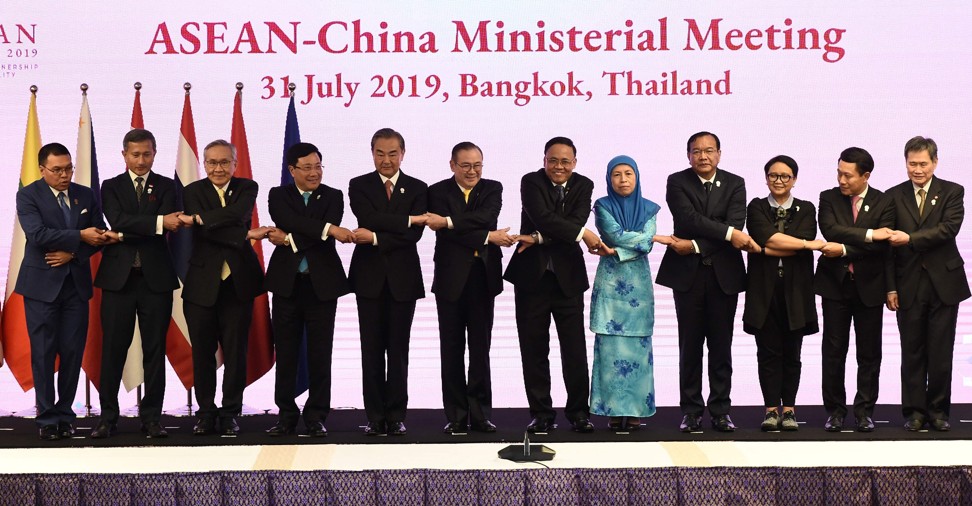
China’s Foreign Minister Wang Yi (fifth left) poses with foreign ministers from the Association of Southeast Asian Nations (Asean) countries during the ASEAN-China Ministerial Meeting in Bangkok. Photo: AFP
China is keen to complete a deal which would offer it a buffer against the United States in Asia, and which would allow it to champion its free trade position, while the US pursues protectionist trade policy.
The RCEP talks took place as Chinese and American trade negotiators resumed face-to-face discussions in Shanghai, which also ended on Wednesday, although there was little sign of similar progress.
As the rivalry between Beijing and Washington has intensified and bilateral trade waned, the Association of Southeast Asian Nations (Asean) overtook the US to become China’s second-largest trading partner in the first half of 2019. From January to June, the trade volume between China and the 10-member bloc reached US$291.85 billion, up by 4.2 per cent from a year ago, according to government data.
The Asean bloc is made up of Indonesia, Thailand, Malaysia, Singapore, Philippines, Vietnam, Myanmar, Cambodia, Brunei and Laos.
China will work together with the RCEP countries to proactively push forward the negotiation, strive to resolve the remaining issues as soon as possible, and to end the negotiations as soon as possible. Li Chenggang
RCEP talks will now move to a higher level ministerial meeting in Beijing on Friday and Saturday, but trade experts have warned that if material progress is not made, it is likely that the RCEP talks will continue into 2020, prolonging a saga which has already dragged on longer than many expected. It is the first time China has hosted the ministerial level talks.
But complicating matters is the fact that India’s Commerce Minister, Piyush Goyal, will not attend the ministerial level talks, with an Indian government official saying that he has to participate in an extended parliamentary session.
India is widely viewed as the biggest roadblock to concluding RCEP, the first negotiations for which were held in May 2013 in Brunei. Delhi has allegedly opposed opening its domestic markets to tariff-free goods and services, particularly from China, and has also had issues with the rules of origin chapter of RCEP.
China is understood to be “egging on” other members to move forward without India, but this could be politically explosive, particularly for smaller Asean nations, a source familiar with talks said.
Deborah Elms, executive director of the Asian Trade Centre, a Singapore-based lobby group, said that after the last round of negotiations in Melbourne between June 22 to July 3 – which she attended – there was “frustration” at India’s reluctance to move forward.
She suggested that in India’s absence, ministers in China could decide to move forward through a “pathfinder” agreement, which would remove India, but also potentially Australia and New Zealand.
India’s Commerce Minister, Piyush Goyal, will not attend the ministerial level talks this week in Beijing. Photo: Bloomberg
This “Asean-plus three” deal would be designed to encourage India to come on board, Elms said, but would surely not go down well in Australia and New Zealand, which have been two of the agreement’s biggest supporters.
New Zealand has had objections to the investor protections sections of RCEP, and both countries have historically been pushing for a more comprehensive deal than many members are comfortable with, since both already have free trade agreements with many of the other member nations.
However, their exclusion would be due to “an unfortunate geographical problem, which is if you’re going to kick out India, there has always been an Asean-plus three concept to start with”. Therefore it is easier to exclude Australia and New Zealand, rather than India alone, which would politically difficult.
A source close to the negotiating teams described the prospect of being cut out of the deal at this late stage as a “frustrating rumour”, adding that “as far as I know [it] has no real basis other than a scare tactic against India”.
There was “never a chance of concluding [the deal during] this round, but good progress is being made is what I understand. The key issues remain India and China”, said the source, who wished to remain anonymous.
Replacing bilateral cooperation with regional collaborations is a means of resolving the disputesTong Jiadong
However, Tong Jiadong, a professor of international trade at the Nankai University of Tianjin, said Washington’s refusal to recognise India as a developing country at the World Trade Organisation could nudge the world’s second most populous nation closer to signing RCEP.
“That might push India to the RCEP, accelerating the pace of RCEP,” Tong said, adding that ongoing trade tensions between Japan and South Korea could also be soothed by RCEP’s passage.
“Replacing bilateral cooperation with regional collaborations is a means of resolving the disputes between the two countries,” Tong said.
Although the plan was first proposed by the Southeast Asian countries, China has been playing an increasingly active role, first as a response to the now defunct US-backed Trans-Pacific Partnership (TPP), and more recently as a means of containing the impact of the trade war.
China’s vice-commerce Minister, Wang Shouwen, told delegates last week that RCEP was “the most important free trade deal in East Asia”. He called on all participants to “take full advantage of the good momentum and accelerating progress at the moment” to conclude a deal by the end of the year.
Source: SCMP
Posted in Asean nations, ASEAN-China Ministerial Meeting, Asia, Asian Trade Centre, Australia, Bangkok, Beijing, biggest roadblock, Brunei, Cambodia, China alert, claims, Delhi, Henan province, India alert, Indian Commerce Minister, Indonesia, Japan, Laos, Malaysia, Melbourne, Myanmar, Nankai University of Tianjin, New Zealand, Philippines, Piyush Goyal, progress, Regional Comprehensive Economic Partnership (RCEP), remains, rivalry, Shanghai, Singapore, South Korea, Thailand, towards, Trans-Pacific Partnership (TPP), Uncategorized, United States, Vietnam, Washington, World Trade Organisation (WTO), world’s biggest trade deal, Zhengzhou |
Leave a Comment »
23/06/2019
- Stalled denuclearisation talks also expected to be on the agenda when Chinese president meets Kim Jong-un this week
- Analysts say Korean peninsula has become intense diplomatic battleground between Beijing and Washington
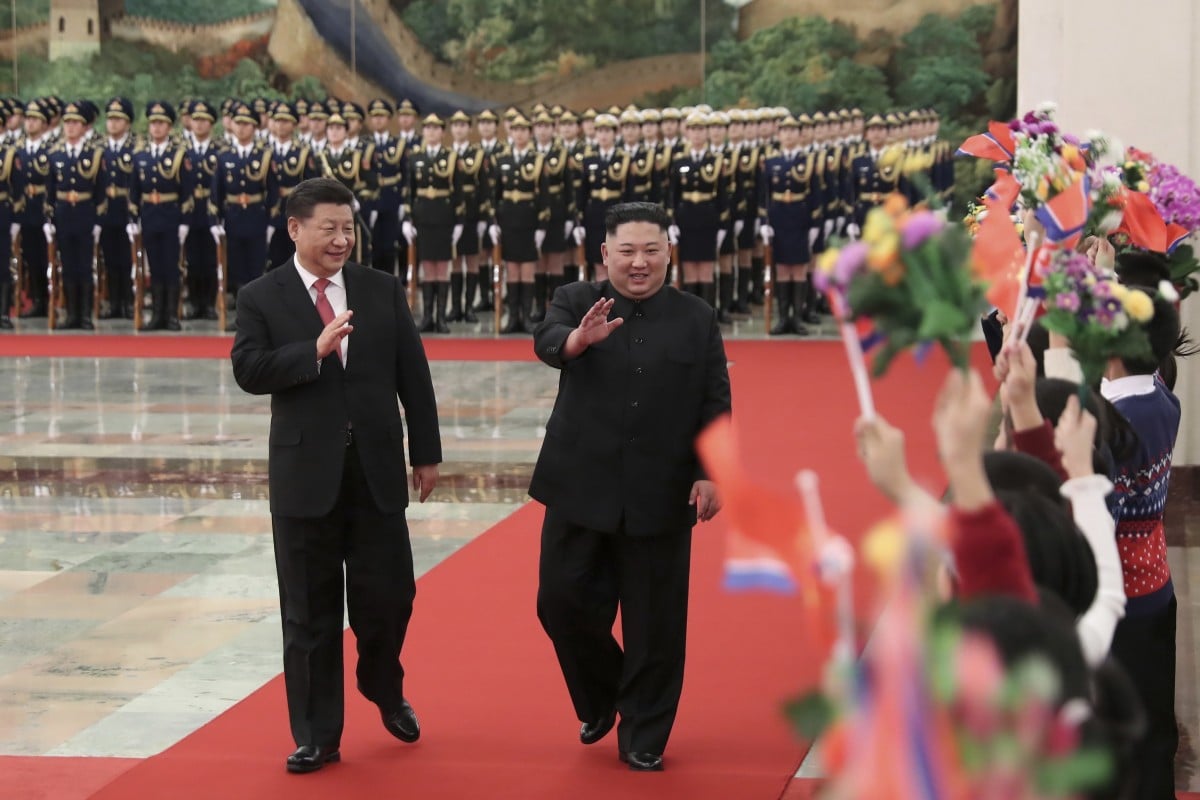
North Korean leader Kim Jong-un (right) attends a welcome ceremony in Beijing with Chinese President Xi Jinping in January. Xi will begin a visit to Pyongyang on Thursday. Photo: AP
Xi Jinping’s upcoming trip to
will be a state visit – a higher status than the last trip to the hermit kingdom by a Chinese president, highlighting the close bilateral ties between Beijing and Pyongyang.
Xi’s two-day trip, which
, is the first by a Chinese president to North Korea in 14 years and comes just a week before he is due to meet US President Donald Trump for talks on the sidelines of the Group of 20 summit in Japan.
“Leaders of the two countries will review the development of the bilateral relationship and carry out an in-depth exchange of opinions on the development of Sino-North Korean relations in the new era, and chart the future course of development,” state news agency Xinhua reported on Tuesday.
Xi’s predecessor, Hu Jintao, went to North Korea in October 2005 on a three-day trip described as an “official goodwill” visit.
Speaking at a regular press briefing in Beijing on Tuesday, foreign ministry spokesman Lu Kang said Xi’s visit aimed to “inject new impetus” into relations in the year the two countries marked the 70th anniversary of establishing diplomatic ties, and to give stalled denuclearisation talks a much needed push.
“Regarding the progress on denuclearisation, as I said, the result of the Hanoi leaders’ meeting in February was indeed a little unexpected. But after that, everyone actually looks forward to the resumption of dialogue in a good direction,” Lu said, referring to the failed talks between Trump and North Korean leader Kim Jong-un in the Vietnamese capital four months ago.
Trump hinted at the possibility of another meeting with Kim after receiving what he called “a beautiful letter” from the North Korean leader last week. On Tuesday, South Korea’s chief nuclear negotiator, Lee Do-hoon, said the US had been in contact with the North.
Life in North Korea the ‘admiration and envy’ of others, state media says
Washington will also send US Special Representative for North Korea Stephen Biegun to South Korea next week, days after Xi’s visit to Pyongyang, to fully align its position on North Korea with its ally.
Meanwhile, Trump confirmed he would meet Xi for talks in Osaka next week, saying in a tweet on Tuesday they had “a very good telephone conversation” and would hold “an extended meeting” at the G20 summit, where they are
over an almost year-long trade war.
Pyongyang has demanded the lifting of sanctions imposed on the regime following its nuclear and missile tests, while Beijing has said the livelihoods of North Koreans should not be affected. But Washington insists full sanctions should remain in place.
The US has also voiced scepticism about Chinese compliance with the sanctions. At a security summit in Singapore earlier this month, US acting Pentagon chief Patrick Shanahan – who on Wednesday stepped down from his role
– presented his Chinese counterpart Wei Fenghe with photographs and satellite images of North Korean ships transferring oil near China’s coast.
Analysts said Xi would seek to use the visit to boost China’s diplomatic leverage on the North Korean nuclear front, strengthening its hand in dealing with the US.
Exports from North Korea to China, which account for the bulk of its trade, plunged 87 per cent last year from 2017, and the country has faced other economic problems at a time when Kim has vowed to deliver on the economy.
A diplomatic source said China was expected to offer a large amount of humanitarian assistance, such as food and fertiliser, to North Korea, which could weaken the impact of sanctions.
China’s goal of denuclearisation on the Korean peninsula is unwavering and will not changeLu Chao, North Korean affairs expert at Liaoning Academy of Social Sciences
Communist Party mouthpiece People’s Daily on Tuesday said via its social media account that Xi would discuss economic and trade cooperation with Kim during the visit.
Quoting Zheng Jiyong, director of the Centre for Korean Studies at Fudan University in Shanghai, the newspaper said Pyongyang had taken steps to reform its economy and introduced China’s industrial manufacturing blueprint.
In September, Beijing proposed building a rail link from the city of Dandong, in China’s northeastern Liaoning province, to Pyongyang and then on to Seoul and Busan in the South, as well as a new road between Dandong and Pyongyang through Sinuiju.
Lu Chao, a North Korean affairs expert at the Liaoning Academy of Social Sciences, said large-scale economic cooperation between China and North Korea was unlikely because of the sanctions, but smaller moves were possible.
Chinese tourists flood North Korea as Beijing remains Pyongyang’s key ally
“For example, China may export daily necessities to North Korea. And if it’s needed, China is very likely to provide [food] assistance to North Korea,” Lu said. “I believe the UN sanctions on North Korea should change, because it has shown a more substantive approach to [achieving] denuclearisation.”
But analysts said Beijing remained firm on the need for Pyongyang to honour its pledges so that denuclearisation could be achieved.
“China’s goal of denuclearisation on the Korean peninsula is unwavering and will not change … China supports [North Korea] and the US continuing to hold talks,” Lu said.
Beijing also had an important part to play in the peace process, according to Boo Seung-chan, an adjunct professor at the Yonsei Institute for North Korean Studies in Seoul.
“China can have a positive role as a mediator to facilitate the peace process on the Korean peninsula,” Boo said.
Source: SCMP
Posted in aims, Asan Institute for Policy Studies, Beijing, Busan, Centre for Korean Studies, chinese tourists, Dandong, denuclearisation, diplomatic battleground, Fudan University, hermit kingdom, Hu Jintao, Kim Jong-un, Korean peninsula, Liaoning Academy of Social Sciences, Liaoning province, new impetus, North Korea, Patrick Shanahan, People’s Daily, President Donald Trump, President Xi Jinping, Pyongyang, Seoul, Shanghai, Singapore, Sino-North Korean relations, South Korea, State visit, ties, Uncategorized, US acting Pentagon chief, US Special Representative for North Korea, Washington, Wei Fenghe, Xinhua, Yonsei Institute for North Korean Studies |
Leave a Comment »







 CHINDIA ALERT: You'll be living in their world, very soon