Chindia Alert: You’ll be Living in their World Very Soon
aims to alert you to the threats and opportunities that China and India present. China and India require serious attention; case of ‘hidden dragon and crouching tiger’.
Without this attention, governments, businesses and, indeed, individuals may find themselves at a great disadvantage sooner rather than later.
The POSTs (front webpages) are mainly 'cuttings' from reliable sources, updated continuously.
The PAGEs (see Tabs, above) attempt to make the information more meaningful by putting some structure to the information we have researched and assembled since 2006.
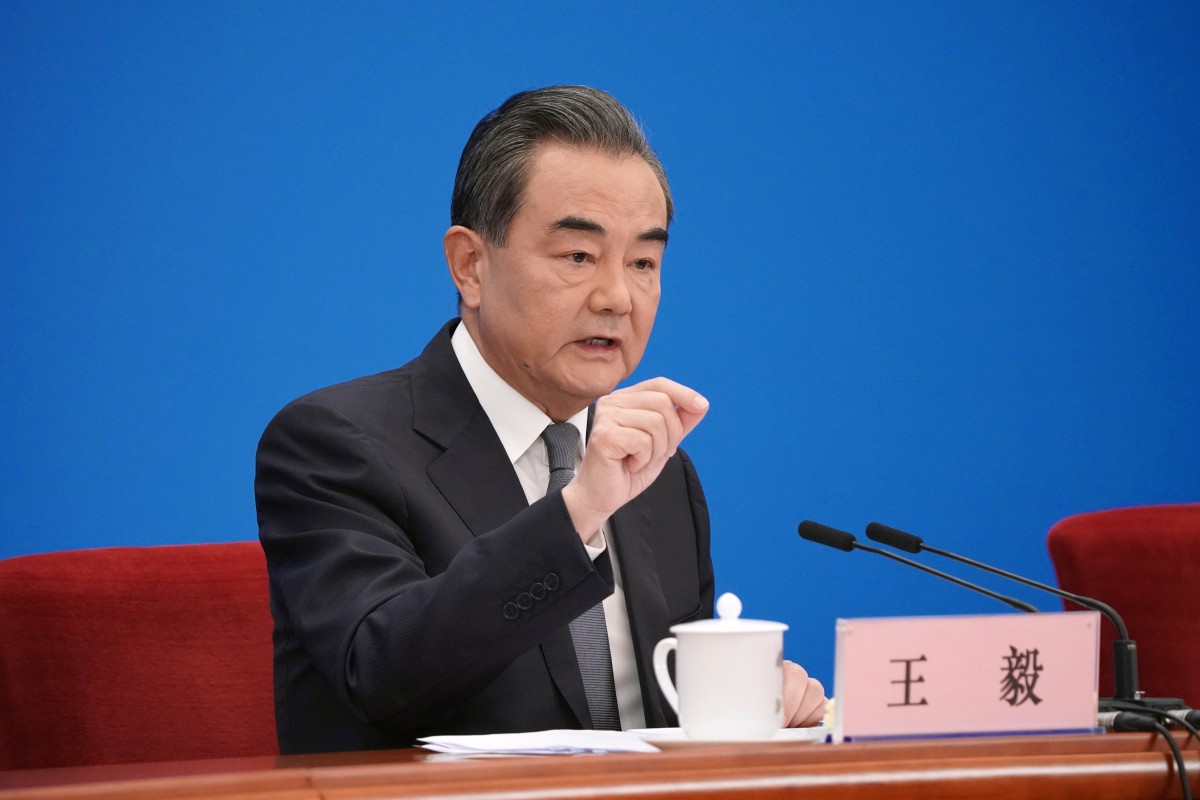
Countries must respect each others’ systems and be wary of US political forces who want to ‘hijack relations’, Wang tells press conference at ‘two sessions’
Beijing is not looking for confrontation and wants to work with Washington to fight coronavirus, minister says
Foreign Minister Wang Yi said China did not want to replace or change the US. Photo: Xinhua
China and the US should try to avoid a new cold war and find new ways to cooperate despite their differences, China’s Foreign Minister Wang Yi said on Sunday.
“We need to be alert to efforts by some political forces in America to hijack China-US relations and who try to push the two countries towards a so-called ‘new cold war’.
“This is a dangerous attempt to turn back the course of history,” Wang told a press conference on the sidelines of the annual parliamentary meetings known as the ‘two sessions’.
Ties between the two countries have further worsened due to escalating tensions over the handling of the Covid-19 pandemic.
Voices calling for decoupling have been on the rise in the US, with some arguing that the two countries are edging towards a new cold war akin to that against the Soviet Union.
Wang called for the two countries to respect each other’s political systems and to find a way to get along despite their differences.
The two nations should step up cooperation on global pandemic control, and coordinate on macro policies to deal with the economic impact.
“China has no intention of changing the United States, much less replacing it. The US should give up the wishful thinking that it can change China.”
“For the benefit of the two peoples, as well as the future and well-being of humankind, China and the US should and must find a way to coexist peacefully despite the differences in system and cultures of the two societies.”
Wang said China will not seek confrontation with the United States, but China is determined to protect its sovereignty, territorial integrity and development.
As China prepares its 14th five-year plan, researchers at one state-affiliated think tank predicted a more hostile global situation
Beijing urged to strengthen home-grown innovation and use vast domestic market to power economy post-coronavirus
A think tank linked to China’s State Council has encouraged Beijing to focus on home-grown technology and its vast consumer market over the next five years. Photo: Xinhua
China’s will face an increasingly hostile world over the next five years, meaning its policy plan should be focused on its vast domestic market, home-grown technological innovation and improving its citizen’s welfare, according to recommendations in a new paper.
The report by the Chinese Academy of Social Sciences (CASS), a think tank affiliated with the State Council, foresees the next five years presenting “major changes unseen in a century” for China, as “the strategic game between superpowers has intensified, while international systems and orders are reshuffled”.
While the report does not mention the coronavirus specifically, its recommendations suggest that China should become more self-reliant in response to the pandemic. This view represents one side of a lively debate among policymakers and scholars in China, ahead of the next five-year plan, which will come into place next year.
Between 2021 and 2025, the globalised economy which helped China grow into an economic power will be radically different, the report said, meaning it must adapt if it is to continue to thrive.
“The disadvantages of economic globalisation have increasingly stood out. Populism has risen as the global economy weakens, while countries are divided as imbalances expand. The old multilateral [trading] system is under pressure,” read the paper, part of a wave of preliminary studies offering advice ahead of China’s 14th five-year plan, a blueprint for economic and social development.
China is the only major economy that publishes a five-year policy plan and has been doing so since 1953, in a tradition borrowed from the Soviet Union. China’s own plans are broad strategic guidelines, rather than Moscow’s previously detailed command economy production worksheets.
China is currently in the final year of its 13th five-year plan, the stage during which the Soviet Union collapsed. The 14th plan is expected to be published in early-2021, but brainstorming about challenges and policy options is well under way among academics and state planning officials.
That debate is expected to feature prominently in the coming meetings of the “Two Sessions,” the Chinese People’s Political Consultative Congress, which is due to meet in Beijing on May 21, and the National People’s Congress, which will begin to meet a day later.
A common point in the debate is that the lessons of the past few years have shown the need to be more self-reliant. Even before the coronavirus outbreak, the US-China trade war and the growing superpower rivalry have made many think that Beijing can no longer rely on the goodwill of trading partners to continue the expansion it has enjoyed since the late-1970s.
Coronavirus pandemic creates ‘new Cold War’ as US-China relations sink to lowest point in decades
In December 2017, US President Donald Trump declared China a “strategic competitor” in anticipation of the Chinese economy reaching two-thirds the size of America’s, which happened in 2018. Since then, the two have engaged in a tit-for-tat tariff battle, while the coronavirus has served to sharpen tensions and fuel arguments for further decoupling.
“Uncertainties and instabilities are clearly increasing,” read the analysis published in the academic journal Economic Perspectives this week.
Without citing coronavirus directly, the CASS researchers suggested that China should “stick to its developmental direction and concentrate on doing its own things well”.
China now has a middle income group of between 500 and 700 million people and that alone can be a source empowering China’s economic growth for the next five years, the report said.
However, China must also attempt to smooth out a major weakness, namely unbalanced growth, including the yawning wealth gap between urban and rural groups.
In terms of innovation, the researchers led by Huang Qunhui said China should rely less on foreign technologies. “China’s innovation capacity is still lagging behind developed countries. Breakthroughs in core technologies are in urgent need,” read the report.
The Made in China 2025 plan, published in 2015, stated Beijing’s ambitions to dominate future technologies such as robotics and artificial intelligence. However, after loud complaints from the US and European Union, China has been forced to play down such bold innovative goals.
Modified version of country’s most powerful rocket carries next-generation capsule designed to take astronauts to its planned space station
It will be able to launch and land with three crew members and up to 500kg of cargo, according to state media
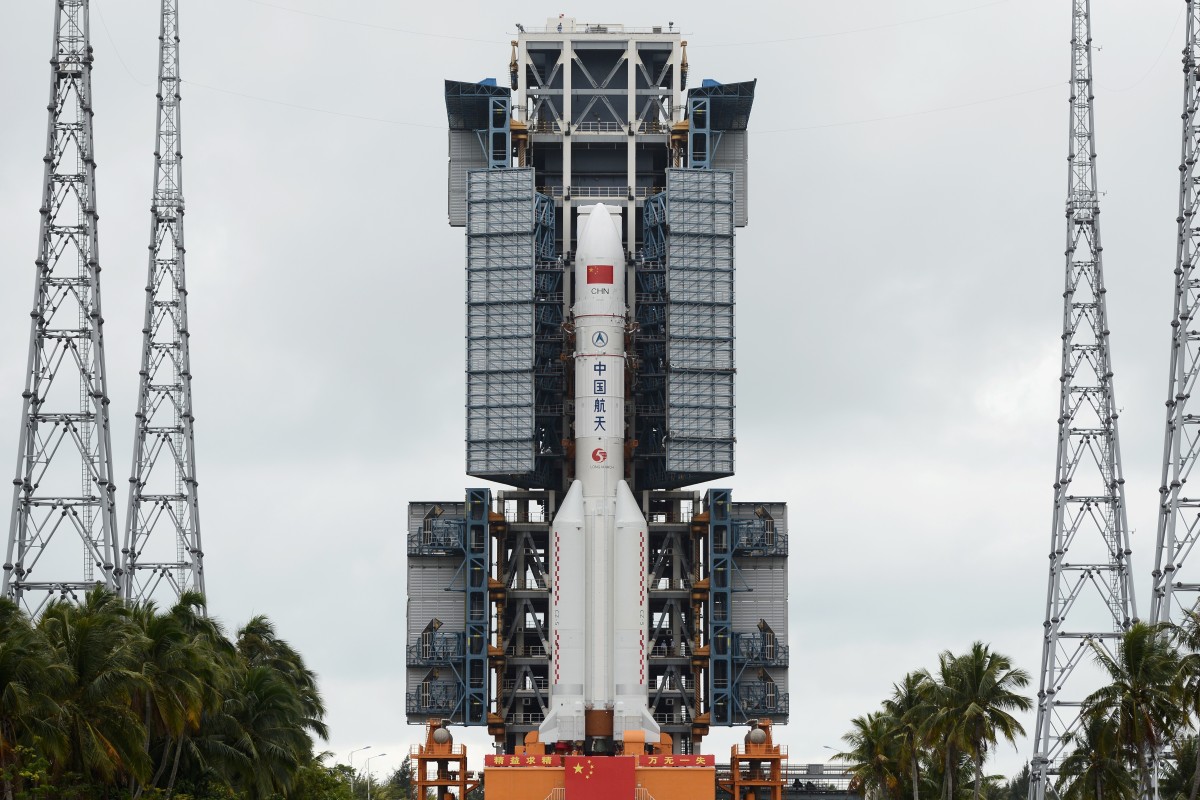
China launched a new version of its heavy-lift Long March 5 rocket on Tuesday. Photo: Reuters
China successfully launched a prototype of its next-generation manned spacecraft – without astronauts – along with a new version of its heavy-lift Long March 5 rocket on Tuesday, its space agency said.
The Long March 5B rocket was launched into low-Earth orbit from the Wenchang Satellite Launch Centre on Hainan Island in the country’s south.
The launch marks a significant step forward for China’s two big space exploration ambitions – building a space station and a mission to Mars.
A modified version of China’s most powerful rocket, the Long March 5B is 53.7 metres (176 feet) tall. It will carry the next-generation crew capsule prototype designed to replace the Shenzhou spacecraft, to transport astronauts to its planned space station in low-Earth orbit.
China aims to launch the core module of that space station designed for three crew members, the Tianhe, in 2021. Beijing has been planning to build its own space station for decades as an alternative to the International Space Station, from which China has been excluded by the United States over security concerns.
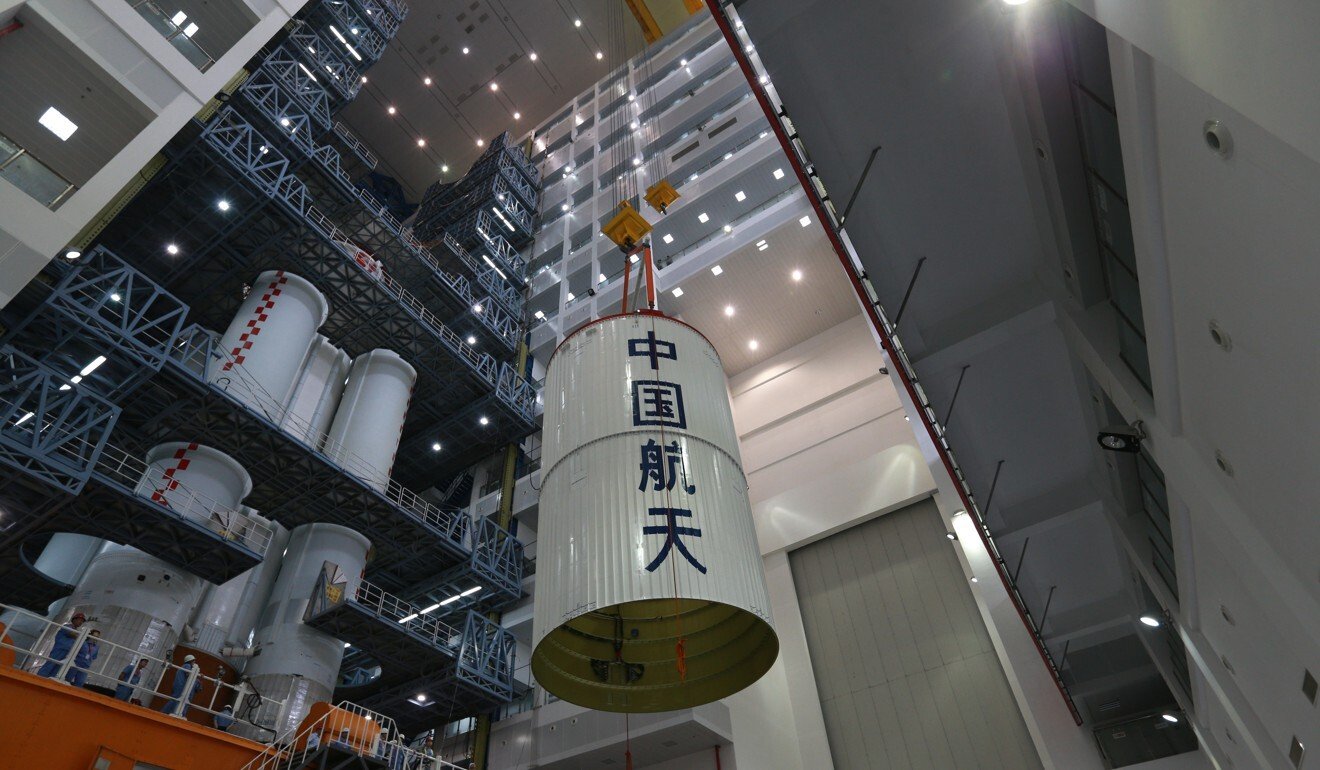
China’s space station project has been delayed by problems with its heavy-lift rockets. Photo: Xinhua
The prototype capsule has a different configuration to Shenzhou’s and it will be able to launch and land with three astronauts on board as well as up to 500kg of cargo, according to state news agency Xinhua. That will mean it can be used to transport research specimens and hardware from the space station back to Earth.
While the Shenzhou can ferry three astronauts, the new capsule design will be able to accommodate up to six crew members and, unlike the Shenzhou, it will be capable of carrying them to the moon, according to Chinese media reports.
Its systems, performance in orbit and parachute deployment are among the areas that will be put to the test during the launch.
Why China’s next Long March 5 rocket mission will be about restoring national pride
14 Dec 2019
The long-anticipated space station project has been delayed by problems in the development of heavy-lift rockets to carry the modules. In 2017, an oxygen supply problem caused the failure of the second Long March 5 launch, and it plunged into the Pacific Ocean shortly after take-off. But in December it successfully carried a Shijian-20 satellite into orbit, while the liquid oxygen-liquid hydrogen engines used in both the Long March 5 and 5B rockets passed testing in January.
China’s other space ambitions include a Mars probe, and landing astronauts on the moon within the next decade. For the Mars mission, the unmanned orbiter and rover Tianwen-1 will be launched by the Long March 5 and it is expected to take up to seven months for the probe to reach the red planet. China would be the third country to do so – after the United States and the Soviet Union.
Zhang Kejian, head of the China National Space Administration, said China was on track to launch the mission this year, with July the likely launch date.
Image caption Chinese farmers are trying to bring workers across the border into Russia
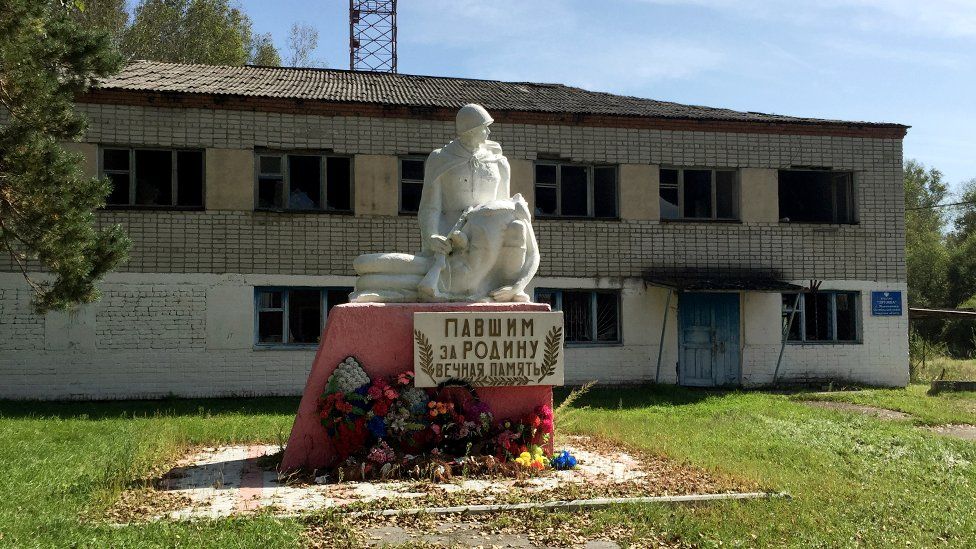
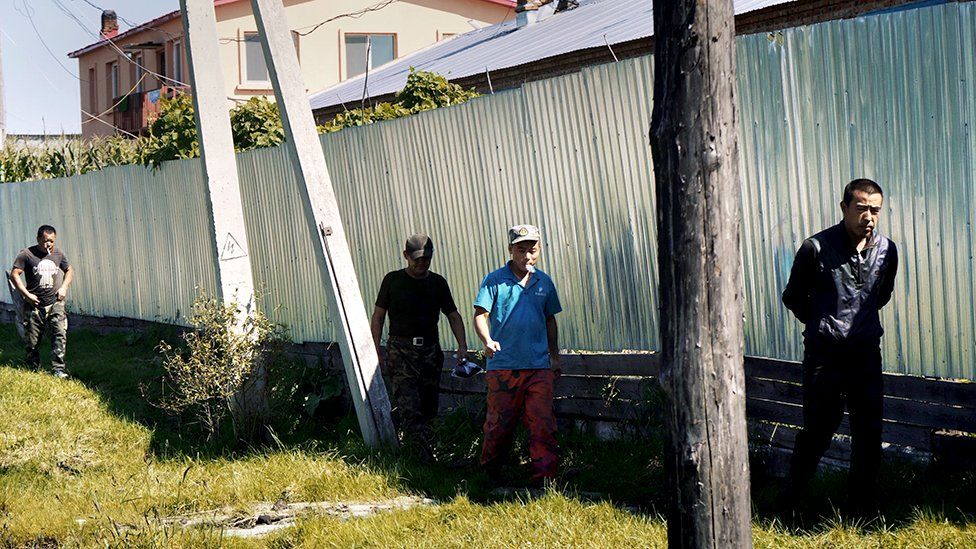
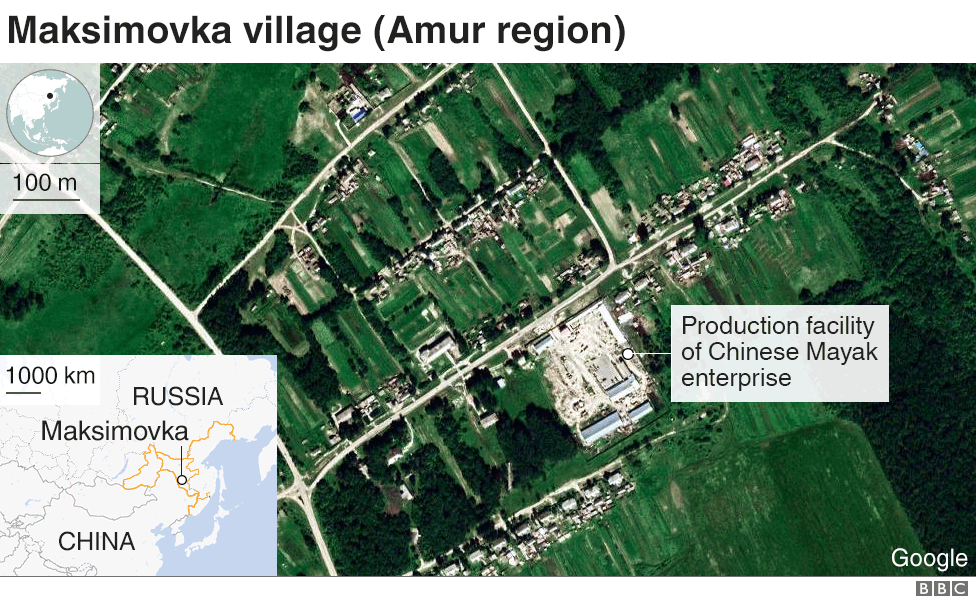
The farm in Maksimovka is surrounded by high metal fences. The Chinese migrants who work there only leave the site to go shopping. At the centre of this village in Russia’s Far East sits an old abandoned building – there is no lock on the door and inside, the floor is littered with papers dating back to the 1980s and 90s.
Here lie clues to why a farm that once provided work to some 400 Russians was unable to survive.
Like many of the collective farms in rural Russia, the Mayak farm collapsed with the old Soviet Union.
That is when the Chinese workers arrived, in five border regions, and Russians have not always been happy to welcome their new neighbours.
Image caption Little remains of the old farm at Mayak, apart from a monument to those killed in World War Two
“Working in Russia is much the same as in China. You get up in the morning and go to work,” says Chom Vampen.
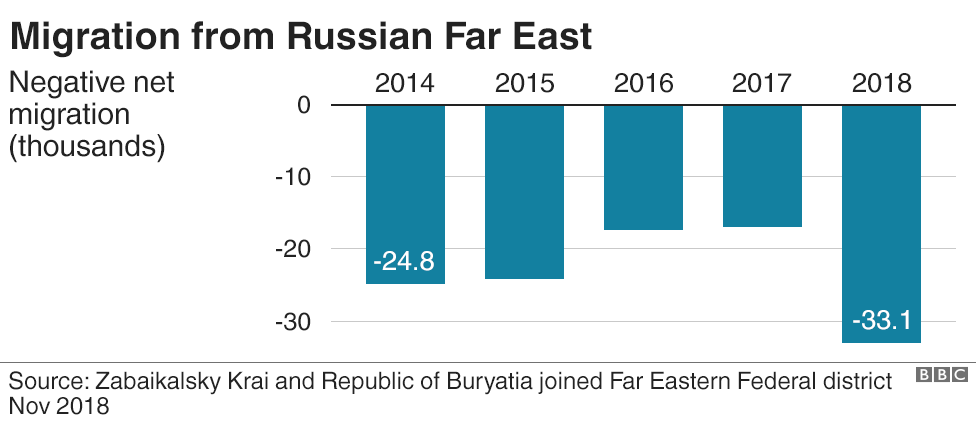
He is one of thousands of Chinese who have moved to this vast, under-populated part of Russia since the early 1990s.
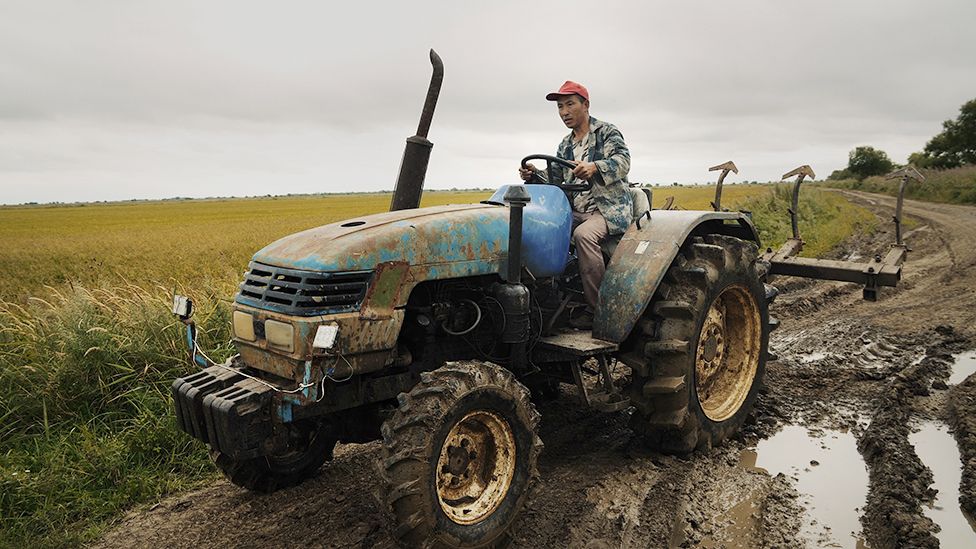
Most seek work at Russian- or Chinese-owned farms or buy the lease on the land to develop their own agricultural enterprises.
As Russia’s relations with the West have deteriorated, President Vladimir Putin has welcomed China’s growing footprint here.
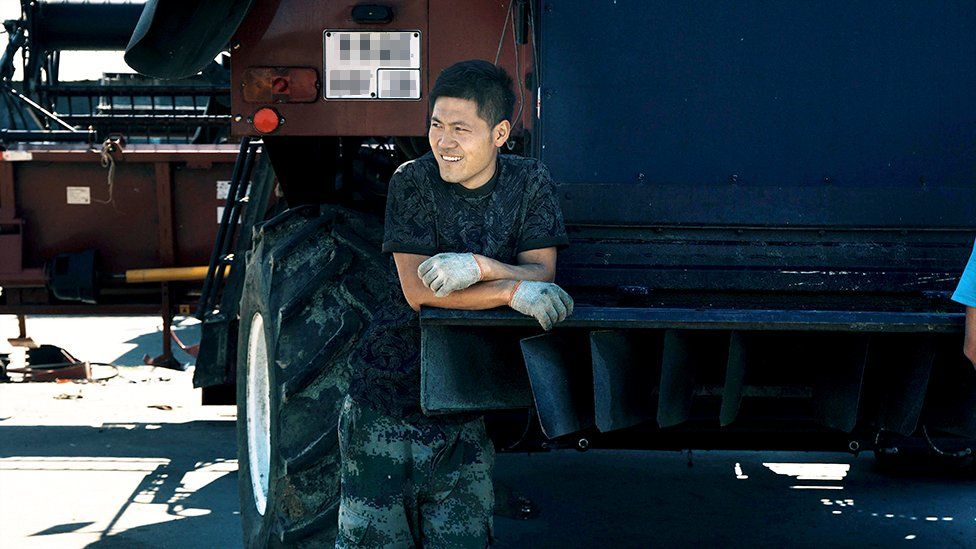
Image caption Chinese farm workers from Maksimovka
Mayak’s chairman, Yevgeny Fokin, leased thousands of hectares to Chinese entrepreneurs, attracted by low rents and large farms.
“We gave the shares to Fokin, thinking it would be better if the land belonged to the collective. But he gave it all to the Chinese and left, and we lost everything,” a local resident of Maksimovka village, Tatyana Ivanovna, said.
“No way,” says Mr Fokin. “There was nothing unusual about it.”
How Chinese companies took over
Chinese companies first appeared in Russia’s Far East in the early 2000s, but Beijing’s interest in the region increased after the global financial crisis of 2008.
“There was panic, [the Chinese] were looking at where to invest,” the head of a Chinese-owned farm told BBC Russian, preferring not to give his name.
Chinese investment was followed by an influx of Chinese migrants.
“We have little land and a lot of people,” said one Chinese farmer.
Based on data released by the state land register, BBC Russian calculated that Chinese citizens either owned or leased at least 350,000 hectares (3,500 sq km) of Far Eastern land in Russia. In 2018, around 2.2 million hectares of Russian land in the region was used for agricultural purposes.
The actual proportion could be higher, the BBC has learned
Chinese farmers are, according to BBC research, represented in 40% of the Far East, most significantly in the Jewish autonomous region of Birobidzhan.
Regional governor Alexander Levintal said that in many cases land officially leased by Russians was in reality managed by Chinese nationals.
“Almost all the land that belonged to collectives was handed over to the Chinese,” said the head of the Jewish autonomous region’s peasant association, Alexander Larik.
Why relations are uneasy
Most of the farms run by Chinese migrants resemble fortresses. At Babstovo, a half-hour drive from the Chinese border, lies Friendship farm, which is surrounded by a high fence and a red flag.
Image caption Chinese workers here are main seasonal and rarely settle in Russia
But things are different in the village of Opitnoye Polye, where Xin Jie employs Russian as well as Chinese workers.
Like many Chinese here, he adopted a Russian name and is now known as Chinese Dima.
Chinese Dima moved to Russia in the 1990s and leased more than 2,500 hectares of land to develop a soya plantation. He is actively involved in the community, buying presents for nursery school children and sending his tractor to help clear the snow in remote villages in the winter.
Conflicts between Russians and Chinese are not uncommon. In 2015, three Russians entered a Chinese factory in the Far Eastern Amur region and threatened a Chinese guard with a stick, demanding he give them food.
A few days later, when they returned to steal a tractor engine, they were confronted by the same Chinese guard who this time carried an axe.
They were given prison sentences ranging from five to nine years.
Most Chinese cross the border for seasonal work, for sowing or harvesting, and then return home.
But many Russians are unhappy with the Chinese influx. More than one in three people said they viewed China’s Russia policy as expansion, according to a poll conducted in 2017 by the Russian Academy of Sciences.
Almost half said that China threatened Russia’s territorial integrity, while a third believed that it endangered their country’s economic development.
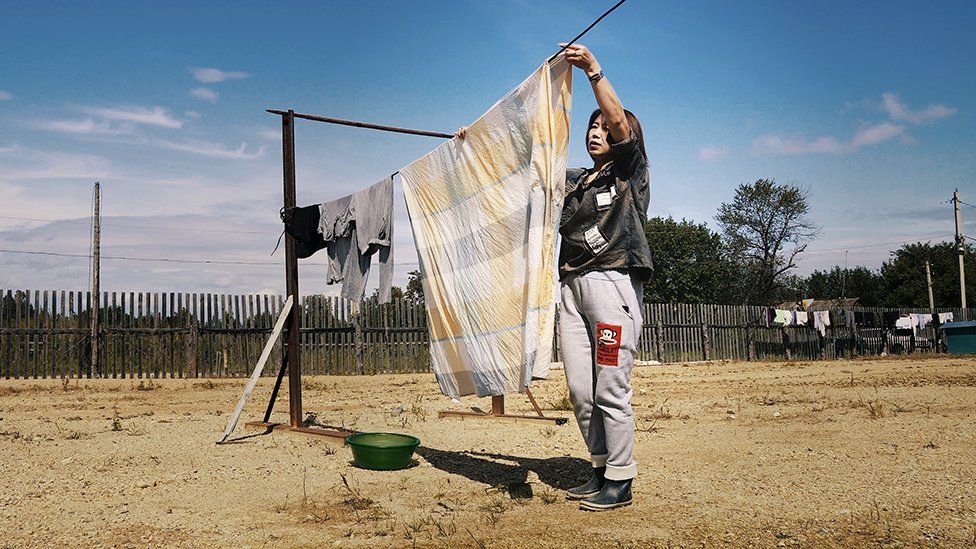
Image caption A Chinese woman hangs out the washing on a farm at Dimitrovo
“They leave at seven in the morning and return after dark. I don’t see them and they don’t see me,” says Ivanovich of his Chinese neighbours in the village of Dimitrovo.
But some Russians have struck up friendships with the Chinese.
“They bring beer, we drink. I give them eggs and honey,” says Alexander.
Why Russian workers struggle to compete
Chinese farm workers in Russia’s Far East often have a better reputation than their Russian counterparts.
“The Chinese do not drink and they have nowhere to run; they come here for the season. Our citizens come to work for a week, plead for money and then go on a bender,” complained one Russian agricultural boss who declined to give his name.
Mr Larik, of the peasant association in the Jewish autonomous region, said Chinese farm owners generally preferred hiring Chinese migrants and gave Russian nationals low-skilled jobs.
A Chinese farmer who asked to stay anonymous complained about the drinking habits of Russian employees.
“All Russians drink. Today you pay them, tomorrow they do not show up. There are problems with discipline,” he said.
Image caption Residents in Maksimovka complain that young people tend to head to the cities, leaving only pensioners behind
Russia has a poor record of protecting workers’ rights, especially in the agriculture industry, which is generally low paid.
Not everyone here has a low opinion of local workers.
“What is the difference between Russian and Chinese workers? Russian workers are smarter than the Chinese,” says Chom Vampen.
October 1 event is intended to be a showcase for military’s progress under Xi Jinping, with J-20 stealth fighters set to take pride of place
Domestically developed weapons are main focus of event despite long-standing problems in building aircraft engines
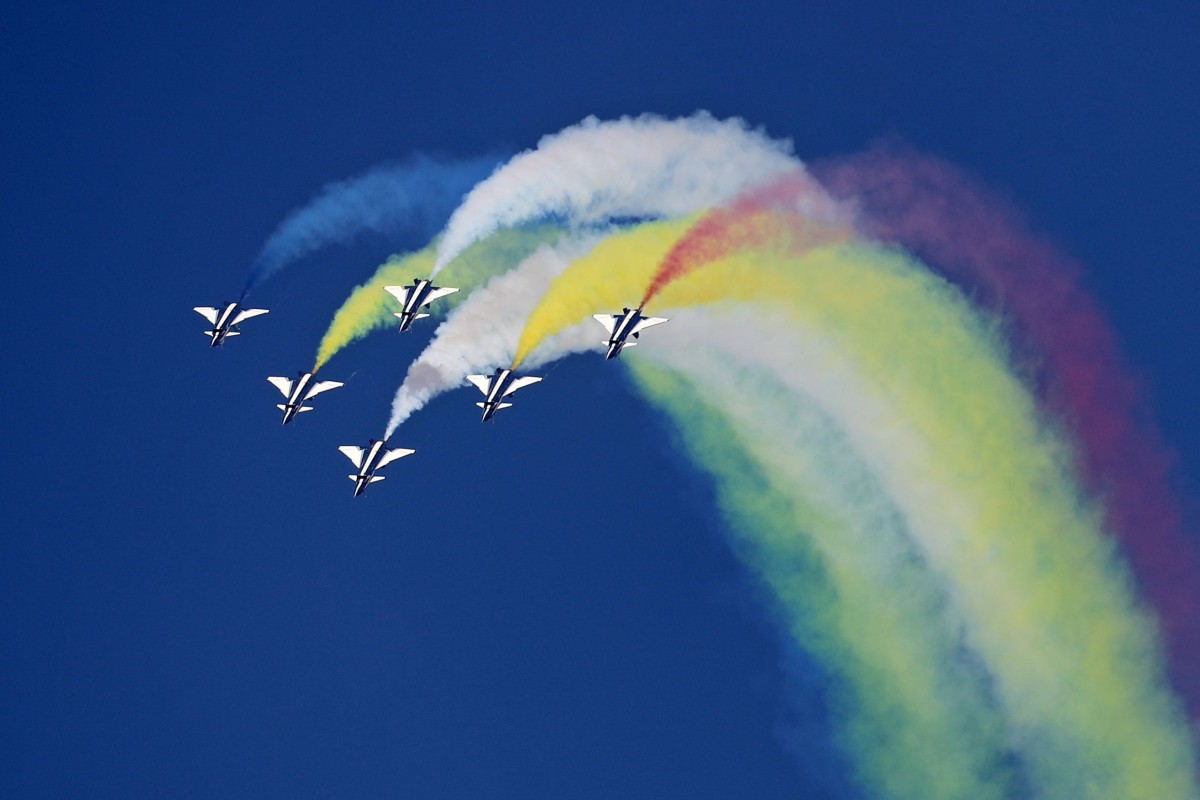
Chinese J-10 jets perform at the Dubai air show in 2017. Photo: AFP
China has stepped up intensive rehearsals for the upcoming National Day parade, which military insiders say is designed to showcase the achievements of Chinese President Xi Jinping’s modernisation drive.
The parade on October 1 will mark the 70th anniversary of the founding of the People’s Republic and will focus on weapons developed since Xi came to power in late 2012, despite long-standing problems in aircraft engine development.
Video clips circulating on mainland social media in recent days have shown at least seven types of aircraft – including the KJ-2000 airborne early warning and control aircraft and J-10 and J-11B fighter jets – taking part in rehearsals over the countryside around Beijing.
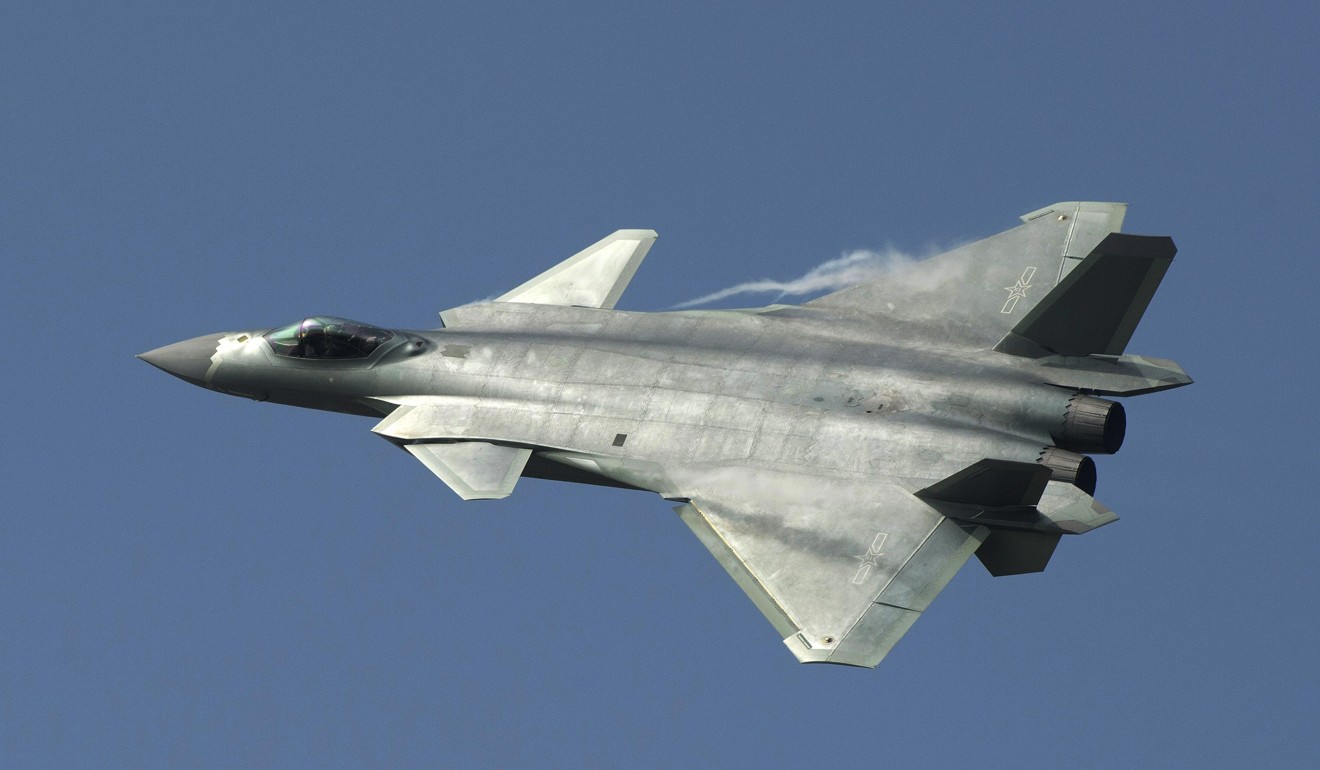
A military insider said the country’s first stealth fighter jet, the J-20, had been rehearsing over the western suburbs of the capital since April.
“There will be up to seven J-20 displayed in the military parade, which is the largest formation since its formal deployment to the Chinese air force in 2017,” the military insider said.
“The J-20 has entered mass production. So far at least 70 J-20s have been made, even though all of them are still equipped with Russian AL-31 engines.”
Earlier this month, the People’s Liberation Army Air Force released a video of a flight of seven J-20s, the largest formation seen so far, suggesting that the fifth-generation warplane has gone into mass production as an arms race with the United States mounts in the region.
The second-largest J-20 formation was shown in an air force video for PLA Day on August 1, when five of the jets were shown.
China has been forced to deploy the J-20 ahead of its schedule since the US has increased the deployment of its fifth-generation stealth fighter jets like the F-22 and F-35s in the Asia-Pacific region.
The US and its allies, including Japan and South Korea, will have more than 200 F-35s by 2025, which means China also needs a similar number of stealth fighters.
To meet demand, China has been working on the development of a purpose-built thrust engine for its stealth fighter since the early 2000s, but has yet to achieve international quality control standards due to problems that include single-crystal turbine blade technology.
China’s air force spreads its wings in 70th anniversary video
Hong Kong-based military commentator Song Zhongping said aircraft engine development had been a long-standing shortcoming but it would not affect the practical fighting capacity of the J-20, which currently uses Russian engines.
“The J-20 hasn’t used the domestic engines so far because it wants a better one, and it still has time,” Song said.
“Other [Chinese-developed] warplanes like the J-10, J-11 and multipurpose attack helicopters are all modified and advanced types, indicating comprehensive achievements amid China’s military modernisation over the past years.”
A Chinese J-20 stealth fighter has entered mass production. Photo: EPA-EFE
Besides the domestically developed aircraft, Beijing is going to display its strategic nuclear missiles, such as the DF-41 intercontinental ballistic missile and the JL-2 submarine-launched ballistic missile, as centrepieces of its National Day military parade, according to a Beijing-based military source.
Xi, who also chairs the powerful Central Military Commission, inspected the country’s biggest military parade at the Zhurihe Combined Tactics Training Base in Inner Mongolia in 2017 to celebrate the 90th anniversary of the PLA, but the source said the weapons displayed in Zhurihe had been developed under the leadership of Xi’s predecessor, Hu Jintao.
“Xi needs to highlight his personal achievements in his era, that’s why this year’s parade has political aims more than military significance,” the source said.
The source also highlighted the significance of the People’s Republic marking its 70th anniversary because the Soviet Union did not survive for that length of time.
“Xi is attempting to tell the outside world that Chinese communist regime has been consolidated under his leadership.”
Researchers will conduct tests at site in Gansu to see whether it will make a viable facility to store highly radioactive waste safely
Scientists say China has the chance to become a world leader in this field but has to find a way to ensure it does not leak
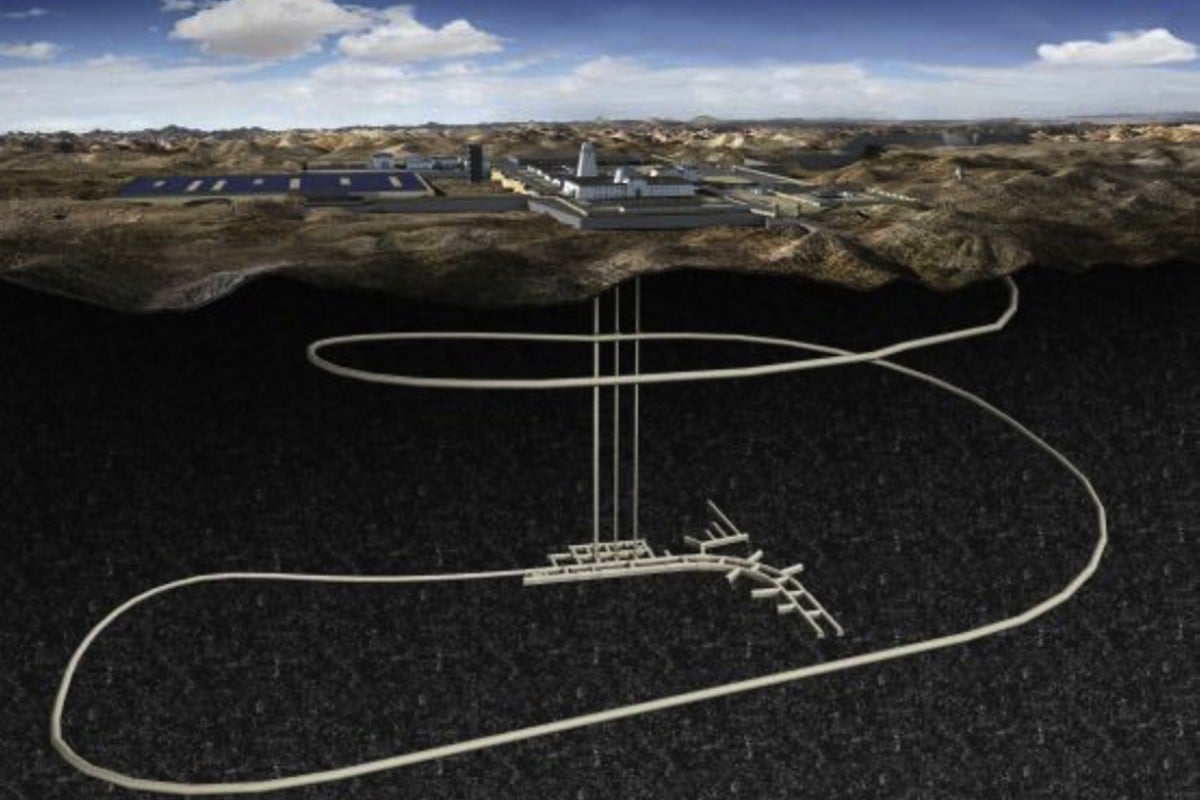
A preliminary design for the Beishan Underground Research Laboratory. Photo: Handout
China has chosen a site for an underground laboratory to research the disposal of highly radioactive waste, the country’s nuclear safety watchdog said on Wednesday.
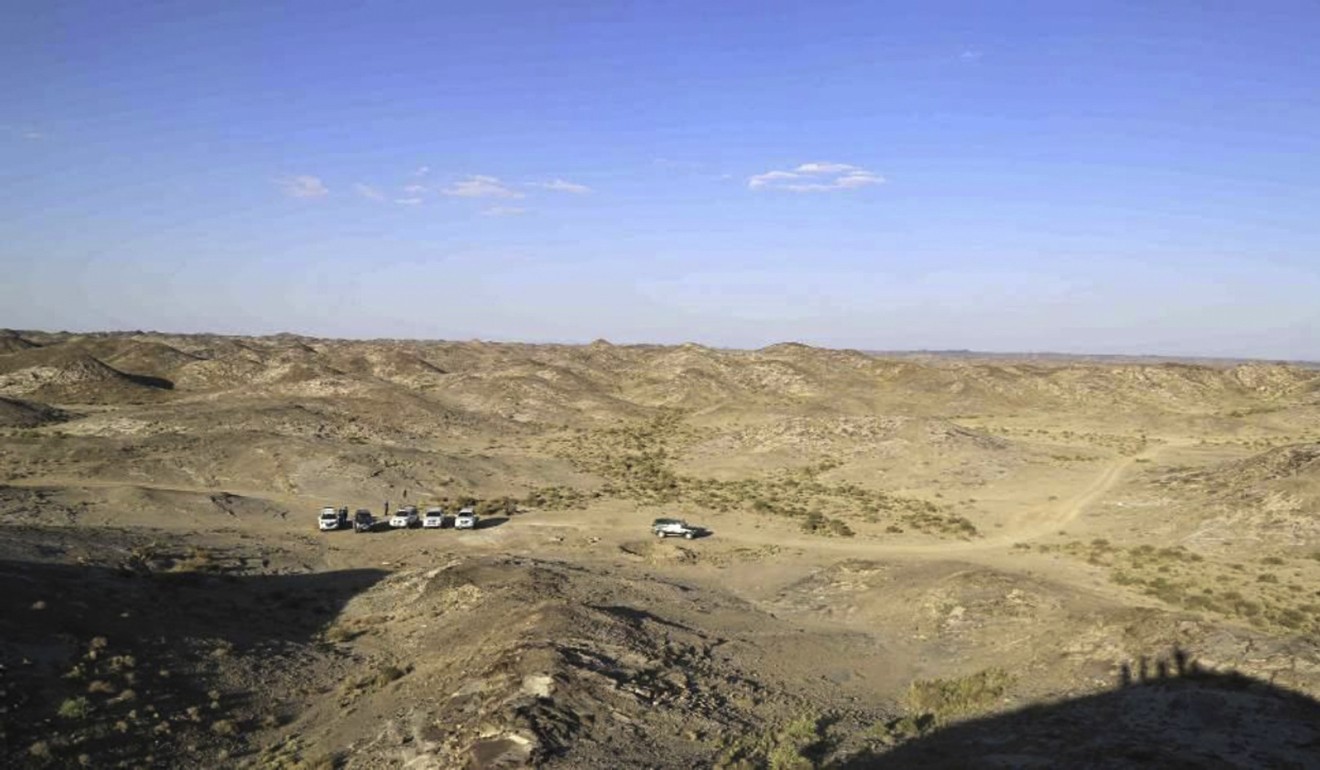
Officials said work will soon begin on building the Beishan Underground Research Laboratory 400 metres underground in the northwestern province of Gansu.
Liu Hua, the head of the Chinese National Nuclear Safety Administration, said work would be carried out to determine whether it would be possible to build a repository for high-level nuclear waste deep underground.
“China sees radioactive waste disposal as a very important part [of the development nuclear energy],” said Liu. “To develop nuclear energy, we must have safe storage and disposal of nuclear waste.”
China condemns US blacklisting of nuclear firms and says American companies could be hurt as a result
The Chinese authorities see nuclear power an important source of energy that will help to curb carbon emissions and pollution as well as reducing its dependence on fuel imports.
But while the country has made great strides in the development of nuclear power, it needs to find a safe and reliable way of dealing with its growing stockpiles of nuclear waste.
Liu said the Gansu site had been identified as a possible location for a deep nuclear waste store after years of searching.
Once the laboratory is built, scientists and engineers will start experiments to confirm whether it will make a viable underground storage facility.
“Based on the data of the experiments, we can then decide if we are going to pick this as the final site,” he added.
China ‘actively promoting’ nuclear fuel processing plant with French Areva
Chinese officials usually stay tight-lipped about how nuclear waste is disposed of mainly because of fears that any discussion of the topic would trigger safety fears, although in recent years more efforts have been made to inform the public to win support.
Scientists say that nuclear waste can be divided into three categories depending on the level of radioactivity.
Low-level waste consists of minimally radioactive materials such as mop heads, rags, or protective clothing used in nuclear plants, while intermediate-level waste covers things such as filters and used reactor components.
High-level waste, however, is generated by the reprocessing of spent nuclear fuel and scientists generally agree that the safest way to dispose of it is to bury it deep underground in areas where the geology means it will have a minimal impact on the environment while it decays over thousands of years.
The facility will be built in a remote part of Gansu province. Photo: Handout
Some Chinese scientists said the country had the chance to lead the world in this area of research but others have expressed concerns about safety.
Jiang Kejun, a senior researcher at the Energy Research Institute of China’s National Development and Reform Commission, said that very few countries in the world are studying this form of nuclear waste disposal.
“It gives China an opportunity to be a leader in research in this area, plus China has the technology and financial means,” he said.
About a dozen countries including France, Switzerland, Japan, and the United States have carried out research in this area, but in recent years most have abandoned or scaled back their programmes.
At present there are storage sites operating in Finland and the US, but other countries such as Germany have abandoned plans to build similar facilities.
Washington blacklists Chinese nuclear firms for ‘helping military acquire US technology’
But despite broad scientific support for underground disposal, some analysts and many members of the public remain sceptical about whether it is really safe.
Lei Yian, an associate professor at the School of Physics at Peking University, said there was no absolute guarantee that the repositories would be safe when they are come into operation.
“Leakage has happened in [repositories] in the US and the former Soviet Union … it’s a difficult problem worldwide,” he said. “If China can solve it, then it will have solved a global problem.”
China is also building more facilities to dispose of low and intermediate level waste. Officials said new plants were being built in Zhenjiang, Fujian and Shandong, three coastal provinces that currently lack disposal facilities.
At present, two disposal sites for low and intermediate-level waste are in operation in Gansu and Guangdong provinces.
The chief of the Indian Space Research Organisation (Isro), K Sivan, said this was “the most complex space mission ever to be undertaken by the agency”.
If the launch had gone to plan, the lander and rover would have been expected to touch down in early September.
India’s space agency is yet to give more details on why the launch was delayed and how it will affect the timeline.
The country’s first lunar mission in 2008 – Chandrayaan-1 – did not land on the lunar surface, but it carried out the first and most detailed search for water on the Moon using radars.
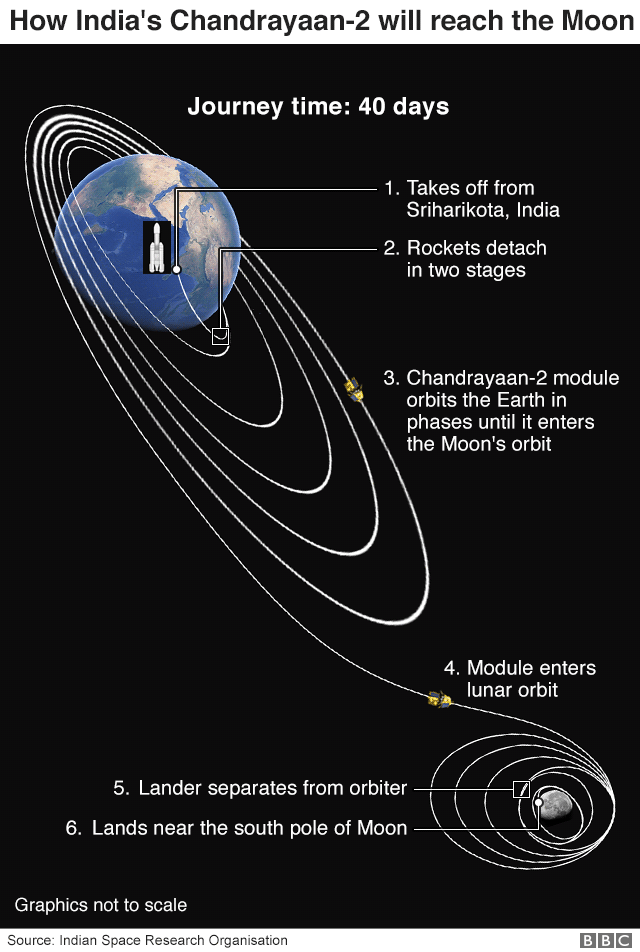
How will it get to the Moon?
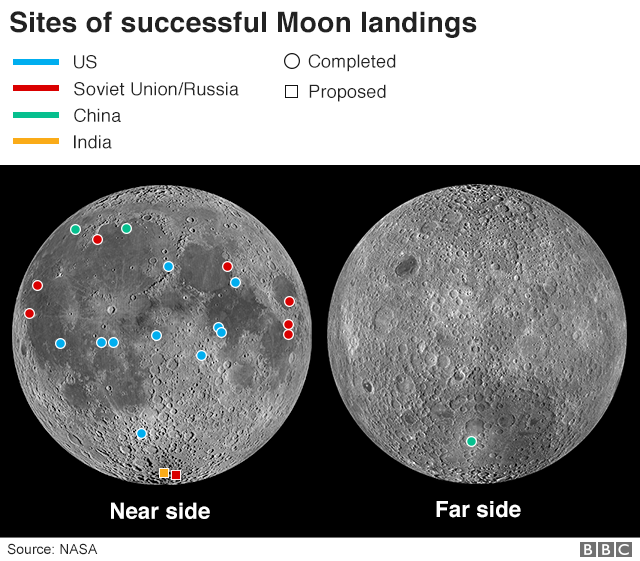
Chandrayaan-2 (Moon vehicle 2) will attempt a soft landing near the little-explored south pole of the Moon.
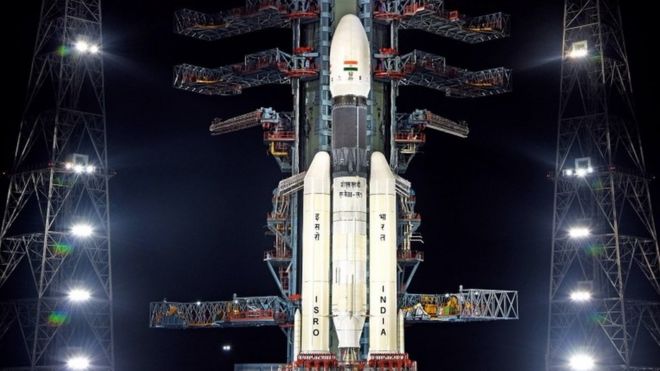
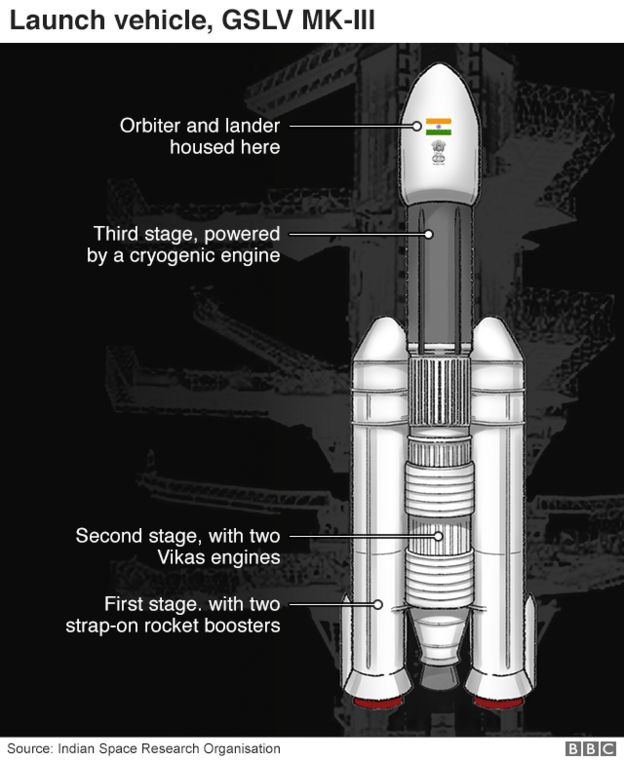
India is using its most powerful rocket, the Geosynchronous Satellite Launch Vehicle Mark III (GSLV Mk-III), in this mission. It weighs 640 tonnes (almost 1.5 times the weight of a fully-loaded 747 jumbo jet) and at 44 metres (144ft) is as high as a 14-storey building.
The spacecraft weighs 2,379kg (5,244lb) and has three distinct parts: an orbiter, a lander and a rover.
The orbiter, which has a mission life of a year, will take images of the lunar surface, and “sniff” the tenuous atmosphere.
The lander (named Vikram, after the founder of Isro) weighs about half as much, and carries within its belly a 27kg Moon rover with instruments to analyse the lunar soil. In its 14-day life, the rover (called Pragyan – wisdom in Sanskrit) can travel up to a half a kilometre from the lander and will send data and images back to Earth for analysis.
“India can hope to get the first selfies from the lunar surface once the rover gets on its job,” Dr Sivan said.
A new frontier for India’s space programme
By science writer Pallava Bagla
A soft landing on another planetary body – a feat achieved by just three other countries so far – would be a huge technological achievement for Isro and India’s space ambitions.
It would pave the way for future Indian missions to land on Mars and an asteroid. More importantly, it would open up the possibility of India sending astronauts to the Moon. India hopes to carry out a crewed space flight by 2022.
India also wants to assert itself as a space power to be reckoned with – and national pride is riding high as it aims to hoist its flag on the surface of the Moon.
A successful mission to the Moon would also be a win for India’s ambitious space agency, which has had a string of successes recently.
Media caption Is India a space superpower?
In 2014, it successfully put a satellite into orbit around Mars, becoming only the fourth nation to do so. In 2017, India created history by successfully launching 104 satellites on a single mission, overtaking the previous record of 37 satellites launched by Russia in 2014.
All eyes are on Isro again. Global interest in India’s frugal Moon mission is peaking, according to Simonetta Di Pippo, director of the UN office of Outer Space Affairs.
“The mission’s studies of lunar topography, mineralogy, elemental abundance, the lunar exosphere, and signatures of hydroxyl and water ice will contribute to scientific progress for all of humankind,” she says.
The Indian space community is nervous and Dr Sivan says “there is churning in his stomach”.
“Unknown-unknowns can kill a mission, [although] no stone has been left unturned to understand all the complexities”.
How long is the journey to the Moon?
The launch is only the beginning of a 384,000km (239,000-mile) journey – the robotic craft is expected to land on the Moon some 54 days later.
Isro chose a circuitous route to take advantage of the Earth’s gravity, which will help slingshot the satellite towards the Moon. India does not have a rocket powerful enough to hurl Chandrayaan-2 on a direct path.
“There will be 15 terrifying minutes for scientists once the lander is released and is hurled towards the south pole of the Moon,” Dr Sivan says.
He explains that those who had been controlling the spacecraft until then will have no role to play in those crucial moments. The actual landing, he adds, is an autonomous operation dependent on all systems performing as they should. Otherwise, the lander could crash into the lunar surface.
Earlier this year, Israel’s first Moon mission crash-landed while attempting to touch down.
Who is on the team?
Nearly 1,000 engineers and scientists have worked on this mission. But for the first time, Isro has chosen women to lead an interplanetary expedition.
Two women are steering India’s journey to the Moon. While programme director Muthaya Vanitha has nurtured Chandrayaan-2 over the years, it will be navigated by Ritu Karidhal.
“Women power is powering India’s Moon ambitions,” Dr Sivan said, adding that at Isro, “women and men are all equal. Only talent matters – not the gender.”
The plane was on a routine training sortie and hence was unarmed.(Mint/ Representative Image)
A MiG-21 fighter jet of the Indian Air Force crashed in Rajasthan’s Bikaner on Friday. The plane crashed after it reportedly suffered a bird hit.
The plane had taken off from Nal near Bikaner. The pilot is said to have ejected safely.
Bikaner SP Pradeep Mohan Sharma said the MIG aircraft crashed in Shobhasar ki Dhani, 12 km from Bikaner city, news agency PTI reported.
Sharma said police teams have rushed the spot to cordon off the area. No loss of life has been reported.
A statement by the IAF said that the MiG-21 had taken off from the Indian Air Force’s Nal airbase in Rajasthan and that it was on a routine mission.
The IAF statement said, “Today afternoon a MiG-21 aircraft on a routine mission crashed after getting airborne from Nal near Bikaner. Initial inputs indicate the likely cause as bird hit after take off. Pilot of the aircraft ejected safely. A CoI [Court of Inquiry] will investigate the cause of the accident.”
In recent times, the IAF has witnessed a series of crashes involving fighter jets and choppers.
On February 1, a Mirage 2000 fighter jet had crashed during a routine testing flight. Both the pilots in the jet had died after their safety equipment gave way. The pilots were on an “acceptance sortie” of the Mirage 2000 trainer aircraft after it was overhauled by the Bengaluru-based Hindustan Aeronautics Limited (HAL).
Barely a fortnight later, two Surya Kiran Hawks were involved in a collision that led to the death of one pilot. The crash had taken place barely days before the 12 edition of Aero India.
On February 12, a MiG-27 fighter jet had crashed at the Pokhran firing range after taking off from the Jaisalmer air base. The jet was on a training mission. The pilot managed to eject safely from the jet before it crashed.
More recently, on February 27, a Mi17 helicopter of the Indian Air Force had crashed at Budgam in Kashmir. All six IAF personnel on board the chopper were killed. A civilian was also killed in the crash.
The MiG-21 fighter jet has been in the news recently after Wing Commander Abhinandan Varthaman, who was flying a similar aircraft shot down a Pakistani F-16 before crashing in Pakistan.
The MiG-21 is a supersonic jet fighter and interceptor aircraft, designed by the Mikoyan-Gurevich Design Bureau in the erstwhile Soviet Union.










 CHINDIA ALERT: You'll be living in their world, very soon