Chindia Alert: You’ll be Living in their World Very Soon
aims to alert you to the threats and opportunities that China and India present. China and India require serious attention; case of ‘hidden dragon and crouching tiger’.
Without this attention, governments, businesses and, indeed, individuals may find themselves at a great disadvantage sooner rather than later.
The POSTs (front webpages) are mainly 'cuttings' from reliable sources, updated continuously.
The PAGEs (see Tabs, above) attempt to make the information more meaningful by putting some structure to the information we have researched and assembled since 2006.
The statement, issued on 27 April but only reported this week, singles out stadiums, exhibition centres, museums and theatres as public facilities where it’s especially important to ban plagiarism.
“City constructions are the combination of a city’s external image and internal spirit, revealing a city’s culture,” the government statement says.
It calls for a “new era” of architecture to “strengthen cultural confidence, show the city’s features, exhibit the contemporary spirit, and display the Chinese characteristics”.
Image copyright STR / AFP / GETTYImage caption – Not the Arc de Triomphe, but a college gate in Wuhan
The guidelines on “foreign” architecture were mostly welcomed on Chinese social media.
“The ban is great,” wrote a Weibo user, according to state media the Global Times. “It’s much better to protect our historical architectures than build fake copycat ones.”
Another recalled seeing an imitation White House in Jiangsu province. “It burned my eyes,” she said.
Image copyright OLIVIER CHOUCHANA / GETTYImage caption Thames Town, an English-themed town near Shanghai, pictured in 2008
In 2013, the BBC visited “Thames Town”, an imitation English town in Songjiang in Shanghai.
The town features cobbled streets, a medieval meeting hall – even a statue of Winston Churchill – and was a popular spot for wedding photos.
“Usually if you want to see foreign buildings, you have to go abroad,” said one person. “But if we import them to China, people can save money while experiencing foreign-style architecture.”
Image copyright WANG ZHAO / GETTYImage caption – Raffles City, Chongqing, in 2019 – mimicking the Marina Bay Sands hotel in Singapore
China, of course, is not the only country to borrow – or copy – other countries’ designs.
Las Vegas in the US revels in its imitations of iconic foreign architecture including the Eiffel Tower and Venetian canals.
Thailand also has developments that mimic the Italian countryside and charming English villages, mainly aimed at domestic tourists.
Deity has all the necessary travel documents for seven-day journey bringing blessings to coastal communities
The statue of Chinese sea goddess Mazu on board the train for her seven-day tour of eastern China. Photo: Weibo
High-speed rail travellers in eastern China may find themselves in exalted company this week as one of China’s most beloved deities is on a seven-day tour.
Mazu, protector of seafarers, boarded the train at Putian in Fujian province on Friday with an entourage of 230 worshippers for one of her regular “inspection tours”. And, like any modern traveller, the sea goddess had the necessary identity card and ticket for the journey.
Mazu, known as Tin Hau in Hong Kong, began life more than 1,000 years ago as a mortal named Lin Mo, according to Chinese folk belief. As a girl she is said to have saved some of her family members when they were caught in a typhoon while out fishing. In another version of the myth, Lin Mo died while trying to rescue shipwreck victims.
She fell out of favour in mainland China during the Cultural Revolution, when her ancestral temple on Meizhou Island in the southeastern province of Fujian was destroyed to make way for a People’s Liberation Army garrison. In the late 1970s the temple was rebuilt and in 2009 the beliefs and customs surrounding Mazu were recognised as an Intangible Cultural Heritage of Humanity by Unesco.
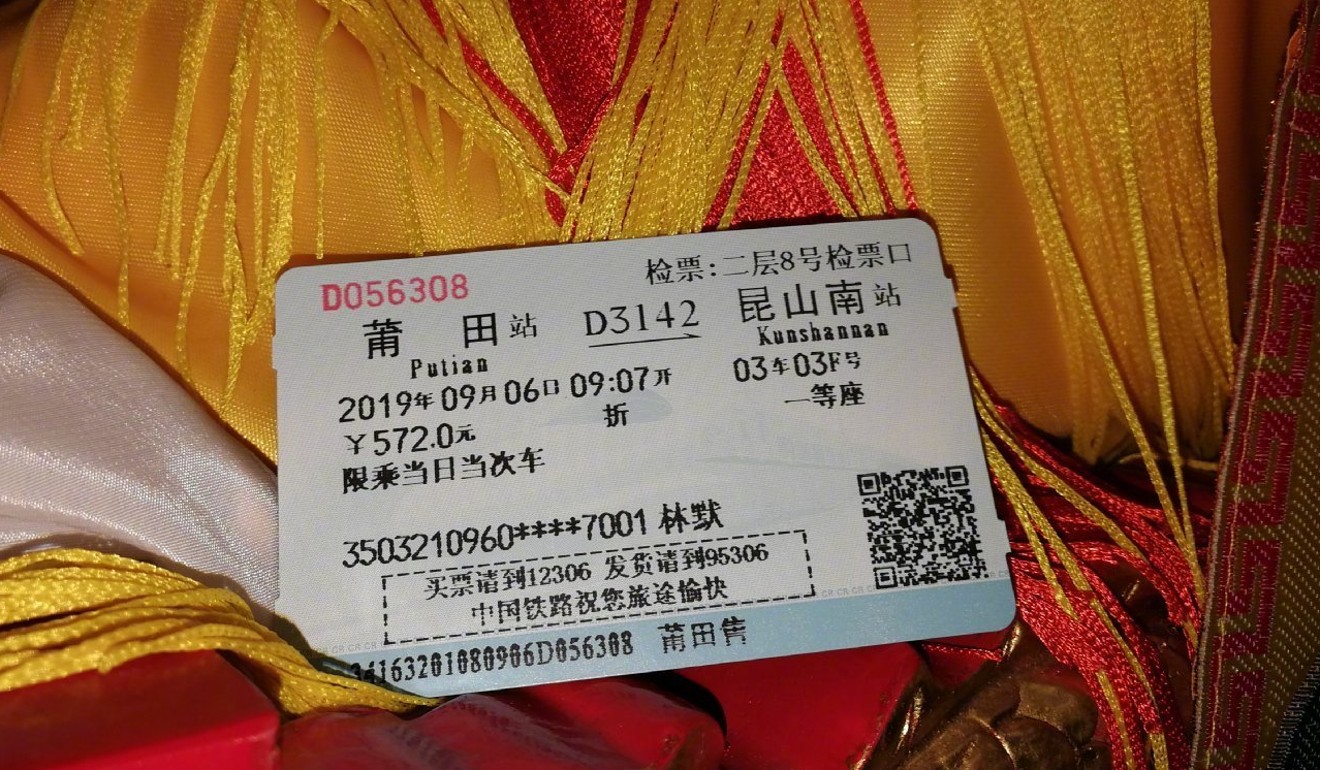
Inspectors on China’s high speed rail will find everything in order if they ask to see the goddess Mazu’s ticket during her seven-day tour. Photo: Weibo
Staff at the Meizhou Mazu Temple applied for an ID card for the goddess, in her earthly name of Lin Mo. Tickets were also organised for two other fairy figures who traditionally protect her, according to Chinese folklore.
“Not only Mazu but Thousand-Mile Eye and Wind-Accompanying Ear were all bought tickets,” a temple representative told the Southern Metropolis News.
This is not the first time the trio have been bought travel tickets. Two years ago their airfares were paid for when they visited Malaysia and Singapore and, a year later, they took a cruise ship to the Philippines.
This year’s tour includes a visit to Kunshan in Jiangsu and Shanghai, before Mazu returns to her home temple on the island of Meizhou. At each stop, devotees believe Mazu blesses the location with her presence and protects its residents from harm.
Taiwanese tycoon Gou thanks sea goddess for presidential inspiration
The tour has been organised jointly by the Meizhou Temple as well as the Huiju Mazu Temple in Kunshan and the Lugang Mazu Temple in Taiwan.
News of the celestial train journey quickly went viral on Chinese social media, with posts on Mazu receiving 460 million views on Weibo, the Twitter-like microblogging platform, since Monday. “First, respect. Second, she takes up a seat so it’s not crazy to buy her a ticket,” one comment read.
Cadres in Hebei village ordered to undergo self-criticism after photo of statue lying face down in the shrubbery was widely circulated online
Reinforced plastic structure had been leaning against the wall awaiting repair when it was blown into the bushes
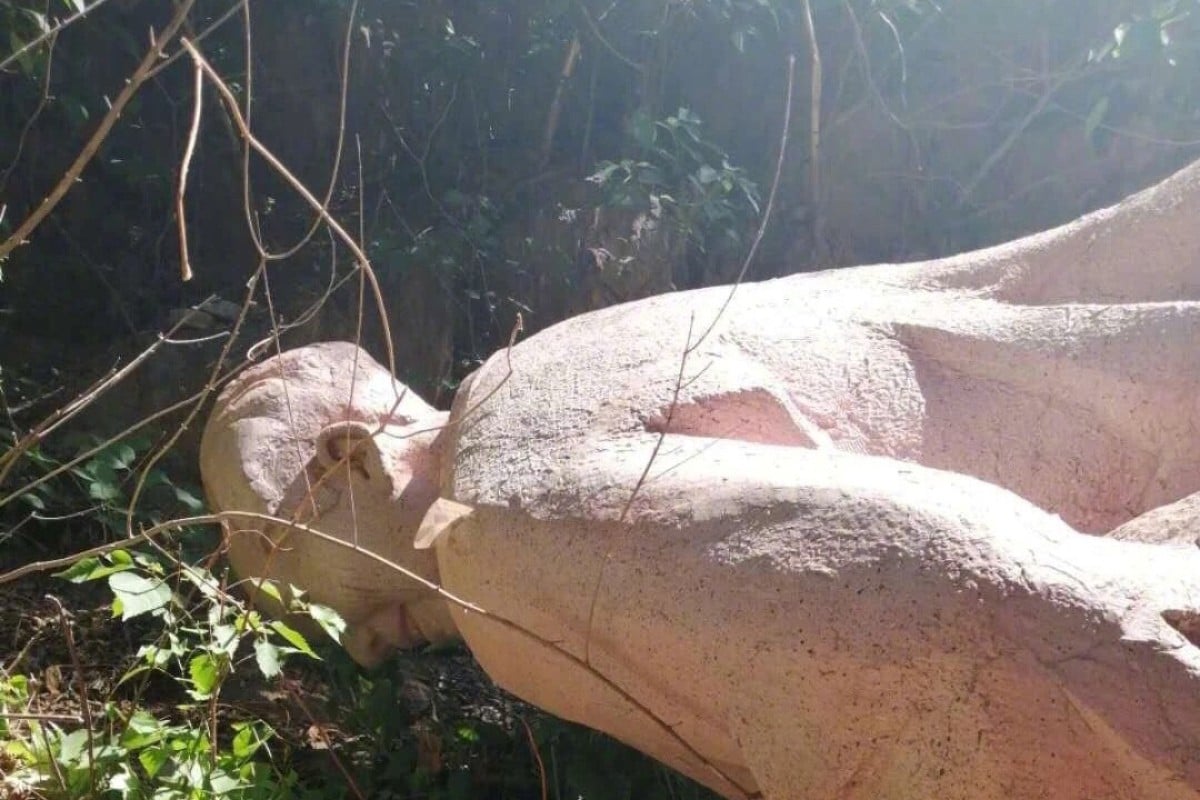
The photograph was widely circulated online, prompting a response from the local authorities. Photo: Weibo
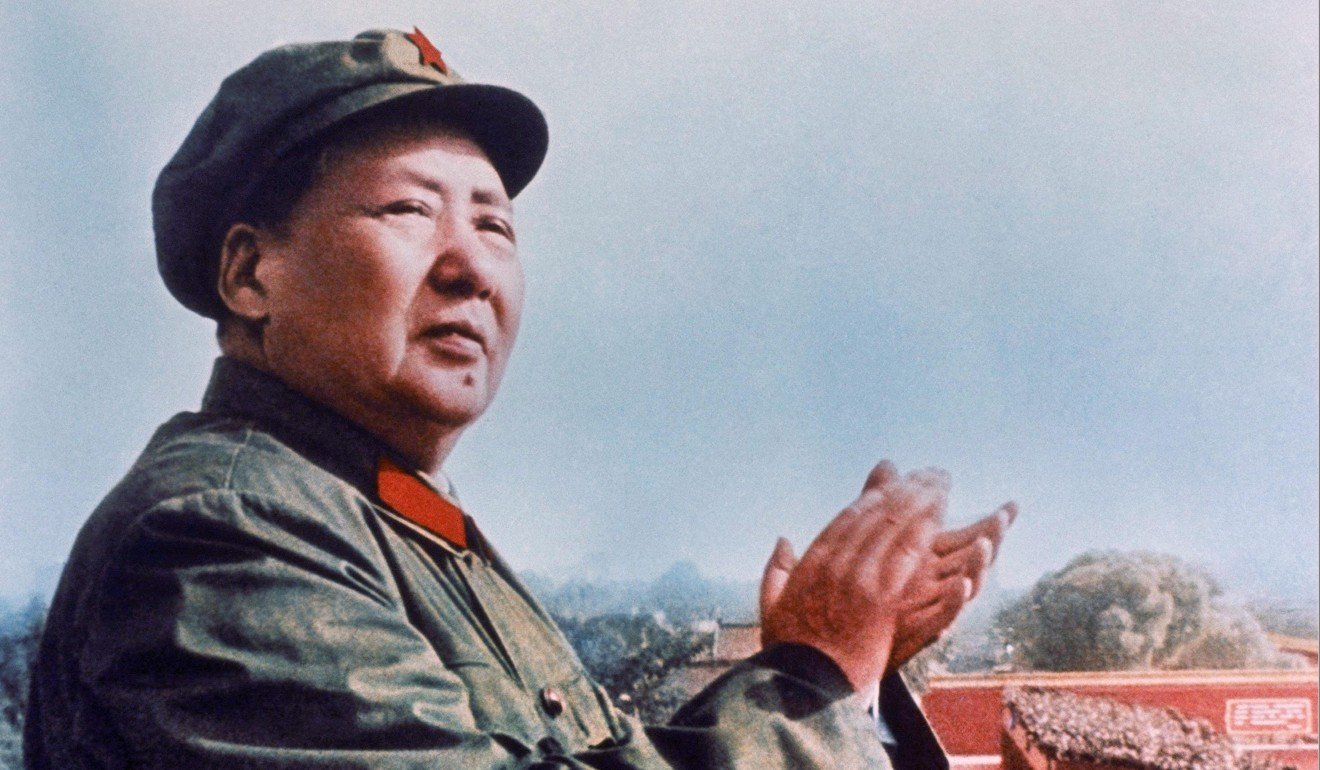
A couple of grass-roots Communist Party members from northern China have been disciplined after a statue of Mao Zedong was photographed lying face down surrounded by overgrown bushes.
The government of Fuping county in Hebei province issued a statement late on Tuesday that the party chief of Huashan village, where the statue used to stand, had been given a “serious warning” for failing to protect the statue.
His immediate superior, the party head of Chengnanzhuang township, also received a warning.
The disciplinary action came after a picture of the statue lying amid the shrubbery was widely circulated online, triggering an angry response from Mao’s admirers.
The village has become a revolutionary tourist destination because the founding father of the People’s Republic spent some time there in 1948.
100 years on from China’s May Fourth Movement, its message is being co-opted by the Communist Party
The local government said on Sunday that the statue, showing Chairman Mao with a clenched right fist, had been erected in 2017.
It was removed from its plinth earlier this month after cracks appeared in the reinforced plastic model and its colour started to fade.
The government said it had been leaning against a wall after its removal on May 3, but was blown over by strong gusts of wind several days later.
It has now been sent to the manufacturer for repair.
Mao’s image still adorns the banknotes and many public spaces in China. Photo: Alamy
The local officials were punished for “lacking ideological understanding” of the removal, failing to give enough protection to the statue and being careless in their daily work, the local government said.
Besides penalties for the individuals, the township party committee was also ordered to undertake self-criticism – a practice that began under Mao.
Statues of Chairman Mao used to be a common scene all across China, many of them built in the late 1960s at the height of the Cultural Revolution.
Shenzhen official kicked out of Chinese Communist Party for ‘trading power for personal gain and sex’.
Although many of them were removed after his death when the government began the process of reform and opening up, they can still be seen in spaces such as town squares and university campuses. Mao’s face also remains on the country’s banknotes and a large portrait of him hangs in Beijing overlooking Tiananmen Square.
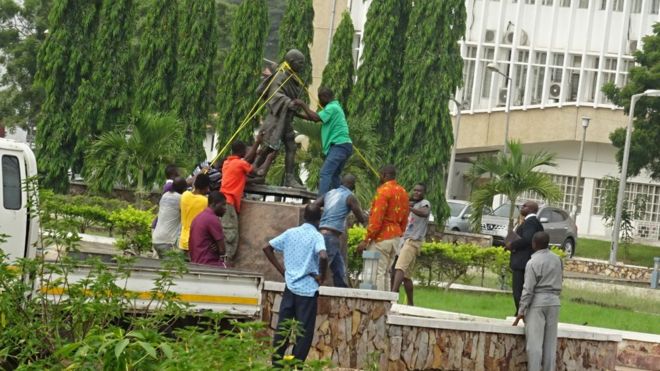
Lecturers and students told the BBC that the statue, originally located at the university’s recreational quadrangle, had been removed on Wednesday.
The university confirmed this, saying that the Ministry of Foreign Affairs and Regional Integration was responsible.
Law student Nana Adoma Asare Adei told the BBC: “Having his statue means that we stand for everything he stands for and if he stands for these things [his alleged racism], I don’t think we should have his statue on campus.”
Mahatma Gandhi was one of the most celebrated figures of the 20th Century. He is best known for leading non-violent resistance to British colonial rule in India.
However, as a young man he lived and worked in South Africa, and although he has inspired people throughout the world his comments on black Africans have been controversial.
In his early writings he referred to black South Africans as “kaffirs” – a highly offensive racist slur. He also said that Indians were “infinitely superior” to black people.


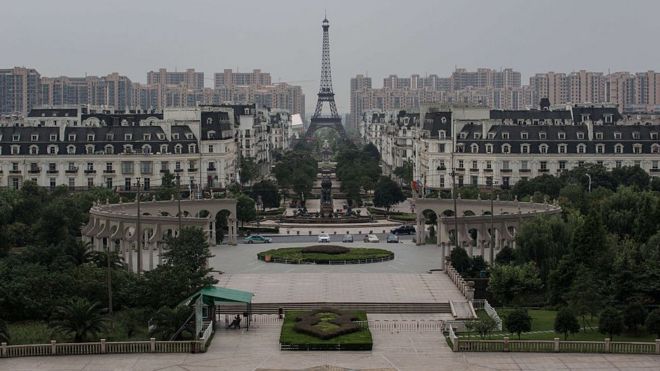 Image copyright GUILLAUME PAYEN / GETTY
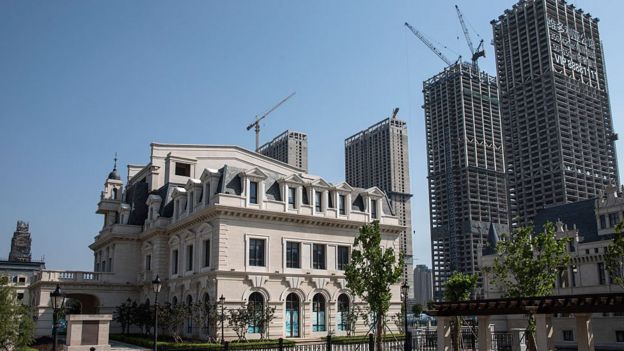 Image copyright THIERRY FALISE / GETTY
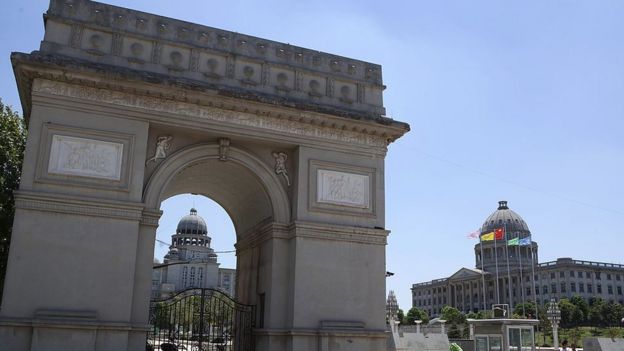 Image copyright STR / AFP / GETTY
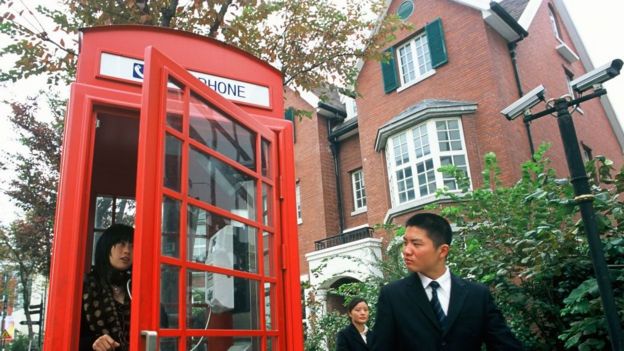 Image copyright OLIVIER CHOUCHANA / GETTY
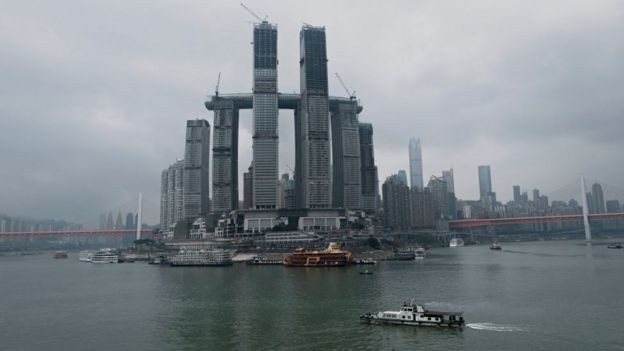 Image copyright WANG ZHAO / GETTY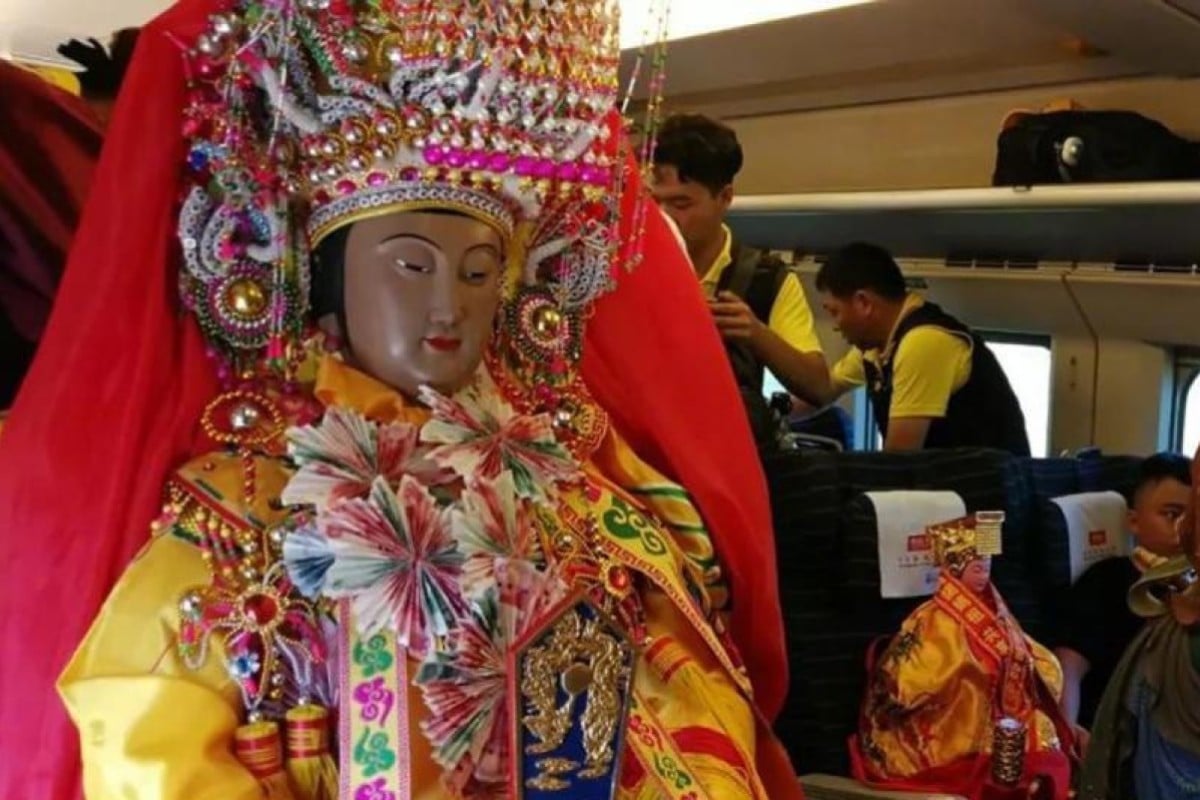

 CHINDIA ALERT: You'll be living in their world, very soon