Chindia Alert: You’ll be Living in their World Very Soon
aims to alert you to the threats and opportunities that China and India present. China and India require serious attention; case of ‘hidden dragon and crouching tiger’.
Without this attention, governments, businesses and, indeed, individuals may find themselves at a great disadvantage sooner rather than later.
The POSTs (front webpages) are mainly 'cuttings' from reliable sources, updated continuously.
The PAGEs (see Tabs, above) attempt to make the information more meaningful by putting some structure to the information we have researched and assembled since 2006.
Cathay Pacific is latest to wield axe, while Taiwan’s new restrictions on visitors from Hong Kong is another blow
More cancellations expected in the coming days as spread of deadly virus continues
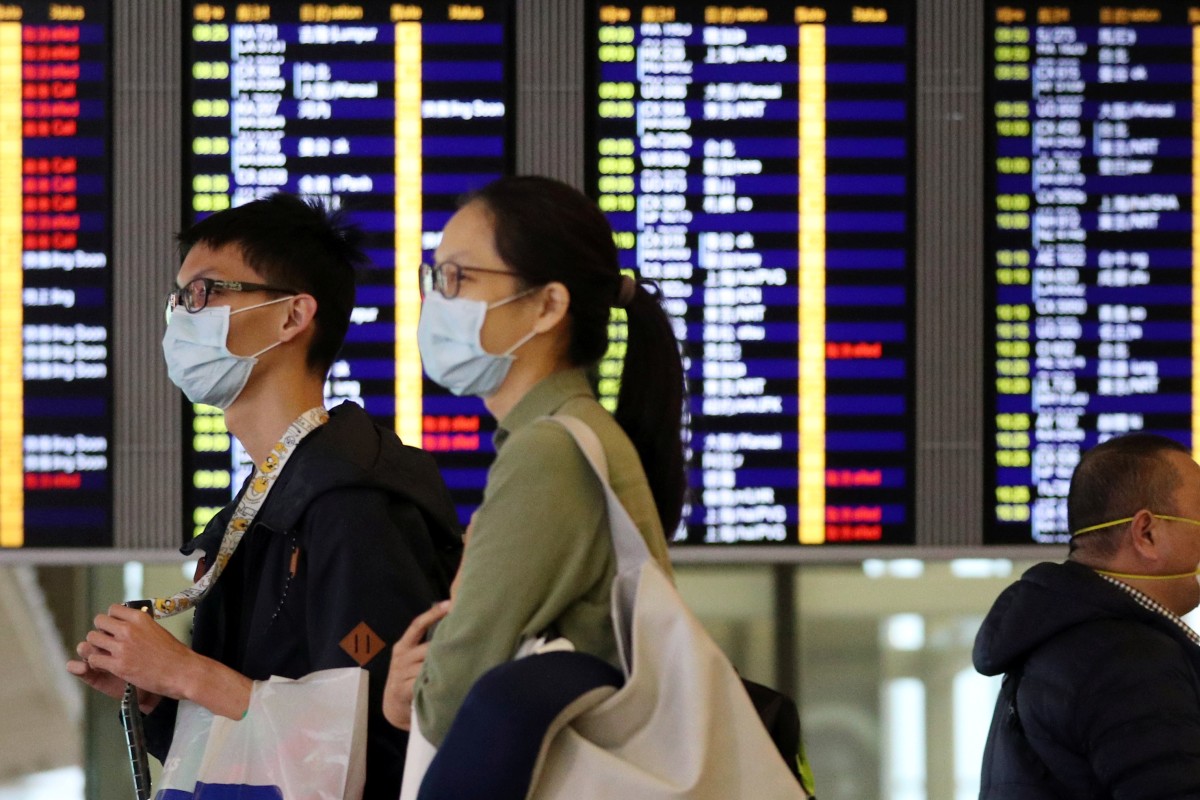
The air industry in Hong Kong and beyond has been thrown into disarray by the coronavirus outbreak. Photo: Reuters
Hundreds more Hong Kong flights are set to be dropped as the floodgates open on airlines cancelling services during the city’s fight against the coronavirus.
Carriers based in Asia, Australia, South Africa and Middle East revealed on Friday morning and the previous night they would cut all or some of their flights to the city.
Cathay Pacific is the latest to wield the axe, announcing on Friday afternoon new suspensions of major Hong Kong routes to London, New York and across mainland China because of the virus.
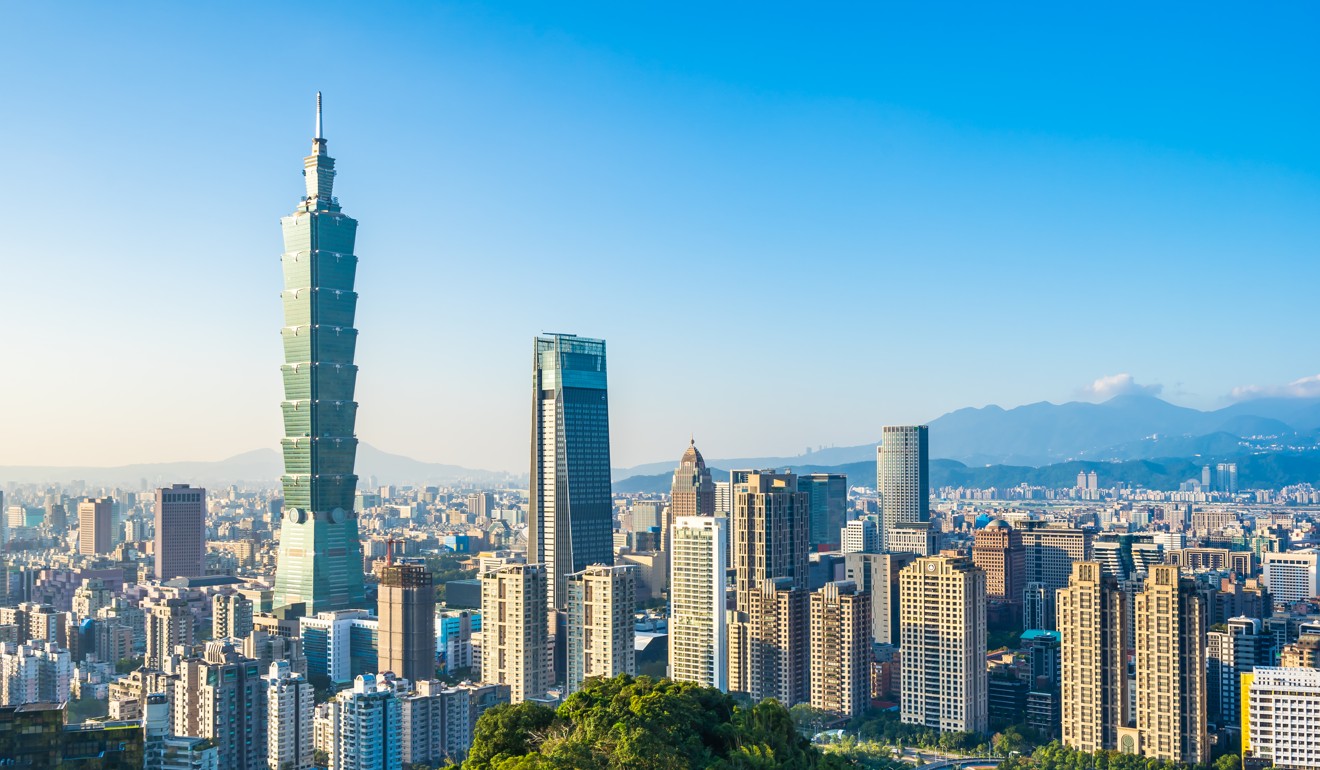
Flights running on the busy route between Hong Kong and Taiwan’s capital Taipei are subject to major cuts. Photo: Shutterstock
The contagion, which started in the central Chinese city of Wuhan, has infected more than 31,400 people, mostly in mainland China, killing more than 635. In Hong Kong, 24 people have been infected, one of those fatally, as of Friday afternoon.
Passengers abandoning travel plans en masse have been compounded by the introduction of entry restrictions across the world against recent visitors to mainland China, some targeting those who had been to Hong Kong.
Destinations suspended by Cathay Pacific until March 28 include London Gatwick, Rome, Washington DC, Newark, Male, Davao, Clark, Jeju and Taichung.
All mainland cities with the exception of Beijing, Shanghai, Chengdu and Xiamen would also be dropped over that period. The company said the decision was made “in view of the novel coronavirus outbreak and the subsequent drop in market demand”.
Hong Kong airport to segregate all flights to and from mainland China
7 Feb 2020
It followed Cathay Pacific Group revealing earlier this week there would be a 30 per cent reduction of flights across its worldwide schedule, as well as a 90% cut of mainland flights.
Budget carrier HK Express, controlled by Cathay, said on Thursday it would scrap 82 flights between February 12 and March 26, mostly to destinations such as Seoul and Osaka.
Hong Kong Airlines (HKA) at the same time revealed it would gradually impose even deeper cuts to flights it operated in mainland China and the rest of Asia until March 28.
The ailing carrier will suspend 10 routes and reduce flights on a further 15, amounting to an estimated 128 flights a week being axed. HKA has already cut 214 mainland Chinese flights between January 30 until February 11.
As Taiwan’s new restrictions took effect on Friday – ordering the home or hotel quarantine of anyone entering the self-ruled island who had visited Hong Kong or Macau within the previous 14 days – carriers based there slashed their schedules.
China Airlines would go from running 18 daily Hong Kong flights to just two from next week until March 28, according to Airline Route data published on Thursday.
Eva Air would switch from more than 11 daily flights to fewer than four a day for the rest of the month.
As health professionals treat coronavirus patients, global search for cures and vaccines accelerates
Eighty flights operate between Hong Kong and Taipei every week, a journey that regularly tops tables ranking the world’s busiest. But under the cuts to come more than half have already been scrapped.
Outside Asia, two airlines on Thursday cut ties with Hong Kong. The struggling Virgin Australia blamed the coronavirus and the anti-government protests that have gripped Hong Kong since June.
It concluded that “current circumstances demonstrate that Hong Kong is no longer a commercially viable route”.
The near-bankrupt South African Airways (SAA) has cancelled its route from Johannesburg amid a wholesale restructuring of the state-owned business. SAA had suspended flying to Hong Kong after November 21 last year amid the city’s civil unrest.
Hong Kong Airlines to axe 400 jobs as coronavirus adds to carrier’s cash woes
7 Feb 2020
Meanwhile, American Airlines said on Thursday it would restart flights between Dallas Fort Worth and Hong Kong on February 21, while Hong Kong’s Airport Authority extended the cancellation of its Los Angeles flight to the city until March 27.
The US carrier warned its schedules were subject to an ongoing “review”. Currently there is no US carrier flying to Hong Kong International Airport after United Airlines also withdrew all services until February 20.
Among the Middle East carriers, Emirates was halving its four daily Airbus A380 flights to Hong Kong from next week until March 28. Etihad is also making minor adjustments, Airline Route data showed on Thursday.
Image copyright AFPImage caption Lekima has brought heavy rain to Taiwan
Chinese authorities have declared a red alert as a powerful typhoon heads towards the eastern coast.
Typhoon Lekima is currently battering Taiwan with winds of more than 190km/h (120mph) and is due to make landfall in China’s Zhejiang province on Saturday.
Emergency teams have been deployed to the region to guide relief work, China’s emergency ministry said.
Thousands of people further up the coast in Shanghai have been warned to prepare to evacuate.
Lekima, which is the ninth typhoon so far this year, strengthened into a super typhoon late on Wednesday, but Taiwanese authorities have since downgraded it to a regular typhoon.
Flood warnings have been issued for eastern sections of China’s Yangtze River and the Yellow River until Wednesday. The provinces of Jiangsu and Shandong are also on alert.
Cruise liners have been told to delay their arrival in Shanghai and some train services have been suspended over the weekend.
Beijing has also cancelled some trains heading to and from the Yangtze delta region.
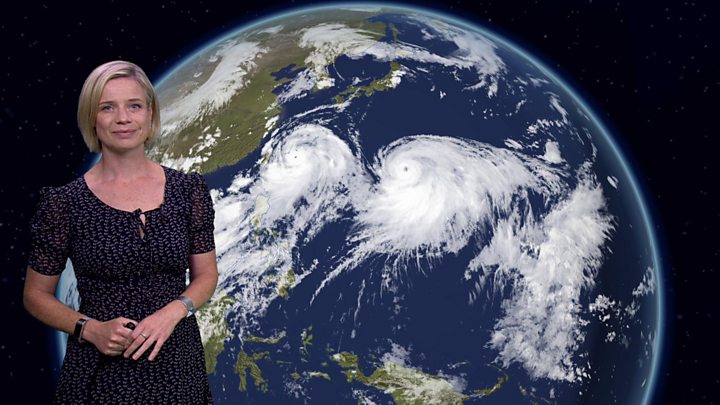
Lekima is one of two typhoons in the western Pacific at the moment. Further east, Typhoon Krosa is spreading heavy rain across the Northern Mariana Islands and Guam. It is moving north-west and could strike Japan some time next week, forecasters said.
Media caption BBC Weather’s Sarah Keith-Lucas on typhoons Lekima and Krosa
Lekima was passing the north of Taiwan on Friday, causing flight cancellations and the closures of schools and offices.
Power was cut to more than 40,000 homes and the island’s high speed rail service was suspended north of the city of Taichung, local media reported.
The huge storm came a day after eastern Taiwan was rattled by a 6.0 magnitude earthquake. Experts said the risks of landslides triggered by the tremor were made more likely by the typhoon dumping up to 900mm (35 inches) of rain on Taiwan’s northern mountains.
Media caption The 6.0 earthquake in Taiwan was caught on cat cam
Lekima also brought heavy rain and high winds to south-west Japan on Friday, cutting power to about 14,000 homes, broadcaster NHK reported.
China’s weather bureau said Lekima was expected to have weakened further by the time it made landfall. The country has a four-stage colour-coded warning system, with red representing the most severe weather.
President Tsai Ing-wen says Taipei should ‘maintain a high degree of vigilance’
Exercise simulates response to attack from mainland on military bases
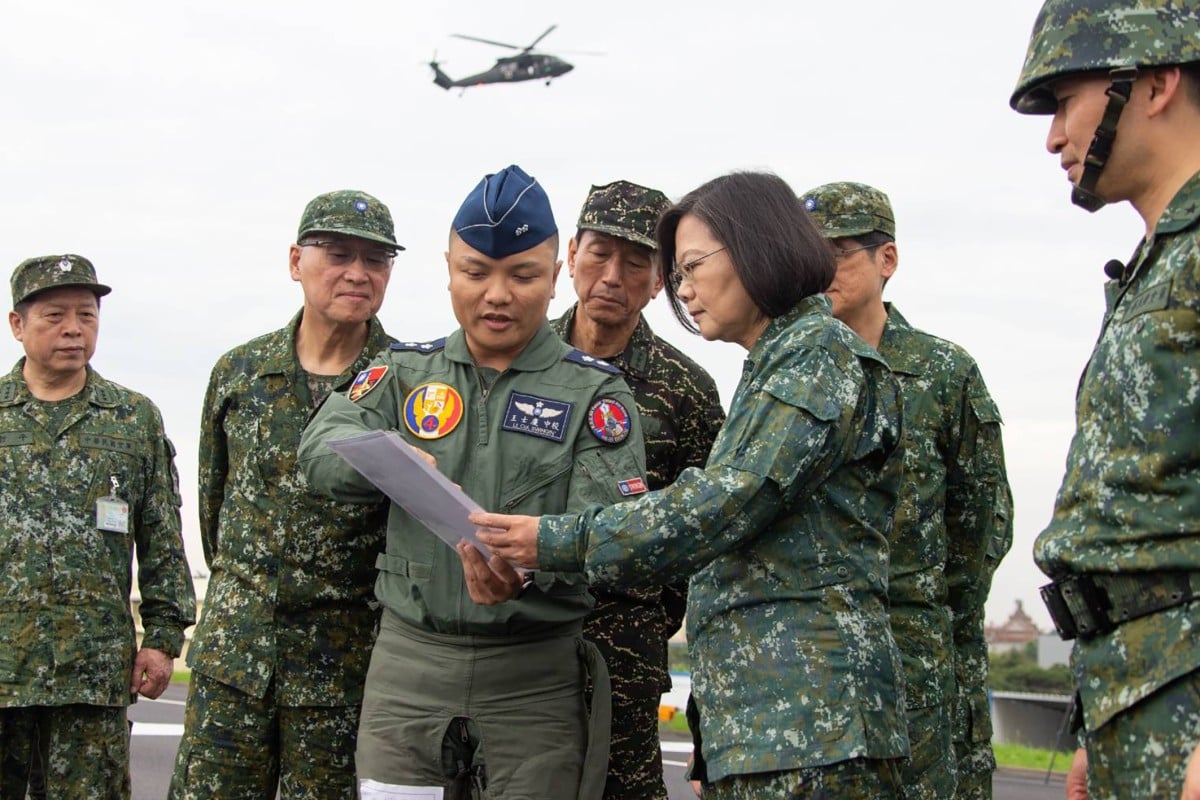
President Tsai Ing-wen and senior Taiwanese military staff during an exercise in southern county Changhua, not far from one of the island’s main airbases at Taichung. Photo: Facebook
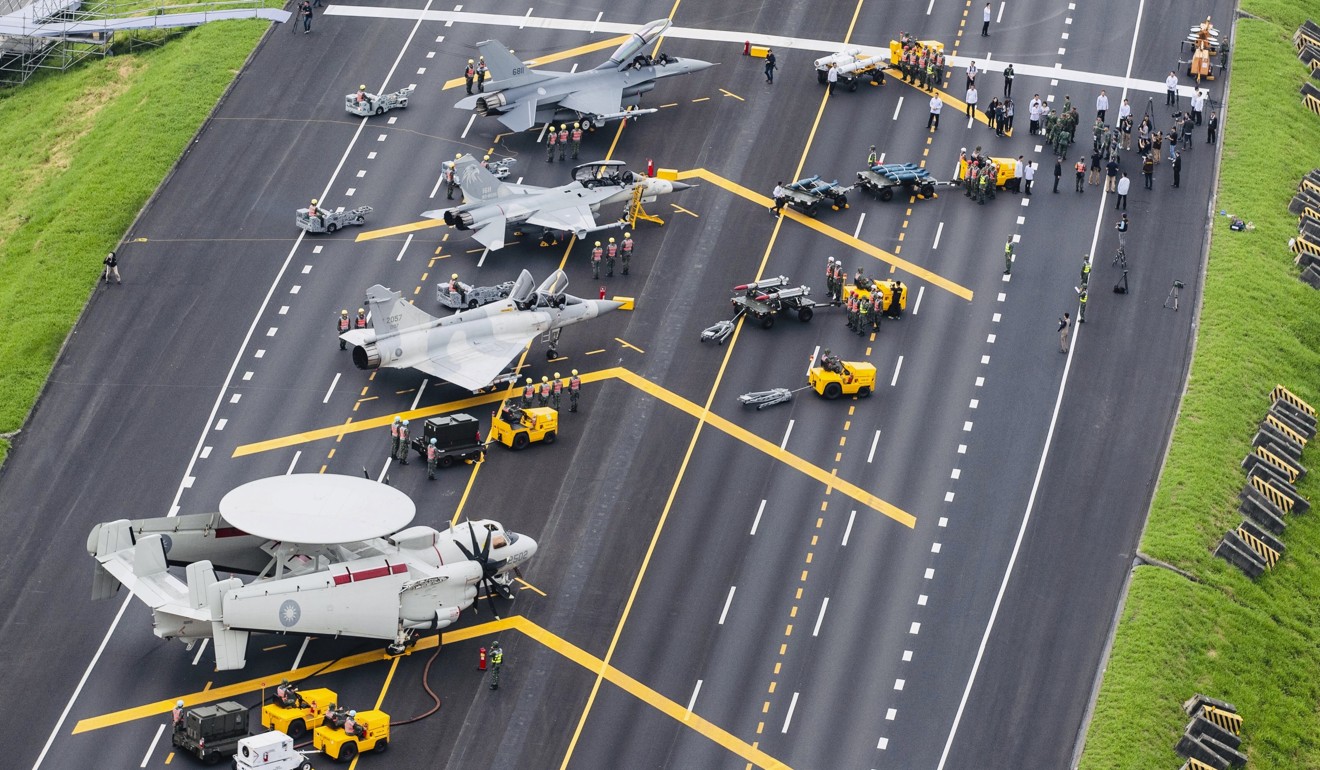
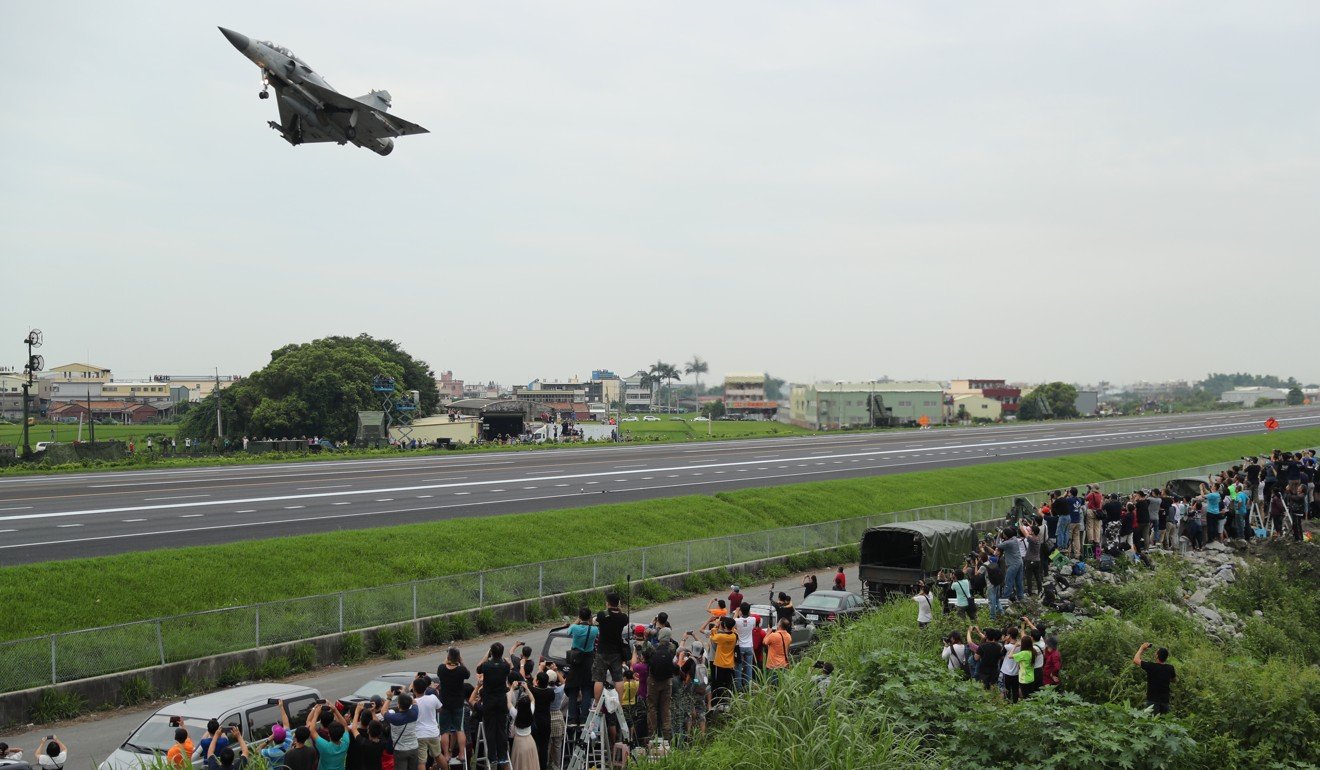
Taiwanese warplanes landed on a highway on Tuesday as part of annual exercises designed to test the island’s military capabilities and resolve to repel an attack from the mainland across the Taiwan Strait.
President Tsai Ing-wen watched the exercise in the southern county of Changhua, not far from one of Taiwan’s main airbases at Taichung.
“Our national security has faced multiple challenges,” Tsai said. “Whether it is the Chinese Communist Party’s [People’s Liberation Army] long-distance training or its fighter jets circling Taiwan, it has posed a certain degree of threat to regional peace and stability.
“We should maintain a high degree of vigilance,” she said.
Taiwanese warplanes are parked on a highway during an exercise to simulate a response to a mainland attack on its airfields in Changhua. Photo: AP
Aircraft involved in the exercise included US-made F-16 Fighting Falcons, French Mirage 2000s, Taiwan-made IDF fighter jets and US-built Northrop Grumman E-2 Hawkeye surveillance aircraft.
Ground crews practised refuelling and ammunition replenishment before the aircraft returned to the air. About 1,600 service personnel were mobilised in Tuesday’s exercise.
The event marked the exercise debut of the first F-16 upgraded to the V variant, featuring advanced radar and combat capabilities. Taiwan is spending about US$4.21 billion to upgrade 144 F-16As and Bs to the F-16V version.
Rare meeting between Taiwanese, US security officials angers Beijing
Taiwan buys military hardware mainly from the US and has asked to purchase new F-16V fighters and M1 Abrams tanks.
American arms sales to Taiwan have long been a thorn in the side of US relations with China, routinely drawing protests from Beijing that Washington had reneged on commitments.
Beijing has also been angered by warming relations between Taipei and Washington since Tsai came to power in 2016.
On Monday, Beijing reacted frostily to photos showing a rare meeting between uniformed Taiwanese officers and their US counterparts this month.
A Mirage 2000-5 fighter jet takes off from a highway during an emergency take-off and landing drill in Changhua, Taiwan. Photo: EPA
Last week, Beijing lodged a protest with Washington after two US warships sailed through the Taiwan Strait.
Taiwan expected to be outgunned in terms of troop numbers and firepower in any war with mainland China but it claimed to have had developed sophisticated asymmetric warfare tactics to make any invasion costly for Beijing.
“There are only a few military airbases which would become the prime targets in the event of an attack. The highway drill is necessary as highway strips would be our priority choice if the runways were damaged during a war,” air force Colonel Shu Kuo-mao.
Taiwan changes name of de facto embassy in United States to ‘reflect stronger ties’
Taiwan’s Central News Agency said highway take-off and landing drills last took place in 2014. A military source told CNA that Tuesday’s drill was not much different from those conducted by the military during the Han Kuang exercises, but it was still challenging.
Among the challenges were that the drill could not be rehearsed and it required clear communications between the military, police and the National Freeway Bureau, said the source.







 CHINDIA ALERT: You'll be living in their world, very soon