Chindia Alert: You’ll be Living in their World Very Soon
aims to alert you to the threats and opportunities that China and India present. China and India require serious attention; case of ‘hidden dragon and crouching tiger’.
Without this attention, governments, businesses and, indeed, individuals may find themselves at a great disadvantage sooner rather than later.
The POSTs (front webpages) are mainly 'cuttings' from reliable sources, updated continuously.
The PAGEs (see Tabs, above) attempt to make the information more meaningful by putting some structure to the information we have researched and assembled since 2006.
China will not set an economic growth goal for this year as it deals with the fallout from the coronavirus pandemic.
It is the first time Beijing has not had a gross domestic product (GDP) target since 1990 when records began.
The announcement was made by Premier Li Keqiang at the start of the country’s annual parliament meeting.
The world’s second largest economy shrank by 6.8% in the first quarter from a year ago as lockdowns paralysed businesses.
“This is because our country will face some factors that are difficult to predict in its development due to the great uncertainty regarding the Covid-19 pandemic and the world economic and trade environment,” Premier Li said.
The country’s leadership has promised to boost economic support measures amid growing concerns that rising unemployment could threaten social stability.
The move comes as tensions between Beijing and Washington are becoming increasingly strained over the coronavirus pandemic, trade and Hong Kong.
On Thursday, President Donald Trump stepped up his attacks on China, suggesting that the country’s leader, Xi Jinping, is behind a “disinformation and propaganda attack on the United States and Europe.”
It came as Mr Trump and other Republicans have escalated their criticism of Beijing’s handling of the early stages of the outbreak.
Also on Thursday, China announced plans to impose new national security legislation on Hong Kong after last year’s pro-democracy protests.
The announcement was met with a warning from Mr Trump that the US would react “very strongly” against any attempt to gain more control over the former British colony.
Separately, two US senators have proposed legislation to punish Chinese entities involved in enforcing the planned new laws and penalise banks that do business with them.
Earlier this week, the US Senate unanimously passed a proposal to delist Chinese companies from American stock exchanges if they fail to comply with US financial reporting standards.
US-listed Chinese companies have come under increasing scrutiny in recent weeks after Luckin Coffee revealed that an internal investigation found hundreds of millions of dollars of its sales last year were “fabricated”.
Inmates who have undergone compulsory re-education programme to be moved to other parts of China under job placement scheme delayed by Covid-19 outbreak
Critics have said the camps are a move to eradicate cultural and religious identity but Beijing has defended them as way of boosting job opportunities and combating Islamic radicalisation
Illustration by Perry Tse
The Chinese government has resumed a job placement scheme for tens of thousands of Uygur Muslims who have completed compulsory programmes at the “re-education” camps in the far-western region of Xinjiang, sources said.
The plan, which includes a quota for the numbers provinces must take, was finalised last year but disrupted by the outbreak of Covid-19.
The delay threatens to undermine the Chinese government’s efforts to justify its use of internment camps in Xinjiang.
Critics have said these camps were part of the measures designed to eradicate the ethnic and cultural identity of Uygurs and other Muslim minorities and that participants had no choice but to undertake the re-education programme.
Beijing has repeatedly dismissed these criticisms and said the camps are to give Uygurs the training they need to find better jobs and stay away from the influence of radical fundamentalism.
First Xinjiang, now Tibet passes rules to promote ‘ethnic unity’
17 Feb 2020
Now with the disease under control, the Chinese government has resumed the job placement deal for other provinces to absorb Xinjiang labourers, sources said.
Despite the devastating impact of the disease on its economy and job markets, the Chinese authorities are determined to go ahead with the plan, which they believe would
“Excellent graduates were to be taken on as labourers by various inland governments, in particular, 19 provinces and municipalities,” said the source. It is unclear what constitutes “excellent graduates”.
Some sources earlier said that the programme may be scaled back in light of the new economic reality and uncertainties.
But a Beijing-based source said the overall targets would remain unchanged.
“The unemployment problem in Xinjiang must be resolved at all costs, despite the outbreak,” the source said.
The South China Morning Post has learned that at least 19 provinces and cities have been given quotas to hire Muslim minorities, mostly Uygurs, who have “graduated” from re-education camps.
As early as February, when the daily number of infections started to come down outside Hubei province, China already begun to send Uygur workers to their new jobs.
A photo taken in February showed thousands of young Uygurs, all wearing face masks and with huge red silk flowers pinned to their chests, being dispatched to work in factories outside their hometowns.
By the end of February, Xinjiang alone has created jobs for more than 60,000 Uygur graduates from the camps. A few thousand were also sent to work in other provinces.
Many have been employed in factories making toys and clothes.
Xinjiang’s new rules against domestic violence expand China’s ‘extremism’ front to the home
7 Apr 2020
Sources told the Post that the southern city of Shenzhen – China’s hi-tech manufacturing centre – was given a target last year to eventually resettle 50,000 Uygurs. The city is allowed to do this in several batches, with 15,000 to 20,000 planned for the first stage.
In Fujian province, a government source also said they had been told to hire “tens of thousands of Xinjiang workers”.
“I heard the first batch of several thousands would arrive soon. We have already received official directives asking us to handle their settlement with care,” said the source.
He said the preparation work includes providing halal food to the workers as well as putting in place stronger security measures to “minimise the risks of mass incidents”. It is not known whether they will be given access to prayer rooms.
There are no official statistics of how many Uygurs will be resettled to other provinces and the matter is rarely reported by the mainland media.
But in March, Anhui Daily, the province’s official newspaper, reported that it had received 1,560 “organised labourers from Xinjiang”.
The Uygur workers on average could earn between 1,200 yuan (US$170) to 4,000 yuan (US$565) a month, with accommodation and meals provided by the local authorities, according to Chinese media reports.
However, they are not allowed to leave their dormitories without permission.
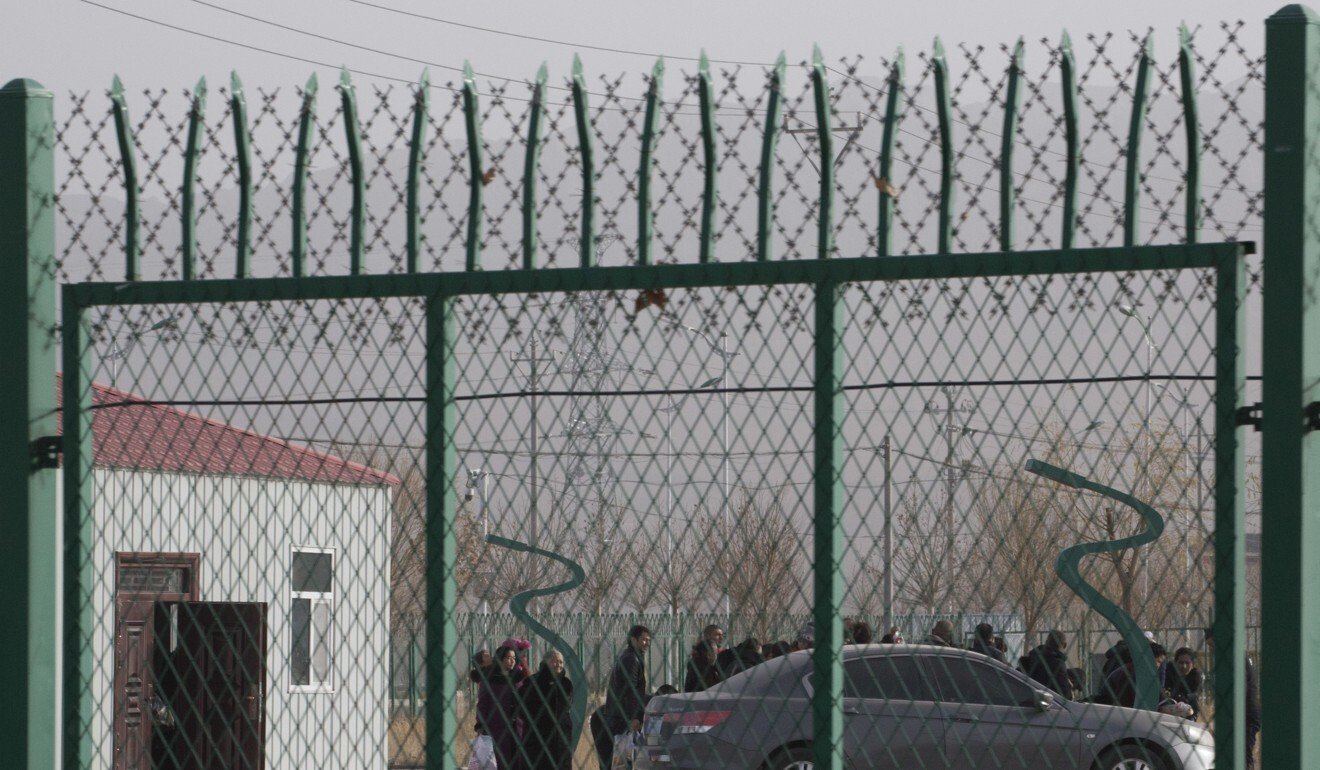
The UN has estimated that up to a million Muslims were being held in the camps. Photo: AP
Xinjiang’s per capita disposable income in 2018 was 1,791 yuan a month, according to state news agency Xinhua. But the salary level outside the region’s biggest cities such as Urumqi may be much lower.
The official unemployment rate for the region is between 3 and 4 per cent, but the statistics do not include those living in remote rural areas.
Mindful of the potential risks of the resettlement, Beijing has taken painstaking efforts to carefully manage everything – from recruitment to setting contract terms to managing the workers’ day-to-day lives.
Local officials will go to each Uygur workers’ home to personally take them to prearranged flights and trains. On arrival, they will be immediately picked up and sent to their assigned factories.
US bill would bar goods from Xinjiang, classifying them the product of forced labour by Uygurs
12 Mar 2020
Such arrangements are not unique to Uygurs and local governments have made similar arrangements for ethnic Han workers in other parts of China.
After screening them for Covid-19, local governments have arranged for workers to be sent to their workplaces in batches. They are checked again on arrival, before being sent to work.
China is accelerating such placement deals on a massive scale to offset the impact of the economic slowdown after the outbreak.
Sources told the South China Morning Post that the job placement deal was first finalised by governments in Xinjiang and other provinces last year.
The aim is to guarantee jobs for Uygur Muslim who have “completed vocational training” at the re-education camps and meet poverty alleviation deals in the region, one of the poorest parts of China.
The training they receive in the camps includes vocational training for various job types such as factory work, mechanical maintenance and hotel room servicing. They also have to study Mandarin, Chinese law, core party values and patriotic education.
Xinjiang’s massive internment camps have drawn widespread international condemnation.
The United Nations has estimated that up to 1 million Uygur and other Muslim minority citizens are being arbitrarily detained in the camps, which Beijing insists are necessary to combat terrorism and Islamic radicalisation.
Late last year, Xinjiang’s officials announced that all the inmates of these so-called vocational training centres had “graduated” and taken up employment.
Before this labour placement scheme was introduced, it was extremely difficult for Uygurs to find jobs or live and work in inland regions.
Muslim ethnic minorities, Uygurs in particular, have been subjected to blatant discrimination in China and the situation worsened after the 2009 clashes.
Earlier this month, the Australian Strategic Policy Institute released a report saying more than 80,000 Uygurs had been moved from Xinjiang to work in factories in nine Chinese regions and provinces.
It identified a total of 27 factories that supplied 83 brands, including household names such as Google, Apple, Microsoft, Mitsubishi, Siemens, Sony, Huawei, Samsung, Nike, Abercrombie and Fitch, Uniqlo, Adidas and Lacoste.
‘Psychological torture’: Uygurs abroad face mental health crisis over plight of relatives who remain in Xinjiang
11 Mar 2020
The security think tank concluded that the Chinese government had transferred Uygur workers “under conditions that strongly suggest forced labour” between 2017 and 2019, sometimes drawing labourers directly from re-education camps.
The report also said the work programme represents a “new phase in China’s social re-engineering campaign targeting minority citizens”.
Workers were typically sent to live in segregated dormitories, underwent organised Mandarin lessons and ideological training outside working hours and were subject to constant surveillance, the researcher found.
They were also forbidden from taking part in religious observances, according to the report that is based on open-source documents, satellite pictures, academic research and on-the-ground reporting.
Chinese foreign ministry spokesman Zhao Lijian criticised the report saying it had “no factual basis”.
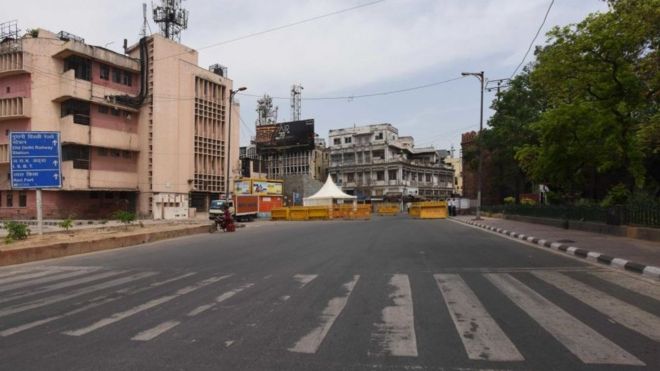
Image copyright GETTY IMAGESImage caption An empty stretch of the road and Delhi Police barricades to screen commuters during lockdown, at Delhi Gate on April 16, 2020 in New Delhi, India.
India has eased some restrictions imposed as part of a nationwide lockdown to curb the spread of the coronavirus.
Most of the new measures are targeted at easing pressure on farming, which employs more than half the nation’s workforce.
Allowing farms to operate again has been seen as essential to avoid food shortages.
But some other measures announced last week, will not be implemented.
This includes the delivery of non-essential items such as mobile phones, computers, and refrigerators by e-commerce firms – the government reversed its decision on that on Sunday.
And none of the restrictions will be lifted in areas that are still considered “hotspots” for the virus – this includes all major Indian cities.
Domestic and international flights and inter-state travel will also remain suspended.
So what restrictions are being eased?
Most of the new measures target agricultural businesses – farming, fisheries and plantations. This will allow crops to be harvested and daily-wagers and others working in these sectors to continue earning.
To restore the supply chain in these industries, cargo trucks will also be allowed to operate across state borders to transport produce from villages to the cities.
Essential public works programmes – such as building roads and water lines in rural areas – will also reopen, but under strict instructions to follow social distancing norms. These are a huge source of employment for hundreds of thousands of daily-wage earners, and farmers looking to supplement their income.
Banks, ATMs, hospitals, clinics, pharmacies and government offices will remain open. And the self-employed – such as plumbers, electricians and carpenters – will also be allowed to work.
Some public and even private workplaces have been permitted to open in areas that are not considered hotspots.
But all businesses and services that reopen are expected to follow social distancing norms.
Who decides what to reopen?
State governments will decide where restrictions can be eased. And several state chief ministers, including Delhi’s Arvind Kejriwal, have said that none of the restrictions will be lifted in their regions.
Mr Kejriwal said the situation in the national capital was still serious and the decision would be reviewed after one week.
India’s most populous state, Uttar Pradesh, will also see all restrictions in place, as will the southern states of Andhra Pradesh, Telangana and Karnataka.
The southern state of Kerala, which has been widely acknowledged for its success in dealing with the virus, has announced a significant easing of the lockdown in areas that it has demarcated as “green” zones.
This includes allowing private vehicular movement and dine-in services at restaurants, with social distancing norms in place. However, it’s implementing what is known as an “odd-even” scheme – private cars with even and odd number plates will be allowed only on alternate days, to limit the number of people on the road.
China was widely expected to announce a gross domestic product (GDP) growth target for 2020 of ‘around 6 per cent’ following 6.1 per cent growth in 2019
Zhang Yansheng, who is an adviser to China’s economic policymakers, says ‘there will definitely be adjustments’
(190305) — BEIJING, March 5, 2019 (Xinhua) — Xi Jinping (C, front), Li Keqiang (3rd R, front), Wang Yang (3rd L, front), Wang Huning (2nd R, front), Zhao Leji (2nd L, front), Han Zheng (1st R, front) and Wang Qishan (1st L, front) attend the opening meeting of the second session of the 13th National People’s Congress at the Great Hall of the People in Beijing, capital of China, March 5, 2019. (Xinhua/Li Xueren)
China may revise down its annual economic growth target for 2020 in response to the impact of the coronavirus outbreak, but will still not give up the overall target of maintaining economic growth “in a reasonable range”, according to a Chinese government researcher.
The Chinese government has never officially published its goal for 2020, but it is widely expected that the specific gross domestic product (GDP) growth target for 2020
would be “around 6 per cent”, marking a potential slight slowdown from 6.1 per cent growth in 2019 but enough to achieve Beijing’s grand goal of doubling the size of its economy in 2020 from 2010.
China’s 2020 growth target was originally to be released during Premier Li Keqiang’s government work report at the National People’s Congress, but the March 5 annual parliamentary meeting is set to be postponed due to the coronavirus outbreak.
“There will definitely be adjustments. For the central government, it hasn’t defined what the ‘reasonable range’ should be after the outbreak of coronavirus. People are still watching how the outbreak will develop and influence the economy,” Zhang Yansheng, the chief research fellow at the Beijing-based think tank, the China Centre for
International Economic Exchanges, told the South China Morning Post on Tuesday.
As for the final GDP target figure, we have to be true to facts. The GDP target was not a compulsory requirement but a soft forecast figureZhang Yansheng
“As for the final GDP target figure, we have to be true to facts. The GDP target was not a compulsory requirement but a soft forecast figure – strictly speaking, a forecast figure could be revised three or four times in a year.”
Zhang, though, referenced the fact that 29 of China provincial-level regions, out of a total of 31, had published their 2020 economic growth targets at the Central Economic Work Conference in December.
“The direction and the goals are clear. It’s not the case that people have not known what they should do this year,” added Zhang, who is an adviser to China’s economic policymakers.
has repeatedly said over the last two weeks that China will still strive to achieve its economic and social development goals for 2020 despite the outbreak, which has claimed over 1,800 lives and infected over 70,000 people, and remain on course to build the country into a “comprehensively well-off society”.
China to postpone the year’s biggest political gathering amid coronavirus outbreak
One key aspect of that vision is that China will double the size of its GDP in 2020 from 2010, which would require a minimum 5.6 per cent growth rate in 2020, although Beijing has never clearly defined the full details of the goal.
On Tuesday, Ren Hongbin, vice-chairman of the State-owned Assets Supervision and Administration Commission of the State Council, said that the annual production goals and reform tasks set earlier in the year for state-owned enterprises would also not change despite the outbreak.
“The impact of the epidemic is temporary and phased, will not change the long-term positive fundamentals of the Chinese economy,” he said.
We should neither view 6 per cent as a red line nor take doubling the GDP size as a bottom line Song Xiaowu
Before the country fell into an economic standstill around the extended Lunar New Year holiday as the virus spread from the city of Wuhan, economists and analysts have been engaged in a heated debate over whether China needs to keep its growth rate above 6 per cent in 2020.
Song Xiaowu, former president of the China Society of Economic Reform, a state-backed think tank, said at a forum on Saturday that China’s GDP growth rate could drop to 3 per cent in the first quarter and 5 per cent for the whole of 2020.
“We should neither view 6 per cent as a red line nor take doubling the GDP size as a bottom line,” said Song, in a speech published by the China Development Research Foundation, who organised the forum.


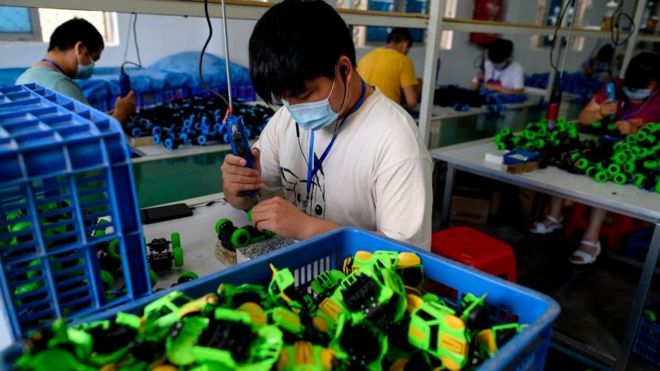 Image copyright GETTY IMAGES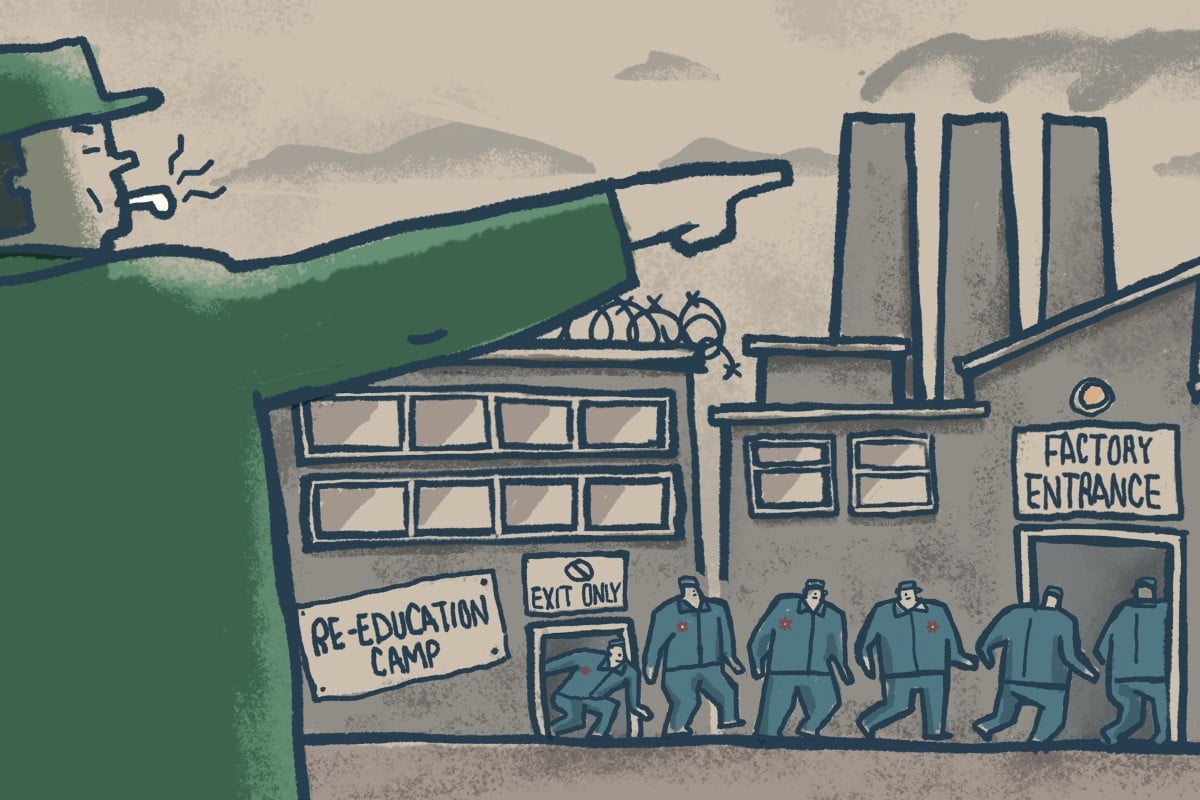




 CHINDIA ALERT: You'll be living in their world, very soon