Chindia Alert: You’ll be Living in their World Very Soon
aims to alert you to the threats and opportunities that China and India present. China and India require serious attention; case of ‘hidden dragon and crouching tiger’.
Without this attention, governments, businesses and, indeed, individuals may find themselves at a great disadvantage sooner rather than later.
The POSTs (front webpages) are mainly 'cuttings' from reliable sources, updated continuously.
The PAGEs (see Tabs, above) attempt to make the information more meaningful by putting some structure to the information we have researched and assembled since 2006.
NEW DELHI (Reuters) – Violent clashes erupted in Delhi between police and hundreds of university students on Friday over the enactment of a new citizenship law that critics say undermines India’s secular foundations.
The unrest has already led Japanese Prime Minister Shinzo Abe to cancel a planned visit to India from Sunday.
The new law offers a way to Indian citizenship for six minority religious groups from neighbouring Bangladesh, Pakistan and Afghanistan including Hindus and Christians, but not Muslims.
RELATED COVERAGE
Explainer: What does India’s new citizenship law mean?
Clashes erupt in New Delhi between students, police over citizenship law
See more stories
Police fired tear gas and used baton charges to disperse scores of students demonstrating at Jamia Millia Islamia university in the heart of Delhi over the law.
Protesters attacked cars in the capital, and several people were injured and taken to hospital.
Zakir Riyaz, a PhD student in social work, said the new law made a mockery of India’s religious openness.
“It goes against the whole idea of a secular India,” he said, speaking by phone from the Holy Family Hospital in New Delhi where 15 of his fellow students were admitted after being injured in a police baton charge.
Police barricades were knocked down and streets were strewn with shoes and broken bricks. An official at the university dispensary said that more than 100 students had been brought in with injuries but all had been discharged.
Parvez Hashmi, a local politician who went to the protest site to speak to police, said about 50 students had been detained.
Students said it was meant to be a peaceful protest, with them trying to go from Jamia University to Parliament Street to show their opposition to the legislation. But police pushed them back, leading to clashes.
Critics of Prime Minister Narendra Modi’s government say it is promoting a Hindu-first agenda for India and that the citizenship law excluding Muslims showed a deep-seated bias against India’s 170 million Muslims.
Imran Chowdhury, a researcher, said “either give citizenship to refugees of all religions or none at all. The constitution is being tampered with in the name of religion.”
Modi’s ruling Bharatiya Janata Party denies any religious bias but says it is opposed to the appeasement of one community. It says the new law is meant to help minority groups facing persecution in the three nearby Muslim countries.
ABE CANCELS
The United Nations human rights office voiced concern that the new law is “fundamentally discriminatory in nature”, and called for it to be reviewed.
Two people were killed in India’s Assam state on Thursday when police opened fire on mobs torching buildings and attacking railway stations in protest at the new citizenship rules signed into law on Thursday.
Japan’s Prime Minister Shinzo Abe cancelled a trip to Assam for a summit with his Indian counterpart Narendra Modi that had been due to begin on Sunday.
Japan has stepped up infrastructure development work in Assam in recent years, which the two sides were expected to highlight during the summit. Abe had also planned to visit a memorial in the nearby state of Manipur where Japanese soldiers were killed in World War Two.
“With reference to the proposed visit of Japanese PM Abe Shinzo to India, both sides have decided to defer the visit to a mutually convenient date in the near future,” Indian foreign ministry spokesman Raveesh Kumar said in a tweet.
Japan’s Chief Cabinet Secretary Yoshihide Suga said both countries would decide on the appropriate timing for the visit although nothing has been decided yet.
A movement against immigrants from Bangladesh has raged in Assam for decades. Protesters there say granting Indian nationality to more people will further strain the state’s resources and lead to the marginalisation of indigenous communities.
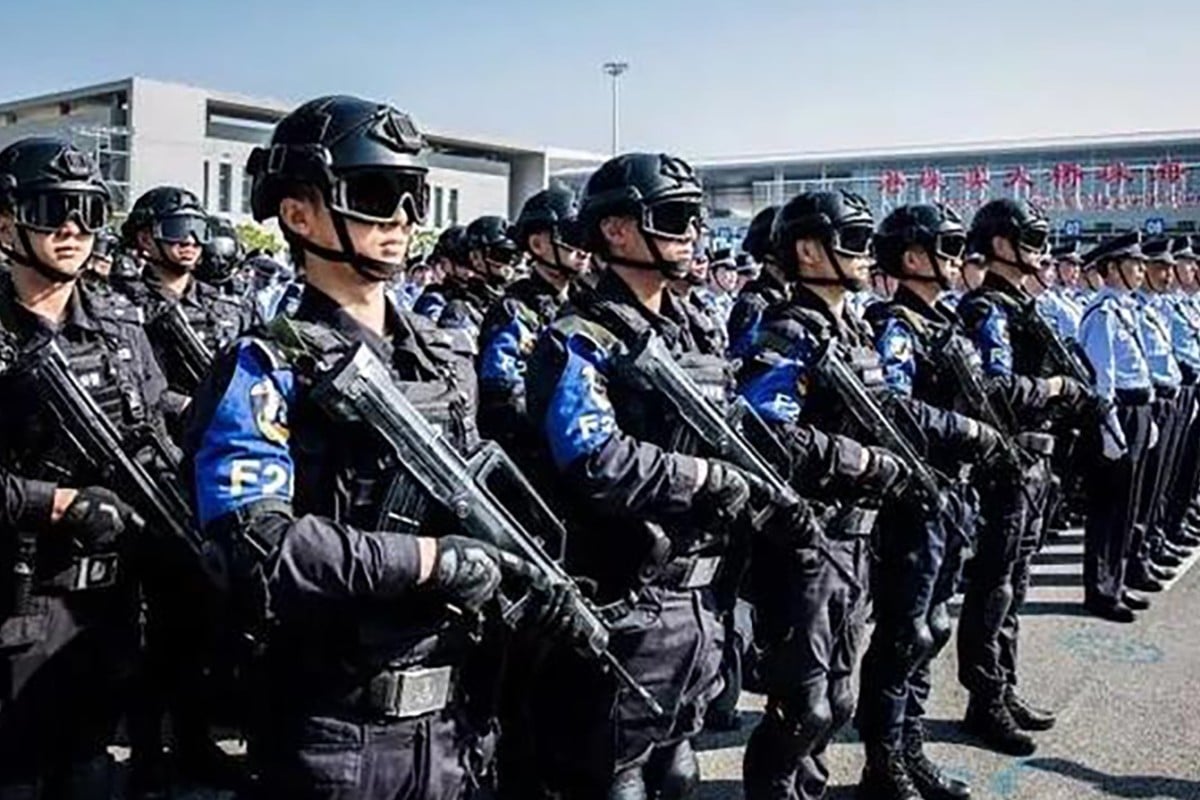
Zhuhai police, at the end of the world’s longest sea bridge, use body armour and tear gas in preparation for Macau’s 20th anniversary celebration
Hong Kong is just an hour’s drive away from Macau using the bridge
More than 1,000 police officers took part in the anti-terror drill in Zhuhai. Photo: Toutiao
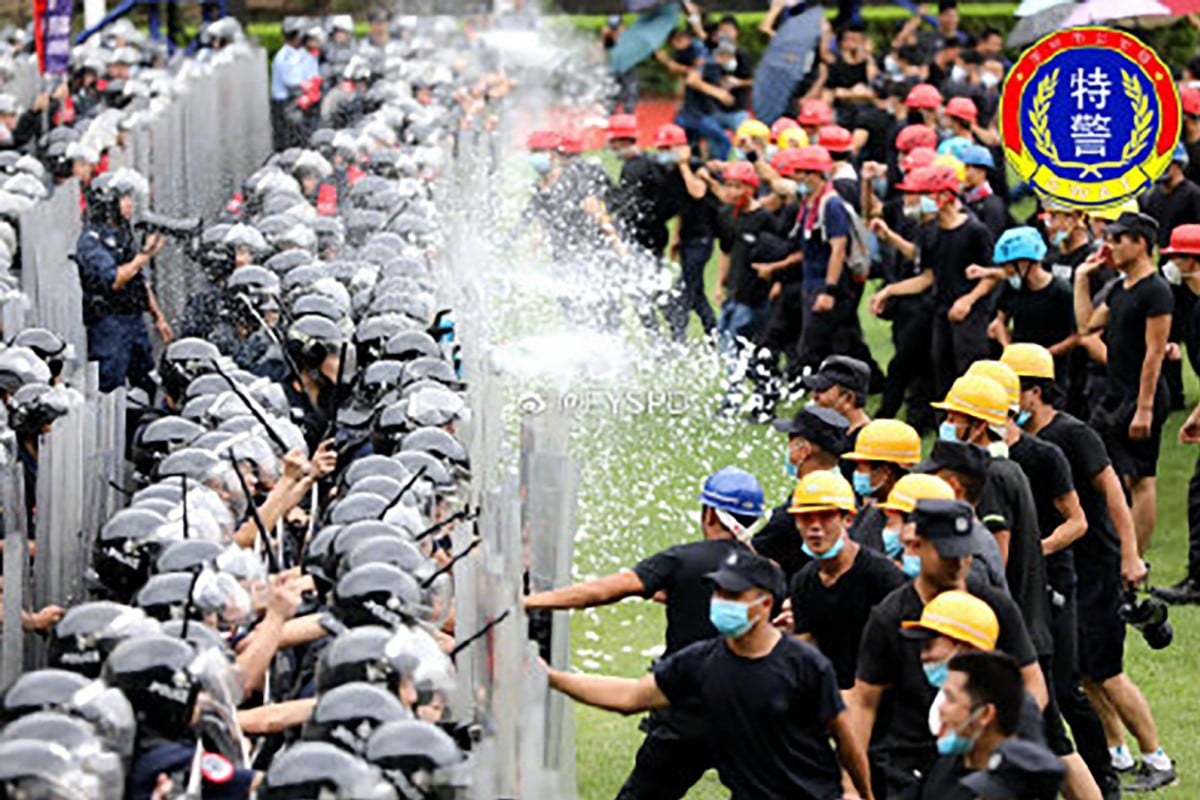
Armed police in the southern Chinese city of Zhuhai held a massive anti-terror drill at its end of the Hong Kong-Zhuhai-Macau Bridge on Friday morning as part of its preparations for the 20th anniversary of the handover of Macau, when President Xi Jinping is expected to visit the city.
More than 1,000 police officers and 80 vehicles were involved in the exercise, amid
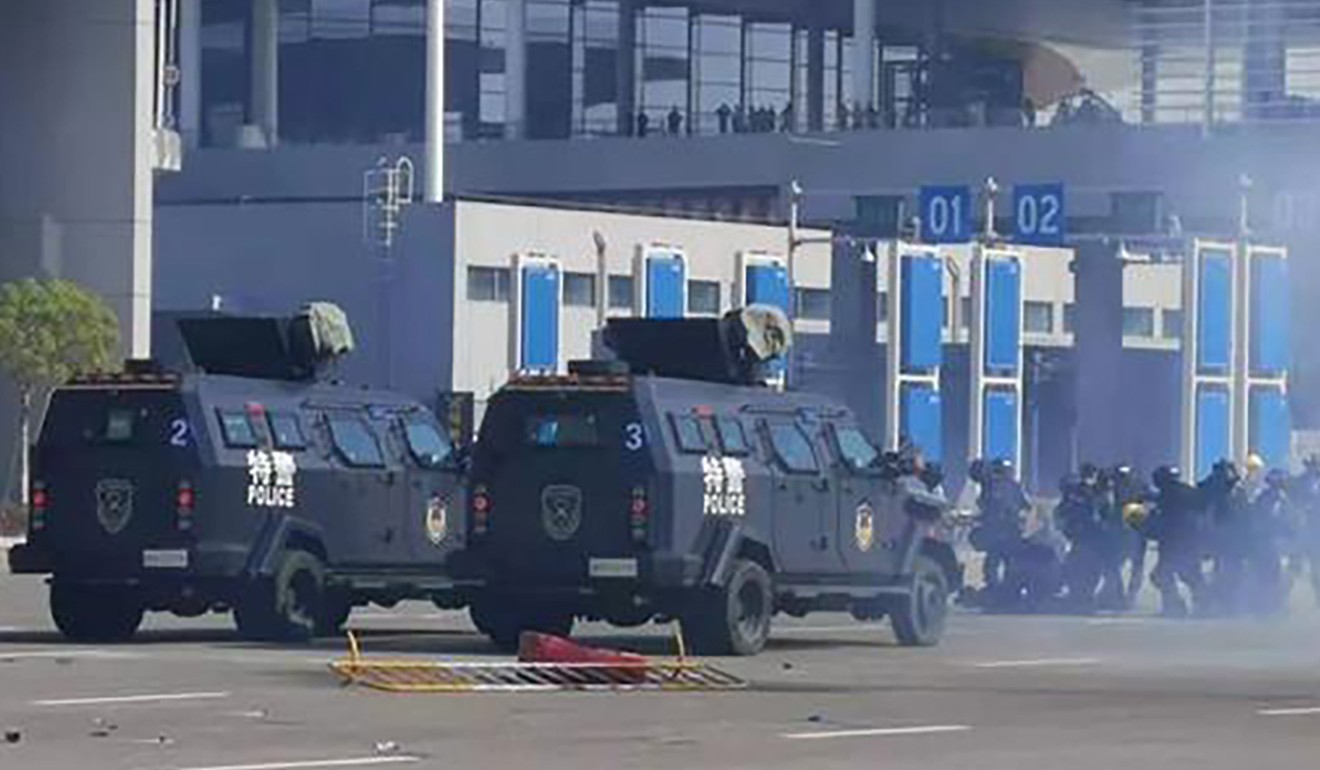
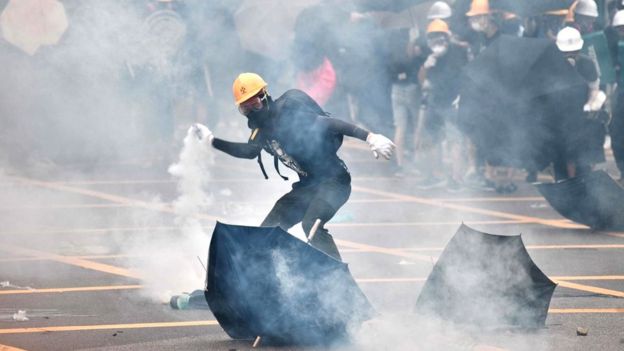
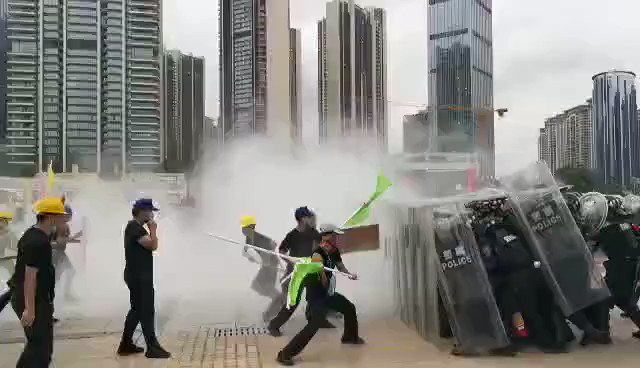
Photos circulated online showed officers in body armour, helmets and shields firing tear gas as they confronted a group of people carrying sticks and wearing black shirts and yellow helmets – attire associated with the protesters in Hong Kong, 60km (37 miles) away from Macau.
The drill was held three weeks before the 20th anniversary of Macau’s return to Chinese administration under the “one country, two systems” policy on December 20.
Police trucks and riot officers during Friday’s exercise at the Zhuhai end of the Hong Kong-Zhuhai-Macau Bridge. Photo: Toutiao
Security is expected to be tightened when Xi visits the city, in response to the violent clashes in Hong Kong over the past six months, which Beijing has repeatedly blamed on radical protesters.
The former Portuguese colony is connected to Hong Kong and its neighbouring city of Zhuhai, Guangdong province, by the world’s longest sea crossing bridge. It takes about an hour to drive from Hong Kong to Macau via the bridge.
Guo Yonghang, Zhuhai party chief, urged the local police to stay loyal to the party. “[Police] should be loyal and fulfil duty and mission to create a peaceful and stable political and social environment for the construction of the Guangdong-Hong Kong-Macau Greater Bay Area and the celebration of the 20th anniversary of Macau’s reunification to the motherland,” he said.
Macau was returned to China two years after Hong Kong and celebrations of its success under one country, two systems could be overshadowed by its neighbour’s anti-government protests which stemmed from opposition to proposed extradition legislation and have escalated into violence on the streets and in university campuses.
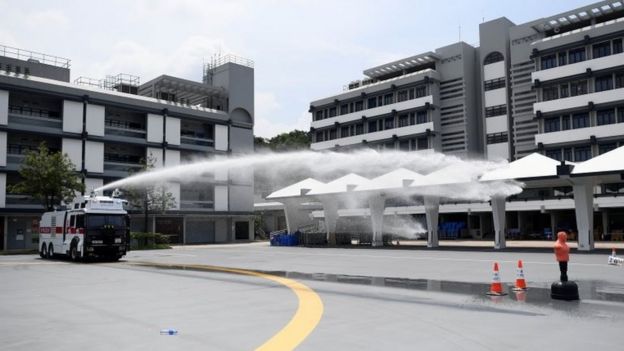
In August, two months after more than 2 million people in Hong Kong took to the streets to protest the now-suspended extradition bill, police in Shenzhen held at least three drills featuring anti-riot exercises involving tear gas, armoured vehicles and water cannon.
Hong Kong’s rule of law has been pushed to the “brink of total collapse” after more than five months of protests, police have warned.
The warning came as protesters clashed with police across the city on Tuesday.
At the Chinese University of Hong Kong, police fired tear gas and rubber bullets at protesters who built barricades on the campus.
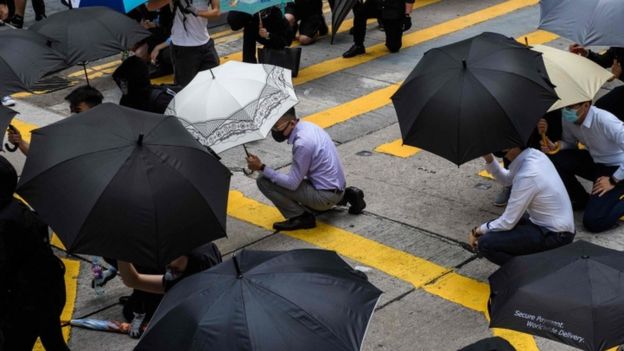
Earlier in the day, around 1,000 protesters rallied in central Hong Kong during the lunch hour blocking roads
Protesters, wearing office clothes, were seen chanting: “Fight for freedom, stand with Hong Kong!”
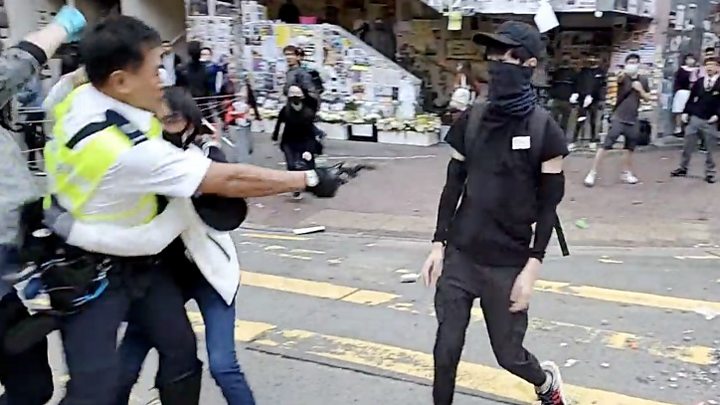
The demonstrations come just a day after the territory saw a marked escalation in violence, with police shooting one activist in the torso. A pro-Beijing supporter was set on fire by anti-government protesters.
The protests started in June against a now-withdrawn plan to allow extradition to mainland China, but have since morphed into wider demonstrations, with activists demanding greater democracy and police accountability in Hong Kong.
On Tuesday afternoon, police spokesman Kong Wing-cheung hit out at the protesters, saying they had “countless examples of rioters using random and indiscriminate violence against innocent” people.
“Hong Kong’s rule of law has been pushed to the brink of total collapse as masked rioters recklessly escalate their violence under the hope that they can get away with it,” he told reporters, adding that Monday’s attack on the pro-Beijing supporter was being investigated as attempted murder.
Image copyright AFPImage caption Protesters and office workers were seen blocking roads in Hong Kong’s financial district
Speaking at the same conference, Supt Li Kwai-wah defended the officer’s decision to shoot the protester on Monday.
“We found out that our colleague did not only face threat from one person, instead it was a group of people with an organised plan attempting to steal the gun,” he said.
“In a situation like this, we believe our police are reacting according to the guideline, to protect themselves as well as the people around them.”
Both the protester and the pro-Beijing supporter remain in hospital, with the latter in a critical condition.
What happened on Tuesday?
Clashes erupted at the Chinese University of Hong Kong, with police firing tear gas to disperse students, while at City University there was a standoff between students and riot police which continued into the evening.
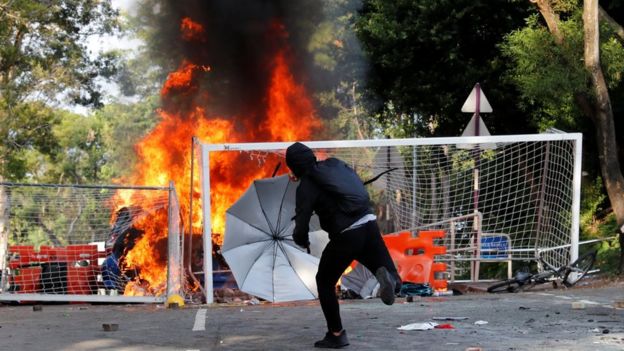
Police continued to use tear gas to try to disperse the protesters who responded with bricks and petrol bombs. Hundreds of protesters remain at the Chinese University of Hong Kong.
Image copyright REUTERSImage caption Students at Hong Kong’s Chinese University fought with police throughout the day
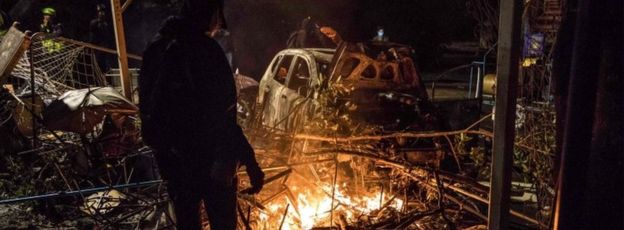
Students built roadblocks on streets in and around City University campus to stop police from entering. At one stage, a van used as part of a street barricade was set on fire.
Students at Hong Kong Polytechnic also tried to disrupt traffic near their campus.
In the morning, suspended railway services and road closures had already led to long traffic jams in the early rush hour. At noon, protesters moved into the city’s central business district for a flash mob protest.
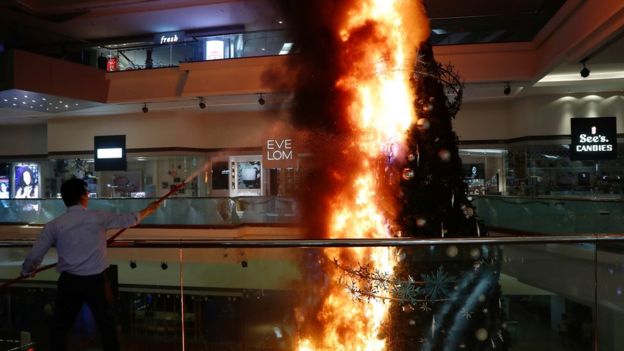
Image copyright REUTERSImage caption At Festival Walk shopping mall, a Christmas tree was set on fire
Protests continued to intensify throughout the day. A Christmas tree inside Festival Walk shopping mall was set on fire by protesters while others were seen smashing a glass railing with hammers.
Train stations were closed across the city.
Media caption This Hong Kong protester’s shooting was livestreamed on Facebook
Eight universities have announced they will suspend classes on Wednesday.
Monday’s protests saw 260 people arrested bringing the number to more than 3,000 since the protests began in June.
Students swear they will not surrender
Grace Tsoi, BBC World Service, at the Chinese University of Hong Kong
Image copyright AFPImage caption Hundreds of protesters remain at the university
The ground was strewn with bricks. The air was filled with the smell of tear gas. Fire was raging on campus. Hundreds of protesters, most of them clad in black, formed human chains to pass bricks and petrol bombs to the front line.
One of the best universities in Hong Kong has turned into a battlefield after another day of intense clashes between students, who have been at the forefront of anti-government protests, and police.
The Chinese University students have been putting up resistance since the morning. On Monday, police seemed to change strategy by deploying forces to campuses. Students told me they should not be allowed there.
The university’s management has tried to deescalate the situation. Vice-chancellor Rocky Tuan was also tear gassed as he was negotiating with police.
Dozens of students have been injured, including at least one hit in the eye by a projectile. The night is young and students swear they will not surrender.
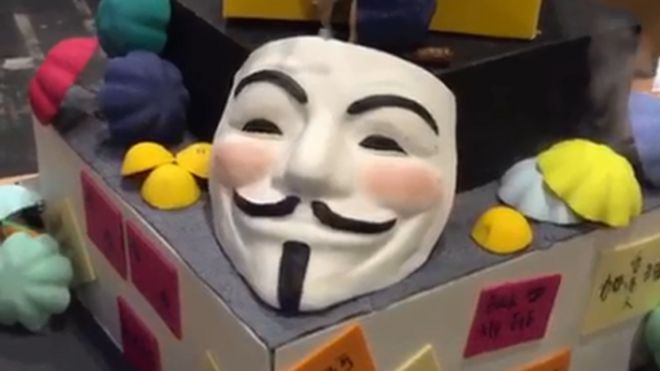
Image copyright 3RD SPACEImage caption The Guy Fawkes mask has been worn by many protesters during anti government rallies
A Hong Kong protest-themed cake has been disqualified from a cake decorating competition in the UK, in a move that has been referred to as “political censorship”.
It featured protest symbols including umbrellas and a Guy Fawkes mask.
The company behind the cake told the BBC it believed it was pulled after complaints from Chinese competitors.
But the Birmingham competition organisers said it was because one element of the cake was oversized.
Anti-government protests have been taking place in Hong Kong for five months.
They first erupted in June, triggered by a controversial bill that would have allowed extradition to mainland China.
The bill has been withdrawn but the protests have continued, having evolved into a broader revolt against the way Hong Kong is administered by Beijing.
‘Obvious it was an excuse’
The cake was one of many displayed this year at the Cake International competition, held in the city of Birmingham from 1- 3 November.
It draws competitors from all over the world.
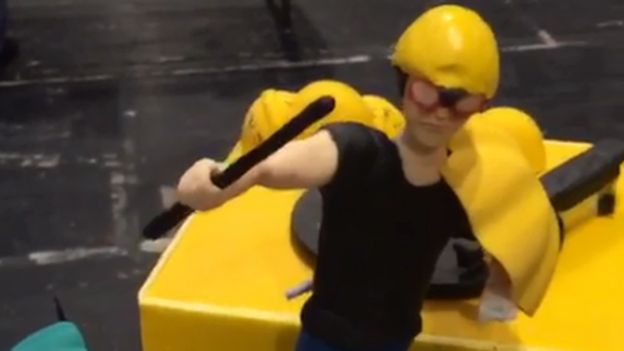
The entry by a baker from the 3rd Space cafe in Hong Kong included fake tear gas and a figure made to look like a typical protester clad in black and wearing a hard hat.
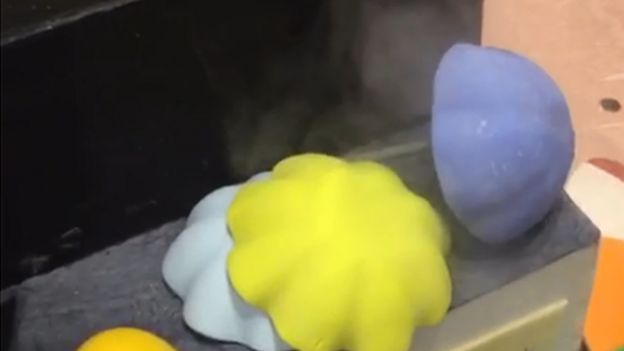
Image copyright 3RD SPACEImage caption A man in a yellow hard hat, carrying an umbrella, was one element of the cakeImage copyright 3RD SPACEImage caption The cake also had umbrellas which had fake “tear gas” coming out of them
It was inspired by the “streets [of] Hong Kong”, the spokesperson for the cafe told the BBC.
“The design was simply an expression of what is happening at the moment in Hong Kong,” the spokesperson added.
A music box placed inside the cake also played “Glory to Hong Kong”- a tune which has been adopted as the unofficial anthem of the protests – on loop.
But according to 3rd Space, Cake International decided to take action after it received numerous “complaints from Chinese candidates”, who said the cake featured “offensive content… promoting [the] independence of Hong Kong”.
Cake International first decided to turn the music off, before later sending the baker an email telling them that the cake would be “removed”, said 3rd space.
Dozens of people later took to Cake International’s social media platforms complaining, accusing the organisers of pandering to “censorship”.
The protests have presented a serious challenge to China’s leaders, who have painted the demonstrators as dangerous separatists and accused foreign powers of backing them.
Image copyright EPAImage caption China is getting dressed up for its big birthday party
One week from now, the People’s Republic of China will mark its 70th anniversary with celebrations on a scale not seen in China in decades.
Beijing is pulling out all stops and 1 October will be flush with fireworks, fanfare and a huge military parade.
To ensure it goes smoothly, authorities have been ramping up security in the capital – and online – for weeks.
But with yet more protests expected in Hong Kong, the territory might just rain on China’s parade.
What is it all about?
The birth of modern China was declared on 1 October 1949, after the communists under Mao Zedong won the civil war that followed World War Two.
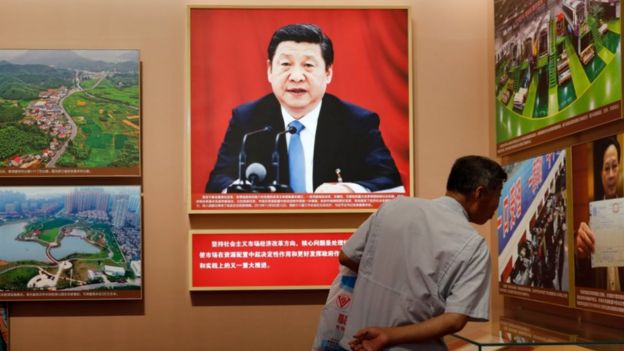
Image copyright EPAImage caption Exhibitions are highlighting the achievements of the Communist Party
The date is marked every year, but celebrations for this 70th anniversary are expected to eclipse previous events.
It’s the first big anniversary since China has emerged as a global power. While 10 years ago China was a superpower in the making, it is now the world’s second largest economy, almost eye-to-eye with the United States.
What to expect?
The main celebrations will take place in the capital, Beijing, where there will be a grand military parade with “advanced weapons” on display, followed by a “mass pageant”.
President Xi Jinping – considered the most powerful Chinese leader since Mao – will address the Chinese people. His speech is expected to celebrate China’s rapid growth and which will be closely watched for any indication of the country’s direction in the coming years.
The president will also hand out honours for contributions to the country and in the evening there will be a grand gala and fireworks show.
All official Chinese celebrations are carefully choreographed and the success of this one is particularly important to the government.
The Dos and Don’ts
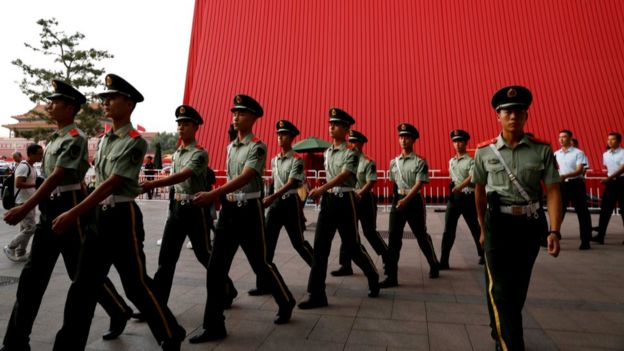
The parade – open to invited guests only – will take place around Tiananmen Square in central Beijing. The surrounding area will be practically under lockdown, and in fact has been so several times already.
During rehearsals leading up to the big day, hotels near Tiananmen Square told guests that for several hours each day, no-one would be able to leave the hotel or return to it should they be out, leading to much travel chaos and rebookings.
Many shops and restaurants in the centre are also closed or have shortened hours and some subway stations are temporarily shut.
Image copyright EPAImage caption Security is tight ensure the party goes to plan
Trains to Beijing are running numerous safety checks on their passengers and vehicles going into the city are also being tightly watched.
On the big day itself, areas around Tiananmen Square will be blocked and guarded. Local residents will need to identify themselves if they want to pass.
To ensure the sun will shine brightly on the celebration in notoriously polluted Beijing, several coal plants and construction sites in and around the city have been ordered to stop work for the duration.
There’s also a ban on any low-flying aerial vehicles in place. That means anything from light aircraft to drones, balloons and even racing pigeons.
Censorship galore
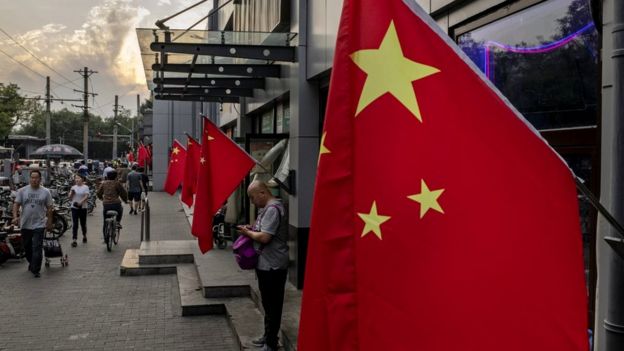
Across much of the city centre, there are national flags set up at every door. Voluntary inspectors are monitoring the streets and locals have told the BBC they’re being questioned after having even brief conversations with foreigners
One person said she was asked by an inspector: “Who were those foreigners? Why were they here?”
The tight control naturally extends online as well. Popular social media platform Weibo said it was deleting content that “distorts” or “insults” the country’s history ahead of the anniversary.
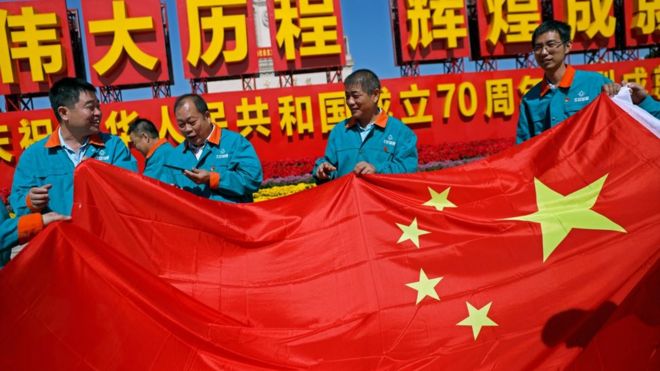
Image copyright GETTY IMAGESImage caption Every house and every shop is sporting a national flag
Chinese journalists are always expected to toe the party line anyway, but starting in October they will have to pass an extra test to prove they are versed particularly in Xi Jinping’s teachings, officially called Xi Jinping Thought on Socialism with Chinese Characteristics, which has been written into the constitution.
Whether or not they pass the exam will then determine whether they’ll be accredited as journalists.
“The fundamental point with this ‘training’ and indoctrination process isn’t so much about the content,” David Bandurski of China Media Watch told the BBC.
“It is about reinforcing the message and understanding among journalists that they work, first and foremost, for the Chinese Communist Party, and serve its agenda.”
So not only will the events be choreographed – the domestic coverage of them will also be tightly guarded.
What about Hong Kong?
Despite Beijing’s determination to let its achievements shine on 1 October, there’s a good chance Hong Kong will pull focus.
Anti-Beijing protests always take place in Hong Kong on China’s National Day, but this time, the activists know that the world is watching.
Anti-government protests have rocked the city for months and the situation shows no sign of dying down.
Clashes between police and activists have been becoming increasingly violent, with police using tear gas and activists storming parliament.
Image copyright AFPImage caption The protests have often escalated into violent clashes
That means two things for 1 October: official celebrations in the territory are being toned down to avoid clashes – the annual fireworks display has been cancelled – while at the same time, activists are planning to step up their protests.
On Sunday 29 September, a “Global Anti Totalitarianism March” is scheduled to take place at various locations around the world in support of Hong Kong.
On 1 October itself, a march in central Hong Kong is planned with everyone asked to wear black.
If the past weeks’ demonstrations are anything to go by, the smiles and celebrations in Beijing will be competing for media space with pictures of tear gas and angry young protesters in Hong Kong.
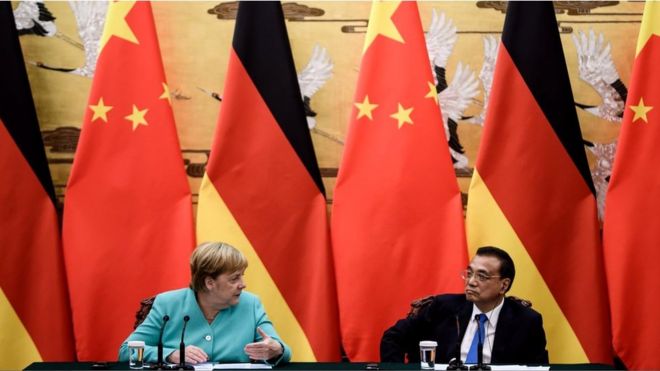
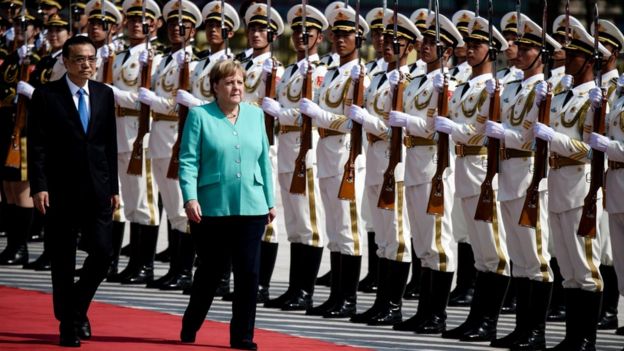
Image copyright EPAImage caption Ms Merkel calls for dialogue while Mr Li says China can handle its own matters
China’s Premier Li Keqiang has said Beijing supports the Hong Kong government “to end the violence and chaos”.
He is the most senior Chinese official to comment on the unrest which has rocked Hong Kong for months.
His comments came during a joint press conference with German Chancellor Angela Merkel in Beijing.
Hong Kong has seen months of often-violent protests calling for democracy and less influence from China.
The protests were sparked by changes to a law that would allow extradition to mainland China, but have since widened to include calls for an independent inquiry into police brutality and demands for greater democracy.
Image copyright EPAImage caption Hong Kong activists hope for Western support
Instead, protests continued on Friday evening, when clashes erupted between police and the demonstrators outside a subway station on the Kowloon peninsula.
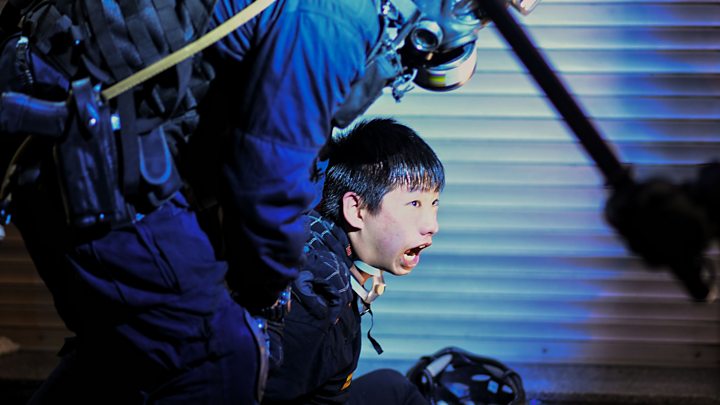
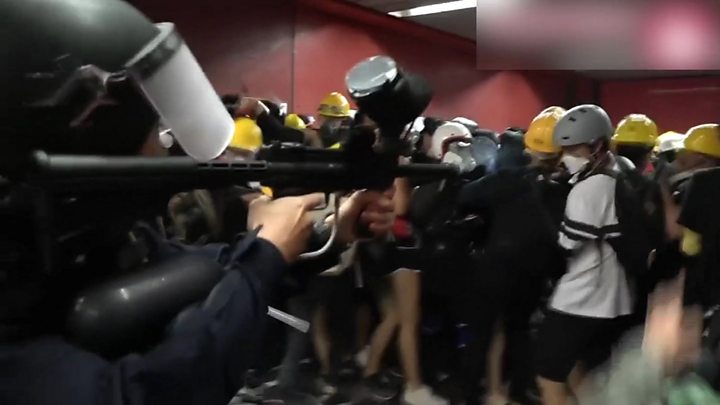
Riot police fired both tear gas and rubber bullets at protesters before clearing the nearby streets as the crowd of protesters was forced to retreat.
What did the Chinese premier say?
In August, China had likened to protests to terrorism, warning activists not to “underestimate the firm resolve” of the Beijing government.
Li Keqiang, China’s second highest-ranking leader, told reporters on Friday: “The Chinese government unswervingly safeguards ‘one country, two systems’ and ‘Hong Kong people govern Hong Kong people’.”
He said China backed Hong Kong “to end the violence and chaos in accordance with the law, to return to order, which is to safeguard Hong Kong’s long-term prosperity and stability”.
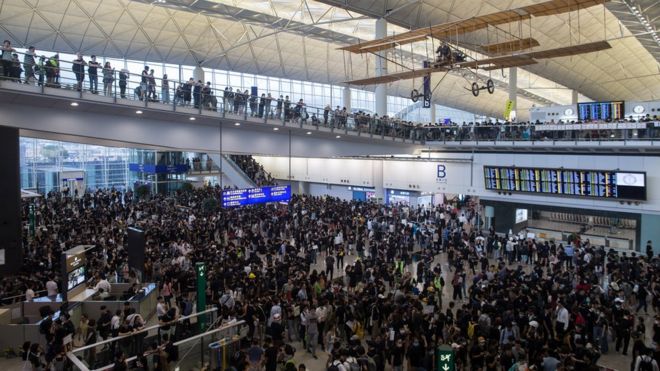
Image copyright EPAImage caption Officials say about 5,000 gathered for the fourth day of protests at the airport
Hong Kong International Airport cancelled all departures on Monday, as thousands of anti-government protesters occupied and caused disruption.
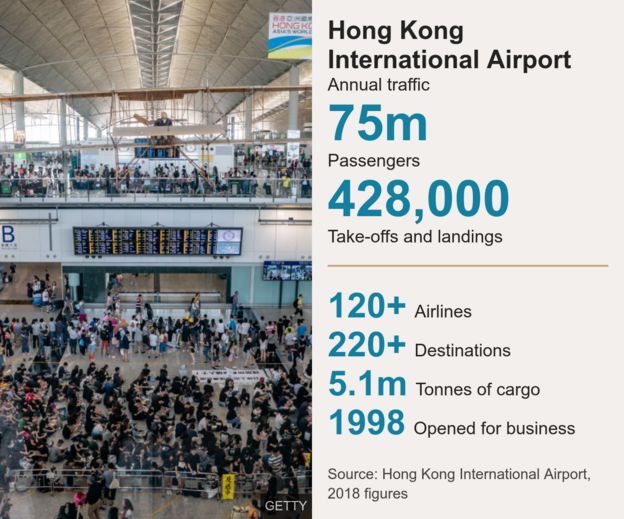
Passengers have been told not to travel to the airport, which is one of the world’s busiest transport hubs.
In a statement, officials blamed “seriously disrupted” operations.
Many of those protesting are critical of the actions of police, who on Sunday were filmed firing tear gas and rubber bullets at close range.
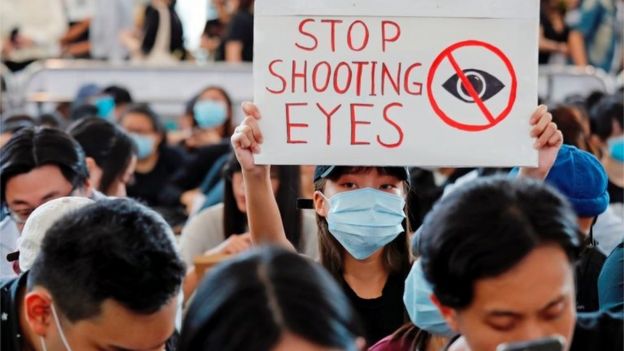
Some protesters wore bandages over their eyes in response to images of a woman bleeding heavily from her eye on Sunday, having reportedly been shot by a police projectile.
In a statement on Monday afternoon, Hong Kong’s Airport Authority said they were cancelling all flights that were not yet checked in.
More than 160 flights scheduled to leave after 18:00 local time (10:00 GMT) will now not depart.
Arrivals already heading into Hong Kong will still be allowed to land, but other scheduled flights have been cancelled.
Officials are now working to reopen the airport by 06:00 on Tuesday, a statement said.
Some passengers expressed annoyance at the disruption. “It’s very frustrating and scary for some people,” one man from Pakistan told the BBC. “We’ll just have to wait for our next flight.”
Helena Morgan, from the UK, said she was set to return to the UK to get her exam results on Thursday. “I’m hoping we get back for them and we’re not on a flight,” she said.
But others were more understanding of the protests. “I was expecting something, given all the news,” one arrival, Gurinda Singh, told Reuters news agency.
As rumours spread that police plan to move in on protesters on Monday evening, thousands opted to leave on foot. There are large backlogs for transport back into the centre, local reports say.
The BBC’s Stephen McDonell, who is at the scene, says the airport has effectively shut down while authorities work out how to deal with the crisis.
Hong Kong’s mass demonstrations and unrest show no sign of abating, more than two months after they were sparked by a controversial extradition bill.
Beijing officials have strongly condemned Sunday’s violence and linked violent protesters to “terrorism”.
Image copyright REUTERSImage caption Many of those who gathered carried signs condemning police conduct
What happened on Sunday?
On Sunday afternoon, a peaceful rally in the city’s Victoria Park led to clashes when protesters moved out of the area and marched along a major road despite a police ban.
There were confrontations in several central districts and police used rubber bullets in an attempt to disperse the demonstrators.
In the bustling central Wan Chai district, petrol bombs and bricks were thrown at police, who responded by charging at protesters.
A number of people, including a police officer, were injured in the clashes.
Videos on social media also showed officers storming enclosed railway stations and firing tear gas.
Footage inside another station showed officers firing what appeared to be rubber bullets at close range and several police officers beating people with batons.
Media caption Violence erupts in HK train stations
Local media outlets reported that suspected undercover police officers had dressed-up as protesters to make surprise arrests.
While protests in the city have turned increasingly violent, there were no reports of arrests during the three previous days of the airport sit-in.
What has the reaction been?
On Monday the Chinese authorities, who have not yet physically intervened to quell the unrest, used their strongest language yet to condemn violent protesters.
“Hong Kong’s radical demonstrators have repeatedly used extremely dangerous tools to attack police officers, which already constitutes a serious violent crime, and also shows the first signs of terrorism emerging,” Yang Guang, a spokesman for the Hong Kong and Macau Affairs Office (HKMAO), said at a press briefing.
“This wantonly tramples on Hong Kong’s rule of law and social order.”
Demonstrations started in June in opposition to a proposed extradition bill, which would have allowed suspected criminals to be sent to mainland China for trial.
Critics said it would undermine Hong Kong’s legal freedoms, and could be used to silence political dissidents.
Although the government has now suspended the bill, demonstrators want it to be fully withdrawn.
Their demands have broadened to include calls for an independent inquiry into alleged police brutality, and an amnesty for all arrested protesters.
Hong Kong is part of China but its citizens have more autonomy than those on the mainland.
It has a free press and judicial independence under the so-called “one country, two systems” approach – freedoms which activists fear are being increasingly eroded.
Security forces shown tackling ‘demonstrators’ wearing black shirts
‘Anti-mob’ tactics prepare forces for the 70th anniversary of the People’s Republic
Shenzhen police broadcast live footage of a security exercise involving 12,000 officers rehearsing anti-riot drills. Photo: Weibo
More than 12,000 police officers assembled in Shenzhen in the southern Chinese province of Guangdong on Tuesday for a drill that included anti-riot measures similar to those seen on the streets of Hong Kong.
The drill was part of security preparations for the 70th anniversary of the People’s Republic of China on October 1, Shenzhen police said on the force’s Weibo newsfeed.
“A drill will be held to increase troop morale, practise and prepare for the security of celebrations, [and] maintain national political security and social stability,” police said.
China mobilises 190,000 police officers to prepare for 70th anniversary celebrations
In live videos of the police drills shown on the Yizhibo network, officers in body armour, helmets and shields confronted groups of people in black shirts and red or yellow construction safety helmets – similar to those worn by Hong Kong protesters – who were holding flags, banners, batons and wooden boards.
Global Times
✔@globaltimesnews
Shenzhen #police drill attracted unusual attention as it features scenarios that resemble the ongoing riots in #HongKong. #香港http://bit.ly/2YobnJc (Video: Shenzhen News Radio)
One of the banners read “return my hard-earned money” – a slogan often used by migrant workers in protest against unpaid salaries.
“The practice is complete with mature anti-mob tactics. The police forces can present an anti-mob formation, which is flexible, suitable for different situations, with accurate aim and effective control,” a narrator said during the live broadcast.
As the drill escalated and more “rioters” were deployed, police fired tear gas and smoke covered the training ground.
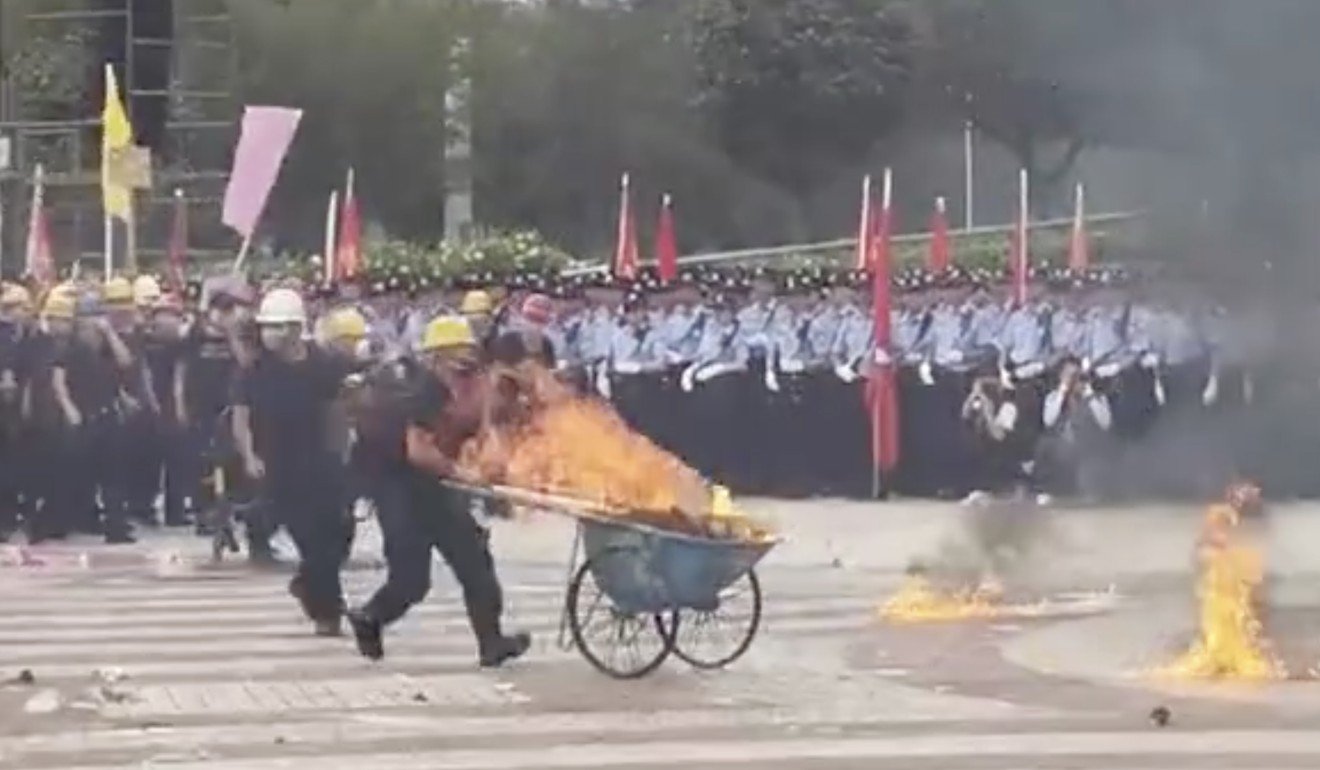
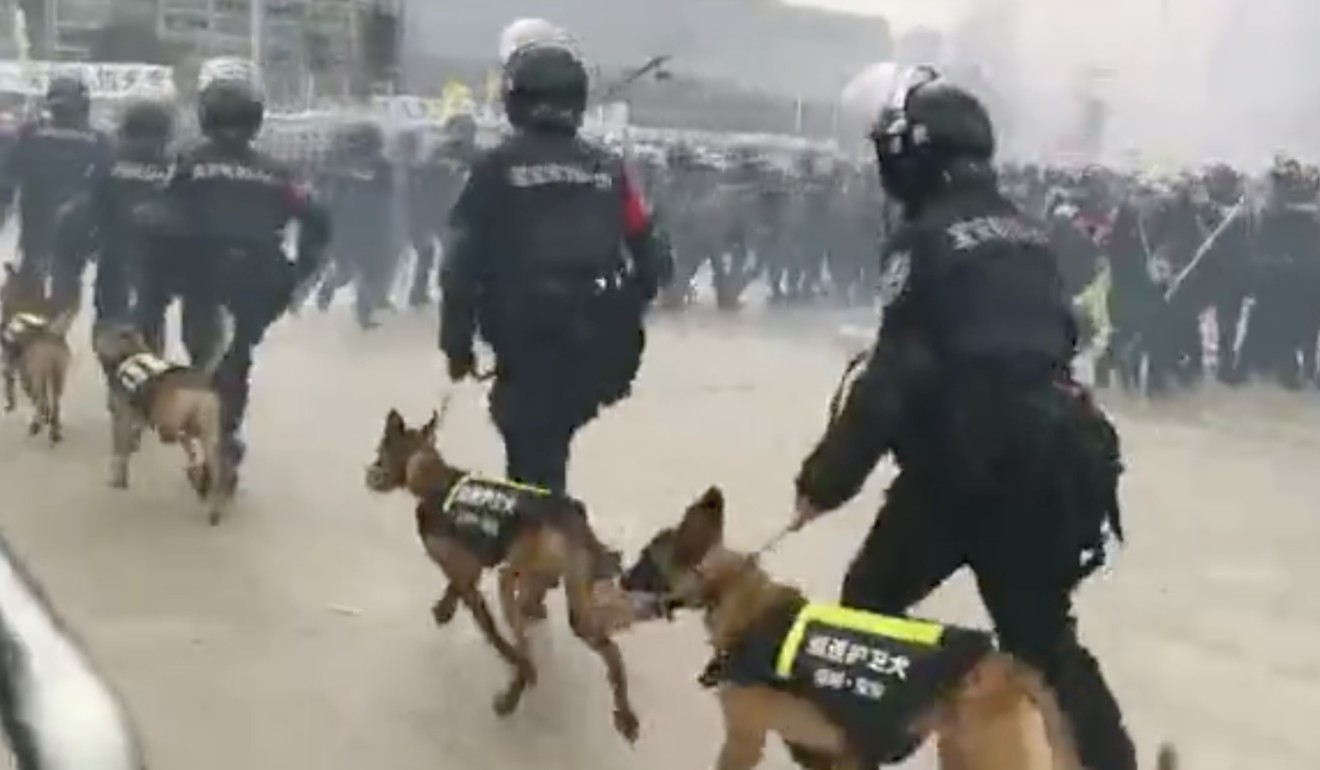
A few minutes later, the rioters fired home-made gas bombs then set bogies alight and drove them at the police lines. The officers changed formations and pressed the rioters, making arrests. Police handlers and their dogs were also on the scene.
A blazing bogie is driven towards police lines during Shenzhen police’s anti-riot exercise. Photo: Weibo
Other drills included anti-smuggling and search-and-rescue exercises involving personnel from the People’s Liberation Army.
The drill was presented as preparation for the 70th anniversary celebrations but it came amid continued violence in the streets of Hong Kong and two incidents of the Chinese national flag being thrown into Victoria Harbour.
Hong Kong has been engulfed in two months of turmoil stemming from opposition to the now-suspended extradition bill.
Police handlers and their dogs were deployed against people dressed like Hong Kong demonstrators. Photo: Weibo
“Is this hinting at Hong Kong?” a commenter on the Shenzhen police Weibo thread asked.
“We are doing drills today, and they can enter into real practice in Hong Kong in the future. We can send thousands of anti-mob squads over and strike hard at the radical traitors, those Hong Kong independence supporters,” another user said.
Since protests escalated in Hong Kong, Beijing has reiterated its “unflagging support” for embattled Hong Kong Chief Executive Carrie Lam Cheng Yuet-ngor and her administration to take lawful action to restore order, and warned that the city was entering “a most dangerous phase” with violence on the streets.




 CHINDIA ALERT: You'll be living in their world, very soon