Chindia Alert: You’ll be Living in their World Very Soon
aims to alert you to the threats and opportunities that China and India present. China and India require serious attention; case of ‘hidden dragon and crouching tiger’.
Without this attention, governments, businesses and, indeed, individuals may find themselves at a great disadvantage sooner rather than later.
The POSTs (front webpages) are mainly 'cuttings' from reliable sources, updated continuously.
The PAGEs (see Tabs, above) attempt to make the information more meaningful by putting some structure to the information we have researched and assembled since 2006.
BEIJING (Reuters) – China will exempt Tesla Inc’s (TSLA.O) electric vehicles (EV) from purchase tax, the Ministry of Industry and Information Technology (MIIT) said on its website.
China currently levies a 10% purchase tax on the sale of each vehicle. The move could reduce the cost of buying a Tesla car by up to 99,000 yuan ($13,957.82), according to a post on Tesla’s social media WeChat account.
Tesla’s pre-market share price jumped more than 5% after the announcement.
Sixteen variants – all the Tesla models sold in the country – are listed on the document issued by MIIT, including Model S, X and 3. No reason was given for the decision to exclude the cars from the tax.
The U.S. EV maker is building a plant in Shanghai, the firm’s first overseas factory.
It is due to start production by the end of the year and Tesla has said it should be able to build 3,000 Model 3 vehicles a week in its initial phases.
The plant is slated to have annual output capacity of 250,000 vehicles after production of the Model Y is added.
Chinese and US researchers take inspiration from the hardy insect to design a robot that moves fast and is hard to squash
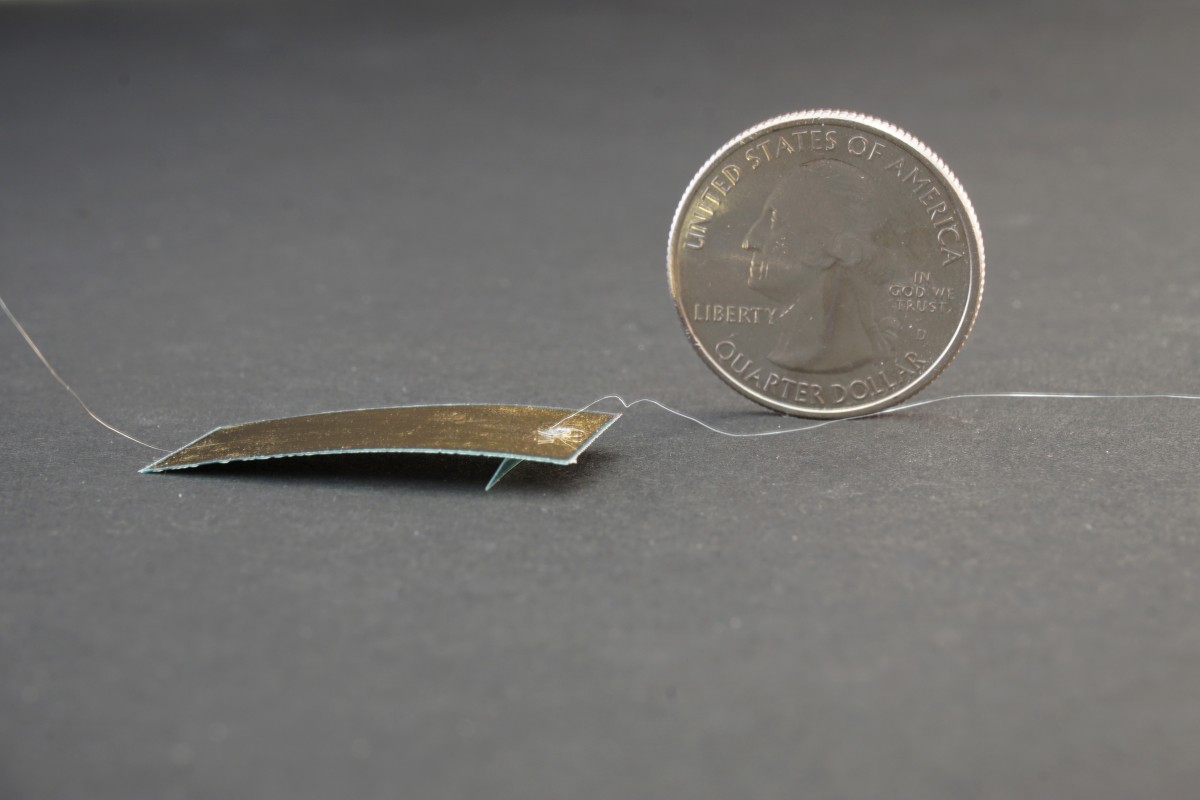
A prototype soft robot, which is about the size of a postage stamp, was developed by a group of researchers from China and the US. Its design was inspired by the capabilities of the hardy cockroach. Photo: Handout
Cockroaches are near-indestructible little creatures. These hardy insects have existed since at least 320 million years ago, outliving dinosaurs. A cockroach can also carry loads of up to 900 times its body weight, shrink to a quarter of its height to fit into small crevices and live for a week without its head.
Inspired by the qualities of this humble bug, a group of researchers from China and the United States have created a prototype of a fast-moving and near-indestructible miniature robot, which could potentially replace sniffer dogs in detecting people trapped in a rubble after a major earthquake or similar disastrous event.
Researchers from China’s Tsinghua University and the University of California, Berkeley, published their study on so-called soft robots in the academic journal Science Robotics last week.
“Although the cockroach is an annoying pest, it has certain interesting features, including the ability to move fast in a narrow space and being hard to squash,” said Zhang Min, an assistant professor at Tsinghua University’s Graduate School in Shenzhen and one of the study’s authors, in an email interview. “These features inspired us to develop a fast-moving and robust soft robot.”
Their work on soft robots was conducted under the Tsinghua-Berkeley Shenzhen Institute partnership, an initiative to collaborate with global researchers on fields such as environmental science and new energy technology.
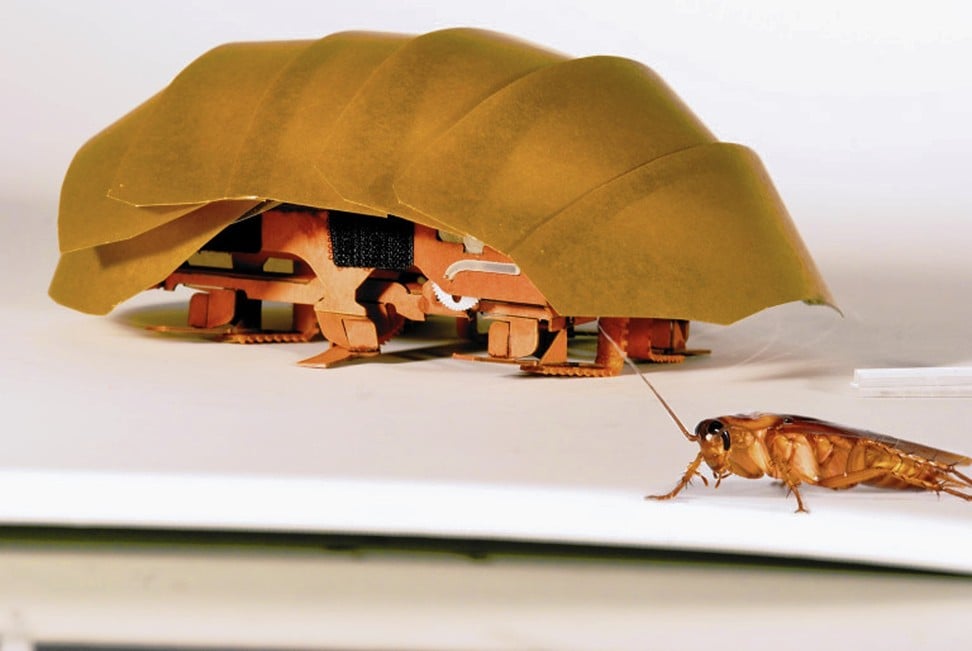
Scientists have long taken inspiration from insects, including cockroaches, for engineering robots. Researchers from UC Berkeley previously developed a palm-sized, roach-like robot – about 20 times the size of the bug – for rescue use in 2017.
By comparison, the new prototype achieved breakthroughs in terms of size and more importantly, the speed and robustness.
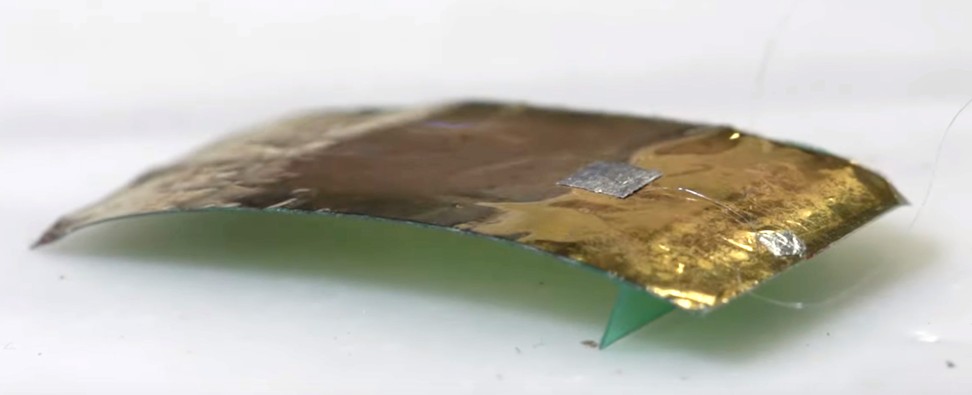
The latest robot, which is about the size of a postage stamp and weighs less than one-tenth of a gram, is composed of a flexible piezoelectric thin film and a polymer skeleton with two legs.
This screenshot from a video provides a closer look at the prototype soft robot developed by a group of researchers from China and the US. Its features were inspired by the sturdy qualities of the humble cockroach. Photo: YouTube
Despite its petite frame, this prototype showed the fastest speed among insect-scale robots in a similar weight range, as well as “ultra-robustness”, according to Lin Liwei, a professor of mechanical engineering at UC Berkeley who directed the research, in a separate email interview.
It can move as fast as a cockroach with speeds of up to 20 body lengths per second. It also continued to move after it was stepped on by an adult human weighting 60 kilograms, which is about 1 million times heavier than the robot, according to the study.
In 2017, researchers of the PolyPEDAL Lab at the University of California, Berkeley, designed a compressible robot, CRAM, that was about 20 times the size of a real cockroach. Photo: Handout
Those features sets up the robot for potential application in disaster relief, a field in which its size, agility and resilience would be invaluable to help detect survivors trapped beneath the rubble in catastrophes, such as major earthquakes.
Earthquakes have caused much devastation in China, a seismically active country with the world’s biggest population. For example, about 87,000 people died and more than 370,000 were injured when a magnitude-8 earthquake struck Wenchuan, a county in southwestern China’s Sichuan province, in 2008.
“The key innovation is the soft materials and structures used in the robot,” Lin said. “If the robot is too soft, it won’t be able to move fast. If the robot is too stiff, it can’t withstand the force of human weight.” The study detailed how the right combination of soft materials and structure enabled the robot to operate efficiently.
While the robot is currently attached to thin cables for power, the researchers are working to integrate a battery and control circuit to get rid of the existing wire in its design, helping expand its use in other applications.
“We want to make the robot carry small sensors, like a gas sensor, to provide it with more functions,” said Zhong Junwen, a researcher at UC Berkeley and one of the authors of the study, in a separate email interview. “With such a sensor, the robot can detect harmful gas leakage.”
Sun Ling became a cyber star in China after she responded to an online question: how can you get an overseas education if you are dirt poor?
‘I just put my story out there to show there is a possibility in your life even if you have a low starting point,’ the 29-year-old says
Sun Ling works as a contract software engineer at Google in New York. Photo: Sun Ling
To get where she is today, Sun Ling has beaten very long odds.
Born in a rural hamlet in central China’s Hunan province, Sun shot to Chinese social media stardom for her rags-to-relative-comfort career trajectory. Her story begins in a household of such modest means that her mother had to sell blood to make ends meet and a primary school education interrupted by the need for her hands in the family’s fields.
She has no fancy college degree, having gone to work on the assembly line at a Shenzhen factory directly from high school.
Yet today, the 29-year-old works as a contract software engineer at Google in New York, coding on workdays and playing frisbee on weekends, with an annual salary of about US$120,000.
Sun Ling with her parents, brother, niece and nephews in China. Photo: Sun Ling
Sun’s journey from factory worker to high-paid software engineer has garnered Chinese social media headlines such as “the most inspiring story of all times”, and internet users have applauded her as a “positive energy girl”.
But others have not been as flattering, with some questioning the credibility of her story and saying what she has accomplished is almost too difficult to be true amid growing concern about the lack of opportunity and social mobility in China.
“I don’t consider myself a success and I have no intention to become a role model,” Sun told the South China Morning Post on Thursday. “I just put my story out there to show there is a possibility in your life even if you have a low starting point.”
A look inside Google’s new campus outside Silicon Valley
Her story became known in China after she posted an answer on Zhihu, the Chinese version of Quora, responding a question: how can you get an overseas education if you are dirt poor?
In the answer she posted earlier last month, Sun detailed her 10-year journey in making the seemingly impossible possible.
“It is not the orthodox way of studying overseas, just for your reference,” Sun wrote in the post, which has received nearly 35,000 likes on Zhihu. The answer was picked up by other social media; one of her most popular stories, which is circulating on WeChat, has been viewed more than 100,000 times.
Sun said her story was not a textbook “American dream” or “Chinese dream comes true” experience, but rather one driven by the simple motivation to forge a better life.
I just put my story out there to show there is a possibility in your life even if you have a low starting point Sun Ling
When Sun was born in 1990, her parents were farmers in a small village about a 2½-hour drive from Hunan province’s capital city, Changsha. Growing up in a place where a middle school education was considered good enough for a girl, Sun was forced to temporarily drop out of school when she was about 13 to ease the financial burden on her parents, who favoured her brother, the only son in the family.
“I begged and begged till my father allowed me to return to school,” she said. “But to be honest, my strong desire to stay at school at the moment was mainly because farming was too hard. The work got calluses on my hands.”
Sun in her home village in Hunan province in 2013. Photo: Sun Ling
Among her 11 village friends, she was the only one who completed high school. But the education she received at the rural school failed to get her into any college in China. So, like her peers in the village, she went to Shenzhen to become a factory worker.
But the routine of shifts spent examining the quality of batteries bored her. “I have no idea what kind of life I want to live, even today. But I am very certain about the life I don’t want to live,” Sun said.
She quit the factory job after eight months and enrolled in a computer training programme to learn what she regarded as the must-have skills to leave the blue-collar life behind.
That is the thing I like about America: they value what you are able to do more than where you come fromSun Ling
To have enough money to complete the training to become an entry-level software engineer, she worked three part-time jobs, including sending out fliers and waitressing at restaurants, and lived on three credit cards.
After more than a year of training and a debt of 10,000 yuan (US$1,450), in September 2011 she was hired as a software engineer by a Shenzhen company responsible for developing an online payroll system. With her own cubicle, a monthly salary of 4,000 yuan and weekends for herself, the job met all of Sun’s expectation as a “white-collar office lady”.
But the excitement of the new life didn’t last. She started to feel small in a big city where “everyone else is so excellent, with fancy degrees”.
To overcome her educational disadvantage, she signed up for an English training programme and a long-distance programme that allowed her to earn a degree from Shenzhen University. All of this took place while she maintained her software engineering job.
To practise her English, in 2014 she picked up ultimate frisbee, a game where in Shenzhen at the time, most of the players were expats. With a different circle of friends, most of whom had overseas experience, Sun started to dream of a life outside China’s borders.
Sun was born in a rural hamlet in central China’s Hunan province. Photo: Sun Ling
In early 2017, she discovered a master’s programme at Maharishi University of Management in Fairfield, Iowa, which features a controversial “consciousness-based education” system that includes the practice of meditation.
Sun applied and was accepted into the university’s computer science programme.
According to her, its design fit her well as it allowed students to have internships or jobs on a work-study visa after months of attending classes on campus. The rest of the programme could be completed remotely.
After nine months studying on campus and 60 job interviews, Sun received a job offer from EPAM Systems, a vendor for Google, late last year.
Google moving some hardware production out of China
Of her work as a contract software engineer at Google’s Manhattan headquarters, Sun said she was very “lucky” since many of her colleagues had a PhD or studied at top-tier American universities.
“But none of them treat me like I don’t deserve all of this,” she said. “That is the thing I like about America: they value what you are able to do more than where you come from.”
However, her story has not been without controversy in China’s cyber world.
Supporters have sent an increasing number of messages from various online channels, thanking her for an inspiring story and seeking her advice on life decisions. Sceptics claim she just got lucky, and some have accused her of being an advertising tool for Maharishi University of Management.
Chinese family paid US$1.2 million for Yale spot. Why weren’t they charged?
“At first, I got really angry,” Sun said. “I don’t think I deserve all the criticism for simply sharing my real life experience. But then I realised that not everyone has the same attitude in life.”
“I had no resources and I had very few options,” she said. “It is natural that people think it is difficult or even impossible to do. But for me it is actually not that difficult. Just keep learning and keep trying new things step by step, day by day.”
Her journey continues. Sun has been practising English and trying to fit better into her life in the US by doing short video interviews on the streets of New York streets. She has also taken courses about artificial intelligence online.
“My next goal is to become an in-house Google software engineer,” she said. “It won’t be easy. But your life begins at the end of your comfort zone.”
Settlements along the route linking Europe and Asia thrived by providing accommodation and services for countless traders
Formally established during the Han dynasty, it was a 19th-century German geographer who coined the term Silk Road
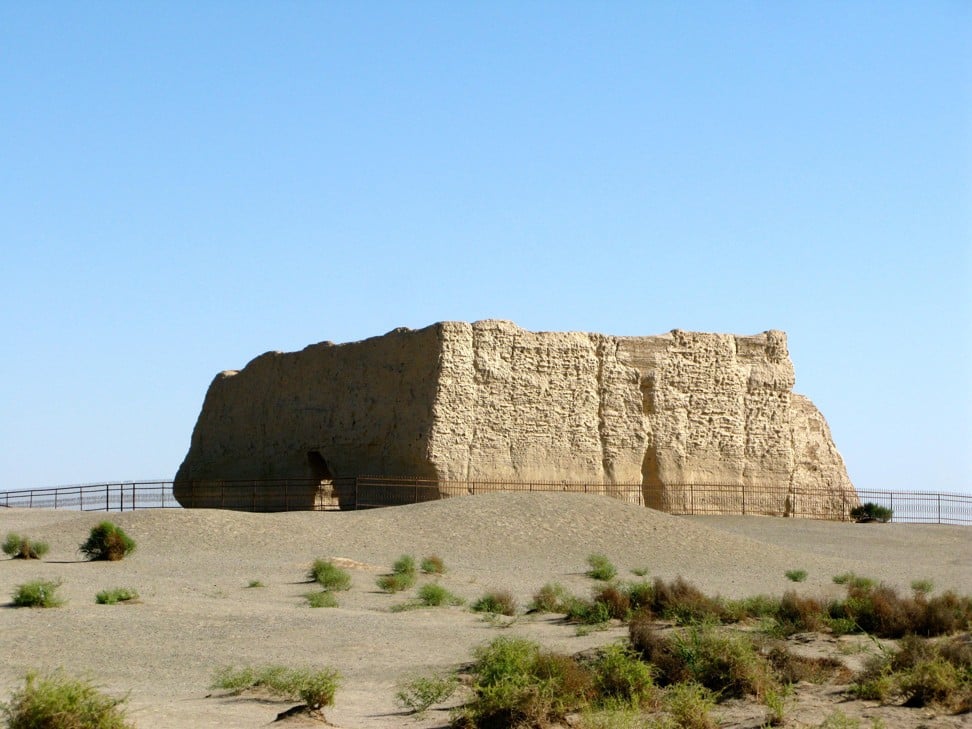
The ruins of a fortified gatehouse and customs post at Yunmenguan Pass, in China’s Gansu province. Photo: Alamy
We have a German geographer, cartographer and explorer to thank for the name of the world’s most famous network of transcontinental trade routes.
Formally established during the Han dynasty, in the first and second centuries BC, it wasn’t until 1877 that Ferdinand von Richthofen coined the term Silk Road (historians increasingly favour the collective term Silk Routes).
The movement of merchandise between China and Europe had been taking place long before the Han arrived on the scene but it was they who employed troops to keep the roads safe from marauding nomads.
Commerce flourished and goods as varied as carpets and camels, glassware and gold, spices and slaves were traded; as were horses, weapons and armour.
Merchants also moved medicines but they were no match for the bubonic plague, which worked its way west along the Silk Road before devastating huge swathes of 14th century Europe.
What follows are some of the countless kingdoms, territories, (modern-day) nations and cities that grew rich on the proceeds of trade, taxes and tolls.
China
A watchtower made of rammed earth at Dunhuang, a desert outpost at the crossroads of two major Silk Road routes in China’s northwestern Gansu province. Photo: Alamy
Marco Polo worked in the Mongol capital, Khanbaliq (today’s Beijing), and was struck by the level of mercantile activity.
The Venetian gap-year pioneer wrote, “Every day more than a thousand carts loaded with silk enter the city, for a great deal of cloth of gold and silk is woven here.”
Light, easy to transport items such as paper and tea provided Silk Road traders with rich pickings, but it was China’s monopoly on the luxurious shimmering fabric that guaranteed huge profits.
So much so that sneaking silk worms out of the empire was punishable by death.
The desert outpost of Dunhuang found itself at the crossroads of two major Silk Road trade arteries, one leading west through the Pamir Mountains to Central Asia and another south to India.
Built into the Great Wall at nearby Yunmenguan are the ruins of a fortified gatehouse and customs post, which controlled the movement of Silk Road caravans.
Also near Dunhuang, the Mogao Caves contain one of the richest collections of Buddhist art treasures anywhere in the world, a legacy of the route to and from the subcontinent.
Afghanistan
Afghanistan’s mountainous terrain was an inescapable part of the Silk Road, until maritime technologies would become the area’s undoing. Photo: Shutterstock
For merchants and middlemen hauling goods through Central Asia, there was no way of bypassing the mountainous lands we know today as Afghanistan.
Evidence of trade can be traced back to long before the Silk Road – locally mined lapis lazuli stones somehow found their way to ancient Egypt, and into Tutankhamun’s funeral mask, created in 1323BC.
Jagged peaks, rough roads in Tajikistan, roof of the world
Besides mercantile exchange, the caravan routes were responsible for the sharing of ideas and Afghanistan was a major beneficiary. Art, philosophy, language, science, food, architecture and technology were all exchanged, along with commercial goods.
In fact, maritime technology would eventually be the area’s undoing. By the 15th century, it had become cheaper and more convenient to transport cargo by sea – a far from ideal development for a landlocked region.
Iran
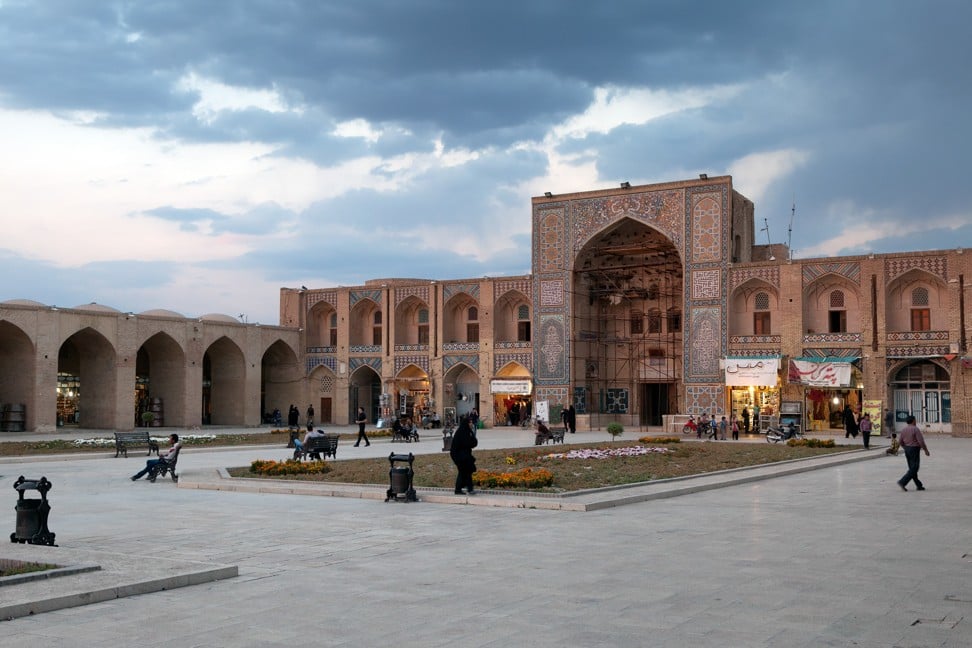
The Ganjali Khan Complex, in Iran. Photo: Shutterstock
Thanks to the Silk Road and the routes that preceded it, the northern Mesopotamian region (present-day Iran) became China’s closest trading partner. Traders rarely journeyed the entire length of the trail, however.
Merchandise was passed along by middlemen who each travelled part of the way and overnighted in caravanserai, fortified inns that provided accommodation, storerooms for goods and space for pack animals.
The good, bad and ugly sides to visiting Chernobyl and Kiev
With so many wheeler-dealers gathering in one place, the hostelries developed into ad hoc marketplaces.
Marco Polo writes of the Persian kingdom of Kerman, where craftsmen made saddles, bridles, spurs and “arms of every kind”.
Today, in the centre of Kerman, the former caravanserai building forms part of the Ganjali Khan Complex, which incorporates a bazaar, bathhouse and mosque.
Uzbekistan
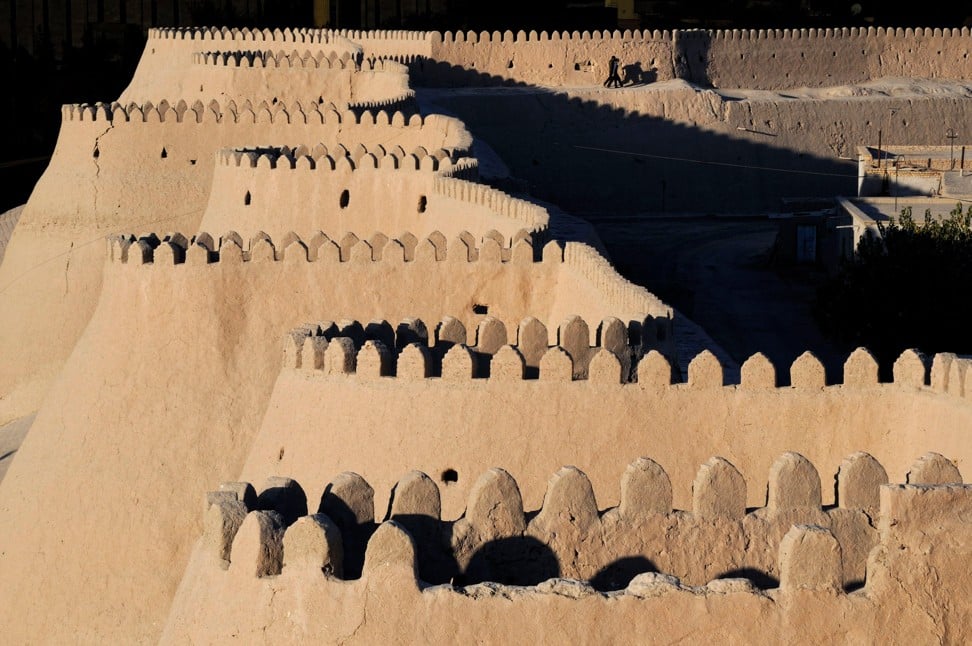
A fort in Khiva, Uzbekistan. Photo: Alamy
The double-landlocked country boasts some of the Silk Road’s most fabled destinations. Forts, such as the one still standing at Khiva, were built to protect traders from bandits; in fact, the city is so well-preserved, it is known as the Museum under the Sky.
The name Samarkand is also deeply entangled with the history of the Silk Road.
The earliest evidence of silk being used outside China can be traced to Bactria, now part of modern Uzbekistan, where four graves from around 1500BC-1200BC contained skeletons wrapped in garments made from the fabric.
Three thousand years later, silk weaving and the production and trade of textiles remain one of Samarkand’s major industries.
Georgia
A street in old town of Tbilisi, Georgia. Photo: Alamy
Security issues in Persia led to the opening up of another branch of the legendary trade route and the first caravan loaded with silk made its way across Georgia in AD568.
Marco Polo referred to the weaving of raw silk in “a very large and fine city called Tbilisi”.
Today, the capital has shaken off the Soviet shackles and is on the cusp of going viral.
Travellers lap up the city’s monasteries, walled fortresses and 1,000-year-old churches before heading up the Georgian Military Highway to stay in villages nestling in the soaring Caucasus Mountains.
Public minibuses known as marshrutka labour into the foothills and although the vehicles can get cramped and uncomfortable, they beat travelling by camel.
Jordan
Petra, in Jordan. Photo: Alamy
The location of the Nabataean capital, Petra, wasn’t chosen by chance.
Savvy nomadic herders realised the site would make the perfect pit-stop at the confluence of several caravan trails, including a route to the north through Palmyra (in modern-day Syria), the Arabian peninsula to the south and Mediterranean ports to the west.
Huge payments in the form of taxes and protection money were collected – no wonder the most magnificent of the sandstone city’s hand-carved buildings is called the Treasury.
The Red Rose City is still a gold mine – today’s tourists pay a hefty
Trade enriched Venice beyond measure, helping shape the Adriatic entrepot into the floating marvel we see today.
Besides the well-documented flow of goods heading west, consignments of cotton, ivory, animal furs, grapevines and other goods passed through the strategically sited port on their way east.
Ironically, for a city built on trade and taxes, the biggest problem Venice faces today is visitors who don’t contribute enough to the local economy.
A lack of spending by millions of day-tripping tourists and cruise passengers who aren’t liable for nightly hotel taxes has prompted authorities to introduce a citywide access fee from January 2020.
Two thousand years ago, tariffs and tolls helped Venice develop and prosper. Now they’re needed to prevent its demise.
More than one billion views of Mulan discussion in China hours after trailer screens during Women’s World Cup final
While some quibble over technical details, the vast majority are eagerly awaiting Disney’s first Chinese princess
Crystal Liu Yifei as Mulan in Disney’s live-action film which is eagerly anticipated in China.
Anticipation over Disney’s live-action movie Mulan is running high in China, with more than one billion views of the subject on Chinese social media in the hours after a teaser trailer was unveiled during Sunday’s final game of the Women’s World Cup.
While some online commenters had their doubts over technical details, most internet users appeared exhilarated at the prospect of Disney’s first Chinese princess, played by Chinese-American actress Crystal Liu Yifei.
The big reveals in Disney’s Mulan trailer, and fan reaction
By Monday afternoon, the hashtag Hua Mulan had been viewed more than one billion times on the Twitter-like Weibo service and nearly 770,000 comments had been made on the topic. Some 450 million views had been recorded for the topics “Mushu no longer in the movie Mulan” – a reference to the heroine’s fast-talking dragon companion in the 1998 animation – and “the look of Liu Yifei”.
“I got carried away by the fighting scenes. Mulan is courageous and strong. I look forward to seeing the eastern heroine Hua Mulan going global,” said one Weibo user.
“This is the first Chinese Disney princess. It’s so great and we feel so proud,” said another.
The movie, scheduled for release on March 27 next year, casts renowned action star Jet Li as the emperor who ordered the military draft to fight a northern invasion, and internationally-acclaimed actress Gong Li as a powerful witch. Donnie Yen Ji-dan, star of Rogue One: A Star Wars Story and the Ip Man movies, plays Mulan’s martial arts mentor Commander Tung.
Donnie Yen nails ‘Bottle Cap Challenge’ blindfolded
Mulan tells the story of a fabled Chinese heroine who posed as a man and became one of the greatest warriors of her time, arguably in the Northern Wei period, or about AD400 to 600. She is one China’s best known fictional characters, with numerous theatrical references and poems which many Chinese know by heart.
The familiarity of the tale has presented a challenge for the production, with many Chinese online commenters questioning the historical details which can be discerned from the sketchy details provided by the trailer.
Many took exception to the opening scene of Mulan riding a horse to her home, built in the architectural style of tulou, common in the southern province of Fujian, when the legend places the heroine in the north.
“The poem said Mulan bade farewell to her parents in the morning and slept near the Yellow River at night. How can she live in a tulou in Fujian? Did she take a fast-rail train?” one internet user teased.
Another used the example to call for Disney to pay more attention to technical details when telling Chinese stories. “Please don’t be arrogant about Chinese stories.”
Also questioned in China was the message from the trailer that Mulan had become a warrior to escape a forced marriage, rather than the well known detail that she was saving her father from being drafted into the military in an act of filial piety.
But the overwhelming response was that fans should put aside their own perceptions of Mulan and celebrate the new edition as one of the few fully-Asian cast international movies, as well as its depiction of a powerful woman and Chinese values as “the only Disney princess who was not saved by a prince but instead became a fighting warrior”.
“Can our domestically produced period dramas meet the standard if we are here to be picky about looks and architecture? Even domestic directors can’t be perfect in restoring ancient costumes, make-up or architecture. Why should we ask so much from a foreign one? We should celebrate the cultural exchange rather than splitting hairs to find faults,” said one Weibo user.
“Mulan in the battlefield has outperformed men and showcased the traditional values of courage and protecting the country when needed. Chinese values, presented to the world by Chinese actors, is worth looking forward to. Please throw away the technical faults such as architecture,” said another.
Annual tests still an academic pressure cooker for students wanting to get into the nation’s top universities, despite efforts to change the system
The gruelling exam is the sole criteria for admission to university in China
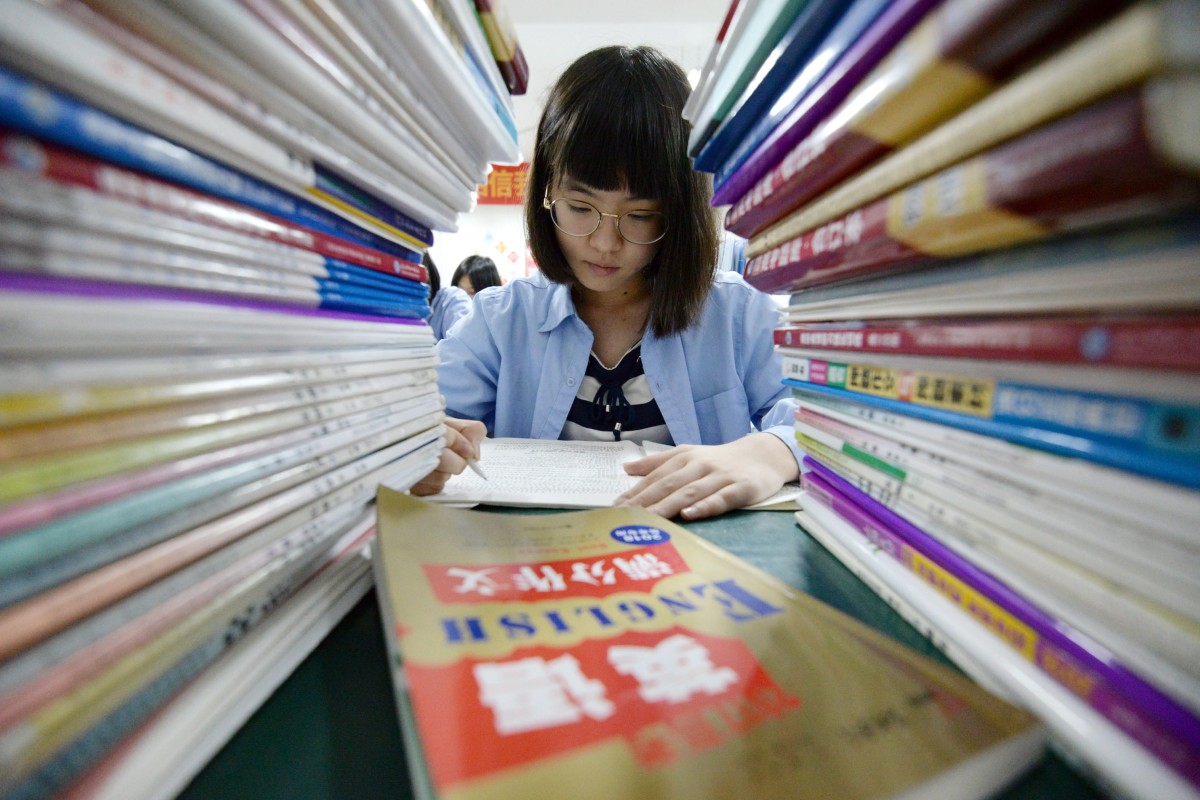
After months of study, China’s high school students are about to be put to the test in the annual “university entrance examinations which begin on Friday. Photo: EPA-EFE
For the past six months, the life of 18-year-old Shanghai student Xiao Qing has revolved around preparation for one of China’s annual rites of passage.
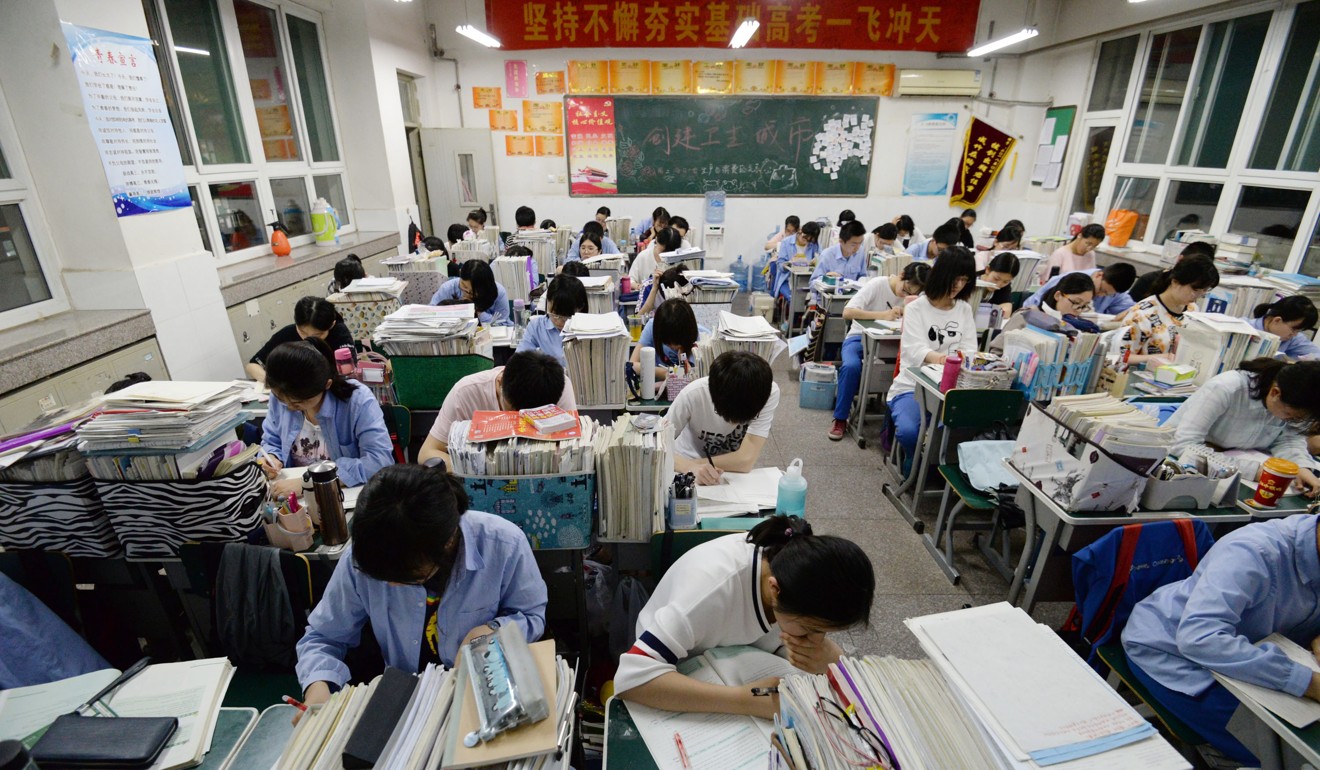
Every day at school, from 7.20am to 5.30pm, the final-year secondary school student in Changning district has studied previous test papers for the gaokao, officially known as the National Higher Education Entrance Examination.
“Sometimes I feel my bottom hurts from sitting for so many hours,” she said. “We feel like we are test machines.”
Xiao Qing will put all of that preparation to the real test from Friday, when over two to three days she will be among more than 10 million people trying to qualify for one of the spots at a Chinese university.
Most students get just one shot at the gaokao, the sole criteria for admission to university in China. It’s a gruelling process that has been criticised over the years as too focused on rote learning, putting too much pressure on students and privileging applicants living near the best universities.
Education authorities have gone some way to try to address these problems. In 2014, the Ministry of Education started letting students choose half of their subjects to introduce some flexibility into the system.
Apart from the compulsory subjects of Chinese, mathematics and English, students are now supposed to be able to choose any three of six other subjects: physics, chemistry, biology, politics, history and geography.
Previously, secondary school students had been split strictly into liberal arts or science majors in a system that was introduced in 1952 and revived in 1977 after being suspended during the Cultural Revolution.
Last go at exam success for China’s ‘gaokao grandpa’
Wen Dongmao, a professor from Peking University’s Graduate School of Education, said the changes expanded the opportunity for students to follow their interests.
“The new gaokao gives students plenty of choices of subjects to learn and to be evaluated on. I think people should choose which subject to learn based on what they are interested in,” Wen said.
“Gaokao reform is designed according to some methods by overseas universities, like American and Hong Kong schools. Its direction is right, but there will be inevitable problems brought by it.”
One of the problems is the uneven implementation of the changes throughout the country, with just 14 of China’s 31 provinces, municipalities and autonomous regions having introduced them.
In the eastern province of Anhui, for example, the reforms were supposed to go in effect from September last year but were postponed without reason, news portal Caixin.com reported.
The report quoted a teacher from Hefei No 1 Middle School in the provincial capital as saying the school was not ready for the changes.
Is the university entrance exam in China the worst anywhere?
“Shanghai and Zhejiang are economically advanced and we are not at that level,” he was quoted as saying. “It’s a big challenge for us to manage so many students’ choices of gaokao subjects.”
In neighbouring Jiangxi province, a high school history teacher said many places opposed the reform mainly “because of the shortage of resources”.
“It’s hard to roll out gaokao reform because we don’t have enough teachers or classrooms to handle the students’ various choices of subjects. Students can choose three out of six courses and that means there are 20 potential combinations,” the teacher was quoted as saying.
Chinese high school students study late into the night for the National Higher Education Entrance Examination. Photo: EPA-EFE
In addition, the system allows students to take the tests in more than one year and submit the highest scores when applying to universities.
“I heard from teachers in other provinces that students will take the tests of the selected subjects again and again for fear that other students will overtake them. That’s exhausting and will just put more burden on the students,” the Jiangxi teacher said.
He also said the gaokao process put extra pressure on teachers who feared the tests would push students to extremes. One of his students contemplated jumping from a bridge after she thought she had done poorly in the Chinese section of the exam.
“She called me, saying she felt it was the end of the world. I was shocked and hurried to the bridge,” he was quoted as saying. He spoke to her for more than an hour about before the girl came down, going on to get a decent score.
Critics also say the system is weighted in favour of students in bigger cities such as Beijing, Tianjin and Shanghai, home to the country’s top universities.
China private education industry is booming despite economic slowdown
Li Tao, an academic from the China Rural Development Institute at Northeast China Normal University in Changchun, Jilin province, said about 20-25 per cent of gaokao candidates from Beijing, Tianjin and Shanghai were admitted to China’s elite universities, compared with just 5 or 6 per cent in places like Sichuan, Henan and Guangdong.
Li said that was because the top universities were funded by local governments and gave preference to applicants from those areas.
“To make it fairer, the Ministry of Education has insisted over the years that elite universities cannot have more than 30 per cent of incoming students from the area in which it is located,” he said.
Despite these challenges, gaokao was still a “fair” way to get admitted to university in China, Li said.
“Gaokao is the fairest channel to screen applicants on such a large scale, to my knowledge,” he said. “It does not check your family background and every student does the same test paper [if they are from the same region]. Its score is the only factor in evaluating a university applicant.”
OSAKA (Reuters) – The United States and China agreed on Saturday to restart trade talks with Washington holding off new tariffs on Chinese exports, signalling a pause in the trade hostilities between the world’s two largest economies.
Commenting on a long-running dispute over China’s Huawei, President Donald Trump said U.S. firms would be able to sell components to the world’s biggest telecoms network gear maker where there was no national security problem.
The truce offered relief from a nearly year-long trade standoff in which the countries have slapped tariffs on billions of dollars of each other’s imports, disrupting global supply lines, roiling markets and dragging on global economic growth.
“We’re right back on track and we’ll see what happens,” Trump told reporters after an 80-minute meeting with Chinese President Xi Jinping on the sidelines of a summit of leaders of the Group of 20 (G20) major economies in Osaka, western Japan.
Trump said while he would not lift existing import tariffs, he would refrain from slapping new levies on an additional $300 billion worth of Chinese goods – which would have effectively extended tariffs to everything China exports to the America.
“We’re holding back on tariffs and they’re going to buy farm products,” he said at a news conference, without giving any details of China’s future agricultural product purchases.
“If we make a deal, it will be a very historic event.”
He gave no timeline for what he called a complex deal but said he was not in a rush. “I want to get it right.”
HUAWEI HOPES
On Huawei, Trump said the U.S. commerce department would meet in the next few days on whether to take it off a list of firms banned from buying components and technology from U.S. companies without government approval.
China welcomed the step.
“If the U.S. does what it says, then of course, we welcome it,” said Wang Xiaolong, the Chinese foreign ministry’s envoy for G20 affairs.
U.S. microchip makers also applauded the move.
“We are encouraged the talks are restarting and additional tariffs are on hold and we look forward to getting more detail on the president’s remarks on Huawei,” John Neuffer, president of the U.S. Semiconductor Association, said in a statement.
Huawei has come under mounting scrutiny for over a year, led by U.S. allegations that “back doors” in its routers, switches and other gear could allow China to spy on U.S. communications.
While the company has denied its products pose a security threat, the United States has pressed its allies to shun Huawei in their fifth generation, or 5G, networks and has also suggested it could be a factor in a trade deal.
The problems at Huawei have filtered across to the broader chip industry, with Broadcom Inc warning of a broad slowdown in demand and cutting its revenue forecast.
RELIEF AND SCEPTICISM
In a lengthy statement on the two-way talks, China’s foreign ministry quoted Xi as telling Trump he hoped the United States could treat Chinese companies fairly.
On the issues of sovereignty and respect, China must safeguard its core interests, Xi was cited as saying.
“China is sincere about continuing negotiations with the United States … but negotiations should be equal and show mutual respect,” the foreign ministry quoted Xi as saying.
Trump had threatened to extend existing tariffs to almost all Chinese imports into the United States if the meeting brought no progress on wide-ranging U.S. demands for reforms.
Source: Reuters
Slideshow (4 Images)
Financial markets are likely to breathe a sigh of relief on news of the resumption in U.S.-China trade talks.
“Returning to negotiations is good news for the business community and breathes some much needed certainty into a slowly deteriorating relationship,” said Jacob Parker, a vice-president of China operations at the U.S.-China Business Council.
“Now comes the hard work of finding consensus on the most difficult issues in the relationship, but with a commitment from the top we’re hopeful this will put the two sides on a sustained path to resolution,” he said.
Some, however, warned the pause might not last.
“Even if a truce happens this weekend, a subsequent breakdown of talks followed by further escalation still seems likely,” Capital Economics said in a commentary on Friday.
The United States says China has been stealing American intellectual property for years, forces U.S. firms to share trade secrets as a condition for doing business in China, and subsidizes state-owned firms to dominate industries.
ADVERTISEMENT
China has said the United States is making unreasonable demands and must also make concessions.
Talks collapsed in May after Washington accused Beijing of reneging on reform pledges. Trump raised tariffs to 25% from 10% on $200 billion of Chinese goods, and China retaliated with levies on U.S. imports.
The U.S.-China feud had cast a pall over the two-day G20 gathering, with leaders pointing to the threat to global growth.
In their communique, the leaders warned of growing risks to the world economy but stopped short of denouncing protectionism, calling instead for a free, fair trade environment after talks some members described as difficult.
The pair agreed to work together to promote “free and fair trade” following a “very frank exchange”, a Japanese official said.
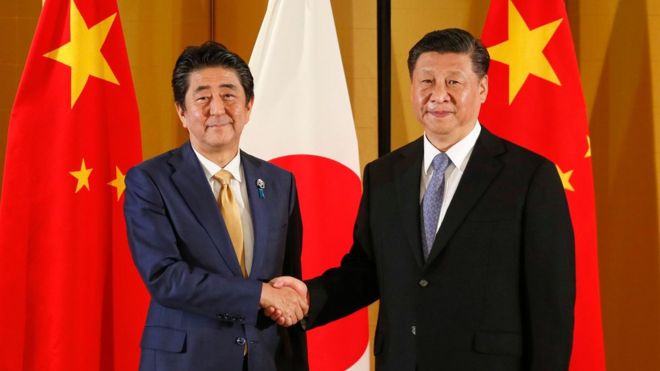
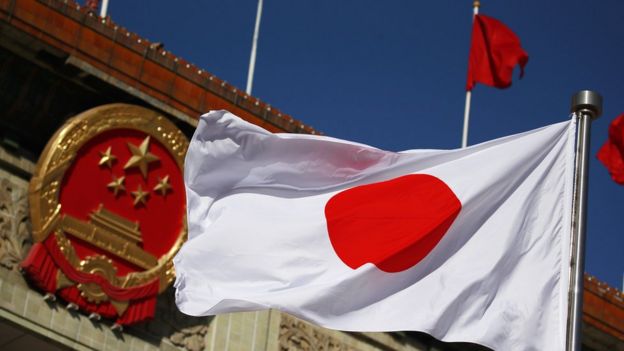
It is the first official visit Mr Xi has made to Japan since becoming president in 2013. At the outset of their talks on Thursday, Mr Abe invited him to return on a state visit next year.
“Around the time of the cherry blossoms next spring, I would like to welcome President Xi as a state guest to Japan,” he said. “[I] hope to further elevate ties to the next level.”
What did the leaders discuss?
Japan and China are by far Asia’s largest economies and the talks on Thursday focused strongly on business.
Last year, the two sides signed a deal to maintain annual dialogue and to co-operate on innovation. This time around, officials say, they pledged to develop a “free and fair trading system” in a “complicated” global economic landscape.
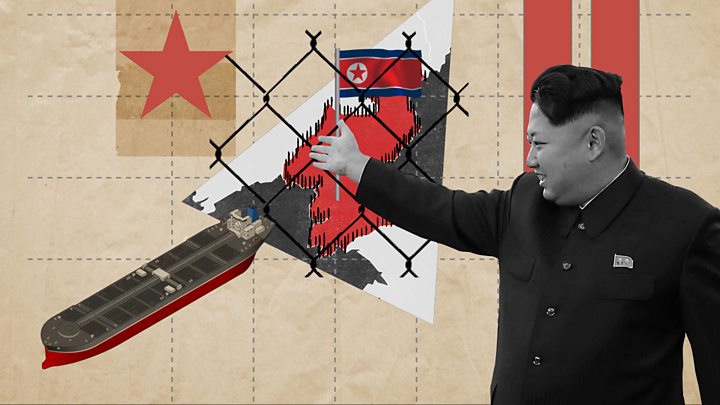
Media caption North Korea has been called out for evading UN sanctions
Another topic on the schedule would probably have been North Korea. While China is North Korea’s biggest trading partner, both Tokyo and Beijing want it to abandon its nuclear programme.
Mr Abe has only very limited leverage on the matter and will try to sway both the US and China to keep Tokyo’s interests in mind in any negotiations.
The G20 summit will begin on Saturday, but the main meeting is likely to be overshadowed by the many bilateral talks that are set to happen on the sidelines.
For example, Mr Xi will meet President Trump as China and the US try to resolve their trade dispute.
Do Japan and China get along?
In the past, relations have been tense. While the two countries do have close trade ties, politically things have been much more fragile.
Image copyright EPAImage caption Japan and China have not always had warm relations
Japan’s World War Two occupation of parts of China remains a very emotional issue. There are also several ongoing territorial disputes between Tokyo and Beijing.
But tensions with Washington over its protectionist trade policy have driven Japan and China into an unlikely friendship.
In 2018, Mr Abe hailed his high-profile visit to Beijing as an historic turning point. Both leaders have since promised to establish positive, constructive, relations.
In 2017 alone, China’s central and local governments allocated US$7.7 billion in subsidies to both carmakers and buyers
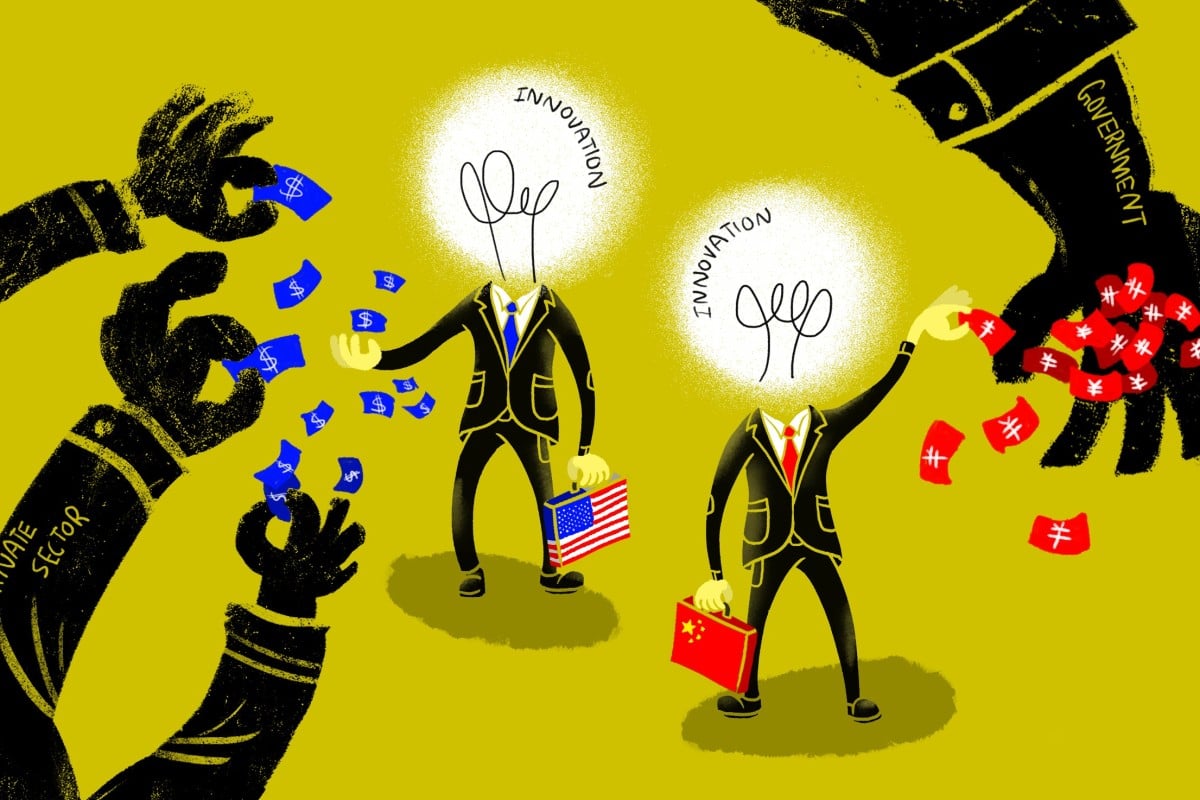
But how big should the state’s role be in fostering innovation?
China has fostered development of its own technologies for decades, and the continuing trade war with the US makes it more imperative than ever. Illustration: Yan Jing Tian
It was the 1950s and 60s, a time of high tension among the superpowers.
As one national government was funding elite research institutes and enlisting its country’s top scientific minds to develop military technology, it likely had little inkling the move would form the basis of a broader, civilian technology industry in the coming decades.
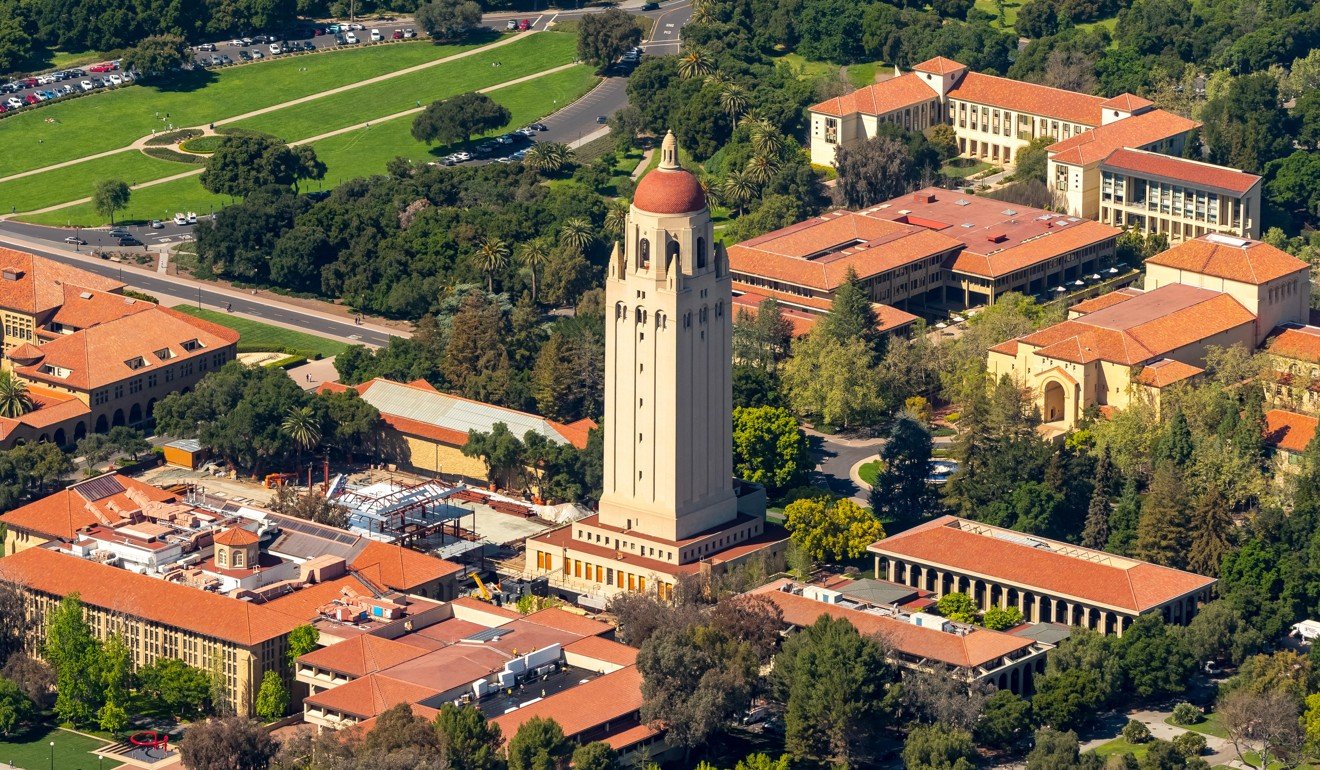
The force behind this state-led initiative – a style of innovation commonly associated with China – was the US government, which seeded California’s Silicon Valley with funding for military research at Stanford University.
It was there that the dean of engineering, Frederick Terman, actively encouraged students to launch companies to exploit these technologies for profit – the most famous of his disciples being Hewlett-Packard founders Bill Hewlett and Dave Packard.
“Most people who came here after the 1980s just assumed it’s all silicon and chips,” said Steve Blank, a Silicon Valley entrepreneur and adjunct professor at Stanford.
“But innovation in Silicon Valley actually started in Stanford University, thanks to a single professor who changed the entire culture.”
After the second world war, Terman, whose background was in electrical engineering, drew upon his wartime experience heading a radio research lab at Harvard to help turn Stanford into a top-tier university specialising in electronic warfare and with government contracts.
“Americans are not smarter than the Chinese. The only thing that holds China back, is that the nature of dissent and creativity are related.”Steve Blank, Silicon Valley entrepreneur
Since then, Silicon Valley has been seen as the mecca of technology innovation, producing some of the world’s largest tech companies, such as Intel, Amazon, Facebook and Google.
The region has been lauded for its culture and openness, with countries globally hoping to learn from its success and emulate it by design.
“There’s something special that happens in a city or a region when people are able to pursue new ideas in a very free way,” said Eric Ries, author of the book The Lean Startup.
“When I first came to Silicon Valley, I had a failed start-up on my resume … nobody saw that as a negative, they saw it as a sign that I showed initiative, tried to do something new.
“It’s not that Silicon Valley embraces failure, but it has a different understanding of the likelihood of success of anything new.”
The fact that Silicon Valley also had its beginnings in federal funding suggests that the state has an important role to play when it comes to fostering innovation.
Countries like China, Singapore and Israel have sought to emulate Silicon Valley’s success by designing strategies at a government level to encourage entrepreneurship and innovation.
The US government seeded California’s Silicon Valley with funding for military research at Stanford University in Palo Alto, California. Photo: Alamy
For China, the need to foster innovation comes at a critical time. The country is caught in an escalating trade and tech war with the US.
As the two nations slap billions in tariffs on each other, the US has also moved to cut off some Chinese technology firms from accessing US technology, with the country’s 5G champion, Huawei Technologies, directly in the firing line.
Why China’s top-down approach can only take tech innovation so far
The Chinese government has now vowed to double down on developing core competencies, including semiconductor manufacturing – a central part of its Made in China 2025 plan which aims to locally produce 70 per cent of the chips the country needs within 10 years.
But Silicon Valley’s history and China’s push in state-led innovation also beg the question: how much of a role does the state play in fostering innovation?
China’s efforts to strengthen its indigenous technology have been ongoing for several decades.
The first big push to boost modern technology capabilities came during the 1980s, putting in place the Torch programme – resulting in Zhongguancun Science Park in Beijing and a variety of other parks across the country.
The period also saw the establishing of the 973 and 863 programmes, which focused on developing basic research and hi-tech R&D, respectively.
The world’s fastest supercomputer, Tianhe-2, and China’s self-developed spacecraft, Shenzhou, were among the fruits of the 863 programme, which was set up in 1988, while 1997’s 973 programme funded research projects in agriculture, energy, material science and other areas.
US and China’s mutual distrust is hampering tech innovation, experts fear
In 2006, China proposed a 15-year road map for the nation to join the ranks of innovation-oriented countries by the end of 2020. Science and research spending would rise above 2.5 per cent of GDP under the guide to future goals, known as the National Medium to Long-Term Plan for Science and Technology Development.
The master plan identified industries, technologies and research areas such as energy, biotech, human health and diseases that were considered of “utmost importance to the technological advancement of China”.
These goals were elaborated on in three separate five-year plans, the blueprint for China’s social and economic policies, and translated to a string of government efforts in building the infrastructure to support the country’s technology ambitions.
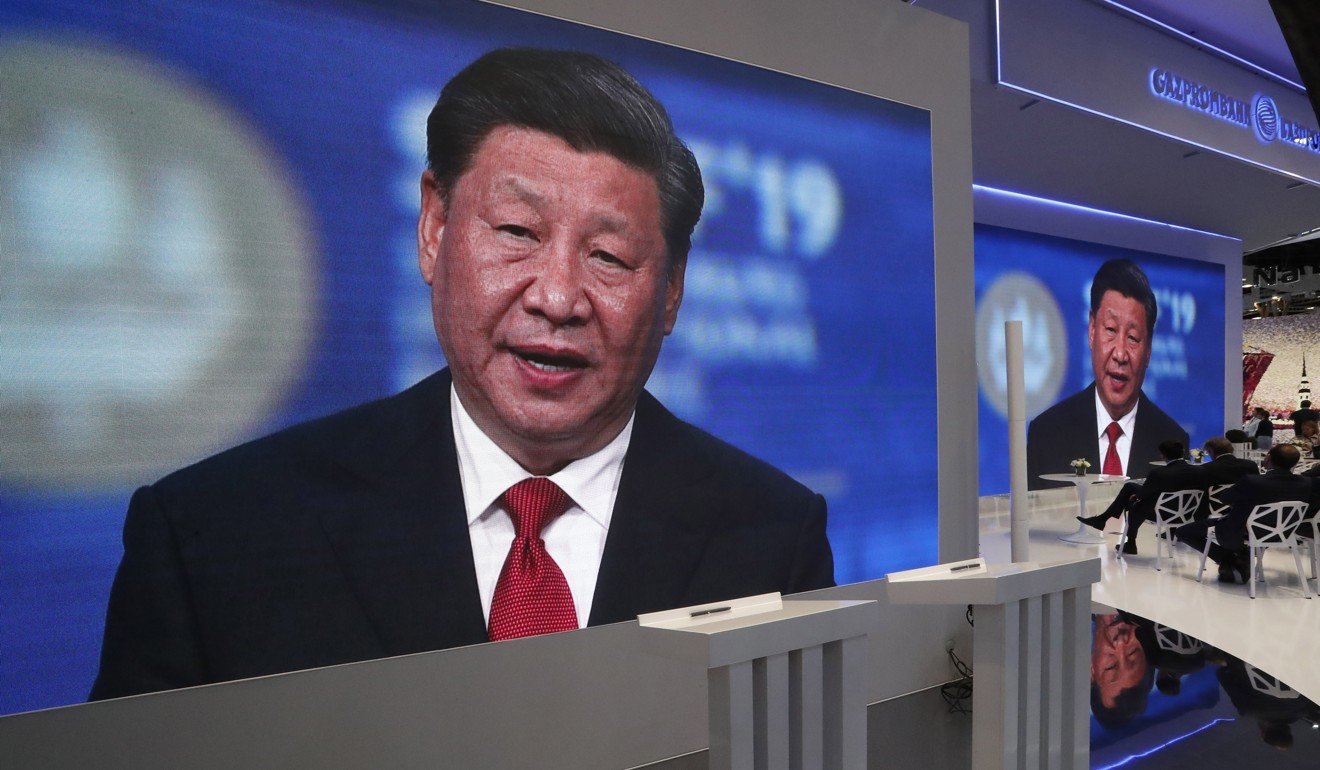
Screens show Chinese President Xi Jinping speaking at an international economic forum in St. Petersburg, Russia on June 7. Xi has called for the construction of an “innovation-driven economy” to make China a global innovation leader by 2035. Photo: EPA-EFE
This came in the form of industrial estates and the Thousand Talents plan to nurture and attract talent back to the country, not to mention a wealth of funding that ranged from research grants and subsidies to tax cuts for the private sector and academia.
China’s tech ambitions strengthened under President Xi Jinping, who, on numerous occasions, has called for the construction of an “innovation-driven economy” to make the country a global innovation leader by 2035.
An important initiative under Xi’s leadership was Made in China 2025. First announced in 2015, the programme called for upgrading China’s manufacturing model to better take on the US in strategic industries such as robotics, aerospace and new-energy vehicles.
Can China’s tech industry innovate its way to leadership?
These efforts have boosted some of Beijing’s favoured industries, turning them into rivals of global peers. In 2001, China identified electric vehicles (EV) as a major technology.
Sixteen years later, Shenzhen company BYD has become the world’s biggest EV maker, and a crop of start-ups including WM Motor, Xpeng Motors and the US-listed NIO have joined the race with funding from some of the country’s biggest tech companies and property developers.
In 2017 alone, China’s central and local governments allocated US$7.7 billion in subsidies to both carmakers and the consumers who bought their vehicles, cementing the country’s position as the world’s largest EV market.
Some 770,000 EVs were made and sold in China in 2017, compared with just 199,000 in the US that year.
The planning for domestic integrated circuit (IC) production, a strategically important sector identified in the 15-year programme, was further developed in the 12th and 13th five-year plans.
Those concepts grew into an industry involving over 20,000 researchers that aimed to reduce reliance on foreign chip technology, according to China’s Ministry of Science and Technology in 2017.
Yet, as self-reliance is more relevant than ever to China amid the tech war, it still lags behind the US and Taiwan in chip making, despite the billions of dollars in state backing the sector has received.
China’s semiconductor industry needs more than 10 years to catch up with global peers, Jay Huang Jie, founding partner of Jadestone Capital and former Intel managing director in China, said in May.
Some have pointed to China’s tech gap with the US as evidence that the Asian giant does not have what it takes to achieve technological competitiveness.
China, however, is still in the early stages when it comes to developing technology, according to Andy Mok, senior research fellow at the Centre for China and Globalisation, a Beijing-based non-government think tank.
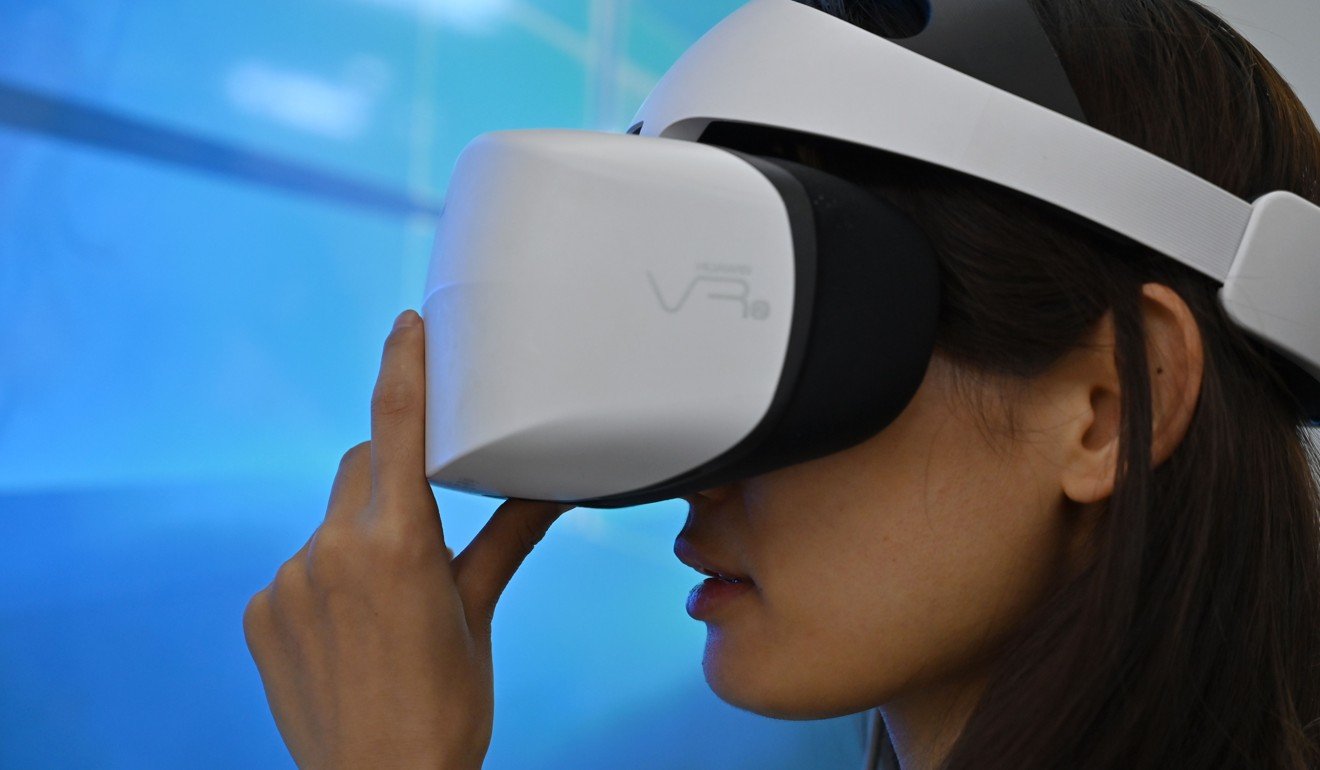
A visitor at the Consumer Electronics Show in Shanghai on June 11 checks a Huawei 3D Virtual Reality headset. Huawei, China’s 56 champion, is feeling the brunt of US efforts to cut Chinese tech firms’ access to US technology amid the trade war. Photo: AFP
“A lot of research universities in the US – like MIT, Caltech – they’ve had decades of operations [since the second world war and the cold war],” said Mok.
“It’d be quite a myth to say that the US system is so successful technologically because of its political or economic system.”
While semiconductors may not have been a top priority for China until recently, threats of a tech cold war which could cut off the country from US technology, including chips, mean China will double down on developing its own proprietary technology.
In the short term, China could fall further behind the US, Mok said.
Uninspiring Apple shows the US’ best tech days are behind it
“Some of these indigenously produced components were a ‘nice to have’ but not a ‘must-have’ before … it was one priority among many,” Mok said. “Will China’s chips be cutting edge? Probably not, but they will be good enough to be used in the short term.”
But while state-led innovation has helped drive industries, broadly labelling China’s technology achievements as state-driven could be an inaccurate generalisation, said Zhang Jun, dean of the School of Economics at Fudan University and director of the China Centre for Economic Studies, a Shanghai-based think tank.
Some of the more notable innovations in China – like mobile payments – took place on the application level and were driven by private companies such as Alibaba and Tencent.
Alibaba owns the South China Morning Post.
“These companies succeeded by banking on the huge consumer market in China in the internet age,” Zhang said.
Zhang pointed out that while the state did not actively drive those innovations, it too contributed by giving the companies leeway to experiment instead of immediately regulating the industries, which could have stifled innovation.
How the US trade war has accelerated China’s rise
China’s state support comes primarily in basic science and core technology, where it needs to play catch-up with countries like the US, and in the form of investment in universities and research labs that is likely to accelerate due to the trade war with the US.
“Basic scientific research will still rely on the state’s continuous investment into the academic field and into nurturing talents, but in terms of the application of the technology, the government will need to work with the market, and control less,” Zhang said.
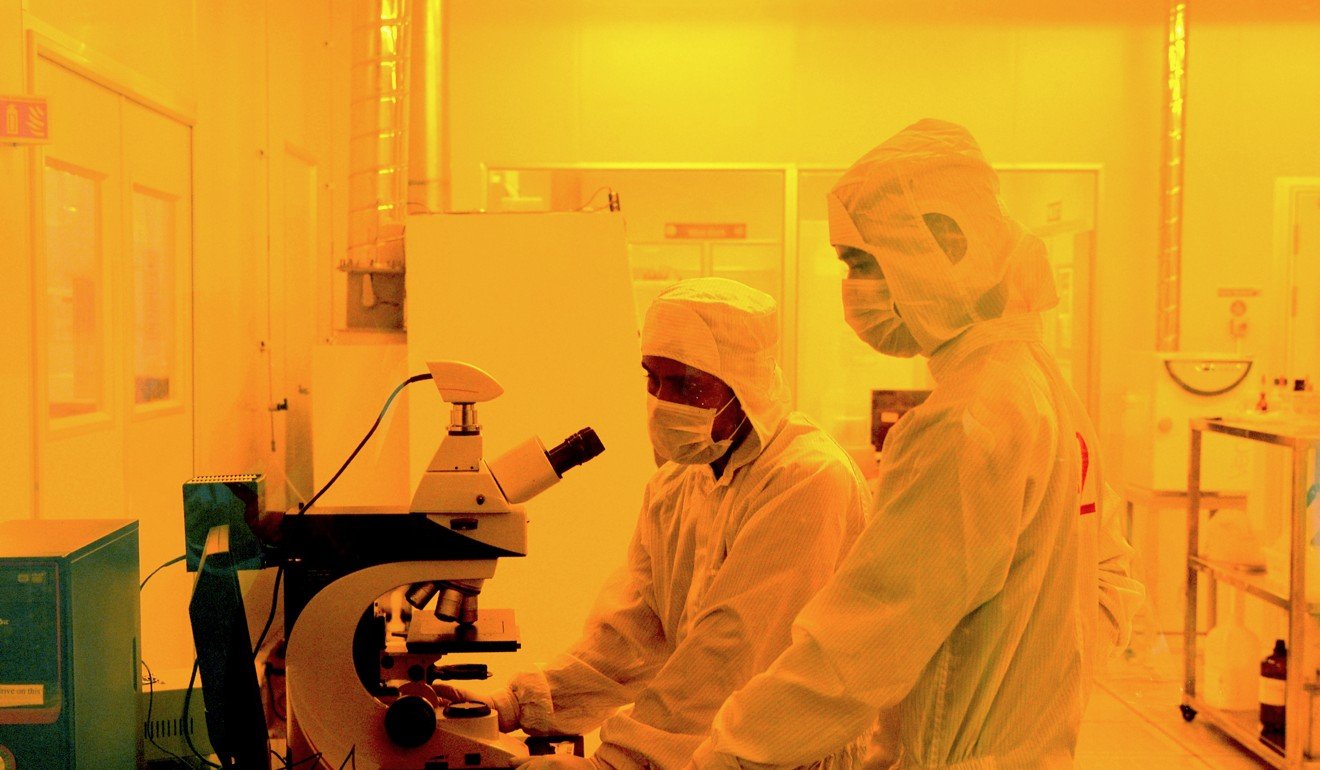
Researchers wearing suits work inside a semiconductor fabrication lab. China is 10 years behind the US in chips, according to one expert. Photo: AFP
Countries that adopt a largely top-down approach to innovation are not uncommon.
In Singapore, a tiny island-nation that lacks natural resources, the Economic Development Board has been instrumental in providing grants and incentives to small business, including low-rent office space for start-ups.
The country also has a nationally-supported artificial intelligence programme called AI Singapore, which is aimed at fostering AI research and talent and bringing private and public sectors closer together when it comes to AI applications.
Israel, which has billed itself as a start-up nation, also has a central agency in charge of planning and executing its innovation policy.
It can also trace its leadership in cybersecurity to the Israel defence forces, whose military intelligence unit 8200 has trained and provided a lot of the manpower for the civilian sector.
Ultimately, despite the role the US and Chinese governments play in driving their respective tech ecosystems, many other factors contribute to the flourishing of an innovation cluster, including private capital and a culture that accepts failure and allows individuals to exercise creativity.
“Getting the state out of the tech ecosystem should be the goal for private capital to take over,” said Stanford’s Blank. “At some point, the government needs to let go.”
Federal funding in the US helped get technology and innovation off the ground in Silicon Valley, but once venture capital started to flow into the region, a culture where innovation was left to the entrepreneurs and tech talent was created.
Blank pointed out that culture also has a big part to play. The US, for example, encourages individualism. Furthermore, in technology hubs like Silicon Valley, Boston and New York, failure is seen as good experience rather than as shameful.
“Americans are not smarter than the Chinese,” said Blank. “The only thing that holds China back, is that the nature of dissent and creativity are related.”
“Great entrepreneurs, great founders are dissidents. Steve Job was a dissident, Elon Musk is a dissident,” he said.
“They tell the status quo, the leadership of whatever industry they’re in that they’re wrong. In the US, that’s in fact part of our culture and we encourage that, but in China you can only do that within the bounds of what the [Communist] Party allows you to do.”
However, Mok disagrees. “Many of the most valuable US companies today are seen as tech leaders because they were able to piggyback on US hegemony,” he said. “If you could win in the US, you could probably win everywhere else.”
Chinese social media finds light relief in struggle over gaokao Question 12 in an American cafe
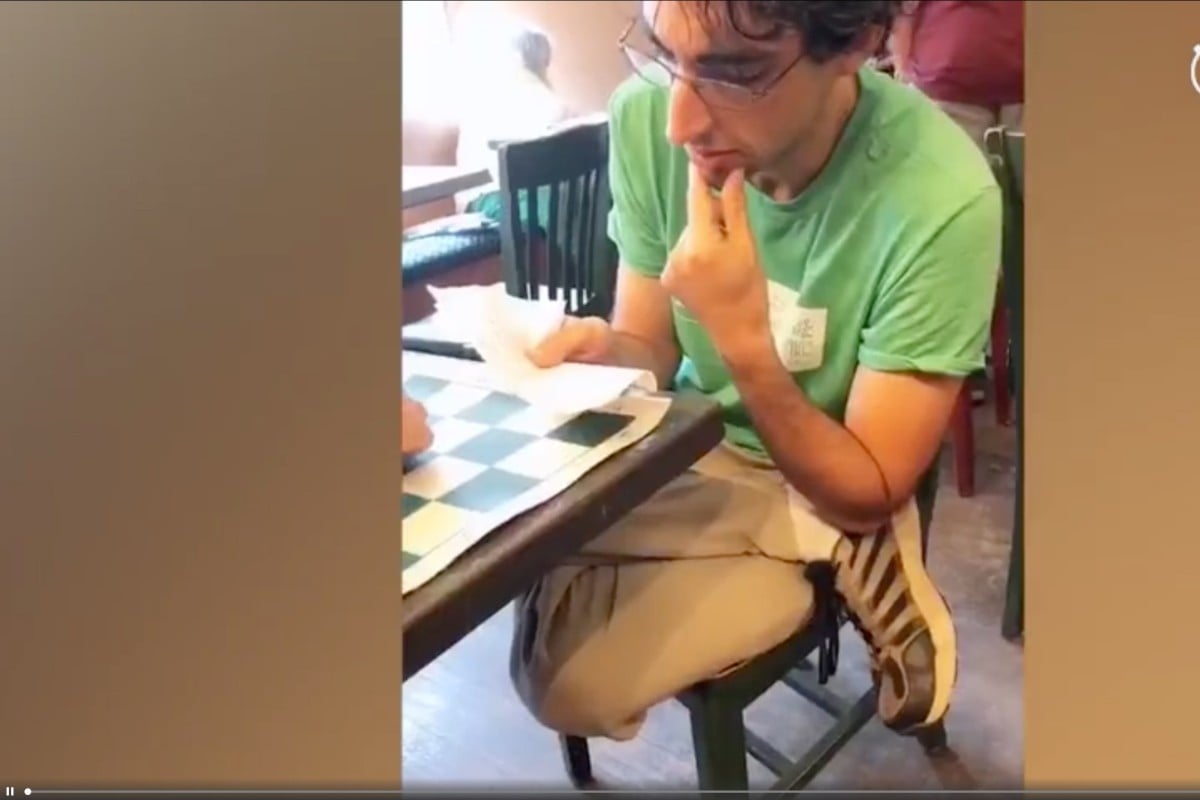
Video of a US middle school maths teacher trying to complete a mathematics question from a Chinese exam paper has been widely shared on Chinese social media. Photo: Weibo
A video of a US secondary school maths teacher comically trying – and failing – to complete a mathematics question from a Chinese gaokao exam paper has been widely shared on social media in China.
The video was shared on June 8 by an unidentified Chinese teacher working in the United States. It shows her friend, a US secondary school maths teacher, trying to solve a question from this year’s gaokao, the annual Chinese college entrance examination that has a reputation for difficulty, even by international standards.
The question was taken from section II of the natural sciences mathematics exam paper on the national level, which is generally a more challenging test given to students who select the science track.
“I heard this year’s gaokao maths questions are very difficult so I searched online and tried to solve one in a cafe. But it has been a long time, so I forgot how to solve it,” the Chinese teacher told online news platform Guancha Syndicate.
At that moment, the US maths teacher was sitting next to her and playing chess with his friends, “so I asked if he could help me solve a question, but that posed a big challenge for him”, she said.
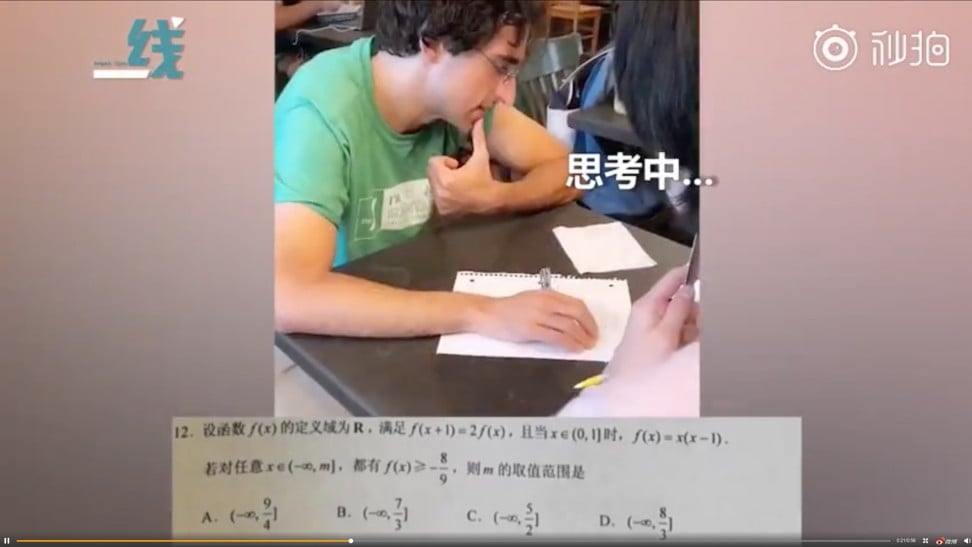
In the video, the US teacher looks confused by question 12, a multiple choice question about functions. He reads it for three minutes, then starts to analyse and explain the steps to the Chinese teacher.
He first tries the method of substitution but fails and finally chooses D by exclusion.
The US secondary school maths teacher still doesn’t know his answer was wrong. Photo: Weibo
“I think it’s this one (option D), it’s matching, it’s D!,” the American teacher says confidently. Later in the video, the Chinese teacher explains, “He spent around seven to eight minutes on this question and finally chose D, so he should get it correct, shouldn’t he?”
However, the answer turned out to be B, much to the amusement of social media users. Posts about the video have been viewed 140 million times on microblogging site Weibo, and the video has been picked up by other Chinese news media.
Crunch time as gaokao exam season starts for China’s university hopefuls
Weibo users shared their views below the post, with comments such as, “Question 12 is usually the hardest one”; “these multiple choices should not take more than 50 seconds”; and “he would not be able to finish the whole paper at this speed”.
According to the Chinese teacher, her US friend still doesn’t know his answer was wrong.
“He just said the question is ‘worded really weird’ and he cannot clearly figure it out,” she said.











 CHINDIA ALERT: You'll be living in their world, very soon