Chindia Alert: You’ll be Living in their World Very Soon
aims to alert you to the threats and opportunities that China and India present. China and India require serious attention; case of ‘hidden dragon and crouching tiger’.
Without this attention, governments, businesses and, indeed, individuals may find themselves at a great disadvantage sooner rather than later.
The POSTs (front webpages) are mainly 'cuttings' from reliable sources, updated continuously.
The PAGEs (see Tabs, above) attempt to make the information more meaningful by putting some structure to the information we have researched and assembled since 2006.
Image copyright STRDELImage caption Prime Minister Modi is the third most followed leader on Twitter after Donald Trump
The world’s second most popular leader – when it comes to social media, at least – sent shockwaves through the internet on Monday, after announcing he was considering leaving the platforms.
After all, Indian Prime Minister Narendra Modi is the only politician to even come close to challenging US President Donald Trump’s online dominance.
And so it was somewhat unsurprising that the hashtag #ModiQuitsSocialMedia began trending in India, with users quick to share a heady cocktail of conspiracy theories, memes and desperate pleas.
However, Mr Modi, who has 54 million followers on Twitter, 35.2 million followers on picture sharing platform Instagram and 44 million followers on Facebook, soon revealed the true reason behind his abandonment of social media.
On Tuesday, he said that he would “give away my social media accounts to women whose life & work inspire us”.
But the “big reveal” came only after his first tweet generated an absolute social media storm.
Some theories suggested he was quitting social media platforms as they were being controlled by his opponents. Others speculated that he would launch an indigenous social platform, to match Twitter and Facebook, something similar to social media platforms like WeChat and Weibo in China.
“Expect SM companies stock to crash,” wrote one confident user.
Apart from the theories, there were desperate pleas from his fans. One wrote: “Please Sir, You can’t leave social media now for the sake of your fans!” Another added: “Modi Ji if you leave social media , they will use it against you and nation interest.”
“For me he is not only PM of India but also emotion. You’re king of social media. Don’t go sir.”
Some users suggested that his account had been hacked.
Soon, #Iwillalsoleavetwitter started trending.
Arun Yadav, the head of Haryana state IT and social media for BJP, tweeted asking the PM to not quit the platform as it was one way Indians could communicate with him.
But there were also jokes.
“Spare a thought for Twitter, Facebook & their stocks. PM Modi is all set to demonetise social media,” wrote one user, referring to the overnight decision to ban high value currency notes in November.
One user suggested that the prime minister was quitting all other platforms in order to make his TikTok debut.
“Modi ji is a typical Indian boyfriend after breakup,” quipped one Twitter user.
“Modiji should be awarded Nobel Peace Prize for bringing peace in the digital world,” said another.
Image caption #NoModiNoTwitter was a India trend on Twitter after PM Modi’s tweet yesterday
There were political reactions too.
In a cheeky response, Rahul Gandhi, former president of the main opposition Congress party, tweeted: “Give up hatred, not social media accounts.”
Congress leader and MP Shashi Tharoor followed suit, writing: “The PM’s abrupt announcement has led many to worry whether it’s a prelude to banning these services throughout the country too.”
Mr Modi’s eventual tweet which clarified matters was seen by some as an anti-climax.
But for the millions who were pleading with him to reconsider, this is surely a big relief.
Image copyright MUKHTAR ZAHOORImage caption Muneeb Ul Islam can no longer afford to work as a journalist in Kashmir
Journalists in Indian-administered Kashmir are struggling to make ends meet amid a months-long communications blockade that has only partially been lifted. The BBC’s Priyanka Dubey visited the region to find out more.
Muneeb Ul Islam, 29, had worked as a photo-journalist in Kashmir for five years, his pictures appearing in several publications in India and abroad.
But the young photographer’s dream job vanished almost overnight in August last year, when India’s federal government suspended landline, mobile and internet services in Kashmir.
The government’s move came a day before its announcement that it was revoking the region’s special status – a constitutionally-guaranteed provision, which gave Kashmir partial autonomy in matters related to property ownership, permanent residency and fundamental rights.
The controversial decision catapulted the Muslim-majority valley into global news – but local journalists like Mr Islam had no way to report on what was going on. And worse, they had to find other things to do because journalism could no longer pay the bills.
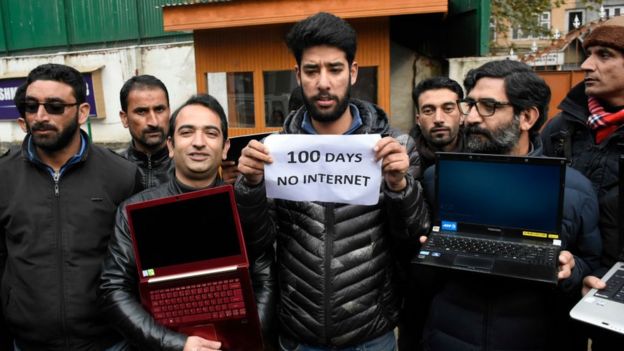
By January, the region had not had access to the internet for more than 150 days, India’s longest such shutdown.
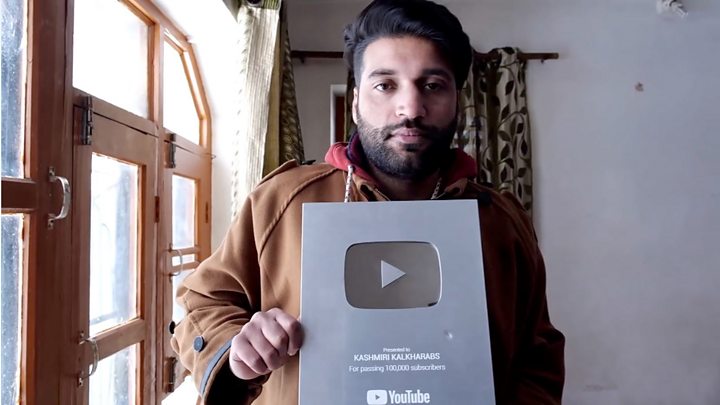
Media caption The silenced YouTube stars of Indian-administered Kashmir
“I chose journalism because I wanted to do something for my people,” Mr Islam explains. “I covered this conflict-ridden region with dedication until the loss of Kashmir’s special status put a full stop on my journey.”
In January, the government eased restrictions and allowed limited broadband service in the Muslim-majority valley, while 2G mobile coverage resumed in parts of the neighbouring Jammu region. But mobile internet and social media are still largely blocked.
India says this is necessary to maintain law and order since the region saw protests in August, and there has also been a long-running insurgency against Indian rule. But opposition leaders and critics of the move say the government cannot leave these restrictions in place indefinitely.
Meanwhile, journalists like Mr Islam are struggling.
Image copyright GETTY IMAGESImage caption Kashmiri journalists protested after 100 days of no internet in the region
For months, Mr Islam says, he kept trying to report and file stories and photos.
In September, he even spent 6,000 rupees ($84; £65) of his own money to make two trips to the capital, Srinagar, for a story. But he soon ran out of funds and had to stop.
He then tried to file his stories on a landline phone: he would call and read them aloud to someone on the other side who could type it out. But, as he found out, his stories didn’t earn him enough money to cover the cost of travelling for hours in search of a working landline.
And Mr Islam was desperate for money because his wife was ill. So he eventually asked his brother for help, finding work carrying bricks on a construction site in his neighbourhood in Anantnag city. It pays him 500 rupees a day.
Mr Islam is not the only journalist in Kashmir who has been forced to abandon their career for another job.
Another journalist, who did not want to reveal his name, says he had been working as a reporter for several years, but quit the profession in August. He now plans to work in a dairy farm.
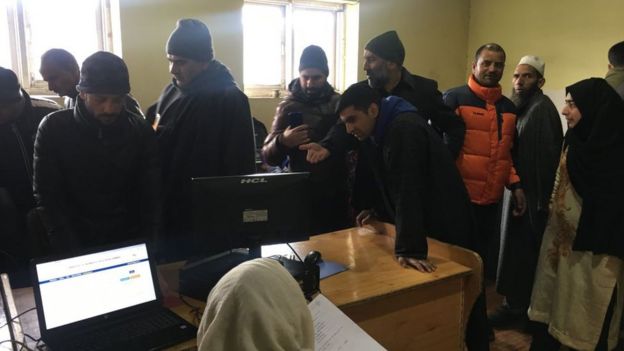
Image copyright MUKHTAR ZAHOORImage caption Internet is available in some government offices
Yet another reporter, who also also wished to remain anonymous, says he used to earn enough to comfortably provide for his family. Now, he barely has money to buy petrol for his motorcycle.
“I have no money because I have not been able to file any story in the last six months,” a third reporter, who spoke to the BBC on the condition of anonymity, says. “My family keeps telling me to find another job. But what else can I do?”
In December, people were given limited access to the internet at a government office in Anantnag, but this hasn’t helped local journalists. The office, Mr Islam says, is always crowded and there are only four desktops for a scrum of officials, students and youngsters who want to log on to respond to emails, fill exam forms, submit job applications or even check their social media.
“We have access for only for a few minutes and the internet speed is slow,” he explains. “We are barely able to access email, forget reading the news.”
What’s more, Mr Islam says those who work at the office often ask customers to show them the contents of emails. “This makes us uncomfortable, but we don’t have a choice.”
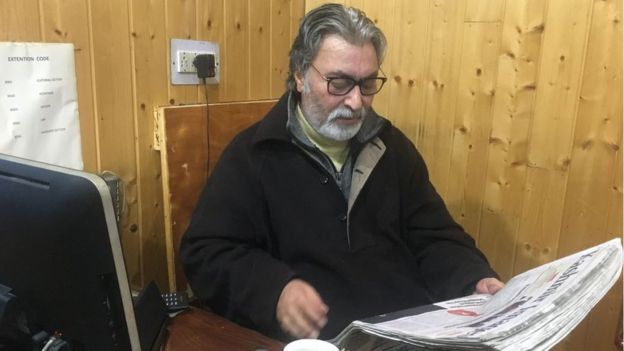
Image copyright MUKHTAR ZAHOORImage caption Basheer Manzar runs Kashmir Images, a local newspaper
Many journalists say that they have been completely cut off from their contacts for months now, making it hard to to maintain their networks or sources.
They also speak of how humiliating it is to beg for wi-fi passwords and hotspots at the cramped media centre in Srinagar, which has less than two dozen computers for hundreds of journalists.
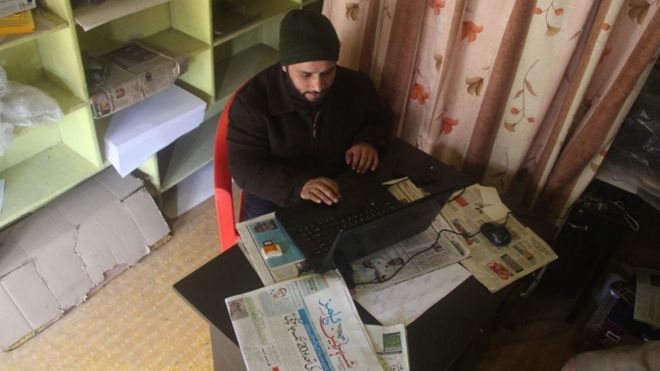
This has left publishers in the lurch too. “My reporters and writers are not able to file,” says Basheer Manzar, the editor of Kashmir Images.
He still publishes a print edition, he says, because if he doesn’t do so for a certain number of days in the month, he will lose the license.
But the website continues to struggle, he adds, because most of the readers in Indian-administered Kashmir have no access to the internet.
“I know what is happening in New York through news on the TV, but I don’t know what’s happening in my hometown.”
The 39 people found dead in a refrigerated trailer in Essex were Chinese nationals, it is understood.
Police are continuing to question lorry driver Mo Robinson, 25, who was arrested on suspicion of murder.
Officers in Northern Ireland have raided two houses and the National Crime Agency said it was working to identify “organised crime groups who may have played a part”.
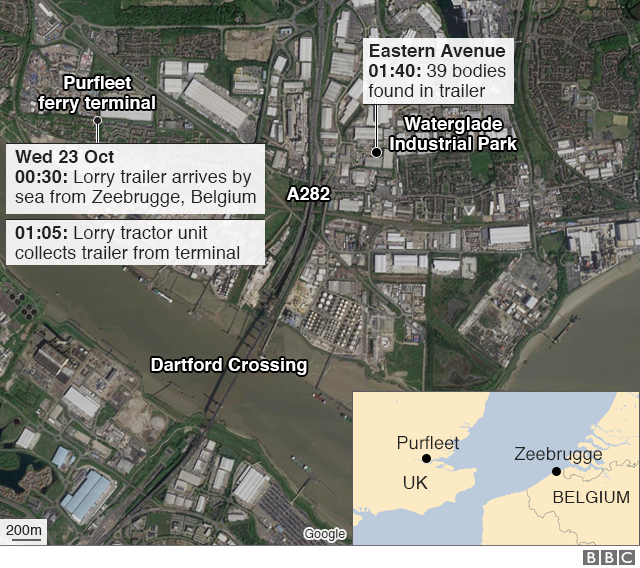
The trailer arrived in Purfleet on the River Thames from Zeebrugge in Belgium.
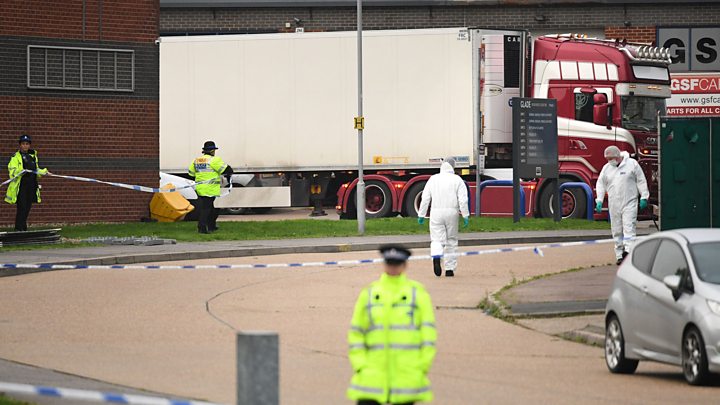
Ambulance staff discovered the bodies of the 38 adults and one teenager in the container at Waterglade Industrial Park in Grays just after 01:30 BST on Wednesday.
The lorry and trailer left the port at Purfleet shortly after 01:05.
Police said the tractor unit – the front part of the lorry – came from Northern Ireland and picked up the trailer from Purfleet.
Image copyright FACEBOOKImage caption The lorry driver has been named locally as Mo Robinson, from County Armagh
Councillor Paul Berry said the village of Laurelvale in County Armagh, where the Robinson family live, was in “complete shock”.
He said he had been in contact with Mr Robinson’s father, who had learned of his son’s arrest on Wednesday through social media.
“The local community is hoping that he [Mo Robinson] has been caught up innocently in this matter but that’s in the hands of Essex Police, and we will leave it in their professional hands to try to catch the perpetrators of this,” he said.
The Belgian Federal Public Prosecutor’s Office said it had opened a case which would focus on the organisers and others involved in the transport.
A spokesman said the container arrived in Zeebrugge at 14:29 on Tuesday and left the port later that afternoon before arriving in Purfleet in the early hours of Wednesday.
It was not clear when the victims were placed in the container or if this happened in Belgium, he said.
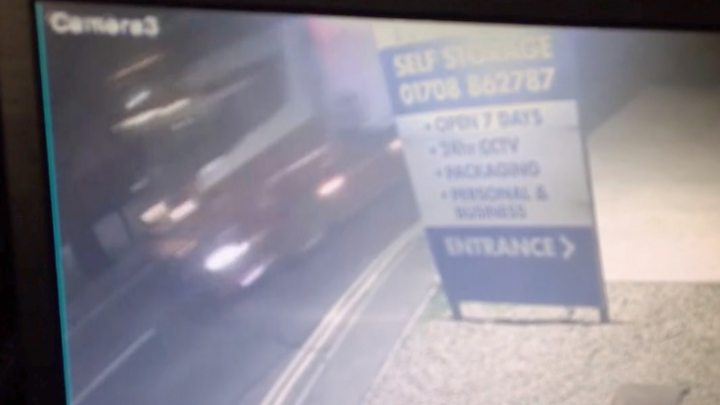
Media caption Essex lorry deaths: CCTV shows arrival at industrial park
St Peter and St Paul’s Church in Grays will be open for people to light candles and say prayers between 12:00 and 14:00.
A vigil is being held at 18:00 outside the Home Office to “call for urgent action to ensure safe passage” for people fleeing war and poverty.
The lorry was moved to a secure site at Tilbury Docks on Wednesday so the bodies could be “recovered while preserving the dignity of the victims”.
Essex Police initially suggested the lorry could be from Bulgaria, but later said officers believed it entered the UK from Belgium.
The force said formal identification of the 39 bodies “could be a lengthy process”.
A spokesman for the Bulgarian foreign affairs ministry said the truck was registered in the country under the name of a company owned by an Irish citizen.
He said it was “highly unlikely” the deceased were Bulgarians.
Shaun Sawyer, the National Police Chiefs Council lead for modern slavery and human trafficking, said while forces had prevented thousands of deaths, “tragically, for 39 people that didn’t work yesterday”.
He told BBC Radio 4’s Today programme even if there were routes perceived as easier to get through, organised criminals would still exploit people who could not access those.
“You can’t turn the United Kingdom into a fortress,” added Mr Sawyer, who is the Chief Constable of Devon and Cornwall Police.
Media caption I’ve seen people running out of a lorry’
Thurrock’s Conservative MP Jackie Doyle-Price said there needed to be an international response.
“We have partnerships in place but those efforts need to be rebooted, this is an international criminal world where many gangs are making lots of money and until states act collectively to tackle that it is going to continue,” she said.
Richard Burnett, chief executive of the Road Haulage Association, said temperatures in refrigerated trailers could be as low as -25C.
He described conditions for anyone inside as “absolutely horrendous”.
Prime Minister Boris Johnson said it was an “unimaginable tragedy and truly heartbreaking”.
In 2015, the bodies of 71 people were found in an abandoned lorry on an Austrian motorway. Police suspected the vehicle was part of a Bulgarian-Hungarian human trafficking operation.
Luxury car owner who blocked hospital emergency access in criminal detention for identity papers scam
Former driver conned her out of US$280,000
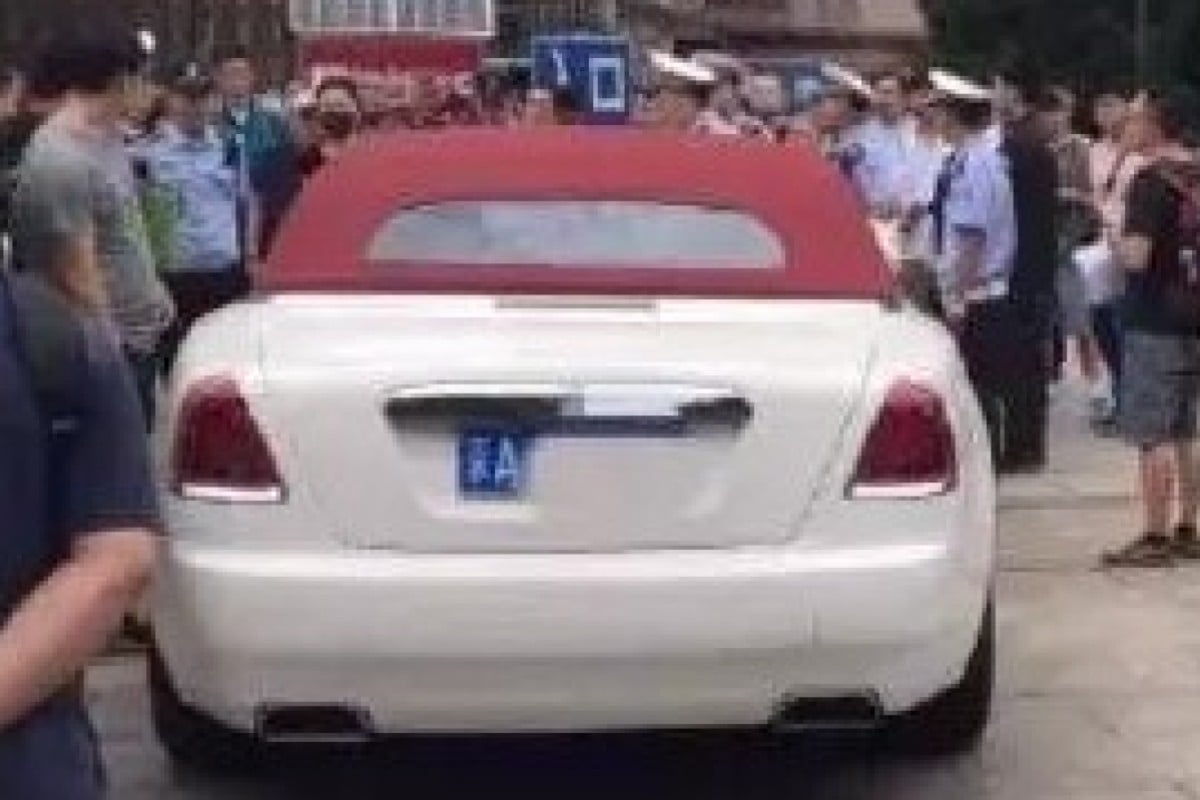
The rare licence plate on this luxury car blocking a hospital emergency access led to a police investigation and criminal detention for the owner and her former driver. Photo: Weibo
A woman who blocked a hospital’s emergency access with her Rolls-Royce two weeks ago lost more than her temper when investigators uncovered a string of unexpected crimes.
Police said on Tuesday that the woman, surnamed Shan, was in criminal detention, along with her former driver, as a result of their investigation. A third man is in administrative detention for fabricating and spreading rumours about the luxury car.
Shan, 31, was originally given five days’ administrative detention for disturbing public order after she argued with a security guard and a police officer in the August 14 incident, which went viral on social media.
The attention of China’s online community was quickly drawn to the rare licence plate on the Rolls-Royce, which blocked emergency access at the Beijing Obstetrics and Gynaecology Hospital for more than an hour.
The licence plate number on the car indicated it had originated from a government agency or from someone who was among the first in China to own a vehicle. Traffic laws ban the transfer of car plate registration, prompting online sleuths to speculate just how Shan had obtained it.
Beijing police were also interested and established a special task force which discovered that Shan had paid her former driver two million yuan (US$280,000) to transfer ownership of the Rolls-Royce to the legal owner of the plate.
Police did not say how much the transfer of the car ownership actually cost, but they were satisfied most of the two million yuan had been spent by the former driver, surnamed Guo. He is now in criminal detention for fraud.
Unfortunately for Shan, police also uncovered her involvement in a scheme to forge, alter and trade identity papers. Details of the enterprise were not disclosed by Beijing police, who said they were working with officers from the location of Shan’s registered permanent residence.
Meanwhile, a 37-year-old man was placed in administrative detention for an unspecified number of days after he fabricated a rumour that Shan’s luxury car had been put up for sale in a second-hand car dealership.
BEIJING (Reuters) – China will exempt Tesla Inc’s (TSLA.O) electric vehicles (EV) from purchase tax, the Ministry of Industry and Information Technology (MIIT) said on its website.
China currently levies a 10% purchase tax on the sale of each vehicle. The move could reduce the cost of buying a Tesla car by up to 99,000 yuan ($13,957.82), according to a post on Tesla’s social media WeChat account.
Tesla’s pre-market share price jumped more than 5% after the announcement.
Sixteen variants – all the Tesla models sold in the country – are listed on the document issued by MIIT, including Model S, X and 3. No reason was given for the decision to exclude the cars from the tax.
The U.S. EV maker is building a plant in Shanghai, the firm’s first overseas factory.
It is due to start production by the end of the year and Tesla has said it should be able to build 3,000 Model 3 vehicles a week in its initial phases.
The plant is slated to have annual output capacity of 250,000 vehicles after production of the Model Y is added.
Sun Ling became a cyber star in China after she responded to an online question: how can you get an overseas education if you are dirt poor?
‘I just put my story out there to show there is a possibility in your life even if you have a low starting point,’ the 29-year-old says
Sun Ling works as a contract software engineer at Google in New York. Photo: Sun Ling
To get where she is today, Sun Ling has beaten very long odds.
Born in a rural hamlet in central China’s Hunan province, Sun shot to Chinese social media stardom for her rags-to-relative-comfort career trajectory. Her story begins in a household of such modest means that her mother had to sell blood to make ends meet and a primary school education interrupted by the need for her hands in the family’s fields.
She has no fancy college degree, having gone to work on the assembly line at a Shenzhen factory directly from high school.
Yet today, the 29-year-old works as a contract software engineer at Google in New York, coding on workdays and playing frisbee on weekends, with an annual salary of about US$120,000.
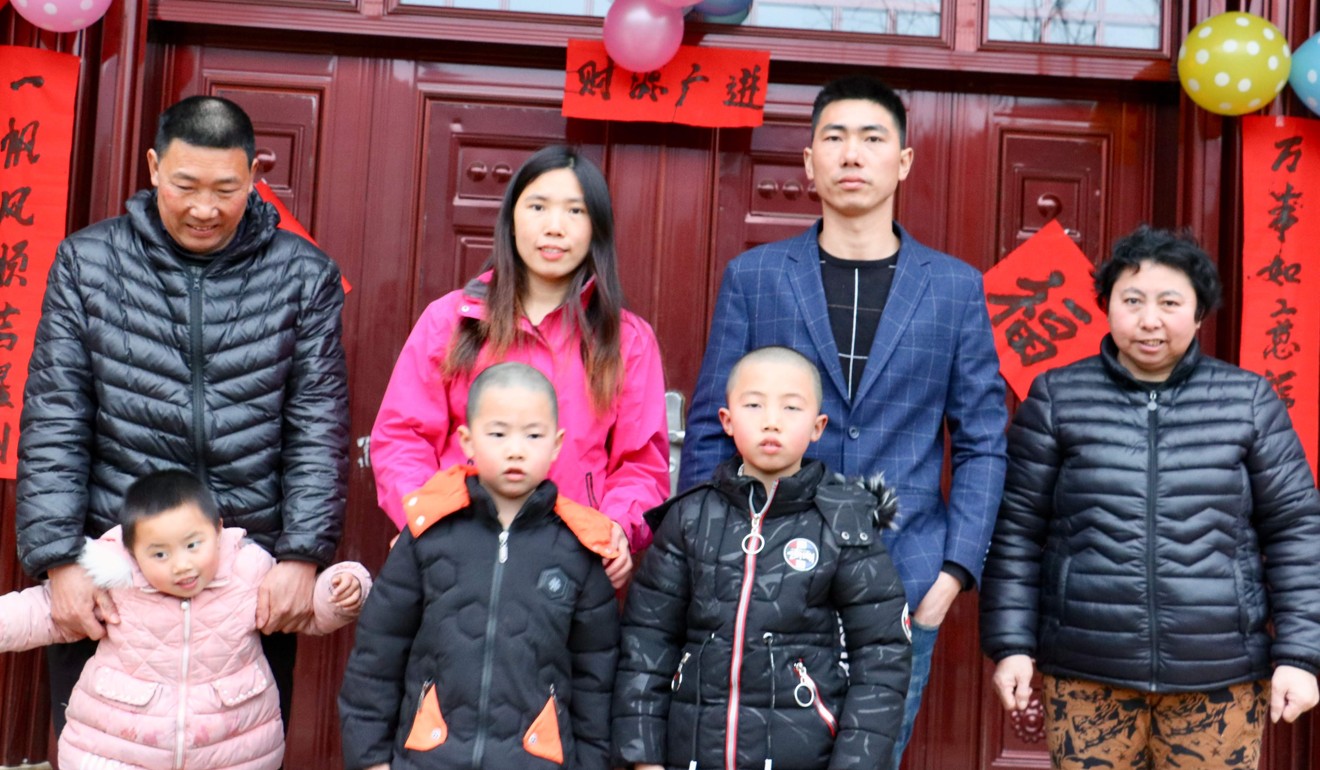
Sun Ling with her parents, brother, niece and nephews in China. Photo: Sun Ling
Sun’s journey from factory worker to high-paid software engineer has garnered Chinese social media headlines such as “the most inspiring story of all times”, and internet users have applauded her as a “positive energy girl”.
But others have not been as flattering, with some questioning the credibility of her story and saying what she has accomplished is almost too difficult to be true amid growing concern about the lack of opportunity and social mobility in China.
“I don’t consider myself a success and I have no intention to become a role model,” Sun told the South China Morning Post on Thursday. “I just put my story out there to show there is a possibility in your life even if you have a low starting point.”
A look inside Google’s new campus outside Silicon Valley
Her story became known in China after she posted an answer on Zhihu, the Chinese version of Quora, responding a question: how can you get an overseas education if you are dirt poor?
In the answer she posted earlier last month, Sun detailed her 10-year journey in making the seemingly impossible possible.
“It is not the orthodox way of studying overseas, just for your reference,” Sun wrote in the post, which has received nearly 35,000 likes on Zhihu. The answer was picked up by other social media; one of her most popular stories, which is circulating on WeChat, has been viewed more than 100,000 times.
Sun said her story was not a textbook “American dream” or “Chinese dream comes true” experience, but rather one driven by the simple motivation to forge a better life.
I just put my story out there to show there is a possibility in your life even if you have a low starting point Sun Ling
When Sun was born in 1990, her parents were farmers in a small village about a 2½-hour drive from Hunan province’s capital city, Changsha. Growing up in a place where a middle school education was considered good enough for a girl, Sun was forced to temporarily drop out of school when she was about 13 to ease the financial burden on her parents, who favoured her brother, the only son in the family.
“I begged and begged till my father allowed me to return to school,” she said. “But to be honest, my strong desire to stay at school at the moment was mainly because farming was too hard. The work got calluses on my hands.”
Sun in her home village in Hunan province in 2013. Photo: Sun Ling
Among her 11 village friends, she was the only one who completed high school. But the education she received at the rural school failed to get her into any college in China. So, like her peers in the village, she went to Shenzhen to become a factory worker.
But the routine of shifts spent examining the quality of batteries bored her. “I have no idea what kind of life I want to live, even today. But I am very certain about the life I don’t want to live,” Sun said.
She quit the factory job after eight months and enrolled in a computer training programme to learn what she regarded as the must-have skills to leave the blue-collar life behind.
That is the thing I like about America: they value what you are able to do more than where you come fromSun Ling
To have enough money to complete the training to become an entry-level software engineer, she worked three part-time jobs, including sending out fliers and waitressing at restaurants, and lived on three credit cards.
After more than a year of training and a debt of 10,000 yuan (US$1,450), in September 2011 she was hired as a software engineer by a Shenzhen company responsible for developing an online payroll system. With her own cubicle, a monthly salary of 4,000 yuan and weekends for herself, the job met all of Sun’s expectation as a “white-collar office lady”.
But the excitement of the new life didn’t last. She started to feel small in a big city where “everyone else is so excellent, with fancy degrees”.
To overcome her educational disadvantage, she signed up for an English training programme and a long-distance programme that allowed her to earn a degree from Shenzhen University. All of this took place while she maintained her software engineering job.
To practise her English, in 2014 she picked up ultimate frisbee, a game where in Shenzhen at the time, most of the players were expats. With a different circle of friends, most of whom had overseas experience, Sun started to dream of a life outside China’s borders.
Sun was born in a rural hamlet in central China’s Hunan province. Photo: Sun Ling
In early 2017, she discovered a master’s programme at Maharishi University of Management in Fairfield, Iowa, which features a controversial “consciousness-based education” system that includes the practice of meditation.
Sun applied and was accepted into the university’s computer science programme.
According to her, its design fit her well as it allowed students to have internships or jobs on a work-study visa after months of attending classes on campus. The rest of the programme could be completed remotely.
After nine months studying on campus and 60 job interviews, Sun received a job offer from EPAM Systems, a vendor for Google, late last year.
Google moving some hardware production out of China
Of her work as a contract software engineer at Google’s Manhattan headquarters, Sun said she was very “lucky” since many of her colleagues had a PhD or studied at top-tier American universities.
“But none of them treat me like I don’t deserve all of this,” she said. “That is the thing I like about America: they value what you are able to do more than where you come from.”
However, her story has not been without controversy in China’s cyber world.
Supporters have sent an increasing number of messages from various online channels, thanking her for an inspiring story and seeking her advice on life decisions. Sceptics claim she just got lucky, and some have accused her of being an advertising tool for Maharishi University of Management.
Chinese family paid US$1.2 million for Yale spot. Why weren’t they charged?
“At first, I got really angry,” Sun said. “I don’t think I deserve all the criticism for simply sharing my real life experience. But then I realised that not everyone has the same attitude in life.”
“I had no resources and I had very few options,” she said. “It is natural that people think it is difficult or even impossible to do. But for me it is actually not that difficult. Just keep learning and keep trying new things step by step, day by day.”
Her journey continues. Sun has been practising English and trying to fit better into her life in the US by doing short video interviews on the streets of New York streets. She has also taken courses about artificial intelligence online.
“My next goal is to become an in-house Google software engineer,” she said. “It won’t be easy. But your life begins at the end of your comfort zone.”
More than one billion views of Mulan discussion in China hours after trailer screens during Women’s World Cup final
While some quibble over technical details, the vast majority are eagerly awaiting Disney’s first Chinese princess
Crystal Liu Yifei as Mulan in Disney’s live-action film which is eagerly anticipated in China.
Anticipation over Disney’s live-action movie Mulan is running high in China, with more than one billion views of the subject on Chinese social media in the hours after a teaser trailer was unveiled during Sunday’s final game of the Women’s World Cup.
While some online commenters had their doubts over technical details, most internet users appeared exhilarated at the prospect of Disney’s first Chinese princess, played by Chinese-American actress Crystal Liu Yifei.
The big reveals in Disney’s Mulan trailer, and fan reaction
By Monday afternoon, the hashtag Hua Mulan had been viewed more than one billion times on the Twitter-like Weibo service and nearly 770,000 comments had been made on the topic. Some 450 million views had been recorded for the topics “Mushu no longer in the movie Mulan” – a reference to the heroine’s fast-talking dragon companion in the 1998 animation – and “the look of Liu Yifei”.
“I got carried away by the fighting scenes. Mulan is courageous and strong. I look forward to seeing the eastern heroine Hua Mulan going global,” said one Weibo user.
“This is the first Chinese Disney princess. It’s so great and we feel so proud,” said another.
The movie, scheduled for release on March 27 next year, casts renowned action star Jet Li as the emperor who ordered the military draft to fight a northern invasion, and internationally-acclaimed actress Gong Li as a powerful witch. Donnie Yen Ji-dan, star of Rogue One: A Star Wars Story and the Ip Man movies, plays Mulan’s martial arts mentor Commander Tung.
Donnie Yen nails ‘Bottle Cap Challenge’ blindfolded
Mulan tells the story of a fabled Chinese heroine who posed as a man and became one of the greatest warriors of her time, arguably in the Northern Wei period, or about AD400 to 600. She is one China’s best known fictional characters, with numerous theatrical references and poems which many Chinese know by heart.
The familiarity of the tale has presented a challenge for the production, with many Chinese online commenters questioning the historical details which can be discerned from the sketchy details provided by the trailer.
Many took exception to the opening scene of Mulan riding a horse to her home, built in the architectural style of tulou, common in the southern province of Fujian, when the legend places the heroine in the north.
“The poem said Mulan bade farewell to her parents in the morning and slept near the Yellow River at night. How can she live in a tulou in Fujian? Did she take a fast-rail train?” one internet user teased.
Another used the example to call for Disney to pay more attention to technical details when telling Chinese stories. “Please don’t be arrogant about Chinese stories.”
Also questioned in China was the message from the trailer that Mulan had become a warrior to escape a forced marriage, rather than the well known detail that she was saving her father from being drafted into the military in an act of filial piety.
But the overwhelming response was that fans should put aside their own perceptions of Mulan and celebrate the new edition as one of the few fully-Asian cast international movies, as well as its depiction of a powerful woman and Chinese values as “the only Disney princess who was not saved by a prince but instead became a fighting warrior”.
“Can our domestically produced period dramas meet the standard if we are here to be picky about looks and architecture? Even domestic directors can’t be perfect in restoring ancient costumes, make-up or architecture. Why should we ask so much from a foreign one? We should celebrate the cultural exchange rather than splitting hairs to find faults,” said one Weibo user.
“Mulan in the battlefield has outperformed men and showcased the traditional values of courage and protecting the country when needed. Chinese values, presented to the world by Chinese actors, is worth looking forward to. Please throw away the technical faults such as architecture,” said another.
Chinese social media finds light relief in struggle over gaokao Question 12 in an American cafe
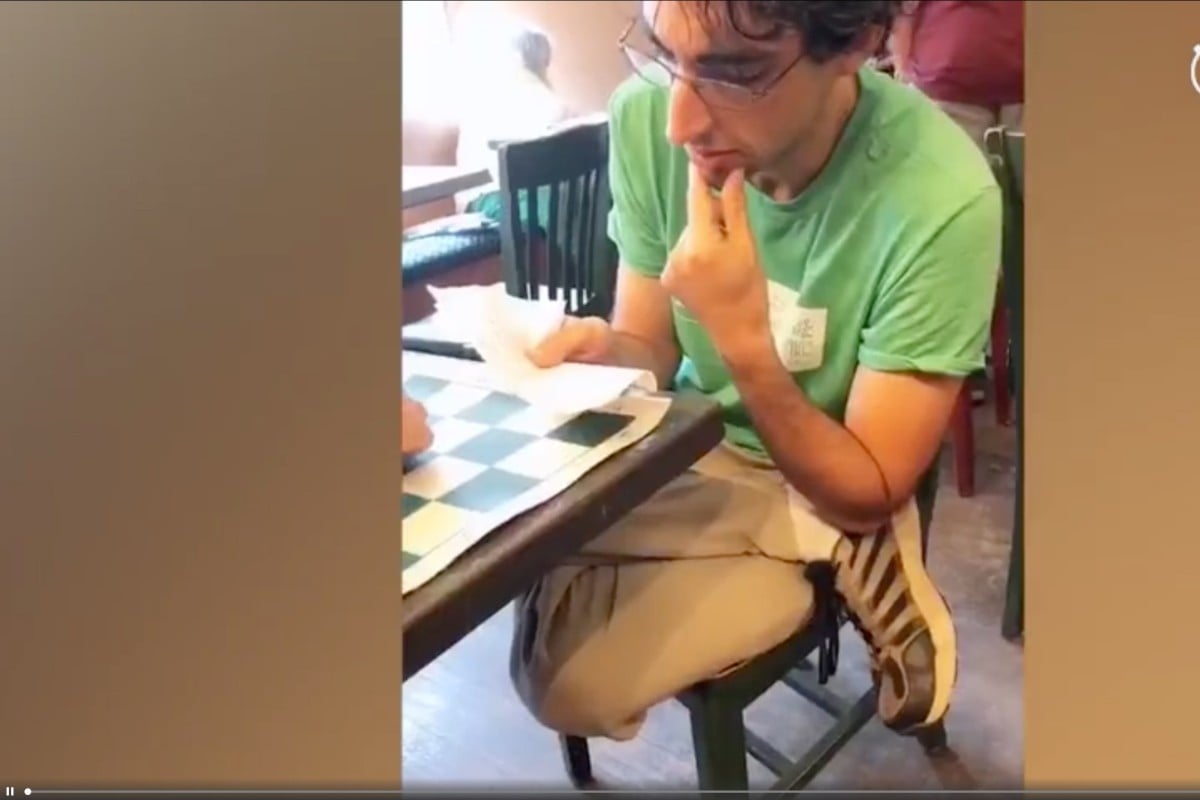
Video of a US middle school maths teacher trying to complete a mathematics question from a Chinese exam paper has been widely shared on Chinese social media. Photo: Weibo
A video of a US secondary school maths teacher comically trying – and failing – to complete a mathematics question from a Chinese gaokao exam paper has been widely shared on social media in China.
The video was shared on June 8 by an unidentified Chinese teacher working in the United States. It shows her friend, a US secondary school maths teacher, trying to solve a question from this year’s gaokao, the annual Chinese college entrance examination that has a reputation for difficulty, even by international standards.
The question was taken from section II of the natural sciences mathematics exam paper on the national level, which is generally a more challenging test given to students who select the science track.
“I heard this year’s gaokao maths questions are very difficult so I searched online and tried to solve one in a cafe. But it has been a long time, so I forgot how to solve it,” the Chinese teacher told online news platform Guancha Syndicate.
At that moment, the US maths teacher was sitting next to her and playing chess with his friends, “so I asked if he could help me solve a question, but that posed a big challenge for him”, she said.
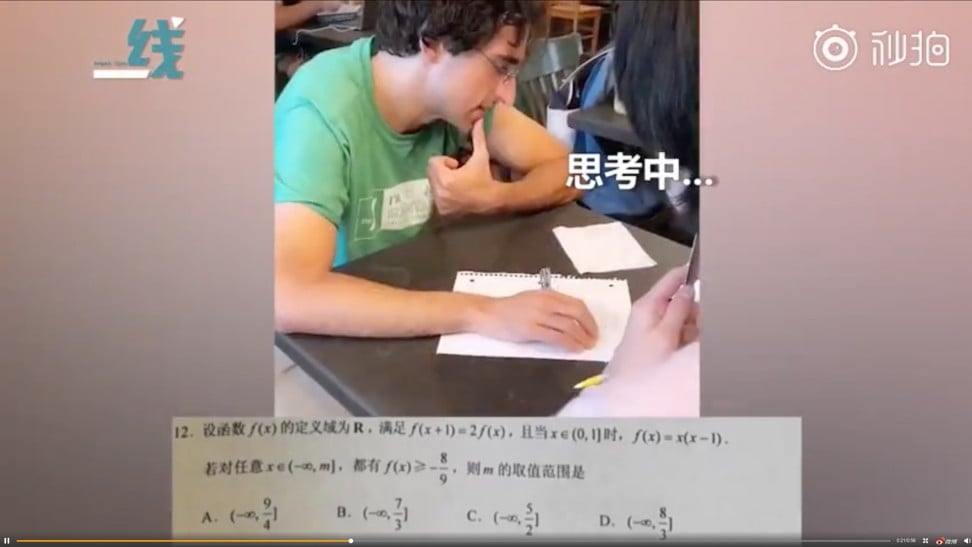
In the video, the US teacher looks confused by question 12, a multiple choice question about functions. He reads it for three minutes, then starts to analyse and explain the steps to the Chinese teacher.
He first tries the method of substitution but fails and finally chooses D by exclusion.
The US secondary school maths teacher still doesn’t know his answer was wrong. Photo: Weibo
“I think it’s this one (option D), it’s matching, it’s D!,” the American teacher says confidently. Later in the video, the Chinese teacher explains, “He spent around seven to eight minutes on this question and finally chose D, so he should get it correct, shouldn’t he?”
However, the answer turned out to be B, much to the amusement of social media users. Posts about the video have been viewed 140 million times on microblogging site Weibo, and the video has been picked up by other Chinese news media.
Crunch time as gaokao exam season starts for China’s university hopefuls
Weibo users shared their views below the post, with comments such as, “Question 12 is usually the hardest one”; “these multiple choices should not take more than 50 seconds”; and “he would not be able to finish the whole paper at this speed”.
According to the Chinese teacher, her US friend still doesn’t know his answer was wrong.
“He just said the question is ‘worded really weird’ and he cannot clearly figure it out,” she said.
“I believe my father would have been thrilled to know this,” Li’s dad Lee Hsien Yang said
Sex between men remains illegal in Singapore but the city state’s first PM had been known to express a different opinion from the government in his later years
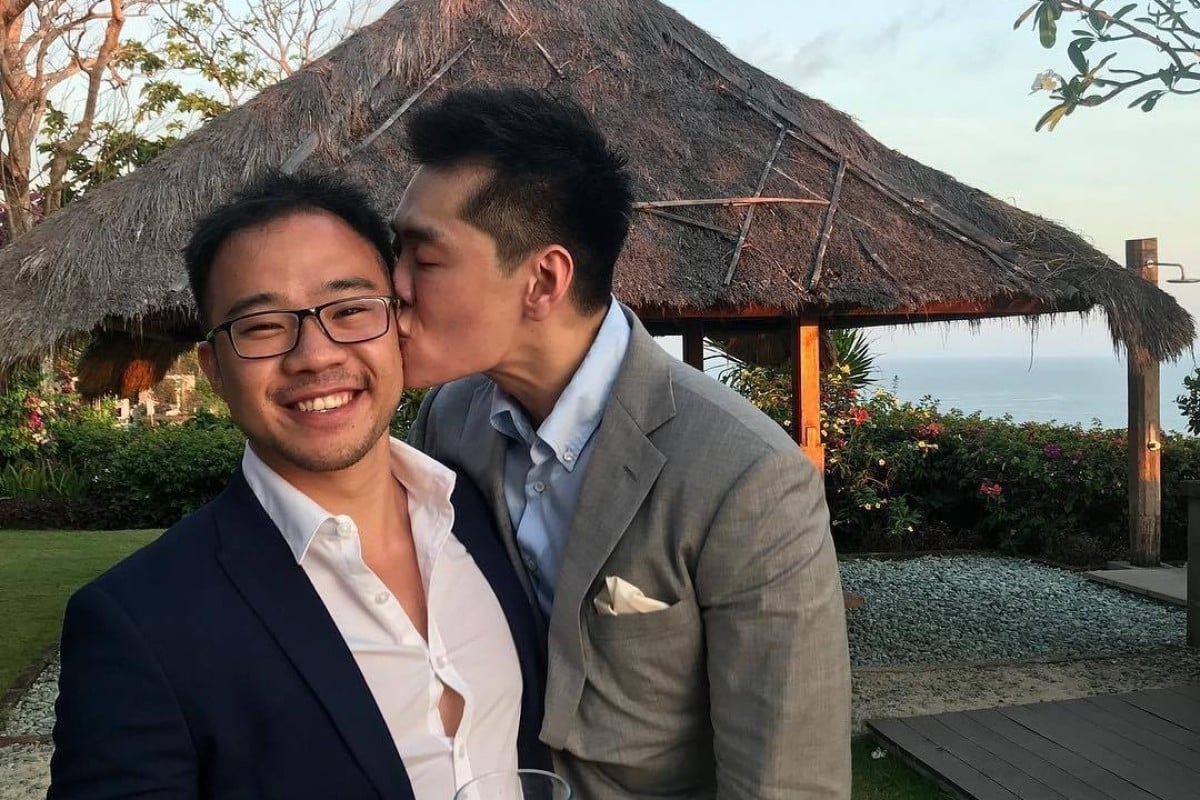
Li Huanwu (R) with his boyfriend Heng Yirui. Photo: Facebook
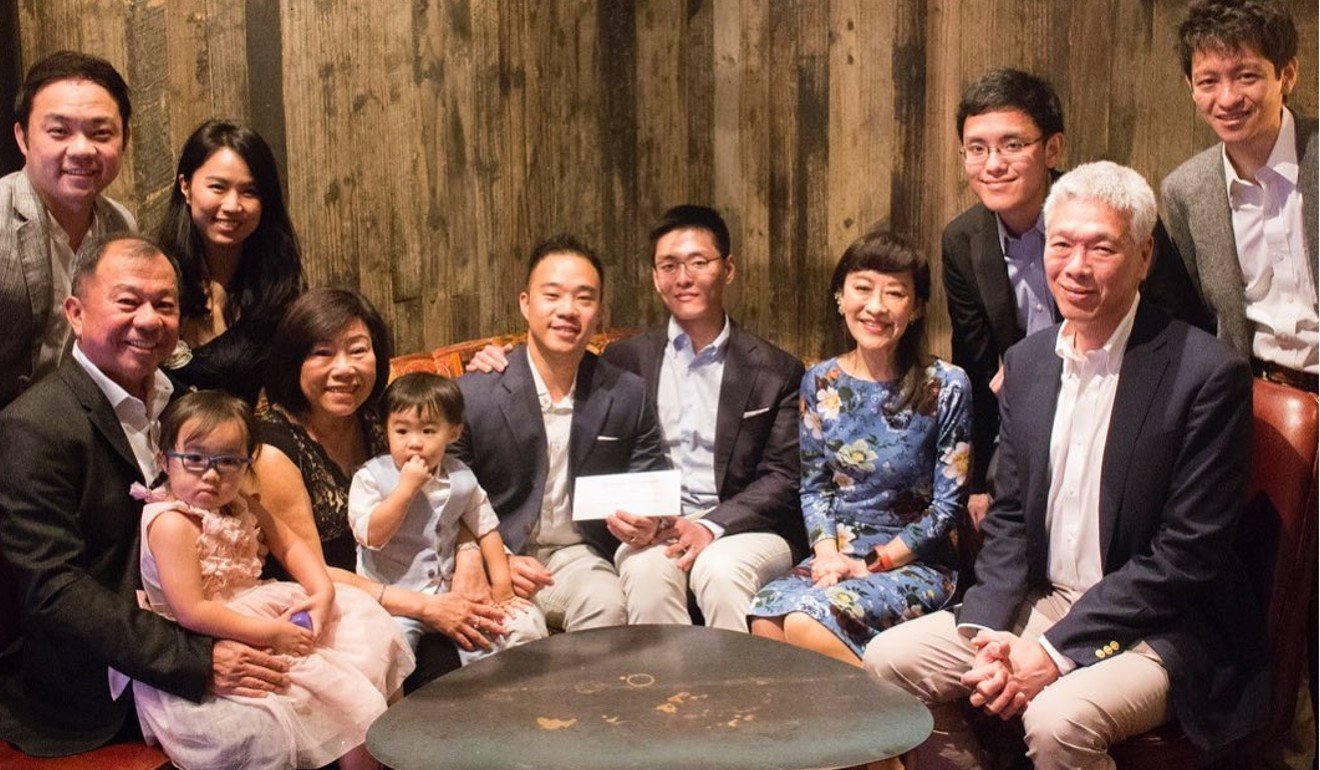
revealed on Friday he had married his boyfriend in South Africa, prompting a flurry of mostly positive reactions in his country, where male homosexuality is banned, and around the region.
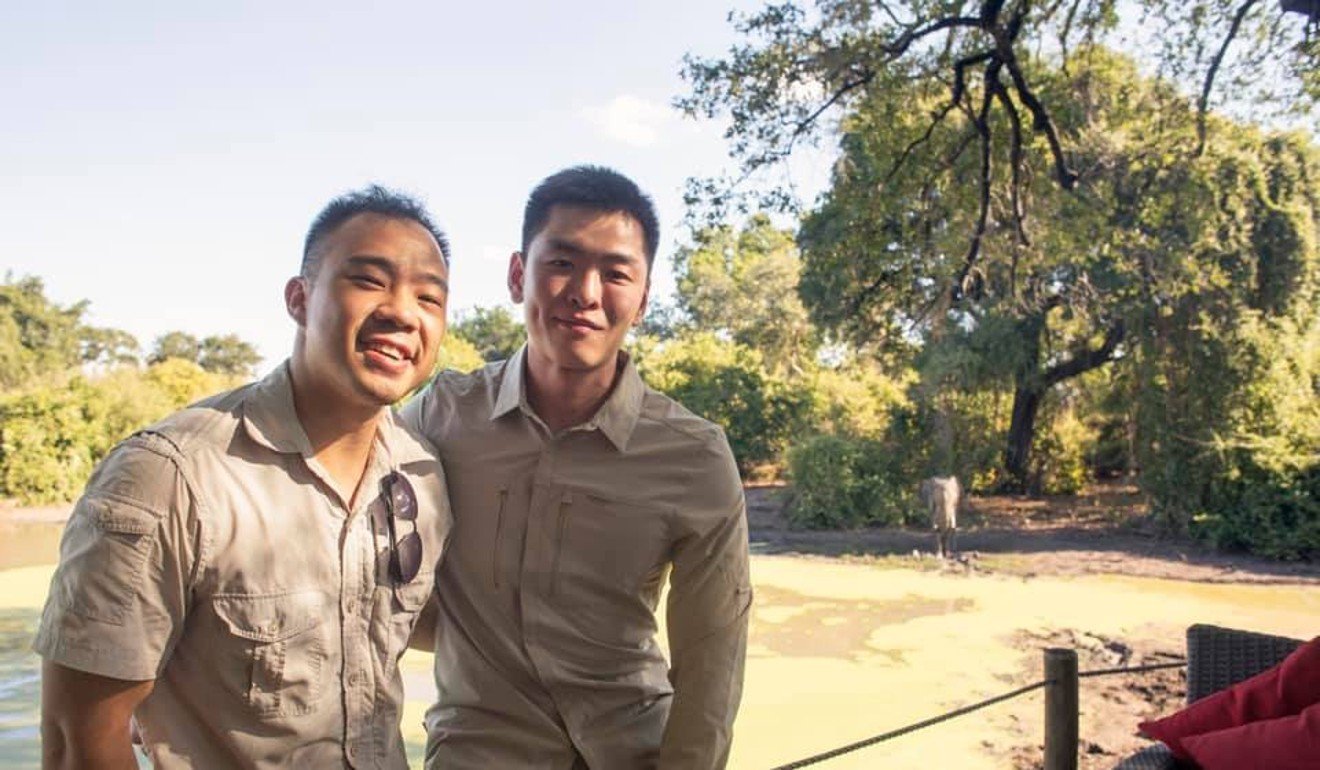
Li Huanwu, the second son of Lee Hsien Yang, was seen with his partner Heng Yirui in an Instagram post the latter shared online on Friday with a caption that read: “Today I marry my soulmate. Looking forward to a lifetime of moments like this with [Huanwu].”
The picture showed both in matching white shirts and khaki trousers at a game reserve in Cape Town.
“I’ll echo my comment I made to Pink Dot – today would have been unimaginable to us growing up. We are overjoyed to share this occasion in the glowing company of friends and family,” Li told the South China Morning Post.
The happy couple with their families. Photo: Facebook
Li’s father, Lee Hsien Yang, is himself the second and youngest son of the elder Lee, who died in March 2015.
Asked about his son’s nuptials, Lee told the Post : “I believe my father would have been thrilled to know this.”
under Section 377A of the Penal Code but Lee Kuan Yew, who was Prime Minister for 31 years until 1990, had been known to express a different opinion from the government in his later years.
Li’s wedding was held in South Africa, where same-sex marriages were legalised in 2006. It also came amid celebrations lauding
, including Mothership.sg and The Independent, were quick to pick up on the announcement while mainstream media outlets steered clear of reporting it.
Mothership’s Facebook post by Saturday had attracted 1,700 likes and 400 comments, mostly positive and congratulating the pair. One user, Donna Lim, commented: “Congrats! Love has no boundaries.”
In mainland China, multiple posts of Li’s wedding surfaced on social media app WeChat, which have garnered hundreds of likes and comments as of Saturday afternoon.
A few reacted with disdain but many of the Chinese commentators also congratulated the couple, with some hoping that Li would front the fight for gay rights in Singapore.
Why some members of Singapore’s LGBT community prefer life in the shadows
“…Homosexuality is illegal in Singapore, and now, Lee Kuan Yew’s grandson is taking the lead,” said a netizen with the username Tired and Humorous.
Another netizen added: “Gay love is still love, homophobia is a disease.”
Comments on the WeChat posts also noted how the lesbian, gay, bisexual and transgender (
) community in Singapore were subject to a law that criminalises sex between gay men.
“It turns out that Singapore is so traditional, it can lead to a conviction,” said one user named Facecover.
The Drum Tower, another user, added: “Singapore’s anti-same sex law was set by the British colony, but now the UK has legalised same-sex marriage.”
Li Huanwu had gone public about his partner more than a year before the wedding. In 2018, he and Heng appeared in a lesbian, gay, bisexual and transgender campaign titled Out in Singapore. Both had also attended
, an annual celebration to support the LGBT community in Singapore that year.
‘Worse than the Kardashians’: family feud turns ugly as siblings target PM’s wife
Li Huanwu’s father, Hsien Yang and his sister Lee Wei Ling are estranged from their eldest brother and current Singapore Prime Minister Lee Hsien Loong because of a dispute over their father’s wishes to have their
In his book Hard Truths to Keep Singapore Going published in 2011, the elder Lee, who retired from government that same year, said that homosexuality was “not a lifestyle”.
Li Huanwu (R) and Heng Yirui. Photo: Facebook
“You can read the books you want, all the articles. You know that there’s a genetic difference,” Lee said.
“They are born that way and that’s that. So if two men or two women are that way, just leave them alone.”
Earlier, in a book The Wit & Wisdom of Lee Kuan Yew, published in 2007, Lee was quoted as saying: “If in fact it is true, and I have asked doctors this, that you are genetically born a homosexual – because that’s the nature of the genetic random transmission of genes – you can’t help it. So why should we criminalise it?”
Police say woman told toddler to use a rubbish bin when he needed to go to the toilet then got into argument with driver after he called her ‘uncivilised’
Security camera footage shows her bashing on compartment door and grabbing the man’s coat as he is driving
Mother detained over bus driver attack after letting son urinate on bus
4 Mar 2019
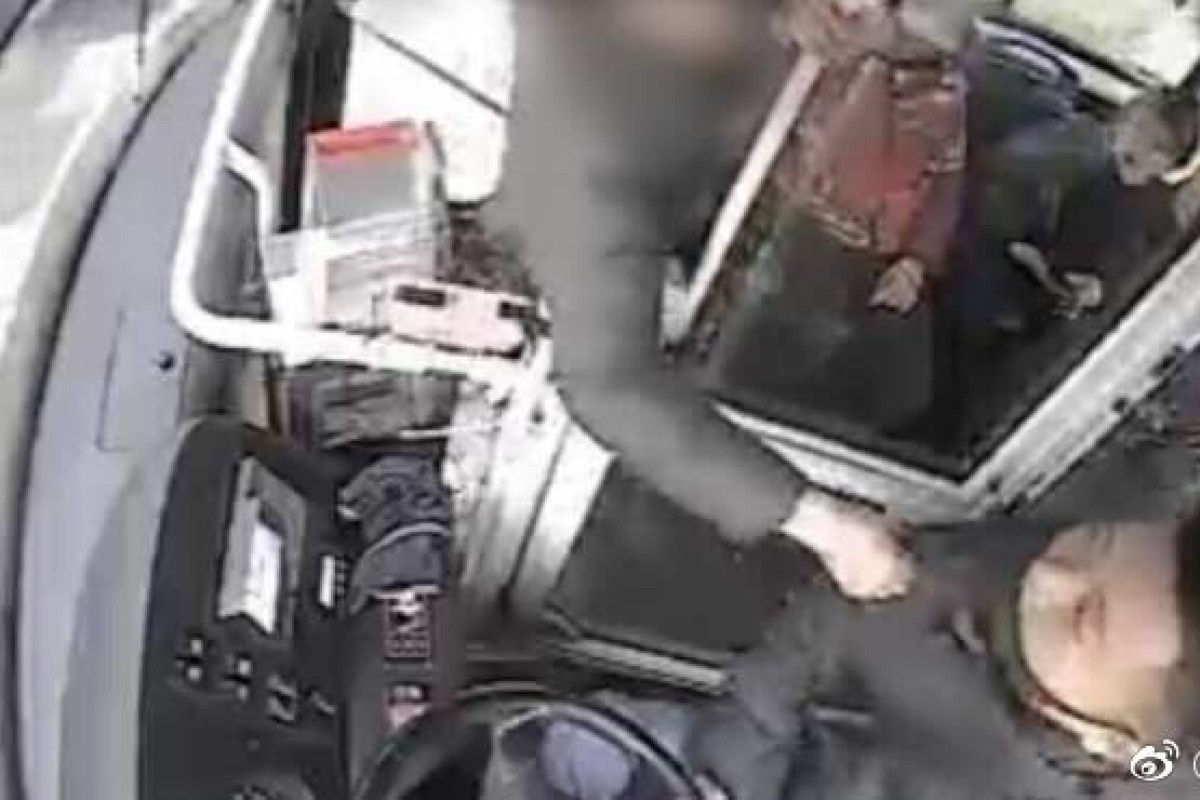
The woman is seen in security camera footage grabbing the bus driver’s coat while he is behind the wheel. Photo: Weibo
A mother in central China has been detained after she allowed her two-year-old son to urinate in a rubbish bin on a bus then attacked the driver when he told her she was “uncivilised”.
Security camera footage of the incident in Dazhi, Hubei province on Saturday shows the woman supporting the toddler by the bin on the floor of the bus while he urinates in front of the other passengers.
She is then seen rushing up to the driver and arguing with him after he complains about her behaviour, bashing on the compartment door and grabbing the man’s coat as he is driving.
A police officer told news website PearVideo on Sunday that the woman, identified only by her surname Chen, said the boy needed to go to the toilet while they were on the bus so she took him over to the bin.
“The driver saw them and said she was uncivilised, and they got into an argument over it,” the officer said. “Chen became agitated – she hit the driver’s compartment door and reached around to attack him while he was driving.”
The driver, who was not identified, is seen in the security footage calmly pulling over and calling the police while the woman is attacking him.
Chen has been placed under criminal detention for posing a threat to public security and Dazhi police are investigating the case, according to the report.
It comes after a series of recent attacks on bus drivers in China, including an accident in October when an angry passenger who missed her stop assaulted the driver, causing the bus to veer off a bridge and crash into the Yangtze River in Chongqing, killing all 15 people on board.
A police investigation found that the 48-year-old woman had been fighting with the driver as he tried to steer the bus when the crash happened.
Reacting to the latest case, some social media users said they understood the mother’s situation, but it has angered others, who say she should have used a diaper or got off the bus at the next stop.
“Anyone might need to use the toilet [on a bus], especially a kid, but parents should take heed of the criticism – she was clearly in the wrong,” one person wrote on Weibo, China’s Twitter.
There have been other cases in recent years of Chinese parents sparking anger for letting their children urinate in public – on the mainland and elsewhere. Last month, photos of a Chinese tourist allowing her son to pee on the floor of the Forbidden City in Beijing triggered a strong reaction on social media, with many people criticising the woman.


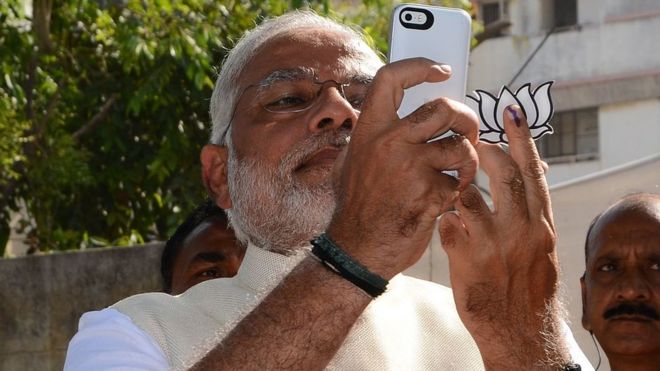 Image copyright STRDEL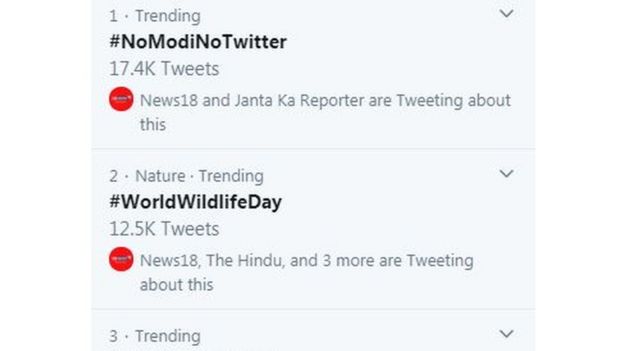






 CHINDIA ALERT: You'll be living in their world, very soon