Chindia Alert: You’ll be Living in their World Very Soon
aims to alert you to the threats and opportunities that China and India present. China and India require serious attention; case of ‘hidden dragon and crouching tiger’.
Without this attention, governments, businesses and, indeed, individuals may find themselves at a great disadvantage sooner rather than later.
The POSTs (front webpages) are mainly 'cuttings' from reliable sources, updated continuously.
The PAGEs (see Tabs, above) attempt to make the information more meaningful by putting some structure to the information we have researched and assembled since 2006.
Image copyright GETTY IMAGESImage caption Within a week of reopening, India has seen a sharp spike in cases
India is roaring – rather than inching – back to life amid a record spike in Covid-19 infections. The BBC’s Aparna Alluri finds out why.
On Saturday, India’s government announced plans to end a national lockdown that began on 25 March.
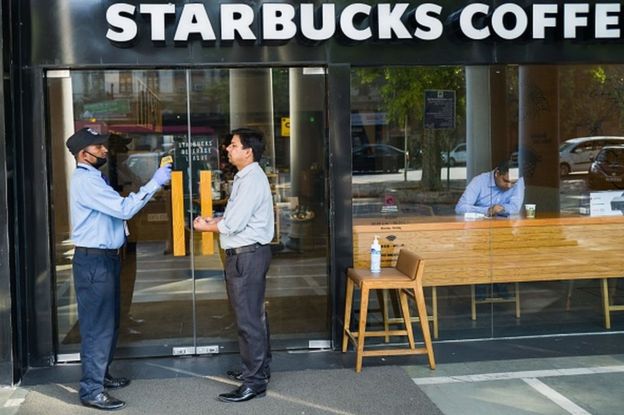
This was expected – the roads, and even the skies, have been busy for the last 10 days since restrictions started to ease for the first time in two months. Many businesses and workplaces are already open, construction has re-started, markets are crowded and parks are filling up. Soon, hotels, restaurants, malls, places of worship, schools and colleges will also reopen.
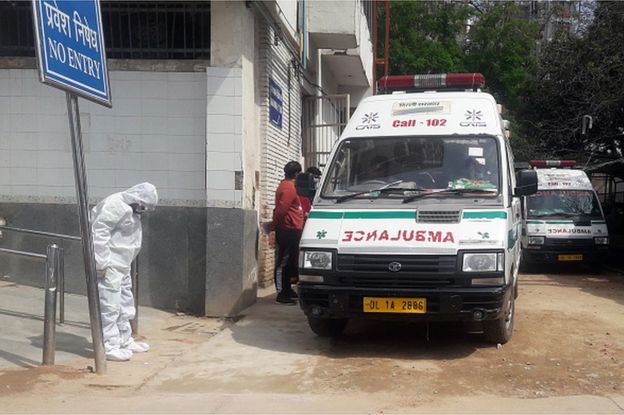
But the pandemic continues to rage. When India went into lockdown, it had reported 519 confirmed cases and 10 deaths. Now, its case tally has crossed 173,000, with 4,971 deaths. It added nearly 8,000 new cases on Saturday alone – the latest in a slew of record single-day spikes.
Image copyright GETTY IMAGESImage caption Fast food chains like McDonald’s have begun reopening outlets in parts of India.
So, why the rush to reopen?
The lockdown is simply unaffordable
“It’s certainly time to lift the lockdown,” says Gautam Menon, a professor and researcher on models of infectious diseases.
“Beyond a point, it’s hard to sustain a lockdown that has gone on for so long – economically, socially and psychologically.”
From day one, India’s lockdown came at a huge cost, especially since so many of its people live on a daily wage or close to it. It put food supply chains at risk, cost millions their livelihood, and throttled every kind of business – from car manufacturers to high-end fashion to the corner shop selling tobacco. As the economy sputtered and unemployment rose, India’s growth forecast tumbled to a 30-year-low.
Raghuram Rajan, an economist and former central bank governor, said at the end of April that the country needed to open up quickly, and any further lockdowns would be “devastating”.
The opinion is shared by global consultant Mckinsey, whose report from earlier this month said India’s economy must be “managed alongside persistent infection risks”.
Image copyright GETTY IMAGESImage caption As restrictions ease, Indians are slowly getting used to the new normal
“The original purpose of the lockdowns was to delay the spike so we can put health services and systems in place, so we are able handle the spike [when it comes],” says Dr N Devadasan, a public health expert. “That objective, to a large extent, has been met.”
In the last two months, India has turned stadia, schools and even train coaches into quarantine centres, added and expanded Covid-19 wards in hospitals, and ramped up testing as well as production of protective gear. While grave challenges remain and shortages persist, the consensus seems to be that the government has bought as much time as possible.
“We have used the lockdown period to prepare ourselves… Now is the time to revive the economy,” Delhi Chief Minister Arvind Kejriwal said last week.
The silver lining
For weeks, India’s relatively low Covid-19 numbers baffled experts everywhere. Despite the dense population, disease burden and underfunded public hospitals, there was no deluge of infections or fatalities. Low testing rates explain the former, but not the latter.
In fact, India made global headlines not for its caseload but for its botched handling of the lockdown – millions of informal workers, largely migrants, were left jobless overnight. Scared and unsure, many tried to return home, often desperate enough to walk, cycle or hitchhike across hundreds of kilometres.
Perhaps the choice – between a virus that didn’t appear to be wreaking havoc yet, and a lockdown that certainly was – seemed obvious to the government.
But that is changing quickly as cases shoot up. “I suspect we will keep finding more and more cases, but they will mostly be asymptomatic or will have mild symptoms,” Dr Devadasan says.
The hope – which is also encouraging the government to reopen – is that most of India’s undetected infections are not severe enough to require hospitalisation. And so far, except in Mumbai city, there has been no dearth of hospital beds.
The government, for instance, has been touting India’s mortality rate as a silver lining – at nearly 3%, it’s among the lowest in the world.
But some are unconvinced by that. Dr Jacob John, a prominent virologist, says India has never had, and still doesn’t have, a robust system for recording deaths – in his view, the government is certainly missing Covid-19 deaths because they have no way of knowing of every fatality.
Image copyright GETTY IMAGESImage caption Indians are venturing out again but it’s unclear how many of them are asymptomatic.
And, he says, “what we must aim for is flattening the mortality curve, not necessarily the epidemic curve”.
Dr John, like several other experts, also predicts a peak in July or August, and believes the country is reopening so quickly because the “government realised the futility of such leaky lockdowns”.
A shift in strategy
So is the government gearing up for another lockdown when the peak comes?
While Dr Menon believes the lockdown was well-timed, he says it was too focused on cases coming from abroad.
“There was a hope that by controlling that, we could prevent epidemic spread, but how effective was our screening [at airports]?”
Now, he adds, is the time for “localised lockdowns”.
Media caption Coronavirus: Death and despair for migrants on Indian roads
The federal government has left it to states to decide where, how and to what extent to lift the lockdown as the virus’ progression varies wildly across India.
Maharashtra alone accounts for more than a third of India’s active cases. Add Tamil Nadu, Gujarat and Delhi, and that makes up 67% of the national total.
But other states – such as Bihar – are already seeing a sharp uptick as migrant workers return home.
“Initially, most of your cases were in the cities,” Dr Devadasan says. “But we kept the migrant workers in cities and didn’t allow them to go home. Now, we are sending them back. We have facilitated transporting the virus from urban areas to rural areas.”
While the government has said how many infections have been avoided – up to 300,000 – and lives saved – up to 71,000 – by the lockdown, there is no indication of what lies ahead.
There is only advice: The day the government began to ease restrictions, Mr Kejriwal tweeted, urging people to “follow discipline and control the coronavirus disease” as it was their “responsibility”.
Image copyright GETTY IMAGESImage caption Social distancing will prove to be India’s biggest post-lockdown challenge
Because the alternative – of curfews and constant policing – is unsustainable.
“My worry is more the circumstances of people – it’s not as though they have an option to practise social distancing,” Dr Menon says.
And they don’t – not in joint family homes or one-room hovels packed together in slums, not in crowded markets or busy streets where jostling is second nature, or in temples, mosques, weddings or religious processions where more is always merrier.
The overwhelming message is that the virus is here to stay, and we have to learn to live with it – and the only way to do that, it appears, is to let people live with it.
City at centre of outbreak finally able to declare itself clear of disease after months in lockdown and thousands of deaths
Risk of infection remains, however, with some patients testing positive for coronavirus that causes disease without showing symptoms
Ferries and other public transport services resumed in Wuhan last week. Photo: Xinhua
The city of Wuhan, the initial epicentre of the coronavirus pandemic, no longer has any Covid-19 patients in hospital after the last 12 were discharged on Sunday.
Their release ended a four-month nightmare for the city, where the disease was first detected in December. The number of patients being treated for Covid-19, the disease caused by a new coronavirus, peaked on February 18 at 38,020 – nearly 10,000 of whom were in severe or critical condition.
“With the joint efforts of Wuhan and the national medical aid given to Hubei province, all cases of Covid-19 in Wuhan were cleared as of April 26,” Mi Feng, a spokesman for the National Health Commission said on Sunday afternoon.
The announcement came only one day after the city discharged the last patient who had been in a severe condition. That patient also was the last severe case in Hubei province.
The last patient discharged from Wuhan Chest Hospital, a 77-year-old man surnamed Ding, twice tested negative for Sars-CoV-2, the virus that causes Covid-19, and was released at noon on Sunday.
“I missed my family so much!” Ding told Changjing Daily.
Another unidentified patient exclaimed as he left the hospital: “The air outside is so fresh! The weather is so good today!”
Wuhan faced a long journey to bring its patient count down to zero.
The city of 11 million, the capital of Hubei province and a transport hub for central China, was put under a strict lockdown on January 23 that barred anyone from entering or exiting the city without official approval for 76 days until it was officially lifted on April 8.
Coronavirus: Wuhan, Los Angeles officials discuss getting back to work after lockdown
22 Apr 2020
Residents were ordered to stay in their apartments as the city stopped public transport and banned private cars from city streets. As the epidemic worsened, more than 42,000 medical staff from across the country were sent to the city and to Hubei province to help ease the burden on the local health care system.
Wuhan was the hardest hit city in China, accounting for 50,333 of the 82,827 locally transmitted Covid-19 cases recorded in China. More than 4,600 died in the country from the disease.
On March 13, the city reported for the first time that there were no new suspected cases of the infection, and five days later there were no confirmed cases.
The number of discharged patients bottomed out at 39.1 per cent at the end of February, gradually climbing to 92.2 per cent by last Thursday.
“Having the patients in the hospital cleared on April 26 marks a major achievement for the city’s Covid-19 treatment,” the Wuhan Health Commission said in a statement.
However, having no severe cases in hospital does not mean all the discharged patients will require no further treatment as they may still need further care.
“Clearing all the severe cases marks a decisive victory for the battle to safeguard Wuhan,” health minister Ma Xiaowei told state broadcaster China Central Television on Saturday.
“Some patients who have other conditions are being treated in specialised hospitals. It has been properly arranged.”
Coronavirus: Chinese writer hit by nationalist backlash over diary about Wuhan lockdown
18 Apr 2020
Ten patients aged between 42 and 85 who have been declared coronavirus-free are still in intensive care at the city’s Tongji Hospital where they are being treated for kidney problems and other complications arising from Covid-19. Some still need ventilators to help them breathe.
These 10 patients are under 24-hour care, with 190 nurses on four-hour rotations. There are other patients in a similar condition in two other hospitals in Wuhan, according to the Hubei Broadcasting and Television Network.
However, the discharge of the last batch of Covid-19 patients does not mean that the risk of infection is gone.
The city reported 20 new cases of people testing positive for Sars-CoV-2, the official name for the coronavirus that causes the disease, but who do not yet show symptoms.
There are 535 such carriers under medical observation. Past data shows some of these asymptomatic carriers will develop symptoms, and so will be counted as Covid-19 patients under China’s diagnosis and treatment plan.
China’s coronavirus infection curve has flattened out with about 694 imported cases of Covid-19 on top of about 800 locally transmitted ones now under treatment.
The national health commission spokesman warned that people still need to be on high alert as the virus is continuing to spread around the globe, with no sign yet of a slowdown.
“[We] must not drop our guard and loosen up. [We] must discover cases in time and deal with them quickly,” Mi said, citing the continued pressure from cases imported by people returning from overseas.
“The next step will be to implement the requirements of the central government and continue to guard against imported cases and a rebound of domestic transmitted cases.”
URUMQI, April 18 (Xinhua) — A medical team of eight experts who aided Pakistan’s fight against COVID-19 returned Friday night to Urumqi, capital of northwest China’s Xinjiang Uygur Autonomous Region.
The team, consisting of experts in various fields including respiratory, critical care and traditional Chinese medicine (TCM), arrived in Pakistan on March 28 and visited cities of Islamabad, Lahore and Karachi.
The Chinese experts communicated with the Pakistani federal government, national and local health authorities, hospitals and medical schools, as well as the Red Crescent.
The team members shared their experience through several video conferences and offered practical, specific suggestions to their Pakistani peers concerning the diagnosis, clinical treatment and epidemiologic study of COVID-19, and the application of TCM, hospital infection control and the construction of temporary hospitals.
The team also assisted with improving Pakistan’s guidelines on diagnosis and treatment of COVID-19 to help build an efficient epidemic prevention and control system in Pakistan and enhance its screening and testing capabilities.
Meanwhile, the experts carried out epidemic prevention guidance and popular science education for the Chinese embassy in Pakistan, Chinese enterprises, overseas Chinese and Chinese students in the country.
MILAN/DETROIT (Reuters) – Global automakers reeling from the COVID-19 pandemic are accelerating efforts to restart factories from Wuhan to Maranello to Michigan, using safety protocols developed for China and U.S. ventilator production operations launched in recent weeks.
Certain safety measures differ from manufacturer to manufacturer. Italian sports car maker Ferrari NV (RACE.MI) said on Wednesday it would offer voluntary blood tests to employees who wanted to know if they had been exposed to the virus.
General Motors Co’s (GM.N) head of workplace safety, Jim Glynn, told Reuters on Wednesday GM is not persuaded blood tests are useful. But Glynn said GM has studied and adapted measures taken by Amazon.com Inc (AMZN.O) to protect warehouse workers, such as temperature screening to catch employees with fevers before they enter the workplace.
Auto manufacturers and suppliers are converging on a consensus that temperature screening, daily health questionnaires, assembly lines redesigned to keep workers 3 to 6 feet (0.9 m to 1.8 m) apart, and lots and lots of masks and gloves can enable large-scale factories to operate safely.
“We know the protocols to keep people safe,” Gerald Johnson, GM’s executive vice president for global manufacturing, told Reuters in an interview. GM has relaunched vehicle plants in China and kept factories running in South Korea, he said.
GM has not said when it will reopen assembly plants in the United States. Other automakers are putting dates out in public, even though health officials and federal and state policymakers are wary of lifting lockdowns too soon.
“You see vehicle manufacturers … putting a stake in the ground,” said Brian Collie, head of Boston Consulting Group’s automotive practice. By setting a public date to restart production, they signal suppliers to get ready to ramp up, he said.
The COVID-19 pandemic has thrown the global auto industry into the worst tailspin since the 2008-2009 financial crisis. Consumer demand for vehicles has collapsed as governments have enforced lockdowns in China, and then in Europe and the United States. For the Detroit automakers and their suppliers, the shutdown of profitable truck and sport utility vehicle plants in North America has choked off cash flow.
In Europe, major automakers have said they hope to begin building vehicles again in mid-to-late April. In the United States, several big automakers, including Fiat Chrysler Automobiles NV (FCHA.MI) (FCAU.N), Honda Motor Co Ltd (7267.T) and Toyota Motor Corp (7203.T), are aiming to restart production during the first week of May.
Fiat Chrysler (FCA) and unions are discussing plans for beefed-up health measures at Italian plants to pave the way for production to restart as soon as the government eases a national lockdown due to expire on April 13, unions said on Wednesday.
Among the proposals from Fiat Chrysler’s Italian unions: move meals to the end of shifts, allowing employees to chose to avoid canteens, eat their food elsewhere and leave half an hour earlier without losing pay.
FCA did not comment on specific measures.
In the United States, some non-union automakers have also said they hope to restart vehicle plants as soon as next week.
Tire maker Bridgestone said on Wednesday it plans to restart U.S. production on April 13.
But the Trump administration has said people should continue to practice social distancing until April 30.
VENTILATOR ASSEMBLY
For the Detroit automakers, the United Auto Workers union will play a key role in deciding when and how plants will restart.
UAW President Rory Gamble said in a statement on Wednesday the union is in “deep discussions with all three companies to plan ahead over the implementation of CDC [Centers for Disease Control and Prevention] safety standards and using all available technologies to protect all UAW members, their families and the public.”
Among the union’s concerns is that members who report being ill can take time away from work without penalty, Gamble added.
The UAW has supported GM and Ford Motor Co’s (F.N) efforts to launch production of ventilators in U.S. plants – operations that have allowed the companies and the union to road-test safety measures at small scale.
At GM’s ventilator assembly plant in Kokomo, Indiana, workers and managers have been fine-tuning details such as when employees are handed masks, and when they step in front of a temperature screening device.
At first, ventilator assemblers in training at Kokomo walked down a hall before getting a mask, said Debby Hollis, one of the UAW-represented workers. Last week, she said, “They met us at the door and had us get in the masks there.”
Image copyright EPAImage caption The world’s second-most populous country has reported about 182 infections
“We have a simple message to all countries – test, test, test,” World Health Organisation (WHO) head Tedros Adhanom Ghebreyesus told reporters in Geneva earlier this week.
He was alluding to the coronavirus outbreak, which has killed more than 10,000 people and infected nearly 250,000 in at least 159 countries.
“All countries should be able to test all suspected cases, they cannot fight this pandemic blindfolded,” he said.
With 182 reported infections and four deaths so far, is India taking this advice seriously? Is the world’s second-most populous country testing enough?
The jury is out on this one. India had tested some 14,175 people in 72 state-run labs as of Thursday evening – one of the lowest testing rates in the world. The reason: the country has limited testing. So, only people who have been in touch with an infected person or those who have travelled to high-risk countries, or health workers managing patients with severe respiratory disease and developing Covid-19 symptoms are eligible for testing.
Why is a densely populated country with more than a billion people testing so little? The official assumption is the disease has still not spread in the community. As early “evidence” health authorities say 826 samples collected from patients suffering from acute respiratory disease from 50 government hospitals across India between 1 and 15 March tested negative for coronavirus. Also, hospitals have not yet reported a spike in admissions of respiratory distress cases.
“It is reassuring that at the moment there is no evidence of community outbreak,” says Balram Bhargava, director of the Indian Council of Medical Research (ICMR). He believes Mr Ghebreyesus’s advice is “premature” for India, and it would only “create more fear, more paranoia and more hype”.
Media caption Dr Ramanan Laxminarayan: “India’s going to be the next hot spot for this epidemic”
But experts are not so sure.
Many of them believe India is also testing below scale because it fears that its under-resourced and uneven public health system could be swamped by patients. India could be buying time to stock up on testing kits and add isolation and hospital beds. “I know mass testing is not a solution, but our testing appears to be too limited. We need to quickly expand to restrict community transmission,” K Sujatha Rao, former federal health secretary and author of But Do We Care: India’s Health System, told me.
On the other hand, say virologists, random, on-demand testing will create panic and completely strain the feeble public health infrastructure. Increased and targeted “sentinel screening” of patients suffering from influenza and diagnoses in hospitals across the country can provide a better idea of whether there is community transmission, they say. “We need focused testing. We cannot do a China or Korea because we simply don’t have the capacity,” a senior virologist told me.
In many ways, it is all about India trying to battle a pandemic with limited resources. Experts talk about the country’s success in defeating polio, combating small pox, successfully controlling the spread of HIV/Aids, and more recently H1N1 with rigorous surveillance, sharp identification of vulnerable people, targeted intervention, and an early engagement with the private sector to prevent disease spread.
Yet, coronavirus is one of the deadliest transmissible viruses in recent history. Every day lost in effective response means the looming danger of a surge in infections. India spends a paltry 1.28% of its GDP on health care, and that may begin to bite if there’s a full-blown outbreak. Partial lockdowns in many cities – shutting schools, colleges, businesses and suspending some rail transport – proves that the government fears that community transmission of the virus might have begun.
Image copyright GETTY IMAGESImage caption The official assumption is the disease has still not spread in the community
Bracing for the inevitable, India is scaling up testing. Officials say existing labs are able to provide results in six hours and each lab has the capacity to test 90 samples a day which can be doubled. Fifty more state labs are expected to begin testing samples by the end of the week, bringing the total number of testing facilities to 122. Authorities claim that together, the labs will be able to test 8,000 samples a day – a significant scaling up. In addition, the government is planning to allow around 50 private labs to start testing, but they will take up to 10 days to procure kits. (Testing at state-run labs is free, and it is unclear whether the private labs will charge.)
Two rapid testing labs, capable of doing 400 tests a day, are expected to be operational by the end of the week. India has also placed orders for a million test kits, and will be possibly asking the WHO for a million more.
“On testing, the government response has been proportionate, taking into account scope, need and capacity,” Henk Bekedam, WHO Representative to India told me. “We recognise that laboratory networks are expanding the scope and testing and they now include patients with severe acute respiratory infection and influenza-like illness detected through the surveillance system. It would also be important to look at ‘atypical pneumonia’ cases. If they are without any distinctive cause, then they need to be considered for testing.”
Image copyright GETTY IMAGESImage caption India could be buying time to stock up on testing kits and add isolation and hospital beds
The weeks and months ahead will show whether these steps have been enough. “We cannot say India has escaped community transmission,” Mr Bhargava says candidly. And if and when there is an explosion of infections and more sick people require hospitalisation, India will face formidable challenges.
India has eight doctors per 10,000 people compared to 41 in Italy and 71 in Korea. It has one state-run hospital for more than 55,000 people. (Private hospitals are out of reach for most people). The country has a poor culture of testing, and most people with flu symptoms do not go to doctors and instead try home remedies or go to pharmacies. There’s a scarcity of isolation beds, trained nursing staff and medics, and ventilators and intensive care beds.
India’s influenza cases peak during the monsoon season, and there is no reason why the coronavirus will not make a second coming, virologists say. “Given the way it is progressing in India, it seems it is about two weeks behind Spain and three weeks behind Italy. But that’s the number of known cases. And without sufficient testing and shutting down large gatherings, the numbers could be a lot worse,” Shruti Rajagopalan, economist and a Senior Research Fellow at the Mercatus Center at George Mason University, told me.
India’s traditional neglect of public healthcare will begin to bite if the disease spreads to its teeming small towns and villages. “This is a very unique and real public health challenge,” says Ms Rao. And it’s early days yet.
SEOUL/BEIJING (Reuters) – South Korea aims to test more than 200,000 members of a church at the centre of a surge in coronavirus cases, as countries stepped up efforts to stop a pandemic of the c that emerged in China and is now spreading in Europe and the Middle East.
More than 80,000 people have been infected in China since the outbreak began, apparently in an illegal wildlife market in the central city of Wuhan late last year.
China’s death toll was 2,663 by the end of Monday, up 71 from the previous day. But the World Health Organization (WHO) has said the epidemic in China peaked between Jan. 23 and Feb. 2 and has been declining since.
RELATED COVERAGE
Britain advises travellers self isolate after north Italy trips
Italy reports coronavirus case in Sicily, first south of Rome
See more stories
However, fast-spreading outbreaks in Iran, Italy and South Korea, and first cases in several Middle East countries, have fed worries of a pandemic, or worldwide spread of the virus.
“We are close to a pandemic, but there is still hope the epidemics in Iran, Italy, South Korea, etc. can be controlled,” said Raina MacIntyre, head of the Biosecurity Programme at the Kirby Institute at the University of New South Wales.
South Korea has the most virus cases outside China and reported its tenth death and 144 new cases, for a total of 977. President Moon Jae-in said the situation was “very grave”.
In Europe, Italy has become a new front line, with 220 cases reported on Monday, up from just three on Friday. The death toll in Italy is seven.
Global stock markets stabilised on Tuesday after a wave of early selling petered out and Wall Street futures managed a solid bounce after a sharp selloff the previous day on fears about the spreading coronavirus.
“If travel restrictions and supply chain disruptions spread, the impact on global growth could be more widespread and longer lasting,” said Jonas Goltermann, senior economist at research consultancy Capital Economics in London.
PUBLIC ANXIETY
About 68% of South Korea’s cases are linked to the Shincheonji Church of Jesus, where the outbreak is believed to have begun with a 61-year-old woman. It is not known how she became infected.
The church said it would provide authorities the names of all its members in South Korea, estimated by media at about 215,000 people. The government would test them all as soon as possible, the prime minister’s office said.
“It is essential to test all of the church members,” it said in a statement. Authorities said they were testing up to 13,000 people a day.
The U.S. and South Korean militaries have said they may cut back joint training due to the virus, in one of the first concrete signs of its fallout on global U.S. military activities.
The disclosure came during a visit to the Pentagon on Monday by South Korean Defence Minister Jeong Kyeong-doo, who said 13 South Korean troops had the virus.
The U.S. military said a woman who tested positive for the virus had visited one of its bases in the hard-hit city of Daegu. It was the first infection connected to U.S. Forces Korea, which has about 28,500 American troops on the peninsula.
The U.S. military urged troops to “use extreme caution” off base, while the U.S. Centers for Disease Control and Prevention said Americans should avoid non-essential travel to South Korea.
IRAN ISOLATION
Outside mainland China, the outbreak has spread to about 29 countries and territories, with a death toll of about three dozen, according to a Reuters tally.
Afghanistan, Bahrain, Iraq, Kuwait and Oman reported their first new coronavirus cases, all in people who had been to Iran where the toll was 14 dead, media said, and 61 infected.
The outbreak threatens to isolate Iran further. The United Arab Emirates, which has 13 virus cases, suspended all flights with Iran for at least a week, state media said.
Iraq extended an entry ban on travellers from China and Iran to those from five other countries over virus fears, its health ministry said.
In Japan, which has reported four deaths and 850 cases mostly linked to a cruise ship, Health Minister Katsunobu Kato said it was too early to talk about cancelling the Tokyo Olympics due to start on July 24.
The United States pledged $2.5 billion to fight the disease, with more than $1 billion going toward developing a vaccine, with other funds earmarked for therapeutics and the stockpiling of personal protective equipment such as masks.
China reported a rise in new cases in Hubei province, the epicentre of the outbreak. But excluding those, China had just nine new infections on Monday, its fewest since Jan. 20.
With the pace of new infections slowing, Beijing said restrictions on travel and movement that have paralysed economic activity should begin to be lifted.
“Low-risk areas … are to restore order in production and life, cancel transport restrictions and help enterprises,” state planner official Ou Xiaoli told a briefing.


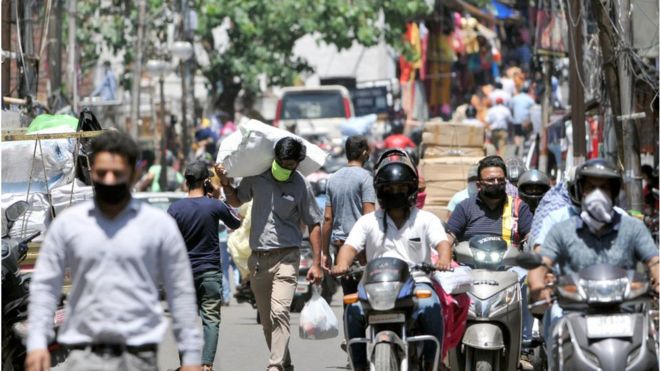 Image copyright GETTY IMAGES
 Image copyright GETTY IMAGES
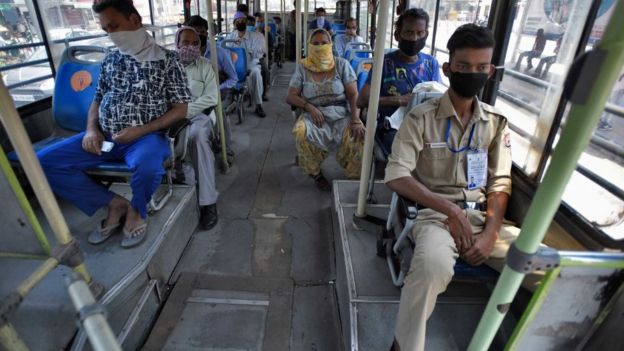 Image copyright GETTY IMAGES
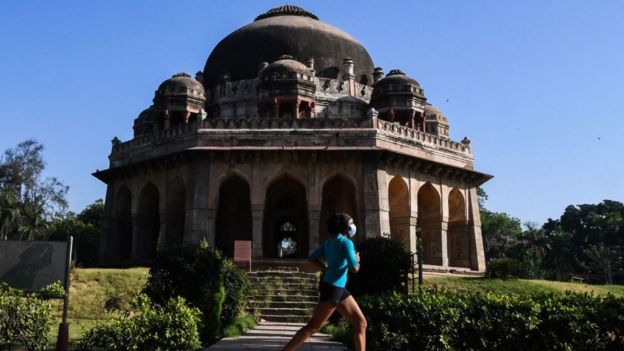 Image copyright GETTY IMAGES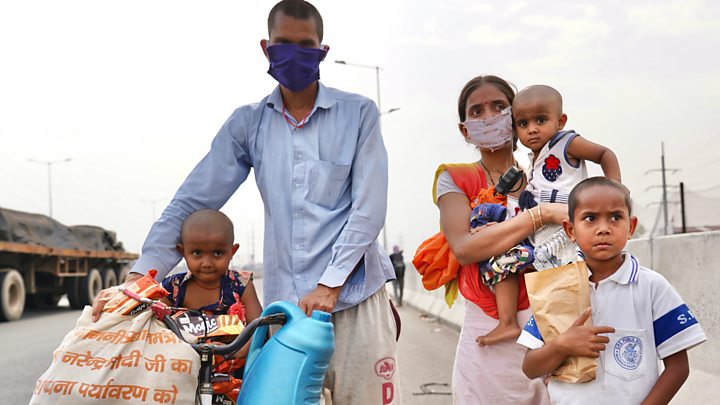
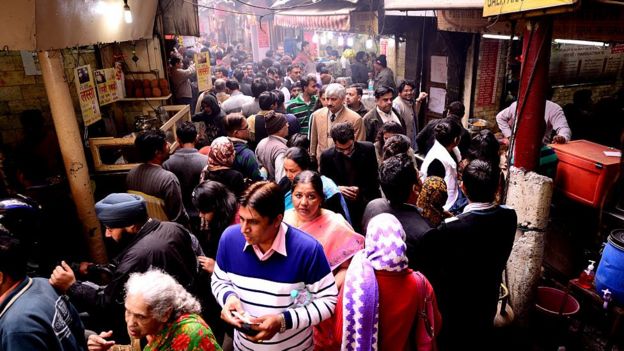 Image copyright GETTY IMAGES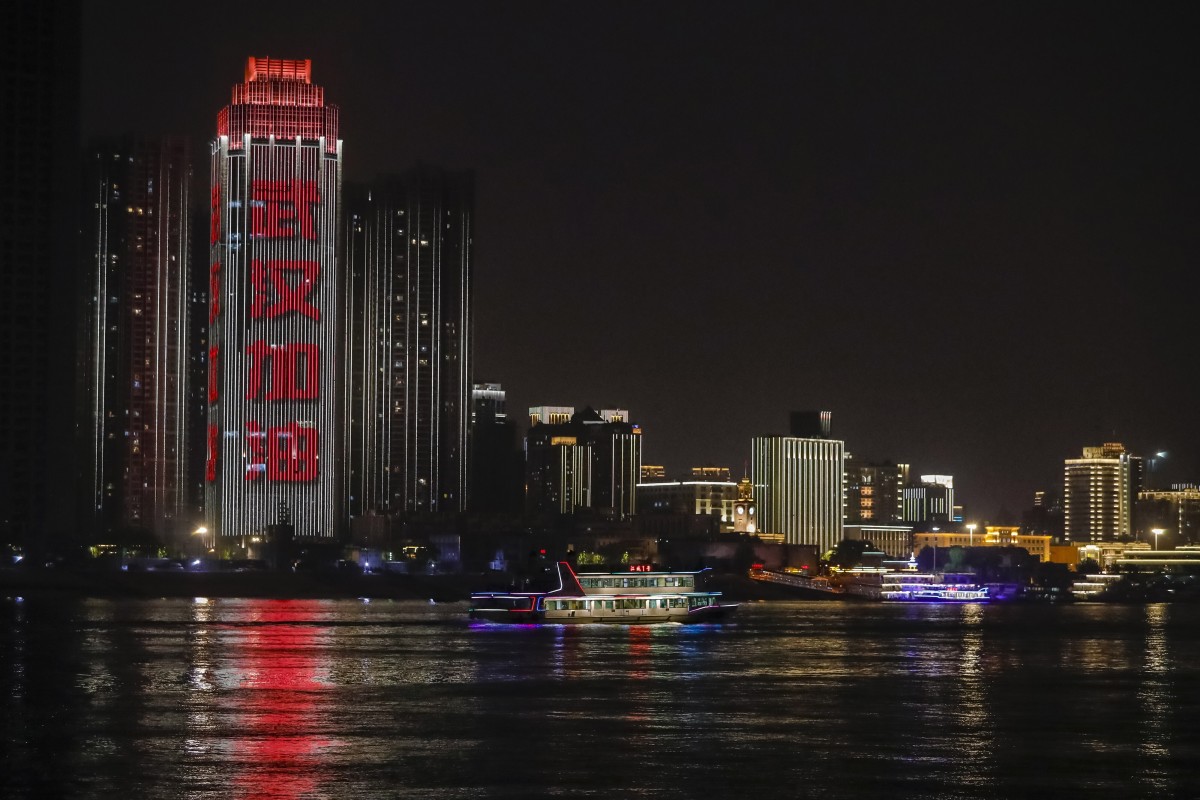


 CHINDIA ALERT: You'll be living in their world, very soon