Chindia Alert: You’ll be Living in their World Very Soon
aims to alert you to the threats and opportunities that China and India present. China and India require serious attention; case of ‘hidden dragon and crouching tiger’.
Without this attention, governments, businesses and, indeed, individuals may find themselves at a great disadvantage sooner rather than later.
The POSTs (front webpages) are mainly 'cuttings' from reliable sources, updated continuously.
The PAGEs (see Tabs, above) attempt to make the information more meaningful by putting some structure to the information we have researched and assembled since 2006.
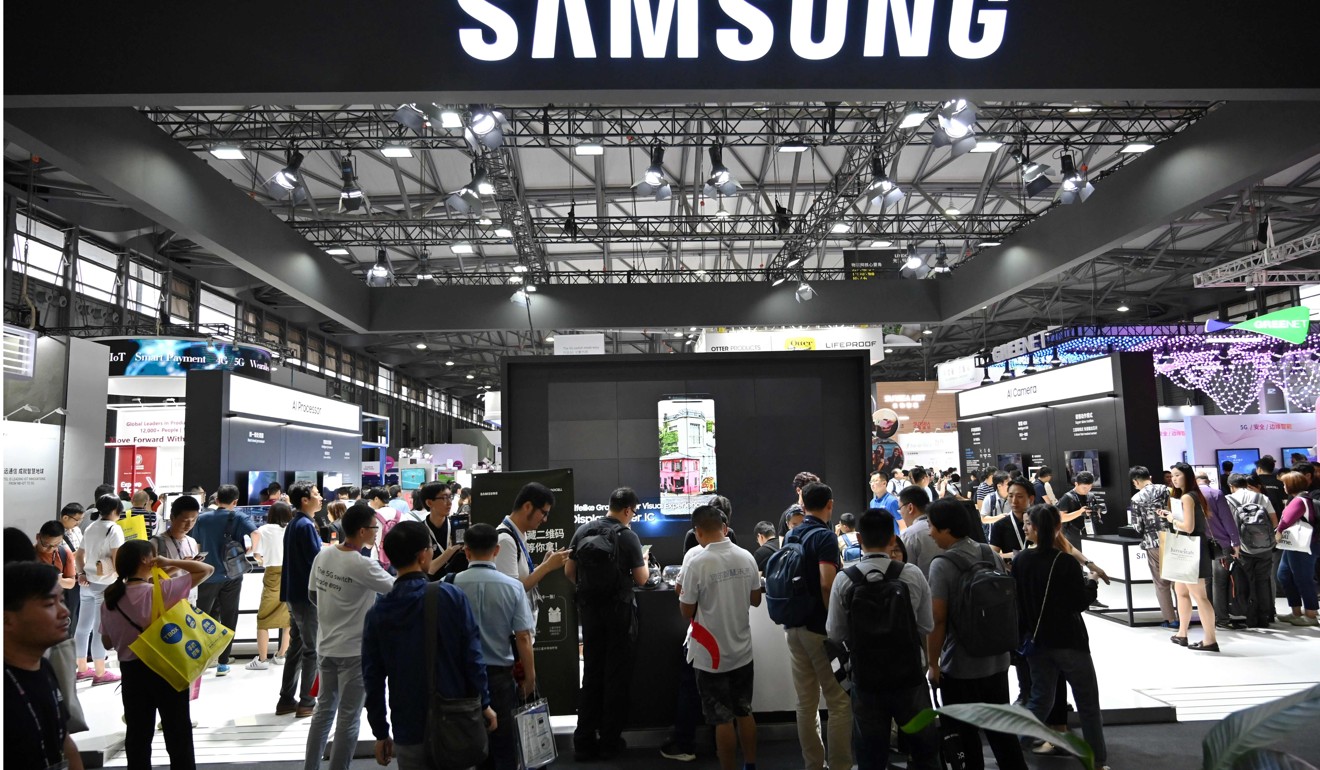
said on Friday it has ended the production of smartphones in its last factory in China.
Operations at the plant in the south China city of Huizhou, Guangdong province, ended last month, it said in an email.
The company made “the difficult decision to cease operations of Samsung Electronics Huizhou” in order “to enhance efficiency” in its manufacturing, it said.
Samsung’s market share in China has dwindled to near insignificance as competitors like Huawei and Xiaomi have taken the upper hand. It once had 15 per cent of China’s smartphone market.
Samsung once had a 15 per cent share of China’s smartphone market. Photo: AFP
The South Korean giant has moved a large share of its smartphone production to Vietnam and closed a factory in northeastern China’s Tianjin last year.
“The production equipment will be reallocated to other global manufacturing sites depending on our global production strategy based on market needs,” the statement said.
Samsung is the world’s biggest manufacturer of semiconductors and smartphones and a major producer of display screens. But the flagship of South Korea’s largest conglomerate is currently weathering a spell of slack demand for computer chips.
Like other South Korean electronics makers, it also is facing the impact of tightened Japanese controls on exports of hi-tech materials used in semiconductors and displays.
On Wednesday, Sony said it was closing its Beijing smartphone plant and would only make smartphones in Thailand.
“In China, people buy low-priced smartphones from domestic brands and high-end phones from Apple or Huawei,” Park Sung-soon, an analyst at Cape Investment & Securities, said.
“Samsung has little hope there to revive its share.”
Samsung’s factory in Huizhou was built in 1992, according to the company. South Korean media said it employed 6,000 workers and produced 63 million units in 2017.
Samsung manufactured 394 million handsets around the world in 2107, according to its annual report.
Train trips, Xinjiang and chartered flights among the growing holiday trends, travel agents say
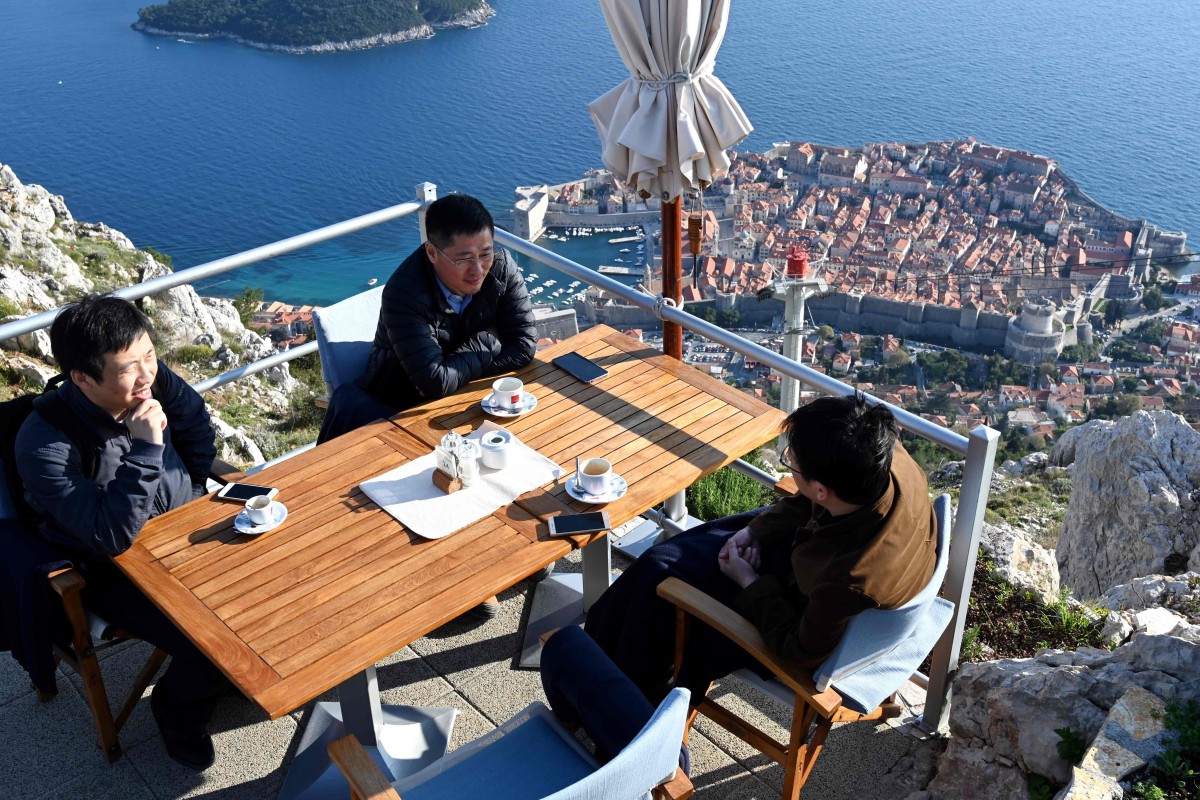
Destinations such as Dubrovnik, Croatia, are becoming more popular among mainland Chinese tourists, according to one of China’ s biggest travel services. Photo: AFP
Chartered flights and niche destinations such as Croatia and Malta are growing in popularity as Hong Kong falls out of favour for mainland Chinese holidaymakers over the National Day “golden week” break.
Japan has overtaken Thailand as the most searched overseas destination on the website of travel agency Ctrip, followed by Malaysia, the United States, Singapore, Australia, Macau, France, Italy and Russia.
Within the mainland places such as Beijing and Shanghai continued to be among the most popular searches but Urumqi, capital of Xinjiang Uygur autonomous region, is a fast-growing term, especially among people in Shanghai and Guangzhou.
“It could be that tourists want to see autumn leaves,” a Ctrip spokesman told the South China Morning Post.
October 1 marks the start of a week-long break on the mainland when millions of Chinese take the chance to travel. This year, an estimated 800 million people are expected to go on trips in China or overseas, about 10 per cent more than last year.
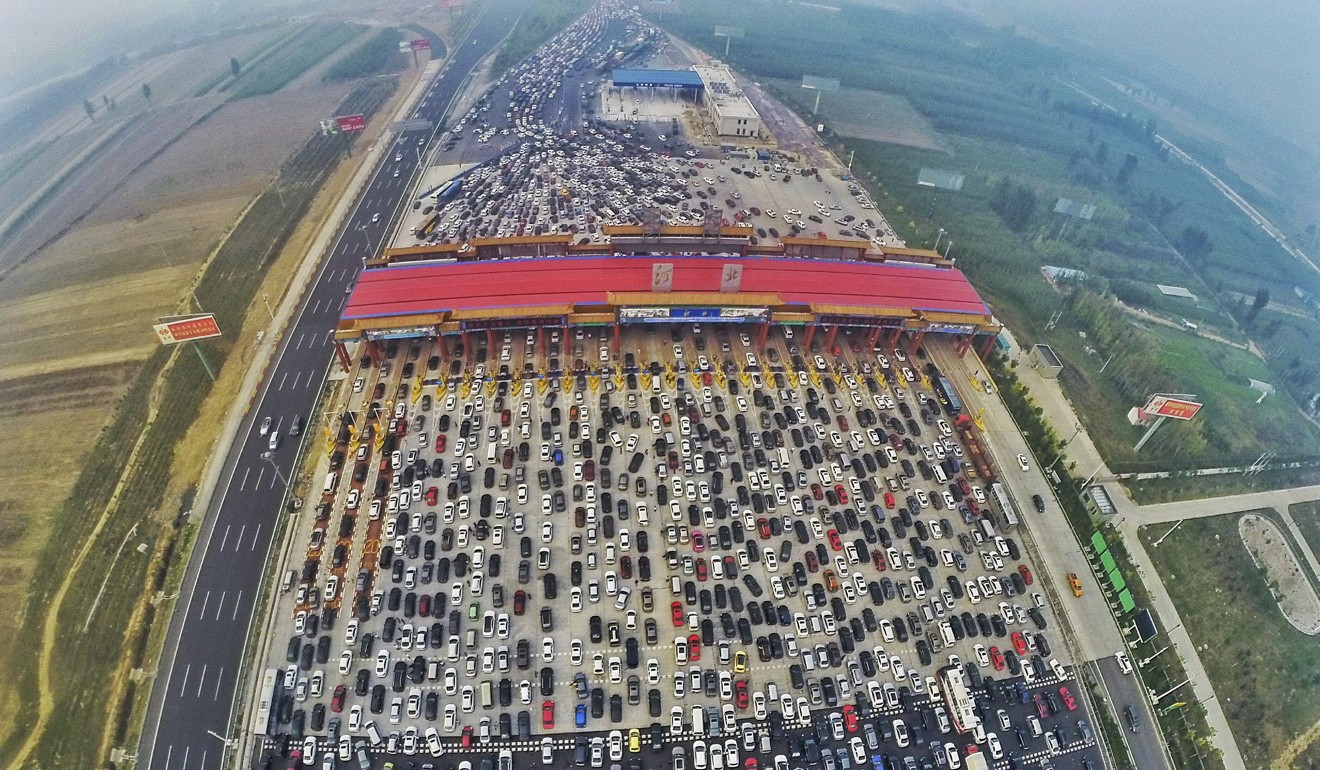
The country’s motorways are expected to be jammed from about 2pm on Monday, reaching a peak at around midnight, and again from 10am Tuesday, according to web mapping service Tencent Map.
China’s highways can expect heavy traffic as travellers head out for the holiday. Photo: Reuters
Ctrip said people heading overseas were increasingly seeking out new destinations, with bookings to places such as the Czech Republic, Austria, Croatia, Malta and Cambodia growing by 45 per cent this year.
“As Chinese people travel outside the country more and their experience of travel grows, many are more willing to go to smaller eastern European countries, such as the Czech Republic,” the spokesman said.
“Popular movies also have a strong influence. Many young people are willing to travel to see where films are shot, such as Croatia, one of the locations for Game of Thrones.”
Other noticeable trends this year include more people travelling with pets, by train and on chartered flights. The site said it sold 60 per cent more European train tickets and 10 times the number of train tickets for Japan for this golden week compared to last year.
The most popular routes in Asia were Tokyo to Kyoto in Japan, and Seoul to Busan in South Korea.
Hong Kong protests leave ‘golden week’ tourist boom in tatters as visitor arrivals during Chinese holiday period are set to be slashed by a third
Thousands of users also chose chartered flights, a service Ctrip introduced in September.
Ji Yu, head of chartered flights for Ctrip said most people thought chartered flights or helicopters were something only millionaires could afford, but in the internet age, they had become cheaper and more accessible.
“In the internet era, consumer needs vary from person to person, especially in terms of travel. There are products on the market to satisfy each customer’s personal needs.”
Among the more popular chartered routes were from Beijing or Shanghai to Tokyo, Bangkok, the Maldives and London.
More people are also going away for longer. Digital travel services giant Qunar said that 80 per cent of the travellers booking flights or hotels through its services were heading off for more than five days. And of those 41 per cent were travelling for more than a week.
Meanwhile, trips to Hong Kong have fallen substantially, with just 15 group tours expected to enter the city each day, down from 110 last year, according to the Travel Industry Council of Hong Kong.
Efforts to promote Hong Kong attractions have also increased in Shenzhen in recent weeks, with advertising videos scenic spots, popular restaurants and malls in Hong Kong playing on cross-border buses. Passengers can also get discounts to some stores and services with their tickets.
NANNING, Sept. 23 (Xinhua) — The Belt and Road Initiative (BRI) provides momentum for regional economic integration and connectivity, helping China and ASEAN forge a closer community of shared future, said Cambodian Deputy Prime Minister Hor Nam Hong.
Hor made the remarks Saturday at the opening ceremony of the 16th China-ASEAN Expo themed “Building the Belt & Road, Realizing Our Vision for a Community of Shared Future.”
The deputy vice prime minister envisioned that the China-ASEAN strategic partnership and the BRI will further deepen the cooperation between the two sides in the joint pursuit of shared prosperity.
Statistics show that China has signed cooperation agreements with more than 130 countries across the globe and 30 international organizations on jointly building the Belt and Road, benefiting people of the involved nations.
Highlighting regional economic cooperation, this year’s China-ASEAN expo is expected to lift the practical and comprehensive cooperation between China, ASEAN and other countries participating in the BRI to new heights.
The expo has served as a crucial platform for promoting investment and trade in Asia over the past 16 years, setting an example of friendly cooperation between China and ASEAN, said Luhut Binsar Pandjaitan, special envoy of the Indonesian president and coordinating minister for maritime affairs.
As the Country of Honor for this year’s expo, Indonesia will showcase its high-quality products from more than 100 Indonesian enterprises.
Speaking highly of the BRI, Luhut said cooperation under the China-proposed initiative will boost infrastructure construction and trade among members of ASEAN to facilitate the building of the ASEAN Community.
To push China-ASEAN ties to new heights, both sides are making joint efforts in constructing the Belt and Road and implementing the Master Plan on ASEAN Connectivity 2025 under the guidance of the China-ASEAN Strategic Partnership Vision 2030.
The BRI accelerates regional connectivity and improves people’s livelihoods, said Thai Deputy Prime Minister and Minister of Commerce Jurin Laksanawisit, adding that Thailand had formulated plans to contribute to the completion of the Regional Comprehensive Economic Partnership, alleviate volatility of the global economy and trade, and inject momentum into sustainable development.
Two-way investment between China and ASEAN countries grew robustly to reach 230 billion U.S. dollars in the first eight months of this year, with the establishment of 25 economic and trade cooperation zones creating over 100,000 jobs.
Meanwhile, the cooperation between China and ASEAN in fields including international production capacity, the digital economy and e-commerce is also leaping forward.
Hailing the achievements of cooperation under the BRI, Lao Deputy Prime Minister Sonexay Siphandone said Laos will take an active role in building the Belt and Road.
Citing the China-Laos railway, the largest cooperation project between the two sides so far, Sonexay said it will promote regional peace, prosperity and sustainable development.
Apart from prospering bilateral trade and investment, recent years have seen the deepening of China-ASEAN cooperation in various other fields. ASEAN has become the largest destination for Chinese tourists, with the number of personal exchanges hitting 57 million in 2018 and nearly 4,000 flights traveling between both sides every week.
Holding similar viewpoints, Myanmar’s Vice President U Myint Swe said the BRI provides opportunities for developing trade and cross-border exchanges and bridging infrastructure gaps.
Looking forward to shared prosperity, Jurin said Thailand, as well as ASEAN, will collaborate with China to strive for sustainable development.
Image copyright AFPImage caption Chinese experts will investigate Chuang Chuang’s death
A popular giant panda has died unexpectedly in a Thai zoo – prompting China to send experts to investigate.
Chuang Chuang had been at the Chiang Mai zoo on loan from China since 2003.
The 19-year old bear was widely popular across Thailand, especially due to repeated efforts by the zoo to get him to mate with his female companion.
His unexplained death on Monday caused uproar on Chinese social media, with many users accusing Thailand of not caring properly for the animal.
Giant pandas, which are native to China, usually live for 25 to 30 years in captivity. They were regarded as endangered, but were reclassified as “vulnerable” by the International Union for Conservation of Nature, following an increase in numbers.
China loans the animals to countries around the world as a way of strengthening diplomatic ties.
There’s extensive reporting in China about the animals’ lives overseas, and Chuang Chuang’s early death has received widespread coverage in state media.
Media caption Panda diplomacy: China’s cutest peacemakers
According to Chinese news agency Xinhua, an investigation will be carried out to establish the cause of death, and experts from the China Conservation and Research Centre will travel to Chiang Mai to work with their Thai counterparts.
Some social media users on China’s Twitter-like platform Weibo were concerned, saying: “Thailand is not suitable for raising pandas”, and “they don’t treat animals as well as we think”.
Others asked for the remaining female panda in Chiang Mai, Lin Hui, to be returned to China.
Chuang Chuang had been at the Chiang Mai zoo since 2003, alongside his female companion.
Failing to show any sexual interest in Lin Hui, the zoo tried various methods to boost his sex drive, including putting him on a low-carb diet, and showing videos of mating pandas.
With all efforts failing, the zoo eventually resorted to artificial insemination and Lin Hui gave birth in 2009.
More than 40 per cent of those surveyed in an online poll say they feel they have no other choice, while just a quarter think the extra tutoring is necessary
It reflects widespread anxiety over getting places at the top schools, according to researcher
Sixty per cent of mainland Chinese children aged from three to 15 are receiving extra tutoring outside the classroom, according to a report. Photo: Handout
More than 40 per cent of Chinese parents feel they have no choice but to send their children to after-school classes because of the intense competition in the education system, according to an online poll.
But just a quarter of the respondents said they thought the extra tutoring was actually necessary for their children.
Nearly 200,000 parents had responded to the survey, conducted by social network Weibo, by Tuesday.
It comes after a report last week said 60 per cent of children aged between three and 15 in mainland China were receiving extra tutoring outside the classroom.
That report, released by the China National Children’s Centre and the Social Sciences Academic Press, also said parents of children in the age range were spending an average of 9,200 yuan (US$1,290) per year on after-school classes to cope with growing academic pressure.
It was based on a survey of nearly 15,000 children in 10 mainland cities and rural areas.
For the children, that meant they were spending an average of less than two hours playing outside on weekends, according to the report. They were also found to be devoting an average of 88 minutes a day to homework on school days.
Chinese parents send their children to a wide range of after-school classes. Photo: Xinhua
Wu Hong, a researcher from the Dandelion Education Think Tank in Chongqing, said the findings reflected the widespread anxiety of parents over their children getting places at the top schools.
“Many parents don’t have their own ideas about how their kids should be educated and they just follow others blindly. For example, a friend of mine said she plans to send her two five-year-olds to an international school in Thailand just because several of her friends did that,” Wu said.
“It’s not that kids should not attend any after-school classes, but we are apparently giving them too much when they’re so young, and this is only limiting their imagination.”
Last go at exam success for China’s ‘gaokao grandpa’
Studying a wider range of subjects in more depth than the public school syllabus requires and getting a head start by going over topics before they are covered in school have become common tactics used by parents trying to help their children compete in a challenging educational environment in China.
In the more affluent cities, some parents are spending a lot more than the average on their children’s extracurricular activities. Shanghai mother Emma Jin said she wanted to give her daughter, who is in Year Two, a good chance in the education system.
“Extra English classes cost 20,000 yuan for a year. She also takes dance classes, taekwondo and so on,” Jin said. “I don’t expect much from her, but I don’t want her to be the worst in the class either.”
Some parents said the pressure came from the schools.
“My child is studying at a public school. The teacher told us to have our child learn pinyin [the mainland’s system of romanisation of Mandarin script] in advance at after-school classes during the admission interview. Should I have just disregarded his advice?” one parent commented on Weibo.
‘Heavy burden’ of homework leaving Chinese children sleep-deprived, study finds
The heavy pressure on children from extra classes has meanwhile prompted the Ministry of Education to issue several directives to schools asking them to pay more attention to pupils’ well-being – including by encouraging them to get at least one hour of outdoor exercise and 10 hours’ sleep a day. Last year, it also banned cram schools from holding competitions or offering classes to children that were too advanced for their age.
Cai Rui and Wu Chen are the proud parents of twins but they had to go abroad for the IVF treatment they needed to bring the children into the world
Wu Chen (far left) and Cai Rui (right) are raising their young family together in China. Photo: Cai Rui
When three-year-old twins Harry and Helen are asked about their dad, they have a set answer.
The children tell the curious that they do have a father but he lives in the United States.
Harry and Helen live on the outskirts of Kunming in the southwestern Chinese province of Yunnan with their two mothers, Cai Rui and Wu Chen.
Cai gave birth to the twins after being implanted at a US IVF clinic with ova from Wu and sperm from an American donor.
The couple were forced to seek treatment abroad because Chinese clinics will only perform IVF procedures on couples who can produce a marriage certificate – something limited to heterosexuals.
For Cai and Wu, it was a leap into the unknown – there was little information in China and few others had gone public about their experience.
But their biological clocks were ticking and the couple were used to taking difficult paths.
Gay Chinese find a place to be themselves on ‘Rainbow Cruise’ to Vietnam
Cai and Wu met while studying in Britain and registered their marriage there in 2014. Both women were in their thirties and soon began thinking about having children.
They looked forward to being mothers and felt the experience would strengthen their relationship even more, Cai said.
“I think it’s natural for a woman to aspire to be a mother once she turns 30,” she said. “We were both aware that the older a woman is, the harder it is for her to get pregnant. So it’s an immediate thing for us.”
Their parents were also worried about the couple’s welfare as they grew older.
“Our parents have accepted our relationship, thinking it’s our own choice. However, they worried that when we are old, there will be no children to look after us,” Cai said.
Wu Chen (left) and Cai Rui (right) brought their twin children Helen and Harry into the world with help from IVF treatment in the United States. Photo: Cai Rui
The couple embarked on two rounds of IVF in London, with Cai impregnated with Wu’s fertilised ova, but both rounds failed.
They then returned to China and searched for other options but at the time there were few posts by Chinese lesbians sharing their experience of having babies abroad, Cai said.
So they contacted three clinics in the US and finally decided to go through one in Portland, Oregon, in large part because of the city’s gay-friendly reputation.
Cai said that when it came time to choose a sperm donor, they were less concerned about his outward appearance and more focused on his physical and mental health, his academic record and his experience growing up.
“We wanted to make sure our baby’s father was a healthy and interesting guy,” she said.
The couple chose the sperm of a white man and implanted two fertilised eggs into Cai’s body to raise the chances of success. Twelve weeks later, the couple flew back to Beijing where Harry and Helen were born on April 1, 2016.
Thanks to a more relaxed population policy since 2016, Cai was able to register the children as a single mother while the children were given her partner’s surname.
“So my lover is their biological mother and I am their birth mother,” Cai said.
Small victory for China’s online lesbian community as censored forum is restored, but another remains blocked
The family lived in Beijing for about a year before moving to Yunnan for work commitments. Cai said there had not been any big problems raising the children there apart from some annoying questions from neighbours about why the children are biracial and why the father is not in the home.
“These questions are like flies around us. But they’re not a big deal and won’t affect our life,” she said.
She said she told various villagers in their community about the children’s conception and they responded by saying, “What an advanced lifestyle you have!”
Twins Harry and Helen celebrate Lunar New Year. Photo: Cai Rui
The couple have also tried to explain the situation to the twins.
“We instilled diverse family values in them from a very young age, through everything including cartoon books they read and stories we made up by ourselves,” Cai said.
“So we told [them] that you have a father. But the reason for forming a family is love. We don’t have love with your father, so he doesn’t live with us.”
About four years ago the couple opened a public account on social media app WeChat called Rainbow Babies, to share their experience with other lesbians on the mainland. Cai said the account had more than 17,000 followers, many responding by relating their own stories about IVF.
One woman wrote on the platform that she and her partner had been together for 10 years and after having a daughter they were pregnant with a boy.
“I am not confident of us lesbians raising a boy. Do you have any tips to share with us?” the woman wrote.
Why China’s gays and lesbians are still stuck in the closet
Another woman wrote that since she and her partner decided to have a baby, they had confronted obstacles at every step in the process, but the biggest benefit was that “after so many hardships, our love has been consolidated and we have cherished each other more than before”.
Cai said the most popular destinations for mainland lesbians seeking IVF treatment were the US, Thailand and Cambodia, with at least 1,000 either pregnant or having given birth.
“Some people are hesitant to have babies because of social pressure. [But] as times goes by and women get older, the possibility of them getting pregnant becomes lower,” Cai said.
Cai said she and Wu were often praised for their courage but they were in the habit of choosing a tougher road.
“On many occasions, this habit is the most reliable way to push us to keep our innocent heart and to do things to be ourselves,” she said.
China suggests good progress made in Regional Comprehensive Economic Partnership talks after marathon 10-day negotiations in Zhengzhou
Indian Commerce Minister Piyush Goyal has opted to skip the upcoming high-level meetings, adding fuel to rumours that the country could be removed
The Association of Southeast Asian Nations (Asean) has overtaken the US to become China’s second-largest trading partner in the first half of 2019. Photo: AP
China has claimed “positive progress” towards finalising the world’s largest free-trade agreement by the end of 2019 after hosting 10 days of talks, but insiders have suggested there was “never a chance” of concluding the deal in Zhengzhou.
The 27th round of the Regional Comprehensive Economic Partnership (RCEP) negotiations closed on Wednesday in the central Chinese city.
working level conference brought over 700 negotiators from all 16 member countries to Henan province, with China keen to push through a deal which has proven extremely difficult to close.
If finalised, the agreement, which involves the 10 Asean nations, as well as China, Japan, South Korea, Australia, New Zealand, and India, would cover around one-third of the global gross domestic product, about 40 per cent of world trade and almost half the world’s population.
“This round of talks has made positive progress in various fields,” said assistant minister of commerce Li Chenggang, adding that all parties had reaffirmed the goal of concluding the deal this year. “China will work together with the RCEP countries to proactively push forward the negotiation, strive to resolve the remaining issues as soon as possible, and to end the negotiations as soon as possible.”
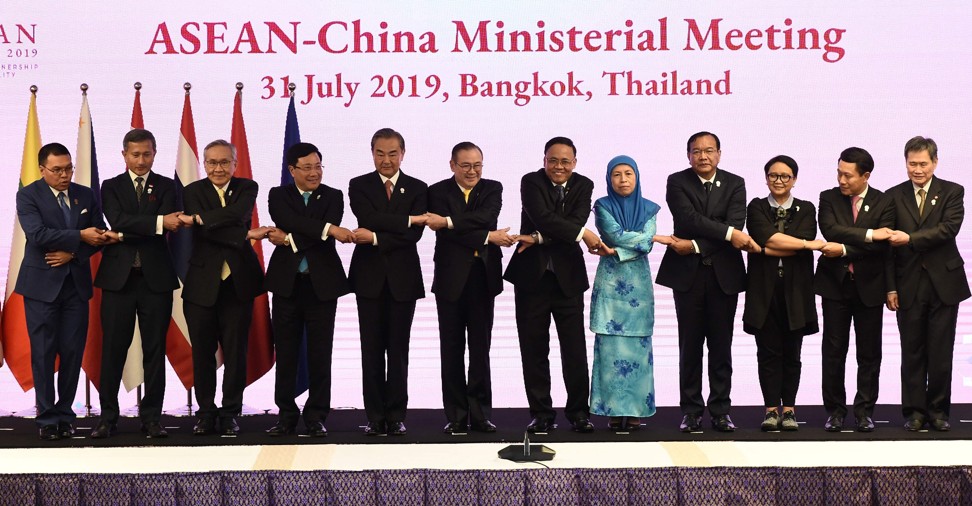
China’s Foreign Minister Wang Yi (fifth left) poses with foreign ministers from the Association of Southeast Asian Nations (Asean) countries during the ASEAN-China Ministerial Meeting in Bangkok. Photo: AFP
China is keen to complete a deal which would offer it a buffer against the United States in Asia, and which would allow it to champion its free trade position, while the US pursues protectionist trade policy.
The RCEP talks took place as Chinese and American trade negotiators resumed face-to-face discussions in Shanghai, which also ended on Wednesday, although there was little sign of similar progress.
As the rivalry between Beijing and Washington has intensified and bilateral trade waned, the Association of Southeast Asian Nations (Asean) overtook the US to become China’s second-largest trading partner in the first half of 2019. From January to June, the trade volume between China and the 10-member bloc reached US$291.85 billion, up by 4.2 per cent from a year ago, according to government data.
The Asean bloc is made up of Indonesia, Thailand, Malaysia, Singapore, Philippines, Vietnam, Myanmar, Cambodia, Brunei and Laos.
China will work together with the RCEP countries to proactively push forward the negotiation, strive to resolve the remaining issues as soon as possible, and to end the negotiations as soon as possible. Li Chenggang
RCEP talks will now move to a higher level ministerial meeting in Beijing on Friday and Saturday, but trade experts have warned that if material progress is not made, it is likely that the RCEP talks will continue into 2020, prolonging a saga which has already dragged on longer than many expected. It is the first time China has hosted the ministerial level talks.
But complicating matters is the fact that India’s Commerce Minister, Piyush Goyal, will not attend the ministerial level talks, with an Indian government official saying that he has to participate in an extended parliamentary session.
India is widely viewed as the biggest roadblock to concluding RCEP, the first negotiations for which were held in May 2013 in Brunei. Delhi has allegedly opposed opening its domestic markets to tariff-free goods and services, particularly from China, and has also had issues with the rules of origin chapter of RCEP.
China is understood to be “egging on” other members to move forward without India, but this could be politically explosive, particularly for smaller Asean nations, a source familiar with talks said.
Deborah Elms, executive director of the Asian Trade Centre, a Singapore-based lobby group, said that after the last round of negotiations in Melbourne between June 22 to July 3 – which she attended – there was “frustration” at India’s reluctance to move forward.
She suggested that in India’s absence, ministers in China could decide to move forward through a “pathfinder” agreement, which would remove India, but also potentially Australia and New Zealand.
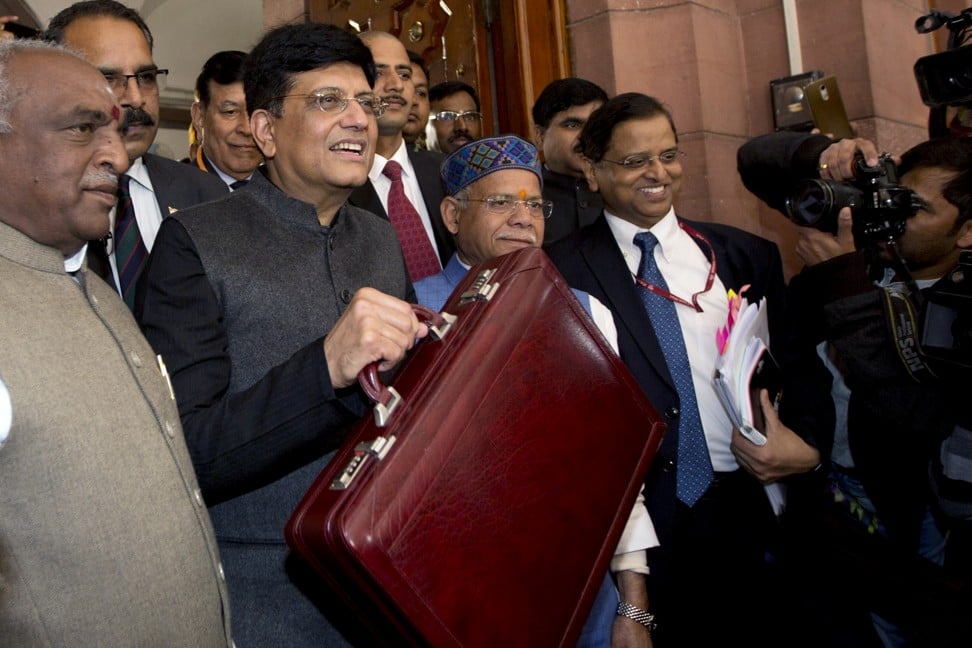
India’s Commerce Minister, Piyush Goyal, will not attend the ministerial level talks this week in Beijing. Photo: Bloomberg
This “Asean-plus three” deal would be designed to encourage India to come on board, Elms said, but would surely not go down well in Australia and New Zealand, which have been two of the agreement’s biggest supporters.
New Zealand has had objections to the investor protections sections of RCEP, and both countries have historically been pushing for a more comprehensive deal than many members are comfortable with, since both already have free trade agreements with many of the other member nations.
However, their exclusion would be due to “an unfortunate geographical problem, which is if you’re going to kick out India, there has always been an Asean-plus three concept to start with”. Therefore it is easier to exclude Australia and New Zealand, rather than India alone, which would politically difficult.
A source close to the negotiating teams described the prospect of being cut out of the deal at this late stage as a “frustrating rumour”, adding that “as far as I know [it] has no real basis other than a scare tactic against India”.
There was “never a chance of concluding [the deal during] this round, but good progress is being made is what I understand. The key issues remain India and China”, said the source, who wished to remain anonymous.
Replacing bilateral cooperation with regional collaborations is a means of resolving the disputesTong Jiadong
However, Tong Jiadong, a professor of international trade at the Nankai University of Tianjin, said Washington’s refusal to recognise India as a developing country at the World Trade Organisation could nudge the world’s second most populous nation closer to signing RCEP.
“That might push India to the RCEP, accelerating the pace of RCEP,” Tong said, adding that ongoing trade tensions between Japan and South Korea could also be soothed by RCEP’s passage.
“Replacing bilateral cooperation with regional collaborations is a means of resolving the disputes between the two countries,” Tong said.
Although the plan was first proposed by the Southeast Asian countries, China has been playing an increasingly active role, first as a response to the now defunct US-backed Trans-Pacific Partnership (TPP), and more recently as a means of containing the impact of the trade war.
China’s vice-commerce Minister, Wang Shouwen, told delegates last week that RCEP was “the most important free trade deal in East Asia”. He called on all participants to “take full advantage of the good momentum and accelerating progress at the moment” to conclude a deal by the end of the year.
China’s Wang Yi and US’ Mike Pompeo at summit in Thailand to sell their visions of future for Southeast Asia
Analysts expect pragmatism from Asean as world’s two biggest economic powers play diplomatic game
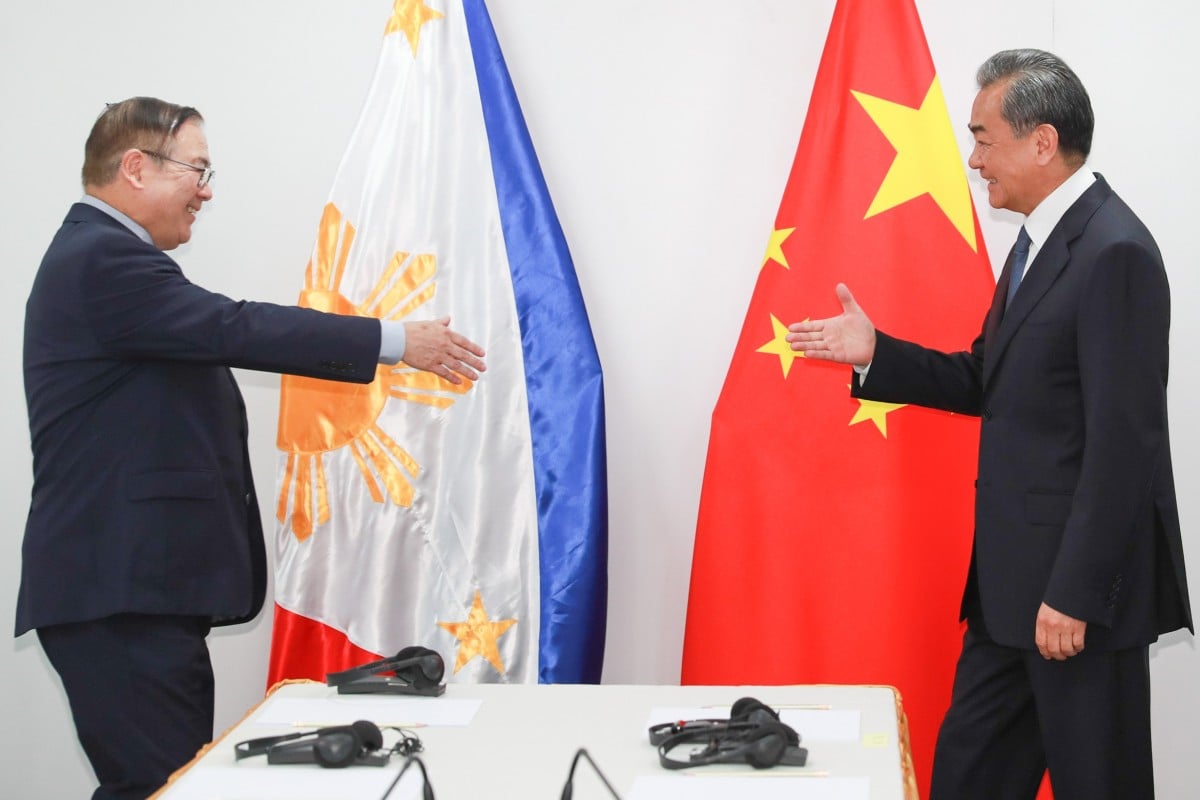
Chinese Foreign Minister Wang Yi (right) greets his Philippine counterpart Teodoro Locsin at the Asean meeting in Bangkok, Thailand. Photo: Xinhua
China and the United States are on a mission to strengthen ties with allies and expand their influence in Southeast Asia this week as their trade war enters a second year.
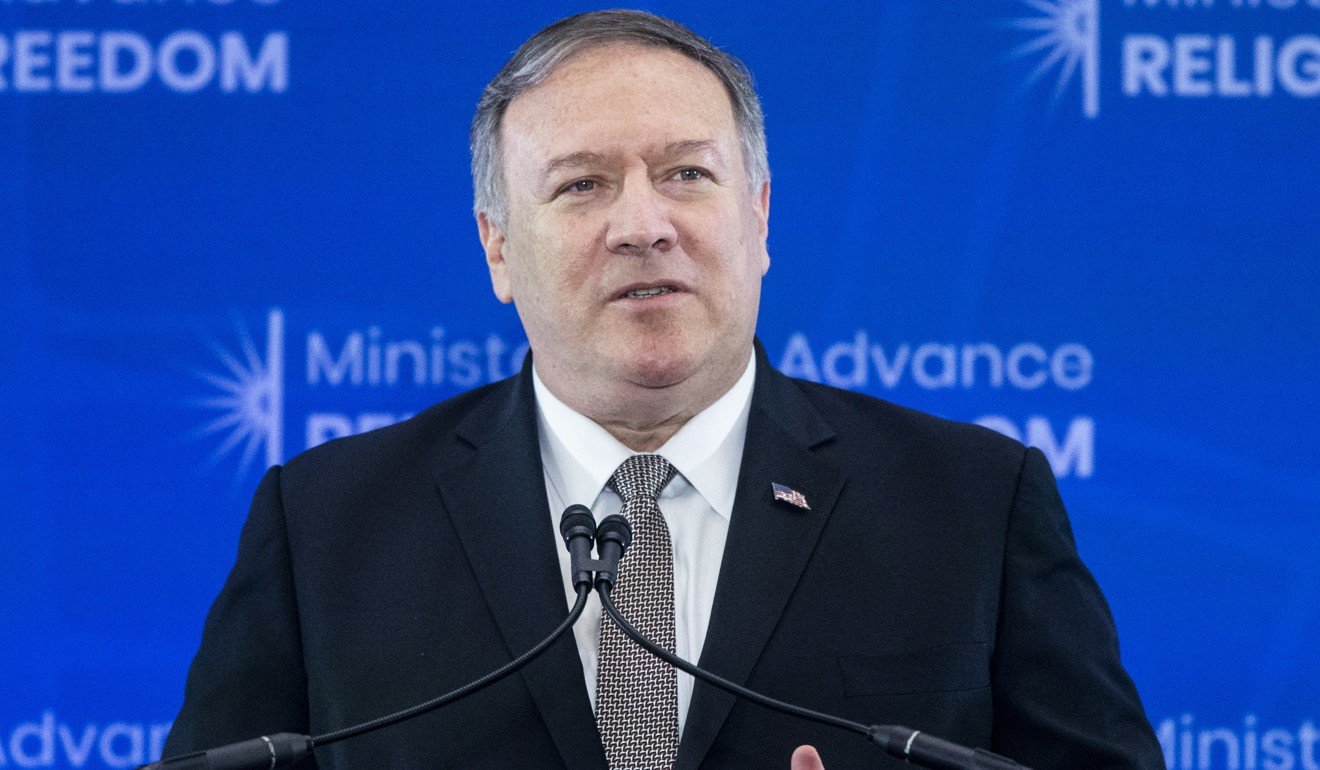
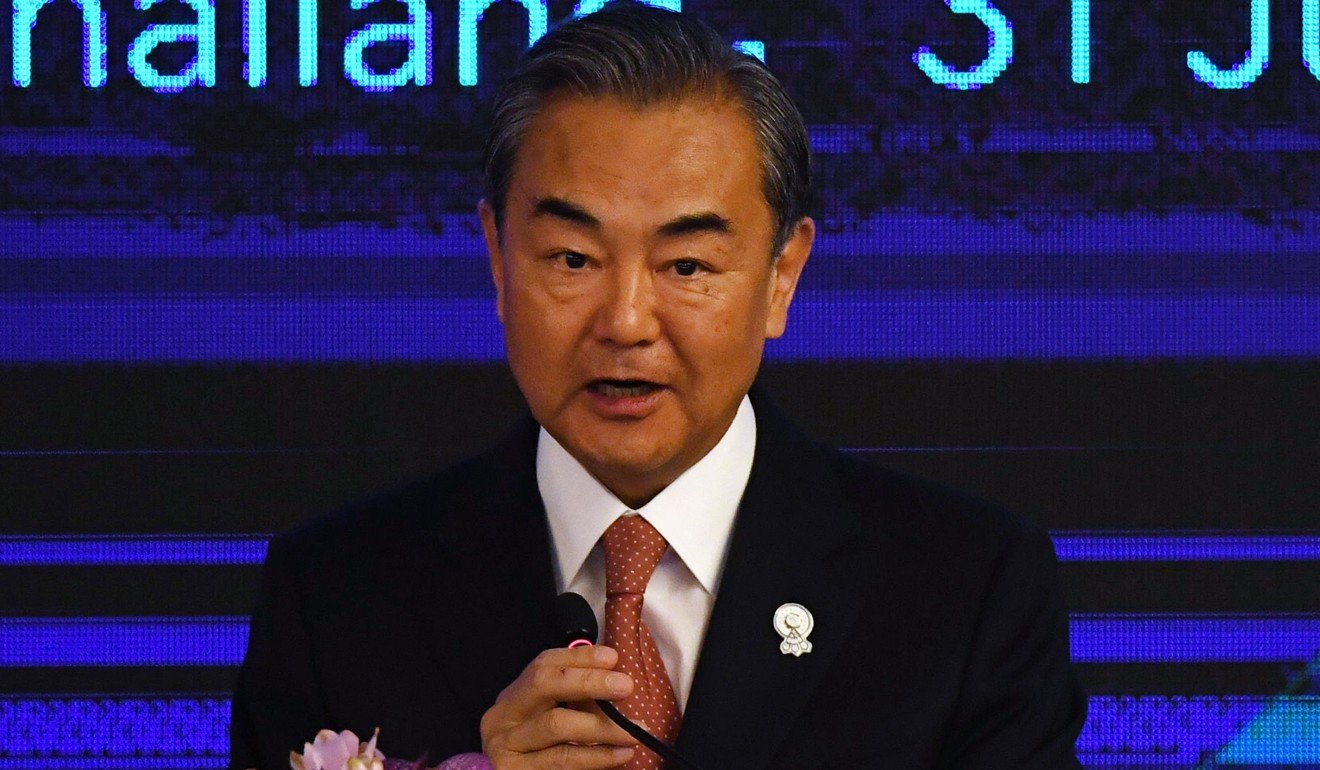
US Secretary of State Mike Pompeo arrived for a meeting of the Association of Southeast Asian Nations (Asean) in Bangkok on Wednesday to promote the US-led Indo-Pacific strategy, while Chinese Foreign Minister Wang Yi touched down a day earlier to advance Beijing’s Belt and Road Initiative.
The US Department of State said Pompeo’s trip was aimed at deepening Washington’s “long-standing alliances and vibrant bilateral relations with these countries, and [to] reaffirm our commitment to Asean, which is central to our vision for the Indo-Pacific region”.
In Beijing on Wednesday, Chinese foreign ministry spokeswoman Hua Chunying said that while their meeting was yet to be set, Wang and Pompeo were expected to meet and talk “frankly” about bilateral relations.
“I think that it is indeed necessary for China and the United States to maintain communication, as the two countries face many situations,” Hua said. “The issues would be communicated frankly”.
The Indo-Pacific strategy is a military and economic framework to contain China’s expansion into the Pacific and Indian oceans, and give an alternative to Beijing’s flagship belt and road development programme.
En route to Thailand, Pompeo said that after a stalled start to US Indo-Pacific policy during the Barack Obama administration, Washington’s strategy was well on its way to bearing fruit for the US and its allies.
South China Sea tensions, US-China trade war loom over Asean summit
“We have watched these coalitions build out,” he said.
Pompeo dismissed claims that China’s sphere of influence among Asean members was growing, saying such speculation was “not factually accurate”.
“[Asean countries] are looking for partners that are going to help them build out their economies and to take good care of their people,” he said, pledging greater engagement from President Donald Trump’s administration.
Pompeo was expected to sit down on Friday with his South Korean and Japanese counterparts to consolidate their trilateral alliance in the region.
He was also expected to hold talks with Thai Foreign Minister Don Pramudwinai that day.
US Secretary of State Mike Pompeo is expected to meet Chinese Foreign Minister Wang Yi at Asean in Thailand. Photo: EPA-EFE
Meanwhile, Wang launched his belt and road pitch to his Cambodian, Philippine and Indonesian counterparts after he arrived in Thailand for the gathering, which ends on Saturday.
The belt and road projects are largely commercial and aimed at strengthening land and sea infrastructure linking Asia, Europe and Africa. But they raised suspicion in the West that they are aimed at eroding the US-led world order.
During his meeting with Philippine Foreign Affairs Secretary Teodoro Locsin, Wang said: “China is willing to have high-level exchanges with the Philippines, to deepen the mutual trust, and promote the Belt and Road Initiative [in the Philippines] … to accelerate the development of regional infrastructure.”
Can China’s trade boost with Asean help get the Regional Comprehensive Economic Partnership over the line?
This year’s Asean forum was taking place as countries were more receptive to Chinese initiatives, in part due to the unpredictability of the US administration, according to Rajeev Ranjan Charturvedy, a visiting fellow at the S. Rajaratnam School of International Studies at Nanyang Technological University in Singapore.
“Policy uncertainties under the Trump administration have already pushed some Asean countries towards China in ways that would have seemed unlikely a few years ago,” Charturvedy said.
Analysts said Trump’s “America first” approach shaped his Asean policy. The president had vowed to apply “punishments” to countries – including Asean member states – for contributing to the US trade deficit.
Chinese Foreign Minister Wang Yi is talking to Asean counterparts at a time when they are receptive to China’s proposals, an analyst says. Photo: AFP
Trump was absent at the Asean summit in Singapore last year, leading to concerns that Washington’s commitment to Asia was declining.
Charturvedy said the Asean forum’s focus was about building constructive regionalism, but China’s attitudes to security could pose a challenge.
“[However] Asean countries clearly hope not to be forced to choose between the US and Chinese offers. Rather, they would like more freedom of choice while accommodating for a larger role for China in the region,” he said.
Clarita Carlos, a professor of political science at the University of the Philippines, suggested that Asean members would be pragmatic during the forum.
Robert Lighthizer warns Vietnam over trade deficit with US
They would try to find their own balance between the two major powers – as countries rather than a bloc – to try to maximise each state’s interests and advantages, Carlos said.
“Vietnam has a love-hate relationship with China, especially as a winner in the ongoing US-China trade war,” she said. “Singapore has close relations with China. There are also ups and downs in the relationship with China for Brunei, Malaysia and Indonesia.”
BANGKOK (Reuters) – Southeast Asian leaders agreed on Sunday to work together on regional economy and security to strengthen their positions amid growing U.S.-China tensions, as they wrapped up this year’s first summit in Bangkok.
The 10-member Association of Southeast Asian Nations (ASEAN) will need its collective economic strength for bargaining power globally, especially amid the trade tensions between the world’s top two economies, Thai Prime MinisterPrayuth Chan-ocha told a news conference, as chairman of the 34th ASEAN Summit.
Prayuth urged ASEAN nations to complete negotiations this year for the China-initiated Regional Comprehensive Economic Partnership (RCEP) pact that includes 16 countries.
“This will help ASEAN handle the changes and uncertainty that will happen in the region going forward, particularly the impacts of trade tension between ASEAN’s important trade partners.”
Negotiations began in 2012 on RCEP, which envisions the creation of a free trade zone encompassing 45% of the world’s population and more than a third of its GDP, but does not involve the United States.
First proposed by China, RCEP’s 16 signatories include the 10 ASEAN member states and six Asia-Pacific countries, including major economies China, India, Japan and South Korea. ASEAN has existing free-trade agreements with all six countries.
“If we can do this, we will have the bargaining power and base for negotiation. Because when combined, we are 650 million people, the largest regional bloc in the world,” the Thai prime minister said.
Four ASEAN countries – Thailand, Indonesia, Singapore and Vietnam – will discuss the trade war in next week’s G20 summit, which assembles 20 major economies, in Tokyo, Prayuth said.
ASEAN countries also agreed on a common approach on a U.S.-led Indo-Pacific initiative, at a time when U.S.-China tensions were rising and forcing ASEAN countries to take sides.
Prayuth hailed the bloc’s agreement on the ASEAN Outlook on the Indo-Pacific as a “significant step” for the region.
The endorsed outlook document, seen by Reuters, acknowledges “maritime issues such as unresolved maritime disputes that have the potential for open conflict” as existing and emerging geopolitical challenges.
It outlines maritime cooperation “for peaceful settlement of disputes”. It also aims for connectivity in the Indo-Pacific region.
BANGKOK (Reuters) – Southeast Asian leaders opened a two-day summit in Bangkok on Saturday, though it was unclear what progress their 10-country group could make on disputes in the South China Sea and the plight of ethnic Rohingya fleeing Myanmar.
Formed more than half a century ago, the Association of Southeast Asian Nations (ASEAN) has historically struggled with challenges facing the region because it works only by consensus and is reluctant to become involved in any matter regarded as internal to a member state.
Thai Prime Minister Prayuth Chan-ocha was making his debut as a civilian leader representing current chair Thailand, after a general election in March that opposition parties say was designed to ensure his victory five years after the former army chief seized power in a 2014 coup.
Officials are expected to discuss a Code of Conduct (COC) for negotiations over the South China Sea, one of the world’s busiest waterways and a potential flashpoint, as it is claimed by several ASEAN members as well as China.
However, it was unlikely much progress would be made, though member nations might discuss the June 9 collision of a Philippine boat and a Chinese fishing vessel.
“It is encouraging to see that the ASEAN-China talks on the COC have continued,” said Marty Natalegawa, former foreign minister of Indonesia.
“However, there is real risk that developments on the ground – or more precisely at sea – are far outpacing the COC’s progress thereby possibly rendering it irrelevant.”
Philippine President Rodrigo Duterte has accepted China’s proposal to jointly investigate allegations that a Chinese fishing vessel abandoned 22 Filipinos after it sank their boat in the South China Sea, his spokesman said on Saturday.
Rights groups have also called on ASEAN leaders to rethink support for plans to repatriate Rohingya Muslims who have fled member state Myanmar, where activists say returnees could face discrimination and persecution.
More than 700,000 Rohingya crossed into Bangladesh in 2017, according to U.N. agencies, after a crackdown by Myanmar’s military sparked by Rohingya insurgent attacks on the security forces.
However, it is unlikely that there will be any criticism of Myanmar at the summit over the Rohingya, said Prapat Thepchatree, a political science professor at Thailand’s Thammasat University said.
“This issue has been a very sensitive one for ASEAN,” he said.
Host country Thailand deployed about 10,000 security forces around Bangkok for the summit, mindful of a decade ago when Thailand last hosted an ASEAN summit and dozens of protesters loyal to military-ousted former premier Thaksin Shinawatra forced their way into the meeting venue.
But on Saturday morning, only a small group of people had planned to stage a protest to call Prayuth’s election the product of a rigged system.
The group, called Citizens Wanting Elections, was stopped by police before it could reach a meeting point near the summit venue. The group later released a statement welcoming visiting leaders but criticising Prayuth.
“The individual who serves as President of ASEAN, who welcomes everyone today, did not come from a clean and fair election,” the letter said.










 CHINDIA ALERT: You'll be living in their world, very soon