05/07/2019
- Documentary looks at the fantasy photo shoots of couples, including some who married decades ago when only drab clothing was allowed
- It looks beyond the colourful clothes to consider issues of freedom, status, money and the new ‘China dream’
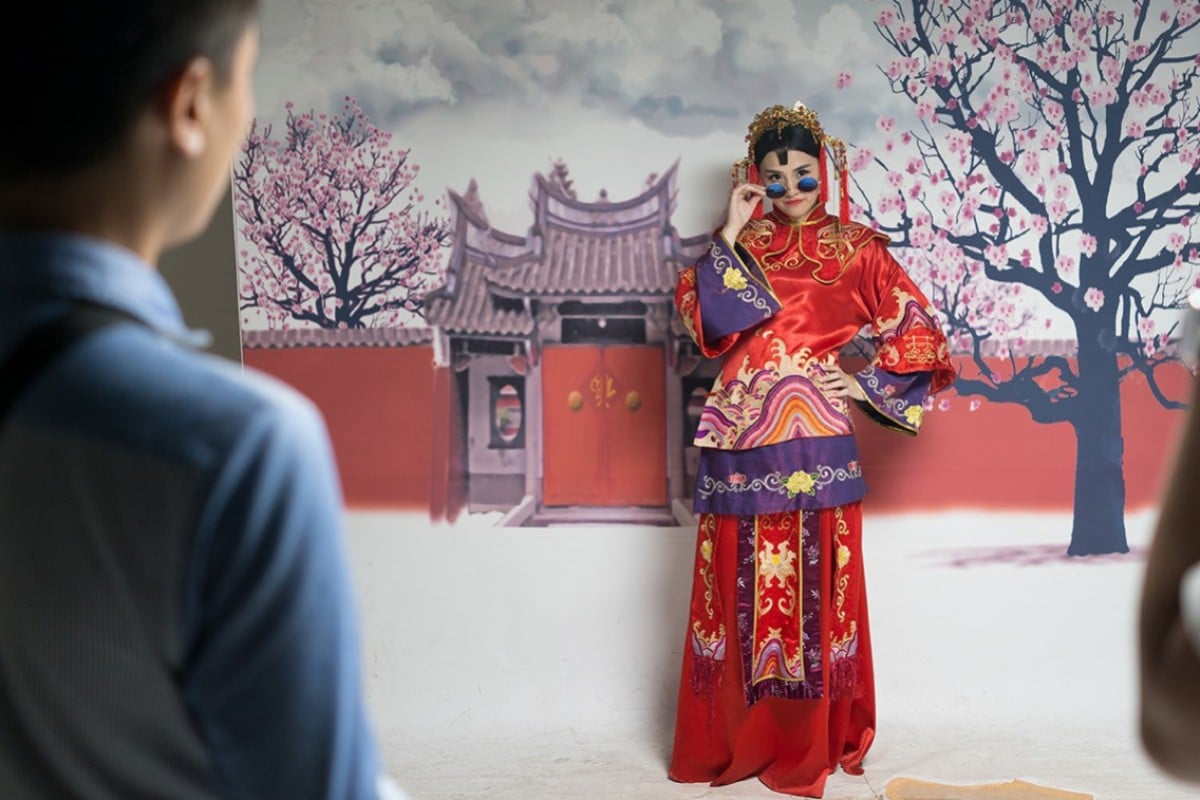
A still from China Love, a documentary by Olivia Martin-McGuire.
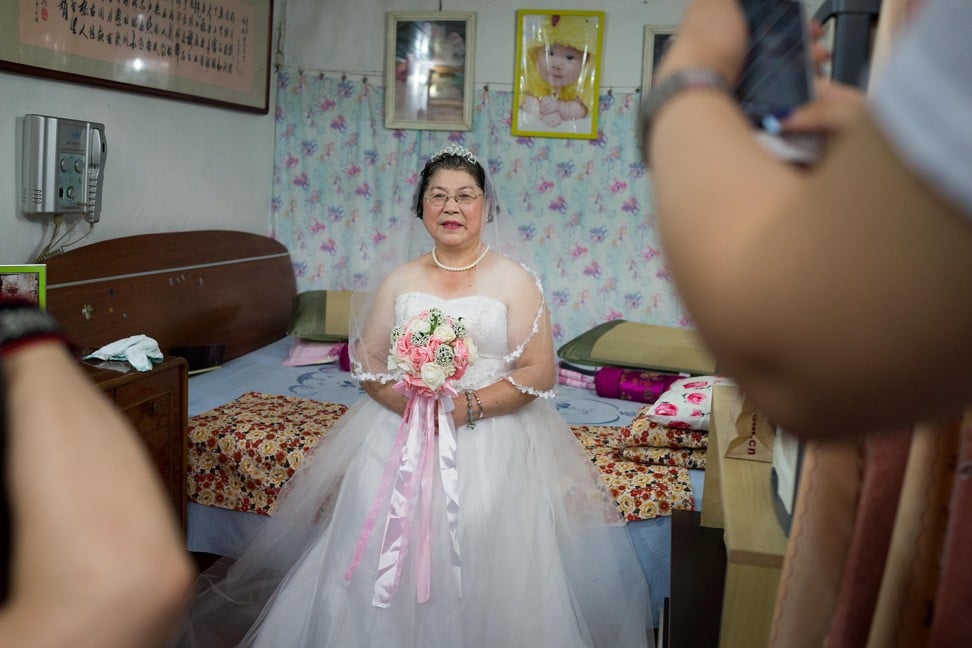
Pei-Pei and Xuezhong live in Shanghai’s French Concession. They married in 1968 and, as was typical for the time, have just one small black-and-white wedding photo.
“Pre-wedding photography could never have happened in 1968 because of the Cultural Revolution,” says Xuezhong, referring to the upheaval that took place under Mao Zedong, from 1966 to 1976. “Colourful clothing was not allowed. We had no choice.”
They did choose, however, to create new memories by having the wedding photos of their dreams taken decades later in a modern setting.
Their story is one of five featured in the documentary
, which explores relationships in contemporary China through the lens of the booming pre-wedding photo industry. It follows couples as they navigate love and family in the lead-up to the most important ritual in Chinese society: marriage.
The documentary debuts in Hong Kong this week, with a special screening on Thursday at the Asia Society, in Admiralty. Attending the screening will be the film’s Australian director, Olivia Martin-McGuire, who spent four years in Shanghai, where a series of photographs taken on the city’s streets developed into a fascination with matters of the heart.
“It started when I saw all these couples in amazingly colourful costumes – some hitching up their dresses to reveal trainers – having [pre-wedding] photos taken near The Bund,” she says.
But Martin-McGuire says the film is more than a commentary on the pre-wedding photography business. It delves into issues of freedom, status, money and the new “China dream”.
“Just over 40 years ago, marriage in China was arranged by the state. Romantic love was seen as a capitalist concept,” she says.
China Love director Olivia Martin-McGuire. Photo: Gráinne Quinlan
Fast forward a generation and the picture couldn’t be more different, with China’s wedding industry today worth a staggering US$80 billion, according to Martin-McGuire.
A big part of that goes on the pre-wedding photos, with some couples spending up to US$500,000 for shoots in exotic locations.
Shoots usually involve several costume and backdrop changes, and can see couples transform into characters from a fantasy. Take Jenny Cheng, born in Urumqi, capital of the Xinjiang Uygur autonomous region, and Australian-born David Shaw. The couple, who are featured in the film and will attend the screening in Hong Kong, had their wedding photos taken under water.
“I wanted the film to feel youthful, fun, and represent the sense of possibility that is infectious in China,” says Martin-McGuire.
China Love will be screened on Thursday, at 6.30pm, at the Asia Society, 9 Justice Drive, Admiralty, followed by a panel discussion. Visit
for details. Photos from the documentary will be featured in the “
” exhibition at the Shanghai Centre of Photography, 2551-1, 1 Longteng Avenue, Shanghai, until August 9.
Stills from China Love
Pei-Pei all set for her shoot.
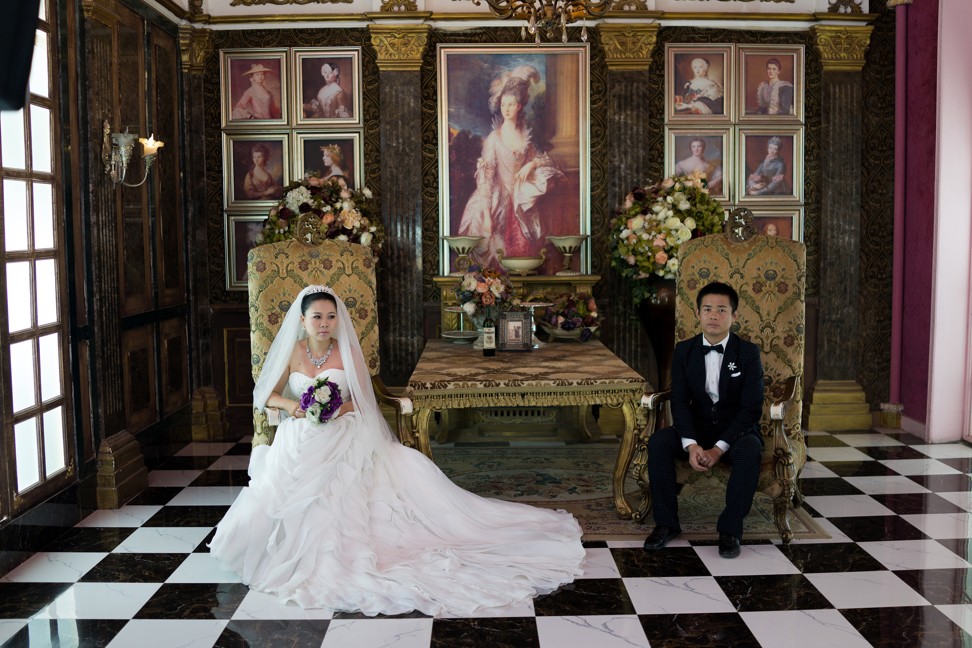
A couple at the Only Photo Studio, outside Shanghai.
A couple in Shanghai’s Thames Town, which is modelled on London.
Pre-wedding shoots can be exhausting.
A couple at the Only Photo Studio outside Shanghai.
Source: SCMP
Posted in Admiralty, Asia Society, Ürümqi, China Love film, country’s billion-dollar, French Concession, Hong Kong, London, Only Photo Studio, outside Shanghai., pre-wedding photo industry, Shanghai, Shanghai Centre of Photography, Thames Town, The Bund, Uncategorized, Xinjiang Uygur Autonomous Region |
Leave a Comment »
02/05/2019
- Major highways gridlocked for hours at start of four-day break
- Chaos at railway stations as ticket-holding passengers turned away
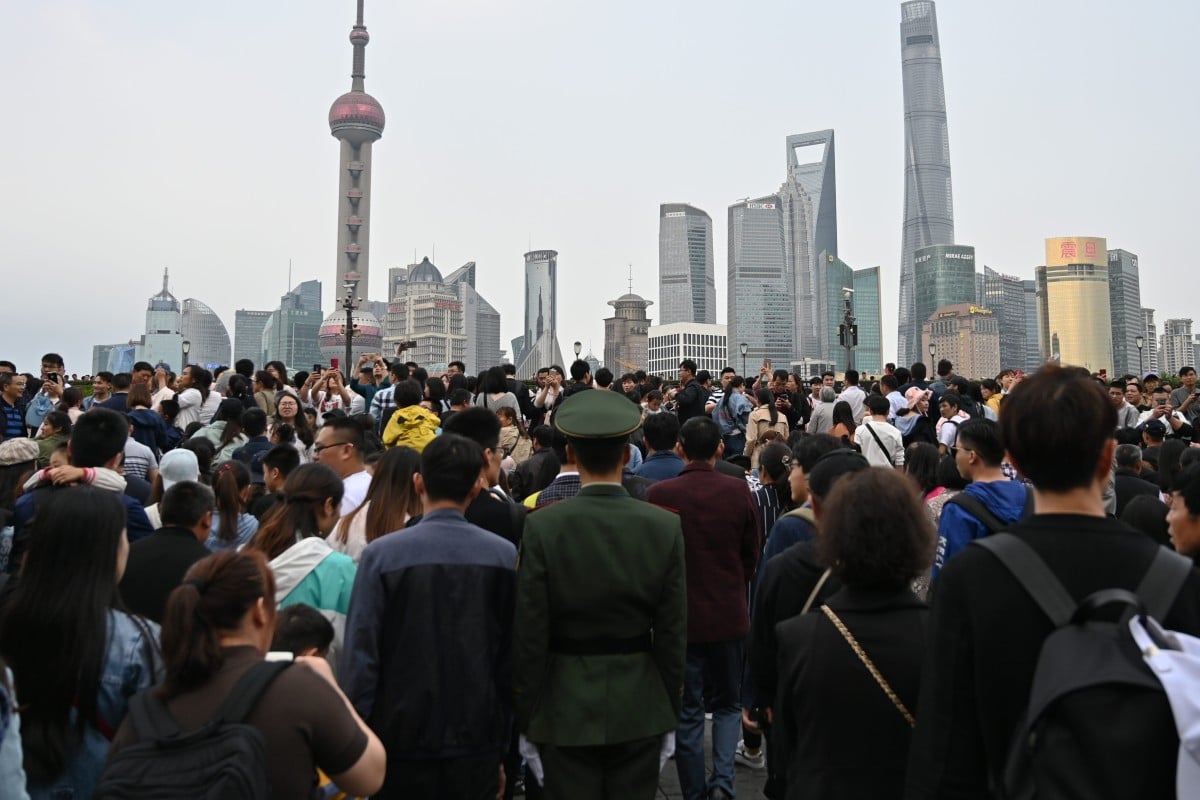
Holiday crowds pack the promenade on the Bund along the Huangpu River in Shanghai on the first day of China’s May break. Photo: AFP
China’s Labour Day holiday started on Wednesday with gridlocked roads and chaos at railway stations as millions of people took advantage of this year’s unusually long break.
Motorists reported being stuck in traffic jams which did not move for hours, while ticket-holding passengers were turned away from some trains due to severe overcrowding on the first day of the holiday.
Travel agency Ctrip estimated that around 160 million domestic tourists would be travelling over the four-day break, according to data from travel booking platforms.
Forty major highways recorded a 75 per cent spike in traffic on Wednesday, according to Xinhua, as toll fares for cars were suspended for the holiday.
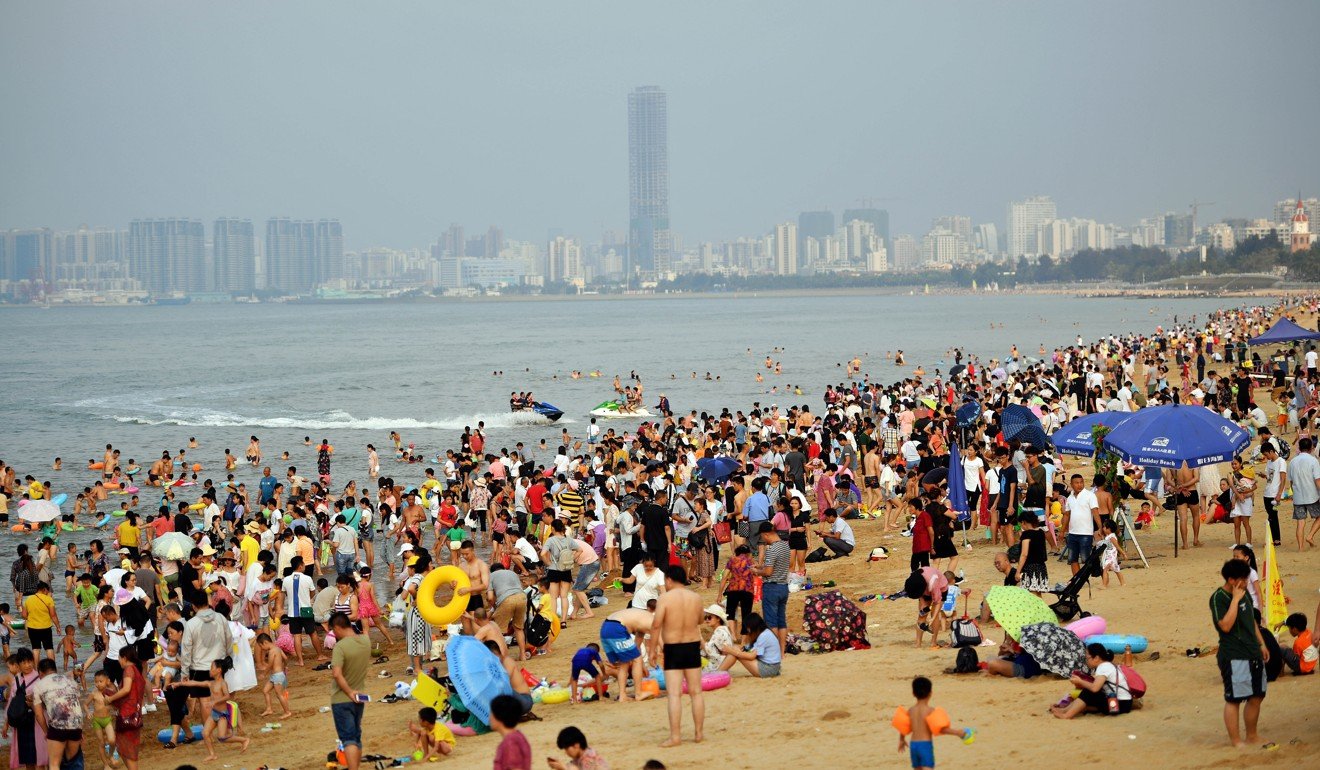
Tourists enjoy the first day of China’s four-day May holiday on a beach in Haikou, Hainan province, southern China. Photo: Xinhua
Monitoring stations on major routes – including the Beijing-Tibet Expressway, the Shanghai-Shaanxi Expressway, Shanghai’s Humin Elevated Road and the Beijing section of the Beijing-Hong Kong-Macau Expressway – recorded a 200 per cent increase in traffic from Tuesday onwards, Xinhua said.
The Ministry of Public Security’s traffic management bureau has warned holiday motorists to drive safely, especially on winding mountainside routes.
Online news portal The Paper reported on Thursday that traffic jams on some major routes were so severe that the drive from Shanghai to Hangzhou, capital of neighbouring Zhejiang province, took some travellers seven hours instead of the usual two.
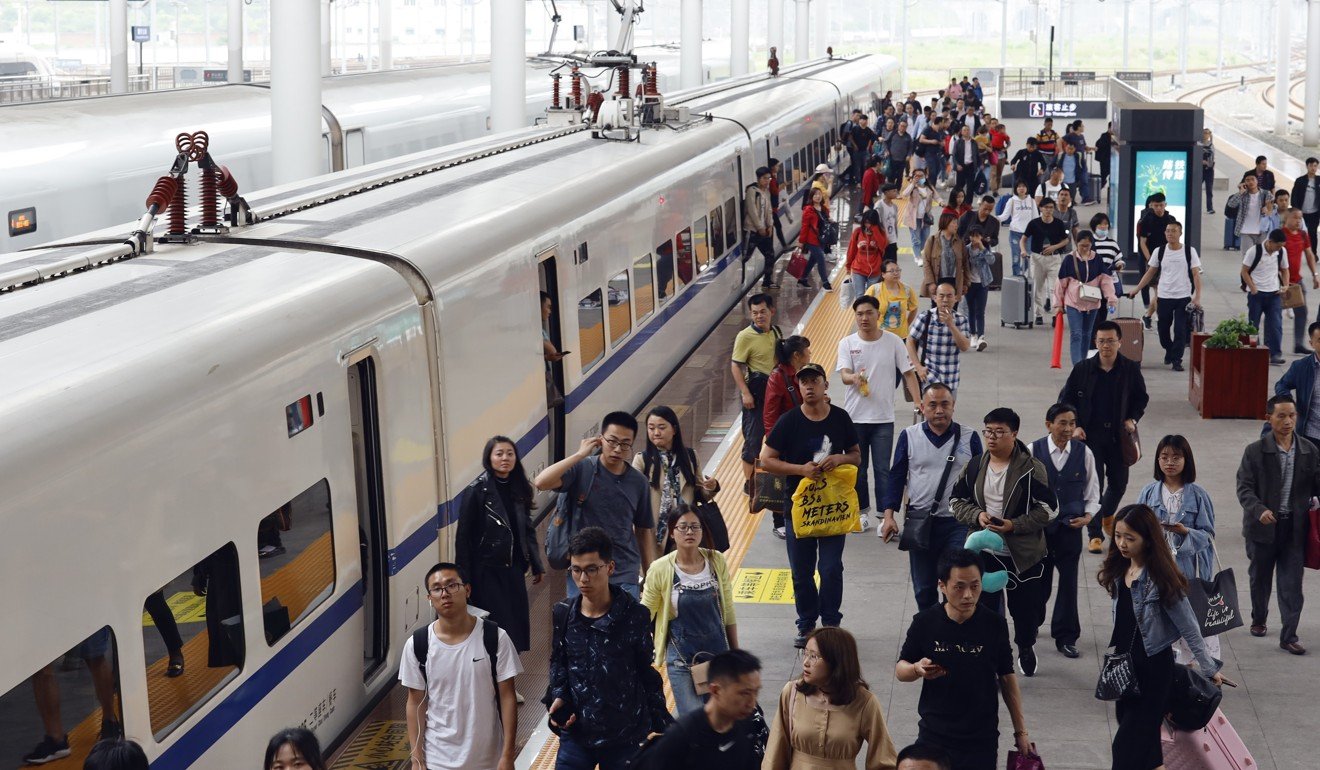
Passengers board the train at Chongqing North Railway Station in southwest China on Tuesday, hoping to beat the May holiday travel rush. Photo: Xinhua
Meanwhile, more than 54,000 tourists visited the popular Badaling section of the Great Wall on Wednesday, according to Beijing Youth Daily. The attraction’s management team had increased the number of volunteers, parking spaces and shuttle buses to prepare for the influx, the report said.
More than 53,000 tourists had visited the Shanghai International Tourism Resort and Shanghai Disneyland by 4pm on Wednesday, according to data from the Shanghai municipal government’s real-time visitor tracker. The Shanghai Zoo attracted more than 24,000 people, and more than 9,200 visited the Shanghai Science and Technology Museum.
Despite the crowds, no records were broken at the Shanghai attractions, which reached about 70 per cent of their maximum visitor numbers recorded, The Paper reported.
At railway stations, ticket-holding passengers were stopped from boarding trains between Nanjing and the city of Zibo in Shandong province, eastern China, due to severe overcrowding, Beijing Youth Daily reported on Wednesday.
Station staff promised full refunds to customers with pre-booked tickets who were refused entry.
Source: SCMP
Posted in Badaling section, Beijing Youth Daily, Beijing-Hong Kong-Macau Expressway, Beijing-Tibet Expressway, Chaos, China alert, Chongqing North Railway Station, Gao, Great Wall, gridlocked, Haikou, Hainan, Huangpu River, Humin Elevated Road, influx, Labour Day holiday, Major highways, Ministry of Public Security, Nanjing, parking spaces, railway stations, roads jammed, shandong province, Shanghai, Shanghai Disneyland, Shanghai International Tourism Resort, Shanghai Science and Technology Museum, Shanghai to Hangzhou, Shanghai Zoo, Shanghai-Shaanxi Expressway, shuttle buses, The Bund, The Paper, traffic management bureau, Travel agency Ctrip, travel booking platforms, Uncategorized, volunteers, Xinhua, zhejiang province, Zibo |
Leave a Comment »







 CHINDIA ALERT: You'll be living in their world, very soon