27/04/2020
- Pupils given headwear modelled on a style worn by officials a thousand years ago to reinforce the message that they must stay a metre away from each other
- One legend says the hats were given long extensions to stop courtiers whispering among themselves when meeting the emperor
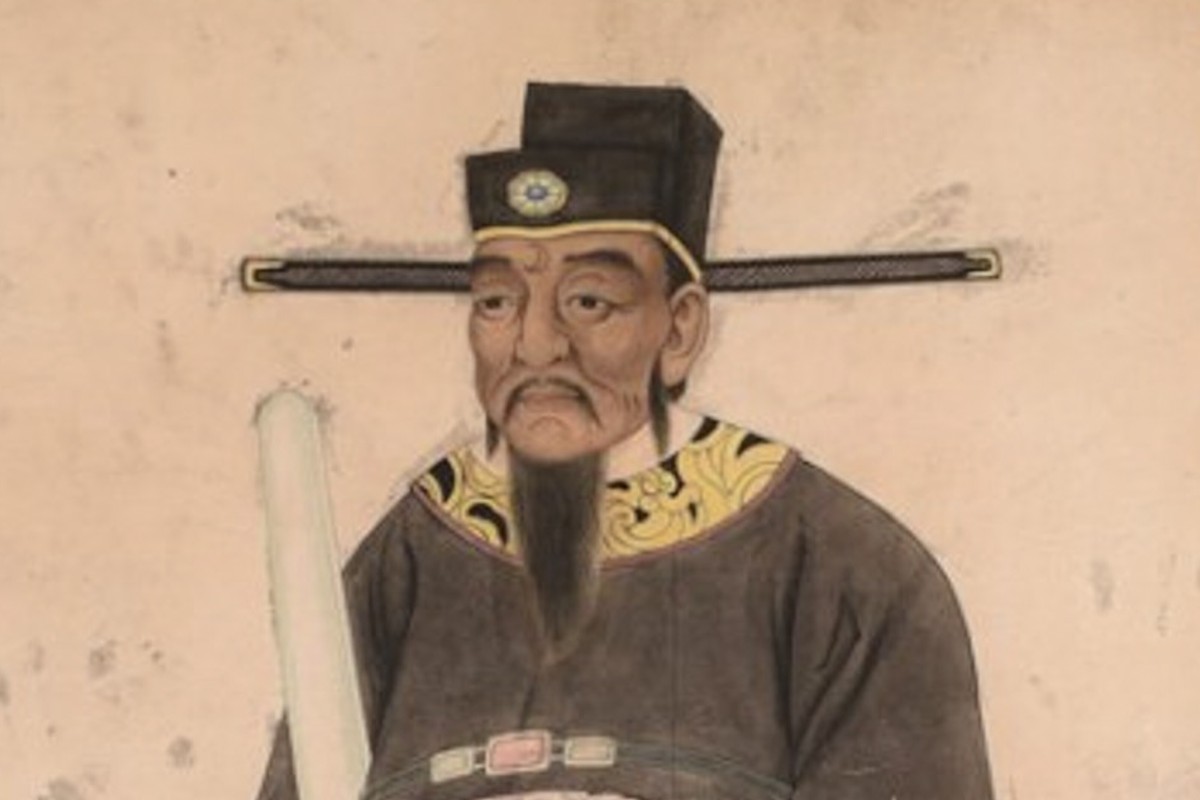
Hats with long extensions were worn by officials during the Song dynasty. Photo: Handout
An ancient Chinese hat has joined face masks and hand sanitisers as one of the weapons in the fight against
Covid-19.
A primary school in Hangzhou in the east of the country took inspiration from the headgear worn by officials in the Song dynasty, which ruled China between 960 and 1279, to reinforce lessons on social distancing.
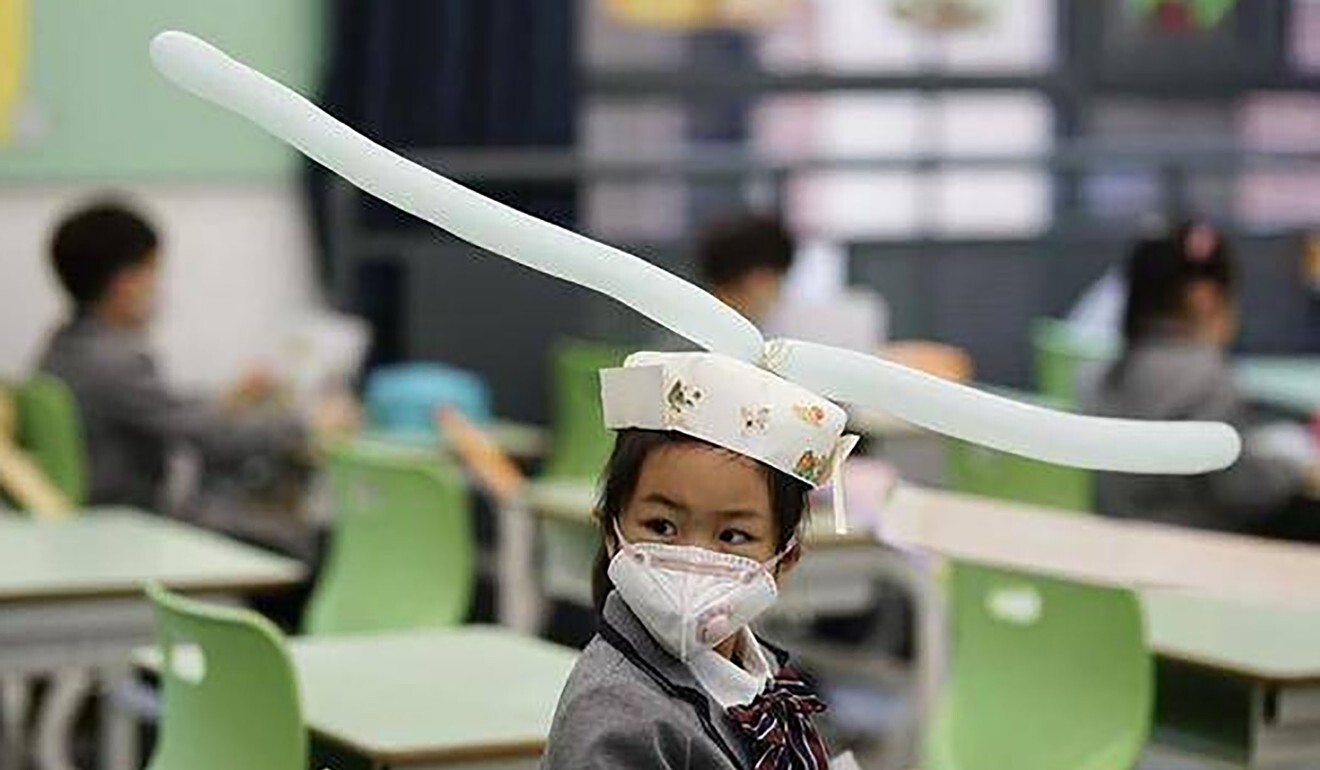
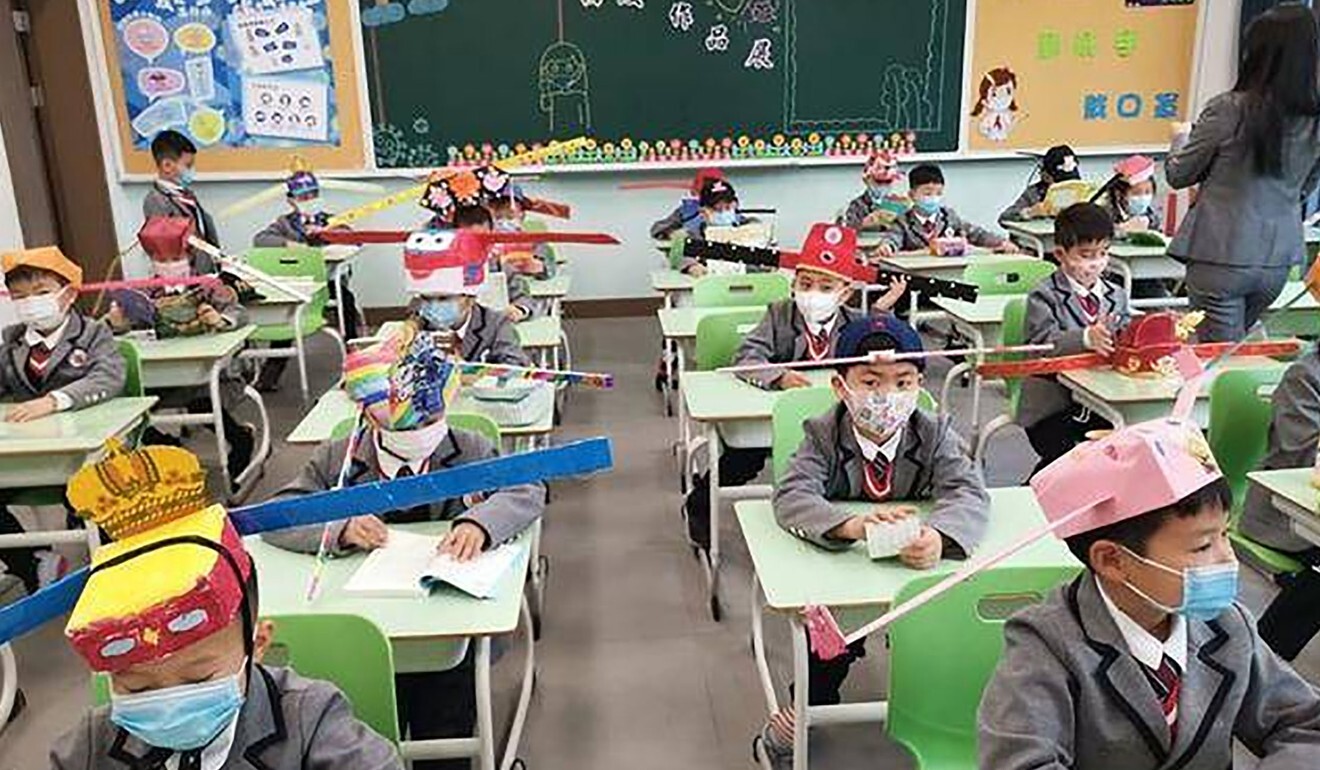
Pupils at the school wore their own handmade versions of the hats, which have long extensions, or wings, to keep them at least a metre (3ft) apart when they returned to school on Monday, state news agency Xinhua reported.
One legend says that the first Song emperor ordered his ministers to wear hats with two long wings on the sides so that they could not chitchat in court assemblies without being overheard, according to Tsui Lik-hang, a historian at City University of Hong Kong.
Pupils at a school in Hangzhou made their own versions of the hats. Photo: Weibo
However, he warned that this story came from a much later source, adding: “The Song emperors, in fact, were also depicted to have worn this kind of headwear with wing-like flaps.”
The World Health Organisation recommends that people stay at least a metre apart to curb the spread of the coronavirus that causes Covid-19.
Coronavirus droplets may travel further than personal distancing guidelines, study finds
“If you are too close, you can breathe in the droplets, including the Covid-19 virus if the person coughing has the disease,” the global health body advises.
An early childhood education specialist said the hats were a good way to explain the concept of social distancing to young children, who find it difficult to understand abstract concepts.
The pupil’s head gear is designed to drive home the social distancing message. Photo: Weibo
“As children can see and feel these hats, and when the ‘wings’ hit one another, they may be more able to understand the expectations and remember to keep their physical distance,” said Ian Lam Chun-bun, associate head of the department of early childhood
Using pictures of footprints to indicate the right distance to keep when queuing, standing, and even talking to schoolmates was also helpful, said Lam, who recommended visual aids and aids that stimulate other senses, such as hearing and touch.
“We can use sharp colours or special textures, like tactile paving,” he added.
Source: SCMP
Posted in 1279, 3ft, 960, abstract concepts, according, among, ancient, apart, assemblies, at least, away from, between, breathe, causes, Chinese hat, Chinese school, chitchat, City University of Hong Kong, coronavirus, coughing, Country, court, courtiers, COVID-19, curb, depicted, Disease, distance, droplets, each other, East, emperor, EXPECTATIONS, extensions, face masks, fight, further, given, gives, guidelines, hand sanitisers, handmade versions, Hangzhou, hat tip, hats, headgear, headwear, historian, how to, inspiration, keep, legend, Lessons, long, long wings, meeting, message, metre, modelled, Monday, must stay, officials, overheard, People, person, personal distancing, primary school, pupils, recommends, reinforce, remember, reported, returned, ruled, school, sides, Social distancing, Song Dynasty, Song emperors, spread, state news agency, stay, stop, style, their, themselves, thousand, to teach, travel, two, Uncategorized, weapons, when, whispering, wing-like flaps, wings, without, World Health Organisation, worn by, Xinhua, years ago |
Leave a Comment »
10/04/2020
- Malfunction happened during third stage of launch after earlier stages were completed successfully, state media says
- Failed mission is second in less than a month after Long March-7A encountered problems after lift-off on March 16
A Long March-3B carrier rocket blasts off from the Xichang Satellite Launch Centre in Sichuan province in November. A similar launch on Thursday ended in failure. Photo: Xinhua
China’s space programme suffered another setback on Thursday night with its second rocket launch failure in less than a month.
Officials are investigating what caused a malfunction during the third stage of the Long March-3B launch after lift-off from the Xichang Satellite Launch Centre in southwest Sichuan province at 7.46pm with an Indonesian Palapa-N1 satellite, Xinhua reported.
“The first and second stages of the rocket performed well, but the third stage malfunctioned,” the report said.
“Debris from the third stage of the rocket and the satellite fell [to the ground]. The launch mission failed.”
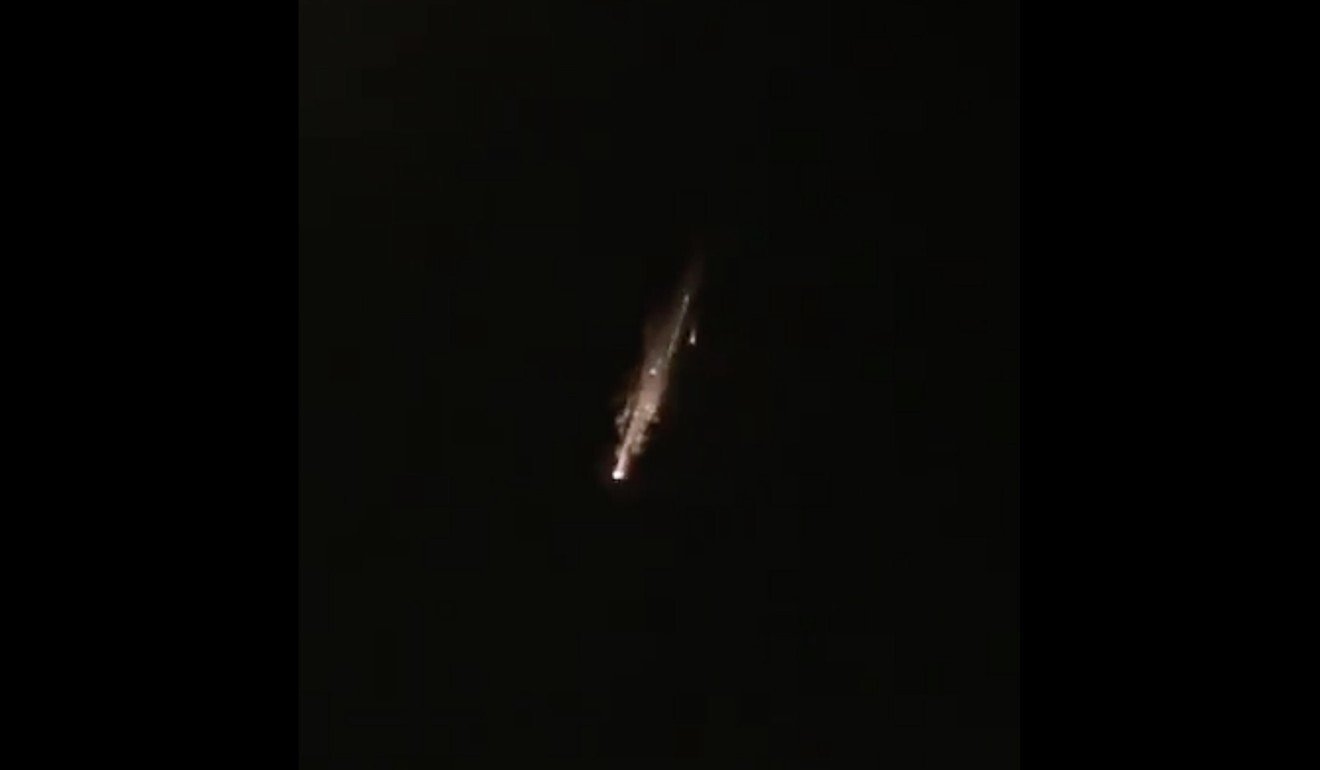
Debris from the failed mission rained down over Guam on Thursday night. Photo: Twitter
China’s state media did not say where the rocket landed, but the office of Guam Homeland Security and Civil Defence said “a fiery object over the Marianas sky” observed on Thursday evening was likely connected to the failed launch.
Video footage of the burning debris falling from the sky was widely circulated on social media.
The setback follows another failed launch on March 16, when China’s new
Long March-7A, a three-stage, medium-lift, liquid-fuel rocket, encountered an “abnormality” minutes after lifting off from its launch site in the southern island province of Hainan.
China’s BeiDou system one satellite closer to full operation
The satellite lost on Thursday – the Nusantara 2 – was built in China for Indonesian telecommunication companies Pasifik Satelit Nusantara and Indosat Ooredoo. It was intended to replace an older satellite to provide internet and broadcasting services in Indonesia and across the Asia-Pacific region to Australia, The Jakarta Post reported earlier this month.
It is not known if the failed launch will have an impact on other Long March-3B satellite launches planned for later in the year.
Introduced in 1996, the Long March-3B – also known as the CZ-3B or LM-3B – has been the main orbital carrier rocket of China’s space programme. It was used to carry many of the satellites that make up China’s BeiDou navigation system, with the latest addition being in March.
For that launch, engineers used parachutes to control where the rocket’s boosters would land after being discarded after lift-off so as to minimise the impact on people living below, state media reported.
The latest version of the Long March-3B entered service in 2007 and is dedicated to launching heavy communications satellites of up to 5.5 tonnes into geostationary transfer orbits.
Source: SCMP
Posted in 16, Australia, “abnormality”, Beidou navigation system, BeiDou system one, broadcasting services, China’s space programme, Chinese, completed successfully, debris, during, earlier stages, eight, eighth, eleven, encountered, eons, Failed mission, fails, fiery object, fifth, fifty, five, four, fourth, geostationary transfer orbits, Guam, Guam Homeland Security and Civil Defence, happened, hundred, hundredth, Indonesia, Indonesian, Indonesian Palapa-N1, Indosat Ooredoo, Internet, investigating, launch, Lift-off, liquid-fuel, Long March 3B, Long March-7A, Malfunction, March, Marianas sky, medium-lift, minutes, month, nine, ninth, November, Nusantara 2, officials, one, Pasifik Satelit Nusantara, problems, Rocket, Satellite, second, seconds, setback, seven, seventh, sichuan province, six, sixth, telecommunication companies, ten, tenth, third stage, thousand, three-stage, Thursday, twelve, twenty, two, Uncategorized, weeks, Xichang Satellite Launch Centre, Xinhua |
Leave a Comment »






 CHINDIA ALERT: You'll be living in their world, very soon