Chindia Alert: You’ll be Living in their World Very Soon
aims to alert you to the threats and opportunities that China and India present. China and India require serious attention; case of ‘hidden dragon and crouching tiger’.
Without this attention, governments, businesses and, indeed, individuals may find themselves at a great disadvantage sooner rather than later.
The POSTs (front webpages) are mainly 'cuttings' from reliable sources, updated continuously.
The PAGEs (see Tabs, above) attempt to make the information more meaningful by putting some structure to the information we have researched and assembled since 2006.
SHANGHAI, Dec. 11 (Xinhua) — Chinese tourists will travel to more overseas destinations during the Spring Festival holiday in 2020, said a report released by the country’s largest online travel agency Trip.com Group.
Chinese tourists have booked trips to 419 overseas cities in over 100 countries and regions during the seven-day holiday beginning Jan. 24, 2020, said Trip.com, adding that both figures are new highs for the group.
Boasting warm weather, Australia and New Zealand are among the most popular destinations for Chinese during the period. Trips to Italy, Britain, Spain, Russia, France and the United Arab Emirates are also bestsellers, according to the report.
Ninety percent of Trip.com Group’s users have chosen high-quality travel products and services. Private travel groups with tour guides and flexible schedules have also been favored by tourists.
The fact that Chinese are willing to spend more money and time on traveling shows their growing incomes and higher living standards, said Peng Liang, a researcher with the tourist data research center of Trip.com Group.
As more Chinese travel overseas for holidays, the world will also share the benefits of China’s development, said Peng.
Chinese made 6.3 million outbound trips during the Spring Festival holiday in 2019, up 12.48 percent year on year.
Every morning and night for the past four years, businessman Zhong Congrong has been on the streets of Chongqing to stop people dropping their litter
Admired as a welfare champion, the 54-year-old says he has been beaten and insulted for his cause
Zhong Congrong is a familiar figure on the streets of his hometown. Photo: Handout
Zhong Congrong owns three businesses in southwestern China which together are worth more than 100 million yuan (US$14.3 million), but he prefers to risk being labelled as an environment “nut” who wants to clean up Chongqing.
Every morning after breakfast and each evening after supper, the entrepreneur pulls on an orange T-shirt, gets into his Mercedes-Benz SUV and heads downtown. For one or two hours, he walks the streets, picking scraps of rubbish off the road and talking to passers-by about littering.
“It is my mission to change people’s bad habits and to raise their awareness of protecting the environment,” said Zhong, who has been on this mission for four years. It has brought the 54-year-old civic rewards, earned him a bruising or two from people who do not want to listen to his message and it nearly cost him his marriage.
Throughout it all, he has remained a persistent voice for the environment in the city of more than 30 million people and, as some of them have learned, he refuses to give up.
Yang Zuhui (right) has come to admire Zhong Congrong’s dedication to his litter picking mission, but she fears for her husband’s safety. Photo: Weibo
On mainland China, cities have banned littering and some hit offenders with fines as high as 200 yuan. However, the rules are rarely obeyed and feebly enforced, and while there are plenty of dustbins in public places, litter is still a nuisance.
Zhong said his mission started in 2015 after he met a woman in her 70s in Sanya, the southern coastal city on the South China Sea island of Hainan. He was struck by how dedicated she and her husband were when they went litter picking each day.
“They are retired professors from a prestigious university in Beijing,” Zhong said. “I chatted a lot with her and I asked her, ‘What’s the point of collecting rubbish every day? You clean up the beach today, but tomorrow new rubbish appears’.”
The way to solve the problem was to teach people to not litter, she told him, but she said she “dared not” try to do that. Zhong said that encounter gave him his purpose and he would dare to change attitudes.
Shanghai recycling scheme slips up on 9,000 tonnes of waste
Back home, Zhong watched and learned – concluding that customers of restaurants and fast food businesses tended to be the people who dropped rubbish most.
“Perhaps it’s because when people dine in restaurants, they throw their rubbish wherever they like. Going outside, they keep on doing it,” he said.
“People in shopping malls are generally more civilised.”
Zhong says his mission began in 2015 during a holiday on the island of Hainan. Photo: Dickson Lee
While on patrol, Zhong makes himself easy to see in an orange T-shirt that bears his clean-up message. His tools include a metal pincer for picking up tissue paper, plastic bags, drinks bottles, nappies and other everyday detritus and putting it into bins.
He also carries a voice recorder that sends out an appeal to restaurant customers: “To protect our environment and not to affect our kids’ healthy growing up, dear friends, please don’t throw rubbish.”
Can China sort its household waste recycling problem by 2020?
Zhong said that at first he felt afraid and self-conscious when he stood in front of a crowd of diners with his green gospel. But time and practise taught him he had almost nothing to fear, he said.
One of the bigger challenges is getting through to the many people who do not listen to him and refuse to dispose of their rubbish the right way.
“It’s normal that our society has various kinds of people and I need to face this reality,” Zhong said. “I was prepared in my mind that I would be called ‘nut’ since this is such an arduous but fruitless cause.”
He tackles the problem with his usual persistence, so argument and persuasion is all part of the job. When Zhong insists the rule breakers take their rubbish and bin it, some ignore him and others walk away – but he is ready with an answer.
“I tell them, ‘If you don’t pick it up, I guarantee that you will lose face today. I will let passers-by see and hear what a humiliating thing you have done. Everybody will then condemn you and you will be embarrassed’,” he said.
When people tell him what they do is none of his business, Zhong replies that what he is doing is in the public interest.
Sometimes there is a heavier price. Zhong said he once watched several men in their 20s throw rubbish onto the road from their car. He set off after them in his SUV. He waylaid them and asked them to clean up after themselves – the men refused, swore at him and beat him up. Their day ended in a police station.
Zhong said he hoped his work would bring “positive energy” to the employees of his vehicle components and packaging materials companies, but his mission was not about business prestige.
However, last year, he was named as one of the top 10 public welfare figures of Chongqing by the municipal government, while his family was honoured as a Chinese good family by the semi-governmental All-China Women’s Federation, a women’s rights organisation established in 1949.
Street cleaner who found US$22,000 in rubbish refuses to accept a reward
There were trials for Zhong closer to home – his wife, Yang Zuhui, did not support his mission at first and threatened to divorce him.
“It’s OK that you picked up trash on the street and you were just another cleaner there,” she told him in an interview with Hunan Television in 2017. “But what worried me was that you tried to persuade others – physical violence [against him] was inevitable.”
She also said: “My husband is not very tall and, on many occasions, he was at a disadvantage and got beaten up. I am worried about his personal safety.”
Zhong impressed his daughter’s schoolfriends with an inspiring speech. Photo: Weibo
But two years ago, their 10-year-old daughter helped change Yang’s attitude towards her husband’s mission after a school outing.
After lunch that day, Zhong gave the adults and children who had left rubbish behind one of his lectures.
His daughter, who was embarrassed by Zhong’s speech, came to appreciate him when classmates told her: “Your father is awesome. He is like a hero who protects the Earth.”
Yang was won over because she knew her husband was a determined man and once he decided on a course of action would not change his mind.
Their son – who is in his 20s and has returned to Chongqing after studying in France – always stands by his father, Zhong said.
“My son told me that environmental voluntary work normal abroad and it is respected,” he said.
Going out to collect rubbish has become part of Zhong’s life, he said.
“In the evening, if I stay at home, my wife and daughter will ask me ‘Why don’t you go to pick up rubbish?’”
He said it was important to go litter picking every day because the more he did it the more people he could influence.
“By breaking the littering habit, Chinese people can stand tall when they travel abroad,” Zhong said.
Train trips, Xinjiang and chartered flights among the growing holiday trends, travel agents say
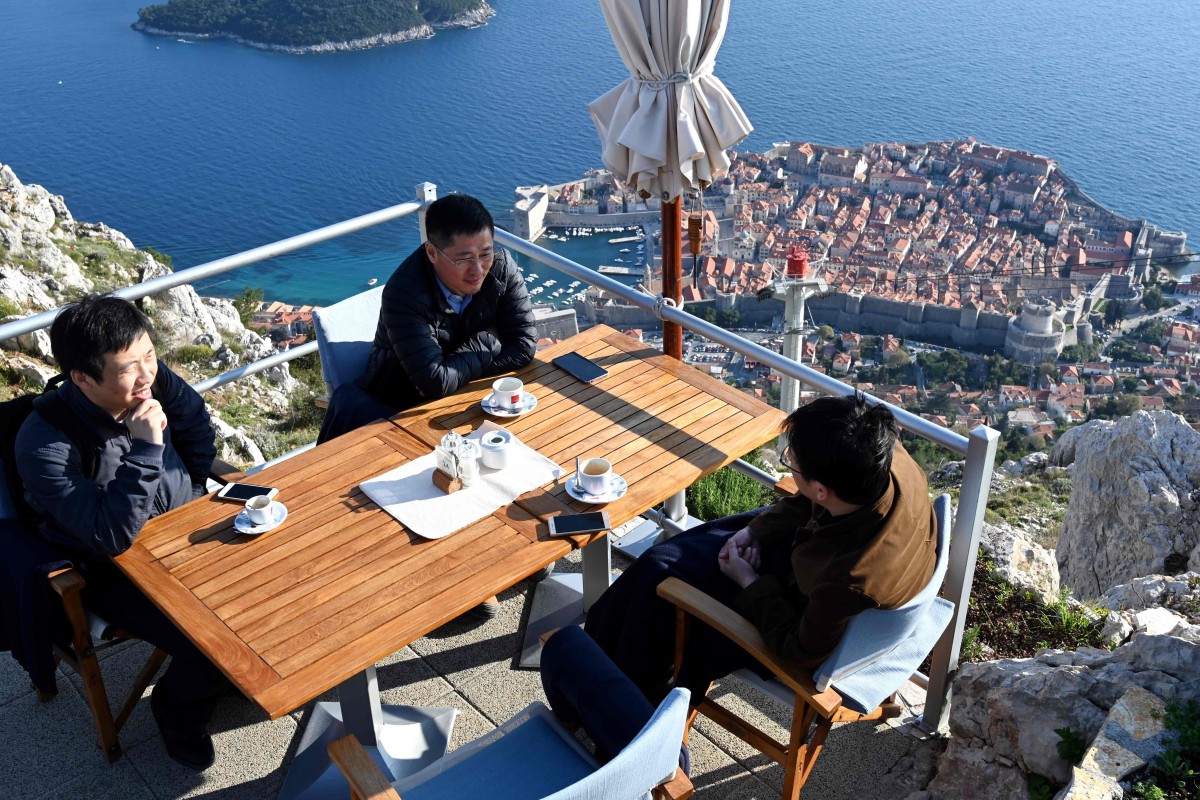
Destinations such as Dubrovnik, Croatia, are becoming more popular among mainland Chinese tourists, according to one of China’ s biggest travel services. Photo: AFP
Chartered flights and niche destinations such as Croatia and Malta are growing in popularity as Hong Kong falls out of favour for mainland Chinese holidaymakers over the National Day “golden week” break.
Japan has overtaken Thailand as the most searched overseas destination on the website of travel agency Ctrip, followed by Malaysia, the United States, Singapore, Australia, Macau, France, Italy and Russia.
Within the mainland places such as Beijing and Shanghai continued to be among the most popular searches but Urumqi, capital of Xinjiang Uygur autonomous region, is a fast-growing term, especially among people in Shanghai and Guangzhou.
“It could be that tourists want to see autumn leaves,” a Ctrip spokesman told the South China Morning Post.
October 1 marks the start of a week-long break on the mainland when millions of Chinese take the chance to travel. This year, an estimated 800 million people are expected to go on trips in China or overseas, about 10 per cent more than last year.
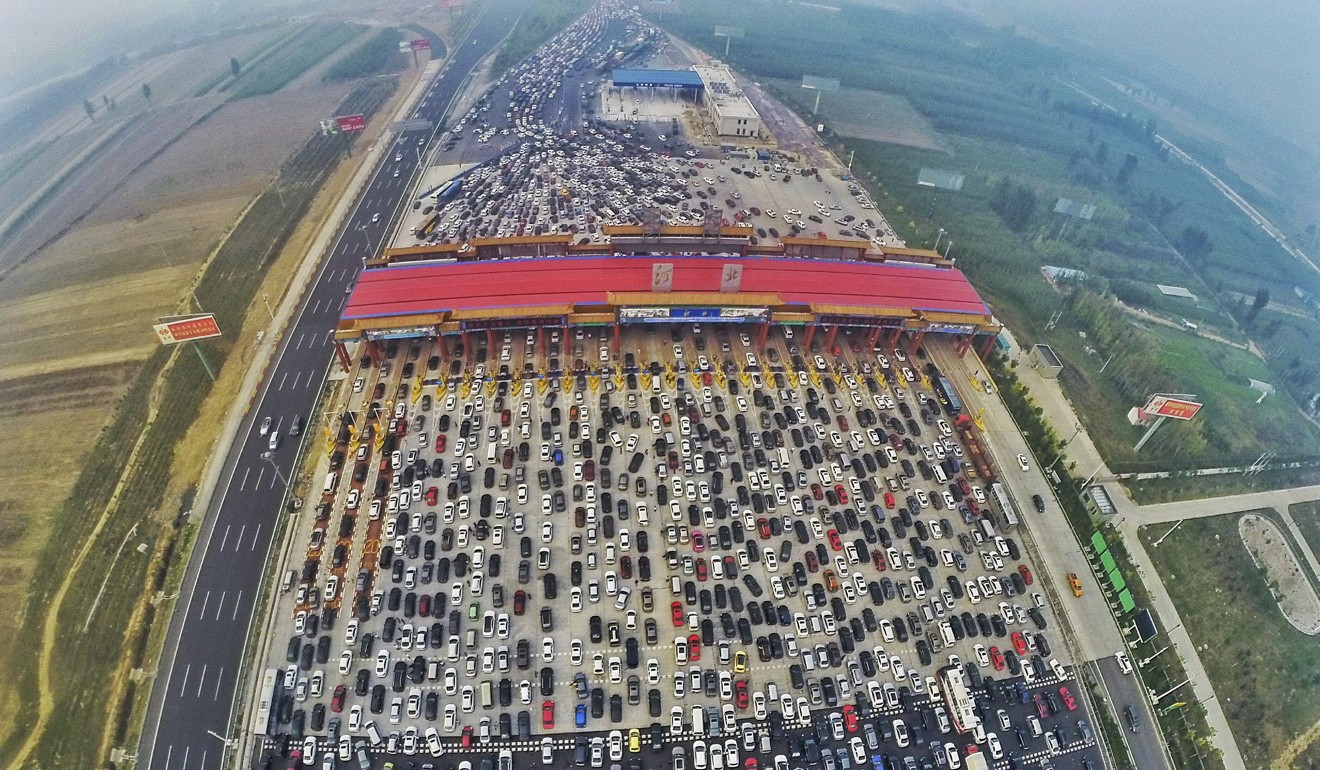
The country’s motorways are expected to be jammed from about 2pm on Monday, reaching a peak at around midnight, and again from 10am Tuesday, according to web mapping service Tencent Map.
China’s highways can expect heavy traffic as travellers head out for the holiday. Photo: Reuters
Ctrip said people heading overseas were increasingly seeking out new destinations, with bookings to places such as the Czech Republic, Austria, Croatia, Malta and Cambodia growing by 45 per cent this year.
“As Chinese people travel outside the country more and their experience of travel grows, many are more willing to go to smaller eastern European countries, such as the Czech Republic,” the spokesman said.
“Popular movies also have a strong influence. Many young people are willing to travel to see where films are shot, such as Croatia, one of the locations for Game of Thrones.”
Other noticeable trends this year include more people travelling with pets, by train and on chartered flights. The site said it sold 60 per cent more European train tickets and 10 times the number of train tickets for Japan for this golden week compared to last year.
The most popular routes in Asia were Tokyo to Kyoto in Japan, and Seoul to Busan in South Korea.
Hong Kong protests leave ‘golden week’ tourist boom in tatters as visitor arrivals during Chinese holiday period are set to be slashed by a third
Thousands of users also chose chartered flights, a service Ctrip introduced in September.
Ji Yu, head of chartered flights for Ctrip said most people thought chartered flights or helicopters were something only millionaires could afford, but in the internet age, they had become cheaper and more accessible.
“In the internet era, consumer needs vary from person to person, especially in terms of travel. There are products on the market to satisfy each customer’s personal needs.”
Among the more popular chartered routes were from Beijing or Shanghai to Tokyo, Bangkok, the Maldives and London.
More people are also going away for longer. Digital travel services giant Qunar said that 80 per cent of the travellers booking flights or hotels through its services were heading off for more than five days. And of those 41 per cent were travelling for more than a week.
Meanwhile, trips to Hong Kong have fallen substantially, with just 15 group tours expected to enter the city each day, down from 110 last year, according to the Travel Industry Council of Hong Kong.
Efforts to promote Hong Kong attractions have also increased in Shenzhen in recent weeks, with advertising videos scenic spots, popular restaurants and malls in Hong Kong playing on cross-border buses. Passengers can also get discounts to some stores and services with their tickets.
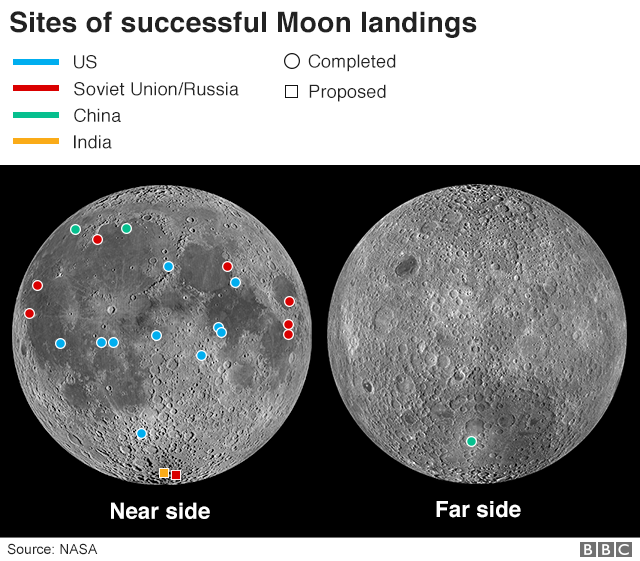
India hopes the $145m (£116m) mission will be the first to land on the Moon’s south pole.
Last month’s launch was the beginning of a 384,000km (239,000-mile) journey. Scientists hope the lander will touch down on the Moon on 6 or 7 September as planned.
India’s first lunar mission, Chandrayaan-1, was launched in 2008 but it did not land on the lunar surface. However it carried out the first and most detailed search for water on the Moon using radars.
Chandrayaan-2 (Moon vehicle 2) will try to land near the little-explored south pole of the Moon.
The mission will focus on the lunar surface, searching for water and minerals and measuring moonquakes, among other things.
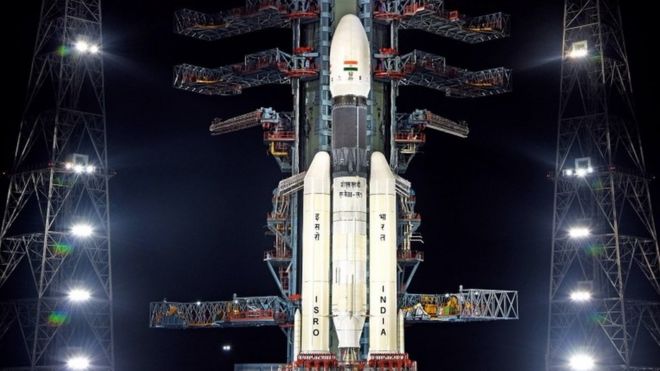
India used its most powerful rocket, the Geosynchronous Satellite Launch Vehicle Mark III (GSLV Mk-III), in this mission. It weighed 640 tonnes (almost 1.5 times the weight of a fully-loaded 747 jumbo jet) and, at 44 metres (144ft), was as high as a 14-storey building.
The spacecraft used in the mission has three distinct parts: an orbiter, a lander and a rover.
The orbiter, which weighs 2,379kg (5,244lb) and has a mission life of a year, will take images of the lunar surface.
The lander (named Vikram, after the founder of Isro) weighs about half as much, and carries within its belly a 27kg Moon rover with instruments to analyse the lunar soil. In its 14-day life, the rover (called Pragyan – wisdom in Sanskrit) can travel up to a half a kilometre from the lander and will send data and images back to Earth for analysis.
Media caption Is India a space superpower?
How long is the journey to the Moon?
The journey of more than six weeks is a lot longer than the four days the Apollo 11 mission 50 years ago took to land humans on the lunar surface for the first time.
In order to save fuel, India’s space agency has chose a circuitous route to take advantage of the Earth’s gravity, which will help slingshot the satellite towards the Moon. India does not have a rocket powerful enough to hurl Chandrayaan-2 on a direct path. In comparison, the Saturn V rocket used by the Apollo programme remains the largest and most powerful rocket ever built.
“There will be 15 terrifying minutes for scientists once the lander is released and is hurled towards the south pole of the Moon,” Isro chief K Sivan said prior to the first launch attempt.
He explained that those who had been controlling the spacecraft until then would have no role to play in those crucial moments. So, the actual landing would happen only if all the systems performed as they should. Otherwise, the lander could crash into the lunar surface.
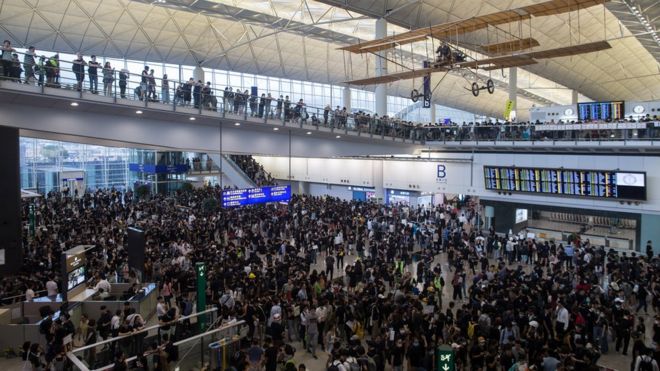
Image copyright EPAImage caption Officials say about 5,000 gathered for the fourth day of protests at the airport
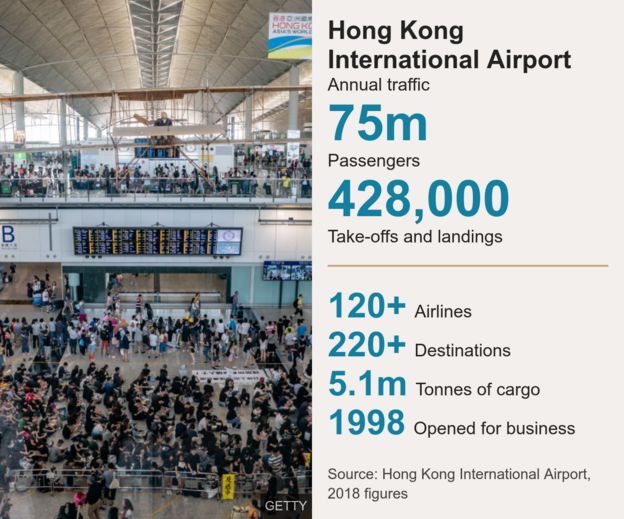
Hong Kong International Airport cancelled all departures on Monday, as thousands of anti-government protesters occupied and caused disruption.
Passengers have been told not to travel to the airport, which is one of the world’s busiest transport hubs.
In a statement, officials blamed “seriously disrupted” operations.
Many of those protesting are critical of the actions of police, who on Sunday were filmed firing tear gas and rubber bullets at close range.
Some protesters wore bandages over their eyes in response to images of a woman bleeding heavily from her eye on Sunday, having reportedly been shot by a police projectile.
In a statement on Monday afternoon, Hong Kong’s Airport Authority said they were cancelling all flights that were not yet checked in.
More than 160 flights scheduled to leave after 18:00 local time (10:00 GMT) will now not depart.
Arrivals already heading into Hong Kong will still be allowed to land, but other scheduled flights have been cancelled.
Officials are now working to reopen the airport by 06:00 on Tuesday, a statement said.
Some passengers expressed annoyance at the disruption. “It’s very frustrating and scary for some people,” one man from Pakistan told the BBC. “We’ll just have to wait for our next flight.”
Helena Morgan, from the UK, said she was set to return to the UK to get her exam results on Thursday. “I’m hoping we get back for them and we’re not on a flight,” she said.
But others were more understanding of the protests. “I was expecting something, given all the news,” one arrival, Gurinda Singh, told Reuters news agency.
As rumours spread that police plan to move in on protesters on Monday evening, thousands opted to leave on foot. There are large backlogs for transport back into the centre, local reports say.
The BBC’s Stephen McDonell, who is at the scene, says the airport has effectively shut down while authorities work out how to deal with the crisis.
Hong Kong’s mass demonstrations and unrest show no sign of abating, more than two months after they were sparked by a controversial extradition bill.
Beijing officials have strongly condemned Sunday’s violence and linked violent protesters to “terrorism”.
Image copyright REUTERSImage caption Many of those who gathered carried signs condemning police conduct
What happened on Sunday?
On Sunday afternoon, a peaceful rally in the city’s Victoria Park led to clashes when protesters moved out of the area and marched along a major road despite a police ban.
There were confrontations in several central districts and police used rubber bullets in an attempt to disperse the demonstrators.
In the bustling central Wan Chai district, petrol bombs and bricks were thrown at police, who responded by charging at protesters.
A number of people, including a police officer, were injured in the clashes.
Videos on social media also showed officers storming enclosed railway stations and firing tear gas.
Footage inside another station showed officers firing what appeared to be rubber bullets at close range and several police officers beating people with batons.
Media caption Violence erupts in HK train stations
Local media outlets reported that suspected undercover police officers had dressed-up as protesters to make surprise arrests.
While protests in the city have turned increasingly violent, there were no reports of arrests during the three previous days of the airport sit-in.
What has the reaction been?
On Monday the Chinese authorities, who have not yet physically intervened to quell the unrest, used their strongest language yet to condemn violent protesters.
“Hong Kong’s radical demonstrators have repeatedly used extremely dangerous tools to attack police officers, which already constitutes a serious violent crime, and also shows the first signs of terrorism emerging,” Yang Guang, a spokesman for the Hong Kong and Macau Affairs Office (HKMAO), said at a press briefing.
“This wantonly tramples on Hong Kong’s rule of law and social order.”
Demonstrations started in June in opposition to a proposed extradition bill, which would have allowed suspected criminals to be sent to mainland China for trial.
Critics said it would undermine Hong Kong’s legal freedoms, and could be used to silence political dissidents.
Although the government has now suspended the bill, demonstrators want it to be fully withdrawn.
Their demands have broadened to include calls for an independent inquiry into alleged police brutality, and an amnesty for all arrested protesters.
Hong Kong is part of China but its citizens have more autonomy than those on the mainland.
It has a free press and judicial independence under the so-called “one country, two systems” approach – freedoms which activists fear are being increasingly eroded.
NEW DELHI (Reuters) – Indian officials travelled nearly 70 km (45 miles) through lion-infested jungle this week to ensure a 69-year-old holy man got his chance to take part in the world’s biggest democratic exercise.
A four-member team of election officials, accompanied by a policeman, set up a special polling station deep in the Gir wildlife sanctuary in Gujarat state so a sole voter – Bharatdas Darshandas – could vote in the general election.
A priest who has lived at his remote forest temple for two decades, Darshandas has not missed an election since 2002, and cast his vote on Tuesday by walking nearly a kilometre to the special polling station.
Darshandas looks after a Shiva Temple in the 350 square kilometre (850-square-mile) wildlife sanctuary, home to some 600 of the last remaining Asiatic lions.
India has more than 900 million eligible voters who can cast their ballots at 1 million polling stations.
Officials often have to travel to remote regions over days to get to voters. But an arduous trip for just one voter is not so common.
“The fact that the government is taking so much effort to ensure the casting of one vote speaks to the importance of each and every vote,” Darshandas told Reuters partner ANI in an interview.
“Just the way voting is 100 percent in Banej, there should be 100 percent voting everywhere,” Darshandas said, referring to the place he lives.
The staggered general election has seven phases. It began on April 11 and will end on May 19. Votes will be counted on May 23.
Sourabh Pardhi, an election official from the area, said the Election Commission had worked hard to ensure everyone got a chance to vote.
“We want to make sure that no voter is left behind,” he told ANI.












 CHINDIA ALERT: You'll be living in their world, very soon