Chindia Alert: You’ll be Living in their World Very Soon
aims to alert you to the threats and opportunities that China and India present. China and India require serious attention; case of ‘hidden dragon and crouching tiger’.
Without this attention, governments, businesses and, indeed, individuals may find themselves at a great disadvantage sooner rather than later.
The POSTs (front webpages) are mainly 'cuttings' from reliable sources, updated continuously.
The PAGEs (see Tabs, above) attempt to make the information more meaningful by putting some structure to the information we have researched and assembled since 2006.
WASHINGTON (Reuters) – President Donald Trump said on Wednesday he believes China’s handling of the coronavirus is proof that Beijing “will do anything they can” to make him lose his re-election bid in November.
In an interview with Reuters in the Oval Office, Trump talked tough on China and said he was looking at different options in terms of consequences for Beijing over the virus. “I can do a lot,” he said.
Trump has been heaping blame on China for a global pandemic that has killed at least 60,000 people in the United States according to a Reuters tally, and thrown the U.S. economy into a deep recession, putting in jeopardy his hopes for another four-year term.
The Republican president, often accused of not acting early enough to prepare the United States for the spread of the virus, said he believed China should have been more active in letting the world know about the coronavirus much sooner.
Asked whether he was considering the use of tariffs or even debt write-offs for China, Trump would not offer specifics. “There are many things I can do,” he said. “We’re looking for what happened.”
RELATED COVERAGE
China says it has no interest in meddling in U.S. election
“China will do anything they can to have me lose this race,” said Trump. He said he believes Beijing wants his Democratic opponent, Joe Biden, to win the race to ease the pressure Trump has placed on China over trade and other issues.
“They’re constantly using public relations to try to make it like they’re innocent parties,” he said of Chinese officials.
He said the trade deal that he concluded with Chinese President Xi Jinping aimed at reducing chronic U.S. trade deficits with China had been “upset very badly” by the economic fallout from the virus.
A senior Trump administration official, speaking on condition of anonymity, said on Wednesday that an informal “truce” in the war of words that Trump and Xi essentially agreed to in a phone call in late March now appeared to be over.
The two leaders had promised that their governments would do everything possible to cooperate to contain the coronavirus. In recent days, Washington and Beijing have traded increasingly bitter recriminations over the origin of the virus and the response to it.
However, Trump and his top aides, while stepping up their anti-China rhetoric, have stopped short of directly criticizing Xi, who the U.S. president has repeatedly called his “friend.”
Trump also said South Korea has agreed to pay the United States more money for a defense cooperation agreement but would not be drawn out on how much.
“We can make a deal. They want to make a deal,” Trump said. “They’ve agreed to pay a lot of money. They’re paying a lot more money than they did when I got here” in January 2017.
The United States stations roughly 28,500 troops in South Korea, a legacy of the 1950-53 Korean War that ended in an armistice, rather than a peace treaty.
Trump is leading a triage effort to try to keep the U.S. economy afloat through stimulus payments to individuals and companies while nudging state governors to carefully reopen their states as new infections decline.
Trump sounded wistful about the strong economy that he had enjoyed compared with now, when millions of people have lost their jobs and GDP is faltering.
“We were rocking before this happened. We had the greatest economy in history,” he said.
He said he is happy with the way many governors are operating under the strain of the virus but said some need to improve. He would not name names.
Trump’s handling of the virus has come under scrutiny. Forty-three percent of Americans approved of Trump’s handling of the coronavirus, according to the Reuters/Ipsos poll from April 27-28.
But there was some good coronavirus news, as Gilead Sciences Inc said its experimental antiviral drug remdesivir was showing progress in treating virus victims.
Trump has also seeking an accelerated timetable on development of a vaccine.
“I think things are moving along very nicely,” he said.
At the end of the half-hour interview, Trump offered lighthearted remarks about a newly released Navy video purportedly showing an unidentified flying object.
“I just wonder if it’s real,” he said. “That’s a hell of a video.”
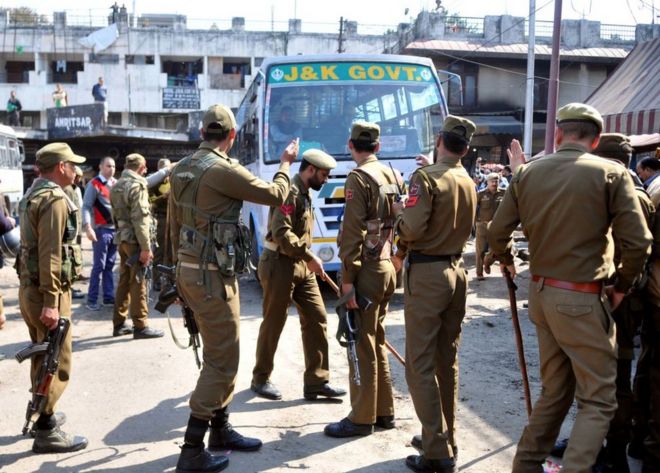
Image copyrightGETTY IMAGESImage captionThe blast occurred at a busy bus station in Jammu city
Indian police have arrested an alleged member of the Hizbul Mujahideen militant group after a grenade attack killed at least two people and injured more than 30 others.
The attack took place on Thursday in a bus station in the Indian-administered state of Jammu and Kashmir.
Last month a suicide attack against security forces triggered cross-border air strikes between India and Pakistan.
Hizbul Mujahideen has said it was not behind Thursday’s attack.
But police told BBC Urdu that the accused, Yasir Javed Bhat, had confessed. He is a Kashmiri and reported to be in his 20s.
“He revealed that he was tasked with throwing the grenade by Farooq Ahmed Bhat, a district commander of Hizbul Mujahideen in Kulgam district,” inspector general Manish Kumar Sinha said.
Mr Sinha added that they were gathering more intelligence on Yasir.
Hizbul Mujahideen was formed in 1989 when an armed insurgency against Indian rule first broke out in the valley. It was the largest Kashmiri militant group through the 1990s and is considered to be pro-Pakistani.
India has blamed Pakistan for supporting militancy in the region – a charge Islamabad denies.
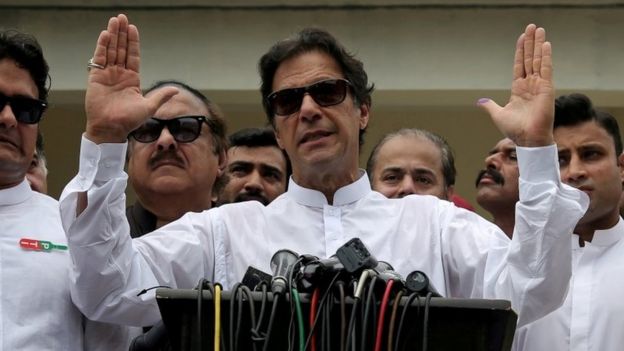
Image copyrightREUTERSImage captionPakistan PM Imran Khan said Pakistan was not behind the suicide attack in February
This has long been a source of tension between the nuclear-armed neighbours as groups based in Pakistan have carried out deadly attacks on Indian soil. The suicide attack last month killed more than 40 central reserve policemen in Indian-administered Kashmir.
Tensions between the two sides escalated quickly. India carried out air strikes against what it said was a militant camp based in Pakistan and the latter retaliated with air raids of its own.
An Indian fighter jet was shot down in Pakistan-administered Kashmir and the pilot was captured. Two days later, Pakistan handed over the pilot to Indian officials establishing a fragile truce.
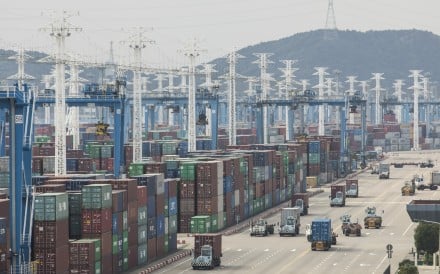
SINGAPORE (Reuters) – China, the world’s top oil importer, is set to start 2019 buying little or no crude from the United States despite a three-month truce in a trade scrap between the two nations, with relatively high freight costs and political uncertainty choking demand.
That muted appetite means the United States, which became the world’s top oil producer this year as its shale output hit record levels, will continue to hold only a sliver of China’s market even as a wave of new refining capacity starts up there.
It also suggests that China is unlikely to use crude purchases to help plug a widening trade gap with the United States, which remains a core source of tensions between the world’s top two economies.
The U.S. trade deficit with Beijing hit a record $43 billion in October as its firms stockpiled inventory from China to avoid higher tariffs that may kick in next year.
“Chinese companies have little incentive to buy U.S. crude due to the wide availability of crude supplies today from Iran and Russia,” said Seng Yick Tee, an analyst at Beijing-based consultancy SIA Energy.
“Even though the trade tension between China and the U.S. had been defused recently, the executives from the national oil companies hesitate to procure U.S. crude unless they are told to do so.”
China stopped U.S. oil imports in October and November after the trade war intensified. It resumed some imports in December, but purchased just 1 million barrels, a minute portion of the more than 300 million barrels of total imports, Refinitiv data showed.
Chinese refineries that used to purchase U.S. oil regularly said they had not resumed buying due to uncertainty over the outlook for trade relations between Washington and Beijing, as well as rising freight costs and poor profit-margins for refining in the region.
Costs for shipping U.S. crude to Asia on a supertanker are triple those for Middle eastern oil, data on Refinitiv Eikon showed.
(GRAPHIC: China’s appetite for U.S. crude muted by high freight costs, competitive Mid East supplies – tmsnrt.rs/2GyFnJI)
A senior official with a state oil refinery said his plant had stopped buying U.S. oil from October and had not booked any cargoes for delivery in the first quarter.
“Because of the great policy uncertainty earlier on, plants have actually readjusted back to using alternatives to U.S. oil … they just widened our supply options,” he said.
He added that his plant had shifted to replacements such as North Sea Forties crude, Australian condensate and oil from Russia.
“Maybe teapots will take some cargoes, but the volume will be very limited,” said a second Chinese oil executive, referring to independent refiners. The sources declined to be named because of company policy.
A sharp souring in Asian benchmark refining margins has also curbed overall demand for crude in recent months, sources said.
Anticipating high tariffs, retailers hoard products
Despite the impasse on U.S. crude purchases, China’s crude imports could top a record 45 million tonnes (10.6 million barrels per day) in December from all regions, said Refinitiv senior oil analyst Mark Tay.
Russia is set to remain the biggest supplier at 7 million tonnes in December, with Saudi Arabia second at 5.7-6.7 million tonnes, he said.
China’s Iranian oil imports are set to rebound in December after two state-owned refiners began using the nation’s waiver from U.S. sanctions on Tehran.
China and the United States agreed to a 90-day ceasefire on new tariffs in their trade war at the G20 summit in Buenos Aires, allowing a reprieve after months of threats and stalled talks.
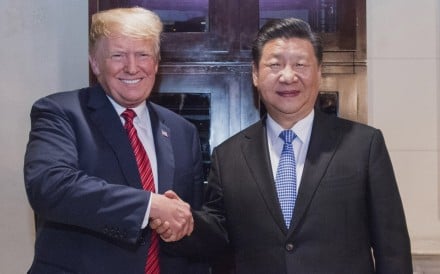
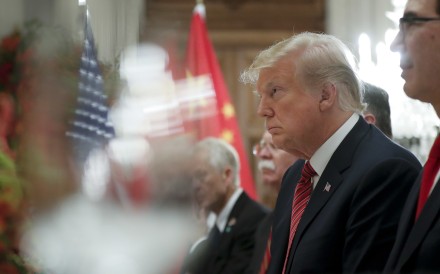
The decision for the US to hold off on planned tariff increases on US$200 billion in Chinese goods from 10 to 25 per cent on January 1 came over a grilled steak dinner in Argentina, the first face-to-face meeting between US President Donald Trump and his Chinese counterpart Xi Jinping since the start of the conflict.
Here is a look back at how it all began.
The first shots
The truce comes almost a year after the two countries began sparring over trade. Trump first slapped 30 per cent tariffs on solar panels and washing machines in February, prompting a complaint to the World Trade Organisation from Beijing. Then in March, the Trump administration imposed steel and aluminium tariffs across the board, including on China, which the Chinese government responded to with tariffs on 128 US products such as wine, fruit, and pork.
But the trade war began in earnest in July with the US levying its first round of punitive tariffs, triggered by an investigation under Section 301 of the Trade Act into Chinese trade and intellectual property practices.
Washington’s duties on US$34 billion in Chinese products was quickly matched by Beijing. The US imposed tariffs on another US$16 billion in August – again matched by China – and then US$200 billion in September. Beijing responded to the third round by targeting US$60 billion in US goods.
Beijing’s US$110 billion total targeted industries that analysts said were aimed at Trump’s political base, including a particularly stinging 25 per cent duty on American soybeans.
While business leaders in both countries called for a resolution, a series of trade talks – including low-level discussions in Washington in late August – failed to yield a breakthrough.
After the Chinese side reportedly cancelled scheduled talks in September, US officials signalled that they would not return to the negotiating table without a concrete proposal from Beijing.
Then just before the G20 summit, Chinese Vice-Premier Liu He, Xi’s top economic aide, called off a planned meeting in Washington at the last minute and pinned everything on talks in Buenos Aires.
Just how bad has it been?
The trade war cast a long shadow over the Asia-Pacific Economic Cooperation forum in Papua New Guinea in November, resulting in the leaders failing for the first time to issue a joint communique. And as the China-US conflict has rolled on, it has spilled over into a broader strategic concern, one some analysts have described as the start of a new cold war.
In October, US Vice-President Mike Pence slammed Beijing not only for unfair trade practices, but for militarisation of the energy-rich South China Sea, domestic repression including massive state imprisonment of ethnic Uygurs in Xinjiang, and expanded global influence through “debt diplomacy”. Without offering evidence, Trump also accused China of meddling in US elections ahead of the November midterms.
As tensions escalated, Washington tightened export restrictions on strategic industries, sanctioned a key department of the Chinese military for purchases from Russia, and increased visa scrutiny for Chinese academics in the US.
Meanwhile, American companies in China have reported increased scrutiny from regulators and delayed approvals for licences.
What’s next?
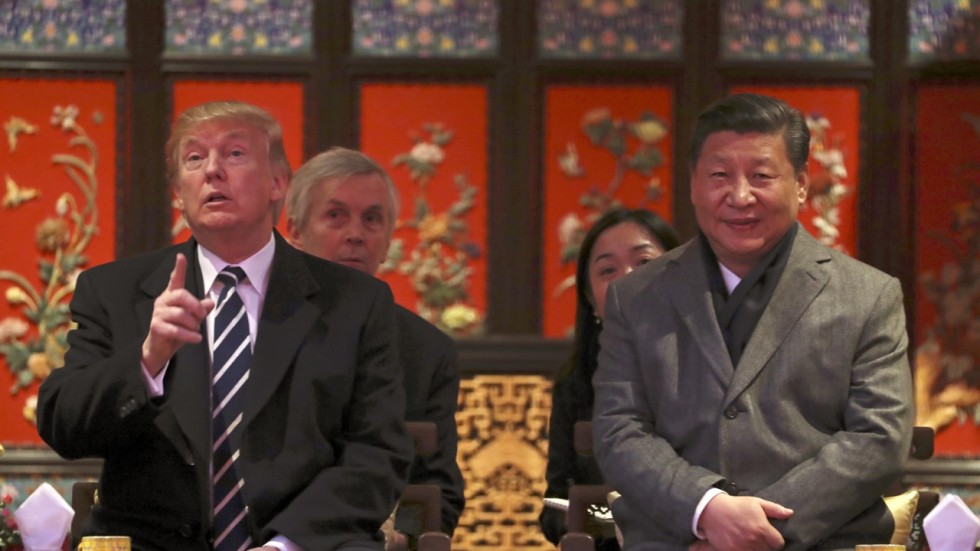
Xi and Trump initially appeared to hit things off with reciprocal lavish state visits in Mar-a-Lago in Florida and Beijing, but their apparent honeymoon was short-lived. A 100-day plan that outlined ways for China to open its economy failed to address the Trump administration’s fundamental concerns.
Those concerns include US complaints about Chinese intellectual property theft and industrial subsidies, centred on Beijing’s state-backed “Made in China 2025” initiative, a programme to turn China into a leader in a range of advanced technologies.
Despite the ceasefire, analysts are sceptical that a deal can be reached on the wide range of prickly trade issues. Only days before the G20 summit, Trump told TheWall Street Journal that it was “highly unlikely” he would delay the January 1 tariff increases, insisting that the brunt of the existing tariffs were being borne by China.
He also said the US was ready to levy tariffs on the remaining US$267 billion in Chinese imports, including consumer goods such as Apple products.
The White House is insisting on structural reforms to China’s economy, beyond window-dressing measures to close the trade imbalance, but Xi is unlikely to make major concessions given the inevitable domestic political backlash, analysts say.
“Both sides got the time out they wanted, to recalibrate their strategies and figur
e out what to do next,” Patrick Chovanec, managing director and chief strategist at Silvercrest Asset Management, said on Twitter.
“But the underlying issues – some due to China’s protectionist ideology, some due to Trump’s – remain unresolved.”






 CHINDIA ALERT: You'll be living in their world, very soon

COMMENTS: 1