Archive for ‘Turkey’

23/04/2020

Unilever withdraws guidance as virus knocks China, ice cream sales slide

(Reuters) – Consumer goods giant Unilever Plc (ULVR.L) (UNA.AS) withdrew its full-year forecast on Thursday, saying the hit from lockdowns in China and India, as well as lower ice cream sales, offset strong U.S. and European sales of cleaning items, sending its shares down 5%.

Underlying sales across Asia, the Middle East and Russia, fell 3.7%, as lockdowns in the quarter restricted restaurant visits and shopping in China and led to factory shutdowns that halted production in India.

In Europe, Turkey and Latin America, Unilever’s 3 billion euro ice cream business was hit by national efforts to prevent the spread of the coronavirus, deterring distributors in holiday destinations from buying stock.

“Many of our classic out-of-home retailers like leisure sites, travel hubs, beaches and tourist destinations were closed,” Chief Financial Officer Graeme Pitkethly said on a call.

These factors countered increased sales in the United States and Europe, where consumers stocked up on laundry detergents, Domestos bleach, Cif cleaning products and personal hygiene items, as the virus spread to those regions.

Overall, first-quarter turnover rose 0.2% to 12.40 billion euros ($13.42 billion), slightly missing the estimate of 12.77 billion euros based on analysts polled by Factset.

The company withdrew its sales performance targets for the year, which forecast growth at the lower end of a 3%-5% range, saying it could not “reliably assess the impact” of the virus, , although it said it would still pay its interim dividend.

Jefferies analysts said investors would be asking why Unilever “has apparently been hit so badly, and early, by the negative impacts of COVID-19 without seeing much of the positives. We expect a difficult day for the shares.”

Shares in Unilever, which joins spirits maker Diageo (DGE.L) and other consumer goods companies in withdrawing guidance, was down 5.5% at 4,008 pence in early trading.

The Anglo-Dutch company’s report follows results from larger U.S. rival Procter & Gamble (PG.N), which last week said its U.S. sales had seen their biggest rise in decades.

Unilever also said underlying sales grew strongly in North America, rising 4.8% as shoppers stocked up on personal hygiene products, Knorr soups and Hellmann’s dressings.

In Europe, sales growth was led by Germany and Britain, although prices across the region fell.

“We are adapting to new demand patterns and are preparing for lasting changes in consumer behaviour, in each country, as we move out of the crisis and into recovery,” Unilever Chief Executive Alan Jope said in a statement.

The company said it was directing a chunk of its 500 million euro package to support suppliers towards its ice cream distribution partners, which Pitkethly called the “jewel” in its supplier relationships.

Source: Reuters

02/04/2020

Coronavirus latest: more than 21,000 dead as UN warns of threat to ‘whole of humanity’

  • US$2 trillion rescue package passes US Senate, heads to House
  • Malaysia’s king and queen in ‘self-quarantine’ after staff test positive
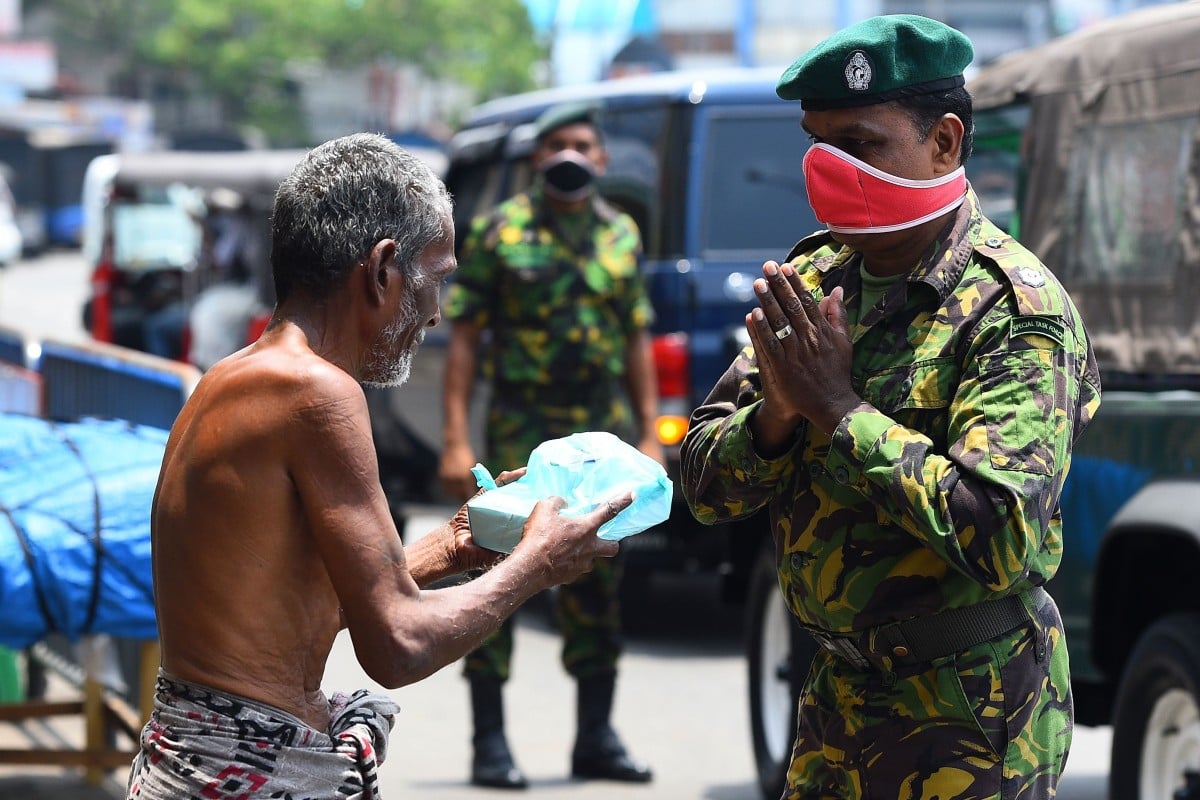
Police commandos in Sri Lanka hand out food to homeless people during a nationwide curfew against the spread of coronavirus. Photo: AFP

More than three billion people are living under lockdown measures as soaring death tolls in Europe and the US underlined a United Nations warning that the coronavirus, which has now infected nearly half a million people globally, threatens all of humanity.

The global death toll from the virus now stands at more than 21,000, with Spain joining Italy in seeing its number of fatalities overtake China, where the virus first emerged just three months ago.

“Covid-19 is threatening the whole of humanity – and the whole of humanity must fight back,” UN Secretary General Antonio Guterres said, launching an appeal for US$2 billion to help the world’s poor.

“Global action and solidarity are crucial. Individual country responses are not going to be enough.”

The G20 major economies will hold an emergency videoconference on Thursday to discuss a global response to the crisis, as will the 27 leaders of the European Union, the outbreak’s new epicentre.

The economic damage of the virus – and the lockdowns – could also be devastating, with fears of a worldwide recession worse than the financial meltdown more than a decade ago.

Here are the developments:

US$2 trillion rescue package passes US Senate

The US Senate passed the nation’s largest-ever rescue package late Wednesday, a US$2 trillion lifeline to suffering Americans, depleted hospitals and an economy all ravaged by a rapidly spreading coronavirus crisis.

The monster deal thrashed out between Republicans, Democrats and the White House includes cash payments to American taxpayers and several hundred billion dollars in grants and loans to small businesses and core industries. It also buttresses hospitals desperately in need of medical equipment and expands unemployment benefits.

The measure cleared the Senate by an overwhelming majority and was headed next to the House of Representatives, which must also pass it before it goes to President Donald Trump for his signature.

US President Donald Trump has voiced hope the US will be “raring to go” by mid-April, but his optimism appeared to stand almost alone among world leaders.

Unemployment benefit filings by Americans workers to surge to 3.3 million last week – the highest number ever recorded, the Labour Department reported on Thursday.

The normally routine report is at the front lines of the economic crisis caused by the outbreak, which has forced widespread closures of restaurants, shops and hotels, and brought airline travel to a virtual halt, prompting the stunning increase in people filing for benefits nationwide in the week ending March 21.

Nearly every state cited Covid-19 for the jump in initial jobless claims, with heavy impacts in food services, accommodation, entertainment and recreation, health care and transport, the report said.

Malaysia’s king and queen in quarantine after staff test positive

The official residence of Malaysia’s monarchy on Thursday confirmed seven of its staff have tested positive for Covid-19 and are currently receiving treatment at the Kuala Lumpur Hospital.

Malaysia’s king, Sultan Abdullah Sultan Ahmad Shah and queen, Tunku Azizah, have also been tested, but their results showed a clean bill of health, a spokesman for the Istana Negara said in a statement.

“Nevertheless, Their Majesties are now observing a 14-day self-quarantine, starting yesterday, ” he said.

Meanwhile, Prime Minister Muhyiddin Yassin, along with all federal ministers and their deputies, announced they will take a two-month pay cut, with the savings to be donated to Putrajaya’s Covid-19 fund.

The Prime Minister’s Office said the decision was made during a cabinet meeting and showed the government’s sincerity in helping those affected by the pandemic.

“The Covid-19 fund was launched on March 11 as part of the government’s efforts to help those who were affected by the disease outbreak,” the office said, adding that 8.5 million ringgit (US$1.97 million) has been collected, including government grants.

Malaysia on Wednesday announced a two-week extension of a national lockdown as part of stepped-up measures to contain the coronavirus outbreak.

The “movement control order,” which requires people to stay home and was originally set to expire on March 31, will now continue until April 14.

Moscow monitors people in coronavirus quarantine with 100,000 ‘under the skin’ surveillance cameras

Russia to ground international flights

Russia will halt all international flights from midnight on Friday under a government decree listing new measures against the coronavirus outbreak.
The decree published on Thursday orders aviation authorities to halt all regular and charter flights, with the exception of special flights evacuating Russian citizens from abroad.
The announcement came after Russia on Wednesday recorded its biggest daily spike in confirmed coronavirus infections so far, with 163 new cases for a total of 658 across the country.
Denis Protsenko, head doctor of Moscow’s new hospital treating coronavirus patients, told President Vladimir Putin that Russia needed to be ready for an “Italian scenario”, referring to what is now the hardest-hit country in the world in terms of deaths.

Singapore boosts stimulus package to 11 per cent of GDP

Singapore reported 52 new coronavirus cases on Thursday, taking its tally to 683 infections.

The health ministry said that out of the 52, 28 were imported while 24 were locally transmitted.

The city state earlier on Thursday unveiled more than $30 billion in new measures to help businesses and households fight the coronavirus pandemic that threatens to push the bellwether economy into a deep recession.

Drawing on national reserves for the first time since the global financial crisis to support an economy heading for recession, the additional spending will push up the government’s virus-related relief to almost S$55 billion, or 11 per cent of gross domestic product, Finance Minister Heng Swee Keat said in a speech in parliament Thursday. It also will widen the budget deficit for the financial year starting April 1 to 7.9 per cent of GDP, from a previous target of 2.1 per cent.

“This extraordinary situation calls for extraordinary measures,” Heng said. “We have saved up for a rainy day. The Covid-19 pandemic is already a mighty storm, and is still growing.”

Coronavirus: Italy’s slowing infection rate boosts case for lockdowns

26 Mar 2020
‘If you catch it, don’t spread it to others’, 1949 flu advice still applies to coronavirus pandemic

Imported cases rise in China

Mainland China reported a second consecutive day of no new local coronavirus infections as the epicentre of the epidemic Hubei province opened its borders, but imported cases rose as Beijing ramped up controls to prevent a resurgence of infections.

A total of 67 new cases were reported as of end-Wednesday, up from 47 a day earlier, all of which were imported, China’s National Health Commission said in a statement on Thursday.

The total number of cases now stands at 81,285.

The commission reported a total of 3,287 deaths at the end of Wednesday, up six from the previous day.

All of the new patients were travellers who came to China from overseas, with the mainland reporting no locally transmitted infections on Wednesday.

Fearing a new wave of infections from imported cases, authorities have ramped up quarantine and screening measures in other major cities including Beijing, where any travellers arriving from overseas must submit to centralised quarantine.

Coronavirus could become seasonal

There is a strong chance the new coronavirus could return in seasonal cycles, a senior US scientist said Wednesday, underscoring the urgent need to find a vaccine and effective treatments.

Anthony Fauci, who leads research into infectious diseases at the National Institutes of Health, told a briefing the virus was beginning to take root in the southern hemisphere, where winter is on its way.

“What we’re starting to see now … in southern Africa and in the southern hemisphere countries, is that we’re having cases that are appearing as they go into their winter season,” he said.

“And if, in fact, they have a substantial outbreak, it will be inevitable that we need to be prepared that we’ll get a cycle around the second time.

“It totally emphasises the need to do what we’re doing in developing a vaccine, testing it quickly and trying to get it ready so that we’ll have a vaccine available for that next cycle.”

There are currently two vaccines that have entered human trials -one in the US and one in China – and they could be a year to a year-and-a-half away from deployment.

British Columbia is testing for Covid-19 faster per head than South Korea
27 Mar 2020

Spain extends emergency by two weeks

Spain’s parliament has voted in favour of the government’s request to extend the state of emergency by two weeks that has allowed it to apply a national lockdown in hopes of stemming its coronavirus outbreak.

The parliamentary endorsement will allow the government to extend the strict stay-at-home rules and business closings for a full month. The government declared a state of emergency on March 14. It will now last until April 11.

Spain’s government solicited the two-week extension after deaths and infections from the Covid-19 virus have skyrocketed in recent days. Spain 47,600 total cases. Its 3,434 deaths only trail Italy’s death toll as the hardest-hit countries in the world.

The parliament met with fewer than 50 of its 350 members in the chamber, with the rest voting from home to reduce the risk of contagion.

Greece locks down Muslim towns

Greek authorities have quarantined a cluster of Muslim-majority towns and villages in the country’s northeast after several cases and a death from the new coronavirus in the area.

The area in Xanthi prefecture was placed in lockdown as of Wednesday evening as nine people in the region overall have tested positive for the virus over the past six days, civil protection deputy minister Nikos Hardalias told reporters.

“All residents have been temporarily confined at home. No exceptions are allowed,” Hardalias said.

The centre of the outbreak appears to be the small Pomak town of Ehinos, a community of about 2,500.

“Ehinos residents will be provided with food and medicine,” Hardalias said.

Police were deployed on Thursday on a bridge leading into town to enforce the lockdown, television footage showed.

One 72-year-old Ehinos man has died from the virus, local mayor Ridvan Deli Huseyin told Antenna television.

“It’s better to take some measures now than to cry about this later,” said Huseyin, the mayor of the local administrative centre of Miki.

The Pomaks are a Muslim group of Slavic origin who live mainly in neighbouring Bulgaria.

They make up part of Greece’s roughly 110,000-strong Muslim minority in the country’s northeast bordering Turkey.

Many of them work as migrant industrial workers in other European countries.

Economy seats go for business-class fares as travellers flee
27 Mar 2020

Colombia goes into lockdown, Chile extends schools closures

Countries across Latin America tightened measures on Wednesday to halt the spread of the deadly novel coronavirus, with more lockdowns, border closings and school closures as well as increased aid to the region’s poorest.

As cases of Covid-19 cases continue to rise – more than 7,400 and 123 deaths up to now – Bolivia and Colombia became the latest countries to impose a total lockdown, while Chile extended its schools closures until the end of April.

Brazil’s President Jair Bolsonaro has warned of possible “chaos” and the “looting” of supermarkets if state shutdowns ordered by the governors of Sao Paulo and Rio de Janeiro aren’t ended.

Bolsonaro, who has repeatedly scoffed at the severity of the deadly pandemic, had previously criticised the closing of schools and businesses in Sao Paulo and Rio states, two of the country’s most populous states.

Germany ramps up testing, approves huge bailout

Germany has boosted its coronavirus test rate to 500,000 a week, Christian Drosten, who heads the Institute of Virology at Berlin’s Charite University Hospital, said on Thursday, adding that early detection has been key in keeping the country’s death rate relatively low.

Drosten also highlighted Germany’s dense network of laboratories spread across its territory as a factor contributing to early detection.

The news came after Chancellor Angela Merkel’s government secured emergency spending, unlocking a historic rescue package designed to cushion the blow of the coronavirus pandemic.

A majority of lawmakers in the Bundestag voted on Wednesday to allow additional borrowing to combat the crisis, according to the legislature’s president. The Bundesrat, or upper house of parliament, will vote on Friday.

The extraordinary authorisation is part of a packet of legislation aimed at protecting German jobs and businesses. The new borrowing of €156 billion (US$169 billion) is equivalent to half of the country’s normal annual spending.

The country, which tightened lockdown measures this week, has about 32,700 cases and more than 150 deaths.

Trump and Widodo back chloroquine treatment, but fake news is deadly

25 Mar 2020

Ukraine declares ‘emergency situation’

Ukraine on Wednesday declared a month-long “emergency situation” to slow the coronavirus outbreak, as the number of confirmed cases jumped to 113.

Ukraine has already closed schools, universities and public spaces to stem the spread of the disease, but the measures were due to expire at the beginning of April.

The emergency situation announced on Wednesday effectively extends existing measures for 30 days until April 24, a government spokesperson said.

“We are extending quarantine and imposing an emergency situation in Ukraine,” Prime Minister Denys Shmygal said.

Unlike an official state of emergency, the initiative announced by the prime minister does not have to be rubber stamped by both the parliament and president. Ukraine has confirmed 113 cases of Covid-19 and four deaths, according to official statistics.

Prince Charles tests positive for coronavirus

Mexican governor says poor are ‘immune’

The governor of a state in central Mexico is arguing that the poor are “immune” to the new coronavirus, even as the federal government suspends all non-essential government activities beginning Thursday in a bid to prevent the spread of the virus.

Puebla Governor Miguel Barbosa’s comment on Wednesday was apparently partly a response to indications that the wealthy have made up a significant percentage of Mexicans infected to date, including some prominent business executives.

Officials say three-quarters of Mexico’s 475 confirmed cases are related to international travel, and the poor do not make many international trips. Some people apparently caught the virus on ski trips to Italy or the United States. The country has seen six deaths so far.

“The majority are wealthy people. If you are rich, you are at risk. If you are poor, no,” Barbosa said of the coronavirus. “We poor people, we are immune.”

Barbosa also appeared to be playing on an old stereotype held by some Mexicans that poor sanitation standards may have strengthened their immune systems by exposing them to bacteria or other bugs.

There is no scientific evidence to suggest the poor are in any way immune to the virus that is causing Covid-19 disease around the world.

No agreement on ‘Wuhan virus’ name as G7 spars over infection source

26 Mar 2020

Japan belatedly bans entry from Europe, Iran

Japanese Prime Minister Shinzo Abe has established a task force under the country’s revised emergency law to deal with the global rise in coronavirus infections and deaths.

In Tokyo on Thursday, Abe said it was necessary for people to act as one to overcome what can be described as a national crisis.

Japan will ban entry from 21 European countries as well as Iran, to take effect from Friday, he added.

The country has already begun asking visitors and its nationals arriving from some countries in Southeast Asia, the Middle East and Africa to self-quarantine for 14 days.

Arrivals from a total of seven Southeast Asian countries and four in the Middle East and Africa are also asked to refrain from using public transport.

Similar steps are in place for visitors from China, South Korea, most of Europe and the United States.

Malaysia to lock down two communities to curb spread

Malaysia on Thursday announced that 3,570 residents in two communities in the country’s south will be placed under complete lockdown due to their high coronavirus infection rates.

Defence Minister Ismail Sabri Yaakob said in a statement that the residents in Kluang district of Johor state are banned from leaving home for two weeks beginning Friday, to enable the health authorities to conduct door-to-door screening.

The tough measure was taken after 73 per cent of the 83 infection cases found in the district were traced to the two small communities of Kampung Dato Ibrahim Majid and Bandar Baru Dato Ibrahim Majid.

Ismail said the residents cannot leave home, not even to buy food, as the welfare department will supply them with two weeks’ worth of food. All businesses must close and all access into the two areas will be sealed. The police and army have been deployed to ensure compliance.

Australia scraps haircut time limit

The Australian government scrapped a time limit on haircuts following a backlash.

The government had imposed a rule on hairdressers and barbers on Tuesday that haircuts should take less than 30 minutes, as part of social distancing restrictions to deal with the coronavirus outbreak.

The restriction put around 40,000 hairdressers at risk, the Australian Hairdressing Council said in response.

“This decision is outrageous,” the council’s chief executive Sandy Chong said in a statement.

“Whilst many barbers can do a male haircut within that time frame, it really isn’t feasible for a majority of hairdressing salons.”

Australian Prime Minister Scott Morrison issued a statement Thursday saying the policy would be reversed with immediate effect.

But salons and barbers must still strictly observe new rules that there may only be one person per four square metres within the premises, Morrison said.

India unveils US$22.6 billion stimulus package

India’s government announced a 1.7 trillion rupee (US$22.6 billion) stimulus package, as it stepped up its response to the coronavirus pandemic.

The measures will include cash transfers as well as steps on food security, Finance Minister Nirmala Sitharaman said in New Delhi on Thursday, adding that the package will benefit migrant workers.

Asia’s third-largest economy joins countries from the US to Germany that have pledged spending to contain the economic fallout of the pandemic. India is on a total lockdown for three weeks from Wednesday in the world’s biggest isolation effort, as Prime Minister Narendra Modi seeks to prevent the virus from spreading locally.

The government will also provide an insurance cover of 5 million rupees to medical workers, Sitharaman said.

Source: SCMP

31/03/2020

Coronavirus: Countries reject Chinese-made equipment

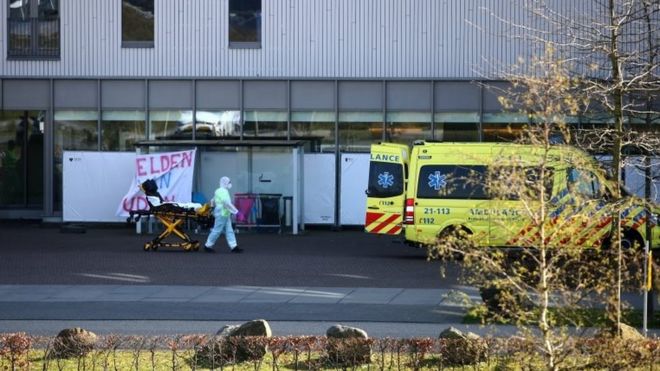
A man in protective gear wheels a stretcher into a hospital in Uden, the NetherlandsImage copyright GETTY IMAGES
Image caption The Netherlands has been among the countries reporting faulty Chinese-made equipment

A number of European governments have rejected Chinese-made equipment designed to combat the coronavirus outbreak.

Thousands of testing kits and medical masks are below standard or defective, according to authorities in Spain, Turkey and the Netherlands.

Europe has reported hundreds of thousands of cases of coronavirus.

More than 10,000 people have died in Italy since the outbreak began.

The virus was first detected in China at the end of 2019. The government implemented strict lockdown measures to bring it under control.

What’s wrong with the equipment?

On Saturday, the Dutch health ministry announced it had recalled 600,000 face masks. The equipment had arrived from a Chinese manufacturer on 21 March, and had already been distributed to front-line medical teams.

Dutch officials said that the masks did not fit and that their filters did not work as intended, even though they had a quality certificate,

Presentational grey line

You may also be interested in:

Presentational grey line

“The rest of the shipment was immediately put on hold and has not been distributed,” a statement read. “Now it has been decided not to use any of this shipment.”

Spain’s government encountered similar problems with testing kits ordered from a Chinese company.

It announced it had bought hundreds of thousands of tests to combat the virus, but revealed in the following days that nearly 60,000 could not accurately determine if a patient had the virus.

The Chinese embassy in Spain tweeted that the company behind the kits, Shenzhen Bioeasy Biotechnology, did not have an official license from Chinese medical authorities to sell its products.

It clarified that separate material donated by the Chinese government and technology and retail group Alibaba did not include products from Shenzhen Bioeasy.

Turkey also announced that it had found some testing kits ordered from Chinese companies were not sufficiently accurate, although it said that some 350,000 of the tests worked well.

Allegations of defective equipment come after critics warned China could be using the coronavirus outbreak to further its influence.

In a blog post last week, EU chief diplomat Josep Borrell warned that there is “a geo-political component including a struggle for influence through spinning and the ‘politics of generosity’.”

“China is aggressively pushing the message that, unlike the US, it is a responsible and reliable partner,” he wrote. “Armed with facts, we need to defend Europe against its detractors.”

What’s the situation in Europe?

On Monday, Spain reported 812 new deaths in the space of 24 hours – bringing its total death toll to 7,340. It now has more than 85,000 infections – surpassing the number of cases reported in China.

Media caption Spanish doctor “scared and exhausted” by pandemic

New measures have also come into force in Spain banning all non-essential workers from going to their jobs. The restrictions will be in place for at least two weeks.

Italy remains the worst affected country worldwide. More than 10,000 people have died from the virus there, and it has recorded nearly 100,000 infections. Only the US has more confirmed cases, although the death toll there is far lower.

Source: The BBC

07/03/2020

China welcomes Russia-Turkey agreement on ceasefire in Idlib: envoy

UNITED NATIONS, March 6 (Xinhua) — China’s UN envoy on Friday said China welcomes the Russia-Turkey agreement on a ceasefire for Syria’s northwestern province of Idlib.

In a press encounter after a close-door Security Council meeting on Syria, China’s Permanent Representative to the UN Zhang Jun said “for China, we welcome the agreement signed by the Russian Federation and the Republic of Turkey, and we welcome the diplomatic efforts along this direction.”

He said the signing of the agreement is conducive to finding “what we have always longed … a comprehensive solution to the issue in Syria.”

It’s a step forward in promoting a Syrian-led and Syrian-owned political process, facilitated by the UN, he said, expressing the hope that the agreement will be fully implemented.

Zhang stressed that in the process of implementation, Syria’s sovereignty, territorial integrity and political independence should be fully respected.

He said China hopes the international community will continue to commit to the fight against terrorism in the process. “We do hope that we will see more encouraging progress.”

The Chinese envoy voiced support for the humanitarian effort made by the UN, pledging that China will do whatever it can to provide humanitarian aid. “We also hope that the comprehensive humanitarian situation in Syria will be taken care of by the international community.”

He also urged parties concerned to avoid any attack on the civilians in Idlib and in Syria as a whole.

Russia and Turkey agreed Thursday on a ceasefire in the de-escalation zone in Idlib, a development that could ease escalating conflicts and facilitate a peace process in the war-torn country.

The ceasefire became effective from 00:01 a.m. on Friday local time. Russia and Turkey also agreed to create a safety corridor 6 km to the north and 6 km to the south from the strategic M4 highway, which connects Aleppo in northern Syria with Latakia in the northwest.

Also in the press encounter, Russia’s Permanent Representative to the UN Vassily Nebenzia said the ceasefire does not “exempt” operations targeting terrorists in the area, and that he hopes the sporadic fighting after the ceasefire took effect will be put out.

Britain and Germany’s UN ambassadors also expressed hope that the fresh ceasefire will last.

In 2018, the two countries agreed on a deal in the southern Russian city of Sochi, which created a “de-escalation” zone in Idlib and allowed for the deployment of 12 Turkish observation posts. However, the “de-escalation” zone has been repeatedly violated.

More than 30 Turkish soldiers were killed last month around the area during an operation of the Syrian government, which Russia backs. The operation was attempting to regain control of the final rebel stronghold in the country after nearly nine years of war.

In response, Turkey targeted Syrian positions with aircraft, drones and artillery, raising fears of a direct military confrontation between Russia and Turkey.

Since March 2011, Syria has been in the throes of a conflict that has forced more than half of all Syrians to leave their homes.

According to The UN Office for the Coordination of Humanitarian Affairs, an estimated 5 million Syrians have fled the country, 6 million others are internally displaced, over 13 million people need assistance and an untold number of men, women and children are suffering greatly.

Source: Xinhua

24/02/2020

Coronavirus: North Korea quarantines foreigners

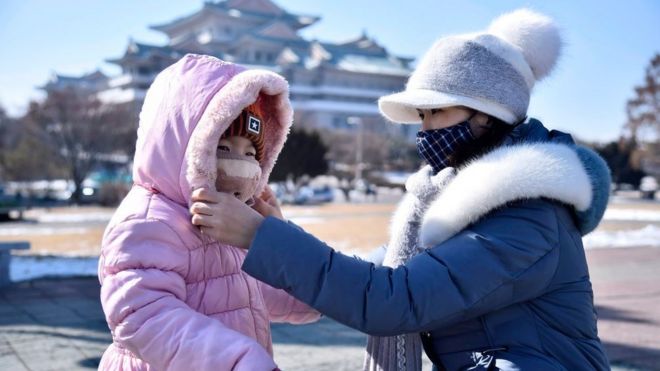
A woman helps her daughter seen wearing a face mask in PyongyangImage copyright GETTY IMAGES
Image caption North Korea is taking precautions to keep the virus out

North Korea has quarantined 380 foreigners in an attempt to stop the coronavirus from breaking out.

The foreigners are mostly diplomats stationed in the capital Pyongyang, state media reported.

About 200 foreigners had already been confined to their compounds for the past 30 days – but as that came to an end, the quarantine has been extended.

North Korea has not reported any cases of Covid-19, but several other countries did so on Monday.

Afghanistan and Dubai said they had detected their first cases, and Kuwait said three people returning from Iran had been infected.

In South Korea, seven people have died with 763 people infected. Around 7,700 troops have been quarantined after 11 military members were infected.

The virus, which emerged in China, has spread to at least 29 countries. Italy has the highest number of coronavirus cases in Europe, with 152.

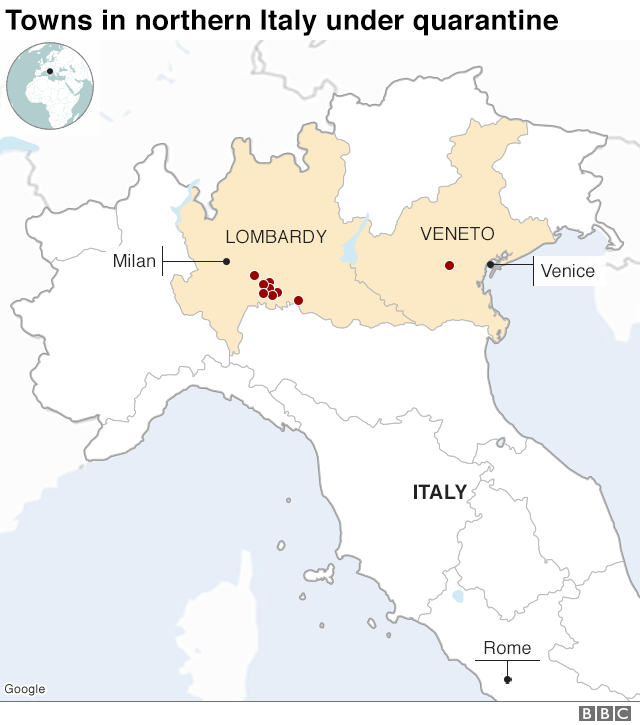
Around 50,000 people in two northern “hotspot” regions – Veneto and Lombardy – have been put under quarantine for two weeks.

Iran has also confirmed 43 cases of the virus and eight deaths.

In the Chinese city of Wuhan, where the virus emerged, the authorities earlier announced that some non-residents would be allowed to leave if they showed no symptoms of the virus.

However, local officials now say that order was made without authorisation and has been revoked.

The city has been in lockdown since January 23, with authorities cutting off transport links in and out of the city.

More than 2,500 people have died from the virus in mainland China, with some 77,150 cases confirmed cases reported.

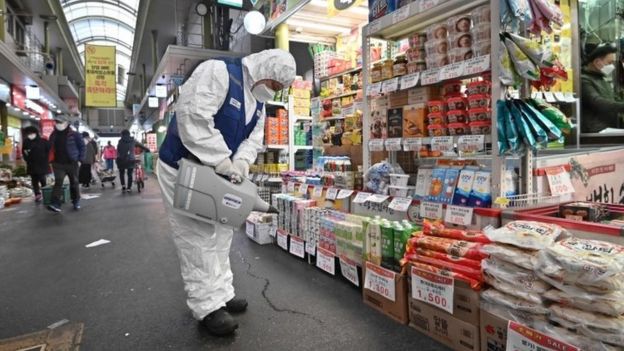
A worker sprays disinfectant to help prevent the spread of the novel coronavirus at a market in SeoulImage copyright AFP
Image caption A worker sprays disinfectant to help prevent the spread of the novel coronavirus at a market in Seoul

What is the situation in North Korea?

North Korea has not confirmed any cases but the country shares a long and often porous border with China. There are concerns that North Korea, which is subject to international sanctions, lacks the health infrastructure to test and treat those infected and that any outbreak could quickly spread unchecked.

At the moment, all foreigners coming into the country must be quarantined for 30 days.

There are relatively few foreigners in North Korea, and only around 200 Westerners, according to one expert.

North Korean authorities have also cancelled the annual Pyongyang marathon, which typically sees people from all over the world participating.

Around 3,000 people in North Pyongan province – a north-western region bordering China – are also now under monitoring for reportedly showing suspected symptoms, said state media.

What about South Korea?

Media caption People in Daegu have voiced concern over the spread of the virus

South Korea has the largest number of confirmed cases outside China, after a huge spike in the past week.

Before last Wednesday, the country had recorded just 31 cases. That number has now jumped to 763.

Eight new cases of the virus have been reported in the army, and one in the navy, air force and marine corps – bringing the number to 11.

But the biggest virus clusters have been linked to a hospital and a religious group near the south-eastern city of Daegu.

A handful of South Korea airlines, including Korean Air Lines – the country’s biggest airline – has suspended flights going to Daegu, which has a population of around 2.5m.

Korean Air says the suspension will last until March 27

What’s happening in Italy?

Italian officials have introduced sweeping measures to control what is now the worst outbreak of the coronavirus in Europe – at least three people have died and more than 150 cases confirmed.

In the regions of Lombardy and Veneto, a lock-down is in place in several small towns. For the next two weeks, 50,000 residents will not be able to leave without special permission.

Even outside the zone, many businesses and schools have suspended activities, and sporting events have been cancelled – including several top-flight football matches.

Officials have yet to find the first carrier of the virus in the country.

Map of Italy
Presentational white space
Grey line

World edges closer to coronavirus pandemic

Analysis by Fergus Walsh, medical correspondent

The combined situation in South Korea, Iran and Italy points to the early stages of pandemic. This means a global outbreak, with the coronavirus spreading in the community in multiple parts of the world.

In each of these countries we are seeing spread of the virus with no connection to China. The lockdown efforts in Italy mirror those that have happened in China.

The situation in Iran is especially worrying, because the health authorities have reportedly said the virus has spread to multiple cities, and it appears the first case in Lebanon is linked to a traveller from Iran.

If we have a pandemic, it will still be important to limit the speed of spread of the virus.

If countries could hold it somewhat at bay until the end of winter, there is a hope that warmer temperatures will reduce the time the virus can survive in the air, as we see with seasonal flu. But this may not be certain.

Grey line

What’s the latest from Iran?

Iran said on Sunday it had 43 confirmed cases of the virus, most of them in the holy city of Qom. Eight of those infected have died, the highest number of deaths outside China.

Iraq, Pakistan, Armenia and Turkey have closed their borders with Iran, and Afghanistan has suspended air and road travel to and from Iran.

What about China, where the outbreak started?

China’s President Xi Jinping has described the outbreak as the “largest public health emergency” in the country’s recent history.

Speaking on Sunday, he acknowledged “shortcomings” in China’s response and said lessons must be learned.

China reported 409 new infections on Monday, the bulk of which were from Wuhan.

But outside China, cases with no clear link to that country or other confirmed cases continue to rise, prompting concern from the World Health Organization (WHO).

Source: The BBC

24/02/2020

New coronavirus cases rise in Italy, Korea and Iran but fall in China

BEIJING/SEOUL (Reuters) – Italy, South Korea and Iran reported sharp rises in coronavirus infections on Monday, triggering concern from the World Health Organization (WHO), but China relaxed some curbs on movement, including in Beijing, as the rate of new infections there eased.

The virus has put Chinese cities into lockdown, disrupted air traffic to the workshop of the world and blocked global supply chains for everything from cars and car parts to smartphones.

The surge of cases outside mainland China triggered steep falls in global share markets and Wall Street stock futures as investors fled to safe havens. Gold soared to a seven-year high, oil tumbled nearly 4% and the Korean won KRW= fell to its lowest level since August.[MKTS/GLOB]

But U.S. Treasury Secretary Steven Mnuchin cautioned against jumping to conclusions about the impact on the global economy or supply chains, saying it was simply too soon to know.

The World Health Organization (WHO) said it no longer had a process for declaring a pandemic, but that the coronavirus outbreak remained an international emergency.

“We are specially concerned about the rapid increase in cases in … Iran, Italy and the Republic of Korea,” WHO head Tedros Adhanom Ghebreyesus told a news conference in Sweden via video link from Geneva.

South Korea reported 231 new cases, taking its total to 833. Many are in its fourth-largest city, Daegu, which became more isolated with Asiana Airlines (020560.KS) and Korean Air (003490.KS) suspending flights there until next month.

Iran, which announced its first two cases last Wednesday, said it had confirmed 43 cases and eight deaths. Most of the infections were in the Shi’ite Muslim holy city of Qom.

Elsewhere in the Middle East, Bahrain and Iraq reported their first cases and Kuwait reported three cases involving people who had been in Iran.

Saudi Arabia, Kuwait, Iraq, Turkey, Pakistan and Afghanistan imposed restrictions on travel and immigration from Iran. Afghanistan also reported its first case, officials said.

The WHO has been saying for weeks that it dreads the disease reaching countries with weak health systems.

Europe’s biggest outbreak is in Italy, with some 150 infections – compared with just three before Friday – and a fifth death.

‘SEVERE AND COMPLEX’

Scientists around the world are scrambling to analyze the virus, but a vaccine is probably more than a year away.

“Worryingly, it seems that the virus can pass from person to person without symptoms, making it extremely difficult to track, regardless of what health authorities do,” said Simon Clarke, an expert in cellular microbiology at the University of Reading in Britain.

China postponed the annual meeting of its parliament in Beijing.

But there was a measure of relief for the world’s second-largest economy as more than 20 province-level jurisdictions, including Beijing and Shanghai, reported zero new infections, the best showing since the outbreak began.

President Xi Jinping urged businesses to get back to work, though he said the epidemic was still “severe and complex, and prevention and control work is in the most difficult and critical stage”.

Excluding the central Hubei province, center of the outbreak, mainland China reported 11 new cases, the lowest since the national health authority started publishing nationwide daily figures on Jan. 20.

The coronavirus has infected nearly 77,000 people and killed more than 2,500 in China, most in Hubei.

Overall, China reported 409 new cases on the mainland, down from 648 a day earlier, taking the total number of infections to 77,150 cases as of Feb. 23. The death toll rose by 150 to 2,592.

Outside mainland China, the outbreak has spread to about 29 countries and territories, with a death toll of about two dozen, according to a Reuters tally.

Xi said on Sunday the outbreak would have a relatively big, but short-term, impact on the economy and the government would step up policy adjustments to help cushion the blow.

Mnuchin, speaking to Reuters in the Saudi city of Riyadh, said he did not expect the coronavirus to have a material impact on the Phase 1 U.S.-China trade deal.

“Obviously that could change as the situation develops,” he added.

In northern Italy, authorities sealed off the worst-affected towns and banned public gatherings across a wide area, halting the carnival in Venice, where there were two cases.

Austria briefly suspended train services over the Alps from Italy after two travelers coming from Italy showed symptoms of fever.

Both tested negative for the new coronavirus but Austrian Interior Minister Karl Nehammer said a task force would meet on Monday to discuss whether to introduce border controls.

Japan had 773 cases as of late Sunday, mostly on a cruise ship quarantined near Tokyo. A third passenger, a Japanese man in his 80s, died on Sunday.

In South Korea, authorities reported a seventh death and dozens more cases on Monday. Of the new cases, 115 were linked to a church in the city of Daegu.

Drone footage showed what appeared to be hundreds of people queuing in a neat line outside a Daegu supermarket under the winter sunshine to buy face masks. ( tmsnrt.rs/37WP6lA )

Source: Reuters

10/12/2019

China Uighurs: Detainees ‘free’ after ‘graduating’, official says

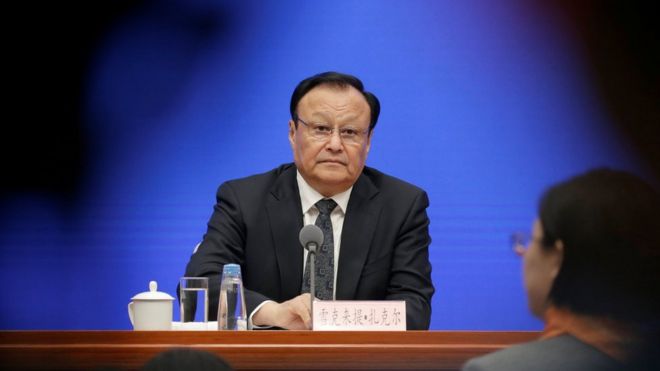
Shohrat Zakir, deputy secretary of the Communist Party committee for China's Xinjiang and chairman of the Xinjiang Uighur Autonomous Region, attends a news conference in BeijingImage copyright REUTERS
Image caption Shohrat Zakir told reporters the released detainees now had an “improved quality of life”

A senior Chinese official has said that all of the people sent to detention centres in the western region of Xinjiang have now been released.

Regional government chairman Shohrat Zakir told reporters those held in what Beijing say are “re-education camps” had now “graduated”.

It is not possible to independently verify Mr Zakir’s claims.

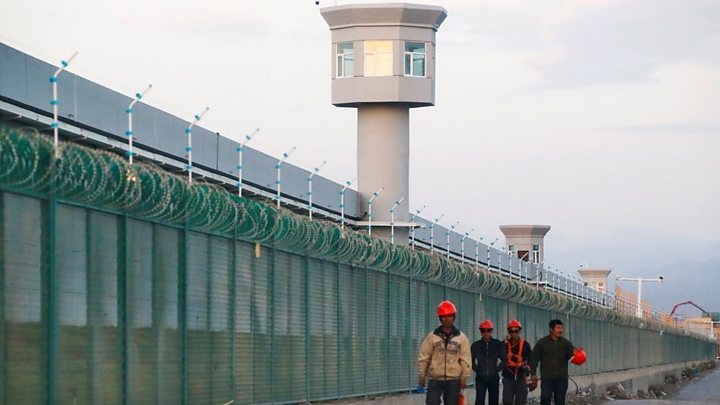
Rights groups say the camps are actually high-security prisons, holding hundreds of thousands of Muslims.

Beijing has always denied this, despite the prevalence of high-security features, like watchtowers and razor wire, and leaked documents detailing how inmates at the so-called centres are locked up, indoctrinated and punished.

What is Beijing saying?

Mr Zakir told reporters in the Chinese capital on Monday that everyone in the centres had completed their courses and – with the “help of the government”- had “realised stable employment [and] improved their quality of life”.

He said that, in future, training would be based on “independent will” and people would have “the freedom to come and go”.

Media caption The BBC’s John Sudworth meets Uighur parents in Turkey who say their children are missing in China

BBC China correspondent John Sudworth points out it is not possible to verify the claims, as access for journalists is tightly controlled and it’s impossible to contact local residents without placing them at risk of detention.

In recent months, independent reports have suggested that some camp inmates are being released, only to face house arrest, other restrictions on their movement or forced labour in factories.

What could be behind the move?

Pressure has been increasing on Beijing in recent months.

A number of high-profile media reports based on leaks to the New York Times and the International Consortium of Investigative Journalists (ICIJ) have shone a spotlight on what is happening at the network of centres, which are believed to hold more than a million people, mainly Uighur Muslims and other minorities.

Then last week, the US House of Representatives passed a bill to counter what it calls the “arbitrary detention, torture, and harassment” of the Uighurs, calling for “targeted sanctions” on members of the Chinese government – and names the Communist Party secretary in the Xinjiang autonomous region, Chen Quanguo.

The bill still needs approval from the Senate and from President Donald Trump.

However, Mr Zakir used the press conference to dismiss the numbers detained as “pure fabrication”, reiterating Beijing’s argument that the centres were needed to combat violent religious extremism.

Media caption“An electric baton to the back of the head” – a former inmate described conditions at a secret camp to the BBC

“When the lives of people of all ethnic groups in Xinjiang were seriously threatened by terrorism, the US turned a deaf ear,” Mr Zakir said at a press briefing.

“Now that Xinjiang society is steadily developing and people of all ethnicities are living and working in peace, the US feels uneasy, and attacks and smears Xinjiang.”

What’s going on in Xinjiang?

Reports of widespread detentions first began to emerge in 2018, when a UN human rights committee was told there were credible allegations that China had “turned the Uighur autonomous region into something that resembles a massive internment camp”.

Rights groups also say there’s growing evidence of oppressive surveillance against people living in the region.

The Chinese authorities said the “vocational training centres” were being used to combat violent religious extremism. However, evidence showed many people were being detained for simply expressing their faith, by praying or wearing a veil, or for having overseas connections to places like Turkey.

Presentational white space

Records seen by the BBC show China has deliberately been separating Muslim children from their families.

This is an attempt to “raise a new generation cut off from original roots, religious beliefs and their own language”, Dr Adrian Zenz, a German researcher, told BBC News earlier this year.

“I believe the evidence points to what we must call cultural genocide.”

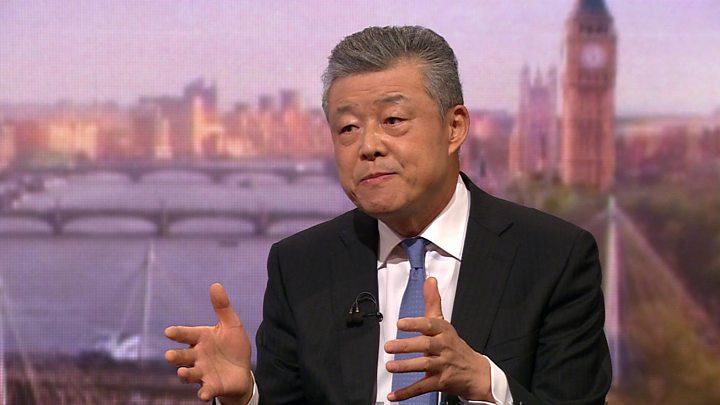
China’s ambassador to the UK said the allegations were “lies”.

Media caption Chinese Ambassador Liu Xiaoming dismisses evidence of a separation campaign in Xinjiang

Source: The BBC

16/11/2019

A rubbish story: China’s mega-dump full 25 years ahead of schedule

A worker prepares to cover the waste with a capping layer at the Tianziling landfill site on August 7, 2019 in HangzhouImage copyright GETTY IMAGES
Image caption A worker applying a capping layer to a landfill site in Hangzhou

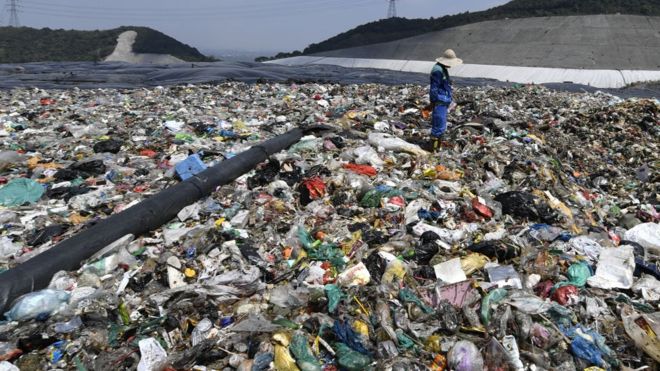
China’s largest dump is already full – 25 years ahead of schedule.

The Jiangcungou landfill in Shaanxi Province, which is the size of around 100 football fields, was designed to take 2,500 tonnes of rubbish per day.

But instead it received 10,000 tonnes of waste per day – the most of any landfill site in China.

China is one of the world’s biggest polluters, and has been struggling for years with the rubbish its 1.4 billion citizens generate.

How big is the landfill site?

The Jiangcungou landfill in Xi’an city was built in 1994 and was designed to last until 2044.

The landfill serves over 8 million citizens. It spans an area of almost 700,000 square metres, with a depth of 150 metres and a storage capacity of more than 34 million cubic metres.

Until recently, Xi’an was one of the few cities in China that solely relied on landfill to dispose of household waste – leading to capacity being reached early.

Earlier this month, a new incineration plant was opened, and at least four more are expected to open by 2020. Together, they are expected to be able to process 12,750 tonnes of rubbish per day.

The move is part of a national plan to reduce the number of landfills, and instead use other waste disposal methods like incineration.

The landfill site in Xi’an will eventually become an “ecological park”.

How much waste does China produce?

In 2017, China collected 215 million tonnes of urban household waste, according to the country’s statistical yearbook. That’s up from 152 million ten years earlier.

The country had 654 landfill sites and 286 incineration plants.

It is not clear what China’s recycling rate is, as no figures have been released. China plans to recycle 35% of waste in major cities by the end of 2020, according to one government report.

This July, sorting and recycling rubbish was made mandatory in Shanghai – leading to “a sense of panic” among some residents.

In 2015, there was a landslide at a rubbish dump in the southern city of Shenzhen, killing 73 people.

The dump was designed to hold four million cubic metres worth of rubbish, with a maximum height of 95 metres.

When it collapsed, it was holding 5.8m cubic metres of material with waste heaps up to 160m high.

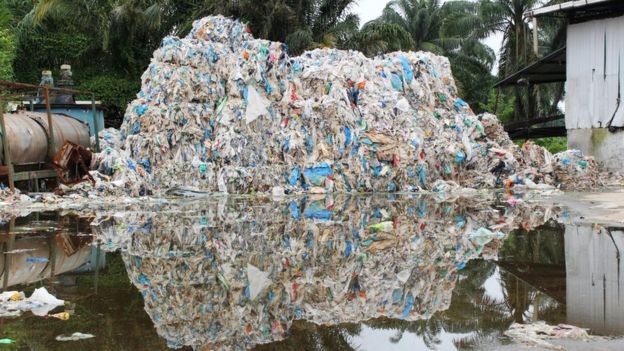
Plastic waste in Kuala Langat
Image caption One town in Malaysia was left swamped with foreign waste

Does China deal with other countries’ waste?

Not anymore. It used to, until the end of 2017 when it decided to ban the import of 24 different grades of rubbish.

In 2017 alone, China took in seven million tonnes of plastic rubbish from Europe, Japan and the US – and 27 million tonnes of waste paper.

Other countries, including Malaysia, Turkey, the Philippines and Indonesia, have picked up some of the slack.

But they struggled to deal with the amount of waste coming in – often times resulting in massive, out-of-control landfills in their own countries.

Some of these countries have now banned the import of certain types of rubbish and are even sending it back.

Source: The BBC

21/10/2019

Fire chickens and sea pigs: The artist bringing Chinese words to life

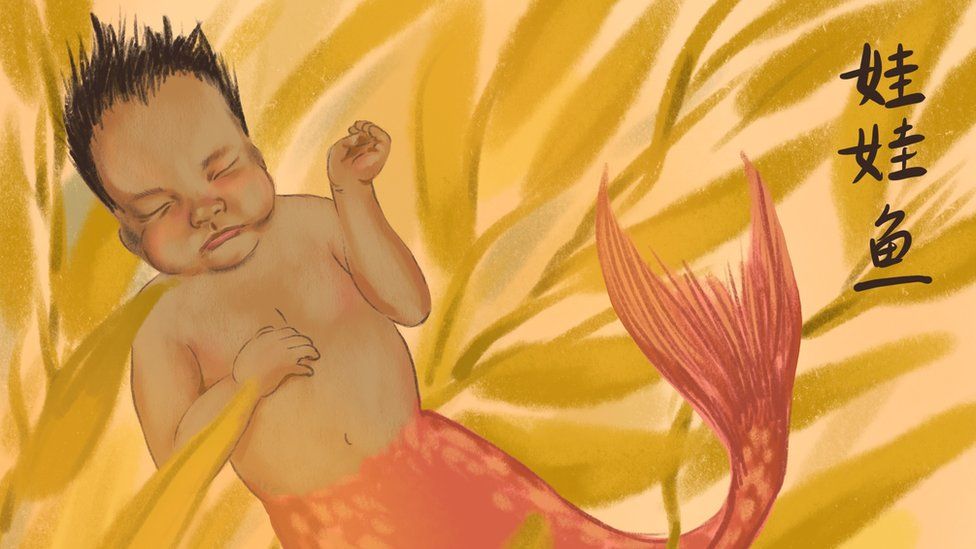
Illustration of a babyImage copyright FRANKIE HUANG
Image caption The Giant salamander is ironically referred to as a “baby fish” in China

What do you get when you cross a baby with a fish?

It’s not the start of a dad joke, but one of a series of pictures drawn by Shanghai-based illustrator Frankie Huang.

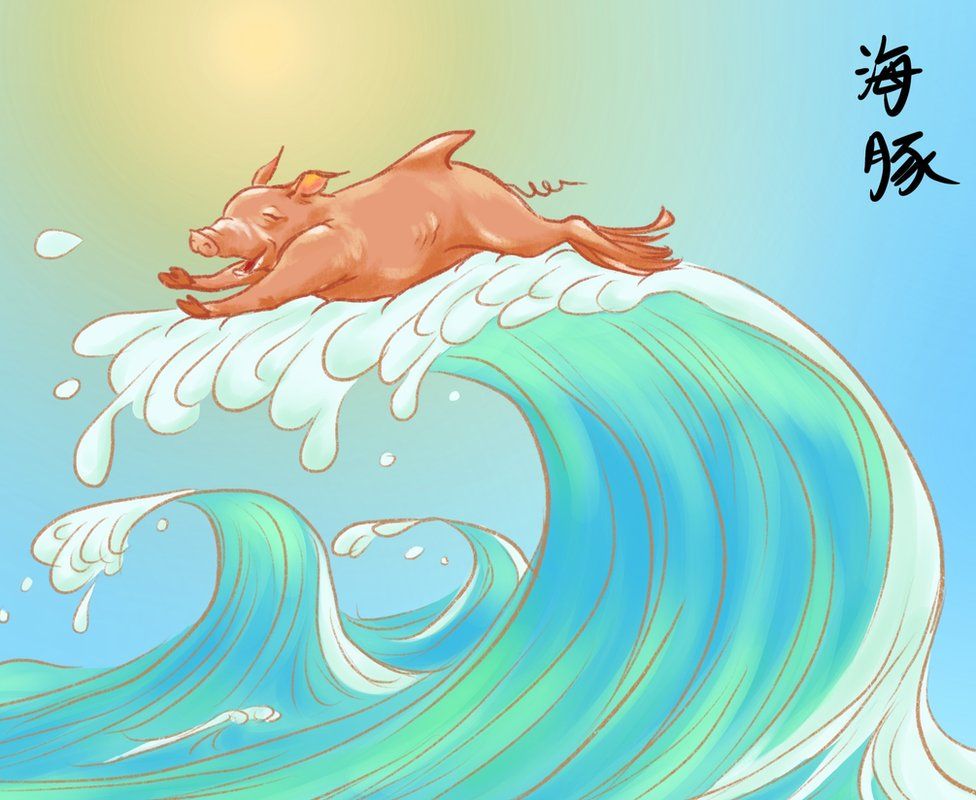
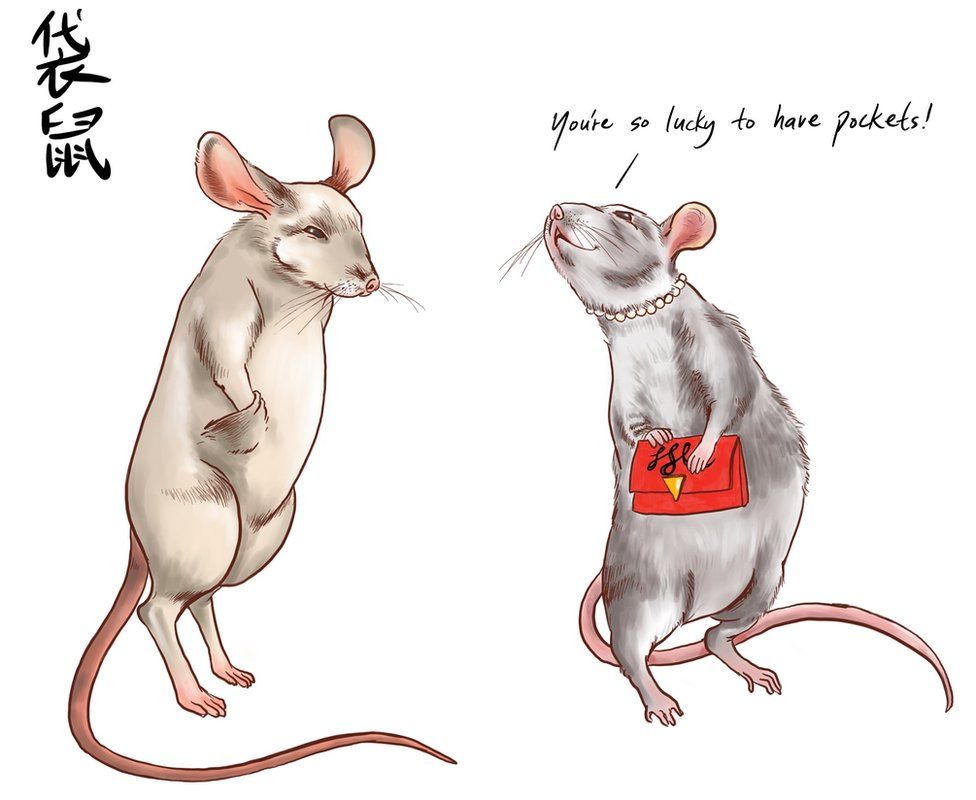
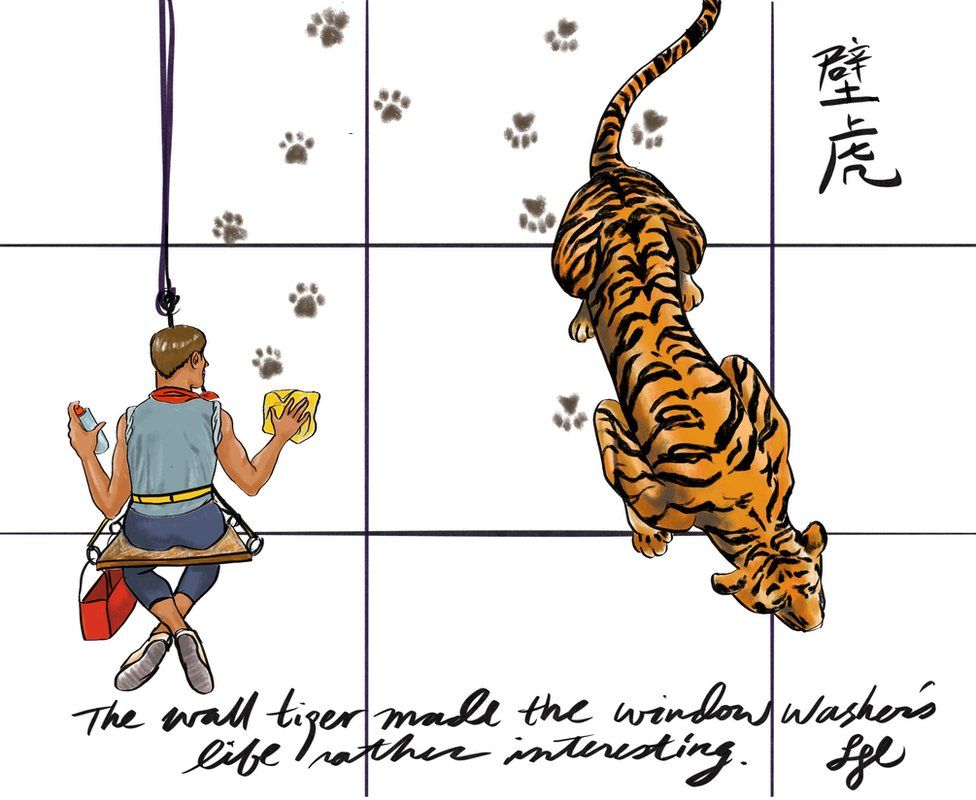
Chinese is already one of the most pictorial languages in the world, but she’s taking it to the next level – by literally turning words into pictures. Her series, Putong Animals, re-imagines animals according to what they’re called in Mandarin Chinese – or Putonghua – the official language of China.

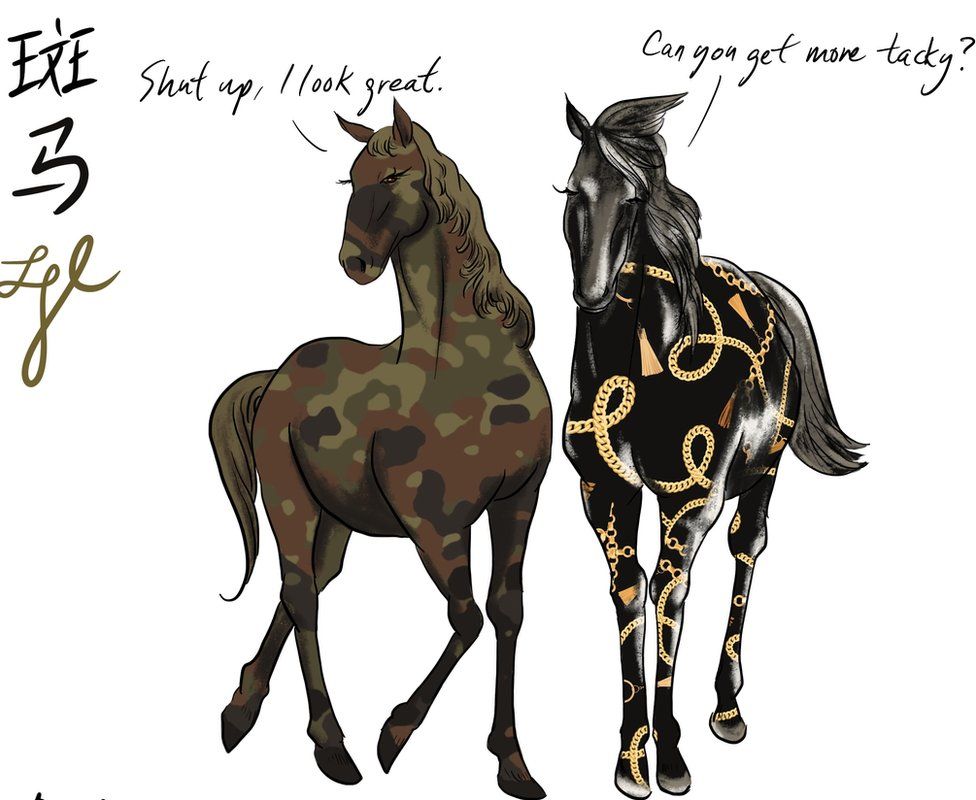
In Mandarin a zebra, for example, is literally a “patterned horse”. The dolphin has unflatteringly been turned into a “sea pig”.

Graphic by FrankieImage copyright FRANKIE HUANG
Image caption The Zebra is referred to literally as a “patterned horse” in Mandarin

Frankie says she came up with the idea for the series after seeing people on Twitter discussing how some animals had “really funny names when you translate them literally”.

“I realised no-one had done a series of this and I thought to myself ‘I suppose it’s time then’,” she told the BBC. “I wanted to create something that was not just pretty but also interesting.”

Graphic by FrankieImage copyright FRANKIE HUANG
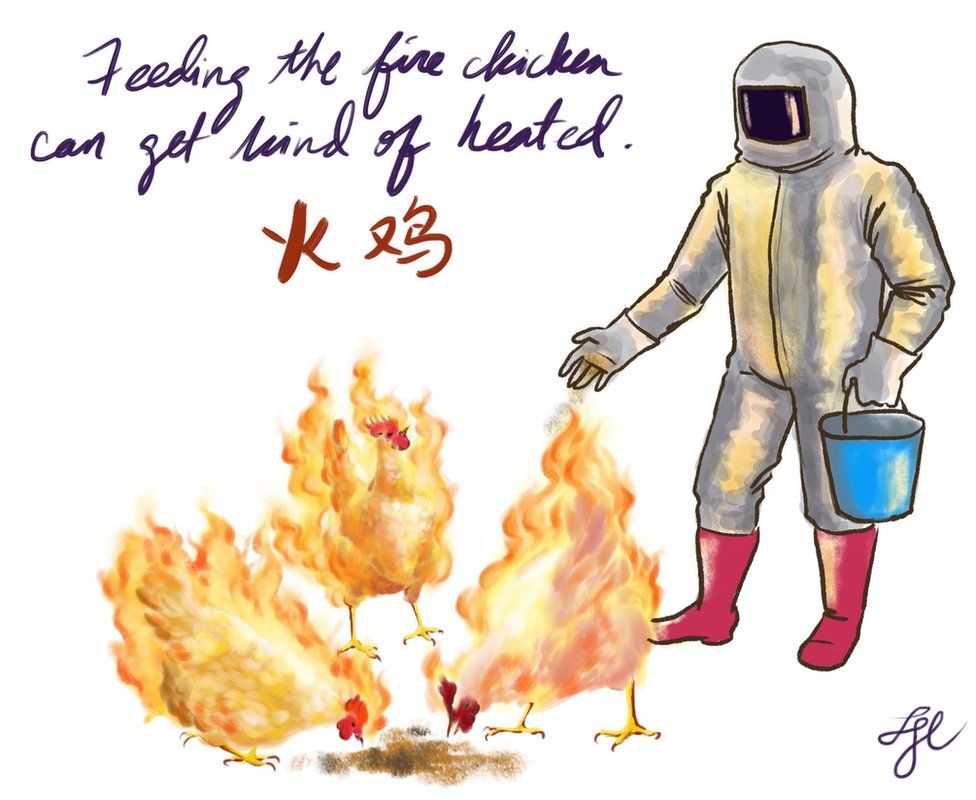
Image caption Turkeys are “fire chickens” in Mandarin

“The turkey – or fire chicken – was the first one I drew. It was just a bunch of chickens on fire and a guy in a hazmat suit feeding them,” she said. “You can see that my technique actually developed as I got more into it.”

Frankie was born in the Chinese capital, Beijing, but grew up in the US, exposing her to both English and Mandarin from a young age.

“I’m both an outsider and insider [to the Chinese language] because of my upbringing, I think sometimes you need to be an outsider in order to really appreciate something,” said the illustrator.

Graphic by FrankieImage copyright FRANKIE HUANG
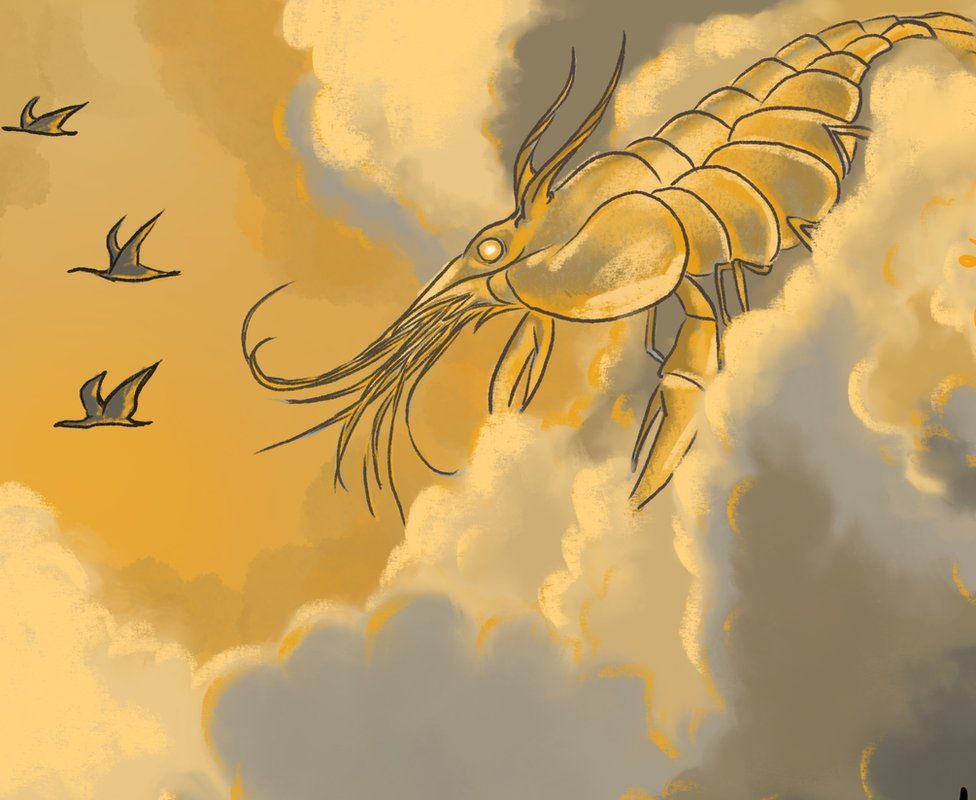
Image caption The celestial lobster is known as a “dragon prawn”

Another one of Frankie’s favourite illustrations is the “dragon prawn” – or lobster.

“I wanted to make it look really majestic and godlike,” said Frankie. “Someone commented that it’s a celestial crustacean, I thought that was such a nice name for it.”

Graphic by FrankieImage copyright FRANKIE HUANG
Image caption While the dolphin is given the less than graceful name of “sea pig”

It takes Frankie around three hours to produce one illustration, from conceptualisation to sketching it out and eventually colouring it in.

She has for now completed her series on Putong Animals, but she is looking into turning the animals into characters of their own.

Graphic by FrankieImage copyright FRANKIE HUANG
Image caption Kangaroos are known as “pocket mice”, though they are far from tiny

“Even as far back as ancient Greece with Aesop’s fables, people were telling stories through animals,” she said.

“I actually started to write a story about the lives of the fire chicken. They’re on a planet where people use them in their lives, [like] putting them under their beds during winter to keep them warm. I want to eventually give them more personality.”

Graphic by FrankieImage copyright FRANKIE HUANG
Image caption The tiny gecko on the other hand, has earned the imposing name of “Wall Tiger”

But it’s not just animals that she illustrates – she’s also delved into Chinese phrases.

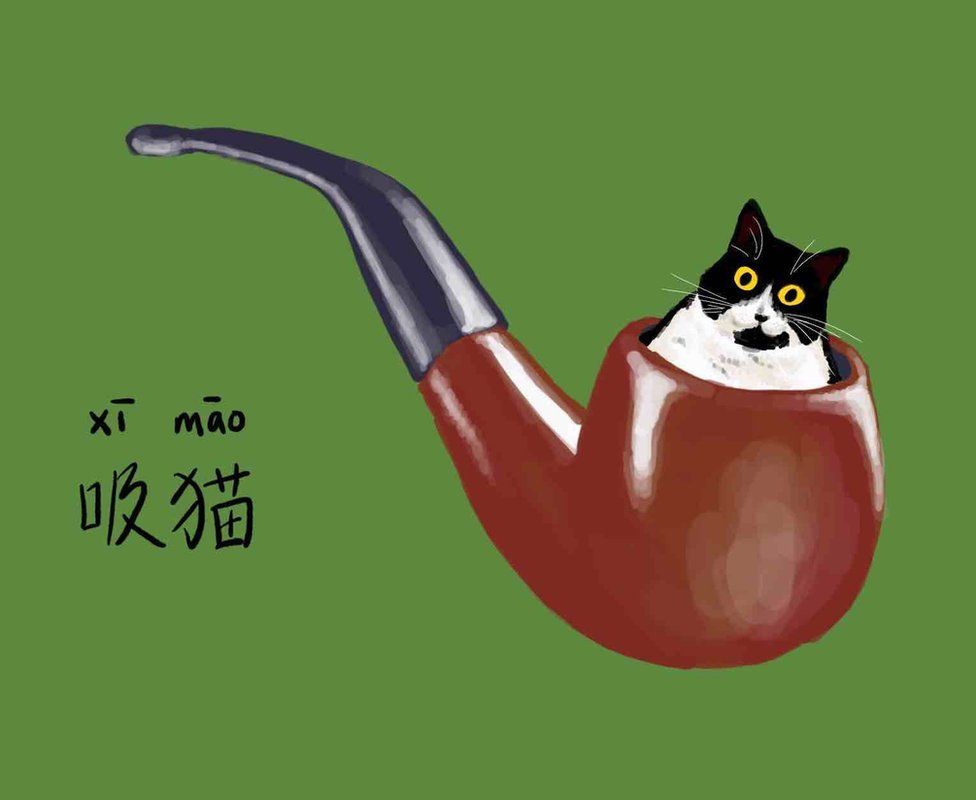
This picture showing a cat in a pipe is meant to illustrate the Chinese phrase “xi mao”, which literally translated, means to “inhale cat”.

Graphic by FrankieImage copyright FRANKIE HUANG
Image caption If someone is addicted to cats, they are “inhaling cat”

It’s a phrase that’s spread across young people in China, to describe someone who is a cat addict.

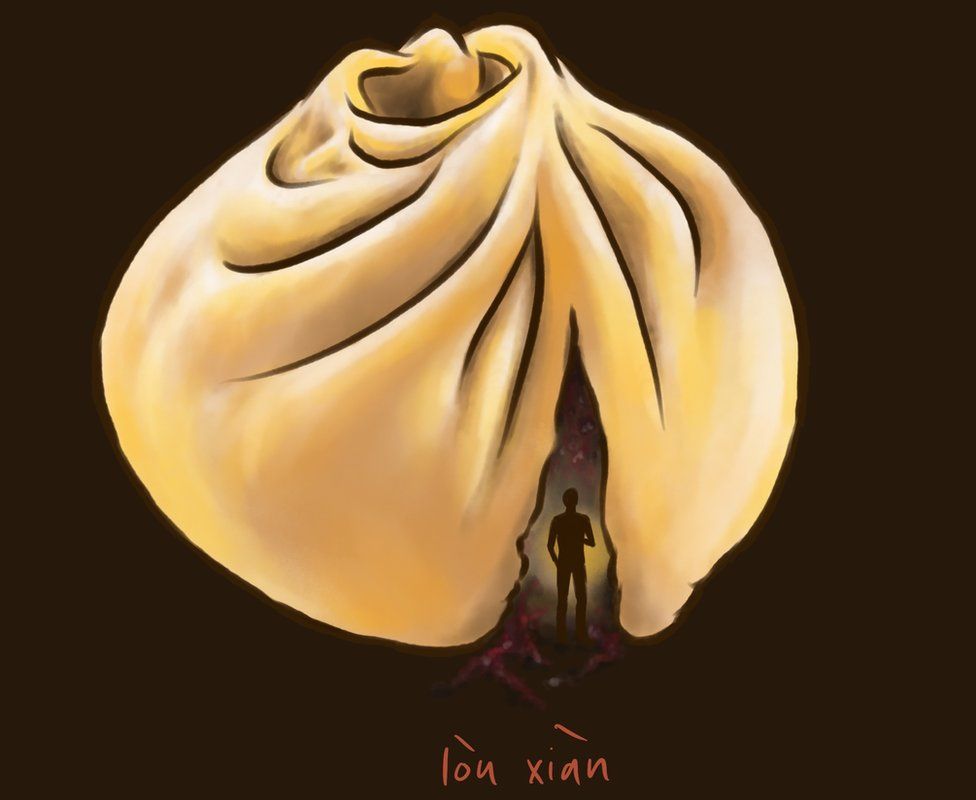
Another one she’s done shows stuffing spilling out of a dumpling – a literal translation of the Chinese phrase “lou xian”, or “for stuffing to leak out”. The phrase refers to a situation where truth is revealed.

“If you look closer, you’ll actually see some tentacles coming out of the dumpling, because I drew it after I watched Stranger Things 3,” Frankie laughingly admits.

Graphic by FrankieImage copyright FRANKIE HUANG
Image caption And the stuffing is out on this one

But she’s of course not the first person to have put a clever play on Chinese words – and sometimes others have done so for more political reasons.

Social media in China is heavily censored, and it’s not uncommon for social media companies in China to remove “sensitive” content. This was one of the obstacles that #MeToo – the movement that encouraged people to openly talk about their experiences of sexual harassment – faced in China.

The phrase #MeToo was heavily censored but to get around this, many instead began posting the Chinese words “rice bunny”, which is pronounced “mi tu” in Mandarin.

“One of the things that made me look more closer into pulling together and dissecting the Chinese language was the [phrase] mi tu,” said Frankie.

“The censorship forces [Chinese people] to constantly stay ahead of the government so they come up with these wonderful creations, sort of like how diamonds are created under enormous pressure. All these gems of wit are found on the Chinese internet.”

This is part of what Frankie hopes her illustrations will do – help people to recognise “humour and wit of the Chinese culture”.

“I want to hopefully reach more people to help them be interested in the Chinese language and culture,” she said.

“In this day and age, China is in the press constantly. [I want to show] there’s so much more to China than just the politics.

“I want to be independent of all these things and show people that you can love and enjoy the culture without all the politics. The politics are new, but this [language] is not.”

Source: The BBC

15/10/2019

China calls on Turkey to halt military incursion in Syria and ‘return to right track’

  • Beijing joins global condemnation of attack launched by Ankara on Kurdish fighters after US President Donald Trump decided to pull out troops
  • Foreign ministry spokesman says issue should be resolved with ‘political solutions’ and the operation may result in a revival of Islamic State
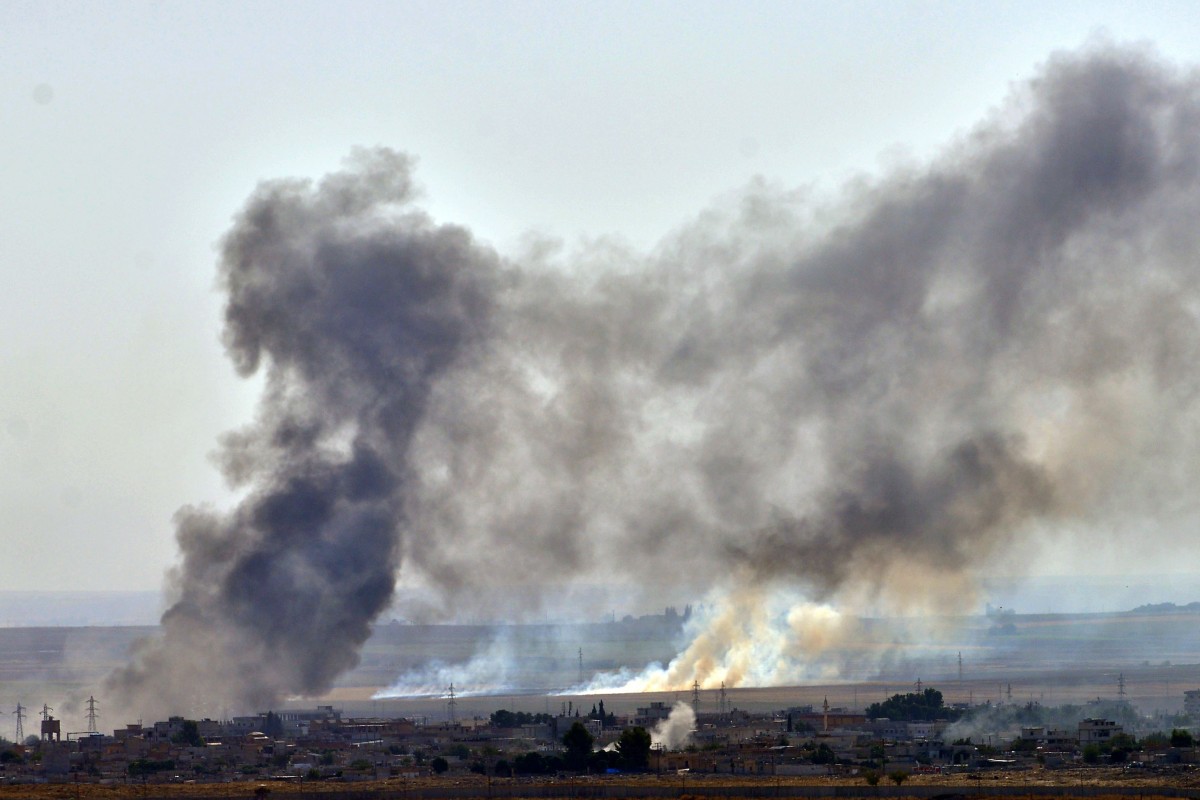
Turkey launched the attack on Kurdish fighters in northeastern Syria last week. Photo: Xinhua

China has urged Turkey to stop the military offensive it began in northeastern Syria last week and “return to the right track”.

Beijing is the latest to join global condemnation of the cross-border attack launched by Ankara on Kurdish fighters last Wednesday following US President Donald Trump’s decision to withdraw US troops from the region.

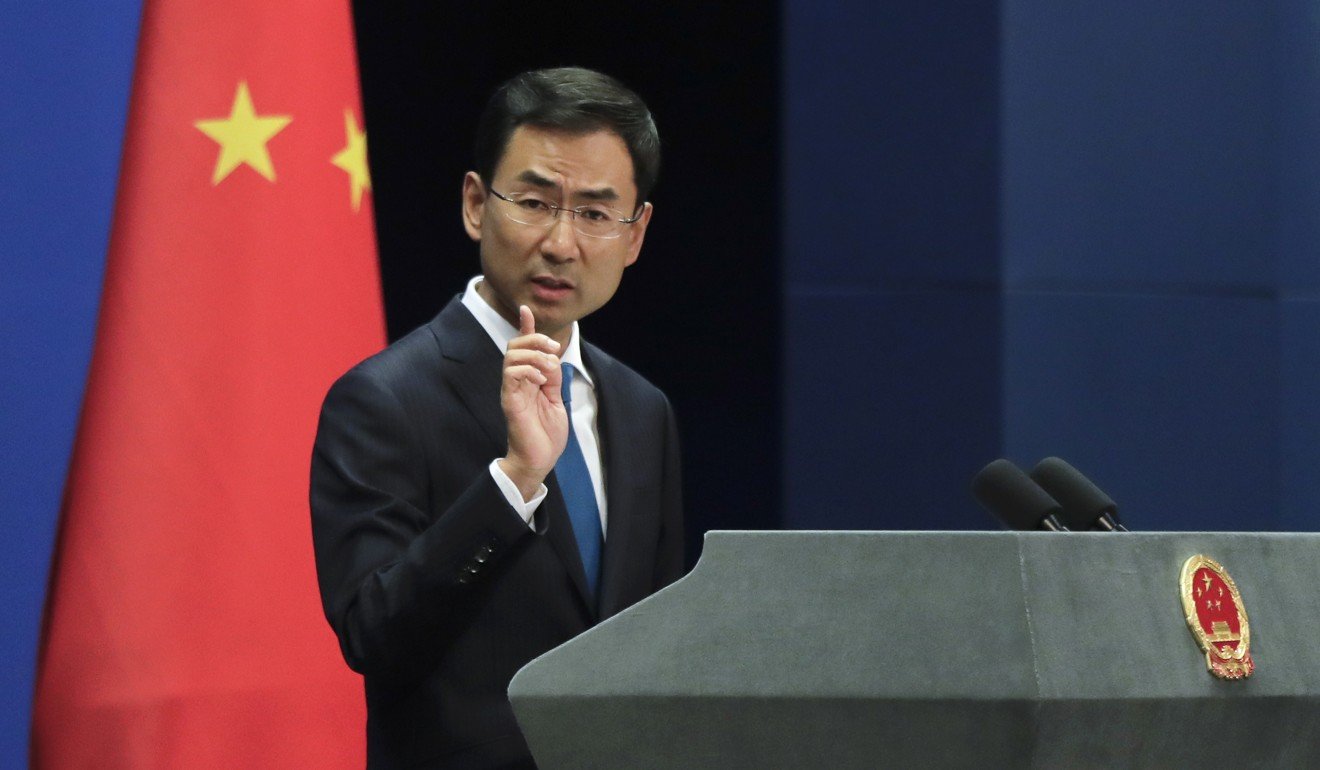
Foreign ministry spokesman Geng Shuang on Tuesday called for a ceasefire.

“The Chinese side has always opposed the use of force in international relations and has advocated for adherence to the Charter of the United Nations, and to resolve problems through political and diplomatic channels,” Geng said during a regular press briefing, when asked about Beijing’s position on the situation.

“Sovereignty, independence, unification and territorial integrity should be respected and protected,” he said. “We urge Turkey to halt military action and to return to the right track, resolving the issue with political solutions.”

Chinese foreign ministry spokesman Geng Shuang called on Turkey to “work with the international community in fighting against terrorism”. Photo: AP

Geng also said the “anti-terrorism situation in Syria is still severe”, and the military operation could result in a comeback by Islamic State.

“We urge Turkey to take responsibility and work with the international community in fighting against terrorism,” he said.

Explained: why are Syria’s Kurds accusing the US of betrayal?
Trump’s move has drawn sharp criticism from around the world. Critics say he has abandoned the allies that helped fight against Isis, and that withdrawing troops could pave the way for a resurgence of the jihadist group whose violent takeover of Syrian and Iraqi land five years ago was the reason US forces went in.

The US president said about 1,000 US troops who had been partnering with local Kurdish fighters to battle Islamic State in northern Syria were leaving the country. He said they would remain in the Middle East to “monitor the situation” and to prevent a revival of Isis – a goal that even Trump’s allies say has become much more difficult as a result of the US pull-out.

Turkey says the offensive aims to remove the Kurdish-led Syrian Democratic Forces from the border area and create what it calls a “safe zone” to relocate 1 million Syrian refugees.

Facing mounting criticism, Trump on Monday announced sanctions would be imposed

 on Turkey, halted bilateral trade negotiations and called for an immediate ceasefire.
Vice-President Mike Pence also said Trump was sending him to the Middle East because the president was concerned about instability in the region.
Beijing has long worried that conflict in the region could spill over to Chinese soil after thousands of Uygurs – the Turkic-speaking Muslim minority from far western China – travelled to Syria to train and fight as jihadists.
Source: SCMP
Law of Unintended Consequences

continuously updated blog about China & India

ChiaHou's Book Reviews

continuously updated blog about China & India

What's wrong with the world; and its economy

continuously updated blog about China & India