Chindia Alert: You’ll be Living in their World Very Soon
aims to alert you to the threats and opportunities that China and India present. China and India require serious attention; case of ‘hidden dragon and crouching tiger’.
Without this attention, governments, businesses and, indeed, individuals may find themselves at a great disadvantage sooner rather than later.
The POSTs (front webpages) are mainly 'cuttings' from reliable sources, updated continuously.
The PAGEs (see Tabs, above) attempt to make the information more meaningful by putting some structure to the information we have researched and assembled since 2006.
NEW DELHI (Reuters) – Hundreds of foreign companies are actively procuring components for India and Pakistan’s nuclear programmes, taking advantage of gaps in the global regulation of the industry, according to a report by a U.S.-based research group.
Using open-source data, the nonprofit Centre For Advanced Defense Studies (C4ADS) report provides one of the most comprehensive overviews of networks supplying the rivals, in a region regarded as one of the world’s most dangerous nuclear flashpoints.
“India and Pakistan are taking advantage of gaps in global non-proliferation regimes and export controls to get what they need,” said Jack Margolin, a C4ADS analyst and co-author of the report.
It is seldom possible to determine whether individual transactions are illegal by using publicly available data, Margolin said, and the report does not suggest that companies mentioned broke national or international laws or regulations.
But past reports by the think tank, whose financial backers include the Carnegie Corporation and the Wyss Foundation, have often led to action by law enforcement agencies.
Spokesmen from the offices of India’s Prime Minister Narendra Modi, and Pakistan’s Prime Minister Imran Khan did not respond to requests for comment. Pakistan’s military, which plays a major role in decision-making for the nuclear weapons programme, also declined to comment.
To identify companies involved, C4ADS analysed more than 125 million records of public trade and tender data and documents, and then checked them against already-identified entities listed by export control authorities in the United States and Japan.
Pakistan, which is subject to strict international export controls on its programme, has 113 suspected foreign suppliers listed by the United States and Japan. But the C4ADS report found an additional 46, many in shipment hubs like Hong Kong, Singapore and the United Arab Emirates.
“In Pakistan’s case, they have a lot more stringent controls, and they get around these by using transnational networks… and exploiting opaque jurisdictions,” Margolin said.
The father of Pakistan’s atomic bomb, AQ Khan, admitted in 2004 to selling nuclear technology to North Korea, Iran and Libya. He was pardoned a day later by Pakistani authorities, which have refused requests from international investigators to question him.
India has a waiver that allows it to buy nuclear technology from international markets. The Indian government allows inspections of some nuclear facilities by the International Atomic Energy Agency, but not all of them.
Neither India or Pakistan have signed the international Treaty on the Non-Proliferation of Nuclear Weapons, adhered to by most nuclear powers. Consequently, they are not obliged to submit to IAEA oversight over all of their facilities.
C4ADS identified 222 companies that did business with the nuclear facilities in India that had no IAEA oversight. Of these, 86 companies did business with more than one such nuclear facility in India.
“It’s evidence that more needs to be done, and that there needs to be a more sophisticated approach taken to India,” Margolin said. “Just because the product is not explicitly bound for a military facility, that doesn’t mean that the due diligence process ends there.”
India and Pakistan have gone to war three times – twice over the disputed Kashmir region – since they won independence from British colonial rule in 1947.
Having for years secretly developed nuclear weapons capability, the two declared themselves nuclear powers following tit-for-tat atomic tests in 1998.
A few years later, in 2002, the two foes almost went to war for a fourth time, following an attack by Pakistan-based militants on the parliament in New Delhi. And a year ago, a suicide attack by a Pakistan-based militant group in a part of Kashmir controlled by India sparked another flare up in tensions.
Both countries are estimated to have around 150 useable nuclear warheads apiece, according to the Federation of American Scientists, a nonprofit group tracking stockpiles of nuclear weapons.
City at centre of outbreak finally able to declare itself clear of disease after months in lockdown and thousands of deaths
Risk of infection remains, however, with some patients testing positive for coronavirus that causes disease without showing symptoms
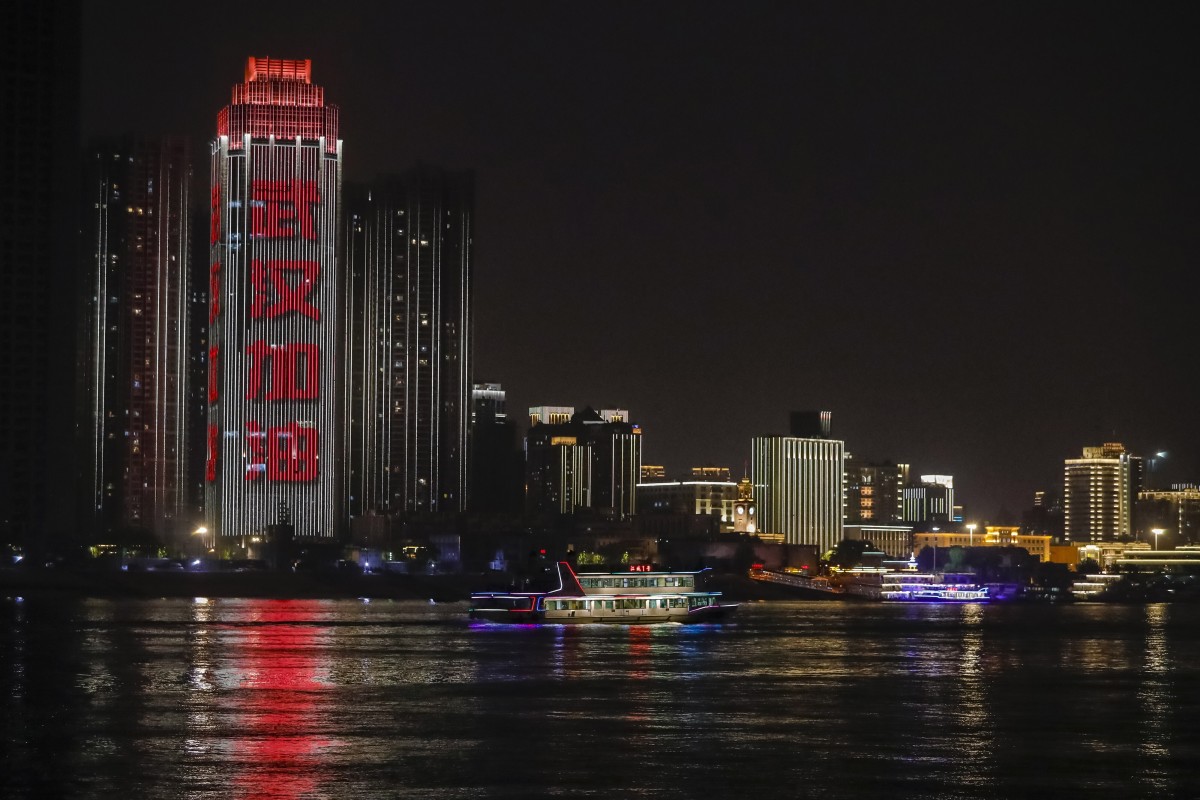
Ferries and other public transport services resumed in Wuhan last week. Photo: Xinhua
The city of Wuhan, the initial epicentre of the coronavirus pandemic, no longer has any Covid-19 patients in hospital after the last 12 were discharged on Sunday.
Their release ended a four-month nightmare for the city, where the disease was first detected in December. The number of patients being treated for Covid-19, the disease caused by a new coronavirus, peaked on February 18 at 38,020 – nearly 10,000 of whom were in severe or critical condition.
“With the joint efforts of Wuhan and the national medical aid given to Hubei province, all cases of Covid-19 in Wuhan were cleared as of April 26,” Mi Feng, a spokesman for the National Health Commission said on Sunday afternoon.
The announcement came only one day after the city discharged the last patient who had been in a severe condition. That patient also was the last severe case in Hubei province.
The last patient discharged from Wuhan Chest Hospital, a 77-year-old man surnamed Ding, twice tested negative for Sars-CoV-2, the virus that causes Covid-19, and was released at noon on Sunday.
“I missed my family so much!” Ding told Changjing Daily.
Another unidentified patient exclaimed as he left the hospital: “The air outside is so fresh! The weather is so good today!”
Wuhan faced a long journey to bring its patient count down to zero.
The city of 11 million, the capital of Hubei province and a transport hub for central China, was put under a strict lockdown on January 23 that barred anyone from entering or exiting the city without official approval for 76 days until it was officially lifted on April 8.
Coronavirus: Wuhan, Los Angeles officials discuss getting back to work after lockdown
22 Apr 2020
Residents were ordered to stay in their apartments as the city stopped public transport and banned private cars from city streets. As the epidemic worsened, more than 42,000 medical staff from across the country were sent to the city and to Hubei province to help ease the burden on the local health care system.
Wuhan was the hardest hit city in China, accounting for 50,333 of the 82,827 locally transmitted Covid-19 cases recorded in China. More than 4,600 died in the country from the disease.
On March 13, the city reported for the first time that there were no new suspected cases of the infection, and five days later there were no confirmed cases.
The number of discharged patients bottomed out at 39.1 per cent at the end of February, gradually climbing to 92.2 per cent by last Thursday.
“Having the patients in the hospital cleared on April 26 marks a major achievement for the city’s Covid-19 treatment,” the Wuhan Health Commission said in a statement.
However, having no severe cases in hospital does not mean all the discharged patients will require no further treatment as they may still need further care.
“Clearing all the severe cases marks a decisive victory for the battle to safeguard Wuhan,” health minister Ma Xiaowei told state broadcaster China Central Television on Saturday.
“Some patients who have other conditions are being treated in specialised hospitals. It has been properly arranged.”
Coronavirus: Chinese writer hit by nationalist backlash over diary about Wuhan lockdown
18 Apr 2020
Ten patients aged between 42 and 85 who have been declared coronavirus-free are still in intensive care at the city’s Tongji Hospital where they are being treated for kidney problems and other complications arising from Covid-19. Some still need ventilators to help them breathe.
These 10 patients are under 24-hour care, with 190 nurses on four-hour rotations. There are other patients in a similar condition in two other hospitals in Wuhan, according to the Hubei Broadcasting and Television Network.
However, the discharge of the last batch of Covid-19 patients does not mean that the risk of infection is gone.
The city reported 20 new cases of people testing positive for Sars-CoV-2, the official name for the coronavirus that causes the disease, but who do not yet show symptoms.
There are 535 such carriers under medical observation. Past data shows some of these asymptomatic carriers will develop symptoms, and so will be counted as Covid-19 patients under China’s diagnosis and treatment plan.
China’s coronavirus infection curve has flattened out with about 694 imported cases of Covid-19 on top of about 800 locally transmitted ones now under treatment.
The national health commission spokesman warned that people still need to be on high alert as the virus is continuing to spread around the globe, with no sign yet of a slowdown.
“[We] must not drop our guard and loosen up. [We] must discover cases in time and deal with them quickly,” Mi said, citing the continued pressure from cases imported by people returning from overseas.
“The next step will be to implement the requirements of the central government and continue to guard against imported cases and a rebound of domestic transmitted cases.”
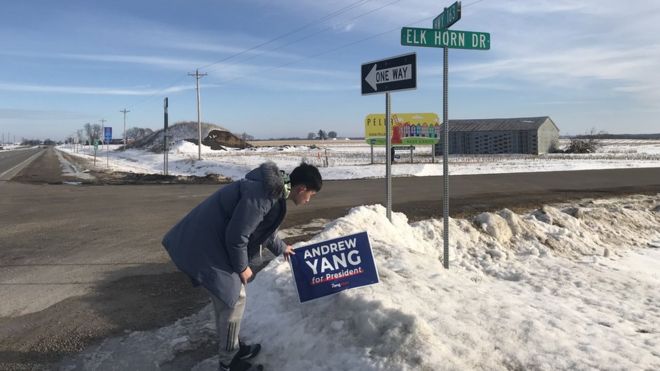
Image copyright SWALLOW YANImage caption A Chinese student puts up a yard sign of presidential candidate Andrew Yang in Des Moines, Iowa.
To some Americans, Iowa, a rural state in the middle of the US, is dismissively thought of as “fly-over country”.
Yet the Hawkeye state is well-known in China. Chinese President Xi Jinping has visited twice – before he took office in 2012, and in an earlier stay as a low-level local official on a 1985 trip to study farming technology.
Iowa was once again a destination for Chinese visitors last week, though those who descended upon the state were not there to study soybeans, but democracy in America.
Amid its chaos, young “democracy tourists” learnt first-hand that it can be a messy way to govern.
The results of Iowa’s caucuses were delayed for days because of a technical failure, causing political uproar in the US.
But the Chinese students didn’t seem to mind.
Over the weekend leading up to the 3 February contest – the first step in selecting the candidates who will stand in the November presidential election – they could be spotted at a rally for Andrew Yang, a Democratic hopeful.
The students, aged about 16, were part of a winter break tour of the US that included stops in Iowa to see democracy in action.
The trip cost $7,000 (£5,428) – a huge sum for the average Chinese household – but Liu Junhao, 16, thought it had been money well spent.
He’d experienced something unique and meaningful, unlike his classmates’ visits to typical American tourist attractions, he said.
“If I could vote, I would vote for Andrew Yang,” he said. Mr Liu could only hear half of the candidate’s speech, but stared at him awe, star-struck, for the whole event.
Some 360,000 Chinese students now study in the US. In the UK, the figure is more than 100,000. As Chinese people become more affluent and international education more accessible to them, an increasing number of young Chinese want to study in the West.
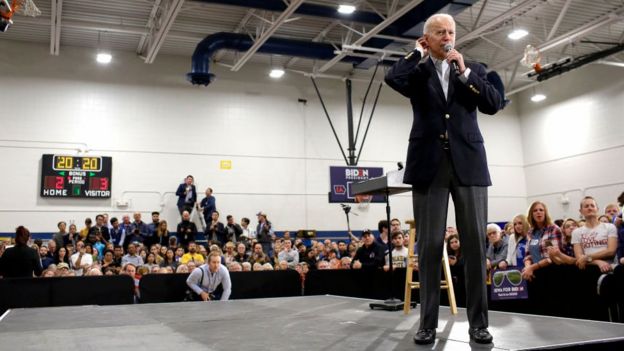
Image copyright GETTY IMAGESImage caption Chinese students attend multiple campaign rallies in Iowa, including former Vice-President Joe Biden’s event
Understanding democracy has now become part of that education.
Steven Hu, a Hubei native who attends high school in Boston, has canvassed for six months for Joe Biden, working for his campaign in Iowa and New Hampshire, the first two states to vote in the primaries.
Mr Hu, 17, had ambitions beyond promoting democracy, though.
He arrived at a Biden rally in Des Moines armed with a university recommendation letter- and hopes that the former vice-president would sign it for him.
“Steven has been very proactive in making a positive impact on my campaign,” said the letter, written by the student for Mr Biden to sign.
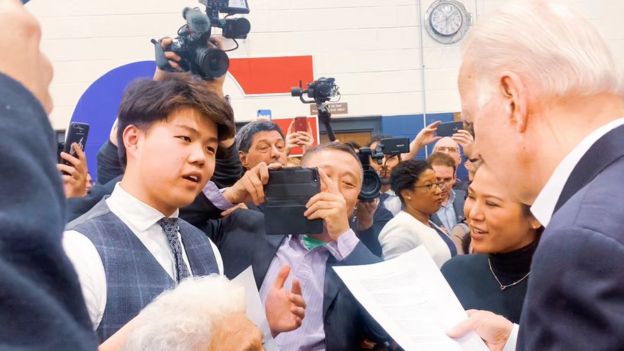
Image copyright STEVEN HUImage caption Chinese student Steven Hu meets presidential hopeful Joe Biden
Dressed up in a three-piece suit, the college hopeful stood waiting next to the aisle, poised to pounce when Mr Biden was to pass through after his speech.
The moment came. The silver-haired politician approached. Mr Hu seized the chance to tell Mr Biden about his canvassing work, and asked him to sign the letter.
“Thank you,” Mr Biden responded. Though he appeared to be puzzled by the paper presented to him, he signed it after taking a glimpse.
However, before Mr Hu could get the letter back, a Biden aide seized it and explained the candidate was in no position to sign such a document.
A disappointed Mr Hu took it in his stride. “I didn’t expect such a letter would be accepted by colleges anyway,” he said.
He said he just wanted proof that he had participated in the campaign.
Mr Hu viewed politics as a game that everyone in the US plays – a game with high participation but low efficiency, given America’s partisan gridlock.
But he still appreciates it. “The US is a great country,” he said, “because it successfully created a system that lets everyone be a part of it.”



 CHINDIA ALERT: You'll be living in their world, very soon