Archive for ‘Twitter’

07/03/2019

In sensitive year for China, warnings against ‘erroneous thoughts’

BEIJING (Reuters) – China’s ruling Communist Party is ramping up calls for political loyalty in a year of sensitive anniversaries, warning against “erroneous thoughts” as officials fall over themselves to pledge allegiance to President Xi Jinping and his philosophy.

This year is marked by some delicate milestones: 30 years since the bloody crackdown on pro-democracy demonstrators in and around Tiananmen Square; 60 years since the Dalai Lama fled from Tibet into exile; and finally, on Oct. 1, 70 years since the founding of Communist China.

Born of turmoil and revolution, the Communist Party came to power in 1949 on the back of decades of civil war in which millions died, and has always been on high alert for “luan”, or “chaos”, and valued stability above all else.

“This year is the 70th anniversary of the founding of new China,” Xi told legislators from Inner Mongolia on Tuesday, the opening day of the annual meeting of parliament. “Maintaining sustained, healthy economic development and social stability is a mission that is extremely arduous.”

Xi has tightened the party’s grip on almost every facet of government and life since assuming power in late 2012.

ROOTING OUT DISLOYALTY

The party has increasingly been making rooting out disloyalty and wavering from the party line a disciplinary offence to be enforced by its anti-corruption watchdog, whose role had ostensibly been to go after criminal acts such as bribery and lesser bureaucratic transgressions.

The graft buster said last month it would “uncover political deviation” in its political inspections this year of provincial governments and ministries.

Top graft buster Zhao Leji, in a January speech to the corruption watchdog, a full transcript of which the party released late February, used the word “loyalty” eight times.

“Set an example with your loyalty to the party,” Zhao said.

China has persistently denied its war on corruption is about political manoeuvring or Xi taking down his enemies. Xi told an audience in Seattle in 2015 that the anti-graft fight was no “House of Cards”-style power play, in a reference to the Netflix U.S. political drama.

The deeper fear for the party is some sort of unrest or a domestic or even international event fomenting a crisis that could end its rule.

Xi told officials in January they need to be on high alert for “black swan” events..

That same month the top law-enforcement official said China’s police must focus on withstanding “colour revolutions”, or popular uprisings, and treat the defence of China’s political system as central to their work.

The party has meanwhile shown no interest in political reform, and has been doubling down on the merits of the Communist Party, including this month rolling out English-language propaganda videos on state media-run Twitter accounts to laud “Chinese democracy”. Twitter remains blocked in China.
The official state news agency Xinhua said in an English-language commentary on Sunday that China was determined to stick to its political model and rejected Western-style democracy.
“The country began to learn about democracy a century ago, but soon found Western politics did not work here. Decades of turmoil and civil war followed,” it said.
Source: Reuters
04/03/2019

Chinese mother detained over bus driver attack after letting son urinate on bus

  • Police say woman told toddler to use a rubbish bin when he needed to go to the toilet then got into argument with driver after he called her ‘uncivilised’
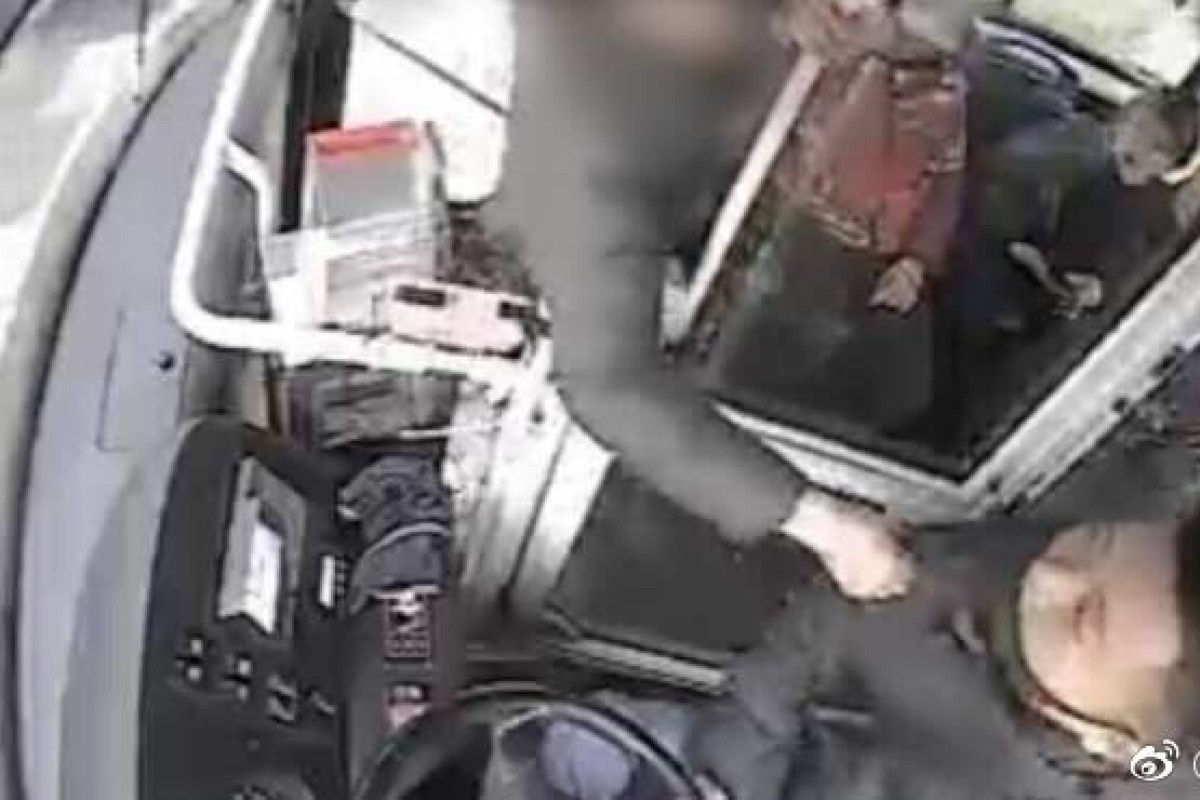
  • Security camera footage shows her bashing on compartment door and grabbing the man’s coat as he is driving

Mother detained over bus driver attack after letting son urinate on bus

4 Mar 2019

The woman is seen in security camera footage grabbing the bus driver’s coat while he is behind the wheel. Photo: Weibo

A mother in central China has been detained after she allowed her two-year-old son to urinate in a rubbish bin on a bus then attacked the driver when he told her she was “uncivilised”.

Security camera footage of the incident in Dazhi, Hubei province on Saturday shows the woman supporting the toddler by the bin on the floor of the bus while he urinates in front of the other passengers.

She is then seen rushing up to the driver and arguing with him after he complains about her behaviour, bashing on the compartment door and grabbing the man’s coat as he is driving.

A police officer told news website PearVideo on Sunday that the woman, identified only by her surname Chen, said the boy needed to go to the toilet while they were on the bus so she took him over to the bin.

“The driver saw them and said she was uncivilised, and they got into an argument over it,” the officer said. “Chen became agitated – she hit the driver’s compartment door and reached around to attack him while he was driving.”

The driver, who was not identified, is seen in the security footage calmly pulling over and calling the police while the woman is attacking him.

Chen has been placed under criminal detention for posing a threat to public security and Dazhi police are investigating the case, according to the report.

It comes after a series of recent attacks on bus drivers in China, including an accident in October when an angry passenger who missed her stop assaulted the driver, causing the bus to veer off a bridge and crash into the Yangtze River in Chongqing, killing all 15 people on board.
A police investigation found that the 48-year-old woman had been fighting with the driver as he tried to steer the bus when the crash happened.

Reacting to the latest case, some social media users said they understood the mother’s situation, but it has angered others, who say she should have used a diaper or got off the bus at the next stop.

“Anyone might need to use the toilet [on a bus], especially a kid, but parents should take heed of the criticism – she was clearly in the wrong,” one person wrote on Weibo, China’s Twitter.

There have been other cases in recent years of Chinese parents sparking anger for letting their children urinate in public – on the mainland and elsewhere. Last month, photos of a Chinese tourist allowing her son to pee on the floor of the Forbidden City in Beijing triggered a strong reaction on social media, with many people criticising the woman.
Source: SCMP
02/03/2019

Trump asks China to lift tariffs on U.S. farm products

WASHINGTON (Reuters) – U.S. President Donald Trump said he had asked China to immediately remove all tariffs on U.S. agricultural products because trade talks were progressing well.

He also delayed plans to impose 25 percent tariffs on Chinese goods on Friday, as previously scheduled.
“I have asked China to immediately remove all Tariffs on our agricultural products (including beef, pork, etc.) based on the fact that we are moving along nicely with Trade discussions,” Trump said on Twitter, pointing out that he had not raised tariffs on Chinese goods to 25 percent from 10 percent on March 1 as planned.
“This is very important for our great farmers – and me!” Trump said.
Farmers are a key constituency for Trump’s Republican Party, and the U.S. president’s trade war with China has had a heavy impact on them. Beijing imposed tariffs last year on imports of soybeans, grain sorghum, pork and other items, slashing shipments of American farm products to China.
U.S. Agriculture Secretary Sonny Perdue said this week that U.S. trade negotiators had asked China to reduce tariffs on U.S. ethanol, but it was not immediately clear whether Beijing was willing to oblige.
Trump’s post on Twitter came several hours after the U.S. Trade Representative’s office said that it would delay the scheduled hike in tariffs on $200 billion worth of Chinese goods.

The notice, due to be published in the Federal Register next Tuesday, says it is “no longer appropriate” to raise the rates because of progress in negotiations since December 2018. The tariff would remain “at 10 percent until further notice.”

In a statement on Saturday, China said it welcomed the delay.

Speaking at a separate briefing in Beijing, a Chinese government official said both countries were working on the next steps, though he gave no details.

“China and the United States reaching a mutually-beneficial, win-win agreement as soon as possible is not only good for the two countries, but is also good news for the world economy,” said Guo Weimin, spokesman for the high profile but largely ceremonial advisory body to China’s parliament.

A tariff increase to 25 percent from 10 percent was initially scheduled for Jan. 1, but after productive conversations with Chinese President Xi Jinping, the Trump administration issued a 90-day extension of that deadline.

Trump had said on Sunday he would again delay the increase because of progress in the talks.

Source: Reuters

28/02/2019

Social media fake news fans tension between India and Pakistan

MUMBAI (Reuters) – With India and Pakistan standing on the brink of war this week, several false videos, pictures and messages circulated widely on social media, sparking anger and heightening tension in both countries.

The video of an injured pilot from a recent Indian air show and images from a 2005 earthquake have been taken out of context to attempt to mislead tens of millions on platforms like Twitter, Facebook and its messenger service, WhatsApp.

The spurt of fake news comes after New Delhi this week launched an air strike inside Pakistan, the first such move in over more than decades. India says the attack destroyed a militant camp run by the group that claimed responsibility for killing 40 paramilitary troops in Indian Kashmir on Feb 14. Pakistan denied there had been any casualties in the attack.
Tensions between the nuclear-armed nations peaked with both sides claiming they’d shot down each other’s fighter jets on Wednesday, and Pakistan capturing an Indian pilot.
As claims and counter claims poured in from both sides, social media became a hotbed of unverified news, pictures and video clips, according to fact checkers.
Partik Sinha, co-founder of one such fact-checking website, Alt News, said it had received requests to verify news from journalists and people on social media.
“It’s been crazy since Tuesday. There is so much out there that we know is fake, but we’re not able to fact-check all of it,” Sinha said.
A Facebook group that says it supports Amit Shah, the chief of India’s ruling Bharatiya Janata Party (BJP), posted images on Tuesday of the alleged destruction caused inside Pakistan by the Indian air strike.
Three photos posted on the group page showed debris from a destroyed building and bodies and have been shared hundreds of times.
Alt News said the pictures were from a 2005 earthquake in Kashmir.
India, where roughly 450 million people have smartphones, is already struggling with a huge fake news problem with misinformation having led to mass beatings and mob lynchings.
Facebook, WhatsApp and Twitter have begun to take steps to combat the issue, but as India heads toward general elections, due by May, fake news is getting more intensely politicized.
Another message circulated on a WhatsApp group supporting the BJP claimed the Indian jet was not shot down, but crashed due to a technical snag and blamed the opposition Congress party for failing to upgrade the jets during its tenure.
Similarly in Pakistan, a purported video of a second captured Indian pilot was being widely circulated. Fact-checking website Boom noted the clip was from an air show in the southern Indian city of Bengaluru, where two planes crashed on Feb. 19.
“Everyone has a role to play in ensuring misinformation doesn’t spread on the internet and we encourage people who use Twitter not to share information unless they can verify that it’s true,” a spokeswoman for Twitter said.
Source: Reuters
23/02/2019

Trump says he’s inclined to extend China trade deadline and meet Xi soon

WASHINGTON (Reuters) – President Donald Trump said on Friday there was “a very good chance” the United States would strike a deal with China to end their trade war and that he was inclined to extend his March 1 tariff deadline and meet soon with Chinese President Xi Jinping.

“I think that we both feel there’s a very good chance a deal will happen,” Trump said.

Liu agreed there had been “great progress”.

“From China, we believe that (it) is very likely that it will happen and we hope that ultimately we’ll have a deal. And the Chinese side is ready to make our utmost effort,” he said at the White House.

The Republican president said he probably would meet with Xi in March in Florida to decide on the most important terms of a trade deal.


Optimism that the two sides will find a way to end the trade war lifted stocks, especially technology shares. The S&P 500 stock index reached its highest closing level since Nov. 8. Oil prices rose to their highest since mid-November, with Brent crude reaching a high of $67.73 a barrel. [.N] [O/R]

CURRENCY AGREEMENT

Trump and Treasury Secretary Steven Mnuchin said the two sides had reached an agreement on currency. Trump declined to provide details, but U.S. officials long have expressed concerns that China’s yuan is undervalued, giving China a trade advantage and partly offsetting U.S. tariffs.

Announcement of a pact aimed at limiting yuan depreciation was putting “the currency cart before the trade horse,” but would likely be positive for Asian emerging market currencies, said Alan Ruskin, global head of currency strategy at Deutsche Bank in New York.

“How can you agree to avoid excessive Chinese yuan depreciation or volatility if you have not made an agreement on trade that could have huge FX implications?” Ruskin asked in a note to clients.

In a letter to Trump read aloud by an aide to Liu at the White House, Xi called on negotiators to work hard to strike a deal that benefits both country.

Trump said a deal with China may extend beyond trade to encompass Chinese telecommunications companies Huawei Technologies and ZTE Corp.

The Justice Department has accused Huawei of conspiring to violate U.S. sanctions on Iran and of stealing robotic technology from T-Mobile US Inc.

Chinese peer ZTE was last year prevented from buying essential components from U.S. firms after pleading guilty to similar charges, crippling its operations.

MEMORANDUMS NO MORE

Trump appeared at odds with his top negotiator, U.S. Trade Representative Robert Lighthizer, on the preliminary terms that his team is outlining in memorandums of understanding for a deal with China. Trump said he did not like MOUs because they are short term, and he wanted a long-term deal.

“I don’t like MOUs because they don’t mean anything,” Trump said. “Either you are going to make a deal or you’re not.”

Lighthizer responded testily that MOUs were binding, but that he would never use the term again.

Reuters reported exclusively on Wednesday that the two sides were drafting the language for six MOUs covering the most difficult issues in the trade talks that would require structural economic change in China.

Negotiators have struggled this week to agree on specific language within those memorandums to address tough U.S. demands, according to sources familiar with the talks. The six memorandums include cyber theft, intellectual property rights, services, agriculture and non-tariff barriers to trade, including subsidies.

An industry source briefed on the talks said both sides have narrowed differences on intellectual property rights, market access and narrowing a nearly $400 billion U.S. trade deficit with China. But bigger differences remain on changes to China’s treatment of state-owned enterprises, subsidies, forced technology transfers and cyber theft of U.S. trade secrets.

Lighthizer pushed back when questioned on forced technology transfers, saying the two sides made “a lot of progress” on the issue, but did not elaborate.

The United States has said foreign firms in China are often coerced to transfer their technology to Chinese firms if they want to operate there. China denies this.

The U.S. Chamber of Commerce on Friday urged the U.S. government to ensure the deal was comprehensive and addressed core issues, rather than one based on more Chinese short-term purchases of goods.

China has pledged to increase purchases of agricultural produce, energy, semiconductors and industrial goods to reduce its trade surplus with the United States.

China committed to buying an additional 10 million tonnes of U.S. soybeans on Friday, U.S. Agriculture Secretary Sonny Perdue said on Twitter. China bought about 32 million tonnes of U.S. soybeans in 2017. The commitments are a “show of good faith by the Chinese” and “indications of more good news to come,” Perdue wrote.

China was the top buyer of U.S. soybeans before the trade war, but Beijing’s retaliatory tariffs on U.S. soybeans slashed business that had been worth $12 billion annually.

Source: Reuters

Law of Unintended Consequences

continuously updated blog about China & India

ChiaHou's Book Reviews

continuously updated blog about China & India

What's wrong with the world; and its economy

continuously updated blog about China & India