Chindia Alert: You’ll be Living in their World Very Soon
aims to alert you to the threats and opportunities that China and India present. China and India require serious attention; case of ‘hidden dragon and crouching tiger’.
Without this attention, governments, businesses and, indeed, individuals may find themselves at a great disadvantage sooner rather than later.
The POSTs (front webpages) are mainly 'cuttings' from reliable sources, updated continuously.
The PAGEs (see Tabs, above) attempt to make the information more meaningful by putting some structure to the information we have researched and assembled since 2006.
Deity has all the necessary travel documents for seven-day journey bringing blessings to coastal communities
The statue of Chinese sea goddess Mazu on board the train for her seven-day tour of eastern China. Photo: Weibo
High-speed rail travellers in eastern China may find themselves in exalted company this week as one of China’s most beloved deities is on a seven-day tour.
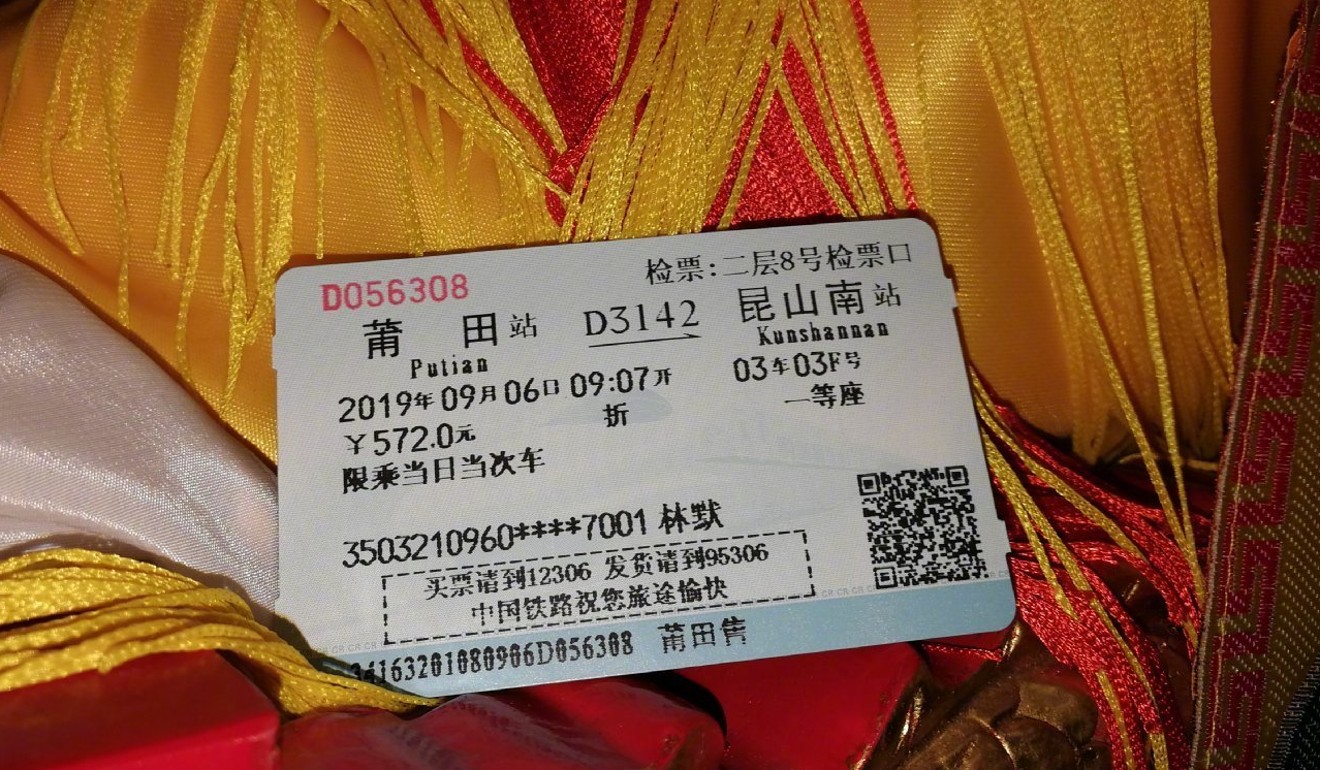
Mazu, protector of seafarers, boarded the train at Putian in Fujian province on Friday with an entourage of 230 worshippers for one of her regular “inspection tours”. And, like any modern traveller, the sea goddess had the necessary identity card and ticket for the journey.
Mazu, known as Tin Hau in Hong Kong, began life more than 1,000 years ago as a mortal named Lin Mo, according to Chinese folk belief. As a girl she is said to have saved some of her family members when they were caught in a typhoon while out fishing. In another version of the myth, Lin Mo died while trying to rescue shipwreck victims.
She fell out of favour in mainland China during the Cultural Revolution, when her ancestral temple on Meizhou Island in the southeastern province of Fujian was destroyed to make way for a People’s Liberation Army garrison. In the late 1970s the temple was rebuilt and in 2009 the beliefs and customs surrounding Mazu were recognised as an Intangible Cultural Heritage of Humanity by Unesco.
Inspectors on China’s high speed rail will find everything in order if they ask to see the goddess Mazu’s ticket during her seven-day tour. Photo: Weibo
Staff at the Meizhou Mazu Temple applied for an ID card for the goddess, in her earthly name of Lin Mo. Tickets were also organised for two other fairy figures who traditionally protect her, according to Chinese folklore.
“Not only Mazu but Thousand-Mile Eye and Wind-Accompanying Ear were all bought tickets,” a temple representative told the Southern Metropolis News.
This is not the first time the trio have been bought travel tickets. Two years ago their airfares were paid for when they visited Malaysia and Singapore and, a year later, they took a cruise ship to the Philippines.
This year’s tour includes a visit to Kunshan in Jiangsu and Shanghai, before Mazu returns to her home temple on the island of Meizhou. At each stop, devotees believe Mazu blesses the location with her presence and protects its residents from harm.
Taiwanese tycoon Gou thanks sea goddess for presidential inspiration
The tour has been organised jointly by the Meizhou Temple as well as the Huiju Mazu Temple in Kunshan and the Lugang Mazu Temple in Taiwan.
News of the celestial train journey quickly went viral on Chinese social media, with posts on Mazu receiving 460 million views on Weibo, the Twitter-like microblogging platform, since Monday. “First, respect. Second, she takes up a seat so it’s not crazy to buy her a ticket,” one comment read.
BEIJING, Aug. 17 (Xinhua) — The central government has offered financial support of 920 million yuan (about 131 million U.S. dollars) to local governments to help counter typhoon, flood control and drought relief.
An emergency relief fund of 600 million yuan has been offered to 11 provincial regions including Henan, Sichuan and Gansu to help them control flood and deal with drought, according to the Ministry of Finance and the Ministry of Emergency Management.
Another fund worth 320 million yuan was used to support Hebei, Liaoning, Jilin and Heilongjiang provinces in flood control and typhoon relief.
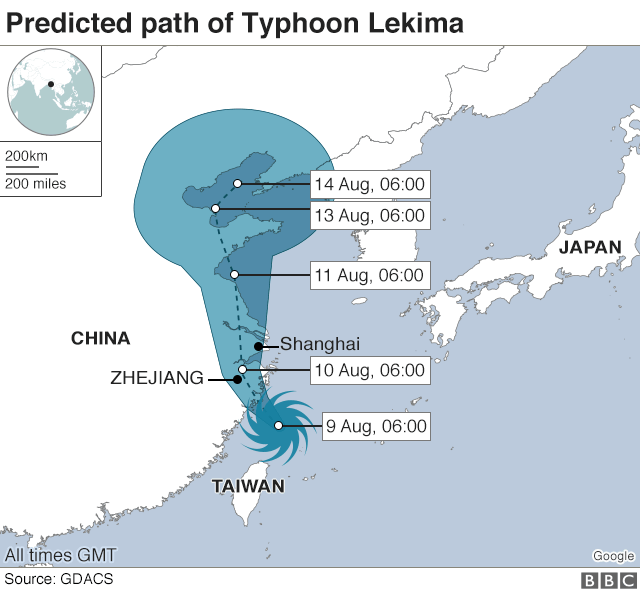
Typhoon Lekima landed in east China’s Zhejiang on Aug. 10, wreaking havoc as a super typhoon. About 13 provincial regions have been affected by the typhoon.
China announced the second-highest level in China’s four-level typhoon emergency response system to deal with Typhoon Lekima and minimize casualties and losses.
SHANGHAI (Reuters) – The death toll from a major typhoon in eastern China rose to 30 on Sunday, with 18 people missing, state broadcaster CCTV reported, as the country braced for more travel disruptions as the storm moved further north up the coast.
Typhoon Lekima made landfall early on Saturday in the eastern province of Zhejiang with winds gusting to 187 km (116 miles) per hour, causing travel chaos with thousands of flights canceled and rail operations suspended.
The typhoon damaged more than 173,000 hectares of crops and 34,000 homes in Zhejiang, provincial authorities said in estimating the economic losses at 14.57 billion yuan ($2 billion), the state news agency Xinhua said.
Lekima, China’s ninth typhoon of this year, is expected to make a second landing along the coastline in Shandong province, prompting more flight cancellations and the closure of some expressways, Xinhua and state broadcaster CCTV said.
In Zhejiang, many of the deaths occurred about 130 km north of the coastal city of Wenzhou, where a natural dam collapsed in an area deluged with 160 mm (6.3 inches) of rain within three hours, causing a landslide, Xinhua reported.
State media reports showed rescuers wading in waist-high waters to evacuate people from their homes, while the Ministry of Emergency Management said that more than one million people in the financial hub of Shanghai, as well as Zhejiang and Jiangsu provinces, have been evacuated due to the typhoon.
An estimated 3,200 flights were canceled, state broadcaster CCTV reported, although some suspensions on high-speed railway lines were lifted on Sunday.
At least 13 people have been killed and more than a million forced from their homes as Typhoon Lekima hit China.
Sixteen people were also missing after a landslide was triggered by the storm, state media reported.
Lekima made landfall in the early hours of Saturday in Wenling, between Taiwan and China’s financial capital Shanghai.
The storm was initially designated a “super typhoon”, but weakened slightly before landfall – when it still had winds of 187km/h (116mph).
The fatal landslide happened when a dam broke in Wenzhou, near where the storm made landfall, state media said.
Lekima is now slowly winding its way north through the Zhejiang province, and is expected to hit Shanghai, which has a population of more than 20 million.
Emergency crews have battled to save stranded motorists from floods. Fallen trees and power cuts are widespread.
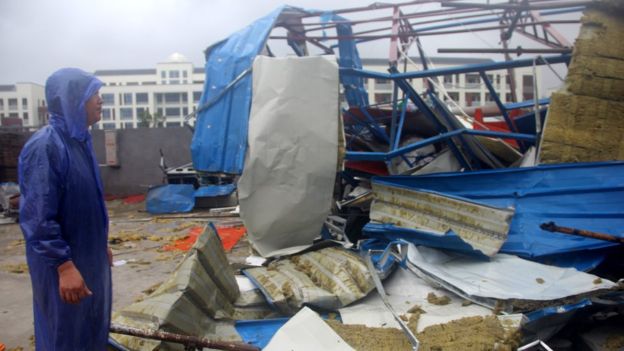
Image copyright EPAImage caption A worker looks for his belongings at a construction site shelter collapsed by the storm
Authorities have cancelled more than a thousand flights and cancelled train services as the city prepares for the storm.
It is expected to weaken further by the time it reaches Shanghai, but will still bring a high risk of dangerous flooding.
The city evacuated some 250,000 residents, with another 800,000 in the Zhejiang province also being taken from their homes.
An estimated 2.7 million homes in the region lost power as power lines toppled in the high winds, Chinese state media said.
It is the ninth typhoon of the year, Xinhua news said – but the strongest storm seen in years. It was initially given China’s highest level of weather warning but was later downgraded to an “orange” level.
Media caption Typhoon Lekima inches towards China
Chinese weather forecasters said the storm was moving north at just 15km/h (9mph).
It earlier passed Taiwan, skirting its northern tip and causing a handful of injuries and some property damage.
Coming just a day after a magnitude six earthquake, experts warned that the combination of earth movement and heavy rain increased the risk of landslides.
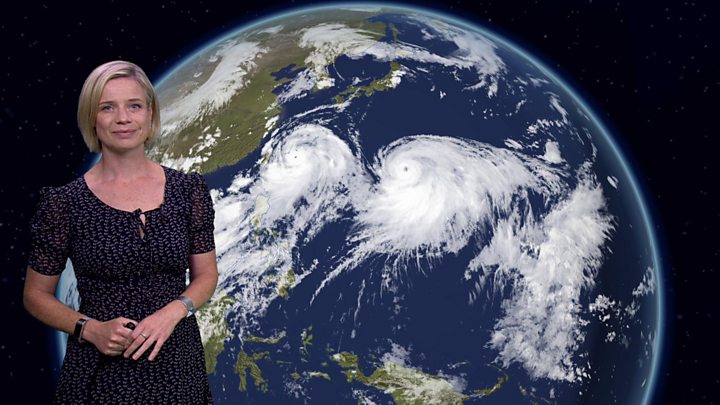
Lekima is one of two typhoons in the western Pacific at the moment.
Further east, Typhoon Krosa is spreading heavy rain across the Northern Mariana Islands and Guam. It is moving north-west and could strike Japan some time next week, forecasters said.
BEIJING (Reuters) – Eighteen people were killed and 14 were missing in eastern China on Saturday in a landslide triggered by a major typhoon, which caused widespread transport disruptions and the evacuation of more than one million people, state broadcaster CCTV reported.
Typhoon Lekima made landfall early on Saturday in the eastern province of Zhejiang with maximum winds of 187 km (116 miles) per hour, although it had weakened from its earlier designation as a “super” typhoon, the official Xinhua news agency reported.
Thousands of flights were cancelled in eastern China, according to the country’s aviation regulator, with most flights into and out of Shanghai’s two major airports cancelled on Saturday afternoon, their websites showed.
China’s weather bureau on Saturday issued an orange alert, its second highest, after posting a red alert on Friday, when the storm forced flight cancellations in Taiwan and shut markets and businesses on the island.
The deadly landslide occurred about 130 km north of the coastal city of Wenzhou, when a natural dam collapsed in an area deluged with 160 millimetres (6.3 inches) of rain within three hours, CCTV reported.
The storm was moving northward at 15 kph and was gradually weakening, Xinhua reported, citing the weather bureau.
High winds and heavy rains battered the financial hub of Shanghai on Saturday afternoon, and Shanghai Disneyland was shut for the day.
Nearly 200 hundred trains through the city of Jinan in Shandong province had been suspended until Monday, Xinhua reported.
More than 250,000 residents in Shanghai and 800,000 in Zhejiang province had been evacuated due to the typhoon, and 2.72 million households in Zhejiang had power blackouts as strong wind and rain downed electricity transmission lines, state media reported.
Some 200 houses in six cities in Zhejiang had collapsed, and 66,300 hectares (163,830 acres) of farmland had been destroyed, CCTV said.
The storm was predicted to reach Jiangsu province by the early hours of Sunday and veer over the Yellow Sea before continuing north and making landfall again in Shandong province, CCTV said.
Coastal businesses in Zhejiang were shut and the Ministry of Emergency Management warned of potential risk of fire, explosions and toxic gas leaks at chemical parks and oil refineries.
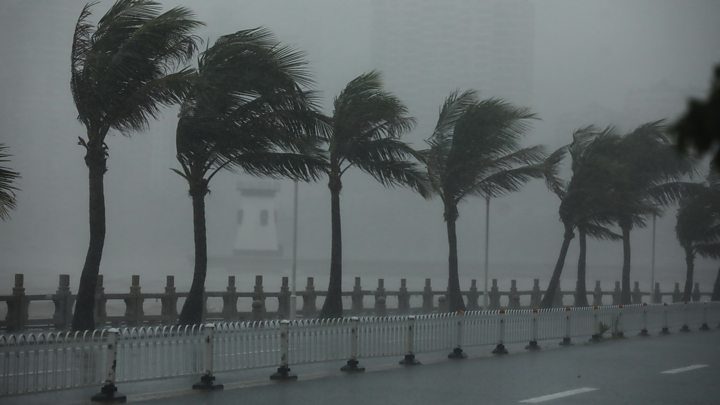
Image copyright AFPImage caption Lekima has brought heavy rain to Taiwan
Chinese authorities have declared a red alert as a powerful typhoon heads towards the eastern coast.
Typhoon Lekima is currently battering Taiwan with winds of more than 190km/h (120mph) and is due to make landfall in China’s Zhejiang province on Saturday.
Emergency teams have been deployed to the region to guide relief work, China’s emergency ministry said.
Thousands of people further up the coast in Shanghai have been warned to prepare to evacuate.
Lekima, which is the ninth typhoon so far this year, strengthened into a super typhoon late on Wednesday, but Taiwanese authorities have since downgraded it to a regular typhoon.
Flood warnings have been issued for eastern sections of China’s Yangtze River and the Yellow River until Wednesday. The provinces of Jiangsu and Shandong are also on alert.
Cruise liners have been told to delay their arrival in Shanghai and some train services have been suspended over the weekend.
Beijing has also cancelled some trains heading to and from the Yangtze delta region.
Lekima is one of two typhoons in the western Pacific at the moment. Further east, Typhoon Krosa is spreading heavy rain across the Northern Mariana Islands and Guam. It is moving north-west and could strike Japan some time next week, forecasters said.
Media caption BBC Weather’s Sarah Keith-Lucas on typhoons Lekima and Krosa
Lekima was passing the north of Taiwan on Friday, causing flight cancellations and the closures of schools and offices.
Power was cut to more than 40,000 homes and the island’s high speed rail service was suspended north of the city of Taichung, local media reported.
The huge storm came a day after eastern Taiwan was rattled by a 6.0 magnitude earthquake. Experts said the risks of landslides triggered by the tremor were made more likely by the typhoon dumping up to 900mm (35 inches) of rain on Taiwan’s northern mountains.
Media caption The 6.0 earthquake in Taiwan was caught on cat cam
Lekima also brought heavy rain and high winds to south-west Japan on Friday, cutting power to about 14,000 homes, broadcaster NHK reported.
China’s weather bureau said Lekima was expected to have weakened further by the time it made landfall. The country has a four-stage colour-coded warning system, with red representing the most severe weather.






 CHINDIA ALERT: You'll be living in their world, very soon