09/04/2020
GENEVA (Reuters) – World Health Organization officials on Wednesday denied that the body was “China-centric” and said that the acute phase of a pandemic was not the time to cut funding, after U.S. President Donald Trump said he may put contributions on hold.
The United States is the top donor to the Geneva-based body which Trump said had issued bad advice during the new coronavirus outbreak.
U.S. contributions to WHO in 2019 exceeded $400 million, almost double the 2nd largest country donor, according to figures from the U.S. State Department. China contributed $44 million, it said.
“We are still in the acute phase of a pandemic so now is not the time to cut back on funding,” Dr Hans Kluge, WHO regional director for Europe, told a virtual briefing when asked about Trump’s remarks.
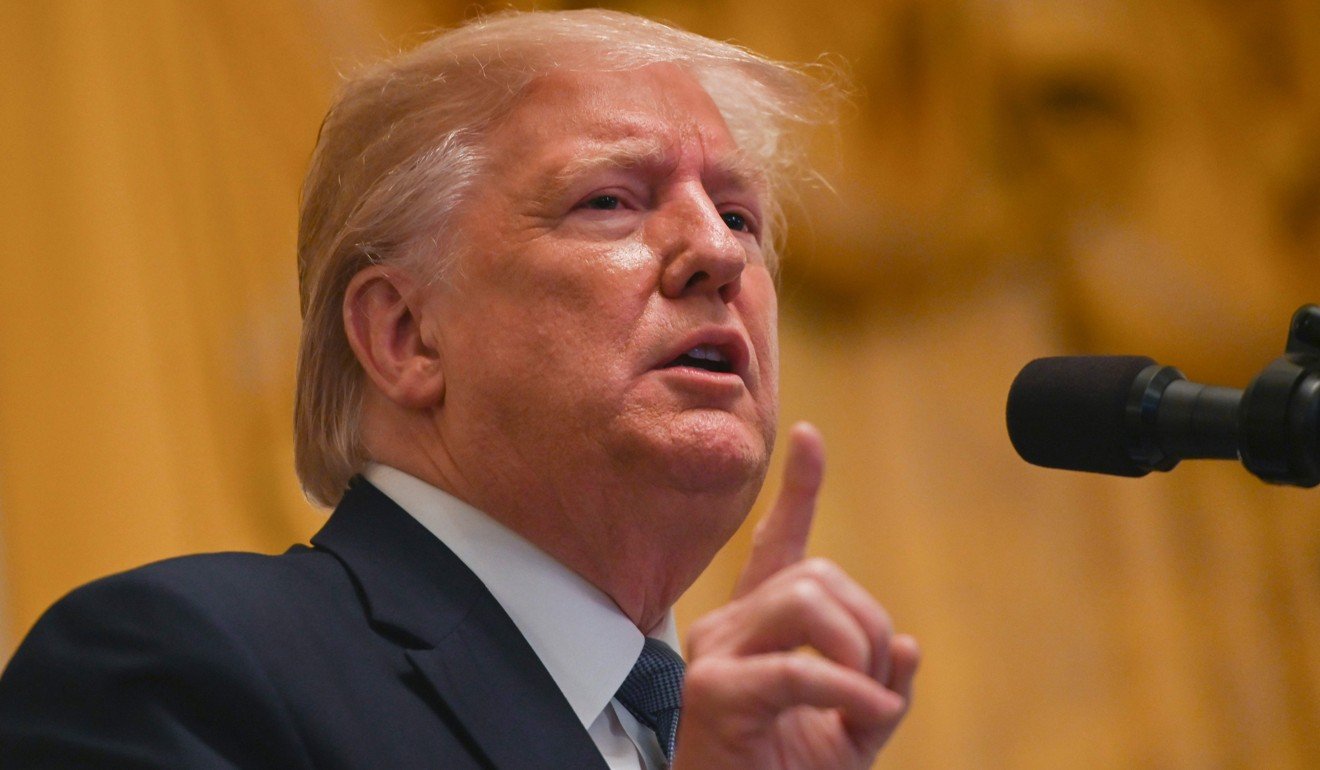
Trump told a news conference on Tuesday that the United States was “going to put a hold on money spent to the WHO,” however, he appeared to backtrack later when in response to questions he said: “We’re going to look at it.”
It was not immediately clear how Trump could “block” funding for the organization. Under U.S. law, Congress, not the president, decides how federal funds are spent.
Dr Bruce Aylward, senior advisor to the WHO Director-General, also defended the U.N. agency’s relationship with China, saying its work with Beijing authorities was important to understand the outbreak which began in Wuhan in December.
“It was absolutely critical in the early part of this outbreak to have full access to everything possible, to get on the ground and work with the Chinese to understand this,” he told reporters.
“This is what we did with every other hard-hit country like Spain and had nothing to do with China specifically.”
Aylward, who led a WHO expert mission to China in February, defended WHO recommendations to keep borders open, saying that China had worked “very hard” to identify and detect early cases and their contacts and ensure they did not travel.
“China worked very, hard very early on, once it understood what it was dealing with, to try and identify and detect all potential cases to make sure that they got tested to trace all the close contacts and make sure they were quarantined so they actually knew where the virus was, where the risk was,” he said.
“Then they made it very clear that these people would not and could not travel within the country, let alone internationally,” he added.
WHO Director-General Tedros Adhanom Ghebreyesus has been lavish in his praise of China from early in the outbreak, praising President Xi Jinping’s “rare leadership”.
David Heymann, a professor at the London School of Hygiene & Tropical Medicine who led WHO’s response to the 2003 SARS outbreak, said that any U.S. funding cut would be a huge blow.
“If the WHO loses its funding it cannot continue to do its work. It works on a shoe-string budget already,” Heymann said in London. “Of course it would be disastrous for the WHO to lose funding.”
Source: Reuters
Posted in 'China-centric', 2003 SARS, acute phase, after, “rare leadership”, bad advice, Beijing, body, borders, charge, Chinese, Congress, contributions, criticism, cut funding, December, denied, director general, Europe, federal funds, Geneva, London School of Hygiene & Tropical Medicine, new coronavirus outbreak, News conference, on hold, outbreak, pandemic, President, President Xi Jinping's, quarantined, rejects, shoe-string budget, Spain, spent, top donor, Trump, Tuesday, U.S. law, U.S. President Donald Trump, U.S. State Department, Uncategorized, United States, Wednesday, WHO, World Health Organization, Wuhan |
Leave a Comment »
03/04/2020
TAIPEI/BEIJING (Reuters) – Taiwan and the United States this week discussed how to get “closer coordination” between the island and the World Health Organization (WHO) during the coronavirus outbreak, drawing a rebuke from China for “political manipulation” of the epidemic.
Taiwan’s is excluded from the WHO due to diplomatic pressure from China, which considers it merely a wayward province with no right to the trappings of state.
Its omission has become a major source of anger for the Taiwan, which says it has been unable to get first hand information from the WHO, putting lives on the island in danger for the sake of politics. Both the WHO and China say Taiwan has been given the help it needs.
The U.S. State Department said on Thursday senior officials from the United States and Taiwan on Tuesday held a “virtual forum on expanding Taiwan’s participation on the global stage”, with particular focus on the WHO and how to share Taiwan’s successful model of fighting the coronavirus.
“Participants also discussed ongoing efforts to reinstate Taiwan’s observer status at the World Health Assembly, as well as other avenues for closer coordination between Taiwan and the World Health Organization,” it said.
The World Health Assembly is the WHO’s decision-making body.
Taiwan attended it as an observer from 2009-2016 when Taipei-Beijing relations warmed, but China blocked further participation after the election of Taiwan President Tsai Ing-wen, who China views as a separatist, charges she denies.
Taiwan’s Foreign Ministry expressed thanks to the United States on Friday for its “continued taking of concrete actions to support Taiwan’s participation in the WHO and other international organisations”.
In Beijing, Chinese Foreign Ministry spokeswoman Hua Chunying said the United States and Taiwan were both well aware that members of the WHO must be sovereign states, and accused Taiwan of seeking political capital from the outbreak.
“We hope they will not attempt to use this epidemic to engage in political manipulation,” she told a daily news briefing.
U.S. President Donald Trump signed a new law last month requiring increased support for Taiwan’s international role. China threatened unspecified retaliation in response.
Like most countries the United States has only unofficial ties with the island, but is its strongest backer on the world stage.
Taiwan has been far more successful than many of its neighbours keeping the virus in check thanks to early and stringent steps to control its spread. It has reported 348 cases and five deaths to date.
In its latest measure, Health Minister Chen Shih-chung said on Friday people who don’t wear face masks on public transport would face fines of up to T$15,000 (nearly $500).
($1 = 30.2040 Taiwan dollars)
Source: Reuters
Posted in 'manipulation', “closer coordination”, “political manipulation”, Beijing, charges, China, Chinese Foreign Ministry spokeswoman, concrete actions, coronavirus outbreak, denies, denounces, diplomatic pressure, drawing, epidemic, Foreign Ministry, Health Minister, international organisations, island, omission, outbreak, participation, Politics, rebuke, role, Separatist, sovereign states, Taipei, Taipei-Beijing relations, Taiwan, Taiwan President Tsai Ing-wen, talks, trappings of state, U.S., U.S. President Donald Trump, U.S. State Department, Uncategorized, United States, virtual forum, wayward province, WHO, World Health Assembly, World Health Organization (WHO) |
Leave a Comment »
28/01/2020
LONDON (Reuters) – Prime Minister Boris Johnson on Tuesday granted China’s Huawei a limited role in Britain’s 5G mobile network, resisting U.S. pressure to exclude the company from next generation communications on fears China could use it to steal secrets.
In the biggest test of his post-Brexit foreign policy to date, Johnson ruled that “high-risk vendors” would be allowed into the “non-sensitive” parts of 5G networks, but their involvement would be capped at 35%.
They would be excluded from the sensitive core of networks, where data is processed, and banned from all critical networks and sensitive locations such as nuclear sites and military bases, the government said.
The decision will dismay President Donald Trump’s administration which fears China could use Huawei to steal secrets and which has warned that if London gives Huawei a role then it could scale back intelligence cooperation.
“This is a UK-specific solution for UK-specific reasons and the decision deals with the challenges we face right now,” Communications Secretary Nicky Morgan said following a meeting of the National Security Council chaired by Johnson.
Huawei was not mentioned by name in the British government’s statement, but British cyber security officials said they had always treated the company as a “high risk” vendor.
The White House and U.S. state department did not immediately respond for a request to comment.
Huawei, though, was happy.
“Huawei is reassured by the UK government’s confirmation that we can continue working with our customers to keep the 5G roll-out on track,” said Victor Zhang, Vice-President, Huawei.
“This evidence-based decision will result in a more advanced, more secure and more cost-effective telecoms infrastructure that is fit for the future. It gives the UK access to world-leading technology and ensures a competitive market.”
Sources told Reuters last week senior British officials had proposed granting Huawei a limited role in the 5G network – a “calculated compromise” which could be presented to Washington as a tough restriction but also accepted by British operators already using the company’s equipment.
Huawei, the world’s biggest producer of telecoms equipment, says the United States wants it blocked from Britain’s 5G network because no U.S. company can offer the same range of technology at a competitive price.
The United States has argued that as 5G technology evolves, the distinction between the “edge” and “core” will blur as data is processed throughout the network, making it difficult to contain any security risks.
Huawei’s equipment is already used by Britain’s biggest telecoms companies such as BT (BT.L) and Vodafone (VOD.L), but it has been largely deployed at the “edge” of the network and excluded in the “core” where data is processed.
Source: Reuters
Posted in 5G mobile network, BT (BT.L), defying, grants, limited role, next generation communications, post-Brexit foreign policy, President Trump, Prime minister, Prime Minister Boris Johnson, U.S. State Department, UK, Uncategorized, Vodafone (VOD.L), White House |
Leave a Comment »
06/10/2019
- Leaders exchange congratulatory messages on 70th anniversary of diplomatic relations amid speculation that Kim Jong-un will visit China soon
- It comes after Pyongyang’s denuclearisation negotiations with Washington broke off in Stockholm without any breakthroughs
North Korean leader Kim Jong-un (left) may soon visit China again. He last met Xi Jinping during the Chinese leader’s trip to Pyongyang in June. Photo: AFP
China and
North Korea on Sunday vowed to continue strengthening their ties that have “stood the test of time”, hours after another squabble broke out between Pyongyang and Washington over the breakdown of their first nuclear talks in eight months.
Chinese President Xi Jinping exchanged congratulatory messages with North Korean leader Kim Jong-un on the 70th anniversary of diplomatic ties, according to state media in both countries, amid speculation that Kim will soon pay another visit to China.
Observers said the communist neighbours’ warm exchanges and Kim’s possible visit showed Beijing and Pyongyang shared mutual interests and needed each other in their respective geopolitical plans to counter Washington – especially as they both come under pressure from US President Donald Trump.
The two countries are said to be
preparing for Kim to visit China as early as Sunday, which would be his fifth China trip since March last year and the first since Xi’s state visit to Pyongyang in June.
But given Pyongyang’s denuclearisation negotiations with Washington on Saturday – which broke off in Stockholm without any breakthroughs – China and North Korea may need to reconsider or delay Kim’s visit to avoid criticism of Beijing’s role in the nuclear talks, one expert suggested.
“The triangular ties between China, the United States and North Korea are of immense importance in finding a solution to the nuclear issue on the Korean peninsula and Beijing’s role in the talks has always been sensitive, especially in the eyes of the US and its allies,” said Wang Sheng, a North Korea specialist at Jilin University.
“While China will almost certainly reiterate its stance to support continued dialogue and talks between Pyongyang and Washington, it may not be a good time for Kim’s high-profile visit just a day after their talks broke down, which would inevitably make it more difficult for China to play a mediating role,” he said.
On Sunday, Xi said the traditional friendship between the two countries had “stood the test of time and changes in the international landscape, growing stronger with the passage of time” and “made important and positive contributions to regional peace and stability”, according to Chinese state news agency Xinhua.
Citing his five recent meetings with Kim, Xi said bilateral ties had entered a new era and China would promote “long-term, healthy and stable” relations with North Korea.
Kim also hailed the special relationship between the two countries, which he said had been forged “at the cost of blood” and “weathered all tempests while sharing weal and woe with each other”, the Korean Central News Agency reported.
North Korean mouthpiece Rodong Sinmun meanwhile said in a commentary that bilateral ties with Beijing were “fully in accordance” with the interests of the two sides and would develop “regardless of the international situation”, according to South Korea’s Yonhap news agency.
The lavish praise for Sino-North Korean relations comes as a group of working-level officials from North Korea are working with the Chinese side for a possible visit by Kim in the next few days, according to South Korea’s Dong-A Ilbo.
China and North Korea have set aside their differences as both countries come under pressure from US President Donald Trump. Photo: AFP
North Korea was among the first countries to recognise the
People’s Republic of China
70 years ago and Xi has exchanged three messages with Kim in the past month, repeatedly pledging to move closer despite lingering grievances over Pyongyang’s nuclear brinkmanship.
In the face of Trump’s increasingly antagonistic approach, the former communist allies – whose relationship deteriorated over Beijing’s support for the UN sanctions against the North, led by Washington – have set aside their differences to patch up ties in recent months.
Meanwhile, Pyongyang’s first nuclear talks with Washington in eight months ended on Saturday with the two sides offering conflicting assessments of their first formal discussion since the failed Trump-Kim summit in Vietnam in February.
North Korea’s top negotiator Kim Myong-gil expressed his “great displeasure” with the discussions, blaming Washington and urging the Trump administration to correct its course and keep the talks alive or “forever close the door to dialogue”, according to Yonhap.
North Korean negotiator Kim Myong-gil expressed his “great displeasure” with the discussions on Saturday. Photo: AP
But the US State Department issued a rebuke hours later, claiming the negotiators had a “good discussion”. State Department spokeswoman Morgan Ortagus said in a statement that the US had put forward “creative ideas” and “a number of new initiatives that would allow us to make progress in each of the four pillars of the Singapore joint statement”.
The two countries were not expected to “overcome a legacy of 70 years of war and hostility on the Korean peninsula through the course of a single Saturday”, she said, adding that Washington would return for more discussions with Pyongyang in two weeks at Sweden’s invitation.
As Trump administration enters survival mode, foreign policy moves are anyone’s guess
Wang from Jilin University said the breakdown of another round of talks had again laid bare the huge gap between the two sides over a long list of issues, from the definition of denuclearisation to their vastly different, often conflicting, demands and interests.
“It’s very likely that Washington has again rejected some of Pyongyang’s key demands in the recent talks, such as providing a security guarantee for Kim’s regime and a range of economic sanctions relief,” he said.
And with North Korea a polarising issue in the looming US presidential poll for Trump as he seeks to score diplomatic points for his re-election bid, it might become even more challenging for the two sides to narrow their differences.
“The breakdown of the talks should not be seen as a failure,” Wang said. “It simply underscores the difficulty of reaching any consensus in the nuclear talks, which still have a long way to go.”
Source: SCMP
Posted in 70th anniversary, Beijing, breakthroughs, broke off, China alert, collapse, denuclearisation negotiations, diplomatic relations, Dong-A Ilbo, geopolitical plans, invitation, Jilin University, Kim Jong-un, Korean Central News Agency, Korean peninsula, North Korea, nuclear brinkmanship, nuclear talks, People’s Republic of China, President Donald Trump, Pyongyang, Sino-North Korean relations, South Korea, speculation, Stockholm, strengthen ties, Sweden, Trump-Kim summit, U.S. State Department, UN sanctions, Uncategorized, United States, US nuclear talks, Vietnam, visit, vow, Washington, without, Xi JinPing, Xinhua News Agency, Yonhap news agency |
Leave a Comment »
23/06/2019
NEW DELHI (Reuters) – India on Sunday rejected a U.S. State Department’s annual report on religious freedom that raised questions about the government’s inability to curb violent attacks on the country’s minority Muslims.
Preparing for a visit by U.S. Secretary of State Mike Pompeo on Tuesday, India’s foreign ministry issued a stiff rejoinder to the U.S. criticism.
“India is proud of its secular credentials, its status as the largest democracy and a pluralistic society with a longstanding commitment to tolerance and inclusion,” Raveesh Kumar, the ministry’s spokesman, said in a statement.
The State Department report, released on Friday, said some senior officials from Prime Minister Narendra Modi’s ruling Hindu nationalist Bharatiya Janata Party (BJP) last year had made “inflammatory speeches” against religious minorities.
Kumar said India’s constitution guarantees fundamental rights and religious freedom of all citizens, including its minority communities. Muslims make up 14 percent of India’s 1.3 billion people.
“We see no locus standi for a foreign entity to pronounce on the state of our citizens’ constitutionally protected rights,” Kumar said.
The U.S. State Department report examined attacks on minorities during 2018.
“Mob attacks by violent extremist Hindu groups against minority communities, especially Muslims, continued throughout the year amid rumours that victims had traded or killed cows for beef,” the report said.
It also noted reports by non-governmental organisations that the government sometimes failed to act on mob attacks on religious minorities, marginalized communities, and critics of the government.
While in New Delhi, Pompeo is expected to hold talks aimed at laying the ground for a meeting between U.S. President Donald Trump and Modi during a Group of 20 summit in Japan later next week.
Source: Reuters
Posted in Annual report, attacks, Bharatiya Janata Party (BJP) politician, Foreign Ministry, fundamental rights, G20 summit, guarantees, India alert, India’s constitution, Indian Prime Minister Narendra Modi, Japan, Mike Pompeo, minority Muslims, New Delhi, rejects, religious freedom, U.S. President Donald Trump, U.S. report, U.S. Secretary of State, U.S. State Department, Uncategorized |
Leave a Comment »
07/03/2019
ISLAMABAD (Reuters) – Pakistan intensified its crackdown against Islamist militants on Thursday, with the government announcing it had taken control of 182 religious schools and detained more than 100 people as part of its push against banned groups.
The move represents Pakistan’s biggest move against banned organisations in years and appears to be targeting Islamic welfare organisations that the United States says are a front for militant activities.
Pakistan is facing pressure from global powers to act against groups carrying out attacks in India, including Jaish-e-Mohammed (JeM), which claimed responsibility for the Feb. 14 attack that killed at least 40 Indian paramilitary police.
The escalating tension in the wake of the bombing led to a major confrontation between the nuclear-armed rivals, with both countries carrying out aerial bombing missions and even engaging in a brief dogfight that prompted fears of a war.
Pakistani officials say the crackdown is part of a long-planned drive and not a response to Indian anger over what New Delhi calls Islamabad’s failure to rein in militant groups operating on Pakistani soil.
Previous large-scale crackdowns against anti-India militants have broadly been cosmetic, with the proscribed groups able to survive and continue operations.
The interior ministry said law enforcement agencies had placed 121 people in “preventive detention” as part of the crackdown that began this week.
“Provincial governments have taken in their control management and administration of 182 seminaries (madaris)”, the ministry said in a statement, referring to religious schools.
What to do with madrasas is a thorny issue in Pakistan, a deeply conservative Muslim nation where religious schools are often blamed for radicalisation of youngsters but are the only education available to millions of poor children.
The interior ministry said other institutions from different groups had been taken over, including 34 schools or colleges, 163 dispensaries, 184 ambulances, five hospitals and eight offices of banned organisations.
Many banned groups such as JeM run seminaries, which counter-terrorism officials say are used as recruiting grounds for militant outfits
Jamaat-ud-Dawa (JuD), which operates hospitals and a fleet of ambulances, is estimated to run about 300 madrasas across the country. Pakistan’s government banned the group this week.
JuD calls itself a humanitarian charity but the U.S. State Department has designated it a “foreign terrorist organisation” and calls it a front for Lashkar-e-Taiba (LET), a Pakistan-based group accused of orchestrating attacks in India, including the 2008 Mumbai attack that killed 166 people.
An image casts doubt on India airstrike claims
JuD called the crackdown unfair and said it would seek to counter the government action in courts.
“The whole nation is asking that what message the government wants to send by sealing welfare organisations and kicking students out,” said JuD spokesman Yahya Mujahid.
Pakistan has long used Islamist groups to pursue its aims in the region, but it has denied New Delhi’s accusations it actively supports militants fighting Indian forces in India’s part of Muslim-majority Kashmir.
The South Asian neighbours have fought three wars since independence from Britain in 1947, two of them over Kashmir which they both claim in whole but rule in part.
Source: Reuters
Posted in 1947, aerial bombing missions, ambulances, banned organisations, Britain, counter-terrorism officials, crackdown, dispensaries, dogfight, foreign terrorist organisation, hospitals, humanitarian charity, independence, Indian forces, interior ministry, Islamabad, Islamic welfare organisations, Jaish-e-Mohammed (JeM), Jamaat-ud-Dawa (JuD), JeM run seminaries, Kashmir, Lashkar-e-Taiba (LeT), madrasas, militant outfits, militants, mumbai, Muslim nation, Muslim-majority Kashmir, New Delhi, nuclear-armed rivals, Pakistan, paramilitary police, proscribed groups, provincial governments, recruiting ground, religious schools, schools or colleges,, seminaries (madaris), South Asian neighbours, U.S. State Department, Uncategorized, United States |
Leave a Comment »




 CHINDIA ALERT: You'll be living in their world, very soon