Chindia Alert: You’ll be Living in their World Very Soon
aims to alert you to the threats and opportunities that China and India present. China and India require serious attention; case of ‘hidden dragon and crouching tiger’.
Without this attention, governments, businesses and, indeed, individuals may find themselves at a great disadvantage sooner rather than later.
The POSTs (front webpages) are mainly 'cuttings' from reliable sources, updated continuously.
The PAGEs (see Tabs, above) attempt to make the information more meaningful by putting some structure to the information we have researched and assembled since 2006.
Beijing has retaliated with duties on $110bn worth of American products.
Tariffs on $200bn worth of Chinese goods were due to more than double at the start of the year, rising from 10% to 25%.
But both countries agreed to suspend tit-for-tat tariffs after they struck a truce in December, and began negotiations to work towards a deal.
US President Donald Trump recently said the US and China had agreed on “a lot of the most difficult points” but that “we have some ways to go”.
What are the sticking points?
Sticking points in negotiations in recent months have included how a deal would be enforced, issues around intellectual property protection, and how fast to roll back tariffs.
Gary Hufbauer from the Peterson Institute for International Economics in Washington said enforcement was a crucial issue, but remained optimistic about the prospect of a deal.
“China will make lots of promises, the US remains sceptical on implementation,” he said.
Still, he expects a deal to be announced by mid-May. The latest round of talks are expected to be followed by further negotiations in Washington on 8 May.
The US accuses China of stealing intellectual property and wants Beijing to make changes to its economic policies, which it says unfairly favour domestic companies through subsidies. It also wants China to buy more US goods to rein in a lofty trade deficit.
He said China would boost efforts to secure intellectual property protection, increase imports of goods and services and ensure a fair trading environment for firms.
But what makes trade negotiations particularly difficult to resolve is the fact they are part of a broader power struggle between the world’s two largest economies.
China’s growing influence has put many Western governments – and particularly the US on the defensive. Some in China see the trade war as part of US efforts to curb its rise.
The trade war is already having an impact on the world economy.
International Monetary Fund chief economist Gita Gopinath said the escalation of US-China trade tensions was one factor that had contributed to a “significantly weakened global expansion, especially in the second half of 2018.” The IMF cut its growth forecast for this year by 0.2 percentage points to 3.3%.
SINGAPORE (Reuters) – Some 20 million barrels of Iranian oil sitting on China’s shores in the northeast port of Dalian for the past six months now appears stranded as the United States hardens its stance on importing crude from Tehran.
Iran sent the oil to China, its biggest customer, ahead of the reintroduction of U.S. sanctions last November, as it looked for alternative storage for a backlog of crude at home.
The oil is being held in so-called bonded storage tanks at the port, which means it has yet to clear Chinese customs. Despite a six-month waiver to the start of May that allowed China to continue some Iranian imports, shipping data shows little of this oil has been moved.
Traders and refinery sources pointed to uncertainty over the terms of the waiver and said independent refiners had been unable to secure payment or insurance channels, while state refiners struggled to find vessels.
The future of the crude, worth well over $1 billion at current prices, has become even more unclear after Washington last week increased its pressure on Iran, saying it would end all sanction exemptions at the start of May.
“No responsible Chinese company with any international exposure will have anything to do with Iran oil unless they are specifically told by the Chinese government to do so,” said Tilak Doshi of oil and gas consultancy Muse, Stancil & Co in Singapore.
Iran previously stored oil in 2014 at Dalian during the last round of sanctions that was later sold to buyers in South Korea and India. reut.rs/2yo9Se6
China last week formally complained to the United States over the unilateral Iran sanctions, but U.S. officials have said Washington is not considering a further short-term waiver or a wind-down period.
The 20 million barrels is equal to about a month’s worth of China’s imports from Iran over the past six months, or about two days of the country’s total imports.
Iran says it will continue to export oil in defiance of U.S. sanctions.
A senior official with the National Iranian Tanker Company (NITC), who spoke on condition of anonymity, told Reuters: “We will continue to sell our oil.”
“Iran is now desperate and will deal with anyone with steep discounts as long as they get paid somehow,” said Doshi.
SOME OIL TAKEN
Some Iranian oil sent to Dalian has moved, according to a ship tracking analyst at Refinitiv.
Dan, a supertanker owned by NITC moved 2 million barrels of oil from Dalian more than 1,000 km (620 miles) to the south to the Ningbo Shi Hua crude oil terminal in March, according to Refinitiv data.
Ningbo is home to Sinopec’s Zhenhai refinery, one of the country’s largest oil plants with a capacity of 500,000 barrels a day and a top processor of Iranian oil.
Sinopec declined to comment.
The Iranian tanker was chartered by state-run Chinese trader Zhuhai Zhenrong Corp, according to Refinitiv analyst Emma Li. The NITC official confirmed the oil was taken by Zhuhai Zhenrong.
Zhenrong was started in the 1990s and brokered the first oil supply deals between Iran and China. At that time, Iran was supplying oil to China to pay for arms supplied by Beijing during the 1980-88 Iran-Iraq war. Zhuhai Zhenrong still specializes mainly in buying Iranian oil.(reut.rs/2IHlvEx)
An official at the general manager’s office with Zhuhai Zhenrong’s office in Beijing said he could not immediately comment. The company did not reply to a fax seeking comment.
For now, more Iranian oil is heading to China, with the supertankers Stream and Dream II due to arrive in eastern China from Iran on May 5 and May 7, respectively, Refinitiv data showed.
Some of this crude may be from Chinese investments into Iranian oilfields, a sanctions grey area.
Whether China will keep buying oil from Iran remains unclear, but analysts at Fitch Solutions said in a note “there may be scope for imports via barter or non-compliance from … China.”
Muse, Stancil & Co’s Doshi said the only way to get the Iranian oil out of Dalian now was by cheating.
“Only rogue parties might try to cheat the system and try to pass the Iranian oil at Dalian as something else via fraudulent docs. But I doubt this is easy or can amount to much in terms of volume.”
(MAP: Iranian supertanker frees some oil from China storage in March, tmsnrt.rs/2W1FJvK)
BEIJING, April 28 (Xinhua) — China will work to build a sound system of health services for the country’s senior citizens, according to the country’s top health official Sunday.
Ma Xiaowei, head of the National Health Commission, said at a national conference on elderly affairs that the system that covers health education, disease prevention and fitness, disease treatment and rehabilitation, as well as daily care, long-term services and hospice care for the elderly in both urban and rural areas, will be improved.
The system needs to properly define the target groups and providers of such services as well as the contents of the services, Ma said.
The financial issue should also be considered, the official said.
As of the end of 2018, China has a population of 249 million aged 60 or above, and the number is expected to exceed 300 million in 2025, according to Ma.
BEIJING, April 28 (Xinhua) — China will hold a gathering to mark the centenary of the May Fourth Movement at 10:30 a.m. on Tuesday at the Great Hall of the People in Beijing.
President Xi Jinping, also general secretary of the Communist Party of China Central Committee and chairman of the Central Military Commission, will attend the event and deliver an important speech.
The event will be broadcast live by China Media Group and on http://www.xinhuanet.com. It will also be rebroadcast simultaneously on major news websites including people.com.cn, cctv.com and china.com.cn as well as on news apps run by People’s Daily, Xinhua News Agency and China Central Television.
Chinese President Xi Jinping delivers a speech at the opening ceremony of the International Horticultural Exhibition 2019 Beijing in Yanqing District of Beijing, capital of China, April 28, 2019. (Xinhua/Ju Peng)
BEIJING, April 28 (Xinhua) — Chinese President Xi Jinping delivered a speech at the opening ceremony of the International Horticultural Exhibition 2019 Beijing on Sunday.
Themed on “Live Green, Live Better,” the Beijing expo is participated by 110 countries and international organizations, the largest of its kind in history.
Dangerous midnight speed drive fuelled by drinking and karaoke session
High-performance cars seen switching lanes, driving on the wrong side of the road and running a red light
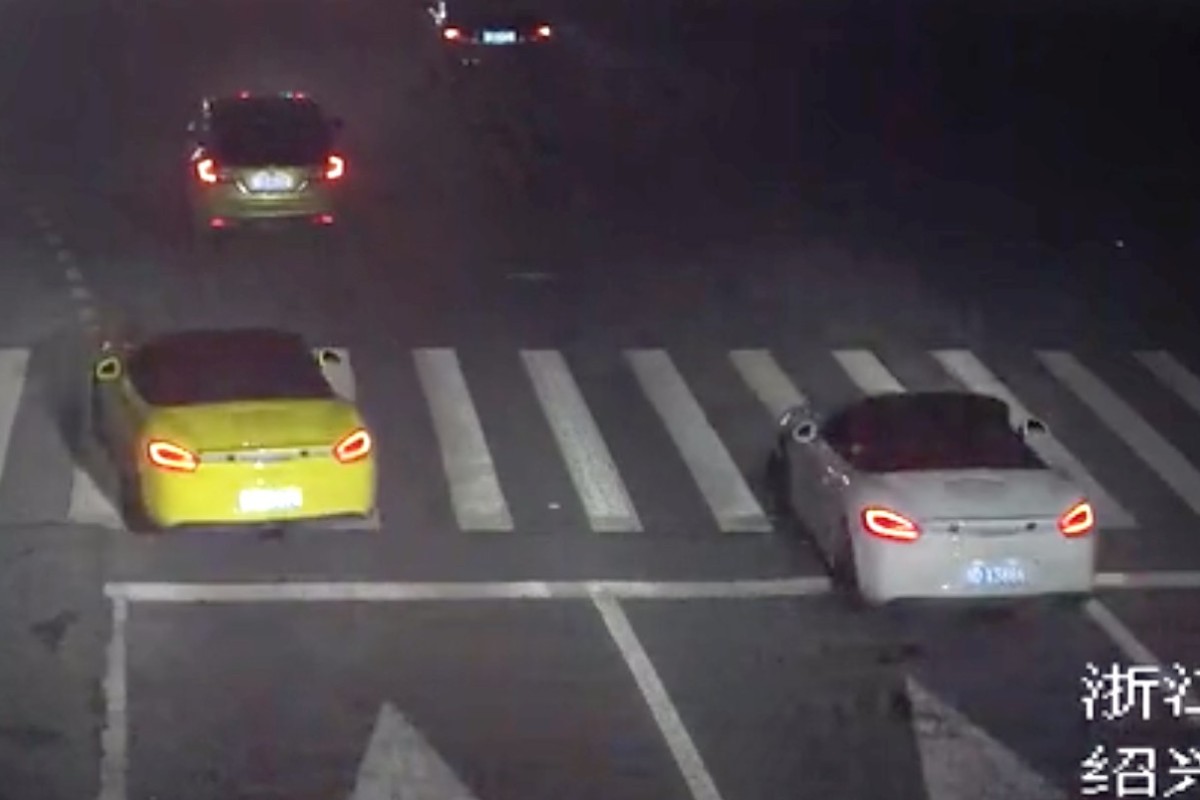
Two men have been detained in eastern China for racing their rented Porsche sports cars on city streets. Photo: Handout
An alcohol-fuelled midnight street race between two high-powered sports cars in an eastern Chinese city has landed two men in detention.
At one point, according to police in Zhuji, Zhejiang province, the rented Porsche cars hit 170km/h (105mph) as they tore through the city, randomly switching lanes, running a red light and even driving on the wrong side of the road.
A police investigation found the culprits had been drinking alcohol at a karaoke singing session before deciding to test their driving skills.
One of them, a 21-year-old university student surnamed Ying, had rented the yellow Porsche for a month for 20,000 yuan (US$3,000). The other man, a 24-year-old surnamed Jiang, had rented the white Porsche for a day at 800 yuan because he wanted to race his friend.
Chinese are buying more used cars online — without kicking a tyre
Ying was arrested two days after the illegal race and confessed, the police statement said.
Local police started receiving calls from residents at around midnight on April 22, complaining at the loud racing going on through the streets.
In a statement on the WeChat social messaging app, police said footage from more than 10 security cameras showed a yellow Porsche and a white one chasing each other in a dangerous manner down a main road past a hospital and numerous residential compounds.
Speeding has been a criminal offence in China since 2011. According to Chinese law, “whoever races a motor vehicle on a road with execrable circumstances or drives a motor vehicle on a road while intoxicated shall be sentenced to criminal detention and a fine.”
Are increasing diplomatic tensions behind tighter inspections and cancelled orders?
Farmers switch to other crops in bid to beat barriers
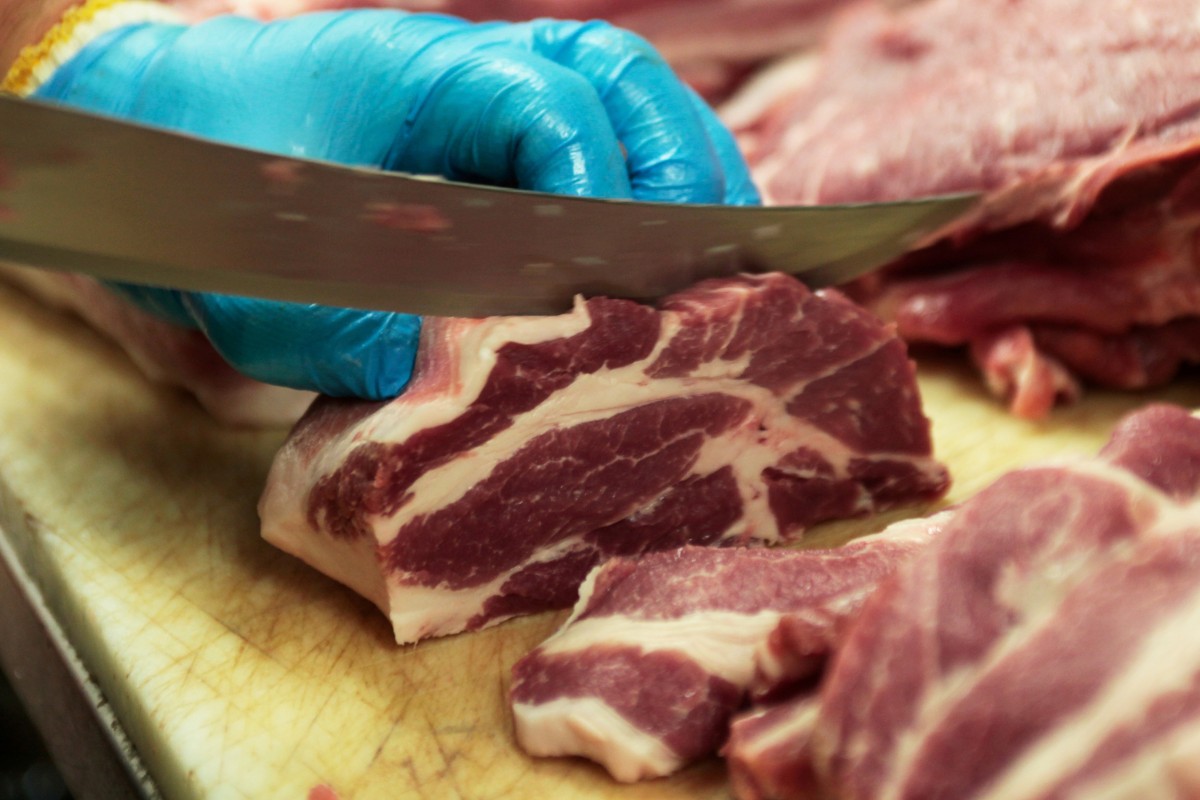
Canadian exporters of pork, soybeans and peas say they are facing delays and increased inspections at Chinese ports. Photo: Reuters
A growing list of Canadian farm exports is facing obstacles at Chinese ports, raising concerns that a bitter diplomatic dispute between the two countries may be to blame.
Sellers of Canadian soybeans and peas say they are experiencing unusual obstacles and Ottawa also warned last week that China was holding up pork shipments over paperwork issues.
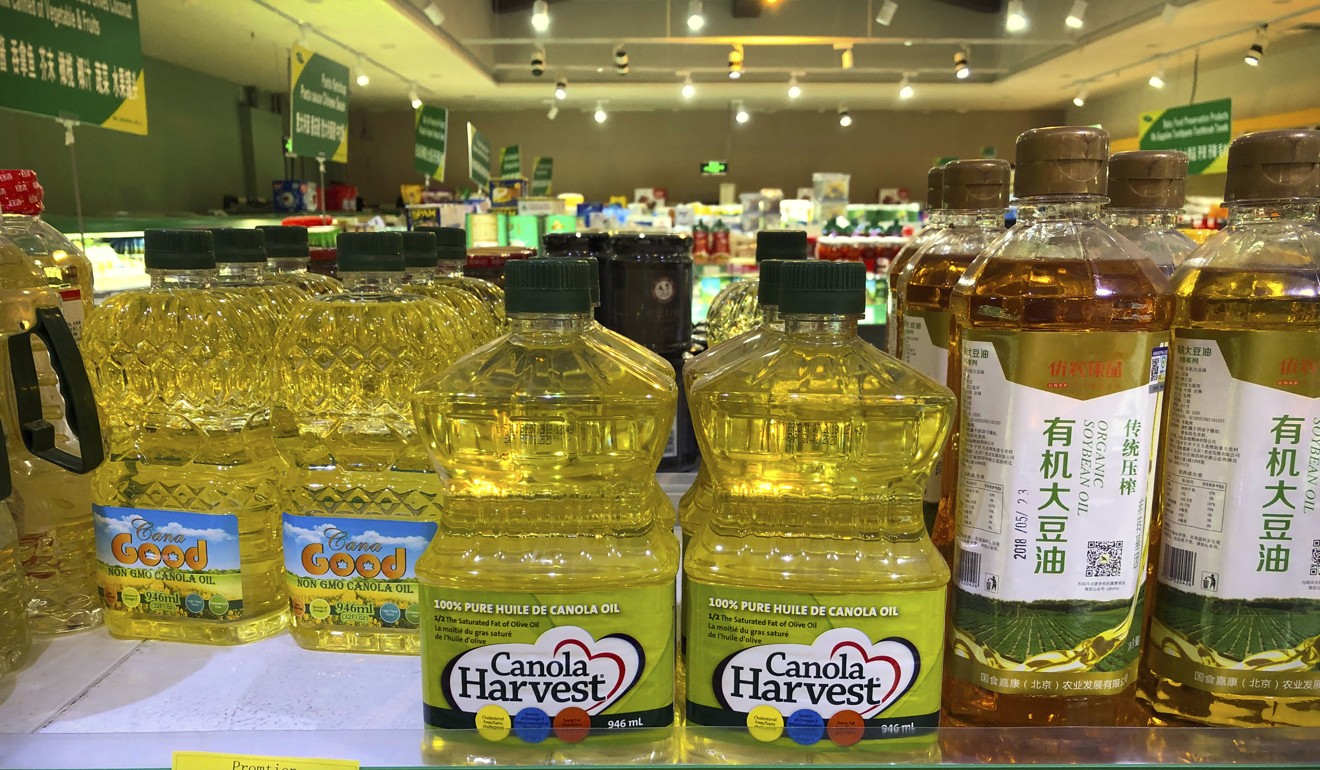
China has already blocked Canadian canola from Richardson International and Viterra, two of Canada’s biggest farm exporters, saying that shipments had pests. Other China-bound canola cargoes have been cancelled, forcing exporters to re-sell elsewhere at discount.
Canadian politicians have said the concerns are baseless, and noted that China detained two Canadians after Canada arrested an executive of Chinese telecom company Huawei Technologies Co Ltd in December at the United States’ request. China has used non-tariff barriers before during diplomatic tensions, most recently against Australian coal.
China has already blocked canola from two of Canada’s biggest farm exporters, while other China-bound canola cargoes have been cancelled. Photo: AP
Increasing tensions with China, a top buyer for most Canadian farm commodities, have forced farmers to plant other crops, such as wheat, that they hope will not face barriers.
China bought US$2.01 billion worth of Canada’s canola and $381 million worth of its pork last year.
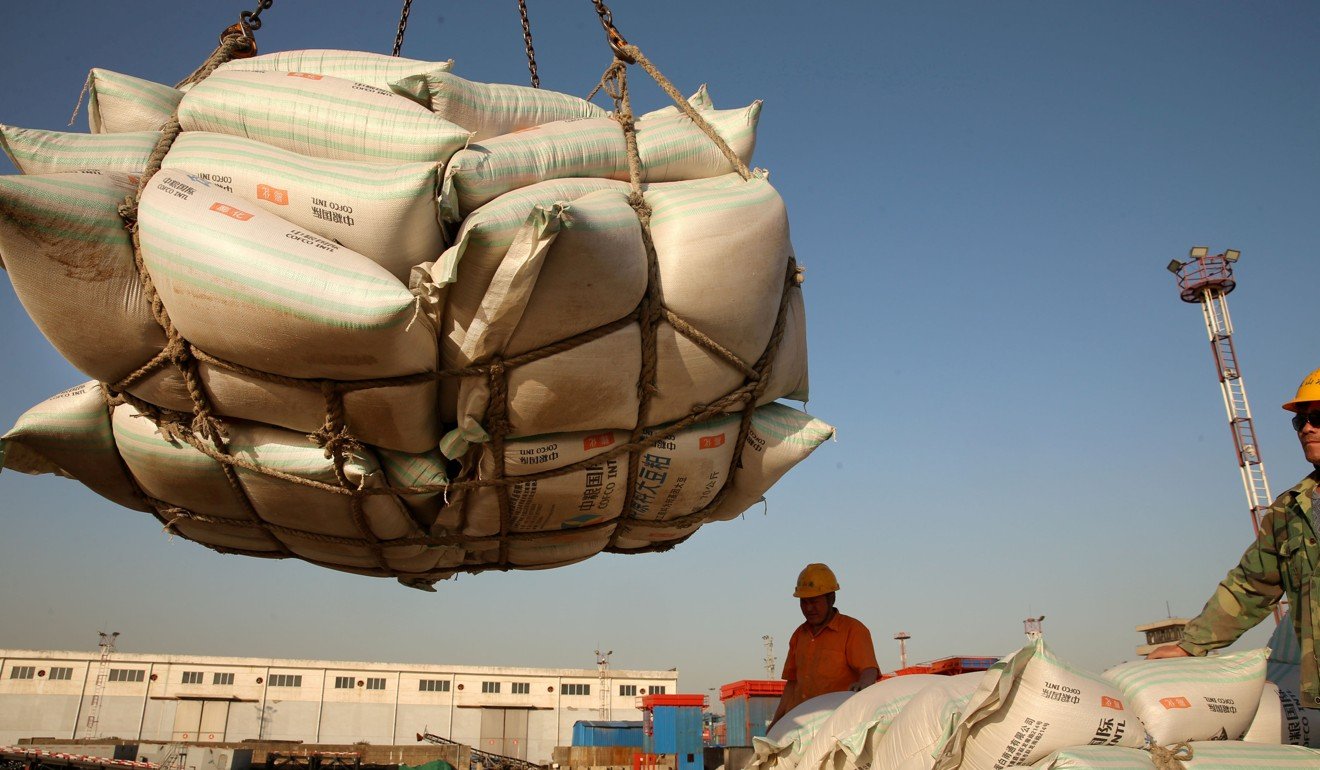
The spread of African swine fever through China’s pig herd has reduced China’s need for canola and soybeans to process into feed ingredients but, since January, port soybean inspections that routinely take a few days now require three weeks, causing Chinese buyers to avoid Canadian products, according to Dwight Gerling, president of Canadian exporter DG Global.
“They’re basically sending out the signal, ‘You buy from Canada, we’re going to make your life difficult,’” Gerling said.
Earlier this year, a Chinese buyer told Gerling that a government inspector had found ants in 34 containers (roughly 680 tonnes) of the Canadian soybeans he shipped there.
Such a finding would be rare, since the soybeans were stored in concrete silos in Canada and shipped in sealed containers in late autumn, said Gerling, who concluded the buyer was trying to avoid the new hassles of buying from Canada.
“It’s just them playing games. (Beijing) is just going to keep putting the screws to us,” he said.
China’s General Administration of Customs did not reply to a request for comment. Government officials have said their canola ban is a regular inspection and quarantine measure to protect China’s farm production and ecological safety.
In a statement, the Canadian agriculture department said it could not confirm that China had imposed stricter measures against farm goods other than canola. Ottawa said this month it hoped to send a delegation to China to discuss the issue.
Gerling’s company has halted soybean sales to China and found other buyers in Southeast Asia.
An official at a state-owned crusher in southern China confirmed that port inspections had tightened on Canadian soybean cargoes.
“We don’t have Canadian cargoes coming in as we can’t blatantly commit such wrongdoing when the atmosphere is so intense,” the official said on condition of anonymity.
Soybeans from Canada are facing delays when they reach Chinese ports, according to traders. Photo: Reuters
Another official in northern China said his crushing plant scrapped plans to buy Canadian soybeans when the trade dispute flared.
Canada shipped $1.2 billion worth of soybeans to China in 2018, up sharply year over year, according to the Soy Canada industry group, as China and the United States fought a trade war. But sales have now slowed to a trickle.
Canola has taken the brunt of China’s measures.
Chinese buyers have cancelled at least 10 cargoes of Canadian canola in the past few weeks, according to a Singapore-based trader at a company that runs crushing facilities in China. Some cargoes, around 60,000 tonnes each, have been resold to buyers in Pakistan and Bangladesh at deep discounts, the trader said.
“It is devastating for exporters,” the trader said.
Canada gets tough with China on canola ban, demands contamination proof
Intercontinental Exchange (ICE) canola futures fell to a more than four-year low on Tuesday as supplies piled up. Growers intend to sow the smallest crop in three years.
On Monday last week, Ottawa said some Canadian pork exporters used an outdated form to certify shipments to China, causing delays. Such issues arise regularly in commodity trading, but rarely with damaging consequences, said Canadian Pork Council spokesman Gary Stordy.
Canadian pea exporters fear they could be next. China imported C$533 million worth of Canadian peas in 2018, according to industry group Pulse Canada, but the pace has slowed.
Chinese authorities have begun scrutinising import documents and product samples more closely, according to Taimy Cruz, director of logistics at Toronto-based BroadGrain Commodities.
China Inspection and Quarantine Authorities now tests samples of each pea shipment before authorising it for import. They also restrict in some cases the number of soybean shipments allowed under one licence, slowing the flow, she said.
Similarly, import authorities now require soybean shipments that change vessels in Singapore and Shanghai – a routine practice called trans-shipping – to reach their destination on a single ship, she said.
While BroadGrain has not seen its cargoes turned back, it has reduced sales to China to avoid risk, concentrating on the Indian subcontinent and South America, she said.
“We have to be extra careful,” Cruz said. “They are very strict now.”
Fusion reactor built by Chinese scientists in eastern Anhui province has notched up a series of research firsts
There are plans to build a separate facility that could start generating commercially viable fusion power by 2050, official says
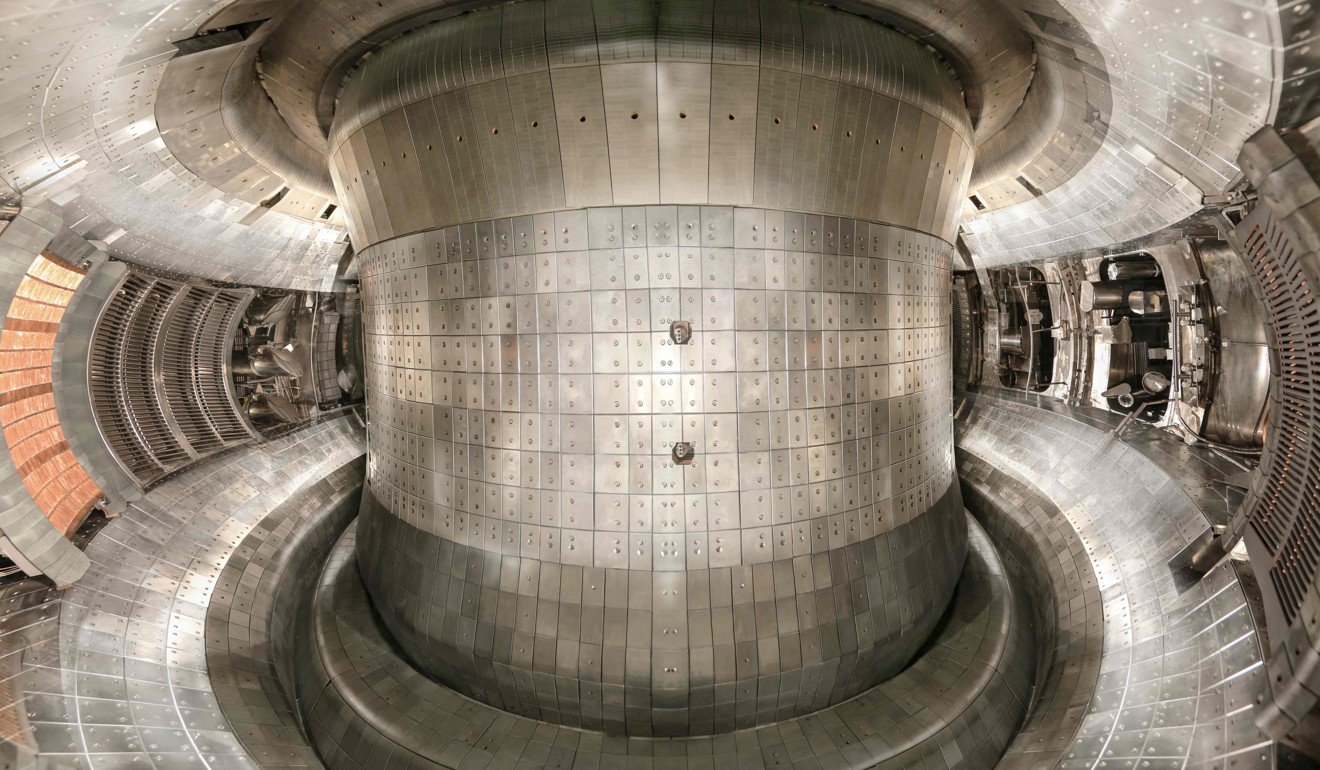
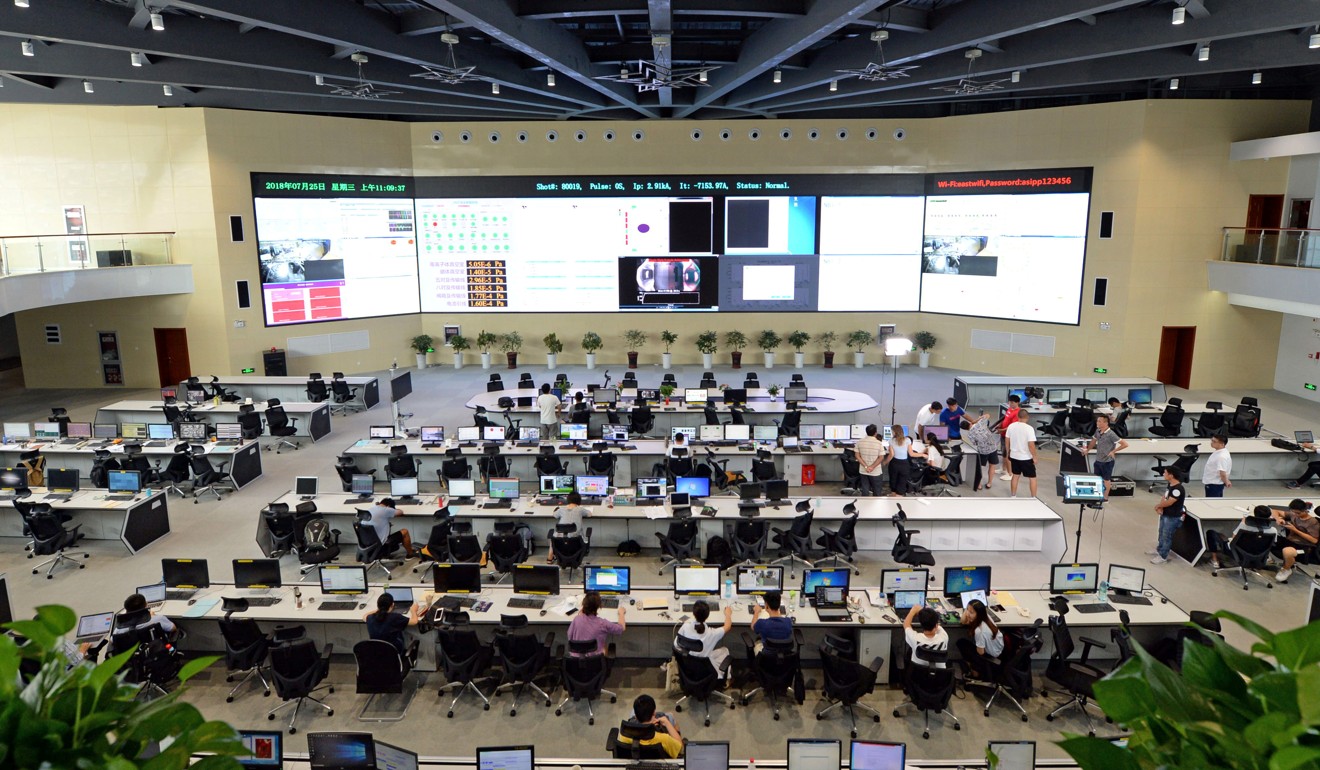
The Experimental Advanced Superconducting Tokamak (EAST) device – or “artificial sun” – in Hefei, Anhui province. Photo: AFP/Chinese Academy of Sciences
A groundbreaking fusion reactor built by Chinese scientists is underscoring Beijing’s determination to be at the core of clean energy technology, as it eyes a fully functioning plant by 2050.
Sometimes called an “artificial sun” for the sheer heat and power it produces, the doughnut-shaped Experimental Advanced Superconducting Tokamak (EAST) that juts out on a spit of land into a lake in eastern Anhui province, has notched up a succession of research firsts.
In 2017 it became the world’s first such facility to sustain certain conditions necessary for nuclear fusion for
of 100 million degrees Celsius (212 million Fahrenheit) – six times as hot as the sun’s core.
Such mind-boggling temperatures are crucial to achieving fusion reactions, which promise an inexhaustible energy source.
EAST’s main reactor stands within a concrete structure, with pipes and cables spread outward like spokes connecting to a jumble of censors and other equipment encircling the core. A red Chinese flag stands on top of the reactor.
A vacuum vessel inside the fusion reactor, which has achieved a temperature of 100 million degrees Celsius – six times as hot as the sun’s core. Photo: AFP/Chinese Academy of Sciences
“We are hoping to expand international cooperation through this device [EAST] and make Chinese contributions to mankind’s future use of nuclear fusion,” said Song Yuntao, a top official involved in the project, on a recent tour of the facility.
China is also aiming to build a separate fusion reactor that could begin generating commercially viable fusion power by mid-century, he added.
Some 6 billion yuan (US$891.5 million) has been promised for the ambitious project.
EAST is part of the International Thermonuclear Experimental Reactor (ITER) project, which seeks to prove the feasibility of fusion power.
Funded and run by the European Union, India, Japan, China, Russia, South Korea and the United States, the multibillion-dollar project’s centrepiece will be a giant cylindrical fusion device, called a tokamak.
Now under construction in Provence in southern France, it will incorporate parts developed at the EAST and other sites, and draw on their research findings.
China is “hoping to expand international cooperation” through EAST. Photo: Reuters
Fusion is considered the Holy Grail of energy and is what powers our sun.
It merges atomic nuclei to create massive amounts of energy – the opposite of the fission process used in atomic weapons and nuclear power plants, which splits them into fragments.
Unlike fission, fusion emits no greenhouse gases and carries less risk of accidents or the theft of atomic material.
But achieving fusion is both extremely difficult and prohibitively expensive – the total cost of ITER is estimated at €20 billion (US$22.3 billion).
Wu Songtao, a top Chinese engineer with ITER, conceded that China’s technical capabilities on fusion still lag behind more developed countries, and that US and
Japanese tokamaks have achieved more valuable overall results.
But the Anhui test reactor underlines China’s fast-improving scientific advancement and its commitment to achieve yet more.
China’s capabilities “have developed rapidly in the past 20 years, especially after catching the ITER express train”, Wu said.
In an interview with state-run Xinhua news agency in 2017, ITER’s director general Bernard Bigot lauded China’s government as “highly motivated” on fusion.
“Fusion is not something that one country can accomplish alone,” Song said.
“As with ITER, people all over the world need to work together on this.”
Wuxia, or kung fu fantasy, is so intrinsic to Chinese pop culture it was almost inevitable that its tropes would be incorporated into Chinese sci-fi.
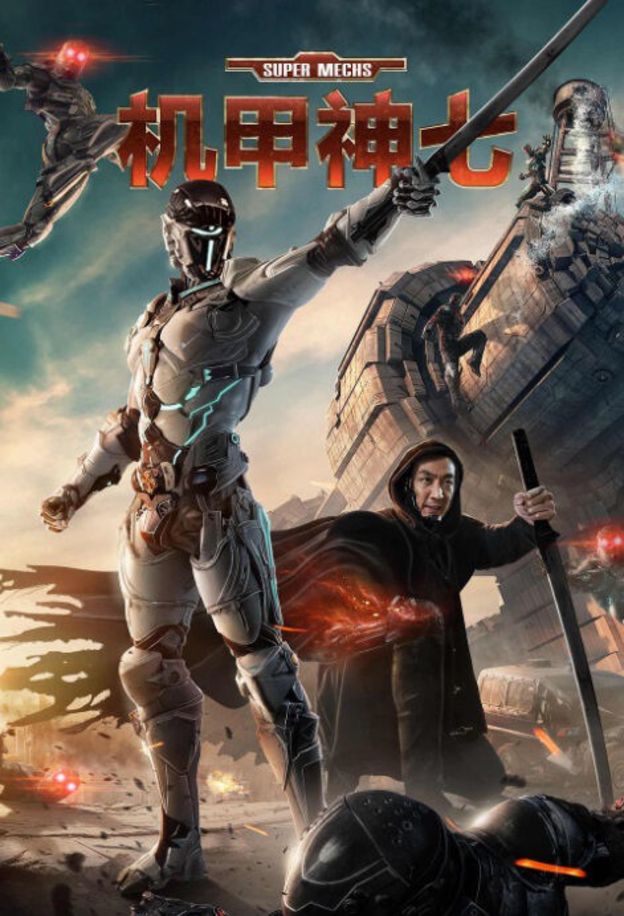
Image copyright SEVEN ENTERTAINMENT PICTURES
Produced exclusively for IQiyi, China’s version of Netflix, Super Mechs is set in 2066 in a world where humanity has begun to experience genetic mutations which leave some people with X-Men style super powers.
Global criminal organisations are threatening the order of society and private entities are stepping up to uphold it by developing highly advanced mechanised power suits.
Hero Xiao Qi is an ordinary office clerk enlisted by the Dragon Clan, who reveal to him his latent mutant ice powers, before arming him with a robotic power suit and sending him on a mission. Little does Xiao Qi know that he will be greeted by another mech-suited warrior with fire-based powers who will fight him to a standstill.
The “warriors with opposite powers” trope is a staple of the wuxia genre, but the film falls deeper down the rabbit hole when this deadly opponent is revealed to be Xiao Qi’s long-lost brother.
Add in ancient warring clans, fast-paced action between the sleek computer-generated mechanical fighters and a cheeky sense of humour from our protagonist, and the high budget Huayi Brothers production appeals to fans of superhero, kung fu and toku/tecuo films alike.
The works of stalwart wuxia authors like Jin Yong are steadily being translated into English, so we will certainly see more from this sub-genre reach our screens.
Acknowledging the rich and varied Chinese science fiction tradition does not at all detract from the pride in the success of Wandering Earth.
With China’s growing middle class and increased youth spending power, Chinese filmmakers are increasingly catering for a booming domestic demand for entertainment, and no longer worry as much about making their films palatable for export.
But with more East-West co-productions in the pipeline, like the animated Next Gen which originated from a Chinese web comic, it is certainly a sensible decision for companies like Netflix to bring films from platforms like IQiyi, to an English speaking audience, and that is going to include kehuan.
Western audiences may not immediately “get” some of these films, or may feel that some elements do not flow to their expectations.
But Wandering Earth and the titles above are the product of China’s culture and worldview. And to some extent, it’s what makes them different that will pique interest, fascinate and entertain.
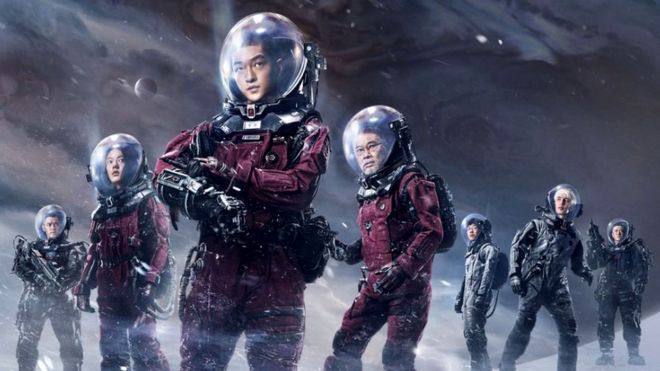
Image copyrightNETFLIXImage caption The Wandering Earth debuts on Netflix on 30 April
The Wandering Earth has been billed as a breakthrough for Chinese sci-fi.
The film tells the story of our planet, doomed by the expanding Sun, being moved across space to a safer place. The Chinese heroes have to save the mission – and humanity – when Earth gets caught in Jupiter’s gravitational pull.
Based on Hugo Award winner Liu Cixin’s short story of the same name, Wandering Earth has already grossed $600m (£464m) at the Chinese box office and was called China’s “giant leap into science fiction” by the Financial Times. It’s been bought by Netflix and will debut there on 30 April.
But while this may be the first time many in the West have heard of “kehuan” – Chinese science fiction – Chinese cinema has a long sci-fi history, which has given support to scientific endeavour, offered escapism from harsh times and inspired generations of film-goers.
So for Western audiences eager to plot the rise of the Chinese sci-fi movie, here are five films I think are worth renewed attention.
Dislocation
Huang Jianxin, 1986
For most in the Western world, their first encounter with Chinese cinema came from directors like Wu Tianming (The Old Well, The King of Masks) and Zhang Yimou (House of Flying Daggers, Raise the Red Lantern).
Image copyrightNANHAI FILMSImage caption Dislocation explores themes of work and artificial intelligence in a surreal dreamscape
They were largely preoccupied with themes like the loss of youth, tradition versus change, and creating the rural aesthetic most people associated with Chinese film.
But China in the 1980s was a scene of rapid modernisation, urbanisation and Westernisation, and films started responding to the impact of this massive change.
In Dislocation, a scientist creates an android version of himself to attend the endless meetings that rob him of his time, in a black comedy of mechanisation and bureaucracy.
Huang’s take on the debate on artificial intelligence is superbly delivered against a surreal Kafka-esque dreamscape, with stark lighting and suspenseful music, making this film a delight to watch.
Hopefully the new interest in kehuan will see it gain an official release in the West.
Warrior Revived
Li Guomin, 1995
A grown-up style of kehuan emerged in the 1990s, reflecting the themes of identity versus technological advancement which were also occupying Western sci-fi at the time.
Image copyrightSHANGHAI FILM STUDIOSImage caption The low budget appearance of Warrior Revived never gets in the way of its creative energy
In Warrior Revived, police officer Song Da Wei dies a gruesome death on duty and ends up in a decade-long coma. He’s brought back to life by a “miracle cure” from a biologist who has found a way to repair defective DNA.
The genetically enhanced Song finds himself uncomfortable with the cyberised world around him, and excluded by his old comrades. Meanwhile, the heavily maimed villain he gave his life to destroy is plotting to steal the gene formula and wreak his revenge.
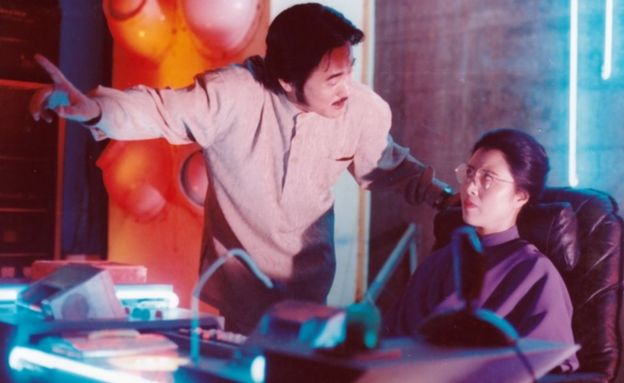
Like a lot of great cyberpunk movies before the age of CGI, this early mainland kehuan impresses with its high kitsch, low-budget, imaginative approach.
The villain’s lair is filled with neon tubes, hand-crafted lab controls and walls covered with plastic bowls in the best traditions of the Tardis.
What it lacks in sleekness it more than makes up with innovative costume designs and soundtrack, diligent camera work and the sheer energy from the cast.
Wonder Boy
Song Chong, 1988
The 1980s brought a slew of Hollywood sci-fi films made for children, but which appealed equally to adults – like Explorers, Flight of The Navigator, and D.A.R.Y.L. – and filmmakers in China were taking a similar route.
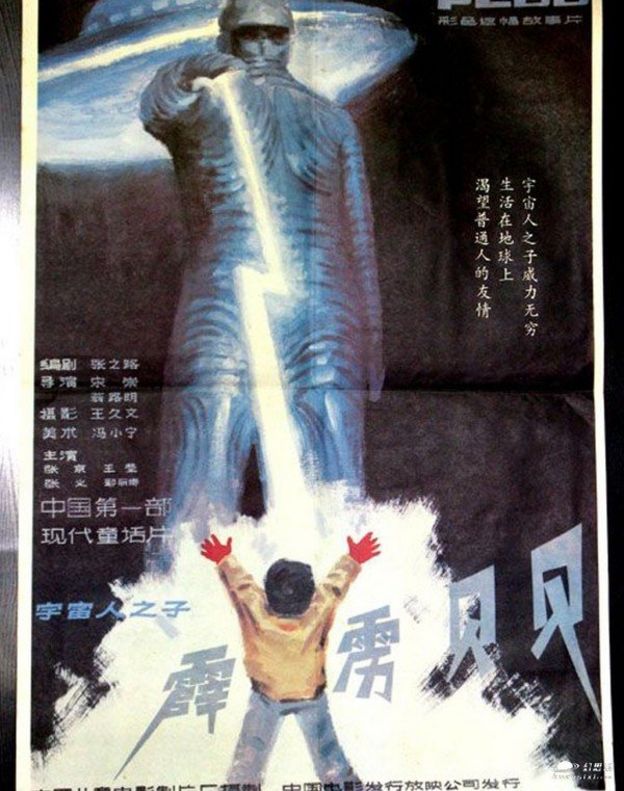
Image copyrightCHILDREN’S FILM STUDIOImage caption Wonder Boy remains popular and is still occasionally played out on national TV
Produced by the Children’s Film Studios and hailed as the nation’s first children’s fantasy film, Wonder Boy tells the story of a child born with the ability to generate electricity.
Bei Bei is bullied by neighbours and kept in isolation by parents who want to protect him, but is still a caring and mischievous little boy, who uses his powers to help others and have fun in equal measure.
When Bei Bei is taken away to be experimented on – by a non-governmental, possibly foreign group – a handful of the close friends he has made come to his rescue.
Well-loved for its humour and accessibility, Wonder Boy is remembered in China as a great classic, and still enjoyed by children today when it is repeated on both national television and streaming services.
Reset
Hong-Seung Yoon, 2017
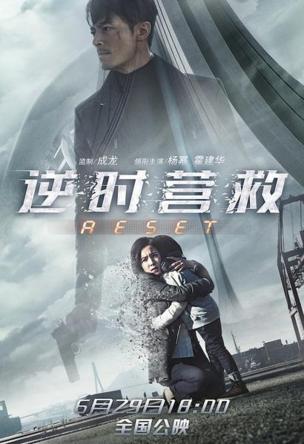
Produced by Jackie Chan and winner of the 2017 Grand Remi for Best Feature and Best Actress, Reset is a time travel thriller, which addresses a Chinese preoccupation with personal roles in a culture that so totally promotes the good of society.
Xia Tian (Yang Mi) is a senior researcher of wormhole technology and a single mother. When her young son is kidnapped, she is forced to hand over her research, but when the villain murders her child anyway she is forced to test her own discoveries into time travel in order to save his life, and maybe undo her own betrayal of the programme.
Image copyrightBEIJING YAOYING MOVIE DISTRIBUTION CO LTDImage caption Reset explores the identity struggle facing many modern Chinese womenThe film is an exploration of the plight of a New Chinese Woman, who walks the line between the roles of highly skilled professional and loving mother. The psychological exploration is fantastic. With several versions of Xia being generated by her repeated time travel, the face-off between our heroine and these alternate selves, including a darker, damaged one, creates an amazing tension which is missing from so many Western takes on this classic trope.
A female-led space kehuan story that also deals with single parenthood couldn’t be more relevant in a society that is simultaneously beginning a golden space age, and struggling with attitudes to women’s emancipation.
Super Mechs
Cui Junjie, 2018
Wuxia, or kung fu fantasy, is so intrinsic to Chinese pop culture it was almost inevitable that its tropes would be incorporated into Chinese sci-fi.
Image copyrightSEVEN ENTERTAINMENT PICTURES
Produced exclusively for IQiyi, China’s version of Netflix, Super Mechs is set in 2066 in a world where humanity has begun to experience genetic mutations which leave some people with X-Men style super powers.
Global criminal organisations are threatening the order of society and private entities are stepping up to uphold it by developing highly advanced mechanised power suits.
Hero Xiao Qi is an ordinary office clerk enlisted by the Dragon Clan, who reveal to him his latent mutant ice powers, before arming him with a robotic power suit and sending him on a mission. Little does Xiao Qi know that he will be greeted by another mech-suited warrior with fire-based powers who will fight him to a standstill.
The “warriors with opposite powers” trope is a staple of the wuxia genre, but the film falls deeper down the rabbit hole when this deadly opponent is revealed to be Xiao Qi’s long-lost brother.
Add in ancient warring clans, fast-paced action between the sleek computer-generated mechanical fighters and a cheeky sense of humour from our protagonist, and the high budget Huayi Brothers production appeals to fans of superhero, kung fu and toku/tecuo films alike.
The works of stalwart wuxia authors like Jin Yong are steadily being translated into English, so we will certainly see more from this sub-genre reach our screens.
Acknowledging the rich and varied Chinese science fiction tradition does not at all detract from the pride in the success of Wandering Earth.
With China’s growing middle class and increased youth spending power, Chinese filmmakers are increasingly catering for a booming domestic demand for entertainment, and no longer worry as much about making their films palatable for export.
But with more East-West co-productions in the pipeline, like the animated Next Gen which originated from a Chinese web comic, it is certainly a sensible decision for companies like Netflix to bring films from platforms like IQiyi, to an English speaking audience, and that is going to include kehuan.
Western audiences may not immediately “get” some of these films, or may feel that some elements do not flow to their expectations.
But Wandering Earth and the titles above are the product of China’s culture and worldview. And to some extent, it’s what makes them different that will pique interest, fascinate and entertain.


 Image copyright GETTY IMAGES