Archive for ‘Uncategorized’

06/12/2019

Indian police kill four men suspected of rape, murder, drawing applause and concern

HYDERABAD, India (Reuters) – Indian police shot dead four men on Friday who were suspected of raping and killing a 27-year-old veterinarian near Hyderabad city, an action applauded by her family and many citizens outraged over sexual violence against women.

However, some rights groups and politicians criticised the killings, saying they were concerned the judicial process had been sidestepped.

The men had been in police custody and were shot dead near the scene of last week’s crime after they snatched weapons from two of the 10 policemen accompanying them, said police commissioner V.C. Sajjanar.

Thousands of Indians have protested in several cities over the past week following the veterinarian’s death, the latest in a series of horrific cases of sexual assault in the country.

The woman had left home for an appointment on her motor-scooter and later called her sister to say she had a flat tyre. She said a lorry driver had offered to help and that she was waiting near a toll plaza.

Police said she was abducted, raped and asphyxiated and her body was then set alight on the outskirts of Hyderabad. Four men were arrested.

Sajjanar, the police officer, said the men – two truck drivers and two truck cleaners, aged between 20 and 26 years – had been taken to the spot to help recover the victim’s mobile phone and other personal belongings on Friday morning.

“As the party approached this area today (during the) early hours, all the four accused got together. They started attacking the police party with stones, sticks and other materials,” he told reporters near the site of the shootings.

The men, who were not handcuffed, then snatched weapons away from the police and started firing at them, but were killed after the police retaliated. He did not say how the accused were able to overpower their escorts.

“Law has done its duty, that’s all I can say,” Sajjanar said.

The National Human Rights Commission, a government-funded watchdog, said it had ordered an investigation. “Death of four persons in alleged encounter with the police personnel when they were in their custody, is a matter of concern for the Commission,” it said in a statement.

Indian police have frequently been accused of extra-judicial killings, called “encounters”, especially in gangland wars in Mumbai and insurrections in the state of Punjab and in disputed Kashmir. Police officers involved in such killings were called “encounter specialists” and were the subject of several movies.

Graphic – Police Custody Deaths in India: here

People shout slogans as they celebrate after police shot dead four men suspected of raping and killing a 27-year-old veterinarian in Telangana, in a residential area in Ahmedabad, India, December 6, 2019. REUTERS/Amit Dave
Reuters Graphic

‘LONG LIVE POLICE’

The victim’s family welcomed the news the alleged perpetrators had been killed.

“I express my gratitude towards the police & govt for this. My daughter’s soul must be at peace now,” Reuters partner ANI quoted her father as saying.

A Reuters reporter saw the four men’s bodies lying in an open field, all of them face up and barefoot, with their clothes stained with blood, surrounded by policemen.

A large crowd gathered at the site and threw flower petals at police vans in support of the action. Some shouted “Long live police”, while others hoisted police officials onto their shoulders and burst firecrackers.

There was no immediate word from Prime Minister Narendra Modi’s government on the incident, but Maneka Gandhi, a lawmaker from his ruling Bharatiya Janata Party, said the police appeared to have over-reached.

“You can’t take the law in your own hands. The courts would’ve ordered them (the accused) to be hanged anyway. If you’re going to shoot them with guns before due process is followed, then what’s the point of having courts, police and law?” she said.

Tough laws were enacted after the 2012 gang rape and murder of a woman in a bus in New Delhi that led to an outpouring of anger across the country, but crimes against women have continued unabated.

Graphic – Rape cases in India: here

Slideshow (9 Images)
Reuters Graphic

SLOW JUSTICE

Fast track courts have been set up but cases have moved slowly, for lack of witnesses and the inability of many families to go through the long legal process. Some victims and their families have ended up being attacked for pursuing cases against powerful men, often local politicians.

Many Indians applauded the killings.

“Great work #hyderabadpolice ..we salute u,” badminton star Saina Nehwal wrote on Twitter.

In Uttar Pradesh state, where a rape victim was set ablaze on Thursday while she was on her way to court, opposition politician Mayawati said the police there should take “inspiration” from what happened in Hyderabad.

“Culprits should be punished, and if they are not punished then whatever happened in Hyderabad should happen,” the victim’s brother said in hospital.

She was on life support, hospital authorities said, news that could further inflame passions in a country where public anger over crimes against women has grown in recent weeks.

Indian police registered more than 32,500 cases of rape in 2017, according to the most recent government data. But courts completed only about 18,300 cases related to rape that year, leaving more than 127,800 cases pending at the end of 2017.

But some people said the lack of progress in the courts did not mean the police had a free hand to dispense justice.

“We now have to trust that a police force that managed to let unarmed suspects escape their custody, and needed to shoot them dead because they could not catch them alive, is somehow competent enough to have identified and arrested the real culprits?,” Meenakshi Ganguly, South Asia Director at Human Rights Watch, told Reuters from London.

Source: reuters

05/12/2019

Religious, social freedom in Xinjiang impress Afghan journalists

KABUL, Dec. 5 (Xinhua) — Two Afghan journalists who visited China recently affirmed that Muslims in the country’s northwestern Xinjiang Uygur Autonomous Region enjoy religious and social freedom.

“I visited Xinjiang earlier this year. Our visiting team has learned that Muslims in Xinjiang benefit from all religious beliefs with no restrictions. They have mosques and perform their religious obligations freely, including offering prayers,” Mansoor Ahmad Faizy, editor-in-chief of the Afghanistan Times, told Xinhua on Wednesday.

Faizy described the tour as a great opportunity to obtain a deep and comprehensive understanding about the life of locals in Xinjiang.

“The people are satisfied with China’s policy, particularly with regard to Xinjiang’s ethnic Muslims,” he said.

Regarding the region’s re-education centers, Faizy said, “We have visited a center that provides education for people who were reportedly influenced by extremists.”

Different from reports found in Western media, Faizy said the students he encountered were provided with professional vocational training, as well as classes in legal knowledge and Mandarin.

“What we (witnessed) in the re-education center was very different from what we heard. The students had a friendly atmosphere, the students were learning … and they could contact their families freely,” he said.

Extremism and terrorism have become a problem in Afghanistan, as well as other countries in the region, in recent years, he said.

Every country has the right to take measures to fight terrorism and extremism, Faizy noted.

Hujjatullah Zia, a local researcher and columnist for Daily Outlook Afghanistan, echoed Faizy’s view.

“After our tour of Xinjiang and after talking with Muslims living in the region, my group and I learned that the Muslims living in Xinjiang were satisfied with the policies of the central government, as they were enjoying all religious freedom and social activities,” he told Xinhua.

Talking about his visit to re-education centers for local youth, Zia said that he “did not witness any violence or mistreatment … local officials and teachers were friendly with the students in the re-education centers.”

“They will become professional workers in (the) future, as they are learning a lot of professions. I think they will make a good life (for themselves) after rejoining the society,” he said.

What’s more, he believes that more should be done in Afghanistan to raise public awareness of the true situation for Muslims in China.

“I think the Afghan media should help the Afghan people know and respect the policies of China with regard to ethnic minority groups and their religions,” he added.

Source: Xinhua

05/12/2019

4,000-year-old granaries discovered in central China’s Neolithic ruins

ZHENGZHOU, Dec. 5 (Xinhua) — Archaeologists have unearthed a number of circular foundations at a Neolithic site of Longshan Culture dating back about 4,000 years in Huaiyang, central China’s Henan Province, and believe they are one of China’s earliest granaries.

The Shizhuang Site was discovered when workers built a factory. According to an archaeological survey, the site covers 30,000 square meters with the main living area of 5,000 square meters surrounded with rammed earth walls. The ground bases of the granaries are located inside the ancient settlement.

The Henan Provincial Institute of Cultural Relics and Archaeology began excavation of the site in July.

Cao Yanpeng, an associate researcher at the institute, said the Longshan Culture represents a gradual transition from a primitive society to a civilized era. The cultural sites were discovered in places in the middle and lower reaches of the Yellow River, including the current provinces of Shanxi, Shaanxi, Henan and Shandong.

The main artifacts from the culture are characterized by black pottery.

“Granaries from that period, especially circular ones, were rarely found in previous discoveries,” said Lei Xingshan, secretary of the Party Committee of Peking University’s School of Archaeology and Literature.

The site also contains cultural remains from the Spring and Autumn period (770 B.C.- 476 B.C.), and Han (202 B.C.-220) and Tang (618-907) dynasties.

Source: Xinhua

03/12/2019

China selects outstanding grass-roots police officers

BEIJING, Dec. 2 (Xinhua) — China has selected 30 outstanding grass-roots police officers, plus five awardees of special respect and 35 for nomination awards.

The list was selected in a campaign jointly launched by the Publicity Department of the Communist Party of China Central Committee and the Ministry of Public Security in August this year.

The campaign was aimed at encouraging police across the country to work hard to maintain political security and social stability and to improve public understanding of the police work, according to a joint statement by the two departments.

The five awardees of special respect include a group of police officers in east China’s Zhejiang Province who risked their own lives in evacuating vehicles and personnel trapped in a tunnel after fire broke out.

They also include police officers who died on duty – one of them was guiding vehicles on an icy road in Fujian Province, southeast China, but was hit by an out-of-control heavy truck while trying to save passengers nearby.

The 30 outstanding police officers include criminal police, police with special duties, anti-drug police, police who remove explosives, plainclothes police, among others, who have worked diligently for years under dangerous circumstances.

They also include officers who have worked seemingly ordinary jobs but have demonstrated extraordinary perseverance or devotion in serving the public. Officers who have worked in difficult situations for a long time, such as the gobi desert and prisons with criminals living with HIV/AIDS, have also been selected.

Also on the list are some officers who actively seek innovations to incorporate the Internet, satellite and other new technologies into police work.

In addition, several female officers who have worked at a prison or as a forensic expert have received the award.

Source: Xinhua

03/12/2019

China suspends Hong Kong visits by U.S. military ships, aircraft, sanctions U.S. NGOs

BEIJING, Dec. 2 (Xinhua) — The Chinese government has decided to suspend reviewing applications to visit Hong Kong by U.S. military ships and aircraft starting Monday, foreign ministry spokesperson Hua Chunying said.

China will also take sanctions against some U.S. non-governmental organizations (NGOs) for their role in the disturbances in Hong Kong, Hua said at a press conference.

The NGOs include the National Endowment for Democracy, National Democratic Institute for International Affairs, International Republican Institute, Human Rights Watch and Freedom House.

A lot of facts and evidence have shown that the aforementioned NGOs supported anti-China rioters in Hong Kong in various ways, abetted their extreme and violent criminal behavior and incited separatist activities for “Hong Kong independence”, Hua said, adding that these organizations bear major responsibilities for Hong Kong’s chaotic situation and should be sanctioned and pay their price.

The spokesperson said the United States has seriously violated the international law and basic norms governing international relations, and interfered in China’s internal affairs by signing the so-called Hong Kong Human Rights and Democracy Act of 2019 into law despite China’s firm opposition.

“China urges the U.S. to correct its mistake and stop meddling in Hong Kong affairs or interfering in China’s other internal affairs by any word and act,” Hua said.

China will take further necessary actions in accordance with the development of the situation to firmly defend the stability and prosperity of Hong Kong and safeguard national sovereignty, security and development interests, she said.

Source: Xinhua

03/12/2019

China-Russia east-route natural gas pipeline in operation

CHINA-HEI LONGJIANG-RUSSIA-EAST-ROUTE NATURAL GAS PIPELINE-OPERATION (CN)

A staff member walks past pipelines in the gas-distributing and compressing station of the China-Russia east-route natural gas pipeline in the city of Heihe, the first stop after the Russia-supplied natural gas enters China, northeast China’s Heilongjiang Province, Nov. 19, 2019. The China-Russia east-route natural gas pipeline was put into operation on Monday. The pipeline is scheduled to provide China with 5 billion cubic meters of Russian gas in 2020 and the amount is expected to increase to 38 billion cubic meters annually from 2024, under a 30-year contract worth 400 billion U.S. dollars signed between the China National Petroleum Corp (CNPC) and Russian gas giant Gazprom in May 2014. The cross-border gas pipeline has a 3,000-km section in Russia and a 5,111-km stretch in China. (Xinhua/Wang Jianwei)

HARBIN, Dec. 2 (Xinhua) — The China-Russia east-route natural gas pipeline was put into operation on Monday.

At the gas-distributing and compressing station in the city of Heihe, northeast China’s Heilongjiang Province, the data screen was switched on, indicating parameter variations of the gas passage. The station is the first stop after the Russia-supplied natural gas enters China.

The pipeline is scheduled to provide China with 5 billion cubic meters of Russian gas in 2020 and the amount is expected to increase to 38 billion cubic meters annually from 2024, under a 30-year contract worth 400 billion U.S. dollars signed between the China National Petroleum Corp (CNPC) and Russian gas giant Gazprom in May 2014.

The cross-border gas pipeline has a 3,000-km section in Russia and a 5,111-km stretch in China.

Shao Hua, general manager of Heihe City Natural Gas Development Co., Ltd. of China Gas, said that the border city of Heihe still largely relies on coal for heat. With the Sino-Russian natural gas pipeline’s operation, the city now has access to a stable supply of clean energy.

Heihe has registered 30,000 households for switching to natural gas for heating. It will take one year to complete full coverage of the gas network in the city, according to the company.

China’s natural gas consumption reached 280.3 billion cubic meters in 2018. The country’s demand for natural gas will continue to soar toward 2040, outstripping domestic output by around 43 percent, according to an International Energy Agency report.

China aims to raise the use of natural gas to 10 percent of the country’s energy mix by 2020 and 15 percent by 2030, said the National Development and Reform Commission.

Source: Xinhua

03/12/2019

Chandrayaan-2: Indian helps Nasa find Moon probe debris

Nasa pictureImage copyright NASA
Image caption Nasa released a picture showing the site of the rover’s impact

Nasa says one of its satellites has found the debris of India’s Moon rover which crashed on the lunar surface in September.

The space agency released a picture showing the site of the rover’s impact and the “associated debris field”.

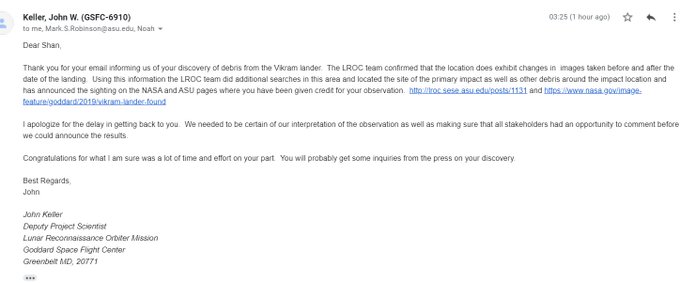
Nasa has credited an Indian engineer, Shanmuga Subramanian, with helping locate the site of the debris.

Mr Subramanian examined a Nasa picture and located the first debris about 750m north-west of the crash site.

Chandrayaan-2 was due to touch down at the lunar South Pole on 7 September, over a month after it first took off.

It approached the Moon as normal until an error occurred about 2.1km (1.3 miles) from the surface, moments before it was to touch down.

The rover lost contact and had a “hard landing” about 600km (370 miles) from the South Pole in a “relatively ancient terrain”.

Announcing the discovery of the Vikram lander, Nasa tweeted a mosaic image of the site.

In late September, pictures from a Nasa spacecraft had showed the targeted landing site of the Vikram rover.

Many people had downloaded the image released by Nasa’s Lunar Reconnaissance Orbiter Camera (LROC) team, a statement by the space agency said.

It said after receiving Mr Subramanian’s tip about the location of the debris, the LROC team “confirmed the identification by comparing before and after images”.

Mr Subramanian has tweeted an email sent to him by the space agency congratulating him for his effort.

“We had the images from Nasa [of] the lander’s last location. We knew approximately where it crashed. So I searched pixel-by-pixel around that impact area,” the 33-year-old Chennai-based engineer told BBC Tamil.

Mr Subramanian said he had always “been interested in space” and had watched the July launch of the rocket.

Presentational grey line

What was this mission all about?

Chandrayaan-2 (Moon vehicle 2) was the most complex mission ever attempted by India’s space agency, Isro.

“It is the beginning of a historical journey,” Isro chief K Sivan said after launch in July.

The lander (named Vikram, after the founder of Isro) carried within its belly a 27kg (59lbs) Moon rover with instruments to analyse the lunar soil.

The rover (called Pragyan – wisdom in Sanskrit) had the capacity to travel 500m from the lander in its 14-day life span, and would have sent data and images back to Earth for analysis.

The mission would have focussed on the lunar surface, searching for water and minerals and measuring moonquakes, among other things.

Why would it have been significant?

A soft landing on another planetary body – a feat achieved by just three other countries so far – would have been a huge technological achievement for Isro and India’s space ambitions, says science writer Pallava Bagla.

He adds that it would also have paved the way for future Indian missions to land on Mars, and opened up the possibility of India sending astronauts into space.

For the first time in India’s space history, the interplanetary expedition was led by two women – project director Muthaya Vanitha and mission director Ritu Karidhal.

Media caption Is India a space superpower?

It was also a matter of national pride – the satellite’s lift-off in July was broadcast live on TV and Isro’s official social media accounts.

The mission also made global headlines because it was so cheap – the budget for Avengers: Endgame, for instance, was more than double at an estimated $356m. But this wasn’t the first time Isro has been hailed for its thrift. Its 2014 Mars mission cost $74m, a tenth of the budget for the American Maven orbiter.

Source: The BBC

02/12/2019

China’s icebreakers unload cargos for Zhongshan Station in Antarctica

(EyesonSci)CHINA-ICEBREAKERS-ANTARCTIC EXPEDITION-UNLOADING CARGOS

Members of China’s 36th Antarctic expedition team unload cargos from China’s icebreaker Xuelong at the roadstead off the China’s Zhongshan Station in Antarctica, Nov. 23, 2019. The task of unloading cargos for China’s Zhongshan Station and inland departure base draws to a close. (Xinhua/Liu Shiping)

Source: Xinhua

02/12/2019

Giant pandas adapting well first winter on Qinghai Plateau

XINING, Dec. 1 (Xinhua) — Four giant pandas can be seen playing at the Qinghai-Tibet Plateau Wild Zoo in northwest China, as they are adapting well to their first winter on the plateau.

The rare species native to warm and humid Sichuan Province in southwest China became the first pandas to settle down in the plateau city of Xining, capital of Qinghai Province, in June.

The panda house in the zoo is the largest of its kind in China. The zoo is open to visitors in winter.

Xining, with an altitude of over 2,260 meters above the sea level, has entered its coldest time of the year with the daily low temperature averaging minus 10 degrees Celsius.

However, the pandas do not just idle in their enclosures enjoying the luxuries of temperature control, floor heating and humidified air. During the day, they venture out rolling in the snow and digging for bamboo shoots buried in the snow by their keepers.

The keepers said the pandas have fully adapted to the climate on the plateau, and all their health indexes are normal.

Experts said the panda settlement on the plateau can help expand the species’ adaptive range of living. Researchers will continue to follow their health conditions at high altitudes.

Source: Xinhua

02/12/2019

China’s plans for new coal plants risk undermining battle against global warming

  • World’s largest coal consumer shows little sign of ending its dependency even though it is also the biggest market for renewable energy sources
  • UN climate summit is meeting to discuss ways to limit future warming, but hopes are fading that China will commit to further curbs on emissions
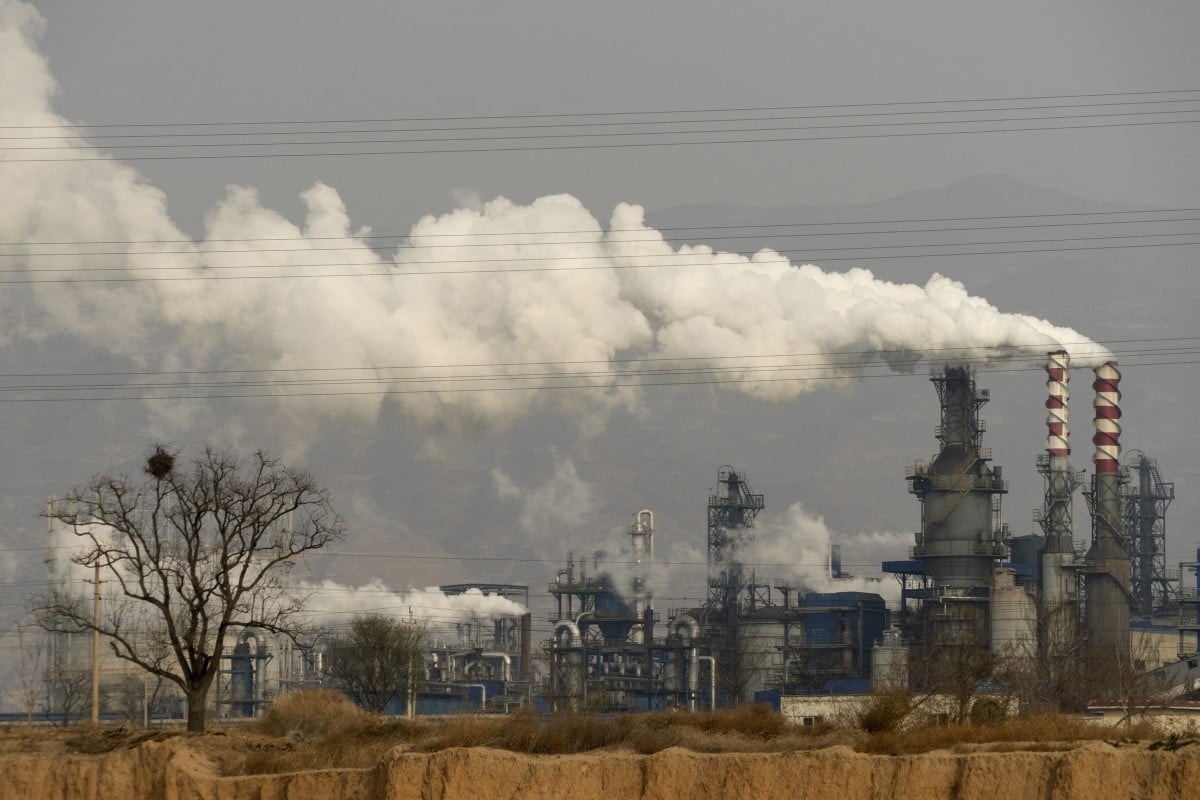
China now accounts for around 30 per cent of the world’s carbon emissions. Photo: AP
As world leaders gather in Spain to discuss how to slow the warming of the planet, the spotlight has fallen on China – the top emitter of greenhouse gases.
China burns about half the coal used globally each year. Between 2000 and 2018, its annual carbon emissions nearly tripled, and it now accounts for about 30 per cent of the world’s total.
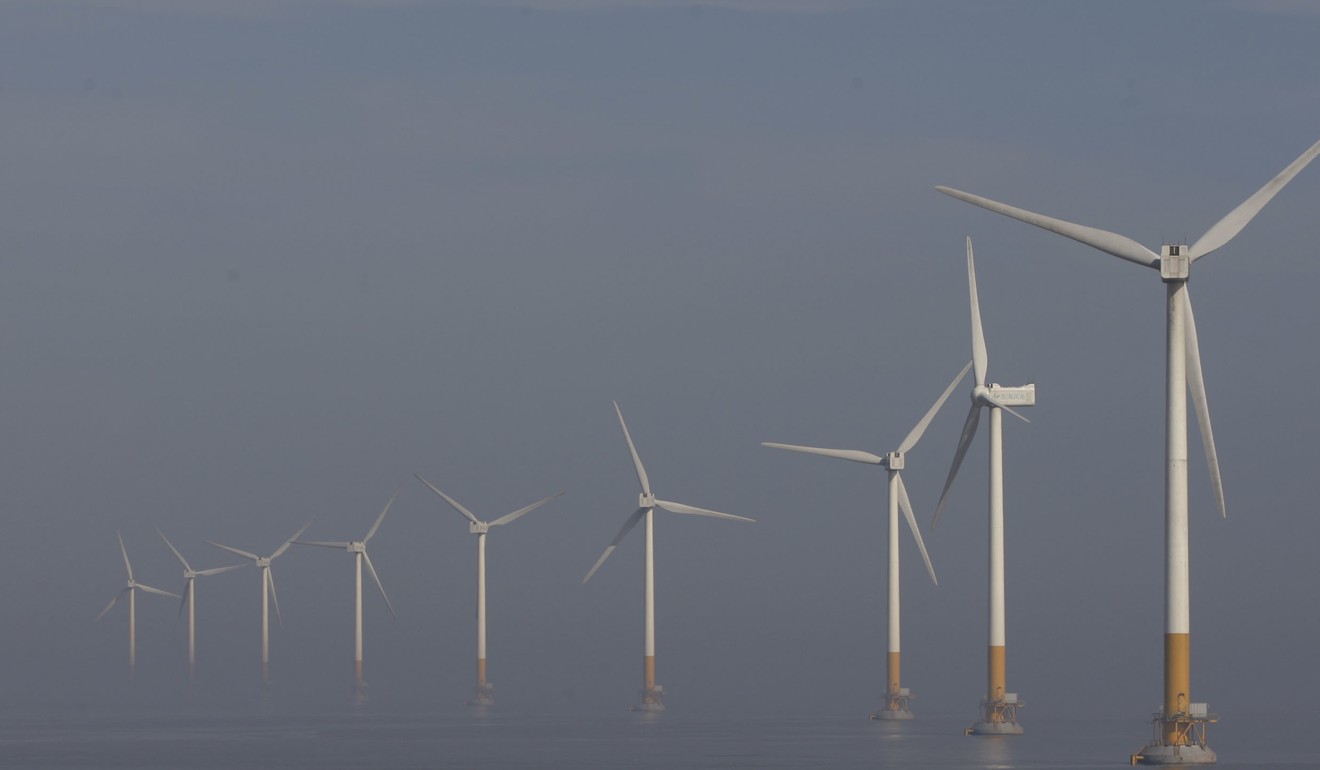
Yet it is also the leading market for solar panels, wind turbines and electric vehicles, and it manufactures about two-thirds of solar cells installed worldwide.
“We are witnessing many contradictions in China’s energy development,” said Kevin Tu, a Beijing-based fellow with the Centre on Global Energy Policy at Columbia University. “It’s the largest coal market and the largest clean energy market in the world.”
That apparent paradox is possible because of the sheer scale of China’s energy demands.
Pollution alarm as tourism businesses contaminate home of China’s hairy crab
But as China’s economy slows to the lowest level in a quarter century – around 6 per cent growth, according to government statistics – policymakers are doubling down on support for coal and other heavy industries, the traditional backbones of China’s energy system and economy. At the same time, the country is reducing subsidies for renewable energy.

At the annual United Nations climate summit, this year in Madrid, government representatives will put the finishing touches on implementing the 2015 Paris Agreement, which set a goal to limit future warming to 1.5 to 2 degrees Celsius above pre-industrial levels.

Nations may decide for themselves how to achieve it.

China had previously committed to shifting its energy mix to 20 per cent renewables, including nuclear and hydroelectric energy.

Climate experts generally agree that the initial targets pledged in Paris will not be enough to reach the goal, and next year nations are required to articulate more ambitious targets.

Hopes that China would offer to do much more are fading.

Recent media reports and satellite images suggest that China is building or planning to complete new coal power plants with total capacity of 148 gigawatts – nearly equal to the entire coal-power capacity of the European Union within the next few years, according to an analysis by Global Energy Monitor, a San Francisco-based non-profit.

China is the world’s leading market for wind turbines and other renewables – but is still a major source of emissions. Photo: Chinatopix via AP
Meanwhile, investment in China’s renewable energy dropped almost 40 per cent in the first half of 2019 compared with the same period last year, according to Bloomberg New Energy Finance, a research organisation. The government slashed subsidies for solar energy.
Last week in Beijing, China’s vice-minister of ecology and environment told reporters that non-fossil-fuel sources already account for 14.3 per cent of the country’s energy mix. He did not indicate that China would embrace more stringent targets soon.
“We are still faced with challenges of developing our economy, improving people’s livelihood,” Zhao Yingmin said.
As a fast-growing economy, it was always inevitable that China’s energy demands would climb steeply. The only question was whether the country could power a sufficiently large portion of its economy with renewables to curb emissions growth.

Many observers took hope from a brief dip in China’s carbon emissions between 2014 and 2016. Today the country’s renewed focus on coal comes as a disappointment.

“Now there’s a sense that rather than being a leader, China is the one that is out of step,” said Lauri Myllyvirta, lead analyst at the Centre for Research on Energy and Clean Air in Helsinki.

He notes that several developed countries – including Germany, South Korea and the United States – are rapidly reducing their reliance on coal power.

After climbing sharply for two decades, China’s emissions stalled around 2013 and then declined slightly in 2015 and 2016, according to Global Carbon Budget, which tracks emissions worldwide.

This dip came as Chinese leaders declared a “war on pollution” and suspended the construction of dozens of planned coal power plants, including some in Shanxi.

Pollution scandal near China nature reserve at Tengger desert’s edge

At the same time, the government required many existing coal operators to install new equipment in chimneys to remove sulphur dioxide, nitrous oxide and other hazardous substances. About 80 per cent of coal plants now have scrubbers, said Alvin Lin, Beijing-based China climate and energy policy director for the Natural Resources Defence Council, a non-profit.

As a result, the air quality in many Chinese cities, including Beijing, improved significantly between 2013 and 2017. Residents long accustomed to wearing face masks and running home air-filter machines enjoyed a reprieve of more “blue sky days,” as low-pollution days are known in China.

In the past three years, China’s carbon emissions have begun to rise again, according to Global Carbon Budget.

The coming winter in Beijing may see a return of prolonged smog, as authorities loosen environmental controls on heavy industry – in part to compensate for other slowing sectors in the economy.

The UN Climate Change Conference is taking place in Madrid this month. Photo: AFP
Permits for new coal plants proliferated after regulatory authority was briefly devolved from Beijing to provincial governments, which see construction projects and coal operations as boosts to local economies and tax bases, said Ted Nace, executive director of Global Energy Monitor.
“It’s as though a boa constrictor swallowed a giraffe, and now we’re watching that bulge move through the system,” said Nace. In China, it takes about three years to build a coal plant.
The world has already warmed by 1 degree Celsius. All scenarios envisioned by the Intergovernmental Panel on Climate Change for holding planetary warming to around 1.5 degrees Celsius involve steep worldwide reductions in coal-power generation.
In that effort, other countries rely on Chinese manufacturing to hold down prices on solar panels. wind turbines and lithium-ion batteries.
“China has a really mixed record. On the one hand, it’s seen rapidly rising emissions over the past two decades,” said Jonas Nahm, an energy expert at Johns Hopkins University.
“On the other hand, it’s shown it’s able to innovate around manufacturing – and make new energy technologies available at scale, faster and cheaper.”
Source: SCMP
Law of Unintended Consequences

continuously updated blog about China & India

ChiaHou's Book Reviews

continuously updated blog about China & India

What's wrong with the world; and its economy

continuously updated blog about China & India