Chindia Alert: You’ll be Living in their World Very Soon
aims to alert you to the threats and opportunities that China and India present. China and India require serious attention; case of ‘hidden dragon and crouching tiger’.
Without this attention, governments, businesses and, indeed, individuals may find themselves at a great disadvantage sooner rather than later.
The POSTs (front webpages) are mainly 'cuttings' from reliable sources, updated continuously.
The PAGEs (see Tabs, above) attempt to make the information more meaningful by putting some structure to the information we have researched and assembled since 2006.
Chinese President Xi Jinping holds a welcome ceremony for Suriname’s President Desire Bouterse before their talks at the Great Hall of the People in Beijing, capital of China, Nov. 27, 2019. (Xinhua/Yue Yuewei)
BEIJING, Nov. 27 (Xinhua) — China and Suriname on Wednesday decided to upgrade their relationship to a strategic partnership of cooperation.
The announcement came as Chinese President Xi Jinping held talks with Surinamese President Desire Bouterse at the Great Hall of the People in Beijing.
During the talks, Xi said Suriname is one of the first Caribbean countries to establish diplomatic relations with China. The relations can be considered a model of friendly relations and equal treatment between countries of different sizes.
The development of bilateral ties is in an important historical period, and China is willing to work with Suriname to take the opportunity of the Belt and Road cooperation to uplift the ties to new heights, said Xi.
Xi stressed that the two countries should maintain support on issues involving each other’s core interests and major concerns.
Xi called on the two sides to deepen cooperation in areas such as infrastructure construction, agriculture, forestry, fisheries, communications and energy, and explore cooperation in new areas such as new energy, digital economy, tourism and ocean economy.
“China encourages more capable Chinese companies to invest in Suriname,” said Xi.
Noting that Suriname is one of the countries with the largest overseas Chinese population in the Caribbean area, Xi said it is necessary to promote cultural exchanges, facilitate personnel exchanges and strengthen cooperation in areas such as education and law enforcement. China will also send a medical expert panel to Suriname.
The two sides should maintain communication and coordination on global issues, practice multilateralism, build an open world economy and safeguard the common interests of both countries and all developing countries, said Xi.
China is willing to continue to speak out from a sense of justice for Suriname on multilateral occasions and work together with the international community including Suriname to constructively participate in the multilateral process on global climate issues, he said.
Xi added that China has always respected the right of Latin American people to choose their own development path and supported the process of Latin American integration and the handling of regional issues through dialogue and consultation.
China is willing to work with Latin America to promote the construction of the Belt and Road and deepen China-Latin America cooperation by the principles of equal treatment and mutual benefit, said Xi.
Bouterse extended congratulations on the 70th founding anniversary of the People’s Republic of China, and said under Xi’s leadership, socialism with Chinese characteristics will be a success and will bring benefits to the Chinese people and people around the world.
Underscoring the historic and political significance of his visit, Bouterse said Suriname will firmly uphold the one-China principle and support China’s national reunification.
He said Suriname is grateful for China’s help in his country’s economic and social development, and ready to work with China to enhance exchanges at all levels, cement political mutual trust, expand economic and trade cooperation, deepen people-to-people exchanges and take the joint construction of the Belt and Road as an opportunity to upgrade bilateral strategic relations.
Suriname stands ready to work with China to safeguard multilateralism, international law and basic norms of international relations, Bouterse said.
After the meeting, Xi and Bouterse witnessed the signing of several cooperation documents.
According to the 2019 Global Diplomacy Index, released by the Lowy Institute in Australia on Wednesday, China has 276 embassies, consulates and other missions globally, surpassing the US with 273 missions. France was third on 267.
Bonnie Bley, the index report’s lead researcher, said that while a country’s total did not equate to diplomatic influence, “diplomatic infrastructure is still important”
“China’s newly held lead serves as a telling metric of national ambition and international priorities,” Bley said.
Beijing has 169 embassies or high commissions, while Washington has 168. However, China had 96 consulates while the US had 88, suggesting that Beijing’s diplomatic expansion was closely linked to its economic interests, she said.
Beijing bulks up diplomacy budget as China extends global reach
Renmin University international relations professor Shi Yinhong said China had close and growing trade and investment ties with many developing countries, especially those taking part in the Belt and Road Initiative, increasing the need for consulates.
“One of the consulates’ main goals is to serve the citizens and businesses located in those countries,” Shi said.
Beijing has also expanded its reach at Taipei’s expense. Since 2016, when the index was first published, Taiwan’s total number of embassies fell from 22 to 15, the biggest drop among the 61 places ranked.
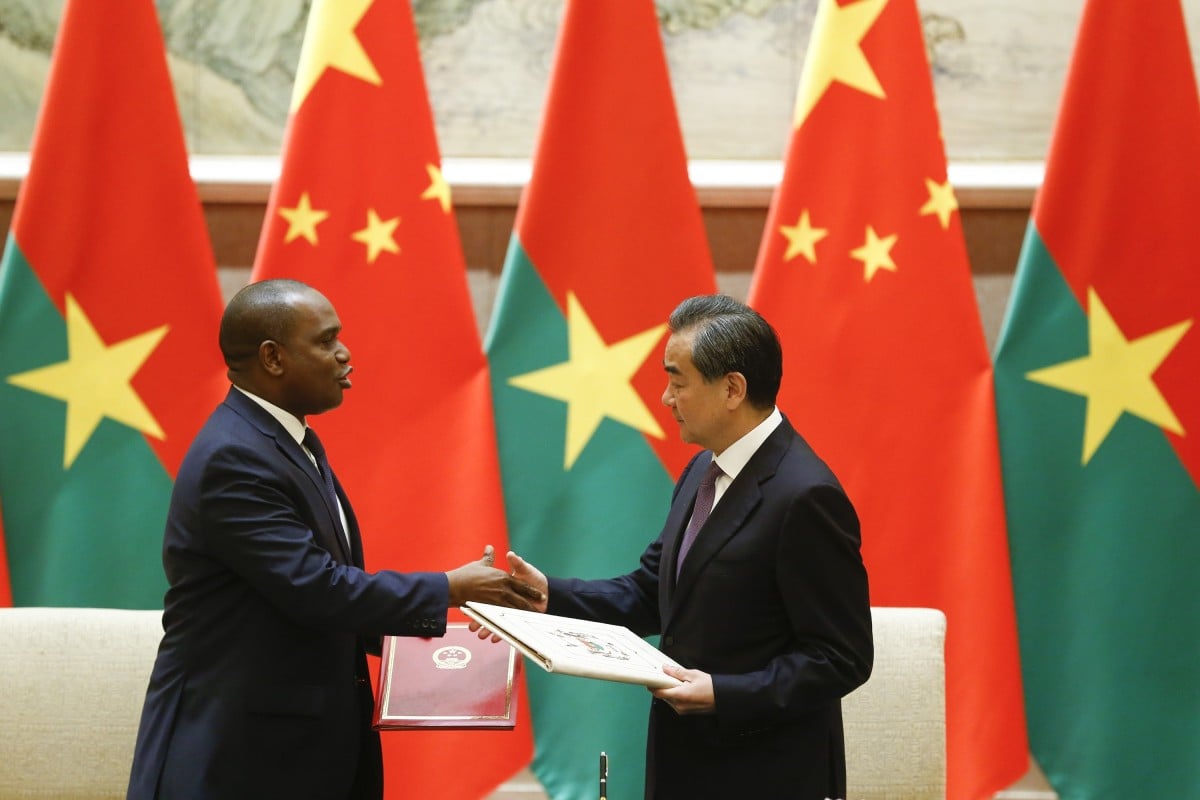
China opened five new embassies – in El Salvador, Burkina Faso, Gambia, São Tomé and Príncipe and the Dominican Republic – countries that severed official diplomatic ties with Taiwan. This directly contributed to China’s lead over the US, the report said.
Beijing’s diplomatic expansion also comes as the US, under the administration of President Donald Trump, is taking an “America first” approach to foreign policy.
Sri Lanka rejects fears of China’s ‘debt-trap diplomacy’ in belt and road projects
Trump has sought to cut funding to the US State Department and the White House has not appointed US ambassadors for at least 17 countries, including Brazil and Egypt, according to the American Foreign Service Association.
“Even though the US has a strong diplomatic base but it is not so proactive any more. It has fewer consulates and fewer foreign service workers,” Shi said.
“For the long term, China is in a more advantageous position.”
But a country’s diplomatic ability and influence did not rest on the number of foreign service postings and the US still held more international diplomatic sway than China, he added.
Some of China’s biggest diplomatic missions include Islamabad in Pakistan, Washington and London.
MUMBAI (Reuters) – India’s richest state is set to be ruled by parties opposed to Prime Minister Narendra Modi’s nationalist Bharatiya Janata Party, jeopardising a Japanese-backed bullet-train project opposed by farmers.
The BJP’s inability to pull together voters in the westerly state of Maharashtra, of which Mumbai is capital, has meant that three parties, including a former BJP ally, will form the government. That is a major setback for Modi after his landslide victory in general elections this year.
It could also hinder the bullet train project, a $17 billion investment largely financed by a long-term, low-cost loan from Japan. The BJP was in power in both Maharashtra and Gujarat states when work began on project in 2017.
“We have always opposed the bullet train,” said Manisha Kayande, a spokesperson for the Shiv Sena, a former BJP ally whose leader is now set to head Maharashtra. “Our state is giving a major chunk of money for the project, when most of the track is in another state. This will definitely be re-framed,” .
The train will run from Mumbai to Ahmedabad, the main city in Gujarat state, a distance of 508 kilometres (315 miles). But it has run into obstacles acquiring land amid opposition from fruit farmers.
Any delay of the project is likely to undermine investor confidence, at a time when growth has slowed to its weakest pace in years.
Critics say India does not need the high-speed train and investment should go instead to improve the existing network.
“We are not against development or infrastructure projects, but at the same time farmers’ interests can’t be ignored. We will rethink about projects that farmers are opposing,” said a senior leader of Nationalist Congress Party, which is a part of the coalition government.
National High Speed Rail Corporation (NHSRCL), the government agency overseeing the project, had no immediate comment.
The authorities have acquired 548 hectares land out of the total requirement 1,380 hectares and the project was targeted to be operational by 2023 , the government told parliament in July.
Protests against land acquisitions are common in India, where tens of millions of farmers till small holdings. A planned $44 billion refinery to be run by a consortium including Saudi Aramco, the world’s biggest oil producer, is also struggling to secure land in Maharashtra.
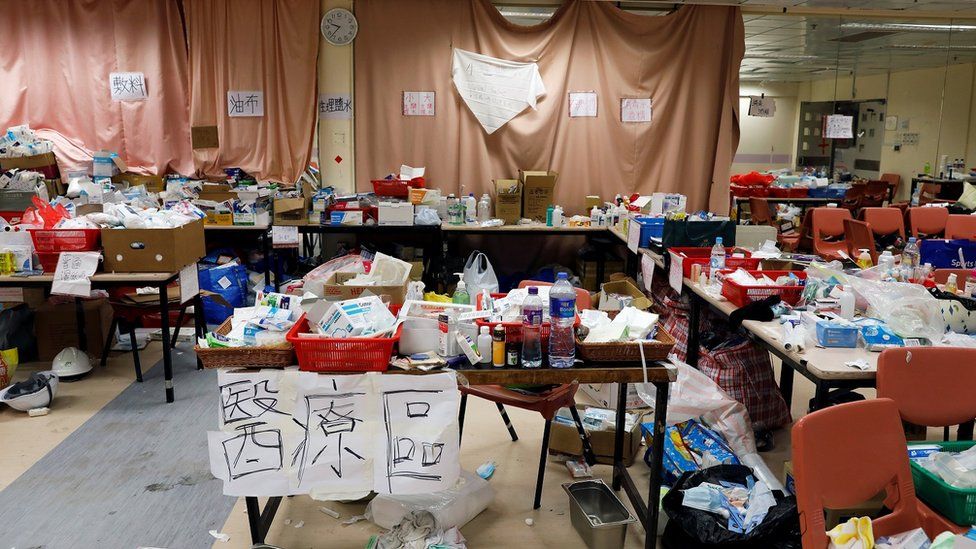
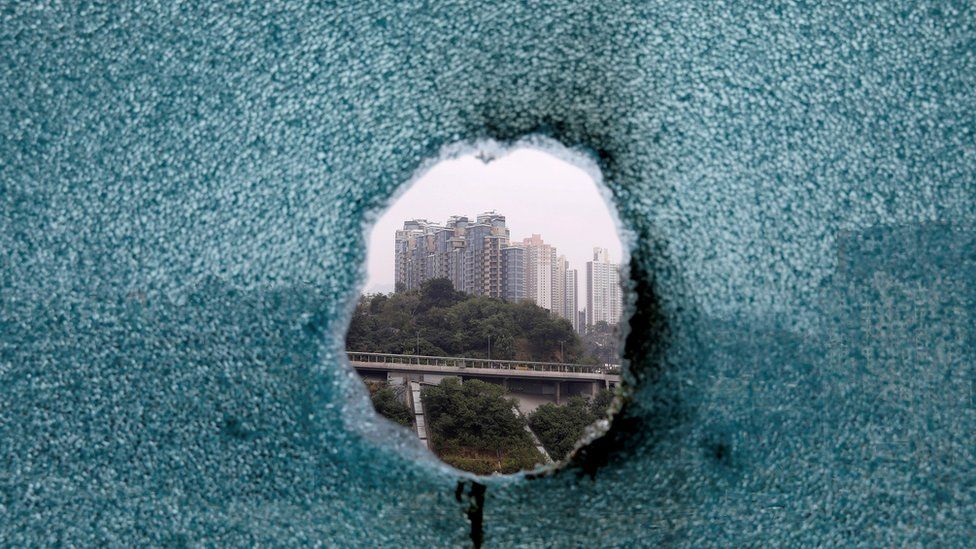
Images from inside Hong Kong’s Polytechnic University show the aftermath of a week-long standoff between protesters and police.
On Tuesday, university officials spent hours searching for anyone left. The fight for control of the Polytechnic University has been one of the defining moments of nearly six months of anti-government protests in the territory.
Protesters barricaded themselves inside the campus almost two weeks ago. The authorities responded by sealing off the campus, trapping more than 1,000 inside. Over the past week, most protesters have either surrendered or escaped.
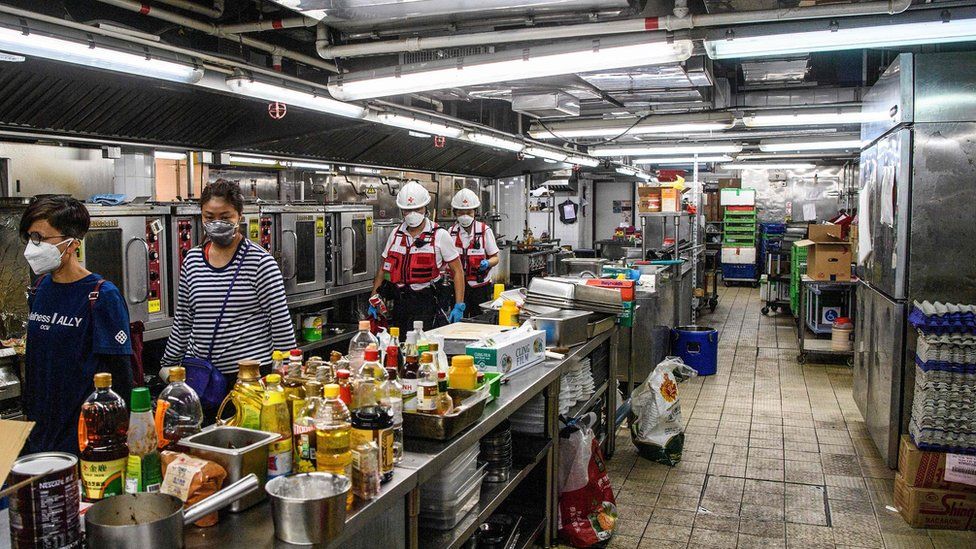
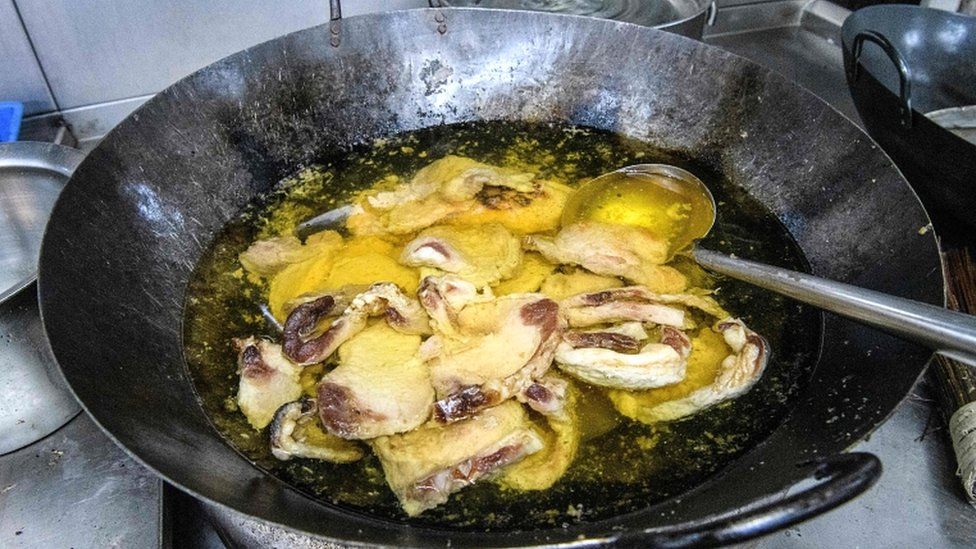
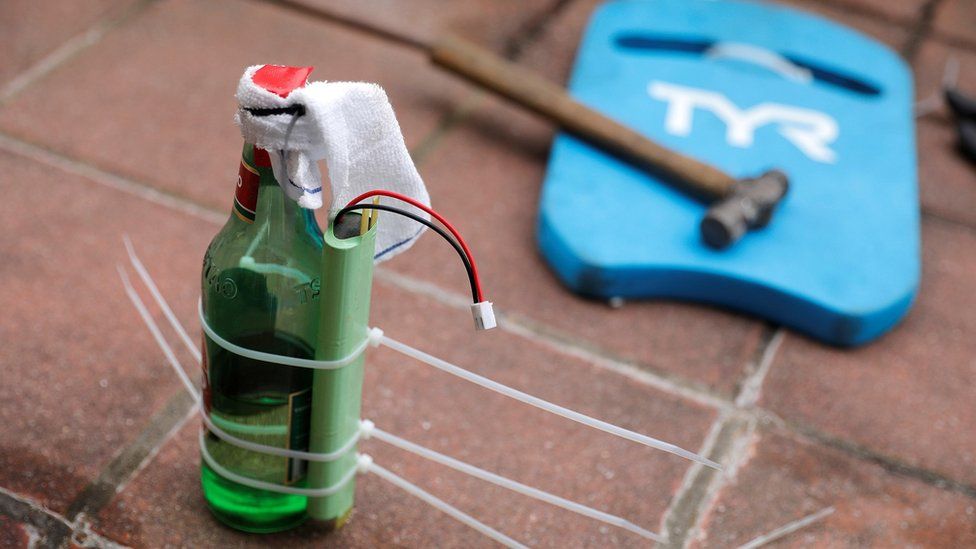
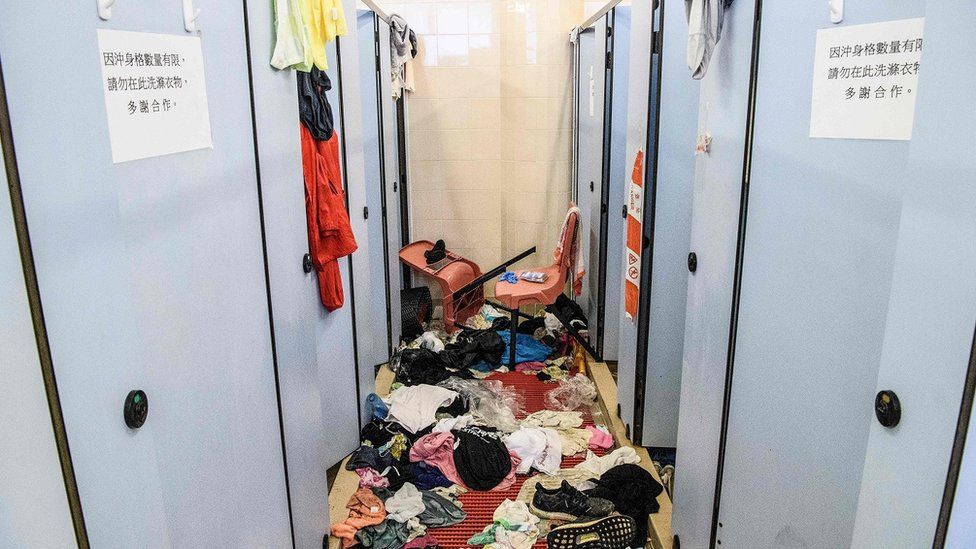
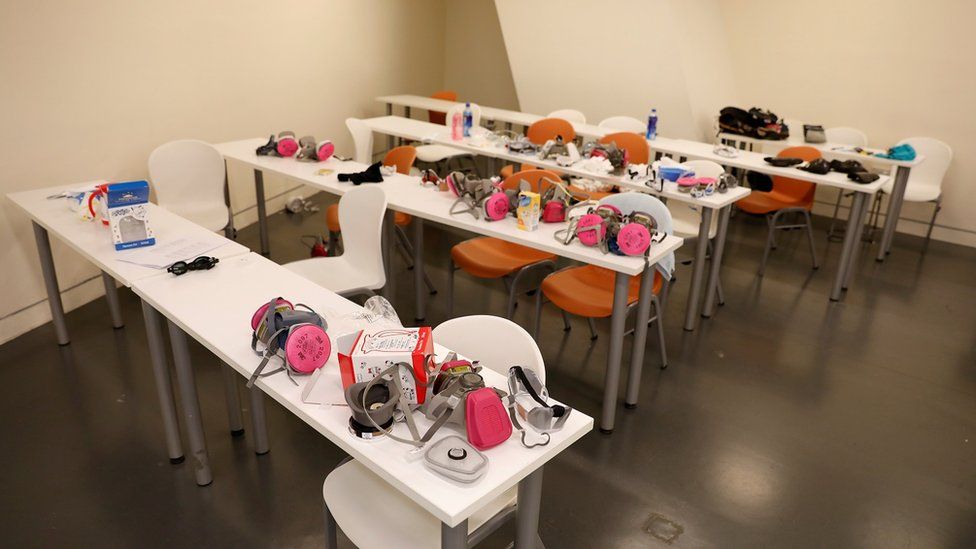
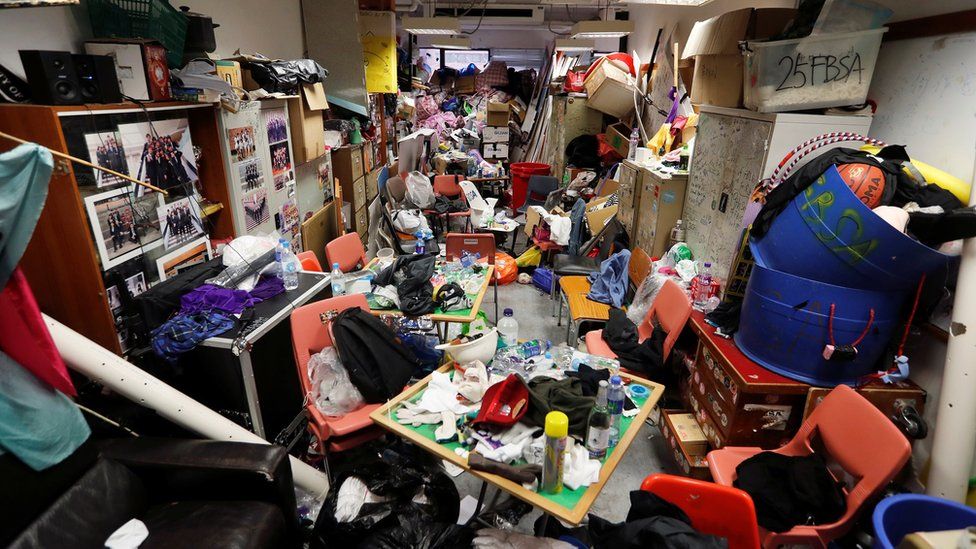
Image copyright AFPA team including university management, security guards, councillors and the Hong Kong Red Cross walk through a canteen in search of any remaining protesters who may be hiding.Image copyright AFPFood was left cooking on a hob in the canteen kitchen.Image copyrigh tAFPActivists – some armed with bows and arrows – engaged in intense battles with the police during the siege. Other items found during the search included, below, a Molotov cocktail and a hammer left on the roof of a university building.Image copyright REUTERSA disparate collection of items were found discarded inside buildings on the campus. Here, clothes could be seen strewn all over a bathroom floor.Image copyright AFPOther items left behind by protesters included face masks…Image copyright REUTERS…helmets and food left in one room…Image copyright REUTERs…and other belongings left in a dorm.Image copyright REUTERSOfficials found only one woman lying exhausted on a couch, who refused to leave. Others might be in hiding, but it is thought unlikely that anyone else remains.Image copyrightREUTERS
NANJING, Nov. 25 (Xinhua) — China’s rocket-carrying ships Yuanwang-21 and Yuanwang-22 wrapped up their mission of transporting the Long March-5 Y3 rocket and arrived at a port in eastern China’s Jiangsu Province Monday.
The two rocket-carrying ships departed from northern China’s Tianjin Port on Oct. 22 and arrived at Qinglan Port in Wenchang in southern China’s Hainan Province after a five-day journey.
The two rocket-carrying ships are China’s first ships made exclusively to carry rockets. With a length of 130 meters, a width of 19 meters and a height of 37 meters, the ships have a displacement of 9,000 tonnes. Each ship is equipped with two 120-tonne cranes that can hoist large rockets.
Each ship has traveled around 4,900 nautical miles, and new hoisting methods have been adopted to improve efficiency, according to Shi Zhe, head of the ships.
Japanese Prime Minister Shinzo Abe meets with Chinese State Councilor and Foreign Minister Wang Yi in Tokyo, Japan, Nov. 25, 2019. (Xinhua/Du Xiaoyi)
TOKYO, Nov. 25 (Xinhua) — Japanese Prime Minister Shinzo Abe and Chinese State Councilor and Foreign Minister Wang Yi on Monday agreed that both sides should work together to further improve bilateral ties and strengthen people-to-people exchanges.
Japan and China have witnessed frequent high-level exchanges and positive progress in the improvement of bilateral relations recently, said Abe, adding that the Japanese side is eagerly looking forward to Chinese President Xi Jinping’s state visit next spring and believes that it will be a major opportunity for promoting bilateral relations in the new era.
A stable Japan-China relationship is the cornerstone of peace and prosperity in Asia, and is also crucial to addressing current global challenges. Japan is ready to work with China to usher in a new future of bilateral relations, he said.
Japan welcomes the launch of the high-level consultation mechanism on people-to-people exchanges between the two countries and stands ready to work with China to continuously boost the affinity between the two peoples and properly handle sensitive differences so as to create a favorable atmosphere and conditions for the improvement and development of bilateral relations, he added.
Abe also said he is looking forward to further in-depth communication with Chinese leaders on bilateral ties during his visit to China next month to attend the China-Japan-ROK (Republic of Korea) leaders’ meeting.
Wang, for his part, said that with the political guidance of the two leaders and joint efforts of both sides, China-Japan relations have returned to the right track and have seen a sound momentum of improvement and development. The top leaders of the two countries had a successful meeting in Osaka in June and reached important consensus on building bilateral relations that meet the requirements of the new era.
The China-Japan relations have gone through twists and turns and the present situation has not come easily and should be doubly cherished, Wang said.
The two sides should push for continuous improvement and development of China-Japan relations from a longer-term and broader perspective, he said.
He called on the Japanese side to meet China halfway, take more positive actions, properly manage and handle differences so as to create a favorable atmosphere and conditions for the proposed major political and diplomatic agenda of the two countries.
The improvement and development of China-Japan relations not only conform to the interests of the two countries and peoples but also has great positive significance to regional peace and stability, injecting stability into the current world situation which is full of uncertainty, said Wang.
The Chinese side welcomes Abe to attend the China-Japan-ROK leaders’ meeting in China next month. China is willing to work with Japan to give full play to the role of the high-level consultation mechanism on people-to-people exchanges, usher in a new era of exchanges between our peoples, localities and youth, and create a brighter future for bilateral relations, he said.
Chinese President Xi Jinping, also general secretary of the Communist Party of China (CPC) Central Committee, meets with a delegation of the United Russia party led by Chairman of the United Russia’s Supreme Council Boris Gryzlov at the Great Hall of the People in Beijing, capital of China, Nov. 25, 2019. (Xinhua/Li Tao)
BEIJING, Nov. 25 (Xinhua) — Chinese President Xi Jinping Monday met with a delegation of the United Russia party at the Great Hall of the People in Beijing.
The delegation, led by Chairman of the United Russia’s Supreme Council Boris Gryzlov, is in Beijing for the seventh meeting of the dialogue mechanism between the ruling parties of China and Russia held Monday.
Xi, also general secretary of the Communist Party of China (CPC) Central Committee, expressed congratulations for the success of the 19th congress of the United Russia party.
This year marks the 70th anniversary of the forging of diplomatic ties between China and Russia, said Xi.
“President Putin and I jointly announced the development of the China-Russia comprehensive strategic partnership of coordination for a new era, agreeing to guide bilateral relations in the direction of mutual support, in-depth integration and innovative cooperation to achieve win-win results,” said Xi.
He said China and Russia have formed strong strategic support for each other, which is of great strategic significance to world peace and development.
Saying that as ruling parties, the CPC and the United Russia party shoulder responsibilities to further promote China-Russia ties, Xi called on delegates to the seventh meeting of the dialogue mechanism to fully exchange views so as to contribute wisdom and strength to bilateral ties as well as world peace and prosperity.
Congratulating China on the fourth plenary session of the 19th CPC Central Committee, Gryzlov said Russia-China ties have reached an unprecedented level as the two countries have sound cooperation in various fields and good coordination in international and regional hotspot issues.
The United Russia party stands ready to enhance cooperation with the CPC to further promote bilateral ties, said Gryzlov.
The dialogue mechanism between the CPC and the United Russia party was launched in June 2009. Its sixth meeting was held in Kazan in March 2017.
Chinese State Councilor and Foreign Minister Wang Yi meets with Governor of Shizuoka Prefecture Heita Kawakatsu in Shizuoka, Japan, Nov. 24, 2019. (Xinhua/Guo Dan)
SHIZUOKA, Japan, Nov. 24 (Xinhua) — China and Japan should usher in a new era of local-level exchanges in the 21st century, Chinese State Councilor and Foreign Minister Wang Yi said here on Sunday.
Wang, who attended the Group of 20 (G20) Foreign Ministers’ Meeting in Nagoya, made the remarks during a meeting with Governor of Shizuoka Prefecture Heita Kawakatsu.
Wang said that although the relations between the two countries have experienced ups and downs, friendly people-to-people and local-level exchanges have always been the cornerstone of communication between China and Japan. More than 250 pairs of sister cities have been established between the two countries, he noted.
The two sides should keep pace with the times, jointly open up a new era of local-level exchanges in the 21st century and push for continuous improvement and development of bilateral relations, Wang said.
Shizuoka has always had a unique and important position in the friendly exchanges between China and Japan, and it is hoped that Shizuoka will continue to play a leading role in promoting the friendly cooperation between the two countries, he said.
Kawakatsu introduced the historical origin and current development of Shizuoka’s friendly exchanges with China, saying that whether the development of Japan-China relations is smooth or experiences ups and downs, the friendly feelings of the Japanese people towards China have never changed.
Shizuoka has forged friendly relations with many provinces and cities in China, especially with Zhejiang Province for 37 years, he said, adding that the people of Shizuoka are proud of their special relationship with China and their contributions to Japan-China friendship, he said.
Kawakatsu said he highly appreciates the Belt and Road Initiative and sees it as an important opportunity for Shizuoka to expand friendly cooperation with China, adding that the prefecture is ready to fully support and actively participate in the joint construction of the Belt and Road projects.
Shizuoka’s door is always open to Chinese friends and the prefecture welcomes more Chinese tourists, he added.
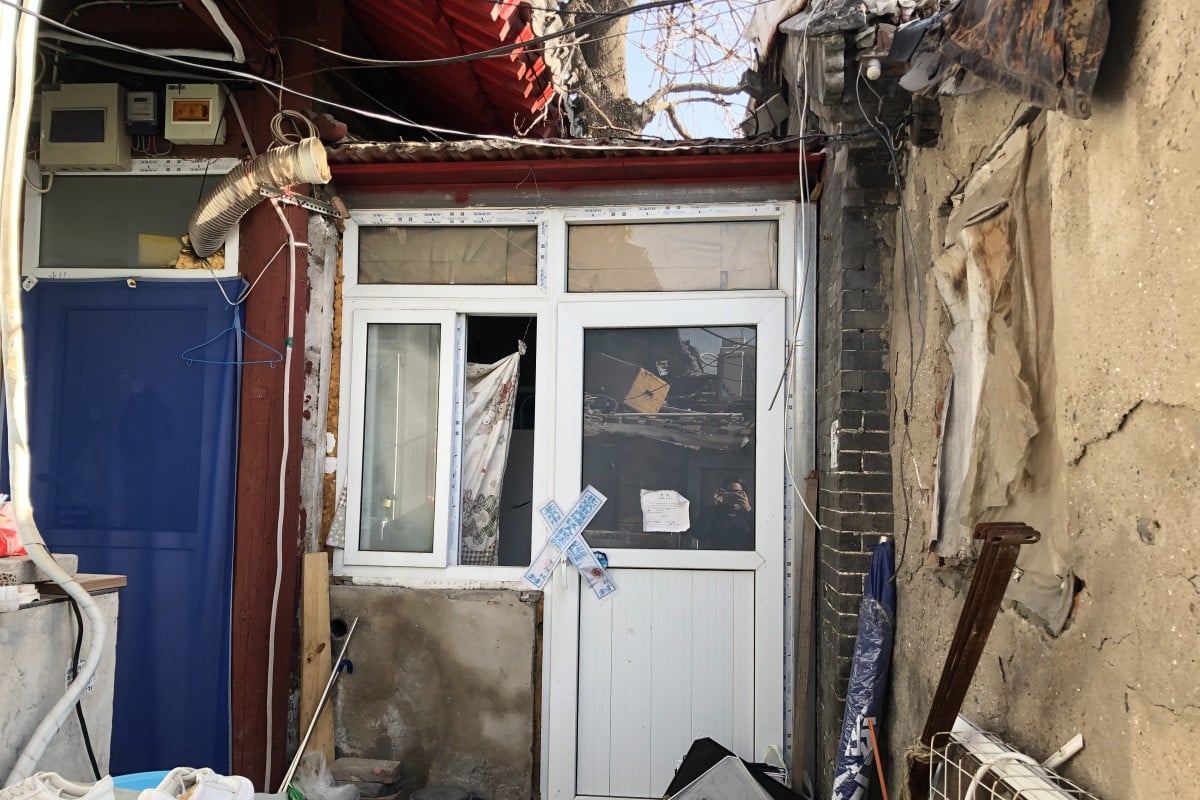
Unit 121 on Lanman Hutong, about 10 minutes’ drive from Tiananmen Square and the Forbidden City, changed hands last month for 1.28 million yuan
The new owner bought a 5.6-square metre (72 square feet) cubicle covered in bathroom tiles large enough to fit a bunk bed, with standing room only
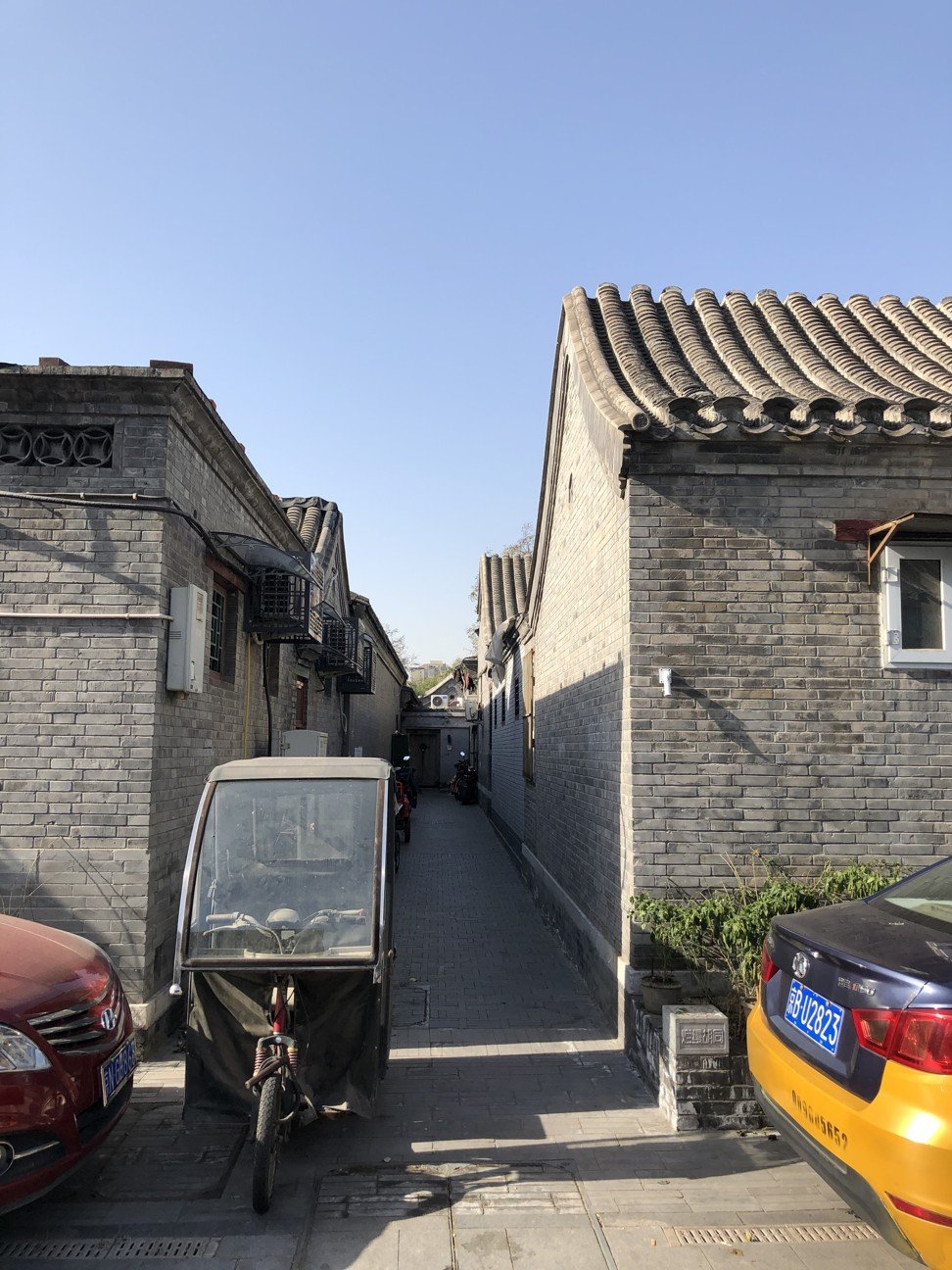
A view of the 5.6 square metre cubicle-size home in Beijing on 15 November 2019. The home sold for 1.28 million yuan at auction. Photo: Louise Moon
A subdivided home in a run-down alley in Beijing recently sold for a record price at auction, as eager buyers piled in to get hold of its much sought-after address to gain access to some of the Chinese capital’s best schools.
A subdivided unit at No. 121 Lanman Hutong, about 10 minutes’ drive from Tiananmen Square and the Forbidden City, changed hands on November 11 for 1.28 million yuan (US$182,400) after 136 rounds of furious bidding during an auction in Beijing.
For 230,000 yuan per square metre (HK$23,850 per square foot), the new owner bought a 5.6-square metre (72 square feet) cubicle covered in bathroom tiles large enough to fit a bunk bed, with standing room only. That’s smaller than even Hong Kong’s notorious micro-apartments – also known derisively as shoebox flats or nano flats – which average about 200 square feet. A standard car parking space measures 126 square feet.
What the dilapidated space does have is an address that entitles its owner to a hukou, the household registration that is the prerequisite for access to schools, homes, civil service jobs, public health care and almost every aspect of daily life in the Chinese capital.
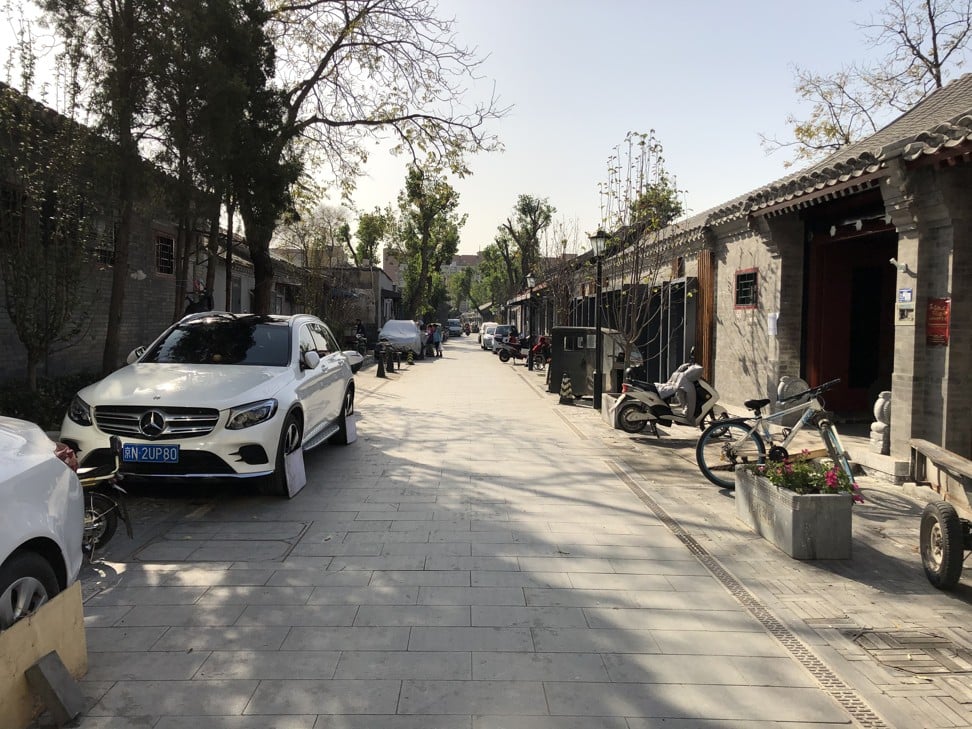
The alley on which No. 121 Lanman Hutong sits in Beijing on 15 November 2019. Photo: Louise Moon
Lanman Hutong, or the Alley of the Brilliant Drapes, sits in Xicheng district, a chequerboard neighbourhood criss-crossed with hundreds of alleyways that boasts three of the five highest-ranked schools in the city.
According to Beijing’s real estate regulations, one square metre entitles the owner a hukou. That fuelled the rush by parents to buy property in the area to qualify for sending their children to such eminent schools as the Beijing No. 4 High School, whose alumni include former Chongqing Commissar Bo Xilai, former China Development Bank president Chen Yuan and Citic’s chairman Kong Dan. Most of these bolt holes are now unoccupied after they have served their purposes, local residents said.
Lanman Hutong, or the Alley of the Brilliant Drapes, in the Xicheng district of Beijing, about 10 minutes drive from the Tiananmen Square and the Forbidden City, on 15 November 2019. Photo: Louise Moon
The auction result offers a peek into the growing speculative bubble in Beijing’s property market, a development that has defied more than two years of policymakers’ attempts to control. The average price of newly built homes rose 4.3 per cent in October to 60,894 yuan per square metre in Beijing, according to China’s statistics bureau data and Lianjia, a major real estate broker.
“Beijing’s homes have always been expensive, [particularly so] in Xicheng, where only the ultra-wealthy can afford to stay,” said Midland Beijing’s analyst Zhao Jia. “A million yuan is not expensive at all, to find space that close to the Forbidden City.”
Beijing’s average home price is equivalent to 24.9 years of the city’s median net income, excluding expenditures, according to data by E-House China Research and Development Institution. Hong Kong, the world’s most expensive urban centre to live and work in, requires 21 years of average income to affordable the average abode, according to the Demographia International Housing Affordability Study, as the city also boasts of a higher income and lower tax rate.
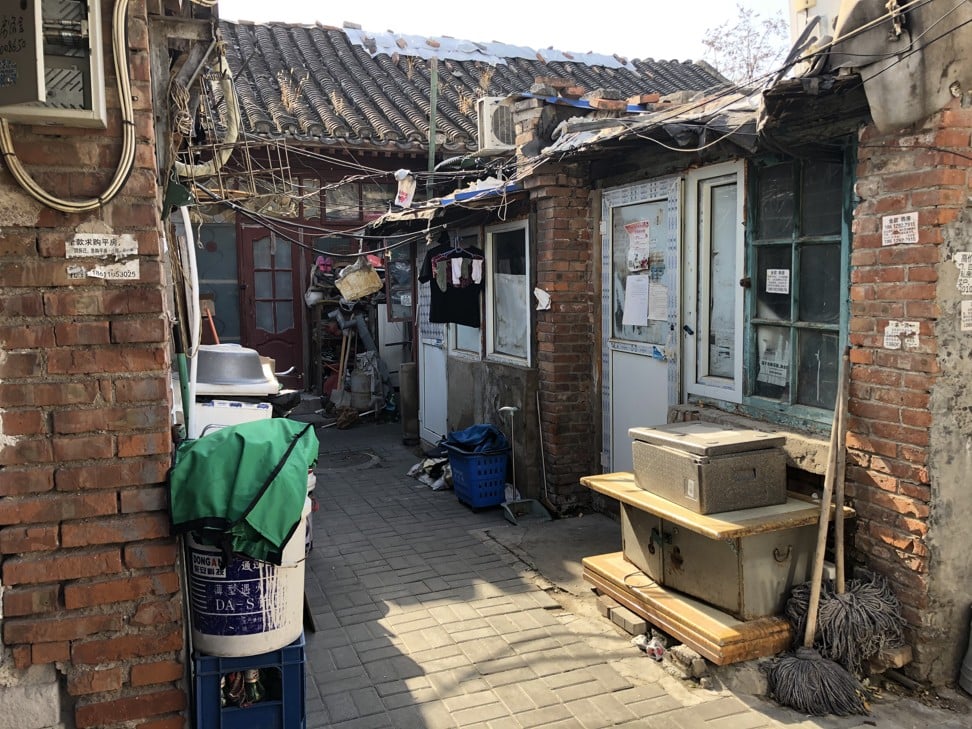
A tiny alleyway leading to No. 121 Lanman Hutong, which sold earlier this week for 1.28 million yuan in Beijing. Photo: Louise Moon
“It is not that easy for the average person to own property in Beijing,” said Midland’s Zhao. “For most homes in the city, 1 million yuan is only enough for a down payment.”
Unit 121 on Lanman Hutong is located among a cluster of siheyuan, as Beijing’s traditional courtyard homes are called. Bicycles, old washing machines and other household junk are piled along the maze of alleyways leading to the ground-floor unit.
Its auction drew 29 bidders starting from 470,000 yuan. The final winning bid prices the Lanman cubicle 35 per cent higher than a 100-million yuan villa with view of the Summer Palace in Beijing’s outskirts, on a per square foot basis.
To be sure, the unidentified buyer of the unit may be speculating for a quick flip, when the property is torn down, said Zhang Dawei, an analyst at Centaline Property Agency.
“This is more like a gamble, betting on the unit being demolished,” Zhang said. “If the odds are good, the buyer can pocket the [compensation], which could be several times what he bought it for. Even if it is not demolished in the short term, it is not bad to have some asset in the heart of Beijing.”
Television report shows how drivers are willing to pay more than US$20,000 for a sham marriage with someone who has a valid registration
City authorities ration the number of plates that allow people to use their cars in the capital as part of efforts to tackle pollution and congestion
Beijing has started limiting the number of plates issued as part of its efforts to tackle the city’s notorious pollution and congestion. Photo: EPA-EFE
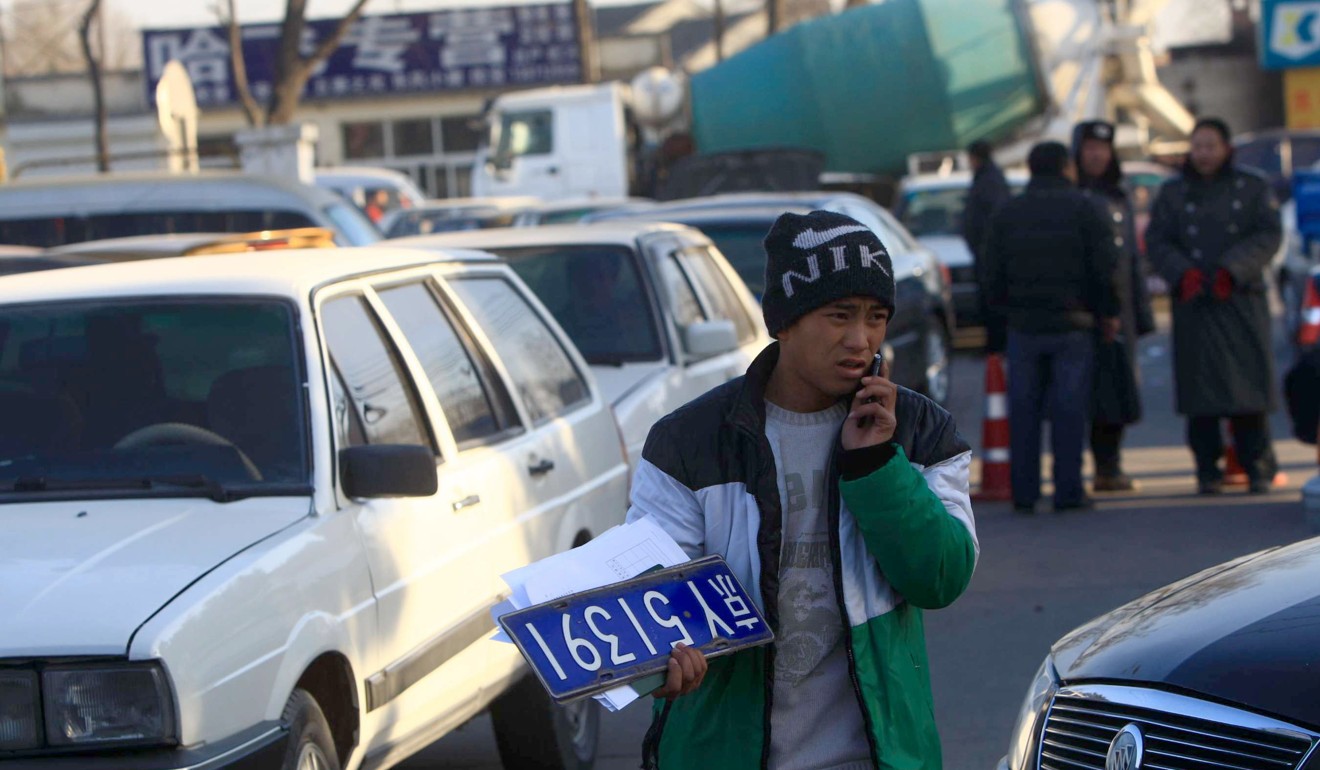
Some desperate Beijing motorists are resorting to sham marriages to get round strict licence plate rules that are designed to limit the number of cars allowed on the city’s congested roads.
A report by state broadcaster CCTV that aired on Sunday night claimed that some drivers were willing to pay the equivalent of tens of thousands of US dollars to marry someone with one of the prized plates, have it transferred into their name and then get divorced.
Specialist agencies charge over 160,000 yuan (US$22,700) to help their clients obtain a licence this way for a petrol-driven car, or over 110,000 yuan for an electric-powered one, according to the report.
The scam is the result of a licence lottery first introduced in 2011 to tackle the Chinese capital’s notorious congestion and pollution.
Chinese driver arrested for doctoring number plate to spell out obscene phrase
Because of the strict limits on the number of Beijing number plates issued, there are now 2,600 applicants for every one issued for petrol-powered vehicles. Those who wanted a licence for an electric car may have to wait until 2028, the report said.
The government has also been steadily lowering the annual quota for new local licences from 240,000 in 2013 to 100,000 last year.
The owners of locally registered cars are also banned from using them on one day a week, which is determined according to the plate number.
Cars that do not have a Beijing licence plate face severe limits on driving in the city. The owners of these cars must apply for a permit that only allows them to use their cars for seven days at a time – and as of this month they are only allowed 12 permits a year.
A man carries a number plate at a used car market in Beijing. Photo: AFP
The result is that many drivers have been looking for legal ways to get round the limits – with the sham marriages being one of the most extreme examples.
“We receive at least three or four clients a day asking to get a licence via fake marriages,” a manager at one agency told a CCTV reporter.
A staff worker helps go through all the procedures and if a suitable match is found, the process can be completed within 20 days.
Another loophole some are taking advantage of is to buy a car in the name of someone who has won the licence lottery, according to the agency.
Chinese police do U-turn on traffic crash after online crowd doubt official account
The actual user pays for the car in full, registers it under the licence owner’s name, and pays the latter a sum of money for using the licence – typically 20,000 yuan a year, 49,000 yuan for three years or 69,000 for a five-year deal.
In many cases, the two parties sign an agreement to limit the risk of a protracted dispute, but one judge warned that this was still a risky business.
Wang Lidan, a judge at Haidian District People’s Court in the northwest of the capital, told the programme makers that he knew of one case where a woman had paid a man with a Beijing licence to marry her, only for him to vanish after receiving the money.
Not only did the woman miss out on getting the licence but she faced an extra legal headache in getting a divorce.
Under Chinese law she had to first publish a notice about his disappearance in a newspaper and then wait three months before the divorce could go through the courts.
Record price for Beijing’s cubicle home shows desperation for hukou
Read more
Congestion or consumption? Beijing ponders trade-off on car purchases
Read more
Pollution alarm as tourism contaminates home of China’s hairy crab