Archive for ‘United Nations Security Council’

23/12/2019

China presses for nuclear talks in last days till North Korea’s deadline for US

  • Summit between Chinese, South Korean and Japanese leaders could yield results for future of Korean peninsula, analyst says
North Korea has promised an unwelcome “Christmas present” if the US does not show the “right attitude” for talks. Photo: KCNA
Chinese President Xi Jinping has again stressed the need for tensions on the Korean peninsula to be resolved through dialogue, as the deadline looms in North Korea’s threat to give the United States an unwelcome “Christmas gift”
.

With just over a week to go until Pyongyang’s year-end deadline for Washington to change what it says a policy of hostility, Xi held separate talks with South Korean President Moon Jae-in and Japanese Prime Minister Shinzo Abe in Beijing on Monday.

Moon and Abe will also join Chinese Premier Li Keqiang for a trilateral summit in Chengdu, Sichuan province, on Tuesday.

The first trilateral leadership talks took place in 2008, but were not held in 2013 and 2014, or in 2016 and 2017.

Xi said China and South Korea “both insist on maintaining peace and stability on the peninsula, and advocate solving problems through dialogue and consultation”, state news agency Xinhua reported on Monday.
“China supports South Korea in continuing to improve its relationship with

North Korea,

and injecting impetus for the Korean peninsula peace talks,” the report said.

Moon said the suspension of talks between the US and North Korea and heightened tensions along the peninsula “are not beneficial to both our countries and North Korea”, according to South Korean news agency Yonhap.

Moon also said that China had played an “important role” in efforts for the denuclearise the peninsula, the report said.

North Korea has signalled impatience over the stalled talks with the US, and the fading hopes for an end to Washington’s economic sanctions.

In April, North Korean leader Kim Jong-un said that he would “wait” until the end of the year to decide whether the US had the “right attitude” to allow a resumption of negotiations, but no signs of further talks have emerged.

Then earlier this month Pyongyang warned that Washington would receive a “Christmas gift”, and US actions would determine whether the present would be good or bad.

In an apparent sign of frustration with the US, North Korean news agency KCNA reported on Sunday that Kim held a meeting of the Workers’ Party of Korea to “bolster the overall armed forces of the country” to deal with the “the fast-changing situation”.

The US imposed crippling sanctions on North Korea’s economy in 2017, though many countries, including China, South Korea and Japan, have also tightened measures against the North.

South Korea and Japan both scaled back people-to-people links in 2016, China banned coal exports to the North in 2017. Earlier this year, Trump thanked China and Russia for maintaining sanctions against Pyongyang.

As diplomats make last-ditch attempts to stop renewed confrontation, US special envoy for North Korea Stephen Biegun shuttled around the region last week, meeting senior officials in China, South Korea and Japan. Biegun urged North Korea to return to negotiations, and said the US “does not have a deadline” for talks.

China and Russia also proposed last week that the United Nations Security Council 

lift some sanctions

, saying it was necessary to break the deadlock.

Xi’s meeting with Moon also comes as Beijing tries to mend ties with Seoul to prevent neighbouring nations from getting closer to Washington.
Relations between China and South Korea deteriorated in 2017 after Seoul deployed a US-led missile defence system known as THAAD, which Beijing deemed as a security threat to its own territory.
On Monday, both Xi and Moon said in their meeting that they looked forward to improving relations between their countries.
“We have been friends and partners that have continued close cooperation,” Xi said. “We have a wide range of common understandings in various fields, including on further developing bilateral relations, facilitating regional peace, stability and prosperity, and defending multilateralism and a free trade system.”
Sun Xingjie, a North Korea specialist at Jilin University, said the US signal was “very clear” in Beigun’s comments.
“They still want to continue discussions,” he said.
Sun also said the talks in Chengdu on Tuesday would likely play an important role in the future of resolving problems on the Korean peninsula.
“After returning to the platform these last couple years, I believe this will become an important, normalised place for discussions. Whatever problems they run into, the platform should continue to move forward,” Sun said.
Source: SCMP
28/10/2019

Putin accepts Duterte invite, just before Manila-Beijing South China Sea oil talks. Coincidence?

  • The president is set to become the first Russian leader to make a state visit to the Philippines for more than 40 years, according to a former envoy
  • Moscow is aware of China’s entry into the Philippines, and could have its eye on some projects there, while the US is also watching developments
Russian President Vladimir Putin and Philippine President Rodrigo Duterte shake hands during a 2016 meeting in Peru. Photo: EPA
The timing of Moscow’s announcement over the weekend that President Vladimir Putin
has accepted an invitation to visit Manila has raised eyebrows, as it comes on the eve of crucial bilateral talks between the Philippines and China on joint oil exploration in the

South China Sea

.

In a statement immediately welcomed by the Philippine presidential palace, Igor Khovaev, Russia’s ambassador to the Philippines, on Saturday told reporters Putin had accepted Duterte’s invitation “with gratitude”.

No date has been set for the visit, with Khovaev only saying Moscow would “do our best to arrange this meeting as soon as possible”.

A steering committee with representatives from both Manila and Beijing is set to meet this week to discuss the joint oil exploration deal. China has proposed a 60 per cent-40 per cent split in favour of the Philippines, according to Hermogenes Esperon, 

Courting Russia with South China Sea oil is a ‘dangerous gamble’ for Duterte

Neither side has clarified if the split refers to ownership or revenue, and no other details were disclosed.

After an August meeting with Duterte, Chinese President Xi Jinping said the countries could take a “bigger step” in jointly developing oil and gas resources if they could properly handle their sovereignty dispute in the South China Sea.

But defence and security analysts say the Philippine president took a “dangerous gamble” on a visit to Russia last month, when he invited the Russian state oil company Rosneft to explore for oil in Philippine waters – which include parts of the South China Sea claimed by China.

The timing of Moscow’s announcement has not gone unnoticed.

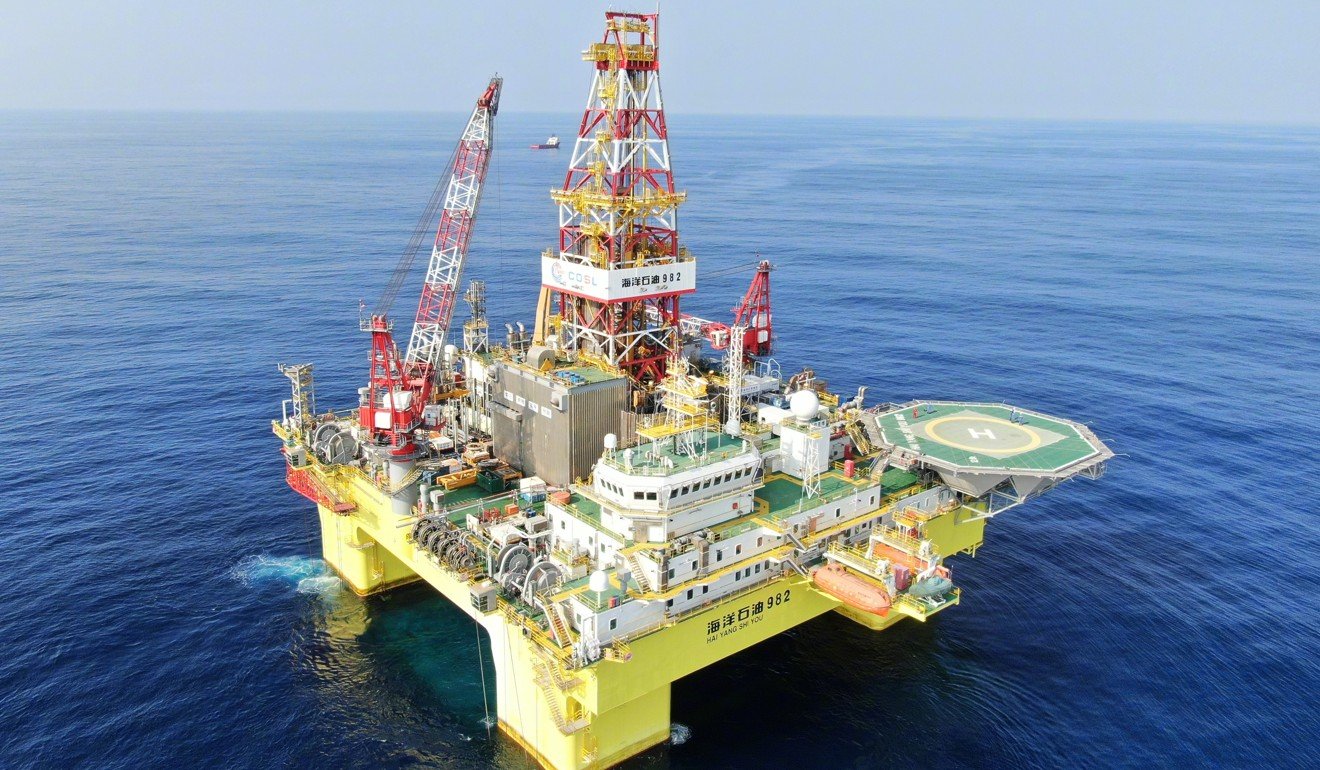
A Chinese deepwater oil rig in the South China Sea. Photo: Weibo

“It’s a welcome and historic development. Some wise guy in the Duterte government thought about timing [the invitation to Putin around the oil talks with Beijing],” said retired Philippine ambassador Lauro Baja, who once served as president of the United Nations Security Council.

Baja told the Post that no Russian president had visited the Philippines during his more than 40 years with the Department of Foreign Affairs.

“The Philippines then was almost a nonentity as far as Russia was concerned, [but] maybe now Russia recognises the strategic importance of the Philippines [in terms of] regional politics,” he said.

Baja said Moscow was aware of China’s entry into the Philippines, and could have its eye on some projects there.

“For all their so-called alliance, China and Russia are fierce competitors for influence and other benefits. And I think Russia has some objectives in mind like selling armaments and [forging] technological agreements,” he said, while cautioning that the situation remained “nebulous”.

New Philippines military chief sees no ‘shooting war’ in South China Sea despite disputes

“It’s a fascinating development but things are still early … For now, this is [just] an invitation extended by Duterte and accepted in principle by Putin.”

The United States will also be monitoring developments in the Philippines, according to Greg Poling, director of the Washington-based Centre for Strategic and International Studies’ Asia Maritime Transparency Initiative.

“Russia is eager to boost its influence in the region, and doubtless doing so with a long-standing US ally is seen as a bonus by Moscow,” he said. “There is nothing that prevents the Philippines from engaging in security cooperation with Russia, but the devil will be in the details.”

Poling added that the US would be concerned if Russia-Philippine cooperation involved acquiring military platforms that were incompatible with the shared platforms and doctrines used by Washington and Manila, as well as the latter’s other major security partners, namely Australia, Japan and South Korea.

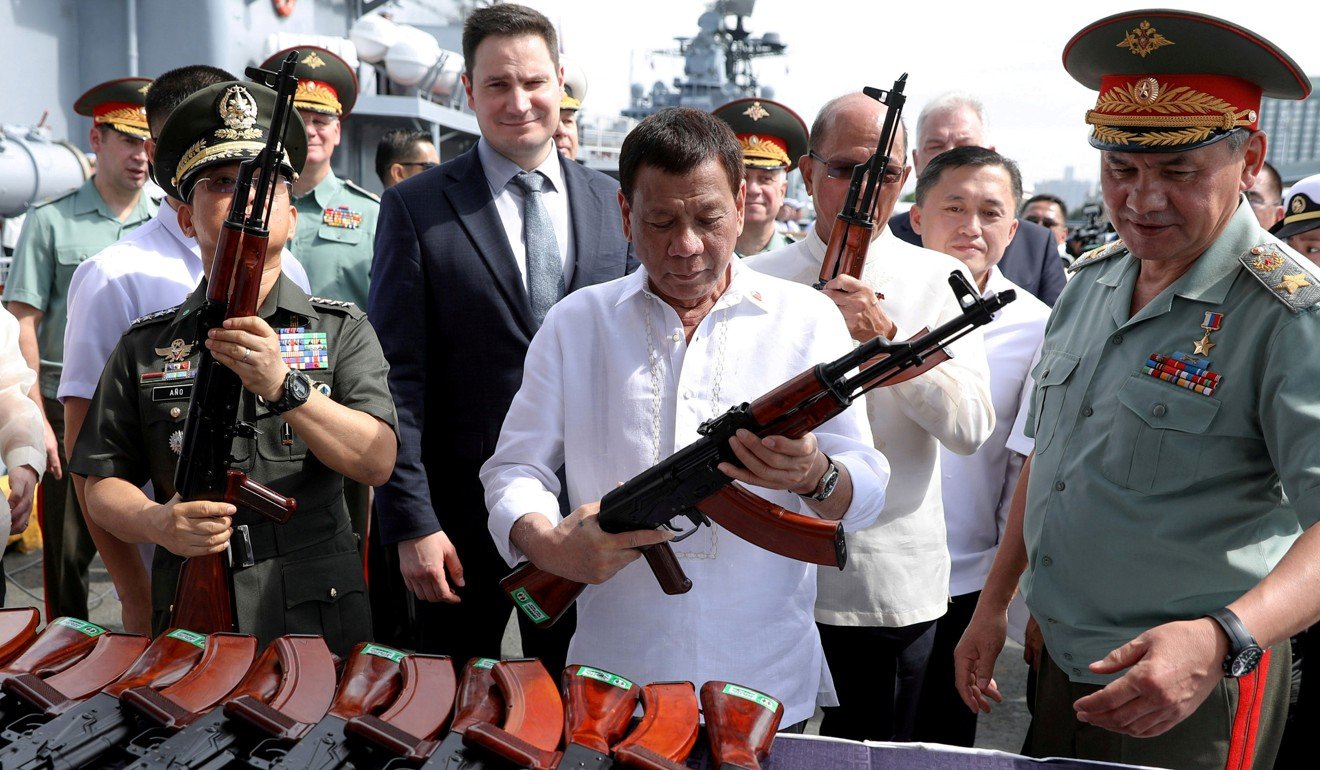
Philippine President Rodrigo Duterte inspects firearms donated by Russia in 2017. Photo: Reuters

“The US will also be concerned if any acquisitions or cooperation with Russia might threaten information security or intelligence cooperation between the US and the Philippines,” he said.

“And finally, any major platforms acquired from Russia would likely require the US to impose sanctions on the Philippines unless a waiver is granted, and the US government has been very stingy about awarding those waivers because they undermine the effectiveness of the sanctions regime.”

Moscow last week offered to help the Philippines produce its own arms for both domestic use and export with the help of Russian technology. Max Montero, an Australia-based Filipino security consultant, viewed that offer as “a swipe at the US”.

“Imagine a US stronghold and long-time ally and former colony becoming a manufacturing hub for Russian arms. And it makes it worse if [the Philippine armed forces] buys them too,” he said.

“Weakening the US alliances in Asia will benefit Russia [as it is] one of the US’ competitors in arms sales and geopolitics.”

Russia offers arms technology to the Philippines with ‘no conditions’ as US ties falter

The Philippines, Montero said, would benefit from such an arrangement since it is “a laggard in defence technology”. However, he pointed out that the country’s armed forces continue to buy weapons from the US and receive American arms as grants, potentially limiting the domestic market for Russian arms.

Navy cooperation has also been on the agenda, as Moscow and Manila discussed signing a new naval pact in March, while warships from each country have visited the other this year. Philippine naval vessels made their first-ever visit to Russia in October, while three Russian ships docked in the Philippines for a goodwill visit in January.

Russia is the top supplier of arms to Southeast Asia, and the No 2 global arms supplier, behind the US. Southeast Asia bought US$6.6 billion of Russian arms between 2010 and 2017, or more than 12 per cent of Russia’s sales, according to the Stockholm International Peace Research Institute, a Swedish think tank that publishes global arms tracking data.

Source: SCMP

07/09/2019

Chinese Foreign Minister Wang Yi visits Pakistan amid tensions over Kashmir

  • He is expected to join a trilateral dialogue with his counterparts from Pakistan and Afghanistan, and observers say he may try to mediate in Kashmir dispute
  • Trip also includes a stop in Nepal that could pave way for a visit by Xi Jinping
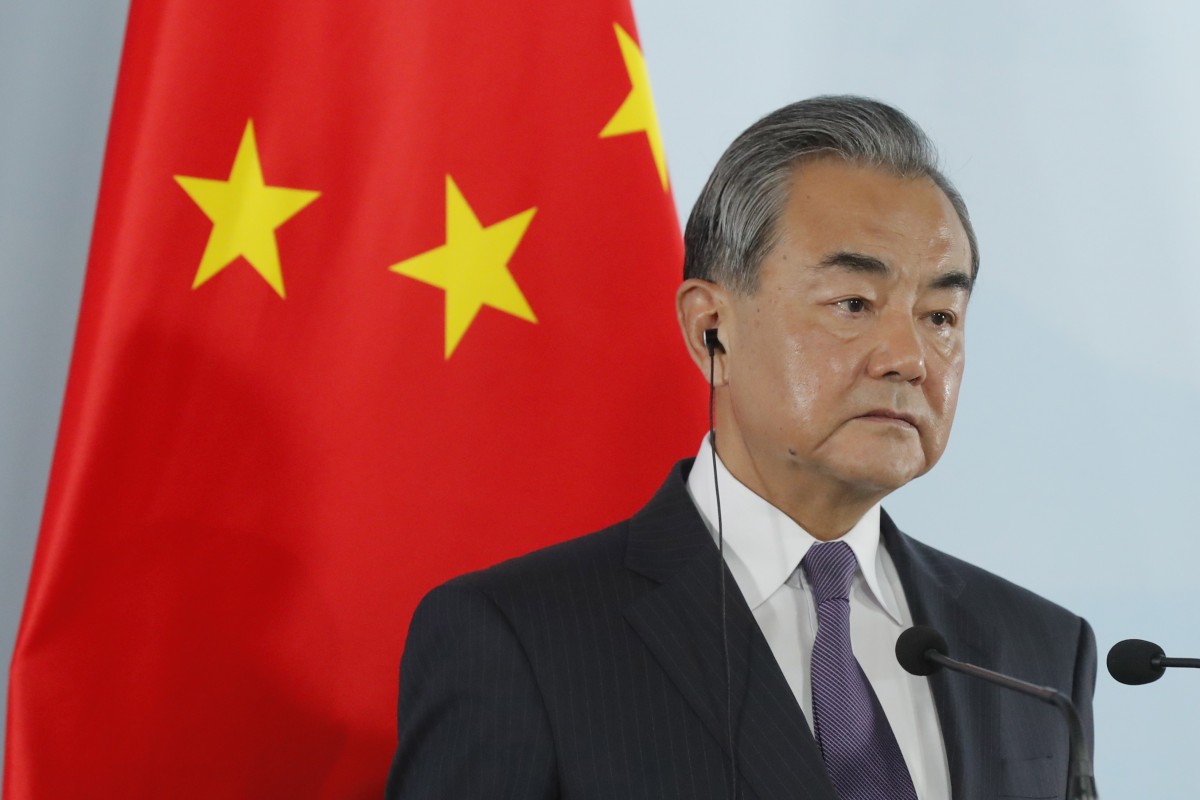
Chinese Foreign Minister Wang Yi may try to act as a negotiator in the Kashmir dispute. Photo: EPA-EFE
Chinese Foreign Minister Wang Yi began a four-day trip to Pakistan and Nepal on Saturday, amid escalating tensions between Islamabad and New Delhi over

Kashmir

.

Wang was expected to join a trilateral dialogue with the foreign ministers of Pakistan and Afghanistan in Islamabad, foreign ministry spokesman Geng Shuang said on Friday. He will also travel to Nepal.

Beijing has criticised India’s decision last month to strip the Jammu and Kashmir autonomous state of its special status and break it into two federally controlled territories, calling it “unacceptable”.

China also formally backed Pakistan’s request for the United Nations Security Council to hold “closed consultations” on the revocation of the state’s autonomy.

Meanwhile, observers say the Chinese foreign minister could attempt to act as a negotiator in the complex border dispute.
“Wang might try to play a role to mediate between the two sides to resolve the crisis,” said Wang Dehua, head of the Institute for South and Central Asia Studies at the Shanghai Municipal Centre for International Studies. “This has been China’s long-held position on the issue.”

Pang Zhongying, an international relations researcher at Ocean University of China in Qingdao, agreed.

“[Indian Prime Minister] Narendra Modi has visited China a couple of times and it is likely [Chinese President] Xi Jinping will visit India soon,” he said. “If Xi is to visit India later this year, China may try to contain its differing views with India on Kashmir.”

Modi has proposed an informal summit with Xi later this year that may be held in the religious hub of Varanasi, Modi’s parliamentary constituency. New Delhi said in May that Indian officials were working with the Chinese side to finalise the details, but Beijing has yet to confirm Xi’s visit.

India dismisses Beijing’s concerns over Kashmir because ‘it won’t have any impact on China’
Wang Yi was also due to visit India later this month for border talks, but the trip had to be postponed at the request of New Delhi because of scheduling problems, Hindustan Times reported, citing China’s foreign ministry.

The row over Kashmir has escalated in the past month. Pakistani Prime Minister Imran Khan said on Friday that Islamabad would make the fullest possible response to New Delhi’s actions in disputed Kashmir and that the global community would be responsible for any “catastrophic” aftermath.

Since Modi withdrew special rights for Indian-administered Kashmir on August 5, India has flooded the Kashmir valley with troops, restricted the movements of residents and cut off communication.

Both India and Pakistan claim the whole of Kashmir, which was partitioned between the two following the end of British rule in 1948, and they have subsequently fought wars over the territory.

China has its own territorial dispute with India over the part of Kashmir it controls. In early August, Chinese foreign ministry spokeswoman Hua Chunying 

called Modi’s move “unacceptable”

and said it was not binding. Beijing later appeared to soften its rhetoric, with Hua calling for a solution through dialogue and negotiation, without criticising either side.

The Chinese foreign minister will also visit Nepal, where he is expected to meet his counterpart, the president and prime minister. The trip could pave the way for an expected visit by Xi to Nepal.
Source: SCMP
15/08/2019

Pakistan observes ‘Black Day’ for Kashmir as India celebrates independence

ISLAMABAD (Reuters) – Pakistan observed a ‘Black Day’ on Thursday to coincide with India’s Independence Day celebrations, in protest at New Delhi’s decision to revoke special status for its portion of the contested Kashmir region.

India’s decision this month, along with a communications blackout and curbs on the movement of those in Indian-administered Kashmir, caused fury in Pakistan, which cut trade and transport links and expelled India’s envoy in retaliation.

Newspapers in Pakistan printed editions with black borders on Thursday and politicians, including Prime Minister Imran Khan, replaced their social media pictures with black squares.

Protests are due to be held across the country, including Azad Kashmir, the wedge of territory in the west of the region that Pakistan controls.

The largely symbolic move comes amid growing frustration in Islamabad at the lack of international response over the Kashmir dispute.

Pakistan was isolated diplomatically and faced “a world in denial” over the situation in Kashmir, Dawn, the country’s most influential English language newspaper, said in an editorial.

The 15-member United Nations Security Council could discuss the dispute as soon as Thursday, but Pakistan says it only has guaranteed support from China, which also claims part of India’s Jammu and Kashmir state.

Permanent security council member Russia said on Wednesday it supported India’s stance that the dispute should be resolved through bilateral means, while the United States has called India’s decision an internal matter for New Delhi.

In his Independence Day speech in the Indian capital, Prime Minister Narendra Modi highlighted the decision to remove the special rights of the Muslim-majority region among the bold moves of his second term, following an election victory in May.

“Today every Indian can proudly say ‘One Nation, One Constitution’,” Modi, speaking from the ramparts of the historic Red Fort, said of the decision.

Source: Reuters

20/02/2019

Chinese envoy urges pushing Yemeni parties to sustain effective political dialogue

UN-SECURITY COUNCIL-MEETING-YEMEN

Chinese Permanent Representative to the United Nations Ma Zhaoxu (C, Front) addresses a Security Council meeting on the situation in Yemen, at the UN headquarters in New York, on Feb. 19, 2019. The first redeployment of forces in Hodeidah of Yemen could possibly begin later Tuesday, UN Special Envoy to Yemen Martin Griffiths told the Security Council via video link from Amman on Tuesday. (Xinhua/Li Muzi)

UNITED NATIONS, Feb. 19 (Xinhua) — A Chinese envoy on Tuesday urged the international community to push the Yemeni parties to sustain effective political dialogue.

“We should push the Yemeni parties to sustain effective political dialogue and negotiation,” Ma Zhaoxu, China’s permanent representative to the United Nations, said at a Security Council meeting on the situation in Yemen.

“We need to insist on the role of the United Nations as the main channel,” he said.

“Under the leadership of the Redeployment Coordination Committee, political will is to be turned into real action,” the Chinese ambassador said.

“We hope to see an early launch of the next round of peace talks under the leadership of special envoy (Martin) Griffiths, so as to reach a settlement that balances and takes into account of the interests of all parties and help resume peace, stability, and normal order in Yemen,” he said.

Noting that the international community “is paying close attention to” the issue of Yemen and is having a lot of expectations for the resumption of peace and stability in Yemen, Ma said that the Stockholm Agreement “has brought about hope of peace for the Yemeni people.”

“The Security Council should have a timely understanding of the implementation of the agreement by all parties and the challenges they are facing, and continue to play a positive role on the issue of Yemen,” the Chinese envoy added.

Ma told the Security Council that all Yemeni parties “are abiding by the ceasefire agreement in general,” adding that the Redeployment Coordination Committee under the auspices of the United Nations and with the participation of all Yemeni parties, is conducting its work “in an orderly fashion and has arrived at a consensus” on the first phase arrangement on Sunday.

Speaking of the challenges, the Chinese envoy said that the practical difficulties in implementing the agreement cannot be underestimated.

“Fighting is going on in Hodeidah and its surrounding areas. The two parties still have differences on the list of prisoners and the issue of task,” he said.

“The humanitarian situation in Yemen is dire,” Ma noted.

The envoy urged parties concerned to continue with the implementation of the Stockholm Agreement.

“The Yemeni parties should effectively implement the agreement, address their differences through dialogue, and increase their consensus,” he said.

“Efforts should be made to accelerate the deployment of the UN mission in Yemen to assist and monitor the implementation of the agreement,” said the ambassador.

Noting that the Security Council should take full account of, and respect the opinions of the country in question and the countries in the region, Ma said that the council should “continue to stay united.”

He also called for vigorous effort to ease the humanitarian situation in Yemen, stressing that the international community should provide food, medicine and funds “in a targeted fashion” to support the economic improvement and price stabilization in Yemen to satisfy the basic needs of livelihood for the Yemeni people.

UN Special Envoy to Yemen Griffiths told the Security Council via video link from Amman that Yemen’s government and Houthi rebels had agreed to pull back from the rebel-held ports of Saleef and Ras Issa followed by a redeployment from Hodeidah port, also held by the Houthis, and critical parts of the city.

Source: Xinhua

14/02/2019

Chinese envoy underscores importance of political settlement to Iraq issue

UNITED NATIONS, Feb. 13 (Xinhua) — A Chinese envoy on Wednesday underscored the importance of political settlement to the Iraq issue while addressing a United Nations Security Council meeting on the situation in Iraq.

“We should continue to adhere to the general direction of political settlement to the Iraq issue,” Ma Zhaoxu, China’s permanent representative to the UN, said at the meeting.

“Achieving inclusive reconciliation and harmonious coexistence among the Iraqi parties is in line with the fundamental interests and the development needs of all Iraqi people,” Ma added.

Noting that Iraq is “at a critical stage” in promoting peace, stability and reconstruction, the Chinese envoy called on the international community to earnestly respect Iraqi sovereignty, independence, unity and territory Integrity, “support the good offices of the UN” and provide constructive assistance for an inclusive political settlement.

“We should continue to support Iraq in its fight against terrorism,” said Ma, noting that “the threats posed by terrorist remnants remain.”

“All parties concerned should strengthen counter-terrorism cooperation, unify standards, crack down on all terrorist organizations listed by the Security Council, consolidate the achievements of counter-terrorism efforts, and resolutely curb the return and spread of terrorist forces and terrorist activities,” Ma added.

“The international community should support Iraq in bringing terrorists to justice in accordance with relevant domestic laws,” the ambassador added.

Noting that the UN Assistance Mission for Iraq (UNAMI) “has played an important role” in supporting the Iraqi Government in promoting inclusive political dialogue, national reconciliation and national reconstruction, Ma said that China supports the efforts by UNAMI in its active work in accordance with its mandate.

“In recent years, the Chinese Government has provided Iraq with multiple batches of humanitarian supplies and economic assistance, some of which have been used in areas affected by terrorism,” said the ambassador.

In addition, the Chinese Red Cross also provided medical assistance to the Iraqi Red Crescent Society, which was used to alleviate the difficulties faced by the people of Iraq, he said.

Referring to the current political situation in the country, Ma said that China welcomes the progress in government formation in Iraq and commends the efforts by leaders of Iraq to resolve differences through consultations and dialogue, continuously promoting economic development, improving people’s living standards and accelerating the reconstruction process.

“China will, as always, support any efforts that help the political settlement process in Iraq and fight against terrorism, actively participate in the reconstruction of Iraq, of Iraqi economy, and will continue to provide assistance within our means,” the Chinese ambassador noted.

Source: Xinhua

Law of Unintended Consequences

continuously updated blog about China & India

ChiaHou's Book Reviews

continuously updated blog about China & India

What's wrong with the world; and its economy

continuously updated blog about China & India