Archive for ‘United Nations’

28/09/2019

China restores ties with Kiribati, site of space tracking station

NEW YORK (Reuters) – China and the Pacific island state of Kiribati restored diplomatic ties on Friday after the former diplomatic ally of Taiwan abandoned Taipei.

A poor but strategic country which is home to a mothballed Chinese space tracking station, Kiribati announced last week that it was cutting relations with self-ruled Taiwan in favour of China, which claims Taiwan as a wayward province with no right to state-to-state ties.

China and Kiribati had ties until 2003, when Tarawa established relations with Taipei, causing China to break off diplomatic relations.

Up until that time, China had operated a space tracking station in Kiribati, which played a role in tracking China’s first manned space flight.

The Chinese government’s top diplomat State Councillor Wang Yi and Kiribati’s President Taneti Maamau signed a communique on restoring diplomatic relations at the Chinese mission to the United Nations in New York.

“We highly prize this important and the correct decision,” Wang told a news conference. “Let’s hope for our friendship to last forever. We will work together to grow together towards a bright and prosperous future.”

Speaking alongside Wang, Maamau said there was much to learn from China.

“I do believe that there is much to learn and gain from the People’s Republic of China and the re-establishment of our diplomatic relations is just the beginning,” he said.

There was no mention of the space tracking station at the news conference, nor in the joint communique between the two countries released by China’s Foreign Ministry.

China’s space programme is overseen by the military.

China’s Defence Ministry this week declined comment on the Kiribati facility.

Last week was difficult for Taiwan, as the Solomon Islands also ditched it for Beijing. The Solomon Islands foreign minister signed a deal on diplomatic ties in China last Saturday.

Both the Solomon Islands and Kiribati are small developing nations but lie in strategic waters that have been dominated by the United States and its allies since World War Two. China’s moves to expand its influence in the Pacific have angered Washington.

A former Taiwanese ambassador to Kiribati, Abraham Chu, told Taiwan’s Central News Agency last weekend that China had never fully removed the tracking station in Kiribati and that it “could come back at any time”.

Taiwan now has formal relations with just 15 countries, mostly small and poor nations in Latin America and the Pacific, including Nauru, Tuvalu and Palau. China has signalled it is coming for the rest of Taiwan’s allies.

Source: Reuters

19/09/2019

Chinese premier meets Putin on bilateral ties

RUSSIA-MOSCOW-CHINA-LI KEQIANG-PUTIN-MEETING

Chinese Premier Li Keqiang meets with Russian President Vladimir Putin at the Kremlin in Moscow, Russia, Sept. 18, 2019. (Xinhua/Liu Bin)

MOSCOW, Sept. 18 (Xinhua) — Chinese Premier Li Keqiang on Wednesday met with Russian President Vladimir Putin at the Kremlin to discuss bilateral relations.

Li arrived at Moscow after holding talks and co-chairing the 24th regular meeting between Chinese and Russian heads of government with his Russian counterpart, Dmitry Medvedev, in St. Petersburg.

The Chinese premier firstly extended Chinese President Xi Jinping’s sincere greetings to Putin.

Recalling his meeting with Medvedev, Li said this visit helped draw a comprehensive plan for exchanges and cooperation between China and Russia in various fields, and achieved a lot of new results.

The three-day visit came as the two countries are celebrating the 70th anniversary of their diplomatic ties. During Xi’s visit to Russia in June this year, China-Russia relationship was elevated to a comprehensive strategic partnership of coordination for a new era.

China and Russia are each other’s biggest neighbor, said Li, adding that a healthy and stable development of bilateral relations is not only beneficial to both sides, but also conducive to the region and the world.

China is willing to continue to consolidate friendship, deepen cooperation and strengthen exchanges with Russia, as well as jointly safeguard an international system with the United Nations at its core and a multilateral trading system based on the World Trade Organization’s rules, which is of great significance for promoting development, prosperity, peace and stability of the world, said the premier.

Noting that China and Russia have broad prospects for cooperation, Li said that China stands ready to better synergize the Belt and Road Initiative (BRI) with the Eurasian Economic Union, to promote the simultaneous increase in both the scale and the quality of the two-way trade.

“China is further expanding opening up and the huge market potential will bring more opportunities to enterprises from all over the world including Russia,” Li said, expressing hopes that the two countries can continue to open up to each other, broaden investment and market access and create more cooperation opportunities for enterprises from the two countries.

With joint efforts, China-Russia practical cooperation will achieve more fruitful results and deliver greater benefits to the two peoples in the new era, Li said.

Congratulating on the 70th anniversary of the founding of the People’s Republic of China, Putin said relations with China are a priority of Russian diplomacy.

Bilateral cooperation has recorded remarkable achievements since the two countries established diplomatic ties 70 years ago, he said, noting that their relations have been upgraded to a comprehensive strategic partnership of coordination for a new era.

Russia-China relations are an important stabilizing factor in international relations, Putin said.

Noting the meeting between Li and Medvedev has effectively promoted bilateral practical cooperation with its many new results, he pledged Russia’s willingness to better align its development strategy with the BRI, constantly expand the two countries’ trade and promote common development.

Also on Wednesday, Li laid a wreath at the Tomb of the Unknown Soldier in Moscow.

Source: Xinhua

10/08/2019

Xi Focus: China’s head-of-state diplomacy breaks new ground

BEIJING, Aug. 10 (Xinhua) — Chinese President Xi Jinping has led new advances in the development of major country diplomacy with Chinese characteristics.

Xi had a packed diplomatic schedule in the first half of 2019. In April-May, he chaired or attended three events China hosted in a row in just more than half a month. In June, he made four overseas visits and attended four important international meetings in a month.

Amid immense changes in the international situation, the head-of-state diplomacy has led the way forward.

FORGING GLOBAL PARTNERSHIP NETWORK

Xi made his first overseas visit this year in March to three European countries: Italy, Monaco and France, injecting strong impetus into the China-EU comprehensive strategic partnership.

Major-country relations continued to grow. In June, Xi paid a state visit to Russia where he and Russian President Vladimir Putin elevated the China-Russia ties to a comprehensive strategic partnership of coordination for a new era. It was Xi’s eighth visit to Russia and his 31st meeting with Putin since he took office as the Chinese president in 2013.

Friendly exchanges with neighboring countries were deepened. In June, he paid a state visit to the Democratic People’s Republic of Korea (DPRK), opening a new chapter for China-DPRK friendship. Also in June, Xi visited Kyrgyzstan and Tajikistan and met with Japanese Prime Minister Shinzo Abe in the Japanese city of Osaka. All in all, Xi met or held talks with more than 30 leaders of neighboring countries in the first half of the year.

Common progress with the vast majority of developing countries was advanced. Xi congratulated the inauguration of the China-Africa Institute, the opening of the Coordinators’ Meeting on the Implementation of the Follow-up Actions of the Beijing Summit of the Forum on the China-Africa Cooperation, and the first China-Africa Economic and Trade Expo.

Xi also chaired a China-Africa leaders’ meeting on the sidelines of the G20 summit in Osaka, at which leaders reached a broad consensus on a range of issues.

LEADING GLOBAL OPENNESS, COOPERATION

Xi has said a few anti-globalization movements that have emerged in the world cannot stop the tide of globalization.

Thinking in big-picture terms, a Chinese poem says, helps one dispel the clouds to see the sun.

At the G20 summit in Osaka, Xi announced China’s further opening-up measures which have since strengthened the confidence of the global economy.

On the sidelines of the G20 summit, Xi met with U.S. President Donald Trump. They agreed to advance a China-U.S. relationship featuring coordination, cooperation and stability.

China is playing a more positive role in the multilateral trading system, taking globalization toward the direction of more inclusiveness and benefit for all, said World Trade Organization Director General Roberto Azevedo.

Meanwhile, the China-proposed principle of extensive consultation, joint contribution and shared benefits is gaining worldwide recognition.

In April, the Second Belt and Road Forum for International Cooperation was attended by about 6,000 participants from 150 countries and 92 international organizations.

A study published by the World Bank found that fully implementing deeper policy reforms of the Belt and Road Initiative would lift 32 million people out of moderate poverty, increase global trade by up to 6.2 percent and increase global income by as much as 2.9 percent.

WORKING TOGETHER FOR BETTER FUTURE

The Chinese president has called on countries around the world to make concerted efforts and jointly shape the future of humanity.

In various occasions ranging from the global governance forum co-hosted by China and France to the Conference on Dialogue of Asian Civilizations, Xi put forward China’s approaches on global governance and encouraged all parties to build consensus on upholding multilateralism.

China has been committed to firmly upholding the international system with the United Nations at its core and international law as its foundation, and standing on the side of justice as China plays an active role in endeavors such as advancing the political settlement of the Korean Peninsula issue and supporting maintaining the Iran nuclear deal.

China has become a strong pillar of international cooperation and multilateralism, according to UN Secretary-General Antonio Guterres.

At the three events China hosted in the first half of the year, Xi expounded on the concept of building a community with a shared future for humanity from different perspectives: help developing countries break growth bottlenecks, tackle environmental challenges and look to culture and civilization to play their role.

All won broad recognition.

Under Xi’s leadership, the major country diplomacy with Chinese characteristics is sailing towards a brighter future.

Source: Xinhua

03/08/2019

China attaches great importance to cooperation with UN: envoy

UN-CHINA-ENVOY-PRESS BRIEFING


Zhang Jun (R), China’s permanent representative to the United Nations, speaks to journalists at the UN headquarters in New York, Aug. 2, 2019. Zhang Jun said Friday that China attaches great importance to its cooperation with the United Nations while meeting with reporters from major international media at the UN headquarters in New York. (Xinhua/Li Muzi)

UNITED NATIONS, Aug. 2 (Xinhua) — A Chinese envoy said Friday that China attaches great importance to its cooperation with the United Nations while meeting with reporters from major international media at the UN headquarters in New York.

“We attach great importance to our cooperation with the United Nations, and everything goes well,” Zhang Jun, China’s permanent representative to the UN, told reporters from The Associated Press (AP), Reuters, Bloomberg News, and others.

The ambassador stated that China will “stand firm” with the United Nations and “give strong support” to the organization “by defending multilateralism and supporting an international system with the United Nations at its center.”

He also said that China will support “an international order on the basis of international law and the purposes and the principles of the UN Charter.”

As one of the five permanent members of the UN Security Council, “China will continue to play a responsible and a constructive role in addressing global political and security issues,” he said.

Noting that the world is “far from being peaceful,” the envoy said that China will continue to work hard on issues including in the Middle East and in other parts of the world.

In general, he said, China will continue to promote peace “through diplomatic means and political dialogues,” adding it will always be China’s basic position.

“We will try our best to be helpful and to be contributing more to world peace and security,” he noted. “China will continue to be positively engaged in peacekeeping operations for that purpose.”

Zhang started his role as China’s new permanent representative to the UN earlier this week.

Source: Xinhua

22/07/2019

Chinese state councilor meets UAE FM

CHINA-BEIJING-WANG YI-UAE-MEETING (CN)

Chinese State Councilor and Foreign Minister Wang Yi (R) meets with Minister of Foreign Affairs and International Cooperation of the United Arab Emirates (UAE) Sheikh Abdullah bin Zayed Al Nahyan in Beijing, capital of China, July 21, 2019. (Xinhua/Yan Yan)

BEIJING, July 21 (Xinhua) — Chinese State Councilor and Foreign Minister Wang Yi met with Sheikh Abdullah Bin Zayed Al Nahyan, minister of Foreign Affairs and International Cooperation of the United Arab Emirates (UAE), here Sunday.

Hailing the UAE as China’s important and reliable partner in the Middle East, Wang said China stands ready to work with the UAE to implement the consensus reached by the two countries’ leaders, deepen their partnership under the Belt and Road Initiative, promote cooperation in various fields, enhance people-to-people exchanges, strengthen cooperation on anti-terrorism and law enforcement, and bring the China-UAE comprehensive strategic partnership to higher levels.

Sheikh Abdullah said the UAE is willing to strengthen cooperation with China in trade, investment, energy, culture, education and third-market cooperation, and to work for closer coordination within the United Nations and in regional affairs.

Source: Xinhua

09/07/2019

Rights violations in contested Kashmir continue unchecked, U.N. report says

SRINAGAR, India (Reuters) – Tensions in disputed Kashmir after a deadly suicide bombing earlier this year are having a severe impact on human rights in the region, a United Nations report released on Monday said.

Muslim-majority Kashmir is claimed in full by India and Pakistan, who both rule it in part and have fought two wars over the territory. They came close to a third in February after the suicide bombing of a convoy claimed by a Pakistan-based militant group killed 40 paramilitary police.

India accuses Pakistan of funding these groups, who want independence for Indian-administered Kashmir, a claim Islamabad denies.

The report, by the U.N. Human Rights Council, says that arbitrary detentions during search operations by Indian troops are leading to a range of human rights violations.

Despite the high numbers of civilians killed in the vicinity of gun battles between security forces and militants, “there is no information about any new investigation into excessive use of force leading to casualties”, it said.

The report was also critical of special legal regimes used by India in Kashmir, saying accountability for violations committed by troops remains virtually non-existent.

The report says that in nearly three decades that emergency laws have been in force in Jammu and Kashmir, there has not been a single prosecution of armed forces personnel granted by the central government in a civilian court.

It called for the repeal of special powers protecting troops from prosecution.

The United Nations also flagged a spike in hate crimes against Kashmiris in the rest of India following the February attacks, calling on India to do more to prevent the violence.

In response, India’s Foreign Ministry spokesman Raveesh Kumar said the report presented a “false and motivated narrative” on the state of the region.

“Its assertions are in violation of India’s sovereignty and territorial integrity and ignore the core issue of cross-border terrorism,” Kumar added in a statement.

Though the majority of the allegations in the report pertain to Indian-administered Kashmir, it was also critical of Pakistan for detentions of separatists in its portion of the region.

A spokesman for the Pakistan embassy in New Delhi did not immediately respond to a request for comment.

Source: Reuters

03/07/2019

Xi, Turkish president hold talks, agreeing to deepen strategic cooperation

CHINA-BEIJING-XI JINPING-TURKISH PRESIDENT-TALKS (CN)

Chinese President Xi Jinping holds a welcome ceremony for Turkish President Recep Tayyip Erdogan before their talks in Beijing, capital of China, July 2, 2019. Xi held talks with Erdogan at the Great Hall of the People in Beijing on Tuesday. (Xinhua/Yin Bogu)

BEIJING, July 2 (Xinhua) — Chinese President Xi Jinping held talks with his Turkish counterpart Recep Tayyip Erdogan at the Great Hall of the People on Tuesday, pledging more efforts to promote strategic cooperation between the two sides and work for sound bilateral ties.

Noting China and Turkey are both major emerging markets and developing countries, Xi said enhancing strategic cooperation is of great significance.

He called on the two sides to deepen political mutual trust, beef up strategic communication, respect each other’s core interests and major concerns on issues pertaining to national sovereignty, independence and territorial integrity, and consolidate the political foundation underlying the development of China-Turkey strategic cooperative relationship to keep bilateral ties on a healthy and stable track.

On anti-terrorism security cooperation, Xi said China appreciates Erdogan’s reiteration on many occasions about not allowing anti-China separatist activities instigated by any force in Turkey, and highly values the repeated emphasis by the Turkish side on supporting China’s anti-terrorism efforts, noting that China is ready to strengthen cooperation with Turkey in the field of international anti-terrorism.

Speaking of synergizing development strategies and expanding pragmatic cooperation, Xi called Turkey an important partner in jointly building the Belt and Road.

“China is willing to move faster in dovetailing the Belt and Road Initiative with the Middle Corridor project, steadily promote cooperation on trade, investment, science and technology, energy, infrastructure and major projects and actively seek cooperation in small and medium-sized programs and those that benefit the people, to deliver concrete benefits to more enterprises and the people,” the Chinese president said.

Xi also called for expanding people-to-people exchanges and tourism cooperation for better mutual understanding between the two peoples, to solidify the popular support for China-Turkey friendship.

In the face of major shifts in the international situation, China and Turkey should firmly uphold the international system with the United Nations at the core and the international law as the basis, safeguard multilateralism and international fairness and justice, as well as the multilateral trading regime with World Trade Organization at the core, Xi said.

He urged the two sides to deepen the strategic cooperative relationship, guard the common interests of China and Turkey as well as developing countries at large and jointly forge a new type of international relations featuring mutual respect, fairness and justice, and win-win cooperation.

“We should keep in contact and coordination in regional affairs and jointly advance political settlements for hotspot issues, to contribute to regional peace, stability and development,” Xi said.

Noting that the time-honored Turkey-China friendship which can be traced back to the time of ancient Silk Road is consolidated today, Erdogan said the close bilateral ties are significant for regional peace and prosperity.

Turkey stays committed to the one-China policy, Erdogan said, stressing that residents of various ethnicities living happily in Xinjiang Uygur Autonomous Region thanks to China’s prosperity is a hard fact, and Turkey will not allow anyone to drive a wedge in its relations with China. He also expressed the readiness to deepen political mutual trust and strengthen security cooperation with China in opposing extremism.

Voicing firm support for the Belt and Road Initiative, the Turkish president said he hopes the two sides can step up cooperation in areas such as trade, investment and 5G networks as well as exchanges in educational, cultural and scientific research sectors.

Prior to the talks, Xi held a welcoming ceremony for Erdogan.

Source: Xinhua

26/06/2019

China, Uganda lift ties to comprehensive cooperative partnership

BEIJING, June 25 (Xinhua) — Chinese President Xi Jinping and visiting Ugandan President Yoweri Museveni agreed to lift their countries’ relationship to a comprehensive cooperative partnership on Tuesday.

At present, China-Uganda ties are at their best in history, as the political mutual trust has been continuously enhanced, pragmatic cooperation has yielded fruitful results, and the two sides maintain close collaboration in international and regional affairs, Xi said.

He said China was willing to work with Uganda to promote the ties in the process of the joint building of the Belt and Road and the implementation of the outcomes of the Forum on China-Africa Cooperation (FOCAC) Beijing Summit.

Xi said China and Uganda should continue to understand and support each other on issues related to each other’s core interests and major concerns.

He said China is willing to strengthen exchanges with Uganda on the experience of governance, and deepen cooperation in areas such as infrastructure construction, trade, energy, agriculture, epidemic prevention and control, human resources, industrial parks and tourism.

“Chinese enterprises are encouraged to invest in Uganda in accordance with market-oriented principles,” Xi said.

The Chinese side appreciates the positive role played by Uganda in maintaining regional peace and stability and supports Uganda’s efforts to safeguard its own security, he said.

The Chinese president called on the two sides to jointly and clearly oppose protectionism and unilateralism, safeguard the international system and international order with the United Nations as the core, and commit themselves to building a new type of international relations and fostering a community with a shared future for mankind.

Uganda will take the establishment of the comprehensive cooperative partnership as an opportunity to deepen cooperation with China, Museveni said, expressing the willingness to learn from the Communist Party of China’s experience in state governance.

Museveni added that unilateralism was very dangerous, and that Uganda and China should strengthen communication and coordination in multilateral affairs such as those within the framework of the United Nations.

Source: Xinhua

16/06/2019

Beijing sees ‘broad consensus’ with UN on Xinjiang as human rights groups blast envoy’s visit

  • UN counterterrorism chief Vladimir Voronkov not expected to make statement after visiting region last week
  • Trip prompts calls for independent observation in Muslim-majority area where an estimated 1 million people are held in detention facilities
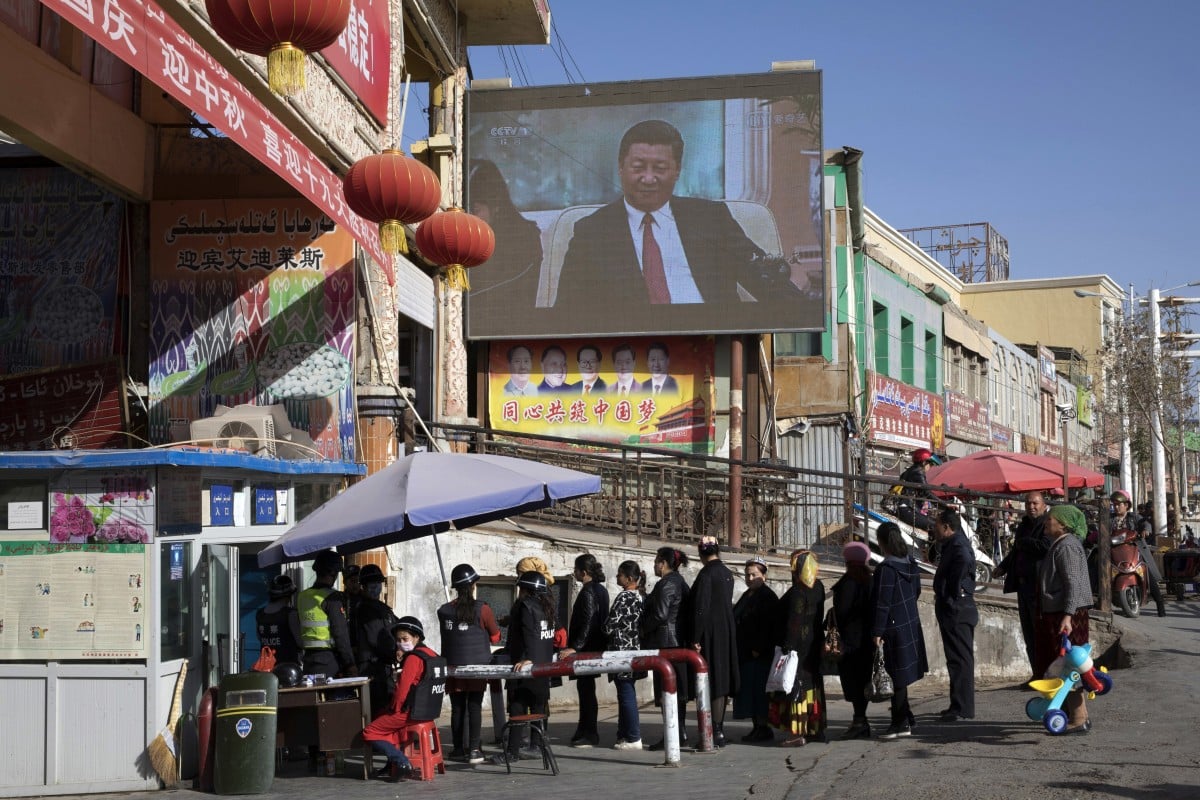
Residents go through a security checkpoint at the entrance to a bazaar in Hotan, Xinjiang. The UN’s counterterrorism chief visited the far western region last week. Photo: AP
Human rights group Amnesty International has joined growing criticism of a top UN official’s visit to China’s 
Xinjiang region

, echoing calls for more independent investigations of detention facilities for ethnic Uygurs.

The invitation to the United Nations envoy to visit was Beijing’s latest attempt to show it has nothing to hide in what it calls “re-education facilities” that hold an estimated 1 million people in the Muslim-majority area in western China.
But critics have warned that state-led media tours and diplomatic visits lack the unfettered access needed to make a proper assessment of alleged rights abuses in the region.
UN counterterrorism chief Vladimir Voronkov 
visited Beijing and Xinjiang

from Thursday to Saturday and met Le Yucheng, the vice foreign minister, according to a statement from the foreign ministry on Sunday. The statement said the two sides had reached a “broad consensus”.

UN human rights chief ‘is welcome to visit Xinjiang’

Voronkov’s visit follows months of pressure to allow the UN to investigate alleged human rights abuses in Xinjiang. China has so far only allowed guided tours of the region for foreign journalists and diplomatic envoys.

Reuters reported on Saturday that Voronkov’s itinerary was planned by China and that his UN office did not expect to make any public statement about the trip, according to an email from Voronkov’s office seen by the news agency.

The United Nations said in August last year it had credible reports that detention facilities in Xinjiang held 1 million Uygurs and other Muslims. Beijing says the facilities are for “vocational training” and tied to deradicalisation and anti-terrorism efforts.

Patrick Poon, a Hong Kong-based researcher with Amnesty International, said he was “very much concerned” about how the UN envoy’s visit had been arranged.

“From what we saw in the previous visits orchestrated by the Chinese government for diplomats, it’s very difficult for anyone to believe how this visit will be able to show any authentic situation on the ground,” Poon said.

“If the Chinese government is sincere, let independent UN experts, such as the special rapporteurs, have independent observation of what’s happening in Xinjiang.”

Xinjiang’s vanishing mosques highlight pressure on China’s Muslims
His remarks followed criticism of the trip from Human Rights Watch on Friday.
“The UN allowing its counterterrorism chief to go to Xinjiang risks confirming China’s false narrative that this is a counterterrorism issue, not a question of massive human rights abuses,” Human Rights Watch UN director Louis Charbonneau told Agence France-Presse.
Also on Friday, US Deputy Secretary of State John Sullivan called UN Secretary General Antonio Guterres to express “deep concerns” about Voronkov’s visit, according to the State Department website. Sullivan called for “unmonitored and unhindered access to all camps and detainees in Xinjiang by UN human rights officials”.
The United States has been increasingly vocal about China’s human rights abuses. Vice-President Mike Pence is due to give a speech on China’s “control and oppression” of citizens on June 24, but according to Bloomberg it could be postponed to avoid inflaming tensions with Beijing ahead of a possible meeting between US President Donald Trump and his Chinese counterpart Xi Jinping at the Group of 20 leaders summit in Japan on June 28-29. The speech was originally scheduled for June 4 but was delayed by Trump, Bloomberg reported, citing sources familiar with the matter.
Source: SCMP
14/06/2019

China, Kyrgyzstan agree to enhance ties to new heights

KYRGYZSTAN-BISHKEK-CHINA-PRESIDENTS-TALKS

Chinese President Xi Jinping and his Kyrgyz counterpart Sooronbay Jeenbekov hold talks in Bishkek, Kyrgyzstan, June 13, 2019. Xi and Jeenbekov held talks here Thursday, agreeing to take their countries’ comprehensive strategic partnership to new heights. (Xinhua/Li Xueren)

BISHKEK, June 13 (Xinhua) — Chinese President Xi Jinping and his Kyrgyz counterpart, Sooronbay Jeenbekov, held talks here Thursday, agreeing to take their countries’ comprehensive strategic partnership to new heights.

Xi arrived in the Central Asian country Wednesday for a state visit and the Shanghai Cooperation Organization (SCO) summit.

China-Kyrgyzstan relations have withstood the test of international vicissitudes and achieved leapfrog development over the past 27 years since the establishment of the diplomatic relationship. The two countries have set a fine example of a new type of state-to-state relations featuring mutual respect, equality and win-win cooperation, Xi said.

China will continue to support Kyrgyzstan’s own choice of development path and all policy measures taken by the Kyrgyz government to safeguard national independence, sovereignty and security, Xi said.

Xi also said China is ready to join hands with Kyrgyzstan to deepen their traditional friendship and mutually beneficial cooperation, so as to better benefit the two peoples.

The Chinese president stressed that jointly building the Belt and Road has become the focus of China-Kyrgyzstan cooperation, calling on the two countries to deepen the alignment of their development strategies, tap new potential of partnerships and explore new space of cooperation.

Cooperation in trade and investment should be expanded and major programs must be well implemented, Xi said, adding that China is willing to import more green and quality agro-products from Kyrgyzstan.

China will continue to support Kyrgyzstan’s economic and social development, including jointly building drinking water facilities, roads, hospitals and other projects to improve people’s livelihood.

Xi also called for closer people-to-people and sub-national exchanges.

Amid efforts to enhance security cooperation, the two countries should step up fight against the “three forces” of terrorism, separatism and extremism, transnational organized crime and drug trafficking, Xi said.

On the SCO, Xi said China applauds Kyrgyzstan’s efforts to promote cooperation in various fields since taking over the rotating presidency of the SCO.

China supports Kyrgyzstan in hosting the Bishkek summit, which will be held on Friday, and encourages the SCO member states to gather more consensus, tap potential of cooperation and build a community with a shared future that benefits all sides, Xi said.

For his part, Jeenbekov said he has met with the Chinese president for three times in more than a year, fully demonstrating the high level of the bilateral relations and the willingness of both sides to strengthen cooperation.

Kyrgyzstan will always be “a good neighbor, good friend and good partner” of China, he said.

Jeenbekov conveyed congratulations on the 70th anniversary of the founding of the People’s Republic of China and on the remarkable achievements made by the Chinese people under the leadership of Xi and the Communist Party of China.

Xi’s vision and experience on state governance are of great significance to Kyrgyzstan, Jeenbekov said.

The president thanked China for its long-term and huge assistance and support to Kyrgyzstan in its national development and the improvement of the people’s livelihood.

Kyrgyzstan firmly adheres to the one-China policy, Jeenbekov said, adding that the affairs of ethnic minorities in China are its internal affairs and that his country supports policies and measures taken by the Chinese government in this regard.

Kyrgyzstan stays committed to the fight against the “three forces,” he said.

Noting that Kyrgyzstan’s national development strategy corresponds to the Belt and Road Initiative (BRI), Jeenbekov said his country is ready to set up institutionalized arrangements to promote their alignment, deepen cooperation with China in areas such as trade, investment, energy, agriculture, transport and on local levels, as well as increase cultural and people-to-people exchanges.

Kyrgyzstan and China hold similar stances on international and regional issues, laying a sound foundation for the two countries to strengthen multilateral coordination, he said.

The Kyrgyz side appreciates China’s valuable support to Kyrgyzstan during its SCO presidency and in hosting the Bishkek summit, he said.

After the talks, the two presidents signed a joint statement on further deepening the comprehensive strategic partnership between the two countries, and witnessed the exchanges of bilateral cooperation documents.

The two sides will continue the visits and meetings between leaders of the two countries to regularly exchange views on bilateral relations and international and regional issues of common concern, according to the joint statement.

Both sides will continue to support each other on issues related to their core interests, such as national sovereignty, security and territorial integrity, said the statement.

Noting that there is great potential for cooperation to synergize the BRI with Kyrgyzstan’s national development strategy 2018-2040, the statement said the two sides will look for more common grounds of interests and realize common development based on the principle of win-win cooperation.

The two sides also pledged to support the central role of the United Nations in international affairs and the building of an open world economy, voicing resolute opposition to unilateralism and protectionism.

Source: Xinhua

Law of Unintended Consequences

continuously updated blog about China & India

ChiaHou's Book Reviews

continuously updated blog about China & India

What's wrong with the world; and its economy

continuously updated blog about China & India