15/03/2020
(Reuters) – France and Spain joined Italy in imposing lockdowns on tens of millions of people, Australia ordered self-isolation of arriving foreigners, and Argentina and El Salvadore extended entry bans as the world sought to contain the spreading coronavirus.
Panic buying in Australia, the United States and Britain saw leaders appeal for calm over the virus that has infected over 138,000 people globally and killed more than 5,000.
Several countries imposed bans on mass gathering, shuttered sporting, cultural and religious events, while medical experts urged people to practice “social distancing” to curb the spread.
All of Pope Francis’ Easter services next month will be held without the faithful attending, the Vatican said on Sunday, in a step believed to be unprecedented in modern times.
The services, four days of major events from Holy Thursday to Easter Sunday, usually draw tens of thousands of people to sites in Rome and in the Vatican.
Australian Prime Minister Scott Morrison said from midnight Sunday international travellers arriving in the country would need to isolate themselves for 14 days, and foreign cruise ships would be banned for 30 days, given a rise in imported cases.
“What we’ve seen in recent weeks, is more countries having issues with the virus and that means the source of some of those transmissions are coming from more and more countries,” Morrison told a news conference.
Australia’s latest restrictions mirror those announced by neighbouring New Zealand on Saturday. Australia has recorded more than 250 coronavirus cases and three deaths.
TRAVEL BANS, AIRLINE CUTBACKS
U.S. President Donald Trump declared a national emergency on Friday. The United States has recorded more than 2,000 cases and 50 deaths, but has been criticised for slow testing.
Travel bans and a plunge in global air travel saw further airline cut backs, with American Airlines Inc (AAL.O) planning to cut 75% of international flights through May 6 and ground nearly all its widebody fleet.
The dramatic announcement by the largest U.S. airline came hours after the White House said the United States would widen new travel restrictions on Europeans to include travellers in the United Kingdom and Ireland, starting Monday night.
Washington has already imposed flight restrictions on China.
China tightened checks on international travellers arriving at Beijing airport on Sunday, after the number of imported new coronavirus infections surpassed locally transmitted cases for a second day in a row.
Anyone arriving to Beijing from abroad will be transferred directly to a central quarantine facility for 14 days for observation starting March 16, a city government official said.
China, where the epidemic began in December, appears to now face a greater threat of new infections from outside its borders as it continues to slow the spread of the virus domestically.
China has reported 80,984 cases and 3,203 deaths, according to a Reuters tally, of which 66,911 have recovered in mainland China, which has imposed draconian containment policies, locking down several major cities.
LOCKDOWNS, STAY HOME
Spain put its 47 million inhabitants under partial lockdown on Saturday as part of a 15-day state of emergency to combat the epidemic in Europe’s second worst-affected country after Italy.
Spain had 193 coronavirus deaths and 6,250 cases, public broadcaster TVE said on Saturday, up from 120 deaths reported on Friday.
France will shut shops, restaurants and entertainment facilities from Sunday with its 67 million people were told to stay home after confirmed infections doubled in 72 hours.
French Prime Minister Edouard Philippe said the government had no other option after the public health authority said 91 people had died in France and almost 4,500 were now infected.
“We must absolutely limit our movements,” he said.
Britain is preparing to ban mass gatherings, while isolating people aged over 70 for up to four months is part of its action plan to tackle coronavirus which will be implemented in the coming weeks, Health Secretary Matt Hancock said on Sunday.
Argentina banned entry to non-residents who have travelled to a country highly affected by coronavirus in the last 14 days, the government officially announced late on Saturday.
The ban will last 30 days. Argentina has 45 cases of coronavirus, the health ministry said, up from 21 on March 12.
Panama said flights arriving from Europe and Asia would be temporarily suspended, with the exception of flights that transport doctors, medical equipment or other humanitarian aid.
Colombia will expel four Europeans for violating compulsory quarantine protocols, just hours after it closed its border with Venezuela, the government said on Saturday.
ANTI-TERRORISM TRACKING TO FIGHT VIRUS
Israel will use anti-terrorism tracking technology and partially shutdown its economy to minimise transmission risks, Prime Minister Benjamin Netanyahu said on Saturday.
Cyber tech monitoring would be deployed to locate people who have been in contact with those carrying the virus, subject to cabinet approval, Netanyahu told a news conference in Jerusalem.
Starting Sunday, South Korea began to subject visitors from France, Germany, Britain, Spain and the Netherlands to stricter border checks, after imposing similar rules for China, Italy and Iran which have major outbreaks.
Visitors from those countries now need to download an app which will report whether they have symptoms. South Korea has been testing hundreds of thousands of people and tracking potential carriers using cell phone and satellite technology.
Source: Reuters
Posted in AIRLINE CUTBACKS, American Airlines Inc (AAL.O), ANTI-TERRORISM TRACKING, Argentina, Australia, Australian Prime Minister Scott Morrison, Beijing, beijing airport, Benjamin Netanyahu, Britain, Cell Phone, Colombia, coronavirus, cruise ships, Easter services, El Salvadore, entertainment facilities, entry bans, epidemic, EU finance ministers, Europeans, fight, Foreigners, France, French Prime Minister, global, Health Secretary, imposed, Ireland, Israel, Italy, lockdowns, national emergency, New Zealand, Panama, Panic buying, restaurants, Reuters tally, satellite technology, self-isolation, shops, ski resorts, South Korea, Spain, spread, TRAVEL BANS, U.S. President Donald Trump, Uncategorized, United Kingdom, United States, Venezuela, Washington, White House |
Leave a Comment »
13/03/2020
BEIJING, March 13 (Xinhua) — China on Friday issued a report on human rights violations in the United States.
Titled “The Record of Human Rights Violations in the United States in 2019,” the report said the facts detailed in the document show that “in recent years, especially since 2019, the human rights situation in the United States has been poor and deteriorating.”
The State Council Information Office released the report based on published data, media reports and research findings. It began by citing a quote from U.S. Secretary of State Mike Pompeo in a speech on April 15, 2019: “We lied, we cheated, we stole … It reminds you of the glory of the American experiment.”
“The remarks of U.S. politicians have completely exposed their hypocrisy of adopting double standards on human rights issues and using them to maintain hegemony,” read the report.
The United States released annual reports to “distort and belittle” human rights situation in countries and regions that did not conform to U.S. strategic interests, but turned a blind eye to the “persistent, systematic and large-scale” human rights violations in its own country, the report said.
Consisting of foreword and seven chapters, it detailed facts on human rights violations in the United States relevant to civil and political rights, social and economic rights, discrimination suffered by ethnic minorities, discrimination and violence against women, living conditions of vulnerable groups, and abuses suffered by migrants, as well as U.S. violations of human rights in other countries.
The lack of restraint in the right to hold guns has led to rampant gun violence, posing a serious threat to citizens’ life and property safety in the United States, the report said.
“The United States is a country with the worst gun violence in the world,” read the report. In total, 39,052 people died from gun-related violence in the United States in 2019, and a person is killed with a gun in the United States every 15 minutes, figures showed.
Wealth polarization in the United States hit a 50-year high in 2018, the report said. In 2018, the wealthiest 10 percent held 70 percent of total household wealth. The bottom 50 percent saw essentially zero net gains in wealth over the past 30 years, it noted.
Regarding discrimination suffered by ethnic minorities in the United States, the report said the political structure and ideology of white supremacy in the United States have caused ethnic minorities to suffer all-round discrimination in various fields such as politics, economy, culture and social life.
Since 2016, white supremacy in the United States has shown a resurgence trend, leading to racial opposition and hatred, it noted.
Women in the United States face severe discrimination and violence, according to the report. Women in the United States were 21 times more likely to die by firearm homicide than women in peer nations, it noted, adding that sexual assault cases against women kept increasing.
About the living conditions of vulnerable groups, the report said tens of millions of U.S. children, elderly people, and disabled people live without enough food or clothing, and face threats of violence, bullying, abusing and drugs.
“The U.S. government not only has insufficient political will to improve the conditions for vulnerable groups but also keeps cutting relevant funding projects,” read the report.
While levels of extreme poverty worldwide had dropped dramatically, the poverty ratio of U.S. children was about the same rate as 30 years ago, it said.
The report noted the increasingly strict and inhumane measures taken by the U.S. government against immigrants in recent years, in particular, the “zero-tolerance” policy, which caused the separations of many immigrant families.
Many unaccompanied immigrant children were held in overcrowded facilities, without access to adequate healthcare or food, and with poor sanitation conditions, the report said.
It noted grave abuses at detention facilities for immigrants, including injecting them with sedatives, keeping them in handcuffs, and depriving them of clothing and mattresses.
The United States also wantonly trampled on human rights in other countries and was responsible for many humanitarian disasters around the world, according to the report.
The economic embargo against Cuba and the unilateral sanctions against Venezuela imposed by the United States had been a massive and flagrant violation of the human rights of people in these countries, the report said.
The United States withdrew from several multilateral mechanisms, including the UN Human Rights Council and the UN Global Compact on Migration, shirking off its international obligations and making troubles to the international governance system, it noted.
Source: Xinhua
Posted in 2019, China, Cuba, deteriorating, economic embargo, firearm homicide, Human rights, immigrant children, Mike Pompeo, racial opposition and hatred, Record of Human Rights Violations, report, State Council Information Office, U.S., U.S. Secretary of State, UN Global Compact on Migration, UN Human Rights Council, unaccompanied, Uncategorized, United States, Venezuela, Wealth polarization, women, worst gun violence |
Leave a Comment »
12/03/2020
BEIJING (Reuters) – The global coronavirus pandemic could be over by June if countries mobilize to fight it, a senior Chinese medical adviser said on Thursday, as China declared the peak had passed there and new cases in Hubei fell to single digits for the first time.
Around two-thirds of global cases of the coronavirus have been recorded in China’s central Hubei province, where the virus first emerged in December. But in recent weeks the vast majority of new cases have been outside China.
Chinese authorities credit strict measures they have taken, including placing Hubei under near total lockdown, with preventing big outbreaks in other cities, and say other countries should learn from their efforts.
“Broadly speaking, the peak of the epidemic has passed for China,” said Mi Feng, a spokesman for the National Health Commission. “The increase of new cases is falling.”
Zhong Nanshan, the government’s senior medical adviser, told reporters that as long as countries take the outbreak seriously and are prepared to take firm measures, it could be over worldwide in a matter of months.
“My advice is calling for all countries to follow WHO instructions and intervene on a national scale,” he said. “If all countries could get mobilized, it could be over by June.”
Speaking to U.N. Secretary-General Antonio Guterres, President Xi Jinping similarly expressed confidence, state television reported.
“After hard work, China has shown a trend of continuous improvement in epidemic prevention and control,” the report cited Xi as saying.
“I am confident that the Chinese people will be able to overcome this epidemic and achieve their intended economic and social development goals.”
Zhong, an 83-year-old epidemiologist renowned for helping combat the SARS outbreak in 2003, said viruses in the same family typically became less active in warm months.
“My estimate of June is based on scenarios that all countries take positive measures.”
Later on Thursday, Zhong held a teleconference with a group of U.S. medical experts, including from Harvard University, state television reported.
Zhong and his team shared their experiences of quickly testing and containing the virus, difficulties in treatment, and cooperation in clinical research, the report added.
The United States is now facing its own virus crisis as the number of infected people rises.
BUSINESSES REOPEN
With the marked slowdown of the spread of the virus in China, more businesses have reopened, with authorities cautiously easing strict containment measures.
Hubei province announced a further loosening of travel restrictions and will also allow some industries to resume production.
Hubei’s economy, driven by manufacturing and trade, including a sizable auto sector in the provincial capital, Wuhan, had been virtually shut down since Jan. 23.
While the virus is spreading quickly globally, its progress in China has slowed markedly in the past seven days. In all, 15 new cases were recorded in mainland China on Wednesday, down from 24 the day before. Seven of the new cases were outside Hubei, including six imported from abroad.
While only 85 of the cases in China have come from abroad, the rising number of such incidences has prompted authorities to shift their focus on containing the risk of imported cases.
The total number of cases recorded in mainland China was 80,793. As of Tuesday, 62,793 people had recovered and been discharged from hospital, or nearly 80% of the infections.
In Wuhan, the epicenter of the outbreak, 34,094 patients had been discharged from hospitals, but over half were still under observation at so-called “recovery stops” – quarantine venues repurposed from hotels and student dormitories.
Hubei’s health authority said the post-discharge quarantine was a precautionary measure, after a few discharged patients tested positive again.
As of the end of Wednesday, the death toll in mainland China had reached 3,169, up by 11 from the previous day. Hubei accounted for 10 of the new deaths, including seven in Wuhan.
China is focusing on restarting factories and businesses hit by the containment policies. Factory activity plunged to its worst level on record in February, and while more businesses have reopened in recent weeks as containment measures have been eased, analysts do not expect activity to return to normal until April.
Airlines have been hit particularly hard. China’s airlines reported total losses of 20.96 billion yuan ($3 billion) in February. The total number of airline passengers fell 84.5% year-on-year last month, China’s aviation regulator said.
Source: Reuters
Posted in act, airline passengers, airlines, Beijing, Chinese adviser, Coronavirus pandemic, countries, epidemiologist, health authority, hubei province, June, Mainland China, mobilize, National Health Commission, over, President Xi Jinping, quarantine, SARS outbreak, Shanghai, travelers, U.N. Secretary-General, Uncategorized, United States, WHO, Wuhan |
Leave a Comment »
12/03/2020
- In response to the 2008 global financial crisis, China pumped a 4 trillion yuan (US$575 billion) into its economy but it led to a mountain of local government debt
- Various early indicators suggest China’s economy will slow in the first quarter of 2020, with some suggestions it will suffer a first contraction since 1976
President Xi Jinping said China must accelerate construction of “new infrastructures such as 5G networks and data centres” on top of speeding up “key projects and major infrastructure construction” in response to the economic impact caused by the coronavirus outbreak. Photo: Xinhua
China should not try to bolster its coronavirus-hit economy by again resorting to a massive debt-fuelled fiscal and monetary stimulus programme, according to a group of government advisers.
Various early indicators suggest China’s economy will slow in the first quarter of 2020, with some even suggesting it will suffer a first contraction since the end of the Cultural Revolution in 1976.
This raises the question if China will miss its key 2020 growth target, with voices on both sides of the debate discussing what stimulus policies are needed to offset the deep impact of the coronavirus.
China is already leaning towards some additional stimulus, with Premier Li Keqiang ordering the central bank pump additional money into the banking system, while President Xi Jinping has announced the need for more spending on “new infrastructure”.
Are there other ways out for China except stimulus policies?Liu Shijin
“Are there other ways out for China except stimulus policies?” rhetorically asked Liu Shijin, who previously worked closely with Vice-Premier Liu He, the top economic aide to Xi, at the Development Research Centre, the think tank attached to the State Council.
“If it really works, why can’t Japan and the United States reach a 5 per cent growth rate?”
It is believed China will need to achieve an average 5.6 per cent growth in 2020 to achieve its goal of doubling the size of its economy from 2010, which is a key goal for
of creating a “comprehensively well-off” society.
China’s economy grew by
6.1 per cent in 2019, and while it was the slowest in 29 years, the US economy only grew 2.3 per cent, with Japan’s estimated to grow by 0.9 per cent.
What is gross domestic product (GDP)?
Liu Shijin, who is now a deputy head of the China Development Research Foundation and a policy adviser to the People’s Bank of China, argued that a growth rate averaging 5 per cent over the next decade is sufficient for China to meet its development goals.
Growth in 2020, though, may well be below 5 per cent given that the impact of the coronavirus is “unprecedented” and larger than both severe acute respiratory syndrome (Sars) in 2003 and the 2008 global financial crisis.
Xi said earlier this month that China must accelerate construction of “new infrastructures such as
5G networks and data centres” on top of speeding up “key projects and major infrastructure construction already included in state plans” like additional high-speed railway lines in response to the economic impact caused by the coronavirus outbreak.
But as this will mainly rely on corporate and private investment, Liu Shijin feels it will be too small to engineer a major rebound in the growth rate.
When encountering challenges, we should first push forward new reform measures to unleash growth potential. Now is the right timeLiu Shijin
“It’s a different thing compared to real [government-led] economic stabilisation,” Liu Shijin told a web seminar hosted by Peking University’s National School of Development on Wednesday.
“When encountering challenges, we should first push forward new reform measures to unleash growth potential. Now is the right time.”
Instead, to support longer-term growth, China should put its efforts into the development of its “city clusters”, which could lead to higher spending on housing construction, urban infrastructure and manufacturing, added Liu Shijin, which would increase the growth rate by up to an additional percentage point over the next decade.
China has so far refrained from the massive stimulus programme it adopted in 2008 in response to the global financial crisis, which included a 4 trillion yuan (US$575 billion) plan that pumped cheap money into government-backed projects but also created a mountain of local government debt.
Trump bans travel from Europe to the US as coronavirus pandemic hits actor Tom Hanks and the NBA
Zhang Bin, a senior researcher at the Chinese Academy of Social Sciences, said infrastructure construction will remain an important part of any plan to support growth.
“If the funding [for the 4 trillion yuan stimulus] had come solely from treasury bonds or local government bonds [rather than risky lending], there wouldn’t be so much shadow banking, unmanageable credit expansion, high leverage, implicit liabilities or financial risks,” he said.
“If the balance sheets of corporations, households and local governments can’t be repaired, it might lead to insufficient demand and a decline into a vicious [downward] cycle.”
Zhang, like Liu Shijin, is a key member of the China Finance 40 Forum, a group of state economists who advocate more structural reforms to support the Chinese economy. In particular, Zhang has set sights on reforms that would boost consumption, which accounted for 58 per cent of Chinese growth last year.
“The biggest weak link of the Chinese economy is that 200 to 300 million
migrant workers can’t [legally] settle in big cities,” he said. “Only if they are able to settle in the city that China can be called a real well-off society. It will also boost the economy, lift demand for manufactured goods and unleashed consumption potential.”
Currently, most large Chinese cities only provide social services including health care and schooling to residents who have a legal permit, or hukou. Most migrant workers who come to the big cities for jobs are blocked from obtaining a hukou, meaning they have to travel back to their rural hometowns to have access to basic social services, so often do not settle in their adopted city.
In response to this idea, Xu Yuan, a professor at Peking University, called for the government to build 10 million affordable housing units annually to accommodate new urban citizens, which would address short-term economic pain and serve the nation’s long-term development.
China will release its annual growth target as well as other key goals, including the fiscal deficit ratio and local bond quota, at the National People’s Congress, although the annual parliamentary convention, previously scheduled for March 5, has been postponed, with a new date yet to be announced.
Source: SCMP
Posted in 1976, 2020 growth target, 5G networks, affordable housing units, China, China Development Research Foundation, China Finance 40 Forum, Chinese Academy of Social Sciences, Construction, coronavirus, data centres, Development Research Centre, Economic, economic slowdown, Health care, hukou, Japan, legal permit, massive stimulus, migrant workers, National People’s Congress, National School of Development, new infrastructures, overcome, Peking University, Peking University’s, People’s Bank of China (PBOC), President Xi Jinping, schooling, Severe Acute Respiratory Syndrome (SARS), slowdown, social services, State Council, Uncategorized, United States, unprecedented, urban citizens, Xinhua |
Leave a Comment »
03/03/2020
BEIJING, March 3 (Xinhua) — When talking about the development of intellectual property (IP) in China, World Intellectual Property Organization (WIPO) Director General Francis Gurry said “it’s a remarkable journey and a remarkable story.”
Born at the start of reform and opening-up, China’s IP cause has taken only decades to accomplish what the western IP system took hundreds of years to develop. While developing and improving its IP system, China has been active in international cooperation to boost global IP governance.
ACTIVE IN INT’L COOPERATION
Starting from zero at the beginning of its reform and opening-up, China has established a relatively complete IP legal system in line with prevailing international rules, joined almost all major related international treaties, and developed cooperative relations with over 80 countries and international or regional organizations in a relatively short period of time.
China has always been a follower, participant and upholder of the international rules of IP, Shen Changyu, commissioner of the National Intellectual Property Administration, told Xinhua in a recent interview.
China is an active participant in multilateral and bilateral affairs within the framework of WIPO to promote and improve global IP governance, Shen added.
In recent years, international cooperation with China on IP protection has has continuous innovative progress. IP cooperation under the Belt and Road Initiative has in particular achieved practical results.
In 2019, China and the European Union (EU) completed an eight-year negotiation on an agreement to protect geographical indications (GI), which included 275 GI from each of the two sides in the appendix, such as EU’s Irish whiskey and traditional Chinese Shaoxing wine.
With the ratification of Indonesia on Jan. 28, the Beijing Treaty on Audiovisual Performances will take effect for its 30 contracting parties on April 28.
The Beijing treaty, adopted by WIPO member states in 2012, fills a gap in the international treaty on the comprehensive protection of performers in audiovisual performance.
PROTECTION WITHOUT DISCRIMINATION
IP is not only an important strategic resource of a country, but also a booster of technological innovation and a bridge of trade globalization. China is a protector and creator of IP.
Statistics show that by the end of 2019, China had led the world in patent and trademark applications for several years running.
According to data from the WIPO for 2017 and 2018, China was the second largest applicant for international patent applications submitted through the Patent Cooperation Treaty, and the third largest for trademark registration under the Madrid System.
After about 40 years of development, China’s IP governance capability is in line with that of the international community and its IP protection has reached the international standard, which is fully recognized by the world, said Shan Xiaoguang, dean of Shanghai International College of IP at Tongji University.
In the process of advancing the development of its IP system, China has made great efforts to enhance protection and optimize policies, insisting on providing effective protection without discrimination for both domestic and foreign enterprises.
Foreign plaintiffs are able to win and receive injunctions in patent infringement cases brought in China according to the law, Patently-O, a U.S. leading patent law blog, wrote, adding that China’s IP protection practice is fair and just.
China’s effective protection brings huge benefits to foreign IP holders every year. Statistics show that the country paid 34 billion U.S. dollars for IP royalties in 2019.
China has strengthened IP protection with an open attitude, making it a magnet for global trade and innovative activities.
Global innovative activities occur mostly in metropolitan hotspots in China, Germany, Japan, South Korea and the United States, according to the 2019 edition of WIPO’s “World Intellectual Property Report.”
According to Doing Business 2020, an annual report published by the World Bank, China jumped to 31st in its ranking for ease of doing business and is among the top 10 improvers for a second consecutive year.
CHINESE WISDOM
Advanced experience accumulated during the rapid growth of the IP cause in China over the past decades has attracted worldwide attention.
China places IP at a strategic high level, pays attention to IP protection in all economic fields, and has shown its determination of long-term policy for decades, which set up examples for other countries, said Gurry.
Renata Righetti Pelosi, president of the International Association for the Protection of Intellectual Property, pointed out two reasons for the rapid development of the IP cause in China.
On the one hand, the needs of economic operators in China have increasingly overlapped with those in the world, and the two sides have reached more consensuses on IP protection, Pelosi said.
On the other, China has many IP talents with a global vision, who are leading the rapid growth of this sector, she added.
Through academic exchanges and personnel training, China is also actively contributing its wisdom to global IP governance and is more confident about joining global IP cooperation.
The first batch of students from countries that joined the Belt and Road construction successfully graduated from China with master’s degrees in IP in 2018, bringing the knowledge and experience of IP protection they learned from China to the world.
As global IP governance is facing new challenges posed by a new phase of development and a new round of scientific and technological revolution has brought great changes to the industry, many industries spawned by new technologies have gone beyond the scope of protection of the original IP system.
In the new round of scientific and technological revolution and industrial transformation, countries should learn from each other with a more open and inclusive attitude, said Shan, adding that China has led the world in such technological fields as artificial intelligence, big data and life science, and accumulated valuable experience on IP protection in related industries, which is conducive to solving global challenges.
Source: Xinhua
Posted in "it's a remarkable journey and a remarkable story.", "remarkable", "World Intellectual Property Report.", Beijing Treaty on Audiovisual Performances, China, China's, contribution, Doing Business 2020, European Union (EU), Germany, global IP, governance, Indonesia, intellectual property (IP), International Association for the Protection of Intellectual Property, Irish whiskey, Japan, Madrid System, National Intellectual Property Administration, patent and trademark applications, Patent Cooperation Treaty, Shanghai International College of IP, South Korea, traditional Chinese Shaoxing wine, Uncategorized, United States, WIPO member states, World Bank, World Intellectual Property Organization (WIPO) |
Leave a Comment »
25/02/2020
LONDON (Reuters) – Britain’s biggest retailer Tesco (TSCO.L) has completed its exit from China with the 275 million pound sale of its joint venture stake to state-run partner China Resources Holdings (CRH).
Having struggled to crack the Chinese market, Tesco established the Gain Land venture with CRH in 2014, combining the British group’s 131 stores in China with its partner’s almost 3,000.
The disposal of its 20% stake allows Tesco to further simplify and focus the business on core operations, it said on Tuesday, adding that the proceeds will be used for general corporate purposes.
The deal is scheduled to complete on Feb. 28.
Shares in Tesco were up 0.7% at 0816 GMT, extending its gains over the last year to 12.4%.
“This extra 275 million pounds of ‘forgotten value’ should be accretive to most street valuations,” said Bernstein analyst Bruno Monteyne.
After costly exits from Japan and the United States and the sale of its South Korean business, Tesco signalled in December a further retreat from its once lofty global ambitions by starting a review of its operations in Thailand and Malaysia – its last remaining wholly owned businesses in Asia.
A sale of its operations in Thailand and Malaysia would mean Tesco’s only remaining overseas operations, apart from Ireland, would be its central European division, comprising stores in the Czech Republic, Hungary, Poland and Slovakia.
The Asian exit could be one of the last acts of Tesco CEO Dave Lewis, who will be succeeded by Ken Murphy in October.
Bernstein’s Monteyne expects Tesco to start a 1 billion pound share buyback programme in its 2020-21 financial year.
“With this transaction and the possible sale of Thailand and Malaysia, Tesco’s biggest short-term concern could be how to efficiently return cash to shareholders,” he said.
Source: Reuters
Posted in Britain’s biggest retailer, Business, China, China Resources Holdings (CRH), completes, Czech Republic, exit, Hungary, Ireland, Japan, Malaysia, Poland, Slovakia, South Korean, Tesco, Tesco (TSCO.L), Thailand, Uncategorized, United States |
Leave a Comment »
25/02/2020
NEW DELHI (Reuters) – U.S. President Donald Trump said on Tuesday that India will buy $3 billion worth of military equipment, including attack helicopters, as the two countries deepen defence and commercial ties in an attempt to balance the weight of China in the region.
India and the United States were also making progress on a big trade deal, Trump said. Negotiators from the two sides have wrangled for months to narrow differences on farm goods, medical devices, digital trade and new tariffs.
Trump was accorded a massive reception in Indian Prime Minister Narendra Modi’s home state on Monday, with more than 100,000 people filling into a cricket stadium for a “Namaste Trump” rally.
On Tuesday, Trump sat down for one-on-one talks with Modi followed by delegation-level meetings to try and move forward on issues that have divided them, mainly the festering trade dispute.
After those meetings, Trump said his visit had been productive with the conclusion of deals to buy helicopters for the Indian military. India is buying 24 SeaHawk helicopters from Lockheed Martin equipped with Hellfire missiles worth $2.6 billion and also plans a follow-on order for six Apache helicopters.
India is modernising its military to narrow the gap with China and has increasingly turned to the United States over traditional supplier, Russia.
Trump said the two countries were also making progress on a trade deal, which had been an area of growing friction between them.
“Our teams have made tremendous progress on a comprehensive trade agreement and I’m optimistic we can reach a deal that will be of great importance to both countries,” said Trump in remarks made alongside Modi.
The two countries had initially planned to produce a “mini deal”, but that proved elusive.
Instead both sides are now aiming for a bigger package, including possibly a free trade agreement.
Trump said he also discussed with Modi, whom he called his “dear friend”, the importance of a secure 5G telecoms network in India, ahead of a planned airwaves auction by the country.
The United States has banned Huawei, arguing the use of its kit creates the potential for espionage by China – a claim denied by Huawei and Beijing – but India, where telecoms companies have long used network gear from the Chinese firm, is yet to make a call.
Trump described Monday’s rally in Ahmedabad and again praised Modi and spoke of the size of the crowd, claiming there were “thousands of people outside trying to get in..
“I would even imagine they were there more for you than for me, I would hope so,” he told Modi. “The people love you…every time I mentioned your name, they would cheer.”
In New Delhi, Trump was given a formal state welcome on Tuesday at the red sandstone presidential palace with a 21-cannon gun salute and a red coated honour guard on horseback on a smoggy day.
HUG GETS TIGHTER
India is one of the few big countries in the world where Trump’s personal approval rating is above 50% and Trump’s trip has got wall-to-wall coverage with commentators saying he had hit all the right notes on his first official visit to the world’s biggest democracy.
They were also effusive in their praise for Modi for pulling off a spectacular reception for Trump.
“Modi-Trump hug gets tighter,” ran a headline in the Times of India.
But in a sign of the underlying political tensions in India, violent protests broke out in Delhi on Monday over a new citizenship law that critics say discriminates against Muslims and is a further attempt to undermine the secular foundations of India’s democracy. They say the law is part of a pattern of divisiveness being followed by Modi’s Hindu nationalist Bharatiya Janata Party.
At least 7 people were killed and about 150 injured in the clashes that took place in another part of the capital, away from the centre of the city where Modi is hosting Trump.
In his speech on Monday, Trump extolled India’s rise as a stable and prosperous democracy as one of the achievements of the century. “You have done it as a tolerant country. And you have done it as a great, free country,” he said.
Delhi has also been struggling with high air pollution and on Tuesday the air quality was moderately poor at 193 on a government index that measures pollution up to a scale of 500. The WHO considers anything above 60 as unhealthy.
Source: Reuters
Posted in 'happiness' class, 'Namaste Trump', 21-cannon gun salute, Ahmedabad, attack helicopters, balance, Beijing, Bharatiya Janata Party, cricket stadium, deepen, defence and commercial ties, Delhi, digital trade, farm goods, hindu nationalist, home state, honour guard, Huawei, India, Indian military, Indian Prime Minister Narendra Modi’s, medical devices, Melania Trump, military equipment, New Delhi, presidential palace, rally, raucous, region, school, telecoms companies, trade deal, two countries, U.S. first lady, U.S. President Donald Trump, Uncategorized, United States, weight of China, welcome, WHO |
Leave a Comment »
24/02/2020
- State-owned carrier’s chief says it wouldn’t be ‘morally acceptable’ to stop flying to the country, and it will stand with its ‘Chinese brothers and sisters’
- Dozens of airlines have cancelled or reduced services to the nation amid the virus outbreak, including two East African rivals
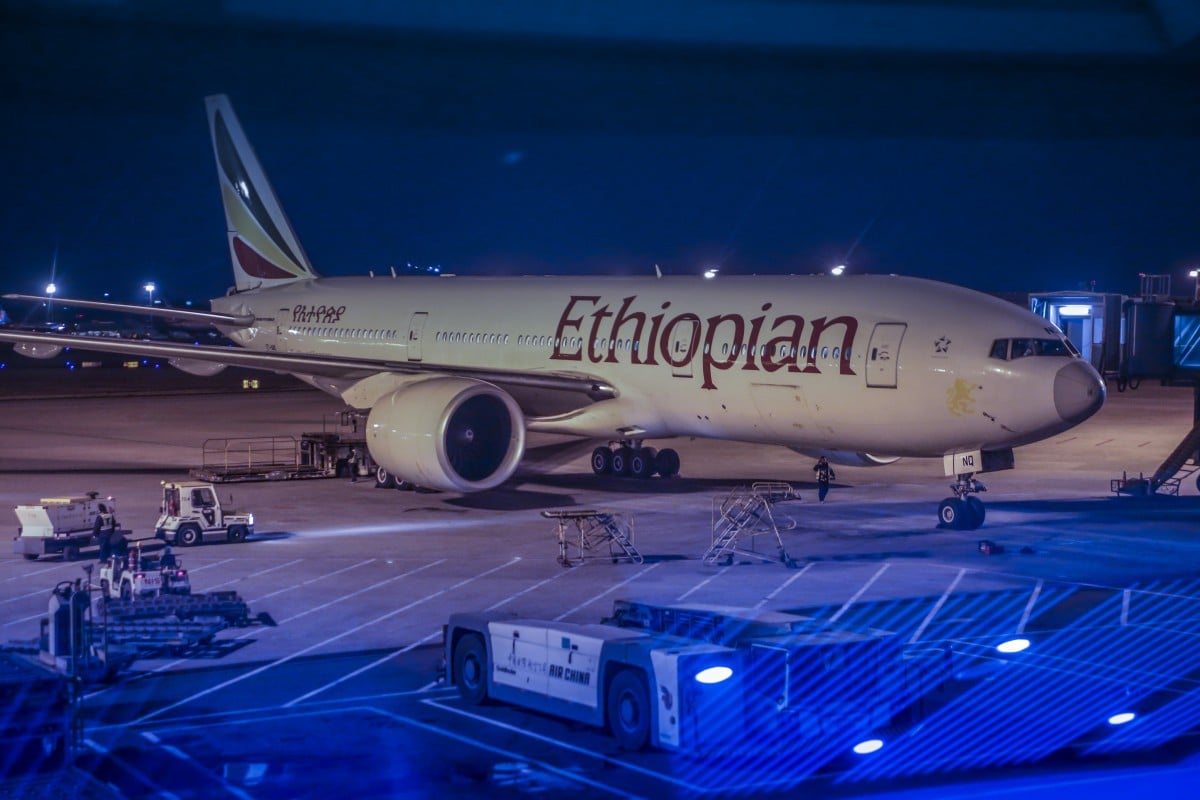
Ethiopian Airlines says it will continue flying to China. The routes are among its most profitable. Photo: Shutterstock
Ethiopian Airlines, Africa’s largest and most profitable carrier, will continue flying to China despite growing pressure for it to suspend services to the country as
.
Dozens of airlines around the globe have cancelled or reduced their services to cities in the world’s second-largest economy amid fears over the outbreak. Its East African rivals Kenya Airways and RwandAir have both suspended flights to China until the outbreak is contained.
But Ethiopian Airlines chief executive Tewolde GebreMariam said the carrier would not abandon the routes, which are among its most profitable.
Tewolde told media over the weekend that the airline had been flying to China since 1973 and it would not be ethical to suspend flights to the country.
“It will not be morally acceptable to stop flying to China today because they have a temporary problem,” he said, adding that the airline would stand with its “Chinese brothers and sisters”.
His remarks came days after Kenyan President Uhuru Kenyatta put pressure on the Ethiopian government – which wholly owns Ethiopian Airlines – to halt flights to China, citing the need to curb the spread of the virus into the East African region.
Global coronavirus deaths equal Sars, while new infections drop
The airline has bucked a trend that has seen major airlines – from the United States to Europe and Asia – staying away from Chinese airspace as governments around the world move to keep the deadly virus from their borders. The pneumonia-like illness has so far
in mainland China since the outbreak began in Wuhan in December, with cases reported in more than 20 other countries worldwide.
Speaking during a visit to Washington last week, Kenyatta – who is keen to court both China and the US – insisted that Kenya’s decision to suspend flights from Guangzhou to Nairobi was not political.
He said most African countries had weak health systems that would make it harder to handle the outbreak, so preventing its spread – even if through extreme measures such as grounding flights – was the only option.
“Our worry as a country is not that China cannot manage the disease. Our biggest worry is diseases coming into areas with weaker health systems like ours,” Kenyatta said while addressing members of US think tank the Atlantic Council.
Vaccine for new coronavirus unlikely to be ready before outbreak is over, says Sars expert
But Ethiopian Airlines said it would continue flying to Beijing, Shanghai, Guangzhou, Chengdu and Hong Kong and was taking measures to protect staff and passengers. Ethiopia receives about 1,500 visitors from mainland China every day.
According to Tewolde, if the airline halted its Chinese services, China and Africa would be completely disconnected.
“No one in Ethiopian Airlines would like to see this,” he said. “We have to take maximum precautions, but stopping flights is not one of them.”
He added: “Even if we stop flying, people will continue to come to Ethiopia through Singapore, Malaysia, Europe. The transmission of the disease will be dangerously hidden … British Airways stopped flying to China for its economic reasons. But Chinese carriers are flying to the UK.”
Chinese cities keen to get back to work but coronavirus concerns grow as workers return
In a separate statement, the carrier said China was “one of the strongest and one of the oldest markets for Ethiopian Airlines”.
“We have been connecting the great Chinese nation with the entire continent of African for almost half a century and it is our growth strategy,” the airline said, adding that it would continue operating in the five cities in compliance with international aviation and health guidelines.
Aside from seeking to shore up revenues, analysts noted that the airline was under tight state control, and Ethiopia would be reluctant to do anything that might harm its strong bilateral ties with China.
Ethiopia is among the nations on the continent with the highest number of Chinese immigrants. Most of them are workers involved in the construction of infrastructure projects including ports, railways, dams, bridges and malls. Those projects have been financed with billions of dollars in loans from China – Ethiopia is reportedly among the biggest recipients of Chinese lending in Africa.
Last year, China was forced to restructure Ethiopia’s debt after the latter edged closer to defaulting on a loan from Beijing for its standard gauge railway.
Chinese hotel workers arrested in Kenya after caning video prompts demands for action
Ethiopia, Algeria, Angola, Nigeria and Zambia together accounted for nearly 60 per cent of all Chinese workers on the continent at the end of 2017, according to a study by Johns Hopkins University.
Ethiopia is also a major recipient of direct foreign investment from China.
Source: SCMP
Posted in africa, Algeria, Angola, Asia, Atlantic Council, Beijing, bow, British Airways, Chengdu, China, coronavirus, direct foreign investment, East African, Ethiopian Airlines, Europe, Guangzhou, halt flights, Hong Kong, Kenya Airways, Kenyan president, Mainland China, Malaysia, Nigeria, pressure, refuses, rivals, SARs, Shanghai, Singapore, Uhuru Kenyatta, Uncategorized, United States, Zambia |
Leave a Comment »
24/02/2020
- An insect-killing fungus has been turned into a mass-produced biopesticide that will face its biggest challenge in East Africa
- Current swarm has put 13m people at risk of famine and this will be the first large-scale test of its effectiveness
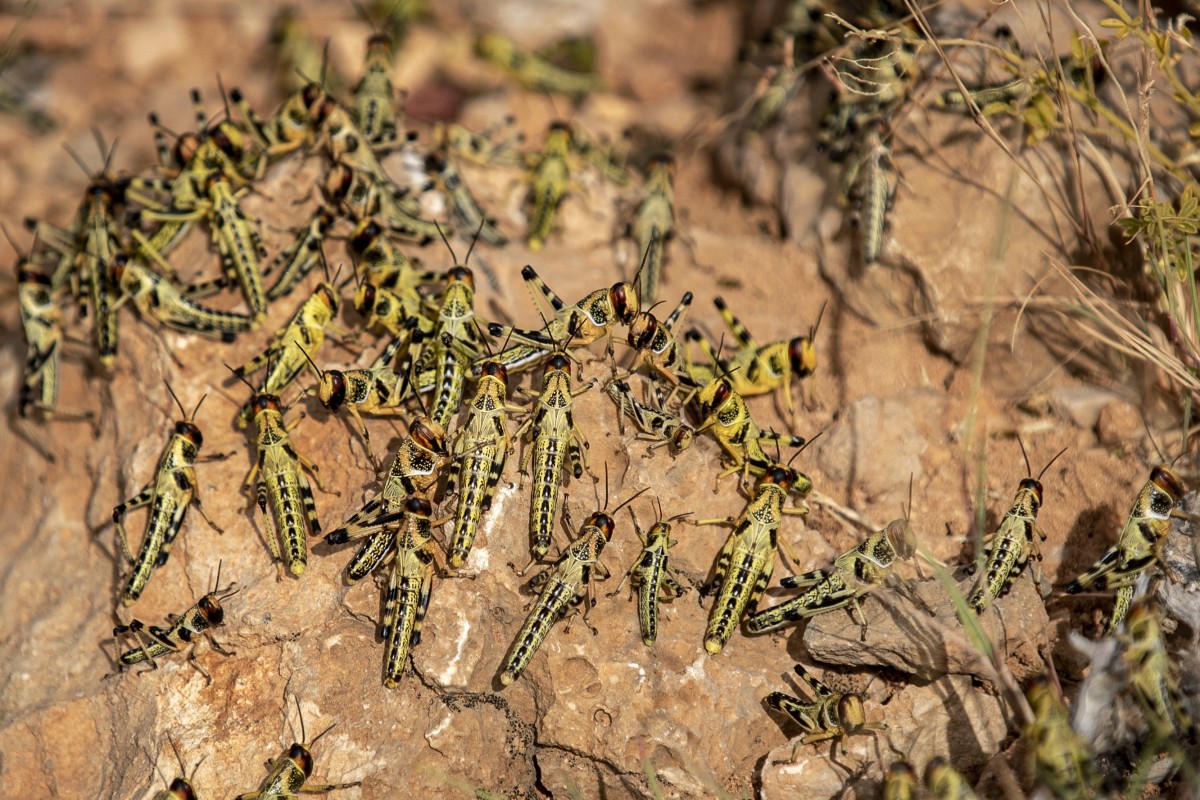
Young locusts in Somalia, where the fungus will be used to try to kill them. Photo: AP
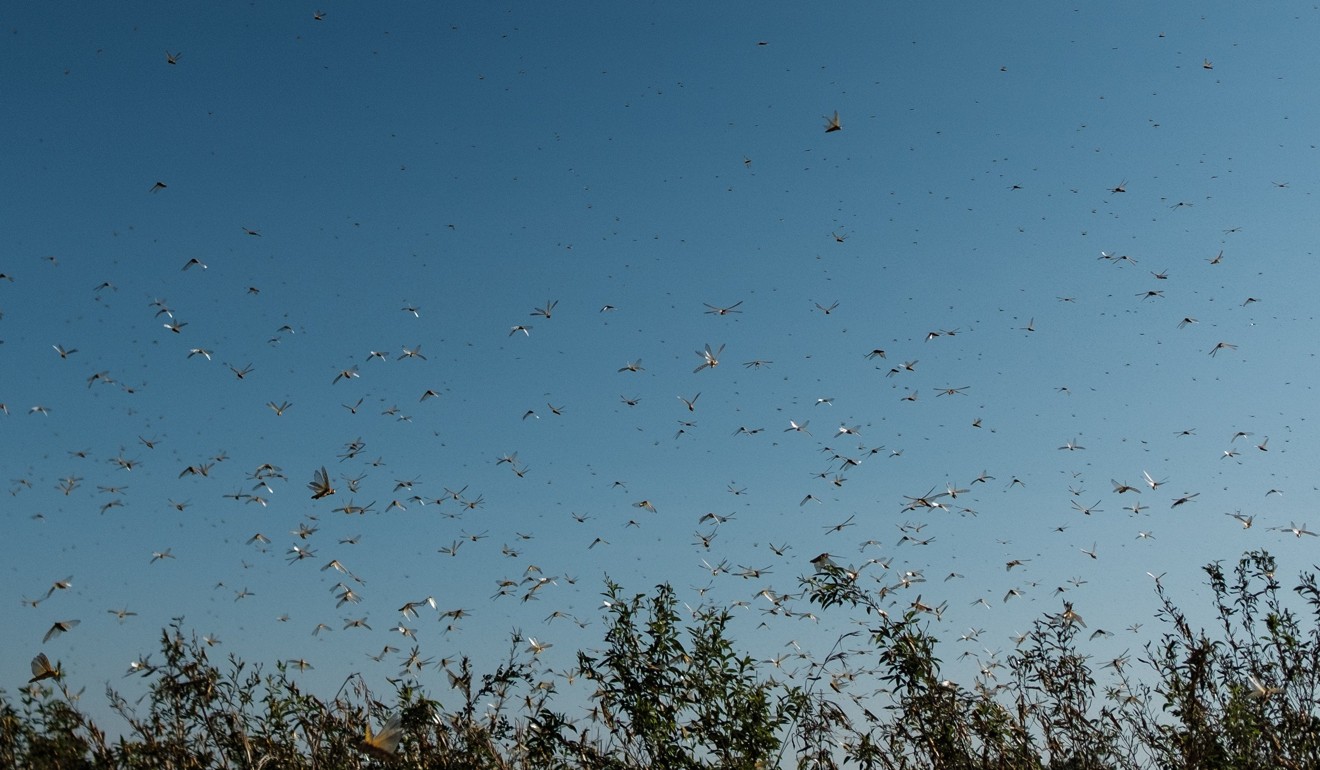
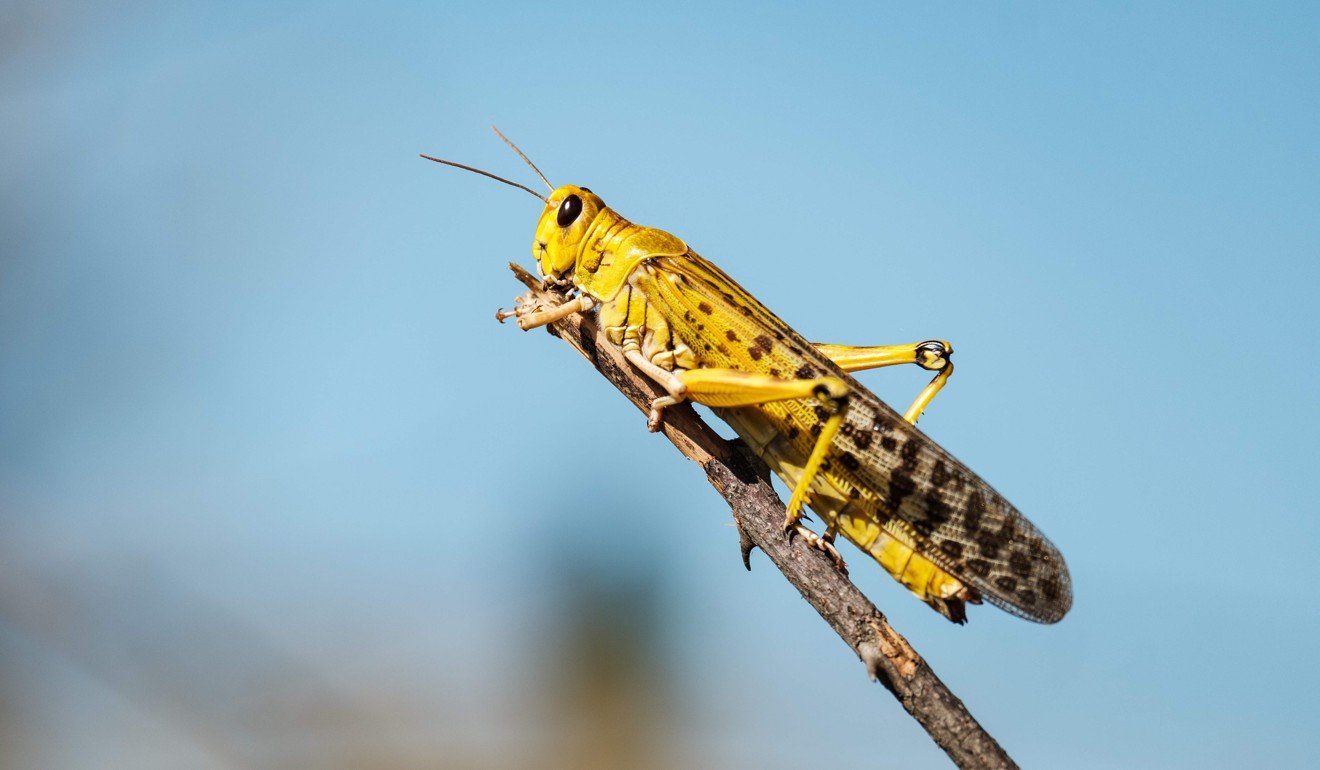
Chinese factories are producing thousands of tonnes of a “green zombie fungus” to help fight the swarms of locusts in East Africa.
Metarhizium is a genus of fungi with nearly 50 species – some genetically modified – that is used as a biological insecticide because its roots drill through the insects’ hard exoskeleton and gradually poisons them.
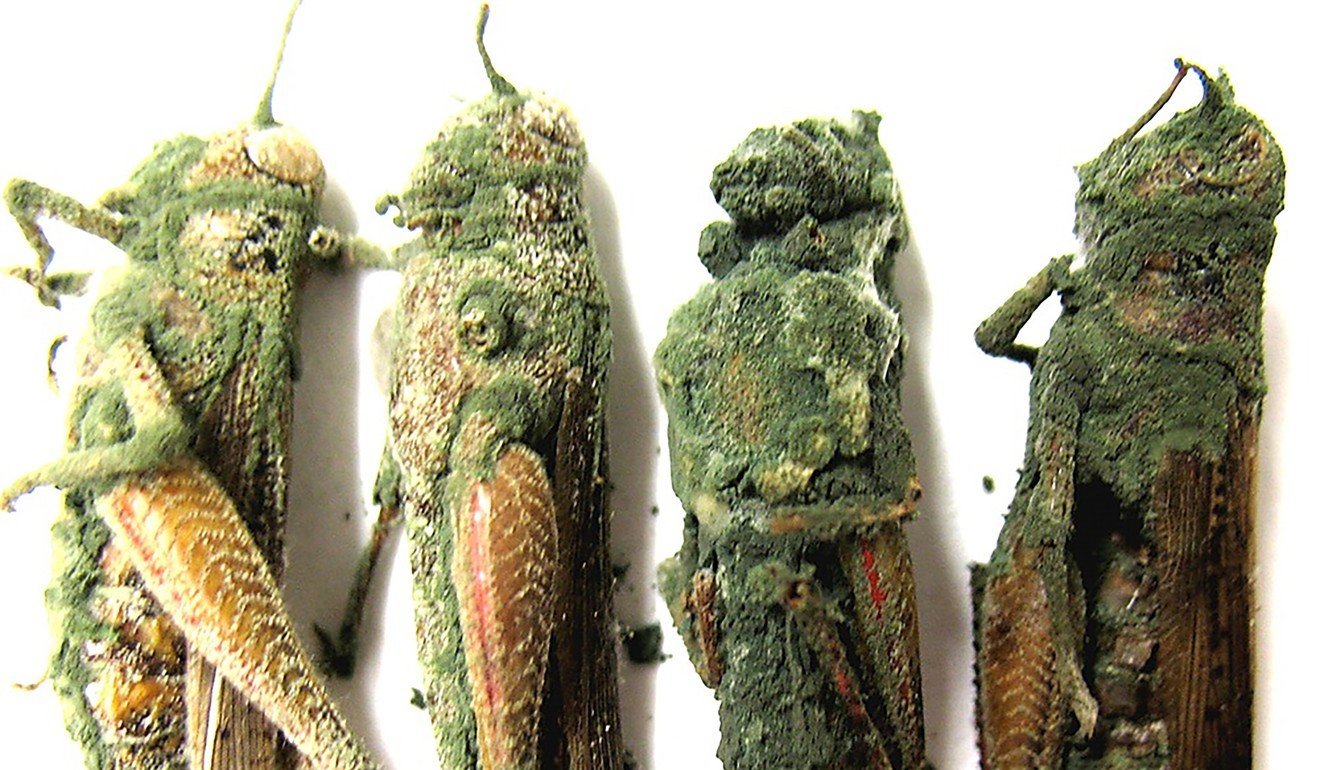
In China it was named lu jiang jun, which means green zombie fungus, because it gradually turns its victims in a green mossy lump.
There are now dozens of factories across the country dedicated to producing its spores and despite the curbs introduced to stop the spread of Covid-19, many of them have resumed operations and are shipping thousands of tonnes to Africa.
Plague fears as massive East Africa locust outbreak spreads
These factories are set up in a similar way to breweries, growing the spores on rice which is kept in carefully controlled conditions to ensure the correct temperature and humidity.
Each plant can produce thousands of tonnes of fungi powder per year, each gram of which contains tens of billions of spores.
“I am sending off a truckload right now. Our stock is running out,” said the marketing manager of a production plant in Jiangxi province. “Some customers need it urgently. They need it to kill the locusts.”
The need is particularly pressing in East Africa at the moment, where abnormally high levels of rainfall during the dry season allowed hundreds of billions of locusts to hatch in recent months.
So far the swarms have devastated crops in countries such as Ethiopia, Kenya, Somalia and Uganda and are moving on to neighbouring countries.
Up to 13 million people face the risk of famine in East Africa. Photo: AFP
The UN’s Food and Agriculture Organisation (FAO) has warned the situation could be the “worst in decades” and the resulting famine may affect 13 million people and cause international food prices to soar.
Last week, Science magazine reported that the Somalian government, working with the FAO, was preparing to a metarhizium species that only kills locusts and grasshoppers in what it described as the largest ever use of biopesticides against the insects.
Scientists do not believe that the fungus will be enough to solve the problem – monitoring the outbreak and targeting their breeding grounds will be more important in the long-run – but if it proves effective it could be an important weapon to target future outbreaks.
It will take time to gauge the effectiveness, partly because each fungus will take several days to take effect and partly because of the sheer scale of the challenge; a single swarm in Kenya was estimated to contain between 100 billion and 200 billion locusts.
By fair means or fowl: how Chinese herdsmen are planning to stop a locust invasion
The locusts have also swept eastward into the Middle East, travelling up to 150km (90 miles) a day, and are moving closer to China now that they have now reached some of its neighbours, including India and Pakistan.
At present China’s agriculture ministry believes some locusts may follow the monsoon into the country but “the chances of them causing damage is very small”.
Most scientists agree the swarms will not have lasting effect on food production but say developing countries can tap into China’s cutting-edge anti-locust technology.
Radar stations have been set up all the way along China’s western and southern borders to detect possible clouds of locusts, while unmanned devices lure the insects into traps to collect data about their species population and size.
A locust being eaten inside out by the metarhizium fungi. Photo: Chinese Academy of Sciences and the University of Maryland
The data is streamed to the ministry’s programme command, which is responsible for the planning and coordination of the national efforts to prevent an outbreak.
The scientists also said that planes loaded with biological and chemical sprays were standing by.
Today, most locust outbreaks happen in developing countries that do not have advanced monitoring networks and some of them are unable to produce pesticides on a mass scale, according to Li Hu, an associate professor with the China Agricultural University in Beijing.
The Chinese locust treatment technologies were highly advanced, and usually cheaper than competing solutions from the West, he said.
Chinese researchers are now working with colleagues in other countries to help them solve the problem.
One disadvantage of the Chinese research is that it is mostly focused on local species, or the East Asia migratory locust. The desert locusts currently swarming East Africa have different genes and behaviour, and Li warned that some methods that work in China might not work elsewhere.
A giant indoor farm in China is breeding 6 billion cockroaches a year. Here’s why
There were some sightings of the species reported in Yunnan and Tibet in the past, but they did not build up to large colonies, Professor Kang Le, lead scientist of the locust research programme with the Institute of Zoology at the Chinese Academy of Sciences in Beijing, told China Science Daily last week.
The vast west China region of Xinjiang, which shares a border with eight countries, is currently too cold for a locust migration, but once temperatures start to rise in the spring it could see locusts swarming across the border with Afghanistan.
Shi Wangpeng, a senior government locust expert, told China Business Network on Sunday that China should be on high alert because many Afghan farms had already been affected.
“These areas share a long border with us, there are almost no barriers,” he was quoted as saying by the Shanghai-based magazine.
China has a long and bitter history of locust swarms, with more than 840 being recorded in the official records over the past 2,700 years.
One famine, in the year 628 was so devastating that even the Tang dynasty emperor Taizong was reported to have run short of food and resorted to eating the insects to survive.
China has a long and bitter history of locust swarms. Photo: AFP
This, in turn, means that China’s rulers have long been looking for innovative ways to solve the problem
In the past farmers tried remedies such as building huge fires, burying the insects in ditches or trying to kill them with sticks.
In one campaign organised by prime minister Yao Chong in 715, the farms collected 9 million sacks of dead locusts and managed to save a significant proportion of their crops, according to historic text.
In more recent times more sophisticated technologies have been deployed to tackle the menace.
Some researchers have spent decades chasing locust colonies and studying their individual and collective behaviour everywhere from coastal areas to inland deserts, and in 2014 Chinese scientists released the world’s most comprehensive genetic map of locusts.
Researchers have also developed chemical agents that can disorient swarms of locusts and disperse them.
Chinese scientists first became interested in the green zombie’s potential in the 1980s after discovering that South Pacific islanders had been using them to kill insects on coconut trees.
Research by US scientists confirmed its effectiveness in the 1990s and the Chinese started importing the fungus from the United States and Britain.
Their experiments led to the development of newer and deadlier strains and mass production started in the past decade.
Other fungi or bacteria can be used to fight locusts, and some laboratories are working with agricultural technology companies to modify their genes to turn them into more deadly or precise killers.
One genetically engineered species of microsporidia, another type of insect-killing fungus, for instance, can generate three times as many as the spores to those produced by nature species, according to a document from the China Association of Agricultural Science Societies last year.
While it remains to be seen whether the current swarms will reach China, these treatments have been effective in the past and there has not been a locust outbreak in China for a decade.
Source: SCMP
Posted in Afghan farms, Afghanistan, Agriculture ministry, Beijing, Britain, China Agricultural University, China Association of Agricultural Science Societies, China Business Network, China Science Daily, China’s, Chinese Academy of Sciences, cockroaches, coconut trees, desert locusts, different genes and behaviour, East Africa’s, East Asia migratory locust, Ethiopia, famine, fighting, Food and Agriculture Organisation (FAO), green zombie fungus, hold ke, hold key, India, insect-killing fungus, Institute of Zoology, Jiangxi Province, Kenya, locust treatment technologies, locusts, mass-produced biopesticide, microsporidia, Middle East, monsoon, Pakistan, Plague fears, Radar stations, Science, Somalia, South Pacific islanders, swarms, Taizong, Tang dynasty emperor, Tibet, Uganda, Uncategorized, United States, Xinjiang, Yunnan |
Leave a Comment »
24/02/2020
AHMEDABAD, India (Reuters) – Donald Trump was cheered by more than 100,000 Indians at the opening of the world’s largest cricket stadium on Monday, promising “an incredible trade deal” and “the most feared military equipment on the planet” at his biggest rally abroad.
Indians wore cardboard Trump masks and “Namaste Trump” hats to welcome the U.S. president at the huge new Motera stadium in Prime Minister Narendra Modi’s own political homeland, the western city of Ahmedabad.
Modi, a nationalist who won re-election last year and has shifted his country firmly to the right with policies that his critics decry as authoritarian and ethnically divisive, touts his relationship with Trump as proof of his own global standing.
U.S. officials have described Trump’s visit as a way to counter China’s rise as a superpower.
“You have done a great honour to our country. We will remember you forever, from this day onwards India will always hold a special place in our hearts,” Trump said to thunderous applause.
India is one of the few big countries in world where Trump’s personal approval rating is above 50%. It has built up ties with the United States in recent years as Washington’s relationship has become strained with India’s foe Pakistan.
“As we continue to build our defence cooperation, the United States looks forward to providing India with some of the best and most feared military equipment on the planet,” Trump said.
Trump said the two countries will sign deals on Tuesday to sell military helicopters worth $3 billion and that the United States must become the premier defence partner of India, which relied on Russian equipment during the Cold War. Reuters reported earlier that India has cleared the purchase of 24 helicopters from Lockheed Martin (LMT.N) worth $2.6 billion.
But in a sign of the underlying political tensions in India, violent protests broke out in Delhi – where Trump is due on Tuesday – over a new citizenship law that critics say discriminates against Muslims and is a further attempt to undermine the secular foundations of India’s democracy.
Vehicles were set on fire in the eastern part of Delhi, metal barricades torn down, and thick smoke billowed through the air as thousands of those who are supporting the new law clashed with those opposing it.
In his speech Trump extolled India’s rise as a stable and prosperous democracy as one of the achievements of the century. “You have done it as a tolerant country. And you have done it as a great, free country,” he said.
Trump planned to raise the issue of religious freedoms in India with Modi, an administration official said last week.
VERY BIG DEALS
In Ahmedabad, Modi embraced Trump as he stepped off Air Force One, along with his wife, Melania.
Folk dancers carrying colourful umbrellas danced alongside the red carpet as drummers, trumpeters and other musicians performed at the airport to welcome Trump and the U.S. delegation. Crowds lined the route along his cavalcade, many taking pictures on their phones.
The two sides did not manage to hammer out a trade deal ahead of the visit, with differences remaining over agriculture, medical devices, digital trade and proposed new tariffs. Trump said he was going to discuss economic ties with Modi, describing him as a tough negotiator.
“We will be making very, very major, among the biggest ever made, trade deals. We are in the early stages of discussion for an incredible trade agreement to reduce barriers of investment between the United States and India,” he said.
“And I am optimistic that working together, the prime minister and I can reach a fantastic deal that’s good and even great for both of our countries – except that he is a very tough negotiator.”
Modi, who has built a personal rapport with Trump, is pulling out the stops for the president although prospects for even a limited trade deal during the visit are seen as slim.
“There is so much that we share, shared values and ideals … shared opportunities and challenges, shared hopes and aspirations,” said Modi at the rally.
Trump, who faces his own re-election campaign this year, has frequently praised Modi for his crowd-pulling power.
Last year, Trump held a “Howdy Modi” rally with Modi in Houston, drawing 50,000 people, mainly Indian Americans. At the time, Trump likened Modi to Elvis Presley as a draw for crowds.
Later, Trump and his entourage which includes daughter Ivanka and son-in-law Jared Kushner flew to Agra to see the Taj Mahal at sunset. Children lined the route cheering and waving flags as his convoy drove past.
Trump and Melania posed for pictures at the Taj, the 17th century monument to love. “It’s incredible,” he told reporters.
Source: Reuters
Posted in 'Namaste Trump', 17th century, Agra, agriculture, Ahmedabad, Air Force One, “Howdy Modi”, digital trade, Donald Trump, Elvis Presley, India, Indian Americans, Indians, Ivanka, Jared Kushner, medical devices, Melania, monument to love, Motera stadium, Prime Minister Narendra Modi’s, religious freedoms, Taj Mahal, tariffs, Uncategorized, United States, world’s largest cricket stadium |
Leave a Comment »





 CHINDIA ALERT: You'll be living in their world, very soon