02/05/2020
- Inmates who have undergone compulsory re-education programme to be moved to other parts of China under job placement scheme delayed by Covid-19 outbreak
- Critics have said the camps are a move to eradicate cultural and religious identity but Beijing has defended them as way of boosting job opportunities and combating Islamic radicalisation
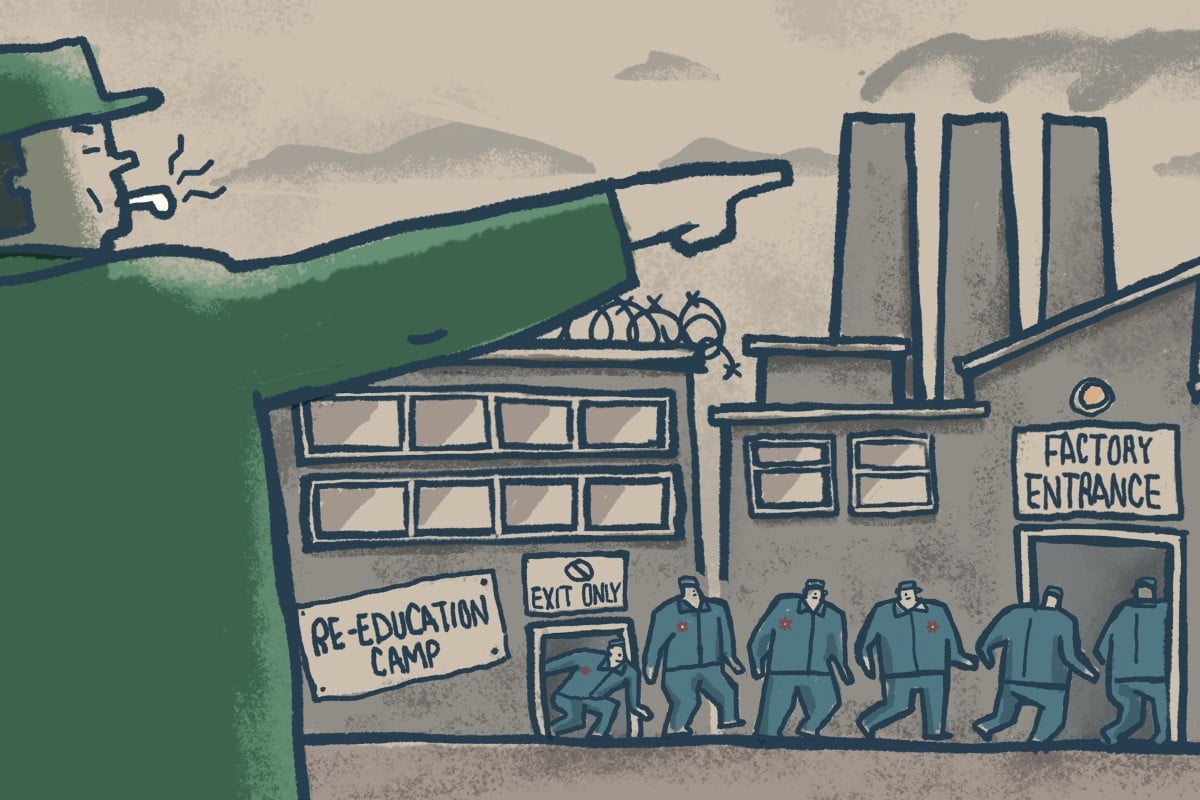
Illustration by Perry Tse
The Chinese government has resumed a job placement scheme for tens of thousands of Uygur Muslims who have completed compulsory programmes at the “re-education” camps in the far-western region of Xinjiang, sources said.
The plan, which includes a quota for the numbers provinces must take, was finalised last year but disrupted by the outbreak of Covid-19.
The delay threatens to undermine the Chinese government’s efforts to justify its use of internment camps in Xinjiang.
Critics have said these camps were part of the measures designed to eradicate the ethnic and cultural identity of Uygurs and other Muslim minorities and that participants had no choice but to undertake the re-education programme.
Beijing has repeatedly dismissed these criticisms and said the camps are to give Uygurs the training they need to find better jobs and stay away from the influence of radical fundamentalism.
First Xinjiang, now Tibet passes rules to promote ‘ethnic unity’
Now with the disease under control, the Chinese government has resumed the job placement deal for other provinces to absorb Xinjiang labourers, sources said.
Despite the devastating impact of the disease on its economy and job markets, the Chinese authorities are determined to go ahead with the plan, which they believe would
, a source said.
“Excellent graduates were to be taken on as labourers by various inland governments, in particular, 19 provinces and municipalities,” said the source. It is unclear what constitutes “excellent graduates”.
Some sources earlier said that the programme may be scaled back in light of the new economic reality and uncertainties.
But a Beijing-based source said the overall targets would remain unchanged.
“The unemployment problem in Xinjiang must be resolved at all costs, despite the outbreak,” the source said.
The South China Morning Post has learned that at least 19 provinces and cities have been given quotas to hire Muslim minorities, mostly Uygurs, who have “graduated” from re-education camps.
As early as February, when the daily number of infections started to come down outside Hubei province, China already begun to send Uygur workers to their new jobs.
A photo taken in February showed thousands of young Uygurs, all wearing face masks and with huge red silk flowers pinned to their chests, being dispatched to work in factories outside their hometowns.
By the end of February, Xinjiang alone has created jobs for more than 60,000 Uygur graduates from the camps. A few thousand were also sent to work in other provinces.
Many have been employed in factories making toys and clothes.
Xinjiang’s new rules against domestic violence expand China’s ‘extremism’ front to the home
Sources told the Post that the southern city of Shenzhen – China’s hi-tech manufacturing centre – was given a target last year to eventually resettle 50,000 Uygurs. The city is allowed to do this in several batches, with 15,000 to 20,000 planned for the first stage.
Shaoguan, a less developed Guangdong city
where a deadly toy factory brawl between Uygurs and Han Chinese broke out in 2009, was also asked to take on another 30,000 to 50,000 Uygur workers.
In Fujian province, a government source also said they had been told to hire “tens of thousands of Xinjiang workers”.
“I heard the first batch of several thousands would arrive soon. We have already received official directives asking us to handle their settlement with care,” said the source.
He said the preparation work includes providing halal food to the workers as well as putting in place stronger security measures to “minimise the risks of mass incidents”. It is not known whether they will be given access to prayer rooms.
There are no official statistics of how many Uygurs will be resettled to other provinces and the matter is rarely reported by the mainland media.
But in March, Anhui Daily, the province’s official newspaper, reported that it had received 1,560 “organised labourers from Xinjiang”.
The Uygur workers on average could earn between 1,200 yuan (US$170) to 4,000 yuan (US$565) a month, with accommodation and meals provided by the local authorities, according to Chinese media reports.
However, they are not allowed to leave their dormitories without permission.
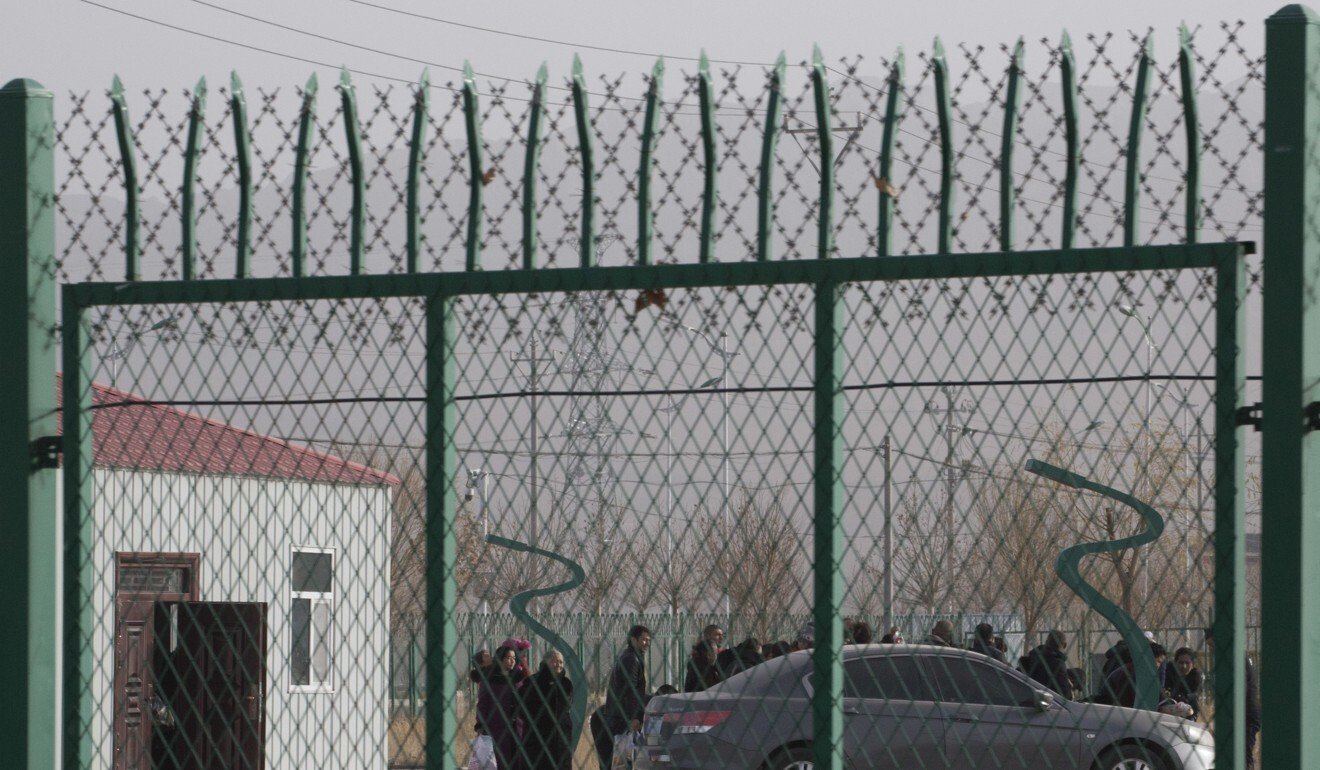
The UN has estimated that up to a million Muslims were being held in the camps. Photo: AP
Xinjiang’s per capita disposable income in 2018 was 1,791 yuan a month, according to state news agency Xinhua. But the salary level outside the region’s biggest cities such as Urumqi may be much lower.
The official unemployment rate for the region is between 3 and 4 per cent, but the statistics do not include those living in remote rural areas.
Mindful of the potential risks of the resettlement, Beijing has taken painstaking efforts to carefully manage everything – from recruitment to setting contract terms to managing the workers’ day-to-day lives.
Local officials will go to each Uygur workers’ home to personally take them to prearranged flights and trains. On arrival, they will be immediately picked up and sent to their assigned factories.
US bill would bar goods from Xinjiang, classifying them the product of forced labour by Uygurs
Such arrangements are not unique to Uygurs and local governments have made similar arrangements for ethnic Han workers in other parts of China.
After screening them for Covid-19, local governments have arranged for workers to be sent to their workplaces in batches. They are checked again on arrival, before being sent to work.
China is accelerating such placement deals on a massive scale to offset the impact of the economic slowdown after the outbreak.
Sources told the South China Morning Post that the job placement deal was first finalised by governments in Xinjiang and other provinces last year.
The aim is to guarantee jobs for Uygur Muslim who have “completed vocational training” at the re-education camps and meet poverty alleviation deals in the region, one of the poorest parts of China.
The training they receive in the camps includes vocational training for various job types such as factory work, mechanical maintenance and hotel room servicing. They also have to study Mandarin, Chinese law, core party values and patriotic education.
Xinjiang’s massive internment camps have drawn widespread international condemnation.
The United Nations has estimated that up to 1 million Uygur and other Muslim minority citizens are being arbitrarily detained in the camps, which Beijing insists are necessary to combat terrorism and Islamic radicalisation.
Late last year, Xinjiang’s officials announced that all the inmates of these so-called vocational training centres had “graduated” and taken up employment.
Before this labour placement scheme was introduced, it was extremely difficult for Uygurs to find jobs or live and work in inland regions.
The 2009 brawl at the factory in Shaoguan was one of the factors that triggered a deadly riot in Xinjiang’s capital Urumqi, that left 192 people dead and more than 1,000 wounded.
Muslim ethnic minorities, Uygurs in particular, have been subjected to blatant discrimination in China and the situation worsened after the 2009 clashes.
Earlier this month, the Australian Strategic Policy Institute released a report saying more than 80,000 Uygurs had been moved from Xinjiang to work in factories in nine Chinese regions and provinces.
It identified a total of 27 factories that supplied 83 brands, including household names such as Google, Apple, Microsoft, Mitsubishi, Siemens, Sony, Huawei, Samsung, Nike, Abercrombie and Fitch, Uniqlo, Adidas and Lacoste.
‘Psychological torture’: Uygurs abroad face mental health crisis over plight of relatives who remain in Xinjiang
The security think tank concluded that the Chinese government had transferred Uygur workers “under conditions that strongly suggest forced labour” between 2017 and 2019, sometimes drawing labourers directly from re-education camps.
The report also said the work programme represents a “new phase in China’s social re-engineering campaign targeting minority citizens”.
Workers were typically sent to live in segregated dormitories, underwent organised Mandarin lessons and ideological training outside working hours and were subject to constant surveillance, the researcher found.
They were also forbidden from taking part in religious observances, according to the report that is based on open-source documents, satellite pictures, academic research and on-the-ground reporting.
Chinese foreign ministry spokesman Zhao Lijian criticised the report saying it had “no factual basis”.
Source: SCMP
Posted in 2009, Abercrombie and Fitch, accommodation, Adidas, Anhui Daily, Apple, Ürümqi, Beijing, boosting, camps, China, chinese authorities, chinese government, choice, cities, combat terrorism, combating, completed, compulsory, Country, COVID-19 outbreak, Critics, cultural and religious identity, defended, delayed, demonstrate, despite, determined, devastating, Disease, dispatched, Domestic violence, dormitories, economy, ethnic unity, extremism, face masks, factories, far-western region, February, Fujian Province, go ahead, Google, graduated, Guangdong, halal food, hi-tech manufacturing centre, hometowns, Huawei, hubei province, huge, impact, infections, Inmates, internment camps, Islamic radicalisation, JOB MARKETS, job opportunities, job placement, labourers, Lacoste, Mandarin, meals, Microsoft, Mitsubishi, Muslim minorities, new jobs, Nike, official newspaper, other parts, participants, permission, photo, plans, promote, provinces, quotas, re-education, re-education camps, red silk flowers, resettle, resumed, rules, Samsung, scheme, security measures, Shenzhen, Siemens, Sony, south china morning post, target, Tens of thousands, Tibet, to be moved, to eradicate, to hire, to send, to work, toys and clothes, Uncategorized, undergone, Uniqlo, United Nations, Uygur Muslims, Uygurs, wearing, workers, Xinjiang |
Leave a Comment »
20/04/2020
KATHMANDU, April 19 (Xinhua) — A German scholar has recently found that the right to education for Uygurs and people of other ethnic groups is well protected in China’s Xinjiang region, as young people there enjoy increasingly better opportunities.
Michael Heinrich, who has been teaching German in Minzu University of China for more than five years, said in an article published on Online Khabar news website in March that he has “paid close attention to the development of Chinese education in recent years, especially the education situation in ethnic minority areas.”
Heinrich said he has taught a Xinjiang Uygur student, who often talks with him about the education situation in her hometown and appreciates government policies on education.
The Uygur student has told Heinrich that she lives in a place where she receives Islamic religious education and China’s nine-year compulsory education, and the Uygur students in Xinjiang can enjoy preferential policies, such as extra points in college entrance examination, special policies for college admissions, and employment policy support.
In recent years, the Chinese government has intensified policy support on education in Xinjiang Uygur Autonomous Region, and increased investment in educational resources, especially those on vocational education, the article read.
“Through vocational education, more Uyghur Muslim students can enhance their survival skills and work harder by themselves and improve their living standards with these hands,” it said.
For some time, Xinjiang has been plagued by terrorism, religious extremism and separatism, according to the passage, and carrying out vocational education and training in Xinjiang is an effective measure to promote the rule of law and a practical action to protect the vital interests of people of all ethnic groups there.
It is also a just move in fighting extremism and terrorism to contribute to the stability in Xinjiang, it added.
Some Western media outlets as well as some U.S. politicians often slander the Chinese government under the guise of “human rights,” which does not only disregard the facts but also interferes with China’s sovereignty, Heinrich pointed out.
The situation in Xinjiang that they saw was completely different from the stories told by some Western politicians and media, Heinrich quoted some people who have visited Xinjiang and witnessed its development as saying.
The rights to life and development of people of all ethnic groups in Xinjiang are protected to the largest extent, Heinrich added.
Source: Xinhua
Posted in action, admissions, all ethnic groups, appreciates, areas, article, better, but also, China, China's, China’s sovereignty, Chinese education, chinese government, close attention, college entrance examination, completely different, compulsory education, contribute, development, disregard, education, educational resources, Educational situation, employment, enhance, enjoy, especially, ethnic groups, ethnic minority, extra points, extremism, facts, fighting, five years, German, government policies, guise, hands, harder, her, hometown, Human rights, improve, increasingly, intensified, interferes, Investment, Islamic religious education, just move, Kathmandu, living standards, March, media, Michael Heinrich, more than, much improved, nine-year, not only, Online Khabar, opportunities, other, paid, People, plagued, pointed out, policy support, practical, preferential policies, promote, protect, published, receives, recent, region, religious extremism, right to education, rights to life, Rule of law, Scholar, separatism, situation, slander, special policies, stability, stories, Student, students, survival skills, teaching, terrorism, themselves, there, told, U.S. politicians, Uncategorized, under, Uyghur Muslim, Uygurs, vital interests, Vocational education, well protected, Western media outlets, Western politicians, witnessed, work, Xinjiang, Xinjiang Uygur Autonomous Region, years, young people |
Leave a Comment »
15/10/2019
- Beijing joins global condemnation of attack launched by Ankara on Kurdish fighters after US President Donald Trump decided to pull out troops
- Foreign ministry spokesman says issue should be resolved with ‘political solutions’ and the operation may result in a revival of Islamic State
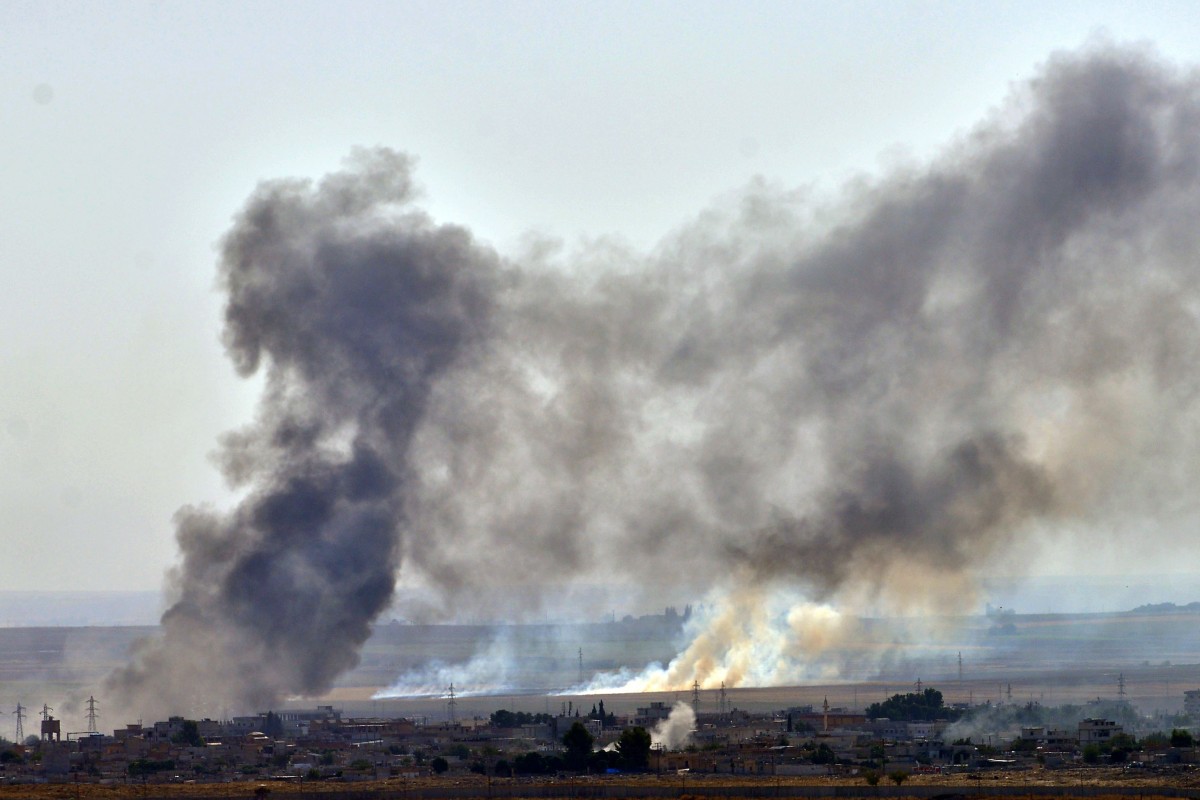
Turkey launched the attack on Kurdish fighters in northeastern Syria last week. Photo: Xinhua
China has urged Turkey to stop the military offensive it began in northeastern Syria last week and “return to the right track”.
Beijing is the latest to join global condemnation of the cross-border attack launched by Ankara on Kurdish fighters last Wednesday following US President Donald Trump’s decision to withdraw US troops from the region.
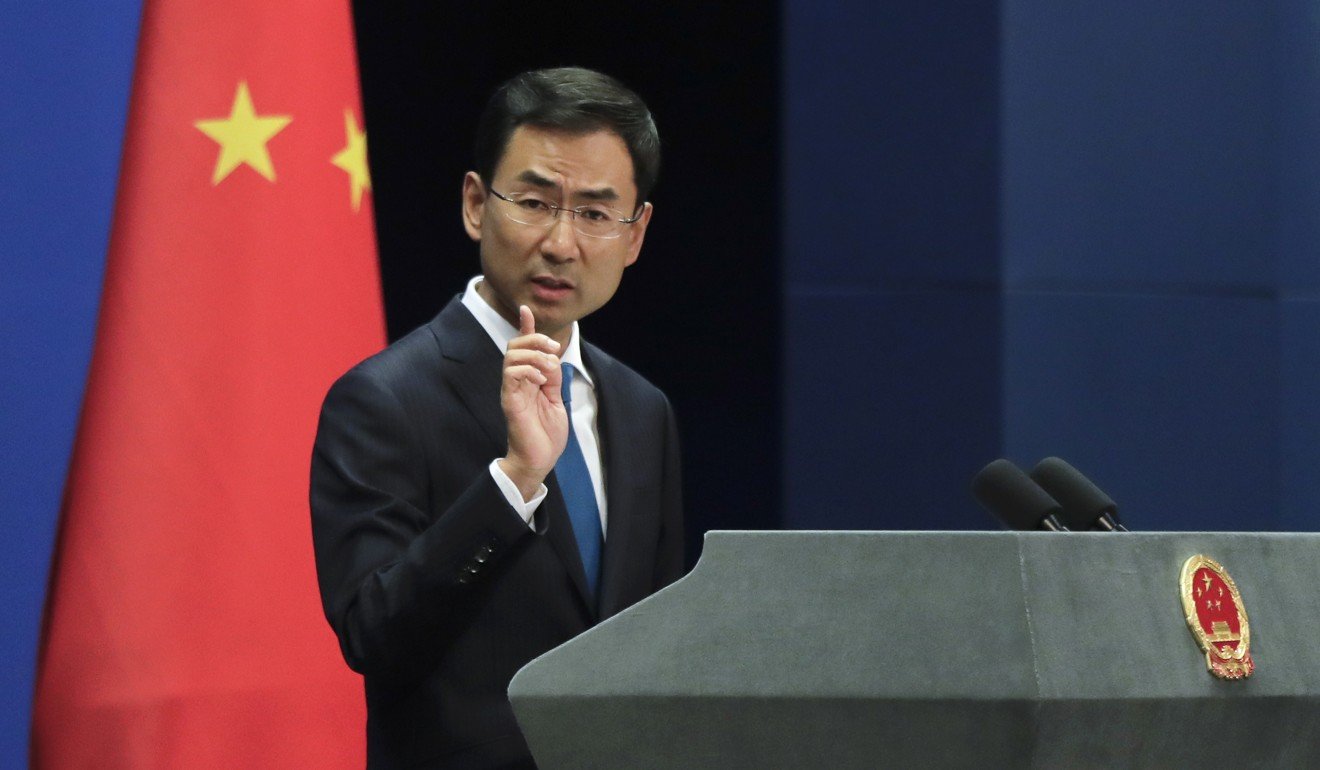
Foreign ministry spokesman Geng Shuang on Tuesday called for a ceasefire.
“The Chinese side has always opposed the use of force in international relations and has advocated for adherence to the Charter of the United Nations, and to resolve problems through political and diplomatic channels,” Geng said during a regular press briefing, when asked about Beijing’s position on the situation.
“Sovereignty, independence, unification and territorial integrity should be respected and protected,” he said. “We urge Turkey to halt military action and to return to the right track, resolving the issue with political solutions.”
Chinese foreign ministry spokesman Geng Shuang called on Turkey to “work with the international community in fighting against terrorism”. Photo: AP
Geng also said the “anti-terrorism situation in Syria is still severe”, and the military operation could result in a comeback by Islamic State.
“We urge Turkey to take responsibility and work with the international community in fighting against terrorism,” he said.
Explained: why are Syria’s Kurds accusing the US of betrayal?
Trump’s move has drawn sharp criticism from around the world. Critics say he has abandoned the allies that helped fight against Isis, and that withdrawing troops could pave the way for a resurgence of the jihadist group whose violent takeover of Syrian and Iraqi land five years ago was the reason US forces went in.
The US president said about 1,000 US troops who had been partnering with local Kurdish fighters to battle Islamic State in northern Syria were leaving the country. He said they would remain in the Middle East to “monitor the situation” and to prevent a revival of Isis – a goal that even Trump’s allies say has become much more difficult as a result of the US pull-out.
Turkey says the offensive aims to remove the Kurdish-led Syrian Democratic Forces from the border area and create what it calls a “safe zone” to relocate 1 million Syrian refugees.
Facing mounting criticism, Trump on Monday announced sanctions would be imposed
on Turkey, halted bilateral trade negotiations and called for an immediate ceasefire.
Vice-President Mike Pence also said Trump was sending him to the Middle East because the president was concerned about instability in the region.
Beijing has long worried that conflict in the region could spill over to Chinese soil after thousands of Uygurs – the Turkic-speaking Muslim minority from far western China – travelled to Syria to train and fight as jihadists.
Posted in Ankara, Beijing, calls on, Charter of the United Nations, China alert, independence, Islamic state, jihadist group, Kurdish fighters, Kurdish-led Syrian Democratic Forces, Kurds, Middle East, military incursion, pull out, sovereignty, Syria, territorial integrity, to halt, troops, Turkey, Uncategorized, unification, US President Donald Trump, Uygurs, Vice-President Mike Pence |
Leave a Comment »
21/07/2019
- Islam was forced on ethnic group ‘by religious wars and the ruling class’, Beijing says in latest report defending its actions in far western region
- Uygurs’ ancestors were enslaved by the Turks, document says
Beijing has issued a white paper seemingly designed to defend its actions in Xinjiang where as least 1 million Uygurs are being held in detention centres. Photo: AFP
Uygurs became Muslims not by choice but by force, and Islam is not their only religion, Beijing said in a white paper published on Sunday, as it continued its propaganda campaign to justify its controversial policies in the far western province of
.
“The Uygur people adopted Islam not of their own volition … but had it forced upon them by religious wars and the ruling class,” according to the document released by the State Council Information Office.
Islamic beliefs were forced on the Uygurs during the expansion of Arabic states. This is a historical fact, the report said, though that did not undermine the Uygurs’ religious rights now.
The report said also that there are Uygurs who hold to faiths other than Islam, and others who do not practise any religion at all.
The paper also took aim at the Uygurs’s historic links with Turkey.
“Historically, the Uygurs’ ancestors were enslaved by the Turks,” it said, citing a history of conflicts between the two groups dating back to the 8th century.
China promotes Xinjiang as tourist idyll
The white paper was issued amid a campaign by Beijing to justify its policies in the restive region, which is home to more than 10 million Uygurs, most whom are Muslim.
Earlier this month, the ambassadors of 22 countries signed a letter calling on Beijing to halt its mass detention of Uygurs in Xinjiang, the first such joint move on the issue at the UN Human Rights Council.
The signatories included envoys from Britain, France, Germany, Australia, Canada, Japan and Switzerland. The United States, which quit the forum a year ago, did not sign the letter.
China responded by issuing a letter signed by the ambassadors of 37 countries, including several Muslim majority states like Saudi Arabia and Pakistan, backing its policies in the region.
Beijing said the show of support was “a powerful response to the groundless accusations made against China by a small number of Western countries”.
UN experts and activists say at least 1 million Uygurs and other Muslims are currently being held in detention centres in Xinjiang. China describes the facilities as training and education centres that aim to stamp out religious extremism and provide people with useful skills. It has never said how many people are being detained in them.
The United States has repeatedly criticised Beijing over its policies in Xinjiang.
On Wednesday, US President Donald Trump met victims of religious persecution from around the world, including Jewher Ilham, a Uygur woman whose father Ilham Tohti was sentenced to life imprisonment in 2014 after being found guilty of promoting separatism.
“That’s tough stuff,” Trump said after hearing Ilham’s account of her father’s ordeal.
China describes the detention camps in Xinjiang as training and education centres. Photo: AFP
In January, US lawmakers nominated the imprisoned economist, writer and former professor at Minzu University in Beijing, for the 2019
Nobel Peace Prize in a bid to pressure China to stop its crackdown on the minority group.
Sunday’s white paper is the latest in a string of similar documents published recently by Beijing as it seeks to defend the legitimacy of its policies in Xinjiang. In a document issued in March, it said that over the past five years it had arrested nearly 13,000 “terrorists” in the region.
Xinjiang camps defended at UN human rights forum
Neither the March report nor Sunday’s white paper mentioned Beijing’s other controversial policies in the region, such as the collection of DNA samples and extensive surveillance on local people.
“Xinjiang has borrowed from international experiences, combined them with local realities, and taken resolute measures against terrorism and extremism,” it said.
The measures have been effective, it said, though did not elaborate.
Over the past year, China has increased its efforts to defend the camps, including organising strictly controlled visits by selected diplomats and journalists to see the people who live in them.
State media has also released videos showing seemingly happy and healthy people inside the camps in a bid to counter accounts of harsh conditions and abuse published by the Western media.
Source: SCMP
Posted in Arabic states, Australia, Beijing, Britain, canada, ethnic groups, forum, France, Germany, islam, Japan, Minzu University, Muslims, Nobel Peace Prize, Pakistan, Saudi Arabia, State Council Information Office, Switzerland, Turkey, Turks, UN human rights forum, Uncategorized, United States, US President Donald Trump, Uygurs, Xinjiang |
Leave a Comment »
16/06/2019
- UN counterterrorism chief Vladimir Voronkov not expected to make statement after visiting region last week
- Trip prompts calls for independent observation in Muslim-majority area where an estimated 1 million people are held in detention facilities
Residents go through a security checkpoint at the entrance to a bazaar in Hotan, Xinjiang. The UN’s counterterrorism chief visited the far western region last week. Photo: AP
Human rights group Amnesty International has joined growing criticism of a top UN official’s visit to China’s
, echoing calls for more independent investigations of detention facilities for ethnic Uygurs.
The invitation to the United Nations envoy to visit was Beijing’s latest attempt to show it has nothing to hide in what it calls “re-education facilities” that hold an estimated 1 million people in the Muslim-majority area in western China.
But critics have warned that state-led media tours and diplomatic visits lack the unfettered access needed to make a proper assessment of alleged rights abuses in the region.
UN counterterrorism chief Vladimir Voronkov
from Thursday to Saturday and met Le Yucheng, the vice foreign minister, according to a statement from the foreign ministry on Sunday. The statement said the two sides had reached a “broad consensus”.
UN human rights chief ‘is welcome to visit Xinjiang’
Voronkov’s visit follows months of pressure to allow the UN to investigate alleged human rights abuses in Xinjiang. China has so far only allowed guided tours of the region for foreign journalists and diplomatic envoys.
Reuters reported on Saturday that Voronkov’s itinerary was planned by China and that his UN office did not expect to make any public statement about the trip, according to an email from Voronkov’s office seen by the news agency.
The United Nations said in August last year it had credible reports that detention facilities in Xinjiang held 1 million Uygurs and other Muslims. Beijing says the facilities are for “vocational training” and tied to deradicalisation and anti-terrorism efforts.
Patrick Poon, a Hong Kong-based researcher with Amnesty International, said he was “very much concerned” about how the UN envoy’s visit had been arranged.
“From what we saw in the previous visits orchestrated by the Chinese government for diplomats, it’s very difficult for anyone to believe how this visit will be able to show any authentic situation on the ground,” Poon said.
“If the Chinese government is sincere, let independent UN experts, such as the special rapporteurs, have independent observation of what’s happening in Xinjiang.”
Xinjiang’s vanishing mosques highlight pressure on China’s Muslims
His remarks followed criticism of the trip from Human Rights Watch on Friday.
“The UN allowing its counterterrorism chief to go to Xinjiang risks confirming China’s false narrative that this is a counterterrorism issue, not a question of massive human rights abuses,” Human Rights Watch UN director Louis Charbonneau told Agence France-Presse.
Also on Friday, US Deputy Secretary of State John Sullivan called UN Secretary General Antonio Guterres to express “deep concerns” about Voronkov’s visit, according to the State Department website. Sullivan called for “unmonitored and unhindered access to all camps and detainees in Xinjiang by UN human rights officials”.
The United States has been increasingly vocal about China’s human rights abuses. Vice-President Mike Pence is due to give a speech on China’s “control and oppression” of citizens on June 24, but according to Bloomberg it could be postponed to avoid inflaming tensions with Beijing ahead of a possible meeting between US President Donald Trump and his Chinese counterpart Xi Jinping at the Group of 20 leaders summit in Japan on June 28-29. The speech was originally scheduled for June 4 but was delayed by Trump, Bloomberg reported, citing sources familiar with the matter.
Source: SCMP
Posted in Amnesty International, Beijing, Bloomberg, broad consensus, China’s Muslims, Chinese President Xi Jinping, envoy, Hotan, human rights groups, U.S. President Donald Trump, UN, UN counterterrorism chief, Uncategorized, United Nations, United States, Uygurs, Vice-President Mike Pence, Vladimir Voronkov, Xinjiang |
Leave a Comment »
05/06/2019
- Few signs of Eid celebrations after crackdown that has seen a reported million Uygurs and other minorities interned in camps
- Muslims in far western Chinese region say they are now ‘too scared’ to practise their faith in public
Worshippers leave a mosque in Kasghar after prayers on Wednesday. Photo: AFP
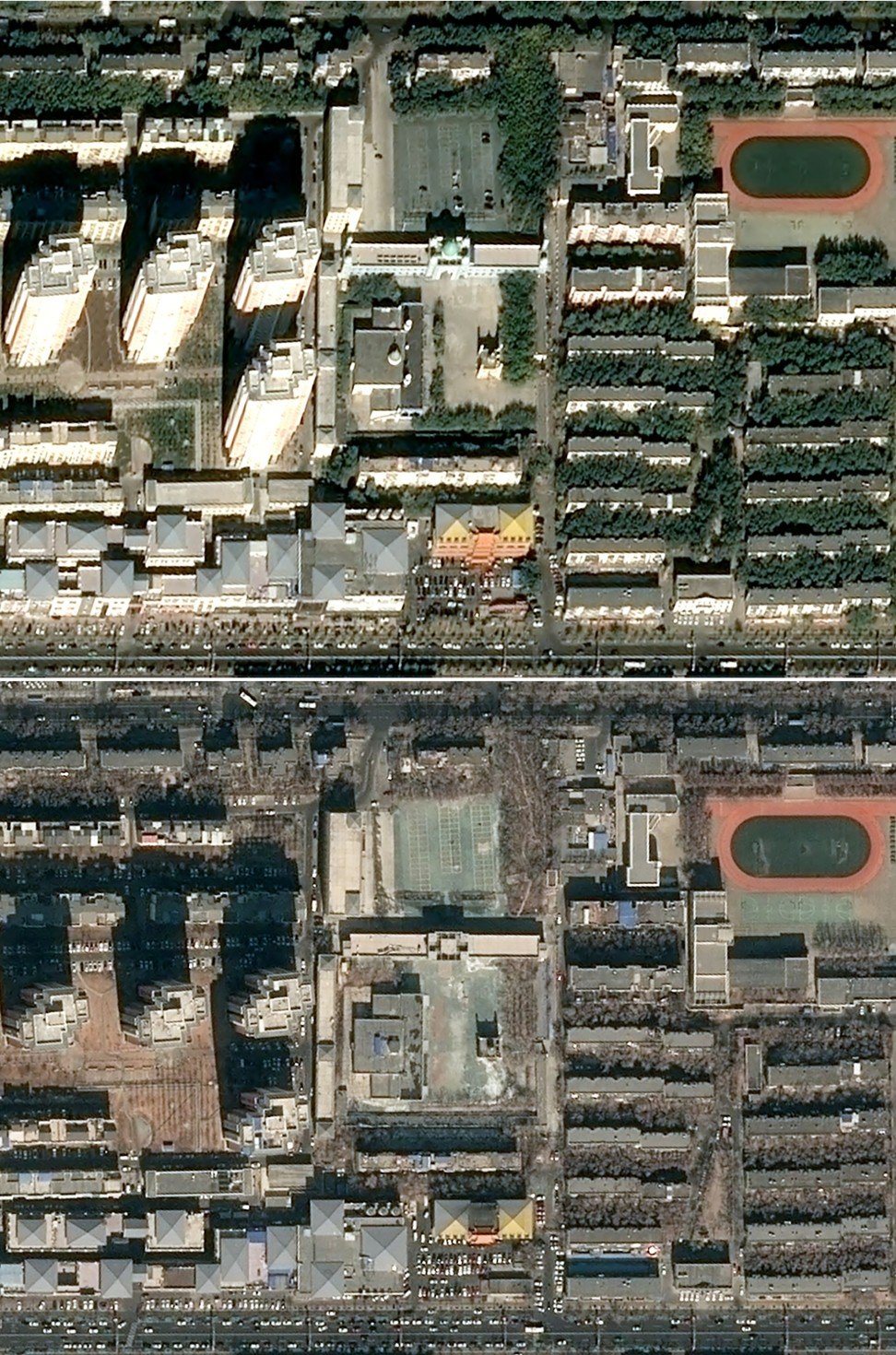
The corner where Heyitkah mosque in China’s far western region of Xinjiang once hummed with life is now a car park where all traces of the tall, domed building have been erased.
While Muslims around the world celebrated the end of Ramadan with prayers and festivities this week, the recent destruction of dozens of mosques in Xinjiang highlights the increasing pressure Uygurs and other ethnic minorities face in the heavily policed region.
Behind the car park in the city of Hotan, the slogan “Educate the people for the party” is emblazoned in red on the wall of a primary school where students must scan their faces upon entering the razor-wired gates.
The mosque “was beautiful,” recalled a vendor at a nearby bazaar. “There were a lot of people there.”
Satellite images reviewed by AFP and visual analysis non-profit Earthrise Alliance show that 36 mosques and religious sites have been torn down or had their domes and corner spires removed since 2017.
Satellite images from 2014 (top) and March this year show the disappearance of the dome of the Karamay West Mosque in Xinjiang. Photo: AFP/ Distribution Airbus Defence and Space/ CNES 2019/ Produced By Earthrise
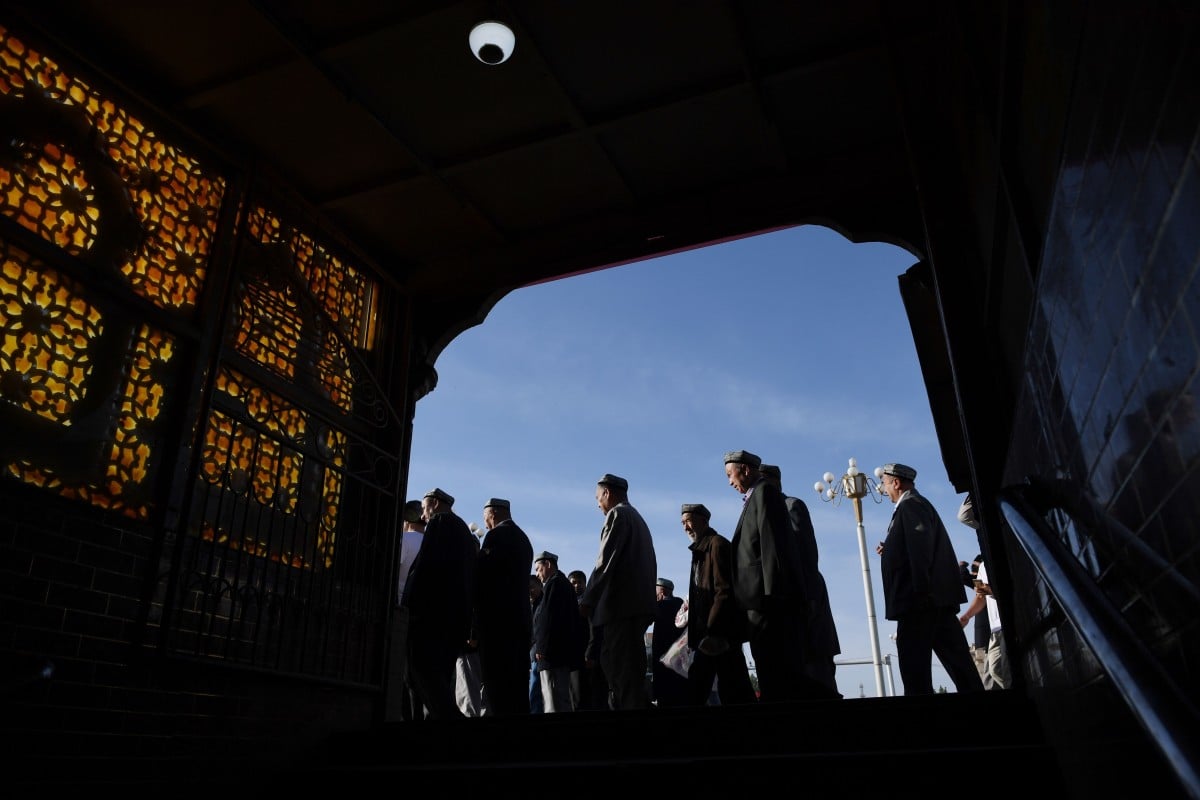
In the mosques that are open, worshippers go through metal detectors while surveillance cameras monitor them inside.
“The situation here is very strict, it takes a toll on my heart,” said one Uygur, who requested anonymity for fear of reprisals. “I don’t go any more,” he added, referring to mosques. “I’m scared.”
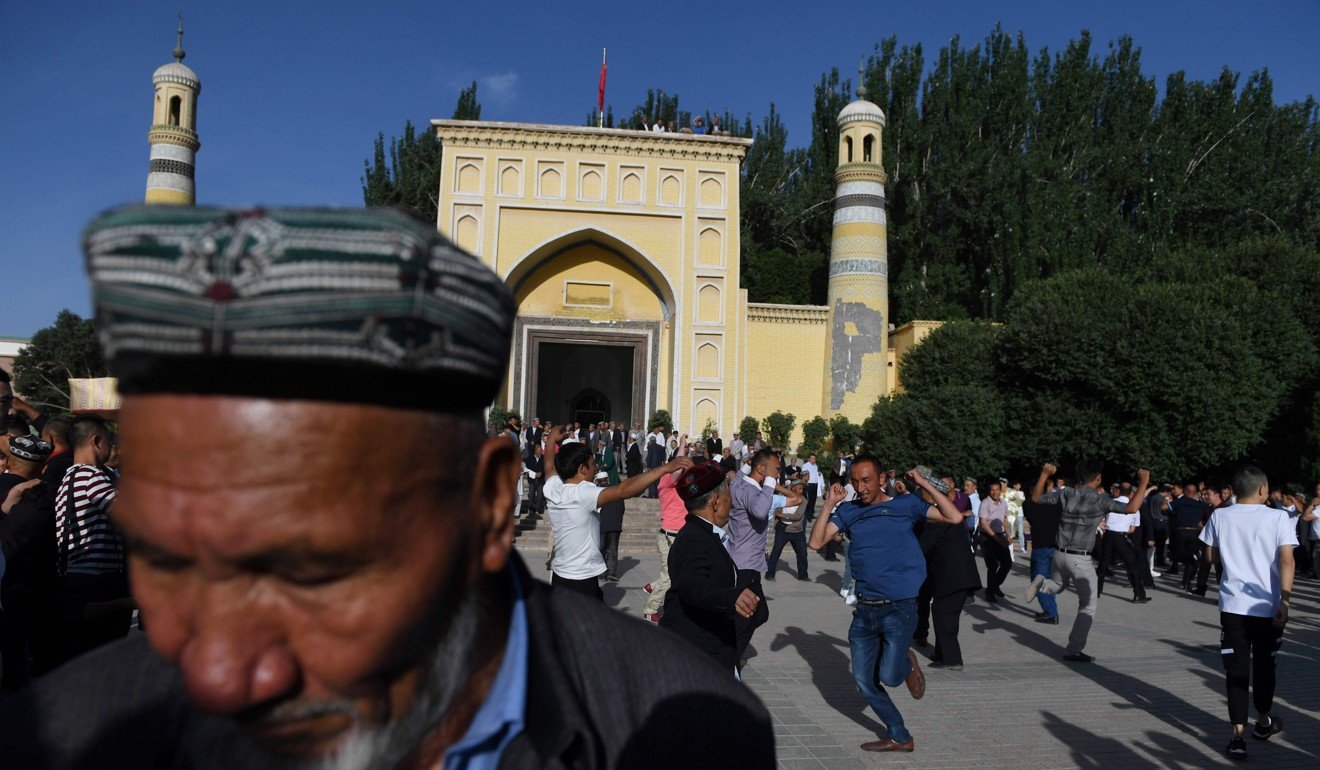
In the ancient Silk Road city of Kashgar, no longer does the sunrise call for prayer echo throughout the city – a ritual the manager of the city’s central mosque once proudly shared with touristsOn Wednesday, locals celebrating Eid al-Fitr quietly filed into the entrance of state-approved Idkah Mosque – one of the largest in China – as police and officials fenced off the wide square surrounding the building and plain clothes men monitored every person’s actions.
It was another low-key Ramadan for Muslims in Xinjiang, where restaurants were busy serving food to customers throughout the day, a time when practising Muslims fast.
In Hotan on Friday – a holy day for believers – the only mosque in the city was empty after sundown, an important prayer session when Muslim families typically break their daily Ramadan fast.
Earlier in the day, at least 100 people attended a midday session but the vast majority were elderly men.
Human Rights Watch decodes surveillance app used to classify people in China’s Xinjiang region
The ruling Communist Party “sees religion as this existential threat”, said James Leibold, an expert on ethnic relations and policy in China at La Trobe University.
Over the long term, the Chinese government wants to achieve “the secularisation of Chinese society,” he told AFP.
The Xinjiang government told AFP that it “protects religious freedoms” and citizens can celebrate Ramadan “within the scope permitted by law”, without elaborating.
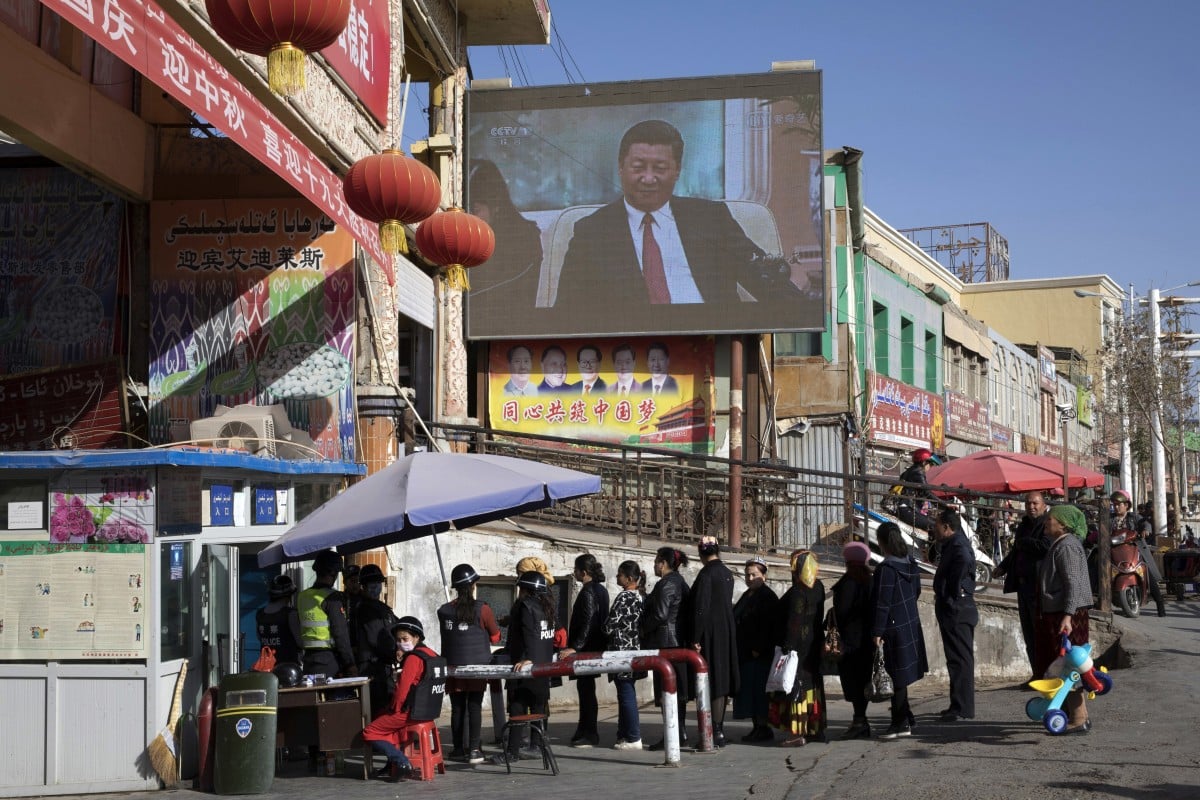
The authorities have thrown a hi-tech security net across the region, installing cameras, mobile police stations and checkpoints in seemingly every street in response to a spate of deadly attacks blamed on Islamic extremists and separatists in recent years.
An estimated one million Uygurs and other Turkic-speaking ethnic groups are held in a vast network of internment camps.
After initially denying their existence, Chinese authorities last year acknowledged that they run “vocational education centres” aimed at steering people clear of religious extremism by teaching them Mandarin and China’s laws.
In those centres, it was a different Ramadan.
The Xinjiang government told AFP that people in the centres are not allowed to hold religious activities because Chinese law forbids it within education facilities, but they are free to do so “when they return home on weekends”.
Uygur men dance after Eid al-Fitr prayers in Kashgar. Photo: Greg Baker/ AFP
In recent years, Chinese authorities have ramped up controls on public displays of religion and Islamic traditions in Xinjiang.
AFP reporters did not see any veiled women and few men sporting long beards during a week-long visit to the region. Former internment camp inmates have said they were incarcerated for these outward signs of their religion.
Places of worship too have become targets of Beijing’s draconian security measures.
Human Rights Watch decodes surveillance app used to classify people in China’s Xinjiang region
In the satellite images analysed by AFP and Earthrise Alliance, 30 religious sites were completely demolished while six had their domes and corner spires removed.
AFP reporters visited about half a dozen sites, and found that some mosques had been repurposed into public spaces.
Police officers blocked journalists from entering Artux, just north of Kashgar, where the town’s grand mosque and dozens of other community mosques were destroyed.
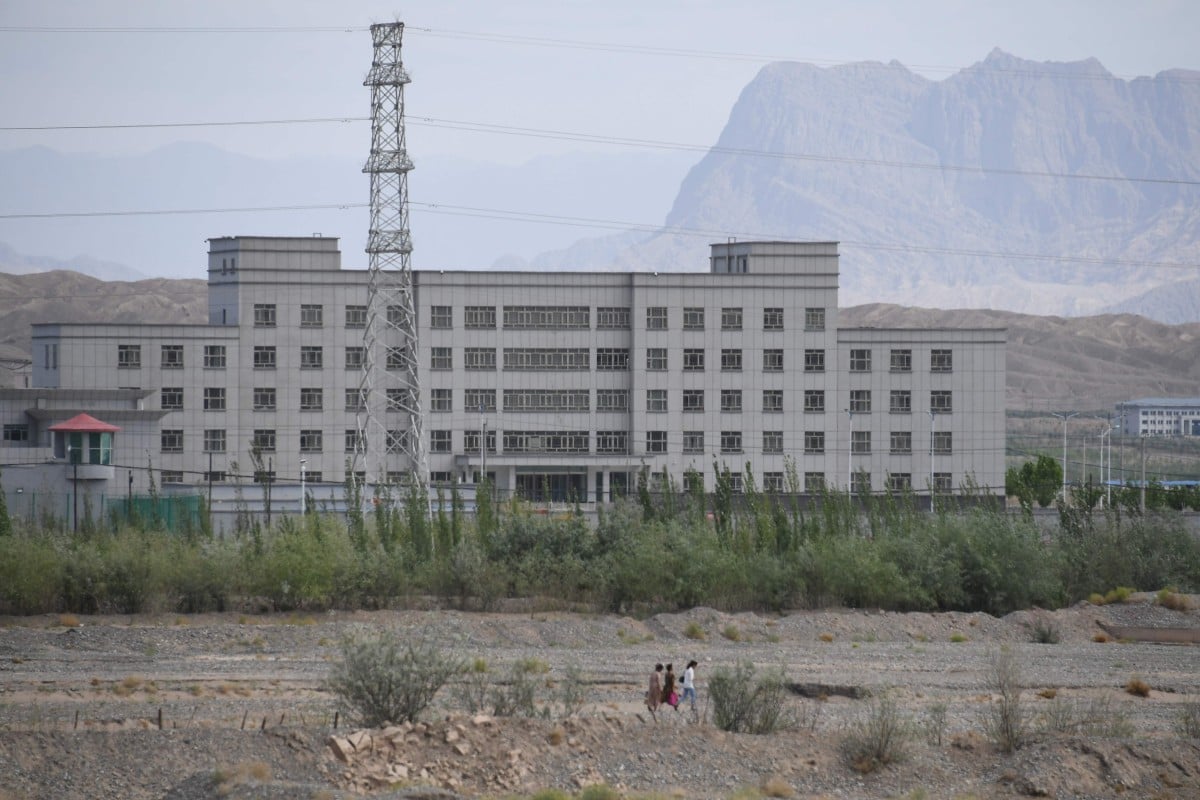
The area is some 22 kilometres (14 miles) away from an enormous complex believed to be a re-education centre. Visible from a nearby village, the facility has razor-wired walls, watchtowers and imposing block buildings.In Kashgar, two cameras perched on the columns of a former mosque point at its entrance. There is no minaret or dome – instead, a shop selling dresses lies to its right alongside houses.
A demolished mosque in Hotan has been converted into a garden, paved with concrete walkways and sparsely planted trees.
On the outskirts of town, situated between a cemetery and sand dunes, two white flags and a pile of burned refuse and debris was all that was left of an old shrine named Imam Asim.
China’s top Xinjiang official Chen Quanguo should face sanctions over alleged abuses, US lawmakers say
Uygurs consider these mosques and shrines “their ancestral heritage,” said Omer Kanat, director of the Uygur Human Rights Project.
“The Chinese government just wants to erase everything … that is different from Han, everything which belongs to Uygur culture or Islamic culture in the region,” he said.
Juma Maimaiti, the official imam of Idkah Mosque, told AFP in an interview arranged by the propaganda department that the demolition of mosques “has never happened here”.
“But our government has proceeded to protect some key mosques,” he added, and said that the city of Kashgar has over 150 mosques.
A propaganda slogan and surveillance camera at a mosque in Yangisar, south of Kashgar. Photo: AFP
Though Beijing’s restrictions on religious piety, such as fasting, are not new, observers say conditions have deteriorated to the point where celebrations for the holy month in Xinjiang are reduced or largely invisible.
Islamic greetings and openly fasting in public are no longer permitted, said Darren Byler, a lecturer at the University of Washington who focuses on Uygur culture.
While there are Uygurs who continue to practise their faith, they are “internalising it at this moment – they’re not expressing it openly,” he said.
EU calls out Beijing on human rights but activists want harder line against China’s Xinjiang and Tibet policy
At state-backed mosques, religious activity is controlled as Beijing pursues a five-year plan to “Sinicise” Islam as the “only way for a healthy development of Islam” in the country, said Yang Faming, president.
Source: SCMP
Posted in Artux, Beijing, chinese government, Chinese Society, dome, draconian security measures, Earthrise Alliance, Eid al-Fitr prayers, Eid celebrations, Heyitkah mosque, Hotan, Human Rights Watch (HRW), Idkah Mosque, Kasghar, minaret, Mosque, Muslims, Ramadan, secularisation, Silk Road, Turkic-speaking ethnic groups, Uncategorized, Uygur Human Rights Project, Uygurs, vanishing mosques, Xinjiang |
Leave a Comment »






 CHINDIA ALERT: You'll be living in their world, very soon