Chindia Alert: You’ll be Living in their World Very Soon
aims to alert you to the threats and opportunities that China and India present. China and India require serious attention; case of ‘hidden dragon and crouching tiger’.
Without this attention, governments, businesses and, indeed, individuals may find themselves at a great disadvantage sooner rather than later.
The POSTs (front webpages) are mainly 'cuttings' from reliable sources, updated continuously.
The PAGEs (see Tabs, above) attempt to make the information more meaningful by putting some structure to the information we have researched and assembled since 2006.
Photo taken with a mobile phone on April 24, 2020 shows a handover ceremony of medical equipment donated by China Railway Rolling Stock Corporation (CRRC) Zhuzhou Locomotive Co. Ltd. in Berlin, Germany. China Railway Rolling Stock Corporation (CRRC), the world’s largest rolling stock manufacturer by production volume, donated a shipment of medical equipment to Germany via the German Red Cross on Friday to help the country fight the coronavirus. Responding to the call from the German government and the Chinese Embassy in Germany, and in accordance with an arrangement between CRRC and CRRC Zhuzhou Locomotive Co. Ltd. (CRRC ZELC), the company donated 1,000 protective suits, 20,000 FFP2 masks and 80,000 surgical masks. (CRRC ZELC/Handout via Xinhua)
BERLIN, April 24 (Xinhua) — China Railway Rolling Stock Corporation (CRRC), the world’s largest rolling stock manufacturer by production volume, donated a shipment of medical equipment to Germany via the German Red Cross on Friday to help the country fight the coronavirus.
Responding to the call from the German government and the Chinese Embassy in Germany, and in accordance with an arrangement between CRRC and CRRC Zhuzhou Locomotive Co. Ltd. (CRRC ZELC), the company donated 1,000 protective suits, 20,000 FFP2 masks and 80,000 surgical masks.
CRRC ZELC said that the donated materials will be distributed to medical staff and volunteers who are fighting the pandemic on the frontlines.
Cheng Jian, general manager of CRRC ZELC Verkehrstechnik GmbH, said that the only way to overcome the crisis is to unite strengths and meet the challenges together.
“We wish to undertake our social responsibility as part of the community. We firmly believe that with joint efforts of the international community, Germany will quickly overcome the crisis, and production and life will return to normal soon,” Cheng said.
According to Jens Quade, president of the Mueggelspree regional branch of the German Red Cross, the risk of new coronavirus infections could be reduced through the generous donation from CRRC ZELC.
“The donated material will be distributed to the Berlin Red Cross, Berlin hospitals and/or medical institutions. We will do our best to provide the necessary assistance to the people who are most in need,” Quade said.
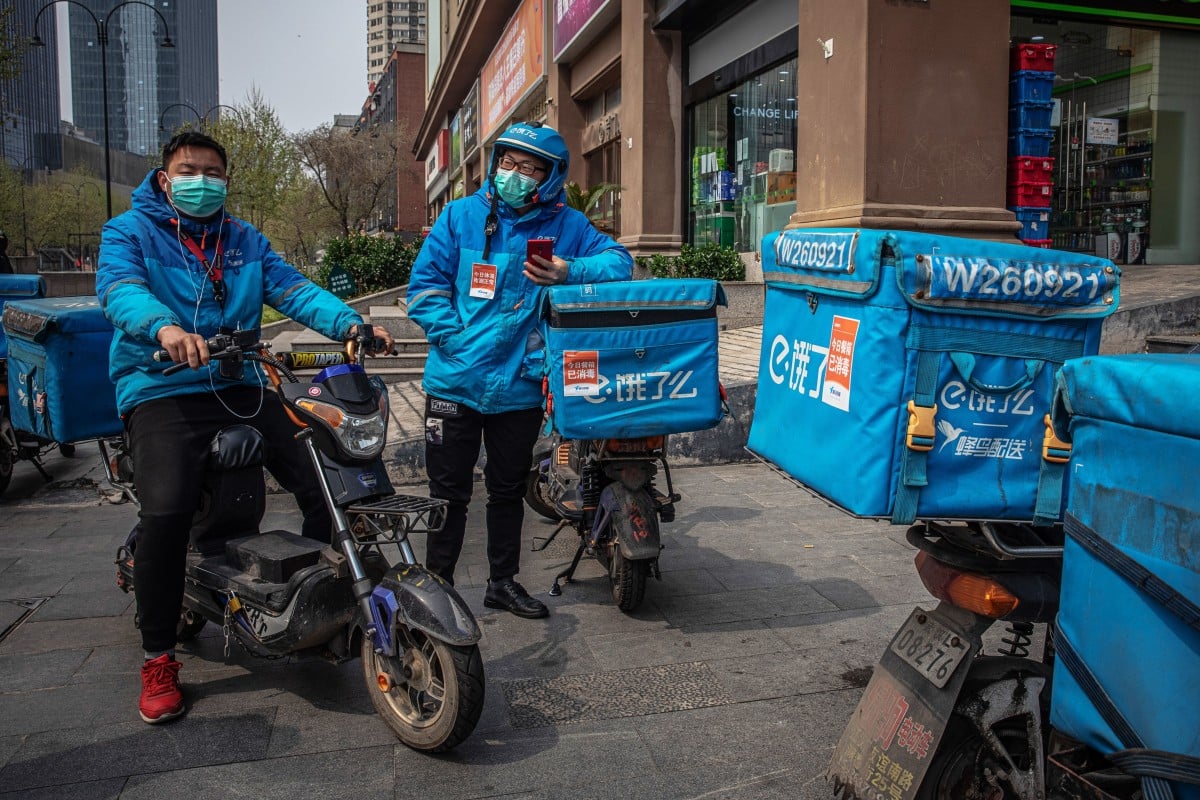
Buying and paying for meals and supplies online was already second nature for many Chinese before the Covid-19 lockdown
The supply and delivery networks that were already in place were able to work with the authorities in cities like Wuhan
China’s established home delivery system played an important role in getting food and other necessities to residents during the Wuhan lockdown. Photo: EPA-EFE
When Liu Yilin, a retired middle schoolteacher in Wuhan, first heard rumours of a
and shoppers flooded to the markets and malls to snap up supplies.
But as time went on and with residents banned from leaving their homes, he became increasingly concerned about getting hold of fresh supplies of vegetables, fruit and meat until the nation’s vast network of delivery drivers came to the rescue.
“It was such a relief that several necessity purchasing groups organised by community workers and volunteers suddenly emerged on WeChat [a leading social media app] days after the lockdown,” Liu said. “China’s powerful home delivery service makes life much easier at a time of crisis.”
Hu Xingdou, a Beijing-based independent political economist said: “Home delivery played a very important role amid the coronavirus outbreak. To some extent, it prevented people from starving especially in cases when local governments took extreme measures to isolate people.”
According to Liu, people in Wuhan during the lockdown had to stay within their residential communities, with community workers guarding the exits.
Human contact was limited to the internet. Residents placed orders online with farmers, small merchants or supermarkets to buy daily necessities, and community workers helped distribute the goods from deliverymen.
Every morning, Liu passed a piece of paper with his name, phone number and order number to a community worker who would collect the items from a courier at the gate of the residential area.
Thanks to a high population density in urban areas, affluent labour force and people’s openness to digital life, China has built a well-developed home delivery network.
Extensive funding from technology companies has been invested in hardware infrastructure, software to improve logistics and big data and cloud computing to help predict consumers’ behaviour.
Mark Greeven, professor of innovation and strategy at IMD Business School in Lausanne, Switzerland, said: “Whether it is delivery of products, air parcels or fresh food or even medicine or materials for medical use, China has a very well developed system. Much better developed than I think almost any other places in the world.
“Well before the crisis, China had started to embrace digital technology in daily life whether it is in consumption, business, government and smart cities and use of third party payments. All of these things have been in place for a long time and the crisis tested its agility and capability to deal with peak demand.”
China’s e-commerce giants help revive sales of farm goods from Hubei
3 Apr 2020
According to e-commerce giant JD.com, demands for e-commerce and delivery services spiked during the outbreak of Covid-19, the illness caused by the new coronavirus.
It sold around 220 million items between January 20 and February 28, mainly grains and dairy products with the value of beef orders trebling and chicken deliveries quadrupling compared with a year ago.
Tang Yishen, head of JD Fresh, its fresh foods subsidiary, said: “The surge of online demand for fresh merchandise shows the pandemic helped e-commerce providers further penetrate into the life of customers. It also helped upstream farm producers to know and trust us.”
Meituan Dianping, a leading e-commerce platform, said its grocery retail service Meituan Instashopping reported a 400 per cent growth in sales from a year ago in February from local supermarkets.
The most popular items ordered between January 26 and February 8 were face masks, disinfectant, tangerines, packed fresh-cut fruits and potatoes.
The food delivery service Ele.me said that, between January 21 and February 8, deliveries of frozen food surged more than 600 per cent year on year, followed by a nearly 500 per cent growth in delivery of pet-care products. Fresh food deliveries rose by 181 per cent while drink and snack deliveries climbed by 101 per cent and 82 per cent, respectively. Ele.me is owned by Alibaba, the parent company of the South China Morning Post.
Chinese hotpot restaurant chain adapts as coronavirus fears push communal meals off the menu
E-commerce providers used the opportunity to show goodwill and improve their relationship with customers and partners, analysts say.
Sofya Bakhta, marketing strategy analyst at the Shanghai-based Daxue Consulting, said the food delivery sector had made significant headway in reducing physical contact during the outbreak.
Delivery staff left orders in front of buildings, in lifts or temporary shelters as instructed by the clients as most properties no longer allowed them inside.
Some companies also adopted more hi-tech strategies.
In Beijing, Meituan used self-driving vehicles to deliver meals to contactless pickup stations. It also offered cardboard boxes to be used as shields aimed at preventing the spread of droplets among its clients while they ate in their workplaces. In Shanghai, Ele.me employed delivery drones to serve people under quarantine in the most affected regions.
Some companies even “shared” employees to meet the growing labour demand in the food delivery industry that could not be satisfied with their ordinary workforce, Bakhta said.
More employees from restaurants, general retail and other service businesses were “loaned” to food delivery companies, which faced manpower shortages during the outbreak, according to Sandy Shen, senior research director at global consultancy Gartner.
“These arrangements not only ensured the continuity of the delivery service but also helped businesses to retain employees during the shutdown,” she said.
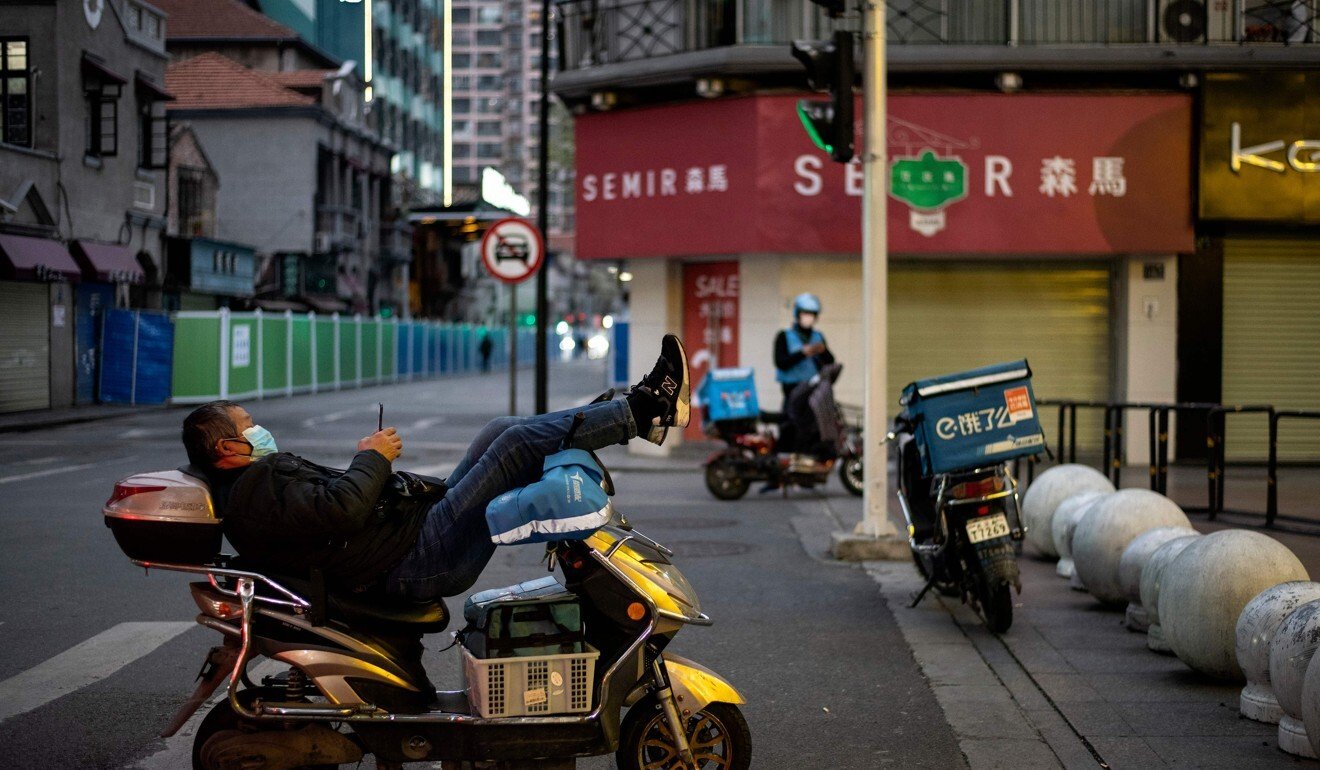
A delivery man takes a break between orders in Wuhan, central China, during the lockdown. Photo: AFP
Mo Xinsheng became one such “on-loan” worker after customers stopped coming to the Beijing restaurant where he worked as a kitchen assistant.
“I wanted to earn some money and meanwhile help people who are trapped at home,” said Mo, who was hired as a delivery man.
But before he could start work he had to go through lengthy health checks before he was allowed into residential compounds.
He also had to work long hours battling the wind and cold of a Beijing winter and carrying heavy loads.
“I work about 10 hours every day just to earn several thousand yuan [several hundred US dollars] a month,” he said.
“Sometimes I almost couldn’t breathe while my hands were fully loaded with packages of rice, oil and other things.
“But I know I’m doing an important job, especially at a time of crisis,” Mo said, “It was not until then that I realised people have become so reliant on the home delivery system.”
Woman uses remote control car to buy steamed buns amid coronavirus outbreak in China
The delivery system has been improved by an effective combination of private sector innovation and public sector coordination, said Li Chen, assistant professor at the Centre for China Studies at Chinese University of Hong Kong.
“[In China,] government units and the Communist Party grass roots organisations have maintained fairly strong mobilisation capabilities to cope with emergencies, which has worked well in the crisis,” he said.
However, Liu, the Wuhan resident, said prices had gone up and vegetables were three times more expensive than they had been over Lunar New Year in 2019.
“There were few varieties that we could choose from, apart from potatoes, cabbage and carrots,” he said.
“But I’m not complaining. It’s good we can still get fresh vegetables at a difficult time. Isn’t it? After all, we are just ordinary people,” he said.
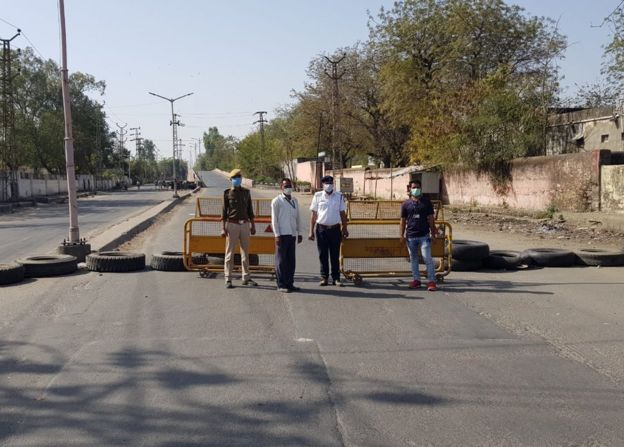
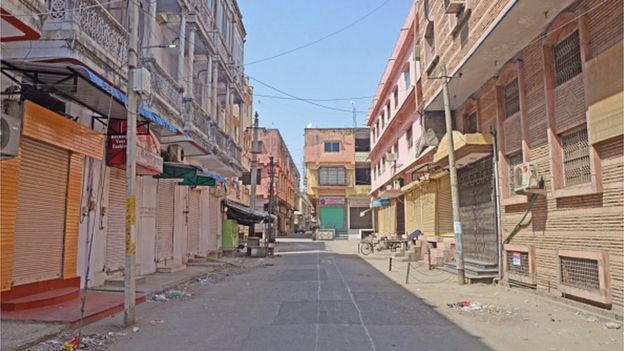
Image copyright PTIImage caption This city of five million people has been under a lockdown since last week
At 05:00 local time (23:30 GMT) of 8 March, the intensive care unit of a private hospital in the northern Indian state of Rajasthan received a 68-year-old man suffering from pneumonia. He was also having problems breathing.
At the Brijesh Bangar Memorial Hospital in Bhilwara, the new patient was examined by 58-year-old Alok Mittal, a doctor of internal medicine, and his team. The patient wasn’t asked about any travel history; nor did he disclose anything. There were six other patients in the ICU.
The man’s condition did not improve much, and two days later, he was sent to a private hospital in Jaipur, some 250km (155 miles) away, for specialised treatment. In Jaipur, he was treated in two hospitals. “We had no idea what was in store,” Shantilal Acharya, an intensive care nurse who received the patient in the Bhilwara hospital, told me.
For reasons that are still unclear, even the hospitals in Jaipur didn’t test a patient with severe pneumonia for coronavirus. His condition deteriorated swiftly and he died a few days later, on 13 March. The news of his death was conveyed to Dr Mittal and his team.
Image copyright SHAUKAT AHMEDImage caption The infection possibly spread from a private hospital in Bhilwara
Strangely enough, the doctors didn’t appear to comprehend the gravity of the situation even though it was clear that India was facing an imminent outbreak of Covid-19. The country has reported more than 460 confirmed cases and nine deaths so far, and testing remains low. On 9 March, according to reports, Dr Mittal and a few others travelled to the city of Udaipur, put up in a resort and played Holi, the Indian spring festival of colours. (Repeated attempts at getting through to Dr Mittal by phone and text yielded no results.)
Days after the death of the pneumonia patient, Dr Mittal and a colleague checked themselves into an isolation ward of a government hospital. Over the next few days, a few more colleagues from the hospital joined them in isolation. Twelve of them, including Dr Mittal, tested positive for Covid-19.
Next day, as news of the infections leaked, all hell broke loose. The private hospital was popular with its residents, and many regularly visited its thriving out-patient department for treatment. As people panicked and began blaming the doctors for spreading the infection, authorities moved swiftly.
Image copyright SHAUKAT AHMEDImage caption People have been stopped from entering or leaving Bhilwara
They imposed a “civil curfew”, prohibiting people from coming out of their homes and banning public gatherings. They shut schools, colleges, offices, and stopped people from leaving or entering the district. The private hospital was sealed and its 88 patients moved to other healthcare facilities in the area. “Officials were telling us the threat was serious and there was a chance of an outbreak,” local journalist Pramod Tiwari told me.
So Bhilwara, fearing a serious outbreak, did everything that India did a few days later. So could this city of 400,000 people and a major textile making hub, turn out to be India’s first coronavirus “hotspot”?
Of the 69 people tested in the city until Sunday evening, 13 people – including doctors and paramedics – aged between 24 and 58, have tested positive. They include three doctors and nine health workers. Thirty-one people – mostly hospital workers – are in isolation. “Most of them are doing fine,” Dr Arun Gaur, the chief medical officer of the district, told me.
But things could get really bad.
Between 20 February and before going into isolation last week, Dr Mittal and his team of doctors at the hospital saw 6,192 patients who came from 13 districts of Rajasthan and 39 patients belonging to four other states. Drawing from the experience in China and Italy, doctors now know that hospitals might turn out to be the “main source” of Covid-19 transmission. Also, both MERS and SARS had high transmission rates within hospitals. The potential for community transmission of the infection across a large geographical area from the Bhilwara hospital is real, officials fear.
Image copyright SHAUKAT AHMEDImage caption The city’s borders have been sealed
So did the virus reach this city through the patient who was treated at three hospitals and went untested before he died? Or did one of the more than 80 patients admitted in the hospital transmit it? Or was it spread by another patient in the intensive care? Or had one of the doctors picked up the infection separately and spread it unknowingly?
Nobody will know until all the contact tracing and testing is complete, and that’s the scary part.
The lack of early credible information on the transmission meant that rumours had a field day. Local media reported that one of the infected doctors had received guests from Saudi Arabia at home and had contracted the infection. He had then gone to the hospital and spread the infection to co-workers, the reports added.
Dr Niyaz Khan had to record a mobile phone video from his intensive care bed to squelch the rumour. With monitors beeping around him, Dr Khan, masked and breathless, implored: “Just to set the record straight, I have no relative in Saudi Arabia. I have a son and a wife. None of them is positive. Please don’t believe what is coming in the media.” Another doctor said it was unfair to blame the hospital: “The patient fooled us and told us he didn’t travel outside the country for the two days he was in the ICU with us.” And Dr Mittal himself – his wife has also tested positive – recorded videos in isolation saying that he had tested positive, and he was doing well. “Please do not panic,” the well-known doctor said.
Image copyright GETTY IMAGESImage caption Residents in the city have begun panicking
That is easier said than done.
Realising the gravity of the situation, 300 teams of government workers and volunteers have fanned out in Bhilwara city. They are knocking on the doors of some 78,000 houses, and asking residents whether they’ve had a guest from outside the country, been treated in the hospital or know anyone who has tested positive. The survey began on 18 March and will finish on 25 March. “They are asking if we have cold, cough and fever and telling us if we have any of the symptoms we should report for tests at the government hospital,” a resident told me.
Another 1,900 similar teams have travelled out into neighbouring villages where more than 2.5 million people live. People in homes with suspect cases are being put into quarantine. Seven thousand people have been put into home quarantine so far.
Fearing a surge in infections, 20 more beds are being added to the hospital’s 30-bed isolation ward, which is already full. Six private hospitals have promised to provide an additional 35 beds for isolation. Thirteen places with 450 beds – extendable to 2,000 beds – where people can be quarantined have also been identified, Rajendra Bhatt, the senior-most official of the district told me. “It’s like fighting a war, but we have been agile and alert,” he said.
Meanwhile the residents, like elsewhere in India, are enduring an extended lockdown and curfew. Rajkumar Jain, a professor of computer science, is locked down with 14 members of his joint family in a two-storey home. “We are in complete panic,” he told me. “People are saying here that Bhilwara is going to become India’s Italy.”
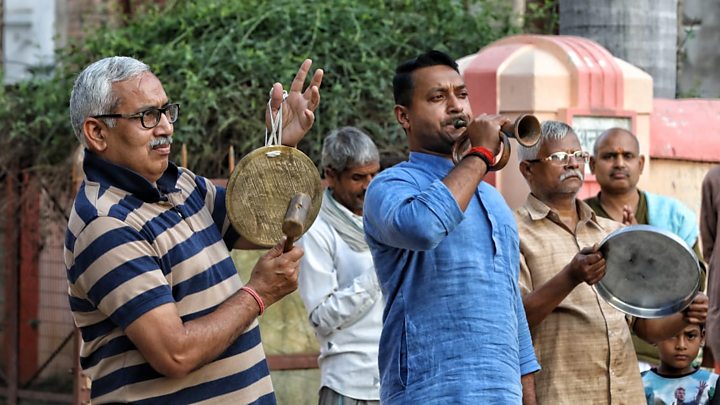
Media captionWATCH: Millions of Indians bang pots and pans in support of health workers
Company making front-runner appeals for people to take part in trial stage, which nine potential Chinese vaccines are set to enter in April
US trialling vaccine that copies virus’ genetic code, amid international search for a drug to help limit the outbreak’s human and economic impact
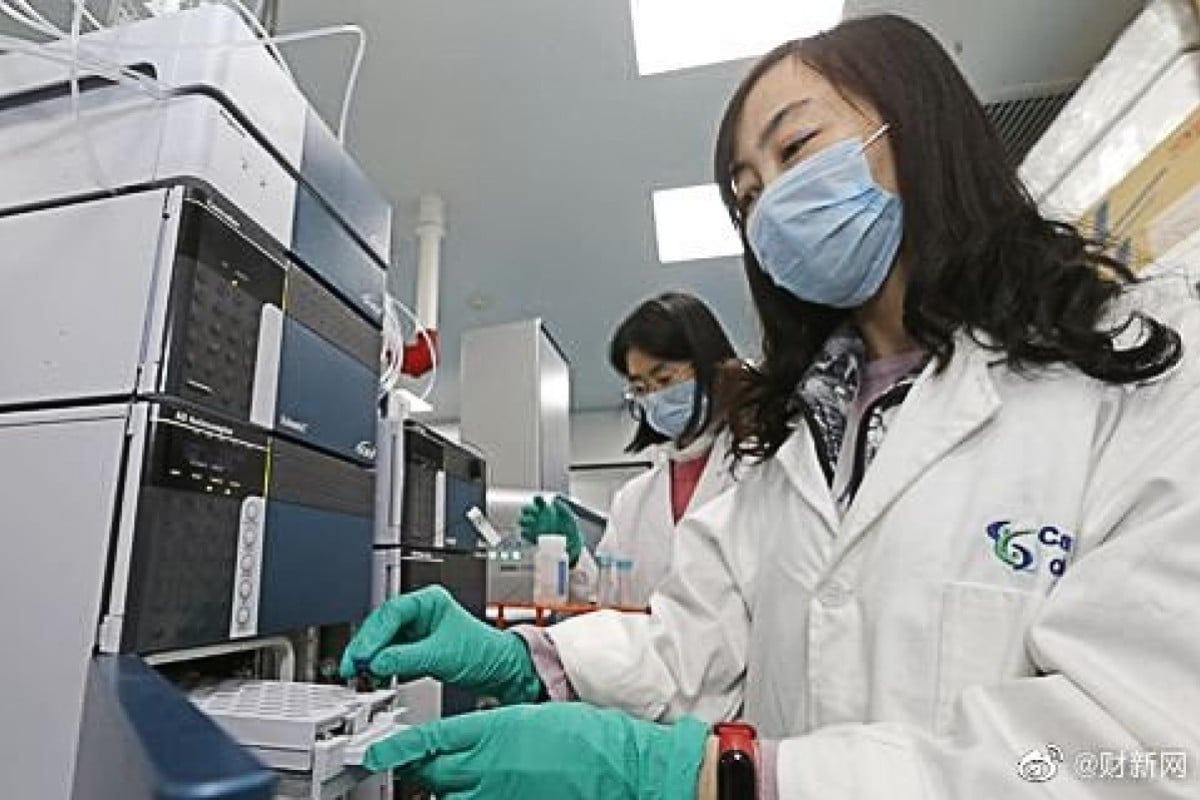
CanSino is recruiting healthy volunteers for a clinical trial of its vaccine candidate. Photo: Weibo
The race to develop a Covid-19 vaccine is on, with the United States already starting a clinical trial and China close behind.
On Tuesday, vaccine producer CanSino Biologics, in Tianjin in China’s northeast, said it was looking for volunteers to take part in a six-month clinical trial of a treatment it had developed jointly with the Academy of Military Medical Sciences.
“The vaccine does not contain infectious substances, is highly safe and stable, and requires only one inoculation,” the Hubei Centre for Disease Control and Prevention (CDC) said in its request for volunteers.
Its announcement came a day after the first participant began a phase I trial for an experimental vaccine funded by the US National Institutes of Health and developed by biotech startup Moderna.
Chinese scientists identify two major types of the new coronavirus in preliminary study
It uses messenger ribonucleic acid (mRNA) technology that copies the genetic code of the virus instead of the actual virus. To date, no mRNA vaccine has been approved for humans.
China’s own mRNA vaccine candidate, jointly developed by the Chinese Centre for Disease Control and Prevention, Tongji University and Stermina in Shanghai, is undergoing animal trials and is expected to enter the clinical phrase in mid-April.
Developed by the CanSino and the Academy of Military Medical Sciences, the vaccine is the front-runner of nine that China is developing. All are in the process of completing preclinical trial studies and will enter clinical trials in April, with some expected to advance faster than others, according to Wang Junzhi, a biological products quality control expert and academician with the Chinese Academy of Sciences.
US Covid-19 testing accelerates as companies step in where government failed
18 Mar 2020
“China’s research and development of a vaccine for the coronavirus is, generally speaking, among the most advanced in the world,” Wang said at a press briefing in Beijing on Tuesday. “[We] will not be slower than other countries.”
Coronavirus: Scientists dismiss claim that humans engineered the deadly contagion
Hopes have been pinned on developing a vaccine, especially for vulnerable groups such as the elderly, in the face of an epidemic with no known cure that has brought the world to a partial standstill.
Scientists around the world are conducting experiments, and the US is reported to have tried to buy a Germany vaccine developer so that it would supply to the US only – with the German government reportedly offering its own financial incentives for the biopharmaceutical company concerned, CureVac, to stay in the country.
“A vaccine is the most effective medical means for epidemic prevention and control as it can effectively stop the spread of the virus,” Lei Chaozi, director of science and technology at China’s Ministry of Education, said.
“Vaccines also play an important part in … stabilising the economy and enabling the country to return to normal as work and production resume.”
Why did a ‘cured’ coronavirus patient die in China? His widow wants answers
7 Mar 2020
President Xi Jinping called for faster development of coronavirus vaccines and treatment drugs when he inspected the Academy of Military Medical Sciences two weeks ago.
About 1,000 Chinese scientists have been working on the push for vaccines, with nine vaccines developed through five different approaches, including an inactivated vaccine, a viral vector-based vaccine and a gene vaccine.
Wang said that the vaccines needed to satisfy strictly the relevant regulations and technical standards – as well as World Health Organisation requirements – before starting clinical trials.
The potential vaccine developed by CanSino and military researchers, led by virologist Chen Wei, is genetically engineered. “Spikes” on the surface of the coronavirus bind to human cells and enable the virus to invade the human cells, causing the sometimes fatal infection known as Covid-19. In theory, vaccines can rehearse such an attack and trigger the human body to be primed to respond to a real infection.
CanSino has submitted the pre-investigational new drug review application for the Ad5-nCoV vaccine to Chinese regulatory authorities, and is in the process of submitting the related technical documents.
According to the Hubei CDC, volunteers for the trial must be 18 to 60 years old with no history of coronavirus infection.
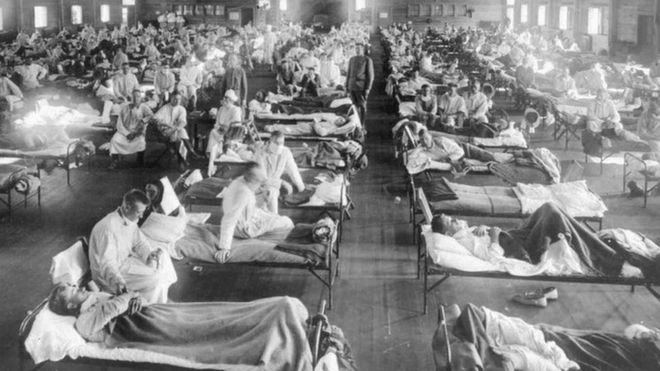
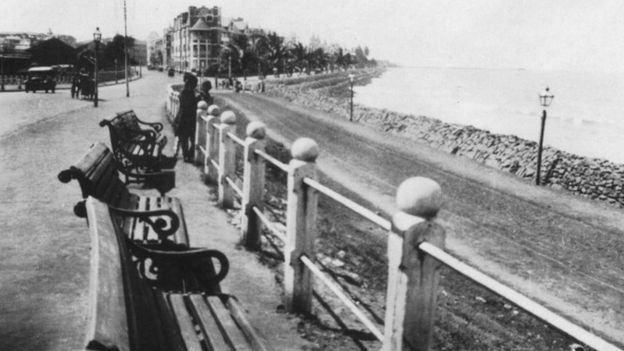
Image copyright NATIONAL MUSEUM OF HEALTH AND MEDICINEImage caption The 1918 flu pandemic is believed to have infected a third of the population worldwide
All interest in living has ceased, Mahatma Gandhi, battling a vile flu in 1918, told a confidante at a retreat in the western Indian state of Gujarat.
The highly infectious Spanish flu had swept through the ashram in Gujarat where 48-year-old Gandhi was living, four years after he had returned from South Africa. He rested, stuck to a liquid diet during “this protracted and first long illness” of his life. When news of his illness spread, a local newspaper wrote: “Gandhi’s life does not belong to him – it belongs to India”.
Outside, the deadly flu, which slunk in through a ship of returning soldiers that docked in Bombay (now Mumbai) in June 1918, ravaged India. The disease, according to health inspector JS Turner, came “like a thief in the night, its onset rapid and insidious”. A second wave of the epidemic began in September in southern India and spread along the coastline.
The influenza killed between 17 and 18 million Indians, more than all the casualties in World War One. India bore a considerable burden of death – it lost 6% of its people. More women – relatively undernourished, cooped up in unhygienic and ill-ventilated dwellings, and nursing the sick – died than men. The pandemic is believed to have infected a third of the world’s population and claimed between 50 and 100 million lives.
Gandhi and his febrile associates at the ashram were lucky to recover. In the parched countryside of northern India, the famous Hindi language writer and poet, Suryakant Tripathi, better known as Nirala, lost his wife and several members of his family to the flu. My family, he wrote, “disappeared in the blink of an eye”. He found the Ganges river “swollen with dead bodies”. Bodies piled up, and there wasn’t enough firewood to cremate them. To make matters worse, a failed monsoon led to a drought and famine-like conditions, leaving people underfed and weak, and pushed them into the cities, stoking the rapid spread of the disease.
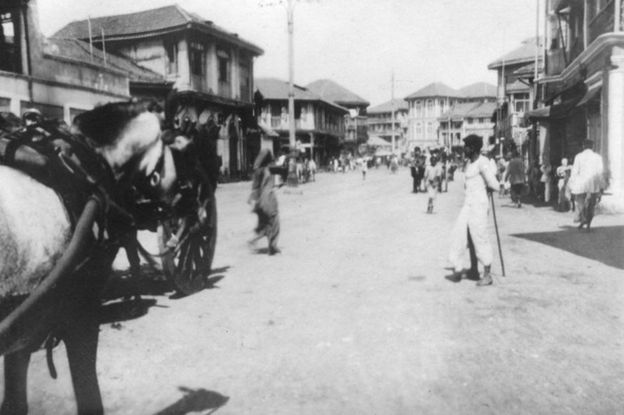
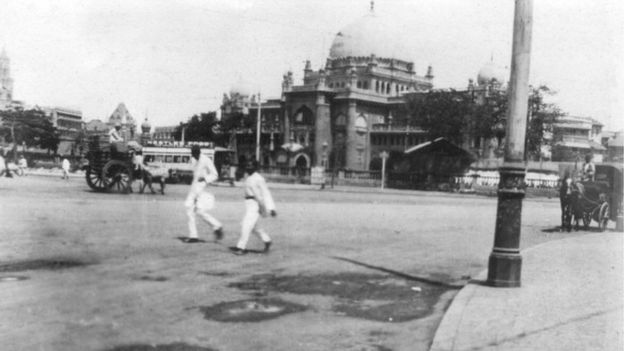
Image copyright PRINT COLLECTORImage caption Bombay was one of the worst hit cities by the 1918 pandemic
To be sure, the medical realities are vastly different now. Although there’s still no cure, scientists have mapped the genetic material of the coronavirus, and there’s the promise of anti-viral drugs, and a vaccine. The 1918 flu happened in the pre-antibiotic era, and there was simply not enough medical equipment to provide to the critically ill. Also western medicines weren’t widely accepted in India then and most people relied on indigenous medication.
Yet, there appear to be some striking similarities between the two pandemics, separated by a century. And possibly there are some relevant lessons to learn from the flu, and the bungled response to it.
The outbreak in Bombay, an overcrowded city, was the source of the infection’s spread back then – this something that virologists are fearing now. With more than 20 million people, Bombay is India’s most populous city and Maharashtra, the state where it’s located, has reported the highest number of coronivirus cases in the country.
By early July in 1918, 230 people were dying of the disease every day, up nearly three times from the end of June. “The chief symptoms are high temperature and pains in the back and the complaint lasts three days,” The Times of India reported, adding that “nearly every house in Bombay has some of its inmates down with fever”. Workers stayed away from offices and factories. More Indian adults and children were infected than resident Europeans. The newspapers advised people to not spend time outside and stay at home. “The main remedy,” wrote The Times of India, “is to go to bed and not worry”. People were reminded the disease spread “mainly through human contact by means of infected secretions from the nose and mouths”.
“To avoid an attack one should keep away from all places where there is overcrowding and consequent risk of infection such as fairs, festivals, theatres, schools, public lecture halls, cinemas, entertainment parties, crowded railway carriages etc,” wrote the paper. People were advised to sleep in the open rather than in badly ventilated rooms, have nourishing food and get exercise.
“Above all,” The Times of India added, “do not worry too much about the disease”.
Image copyright PRINT COLLECTOR
Colonial authorities differed over the source of infection. Health official Turner believed that the people on the docked ship had brought the fever to Bombay, but the government insisted that the crew had caught the flu in the city itself. “This had been the characteristic response of the authorities, to attribute any epidemic that they could not control to India and what was invariably termed the ‘insanitary condition’ of Indians,” observed medical historian Mridula Ramanna in her magisterial study of how Bombay coped with the pandemic.
Later a government report bemoaned the state of India’s government and the urgent need to expand and reform it. Newspapers complained that officials remained in the hills during the emergency, and that the government had thrown people “on the hands of providence”. Hospital sweepers in Bombay, according to Laura Spinney, author of Pale Rider: The Spanish Flu of 1918 and How It Changed the World, stayed away from British soldiers recovering from the flu. “The sweepers had memories of the British response to the plague outbreak which killed eight million Indians between 1886 and 1914.”
Image copyright PRINT COLLECTORImage caption The hospitals in Bombay were overwhelmed by patients
“The colonial authorities also paid the price for the long indifference to indigenous health, since they were absolutely unequipped to deal with the disaster,” says Ms Spinney. “Also, there was a shortage of doctors as many were away on the war front.”
Eventually NGOs and volunteers joined the response. They set up dispensaries, removed corpses, arranged cremations, opened small hospitals, treated patients, raised money and ran centres to distribute clothes and medicine. Citizens formed anti-influenza committees. “Never before, perhaps, in the history of India, have the educated and more fortunately placed members of the community, come forward in large numbers to help their poorer brethren in time of distress,” a government report said.
Now, as the country battles another deadly infection, the government has responded swiftly. But, like a century ago, civilians will play a key role in limiting the virus’ spread. And as coronavirus cases climb, this is something India should keep in mind.
BEIJING (Reuters) – Chinese President Xi Jinping visited Wuhan, the epicentre of the coronavirus outbreak, on Tuesday, the first time he has done so since the epidemic began and a sign that Beijing believes its efforts to control the virus are working.
His arrival in the city, where the virus is believed to have first taken hold late last year, comes after its spread in mainland China has sharply slowed in the past week and as attention has turned to preventing imported infections from overseas hot spots such as Iran, Italy and South Korea.
News of the visit gave a lift to Chinese stocks, with the blue-chip index .CSI300 climbing back into positive territory after falling as much as 1% in morning trade.
“It is obvious that Xi could not have visited Wuhan earlier because the risk of him contracting the virus there was initially too high,” Zhang Ming, a professor at Renmin University in Beijing, told Reuters.
“He is there now to reap the harvest. His being there means the CCP (Communist Party of China) may declare victory against the virus soon,” Zhang said.
China came in for criticism at home and globally over its early response to the outbreak, suppressing information and downplaying its risks, but its draconian efforts at control, including the lock-down of Wuhan and Hubei province where it is originated, have been effective at curbing the spread.
Hubei province, of which Wuhan is the capital, said on Tuesday it would implement a “health code” system to allow people in areas at a medium or low risk of contracting the coronavirus to start travelling.
During his trip to Wuhan, Xi will “visit and express regards to medical workers, military officers and soldiers, community workers, police officers, officials and volunteers who have been fighting the epidemic on the front line, as well as patients and residents during the inspection,” state news agency Xinhua said.
Separately, Taiwan’s government said on Tuesday a second round of evacuations of its citizens who had been stranded in Wuhan had begun, after weeks of arguments between the Chinese-claimed island and Beijing over the arrangements.
NEW CASES FALL
Mainland China had 19 new coronavirus infections on Monday, the National Health Commission said on Tuesday, down from 40 a day earlier. It also marked the third straight day of no new locally transmitted coronavirus cases outside of Hubei.
Of the new cases, 17 were in Wuhan, while one was in Beijing and one other in Guangdong due to people arriving from abroad, according to the health authority.
That brings the total number of confirmed cases in mainland China so far to 80,754.
However, Chinese authorities have ramped up warnings about the risks from foreigners and Chinese nationals travelling to China from viral hot spots abroad such as Iran and Italy.
The one case in Beijing on Monday was due to a traveller from Britain, and the one in Guangdong was an imported case from Spain. As of Monday, there have been 69 imported cases.
More than 114,300 people have been infected by the coronavirus globally and over 4,000 have died, according to a Reuters tally of government announcements.
Outside China, Italy, South Korea and Iran have reported the most cases and deaths.
Since the outbreak, 59,897 patients have been discharged from hospitals in China. Recently discharged patients need to go into quarantine for 14 days.
In Wuhan, 12 of the 14 temporary hospitals dedicated to treating coronavirus patients have closed, with the remaining two due to shut on Tuesday.
On Saturday, a small hotel used to quarantine people under observation in southern Fujian province collapsed, killing 20, while 10 had yet to be rescued.
Of the 71 people inside the hotel in Quanzhou city at the time of the collapse, 58 were in under quarantine, the Quanzhou city government said.
As of the end of Monday, the overall death toll from the coronavirus outbreak in China reached 3,136, up by 17 from the previous day.
Hubei reported 17 new deaths, all of which were in Wuhan.
Xi, who was mostly absent from Chinese state media coverage of the crisis in its early days, has become for more visible in recent weeks.
The Global Times, a nationalist tabloid published by the official People’s Daily, on Tuesday detailed the various instructions and actions Xi had given and taken between Jan. 7 and March 2 to combat the epidemic.
“Xi personally commands the people’s war against the epidemic. He has been paying constant attention to the epidemic prevention and control work and made oral or written instructions every day,” the newspaper said.
GUANGZHOU, Oct. 2 (Xinhua) — With the help of audio description given by volunteers, visually impaired people in south China’s Guangzhou “watched” live broadcasting of China’s National Day celebrations on Tuesday.
“The aircrafts are flying through the sky in a shape of triangle, with seven lines of colored clouds behind,” the volunteers described the formation in detail.
On Tuesday, a grand military parade and a 100,000-people mass pageantry were held in Beijing to celebrate the 70th founding anniversary of the People’s Republic of China.
A total of 100 visually-impaired people “watched” the broadcast in Guangzhou Library. Wearing earphones, they got a full account of the celebrations from two volunteers.
For Lu Haixia, one of the volunteers, narrating a live broadcasting put her under great pressure.
“It takes me 100 hours to prepare the oral scripts for a movie, and much more hours for preparing for such a long live broadcasting in order to provide informative accounts of the event to the audience,” she said.
“With the detailed narration, I feel like seeing formations parading on the Chang’an Avenue, and that I can get more involved in the cheering,” said Wang Zeyu, one of the “viewers.”
This was the first time for Guangzhou to introduce a live broadcast of major celebrations with audio description to the visually impaired. Organizers of the event hope to carry the effort forward to give the visually impaired more confidence to get integrated into the society.
Delicate balance for Disney in its portrayal of China’s classic tale of female heroism
Too Americanised, or pandering to a mainland Chinese audience?
Chinese-American actress Crystal Liu Yifei plays the title role in Disney’s Mulan. Photo: Disney
Since the trailer for Disney’s live-action film Mulan was released last weekend, both mainland Chinese in the East and the diaspora in the West have been abuzz about their cultural identity and its representation in Hollywood – albeit for different reasons.
Chinese viewers have, on one hand, been enthusiastic about the casting of Chinese-American actress Crystal Liu Yifei in the lead role and the chance for a seemingly more “authentic” Chinese story to be told on the global stage.
On the other hand, they have pointed out historical inaccuracies – such as the southern Chinese setting when the source material states that Mulan is from the north – and expressed concerns that the plot has been too “Americanised”.
Meanwhile, many Chinese-Americans were surprised to discover upon watching the trailer that the beloved 1998 animation had changed beyond recognition – most notably with the absence of talking dragon Mushu and male love interest Li Shang. Some also felt that the new film pandered too much to a mainland Chinese audience.
“The idea of a mythic mash-up of China [in the new film] … seems to play to the idea of a unified, singular China, an artistic representation of the one-China policy, which is troubling to me,” said Jeannette Ng, a British sci-fi author with Hong Kong heritage.
“A lot of the time, this conversation acts like the only Chinese people who matter are the ones who live in mainland China – that they are the only truly authentic ones and everyone else is too Westernised to count,” she said.
The online discussion indicates the delicate balance Hollywood interpretations of Chinese classics have to strike in portraying Chinese versus American values, as big US-China co-productions try their hardest to integrate the two for bigger global box office takings.
Despite ticket sales in China falling 3.6 per cent in the first half of 2019, owing to tightened government censorship, China is still projected to overtake the US box office next year, according to a recent report by professional services firm PwC.
Disney has tried hard to make the new film more true to its ancient Chinese source material, with a detailed – if inaccurate – historical setting featuring the ancient tulou roundhouses of the southeastern province of Fujian, and a star-studded, all-Asian cast with several icons of Chinese cinema such as Jet Li, Hong Kong actor Donnie Yen and Gong Li.
Disney’s live-action version of Mulan is truer to the ancient source material. Photo: Handout
“Disney’s tent pole movies are aiming at a global audience. That being said, given that China is the largest international market and the story is based on a Chinese folk tale, Disney will definitely take the Chinese audience’s taste into consideration,” said a Chinese film producer, who asked to remain anonymous, at a major US studio in Beijing.
“However, this is also a double-edged sword, as people tend to be more picky when they see things they are familiar with.”
Indeed, several Chinese media think pieces have questioned whether elements of the original legend had become too Americanised in the film, leading to an inauthentic representation of a beloved Chinese heroine.
For instance, the Disney trailer suggests that Mulan joins the army to escape an arranged marriage, breaking away from family traditions and establishing her independence as a woman unbound by gender roles.
But in the original folk song Ballad of Mulan, on which the film is based, she volunteers to take the place of her ageing father in the army – making her a symbol of filial piety, courage and patriotism in traditional Chinese culture.
Some critics say Mulan has been Americanised. Photo: YouTube
In a widely shared analysis discussing whether Disney’s Mulan was a feminist icon, Peking University Press wrote: “Perhaps this is a cross-cultural creative misunderstanding that reflects the core differences between Chinese and Western culture. If Mulan is seen as a feminist symbol, I fear this may be wishful thinking.”
However, both Chinese-Americans and Chinese nationals agree that the film, slated for release in March, is an inspiring tale for young girls.
“I feel like the people who are criticising the film are too attached and focused on the nostalgia factor. They are not seeing the bigger picture and the positive implications of this movie,” said Alex Diep, a 23-year-old American of Vietnamese-Chinese descent.
“They are disregarding that this film gives an opportunity for young Asian girls to look up to Mulan and see her as a role model,” he said.
Some Chinese have interpreted it as an inspiring fable of female strength and liberation, especially when ingrained patriarchal values and government initiatives such as the one-child policy have restricted women’s rights over the years.
“[Mulan] remains one of the very few fighters and not conventionally feminine figures in the Disney princess canon,” Ng said.
“[T]his is some sort of feminism education for a single-child generation in China that girls can fight like men do,” tweeted Chinese journalist Li Jing.
Chinese-Americans are also optimistic that it will be a sure-fire win for Asian representation on the big screen, especially after the success of last year’s romantic comedy Crazy Rich Asians.
“[Critics of the trailer] are disregarding the fact that this movie is another opportunity to showcase Asian people in a movie where we are not perceived as a negative stereotype,” Diep said.
Others feel that the film can help build a bridge between East and West.
“Mulan is a Chinese story. It comes from a completely different culture, one which I’m not at all convinced that Hollywood, or the West at large, truly understands yet,” said
New Yorker Jonathan Pu, who is of Taiwanese descent. He said he enjoyed the lighthearted animation, but that it did not define his expectations for the remake.
“If Disney can stay true to the source material and convey [filial piety] in a way that even just some of the audience can grasp, then it will go a long way towards building bridges,” Pu said.
Ultimately, the success of this American spin on Chinese culture will rest on box office sales, which Disney hopes will exceed the 1998 animation that flopped in mainland cinemas. Recent Disney live-action remakes have had a mixed reception in China – Dumbo flopped in March, while The Lion King did moderately well on its release last weekend.
“I’m sure there will be a mixed response when the movie is released but it should have enough buzz and do well,” said the Beijing film producer.
“I hope it will be able to convey the spirit of Mulan and inspire millions of young girls.”
Major highways gridlocked for hours at start of four-day break
Chaos at railway stations as ticket-holding passengers turned away
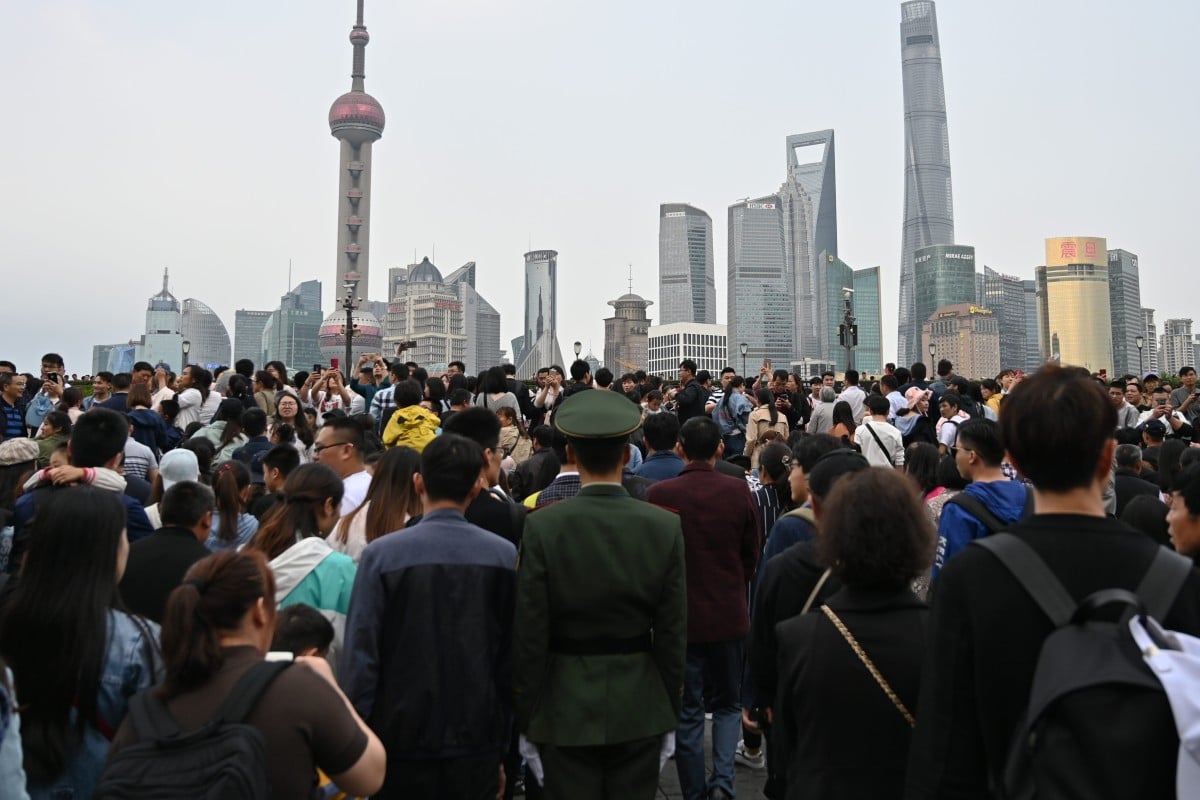
Holiday crowds pack the promenade on the Bund along the Huangpu River in Shanghai on the first day of China’s May break. Photo: AFP
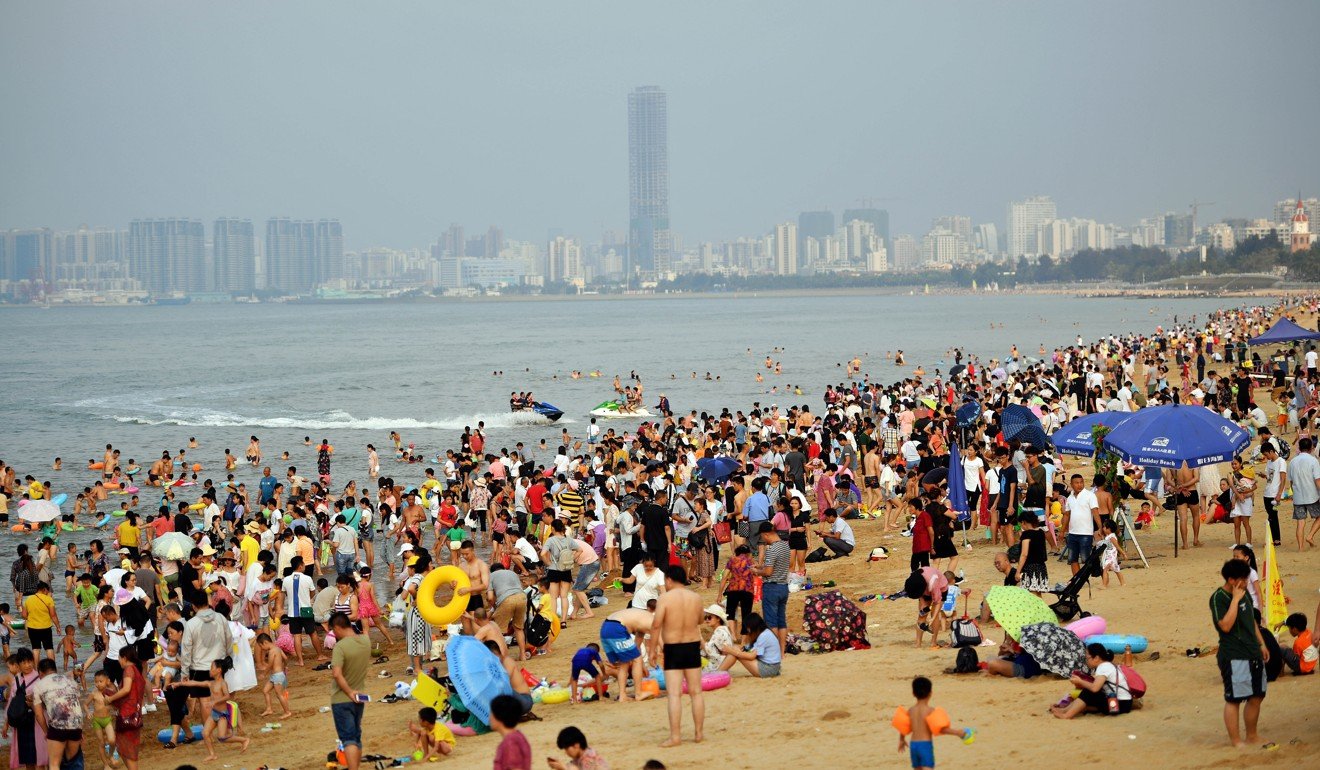
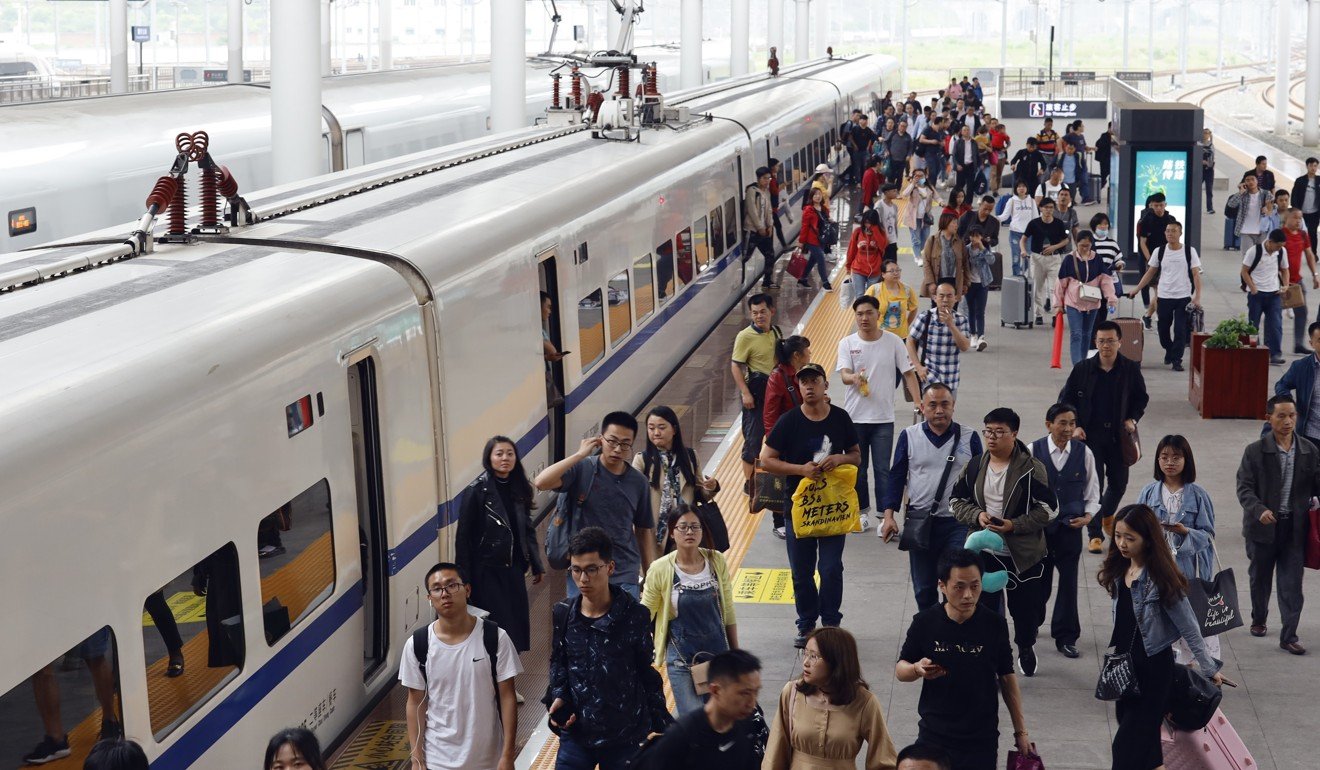
China’s Labour Day holiday started on Wednesday with gridlocked roads and chaos at railway stations as millions of people took advantage of this year’s unusually long break.
Motorists reported being stuck in traffic jams which did not move for hours, while ticket-holding passengers were turned away from some trains due to severe overcrowding on the first day of the holiday.
Travel agency Ctrip estimated that around 160 million domestic tourists would be travelling over the four-day break, according to data from travel booking platforms.
Forty major highways recorded a 75 per cent spike in traffic on Wednesday, according to Xinhua, as toll fares for cars were suspended for the holiday.
Tourists enjoy the first day of China’s four-day May holiday on a beach in Haikou, Hainan province, southern China. Photo: Xinhua
Monitoring stations on major routes – including the Beijing-Tibet Expressway, the Shanghai-Shaanxi Expressway, Shanghai’s Humin Elevated Road and the Beijing section of the Beijing-Hong Kong-Macau Expressway – recorded a 200 per cent increase in traffic from Tuesday onwards, Xinhua said.
The Ministry of Public Security’s traffic management bureau has warned holiday motorists to drive safely, especially on winding mountainside routes.
Online news portal The Paper reported on Thursday that traffic jams on some major routes were so severe that the drive from Shanghai to Hangzhou, capital of neighbouring Zhejiang province, took some travellers seven hours instead of the usual two.
Passengers board the train at Chongqing North Railway Station in southwest China on Tuesday, hoping to beat the May holiday travel rush. Photo: Xinhua
Meanwhile, more than 54,000 tourists visited the popular Badaling section of the Great Wall on Wednesday, according to Beijing Youth Daily. The attraction’s management team had increased the number of volunteers, parking spaces and shuttle buses to prepare for the influx, the report said.
More than 53,000 tourists had visited the Shanghai International Tourism Resort and Shanghai Disneyland by 4pm on Wednesday, according to data from the Shanghai municipal government’s real-time visitor tracker. The Shanghai Zoo attracted more than 24,000 people, and more than 9,200 visited the Shanghai Science and Technology Museum.
Despite the crowds, no records were broken at the Shanghai attractions, which reached about 70 per cent of their maximum visitor numbers recorded, The Paper reported.
At railway stations, ticket-holding passengers were stopped from boarding trains between Nanjing and the city of Zibo in Shandong province, eastern China, due to severe overcrowding, Beijing Youth Daily reported on Wednesday.
Station staff promised full refunds to customers with pre-booked tickets who were refused entry.







 CHINDIA ALERT: You'll be living in their world, very soon