Archive for ‘Wang Qishan’

18/02/2020

China may adjust 2020 GDP growth target due to coronavirus, government policy adviser say

  • China was widely expected to announce a gross domestic product (GDP) growth target for 2020 of ‘around 6 per cent’ following 6.1 per cent growth in 2019
  • Zhang Yansheng, who is an adviser to China’s economic policymakers, says ‘there will definitely be adjustments’
(190305) -- BEIJING, March 5, 2019 (Xinhua) -- Xi Jinping (C, front), Li Keqiang (3rd R, front), Wang Yang (3rd L, front), Wang Huning (2nd R, front), Zhao Leji (2nd L, front), Han Zheng (1st R, front) and Wang Qishan (1st L, front) attend the opening meeting of the second session of the 13th National People's Congress at the Great Hall of the People in Beijing, capital of China, March 5, 2019. (Xinhua/Li Xueren)
(190305) — BEIJING, March 5, 2019 (Xinhua) — Xi Jinping (C, front), Li Keqiang (3rd R, front), Wang Yang (3rd L, front), Wang Huning (2nd R, front), Zhao Leji (2nd L, front), Han Zheng (1st R, front) and Wang Qishan (1st L, front) attend the opening meeting of the second session of the 13th National People’s Congress at the Great Hall of the People in Beijing, capital of China, March 5, 2019. (Xinhua/Li Xueren)

China may revise down its annual economic growth target for 2020 in response to the impact of the coronavirus outbreak, but will still not give up the overall target of maintaining economic growth “in a reasonable range”, according to a Chinese government researcher.

The Chinese government has never officially published its goal for 2020, but it is widely expected that the specific gross domestic product (GDP) growth target for 2020

 would be “around 6 per cent”, marking a potential slight slowdown from 6.1 per cent growth in 2019 but enough to achieve Beijing’s grand goal of doubling the size of its economy in 2020 from 2010.
China’s 2020 growth target was originally to be released during Premier Li Keqiang’s government work report at the National People’s Congress, but the March 5 annual parliamentary meeting is set to be postponed due to the coronavirus outbreak.
“There will definitely be adjustments. For the central government, it hasn’t defined what the ‘reasonable range’ should be after the outbreak of coronavirus. People are still watching how the outbreak will develop and influence the economy,” Zhang Yansheng, the chief research fellow at the Beijing-based think tank, the China Centre for
International Economic Exchanges, told the South China Morning Post on Tuesday.

As for the final GDP target figure, we have to be true to facts. The GDP target was not a compulsory requirement but a soft forecast figureZhang Yansheng

“As for the final GDP target figure, we have to be true to facts. The GDP target was not a compulsory requirement but a soft forecast figure – strictly speaking, a forecast figure could be revised three or four times in a year.”
Zhang, though, referenced the fact that 29 of China provincial-level regions, out of a total of 31, had published their 2020 economic growth targets at the Central Economic Work Conference in December.

“The direction and the goals are clear. It’s not the case that people have not known what they should do this year,” added Zhang, who is an adviser to China’s economic policymakers.

President Xi Jinping

has repeatedly said over the last two weeks that China will still strive to achieve its economic and social development goals for 2020 despite the outbreak, which has claimed over 1,800 lives and infected over 70,000 people, and remain on course to build the country into a “comprehensively well-off society”.

China to postpone the year’s biggest political gathering amid coronavirus outbreak
One key aspect of that vision is that China will double the size of its GDP in 2020 from 2010, which would require a minimum 5.6 per cent growth rate in 2020, although Beijing has never clearly defined the full details of the goal.

On Tuesday, Ren Hongbin, vice-chairman of the State-owned Assets Supervision and Administration Commission of the State Council, said that the annual production goals and reform tasks set earlier in the year for state-owned enterprises would also not change despite the outbreak.

“The impact of the epidemic is temporary and phased, will not change the long-term positive fundamentals of the Chinese economy,” he said.

We should neither view 6 per cent as a red line nor take doubling the GDP size as a bottom line Song Xiaowu

Before the country fell into an economic standstill around the extended Lunar New Year holiday as the virus spread from the city of Wuhan, economists and analysts have been engaged in a heated debate over whether China needs to keep its growth rate above 6 per cent in 2020.

Song Xiaowu, former president of the China Society of Economic Reform, a state-backed think tank, said at a forum on Saturday that China’s GDP growth rate could drop to 3 per cent in the first quarter and 5 per cent for the whole of 2020.

“We should neither view 6 per cent as a red line nor take doubling the GDP size as a bottom line,” said Song, in a speech published by the China Development Research Foundation, who organised the forum.

Source: SCMP

23/01/2020

Xi Focus: Xi stresses racing against time to reach Chinese Dream

CHINA-BEIJING-CPC CENTRAL COMMITTEE-STATE COUNCIL-RECEPTION (CN) Chinese President Xi Jinping, also general secretary of the Communist Party of China (CPC) Central Committee and chairman of the Central Military Commission, addresses a Chinese Lunar New Year reception at the Great Hall of the People in Beijing, capital of China, Jan. 23, 2020. The CPC Central Committee and the State Council held the reception on Thursday in Beijing. (Xinhua/Yao Dawei)

BEIJING, Jan. 23 (Xinhua) — Chinese President Xi Jinping on Thursday stressed racing against time and keeping abreast with history to reach the Chinese Dream of national rejuvenation.

“Time and history wait for no one as they are both on the side of hard workers,” said Xi, also general secretary of the Communist Party of China (CPC) Central Committee and chairman of the Central Military Commission.

Xi made the remarks while addressing a Chinese Lunar New Year reception held at the Great Hall of the People in Beijing.

Under the strong leadership of the CPC, all members of the Party, armed forces and people of all ethnic groups must fear no wind or wave, rise up to challenges and keep marching toward the glorious goal of national rejuvenation and the great prospect of building a community with a shared future for humanity, Xi said.

At the reception, held by the CPC Central Committee and the State Council, Xi extended Lunar New Year’s greetings to Chinese people of all ethnic groups, compatriots in Hong Kong, Macao and Taiwan and overseas Chinese.

Party and state leaders Li Keqiang, Li Zhanshu, Wang Yang, Wang Huning, Zhao Leji, Han Zheng and Wang Qishan were among the more than 2,000 people attending the reception. Li Keqiang chaired the event.

Xi noted in his speech that new and significant progress has been made in the past year toward building a moderately prosperous society in all respects.

He mentioned major events during the year, including the fourth plenary session of the 19th CPC Central Committee, celebrations marking the 20th anniversary of Macao’s return to the motherland and resolute efforts to safeguard the prosperity and stability of Hong Kong and Macao, as well as celebrations marking the 70th founding anniversary of the People’s Republic of China.

A campaign themed “staying true to our founding mission” was also carried out to demand the more than 90 million Party members remember to always stay with the people.

“In the new year, we must secure a decisive victory in building a moderately prosperous society in all respects and fighting poverty,” Xi said, adding that achieving this first centenary goal is a milestone in the process of realizing the Chinese Dream of national rejuvenation.

The results, Xi said, must be recognized by the people and stand the test of time.

Xi said the Chinese nation, with a civilization stretching back over 5,000 years, has made indelible contributions to the civilization and progress of mankind. But the nation was held back for too long by various internal and external troubles in modern times.

That is why, Xi said, the Chinese people have always had an extraordinary sense of urgency and appreciation of the underlying trend of the times.

From now to the middle of this century, the Chinese people will strive to build China into a great modern socialist country. It will be a great era in which a new splendid chapter of the Chinese civilization will be written, he said.

Every Chinese person must feel proud of living in such a great era, Xi said.

“We must maintain strategic direction and resolve, stay united, work hard and forge ahead against all odds,” Xi said.

Source: Xinhua

03/06/2019

Chinese vice president visits Germany, vows closer cooperation

GERMANY-CHINA-WANG QISHAN-VISIT

Chinese Vice President Wang Qishan meets with German President Frank-Walter Steinmeier in Berlin, Germany, May, 31, 2019. Wang Qishan paid a visit to Germany from Thursday to Sunday at the invitation of the German Federal Government. (Xinhua/Rao Aimin)

BERLIN, June 2 (Xinhua) — Chinese Vice President Wang Qishan paid a visit to Germany from Thursday to Sunday at the invitation of the German Federal Government.

During his visit in Berlin, Wang met with German President Frank-Walter Steinmeier, Chancellor Angela Merkel and Foreign Minister Heiko Maas separately.

When meeting with Steinmeier, Wang said that China and Germany were both major world economies and major countries with great influence. The relations between the two countries have gone beyond bilateral scope and bear global significance.

Wang said in recent years the high-level contacts were frequent, and the cooperation in all fields has been constantly deepened, adding he is willing to push for new development of the all-around strategic partnership through his visit.

Noting the ties between China and Germany is currently facing a new situation, Wang called on the two countries to set a model of win-win cooperation for the world through deepening collaboration, to bring stability to the world through guiding the China-EU cooperation, and to strength the power to safeguard multilateralism through boosting global governance.

For his part, German President Steinmeier said that the current international landscape is complicated and turbulent, and multilateralism is under threat.

He noted that Germany highly values the ties with China, adding Germany is willing to strengthen communication and coordination with China at all levels, and to continue the pragmatic cooperations in Industry 4.0 and in other fields.

Germany and China, and Europe and China, should join hands to maintain the world peace and stability, free trade, and existing international orders, Steinmeier added.

When meeting with Merkel, Wang said China sticks to peaceful development, and will through steadily deepening reform and opening up, solve the existing problem of imbalance and insufficient development to meet people’s desire for a better life and to fulfill the promises of the party and the government to the people.

Wang said China cannot develop itself in isolation from the world, nor can the world develop without the 1.4 billion Chinese people, and China advocates countries to together build a community of shared future for humankind.

Facing the profound and complex changes in the international situation, China always insists on doing its own share firstly, staying calm and clear-headed, showing composure, shouldering responsibility and reacting rationally, he noted.

Wang called on China and Germany, as all-around strategic partners, to strengthen cooperation in building a more fair and reasonable global governance system, and to jointly face the uncertainties.

The Chinese vice president also said that China has always viewed Europe from a strategic height and with a long-term vision, and firmly supported the European integration. Wang added that China is a trustworthy partner for Europe to have dialogue on an equal footing.

Chancellor Merkel said Germany appreciates China’s great achievements in economic development and believes that China can definitely achieve the ambitious goals of eradicating poverty and finishing building a moderately prosperous society on schedule.

Facing the current complex and volatile international environment in which various new problems emerge, Merkel said, Germany is always committed to safeguarding the principle of multilateralism and the existing international order.

She noted that Germany advocates to strengthen international coordination and collaboration through dialogue, disagrees with the action of exerting threat and pressure to solve problems.

She believed that Germany and China, as well as Europe and China, share broad consensus on a wide range of issues, expressing Germany’s willingness to strengthen communication, exchanges and cooperation with China, and to improve global governance system jointly with China.

When meeting with Heiko Maas, Wang said China and Germany share common interests in many fields such as deepening pragmatic cooperation, safeguarding multilateralism and free trade, improving global governance and promoting world peace.

Looking to the next stage of the bilateral relations, Wang advocates that both sides should set the right direction for the Sino-German, Sino-European win-win cooperation, encourage the enhanced exchanges in ideology, talents as well as science and technology, cement the friendship between the two peoples, and to inject more positive energy into the world.

Echoing Wang’s comments, Maas said Germany is willing to strengthen strategic communication and cooperation on multilateral issues with China, as well as to jointly tackle global challenges, safeguard multilateralism and international order, promote the liberalization of international trade.

During his visit to Germany, Wang also met with mayor of Hamburg Peter Tschentscher and Bavarian governor Markus Soeder and visited the port of Hamburg.

Before his tour to Germany, the Chinese Vice president also visited Pakistan and the Netherlands.

Source: Xinhua

29/05/2019

China looks to Russia, Central Asia for support amid tensions with US

  • President Xi Jinping will meet Russian counterpart Vladimir Putin next month and address economic summit in St Petersburg
  • Diplomatic flurry will also include regional security forums in Kyrgyzstan and Tajikistan
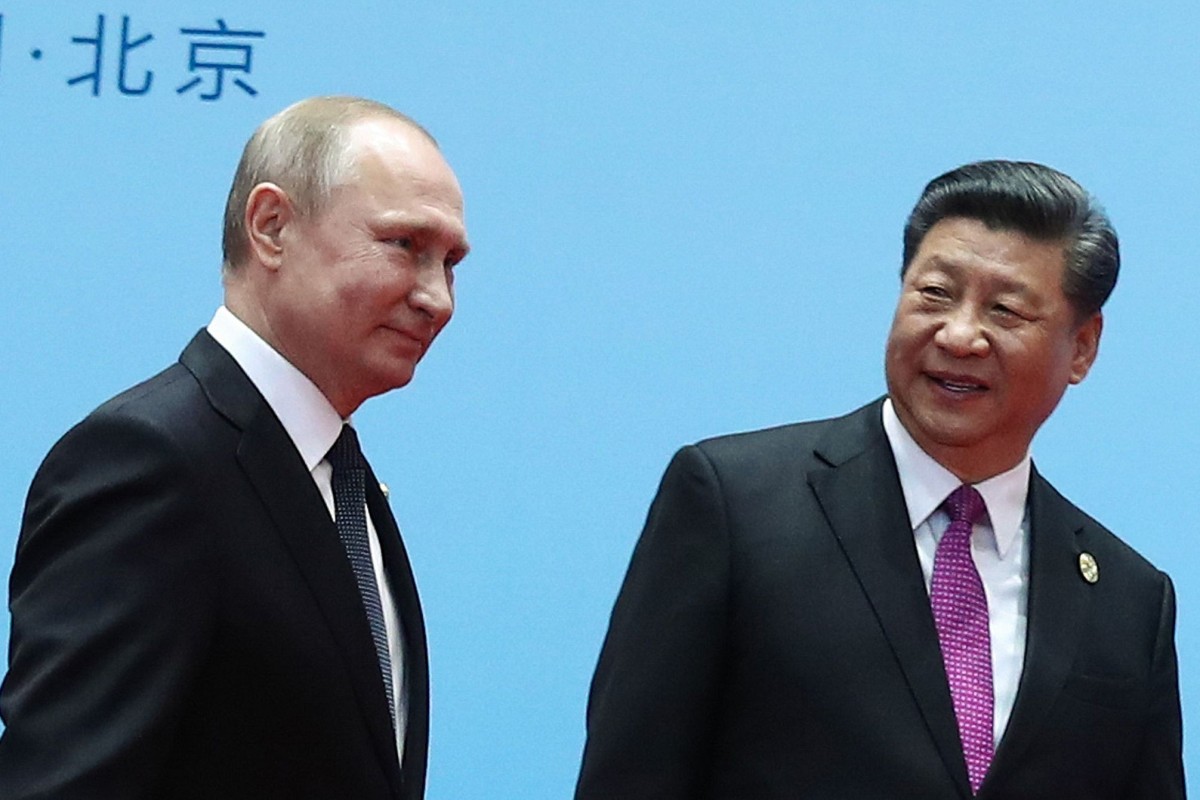
Xi Jinping has met Vladimir Putin more times than any other foreign leader since he took power in 2013. Photo: AFP
Beijing is stepping up efforts to seek support from regional and global players such as Russia and Central Asian nations as its geostrategic rivalry with Washington heats up.

President Xi Jinping is expected to meet his Russian counterpart Vladimir Putin next month, when he will also address the St Petersburg International Economic Summit,

Russian presidential aide Yuri Ushakov told state-run TASS news agency earlier.

The Chinese president will also visit the Kyrgyzstan capital Bishkek for the Shanghai Cooperation Organisation (SCO) summit in June, as well as another regional security forum in Dushanbe, Tajikistan.

Meanwhile, Vice-President Wang Qishan is visiting Pakistan before he heads to the Netherlands and Germany, according to the Chinese foreign ministry.
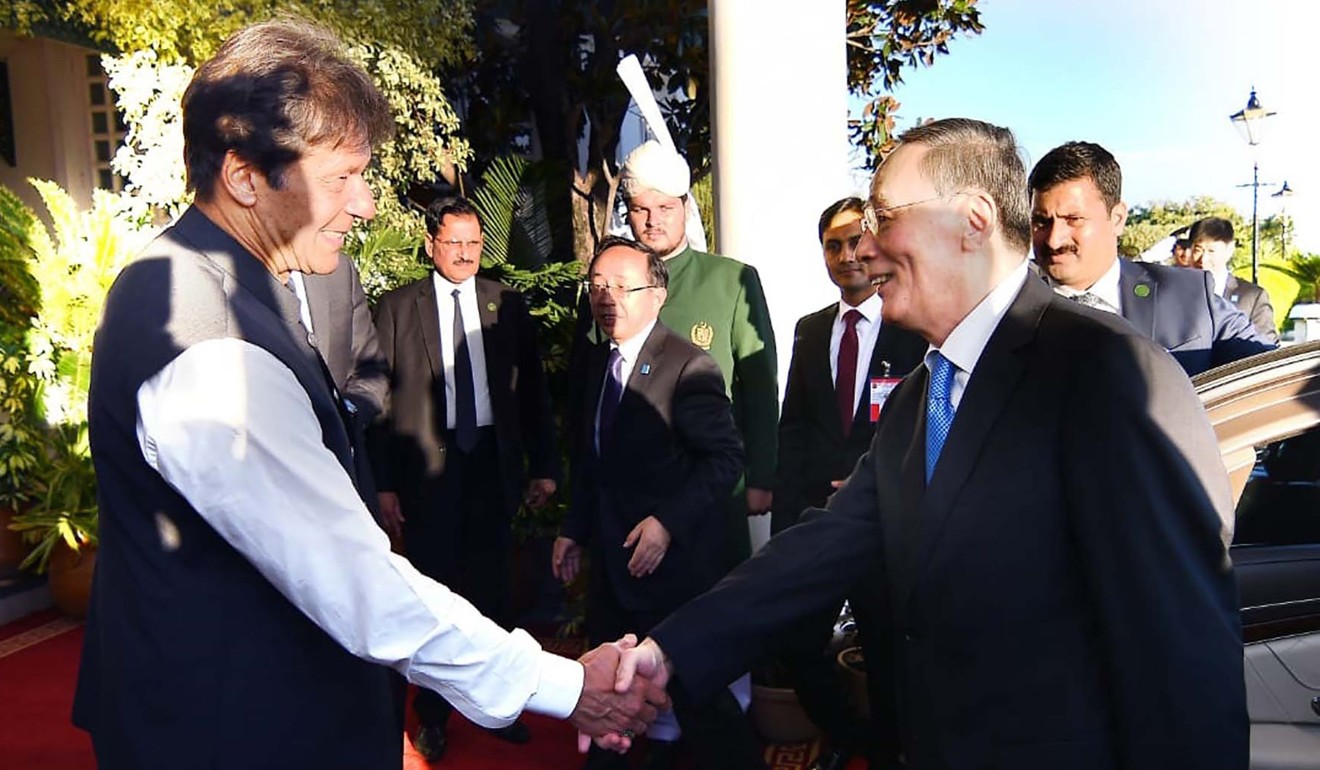
Pakistani Prime Minister Imran Khan meets Chinese Vice-President Wang Qishan in Islamabad on Sunday. Photo: AFP
The latest flurry of diplomatic activity comes as competition between China and the US intensifies on several fronts including trade and technology, the South China Sea and the Arctic, where Beijing’s partnership with Moscow –

funding and building ports, berths and icebreakers off Russia’s shores

– has drawn criticism from Washington.

It will be Xi’s second time at the St Petersburg forum, and observers expect the Chinese leader will reaffirm Beijing’s commitment to multilateralism and promote the nation as a champion of openness and cooperation.
China-Russia ties unrivalled, Beijing warns before Pompeo meets Putin
It will also be his second meeting with Putin in two months, after talks on the sidelines of the Belt and Road Forum in Beijing in late April, when the Russian president

offered his support

for the controversial China-led infrastructure and investment initiative.

With China and Russia edging closer, the latest meeting is likely to see efforts to coordinate their strategies on a range of issues – including Venezuela, North Korea, nuclear weapons and arms control, according to observers. Xi has met Putin more times than any other foreign leader since he took power in 2013.

“This time it is very likely that the latest anti-China moves by the US, such as new tariffs and the Huawei ban, will feature prominently in their conversations,” said Artyom Lukin, an associate professor at Far Eastern Federal University in Vladivostok.

Lukin said Russia’s stagnating economy and sanctions imposed by the West limited its role as a substitute for the foreign markets and technologies China could lose access to because of the US crusade. But he said Putin would “provide political and moral support to Xi”.

“That is also significant as Russia has been withstanding intense US-led sanctions pressure for more than five years already,” Lukin said, referring to sanctions imposed after Russia’s annexation of Crimea in 2014.

Xi and Putin are also expected to talk about Venezuela, where US-backed opposition leader Juan Guaido is attempting to oust socialist President Nicolas Maduro, who has the support of China and Russia.

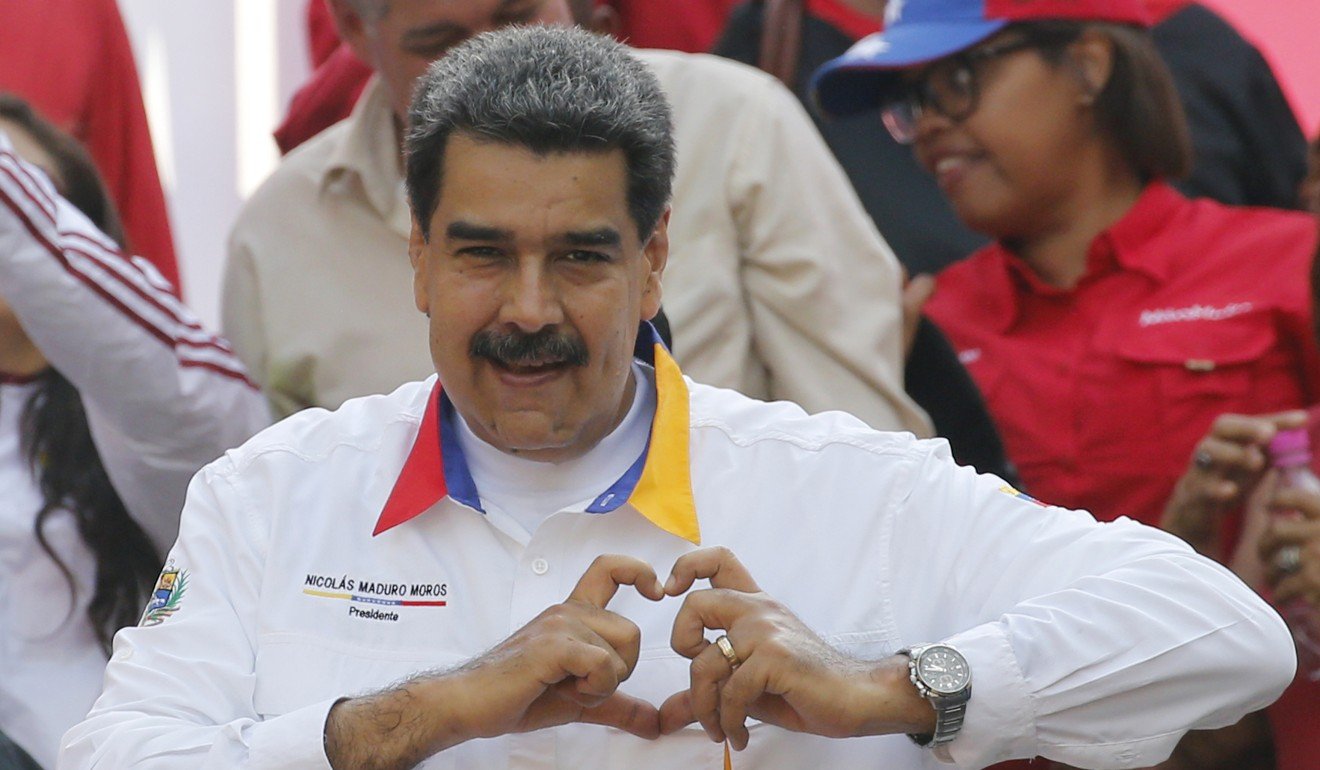
Venezuelan President Nicolas Maduro has the backing of China and Russia. Photo: AP

“Moscow and Beijing are not able to seriously hurt Washington by raising tariffs or denying access to high technology. However, there are plenty of areas where coordinated Sino-Russian policies can damage US interests in the short term or in the long run,” Lukin said. “For example, Moscow and Beijing could intensify their joint support for the Venezuelan government of Nicolas Maduro, frustrating Washington’s efforts to dislodge him.”

China and Russia would also be seeking to boost economic ties. Bilateral trade, dominated by Chinese imports of gas and oil, reached US$108 billion last year – falling far short of the target set in 2011 by Xi’s predecessor, Hu Jintao, of US$200 billion by 2020.

China and Russia to forge stronger Eurasian economic ties

Li Lifan, an associate research professor at the Shanghai Academy of Social Sciences, said bilateral trade was a sticking point. “This is one of the potential hindrances in China-Russia relations and Beijing is hoping to [address this] … in the face of a possible global economic slowdown,” Li said.

Given the escalating trade war with Washington, he said China would seek to diversify its investments and markets to other parts of the world, particularly Russia and Europe.

“China will step up its investment cooperation with Europe and Russia and focus more on multilateral investment,” Li said.

But Beijing was not expected to do anything to worsen tensions with Washington.

“China is currently taking a very cautious approach towards the US, trying to avoid heating up the confrontation and further aggravation of the situation,” said Danil Bochkov, a contributing author with the Russian International Affairs Council. “For China it is important to demonstrate that it has a reliable friend – Russia – but that should not be done in an openly provocative manner.”

Stephen Blank, a senior fellow at the American Foreign Policy Council in Washington, said Beijing and Moscow would also seek to contain US influence “as far as possible” from Central Asia, where China has increased its engagement through infrastructure building under the “Belt and Road Initiative”.

Leaders from the region will gather in Bishkek next month for the SCO summit, a security bloc set up in 2001 that now comprises China, Russia, Kazakhstan, Kyrgyzstan, Tajikistan, Uzbekistan, India and Pakistan. Those members account for about 23 per cent of the world’s land mass, 45 per cent of its population, and 25 per cent of global GDP.

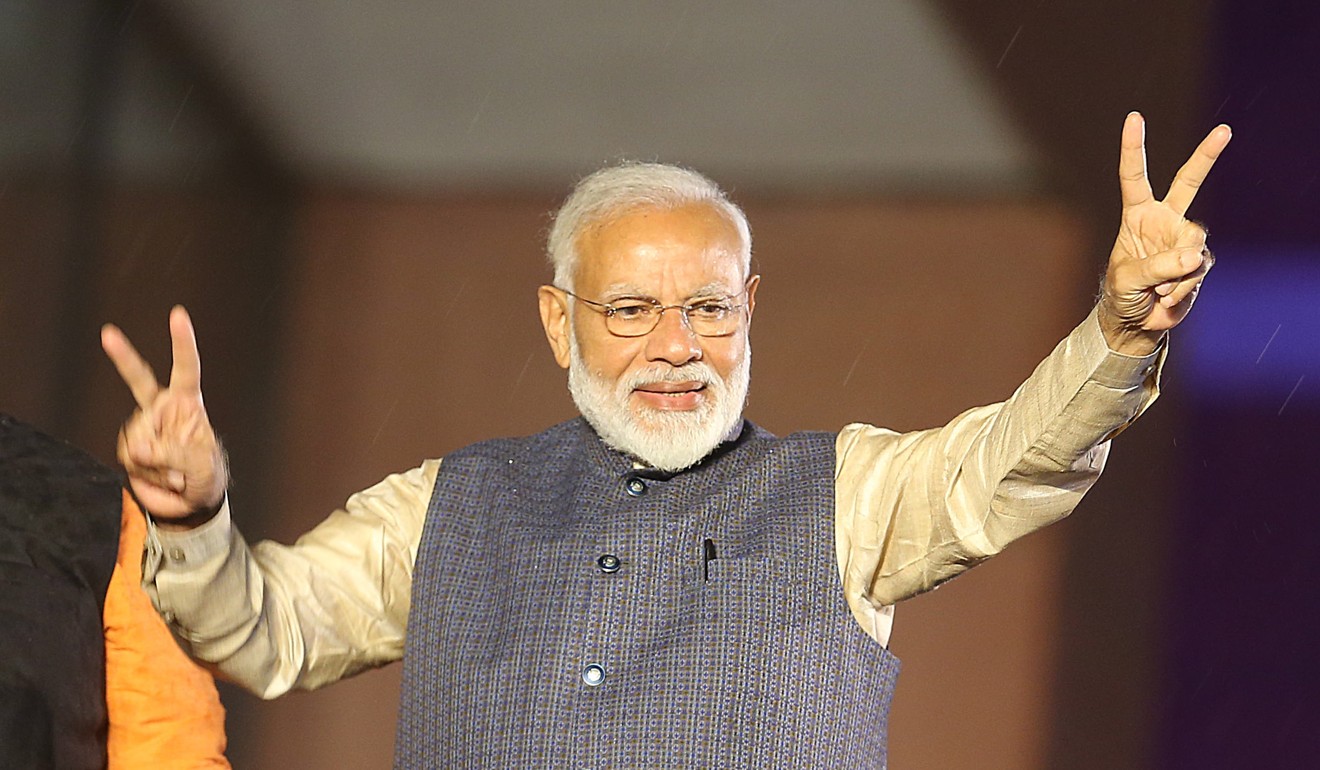
Newly re-elected Indian Prime Minister Narendra Modi could meet the Chinese president for talks in Bishkek next month. Photo: EPA-EFE

There is growing speculation that Xi will meet newly re-elected Indian Prime Minister Narendra Modi on the sidelines of that summit.

Independent analyst and author Namrata Goswami said India would be seeking a commitment to a WTO-led and rules-based multilateral trading system during the SCO talks.

“This is interesting and significant given the current US tendencies under President Donald Trump focused on ‘America first’ and the US-China trade war,” Goswami said.

Counterterrorism will again be a top priority at the SCO summit, amid concerns among member states about the rising number of Islamic State fighters returning from Syria and Iraq. Chinese scholars estimated last year that around 30,000 jihadists who had fought in Syria had gone back to their home countries, including China.

Alexander Bortnikov, chief of the main Russian intelligence agency FSB, said earlier that 5,000 fighters from a group affiliated with Isis had gathered in areas bordering former Soviet states in Central Asia, saying most of them had fought alongside Isis in Syria.

War-torn Afghanistan, which shares a border with four SCO member states – China, Pakistan, Tajikistan and Uzbekistan – is also likely to be high on the agenda at the Bishkek summit.

“With the Trump administration drafting plans to withdraw troops from Afghanistan, the SCO will assess the security situation there and decide whether to provide training for Afghan troops,” Li said.

Eva Seiwert, a doctoral candidate at the Free University of Berlin, expected the security bloc would also discuss Iran after the US withdrew from the 2015 nuclear deal and ordered new sanctions against the country.

Iran, which has observer status with the SCO, was blocked from becoming a full member in 2008 because it was subject to UN sanctions at the time. But its membership application could again be up for discussion.

Iran presses China and Russia to save nuclear deal

“The Trump administration’s unilateral withdrawal from the Iran nuclear deal in 2018 made it easy for China and Russia to present themselves as the proponents of peaceful settlement of conflicts,” Seiwert said. “Discussing the possibility of admitting Iran as a full member state would help the SCO members demonstrate their support of multilateral and peaceful cooperation.

“This would be a strong signal to the US and enhance the SCO’s standing in the international community,” she said.

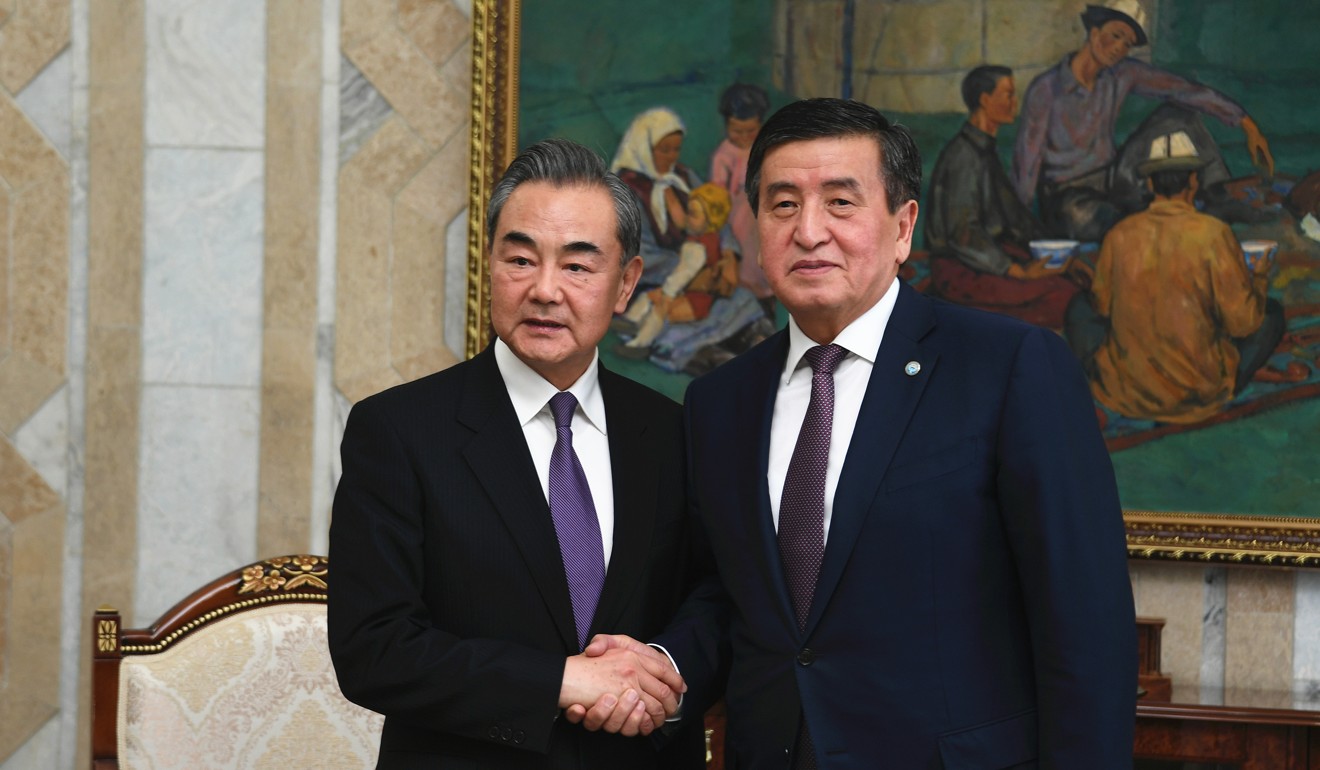
Kyrgyz President Sooronbay Jeenbekov (right) meets Chinese Foreign Minister Wang Yi in Bishkek on Tuesday last week. Photo: Xinhua

As well as security, Xi’s visit to Central Asia is also likely to focus on economic ties. Meeting Kyrgyz President Sooronbay Jeenbekov in Bishkek last week, Chinese Foreign Minister Wang Yi said Beijing would continue to “provide support and help national development and construction in Kyrgyzstan”.

Li said China may increase investment in the Central Asian region, especially in greenfield projects.

“China will continue to buy agriculture products from Central Asia, such as cherries from Uzbekistan, and build hydropower projects to meet local energy demand,” Li said. “Investment in solar and wind energy projects is also expected to increase too.”

Source: SCMP

29/05/2019

China, Pakistan vow to further strengthen ties, cooperation

PAKISTAN-CHINA-WANG QISHAN-VISIT

Chinese Vice President Wang Qishan meets with Pakistani President Arif Alvi in Islamabad, Pakistan, May 26, 2019. Wang Qishan visited Pakistan from Sunday to Tuesday and held meetings with Pakistani President Arif Alvi and Prime Minister Imran Khan respectively on further strengthening bilateral relations. (Xinhua/Yan Yan)

ISLAMABAD, May 28 (Xinhua) — Chinese Vice President Wang Qishan visited Pakistan from Sunday to Tuesday and held meetings with Pakistani President Arif Alvi and Prime Minister Imran Khan respectively on further strengthening bilateral relations.

When meeting with the Pakistani president, Wang said China and Pakistan are “iron friends.” Throughout the past 68 years since the establishment of diplomatic ties, the two countries have always respected and supported each other on issues concerning each others’ core interests, forging the sincerest friendship.

In recent years, the development of China-Pakistan relations has kept a good momentum, with mutual political trust further enhanced, pragmatic cooperation continuously deepened and people-to-people exchanges growing more vigorous, Wang said.

He said the development of the China-Pakistan Economic Corridor (CPEC) has made concrete achievements and has become an important hallmark for China-Pakistan friendly cooperation in the new era, adding that his visit was meant for sending out a signal once more to peoples of the two countries and the world that China and Pakistan are all-weather strategic cooperative partners.

Wang said China is willing to strengthen the all-around cooperation with Pakistan in various sectors and at various levels, so as to make the friendship better benefit the two sides and forge a closer China-Pakistan community of shared future in the new era.

For his part, President Arif Alvi extended congratulations to the upcoming 70th anniversary of the founding of the People’s Republic of China. He said Pakistan-China cooperation has become more important in current times. Pakistan is firmly committed to the one-China policy, firmly supports China in safeguarding the country’s core and major interests, he said.

Pakistan wishes to deepen cooperation with China in such areas including agriculture, tourism and trade, with a bid to promote the all-weather strategic cooperative partnership further ahead, said the president, who also expressed appreciation for China’s support to Pakistan and wished China to play a bigger role in international and regional affairs.

After their meeting, the Pakistani president conferred on Wang the Nishan-e-Pakistan, the country’s highest award for foreign leaders.

While meeting with Pakistani Prime Minister Imran Khan, Wang said the prime minister has visited China twice since taking office and reached important consensus with Chinese leaders on further pushing forward the development of bilateral relations.

China is ready to join hands with Pakistan to deepen high-level exchanges, boost strategic communication and pragmatic cooperation as well as closely coordinate in international and regional affairs between the two sides, Wang said.

Wang called on the two sides to work for high-quality CPEC development in the next phase, and make concrete progress in industrial park building and agricultural cooperation.

China will speed up the implementation of social and people’s livelihood projects of early harvest, and discuss the third-party cooperation in the CPEC development, he added.

The Chinese vice president called for strengthened people-to-people and cultural exchanges and collaboration so as to expand the public foundation for the China-Pakistan friendship.

Wang hoped that Pakistan will take effective measures to provide security guarantees for the cooperation and exchanges between the two countries.

Imran Khan, for his part, said that Pakistan adheres to the friendly policy towards China, admires the achievements of China’s reform and opening-up and stands ready to consolidate the traditional friendship with China.

Pakistan also hopes to learn from China in terms of state governance, and enhance exchanges and cooperation in the sectors of agricultural technology, special economic zone development, talent training and anti-corruption.

Noting that fruitful results have been reaped in the CPEC development, the Pakistani prime minister said that the CPEC has played an important role in promoting Pakistan’s economic development and improving people’s livelihood.

He said Pakistan has established a special committee to take charge of inter-department and inter-sector coordination and ensure personnel safety of Chinese institutions in Pakistan.

Pakistan will continue to enhance coordination with China in international and regional affairs so as to enrich bilateral all-weather strategic cooperative partnership.

After the meeting, Wang Qishan and Imran Khan jointly witnessed the signing of bilateral cooperation agreements concerning agriculture, customs and disaster relief.

During his stay in Pakistan, the Chinese vice president also met with local leaders of the Punjab province, addressed the Friends of Silk Road Forum and visited Haier-Ruba Economic Zone.

Source: Xinhua

24/05/2019

Chinese vice president holds talks with Brazilian vice president

CHINA-BEIJING-WANG QISHAN-BRAZIL-VP-TALKS-COSBAN-MEETING (CN)

Chinese Vice President Wang Qishan and Brazil’s Vice President Hamilton Mourao hold talks and co-chair the fifth meeting of the China-Brazil High-Level Coordination and Cooperation Committee (COSBAN) at the Great Hall of the People in Beijing, capital of China, May 23, 2019. (Xinhua/Zhang Ling)

BEIJING, May 23 (Xinhua) — Chinese vice president Wang Qishan on Thursday held talks with Brazil’s Vice President Hamilton Mourao in Beijing. They also co-chaired the fifth meeting of the China-Brazil High-Level Coordination and Cooperation Committee (COSBAN).

The Chinese-Brazilian ties have been developing steadily ever since the two countries established diplomatic ties 45 years ago, said Wang, adding that their bilateral relationship has become mature and stable relationship.

The two sides maintain close communication and coordination on major international and regional issues, and have effectively promoted the solidarity and cooperation between developing and emerging market countries, Wang said.

He noted that both sides are committed to promoting development through structural reforms and opening up, and said that China was ready to work with the Brazilian side to make good use of the COSBAN to jointly resist the uncertainty of the external environment, make greater contributions to the recovery of global economy, and create a new era of higher-level, broader areas and more dynamic bilateral relations.

Mourao said Brazil and China respected each other and shared profound traditional friendship. The Brazilian new government attaches great importance to the comprehensive strategic partnership with China and is willing to strengthen dialogue and cooperation between the two countries as well as to promote the integration of the Belt and Road Initiative with Brazil’s development strategy.

Brazil is willing to strengthen cooperation with China in the multilateral arena, maintain the stability of the international system, and make contributions to promote world peace and prosperity, he said.

The two sides agreed to strengthen exchanges and cooperation in various fields, promote trade facilitation, optimize trade structure and promote high-quality growth of bilateral trade, according to a news briefing.

The two sides attach great importance to dovetailing the Belt and Road Initiative with Brazil’s development strategy including the investment partnership projects.

The two sides agreed to continue to cooperate closely under multilateral organizations and frameworks such as the United Nations, the BRICS countries and the World Trade Organization (WTO), jointly maintain multilateralism and free trade, improve global economic governance, and safeguard the multilateral trading system with the WTO as the core to build an open world economy, said the news briefing.

Source: Xinhua

27/04/2019

Xi hosts banquet for guests attending Belt and Road forum

(BRF)CHINA-BEIJING-BELT AND ROAD FORUM-XI JINPING-BANQUET (CN)

Chinese President Xi Jinping addresses a banquet hosted by him and his wife Peng Liyuan in honor of guests attending the Second Belt and Road Forum for International Cooperation in Beijing, capital of China, April 26, 2019. (Xinhua/Huang Jingwen)

BEIJING, April 26 (Xinhua) — Chinese President Xi Jinping and his wife Peng Liyuan hosted a banquet Friday evening in honor of guests attending the Second Belt and Road Forum for International Cooperation in Beijing.

“On behalf of the Chinese government and Chinese people, my wife and also in my own name, let me extend warm welcome to all guests,” Xi said while proposing a toast at the banquet.

“Today’s gathering makes us recall the beautiful memories in our hearts,” Xi said, adding that “no matter how the international environment changes, the sincere friendship will last forever and the mutually beneficial cooperation will be the eternal melody in our hearts.”

The occasion inspires the participants via exchanges of ideas and insights, he said, calling for fostering global partnerships and creating a bright future of common development.

“Today’s gathering reminds us of the heavy responsibilities on our shoulders,” Xi told the guests that as the world is now undergoing profound changes unseen in a century, “may we all live up to our missions and the times.”

“We should all have faith that people of all countries deserve a better future, and the joint building of the Belt and Road will surely bring about a better world,” he said.

Li Keqiang, Li Zhanshu, Wang Yang, Wang Huning, Zhao Leji, Han Zheng and Wang Qishan also attended the banquet.

After the banquet, Xi and his wife accompanied the guests in watching a gala.

Source: Xinhua

09/04/2019

Xi stresses wide participation in promoting afforestation

CHINA-BEIJING-LEADERS-TREE PLANTING (CN)

Chinese President Xi Jinping, also general secretary of the Communist Party of China Central Committee and chairman of the Central Military Commission, attends a tree-planting activity in Tongzhou District in Beijing, capital of China, April 8, 2019. Other Party and state leaders, including Li Zhanshu, Wang Yang, Wang Huning, Zhao Leji, Han Zheng and Wang Qishan, also attended the activity. (Xinhua/Xie Huanchi)

BEIJING, April 8 (Xinhua) — Chinese President Xi Jinping on Monday stressed efforts to carry forward the Chinese nation’s tradition of loving, planting and protecting trees, and to involve the whole society in promoting afforestation.

Wide participation by everyone in China should be encouraged in pushing for large-scale afforestation of the country to achieve more tangible results, said Xi, also general secretary of the Communist Party of China Central Committee and chairman of the Central Military Commission.

He made the remarks while attending a tree-planting activity in east Beijing’s Tongzhou District and planting saplings of different types of trees.

Other Party and state leaders, including Li Zhanshu, Wang Yang, Wang Huning, Zhao Leji, Han Zheng and Wang Qishan, also attended the activity.

Xi talked with school children who are also attending the tree planting activity, asking about their study and sport exercise, urging them to foster awareness about environmental protection starting in childhood, and encouraging them to build a more beautiful motherland with their own hands.

Xi said this year marks the 40th anniversary of National Tree Planting Day. In the past 40 years, China’s forest area and forest stock volume have doubled, respectively, and China is home to the world’s largest man-made forest. The proportion of China’s contribution to the world’s vegetation increase also ranked first.

At the same time, the lack of forests and vegetation, and fragile ecological environment are still problems that need tremendous efforts, said Xi.

Xi stressed that the Chinese nation has a good tradition of loving, planting and protecting trees. Wide participation by everyone in China should be encouraged and officials at all levels should set examples as volunteer tree planters.

Efforts should be taken to promote the high-quality development of afforestation, coordinate management of mountains, waters, forests, farmland, lakes and grassland, continuously advance the building of forest city and forest countryside, Xi said.

Xi called for solid efforts to improve people’s living environment, develop a green economy, and strengthen forest management and protection to achieve more tangible results.

Source: Xinhua

20/03/2019

Chinese vice president meets Pakistani Foreign Minister

CHINA-BEIJING-WANG QISHAN-PAKISTAN-MEETING (CN)

Chinese Vice President Wang Qishan (R) meets with Pakistani Foreign Minister Shah Mahmood Qureshi in Beijing, capital of China, March 19, 2019. (Xinhua/Huang Jingwen)

BEIJING, March 19 (Xinhua) — Chinese Vice President Wang Qishan met with Pakistani Foreign Minister Shah Mahmood Qureshi here Tuesday, and hoped that the two countries would deepen all-round cooperation.

“China and Pakistan are good neighbors, and the friendly relationship between the two countries has stood the test of times and the changing international situation,” said Wang, adding that leaders of the two countries frequently met in recent years and the all-weather strategic cooperative partnership has yielded continuous progress.

Wang said establishing good-neighborly and friendly relations and creating a good surrounding environment on the basis of mutual understanding and mutual trust is an important condition for a country to achieve peaceful development.

He said China supports Pakistan in seizing opportunities and tackling challenges, and properly handling relations with its neighbors, to achieve stable development.

Wang expressed the hope that the two countries would continue to deepen all-around cooperation, and promote the progress of important projects under the Belt and Road Initiative, including the China-Pakistan Economic Corridor.

Qureshi said Pakistan appreciates China’s constructive role in moderating tensions between India and Pakistan.

He said Pakistan stands ready to enhance cooperation with China in various fields and push the all-weather strategic cooperative partnership to a new level.

Source: Xinhua

Law of Unintended Consequences

continuously updated blog about China & India

ChiaHou's Book Reviews

continuously updated blog about China & India

What's wrong with the world; and its economy

continuously updated blog about China & India