10/09/2019
- Suspects rounded up after people complain of being duped into making donations to support non-existent temples
- One woman says she handed over US$4,600 after being told that charitable gesture would help her live to be 400
One victim of the alleged scams said she was told she could live for 400 years if she handed over her money. Photo: Thepaper.cn
Police in southeast China have detained 100 people on suspicion of being part of a criminal network that cheated members of the public out of 50 million yuan (US$7 million) by preying on their superstitions and generosity.
Authorities in Ningguo, Anhui province launched an investigation in May after receiving a number of complaints about the activities of several groups posing as fortune-tellers on social media platforms like Weibo, financial news outlet Caijing reported on its website on Tuesday.
One of the groups, which operated on the Twitter-like service under the name “Kanxiang Zen Master”, was run by a local man surnamed Zhang and had 12 million followers, the report said.
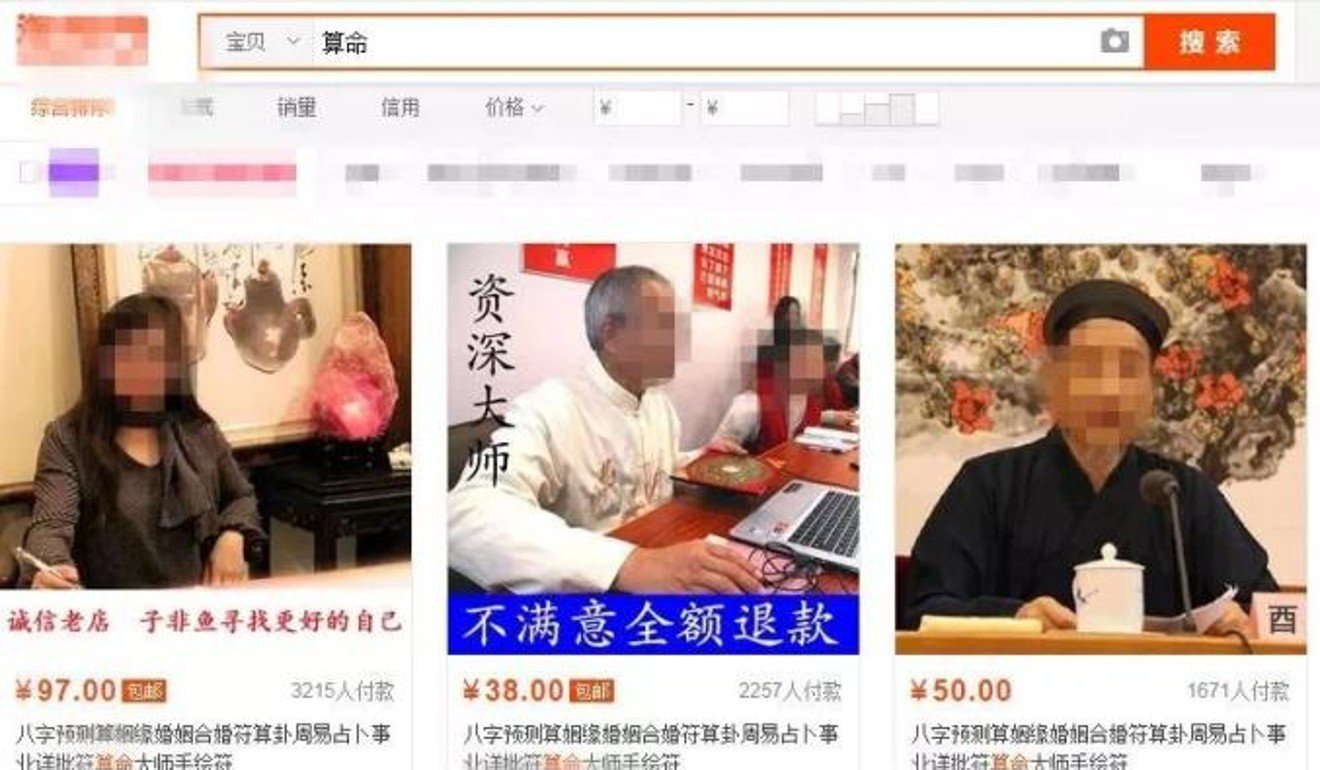
Adverts for online fortune-telling services are common in China. Photo: Thepaper.cn
In one alleged scam, members of the group were told they would receive good luck if they made a donation to support a “famous temple”. But when a man who gifted 10,000 yuan via WeChat Pay checked on the address of the recipient, he found it was a residential address in the city of Xuancheng and not a place of worship, the report said.
When police investigated, they found Zhang had links to seven criminal groups in Anhui and neighbouring Jiangsu province, which between them operated about 60 fortune-telling accounts on Weibo, several of which had more than 10 million followers. The Kanxiang Zen Master account has since been removed from the platform.
Six Chinese wanted for internet scam arrested in Vanuatu
A number of the gangs were registered as media companies and operated as semi-professional organisations with formal recruiting procedures and regular conferences to plan their fraudulent activities, the report said, adding that they had been operating for at least two years.
Police in July staged a series of raids to round up the suspects and confiscated associated equipment, including computers, vehicles and mobile phones, the report said.
Authorities in Ningguo have appealed for more victims to come forward.
A separate report by Shanghai-based news outlet Thepaper.cn said that some of the suspects also used e-commerce sites such as Taobao and the messaging service WeChat to promote their fortune-telling services.
Taobao is owned by Alibaba Group, which also owns the South China Morning Post.
In one case, a woman from the city of Changshu in Jiangsu said she made multiple payments – totalling about 33,000 yuan – to a fortune-teller she met on WeChat who said the money would be used to buy incense for use in offerings to the gods.
She said she reported the alleged fraud after starting to doubt the fortune-teller’s claims, including one that said if she made the donations she could live for up to 400 years.
Alibaba, Weibo and Tencent, which owns WeChat, have been contacted for comment.
Posted in Adverts, Alibaba Group, Anhui, authorities, Caijing, Changshu, chinese police, complain, detain, duped, e-commerce sites, famous temple, financial news outlet, fortune-tellers, fortune-telling, generosity, gods, incense, Jiangsu, jiangsu province, Kanxiang Zen Master, making donations, messaging service, Ningguo, non-existent temples, offerings, place of worship, promote, residential address, scam, Services, Shanghai-based news outlet, social media platforms, south china morning post, superstitions, Taobao, TENCENT, Thepaper.cn, Uncategorized, Vanuatu, website, WeChat, WeChat Pay, Weibo, Xuancheng, Zhang |
Leave a Comment »
05/09/2019
- When Kazakh actress Reyizha Alimjan arrived in Shanghai last month wearing jeans and a camisole it reignited a long-running debate over who gets a say on how Chinese women should dress
- Fashion choices that would be regarded as unremarkable in Europe or North America are often seen as outrageous in the world’s most populous nation
Kazakh actress Reyizha Alimjan’s fashion choices sparked a social media storm in China last month. Photo: Weibo
When Li Xiang broke up with her boyfriend over a selfie she posted on social media, it was not just about a woman letting a man know he wasn’t entitled to tell her how to dress in public, but a matter of personal freedom, social norms and cultural tradition.
A few weeks ago, the 24-year-old media worker from Shanghai shared a photo on WeChat that showed her posing at her bedroom door in a camisole and mini shorts. Her boyfriend said it made him very “uncomfortable”, and they quarrelled.
“‘Look how scantily clad you are, and [if] that is not enough, you shared it online,’ he said,” Li recalled.
“I got mad when he said, ‘You should go and ask other men if they’d like their girlfriends to dress like that’, as if he should decide what I wear – as if I were his appendage,” she said, referring to the archaic notion that a woman is secondary to a man in their relationship.
What clothes Chinese women should or should not wear has been the subject of intense online debate in recent weeks. Photo: EPA
Their argument was not unusual in China, especially over the past month when the online world became embroiled in a war of words about women’s freedom to dress as they please.
The controversy erupted when an article defending Reyizha Alimjan – the Kazakh actress criticised for showing too much flesh when she arrived at an airport in Shanghai in late July wearing jeans and a camisole – appeared on a WeChat movie review account called Staff of the 3rd Hall on August 12.
Reyizha Alimjan was criticised for her outfit on Chinese social media. Photo: Weibo
While that perspective was supported by many women online, others disagreed and said that society was open and tolerant but that people had the right to disagree.
By coincidence, a poll about women wearing camisoles in public was launched on August 10 by a WeChat account called Cicada Creativity. About 70 per cent of the nearly 14,000 respondents said they did not dare to do so.
More than 40 per cent avoided doing so for reasons such as thinking they were “not thin enough”, but a quarter said they said no because either their boyfriends disapproved or would not allow it, or they feared they would be harassed.
Chinese women spurn Victoria’s Secret for home-grown lingerie brands
Joy Lin, a feminist from Shanghai, said the debate was so fierce because it was not just about dress.
“It’s more about people’s judgment about one’s character and morals behind what she wears,” Lin said. “If you wear revealing clothes, they would say you are asking for harassment. If you show a little skin, you are frigid. And if you are casual, they call you ‘dama’ [Chinese slang, often derogatory, for middle-aged and elderly women].”
Some women say they are often judged by the clothes they wear. Photo: AP
In her experience, Lin said that if she appeared on the streets of Shanghai – the most cosmopolitan city in China – without a bra, there would be judgmental looks from passers-by before she had walked 10 metres (33 feet).
In contrast, she did just that in Paris in July, and, “no one stared at me or came near me at all”.
“Usually, when it comes to comments about what we wear, they’re not about whether the dress matches the hairstyle or things like that, but about our bodies, whether we’re slim or not and stuff like that,” she said. “Some [comments] can be very malicious and insulting.”
#MeToo rally accuses Hong Kong police of sexual violence against protesters
While shaming women for their clothing choices has been an issue for many years, it reached peak public awareness in China after the #MeToo movement took off in the US.
The social media campaign went viral in 2017 when dozens of women accused American film producer Harvey Weinstein of sexual assaults over a period of nearly 30 years.
The #MeToo movement took off in the US in 2017 after dozens of women accused film producer Harvey Weinstein of sexual assault. Photo: Shutterstock
Lu Peng, a researcher from the Shanghai Academy of Social Sciences, said the online debate helped encapsulate conflicts between a growing desire for freedom, gender norms and generations of tradition.
“There will hardly be a consensus on such a question about whether women have the freedom to dress,” he said. “But if this discussion can make people realise that men, not just women, also face restrictions in dressing, then it’s bringing progress.”
The simplest example was to dress for the occasion, which applies to both sexes.
“We have never been free in dressing. We’re only free within a certain extent … About what to wear in public, I don’t think we should emphasise freedom only and ignore the local culture and society,” Lu said.
Keeping a low profile has long been part of the Chinese philosophy. Photo: Xinhua
In China, there is no law banning states of dress or undress in public, nor do the Han people, who make up most of the population, have religious beliefs that restrict their mode of dress. But keeping a low profile and avoiding unwanted attention has long been part of the Chinese philosophy.
“My father will also ask me not to be ‘overexposed’, because he believes it’s increasing the risk of being harassed,” Li, the Shanghai media worker, said.
“They think they mean well, but I just want to be myself. I’m not breaking any law. I want to make my own contribution in changing this culture,” she said.
Source: SCMP
Posted in #MeToo, actress, American film producer, archaic notion, battle, bedroom door, between, bra, brands, camisole, casual, Chinese women, Cicada Creativity, City, cosmopolitan, debate, derogatory, dress, elderly women, Europe, Fashion choices, feminist, fierce, Freedom, frigid, harassment, Harvey Weinstein, home-grown, Hong Kong police, insulting, jeans, judgment, judgmental looks, Kazakh, lingerie, long-running, malicious, middle-aged, mini shorts, morals, most populous nation, North America, one’s character, outrageous, Paris, passers-by, posing, public awareness, quarrelled, reignited, relationship, reveals, Reyizha Alimjan, scantily, secondary, sexual assaults, sexual violence, shaming women, Shanghai, Shanghai Academy of Social Sciences, social media storm, tradition, Uncategorized, uncomfortable, unremarkable, US, Victoria's Secret, wear, wearing, WeChat |
Leave a Comment »
30/08/2019
BEIJING (Reuters) – China will exempt Tesla Inc’s (TSLA.O) electric vehicles (EV) from purchase tax, the Ministry of Industry and Information Technology (MIIT) said on its website.
China currently levies a 10% purchase tax on the sale of each vehicle. The move could reduce the cost of buying a Tesla car by up to 99,000 yuan ($13,957.82), according to a post on Tesla’s social media WeChat account.
Tesla’s pre-market share price jumped more than 5% after the announcement.
Sixteen variants – all the Tesla models sold in the country – are listed on the document issued by MIIT, including Model S, X and 3. No reason was given for the decision to exclude the cars from the tax.
The U.S. EV maker is building a plant in Shanghai, the firm’s first overseas factory.
It is due to start production by the end of the year and Tesla has said it should be able to build 3,000 Model 3 vehicles a week in its initial phases.
The plant is slated to have annual output capacity of 250,000 vehicles after production of the Model Y is added.
Source: Reuters
Posted in Beijing, Building, China alert, electric vehicles (EV), exempt, MIIT, Ministry of Industry and Information Technology (MIIT), overseas factory, Plant, purchase tax, Shanghai, social media, Tesla cars, Tesla Inc (TSLA.O), Uncategorized, WeChat |
Leave a Comment »
26/08/2019
- Associate professor caused ‘vicious social impact’ in comments to student in social media chat room
- Ethics committee suspends him from teaching for two years
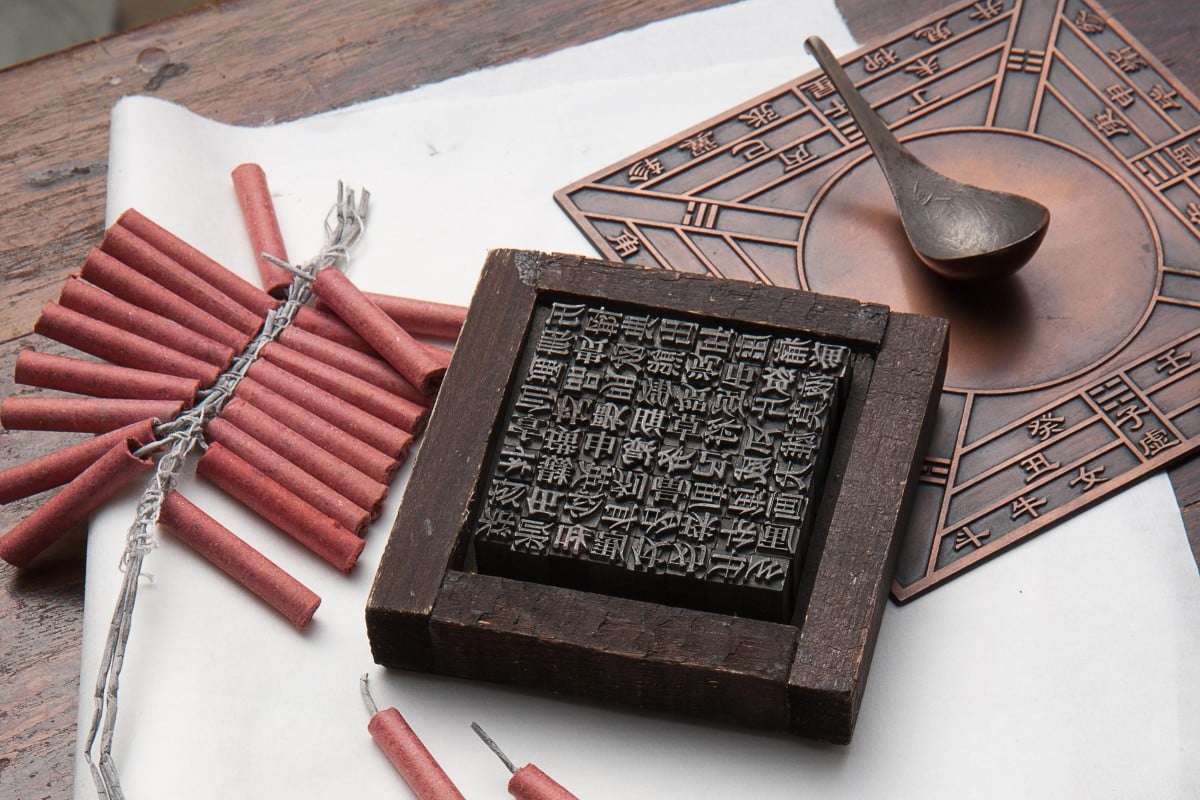
The four great inventions of ancient China: Paper, gunpowder, the compass and printing. Photo: Alamy
An associate professor has been suspended by his university in southwestern China for causing “vicious social impact” by belittling the four great ancient Chinese inventions of papermaking, printing, gunpowder and the compass.
Zheng Wenfeng was suspended from teaching for 24 months by the University of Electronic Science and Technology of China in Chengdu, Sichuan province, for his comments in June to a student in an online group discussion on Chinese social media platform WeChat.
Zheng told the student, who wanted to choose the four great inventions as a thesis topic on innovation, that “ancient China did not have any substantial innovations” and that the four great inventions were “not advanced in the world and did not generate any productivity or cooperation in reality”.
The four inventions are extolled in China as important contributions to the development of world civilisation.
The student’s boyfriend put a screenshot of the conversation on Zhihu.com, a Quora-style knowledge-sharing website, where it generated wide attention.
First day at university in China now means a face scan to enrol
In July, the university issued a statement saying that Zheng had expressed mistaken opinions in the online chat room which had “caused vicious social impact”. The university went on to say that its teachers’ ethics committee had determined Zheng had violated ethics regulations and he would be suspended from teaching, recruitment of master’s degree candidates, and promotion for the next 24 months.
Academics began speaking out in support of Zheng last week, with some university teachers alleging on social media that Zheng had been ambushed by his students. Others felt his punishment went too far.
Huang Shaoqin, an associate professor of the Antai School of Economics and Management at Shanghai Jiao Tong University, called for a boycott of Zheng’s university in response to his treatment and demanded a public apology from the students involved.
“Until you rectify your wrongdoings, I cannot have any academic communication with you,” Huang said. “I call on teachers at Chinese universities to boycott this university.”
College entrance exam boot camp accused of fake advertising
In an editorial on Saturday, GMW.cn – a news website targeting China’s intelligentsia – defended academic debate, saying people could provide their own evidence on the significance of the four great innovations, and this was how academic issues should be argued.
“Students ignored the basic rules of academic discussions and they exaggerated the teacher’s errors. They released the private chat record to the public, no doubt with an intention of making a fuss,” the editorial said. “Their meticulous thought is really horrible.”
Chinese state broadcaster CCTV addressed the issue in an editorial on Friday, saying schools should distinguish correctly between politics and academic issues, and should not magnify the seriousness of the teacher’s opinions.
“This kind of case involves how freely university teachers can talk and the boundary between academic freedom and political red lines,” it said. “The university should give a clear explanation about its punishment so that the public and the teacher involved will be convinced.”
The Ministry of Education promoted 10 principles for university teachers at the end of last year, with “sticking to correct political direction” at the top of the list.
Zheng said he accepted the university’s punishment and did not need to make any clarification or self-justification, according to online news portal Sohu.com last week.
“I will focus on scientific research. This incident is over, is my attitude,” he was quoted as saying.
Source: SCMP
Posted in Antai School of Economics and Management, Chengdu, compass, four great inventions of ancient China, GMW.cn – a news website, gunpowder, intelligentsia, paper, Printing, punishment, Quora-style knowledge-sharing website, Shanghai Jiao Tong University, sichuan province, Uncategorized, University of Electronic Science and Technology of China, WeChat, world civilisation, Zhihu.com |
Leave a Comment »
26/08/2019
- Police say man from Fujian province was detained while trying to burn body on remote farm after strangling girlfriend
- Online lender contacted officers after its verification software spotted that the victim’s eyes weren’t moving
Police were tipped off by an online lending company after its software could find no signs of movement in the victim’s eyes. Photo: Simon Song
A man accused of murdering his girlfriend in southeast China was caught after facial recognition software suggested he had tried to scan a dead person’s face to apply for a loan.
Officers in Fujian province said the 29-year-old named Zhang was caught while trying to burn the body on a remote farm, but they had been tipped off by an online lending company after its software could find no signs of movement in the victim’s eyes, Xiamen Evening News reported on Sunday.
Zhang is suspected of strangling his girlfriend with a rope in Xiamen on April 11 after they argued about money and she threatened to leave him. He then allegedly went on the run with the body hidden in the boot of a rented car.
Zhang is also accused of pretending to be the unnamed victim and contacting her employers via her WeChat account to ask for time off work.
Ugandan police spend US$126 million on surveillance system from Huawei
When he arrived in his hometown of Sanming the next day, police said he tried to apply for a loan using an app called Money Station, which uses artificial intelligence to verify the applicants’ identity and asks them to wink to help the process along.
But the facial recognition technology found no signs of eye movement.
Staff at the lender contacted police after a manual check found bruises on the unnamed woman’s face and a thick red mark around her neck.
Its voice recognition software also detected that it was a man, rather than a woman, applying for the loan.
Zhang, whose formal arrest was approved by prosecutors earlier this month, is accused of using the victim’s phone to take 30,000 yuan (US$4,200) from her bank account, and lying to her parents that she was “going away for a few days to relax”.
Although a trial date has yet to be announced, details of the case have shocked many people.
Some Chinese social media users suggested that the plot would be too gruesome or far-fetched for a horror movie and another wrote: “[I] never thought the facial recognition process could be used in this way.”
Source: SCMP
Posted in AI software, Artificial intelligence, artificial intelligence (AI), boot, burn body, caught, Chinese murder suspect, dead person, detained, Face, facial recognition software, facial recognition technology, Fujian Province, girlfriend, Money Station, Police, rented car, spotted, strangling, Uncategorized, verification software, WeChat, Xiamen Evening News |
Leave a Comment »
03/08/2019
- Cai Rui and Wu Chen are the proud parents of twins but they had to go abroad for the IVF treatment they needed to bring the children into the world
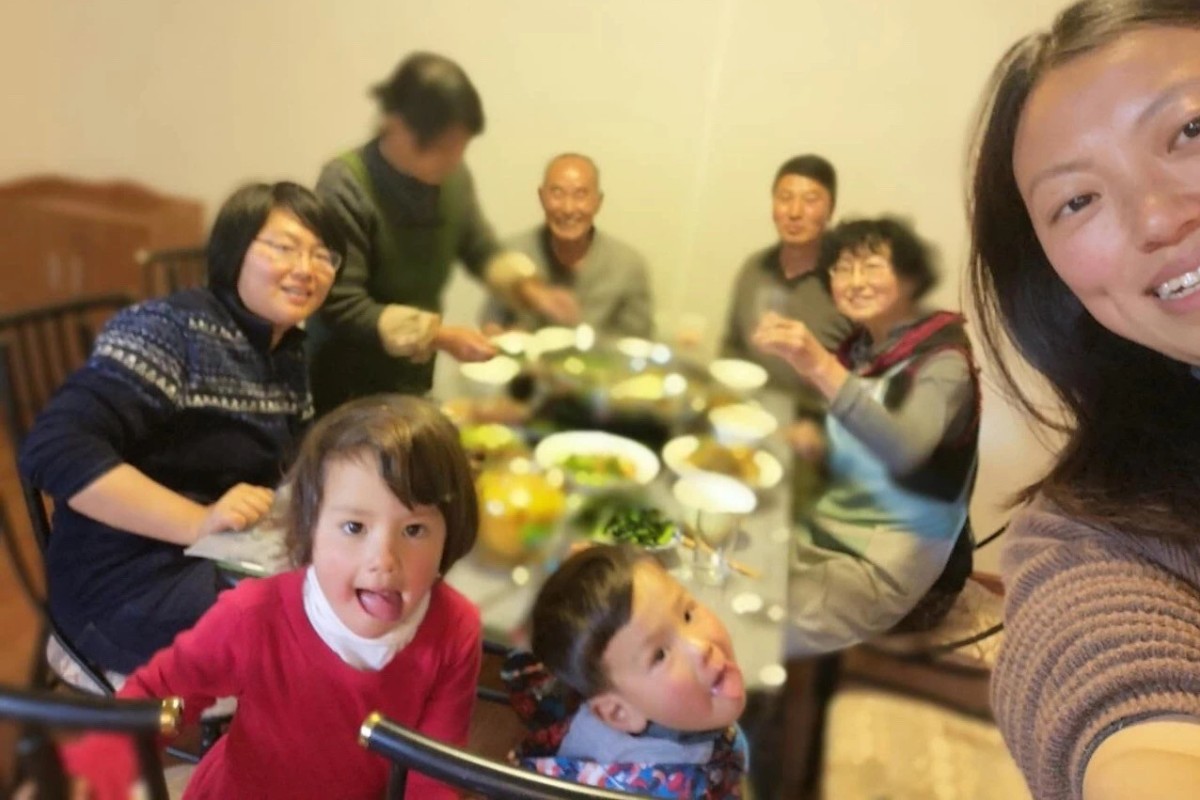
Wu Chen (far left) and Cai Rui (right) are raising their young family together in China. Photo: Cai Rui
When three-year-old twins Harry and Helen are asked about their dad, they have a set answer.
The children tell the curious that they do have a father but he lives in the United States.
Harry and Helen live on the outskirts of Kunming in the southwestern Chinese province of Yunnan with their two mothers, Cai Rui and Wu Chen.
Cai gave birth to the twins after being implanted at a US IVF clinic with ova from Wu and sperm from an American donor.
The couple were forced to seek treatment abroad because Chinese clinics will only perform IVF procedures on couples who can produce a marriage certificate – something limited to heterosexuals.
For Cai and Wu, it was a leap into the unknown – there was little information in China and few others had gone public about their experience.
But their biological clocks were ticking and the couple were used to taking difficult paths.
Gay Chinese find a place to be themselves on ‘Rainbow Cruise’ to Vietnam
Cai and Wu met while studying in Britain and registered their marriage there in 2014. Both women were in their thirties and soon began thinking about having children.
They looked forward to being mothers and felt the experience would strengthen their relationship even more, Cai said.
“I think it’s natural for a woman to aspire to be a mother once she turns 30,” she said. “We were both aware that the older a woman is, the harder it is for her to get pregnant. So it’s an immediate thing for us.”
Their parents were also worried about the couple’s welfare as they grew older.
“Our parents have accepted our relationship, thinking it’s our own choice. However, they worried that when we are old, there will be no children to look after us,” Cai said.
Wu Chen (left) and Cai Rui (right) brought their twin children Helen and Harry into the world with help from IVF treatment in the United States. Photo: Cai Rui
The couple embarked on two rounds of IVF in London, with Cai impregnated with Wu’s fertilised ova, but both rounds failed.
They then returned to China and searched for other options but at the time there were few posts by Chinese lesbians sharing their experience of having babies abroad, Cai said.
So they contacted three clinics in the US and finally decided to go through one in Portland, Oregon, in large part because of the city’s gay-friendly reputation.
Cai said that when it came time to choose a sperm donor, they were less concerned about his outward appearance and more focused on his physical and mental health, his academic record and his experience growing up.
“We wanted to make sure our baby’s father was a healthy and interesting guy,” she said.
The couple chose the sperm of a white man and implanted two fertilised eggs into Cai’s body to raise the chances of success. Twelve weeks later, the couple flew back to Beijing where Harry and Helen were born on April 1, 2016.
Thanks to a more relaxed population policy since 2016, Cai was able to register the children as a single mother while the children were given her partner’s surname.
“So my lover is their biological mother and I am their birth mother,” Cai said.
Small victory for China’s online lesbian community as censored forum is restored, but another remains blocked
The family lived in Beijing for about a year before moving to Yunnan for work commitments. Cai said there had not been any big problems raising the children there apart from some annoying questions from neighbours about why the children are biracial and why the father is not in the home.
“These questions are like flies around us. But they’re not a big deal and won’t affect our life,” she said.
She said she told various villagers in their community about the children’s conception and they responded by saying, “What an advanced lifestyle you have!”
Twins Harry and Helen celebrate Lunar New Year. Photo: Cai Rui
The couple have also tried to explain the situation to the twins.
“We instilled diverse family values in them from a very young age, through everything including cartoon books they read and stories we made up by ourselves,” Cai said.
“So we told [them] that you have a father. But the reason for forming a family is love. We don’t have love with your father, so he doesn’t live with us.”
About four years ago the couple opened a public account on social media app WeChat called Rainbow Babies, to share their experience with other lesbians on the mainland. Cai said the account had more than 17,000 followers, many responding by relating their own stories about IVF.
One woman wrote on the platform that she and her partner had been together for 10 years and after having a daughter they were pregnant with a boy.
“I am not confident of us lesbians raising a boy. Do you have any tips to share with us?” the woman wrote.
Why China’s gays and lesbians are still stuck in the closet
Another woman wrote that since she and her partner decided to have a baby, they had confronted obstacles at every step in the process, but the biggest benefit was that “after so many hardships, our love has been consolidated and we have cherished each other more than before”.
Cai said the most popular destinations for mainland lesbians seeking IVF treatment were the US, Thailand and Cambodia, with at least 1,000 either pregnant or having given birth.
“Some people are hesitant to have babies because of social pressure. [But] as times goes by and women get older, the possibility of them getting pregnant becomes lower,” Cai said.
Cai said she and Wu were often praised for their courage but they were in the habit of choosing a tougher road.
“On many occasions, this habit is the most reliable way to push us to keep our innocent heart and to do things to be ourselves,” she said.
Source: SCMP
Posted in Beijing, boy, Britain, Cambodia, Chinese, creating, Family, Girl, lesbian couple, Oregon, Portland, Rainbow Babies, Rainbow Cruise, Thailand, trailblazing, twins, two mothers, Uncategorized, US, Vietnam, WeChat, Yunnan Province |
Leave a Comment »
19/07/2019
BEIJING, July 18 (Xinhua) — China has launched an online poll to solicit public opinions on whether to name peony or another plower as its “national flower,” according to the China Flower Association (CFA).
Based on suggestions from an expert team, the association listed 10 candidates including the peony, chrysanthemum, orchid, Chinese rose and narcissus.
Recommending the peony as China’s national flower, the CFA said in an online statement that the flower has been widely planted around China with a history of more than 4,000 years and has long been called “king of the flowers” in the country.
Prerequisites to be nominated as China’s national flower include originating in the country with a long history, being elegant in both shape and color, and being able to represent Chinese culture, according to the CFA.
The flower to be named should also have a profound cultural connotation and be extensively utilized.
By Wednesday afternoon, nearly 600,000 people had joined in the vote on mobile social media platform WeChat, the association said.
Source: Xinhua
Posted in China alert, China Flower Association (CFA), Chinese rose, chrysanthemum, king of the flowers, mulls, naming, narcissus, national flower, orchid, peony, Uncategorized, WeChat |
Leave a Comment »
07/07/2019
TOKYO, July 6 (Xinhua) — “When I wrote the letter, I didn’t expect to receive a reply from President Xi Jinping. I was surprised and honored,” said Daichi Nakashima with excitement.
The 27-year-old Japanese man said he had received the reply from Xi before the Chinese leader attended the Group of 20 summit in Osaka. “When my friend told me on WeChat, I was shocked!” Nakashima said in an exclusive interview with Xinhua.
Nakashima had several times been a winner in the Panda Cup Japan Youth Essay Contest. Founded in 2014, the competition is co-sponsored by People’s China magazine, the Chinese embassy in Japan and the Japan Science Society, aiming to help Japanese youths have a more comprehensive, objective and rational understanding of China.
Nakashima began learning Chinese in college and has participated in several short-term exchange programs in China.
When talking about his original intention of writing a letter to Xi, Nakashima said, “I wanted to convey the warmth and friendship of the Chinese people I felt during my visit to China and the importance of mutual understanding and exchanges between Japanese and Chinese youths.”
Xi, in his reply, said he was glad to see that Nakashima has been studying the Chinese language and literature for a long time and, by participating in essay contests and exchange activities in China, has learned more about China and strengthened his bonds with Chinese friends.
“It’s the best affirmation and recognition of my persistence for so many years. I’m very touched,” Nakashima said.
Born in 1992, Nakashima first learned about China through classics like “Romance of the Three Kingdoms” and “Outlaws of the Marsh,” but it was a two-week trip to Tianjin in 2011 that gave him a glimpse of a vibrant China.
After that, he visited Beijing, Sichuan, Guangdong and other places. Last year, he went to Fudan University in Shanghai and studied for half a year.
Nakashima found that Chinese youth are very familiar with Japanese anime, music and so on, while Japanese youngsters do not know much about China. Their impression of China is restricted to Chinese tourists, “not knowing about Chinese movies and popular music,” he said.
Nakashima said he believes that the friendship between the two peoples needs more bilateral youth exchanges, as President Xi said in the letter.
Noting that China and Japan are close neighbors separated by only a narrow strip of water, Xi said the friendship between the two countries is rooted in the people, and that the future of the friendship between the two peoples is in the hands of the young people.
Xi said he hopes that the youth of China and Japan will strengthen exchanges and mutual learning, enhance mutual understanding, develop long-lasting friendships, and contribute to creating an even brighter future for bilateral relations.
Xi also encouraged Nakashima to continue to promote the China-Japan friendship. Nakashima said this is an encouragement, a mission and also motivation for him to move forward.
Nakashima graduated with a master’s degree in April and has begun to work in a publishing house. He has been determined to introduce excellent works such as Chinese picture books and science fiction to Japan, so that Japanese teenagers can feel the affinity between the two countries.
“I have met many friendly Chinese people and made many friends that are very important to me. In the future, I will continue to make efforts to help Japanese and Chinese youth deepen mutual understanding,” he said.
Source: Xinhua
Posted in Beijing, Chinese embassy in Japan, comprehensive, contributions, Daichi Nakashima, Fudan University, Group of 20 (G20), guangdong province, inspires, Japan Science Society, Japan-China friendship, Japanese youth, letter, master's degree, objective, Osaka, Outlaws of the Marsh, Panda Cup Japan Youth Essay Contest, People's China magazine, President Xi, publishing house, rational understanding, Romance of the Three Kingdoms, Shanghai, shocked, sichuan province, Tianjin, Uncategorized, WeChat |
Leave a Comment »
05/06/2019
BEIJING, June 5 (Xinhua) — A national WeChat mini-program was launched Wednesday to enable users to enjoy over 200 e-government services via the cross-region and cross-department digital platform.
The mini-program, a small application embedded within China’s popular social media platform WeChat, connects users with services offered by six government agencies including the National Development and Reform Commission and the Ministry of Commerce, according to a statement from WeChat’s developer Tencent.
Individual users can search information about their education and traffic violation record, among others, while enterprises can apply for certain licenses and certificates online via the mini-program.
The mini-program is also connected with local government online service platforms in several provinces including Guangdong and Zhejiang, while more local e-government services will be connected in the future, the statement said.
E-government services via apps and mini-programs are increasingly popular in China amid national and local efforts to cut administrative red tape to benefit residents and businesses alike.
A total of 30 provincial-level regions have established integrated e-government platforms that incorporate the services of provincial, city and county governments, according to a report released in May.
In 2018, the number of real-name users on provincial e-government platforms reached 145 million, an increase of 38 million over the previous year, the report showed.
Source: Xinhua
Posted in e-government platforms, e-government services, Guangdong, launched, mini-program, Ministry of Commerce (MOC)., National, National Development and Reform Commission (NDRC), promote, TENCENT, Uncategorized, WeChat, Zhejiang |
Leave a Comment »
04/06/2019
- IEEE’s ban has ignited a backlash from its Chinese members, resulting in calls to boycott the organisation
Staff at Huawei Technologies have been banned by the Institute of Electrical and Electronics Engineers from taking part in the peer review of research papers, including serving as editors for journals, after the Chinese telecommunications equipment maker was added to a US trade blacklist. Photo: AP
The US government’s efforts to reduce the influence of Huawei Technologies, the world’s largest telecommunications equipment supplier, has extended beyond business to cover scientific research.
That development emerged as the New York-based Institute of Electrical and Electronics Engineers (IEEE) moved to ban Huawei employees from the peer review of research papers, including serving as editors for its journals, after the Chinese hi-tech champion was added to a US trade blacklist.
The decision by IEEE, the world’s biggest technical professional organisation, was leaked online across Chinese social media on Wednesday, igniting a backlash from some of the country’s leading scientists who described the move as “anti-science” and “violating academic freedom”.
Zhang Haixia, a professor with the Institute of Microelectronics at Peking University, announced on her WeChat account on Wednesday that she was quitting IEEE because the decision to comply with the trade blacklist went “far beyond the basic line of science and technology” and challenged her professional integrity.
US is waging a tech war against this district in Shenzhen
“As a professor, I do not accept this,” Zhang wrote online in a public letter addressed to IEEE president-elect Toshio Fukuda.
Her resignation letter was viewed more than 40,000 times since it was posted online. The most popular comments on its thread included calls for Chinese scientists to boycott IEEE.
In a statement on May 30, the IEEE said it must comply with its legal obligations under the laws of the US and other jurisdictions and that compliance with regulations “protects the IEEE, our volunteers, and our members”.
It said Huawei employees are only barred from the peer reviewing process and that they can continue to participate in individual membership, corporate membership, enjoy voting rights and take part in a variety of other activities, including the submission of technical papers for publication.
Huawei said it had no comment about the peer review ban.
The issue between Huawei and IEEE has come amid a raging tech war between the world’s two biggest economies, which recently escalated when the US government placed Huawei and its affiliates under the US Entity List on May 16. That bars the Chinese group from buying hardware, software and services from American hi-tech suppliers without US approval.
A succession of major American technology companies, from Google and Microsoft to Intel and Qualcomm, have suspended their dealings with Huawei to comply with the US trade ban.
Growing disquiet in China as US steps up war on tech champions
US President Donald Trump has also signed an executive order barring US companies from using telecoms equipment made by companies that pose a threat to national security.
The trade blacklist, which is maintained by the Bureau of Industry and Security under the US Department of Commerce, identifies organisations and individuals believed to be involved, or pose a significant risk of becoming involved, in activities contrary to America’s national security or foreign policy interests.
A non-profit organisation founded in January 1963, IEEE had more than 422,000 members in more than 160 countries as of December 31 last year. More than 50 per cent of its members, who are rooted in electrical and computer sciences, engineering and related disciplines, are from outside the US.
Technology is true target of US attack on China, says diplomat
It also publishes around 200 transactions, journals and magazines, and sponsors more than 1,900 conferences in 103 countries.
There is no official data on how many IEEE members are based in mainland China. Public information online, however, showed that at least 80 Huawei employees are members of the organisation.
China’s biggest chip maker to delist from NYSE as US targets tech
In a statement released on May 16, IEEE said that as a corporation organised in New York, it must comply with its legal obligation under US laws. It said the US government’s export restriction covers not only physical goods and software but also technical information.
In the leaked IEEE email, the organisation warned its members of “severe legal implications” if they continue to use Huawei staff as reviewers or editors for the peer review process of its journals.
“IEEE is registered in the US, but we should suggest experts at all levels of IEEE to move its headquarters to places such as Switzerland,” said Zhou Zhihua, a leading computer science professor at Nanjing University and an IEEE fellow, in a post on microblogging site Sina Weibo. “More importantly, let’s show more support to China-produced English-language journals.”
Source: SCMP
Posted in backlash, boycott, Bureau of Industry and Security, Chinese members, Google, Huawei, IEEE, IEEE fellow, ignited, Institute of Electrical and Electronics Engineers (IEEE), Institute of Microelectronics, Intel, largest technical professional society, Microsoft, Nanjing University, organisation, peer review, Peking University, Qualcomm Inc, research, Sina Weibo, Switzerland, Toshio Fukuda, trade blacklist, Uncategorized, US Department of Commerce, US President Donald Trump, WeChat |
Leave a Comment »








 CHINDIA ALERT: You'll be living in their world, very soon