Archive for ‘Woman’

27/03/2020

Coronavirus: Can one woman make kindness catch on in India?


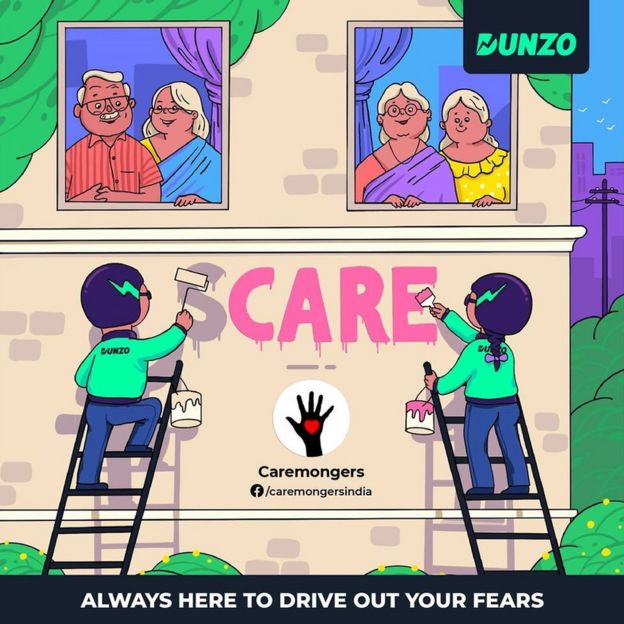
Caremongers posterImage copyright CAREMONGERS INDIA

With India under lockdown and social distancing being advised to deal with the threat of the coronavirus, an online collective of “Caremongers” is reaching out to help the elderly and other vulnerable groups.

It started last week when Mahita Nagaraj, a digital marketing professional and single mum, received a call from a close friend in the UK requesting her to help arrange some medicines for her “very elderly parents”.

Within hours, she heard from another friend living in the US with a similar question: can you ensure that my parents have provisions for the month?

Ms Nagaraj, who lives in the southern city of Bengaluru (formerly Bangalore), says that set her thinking about other friends whose elderly parents didn’t have anyone to call upon.

So, she posted a message on Facebook asking people to get in touch if they needed help.

The response she got was “overwhelming”. People reached out to her from all over India and, surprisingly, most who got in touch said they wanted to help out too.

And thus was born Caremongers India – a Facebook group, asking people to “stop scaremongering and start caremongering” – on 17 March.

“There is so much scaremongering in the current scenario,” says Ms Nagaraj. “We are trying to address the feeling of helplessness in the people. We are telling people to stop spreading fear and panic, and instead spread love.”

Mahita NagarajImage copyright CAREMONGERS INDIA
Image caption Mahita Nagaraj set up Caremongers India after her friends called her to seek help

Ms Nagaraj says she learnt about caremongering from a BBC article from Canada. The concept actually started in Toronto to help vulnerable people, but within days it spread to cover almost all of Canada with tens of thousands signing up.

Reports of altruism have come in from other parts of the world too. Britons are delivering soup to the elderly, in the US neighbours are helping those quarantined with buying groceries and one Long Island mother, infected with the virus, wrote about a neighbour who cooked a lasagne and left it outside her door.

Along with all the fear and panic caused by the coronavirus, the pandemic has also seen kindness go viral across the globe, with neighbours and complete strangers pitching in to help.

In India too, caremongering took off from the word go – in the first 24 hours, the Facebook group had 200 members. A week later, it has become a pan-India network with more than 6,500 volunteers.

Ms Nagaraj says she realised that on Facebook, most people were getting in touch to offer help, but only a few were asking for help. So, on Friday night, she launched a helpline number and since then, “it’s gone crazy”.

Caremongers India offers help to those who are most at risk of health complications due to the virus like the elderly, the disabled, those with pre-existing health conditions and anyone with an infant under a year.

In less than a week, Ms Nagaraj says, she has received thousands of calls and messages and although a large number of them have been to verify whether the number is genuine, she has also taken hundreds of requests for assistance.

Listed on the Caremongers India page are countless examples of assistance sought and provided; and testimonials and messages of gratitude.Transparent line (white space)

Wiping away the scareImage copyright IMAGE COURTESY: DUNZOTransparent line (white space)Besides those calling in from within India, Ms Nagaraj has been fielding dozens of calls from people across the globe seeking help for their elderly parents and grandparents.

“When people give their requirement and address, we match the requester with the closest volunteer,” she explains.

So last Saturday, when Amit Joshi, a resident of an upscale apartment block in the Delhi suburb of Noida, called the helpline, he was connected to Caremonger Madhavi Juneja, who also lives in Noida.

“We woke up to the news that our apartment complex was under lockdown,” Mr Joshi told me.

A resident had tested positive for the coronavirus and Mr Joshi was informed that they would not be allowed to leave home for a week.

“Police had put up barricades outside on the road and our complex was swamped with disaster management teams and health officials. Everything around us was shuttered. There was complete panic,” he says.

Mr Joshi, who lives with his wife and elderly parents, says his biggest worry was how to get essentials like bread and milk.

Banner image reading 'more about coronavirus'
Banner

And when he received a random WhatsApp forward from a colleague about Caremongers India, he decided to call them.

A few hours later, Ms Juneja, a psychotherapist and life coach, turned up at the gate of Mr Joshi’s housing society and handed over the supplies to him.

“I wore a mask and took my bottle of hand sanitiser and drove to his complex to carry out the delivery,” she said.

“Because the street was barricaded, I parked my car and then walked. If I had left it outside, someone else could have taken it. After I handed over the package to him, I sanitised my hands and got back into my car.”
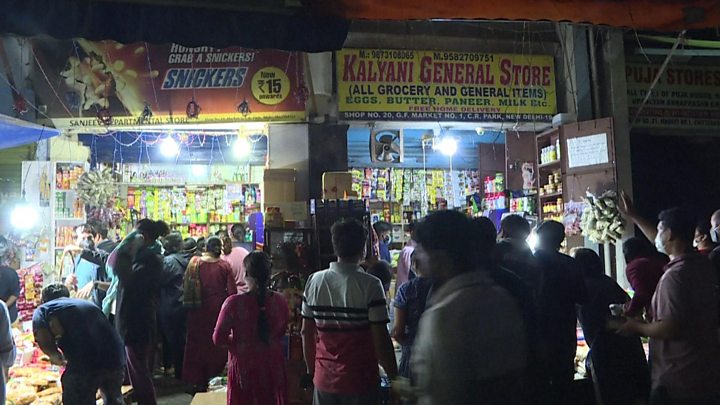
Media caption People panicked after Narendra Modi said nobody should leave their homes, and did not mention the status of essential supplies

Mr Joshi says, “In trying times like these, to have people selflessly reaching out to those in need has strengthened my belief in humanity.”

Ms Nagaraj says it’s “so heartening” to see that so many people want to help.

“Every request we receive is very special when we fulfil it. When a daughter calls to say her dad who lives alone requires provisions, we work hard to ensure he gets it.”

Ms Nagaraj says caremongering has taken over life and even her home.

“It’s not easy to answer 450 calls a day,” she says, “but when you help others, you go to bed thinking you haven’t wasted your day and that’s good enough for me.”

Source: The BBC
26/01/2020

Coronavirus: Chinese embassy in Paris finds woman who ‘cheated’ checks

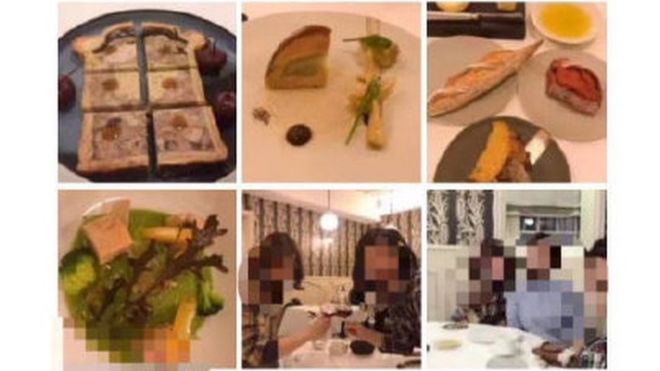
Pictures posted by the woman on WeChatImage copyright WEIBO
Image caption She posted pictures of her meal on social media platform WeChat

The Chinese embassy in Paris has tracked down a woman from Wuhan who said she took tablets to pass airport health checks.

The woman boasted on social media that she had been suffering from a fever, but managed to reduce her symptoms with medicine.

She later posted pictures showing herself dining at what she claimed was a Michelin-starred restaurant in Lyon.

The embassy has now confirmed that her symptoms are under control.

The woman left Wuhan – where the new coronavirus emerged late last year – before flights were suspended, but when thermal scanning was in place.

Since yesterday, public transport has been shut down, with residents told not to leave the city.

At least 25 people with the virus have died. It was first reported to the World Health Organization 31 December.

The virus has spread to countries as far as South Korea, Japan and the US.

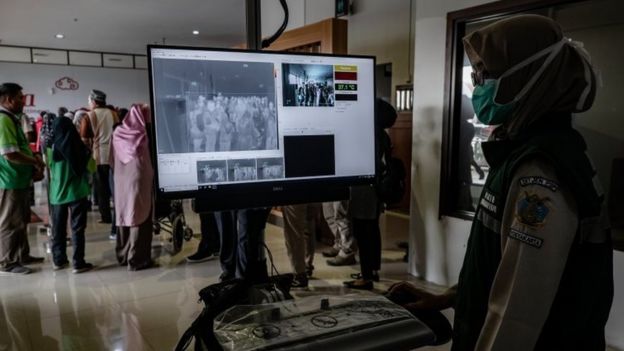
People have been thermally scanned when leaving Wuhan, and arriving at their destination. This picture was taken in Indonesia on ThursdayImage copyright GETTY IMAGES
Image caption People have been thermally scanned when leaving Wuhan, and arriving at their destination. This picture was taken in Indonesia on Thursday

The woman detailed her journey to Lyon on social media site WeChat.

“Finally I can have a good meal, I feel like I’ve been starving for two days. When you are in a gourmet city of course you have to eat Michelin [food],” she wrote.

“Just before I left, I had a low fever and cough. I was scared to death and rushed to eat [fever-reducing] medicine. I kept on checking my temperature. Luckily I managed to get it down and my exit was smooth.”

She also posted pictures of the meal she enjoyed. It is not clear exactly when she arrived.

Her post quickly went viral and she was widely criticised by other social media users.

The Chinese embassy in Paris said it had received calls and emails about the woman. It said she had taken antipyretics, and that it attached “great importance” to the case.

The embassy said it contacted her on Wednesday evening and asked her to refer herself to medical services.

On Thursday, in a new statement, the embassy said the woman’s temperature was under control, and that she had no more fever or cough symptoms.

It added that she did not require “further examinations” at this point.

Media caption Fears over coronavirus in China trigger face mask shortage

China has effectively quarantined nearly 20 million people in Hubei province. Other major cities in China like Beijing and Shanghai are also affected.

Authorities have cancelled all large-scale celebrations in Beijing. Temple fairs are banned, film releases postponed and the Forbidden City will be closed to the public.

All this comes as millions of Chinese people are travelling across the country for Lunar New Year.

Currently known as 2019-nCoV, the virus is understood to be a new strain of coronavirus not previously identified in humans.

Source: The BBC

20/01/2020

Calls for an investigation after woman drove into Beijing’s Forbidden City

  • Furious internet users have been digging for information on her background as they push for an explanation, while state media urges probe
  • ‘Lu Xiaobao’, who posted pictures of her and a friend with her car at the site, claims to be the wealthy granddaughter-in-law of a revolutionary hero
Pictures of the women posing in front of a car in the Forbidden City went viral. Photo: Weibo
A Chinese woman who drove her luxury SUV into Beijing’s Forbidden City
and posted pictures online has prompted a public search for information about her, while state media called for the case to be investigated.
The photos – showing two women standing in front of a Mercedes-Benz G-Wagen parked in the World Heritage Site, which banned vehicles in 2013 – were posted on microblog site Weibo on Friday under the name “LuxiaobaoLL”. It was captioned: “As it is closed on Monday, [we] avoided tourists and enjoyed the palace.” The post went viral and drew tens of thousands of comments.
The Palace Museum, which runs the 600-year-old landmark, later apologised, confirming that a car had been allowed to enter the complex on Monday last week when it was closed to the public.
It did not identify the pair, but said it would “stop it from happening again”.
Lu Xiaobao claims she is married to the grandson of revolutionary hero He Changgong. Photo: Weibo
Social media user Lu Xiaobao, who posted the photos of herself and a friend, has claimed to be the wealthy granddaughter-in-law of a Chinese revolutionary hero, and that her fortune includes a house in Los Angeles worth more than US$11 million.
Lu herself and the family she says she married into have so far remained silent, and the claims could not be independently verified. But irate social media users have been digging online for information on her background as they push for an official explanation.

Some are concerned that flouting the car ban risked damaging the Ming dynasty complex, and the incident has also reinforced a widespread perception that certain people are granted privileges denied to ordinary Chinese because of their family connections.

Lucky Air passenger who threw ‘good luck’ coins at plane ordered to pay airline US$17,200

3 Jan 2020

Social media users seized on one of Lu’s Instagram posts featuring a house she claims to have bought in 2018. The property is apparently owned by Wang Zhijie, wife of Liu Zhongtian, the billionaire founder of aluminium products maker China Zhongwang, raising suspicion that Lu could be connected to the family.

But the company denied there was any link with the woman in a statement issued on Sunday. “Mr Liu himself doesn’t know Luxiaobao LL or her relatives directly,” it said.

State media has also weighed in on the case, with People’s Daily, the Communist Party mouthpiece, running a scathing commentary on Saturday calling for a thorough investigation by the Palace Museum.

“People are distressed because our national heritage and culture – which we treasure – has been damaged,” the commentary read. “People are furious because there are still people trying to challenge the consensus that the 600-year-old Forbidden City is no longer a private property for feudal privilege.”

The history of the Forbidden City: a visual explainer Hu Xijin, editor-in-chief of state-run tabloid Global Times, also called for a better explanation of the incident.

The woman has claimed that she is married to He Gang, the grandson of He Changgong, who joined the party in 1922, a year after it was established, and played an important role in its early development.

But Hu wrote on Weibo that if the woman’s claim was true, her background was “not so eminent” since He Changgong had not taken any important positions after the founding of the People’s Republic in 1949.

The Palace Museum banned vehicles from the Forbidden City in 2013 to protect the complex. The ban has been strictly enforced, including when former French president Francois Hollande visited that year and had to leave his car outside and walk into the palace.

Source: SCMP
25/11/2019

Priya: India’s female comic superhero returns to rescue ‘stolen girls’

Priya Shakti riding her pet tiger SahasImage copyright PRIYASHAKTI

Comic crusader Priya, a gang-rape survivor who earlier campaigned against rape and acid attack, is back in a new avatar. This time she is fighting the trafficking of girls and women for sex.

The “modern-day female superhero” was first launched in December 2014, exactly two years after the horrific gang rape of a young woman on a bus in Delhi, to focus attention on the problems of gender and sexual violence in India.

In the first edition, Priya Shakti, the tiger-riding heroine challenges the stigma surrounding rape while in Priya’s Mirror, the second edition, she returns to fight acid attacks.

In the latest edition – Priya and the Lost Girls – she takes on the powerful sex-trafficker Rahu, the evil demon who runs an underworld brothel city where he has entrapped many women, including Priya’s sister Lakshmi.

Indian-American actor and writer Dipti Mehta, who wrote the script of the comic, draws on ancient Indian mythology to create larger-than-life fantastical characters and delivers a powerful feminist statement.

The story of Lost Girls begins when the protagonist returns home to find that there are no girls in her village.

She then mounts her flying tiger Sahas (Hindi for courage) and arrives in Rahu’s den. It’s a city ruled by greed, jealousy and lust, where women exist only to serve and please men – and those who resist are turned into stone.

Priya with her tiger SahasImage copyright PRIYASHAKTI

Priya is threatened and attacked, a woman who works for Rahu tries to lure her into the sex trade saying: “If you work for us, you’d serve only five to six men and not 20”, but in the end, good wins over evil and she manages to vanquish Rahu and liberate her sister and all the other trafficked girls.

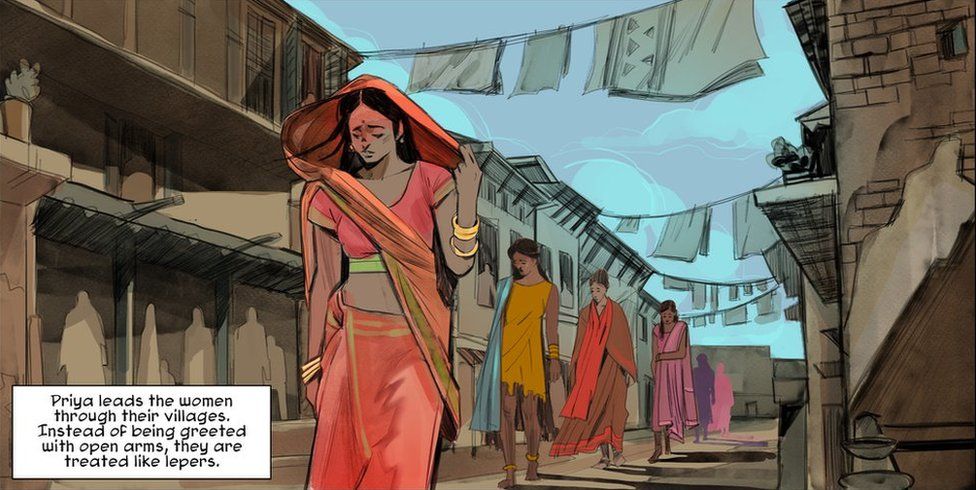
But victory still eludes her. The families of rescued girls refuse to take them back. The survivors are treated like “lepers”, facing stigma, scorn and ridicule.

But Priya and the other girls stand up to confront patriarchy, says Ms Mehta, “just as women have broken their silence to talk about MeToo”, the campaign against sexual harassment and abuse that started in Hollywood in October 2107 and later spread to many other parts of the world.

“I was very clear from the start that Lost Girls can’t be just another comic book where good guy wins and evil dies, it had to be much more than that,” Ms Mehta says.

Presentational grey line
Priya Shakti in the comicImage copyright PRIYASHAKTI
Presentational grey line

Ram Devineni, the Indian-American creator of the comic series, told the BBC that he had decided to focus on sex trafficking in this edition after visiting Sonagachi, India’s largest red-light area in the eastern city of Kolkata, where he met several women engaged in sex work.

“Half of them told me they had been tricked into coming there and, once there, they were forced into the sex trade. The other half said they’d agreed to do this for a living because they were dirt poor and they had no alternative.

“Often there were two to three women sharing a small dingy room, many of them had young children who lived with them, and some of them said their children slept in the same bed where they serviced clients.

“I found that really disheartening.”

Presentational grey line
Cover of Priya and The Lost GirlsImage copyright PRIYASHAKTIPresentational grey lineAccording to the United Nations Office on Drugs and Crime, human trafficking is the second largest organised criminal business in the world after the arms trade. It is even ahead of the drugs trade.

“It’s a multi-billion-dollar industry,” anti-trafficking activist Ruchira Gupta told the BBC on the phone from New York.

Ms Gupta, who supports trafficked girls and women in India through her charity Apne Aap Women Worldwide, says there are 100 million people trapped in human trafficking globally, of which 27 million are in India alone, and most of the trafficking is in girls and young women.

India, Bangladesh and Nepal, she says, make up “the epicentre” of global sex trafficking.

Ms Gupta, who collaborated on Priya and the Lost Girls, says she plans to take the comic to schools and colleges in India and the US to use it as a talking tool, “as a conversation starter on what is a very difficult topic”.

The only way to fight trafficking, she believes, is to “de-normalise” sex trade – and cinema, art and pop culture are tools that can help do that.

The comic is made to appeal to young people. After its launch, it can be downloaded for free anywhere in the world; it also has “augmented reality features”, which means people can see special animation and movies by scanning the artwork with their smartphones.

The families of rescued girls refuse to take them back, the survivors facing stigma, scorn and ridiculeImage copyright PRIYASHAKTI

“People often make flippant comments to say that prostitution is the oldest occupation in the world, but they don’t realise that trafficking is not some poor woman getting money in exchange for having sex with a man. It is the extreme exploitation of most vulnerable girls,” Ms Gupta says.

To stop this “commodification” of girls, she adds, we need to create revulsion in men’s minds about sex trade – and it’s best to catch them young.

“We must work with young boys and teenagers, 13 to 14 year olds, through storytelling and pop culture. They learn about sex from porn sites which portray sex workers as happy hookers, and no-one sees the girl behind her.

“I want to demolish that myth of the happy hooker. I want to ensure that people see the girl behind her.”

Artwork by Syd Fini and Neda KazemifarPresentational grey line

You may also be interested in…

Media caption Freida Pinto: Why I made a film about sex slaves

Source: The BBC

18/09/2019

Safety questions after woman dies stepping off moving bus in China

  • Authorities investigating why passenger suddenly leapt to her feet and went through open door
The woman in yellow died after alighting from the moving bus in Fenggang county, Guizhou province, on Sunday. Photo: Weibo

Police in southern China are investigating the death of a woman who suddenly leapt from her seat and through the door of a moving bus on the weekend.

The unidentified woman was confirmed dead at hospital in Fenggang county, Guizhou province, on Sunday after alighting from the bus through the rear door which should have been closed, according to county police.

An officer from the county’s traffic police bureau told the South China Morning Post that an investigation into the woman’s action and the bus driver’s responsibility was under way.

Surveillance footage posted online shows the woman in a yellow top sitting near the open back door before suddenly getting up and rushing through the door.

The door then closes and the bus stops moments later as passengers appear shocked.
Chinese police do U-turn on traffic crash after online crowd doubt official account

The footage was shared widely online on Weibo, China’s Twitter-like platform.

Some internet users said the woman might have been dozing and awoke suddenly thinking she had missed her stop.

Others noted that the door should not have been open.

Just late last month, a woman was injured getting off a moving bus in Chongqing as the driver accidentally opened the rear door, video news app Kankanews.com reported.

The woman, in her 60s, simply stepped off as she saw the door open and thought she had arrived at her destination.

The driver said his safety belt loosened and he accidentally triggered the door button while trying to buckle up. He was held fully responsible for the passenger’s injury.

Source: SCMP

16/01/2019

India woman makes historic ascent of ‘banned’ sacred peak

Dhanya SanalImage copyrightDHANYA SANAL
Image captionDhanya Sanal was the first woman to scale the peak

An Indian woman has climbed a mountain, where only men were allowed until now for religious reasons.

Dhanya Sanal’s ascent to the summit of Agasthyakoodam in southern Kerala state came after a court ruling in November.

Local tribespeople oppose women climbing it because of a statue of a Hindu sage on top they say is celibate.

Ms Sanal, 38, told the BBC she had not been stopped by locals or protesters. Campaigners say it’s a victory in the fight to end gender discrimination.

Ms Sanal said she had been “ready to turn back” if tribespeople stopped her, but while she did encounter protesters, she said they had not prevented her from continuing her trek.

In November, the high court in Kerala ruled that women could trek to the 1,868m (6,128ft) peak. The court said that restrictions on trekking could not be based on gender after a women’s group petitioned the court.

The group welcomed Ms Sanal’s climb.

“We have moved one step ahead in ending gender discrimination in Kerala,” Divya Divakaran, one of its members, told the BBC.

Agasthyakoodam mountainImage copyrightSALI PALODE
Image captionAgasthyakoodam is the second highest peak in Kerala

Located within a biosphere reserve in India’s Western Ghats, Agasthyakoodam is the second highest peak in Kerala.

The high court rejected the claim made by tribespeople, who live at the foothills, that the verdict hurt their beliefs.

They had said they worshipped the sage, Agastya, and did not want women in the vicinity of his idol as that amounted to disrespecting his celibacy.

The terrain is steep and rocky and the trail is inside a thick forest. Trekkers often take two or three days to scale the peak.

“It is extremely tough terrain that demands extra physical fitness,” Ms Sanal told the Times of India newspaper.

She was the only woman in a group of 100 trekkers. The group was accompanied by two female forest officials.

Officials told the BBC that more than 100 women had registered for treks in the coming weeks.

A local offering prayer to the idol of sage AgastyaImage copyrightSALI PALODE
Image captionLocal tribespeople revere the sage whose idol is at the peak

Earlier this month, two women made history in Kerala by entering a prominent Hindu shrine, following months of protests against their entry.

The Sabarimala temple was historically closed to women of “menstruating age” – defined as between 10 and 50. Devotees believe that the deity is an avowed bachelor and the ban was in keeping with his wishes.

Hinduism regards menstruating women as unclean and bars them from participating in religious rituals.

The women’s entry to the shrine prompted massive protests across Kerala.

One of the two women is recovering in hospital after her mother-in-law allegedly attacked her for entering the temple.

Source: BBC

15/01/2019

Indian woman alleges assault by mother-in-law for defying temple ban

KOCHI, India (Reuters) – One of two Indian women who entered an ancient Hindu hill temple in southern India this month in defiance of a centuries-old ban on women of menstruating age alleged she was beaten up by her mother-in-law on Tuesday, police said.

Kanaka Durga, 39, a civil servant, suffered injuries to her head and had to be hospitalised, police said. She claims she was attacked only minutes after she returned to her home from spending a month at undisclosed locations fearing attacks by conservative Hindu groups, police said.

“We received a complaint from Kanaka Durga alleging that she was attacked by family members of her husband when she returned home after entering the temple,” said Jaya Mani, officer in charge of Perinthalmanna police station in Malappuram district, which is in the state of Kerala where the Sabarimala temple is located.

Police were investigating, Mani said.

SPONSORED

A second police source said Durga had alleged she was assaulted by the mother-in-law. The mother-in-law had denied the allegation, he said.

Durga did not return calls seeking comment. The family members, including Durga’s mother-in-law, could not be reached for comment.

The Sabarimala temple has been the site of tension since India’s Supreme Court ruled in late September to end a ban on women and girls aged from 10-50 from entering.

The temple refused to abide by the ruling and subsequent attempts by women to visit were blocked by thousands of devotees.

That was until Bindu Ammini, 40, a law lecturer at Kerala’s Kannur University, and Durga finally succeeded in entering the temple on Jan. 2 through a side entrance in the middle of the night. Some other women have claimed they have got into the temple since then.

Their entry sparked widespread protests and a day-long strike in Kerala led in part by members of India’s ruling Bharatiya Janata Party.

“The attack is a natural reaction of the family members, who are strong believers of the temple’s customs and rituals,” Ammini said.

“Her friends told me that her family members were angry with her action. They have unleashed their anger when they saw her.”

Law of Unintended Consequences

continuously updated blog about China & India

ChiaHou's Book Reviews

continuously updated blog about China & India

What's wrong with the world; and its economy

continuously updated blog about China & India