Chindia Alert: You’ll be Living in their World Very Soon
aims to alert you to the threats and opportunities that China and India present. China and India require serious attention; case of ‘hidden dragon and crouching tiger’.
Without this attention, governments, businesses and, indeed, individuals may find themselves at a great disadvantage sooner rather than later.
The POSTs (front webpages) are mainly 'cuttings' from reliable sources, updated continuously.
The PAGEs (see Tabs, above) attempt to make the information more meaningful by putting some structure to the information we have researched and assembled since 2006.
BEIJING, March 13 (Xinhua) — China on Friday issued a report on human rights violations in the United States.
Titled “The Record of Human Rights Violations in the United States in 2019,” the report said the facts detailed in the document show that “in recent years, especially since 2019, the human rights situation in the United States has been poor and deteriorating.”
The State Council Information Office released the report based on published data, media reports and research findings. It began by citing a quote from U.S. Secretary of State Mike Pompeo in a speech on April 15, 2019: “We lied, we cheated, we stole … It reminds you of the glory of the American experiment.”
“The remarks of U.S. politicians have completely exposed their hypocrisy of adopting double standards on human rights issues and using them to maintain hegemony,” read the report.
The United States released annual reports to “distort and belittle” human rights situation in countries and regions that did not conform to U.S. strategic interests, but turned a blind eye to the “persistent, systematic and large-scale” human rights violations in its own country, the report said.
Consisting of foreword and seven chapters, it detailed facts on human rights violations in the United States relevant to civil and political rights, social and economic rights, discrimination suffered by ethnic minorities, discrimination and violence against women, living conditions of vulnerable groups, and abuses suffered by migrants, as well as U.S. violations of human rights in other countries.
The lack of restraint in the right to hold guns has led to rampant gun violence, posing a serious threat to citizens’ life and property safety in the United States, the report said.
“The United States is a country with the worst gun violence in the world,” read the report. In total, 39,052 people died from gun-related violence in the United States in 2019, and a person is killed with a gun in the United States every 15 minutes, figures showed.
Wealth polarization in the United States hit a 50-year high in 2018, the report said. In 2018, the wealthiest 10 percent held 70 percent of total household wealth. The bottom 50 percent saw essentially zero net gains in wealth over the past 30 years, it noted.
Regarding discrimination suffered by ethnic minorities in the United States, the report said the political structure and ideology of white supremacy in the United States have caused ethnic minorities to suffer all-round discrimination in various fields such as politics, economy, culture and social life.
Since 2016, white supremacy in the United States has shown a resurgence trend, leading to racial opposition and hatred, it noted.
Women in the United States face severe discrimination and violence, according to the report. Women in the United States were 21 times more likely to die by firearm homicide than women in peer nations, it noted, adding that sexual assault cases against women kept increasing.
About the living conditions of vulnerable groups, the report said tens of millions of U.S. children, elderly people, and disabled people live without enough food or clothing, and face threats of violence, bullying, abusing and drugs.
“The U.S. government not only has insufficient political will to improve the conditions for vulnerable groups but also keeps cutting relevant funding projects,” read the report.
While levels of extreme poverty worldwide had dropped dramatically, the poverty ratio of U.S. children was about the same rate as 30 years ago, it said.
The report noted the increasingly strict and inhumane measures taken by the U.S. government against immigrants in recent years, in particular, the “zero-tolerance” policy, which caused the separations of many immigrant families.
Many unaccompanied immigrant children were held in overcrowded facilities, without access to adequate healthcare or food, and with poor sanitation conditions, the report said.
It noted grave abuses at detention facilities for immigrants, including injecting them with sedatives, keeping them in handcuffs, and depriving them of clothing and mattresses.
The United States also wantonly trampled on human rights in other countries and was responsible for many humanitarian disasters around the world, according to the report.
The economic embargo against Cuba and the unilateral sanctions against Venezuela imposed by the United States had been a massive and flagrant violation of the human rights of people in these countries, the report said.
The United States withdrew from several multilateral mechanisms, including the UN Human Rights Council and the UN Global Compact on Migration, shirking off its international obligations and making troubles to the international governance system, it noted.
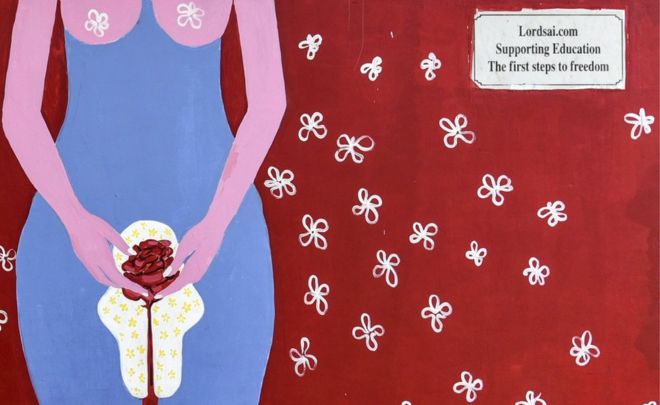
Image copyright GETTY IMAGESImage caption Discrimination against women on account of menstruation is widespread in India
India’s uncomfortable relationship with periods is back in the headlines.
College students living in a hostel in the western Indian state of Gujarat have complained that they were made to strip and show their underwear to female teachers to prove that they were not menstruating.
The 68 young women were pulled out of classrooms and taken to the toilet, where they were asked to individually remove their knickers for inspection.
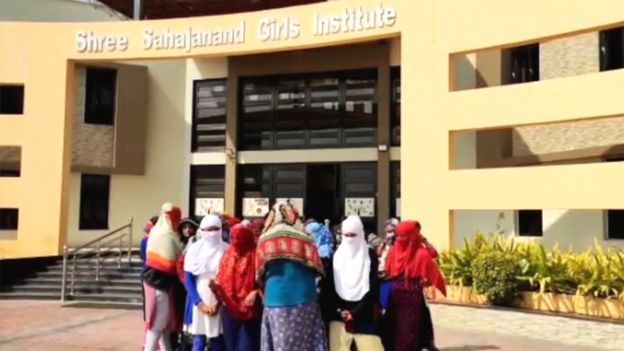
The incident took place in the city of Bhuj on Tuesday. The young women are undergraduate students at Shree Sahajanand Girls Institute (SSGI), which is run by Swaminarayan sect, a wealthy and conservative Hindu religious group.
They said a hostel official had complained to the college principal on Monday that some of the students were breaking rules menstruating women are supposed to follow.
According to these rules, women are barred from entering the temple and the kitchen and are not allowed to touch other students during their periods.
At meal times, they have to sit away from others, they have to clean their own dishes, and in the classroom, they are expected to sit on the last bench.
Image copyright BBC GUJARATIImage caption Female students gather outside the Shree Sahajanand Girls Institute (SSGI)
One of the students told BBC Gujarati’s Prashant Gupta that the hostel maintains a register where they are expected to enter their names when they get their periods, which helps the authorities to identify them.
But for the past two months, not one student had entered her name in the register – perhaps not surprising considering the restrictions they have to put up with if they do.
So on Monday, the hostel official complained to the principal that menstruating students were entering the kitchen, going near the temple, and mingling with other hostellers.
The students allege that, the next day, they were abused by the hostel official and the principal before they were forced to strip.
They described what happened to them as a “very painful experience” that had left them “traumatised” and amounted to “mental torture”.
One student’s father said that when he arrived at the college, his daughter and several other students came to him and started crying. “They are in shock,” he said.
On Thursday, a group of students held a protest on the campus, demanding action against the college officials who had “humiliated” them.
The college trustee Pravin Pindoria said the incident was “unfortunate”, adding that an investigation had been ordered and action would be taken against anyone found guilty of wrongdoing.
But Darshana Dholakia, the vice-chancellor of the university which the college is affiliated with, put the blame on the students. She said that they had broken rules and added that some of them had apologised.
However, some of the students told BBC Gujarati that they are now under pressure from the school authorities to play down the incident and not to speak of their ordeal.
On Friday, the Gujarat State Women’s Commission ordered an investigation into this “shameful exercise” and asked the students to “come forward and speak without fear about their grievances”. The police have lodged a complaint.
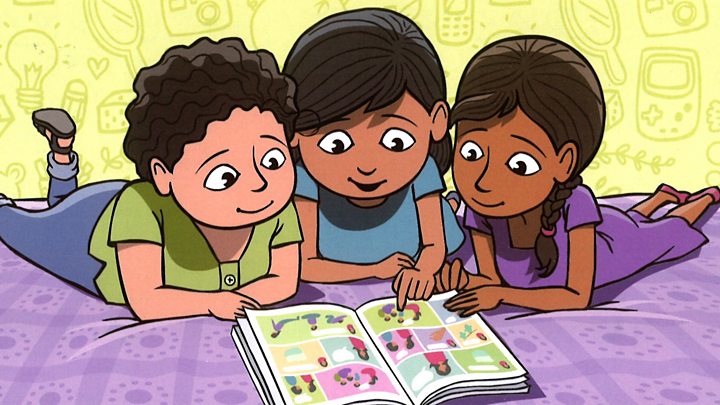
Media caption Using comics to combat India’s menstruation taboos
This is not the first time that female students have been humiliated on account of periods.
Discrimination against women on account of menstruation is widespread in India, where periods have long been a taboo and menstruating women are considered impure. They are often excluded from social and religious events, denied entry into temples and shrines and kept out of kitchens.
Increasingly, urban educated women have been challenging these regressive ideas. In the past few years, attempts have been made to see periods for just what they are – a natural biological function.
But success has been patchy.
In 2018, the top court in a landmark order threw open the doors of the Sabarimala shrine to women of all ages, saying that keeping women out of the temple in the southern state of Kerala was discriminatory.
LUCKNOW, India (Reuters) – Police shot dead a man holding around 20 women and children hostage at his house in northern India after a 10-hour standoff, state officials said on Friday.
The hostages who were held at gunpoint were safe, principal secretary home Awanish Kumar Awasthi said after the raid at the house in a village in Farrukhabad in Uttar Pradesh state.
The hostage taker was serving a life sentence for murder and was out on parole, he added.
Two policemen and a villager were injured in the rescue operation.
After the siege, a group of incensed villagers stormed the house where the children had been kept and attacked the hostage-taker’s wife, Awasthi said. The woman died from her injuries early on Friday, he said.
The abduction took place after the man had invited some children and women from the village to his house, saying he was throwing a birthday party for his daughter.
Police said his motive for holding the children was not clear.
HYDERABAD, India (Reuters) – Indian police shot dead four men on Friday who were suspected of raping and killing a 27-year-old veterinarian near Hyderabad city, an action applauded by her family and many citizens outraged over sexual violence against women.
However, some rights groups and politicians criticised the killings, saying they were concerned the judicial process had been sidestepped.
The men had been in police custody and were shot dead near the scene of last week’s crime after they snatched weapons from two of the 10 policemen accompanying them, said police commissioner V.C. Sajjanar.
Thousands of Indians have protested in several cities over the past week following the veterinarian’s death, the latest in a series of horrific cases of sexual assault in the country.
RELATED COVERAGE
Factbox: Reactions, comments on killing of four men accused of rape in India
Why many Indians cheered police for killing gang rape accused
See more stories
The woman had left home for an appointment on her motor-scooter and later called her sister to say she had a flat tyre. She said a lorry driver had offered to help and that she was waiting near a toll plaza.
Police said she was abducted, raped and asphyxiated and her body was then set alight on the outskirts of Hyderabad. Four men were arrested.
Sajjanar, the police officer, said the men – two truck drivers and two truck cleaners, aged between 20 and 26 years – had been taken to the spot to help recover the victim’s mobile phone and other personal belongings on Friday morning.
“As the party approached this area today (during the) early hours, all the four accused got together. They started attacking the police party with stones, sticks and other materials,” he told reporters near the site of the shootings.
The men, who were not handcuffed, then snatched weapons away from the police and started firing at them, but were killed after the police retaliated. He did not say how the accused were able to overpower their escorts.
“Law has done its duty, that’s all I can say,” Sajjanar said.
The National Human Rights Commission, a government-funded watchdog, said it had ordered an investigation. “Death of four persons in alleged encounter with the police personnel when they were in their custody, is a matter of concern for the Commission,” it said in a statement.
Indian police have frequently been accused of extra-judicial killings, called “encounters”, especially in gangland wars in Mumbai and insurrections in the state of Punjab and in disputed Kashmir. Police officers involved in such killings were called “encounter specialists” and were the subject of several movies.
People shout slogans as they celebrate after police shot dead four men suspected of raping and killing a 27-year-old veterinarian in Telangana, in a residential area in Ahmedabad, India, December 6, 2019. REUTERS/Amit Dave
‘LONG LIVE POLICE’
The victim’s family welcomed the news the alleged perpetrators had been killed.
“I express my gratitude towards the police & govt for this. My daughter’s soul must be at peace now,” Reuters partner ANI quoted her father as saying.
A Reuters reporter saw the four men’s bodies lying in an open field, all of them face up and barefoot, with their clothes stained with blood, surrounded by policemen.
A large crowd gathered at the site and threw flower petals at police vans in support of the action. Some shouted “Long live police”, while others hoisted police officials onto their shoulders and burst firecrackers.
There was no immediate word from Prime Minister Narendra Modi’s government on the incident, but Maneka Gandhi, a lawmaker from his ruling Bharatiya Janata Party, said the police appeared to have over-reached.
“You can’t take the law in your own hands. The courts would’ve ordered them (the accused) to be hanged anyway. If you’re going to shoot them with guns before due process is followed, then what’s the point of having courts, police and law?” she said.
Tough laws were enacted after the 2012 gang rape and murder of a woman in a bus in New Delhi that led to an outpouring of anger across the country, but crimes against women have continued unabated.
Fast track courts have been set up but cases have moved slowly, for lack of witnesses and the inability of many families to go through the long legal process. Some victims and their families have ended up being attacked for pursuing cases against powerful men, often local politicians.
Many Indians applauded the killings.
“Great work #hyderabadpolice ..we salute u,” badminton star Saina Nehwal wrote on Twitter.
In Uttar Pradesh state, where a rape victim was set ablaze on Thursday while she was on her way to court, opposition politician Mayawati said the police there should take “inspiration” from what happened in Hyderabad.
“Culprits should be punished, and if they are not punished then whatever happened in Hyderabad should happen,” the victim’s brother said in hospital.
She was on life support, hospital authorities said, news that could further inflame passions in a country where public anger over crimes against women has grown in recent weeks.
Indian police registered more than 32,500 cases of rape in 2017, according to the most recent government data. But courts completed only about 18,300 cases related to rape that year, leaving more than 127,800 cases pending at the end of 2017.
But some people said the lack of progress in the courts did not mean the police had a free hand to dispense justice.
“We now have to trust that a police force that managed to let unarmed suspects escape their custody, and needed to shoot them dead because they could not catch them alive, is somehow competent enough to have identified and arrested the real culprits?,” Meenakshi Ganguly, South Asia Director at Human Rights Watch, told Reuters from London.
Comic crusader Priya, a gang-rape survivor who earlier campaigned against rape and acid attack, is back in a new avatar. This time she is fighting the trafficking of girls and women for sex.
The “modern-day female superhero” was first launched in December 2014, exactly two years after the horrific gang rape of a young woman on a bus in Delhi, to focus attention on the problems of gender and sexual violence in India.
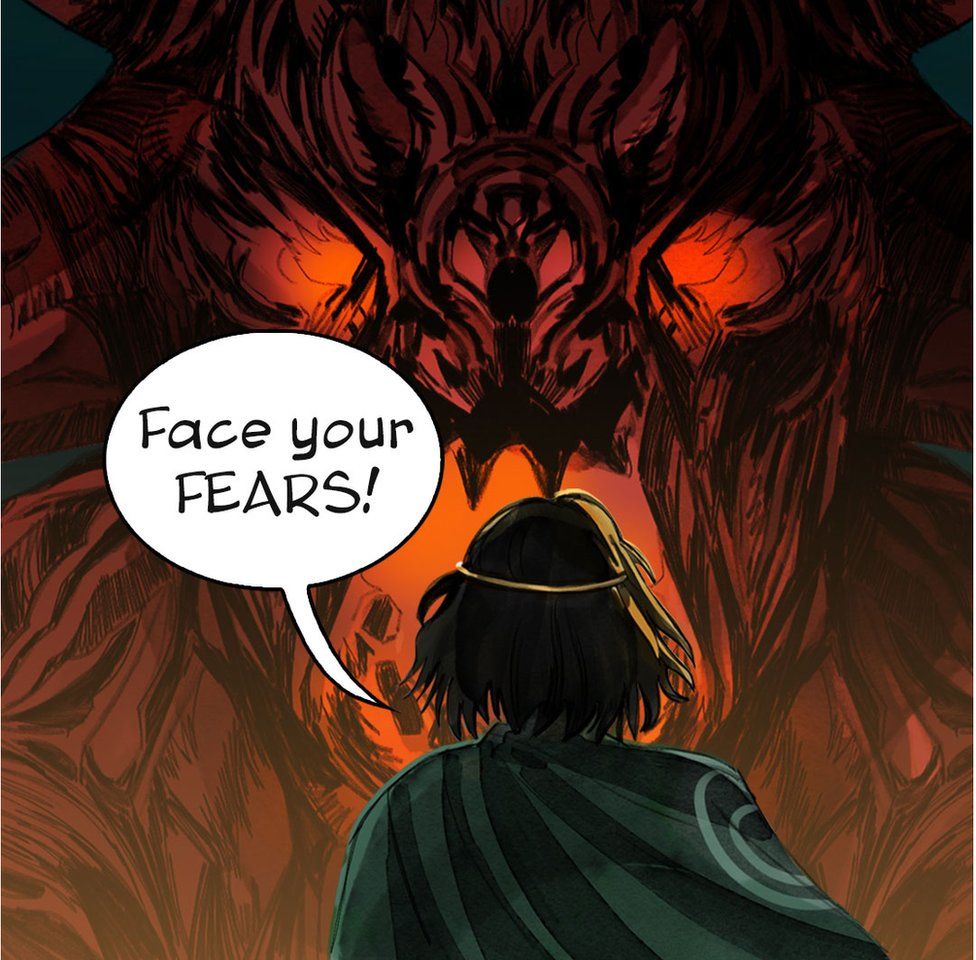
In the latest edition – Priya and the Lost Girls – she takes on the powerful sex-trafficker Rahu, the evil demon who runs an underworld brothel city where he has entrapped many women, including Priya’s sister Lakshmi.
Indian-American actor and writer Dipti Mehta, who wrote the script of the comic, draws on ancient Indian mythology to create larger-than-life fantastical characters and delivers a powerful feminist statement.
The story of Lost Girls begins when the protagonist returns home to find that there are no girls in her village.
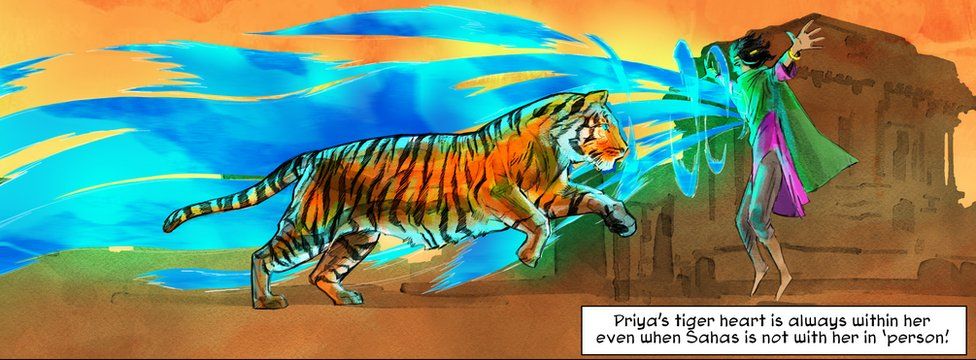
She then mounts her flying tiger Sahas (Hindi for courage) and arrives in Rahu’s den. It’s a city ruled by greed, jealousy and lust, where women exist only to serve and please men – and those who resist are turned into stone.
Image copyright PRIYASHAKTI
Priya is threatened and attacked, a woman who works for Rahu tries to lure her into the sex trade saying: “If you work for us, you’d serve only five to six men and not 20”, but in the end, good wins over evil and she manages to vanquish Rahu and liberate her sister and all the other trafficked girls.
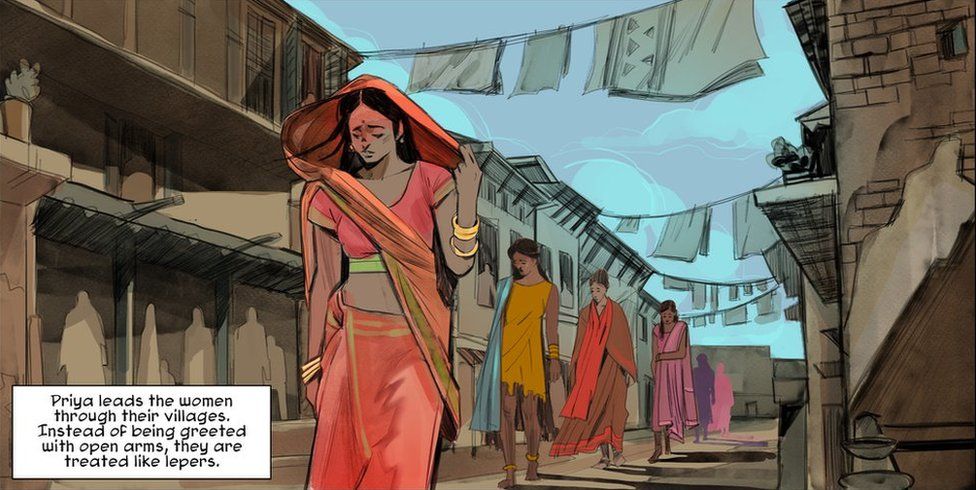
But victory still eludes her. The families of rescued girls refuse to take them back. The survivors are treated like “lepers”, facing stigma, scorn and ridicule.
But Priya and the other girls stand up to confront patriarchy, says Ms Mehta, “just as women have broken their silence to talk about MeToo”, the campaign against sexual harassment and abuse that started in Hollywood in October 2107 and later spread to many other parts of the world.
“I was very clear from the start that Lost Girls can’t be just another comic book where good guy wins and evil dies, it had to be much more than that,” Ms Mehta says.
Image copyright PRIYASHAKTI
Ram Devineni, the Indian-American creator of the comic series, told the BBC that he had decided to focus on sex trafficking in this edition after visiting Sonagachi, India’s largest red-light area in the eastern city of Kolkata, where he met several women engaged in sex work.
“Half of them told me they had been tricked into coming there and, once there, they were forced into the sex trade. The other half said they’d agreed to do this for a living because they were dirt poor and they had no alternative.
“Often there were two to three women sharing a small dingy room, many of them had young children who lived with them, and some of them said their children slept in the same bed where they serviced clients.
Mr Devineni says that from his conversations with them, he realised that many of the women there could leave, but chose not to.
“Most believed in the idea of sacrifice, for the sake of their families, their children. The shackles that hold them back are mostly emotional and psychological coercion.”
Some of their stories, he says, have found their way into the Lost Girls, which will be launched digitally on Monday to coincide with the start of United Nation’s 16 Days of Activism Against Gender-based Violence.
Image copyright PRIYASHAKTIAccording to the United Nations Office on Drugs and Crime, human trafficking is the second largest organised criminal business in the world after the arms trade. It is even ahead of the drugs trade.
“It’s a multi-billion-dollar industry,” anti-trafficking activist Ruchira Gupta told the BBC on the phone from New York.
Ms Gupta, who supports trafficked girls and women in India through her charity Apne Aap Women Worldwide, says there are 100 million people trapped in human trafficking globally, of which 27 million are in India alone, and most of the trafficking is in girls and young women.
India, Bangladesh and Nepal, she says, make up “the epicentre” of global sex trafficking.
Ms Gupta, who collaborated on Priya and the Lost Girls, says she plans to take the comic to schools and colleges in India and the US to use it as a talking tool, “as a conversation starter on what is a very difficult topic”.
The only way to fight trafficking, she believes, is to “de-normalise” sex trade – and cinema, art and pop culture are tools that can help do that.
The comic is made to appeal to young people. After its launch, it can be downloaded for free anywhere in the world; it also has “augmented reality features”, which means people can see special animation and movies by scanning the artwork with their smartphones.
Image copyright PRIYASHAKTI
“People often make flippant comments to say that prostitution is the oldest occupation in the world, but they don’t realise that trafficking is not some poor woman getting money in exchange for having sex with a man. It is the extreme exploitation of most vulnerable girls,” Ms Gupta says.
To stop this “commodification” of girls, she adds, we need to create revulsion in men’s minds about sex trade – and it’s best to catch them young.
“We must work with young boys and teenagers, 13 to 14 year olds, through storytelling and pop culture. They learn about sex from porn sites which portray sex workers as happy hookers, and no-one sees the girl behind her.
“I want to demolish that myth of the happy hooker. I want to ensure that people see the girl behind her.”
Artwork by Syd Fini and Neda Kazemifar
You may also be interested in…
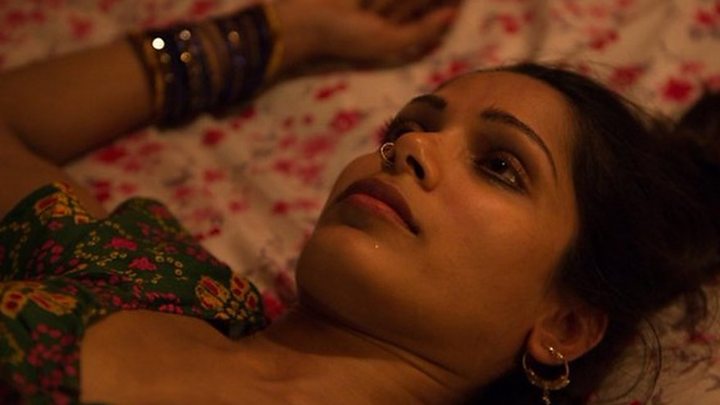
Media caption Freida Pinto: Why I made a film about sex slaves
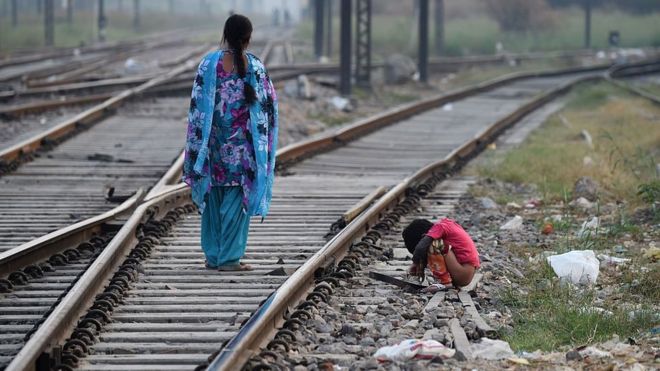
Image copyright GETTY IMAGESImage caption Millions of poor Indians still defecate in the open
Two men in the central Indian state of Madhya Pradesh have been arrested for allegedly killing two Dalit (formerly untouchables) children who were defecating in the open, police say.
Roshni, 12, and Avinash, 10, were attacked on Wednesday while defecating near a village road, they said.
The children’s family told BBC Hindi that they have no toilet at home.
Millions of poor Indians defecate in the open, which especially puts women and children at risk.
Dalits are at the bottom of the Hindu caste system and despite laws to protect them, they still face widespread discrimination in India.
“The two children were beaten to death with sticks,” police superintendent Rajesh Chandel told BBC Hindi’s Shuraih Niazi. “We have registered a murder case against both the accused. They are being questioned.”
Within hours of the attack early on Wednesday morning, police arrested two upper-caste men – Rameshwar Yadav and Hakim Yadav.
Roshni and Avinash were cousins, but Roshni had been brought up by Avinash’s parents and lived with them.
Avinash’s father, Manoj, says that as a daily wage labourer, he cannot afford to build a toilet at his house. He also says he has been unable to access a government subsidy as part of a flagship scheme to build toilets for the poor.
Media caption The Dalits unblocking India’s sewers by hand
The Swachh Bharat Mission or Clean India programme seeks to end open defecation by increasing toilet infrastructure and improving sanitation across the country. When Prime Minister Narendra Modi launched the program in 2014, he vowed to make India “open defecation free” by 2 October 2019.
Manoj’s village – Bhavkhedi – has been declared “open defecation free”, a tag given by the government to villages and cities have successfully ended open defecation.
Image caption Women who go out at night to defecate are often at risk
Research has shown that while the construction of toilets has increased rapidly, lack of water, poor maintenance and slow change in behaviour have stood in the way of ending open defecation.
But many have praised Mr Modi for highlighting the issue and launching a major scheme to address it – the Bill & Melinda Gates Foundation honoured him this week, describing the Swachh Bharat Mission as “a model for other countries around the world that urgently need to improve access to sanitation for the world’s poorest.”
Image copyright GETTY IMAGESImage caption Mr Kejriwal has proposed free travel on buses and the city’s famed Delhi metro rail service
The chief minister of India’s capital Delhi created a minor sensation when he announced that women would no longer have to pay for public transport.
Arvind Kejriwal said that free rides on city buses and the metro would help improve women’s safety in the city.
Delhi reports some of the highest numbers of rape in India. The 2012 gang rape and murder of a student on a bus in the city sparked massive protests.
However not everyone is convinced that Mr Kejriwal’s proposal will help.
Dinesh Mohan, a transport expert with the Indian Institute of Technology in Delhi, told the BBC that making public transport free wouldn’t solve the problem.
“You need to think about the entire journey and not just the metro – you have to take into account how safe or unsafe sidewalks are and what the journey to the metro station is like in the first place. So if the idea is to make it safer for women, that experience has to be continuous. Safety can’t begin and end at the metro station. I don’t see any thought behind this initiative yet.”
Despite Mr Kejriwal’s announcement, women will have to wait a while to see if it is actually implemented.
The proposal still has to be approved by the federal government because it is an equity partner along with the Delhi government in the Delhi Metro Rail Corporation.
But Mr Kejriwal has said that the federal government’s permission is not necessary as the Delhi government will bear the cost.
Delhi transport minister Kailash Gahlot said since this qualifies as a subsidy, they did not require any such permission.
Some have dismissed the entire thing as a pre-election gimmick by Mr Kejriwal – Delhi will hold state assembly elections next year.
Architect and urban planner Sonal Shah said on Twitter that a number of factors had to be taken into consideration for women’s safety to be addressed effectively. She said that transport access was “not equal for men and women”, adding that a number of existing issues with public transport had to be addressed first.
NEW DELHI (Reuters) – India’s main opposition Congress party will reserve a third of federal government jobs for women if it comes into power, its chief Rahul Gandhi said on Wednesday, in a sign women’s rights are rising up the political agenda for next month’s election.
Over the last week, two powerful parties from eastern India said they would field women in a third of parliamentary races, putting pressure on Prime Minister Narendra Modi’s ruling Bharatiya Janata Party (BJP) and other big parties to follow suit.
India ranks at 149 out of 193 countries – worse than neighbouring Afghanistan, Bhutan, Bangladesh and Pakistan – for the percentage of women in national parliaments, according to the Inter-Parliamentary Union, an independent organisation promoting democracy.
“…Frankly, I don’t see enough women in leadership positions. I don’t see them leading enough companies, I don’t see them leading enough states, I don’t see enough of them in the Lok Sabha and the Vidhan Sabhas,” Gandhi said in the southern city of Chennai, referring to India’s lower house of parliament and state legislatures.
Federal government jobs in India are already subject to numerous quotas, including one passed in January that reserves 10 percent of openings for people outside high income brackets.
Gandhi also said that Congress would pass the Women’s Reservation Bill this year if it came to power. The bill, which reserves 33 percent of the seats in national and state assemblies for women, has been on hold for two decades despite being championed by Congress and the BJP at different points.
The BJP, which says it has empowered women through nationwide schemes including clean fuel and sanitation, questioned how the Congress jobs plan would be implemented.
“For how many generations have people talked about reservation in party positions, reservation for elections, reservation in jobs? But it doesn’t seem to happen,” BJP spokesperson Shaina N.C. said.
There are currently 66 women out of a total 543 elected members in India’s lower house of parliament. At 12 percent, this is the highest ever proportion of women in the Lok Sabha.
Women make up nearly half of all voters in the country of 1.3 billion people, according to the Election Commission of India. Based on recent state polls, women will likely head to voting stations in droves for the elections due by May, surpassing male turnout, analysts predict.
On Tuesday, Mamata Banerjee, chief minister of West Bengal state, said her All India Trinamool Congress party would field 17 women candidates across 42 seats.
Earlier, on Sunday, the Biju Janata Dal, which rules Odisha state in eastern India, said it would reserve seven of 21 seats it is contesting for women candidates.
“33% reservation in parliament will give them bigger role in highest policy making body,” Naveen Patnaik, leader of the BJD and Odisha’s chief minister, said in a tweet.
“Women of our nation rightfully deserve this from all of us.”
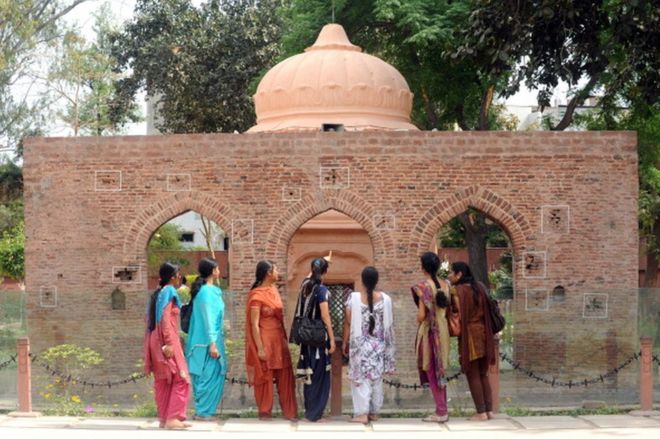
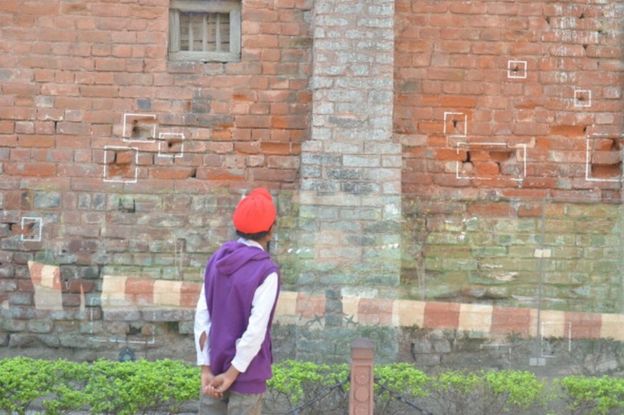
Image copyrightAFPImage captionVisitors can inspect a bullet-ridden wall at the site of the massacre
Hundreds of Indians attending a public meeting were shot dead by British troops in the northern Indian city of Amritsar in 1919. Historian Kim Wagner sifts fact from fiction as the UK House of Lords prepares to debate the massacre, including if Britain should apologise.
On 13 April 1919, Sergeant WJ Anderson witnessed first-hand the brutal massacre of hundreds of Indian civilians at Jallianwala Bagh, a public garden in Amritsar city.
“When fire was opened the whole crowd seemed to sink to the ground, a whole flutter of white garments, with however a spreading out towards the main gateway, and some individuals could be seen climbing the high wall,” Anderson later recalled.
“There was little movement, except for the climbers. The gateway would soon be jammed. I saw no sign of a rush towards the troops.”
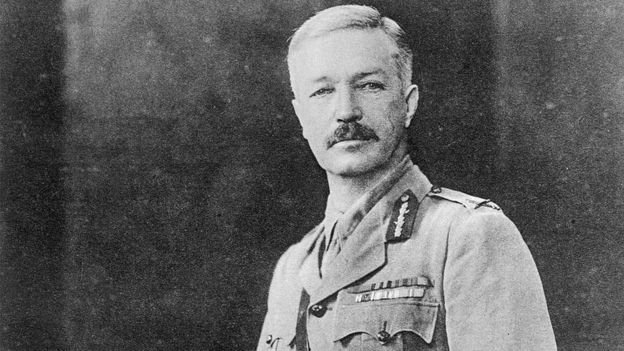
He had served as the bodyguard of Brigadier General RH Dyer, who had rushed to Amritsar a few days earlier to quell what he believed to be a major uprising.
The crowd of more than 20,000 people, however, were not armed rebels. They were local residents and villagers from the surrounding countryside who had come to listen to political speeches or simply to spend a few hours in the gardens.
It was also the day of the Baisakhi festival, which marked the anniversary of the creation of the Khalsa, or Sikh community, and annually attracted thousands of visitors and pilgrims.
The crowd comprised Hindus, Muslims and Sikhs. Most were men and young boys, including some infants; only a few women were present.
Image copyrightGETTY IMAGESImage captionBrigadier General Dyer rushed to Amritsar to quell what he believed to be a major uprising
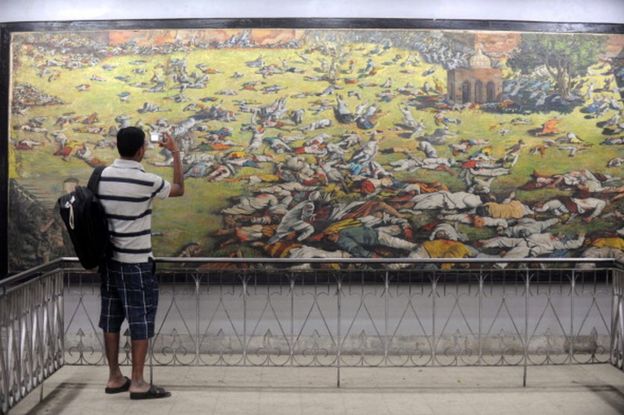
When Gen Dyer ordered his troops to cease firing, Jallianwala Bagh resembled a battlefield strewn with corpses. Between 500 and 600 people were killed, and probably three times as many wounded. The exact numbers will never be known for certain but the official death count, reached months later, was just 379.
In recent years, much of the public debate has focused on calls for a formal British apology – the demand has been led by, among others, Indian politician and author Shashi Tharoor.
Queen Elizabeth II visited the memorial at Jallianwala Bagh in 1997 and then Prime Minister David Cameron visited in 2013 – both showed their respect yet carefully avoided making an actual apology.
In December 2017, the Mayor of London, Sadiq Khan, nevertheless urged the British government to make just such a gesture during his own visit to Amritsar.
“I am clear that the government should now apologise, especially as we reach the centenary of the massacre. This is about properly acknowledging what happened here and giving the people of Amritsar and India the closure they need through a formal apology,” he said.
Image copyrightAFPImage captionOn his 2013 visit, Cameron avoided making an actual apology but said the massacre was “deeply shameful”
Exactly what happened at Jallianwala Bagh, however, remains unclear, and a century later, the actual circumstances of the massacre are still shrouded in myth and misconceptions.
There are, for instance, people, often with a nostalgic attachment to the Empire, who still insist that Gen Dyer only opened fire as a final resort when the crowd ignored his warning to disperse – even though the general himself was quite clear that he gave no such warning.
Similarly, the idea that the shooting was necessary and prevented much worse violence conveniently ignores the fact that Indian riots in April 1919 were in each and every case precipitated by British actions.
Factual inaccuracies are also to be found at the Jallianwala Bagh memorial today. Among other things, a sign claims that 120 bodies of the victims of the massacre were recovered from what has become known as the Martyrs’ Well. It’s believed that many people jumped into the well to escape the bullets.
But there is no evidence for this story, which appears to be based on a mix-up with the infamous well at Kanpur city, where the bodies of British women and children were disposed after a massacre in 1857.
Visual depictions of the Jallianwala Bagh massacre also show machine guns being used, when the historical record is quite clear that the shooting was carried out by 50 Gurkha and Baluchi troops armed with rifles.
Gen Dyer also did not orchestrate the massacre, and deliberately trap the crowd inside the gardens, as some popular accounts have it.
Image copyrightGETTY IMAGESImage captionThe crowd were not armed rebels but local residents and villagers
In fact, it was British panic and misreading of the political turmoil in India that was at the root of the violence.
While Indian nationalists were looking forward to political reforms and greater self-determination after the end of World War One, the British were still haunted by the spectre of the 1857 “mutiny”, an uprising that is often referred to as India’s first war of independence.
So, when riots broke out in Amritsar on 10 April – and five Europeans and dozens of Indians were killed – the authorities responded with immediate and indiscriminate force. Three days later, Gen Dyer entered what he mistakenly perceived to be a war zone.
Where popular depictions show a peaceful crowd of locals quietly listening to a political speech, Gen Dyer instead perceived a defiant and murderous mob, which had only days before run rampant through Amritsar. When he ordered his troops to open fire, it was an act of fear, spurred on by a disastrously flawed threat assessment.
None of this exonerates Gen Dyer or detracts from the sheer brutality of the massacre – nor does it justify the subsequent torture and humiliation of Indians under martial law. The indisputable violence of the Jallianwala Bagh massacre hardly requires any embellishment. Nevertheless, facts matter if we are to pay our respect to those who died rather than simply perpetuate politically convenient fiction. And to understand is not the same as to condone.
Image copyrightGETTY IMAGESImage captionThere are bullet marks on a wall in the garden
Apologies and centenaries, which are essentially about the present rather than the past, are rarely conducive to an honest and nuanced reckoning with history.
An apology from a British government in the throes of Brexit, at the moment, seems highly unlikely. It it indeed doubtful whether an official acknowledgement of the massacre would be construed as more than an act of political expediency.
The question thus remains whether an apology without a genuine understanding of the past can ever provide the “closure” that so many seek.
A five-judge Constitution Bench headed by the then Chief Justice Misra had on September 28 last year junked the age-old tradition of the Lord Ayyappa temple by a majority verdict of 4:1.
SNS Web | New Delhi | February 6, 2019 3:18 pm
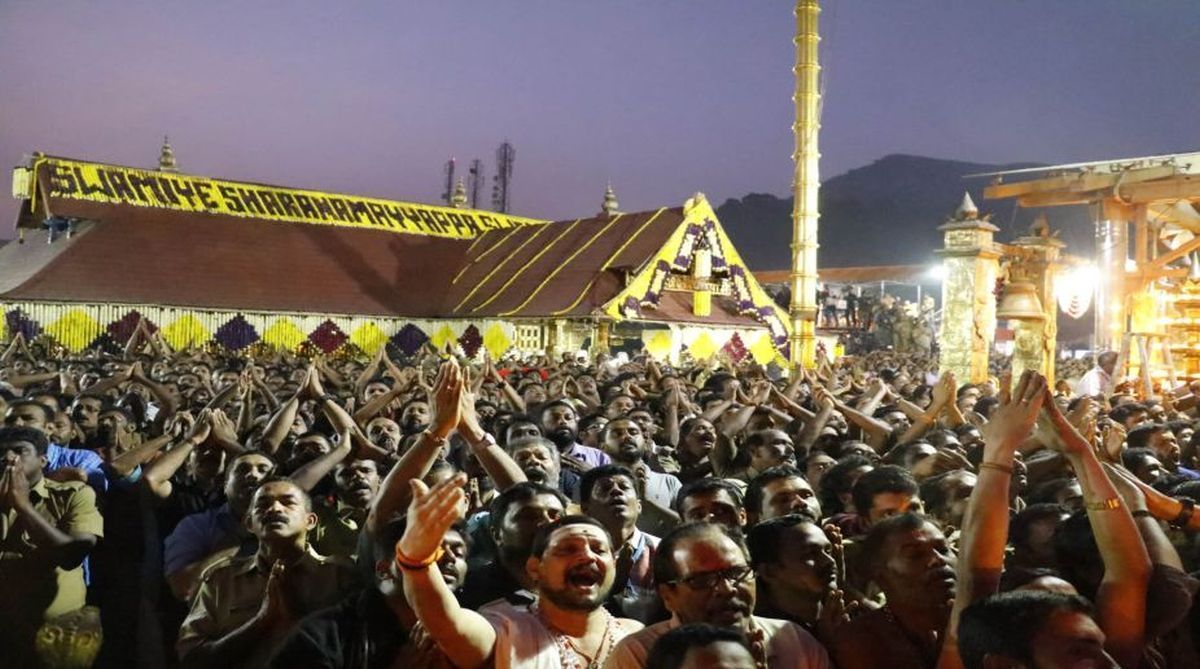
Devotees at Sabarimala temple (Photo: IANS)
In a complete turnaround from its earlier stand that women aged between 10 and 50 should not be allowed inside the Sabarimala temple, the Travancore Dewasom Board, on Tuesday opposed the review and told the Supreme Court that it wants the verdict allowing women of all ages to stay.
“Everyone is entitled to enter the temple. Any practice has to be dominant with the view of equality,” the board said adding “We have to move and transform the society to include women in all walks of life”.
“We have taken a decision to respect the judgement,” the board added.
It is an essential part of the Hindu religion to allow women to enter the temple, the temple board said.
Following the temple board’s U-turn in the matter, Justice Justice Indu Malhotra said, “There is a complete change of stand by the Travancore Dewasom Board”.
Justice Indu Malhotra had presented a dissenting opinion on the Supreme Court’s September verdict saying, “the court should not interfere in matters of faith”.
Advocate Indira Jaising arguing for women rights said that “purification ceremony being held affirms that menstruating women are considered polluted”.
“Social boycott going on against the women who entered the temple,” she added.
She further asserted that women should be allowed to enter the temple which is set to open on February 12.
The apex court has reserved its verdict on the matter.
Several organisations including the Nair Service Society and the Thantri of the Sabarimala temple had earlier in the day advanced arguments before the bench and sought reconsideration of the verdict.
Senior advocate K Parasaran appearing for the Nair Service Society told the court that “the exclusionary practice in Sabarimala is based on the character of the deity”.
The petitioners also argued that “Sabarimala custom cannot be equated to untouchability. It is only a religious custom”.
Abhishek Manu Singhvi appearing for ex-Chairman of the Devaswom Board argued before the court that “untouchability will not be applicable as it is not a caste or religion-based exclusion. There is no exclusion of men and women, but only exclusion for a class of women.”
The Supreme Court, in its September judgement, had said the practice is akin to untouchability.
Senior Advocate Nafade argued that “religion was a matter of faith and only community can decide the custom, not the court”.
“As long as the community decides not to change the practice, the Supreme Court cannot intervene,” he said.
The Chief Justice also allowed 90 minutes to those supporting the Supreme Court verdict.
Jaideep Gupta, arguing for the Kerala state said that there was no need to review the verdict.
Opposing the review, the government said there was also a consensus of judges on three issues – First, that Sabarimala is not a denominational temple, second, that a person’s right to worship in a temple is taken away for a major part of her life, and third, that the rule violated the act governing the temples itself.
The government further submitted that only if it is a denominational temple, the question of essential practice arises.
“Jagannath temple is unique in its practice and yet this court has held it’s not a denominational temple… similarly Kashi Vishwanath and Tirupati have been said not to be denominational,” it said.
The 65 petitions including 56 review petitions and four fresh writ petitions are being heard by a Constitution bench comprising Chief Justice Ranjan Gogoi and Justices RF Nariman, AM Khanwilkar, DY Chandrachud and Indu Malhotra.
The petitions were earlier scheduled to be heard on January 22 but were postponed since Justice Indu Malhotra went on medical leave.
On November 13, in a rare instance, the Supreme Court decided to go for open court hearing of the petitions seeking a recall of its order permitting women of all age groups to pray at the Sabarimala temple.
The Lord Ayyappa temple has since then witnessed massive protests by various devotee groups and Hindu outfits against the Pinarayi Vijayan government’s decision to implement the apex court order without going for any review petition.
Only two women — Bindu and Kanakadurga — managed to enter the temple in the wee hours of January 2 with tight police security.
Though many attempts were made by some young women, to enter the temple of the ‘Naishtik Brahmachari’, the eternally celibate deity, the devotees backed by priests stood their ground, saying they would not allow the tradition to be breached.
The temple remains open only for 127 days in a year.
A five-judge Constitution Bench headed by the then Chief Justice Misra had on September 28 last year junked the age-old tradition of the Lord Ayyappa temple by a majority verdict of 4:1.
“Right to worship is given to all devotees and there can be no discrimination on the basis of gender,” former chief justice Dipak Misra had observed.












 CHINDIA ALERT: You'll be living in their world, very soon