Chindia Alert: You’ll be Living in their World Very Soon
aims to alert you to the threats and opportunities that China and India present. China and India require serious attention; case of ‘hidden dragon and crouching tiger’.
Without this attention, governments, businesses and, indeed, individuals may find themselves at a great disadvantage sooner rather than later.
The POSTs (front webpages) are mainly 'cuttings' from reliable sources, updated continuously.
The PAGEs (see Tabs, above) attempt to make the information more meaningful by putting some structure to the information we have researched and assembled since 2006.
With a defence budget second only to the US, China is amassing a navy that can circle the globe and developing state-of-the-art autonomous drones
The build-up is motivating surrounding countries to bolster their own armed forces, even if some big-ticket military equipment is of dubious necessity
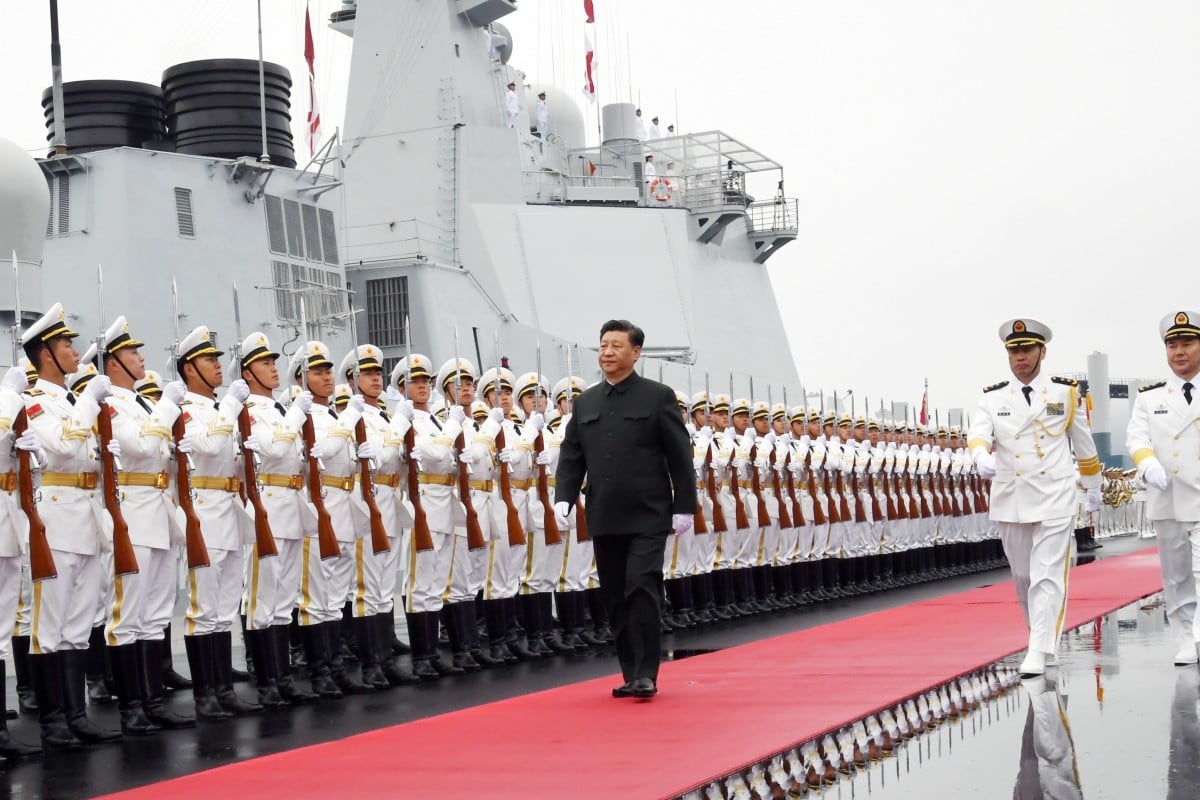
Chinese President Xi Jinping reviews an honour guards before a naval parade in Qingdao. Photo: Xinhua
The Asia-Pacific region is one of the fastest-growing markets for arms dealers, with economic growth, territorial disputes and long-sought military modernisation propelling a 52 per cent increase in defence spending over the last decade to US$392 billion in 2018, according to the Stockholm International Peace Research Institute.
The region accounts for more than one-fifth of the global defence budget and is expected to grow. That was underscored last week by news of
, China is amassing a navy that can circle the globe and developing state-of-the-art autonomous drones. The build-up is motivating surrounding countries to bolster their armed forces too – good news for purveyors of submarines, unmanned vehicles and warplanes.
Opinion: How the Shangri-La Dialogue turned into a diplomatic coup for China
Kelvin Wong, a Singapore-based analyst for Jane’s, a trade publication that has been covering the defence industry for 121 years, has developed a niche in infiltrating China’s opaque defence industry by attending obscure trade shows that are rarely advertised outside the country.
He said the US is eager to train allies in Asia and sell them arms, while also stepping up its “freedom of navigation” naval operations in contested waters in the
In his speech at the Shangri-La Dialogue, acting US Defence Secretary Patrick Shanahan touted American advancements in technology “critical to deterring and defeating the threats of the future” and said any partner could choose to win access to that technology by joining the US defence network.
Wong said the message was clear: “Buy American.”
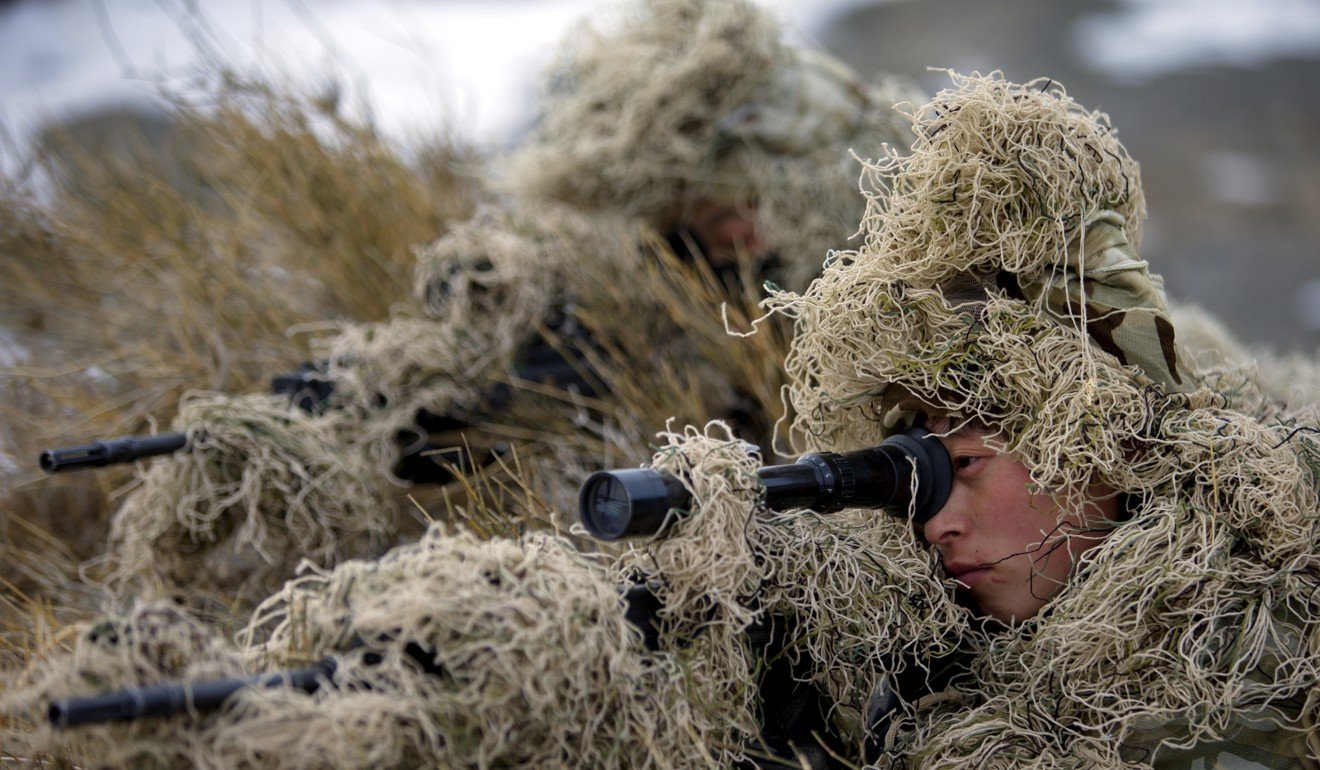
Analysts say Chinese soldiers have less training, motivation and lower morale than their Western counterparts. Photo: Reuters
The analyst said there is a growing admission among the Chinese leadership that the
He said one executive at a Chinese defence firm told him: “The individual Chinese soldier, in terms of morale, training, education and motivation, (cannot match) Western counterparts. So the only way to level up is through the use of unmanned platforms and
To that end, China has developed one of the world’s most sophisticated drone programmes, complete with custom-built weapon systems. By comparison, Wong said,
US drones rely on weapons originally developed for helicopters.
Wong got to see one of the Chinese drones in action two years ago after cultivating a relationship with its builder, the state-owned China Aerospace Science & Technology Corporation. He viewed a demonstration of a 28-foot-long CH-4 drone launching missiles at a target with uncanny ease and precision.
“Everyone knew they had this,” Wong said. “But how effective it was, nobody knew. I could personally vouch they got it down pat.”
China unveils its answer to US Reaper drone – how does it compare?
That is what Bernard Loo Fook Weng, a military expert at Singapore’s S. Rajaratnam School of International Studies, told the author Robert Kaplan for his 2014 book, Asia’s Cauldron, about simmering tensions in the South China Sea.
He was describing the competition for big-ticket military equipment of dubious necessity.
submarines it could not figure out how to submerge.
“It’s keeping up with the Joneses,” Wong said. “There’s an element of prestige to having these systems.”
Submarines remain one of the more debatable purchases, Wong said. The vessels aren’t ideal for the South China Sea, with its narrow shipping lanes hemmed in by shallow waters and coral reefs. Yet they provide smaller countries with a powerful deterrence by enabling sneak attacks on large ships.
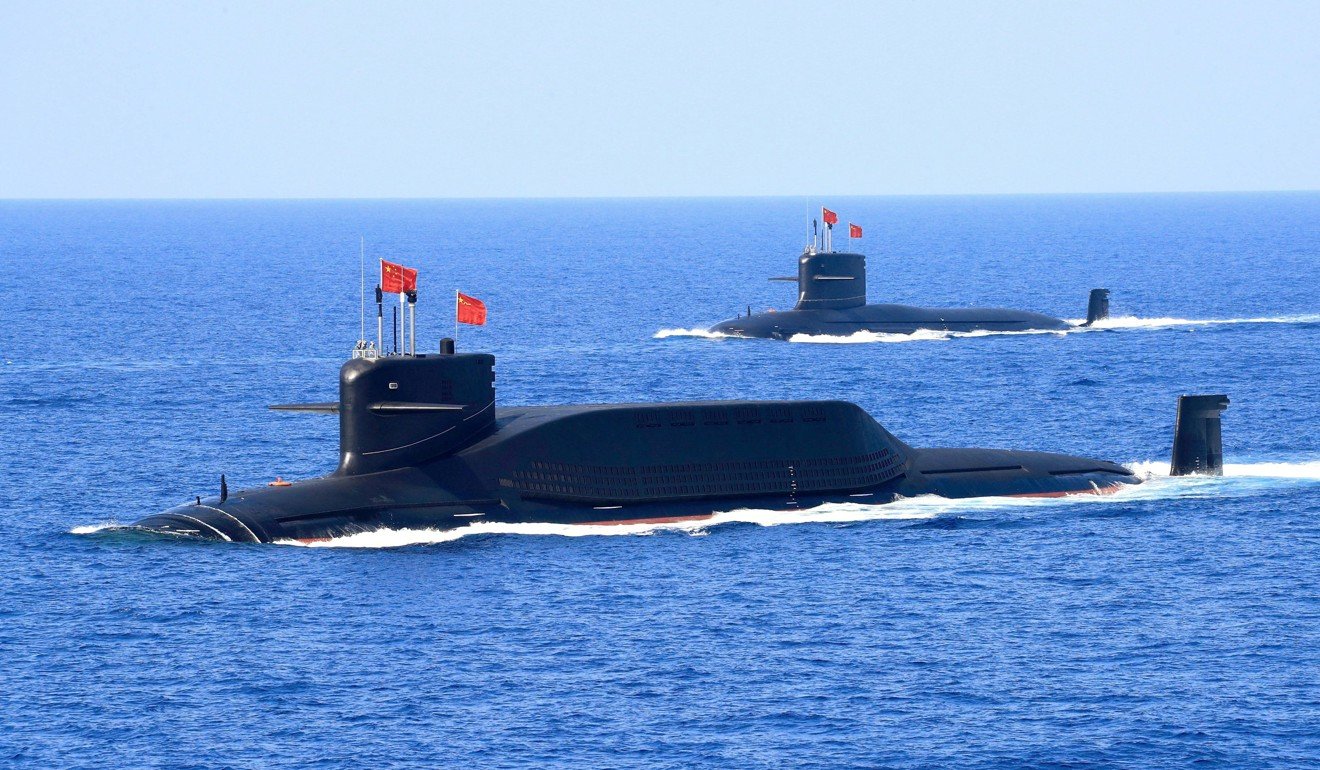
Nuclear-powered PLA Navy ballistic missile submarines in the South China Sea. Photo: Reuters
Type 218 submarines with propulsion systems that negate the need to surface more frequently. If the crew did not need to eat, the submarine could stay under water for prolonged periods. Wong said the craft were specially built for Asian crews.
“The older subs were designed for larger Europeans so the ergonomics were totally off,” he said.
Singapore, China deepen defence ties, plan larger military exercises
Tiny Singapore plays a crucial role securing the vital sea lanes linking the Strait of Malacca with the South China Sea. According to the
the country dedicates 3.3 per cent of its gross domestic product to defence, a rate higher than that of the United States.
State-of-the-art equipment defines the Singapore Armed Forces. Automation is now at the centre of the country’s military strategy, as available manpower is shrinking because of a rapidly ageing population.
Wong said Singapore is investing in autonomous systems and can operate frigates with 100 crew members – 50 fewer than they were originally designed for.
“We always have to punch above our weight,” he said.
Image copyright REUTERSImage caption Economists say India’s growth is powered by the ‘top 100 million’ people
As India lumbers towards the final phase of an exhausting general election and Prime Minister Narendra Modi’s BJP seeks a second term in power, there’s some worrying news. The world’s fastest growing major economy appears to be headed for a slowdown.
The signs are everywhere. Economic growth slowed to 6.6% in the three months to December, the slowest in six quarters. Sales of cars and SUVs have slumped to a seven-year-low. Tractors and two-wheelers sales are down. Net profits for 334 companies (excluding banks and financials) are down 18% year-on-year, according to the Financial Express newspaper.
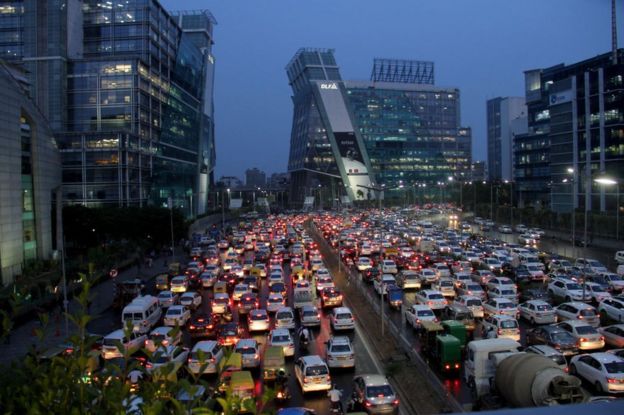
Image copyright GETTY IMAGESImage caption Sales of cars and SUVs have slumped to a seven-year-low.
One newspaper wondered whether India was “losing the consumption plot”. Taken together, all this points to a fall in both urban and rural incomes, leading to demand contraction. A crop glut has seen farm incomes drop. And credit stagnation, partly triggered by the collapse of a major non-banking financial institution, or a shadow bank, has led to a fall in lending and worsened matters.
Kaushik Basu, former chief economist of the World Bank and professor of economics at Cornell University, believes the slowdown is “much more serious” than he initially believed. “The evidence is now mounting to the point where it can no longer be ignored,” he told me.
One reason, he believes, is the controversial currency ban in 2016 – also called demonetisation – which adversely hit farmers. More than 80% of the currency circulating in India’s sprawling cash-driven economy was taken out of circulation in what, in the words of one of Prime Minister Modi’s own advisers, was a “massive, draconian, monetary shock”.
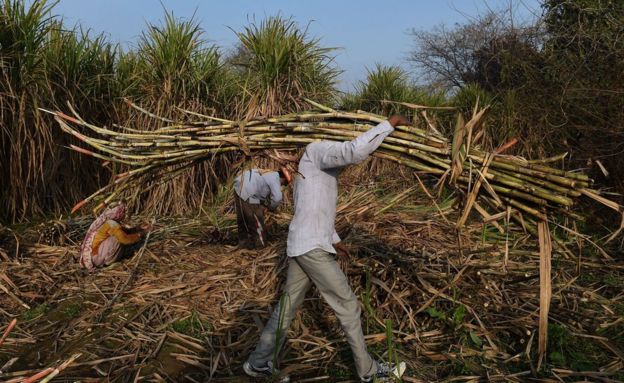
Image copyright AFP
“This was evident to all by early 2017. What many observers did not realise then – I did not – is that the shock made the farmers take on debts which ended up causing sustained hardship to them that is continuing and slowing down the agriculture sector.”
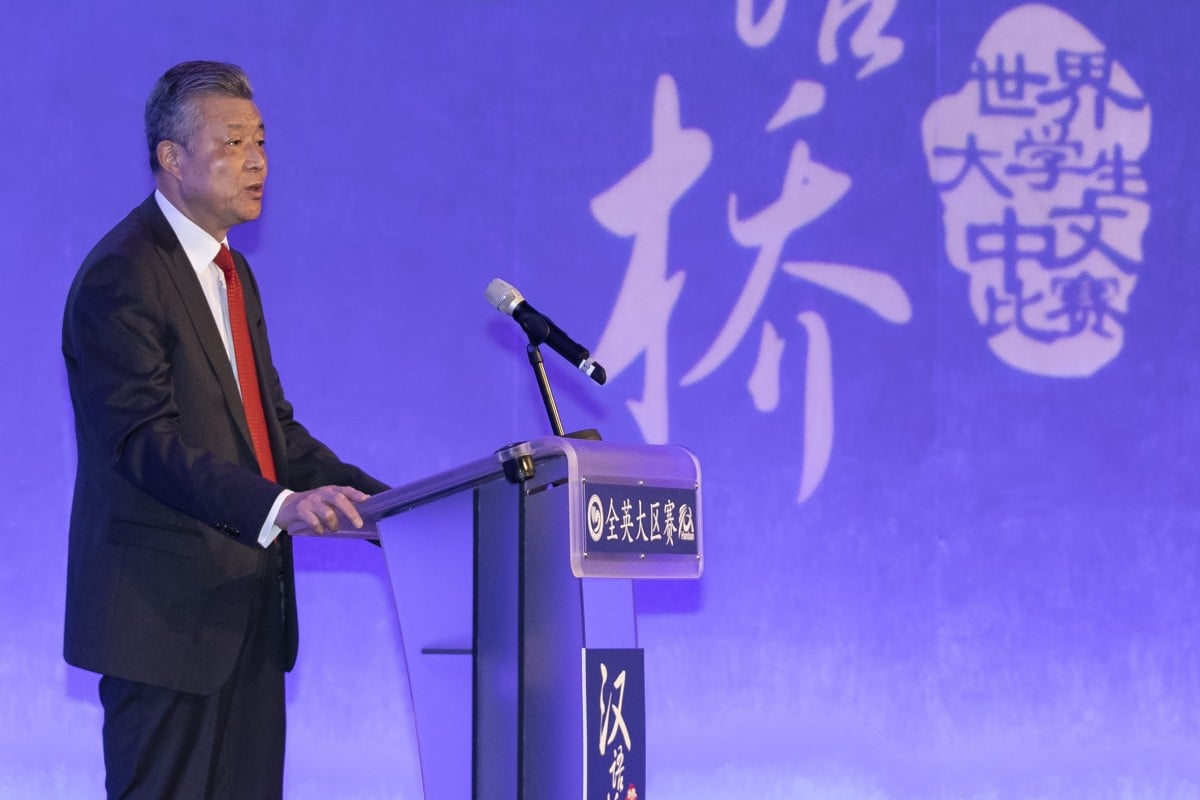
China’s Ambassador to the UK Liu Xiaoming cites ‘rule-making’ as an area for bilateral cooperation with the UK
Chinese Ambassador to the UK Liu Xiaoming gives a keynote speech during the ‘Chinese Bridge’ Chinese Proficiency Competition for Foreign College Students UK Regional Final in London. Photo: Xinhua
China has asked Britain for help to offset claims its “Belt and Road Initiative” investments are opaque and justify its overseas spending to critics.
It made the move days before UK Chancellor Phillip Hammond was expected to head to the belt and road forum in Beijing.
In an article in London’s Evening Standard on Wednesday, China’s Ambassador to the UK Liu Xiaoming cited “rule-making” as an area for bilateral cooperation.
“Britain has played a leading role in the establishment and management of the Asian Infrastructure Investment Bank,” Liu said. “In [belt and road] development, Britain could have a big role to play in ensuring that the projects are of higher quality, at a higher standard, with higher return.”
Four years ago the UK defied the US and joined the AIIB.
Liu’s comments followed news the UK’s Department for International Development (DFID) was asked to join a new initiative aimed at improving China’s international accounting and transparency standards.
China is thought to see DFID as a model for its new aid outfit, China International Development Cooperation Agency (CIDCA), which was established last year to oversee Beijing’s foreign aid.
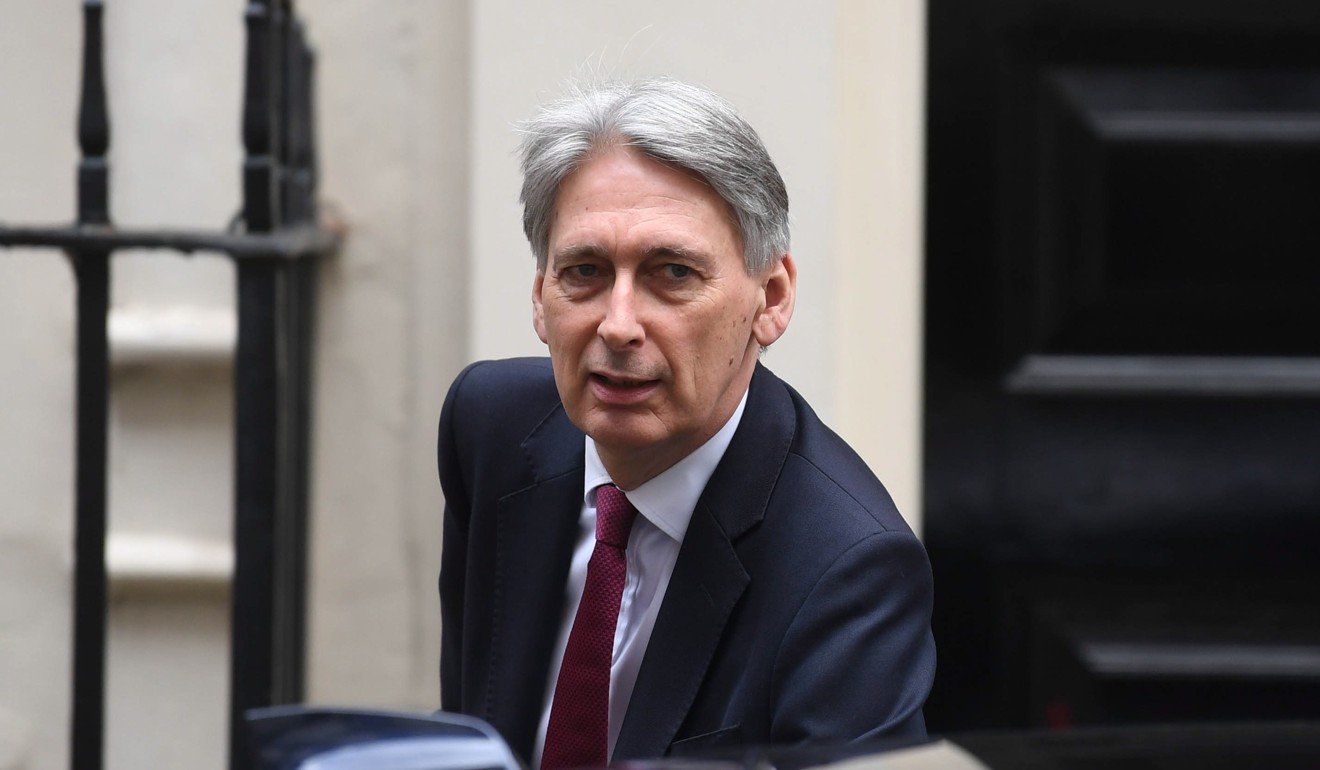
Britain’s Chancellor of the Exchequer Phillip Hammond. Photo: EPA-EFE
Share:
The DFID was the third most transparent donor in the world after the Asian Development Bank and UNDP, according to the aid data-crunching website Publish What You Find. China was the least.
Critics say part of the problem is Beijing prefers to deliver loans and other investments through local elites. There are also often several government departments involved, each directed by their own rules and priorities, making financial reporting more complex.
“I think the Chinese are instead playing by a different set of rules, not all of them in conflict with the West’s … but most definitely not fully aligned with what the West wants or expects”, said Eric Olander, managing editor of Shanghai-based The China Africa Project. “Therefore, I would not expect to see the kind of meaningful change in its accounting and financial standards in the near term.”
‘Cooperate or stop criticising’, China’s foreign minister Wang Yi says as belt and road summit nears
The MOU proposed by China is more a statement of intent than a plan of action but the UK welcomed it as a positive sign
“China’s proposal to set up a ‘Multilateral Cooperation Centre for Development Finance’ has real potential to ensure its huge investments in developing countries meet the key international standards that matter to all of us – on debt, transparency, environment and social safeguards,” UK International Development Secretary Penny Mordaunt said at the World Bank Spring Meeting recently.
A source at DFID told the SCMP that the UK has not signed the MOU yet but said while other countries are aware of the proposal, it is the only country so far to be formally invited to participate by China.
France and Germany were two possible future signatories, and MCCDF has been discussed in EU member state meetings in Beijing.
“[China] is clearly frustrated that it feels misunderstood by the international community,” said Olander.
“I have attended one seminar after another where African stakeholders ask the Chinese for more transparency and the Chinese respond with a sympathetic smile that says ‘I’d love to but I’m not sure how we can do that given our political culture and the current political realities’.”
With the Chinese economy slowing at home and the losses abroad in places like Venezuela starting to mount, there are indications that the Chinese policy banks are becoming far more risk-averse in places like Africa and the Americas.
Even so according to figures released on Thursday, the Export Import Bank of China provided more than a trillion yuan (US$149 billion) to more than 1,800 Belt and Road projects since 2013. China Development Bank (CDB) said in March it had provided US$190 billion in the same period.
“The UK is very concerned by rising debt levels, particularly in emerging market economies and in low-income countries,” Mordaut told the World Bank.
“Unsustainable debt levels are a real risk that can undermine or reverse development gains.”
The IMF said recently 24 out of 60 of the poorest countries are either in debt distress or at a high risk of falling into it.
China is also looking to the UK to help manage the BRI projects and organise part of the financing, something the City of London and the government are keen to do, Liu said.
Describing it as “third-party involvement in BRI development” he said: “The UK, with its unique strengths in professional services, project-management and financing, could tap into this potential.”
China is keen for the UK to sign a BRI MOU like Italy, and soon Switzerland, but so far it has resisted. A report released earlier this month by the parliament’s Foreign Affairs Committee called for a rebranding of the “golden era” started by the former chancellor George Osborne, now the editor of the London Evening Standard.
Britain is keen to cement closer ties with Beijing as the world’s fifth largest economy looks to reinvent itself as a global trading nation if and when it leaves the European Union.
Military watchers can expect ‘something new’ at this year’s National Day parade in October, Professor Jin Canrong tells forum in Hong Kong
As tensions rise over Taiwan, Beijing is building a naval and missile force as powerful as any in the world, he says
Beijing’s military build-up just starting – a lot more to come, expert warns
24 Feb 2019
Submarine arms race seen heating up in Indo-Pacific amid China ‘threat’
16 Feb 2019
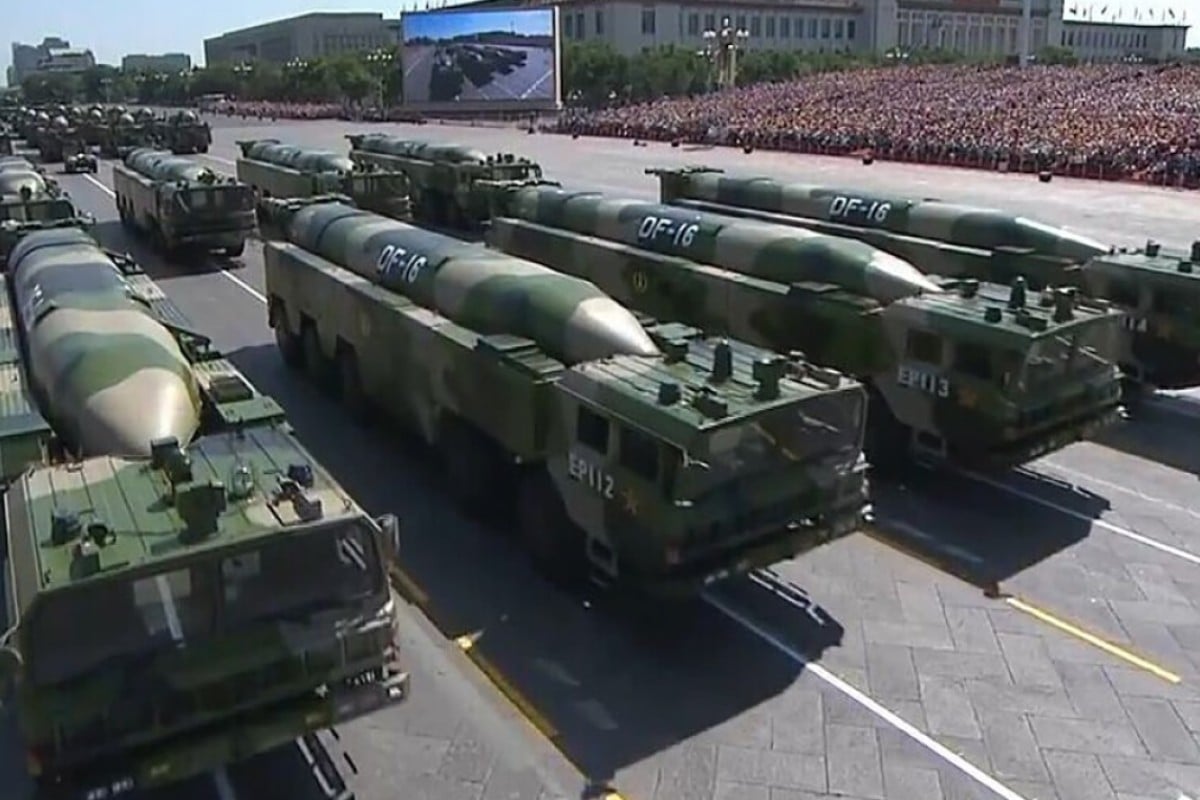
Military vehicles carrying DF-16 ballistic missiles take part in China’s National Day parade. Taiwan says Beijing has such missiles trained on the self-ruled island. Photo: Handout
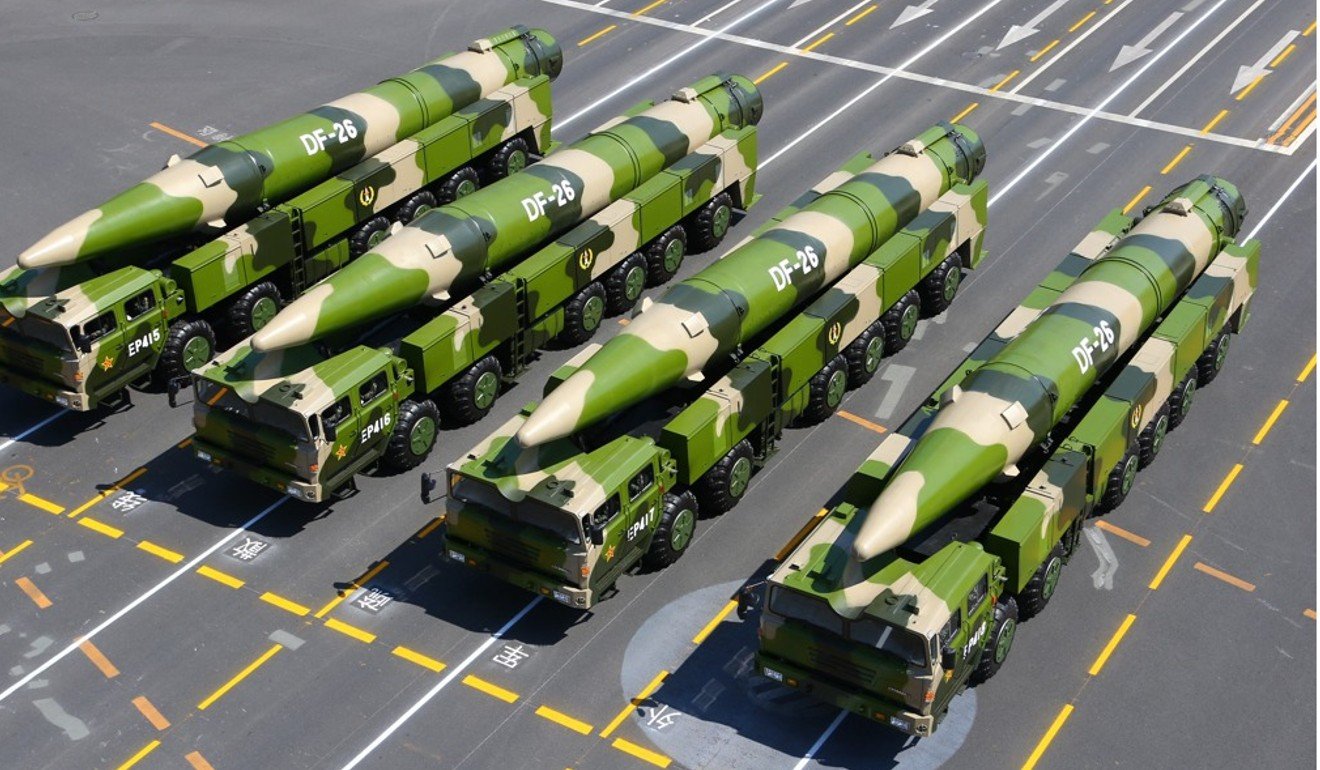
Beijing will show the world “something new” when it rolls out its arsenal of short- to medium-range ballistic missiles at its National Day military parade in October, according to a Chinese expert on international relations.
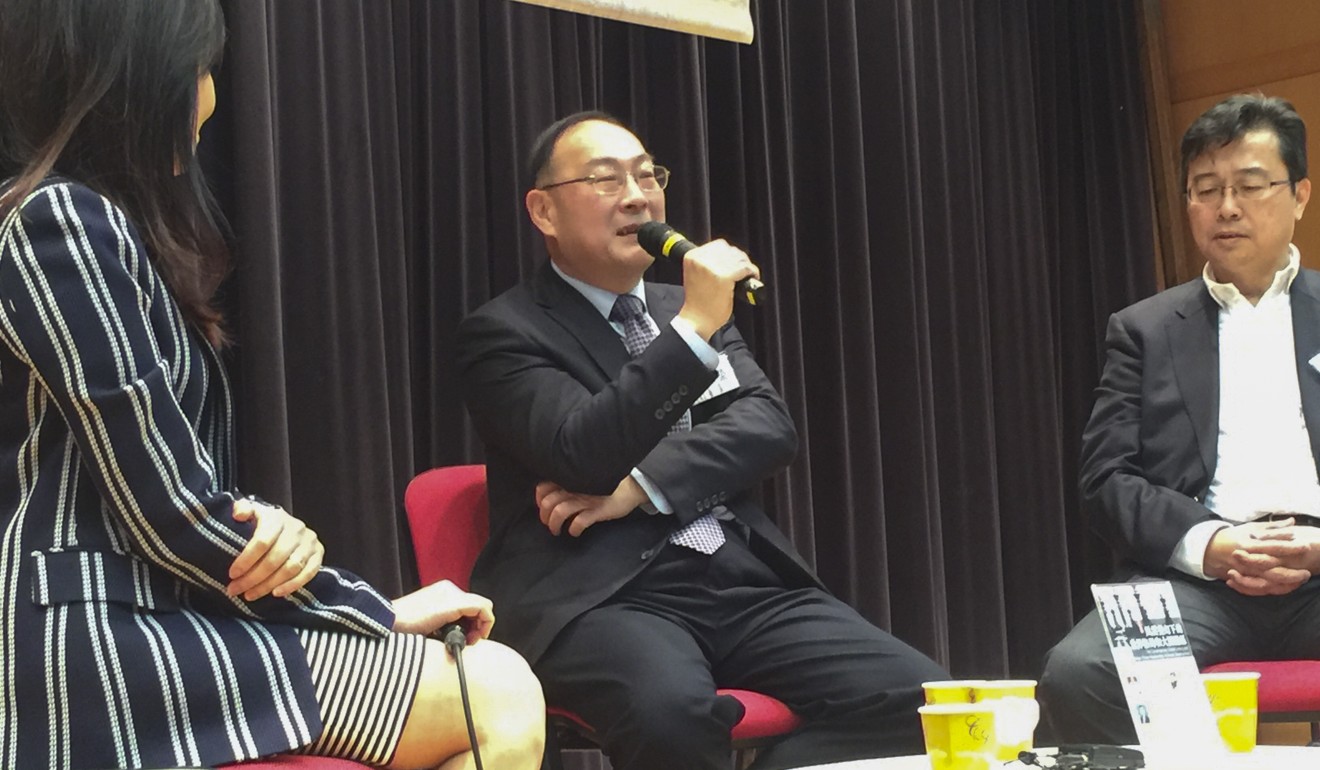
Speaking at a seminar at the University of Hong Kong on Saturday, Professor Jin Canrong, associate dean of the school of international studies at Renmin University in Beijing, said China had made great strides in expanding its military capability, but there was a lot more to come.
US commander pushes for more funding to counter China’s influence in Indo-Pacific
While he did not elaborate on what the “something new” might be, he said the country was gearing up for a possible conflict over Taiwan, the self-ruled island that Beijing regards as a wayward province awaiting reunification.
Over the next five or 10 years, Taiwan could provide the “biggest uncertainty” for Beijing, he said, especially if the United States decided to “ignite” the situation.
Known for being outspoken on sensitive issues, Jin said that while Beijing wanted a peaceful reunification, it was wary of “pro-independence factions [on the island] and right-wing American [politicians] creating trouble”.
By registering for these newsletters you agree to our T&C and Privacy Policy
In a speech on January 2 to mark the 40th anniversary of Beijing’s call to end military confrontation across the Taiwan Strait, Chinese President Xi Jinping said that “the political division across the strait … cannot be passed on from generation to generation”, apparently signalling his determination to bring it to an end.
Xi said China would not abandon the use of force in reunifying Taiwan, but stressed the military would target only external elements and those seeking independence for the island.
In 2017, Taipei said that it had detected the deployment of DF-16 ballistic missiles on the mainland that were aimed at Taiwan.
Jin said China was rapidly expanding its missile capabilities. The People’s Liberation Army had already stockpiled about 3,000 short- and medium-range missiles, he said, even though it had been using just 15 per cent of its production capacity.
“Just imagine if we were running at 100 per cent,” he said.
Beijing will show the world “something new” when it rolls out its ballistic missiles at its National Day military parade in October, an expert says. Photo: Xinhua
Share:
Under its plan for military modernisation China had achieved “great advancements in space, electronics and cyberwarfare”, the academic said, but its achievements to date were only the beginning.
As well as the expansion of its missile force, Beijing was investing heavily in its navy, he said.
Is China about to abandon its ‘no first use’ nuclear weapons policy?
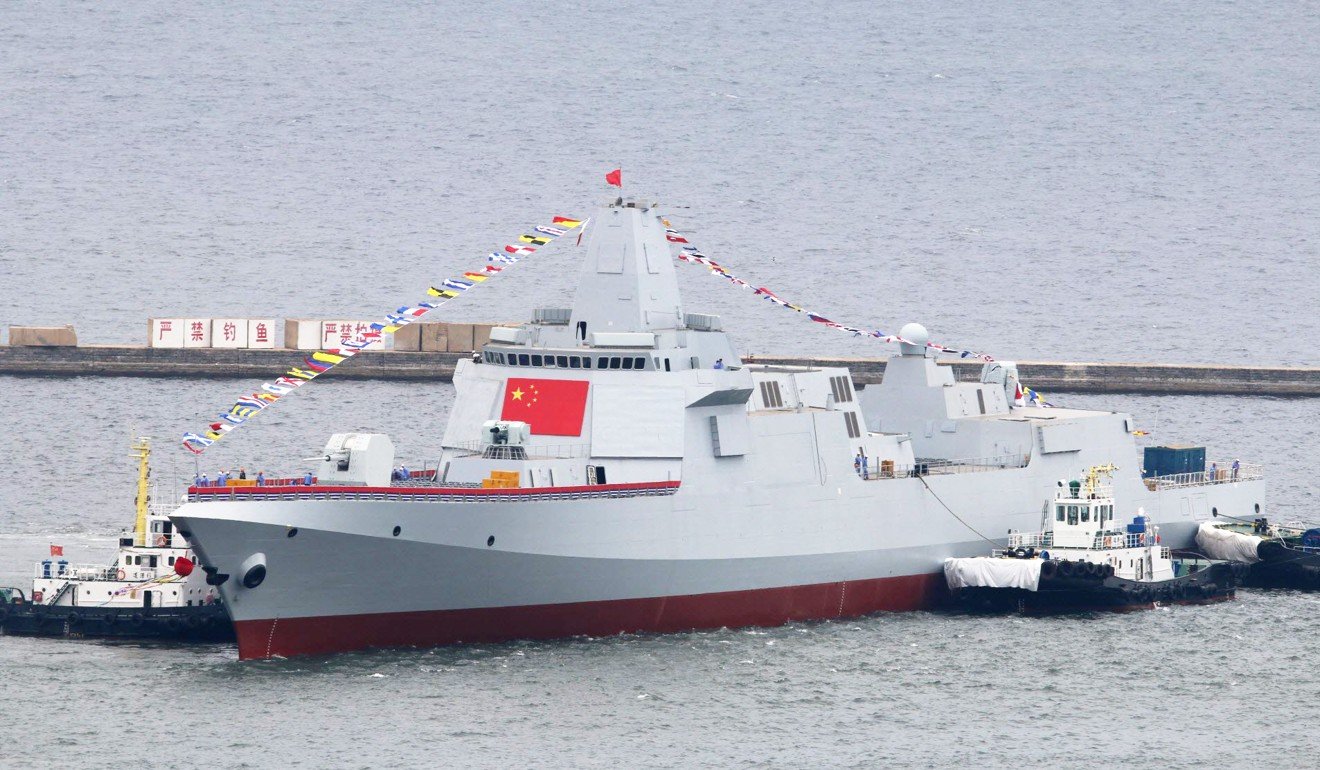
With the deployment of the new Type 055 guided-missile destroyer – which some Chinese military experts have said is as good as anything in the US Navy – the balance of power was shifting, he said.
“For the first time in 500 years, the East has combat equipment that is at least as good as the West’s.”
With the deployment of the new Type 055 guided-missile destroyer, the balance of power between China and the US is shifting, according to Jin Canrong. Photo: Handout
Share:
And as the navy continued to modernise and expand, the US might be forced to rethink its position in the region, he said.
“When we have dozens of destroyers and four or five [aircraft] carriers the US will not be able to meddle in Taiwan.”
China’s first aircraft carrier may become test bed for electromagnetic warplane launcher
Jin said that China would also soon have all the scientific, academic and research personnel it needed to achieve its military ambitions.
“China had nearly 30 million university students in 2018, which is twice as many as the US. More than half of them are studying science or engineering,” he said.
“Every year we produce about 4 million science and engineering graduates, while America produces just 440,000.”
Professor Jin Canrong speaks at a forum in Hong Kong. Photo: Handout
Share:
Beijing also had the money to support its plans, Jin said. Based on his own calculations, he said China allocated about 1.4 per cent of its gross domestic product to military spending, which was lower than “Germany’s 1.5 per cent”, and less than half the “3 per cent in Britain and France”.
“The tax paid by Chinese smokers is more than enough to cover [the country’s] military expenses,” Jin said.
According to figures from Nato, Britain spent 2.1 of its GDP on defence in 2017, France 1.8 per cent and Germany 1.2 per cent. Both the World Bank and the United Nations put China’s military spending in 2017 at 1.9 per cent of its GDP.
Indra Nooyi, 63, stepped down as PepsiCo’s chief in August 2018 after leading the company for 12 years.(File Photo: Xinhua/Ting Shen/IANS)
India-born Indra Nooyi, the former CEO of global beverage giant PepsiCo, is being considered by the White House for the new World Bank president, according to a leading American daily.
Indra Nooyi, 63, stepped down as PepsiCo’s chief last August after leading the company for 12 years.
She “has been courted as an administration ally by Ivanka Trump, the president’s eldest daughter who is playing a role in the selection of a nominee,” the The New York Times said.
The report, which cited several people familiar with the process, said the decision-making process for the top post at the World Bank is “fluid and in its initial stages and early front-runners and candidates often fall off the radar, or withdraw from consideration, before the president (Donald Trump) makes his ultimate pick”.
It is unclear whether Nooyi would accept the nomination if chosen by the Trump administration.
The first daughter, who has tweeted that she views Nooyi as a “mentor + inspiration”, has floated her name as a potential successor.
World Bank’s current president Jim Yong Kim had earlier this month announced that he would step down from his post in February to join a private infrastructure investment firm. His unexpected departure came nearly three years before the end of his term.
The NYT report said that the process of choosing Kim’s successor is being overseen by Treasury Secretary Steven Mnuchin, acting chief of staff Mick Mulvaney and Ivanka, whose role in the process was announced by the White House Monday.
Ivanka’s “role in the process drew some criticism from ethics watchdogs Monday, which said it could pose a conflict of interest for the president’s daughter to be involved in international economic matters when she has not completely divested from her assets,” the report said.
The group was expected to begin the interview process Tuesday, in order to present President Trump with recommendations for a nominee.
Nooyi joined Trump’s business council, which was disbanded after many chief executives quit following the president’s comments blaming “many sides” for white supremacist violence in Charlottesville, in August 2017.
The report, however, added that negative comments made by Nooyi after the 2016 election, during which she did not publicly endorse any candidate, are seen as a potential roadblock to her nomination.
Following Trump’s win, she said at the NYT’s DealBook conference in 2016 that “Our employees are all crying. And the question that they’re asking, especially those who are not white: ‘Are we safe?’ Women are asking: ‘Are we safe?’ LGBT people are asking: ‘Are we safe?’ I never thought I’d have had to answer those questions”.
A spokesman for PepsiCo had told Fortune magazine that “Mrs. Nooyi misspoke. She was referring to the reaction of a group of employees she spoke to who were apprehensive about the outcome of the election. She never intended to imply that all employees feel the same way”.
In a surprise move, World Bank President Jim Yong Kim announced earlier this month that he would step down from his position on February 1, much before the end of his term in 2022.
Apart from Nooyi, other candidates being considered for the position of World Bank head are under secretary of the Treasury for International Affairs David Malpass and president of the Overseas Private Investment Corporation Ray Washburne.
The US president cannot install the World Bank leader, who must be approved by the bank’s board, but has traditionally placed his nominee in the job.
Trump has already faced harsh criticism for appointing his daughter as a senior White House advisor.
Ivanka is a successful businesswoman, fashion designer, author and reality television personality. She has her own line of fashion items, including clothes, handbags, shoes, accessories which are available in all major US departmental stores.





 CHINDIA ALERT: You'll be living in their world, very soon