Archive for ‘World Trade Organisation (WTO)’

26/10/2019

Merger of China’s shipbuilding giants gets the green light

  • After nearly 10 years of planning, the country’s two shipbuilders will be reunited with a combined revenue of US$141.5 billion
China’s two shipbuilding giants have built hundreds of military vessels over the past few years as the country’s navy seeks to modernise rapidly. Photo: Xinhua

China on Friday announced the merger of the country’s two largest state-owned shipbuilding giants, a step Beijing has been preparing for nearly a decade to strengthen the competitiveness of its shipbuilding industry.

The intention to merge the Shanghai-based China State Shipbuilding Corp (CSSC) and the China Shipbuilding Industry Co (CSIC), based in Dalian, Northern Liaoning province, was announced in a statement on the website of the state-owned Assets Supervision and Administration Commission of the State Council, China’s cabinet.

The merger would enable China to establish a shipbuilding giant with a combined revenue up to 1 trillion yuan (US$141.5 billion), capable of building vessels ranging from warships, like aircraft carriers, to civilian ships such as container ships and oil tankers, said a source familiar with the merger plan.

“This merger has been in the making since Hu Wenming, a former party leader of the state-owned aviation industry, was assigned to CSSC as party secretary in 2010,” the source said, requesting anonymity because of the sensitivity of the issue.

“The merger plan was put on the drawing board at a time when the world shipping industry had entered a golden period in 2009, and the business of CSSC and CSIC was at its peak, but [China’s] analysis indicated a decline was on the horizon, as has actually happened in recent years.”
Chinese shipbuilder touts warships in push to expand arms sales in region

CSIC and CSSC were part of the same group until 1999 when they were split into two separate entities. Since then, China has overtaken South Korea and Japan to become the world’s largest builder of merchant ships, a rise spurred by the boom in world trade and the country’s accession to the World Trade Organisation in 2001.

CSSC manages shipbuilding business in the east and south of China, while CSIC oversees activities in the northern and western parts of the country. Both are also primary contractors for PLA naval ships.

Commercial shipbuilding was the major source of revenue for both enterprises, given they were generally less technologically challenging and of lower cost to build, the source said.

“Developing and building warships for the PLA needs more manpower and more advanced technologies because naval ships, which are built for sea battles, take longer to build and require cutting-edge technologies, hence the higher costs,” the source said.
China tests new warships in live-fire drills near Vietnam
CSSC and CSIC have built hundreds of military vessels over the past few years as the Chinese navy seeks to modernise rapidly. These have included aircraft carriers, Type 055 destroyers, Type 075 amphibious assault ships and Type 094A nuclear submarines.
But, the source said, the two giants’ naval warship building mission would be cut back next year, as Beijing expected greater financial pressure as a result of slower economic growth. The merger would allow the two companies to pool their resources and enhance their competitiveness, especially in the development of mega vessels.
But the source said the two giants’ naval warships building missions would be cut back beginning next year as Beijing foresees greater financial pressure as a result of slower economic growth. The merger will allow the two companies to pool their resources and enhance their competitiveness, especially in areas of mega vessels.
“The merger is also part of China’s long-term maritime energy development plan to meet President Xi Jinping’s sustainable and clean energy goal, because China needs more giant vessels to help ship oil and gas from other countries,” the source said.
Source: SCMP
31/07/2019

China claims progress towards world’s biggest trade deal, but India remains biggest roadblock to RCEP

  • China suggests good progress made in Regional Comprehensive Economic Partnership talks after marathon 10-day negotiations in Zhengzhou
  • Indian Commerce Minister Piyush Goyal has opted to skip the upcoming high-level meetings, adding fuel to rumours that the country could be removed
The Association of Southeast Asian Nations (Asean) has overtaken the US to become China’s second-largest trading partner in the first half of 2019. Photo: AP
China has claimed “positive progress” towards finalising the world’s largest free-trade agreement by the end of 2019 after hosting 10 days of talks, but insiders have suggested there was “never a chance” of concluding the deal in Zhengzhou.
The 27th round of the Regional Comprehensive Economic Partnership (RCEP) negotiations closed on Wednesday in the central Chinese city. 
The 10-day

working level conference brought over 700 negotiators from all 16 member countries to Henan province, with China keen to push through a deal which has proven extremely difficult to close.

If finalised, the agreement, which involves the 10 Asean nations, as well as China, Japan, South Korea, Australia, New Zealand, and India, would cover around one-third of the global gross domestic product, about 40 per cent of world trade and almost half the world’s population.
“This round of talks has made positive progress in various fields,” said assistant minister of commerce Li Chenggang, adding that all parties had reaffirmed the goal of concluding the deal this year. “China will work together with the RCEP countries to proactively push forward the negotiation, strive to resolve the remaining issues as soon as possible, and to end the negotiations as soon as possible.”
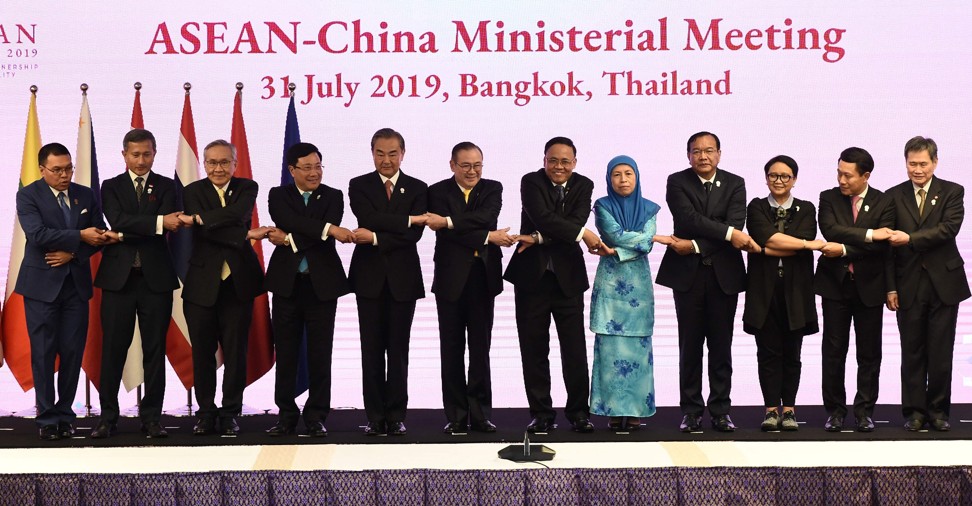
China's Foreign Minister Wang Yi (fifth left) poses with foreign ministers from the Association of Southeast Asian Nations (Asean) countries during the ASEAN-China Ministerial Meeting in Bangkok. Photo: AFP
China’s Foreign Minister Wang Yi (fifth left) poses with foreign ministers from the Association of Southeast Asian Nations (Asean) countries during the ASEAN-China Ministerial Meeting in Bangkok. Photo: AFP

China is keen to complete a deal which would offer it a buffer against the United States in Asia, and which would allow it to champion its free trade position, while the US pursues protectionist trade policy.

The RCEP talks took place as Chinese and American trade negotiators resumed face-to-face discussions in Shanghai, which also ended on Wednesday, although there was little sign of similar progress.

As the rivalry between Beijing and Washington has intensified and bilateral trade waned, the Association of Southeast Asian Nations (Asean) overtook the US to become China’s second-largest trading partner in the first half of 2019. From January to June, the trade volume between China and the 10-member bloc reached US$291.85 billion, up by 4.2 per cent from a year ago, according to government data.

The Asean bloc is made up of Indonesia, Thailand, Malaysia, Singapore, Philippines, Vietnam, Myanmar, Cambodia, Brunei and Laos.

China will work together with the RCEP countries to proactively push forward the negotiation, strive to resolve the remaining issues as soon as possible, and to end the negotiations as soon as possible. Li Chenggang

RCEP talks will now move to a higher level ministerial meeting in Beijing on Friday and Saturday, but trade experts have warned that if material progress is not made, it is likely that the RCEP talks will continue into 2020, prolonging a saga which has already dragged on longer than many expected. It is the first time China has hosted the ministerial level talks.
But complicating matters is the fact that India’s Commerce Minister, Piyush Goyal, will not attend the ministerial level talks, with an Indian government official saying that he has to participate in an extended parliamentary session.
India is widely viewed as the biggest roadblock to concluding RCEP, the first negotiations for which were held in May 2013 in Brunei. Delhi has allegedly opposed opening its domestic markets to tariff-free goods and services, particularly from China, and has also had issues with the rules of origin chapter of RCEP.
China is understood to be “egging on” other members to move forward without India, but this could be politically explosive, particularly for smaller Asean nations, a source familiar with talks said.
Deborah Elms, executive director of the Asian Trade Centre, a Singapore-based lobby group, said that after the last round of negotiations in Melbourne between June 22 to July 3 – which she attended – there was “frustration” at India’s reluctance to move forward.
She suggested that in India’s absence, ministers in China could decide to move forward through a “pathfinder” agreement, which would remove India, but also potentially Australia and New Zealand.
India’s Commerce Minister, Piyush Goyal, will not attend the ministerial level talks this week in Beijing. Photo: Bloomberg

This “Asean-plus three” deal would be designed to encourage India to come on board, Elms said, but would surely not go down well in Australia and New Zealand, which have been two of the agreement’s biggest supporters.

New Zealand has had objections to the investor protections sections of RCEP, and both countries have historically been pushing for a more comprehensive deal than many members are comfortable with, since both already have free trade agreements with many of the other member nations.

However, their exclusion would be due to “an unfortunate geographical problem, which is if you’re going to kick out India, there has always been an Asean-plus three concept to start with”. Therefore it is easier to exclude Australia and New Zealand, rather than India alone, which would politically difficult.

A source close to the negotiating teams described the prospect of being cut out of the deal at this late stage as a “frustrating rumour”, adding that “as far as I know [it] has no real basis other than a scare tactic against India”.

There was “never a chance of concluding [the deal during] this round, but good progress is being made is what I understand. The key issues remain India and China”, said the source, who wished to remain anonymous.

Replacing bilateral cooperation with regional collaborations is a means of resolving the disputesTong Jiadong

However, Tong Jiadong, a professor of international trade at the Nankai University of Tianjin, said Washington’s refusal to recognise India as a developing country at the World Trade Organisation could nudge the world’s second most populous nation closer to signing RCEP.

“That might push India to the RCEP, accelerating the pace of RCEP,” Tong said, adding that ongoing trade tensions between Japan and South Korea could also be soothed by RCEP’s passage.

“Replacing bilateral cooperation with regional collaborations is a means of resolving the disputes between the two countries,” Tong said.

Although the plan was first proposed by the Southeast Asian countries, China has been playing an increasingly active role, first as a response to the now defunct US-backed Trans-Pacific Partnership (TPP), and more recently as a means of containing the impact of the trade war.

China’s vice-commerce Minister, Wang Shouwen, told delegates last week that RCEP was “the most important free trade deal in East Asia”. He called on all participants to “take full advantage of the good momentum and accelerating progress at the moment” to conclude a deal by the end of the year.

Source: SCMP

30/07/2019

Special treatment for developing members in WTO should be safeguarded: Foreign Ministry

BEIJING, July 29 (Xinhua) — The principle of special and differential treatment for developing members in the World Trade Organization (WTO) should be safeguarded, a Foreign Ministry spokesperson said Monday.

The United States issued a memorandum on Friday that required the WTO to change how it designates developing countries, singling out China multiple times.

In response, spokesperson Hua Chunying said the WTO must respect the general will of all members, and the principle of special and differential treatment for developing members reflects the core value and basic principle of the WTO.

Most WTO members believe these core values and basic principles should be upheld regardless of how the WTO is reformed, Hua said, adding that the United States should realize its claims would not gain support from other WTO members.

No single country or a few countries can designate developing members in the WTO. It should be determined through consultations among WTO members, especially by respecting the opinions of developing countries.

The U.S. side exaggerates the development level of some developing countries, which has been repeatedly opposed by most developing members, Hua said, noting that a recent report by the United Nations Conference on Trade and Development said the current classification of developing countries was reasonable.

As the largest developing country in the world, China insists on its status of developing country not because it shrinks from due responsibilities, but because it advocates the basic rights of developing countries and safeguards global justice and fairness, Hua said.

China would contribute to help other developing members achieve common development, safeguard the multilateral trade system and promote the WTO reform in the right direction, she said.

She said the U.S. move on developing country status within the WTO further exposed its arrogance and selfishness, and was not in line with its status as the world’s largest country.

Source: Xinhua

22/07/2019

Why are more of China’s students returning from overseas big fans of the Chinese economic model?

  • Zhang Lin, a Beijing-based independent political economy commentator, questions why returnees are becoming ardent supporters of the government-directed model
  • China’s economic boom offers returnees far more advantages than Western societies could upon their graduation
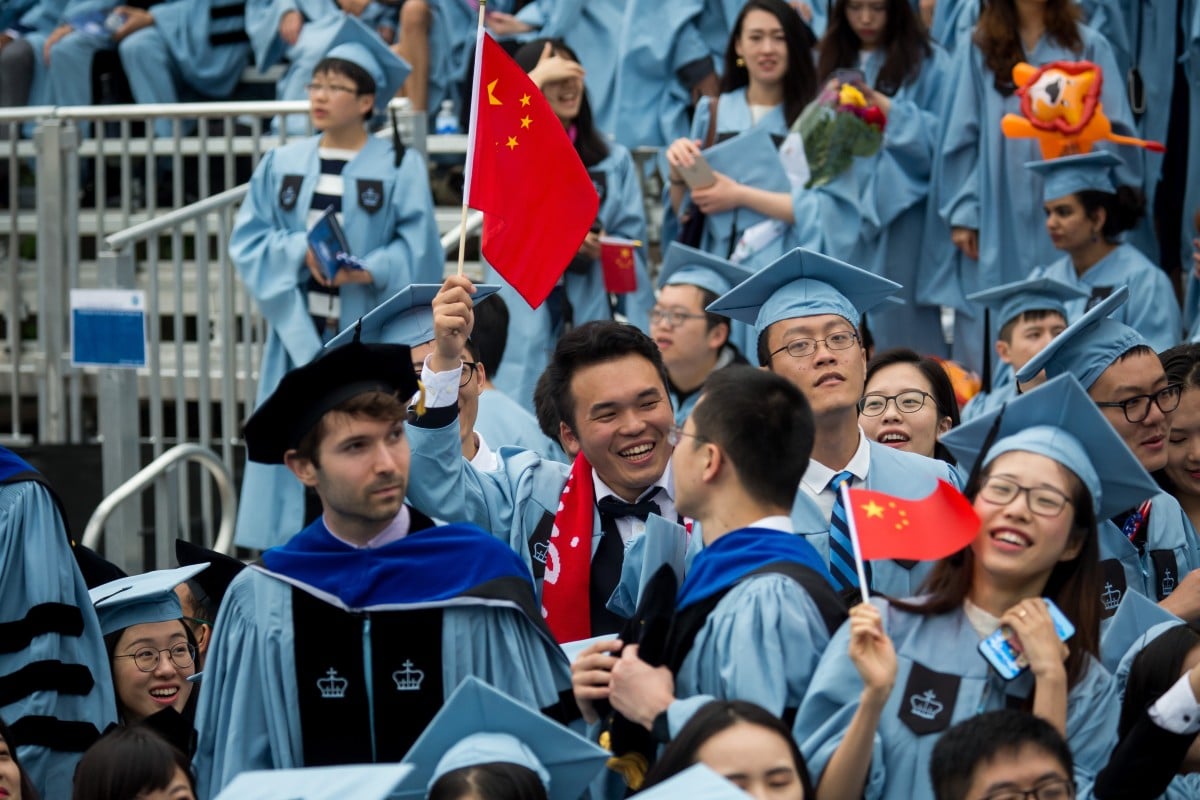
The number of Chinese students studying in the US and European schools soared, offering fresh hope that returnees with an overseas educational background would facilitate China’s transformation into a society that resembled the west. Photo: Xinhua
At the turn of the century, many people foresaw a “westernisation” process taking place in China – the development of a market economy and a freer society – especially after China joined the World Trade Organisation in 2001 with a clear commitment to reform its state-owned enterprises.
The number of Chinese students studying in the US and European schools soared, offering fresh hope that returnees with an overseas educational background would facilitate China’s transformation into a society that resembled the west.
But it has not turned out as expected, with more and more returnees who graduated from Western universities becoming ardent and vocal supporters of the Chinese government-directed model. It seems strange on the surface that young Chinese people, who have several years’ first-hand experience of Western democracy and freedom, would become big fans of an intrusive state.
One explanation is that the overseas students who worship the Western lifestyle never return to China.

In the 1980s and 1990s, Chinese students who studied abroad did not rely on wealth or family background, but excellent academic achievement, and most of the students who went abroad were funded by China’s Ministry of Education. After experiencing the huge gaps between China and the West at that time in terms of living standards and social development, many chose to stay after graduation.

China’s overseas study policy at that time dictated that these students needed to return back within five years, or else their families could have faced punishment. Despite this, according to statistics from 2002, 92 per cent of Chinese students who obtained doctorate degrees in the United States during the 1990s choose not to return to their homeland.

Things began to change in the late 1990s. China’s private businesses started to boom after Deng Xiaoping’s “southern tour” in 1992, with many government officials and local leaders quitting their public jobs to pursue private wealth, in a trend dubbed “smashing their   and jumping into the sea”. Blessed by their connections to the state apparatus, many of them became filthy rich in the process.

These Chinese nouveau riche could suddenly afford foreign university tuition fees and started sending their children to study abroad. The Chinese government also relaxed its policy on overseas education, and most overseas Chinese students became “second generation” rich and powerful.

At the same time, western universities particularly in the US and Britain opened their arms to the flow of Chinese students who were willing to pay hefty tuition fees and sometimes willing to make sizeable donations.

Most of these returnees, whose families have made significant gains from China’s state-led market economy, were beneficiaries of the Chinese model 
According to statistics from the “Report on the Survey of Overseas Students” covering the years 2000 to 2011, 1.9 million Chinese students studied abroad, with 91.3 per cent of them “self-funded”. By ​2014​, the proportion of overseas students who returned to China had risen to ​51.4 per cent, ​according to the “2015 China Returnees Development Report”.
This report also pointed out that 32 per cent of returnees were willing to work for the government.
Most of these returnees, whose families have made significant gains from China’s state-led market economy, were beneficiaries of the Chinese model. The experience of studying abroad, ironically, only enhanced their understanding of their advantages and privileges back home.
China’s economic boom offered far more chances for this well-educated, and well-connected, group than Western societies could, upon their graduation. If they chose to stay in the Western country where they studied, they were faced with the prospect of starting from scratch, but if they chose to go back China, they could get a better job, probably earn more money, inherit the wealth of the previous generation and live as a member of the elite.
That China’s overseas returnees are supporters of the Chinese model indicates that the Western concept of freedom is not always a powerful incentive. If competition between countries is competition between elite groups, conflicts between the Chinese model and the US model may last for several generations and spread to more countries.

Source: SCMP

20/05/2019

Xi Jinping visits rare earth minerals facility, amid talk of use as weapon in US-China trade war

  • China produces 90 per cent of the world’s rare earth minerals, used in hi-tech production such as electric vehicles
  • Rare earth minerals one of the few goods not hit by incoming US tariffs on US$300 billion of Chinese goods as trade war escalates
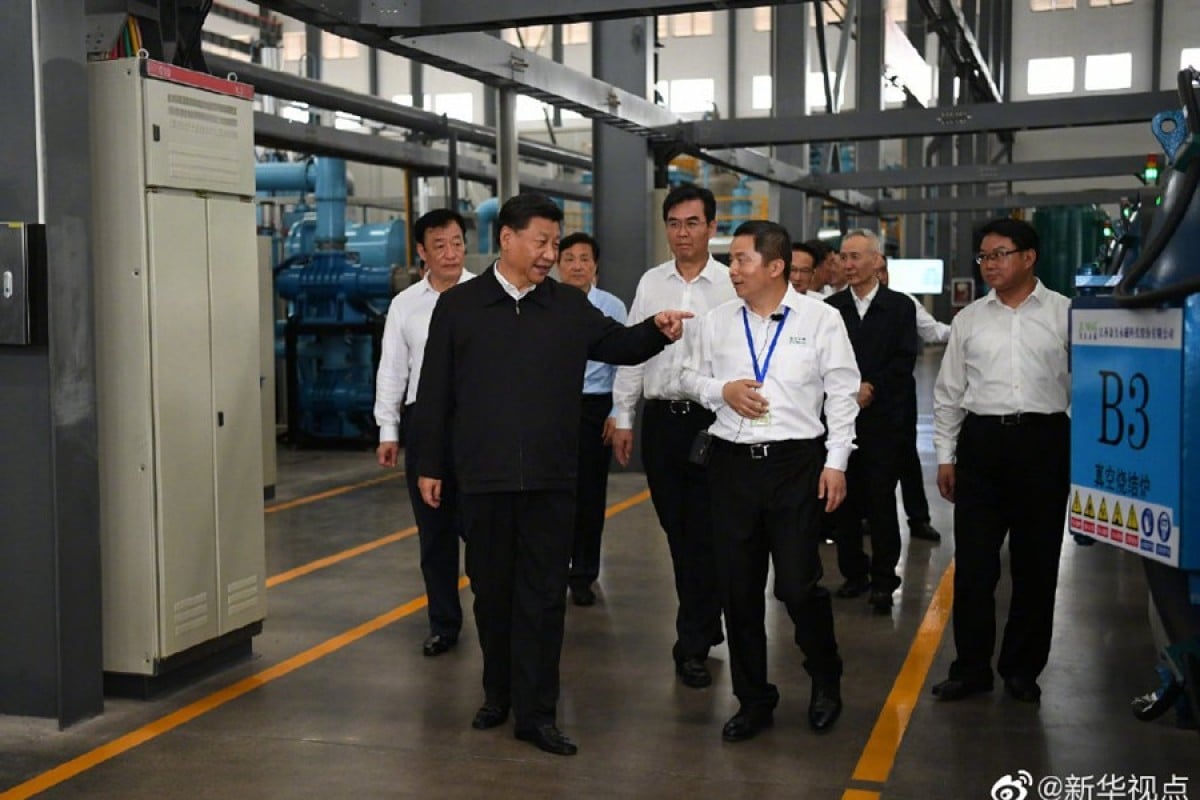
President Xi Jinping paid a visit to the country’s rare earth mining base in Jiangxi province on Monday, according to the official Xinhua news agency, in his first domestic tour after the trade talks between Beijing and Washington ended without a deal. Photo: Xinhua
Chinese President Xi Jinping visited one of the country’s major rare earth mining and processing facilities on Monday, in his first domestic tour since the 
recent escalation

of the US-China trade war.

Xi’s visit, reported by the official Xinhua news agency, comes amid growing discussion in China that Beijing could consider banning the export of such minerals as a weapon 
in the trade war

with the United States.

Rare earth minerals were among the few items excluded from the latest US government plans to implement tariffs on almost all of China’s remaining exports to the United States, highlighting their strategic importance. These tariffs, which are set to be levied on Chinese goods worth an estimated US$300 billion, 
could go into effect

as early as July, according to the Office of the US Trade Representative.

The state media report, which includes one sentence of text and two pictures, made no mention of the trade war, but speculation is mounting that rare earth minerals could form a key part of China’s retaliation.

China is the world’s largest producer and exporter of rare earth minerals, which contain at least one of the 17 rare earth elements, many of which are vital to a number of low-carbon technologies, such as high-performance magnets and electronics. Photo: Xinhua

China is the world’s largest producer and exporter of rare earth minerals, which contain at least one of the 17 rare earth elements, many of which are vital to a number of low-carbon technologies, such as high-performance magnets and electronics.

It accounts for 90 per cent of global production, however the government has been carefully managing mining levels and it was reported last year that amid production quotas, the country became a net importer of rare earth minerals last year.

Jin Canrong, a professor of international relations at Renmin University in Beijing, wrote an article last week suggesting that China could ban rare earth exports to the US as a way to punish the US for

imposing additional tariffs

. China does not import enough goods from the US to retaliate in pure tariff terms.

The Chinese government has weaponised the trade of rare earth exports before, slashing the export quota by 40 per cent in 2010. The US, Japan and the European Union filed a compliant against the Chinese quota at the World Trade Organisation in 2012, with the WTO ruling against China. Beijing dropped its export restrictions in 2015.

According to the report, Xi visited JL Mag Rare Earth Co, a major rare earth processing company based in Ganzhou, Jiangxi province and “studied” the local rare earth industry. Ganzhou is the heartland of China’s rare earth mining and processing industry.

Xi was accompanied by vice-premier Liu He, who has been China’s top trade negotiator in the long-running talks with the US and who is Xi’s most trusted economic adviser. Also on the trip was a delegation of company officials and local cadres.
JL Mag is a leading supplier of high-performance rare earth magnets, which are widely used in intelligent manufacturing operations, energy-saving applications, and in the production of robots and new energy vehicles, according to the company’s website.

Images of Xi’s trip show a sign saying that the company is trying to build up “a rare metal industry base of tungsten with strong international competitiveness”.

Banning rate earth exports to the US is one of several ideas percolating in Chinese public discussions of possible trade war 

retaliation measures.

Other analysts have suggested that China could sell its $3 trillion stockpile of US dollar-denominated securities, or allowing the yuan exchange rate to depreciate significantly, which would make Chinese exports cheaper for overseas buyers, helping to mitigate the effect of tariffs.

Source: SCMP
30/04/2019

Trade war: What you need to know about US-China talks

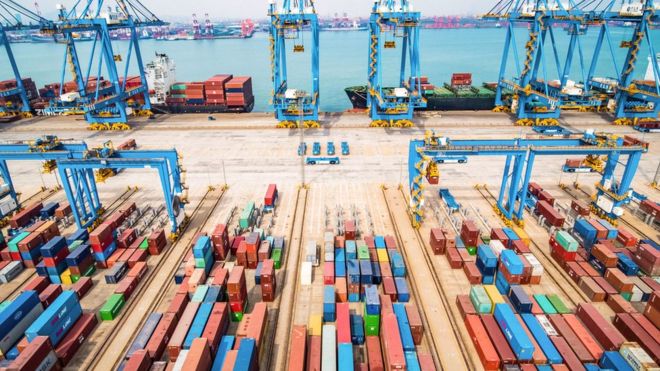
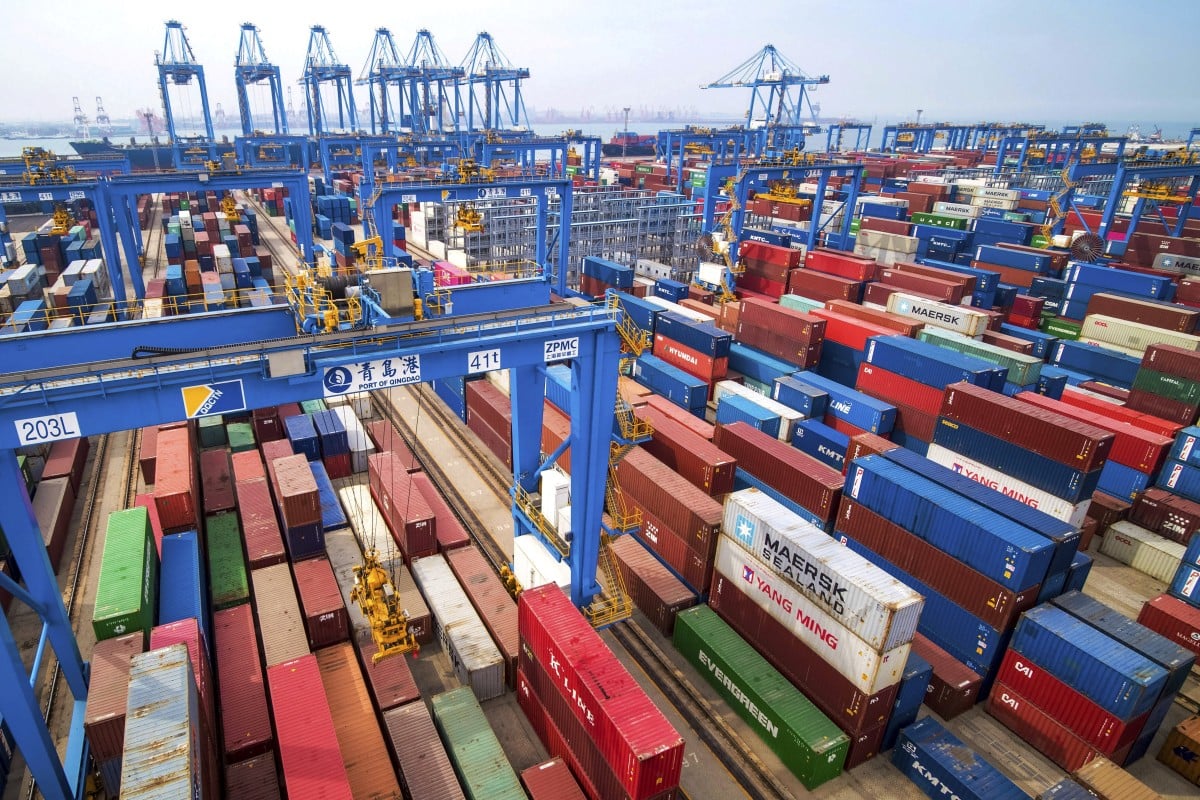
An aerial view of a port in Qingdao in China's eastern Shandong province on March 8, 2019.Image copyright GETTY IMAGES

The US and China are due to begin a fresh round of talks in Beijing on Tuesday as they edge closer to resolving their damaging trade dispute.

The discussions will be led by US Trade Representative Robert Lighthizer and Chinese Vice Premier Liu He.

Talks have dragged on for months, with both sides struggling to agree on key issues.

The trade war has hurt the economy and challenged the multilateral system that has governed world trade for decades.

There has been cautious optimism surrounding the talks in recent months but also a sense that both sides remain divided on some points.

How did we get here?

The US, which accuses China of unfair trading practices, imposed tariffs on $250bn (£193.2bn) worth of Chinese products last year.

Beijing has retaliated with duties on $110bn worth of American products.

Tariffs on $200bn worth of Chinese goods were due to more than double at the start of the year, rising from 10% to 25%.

But both countries agreed to suspend tit-for-tat tariffs after they struck a truce in December, and began negotiations to work towards a deal.

US President Donald Trump recently said the US and China had agreed on “a lot of the most difficult points” but that “we have some ways to go”.

What are the sticking points?

Sticking points in negotiations in recent months have included how a deal would be enforced, issues around intellectual property protection, and how fast to roll back tariffs.

Gary Hufbauer from the Peterson Institute for International Economics in Washington said enforcement was a crucial issue, but remained optimistic about the prospect of a deal.

“China will make lots of promises, the US remains sceptical on implementation,” he said.

Still, he expects a deal to be announced by mid-May. The latest round of talks are expected to be followed by further negotiations in Washington on 8 May.

The US accuses China of stealing intellectual property and wants Beijing to make changes to its economic policies, which it says unfairly favour domestic companies through subsidies. It also wants China to buy more US goods to rein in a lofty trade deficit.

Mr Xi addressed some of these concerns last week at the Belt and Road forum in Beijing ahead of the trade talks.

He said China would boost efforts to secure intellectual property protection, increase imports of goods and services and ensure a fair trading environment for firms.

But what makes trade negotiations particularly difficult to resolve is the fact they are part of a broader power struggle between the world’s two largest economies.

China’s growing influence has put many Western governments – and particularly the US on the defensive. Some in China see the trade war as part of US efforts to curb its rise.

Against this backdrop, there is a view that the trade deal will not put an end to a US-China rivalry, which is already playing out in the technology sector.

What’s at stake?

The trade war is already having an impact on the world economy.

International Monetary Fund chief economist Gita Gopinath said the escalation of US-China trade tensions was one factor that had contributed to a “significantly weakened global expansion, especially in the second half of 2018.” The IMF cut its growth forecast for this year by 0.2 percentage points to 3.3%.

The Organisation for Economic Cooperation and Development (OECD) also said tariffs imposed by the US and China last year had slowed economic growth in the world’s two largest economies.

Beyond the tangible economic fallout, some fear the trade war is challenging the multilateral system which has governed global trade for decades, including through the World Trade Organisation (WTO).

“The system is already fragile. An all out trade war, in which both sides break their WTO commitments, will be very damaging,” Mr Hufbauer said.

Source: The BBC

Law of Unintended Consequences

continuously updated blog about China & India

ChiaHou's Book Reviews

continuously updated blog about China & India

What's wrong with the world; and its economy

continuously updated blog about China & India