Chindia Alert: You’ll be Living in their World Very Soon
aims to alert you to the threats and opportunities that China and India present. China and India require serious attention; case of ‘hidden dragon and crouching tiger’.
Without this attention, governments, businesses and, indeed, individuals may find themselves at a great disadvantage sooner rather than later.
The POSTs (front webpages) are mainly 'cuttings' from reliable sources, updated continuously.
The PAGEs (see Tabs, above) attempt to make the information more meaningful by putting some structure to the information we have researched and assembled since 2006.
Media caption Americans are taken from the docked ship to Haneda airport in Tokyo
Two planes carrying hundreds of US citizens from a coronavirus-hit cruise ship have left Japan, officials say.
One plane has landed at a US Air Force air base in California, and its passengers will be isolated at military facilities for 14 days.
There were some 400 Americans on board the Diamond Princess. The ship with some 3,700 passengers and crew has been in quarantine since 3 February.
Meanwhile, China reported a total of 2,048 new cases on Monday.
Of those new cases, 1,933 were from Hubei province, the epicentre of the outbreak.
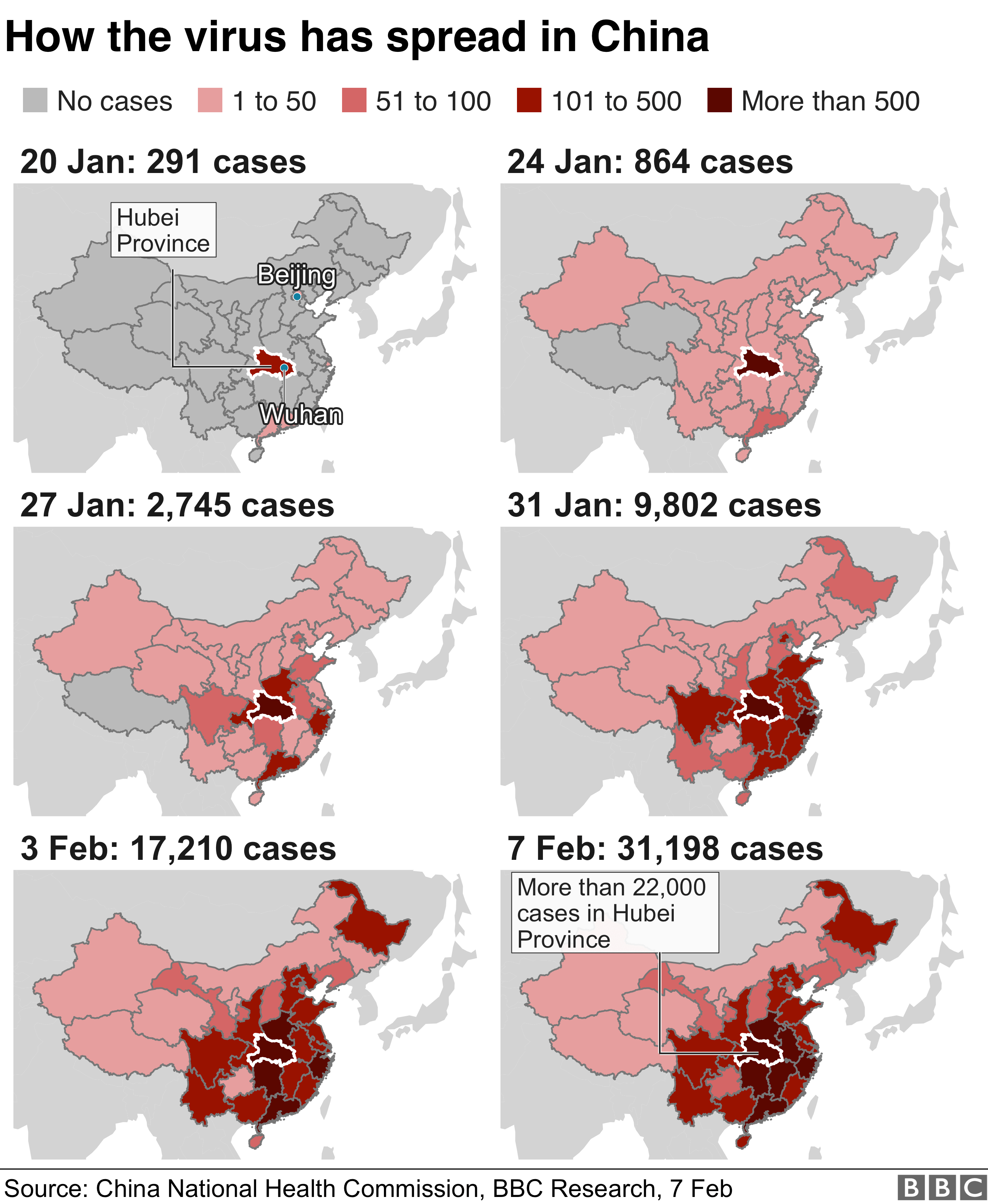
More than 70,500 people across China have been infected by the virus. In Hubei alone, the official number of cases stands at 58,182, with 1,692 deaths. Most new cases and deaths have been reported in Wuhan, Hubei’s largest city.
In other developments:
In Japan, a public gathering to celebrate the birthday of new Emperor Naruhito later this week has been cancelled, due to concerns over the spread of the virus while organisers of the Tokyo marathon due to take place on 1 March are considering whether to cancel the amateur part of the race, reports say
In China, the National People’s Congress standing committee said it would meet next week to discuss a delay of this year’s Congress – the Communist Party’s most important annual gathering – because of the outbreak
At the weekend, an American woman tested positive for the virus in Malaysia after leaving a cruise liner docked off the coast of Cambodia
A Russian court has ordered a woman who escaped from a quarantine facility to go back and stay there until she is confirmed to be disease-free, Fontanka news agency reports. Alla Ilyina has until Wednesday to return
What’s happening on the Diamond Princess?
The cruise ship was put in quarantine in Japan’s port of Yokohama after a man who disembarked in Hong Kong was found to have the virus.
On Monday, Japanese officials said there were 99 new cases of infections on board the ship, bringing the total to 454 confirmed cases. It is the largest cluster of cases outside China.
A Russian woman who was on board and tested positive is thought to be the first Russian national to contract the virus after the two previous cases found in Russia were Chinese nationals, Reuters news agency reports.
She will be taken to a hospital for treatment, the Russian embassy in Japan said.
At least 40 US citizens who were on board are infected and will be treated in Japan, Dr Anthony Fauci, Director of the National Institute of Allergy and Infectious Diseases told US broadcaster CBS.
Image copyright AFPImage caption Those bound for the US left from Tokyo’s Haneda Airport
The two aircraft chartered by the US government left Tokyo’s Haneda Airport in the early hours of Monday. The second flight was due to land at another base in Texas.
More than 300 passengers are being repatriated voluntarily, the US state department said. Fourteen of them were reported during transit to have tested positive for the virus and were being kept separate from the other passengers, it said.
we would like to just finish the quarantine on the ship as planned, decompress in a non-quarantine environment in Japan for a few days, then fly back to the U.S. pursuant to our own arrangements. What’s wrong with that?
The smartphones were distributed so people could use an app, created by Japan’s health ministry, which links users with doctors, pharmacists and mental health counsellors. Phones registered outside of Japan are unable to access the app.
Other evacuation flights have been arranged to repatriate residents of Israel, Hong Kong and Canada. On Monday, Australia announced that it would evacuate 200 of its citizens too.
What is happening in China?
According to official figures for 16 February, 100 people died from the virus in Hubei, down from 139 on Saturday.
The Chinese authorities are tightening curbs on movement to combat the outbreak. People in Hubei province, which has 60 million people, have been ordered to stay at home, though they will be allowed to leave in an emergency.
In addition, a single person from each household will be allowed to leave the building or compound they live in every three days to buy food and essential items.
On housing estates, one entrance will be kept open. It will be guarded to ensure that only residents can enter or leave.
All businesses will stay closed, except chemists, hotels, food shops and medical services.
“The effects of epidemic prevention and control in various parts of the country can already be seen.”
The proportion of infected patients considered to be in a “serious condition” has dropped nationwide from more than 15% to just over 7%, according to China’s State Council.
Taiwan has reported a death from the illness – a taxi driver, 61, who had not travelled abroad recently but had diabetes and hepatitis B, Health Minister Chen Shih-chung said.
The minister said many of his passengers had come from China.
Outside China, there have been more than 500 cases in nearly 30 countries. Four others have died outside mainland China – in France, Hong Kong, the Philippines and Japan.
Meanwhile, a plane carrying 175 evacuated Nepalis, mostly students, has arrived in Kathmandu from Wuhan.
The measures China has taken to stop the spread of the coronavirus are starting to have an impact, Mi Feng, a spokesman at the National Health Commission, said on Sunday.
In other developments:
The number of people who have tested positive on the Diamond Princess cruise ship, which is being held in quarantine in Japan, has risen to 355. The US and Canada are sending planes to evacuate their citizens
A Chinese tourist has died in France – the first fatality outside Asia
An 83-year-old American woman has tested positive after disembarking another cruise ship that was turned away by a number of countries before being allowed to dock in Cambodia
In the UK, all but one of nine people being treated have been discharged from hospital
On Saturday, World Health Organization (WHO) head Tedros Adhanom Ghebreyesus praised Beijing’s response to the outbreak.
“China has bought the world time. We don’t know how much time,” he said. “We’re encouraged that outside China, we have not yet seen widespread community transmission.”
How is China coping?
Tens of millions of Chinese still face heavy restrictions on their day-to-day life as part of the government’s efforts to halt the spread of the disease, which causes a disease named Covid-19.
Much of the response has focused on the hard-hit province of Hubei and its capital Wuhan, where the outbreak began. The city is all but sealed off from the rest of the country.
Foreign Minister Wang Yi said that along with a drop in infections within Hubei there had also been a rapid increase in the number of people who had recovered.
China’s central bank will also disinfect and store used banknotes before recirculating them in a bid to stop the virus spreading.
Media caption Medics in Wuhan resort to shaving their heads in a bid to prevent cross-infection of the coronavirus
In another development Chinese state media published a speech from earlier this month in which Chinese President Xi Jinping said he said he had given instructions on 7 January on containing the outbreak.
At the time, local officials in the city of Wuhan were downplaying the severity of the epidemic.
This would suggest senior leaders were aware of the potential dangers of the virus before the information was made public.
With the government facing criticism for its handling of the outbreak, analysts suggest the disclosure is an attempt to show the party leadership acted decisively from the start.
More than 1,300 people are now known to have died from the virus.
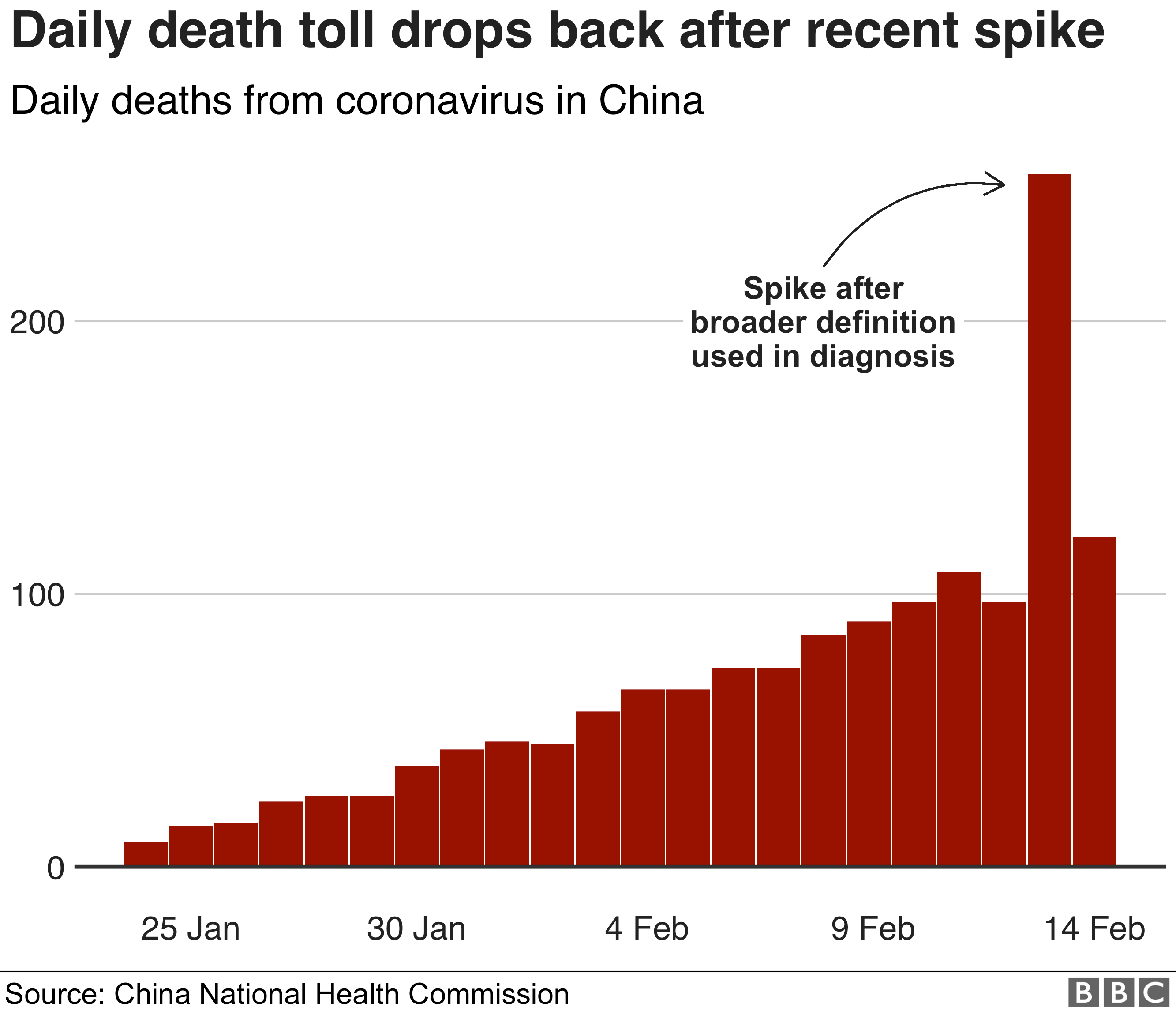
The latest figures show 122 new deaths in China, bringing the toll to 1,381.
The total number of infections has jumped to 63,922 cases, according to the National Health Commission.
The World Health Organization said there was no major shift in the virus’s pattern of mortality or severity, despite a spike in cases in Hubei, the epicentre of the disease, on Tuesday.
Most of this was down to Hubei using a broader definition to diagnose people, said Mike Ryan, head of WHO’s health emergencies programme.
There was also no significant rise in cases outside China, the WHO said.
However, a cruise ship docked in Japan, the Diamond Princess, saw 44 new cases, bringing the total there to 218.
What is the situation with medical workers?
Zeng Yixin, vice minister of China’s National Health Commission, said 1,102 medical workers had been infected in Wuhan, where the outbreak began, and another 400 in other parts of Hubei province.
He said the number of infections among staff was increasing.
Media caption Medics in Wuhan resort to shaving their heads in a bid to prevent cross-infection of the coronavirus
“The duties of medical workers at the front are indeed extremely heavy; their working and resting circumstances are limited, the psychological pressures are great, and the risk of infection is high,” Mr Zeng said, quoted by Reuters.
Local authorities have struggled to provide protective equipment such as respiratory masks, goggles and protective suits in hospitals in the area.
One doctor told AFP news agency that he and 16 colleagues were showing possible symptoms of the virus.
On 7 February the plight of medical workers was highlighted by the death of Li Wenliang, a doctor at Wuhan Central Hospital who had tried to issue the first warning about the virus on 30 December.
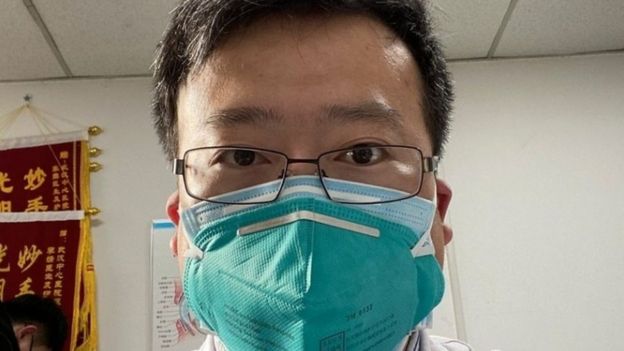
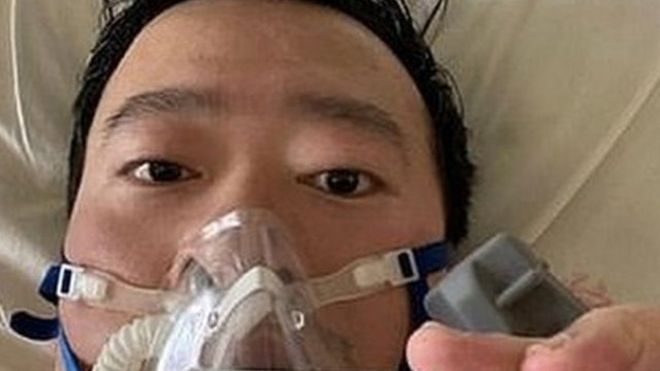
Image copyright LI WENLIANGImage caption Li Wenliang contracted the virus while working at Wuhan Central Hospital
He had sent out a warning to fellow medics but police told him to stop “making false comments”.
A wave of anger and grief flooded Chinese social media site Weibo when news of Dr Li’s death broke.
Image copyright AFPImage caption Asian airlines have been hard hit by the virus outbreak
Economic impacts of the virus
Global airline revenue expected to fall by $4bn (£3.1bn) to $5bn this year
China’s car sales likely to fall more than 10% in first half of year, the China Association of Automobile Manufacturers tells Reuters
Singapore’s economy could fall into recession as a result of the outbreak, Prime Minister Lee Hsien Loong says
Malaysian finance minister says a stimulus package will be announced for aviation, retail and tourism industries
What is happening on the Diamond Princess?
The vessel is in quarantine in Yokohama, in southern Japan. Not all the 3,700 people on board have been tested yet.
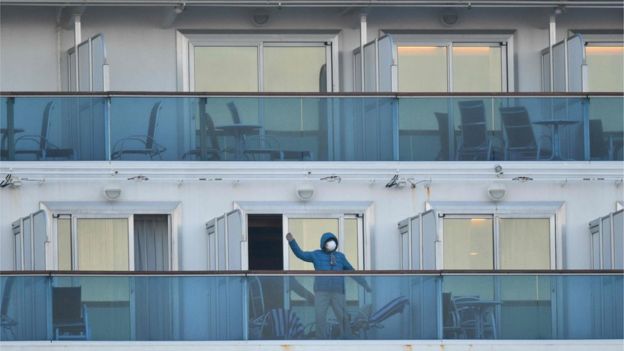
People with the virus are taken to hospitals on land to be treated, while those on board are largely confined to their cabins.
Image copyright AFPImage caption The Diamond Princess has 3,700 people on board – not all of whom have been tested
However on Thursday Japan said it would allow those aged 80 or over who have tested negative for the coronavirus to disembark.
Health Minister Katsunobu Kato said they could be allowed off the ship as early as Friday but would have to stay in accommodation provided by the government, the Japan Times reported.
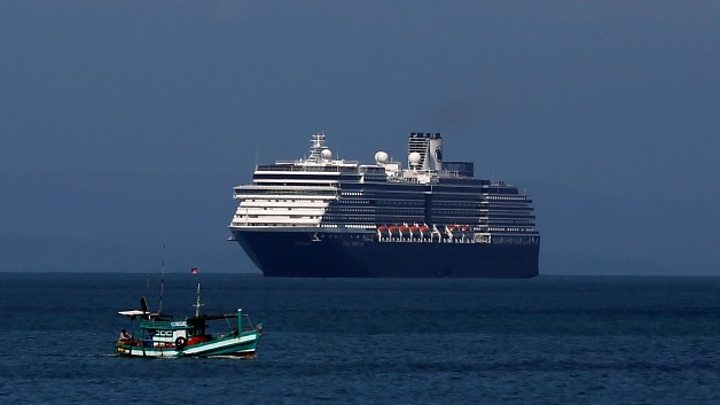
Meanwhile another cruise ship – the MS Westerdam, carrying more than 2,000 people – docked in Cambodia after being turned away by ports in Japan, Taiwan, Guam, the Philippines and Thailand despite having no sick patients on board.
Media caption The Westerdam was finally able to dock in Sihanoukville, Cambodia
In other developments:
Outside China there have now been two deaths and 456 cases in 24 countries
Singapore health ministry reports nine new cases, bringing the total number there to 67
Australia has extended its ban on people coming from mainland China for another week, to 22 February
China said it would stagger the return of children to school – several provinces have closed schools until the end of February
In Vietnam, which borders China, thousands of people in villages near the capital, Hanoi, have been put under quarantine after several cases were discovered. Vietnam has now confirmed at least 16 cases
The Red Cross has called for sanctions relief for North Korea, which would allow the aid agency to transfer funds to buy equipment. Testing kits and protective clothing are urgently needed to prepare for a possible outbreak, it says
A Russian woman – who was put into a coronavirus quarantine but escaped – is resisting attempts by officials to bring her back to hospital by force. Alla Ilyina, 32, has been refusing to open the door of her St Petersburg apartment to police
Military medics arrive at Tianhe International Airport in Wuhan, central China’s Hubei Province, Feb. 13, 2020. Ordered by the Central Military Commission, 11 transport aircraft of the People’s Liberation Army Air Force Thursday sent medics and supplies provided by the armed forces to virus-hit Wuhan, capital of Hubei Province. This was the first time for China’s domestically developed large transport aircraft Y-20 to take part in non-military action. It was also the first time for the Air Force to send large and medium transport aircraft on active service to carry out urgent air transport tasks on a large scale. (Xinhua/Li Yun)
WUHAN, Feb. 13 (Xinhua) — Ordered by the Central Military Commission, 11 transport aircraft of the People’s Liberation Army Air Force Thursday sent medics and supplies provided by the armed forces to virus-hit Wuhan, capital of Hubei Province.
This was the first time for China’s domestically developed large transport aircraft Y-20 to take part in non-military action. It was also the first time for the Air Force to send large and medium transport aircraft on active service to carry out urgent air transport tasks on a large scale.
The participation of the Y-20 in this task is an actual test to the strategic delivery capabilities of the Air Force, said Du Baolin, commander of a division in the Air Force that was equipped with the Y-20.
The Y-20 can carry out long-distance air transport tasks under complex meteorological conditions.
Since the outbreak of the COVID-19, the Air Force has sent several batches of medics and supplies to virus-hit areas. Its troops stationed in Hubei, the epicenter of the outbreak, have also taken part in transporting medical equipment and daily necessities.
WHO scientists co-write letter saying December 26 data indicating Sars-like coronavirus was not passed to global health community for 17 days
Hundreds of Chinese sign petition asking legislature to protect freedom of speech, amid discontent over outbreak’s handling and anger over Dr Li Wenliang’ death
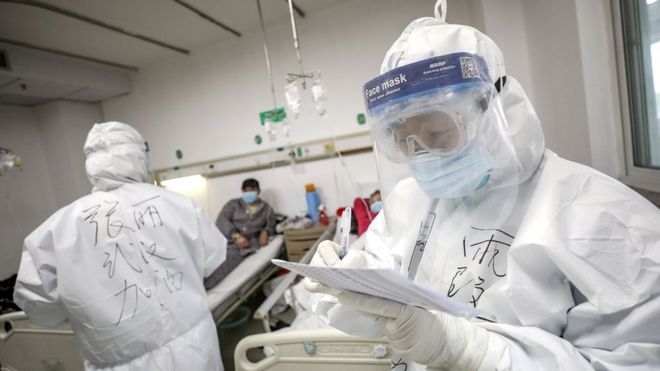
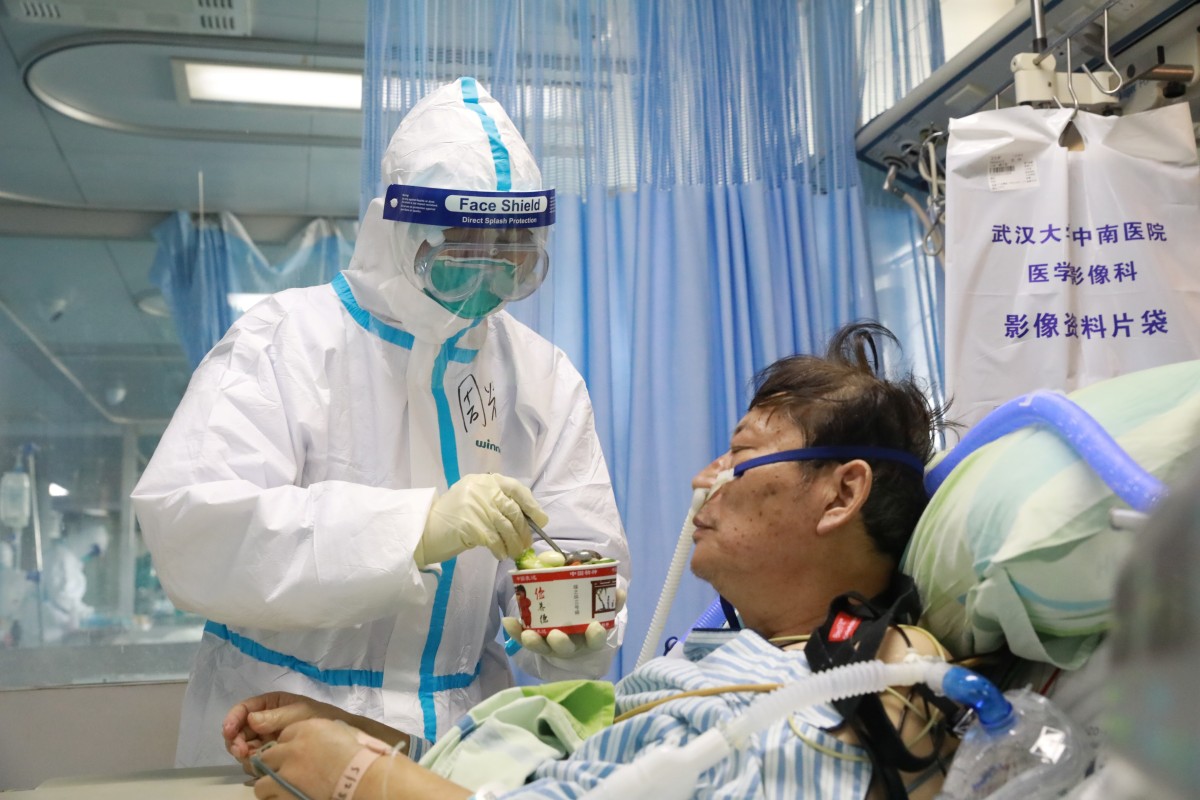
A nurse in a protective suit feeds a coronavirus patient in an isolated ward in Wuhan. Photo: Reuters
China’s health authority reported 97 new deaths caused by the coronavirus and 2,015 newly confirmed cases of infection, taking its totals to 1,113 and 44,653 respectively.
As of Tuesday, 744 recovered patients had been discharged and the total number of recovery cases stood at 4,740.
Outside Hubei province, the epicentre of the coronavirus, the rise in new infections reported by China slowed for an eighth consecutive day.
Apology for slow treatment
A district leader in Hubei’s capital of Wuhan apologised on Tuesday to critically ill patients who had not been treated in a timely manner, state media reported.
Staff in the Wuchang district who were in charge of a chaotic bus transfer of people to hospital on Sunday were ordered to apologise to patients and their families one by one by telephone.
Wuchang officials told state media that mistakes had been made and the district’s most urgent priority was to admit all patients to hospitals or other medical facilities as soon as possible.
As coronavirus cases get priority in Wuhan, other patients are losing hope
13 Feb 2020
The district leader, who visited hospitals to apologise in person, was mocked online for wasting protective suits when the city faces a shortage of medical supplies.
“Health care workers don’t have enough protective gear, why are you wearing it to apologise?” one person wrote on China’s Twitter-like Weibo. “These people are suspected cases, not confirmed ones. It’s a pity to waste the protective gear – it protects the lives of health care workers!”
“I really don’t think it’s necessary to apologise one by one, just apologise in the newspaper! Don’t waste time and protective clothing on formalities,” another person wrote.
Reporting system ‘needs update’
A group of scientists have called for changes in the way new viruses are reported, after a delay of more than two weeks between the first indication of a coronavirus strain in Hubei and the release of critical information to the global health community.
The group said in a letter to The Lancet that data indicating a Sars-related coronavirus was obtained by researchers on December 26.
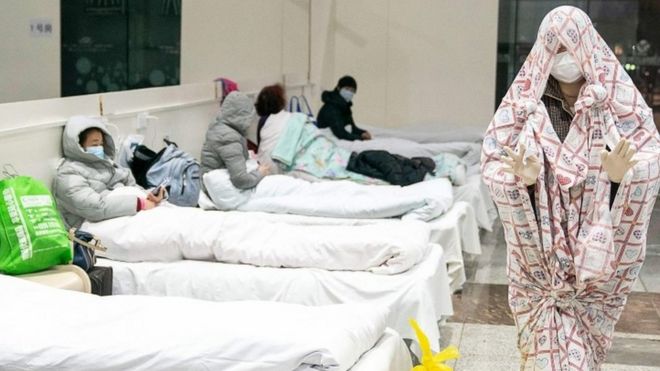
Life inside China’s rapidly built hospitals in Wuhan, the epicentre of the coronavirus outbreak
“The Chinese authorities ruled out Sars and Mers, as well as a few other non-coronaviruses, on January 5, and confirmed a novel coronavirus as a potential cause on January 9. However, the genome sequence – crucial for rapid development of diagnostics needed in an outbreak response – was not released until January 12, 17 days after the preliminary sequence data were obtained,” they wrote.
The letter mentioned the “crucial role” of doctors in detecting the outbreak in China, including “eight doctors who were wrongly accused of spreading ‘fake news’” – a reference to a group that included Li Wenliang, the doctor hailed as a whistle-blower who later succumbed to the disease.
WHO head warns ‘time is of the essence’ in limiting coronavirus spread
13 Feb 2020
“There are lessons the global health community can and should learn and act on so that we can better respond to the next EZV (emerging zoonotic virus) event, which is almost certain to happen again. These lessons are definitely not unique to China,” they wrote.
Two of the letter’s authors sit on the committee that provides the World Health Organisation (WHO) advice about when to declare a public health emergency of international concern – a status given to the coronavirus on January 30.
Hubei reports 94 new deaths
Health authorities in Hubei reported 94 new deaths attributable to the contagion on Tuesday and 1,638 newly confirmed cases, taking the province’s totals to 1,068 and 33,366 respectively. They had reported 103 fatalities and 2,097 newly confirmed cases a day earlier.
Coronavirus illness is named Covid-19 as hopes rise that cases may peak soon
13 Feb 2020
Some 1,104 of the new cases announced were confirmed in Wuhan, where the virus is believed to have originated at a seafood and meat market.
The figures from Hubei on Tuesday showed the province’s lowest number of new cases in a day since the beginning of February, and the first time it had reported fewer than 2,000 new cases in a day since February 2.
China disinfects entire cities to fight coronavirus outbreak, some twice a day
Disease can spread faster than Sars: WHO
Michael Ryan, the WHO’s head of emergency programmes, said on Tuesday in Geneva that the disease caused by the coronavirus – now officially named Covid-19 by the WHO – had the potential to spread faster than either the Ebola or Sars viruses. Earlier this week, Covid-19 exceeded the Sars outbreak of 2002-03 in terms of deaths attributed to it.
Transmission methods have been shown to include human-to-human contact, and the incubation period is believed to be up to 14 days.
In recent days, epidemiologists have said that the contagion may also spread through “aerosol transmission” – when tiny particles or droplets of the virus suspended in the air are inhaled.
At least 500 Wuhan medical staff infected with coronavirus
13 Feb 2020
Others indicated that transmissions were possible from patients who showed mild or no symptoms.
WHO officials said on Tuesday that the agency had also activated a UN crisis management team to better assess and mitigate the outbreak’s economic implications.
Petition calls for freedom of speech
Hundreds of Chinese, led by academics, have signed an online petition calling on the national legislature to protect citizens’ right to freedom of speech, amid growing public discontent over the handling of the coronavirus outbreak.
It also follows a massive outpouring of grief and anger over the death of Wuhan-based Dr Li Wenliang.
Coronavirus: hundreds in China sign petition calling for free speech
13 Feb 2020
The petition is gaining momentum online, but some of the signatories and other rights activists have already come under pressure. Addressed to the National People’s Congress (NPC), it lists five demands for Beijing.
The demands are: to protect people’s right to freedom of expression; to discuss the issue at NPC meetings; to make February 6, the day Li died, a national day for free speech; to ensure no one is punished, threatened, interrogated, censored or locked up for their speech, civil assembly, letters or communication; and to give equitable treatment, such as medical care, to people from Wuhan and Hubei province. Many have reported experiencing discrimination elsewhere in the country.
“I am so proud of him,” China’s top medical expert Zhong Nanshan mourns whistle-blower doctor’s dea
US repeats concern over China’s purchases
The outbreak could have an impact on China’s commitment to buy more US agricultural products this year under the US-China phase one trade deal, White House national security adviser Robert O’Brien said on Tuesday.
“We expect the phase one deal will allow China to import more food and open those markets to American farmers, but certainly, as we watch this coronavirus outbreak unfold in China, it could have an impact on how big – at least in this current year – the purchases are,” O’Brien told an event at the Atlantic Council, a Washington think tank.
‘No US doctors in China’
O’Brien said there were no American doctors on the ground in China so far, despite US offers to help fight the outbreak.
“We’ve offered the Chinese the opportunity to have American doctors … and other experts come to China to help them. That offer has not been accepted at this point but that is an outstanding offer,” he said.
Coronavirus outbreak exposes fallacy of the phase-one trade deal
11 Feb 2020
But US officials said on Monday that China had agreed to allow American health experts into the country.
“China has accepted the United States’ offer to incorporate a group of experts into a WHO mission to China to learn more about and combat the virus,” White House spokesman Judd Deere said.
In a tweet on Monday, WHO director general Tedros Adhanom Ghebreyesus said an advance team of WHO experts had arrived in China to “lay the groundwork for the larger international team”.
Tibet’s only patient cured
The only Covid-19 patient in Tibet was cured and discharged from hospital on Wednesday afternoon, People’s Daily reported, citing the patient’s doctor at the Third People’s Hospital of Tibet.
The patient, a 34-year-old man from Suizhou, Hubei province, spent three days on a train before reaching Lhasa on January 24. He sought medical treatment a day later and was isolated for treatment, before being confirmed as being infected on January 29.
US to test antiviral drugs in hopes of combating coronavirus
13 Feb 2020
The man tested negative for the virus on Sunday and Tuesday, and CAT scans and clinical symptoms showed he had been cured. He left Tibet by train on Wednesday afternoon, according to thePeople’s Daily report.
Iran denies report of Covid-19 death
Iran’s health ministry has denied a report that an Iranian woman has died of a suspected coronavirus infection.
The state daily newspaper Iran reported on Wednesday that a 63-year-old woman had died in a Tehran hospital on Monday and that an investigation had been ordered into the cause of her death. No sources were cited in the report.
A spokesman for Iran’s health ministry denied the report. “There have been no cases of coronavirus in Iran,” he said.
Iranian health authorities have repeatedly said there were no confirmed cases of coronavirus in the country.
Exams under threat
Chinese authorities are considering whether to postpone the country’s college entrance exams, due to take place in June.
“Those responsible for arranging college entrance exams need to put the lives and health of candidates and testing staff first,” Wang Hui, a Ministry of Education official, said at a press briefing on Wednesday. “We will closely monitor the development of the outbreak, evaluate the possible impact on the exams and carefully formulate a plan.”
The Eyes of Darkness features a Chinese military lab in Wuhan that creates a virus as a bioweapon; civilians soon become sick after accidentally contracting it
In fact, the one lab in China able to handle the deadliest viruses is in Wuhan and helped sequence the novel coronavirus the world is currently battling
The Eyes of Darkness, a 1981 thriller by bestselling suspense author Dean Koontz, tells of a Chinese military lab that creates a virus as part of its biological weapons programme. The lab is located in Wuhan, which lends the virus its name, Wuhan-400. A chilling literary coincidence or a case of writer as unwitting prophet?
In The Eyes of Darkness, a grieving mother, Christina Evans, sets out to discover whether her son Danny died on a camping trip or if – as suspicious messages suggest – he is still alive. She eventually tracks him down to a military facility where he is being held after being accidentally contaminated with man-made microorganisms created at the research centre in Wuhan.
If that made the hair on the back of your neck stand up, read this passage from the book: “It was around that time that a Chinese scientist named Li Chen moved to the United States while carrying a floppy disk of data from China’s most important and dangerous new biological weapon of the past decade. They call it Wuhan-400 because it was developed in their RDNA laboratory just outside the city of Wuhan.”
In another strange coincidence, the Wuhan Institute of Virology, which houses China’s only level four biosafety laboratory, the highest-level classification of labs that study the deadliest viruses, is just 32km from the epicentre of the current coronavirus outbreak.
The opening of the maximum-security lab was covered in a 2017 story in the journal Nature, which warned of safety risks in a culture where hierarchy trumps an open culture.
Koontz has written more than 80 novels and 74 works of short fiction. Photo: Douglas Sonders
Fringe conspiracy theories that the coronavirus involved in the current outbreak appears to be man-made and likely escaped from the Wuhan virology lab have been circulated, but have been widely debunked. In fact the lab was one of the first to sequence the coronavirus.
In Koontz’s thriller, the virus is considered the “perfect weapon” because it only affects humans and, since it cannot survive outside the human body for longer than a minute, it does not demand expensive decontamination once a population is wiped out, allowing the victors to roll in and claim a conquered territory.
It’s no exaggeration to call Koontz a prolific writer. His first book, Star Quest, was published in 1968 and he has been churning out suspense fiction at a phenomenal rate since with more than 80 novels and 74 works of short fiction under his belt. The 74-year-old, a devout Catholic, lives in California with his wife. But what are the odds of him so closely predicting the future?
Albert Wan, who runs the Bleak House Books store in San Po Kong, says Wuhan has historically been the site of numerous scientific research facilities, including ones dealing with microbiology and virology. “Smart, savvy writers like Koontz would have known all this and used this bit of factual information to craft a story that is both convincing and unsettling. Hence the Wuhan-400,” says Wan.
British writer Paul French, who specialises in books about China, says many of the elements around viruses in China relate back to the second world war, which may have been a factor in Koontz’s thinking.
The Eyes of Darkness, by Koontz.
“The Japanese definitely did do chemical weapons research in China, which we mostly associate with Unit 731 in Harbin and northern China. But they also stored chemical weapons in Wuhan – which Japan admitted,” says French.
Publisher Pete Spurrier, who runs Hong Kong publishing house Blacksmith Books, muses that for a fiction writer mapping out a thriller about a virus outbreak set in China, Wuhan is a good choice.
“It’s on the Yangtze River that goes east-west; it’s on the high-speed rail [line] that goes north-south; it’s right at the crossroads of transport networks in the centre of the country. Where better to start a fictional epidemic, or indeed a real one?” says Spurrier. (Spurrier works part-time as a subeditor for the Post.)
Albert Wan runs the Bleak House Books store in San Po Kong, Hong Kong.
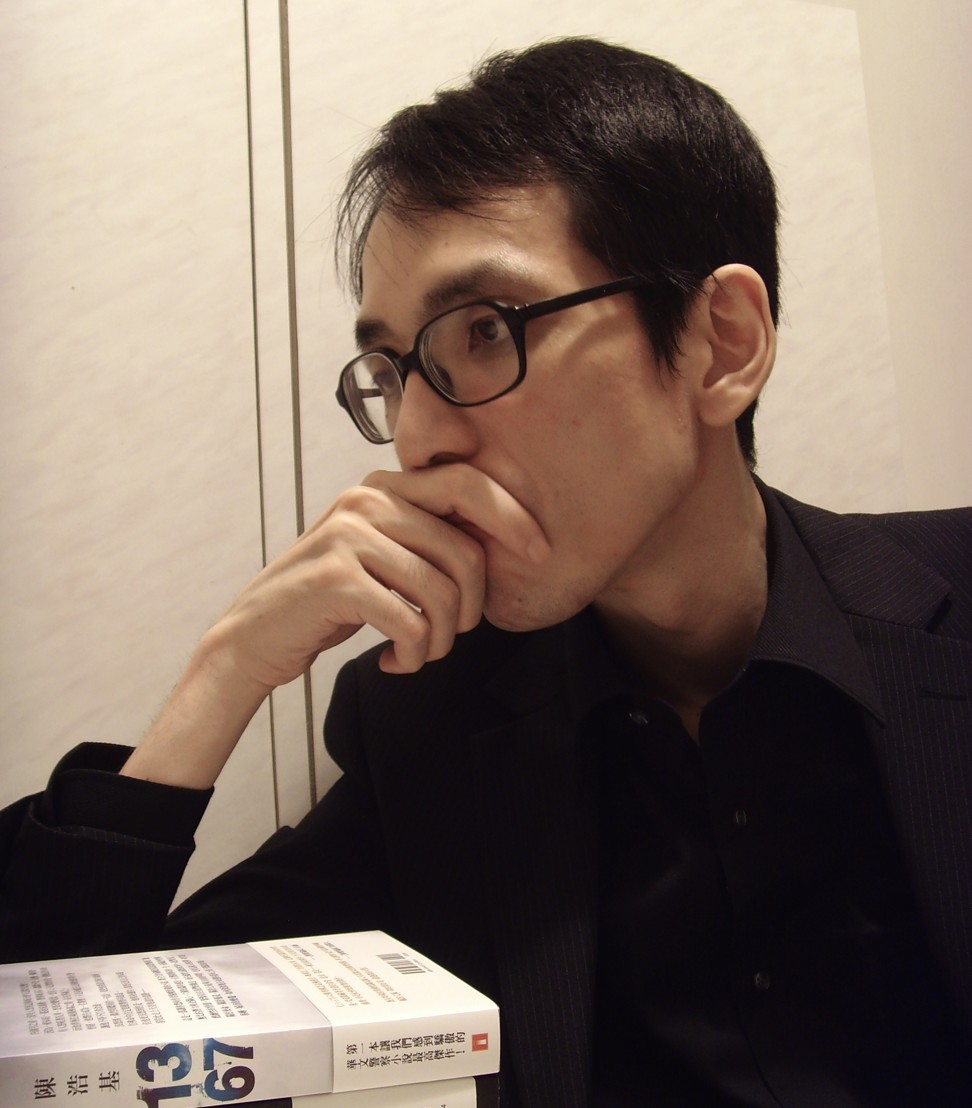
Hong Kong crime author Chan Ho-kei believes that this kind of “fiction-prophecy” is not uncommon.
“If you look really hard, I bet you can spot prophecies for almost all events. It makes me think about the ‘infinite monkey’ theorem,” he says, referring to the theory that a monkey hitting keys at random on a typewriter keyboard for an infinite amount of time will almost surely type any given text.
“The probability is low, but not impossible.”
British writer Paul French.
Chan points to the 1898 novella Futility, which told the story of a huge ocean liner that sank in the North Atlantic after striking an iceberg. Many uncanny similarities were noted between the fictional ship – called Titan – and the real-life passenger ship RMS Titanic, which sank 14 years later. Following the sinking of the Titanic, the book was reissued with some changes, particularly in the ship’s gross tonnage.
“Fiction writers always try to imagine what the reality would be, so it’s very likely to write something like a prediction. Of course, it’s bizarre when the details collide, but I think it’s just a matter of mathematics,” says Chan.
Many of Koontz’s books have been adapted for television or the big screen, but The Eyes of Darkness never achieved such glory. This bizarre coincidence will thrust it into the spotlight and may see sales of this otherwise forgotten thriller jump.
Hong Kong crime author Chan Ho-kei.
Amazon is currently offering it on Kindle for just US$1. Perhaps, like Futility, it will also be reissued with some updates to make it really echo the current outbreak.
Elderly resident says he can’t recall this happening in his city before, not even during the Cultural Revolution
Outbreak is expected to deal a heavy blow to businesses, especially smaller eateries, with some already forced to close
Like many elderly Chinese in Guangzhou, He Zhijian was shocked when he heard there was a ban on eating in restaurants, as authorities try to curb the spread of the coronavirus.
The 73-year-old has spent his entire life in the southern city, where gathering for dim sum is an important weekly family ritual.
“My wife and I … are used to having dim sum, tea and Cantonese dishes at the local restaurants every week. From memory, this [type of ban] has never happened in Guangzhou before – not even during the Cultural Revolution,” He said, referring to the decade of social and political upheaval from 1966, when food was in short supply.
The ban took effect at 9pm on Wednesday and is part of measures to contain the outbreak of the virus, which causes a disease officially known as Covid-19, and is believed to have started in Wuhan in December. The pneumonia-like illness has so far
Residents can still get takeaway meals in Guangzhou, but they have been encouraged to order online and have them delivered. Photo: He Huifeng
Guangzhou is home to more than 15 million people and a busy trading port, and has been known as China’s most open city since the 1600s. For locals, going to restaurants for yum cha, or “drinking tea”, and dining on dim sum is an important part of the city’s history and culture – a tradition that has been carried through many generations.
“Even in the ‘three years of natural disasters’ [from 1959 to 1961, when China was in the grip of a famine] I remember there were still restaurants open,” He said. “I was really shocked [by the ban]. I guess the epidemic situation must be severe, otherwise Guangzhou definitely wouldn’t introduce this measure.”
China’s Hubei province reports huge spike in coronavirus cases, rising 10-fold from previous day
Many people in Guangzhou and across the country went back to work on Monday after an extended Lunar New Year break – another measure to try to stop the virus from spreading – with the government keen for businesses to return to normal operations.
The ban on dining in applies to restaurants, but employees can continue to have meals at their company canteens. And while residents can still get takeaways from restaurants, they have been encouraged to do this online, and have their meals delivered, rather than collecting their orders.
Group gatherings have also been banned in the city, and according to Nanfang Daily, some 126 banquets that would have involved more than 90,000 people have been cancelled by authorities already. The authorities did not say how long the measures would be in place.
Guangzhou is not the only city in Guangdong province to bring in a ban on dining in restaurants – Futian district in Shenzhen, Xiangzhou in Zhuhai, Foshan and Zhongshan have all taken the same step.
Beijingers gradually return to work as China’s fight against deadly coronavirus continues
In Guangzhou, while residents try to adapt, businesses are expecting to take a hit. One of the city’s top hotels said the virus outbreak could have a severe impact on the industry.
“Now we will focus on promoting takeaways for local customers. They can order our meals through apps providing online takeaway ordering services,” said Fion Liang, director of sales and marketing at The Garden Hotel. “As for guests staying in the hotel we will deliver meals to their rooms.”
To work or not to work: the difficult coronavirus question facing China
13 Feb 2020
She said the outbreak did not have a big impact on the hotel’s business in January, because the situation only became severe at the end of the month.
“The impact was definitely much bigger in February. If the epidemic continues to be severe throughout February, the occupancy rate of our rooms will be in the single digits this month,” Liang said. “[Most] hotels in Guangzhou are in the same situation.”
The outbreak is expected to deal a heavy blow to restaurants in the city, especially smaller eateries, and some have already been forced to close. June Zhao, the owner of dumpling restaurant Xi Xi, decided to shut down on Wednesday – the day the eat-in ban was announced.
Prospects had been good for the restaurant – it also sold books and alcohol in the evenings, and its trendy decor drew a young crowd.
“We had just started making money last winter and we were looking forward to earning more over the Lunar New Year holiday. But then the coronavirus came, our turnover fell to several hundred yuan a day, and we lost hope,” she said. “The new ban makes this situation worse – takeaway is not a good choice for dumplings, especially in winter. The losses will continue if we stay open.”
Coronavirus: major cities given power to seize private property
13 Feb 2020
The ban has also interrupted daily routines. Freelance cameraman Cony Yu, 28, usually spends some of his working day at cafes, but that is no longer possible. “[Now] I don’t have a comfortable place to sit aside from my home – even the parks have all been closed,” Yu said.
China disinfects entire cities to fight coronavirus outbreak, some twice a day
In the southern tech hub of Shenzhen, dining in has also been banned in central Futian district. Zhu Hao, a financial analyst based in the district, has been working from home for a week and ordering takeaway food every day. But he has to collect it from the gate at his residential compound, where security staff check the temperature of anyone entering or leaving.
He is losing patience with the restrictions. “I want to eat out. I want beef hotpot, coconut chicken, Korean barbecue and seafood,” he said.
In other Shenzhen districts, many restaurants and shopping centres have been temporarily closed or can only provide takeaway meals – including fast food chains such as McDonald’s and Starbucks.
Other places have strict rules for customers. At a bread shop, customers must register their ID and phone numbers and have their temperatures checked before they can enter. And for now, all hotpot restaurants have been closed.
BEIJING/SINGAPORE (Reuters) – China reported on Wednesday its smallest number of coronavirus cases since January, lending weight to a prediction by its top medical adviser for the outbreak to end by April, but a global infectious diseases expert warned of the spread elsewhere.
Financial markets took heart from the outlook of the Chinese official, epidemiologist Zhong Nanshan, who said on Tuesday the number of new cases was falling in some provinces, and forecast the epidemic would peak this month, even as the death toll in China rose to more than 1,100 people.
World stocks, which had seen rounds of sell-offs over the virus, surged to record highs on hopes of a peak in cases. The Dow industrials, S&P 500 and Nasdaq all hit new highs, and Asian shares nudged higher on Wednesday.
But the World Health Organization (WHO) has warned that the epidemic poses a global threat akin to terrorism and one expert coordinating its response said while the outbreak may be peaking at its epicentre in China, it was likely to spread elsewhere in the world, where it had just begun.
RELATED COVERAGE
Chess, squabbles aboard cruise ship cast away by coronavirus fears
Singapore’s DBS evacuates 300 staff after employee contracts coronavirus
See more stories
“It has spread to other places where it’s the beginning of the outbreak,” the official, Dale Fisher, head of the Global Outbreak Alert and Response Network coordinated by the WHO, said in an interview in Singapore.
“In Singapore, we are at the beginning of the outbreak.”
Singapore has reported 47 cases and worry about the spread is growing. Its biggest bank, DBS (DBSM.SI), evacuated 300 staff from its head office on Wednesday after a confirmed coronavirus case in the building.
Hundreds of cases have been reported in dozens of other countries and territories around the world, but only two people have died outside mainland China – one in Hong Kong and another in the Philippines.
WHO chief Tedros Adhanom Ghebreyesus said on Tuesday the world had to “wake up and consider this enemy virus as public enemy number one” and the first vaccine was 18 months away.
In China, total infections have hit 44,653, health officials said, including 2,015 new confirmed cases on Tuesday. That was the lowest daily rise in new cases since Jan. 30.
The number of deaths on the mainland rose by 97 to 1,113 by the end of Tuesday.
But doubts have been aired on social media about how reliable the figures are, after the government last week amended guidelines on the classification of cases.
‘STAY HOPEFUL’
The biggest cluster of cases outside China is aboard the Diamond Princess cruise ship quarantined off Japan’s port of Yokohama, with about 3,700 people on board. Japanese officials on Wednesday said 39 more people had tested positive for the virus, taking the total to 175.
One of the new cases was a quarantine officer.
Thailand said it was barring passengers from another cruise ship, MS Westerdam, from disembarking, the latest country to turn it away amid fears of the coronavirus, despite no confirmed infections on board.
“We try to stay hopeful,” American passenger Angela Jones told Reuters in a video recording. “But each day, that becomes a little bit more difficult, when country after country rejects us.”
Echoing the comparison with the fight against terrorism, China’s state news agency Xinhua said late on Tuesday the epidemic was a “battle that has no gunpowder smoke but must be won”.
The epidemic was a big test of China’s governance and capabilities and some officials were still “dropping the ball” in places where it was most severe, it said, adding: “This is a wake-up call.”
The government of Hubei, the central province at the outbreak’s epicentre, dismissed the provincial health commission’s Communist Party boss, state media said on Tuesday, amid mounting public anger over the crisis.
China’s censors had allowed criticism of local officials but have begun cracking down on reporting of the outbreak, issuing reprimands to tech firms that gave free rein to online speech, Chinese journalists said.
The pathogen has been named COVID-19 – CO for corona, VI for virus, D for disease and 19 for the year it emerged. It is suspected to have come from a market that illegally traded wildlife in Hubei’s capital of Wuhan in December.
The city of 11 million people remains under virtual lockdown as part of China’s unprecedented measures to seal infected regions and limit transmission routes.
Travel restrictions that have paralysed the world’s second-biggest economy have left Wuhan and other Chinese cities resembling ghost towns.
Even if the epidemic ends soon, it has taken a toll of China’s economy, with companies laying off workers and needing loans running into billions of dollars to stay afloat. Supply chains for makers of items from cars to smartphones have broken down.
ANZ Bank said China’s first-quarter growth would probably slow to 3.2% to 4.0%, down from a projection of 5.0%.
The likely slowdown in China could shave 0.1 to 0.2 percentage points off both euro zone and British growth this year, credit rating agency S&P Global estimated.
Cathay Pacific is latest to wield axe, while Taiwan’s new restrictions on visitors from Hong Kong is another blow
More cancellations expected in the coming days as spread of deadly virus continues
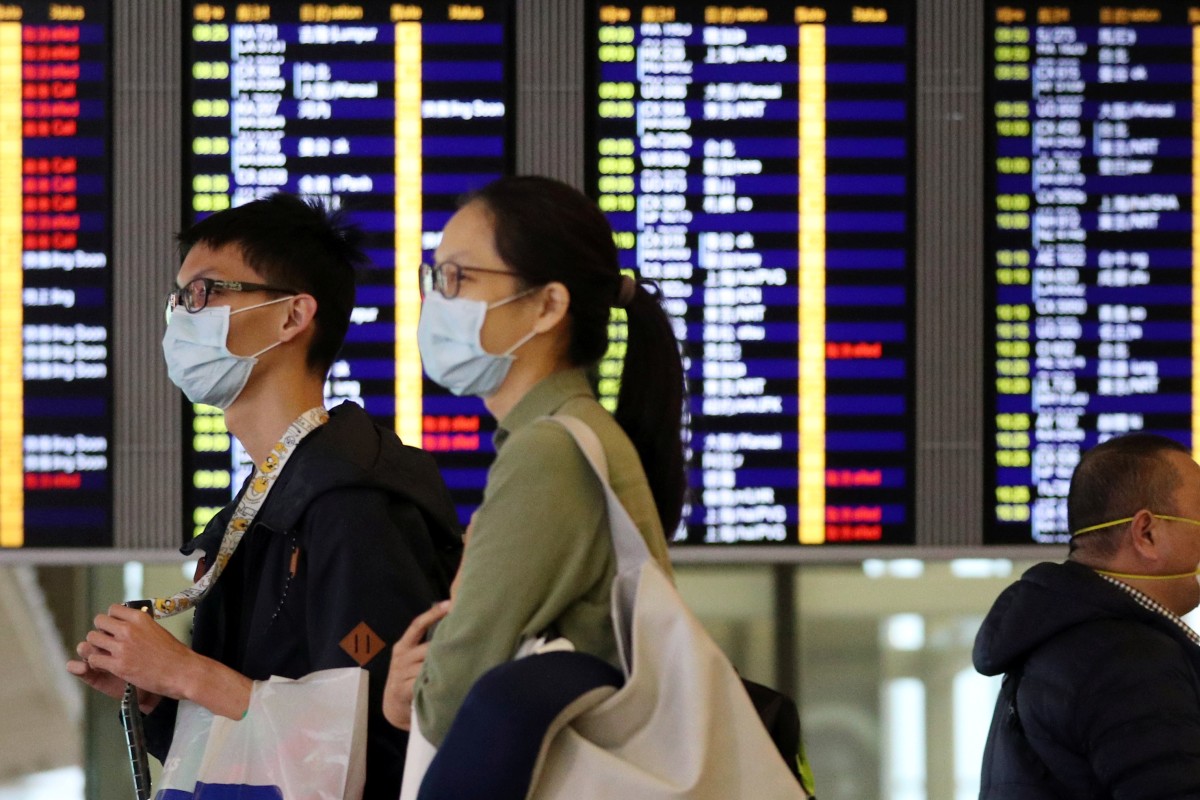
The air industry in Hong Kong and beyond has been thrown into disarray by the coronavirus outbreak. Photo: Reuters
Hundreds more Hong Kong flights are set to be dropped as the floodgates open on airlines cancelling services during the city’s fight against the coronavirus.
Carriers based in Asia, Australia, South Africa and Middle East revealed on Friday morning and the previous night they would cut all or some of their flights to the city.
Cathay Pacific is the latest to wield the axe, announcing on Friday afternoon new suspensions of major Hong Kong routes to London, New York and across mainland China because of the virus.
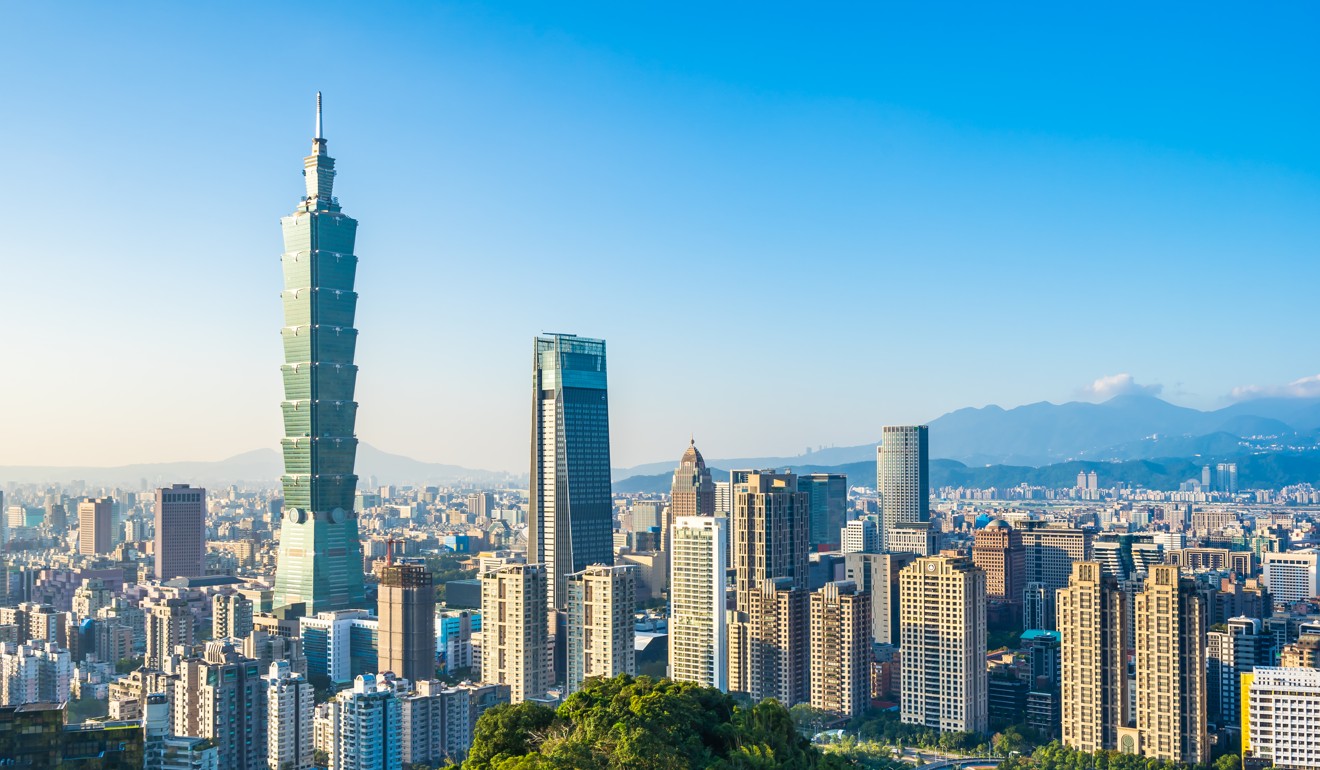
Flights running on the busy route between Hong Kong and Taiwan’s capital Taipei are subject to major cuts. Photo: Shutterstock
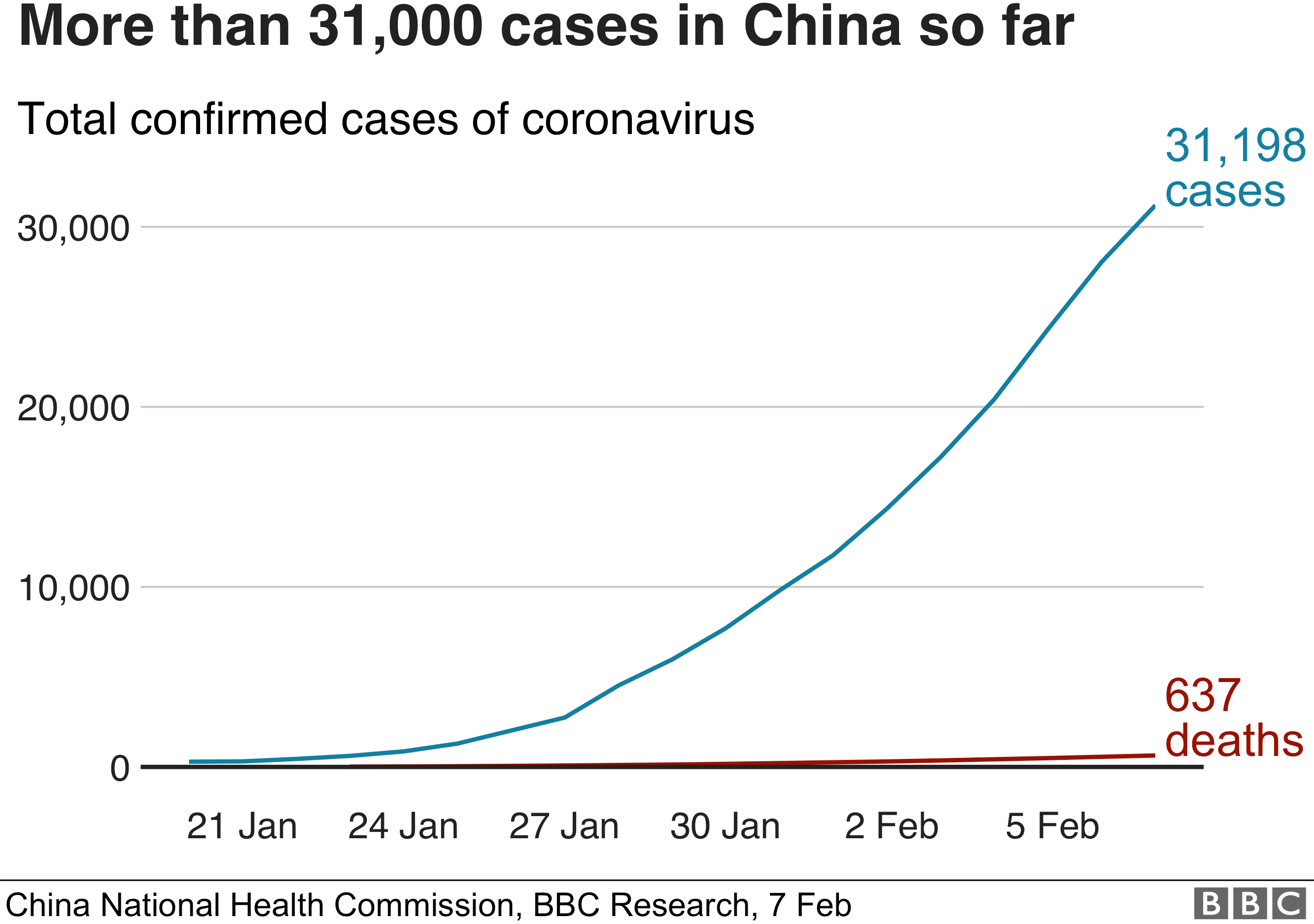
The contagion, which started in the central Chinese city of Wuhan, has infected more than 31,400 people, mostly in mainland China, killing more than 635. In Hong Kong, 24 people have been infected, one of those fatally, as of Friday afternoon.
Passengers abandoning travel plans en masse have been compounded by the introduction of entry restrictions across the world against recent visitors to mainland China, some targeting those who had been to Hong Kong.
Destinations suspended by Cathay Pacific until March 28 include London Gatwick, Rome, Washington DC, Newark, Male, Davao, Clark, Jeju and Taichung.
All mainland cities with the exception of Beijing, Shanghai, Chengdu and Xiamen would also be dropped over that period. The company said the decision was made “in view of the novel coronavirus outbreak and the subsequent drop in market demand”.
Hong Kong airport to segregate all flights to and from mainland China
7 Feb 2020
It followed Cathay Pacific Group revealing earlier this week there would be a 30 per cent reduction of flights across its worldwide schedule, as well as a 90% cut of mainland flights.
Budget carrier HK Express, controlled by Cathay, said on Thursday it would scrap 82 flights between February 12 and March 26, mostly to destinations such as Seoul and Osaka.
Hong Kong Airlines (HKA) at the same time revealed it would gradually impose even deeper cuts to flights it operated in mainland China and the rest of Asia until March 28.
The ailing carrier will suspend 10 routes and reduce flights on a further 15, amounting to an estimated 128 flights a week being axed. HKA has already cut 214 mainland Chinese flights between January 30 until February 11.
As Taiwan’s new restrictions took effect on Friday – ordering the home or hotel quarantine of anyone entering the self-ruled island who had visited Hong Kong or Macau within the previous 14 days – carriers based there slashed their schedules.
China Airlines would go from running 18 daily Hong Kong flights to just two from next week until March 28, according to Airline Route data published on Thursday.
Eva Air would switch from more than 11 daily flights to fewer than four a day for the rest of the month.
As health professionals treat coronavirus patients, global search for cures and vaccines accelerates
Eighty flights operate between Hong Kong and Taipei every week, a journey that regularly tops tables ranking the world’s busiest. But under the cuts to come more than half have already been scrapped.
Outside Asia, two airlines on Thursday cut ties with Hong Kong. The struggling Virgin Australia blamed the coronavirus and the anti-government protests that have gripped Hong Kong since June.
It concluded that “current circumstances demonstrate that Hong Kong is no longer a commercially viable route”.
The near-bankrupt South African Airways (SAA) has cancelled its route from Johannesburg amid a wholesale restructuring of the state-owned business. SAA had suspended flying to Hong Kong after November 21 last year amid the city’s civil unrest.
Hong Kong Airlines to axe 400 jobs as coronavirus adds to carrier’s cash woes
7 Feb 2020
Meanwhile, American Airlines said on Thursday it would restart flights between Dallas Fort Worth and Hong Kong on February 21, while Hong Kong’s Airport Authority extended the cancellation of its Los Angeles flight to the city until March 27.
The US carrier warned its schedules were subject to an ongoing “review”. Currently there is no US carrier flying to Hong Kong International Airport after United Airlines also withdrew all services until February 20.
Among the Middle East carriers, Emirates was halving its four daily Airbus A380 flights to Hong Kong from next week until March 28. Etihad is also making minor adjustments, Airline Route data showed on Thursday.
News of his death was met with an intense outpouring of grief on Chinese social media site Weibo – but this quickly turned into anger.
There had already been accusations against the government of downplaying the severity of the virus – and initially trying to keep it secret.
Dr Li’s death has fuelled this further and triggered a conversation about the lack of freedom of speech in China.
The country’s anti-corruption body has now said it will open an investigation into “issues involving Dr Li”.
The Chinese government has previously admitted “shortcomings and deficiencies” in its response to the virus, which has now killed 636 people and infected 31,161 in mainland China.
According to Chinese site Pear Video, Dr Li’s wife is due to give birth in June.
What has the public reaction been?
Chinese social media has been flooded with anger – it is hard to recall an event in recent years that has triggered as much grief, rage and mistrust against the government.
The top two trending hashtags on the website were “Wuhan government owes Dr Li Wenliang an apology” and “We want freedom of speech”.
Both hashtags were quickly censored. When the BBC searched Weibo on Friday, hundreds of thousands of comments had been wiped. Only a handful remain.
“This is not the death of a whistleblower. This is the death of a hero,” said one comment on Weibo.
A photo circulating on Twitter reportedly sourced from messaging platform WeChat also shows a message in Chinese saying “Farewell Li Wenliang” written in the snow on a riverbank.
Many have now taken to posting under the hashtag “Can you manage, do you understand?” – a reference to the letter Dr Li was told to sign when he was accused of disturbing “social order”.
These comments do not directly name him – but are telling of the mounting anger and distrust towards the government.
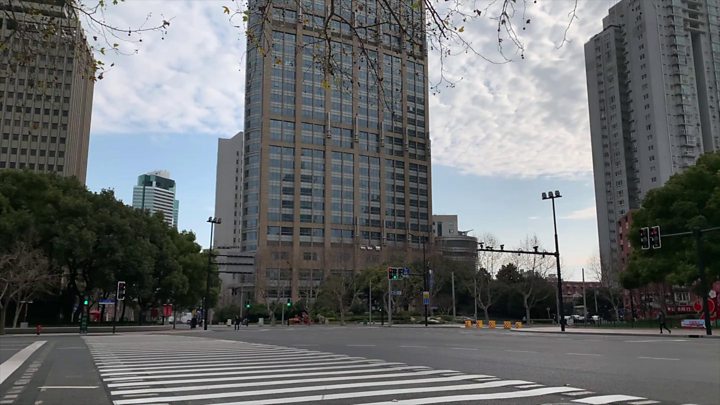
Media caption Coronavirus: Shanghai’s deserted streets and metro
“Do not forget how you feel now. Do not forget this anger. We must not let this happen again,” said one comment on Weibo.
“The truth will always be treated as a rumour. How long are you going to lie? What else do you have to hide?” another said.
“If you are angry with what you see, stand up,” one said. “To the young people of this generation, the power of change is with you.”
An epic political disaster
The death of Dr Li Wenliang has been a heart-breaking moment for this country. For the Chinese leadership it is an epic political disaster.
It lays bare the worst aspects of China’s command and control system of governance under Xi Jinping – and the Communist Party would have to be blind not to see it.
If your response to a dangerous health emergency is for the police to harass a doctor trying to blow the whistle, then your structure is obviously broken.
The city’s mayor – reaching for excuses – said he needed clearance to release critical information which all Chinese people were entitled to receive.
Now the spin doctors and censors will try to find a way to convince 1.4 billion people that Dr Li’s death is not a clear example of the limits to the party’s ability to manage an emergency – when openness can save lives, and restricting it can kill.
He was initially declared dead at 21:30 on Thursday (13:30GMT) by state media outlets the Global Times, People’s Daily and others.
Hours later the Global Times contradicted this report – saying he had been given a treatment known as ECMO, which keeps a person’s heart pumping.
Journalists and doctors at the scene said government officials had intervened – and official media outlets had been told to change their reports to say the doctor was still being treated.
But early on Friday, reports said doctors could not save Dr Li and his time of death was 02:58 on Friday.
Image copyright LI WENLIANGImage caption Li Wenliang contracted the virus while working at Wuhan Central Hospital
What did Li Wenliang do?
Dr Li, an ophthalmologist, posted his story on Weibo from a hospital bed a month after sending out his initial warning.
He had noticed seven cases of a virus that he thought looked like Sars – the virus that led to a global epidemic in 2003.
On 30 December he sent a message to fellow doctors in a chat group warning them to wear protective clothing to avoid infection.
Four days later he was summoned to the Public Security Bureau where he was told to sign a letter.
In the letter he was accused of “making false comments” that had “severely disturbed the social order”. Local authorities later apologised to Dr Li.
In his Weibo post he describes how on 10 January he started coughing, the next day he had a fever and two days later he was in hospital. He was diagnosed with the coronavirus on 30 January.
Media caption The BBC’s online health editor on what we know about the virus
Singapore has raised its Disease Outbreak Response System Condition (Dorscon) level from yellow to orange. This means that the disease is deemed severe and spreads easily from person to person but has not spread widely and is being contained
Chinese President Xi Jinping has told his US counterpart Donald Trump that China is “fully confident and capable of defeating the epidemic”. The country has introduced more restrictive measures to try to control the outbreak:
The capital Beijing has banned group dining for events such as birthdays. Cities including Hangzhou and Nanchang are limiting how many family members can leave home each day
Hubei province has switched off lifts in high-rise buildings to discourage residents from going outside.
The virus has now spread to more than 25 countries. There have been more than 28,000 cases worldwide but only two of the deaths have been outside mainland China.


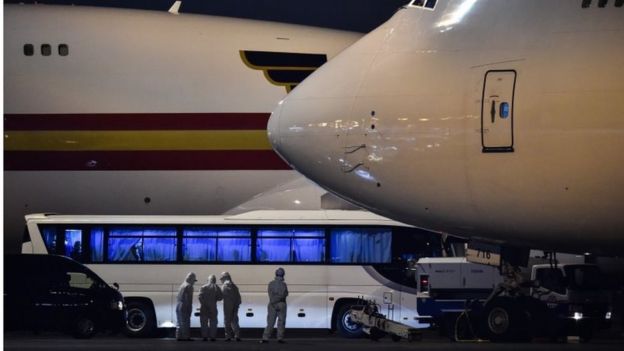 Image copyright AFP
 Matthew Smith@mjswhitebread


















 CHINDIA ALERT: You'll be living in their world, very soon