Chindia Alert: You’ll be Living in their World Very Soon
aims to alert you to the threats and opportunities that China and India present. China and India require serious attention; case of ‘hidden dragon and crouching tiger’.
Without this attention, governments, businesses and, indeed, individuals may find themselves at a great disadvantage sooner rather than later.
The POSTs (front webpages) are mainly 'cuttings' from reliable sources, updated continuously.
The PAGEs (see Tabs, above) attempt to make the information more meaningful by putting some structure to the information we have researched and assembled since 2006.
Delicate balance for Disney in its portrayal of China’s classic tale of female heroism
Too Americanised, or pandering to a mainland Chinese audience?
Chinese-American actress Crystal Liu Yifei plays the title role in Disney’s Mulan. Photo: Disney
Since the trailer for Disney’s live-action film Mulan was released last weekend, both mainland Chinese in the East and the diaspora in the West have been abuzz about their cultural identity and its representation in Hollywood – albeit for different reasons.
Chinese viewers have, on one hand, been enthusiastic about the casting of Chinese-American actress Crystal Liu Yifei in the lead role and the chance for a seemingly more “authentic” Chinese story to be told on the global stage.
On the other hand, they have pointed out historical inaccuracies – such as the southern Chinese setting when the source material states that Mulan is from the north – and expressed concerns that the plot has been too “Americanised”.
Meanwhile, many Chinese-Americans were surprised to discover upon watching the trailer that the beloved 1998 animation had changed beyond recognition – most notably with the absence of talking dragon Mushu and male love interest Li Shang. Some also felt that the new film pandered too much to a mainland Chinese audience.
“The idea of a mythic mash-up of China [in the new film] … seems to play to the idea of a unified, singular China, an artistic representation of the one-China policy, which is troubling to me,” said Jeannette Ng, a British sci-fi author with Hong Kong heritage.
“A lot of the time, this conversation acts like the only Chinese people who matter are the ones who live in mainland China – that they are the only truly authentic ones and everyone else is too Westernised to count,” she said.
The online discussion indicates the delicate balance Hollywood interpretations of Chinese classics have to strike in portraying Chinese versus American values, as big US-China co-productions try their hardest to integrate the two for bigger global box office takings.
Despite ticket sales in China falling 3.6 per cent in the first half of 2019, owing to tightened government censorship, China is still projected to overtake the US box office next year, according to a recent report by professional services firm PwC.
Disney has tried hard to make the new film more true to its ancient Chinese source material, with a detailed – if inaccurate – historical setting featuring the ancient tulou roundhouses of the southeastern province of Fujian, and a star-studded, all-Asian cast with several icons of Chinese cinema such as Jet Li, Hong Kong actor Donnie Yen and Gong Li.
Disney’s live-action version of Mulan is truer to the ancient source material. Photo: Handout
“Disney’s tent pole movies are aiming at a global audience. That being said, given that China is the largest international market and the story is based on a Chinese folk tale, Disney will definitely take the Chinese audience’s taste into consideration,” said a Chinese film producer, who asked to remain anonymous, at a major US studio in Beijing.
“However, this is also a double-edged sword, as people tend to be more picky when they see things they are familiar with.”
Indeed, several Chinese media think pieces have questioned whether elements of the original legend had become too Americanised in the film, leading to an inauthentic representation of a beloved Chinese heroine.
For instance, the Disney trailer suggests that Mulan joins the army to escape an arranged marriage, breaking away from family traditions and establishing her independence as a woman unbound by gender roles.
But in the original folk song Ballad of Mulan, on which the film is based, she volunteers to take the place of her ageing father in the army – making her a symbol of filial piety, courage and patriotism in traditional Chinese culture.
Some critics say Mulan has been Americanised. Photo: YouTube
In a widely shared analysis discussing whether Disney’s Mulan was a feminist icon, Peking University Press wrote: “Perhaps this is a cross-cultural creative misunderstanding that reflects the core differences between Chinese and Western culture. If Mulan is seen as a feminist symbol, I fear this may be wishful thinking.”
However, both Chinese-Americans and Chinese nationals agree that the film, slated for release in March, is an inspiring tale for young girls.
“I feel like the people who are criticising the film are too attached and focused on the nostalgia factor. They are not seeing the bigger picture and the positive implications of this movie,” said Alex Diep, a 23-year-old American of Vietnamese-Chinese descent.
“They are disregarding that this film gives an opportunity for young Asian girls to look up to Mulan and see her as a role model,” he said.
Some Chinese have interpreted it as an inspiring fable of female strength and liberation, especially when ingrained patriarchal values and government initiatives such as the one-child policy have restricted women’s rights over the years.
“[Mulan] remains one of the very few fighters and not conventionally feminine figures in the Disney princess canon,” Ng said.
“[T]his is some sort of feminism education for a single-child generation in China that girls can fight like men do,” tweeted Chinese journalist Li Jing.
Chinese-Americans are also optimistic that it will be a sure-fire win for Asian representation on the big screen, especially after the success of last year’s romantic comedy Crazy Rich Asians.
“[Critics of the trailer] are disregarding the fact that this movie is another opportunity to showcase Asian people in a movie where we are not perceived as a negative stereotype,” Diep said.
Others feel that the film can help build a bridge between East and West.
“Mulan is a Chinese story. It comes from a completely different culture, one which I’m not at all convinced that Hollywood, or the West at large, truly understands yet,” said
New Yorker Jonathan Pu, who is of Taiwanese descent. He said he enjoyed the lighthearted animation, but that it did not define his expectations for the remake.
“If Disney can stay true to the source material and convey [filial piety] in a way that even just some of the audience can grasp, then it will go a long way towards building bridges,” Pu said.
Ultimately, the success of this American spin on Chinese culture will rest on box office sales, which Disney hopes will exceed the 1998 animation that flopped in mainland cinemas. Recent Disney live-action remakes have had a mixed reception in China – Dumbo flopped in March, while The Lion King did moderately well on its release last weekend.
“I’m sure there will be a mixed response when the movie is released but it should have enough buzz and do well,” said the Beijing film producer.
“I hope it will be able to convey the spirit of Mulan and inspire millions of young girls.”
National outrage sparked when high-profile traveller Li Yaling shares details of incident on social media
Employee on long-term sick leave disrupts flight to Beijing but airline says she is a private traveller
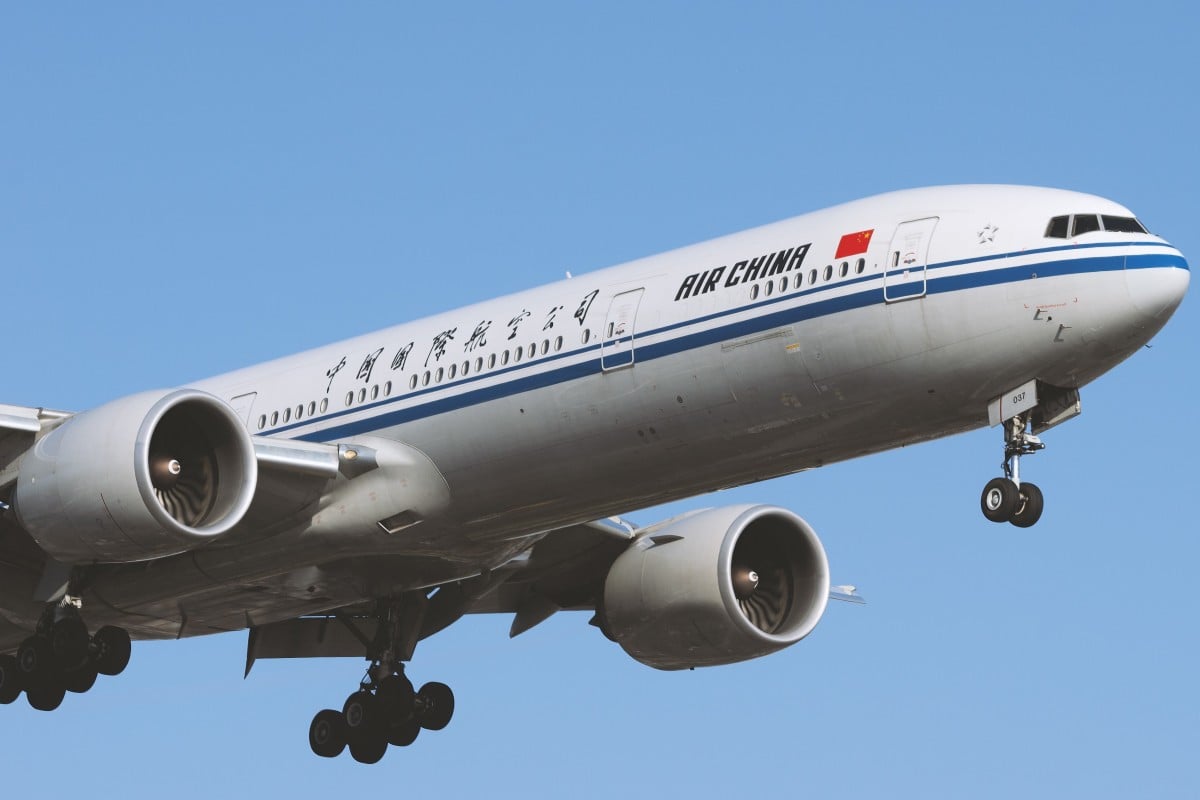
Air China has flown into an internet storm after a flight attendant on long-term sick leave scolded business class passengers. Photo: Shutterstock
National flag carrier Air China has come under fire after an employee made a scene during a flight and accused three business class passengers of attacking her, leading to them being held and questioned for seven hours last Friday after their arrival in Beijing.
Playwright Li Yaling, who was travelling business class on flight CA4107 from Chengdu uploaded a video and lengthy post detailing the incident to her nearly 1.3 million followers on Weibo, China’s Twitter-like microblogging platform.
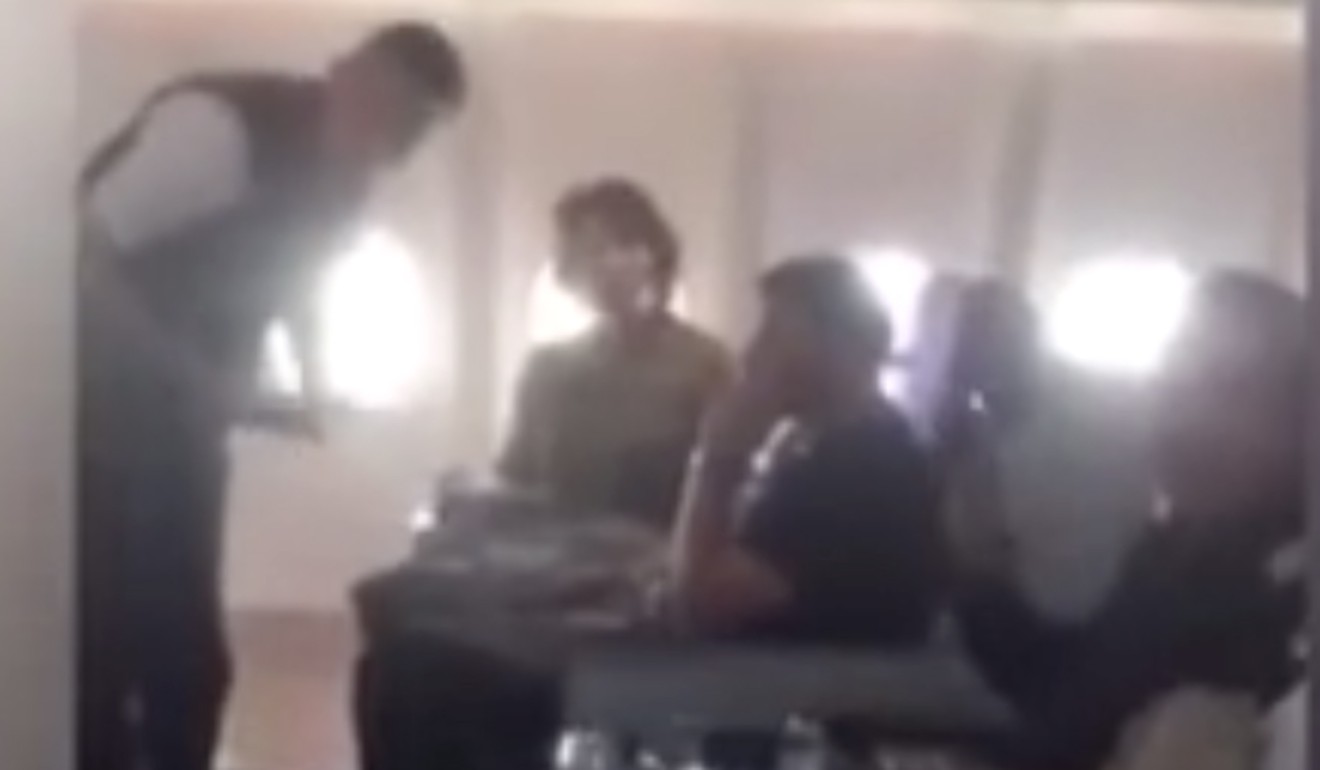
Li’s video showed a female passenger, who claimed to be an Air China supervisor, scolding passengers for using their phones while the plane was on the runway at Chengdu, capital of Sichuan province, southwest China.
The scolding lasted half an hour, according to Li, even after the passengers stopped using their phones and explained they had been switched to flight mode. Air China permits smartphones in flight mode to be used during its flights.
A screenshot of the video filmed during the Air China flight, and later posted to Weibo, of the incident in business class. Photo: Weibo
The woman paced about the cabin as the plane taxied down the runway and continued to make a scene until the flight approached Beijing. She was seen making a call, asking for the police to be notified that the passengers had “attacked” her and “endangered aviation safety” and to come and take them away.
The passengers were stopped by the crew and removed by the police, who took them to the airport police station where they were held for seven hours before being released with a warning, according to Li’s post.
“I want to ask Air China what the position of the Air China supervisor is,” Li wrote on Weibo. “Is she independent or your employee? What legal rights does she have? Has she abused her power, if any?”
Li’s post shocked internet users who reacted with sympathy. Some posted video clips or their own accounts of the same woman making similar false accusations on buses, subway trains and other flights, leading to similar problems for individual passengers, as well as travel delays.
Li later said on Weibo she was contacted by the airline on Saturday afternoon and told the woman was a former flight attendant who had been on sick leave since pouring hot water on a passenger more than 10 years before and had subsequently been diagnosed with bipolar disorder.
Unlucky coin toss lands another Chinese airline passenger in trouble
In a public statement on Monday, Air China said the dispute had involved an employee who was on leave for health reasons and had been on a private trip. The airline said three passengers and four crew members had been taken to the airport police station to help with an investigation into the incident.
Li followed up her Weibo posting on Monday, meeting several senior officials at Air China’s headquarters, where she was told the situation was a dispute between passengers and the airline had fulfilled its responsibilities.
Air China said it could not stop the employee from boarding its flights.
Li said she felt sympathy for mental health patients but not for the woman, who she said had apparently endangered public safety on flights several times. Li also demanded compensation for paying a high price to travel in business class, only to suffer two hours of verbal abuse.
Rush to emergency exit lands Chinese first-time flier in detention
The situation angered many on social media, who felt the airline had not taken enough responsibility for the incident. Some said they would not choose Air China again.
“The incident is not about passengers switching off their phones, it is about how your airline’s employee caused a row in business class,” one Weibo user wrote.
“This is a serious threat to flight order and safety, yet Air China can’t handle it. I will not consider flying with Air China again. Safety comes first after all,” said another.
Online news portal Ifeng.com ran a survey on the incident, with nearly 88 per cent of the 160,000 who took part agreeing that the airline should take responsibility for the incident. A total of 84 per cent said Air China had mishandled the incident and some 58 per cent said they would consider other carriers ahead of Air China in future.
Influential party newspaper People’s Daily also weighed in, criticising the airline for evading the crucial point in its public statement posted to Weibo on Monday night.
“The public does not question the significance of caring for patients with special diseases, but showing humane care does not mean inaction and to maintain the company image does not [mean] blindly protecting its employee,” the newspaper said.
“After all, the travel rights of all passengers and public safety are more important.”
Article 34 of China’s civil aviation rules for domestic transportation of passengers and baggage stipulates mentally ill patients or passengers whose health conditions may endanger themselves or affect the safety of other passengers shall not be carried.
However, in the eyes of the psychiatric profession mental health patients have the same right to fly as anyone else, as long as they are not posing any threat to others.
“The law on mental health protects some basic rights of mental patients and they are entitled to all rights of citizens, as long as they are not in an acute onset of mental illness,” said Ye Minjie vice-president of Kangning Hospital, which is affiliated to Wenzhou Medical University
“We can’t treat them as if they were secondary citizens or deprive them of basic rights just because they have had episodes before,” he said.
Some 150,000 residents of Baishizhou have to leave by the end of September to make way for malls, hotels and high-end residential projects
They worry about finding affordable housing in the city, and their children’s education
Urban villages like Baishizhou provide affordable housing, mostly for migrant workers. Photo: Phoebe Zhang
As their eviction deadline nears, all Chen Jian can think about is the wrecking ball – and where his family is going to go. He often dreams about the negotiations – with officials, real estate developers, landlords. On other nights, he cannot sleep at all.
“I’m mostly worried about my daughter – she starts secondary school in September,” said Chen, 41, who works as a quality supervisor for a foreign trading company.
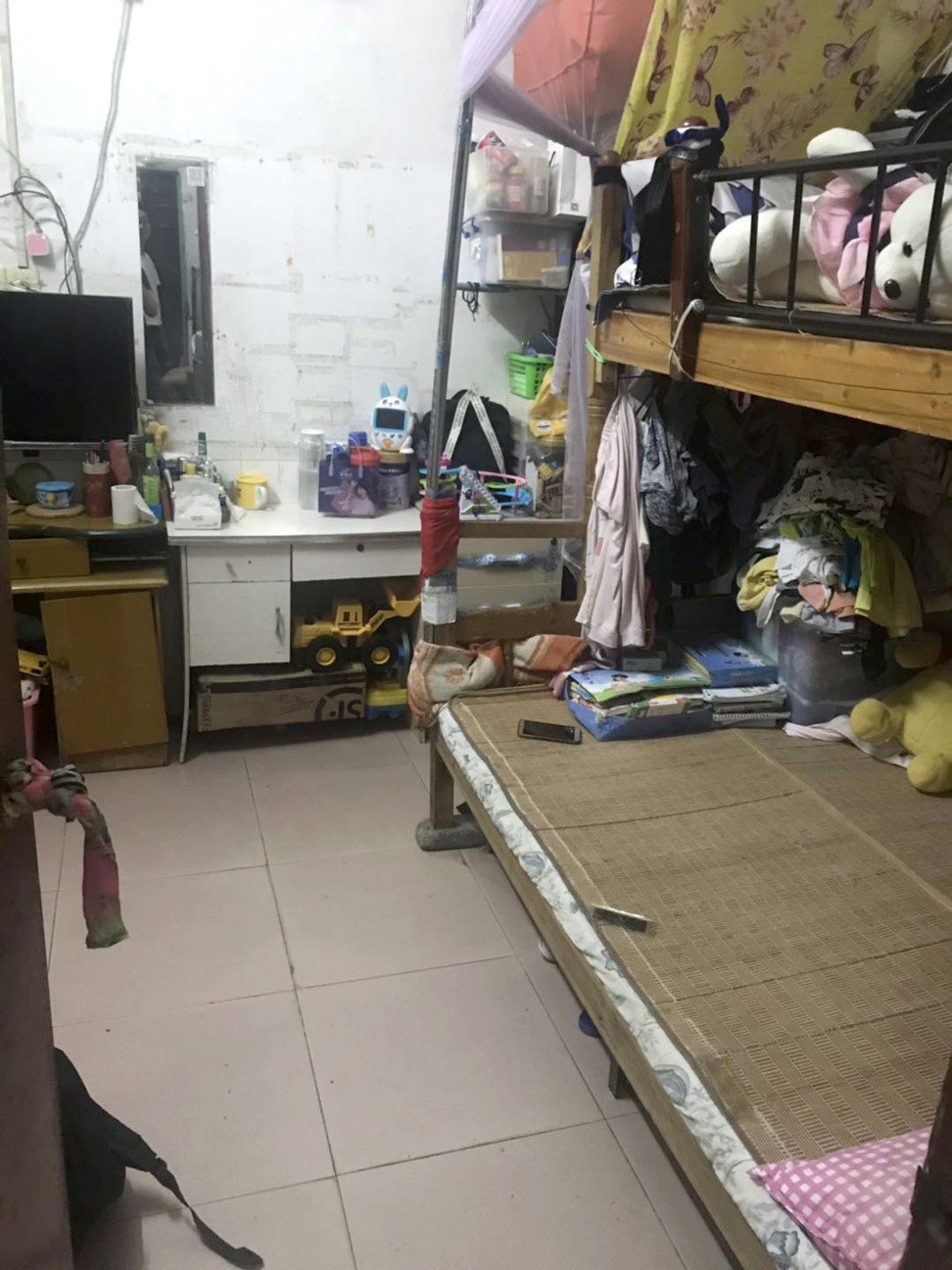
His family of four lives in a cheap one-bedroom flat in Baishizhou, one of the last standing chengzhongcun, or “urban villages”, in the flourishing commercial zones of southern Chinese city Shenzhen.
The villages provide affordable housing – costing from a few hundred to a few thousand yuan per month – to a mostly migrant worker population that provides services and labour.
But Baishizhou, in the Nanshan district, will not be standing for much longer. Many tenants in the area have received eviction notices since June, telling them to move out before the end of September to make way for a real estate project led by Shenzhen-based developer LVGEM Group.
The developer bought the land and buildings from their landlords, and it plans to knock them down and replace them with malls, hotels, high-end residential projects and skyscrapers.
Some 150,000 people are affected, mostly migrant workers, and they will have to find new homes, change jobs or even move back home at short notice.
Chen Jian lives in a one-bedroom flat in Baishizhou with his wife, daughter and son. Photo: Phoebe Zhang
For Chen and more than 2,000 other families, their children’s education is the most urgent issue. He said they could move somewhere else nearby, but the rent would be more than four times higher. A cheaper area would mean a long walk to school for his daughter from the nearest subway station.
As the breadwinner, Chen’s monthly income of 12,000 yuan (US$1,750) has to cover the whole family. His wife takes care of their three-year-old son and their daughter, 12.
“If I were here by myself, I would just pack up my bags and go,” said Chen, who moved to Shenzhen from Henan province. “But I can’t – I have children, I would do anything for my children.”
Families who’ve lived in old Chinese town for generations being kicked out to make way for tourists
Urban villages are a phenomenon that grew from China’s rapid development. In the 1980s, soon after Shenzhen became the country’s first special economic zone, the local government expropriated mostly vacant land from villagers and allowed developers to build commercial properties there.
The locals invested the large sums of money they received into new living spaces in their villages, which they rented out to the migrant workers that flowed into the city amid a manufacturing boom.
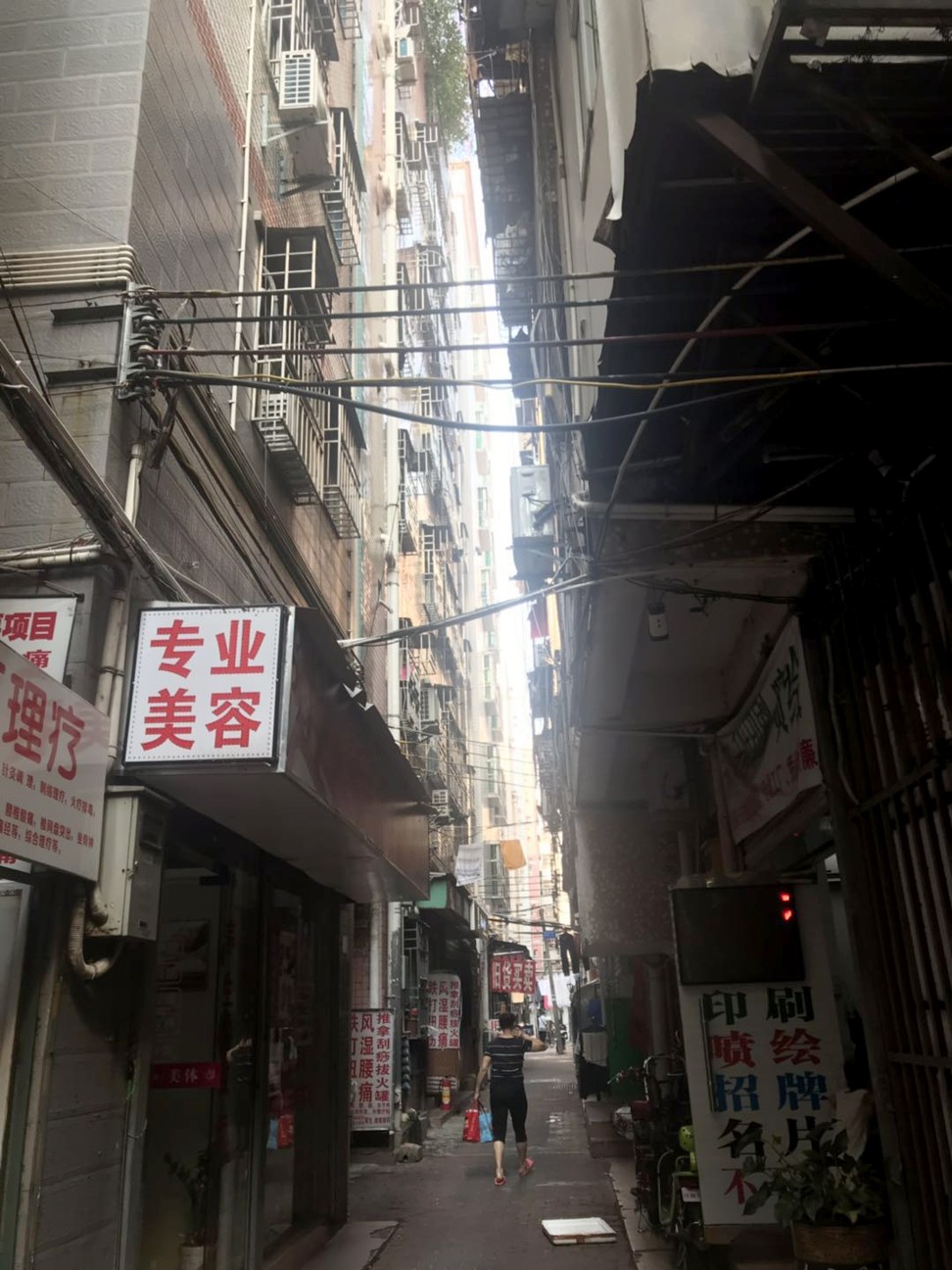
These chengzhongcun emerged as a tangle of damp alleyways, where electricity and telephone wires hang like spiderwebs. They bustle with fruit carts, soy milk shops, cobblers, karaoke parlours, short-stay love hotels and hair salons offering massage services. The “handshake buildings” where people live are packed together so tightly that residents could reach out of the window and shake their neighbour’s hand in the opposite flat.
“I call this ‘voluntary urbanisation’,” said Duan Peng, an architect based in the city. Since he moved to Shenzhen in 2001, Duan has spent many days and nights in Baishizhou. He said its development was in line with the government’s urban planning policy, since it allowed migrant workers to live in a relatively prosperous area in the city centre rather than on its periphery.
“Handshake buildings”, where residents can shake their neighbours’ hands through the windows, are a feature of China’s urban villages. Photo: Phoebe Zhang
Chen moved to Shenzhen with his wife in 2000, and both their children were born there. They moved to Baishizhou in 2008 after he was introduced to his landlord, who is from Chen’s hometown and rented him the flat for 650 yuan a month.
The rent has gone up by just 300 yuan in the 11 years they have lived there. They have watched as new developments sprang up around them – amusement parks, a golf course, malls and an area that is home to some of the country’s top tech companies including Huawei, Tencent and DJI.
How the eviction of Beijing’s migrant workers is tearing at the fabric of the city’s economy
But away from the shiny new developments, 150,000 migrant workers from all over the country are packed into 2,500 buildings in Baishizhou, where rents and services are affordable.
The urban village is full of people like Chen. Small business owner Wang Fang came to Shenzhen from northeast China in 2003 and has lived in Baishizhou ever since. Six months ago, she signed a three-year lease on a commercial space and opened a dumpling restaurant, but she is worried about the future.
“I can’t go back home, I already have a Shenzhen hukou,” she said, referring to the household registration document that gives access to public services. “I don’t have land there any more and can’t make a living there [as a farmer].”
She has not been told she has to leave the restaurant, but Wang and her two sons have until the end of September – when the building’s water and electricity will be cut off – to vacate their flat.
“It’s only a matter of time before the business is shut down as well,” she said.
Small shops and street vendors line Baishizhou’s bustling alleyways. Photo: Phoebe Zhang
According to an online poll of 1,031 Baishizhou residents this week, about half said they may have to find another job, and more than 600 were concerned about their children’s education. The survey, conducted by Shenzhen University urban planning professor Chen Zhu, also found that 70 per cent of those polled planned to find another flat in the city, while 28 per cent would leave.
Duan said the evictions and redevelopment would inevitably affect the surrounding areas, as well as the residents.
“The prices of services in the neighbourhood will increase, because many of the workers [now providing those services] will move far away, and rents will increase as well,” he said.
But for many such redevelopments, while the government, landlords and village officials might be consulted, the tenants are left out.
“Most of these residents, their voices and their interests aren’t on the negotiating table – their losses aren’t calculated in the real estate developer’s demolition costs,” Duan said.
A receptionist at LVGEM said he was not aware of any complaints about the redevelopment, while emails to the company went unanswered.
Meanwhile the developer’s partner, Baishizhou Corporation, told Southern Metropolis Daily it would provide legal services, rentals support and school buses for tenants who will be displaced.
But it is not enough for migrant workers like Chen. Like many of those facing eviction, he fears he will have to pay more rent, and there may not be a school bus service in his area.
He mentions a slogan plastered on walls in the city, “Once you come, you’re a Shenzhener” – part of a government campaign to lure talent and investors.
Chen said he worried that Shenzhen wanted only hi-tech workers and luxury residential compounds in the city, leaving little room for low-income workers.
“Despite what the slogan says, you ask yourself, are you really a Shenzhener?” he said.
WASHINGTON (Reuters) – China will be able to place armed forces at a Cambodian naval base under a secret pact between the two nations, the Wall Street Journal said on Sunday, although Cambodian officials denied such a deal had been struck.
The agreement, reached this spring but not made public, gives China exclusive access to part of Cambodia’s Ream Naval Base on the Gulf of Thailand, the Journal said, citing U.S. and allied officials familiar with the matter.
Such an arrangement would boost China’s ability to assert contested territorial claims and economic interests in the South China Sea, challenging U.S. allies in Southeast Asia.
Chinese and Cambodian officials denied such a pact existed, the Journal said.
“This is the worst-ever made up news against Cambodia,” Cambodian Prime Minister Hun Sen told the pro-government news site Fresh News on Monday.
“No such thing could happen because hosting foreign military bases is against the Cambodian constitution.”
Cambodian defence ministry spokesman Chhum Socheat told Reuters the report was “made up and baseless”.
In Beijing, foreign ministry spokesman Geng Shuang said, “As I understand it, the Cambodia side denied this.”
But he declined to respond to repeated questions whether China also denied the report.
“China and Cambodia are traditionally friendly neighbours,” Geng told a news briefing.
“We have cooperated in various areas. Our cooperation is open, transparent, and mutually beneficial and equal. I hope the relevant parties do not overinterpret it.”
Hun Sen’s strongest regional ally, China has poured billions of dollars in development assistance and loans into Cambodia through two-way frameworks and its Belt and Road initiative.
The initiative, unveiled by Chinese President Xi Jinping in 2013, aims to bolster a sprawling network of land and sea links throughout Asia, the Middle East, Europe and Africa.
It has attracted a flood of Chinese commercial ventures in Cambodia, including casinos and special economic zones.
This month the U.S. Defense Department suggested China may be attempting to gain a military foothold in Cambodia, in a letter to Cambodia asking why the nation had turned down an offer to repair a naval base.
In a statement, the State Department urged Cambodia to reject such an arrangement, saying the nation had a “constitutional commitment to its people to pursue an independent foreign policy”.
It added, “We are concerned that any steps by the Cambodian government to invite a foreign military presence in Cambodia would threaten the coherence and centrality of the Association of Southeast Asian Nations in coordinating regional developments, and disturb peace and stability in Southeast Asia.”
Cambodia denied reports last November that China had been lobbying it since 2017 for a naval base that could host frigates, destroyers and other vessels of the People’s Liberation Army Navy.
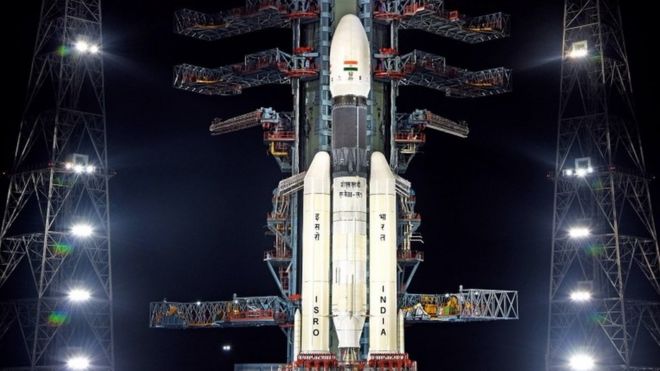
Image copyright EPAImage caption The rocket weighs as much as a fully-loaded jumbo jet
India is set to re-attempt the launch of its second lunar mission a week after it halted the scheduled blast-off due to a technical snag.
Chandrayaan-2 will be launched at 14:43 local time (09:13 GMT) on Monday, space agency Isro said.
It added the spacecraft was ready “to take a billion dreams to the Moon – now stronger than ever before”.
The space agency hopes the $150m (£120m) mission will be the first to land on the Moon’s south pole.
The countdown on 15 July was stopped 56 minutes before launch after a “technical snag was observed in [the] launch vehicle system”, according to Isro. Indian media have reported that a leak from a helium gas bottle in the cryogenic engine of the rocket was to blame.
The fuel from the rocket was drained and the scientists resolved the glitch.
“It was a simple to fix [but it was] a serious problem that could have resulted in total failure,” says a source at Isro.
Isro thanked people for supporting the mission despite the delay.
Chandrayaan 2 is ready to take a billion dreams to the Moon — now stronger than ever before! Join us for the launch on Monday — 22 July, 2019 — at 2:43 PM IST. #Chandrayaan2#GSLVMkIII#ISRO
India’s first lunar mission in 2008 – Chandrayaan-1 – did not land on the lunar surface, but it carried out the first and most detailed search for water on the Moon using radars.
Chandrayaan-2 (Moon vehicle 2) will try to land near the little-explored south pole of the Moon.
The mission will focus on the lunar surface, searching for water and minerals and measuring moonquakes, among other things.
India is using its most powerful rocket, the Geosynchronous Satellite Launch Vehicle Mark III (GSLV Mk-III), in this mission. It weighs 640 tonnes (almost 1.5 times the weight of a fully-loaded 747 jumbo jet) and at 44 metres (144ft) is as high as a 14-storey building.
The spacecraft weighs 2.379kg (5.244lb) and has three distinct parts: an orbiter, a lander and a rover.
The orbiter, which has a mission life of a year, will take images of the lunar surface, and “sniff” the tenuous atmosphere.
The lander (named Vikram, after the founder of Isro) weighs about half as much, and carries within its belly a 27kg Moon rover with instruments to analyse the lunar soil. In its 14-day life, the rover (called Pragyan – wisdom in Sanskrit) can travel up to a half a kilometre from the lander and will send data and images back to Earth for analysis.
“India can hope to get the first selfies from the lunar surface once the rover gets on its job,” Dr K Sivan, the Isro chief, said before the first launch attempt.
Media caption Is India a space superpower?
How long is the journey to the Moon?
The launch is only the beginning of a 384,000km (239,000-mile) journey – Isro is still hoping the lander will touch down on the Moon on 6 or 7 September as planned, despite the week-long delay of the launch.
The journey of more than six weeks is a lot longer than the four days the Apollo 11 mission 50 years ago took to reach the Moon- and land humans on the lunar surface for the first time.
In order to save fuel, India’s space agency has chosen a circuitous route to take advantage of the Earth’s gravity, which will help slingshot the satellite towards the Moon. India does not have a rocket powerful enough to hurl Chandrayaan-2 on a direct path. In comparison, the Saturn V rocket used by the Apollo programme remains the largest and most powerful rocket ever built.
“There will be 15 terrifying minutes for scientists once the lander is released and is hurled towards the south pole of the Moon,” Dr Sivan said.
He explained that those who had been controlling the spacecraft until then would have no role to play in those crucial moments. The actual landing, he added, was an autonomous operation dependent on all systems performing as they should. Otherwise, the lander could crash into the lunar surface.
Nearly 1,000 engineers and scientists have worked on this mission. But for the first time, Isro has chosen women to lead an interplanetary expedition.
Two women are steering India’s journey to the Moon. While programme director Muthaya Vanitha has nurtured Chandrayaan-2 over the years, it will be navigated by Ritu Karidhal.
Islam was forced on ethnic group ‘by religious wars and the ruling class’, Beijing says in latest report defending its actions in far western region
Uygurs’ ancestors were enslaved by the Turks, document says
Beijing has issued a white paper seemingly designed to defend its actions in Xinjiang where as least 1 million Uygurs are being held in detention centres. Photo: AFP
Uygurs became Muslims not by choice but by force, and Islam is not their only religion, Beijing said in a white paper published on Sunday, as it continued its propaganda campaign to justify its controversial policies in the far western province of
“The Uygur people adopted Islam not of their own volition … but had it forced upon them by religious wars and the ruling class,” according to the document released by the State Council Information Office.
Islamic beliefs were forced on the Uygurs during the expansion of Arabic states. This is a historical fact, the report said, though that did not undermine the Uygurs’ religious rights now.
The report said also that there are Uygurs who hold to faiths other than Islam, and others who do not practise any religion at all.
The paper also took aim at the Uygurs’s historic links with Turkey.
“Historically, the Uygurs’ ancestors were enslaved by the Turks,” it said, citing a history of conflicts between the two groups dating back to the 8th century.
China promotes Xinjiang as tourist idyll
The white paper was issued amid a campaign by Beijing to justify its policies in the restive region, which is home to more than 10 million Uygurs, most whom are Muslim.
Earlier this month, the ambassadors of 22 countries signed a letter calling on Beijing to halt its mass detention of Uygurs in Xinjiang, the first such joint move on the issue at the UN Human Rights Council.
The signatories included envoys from Britain, France, Germany, Australia, Canada, Japan and Switzerland. The United States, which quit the forum a year ago, did not sign the letter.
China responded by issuing a letter signed by the ambassadors of 37 countries, including several Muslim majority states like Saudi Arabia and Pakistan, backing its policies in the region.
Beijing said the show of support was “a powerful response to the groundless accusations made against China by a small number of Western countries”.
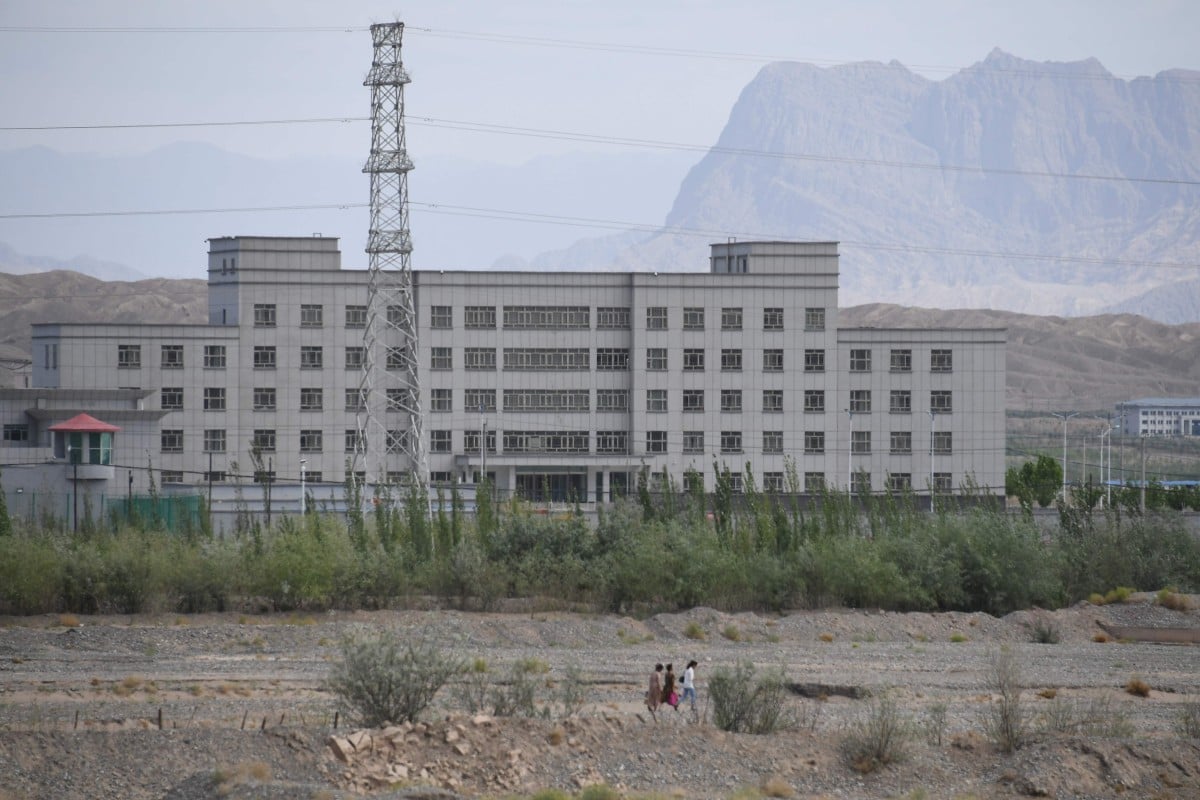
UN experts and activists say at least 1 million Uygurs and other Muslims are currently being held in detention centres in Xinjiang. China describes the facilities as training and education centres that aim to stamp out religious extremism and provide people with useful skills. It has never said how many people are being detained in them.
The United States has repeatedly criticised Beijing over its policies in Xinjiang.
On Wednesday, US President Donald Trump met victims of religious persecution from around the world, including Jewher Ilham, a Uygur woman whose father Ilham Tohti was sentenced to life imprisonment in 2014 after being found guilty of promoting separatism.
“That’s tough stuff,” Trump said after hearing Ilham’s account of her father’s ordeal.
China describes the detention camps in Xinjiang as training and education centres. Photo: AFP
In January, US lawmakers nominated the imprisoned economist, writer and former professor at Minzu University in Beijing, for the 2019 Nobel Peace Prize in a bid to pressure China to stop its crackdown on the minority group.
Sunday’s white paper is the latest in a string of similar documents published recently by Beijing as it seeks to defend the legitimacy of its policies in Xinjiang. In a document issued in March, it said that over the past five years it had arrested nearly 13,000 “terrorists” in the region.
Xinjiang camps defended at UN human rights forum
Neither the March report nor Sunday’s white paper mentioned Beijing’s other controversial policies in the region, such as the collection of DNA samples and extensive surveillance on local people.
“Xinjiang has borrowed from international experiences, combined them with local realities, and taken resolute measures against terrorism and extremism,” it said.
The measures have been effective, it said, though did not elaborate.
Over the past year, China has increased its efforts to defend the camps, including organising strictly controlled visits by selected diplomats and journalists to see the people who live in them.
State media has also released videos showing seemingly happy and healthy people inside the camps in a bid to counter accounts of harsh conditions and abuse published by the Western media.
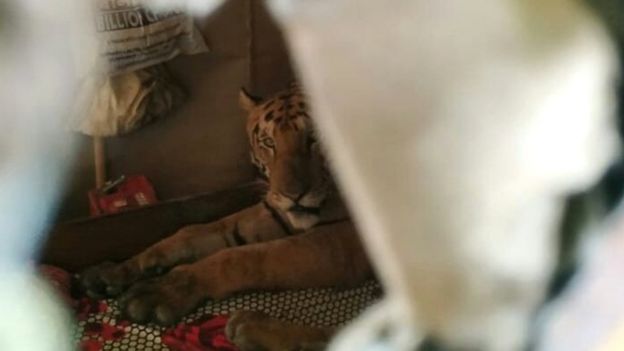
Image copyright WTIImage caption The tiger was seen relaxing in a bed in Assam state
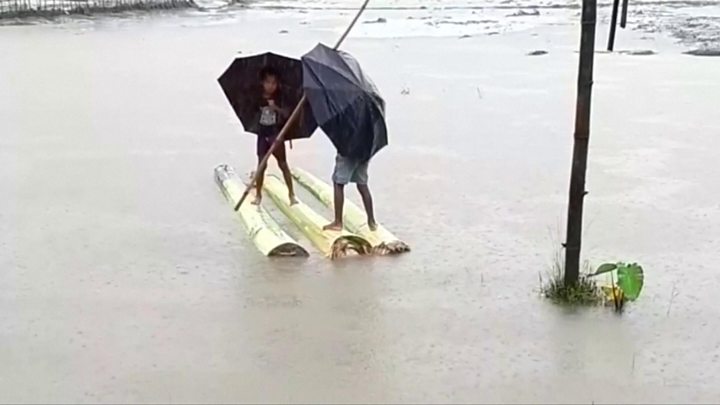
A female tiger which fled a wildlife park in India’s flood-ravaged state of Assam was found relaxing on a bed inside a local resident’s house.
She is believed to have fled the Kaziranga National Park, where 92 animals have died in recent days amid heavy flooding.
Officials from a wildlife conservation group arrived at the house and created a safe escape route for her.
She was guided in the direction of the jungle.
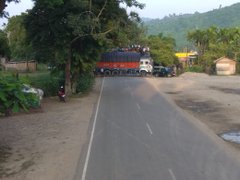
According to the Wildlife Trust of India (WTI), the tigress was first spotted next to a highway on Thursday morning, some 200 metres away from the national park.
She was likely to have been disturbed by the busy road and ended up seeking refuge in the house, which is located near the highway, it said.
Image copyright WTIImage caption The house owner fled as soon as he saw the tiger
Rathin Barman, who led the rescue operation, said the tigress entered the house – which is next to a shop – at 07:30 local time (02:00 GMT) and slept throughout the day.
“She was very exhausted and had a nice day-long nap,” he told the BBC.
The house owner, Motilal, who also owns the adjoining shop, fled the house along with his family members as soon as they saw the tiger walking in.
“The great thing was that nobody disturbed her so she could rest. There’s a lot of respect for wildlife in this region,” Mr Barman said.
“[Motilal] says he will preserve the bed sheet and pillow on which the tiger rested.”
WTI officials were later called to the scene and began preparing a safe escape route for her.
They blocked traffic on the highway for an hour and set off firecrackers to wake the animal up. She eventually left the house at 17:30 local time, crossed the highway and went in the direction of the forest.
Media caption Floods cause death and destruction in north India
Mr Barman said it was not clear if she had actually entered the forest or if she had just “walked off into an adjoining area”.
The Unesco-recognised Kaziranga National Park is home to 110 tigers, but none of them have died in the flooding.
Animals killed in the park include 54 hog deer, seven rhinos, six wild boars and one elephant.
BEIJING, July 18 (Xinhua) — China has launched an online poll to solicit public opinions on whether to name peony or another plower as its “national flower,” according to the China Flower Association (CFA).
Based on suggestions from an expert team, the association listed 10 candidates including the peony, chrysanthemum, orchid, Chinese rose and narcissus.
Recommending the peony as China’s national flower, the CFA said in an online statement that the flower has been widely planted around China with a history of more than 4,000 years and has long been called “king of the flowers” in the country.
Prerequisites to be nominated as China’s national flower include originating in the country with a long history, being elegant in both shape and color, and being able to represent Chinese culture, according to the CFA.
The flower to be named should also have a profound cultural connotation and be extensively utilized.
By Wednesday afternoon, nearly 600,000 people had joined in the vote on mobile social media platform WeChat, the association said.
Anita Kiki Gebe, deputy joint special representative of the United Nations-African Union Mission in Darfur (UNAMID), awards UN peace medal to a soldier of the 2nd China Medium Utility Helicopter Unit (CMUHU02) in El-Fashir, Sudan, July 17, 2019. The 140 officers and soldiers of the 2nd China Medium Utility Helicopter Unit (CMUHU02), a peacekeeping contingent to Sudan’s Darfur, were awarded UN peace medals. (Xinhua)
KHARTOUM, July 18 (Xinhua) — The 140 officers and soldiers of the 2nd China Medium Utility Helicopter Unit (CMUHU02), a peacekeeping contingent to Sudan’s Darfur, were awarded UN peace medals.
At the award ceremony on Wednesday, Anita Kiki Gebe, deputy joint special representative of the United Nations-African Union Mission in Darfur (UNAMID), spoke highly of the devotion of the Chinese helicopter unit to the peace and stability of Sudan.
“The second Chinese peacekeeping helicopter unit to Darfur demonstrated their outstanding professionalism and excellent service in their mandate,” said Gebe, also one of the presenters of the UN award.
Their “outstanding work has enhanced the friendship between China and Sudan and the world nations,” she added.
Equipped with four Mi-17 helicopters, the CMUHU02 in UNAMID is mainly tasked with 24-hour air patrol, battleground reconnaissance, personnel movement, casualty evacuation and material transportation.
So far, the Chinese helicopter contingent to Darfur has carried out 636 sorties, rescued more than 280 people and delivered 3,800 passengers, 220 tons of cargo, 16.6 tons of dangerous goods such as weapons and ammunition.
BEIJING, July 17 (Xinhua) — China’s disaster relief authorities have dispatched a second batch of supplies to areas hit by floods and rainstorms in central China’s Hunan Province.
A total of 8,000 folding beds, 8,000 sets of folding tables and chairs, and 5,000 quilts were allocated by the the Ministry of Emergency Management (MEM) and National Food and Strategic Reserves Administration, to support local government’s relief work, the MEM said Wednesday.
The Office of State Flood Control and Drought Relief Headquarters earlier launched an emergency response as Hunan Province has been suffering from severe rainstorms and floods.
The first batch of supplies included 1,000 tents, 10,000 quilts, 5,000 folding beds, as well as 6,000 sets of folding tables and chairs, according to the MEM.















 CHINDIA ALERT: You'll be living in their world, very soon