17/07/2019

China-Latin America cooperation benefits both peoples: spokesperson

BEIJING, July 16 (Xinhua) — The cooperation between China and Venezuela and the cooperation between China and Latin America adhere to the principles of mutual respect, equality and mutual benefits, and benefit both peoples, a Foreign Ministry spokesperson said Tuesday.

Geng Shuang made the comments at a press conference in response to report that Craig Faller, head of the United States Southern Command, said China was the largest creditor country of Venezuela and made Venezuelan people carry a debt burden.

Geng said U.S. officials repeatedly attacked China’s cooperation with Venezuela and Latin America recently, but their arguments were full of loopholes and could not stand up to scrutiny.

He said that the cooperation between China and Venezuela and the cooperation between China and Latin America adhere to the principles of mutual respect, equality, mutual benefit and win-win cooperation, and focus on common development, which have brought tangible benefits to the people of both sides and promoted local economic and social development and are widely welcomed by the people of Venezuela and Latin America.

If the United States really cares about the development of Latin America, it should take practical measures to help boost local economy and improve people’s livelihoods, Geng said.

“China-Latin America relations is equal, mutually beneficial, innovative, open, benefiting the people, and not exclusive,” Geng said. “We hold a positive attitude towards cooperation with all sides including the United States in Latin America, and hope the U.S. side also has the same attitude.”

Source: Xinhua

17/07/2019

MoU on China-Ireland STI cooperation signed in Dublin

IRELAND-DUBLIN-CHINA-STI COOPERATION-MOU

Chinese Minister of Science and Technology Wang Zhigang (L) shakes hands with John Halligan, Irish minister of state for training, skills, innovation, research and development, after signing a memorandum of understanding (MoU) in Dublin, Ireland, July 15, 2019. An MoU aiming to strengthen the science, technology and innovation (STI) cooperation between China and Ireland was signed here on Monday. Under the MoU, which is valid for five years, both sides have agreed to strengthen STI cooperation in areas including advanced materials, information and communications technology (ICT), life sciences, food and agriculture. (Xinhua)

DUBLIN, July 16 (Xinhua) — A memorandum of understanding (MoU) aiming to strengthen the science, technology and innovation (STI) cooperation between China and Ireland was signed here on Monday.

The MoU was signed here by China’s Minister of Science and Technology Wang Zhigang, and John Halligan, Irish minister of state for training, skills, innovation, research and development.

Under the MoU, which is valid for five years, both sides have agreed to strengthen STI cooperation in areas including advanced materials, information and communications technology (ICT), life sciences, food and agriculture.

To ensure the implementation of the MoU, a mechanism of Joint Committee Meetings (JCM) on STI Cooperation will be established between the ministries which will hold the JCM on a regular basis.

The first meeting of the JCM was convened following the signing of the MoU, during which representatives from both sides talked about the two countries’ cooperation in science and technology.

Noting this year marks the 40th anniversary of the establishment of diplomatic ties, Wang said China and Ireland enjoy closer cooperation and have witnessed fast development in joint research and academic exchanges.

To strengthen the two countries’ STI cooperation, the Chinese minister called on both sides to strengthen exchanges and share experiences at the strategic planning level, set priority areas for cooperation, and promote pragmatic cooperation through various ways.

He said China and Ireland should make better use of the China-European Union (EU) cooperation platform to promote people-to-people exchanges and research and development cooperation between scientific institutes, universities and enterprises of the two countries.

In his opening speech at the meeting, Halligan said that Ireland views China as an important STI cooperation partner and that STI cooperation is conducive to the enhancement of the scientific research level of the two countries.

Halligan said that the mechanism as well as the meeting will provide a good platform for future bilateral STI cooperation.

Ireland is willing to promote the development of Ireland-China STI cooperation under the China-EU cooperation framework, he added.

Source: Xinhua

17/07/2019

Beijing offers rare amnesty, but could it be a lost opportunity for China?

  • President Xi Jinping has shown himself capable of surprise, whether he is responding to the Hong Kong protests or the US trade war. But his failure to pardon political prisoners and rally China proves there are limits to his flexibility
President Xi Jinping waves as he reviews troops on Tiananmen Square during a Victory Day military parade in September 2015. He has signed two amnesty orders since taking office, one to mark the 70th anniversary of the end of the second world war in 2015, and the other to celebrate the 70th anniversary of the founding of the People’s Republic China this year. Photo: EPA
To mark the 70th anniversary of the founding of the People’s Republic of China, Beijing has granted special pardons to 
nine categories of prisoners

. This is the

ninth

amnesty since the Communist Party took control of the country, and the second since Xi Jinping took office. The previous amnesty was announced in 2015, on the occasion of the

70th anniversary

of the end of the second world war.

Before Beijing declared the latest amnesty for Chinese and foreign individuals, I had expected Xi to take this chance to pardon 
political prisoners

(although there are no political crimes under the Chinese penal code, in reality those facing political persecution are often convicted of criminal offences). It would have demonstrated the stated aims of the amnesty, which include continuing the fine traditions of Chinese civilisation, such as cautious punishment and benevolence to prisoners. It would also have shown there is still a sliver of space for political openness in the

current harsh environment

.

Out of the nine categories announced, political prisoners could have fallen under the sixth category – those aged 75 and above and with serious physical disabilities. But the Chinese government also stated it would not pardon those who refused to repent or were deemed dangerous to society, provisions that would exclude political prisoners.

Since Xi came to power, Beijing has strengthened its 
control

over public opinion, suppressed dissidents and

human rights lawyers

, and emphasised ideology in the fields of thought and culture, such that the authority of the party and Xi has reached an

apex

. Yet, considering China’s current social situation, it should be difficult, but not impossible, for Xi to pardon political prisoners and send a reassuring signal to society.

Beijing had declared seven amnesties before 1975, but none between 1975 and 2015 – not even during the two relatively relaxed decades, the 
1980s

and the

2000s

. The amnesty of 2015 was unexpected because while the 70th anniversary of China’s victory against Japan was major, it was also just a commemorative celebration. To some extent, it illustrated Xi’s ability to surprise – and he has sprung more surprises since.

Recently, contrary to many observers’ expectations, Xi did not push for tough measures against the 
million-strong

anti-extradition protests in Hong Kong. Last year, when

private entrepreneurs

had a crisis of confidence and many believed Xi would ramp up the policy of promoting the state sector over the private sector, he made a 180-degree turn towards

private enterprises

.

Then there are the

trade negotiations

between China and the United States: public opinion expected an agreement to be signed, but Xi wanted a renegotiation and a

“balanced”

text. It is clear from all this that Xi understands the strategy of advance and retreat. If a situation is unfavourable for his or the party’s rule, he will adjust his policy.

And the current political climate in China would seem to warrant an adjustment. Xi’s leftist practices have alienated many and caused resentment in some sections of the party and society; in particular, he has destroyed the party’s relationship with 
intellectuals

. However, the liberal faction of the party has realised the

consequences

of alienating intellectuals, and is calling on top-level cadres to rebuild the relationship with scholars to strengthen the legitimacy of the party’s rule.

Internationally, an amnesty is a humanitarian measure that creates an atmosphere of reconciliation and regulates the political climate. Xi, who has abolished a term limit on the presidency, wants to maintain stable, 
long-lasting rule

. To rally the Chinese people behind him at

this critical moment

, it is reasonable to loosen the tightly wound spring that is Chinese society, and restore some flexibility. Special pardons would alleviate social conflict, reunite intellectuals, ease tension with the party’s critics, and avoid worsening the social divide.

Have the extradition protests sealed Hong Kong’s fate with Beijing?
In announcing the latest amnesty, Beijing emphasised the need to exude institutional confidence,

establish

China as a great nation in a new era of prosperity, and to project an image of an advanced culture that is open, democratic and respects the rule of law.

China has a tradition of holding small celebrations every five years and big celebrations every 10 years. To highlight the great achievements and high morals of Xi, the new helmsman steering his people towards socialism, a wider net was cast for the latest special pardons: nine categories of prisoners, compared to four categories in 2015.
However, in setting stricter conditions to exclude some from the amnesty – in particular, political prisoners – Beijing has revealed the hypocrisy of its special pardons, to say nothing of its failure to enhance institutional confidence.
In short, Xi has squandered what could have been a good move to unite the Chinese people. Whatever his reasons might be, this amnesty should make one thing clear to the world: although Xi can be opportunistic and flexible in his ruling strategy, he is intransigent on the fundamental question of 
China’s direction

and is well and truly stuck.

Source: SCMP

17/07/2019

Beijing Zoo promises to improve security after visitors throw stones at giant panda

  • Animal lovers angered after viral video shows moment a visitor decided to ‘wake up’ Meng Da
  • Keepers say they will reassess physical safety measures and improve inspections
A video shows Beijing Zoo giant panda Meng Da examining a stone thrown at him by a visitor. Photo: Weibo
Beijing Zoo has promised to improve security around its giant panda enclosure after stones were hurled at Meng Da, one of its residents.
A video of the incident on Saturday was posted to Weibo, China’s version of Twitter, where it drew more than 100 million hits.
It shows Meng Da sitting in the enclosure when a stone appears to bounce next to him and stop close by. The startled panda pauses then goes over to examine the object.
Visitors are heard asking, “Who threw the stone?” But no one identifies the stone thrower. Beijing News reported that a bigger stone struck Meng Da about 30 minutes later.
In April last year, a kangaroo died from its injuries at Fuzhou Zoo in Fujian province after visitors threw bricks and concrete at it. Photo: Sina.cn

The report quoted the person who shot the video as saying the culprits threw objects to “wake the panda up”.

On Weibo, Beijing Zoo assured panda lovers that Meng Da was unhurt and unruffled by the stone-throwing. The zoo promised to improve security and inspections at the panda enclosure.

Meanwhile, on social media there were calls for better protection of China’s national symbol in zoos. “How dare they hurt our lovable national treasure?” one Weibo user wrote.

Chinese tourists who threw rocks at panda blacklisted from nature reserve
“The zoo should build a glass wall to protect the panda,” another said. “Those tourists should be blacklisted and punished.”

In July last year, visitors to a reserve in Foping county in Hanzhong, Shaanxi province, were asked to leave and blacklisted after throwing stones at a panda, state broadcaster CCTV reported.

Chinese tourists kill kangaroo, hurling bricks to make it hop

That followed an incident in April last year, when a 12-year-old kangaroo in Fuzhou Zoo, Fujian province, was fatally injured after visitors hurled bricks and chunks of concrete at it in an attempt to make it hop.

Threatening or injuring zoo and park animals can result in a fine of 100 yuan (US$15) and offenders may face criminal charges under Beijing municipal law.

Source: SCMP

17/07/2019

Chinese passenger who went off the rails after missing train detained for trying to stop it

  • Woman jumped over barriers at Guangzhou South station and wedged foot in the gap between train and platform before police dragged her away
  • Traveller was worried she would be late for the work the next morning after turning up too late to catch the last train to a city hundreds of kilometres away
The woman begged railway staff to let her board the train. Photo: Handout
A woman has been detained after trying to stop a high-speed train from leaving a station in southern China by sticking her foot in the gap between the train and the platform.
The woman, identified only by her surname Wong, arrived at Guangzhou South station at around 11.20pm on Sunday with her brother and a friend and were told they were too late to catch the last train to Changsha South, around 700km (435 miles) to the north.

Wong tried to convince railway workers to let them board the train because she was worried about being late for work the next day, Guangzhou Daily reported.

Footage from the station’s surveillance cameras showed that after arguing with staff, the group jumped over the security barriers and ran up to the train.

Wong started banging on the windows, shouting “open the door”, before sticking her foot in the gap between the train and the platform.

Railway staff and her companions tried to calm her down, but she refused to listen.

“Get up, the train is about to depart so we cannot open the door. The door won’t open!” they told her. “You can still take the next train, get up first.”

“No, I don’t want the next train, you can do it,” Wong said. “Please, I just want to get on this train.”

The woman said she was worried about missing work the next day. Photo: Thepaper.cn

After a few minutes police were called and dragged her away from the train.

She was given nine days’ detention for disturbing order in a public place and impeding the normal flow of traffic, according to online news platform Guancha Syndicate. Her companions were given a disciplinary warning.

Although the train had only been delayed by seven minutes, some web users expressed anger at her behaviour.

“These kind of people should be blacklisted! What about the time of other passengers on the train?” one Weibo user said.

“Now she is late for nine days, she does not need to go to work any more,” another wrote.

Source: SCMP

17/07/2019

Vietnam, China embroiled in South China Sea standoff

HANOI (Reuters) – Vietnamese and Chinese ships have been embroiled in a weeks-long standoff near an offshore oil block in disputed waters of the South China Sea, which fall within Vietnam’s exclusive economic zone, two Washington-based think-tanks said on Wednesday.

China’s U-shaped “nine-dash line” marks a vast expanse of the South China Sea that it claims, including large swathes of Vietnam’s continental shelf where it has awarded oil concessions.

The Haiyang Dizhi 8, a ship operated by the China Geological Survey, on Monday completed a 12-day survey of waters near the disputed Spratly Islands, according to separate reports by the Center for Strategic and International Studies (CSIS) and the Center for Advanced Defense Studies (C4ADS)

One of the oil blocks it surveyed is licensed by Vietnam to Spanish energy firm Repsol, which was forced last year and in 2017 to cease operations in Vietnamese waters because of pressure from China.

As the Haiyang Dizhi 8 conducted its survey, nine Vietnamese vessels closely followed it. The Chinese ship was escorted by three China Coast Guard vessels, according to data from Winward Maritime, compiled by C4ADS.

In a separate incident days earlier, the China Coast Guard ship Haijing 35111 manoeuvred in what CSIS described as a “threatening manner” towards Vietnamese vessels servicing a Japanese-owned oil rig, the Hakuryu-5, leased by Russian state oil firm Rosneft in Vietnam’s Block 06.1, 370 km (230 miles) southeast of Vietnam.

That block is within the area outlined by China’s “nine-dash line”. A series of dashes on Chinese maps, the line is not continuous, making China’s claims often ambiguous.

Last year, Reuters exclusively reported that Rosneft Vietnam BV, a unit of Rosneft, was concerned that its drilling in Block 06.1 would upset China.
“On July 2 the vessels were leaving the Hakuryu-5 when the 35111 manoeuvred between them at high speed, passing within 100 metres of each ship and less than half a nautical mile from the rig,” CSIS said in its report.
It was not clear on Wednesday if any Chinese ships were still challenging the Rosneft rig.
In 2014, tension between Vietnam and China rose to its highest levels in decades when a Chinese oil rig started drilling in Vietnamese waters. The incident triggered boat rammings by both sides and anti-China riots in Vietnam.

‘READY TO FIGHT’

In response to reports of this month’s standoff, which first emerged on social media, Chinese foreign ministry spokesman Geng Shuang said on July 12 that China’s position on the South China Sea was “clear and consistent”.

“China resolutely safeguards its sovereignty in the South China Sea and maritime rights, and at the same time upholds controlling disputes with relevant countries via negotiations and consultations,” Geng said, without elaborating.

On Tuesday, Vietnam’s foreign ministry released a statement in response to unspecified “recent developments” in the South China Sea.

“Without Vietnam’s permission, all actions undertaken by foreign parties in Vietnamese waters have no legal effect, and constitute encroachments in Vietnamese waters, and violations of international law,” foreign ministry spokeswoman Le Thi Thu Hang said.

Neither statements confirmed or elaborated on the standoff.

Neither Rosneft nor Repsol immediately responded to an emailed request from Reuters for comment.

In a new statement on Wednesday, China’s foreign ministry spokesman Geng acknowledged that there had been an incident with Vietnam.

“We hope the Vietnam side can earnestly respect China’s sovereignty, rights, and jurisdiction over the relevant waters, and not take any actions that could complicate the situation,” Geng told a regular news conference.

On July 11, as China was conducting its survey of the blocks, Vietnam’s prime minister, Nguyen Xuan Phuc, visited the headquarters of the Vietnam Coast Guard in Hanoi.

State media did not mention the incident, but showed Phuc speaking to sailors on board vessels via a video link.

Phuc told the sailors to “stay vigilant and ready to fight” and to be aware of “unpredictable developments”, the Vietnam Coast Guard said in a statement on its website.

On the same day, Vietnam’s national assembly chairwoman, Nguyen Thi Kim Ngan, met her Chinese counterpart, Li Zhanshu, in Beijing, China’s Xinhua news agency reported.

The two officials agreed to “jointly safeguard peace and stability at sea”, Xinhua said.

Source: Reuters

16/07/2019

Xi goes to Inner Mongolia on inspection tour

CHINA-INNER MONGOLIA-XI JINPING-INSPECTION (CN)

Chinese President Xi Jinping, also general secretary of the Communist Party of China (CPC) Central Committee and chairman of the Central Military Commission, shakes hands with residents of a community at Songshan District in Chifeng City, China’s Inner Mongolia Autonomous Region, July 15, 2019. Xi went on an inspection tour in Inner Mongolia Monday. (Xinhua/Xie Huanchi)

HOHHOT, July 15 (Xinhua) — Xi Jinping, general secretary of the Communist Party of China Central Committee, went on an inspection tour in north China’s Inner Mongolia Autonomous Region Monday.

16/07/2019

Pakistan reopens airspace after India standoff

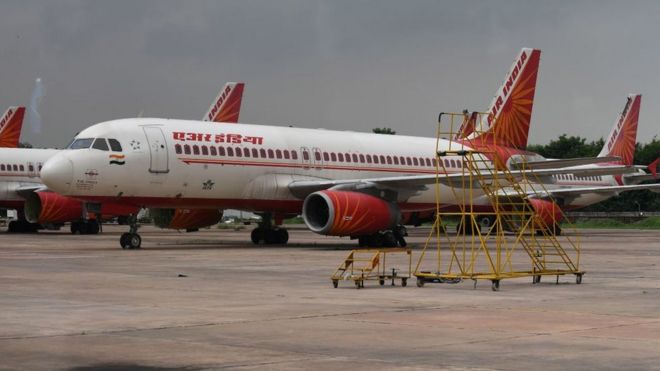
Air India planes are pictured at Indira Gandhi International Airport in New Delhi on September 10, 2018.Image copyright GETTY IMAGES
Image caption Air India was the worst-affected by the airspace closure

Pakistan has fully reopened its airspace to civilian flights, nearly five months after it was closed during a dispute with India.

The closure cost Indian airlines tens of millions of dollars, with companies forced to reroute flights.

The state-owned carrier, Air India, suffered the worst losses.

Pakistan shut its airspace in February after India carried out an air strike against what it described as a terrorist training camp at Balakot.

The attack was in retaliation for a suicide bombing in Indian-administered Kashmir that killed more than 40 Indian soldiers.

Flights via Pakistan were cancelled and other flights rerouted after Pakistan shut its airspace on 26 February.

“With immediate effect Pakistan airspace is open for all type of civil traffic on published ATS (Air Traffic Service) routes,” according to a Notice to Airmen published on the authority’s website .

Media caption Balakot: India launches air strike in Pakistan

The decision to reopen the airspace is expected to particularly help Air India which had to reroute its international flights.

Indian service providers – Air India, SpiceJet, IndiGo and GoAir – lost nearly $80m (£63m) due to the closure of the Pakistani airpspace, India’s aviation minister Hardeep Singh Puri told the parliament recently.

Source: The BBC

15/07/2019

China Focus: 17 dead or missing as rainstorms sweep central, east, south China

CHINA-GUANGXI-RONGAN-FLOODS-RECONSTRUCTION (CN)

Villagers clean a house damaged by floods at Jiangbei Village of Banlan Township, Rongan County, south China’s Guangxi Zhuang Autonomous Region,July 14, 2019. A series of reconstructing and rescuing works have been done since Rong’an was hit by heavy rains recently. (Xinhua/Huang Xiaobang)

BEIJING, July 14 (Xinhua) — At least 17 people were killed or missing and thousands evacuated as torrential downpours unleashed floods and toppled houses in central, eastern and southern China.

The National Meteorological Center on Sunday renewed a blue alert for rainstorms, predicting heavy rain in Zhejiang, Fujian, Jiangxi, Hunan, Guangdong, Yunnan, Sichuan provinces, as well as Guangxi Zhuang Autonomous Region and Tibet Autonomous Region.

Some of those regions will see up to 120 mm of torrential rainfall, it said.

China has a color-coded weather warning system, with red representing the most severe, followed by orange, yellow and blue.

As of 8 a.m. Sunday, at least 17 people died or were reported missing following rain-triggered floods in central Hunan Province, which also forced more than 470,000 people to be relocated and 179,000 were in urgent need of aid.

Four hydrometric stations along the Yangtze River in Xianning city, central Hubei Province, have reported the river water reaching or surpassing a level that can activate local anti-flood work.

In eastern Anhui Province, rain-triggered floods have affected more than 51,000 people and damaged over 2,700 hectares of crops.

The floods have forced the evacuation of 926 people, and caused a direct economic loss of more than 59.6 million yuan (8.66 million U.S. dollars) in the province.

As of Saturday noon, 330,000 people in 18 counties of Jiangxi Province have been affected by rainstorm-triggered floods, with over 10,500 residents relocated.

Poyang Lake, China’s largest freshwater lake in the lower reaches of the Yangtze, is swelling above the alarming level, according to the hydrographic department in Jiangxi.

The water level of the lake reached 20.08 meters as of 8 a.m. Saturday, 1.08 m above the warning level, as recorded by Xingzi Hydrometric Station on the lake.

In south China’s Guangxi Zhuang Autonomous Region, rainstorm has affected more than 360,000 people as of 5 p.m. Sunday, damaging over 35,000 hectares of crops, according to the region’s emergency management department.

The disastrous weather in Guangxi has prompted the region to activate a level-II emergency response and send special work teams and relief materials to the ravaged areas.

In some of the disaster-hit towns, flood water from subterranean rivers has inundated roads.

“After torrential downpours, waters on mountains and underground rivers converge into low-lying lands, which may lead to waterlogging. In affected villages, the water depth in some people’s houses can exceed two meters,” said Liao Bin, an official with Jiuwei Town, Hechi City.

Local authorities have dispatched boats and wooden rafts to transfer the stranded people, set up temporary relocation sites, and deliver living supplies to blocked villages.

Since June, the southwestern province of Guizhou has allocated a total of 16.5 million yuan for its hardest-hit 16 counties.

Source: Xinhua

15/07/2019

Record-high of 377 rivers in China report floods

BEIJING, July 14 (xinhua) — China has seen a record high of rivers reporting floods since this year’s high-water season began, the Ministry of Water Resources said Sunday.

A total of 377 rivers across the country have reported floods exceeding alarm levels, over 80 percent more than the annual number of such rivers registered since 1998 when severe floods hit China, according to Wang Zhangli, deputy director with the ministry’s flood and draught disaster prevention department.

Some 15 small and medium-sized rivers had seen the all-time worst floods, Wang added.

Both north and south China are expected to see some regions suffering intensive rainfalls from July 16 to August 15, while two to three typhoons might hit China during this period.

The ministry has sent over 30 work teams to guide local floods relief work, according to the official.

Source: Xinhua

Law of Unintended Consequences

continuously updated blog about China & India

ChiaHou's Book Reviews

continuously updated blog about China & India

What's wrong with the world; and its economy

continuously updated blog about China & India