Chindia Alert: You’ll be Living in their World Very Soon
aims to alert you to the threats and opportunities that China and India present. China and India require serious attention; case of ‘hidden dragon and crouching tiger’.
Without this attention, governments, businesses and, indeed, individuals may find themselves at a great disadvantage sooner rather than later.
The POSTs (front webpages) are mainly 'cuttings' from reliable sources, updated continuously.
The PAGEs (see Tabs, above) attempt to make the information more meaningful by putting some structure to the information we have researched and assembled since 2006.
Li Zhanshu (R), chairman of the Standing Committee of the National People’s Congress of China, holds talks with visiting Chairwoman of the National Assembly of Vietnam Nguyen Thi Kim Ngan, in Beijing, capital of China, July 11, 2019. (Xinhua/Zhang Ling)
BEIJING, July 12 (Xinhua) — Top Chinese legislator Li Zhanshu held talks with visiting Chairwoman of the National Assembly of Vietnam Nguyen Thi Kim Ngan on Thursday, agreeing to enhance exchanges and cooperation between the two countries’ legislative bodies.
Li, chairman of the Standing Committee of the National People’s Congress of China, told Ngan that China stands ready to work with Vietnam to comprehensively implement the important consensus reached by the leaders of the two parties and the two states.
Li called on the two sides to accelerate cooperation on jointly building the “Belt and Road” and the “Two Corridors, One Economic Circle,” jointly safeguard peace and stability at sea, as well as constantly improve the friendship between their people.
On the ties between the two legislative bodies, the National People’s Congress of China and the National Assembly of Vietnam, Li said they could provide legal support for bilateral cooperation. He called on both sides to learn from each other through increased communication, promote people-to-people, local and youth exchanges, and strengthen coordination within multilateral mechanisms.
Ngan said Vietnam is willing to work with China to fully implement the important consensus reached by the leaders of the two parties and the two states, to enhance mutually beneficial cooperation in various fields and promote friendship between the two peoples.
The National Assembly of Vietnam is looking forward to stronger ties with the National People’s Congress of China so as to make greater contributions to the growth of relations between the two countries, she said.
At the invitation of Li, Ngan visited China from Monday to Friday.
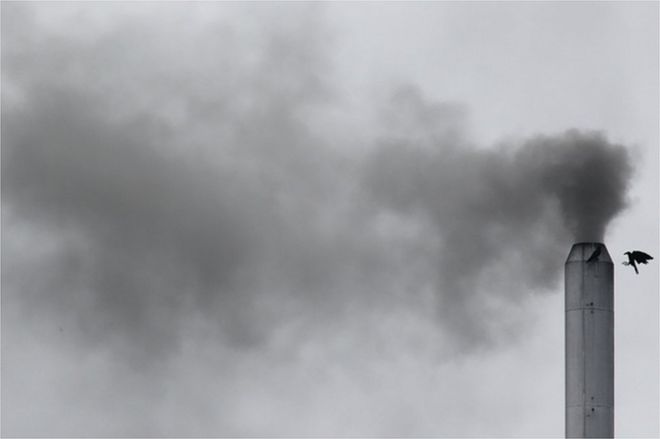
Image copyright AFPImage caption Much of the air pollution is caused by factory emissions
Air pollution contributed to the deaths of at least 1.2 million Indians in 2017 – but a unique pilot scheme to combat air pollution in the western state of Gujarat could prove to be a model for the rest of the country. The BBC spoke to experts to find out more about the world’s first ever such experiment.
The concentration of tiny particulate matter (known as PM2.5) in India is eight times the World Health Organization’s standard.
These particles are so tiny that they can enter deep into the lungs and make people susceptible to respiratory and cardiovascular diseases, making them extremely deadly.
Air pollution in India is caused by fumes from cooking on wood or dung indoors in villages, and a combination of traffic exhaust, soot and construction dust and factory emissions in the cities.
Now Gujarat has launched the world’s first “cap and trading” programme to curb particulate air pollution.
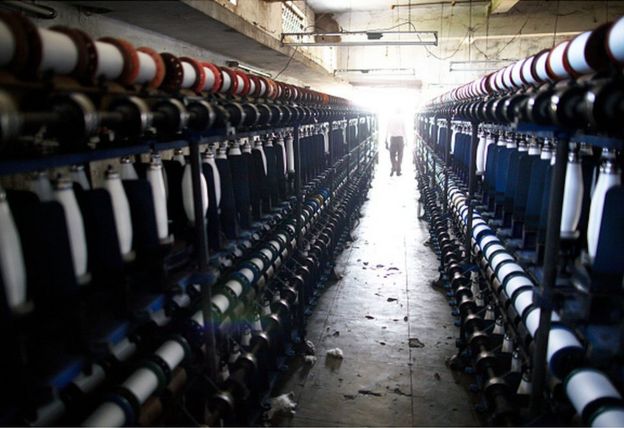
Image copyright AFPImage caption Surat is a dense industrial city where textile and dye factories are a major source of pollution
Put simply, the government sets a cap on emissions and allows factories to buy and sell permits to stay below the cap.
It is being launched in the dense, industrial city of Surat, where textile and dye factories are a major source of pollution. Since 2011, local pollution control authorities have been working on the impact of emissions trading in Surat, along with the University of Chicago and Harvard University.
How will this programme work?
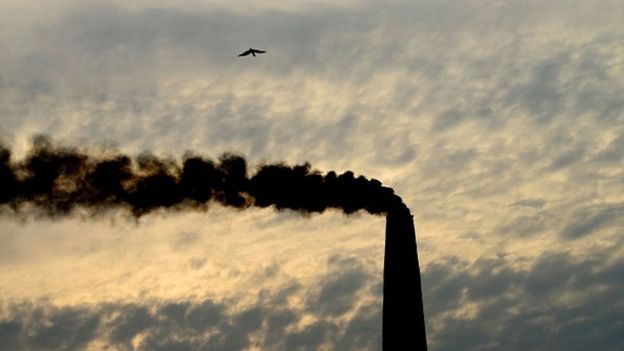
The basic commodity in the emissions trading system is particulate matter, which is emitted by industries through their smoke stacks.
Under the emissions trading system, industries must hold a permit for each unit of particulate that they emit, and must comply with the prescribed standard of 150 milligrams per cubic metre of particulate matter released in the atmosphere.
Although industries can trade permits among themselves, the total quantity of these permits are fixed, so that air pollution standards are met.
For example, an industry that finds it inexpensive to decrease emissions is likely to over-comply with the standards – this would allow them to sell its excess permits to another industry that finds it more expensive to decrease emissions.
Both industries benefit by reducing their total costs of compliance, while the total emissions are held constant.
Importantly, this trading system gives firms an incentive to find ways to reduce emissions because they are able to sell any extra reductions to other firms.
These incentives have been shown to prompt firms to innovate so that they find new and inexpensive ways to reduce their emissions.
This standard will be used to set the overall emissions from all the industries that are participating in the pilot programme.
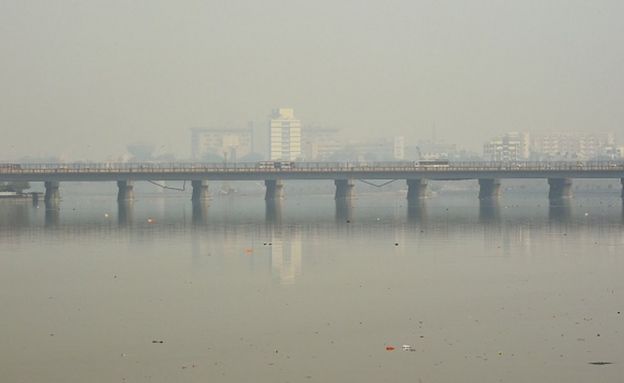
Image copyright AFPImage caption Smoggy skies over the Sabarmati river in Gujarat
Why is this programme being implemented in Surat?
Michael Greenstone, economist and director of the Energy Policy Institute at Chicago (EPIC), says the programme in Surat is a result of a multi-year process that his institute has been working on with the Gujarat Pollution Control Board (GPCB) over the last four years.
In 2015, the environment ministry ordered 17 highly polluting industries – such as pulp and paper, distillery, sugar, tanneries, power plants, and iron and steel – to mandatorily install continuous emission monitoring system (CEMS) devices. They are a network of sensors installed in factories that send live readings of pollution emitted through their smoke stacks.
In the first phase of experiment, some 170 industries installed the devices, which cost anywhere between $2,500 and $7,000 (£2,000-£5,600).
“We worked with GPCB and the industries extensively on how to understand and use this data for regulation,” Dr Greenstone says.
Image copyright AFPImage caption Highly polluting industries in India have been asked to install emission control systems
“In the Gujarat experiment, we are working with textile, paper and sugar manufacturing industries.”
Can this programme be scaled up in a country as vast as India?
The state’s pollution board set this up as a pilot so that whatever is learnt here can be applied to help the operation of the market, says Dr Greenstone.
If successful, there will be a strong case for expanding this regulatory approach to other parts of Gujarat and other states in India.
“Particulate air pollution is shortening lives in India, so if the pilot is successful there is a terrific opportunity for a win-win by scaling up emissions trading in order to reduce industries’ compliance costs and to improve air quality which would ultimately [improve] people’s health,” he adds.
Will this ambitious programme work?
Siddharth Singh, energy expert and author of The Great Smog of India, says the emissions trading scheme has the potential to work.
“Firstly, unlike in other countries, emission trading schemes are not a politically sensitive topic, so it could quietly be tested and scaled up if it proves to be successful. Secondly, India has some experience in running a similar scheme.”
India’s Bureau of Energy Efficiency has been running a programme to improve industrial energy efficiency. It targets some 500 large users of energy across India and encourages trade in energy efficiency certificates. This has led to decreased energy use and emissions, as well as cost savings.
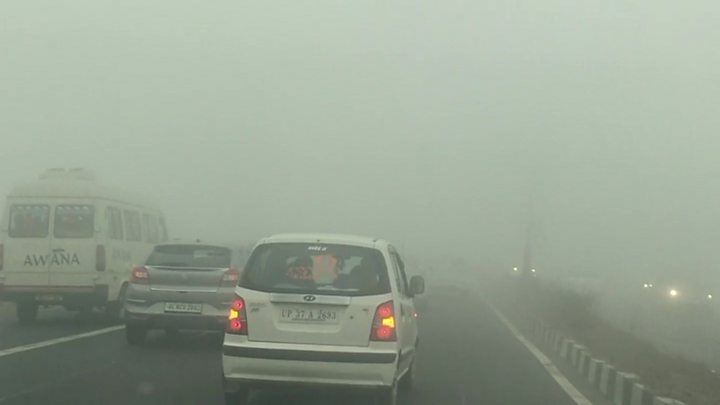
Media caption A hair-raising drive through the Delhi smog
“India is only testing the trading programme at the state level,” he adds.
“There is nothing to lose here, even if the pilot fails. But if it succeeds, it could be scaled up and prove to be a great policy tool to address particulate air pollution in India.”
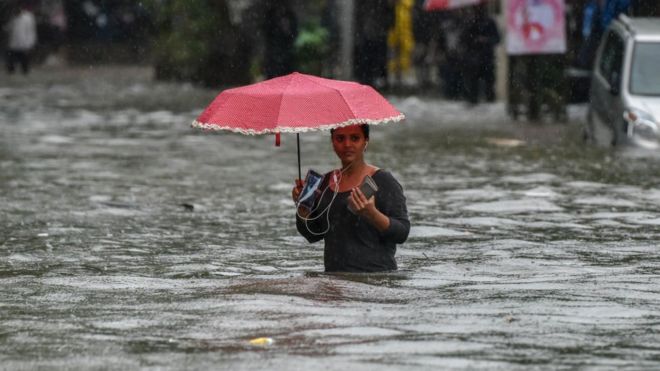
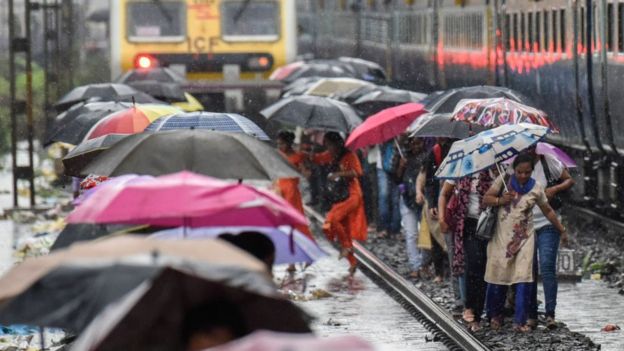
With unusually severe rainfall in India’s financial capital Mumbai over the past few weeks, and severe drought conditions elsewhere in the country, questions are being raised about whether these extreme events are becoming more common.
Reality Check has had a look at the available data for floods and drought over time to see if any patterns are emerging.
First, the rainfall
India relies on the heavy rains of the annual monsoon season for most of its water needs.
The rains arrive in different parts of the country at different times and, if they are early or late, with devastating consequences for farmers. If they are unusually heavy, built-up areas can face severe disruption.
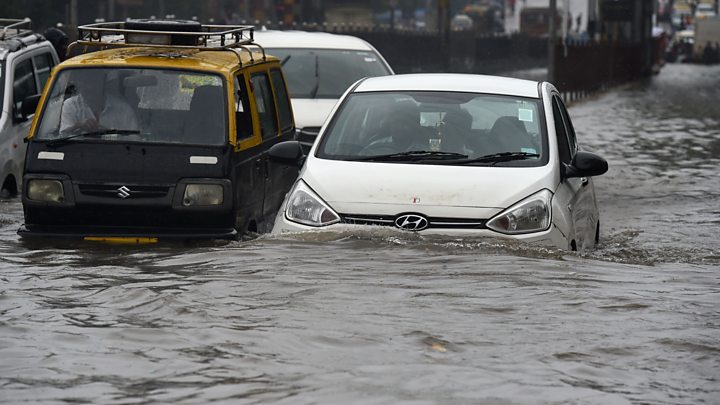
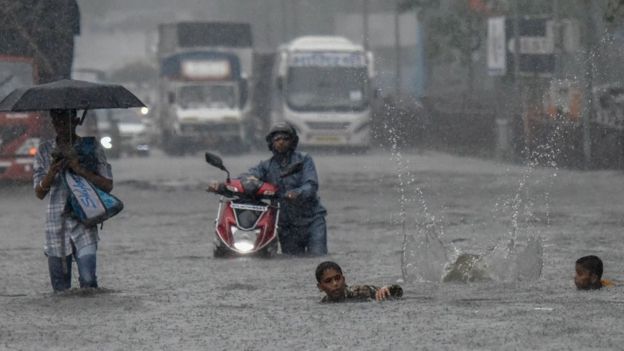
In recent days, Mumbai has been particularly badly affected, with at least 30 flood-related deaths, and the city’s top civic official says its infrastructure has not been able to cope with the erratic rainfall patterns.
Media caption Deadly floods has brought India’s financial capital to a standstill
But is there a longer-term pattern?
Looking at the annual data from the 36 weather stations that monitor monsoon rainfall across the country, no clear pattern emerges.
Yes, the rainfall levels are unpredictable and erratic, but figures since 2002 show no indication of an increase in the extremes of monsoon rainfall.
Mumbai is a good example of the problems faced by urban planners in dealing with the annual monsoon rains.
When, in 2005, at least 900 died in floods in Mumbai, a decision was made to build eight stations to pump out water. Two of them are yet to be built.
Large parts of the city are built on land reclaimed from the sea and many blame poor planning and rapid construction for the annual rain chaos.
Mumbai’s centuries-old storm drains discharge rainwater through outfalls into the sea and the city’s Mithi river, but these outfalls get blocked when high tides coincide with heavy rain.
Their capacity is also affected by silting and dumping of solid waste.
A plan to revamp the city’s drains began back in 1993, but critics say not enough has been done.
Chinese and Indian ethnic group workers have higher average earnings than their white British counterparts, the first detailed official figures show.
But the data on the ethnicity pay gap, showed all other ethnic groups have lower wages than white British workers.
The Office for National Statistics said employees in the Bangladeshi ethnic group have the largest pay gap, earning 20% less than white British employees.
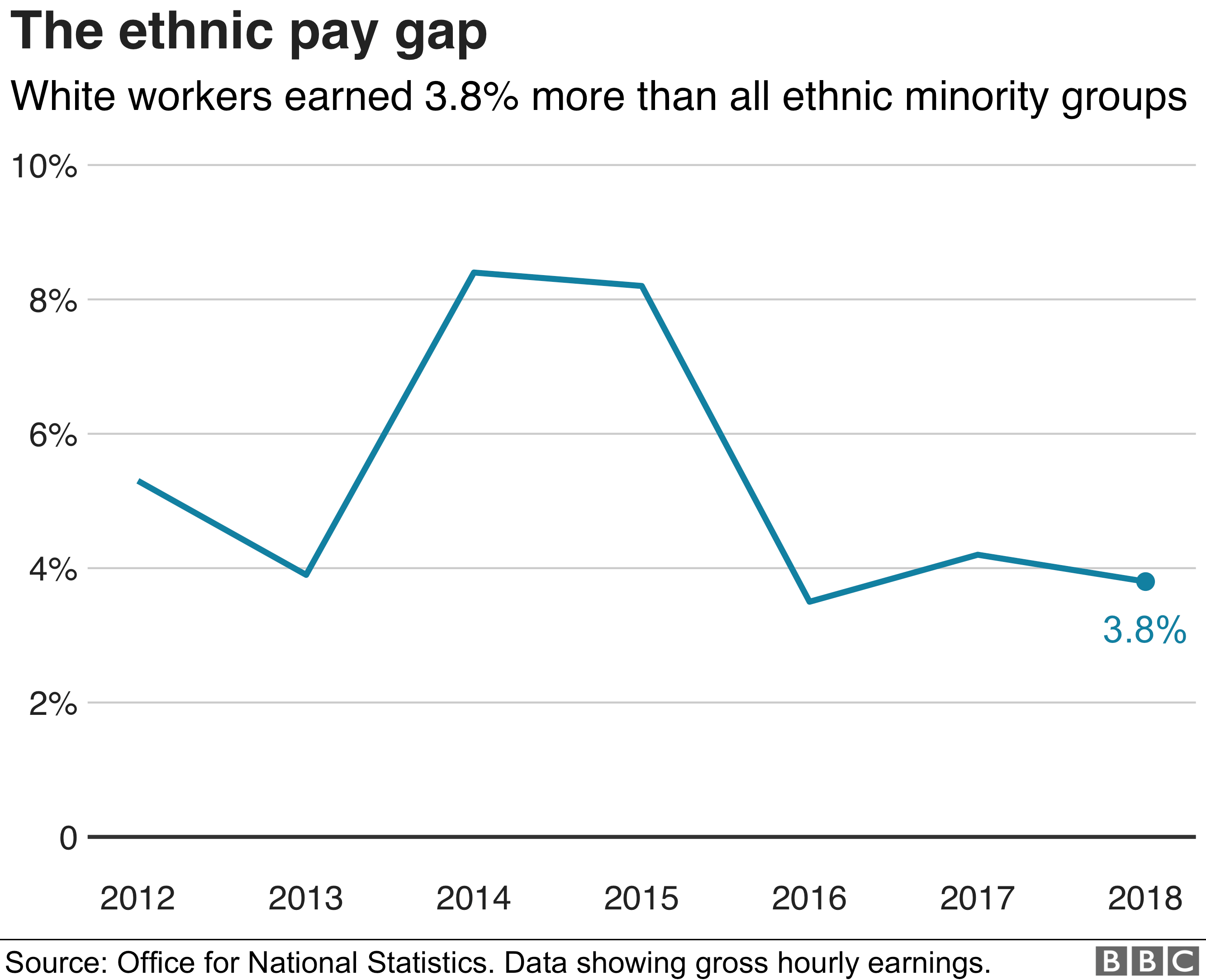
On average, ethnic minorities earn 3.8% less than white ethnic groups.
The categories are the official ones used by ONS.
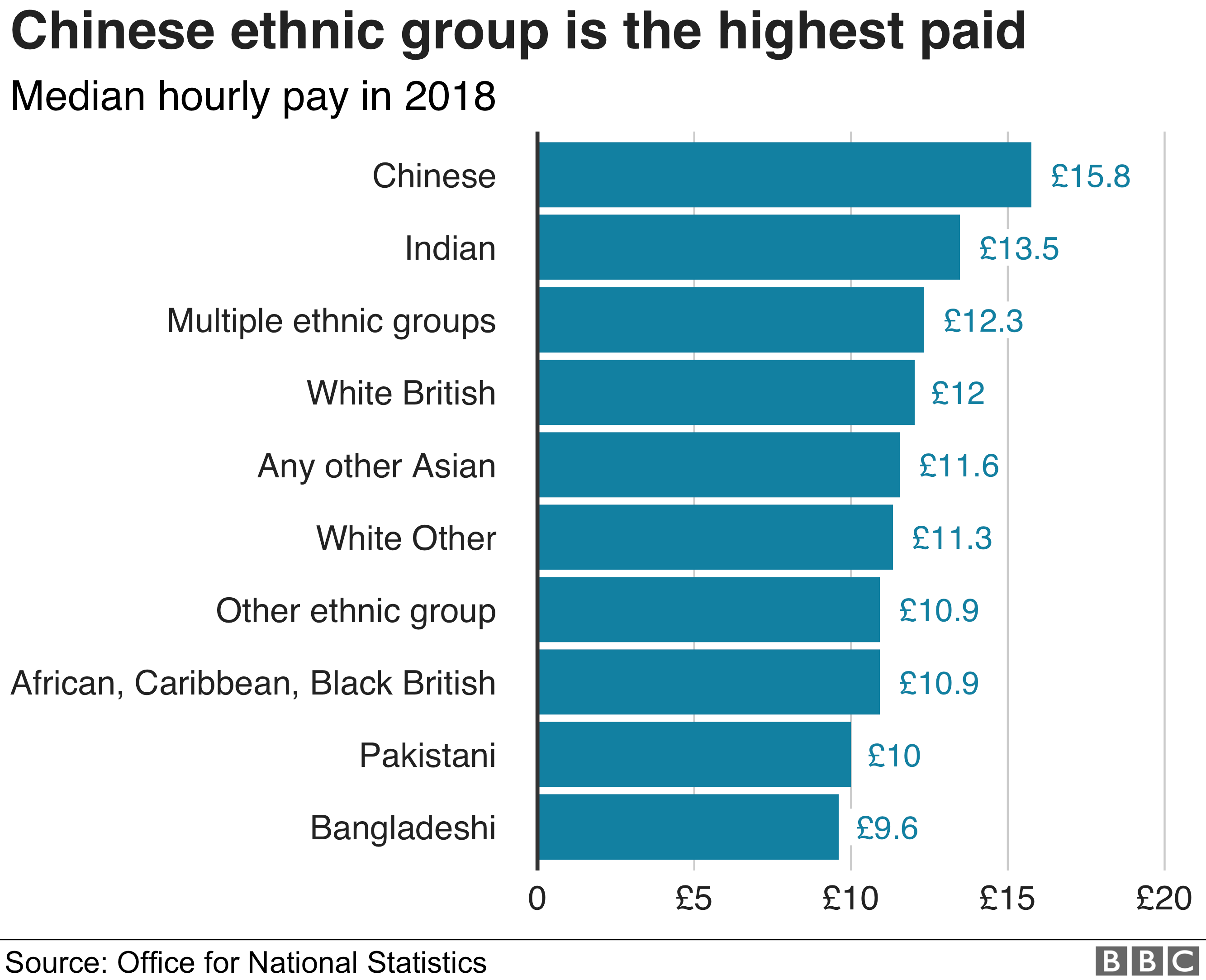
In 2018, employees from the Chinese ethnic group earned 30.9% more than white British employees.
Hugh Stickland, senior ONS analyst, said: “Overall, employees from certain ethnic groups such as Indian and Chinese, have higher average earnings than their white British counterparts.
“However, all other ethnic groups have average wages lower than for white British employees, with employees from the Bangladeshi ethnic group having the largest pay gap.
“However, once characteristics such as education and occupation are taken into account, the pay gap between white British and most other ethnic groups becomes narrower, though significant differences still remain.”
Bangladeshis are the UK’s lowest earners
The data – based on median gross hourly earnings between 2012 and 2018 – shows that the Chinese ethnicity group is the highest paid, receiving £15.75 an hour in 2018.
That group is followed by the Indian ethnic group – which earns £13.47 an hour – and mixed/multiple ethnicity group, with a £12.33 hourly pay rate.
The median pay of the white British group was £12.03. The Bangladeshi group had the lowest median hourly pay of £9.60 with the second-lowest paid group being of Pakistani origin at £10 an hour.
“The harsh reality is that even today race still plays a real role in determining pay,” said Frances O’Grady, general secretary of the TUC.
“Ministers must take bold action to confront inequality and racism in the labour market. The obvious first step is to introduce mandatory ethnicity pay gap reporting without delay,” she said.
The government has already introduced mandatory reporting on the gender pay gap – which stands at 9.6% in favour of men – and the ONS data also shows discrepancies in male and female earnings in the ethnic groups.
The Chinese and Indian groups, which both have the highest rate of hourly pay, were among those with the biggest gender gaps.
Chinese men on average earned 19.1% more than women and Indian men earned 23.2% more than women.
But women in the Bangladeshi ethnic group earn more than their male counterparts – with a 10.5% gap.
The ONS said, though, that the sample size for the Bangladeshi group was smaller and susceptible to inaccuracy compared with other ethnic groups.
London’s gap
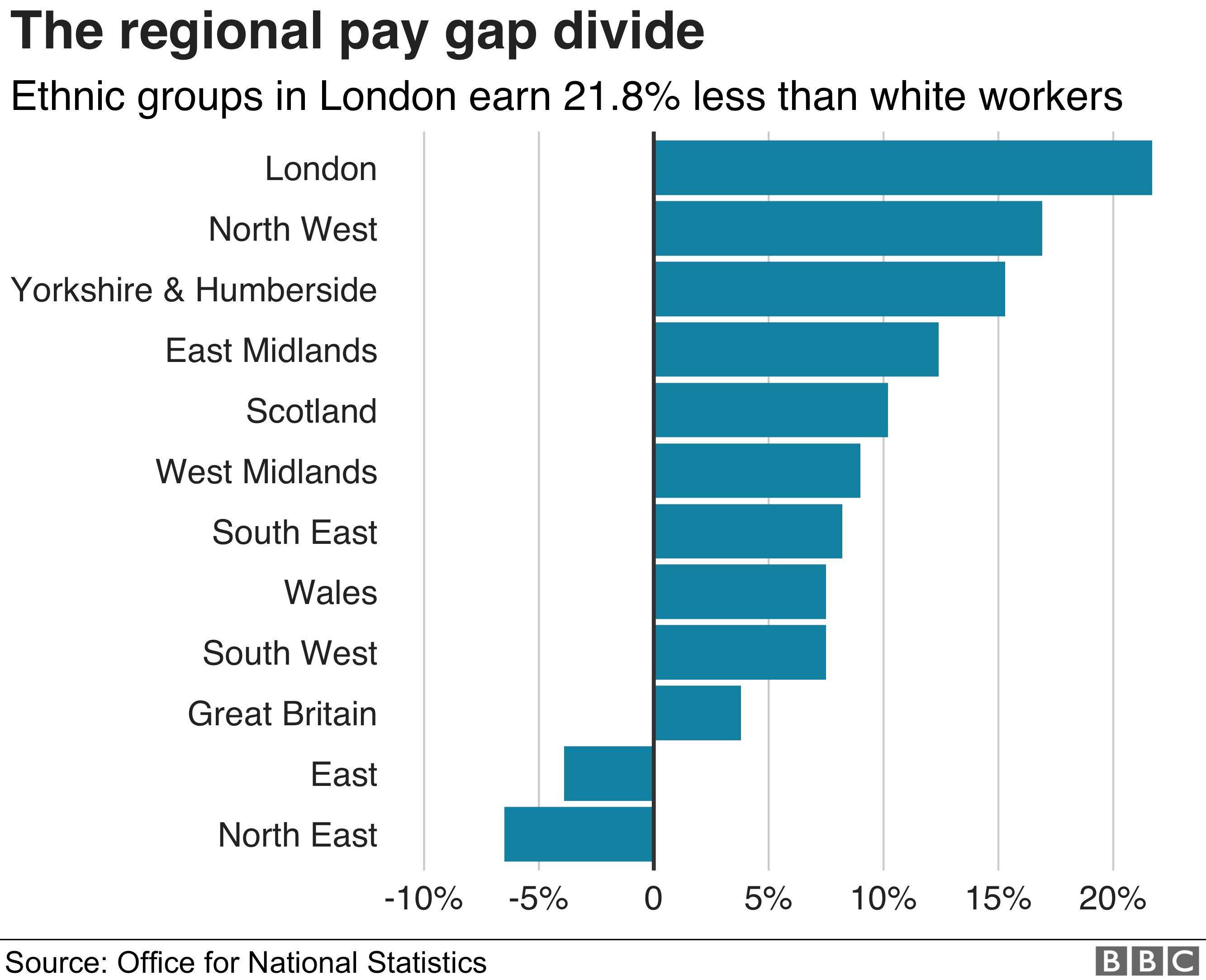
London, which has the highest proportion of its population classified as an ethnic minority group, also has the largest pay gap of 21.7%.
The ONS found this gap was reversed in other parts of Britain. In the north-east of England, for instance, employees from an ethnic minority group had average earnings that were 6.5% more than the average earnings of white employees.
Birth-place divide
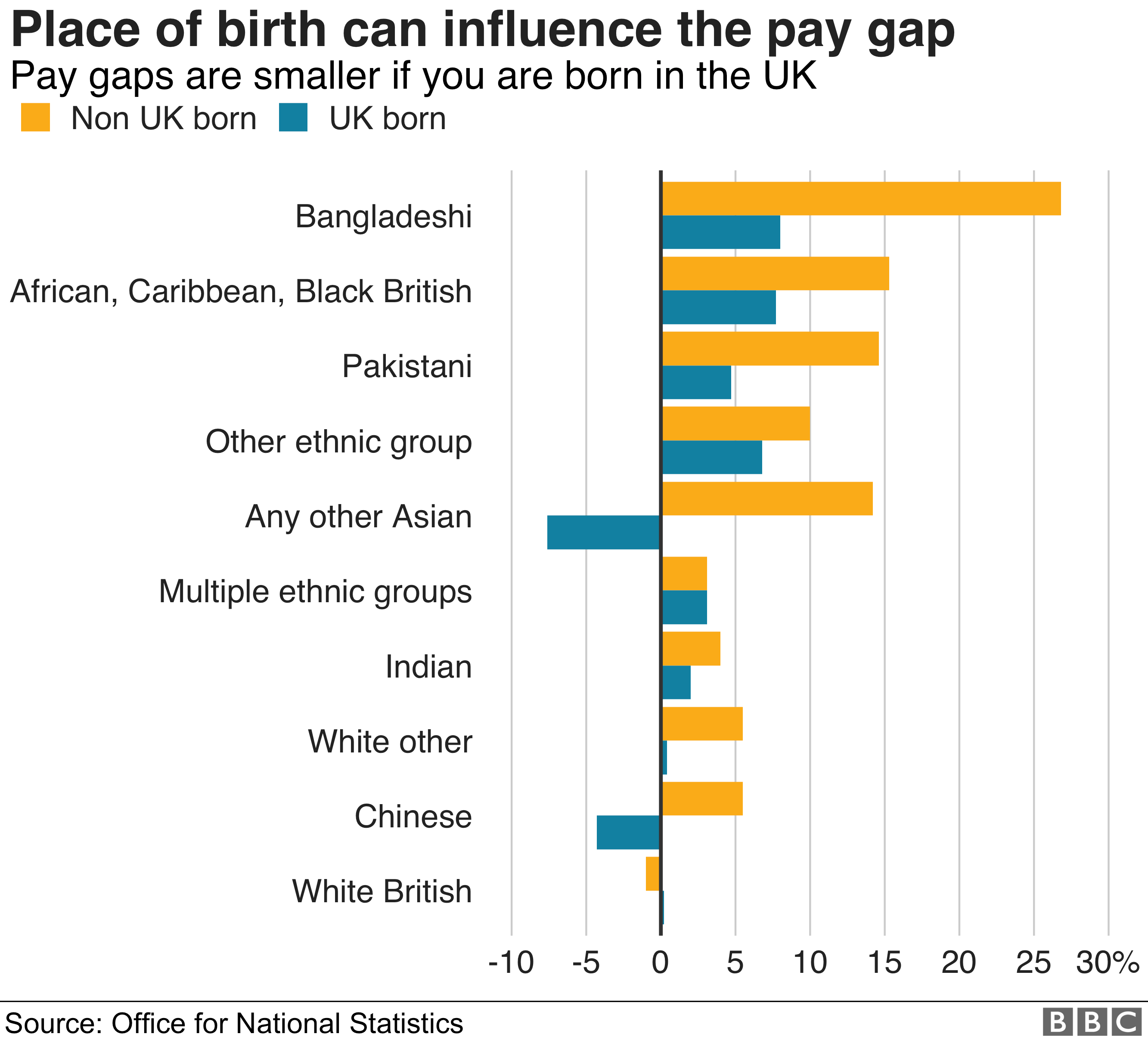
The ONS says that where someone is born can have an influence on how much they are paid.
“By comparing those who were born in the UK and those who were not, it may give us an idea of what sort of effect having a UK education and the higher likelihood of speaking English as a first language may have on those from an ethnic minority background,” the ONS said.
It found those in the Bangladeshi ethnic group – who had been born in the UK – earned 8% less than white British employees. But for Bangladeshi employees born outside the UK the gap was 26.8%.
When taking other factors into account, such as education, UK-born employees in the Indian and Chinese ethnic groups do not have pay gaps that are “statistically different” from the UK-born white British employees, the ONS found.
For example, almost a third of workers in the Indian ethnic group work in professional roles which means they tend to be higher-paid.
BEIJING (Reuters) – China’s producer prices flatlined in June on lower oil prices and weak global demand, fuelling concerns that a slowdown in manufacturing from a bruising trade war will further drag on growth in the world’s second-biggest economy.
The producer price index (PPI) showed no growth in June from a year earlier, the National Bureau of Statistics (NBS) said on Wednesday. That compared with a 0.6% rise in May and a gain of 0.3% forecast by economists in a Reuters poll.
The June PPI reading was the lowest since August 2016 when the index last fell year-on-year. Factory gate prices slowed from May as well, falling 0.3%.
On the other hand, June consumer price growth in annual terms matched a 15-month high seen in May as supply shortages triggered by the African swine fever outbreak and extreme weather conditions continued to push up pork and fruit prices.
A cooling in producer prices, seen as a gauge of industrial demand that gives momentum to investment and profits in the Chinese economy, may rekindle worries about deflation and prompt the authorities to launch more aggressive stimulus.
“The bigger picture is inflation, apart from food inflation, is actually pretty weak and with the economy continuing to cool, I think the return to factory-gate deflation is very likely,” said Julian Evans-Pritchard, senior China economist at Capital Economics.
Tommy Xie, China economist at OCBC Bank in Singapore, also said he saw the risk of produce prices contracting in annual terms as early as next month.
Upstream sectors were particularly weak, with prices for oil and natural gas extraction down 1.8% from a year earlier, the NBS data showed. Price gains in the coal mining sector also eased.
Although Beijing and Washington reached another truce in their trade war last month, economists expect continuing pressure on the Chinese economy as manufacturers shift more production abroad to avoid U.S. tariffs on China-made goods.
China’s factory activity shrank more than expected in June as tariffs and weaker domestic demand hit new orders for goods.
Beijing is fast-tracking more infrastructure projects but prices for some construction materials remain lacklustre.
Spot prices for steel rebar in June lingered below the levels of a year earlier and may worsen due to seasonal slackening of construction activity amid high temperatures and rainfall in summer.
Premier Li Keqiang pledged earlier this month to implement financing tools including reserve requirement ratio (RRR) cuts to support small and private firms, adding to expectations for further stimulus measures.
At the same time, however, he and other top policymakers have reiterated that China will not resort to large-scale stimulus.
Evans-Pritchard from Capital Economics said the government could adopt more monetary easing and off-budget fiscal support to bolster the economy.
“But I think the days of big drastic stimulus are probably over. The most we can hope for is really it (more government support) helps to dampen the headwinds and prevent the economy from slowing too sharply.”
CPI STILL ELEVATED
The consumer price index (CPI) in June rose 2.7% in annual terms, driven by higher food prices. Fruit prices surged 42.7% from a year earlier while pork prices rose 21.1%.
Analysts polled by Reuters expected consumer prices to rise 2.7%, matching the pace seen in May.
Some economists said consumer inflation may accelerate due to dwindling pig stocks, but others contended price rises will cool.
“CPI may have peaked in June and could come off steadily in the second half,” said Wang Jun, Beijing-based chief economist at Zhongyuan Bank. “There are deflationary risks but the overall pressure is not big, because deflationary risk is only restricted to manufacturing products.”
Core inflation that strips out volatile food and energy prices was at 1.6% in June from a year earlier, the same annual pace as in May.
On a month-on-month basis, CPI fell 0.1% in June after no change in May.
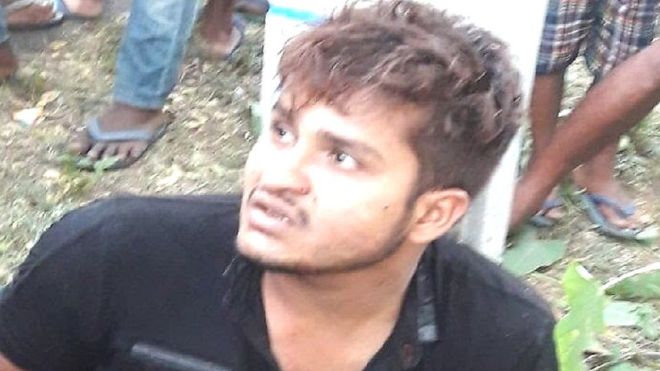
Image copyright BBC HINDIImage caption A video showing Tabrez Ansari pleading for his life was widely circulated on social media
In many parts of India, Hindus often invoke the popular god Ram’s name as a greeting. But in recent years, Hindu lynch mobs have turned Ram’s name into a murder cry, writes the BBC’s Geeta Pandey in Delhi.
Last month, a video that went viral on social media showed a terrified Muslim man tied to a pole being assaulted by a lynch mob made up of Hindu men in the eastern state of Jharkhand.
In the video, 24-year old Tabrez Ansari is seen pleading for his life, blood and tears streaming down his face.
His attackers force him to repeatedly chant “Jai Shri Ram”, which translates from Hindi to “hail Lord Ram” or “victory to Lord Ram”.
Mr Ansari does as told, and when the mob is finished with him, he is handed over to the police.
The police lock him up and his family is not allowed to see him. He dies four days later from injuries sustained during the attack.
Mr Ansari is not the only one to have been singled out in this manner. June was a particularly bloody month for Indian Muslims, who were targeted in several such attacks.
In Barpeta district in the north-eastern state of Assam, a group of young Muslim men were assaulted and then made to chant slogans like “Jai Shri Ram”, “Bharat Mata ki Jai” (long live Mother India) and “Pakistan murdabad” (death to Pakistan).
In the commercial capital Mumbai, a 25-year-old Muslim taxi driver was abused, beaten up and told to chant “Jai Shri Ram” by a group of men. Faizal Usman Khan said he was attacked when his taxi broke down and he was trying to fix it. His attackers fled after a passenger called the police.
And in the eastern city of Kolkata, Hafeez Mohd Sahrukh Haldar, a 26-year-old Muslim teacher at a madrassa (religious seminary), was heckled while travelling on a train by a group of men chanting “Jai Shri Ram”.
He told reporters that they made fun of his clothes and beard, and then insisted that he also chant the slogans. When he refused, they pushed him out of the moving train. Mr Haldar was injured, but lived to tell the tale.
The slogan-shouting and heckling is no longer restricted to the mob and the streets. Worryingly, it has also entered parliament.
When the newly-elected lower house convened for the first time on 17 June, Muslim and opposition MPs were heckled by members of Prime Minister Narendra Modi’s Bharatiya Janata Party (BJP) when they stood up to take the oath.
The attacks on the minorities have been condemned by opposition politicians. Rahul Gandhi, before he resigned as leader of the main opposition Congress party, described the mob lynching of Tabrez Ansari as a “blot on humanity”.
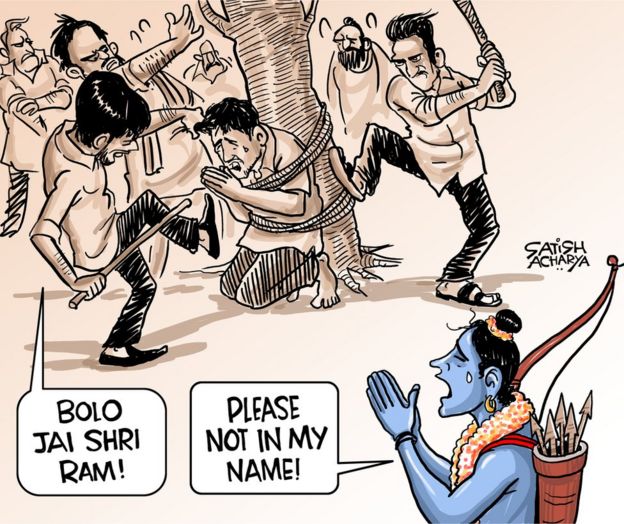
Many critics, including cartoonist Satish Acharya, have also expressed alarm over the rising number of such incidents.
Image copyright COURTESY: SATISH ACHARYAImage caption Cartoonist Satish Acharya says using Ram’s name to unleash violence risks widening India’s religious divide
In villages across north India, devout Hindus have traditionally used “Ram Ram”, “Jai Siya Ram” (goddess Siya or Sita is Ram’s consort) or “Jai Ram Ji Ki” as a greeting.
And many feel a sense of unease that these attacks and killings are being carried out in the name of a god revered by millions for his sense of justice and benevolence.
But “Jai Shri Ram” has now been turned into a cry of attack, meant to intimidate and threaten those who worship differently.
The party’s then president LK Advani launched a march supporting the construction of the temple and in December 1992 mobs chanting “Jai Shri Ram” marched upon the northern town and tore down the 16th Century Babri mosque.
The BJP believes the mosque was built after the destruction of a temple to Ram that once stood there.
The campaign galvanised Hindu voters in favour of the BJP and helped turn Ram from personal to political. Since then, the party has consistently invoked the deity during elections and the 2019 polls were no exception.
Critics say those who heckle minorities, inside parliament and outside it, see the BJP’s sweeping victory in the April/May elections as sanctioning their behaviour. The party won more than 300 seats in the 543-member lower house, propelling Mr Modi to a second term.
Mr Modi’s first term in power was marked by violence against minorities. There were numerous incidents of Muslims being attacked by so-called “cow vigilantes” over rumours that they had eaten beef, or that they were trying to smuggle cows – an animal many Hindus consider holy – for slaughter.
The prime minister did not condone such attacks, but was criticised for not condemning them either.
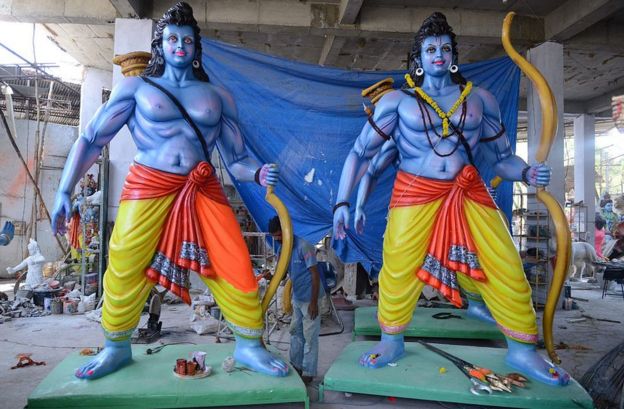
Image copyright GETTY IMAGESImage caption Millions of Hindus revere the god Ram for his sense of justice and benevolence
But right after the BJP’s stunning victory in May, Mr Modi expanded his earlier slogan of “sabka saath, sabka vikas” (development for all) to include “sabka vishwas” (to win the trust of everyone), giving rise to hopes that this term would be different.
A few days after Tabrez Ansari’s death, he told parliament that he was “pained” by the incident and that “the guilty must be severely punished”.
But many Indians doubt that any serious action will be taken against those who carry out such attacks.
Several dozen people have been killed and hundreds injured since 2014 in mob attacks, but there have been convictions in only a handful of cases.
In others, the accused remain free, often due to a lack of evidence, and some have been seen being feted by Mr Modi’s party’s colleagues.
BJP leaders often downplay such incidents, calling them “minor” and accusing the press of “maligning the image of the government”.
One BJP MP recently told a news website that the popularity of the slogan “Jai Shri Ram” was a sort of protest by Hindus “against a certain bias and tilt of the polity towards minorities”.
“They are also asserting that we are Hindus and we count as Hindus,” he said.
But critics say that there are other – better – ways of doing that.
BEIJING, July 8 (Xinhua) — China’s high-speed railway (HSR) has registered rapid growth and offered many viable practices for other countries considering HSR investment, according to a World Bank report released Monday.
Key factors enabling the growth include the development of a comprehensive long-term plan and the standardization of designs and procedures, said the report, which summarizes China’s HSR development.
China’s Medium- and Long-Term Railway Plan, which looks up to 15 years ahead, provides a clear framework for the development of the system, according to the World Bank.
Meanwhile, the construction cost of the Chinese HSR network stood at about two-thirds of the cost in other countries, the report said, citing an average of 17 million U. S. dollars to 21 million U. S. dollars per km.
“China has built the largest high-speed rail network in the world. The impacts go well beyond the railway sector and include changed patterns of urban development, increases in tourism, and promotion of regional economic growth,” said Martin Raiser, World Bank director of China.
By the end of 2018, the total railway operation mileage reached 131,000 km, five times higher than 1949, while the high-speed railway exceeded 29,000 km, accounting for more than 60 percent of the world’s total, according to a recent report by the National Bureau of Statistics.
In China, high-speed rail service is competitive with road and air transport for distances of up to about 1,200 km, while fares are about one-fourth the base fares in other countries, which allows HSR trains to attract passengers from all income groups, the report said.
“Large numbers of people are now able to travel more easily and reliably than ever before, and the network has laid the groundwork for future reductions in greenhouse gas emissions,” Raiser said.
Chinese State Councilor and Foreign Minister Wang Yi (L) and Polish Foreign Minister Jacek Czaputowicz attend a press conference after holding talks and attending the opening ceremony of the second plenary session of China-Poland Intergovernmental Cooperation Committee in Warsaw, Poland, on July 8, 2019. (Xinhua/Chen Xu)
WARSAW, July 8 (Xinhua) — Chinese State Councilor and Foreign Minister Wang Yi held talks with Polish Foreign Minister Jacek Czaputowicz here on Monday, calling for deepening comprehensive strategic partnership with Poland.
Noting this year marks the 70th anniversary of the establishment of diplomatic relations between China and Poland, Wang said bilateral relations have withstood the tests of changing international situations and maintained good momentum. During Chinese leader’s visit to Poland in 2016, the leaders of the two countries agreed to elevate the bilateral ties to comprehensive strategic partnership, indicating the direction for future development of the bilateral ties.
China attaches great importance to the key role Poland plays as a major country among Central and Eastern European Countries (CEEC) as well as in the European Union (EU), Wang said, adding China stands ready to work with the Polish side to extend traditional friendship, build cooperation consensus, inject new impetus into bilateral relations, and push for the comprehensive strategic partnership between the two nations to run at the forefront of China-CEEC ties.
The Chinese foreign minister called on the two countries to strengthen strategic communication, maintain high-level exchanges in various fields, cement political mutual trust, and respect and give consideration to each other’s core interests and major concerns.
The two sides should seize the cooperation opportunities of jointly building the Belt and Road Initiative (BRI) to boost infrastructural construction, production capacity, and Eurasian transport corridor so as to contribute to the global interconnectivity partnership, Wang said.
The two sides should also cultivate new growth points in areas like nuclear power, environmental protection and technological innovation, he added.
The Chinese market is open to Poland, and China is willing to import more Polish products to mitigate trade imbalance, Wang said, noting that China encourages its enterprises to invest and operate in Poland and hopes the Polish side will offer them fair, open and non-discriminatory business environment.
The Chinese foreign minister also called on the two sides to uphold multilateralism, safeguard the rules-based multilateral trading system, and join hand in hand to tackle global challenges like climate change.
The two sides should also strengthen communication and coordination on international and regional affairs so as to boost stability and prosperity in Eurasia, he said. The Chinese official also hopes Poland can serve as a bridge linking China and Western countries as well as Asia and Europe.
On his part, Czaputowicz said Poland, located in the heartland of the Europe, is willing to actively take part in the joint construction of the BRI, strengthen bilateral exchanges, and play an active role in promoting China-CEEC cooperation and EU-China ties.
Poland welcomes Chinese investments, and will treat foreign enterprises according to international laws and business principles. Poland will not exclude Chinese enterprises or adopt any discriminatory measures against them, said Czaputowicz.
The two officials also on Monday attended the opening ceremony of the second plenary session of China-Poland Intergovernmental Cooperation Committee.
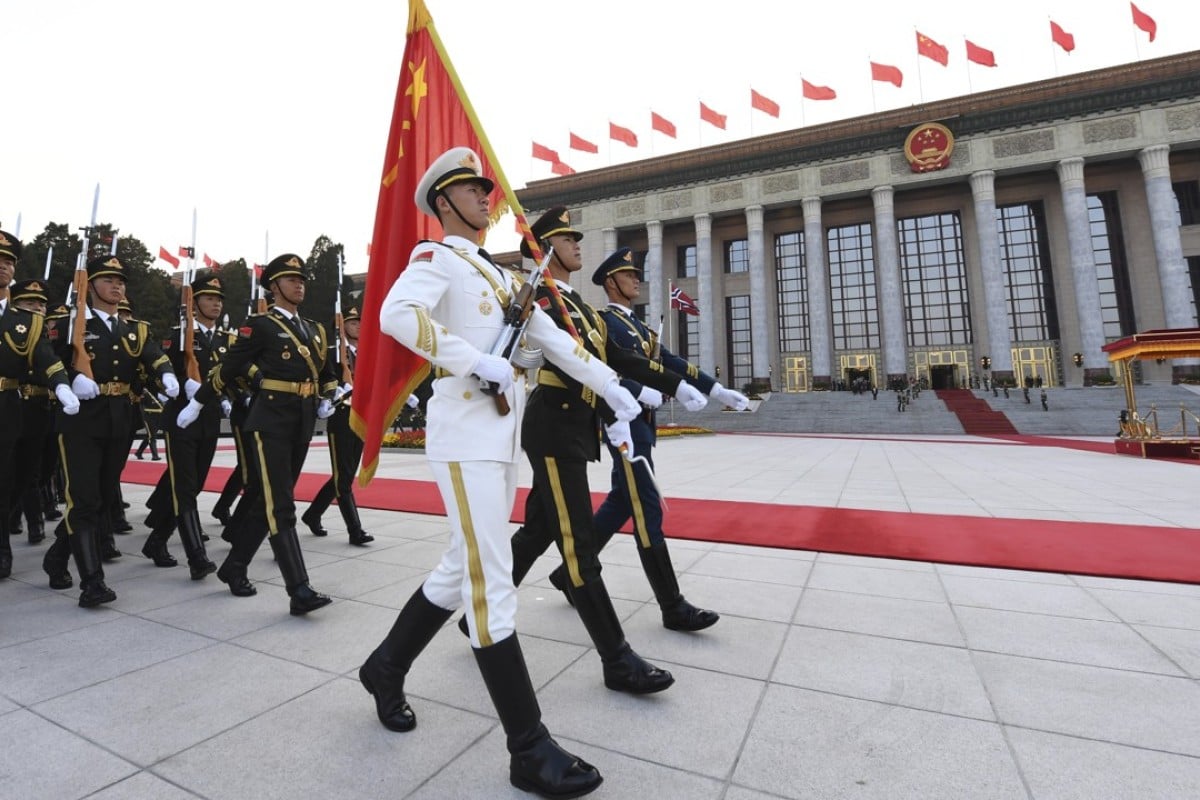
Relations between the Asian giants had been strained after a 73-day military stand-off at their disputed border last year
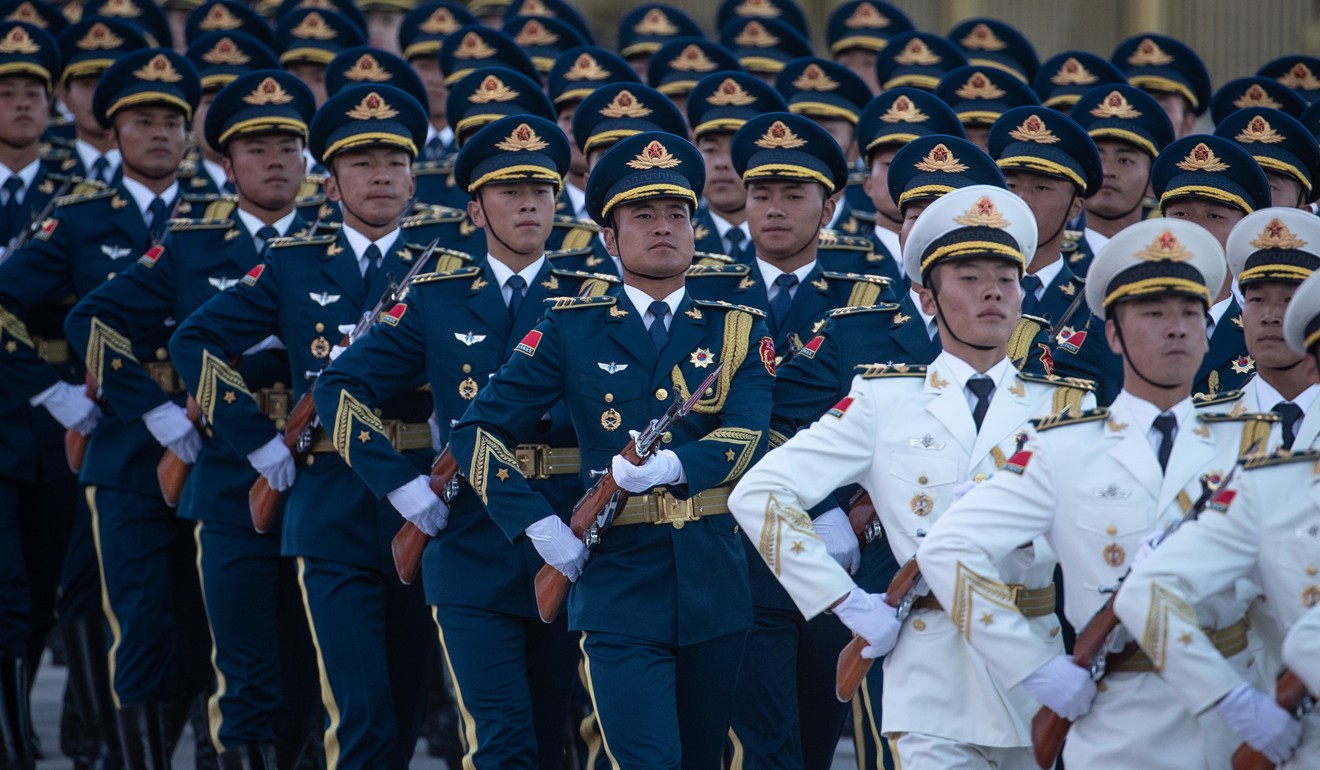
The Chinese People’s Liberation Army in Beijing. Photo: EPA
China and India aim to hold joint army drills in China before the end of this year, China’s Defence Ministry said on Thursday, as the two countries continue a rapid rapprochement.
Relations between the Asian giants were strained last year over a 73-day military face-off in a remote, high-altitude stretch of their disputed Himalayan border.
Chinese ‘tourists’ face 7 years in Indian jail over shahtoosh shawls made from endangered antelope
But the neighbours have over recent months been working on mending ties and Chinese Defence Minister Wei Fenghe met Indian Prime Minister Narendra Modi in New Delhi in August.
Speaking at a regular monthly news briefing, Chinese Defence Ministry spokesman Wu Qian said that the joint exercise was planned for before the end of this year.
China and India are aiming to hold joint army drills this year as part of an ongoing rapprochement. Photo: EPA
The two countries would meet in the southwestern Chinese city of Chengdu next month to discuss the arrangements, he added, without giving other details.
India and China fought a war in 1962 and the unresolved dispute over stretches of their 3,500km (2,200 miles) border has clouded relations ever since.
But the two big Asian economies share similar positions on a host of issues including concern about US tariffs and Chinese President Xi Jinping and Modi agreed in April to improve relations.
Chinese president also called for the three nations to uphold multilateralism in talks with Vladimir Putin and Narendra Modi in Osaka
In a separate meeting with other BRICS leaders, he said Beijing opposed ‘illegal and unilateral sanctions’ and ‘long-arm jurisdiction’
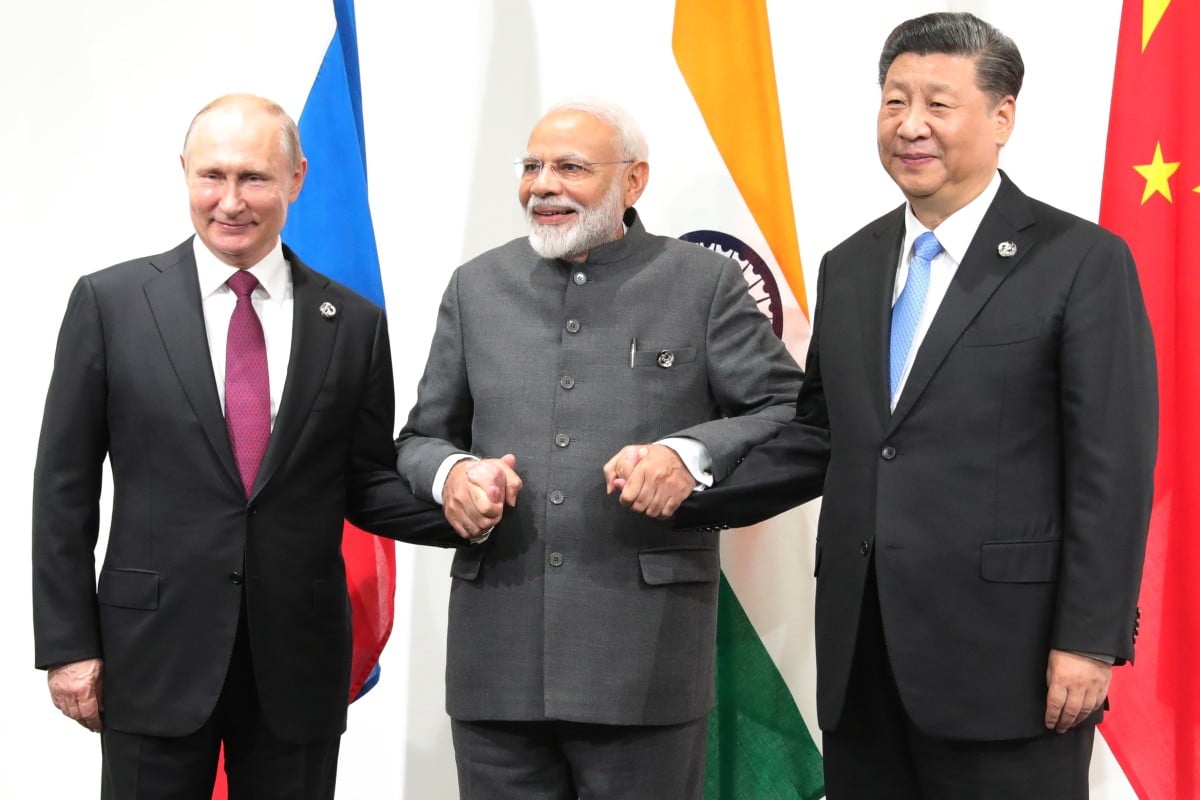
(From left) Russian President Vladimir Putin, Indian Prime Minister Narendra Modi and Chinese leader Xi Jinping meet on the sidelines of the G20 summit in Osaka, Japan, on Friday. Photo: EPA-EFE
Chinese President Xi Jinping on Friday called on the leaders of Russia and India to take “global responsibility” to safeguard the three countries’ interests and uphold multilateralism, as Beijing seeks to rally support amid its protracted trade war with Washington.
Xi made the remarks during a trilateral meeting with Vladimir Putin and Narendra Modi on the sidelines of the annual
with US President Donald Trump, seeking to reach a truce on the year-long trade conflict between the world’s two biggest economies.
“The rise of protectionism and unilateralism has severely affected global stability and economic growth, as well as the existing international order which emerging economies and developing countries have relied on,” Xi was quoted as saying by state broadcaster CCTV.
“China, Russia and India should take on global responsibility to safeguard the fundamental and long-term interests of these three countries and the world,” he said.
Xi also called for the nations to promote “a more multipolar world and the democratisation of international relations” – meaning with less reliance on a US-led world order.
During a meeting with leaders of the other BRICS countries – major emerging economies Brazil, Russia, India, China and South Africa – Xi also said Beijing opposed what it saw as “illegal and unilateral sanctions” and “long-arm jurisdiction”.
The efforts to forge closer ties among China, Russia and India come as all three nations are locked in disputes with the United States.
New Delhi, a key strategic ally in Washington’s Indo-Pacific policy to contain China’s rise, has been upset over tariffs imposed on Indian goods by the Trump administration. Meanwhile, geopolitical rivalry and the Kremlin’s alleged meddling in US elections has strained relations between Moscow and Washington.
Beneath the smiles and handshakes, tensions simmer as world leaders meet for G20
Wu Jianghao, director general of the Chinese foreign ministry’s Asian affairs department, said the trilateral meeting laid out a framework for future cooperation.
“The three countries have spoken with one voice on some major global issues, helping stability and injecting positive energy to the current international situation – which is filled with instability and uncertainties,” Wu said at a briefing on Friday.
Wu said that the leaders did not talk about Huawei Technologies or 5G networks, but that the three countries had maintained good communication on telecoms issues and would continue to cooperate.
Washington has banned US companies from selling American technology to Huawei and put pressure on its allies to block the Chinese tech firm over security concerns.
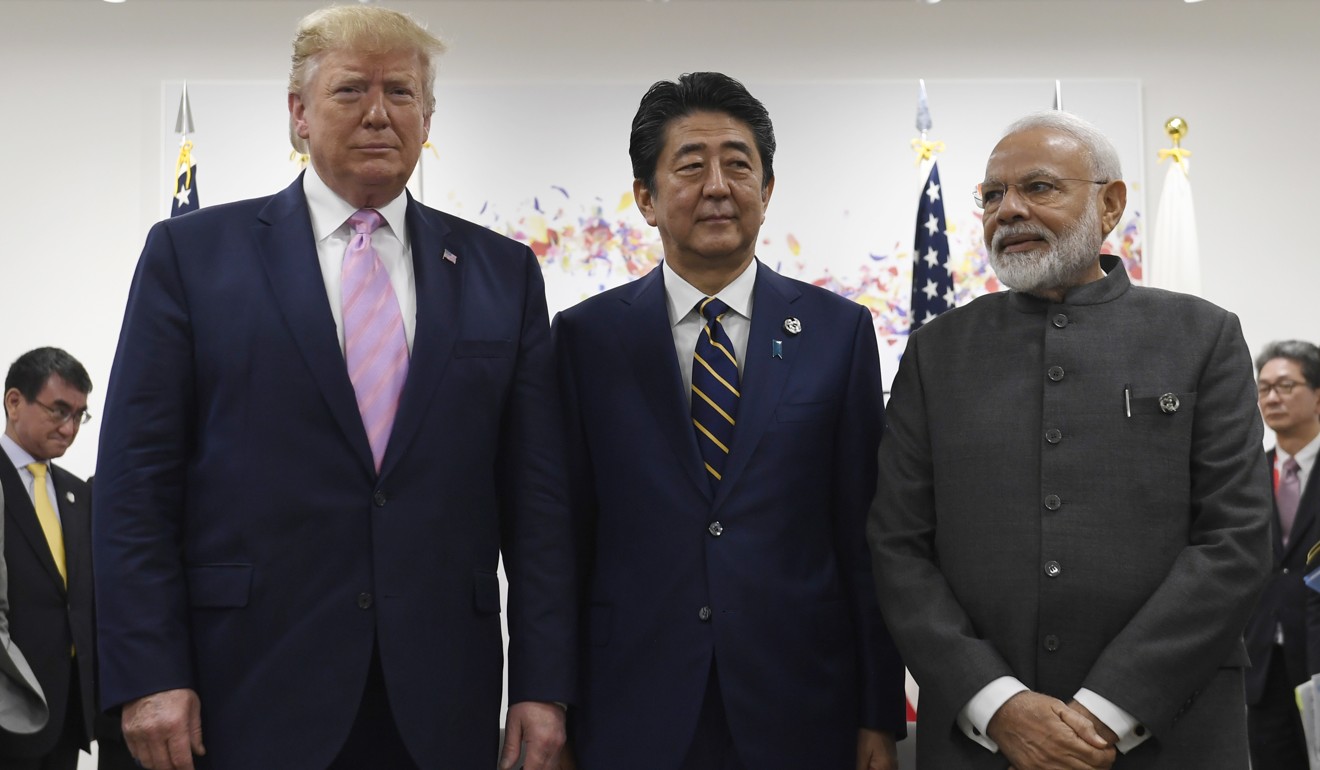
(From left) US President Donald Trump, Japanese Prime Minister Shinzo Abe and Indian Prime Minister Narendra Modi pose for a photo before their meeting. Photo: AP
Meanwhile, the United States is also seeking to build ties with India, with Trump holding trilateral talks with Modi and Japanese Prime Minister Shinzo Abe on Friday.
Indian Foreign Secretary Vijay Gokhale described that trilateral meeting as “very good”, saying it was “short but very productive”.
“The main topic of discussion was the Indo-Pacific, about how the three countries could work together in terms of connectivity, infrastructure and ensuring that peace and stability is maintained, and working together to build upon this new concept so that it would benefit the region as a whole and the three countries,” Gokhale said.
On the Modi-Trump bilateral meeting, he said the two leaders had “a very warm discussion”. They also briefly discussed 5G, with the focus on business cooperation between the two countries to leverage their technology and the potential of the Indian market, according to Gokhale.
He said the discussion of how to develop 5G networks was “in terms of business, not in terms of governments”. “It’s an exciting new area that India and the US can work together [on],” he said.