28/06/2019

India arrests after women’s heads shaved for resisting rape

The two women had their heads forcibly shavedImage copyright ANI

Two people have been arrested in India’s Bihar state after a group of men shaved the heads of two women as “punishment” for resisting rape.

The group, which included a local official, ambushed the mother and daughter in their home with the intent of raping them, police said.

When the women resisted, they assaulted them, shaved their heads and paraded them through the village.

Police say they are searching for five others involved in the incident.

“We were beaten with sticks very badly. I have injuries all over my body and my daughter also has some injuries,” the mother told the ANI news agency.

The women also said that their heads were shaved in front of the entire village.

“Some men entered the victims’ home and tried to molest the daughter,” a police officer told local media, adding that her mother helped her fight off the men.

The state’s women commission has also condemned the incident, saying that “further action” will be taken.

This is not the first time such an incident has occurred in the state.

In April, a teenage girl was attacked with acid for resisting an attempted gang rape.

Public outrage over sexual violence in India rose dramatically after the 2012 gang rape and murder of a student on a Delhi bus.

The issue became a political flashpoint again in 2018, after a string of high-profile attacks against children.

However incidents of rape and violence against women continue to be reported from across the country.

Source: The BBC

28/06/2019

India gets 24% below-average rainfall this week – weather office

MUMBAI (Reuters) – India’s monsoon rains were 24% below average in the week ended June 26, the weather office said on Thursday, as the seasonal rainfall was scanty over central and western parts of the country.

The rains are crucial for farm output and economic growth as about 55% of the south Asian nation’s arable land is rain-fed, and the farm sector makes up about 15% of a nearly $2.5-trillion economy that is Asia’s third-biggest.

The below-average rainfall has delayed sowing of summer-sown crop such rice, soybean and corn and threatens to curtail crop yields.

Monsoon has delivered 36% lower-than-normal rainfall since the start of the season on June 1, due to a delay in the onset of monsoon rains, according to data compiled by India Meteorological Department.

Monsoon rains arrived in the southern state of Kerala on June 8. However, Cyclone Vayu developed in the Arabian Sea drew moisture from the monsoon and weakened its progress.

Source: Reuters

28/06/2019

Xinhua Headlines: China-Africa trade expo to forge closer economic partnership

Xinhua Headlines: China-Africa trade expo to forge closer economic partnership

Justin Yifu Lin, former senior vice president and chief economist at the World Bank, delivers a speech at the China-Africa Economic and Trade Expo in Changsha, central China’s Hunan Province, June 27, 2019. (Xinhua/Xue Yuge)

by Xinhua writers Cao Kai, Chu Yi, Yang Jian and Zhang Yujie

CHANGSHA, June 27 (Xinhua) — The first China-Africa Economic and Trade Expo opened Thursday in Changsha, capital of central China’s Hunan Province, in a move to forge closer economic ties between the largest developing country and the largest developing continent.

The three-day event has attracted more than 10,000 guests and traders, including those from 53 African countries, according to the organizing committee.

Chinese President Xi Jinping has sent a congratulatory letter.

The expo, announced at the Beijing Summit of the Forum on China-Africa Cooperation (FOCAC) last September, was established to provide a platform for deepening economic and trade cooperation between the two sides, he stressed.

It is hoped that the two sides will strengthen coordination to better implement the eight major initiatives put forward at the Beijing summit of the FOCAC, actively explore new paths for cooperation, open up new points of growth for collaboration, and promote China-Africa economic and trade cooperation to a new level, Xi said.

“Industrial development and free trade amongst ourselves will foster faster growth for our mutual benefit,” said Ugandan President Yoweri Museveni at the opening ceremony. “This Forum should, among others, enable us to devise ways of turning these rays of hope into a reality.”

Hailing the long-term friendship with Africa, Chinese Vice Commerce Minister Qian Keming said at the expo that bilateral trade and economic cooperation should be practical and concrete to meet the development needs of African countries in areas such as infrastructure and talent cultivation.

China saw 3 percent year-on-year growth of foreign trade with African countries in the first five months this year, hitting 84.8 billion U.S. dollars. China’s direct investment to the continent has increased by 1.5 billion U.S. dollars in the past five months, up 20 percent year on year, according to Qian.

According to Assome Aminata Diatta, Senegal’s Minister of Trade and SMEs, China is an ideal partner for Africa to improve its capacity building when China is seeking higher-quality growth driven by innovation.

Bringing modern production lines to Africa, especially in the special economic zones, will likely provide tens of millions of jobs for Africa, accelerate its industrialization and improve the trade structure between China and Africa, Diatta said.

China has set a good example for other developing countries, especially those in Africa which, having a lot in common with China, may benefit from mutual complementarity in the area of development, said Justin Yifu Lin, former senior vice president and chief economist at the World Bank.

The experience, wisdom and programs that China will offer are very good reference for African countries that are now eager to work themselves out of poverty and pursue development, Lin said.

After the opening ceremony, 13 cooperation projects involving eight African countries were signed, worth a total of more than 2.5 billion U.S. dollars.

Conferences, seminars, forums and exhibitions focusing on agriculture, trade, investment and infrastructure construction will be held during the expo, with experts sharing views on closer bilateral exchanges.

The expo will feature exhibition areas covering more than 40,000 square meters, including national pavilions and display areas for enterprises that showcase the achievements and opportunities of China-Africa economic and trade cooperation.

TRADE AND INVESTMENT

With the theme “Win-Win Cooperation for Closer China-Africa Economic Partnership,” the expo, which will become a biennial event, will open a new chapter in the history of bilateral trade.

“Nigeria has a lot of non-oil products of high quality and we want China to buy more,” Uduak M. Etokowoh, an official with the Nigerian Export Promotion Council, told Xinhua.

Nigerian gemstones, Namibian oysters, Kenyan coffee and tea as well as South African wine are attracting many Chinese visitors at the expo.

“We used to export leather materials to Italy and Spain, who now have a wobbling economy,” said Nigerian businessman Mustapha Tijjani Garo. “We are now looking east for the market.”

China has been the largest trading partner of Africa for ten consecutive years. In 2018, trade volume between China and Africa amounted to 204.2 billion U.S. dollars, up 20 percent year on year.

China’s imports of non-resource products from Africa have increased significantly. In 2018, China’s imports from Africa went up 32 percent year on year, with the imports of agricultural products up 22 percent.

“Namibian oysters are selling well in Beijing, Shanghai and Guangzhou,” said Rinouzeu Katjingisiua. “We are hoping to find more partners here.”

For Chinese businessmen, with mounting pressure on labor-intensive industries as cost is surging and industrial upgrading is urgently needed, Africa is a great destination.

Wang Lianfang, owner of Qiqihar Quanlian Heavy Forging Company Ltd. based in northeast China’s Heilongjiang Province, set up an assembling plant in Senegal two years ago to find new markets amid slump domestic demand on agriculture machinery.

“Africa has strong demand,” said Wang, who is selling seeders, tractors and harvesters in the west African country.

“The output is expected to reach 2 billion yuan (291 million U.S. dollars) within 5 years,” said Wang, adding that the company has been working hard for survival in the past three years.

The transfer of labor-intensive industries from China can also give a strong push to Africa’s industrialization and modernization. It will expedite the economic take-off of Africa in the same way as how the industrial transfer had benefited China, Justin Yifu Lin said.

AGRICULTURE AND POVERTY REDUCTION

With abundant resources, a large population and a vast market, Africa is still the poorest continent and falls behind in the overall context of development and is battling poverty and hunger.

For 11 years, paddy land has been Hu Yuefang’s battlefield in Madagascar to fight against poverty.

“Madagascar can reach the self-sufficiency in rice as long as 15 percent of its rice planting area belongs to hybrid varieties,” Hu Yuefang said, adding that the average yield of hybrid rice produced by Chinese technologies in Africa is two to three times more than that of local ones.

Buried in the field all day, the 61-year-old agriculture expert from Yuan Longping High-tech Agriculture Co. Ltd. (LPHT) has been on the frontier of closer agriculture cooperation between the two sides.

He said though he could not come to the scene, he expected fruitful results from the inaugural expo to help tackle challenges and bring shared benefits to China and Africa.

China took deliberate steps using the agriculture sector to transform its economy by setting up favorable agricultural policies, the experience of which can be learned by us to accelerate our development, according to Ugandan Minister of Agriculture Vincent Bamulangaki Ssempijja at the expo.

“We strongly believe that by working together with our Chinese friends through joint venture businesses, investment arrangements and win-win cooperation, the majority of African countries can quickly eradicate poverty,” he said.

Hunger has long been bothering African countries. To help relieve the grain shortage, Chinese agricultural enterprises and experts, like Yuan, have been devoted to the continent for years, sharing China’s wisdom and experience.

“We put red flags on the map to show our steps in promoting hybrid rice in Africa in recent years, which have covered nearly 20 countries in southeastern, western and northern parts of the continent,” said Yao Zhenqiu, LPHT’s deputy general manager.

Guided by Yuan Longping, China’s “Father of Hybrid Rice,” the LPHT expert team has successfully cultivated five kinds of high-yielding hybrid rice seeds suitable for the local soil and climate.

So far, Chinese experts and technicians have carried out more than 300 small-scale projects in nine African countries, promoted 450 agricultural technologies, and trained nearly 30,000 local farmers and technicians, according to Ma Youxiang, an official with China’s Ministry of Agriculture and Rural Affairs, at the expo.

“We will continue to send high-level agricultural experts and vocational education teachers to African countries, to further expand training in Africa and help cultivate more talent in agriculture,” he said.

The World Food Programme (WFP), the food assistance branch of the United Nations, is also taking the expo as an opportunity to meet Chinese business society to tackle food problems in Africa.

WFP will work with China to help Africa achieve the goal of ‘Zero Hunger’, said Qu Sixi, WFP China Representative.

Source: Xinhua

28/06/2019

China, Russia to lift military relations to new high: defense ministry

BEIJING, June 27 (Xinhua) — China and Russia will bring their military relations to a new high under the strategic guidance of leaders of both countries, a spokesperson for the Chinese military said Thursday.

The two sides will enhance their mutual support on their respective core interests, and improve exchange and cooperation mechanisms at all levels and in different fields, Ren Guoqiang, spokesperson of the Ministry of National Defense, said at a press conference.

The two militaries will deepen cooperation in high-level exchanges, practical training, equipment and technology development and counter-terrorism, and promote strategic cooperation, Ren said.

Source: Xinhua

28/06/2019

China calls for more practical cooperation with the Netherlands

CHINA-BEIJING-LI KEQIANG-DUTCH PM-TALKS (CN)

Chinese Premier Li Keqiang holds talks with Dutch Prime Minister Mark Rutte in Beijing, capital of China, June 27, 2019. (Xinhua/Wang Ye)

BEIJING, June 27 (Xinhua) — Chinese Premier Li Keqiang held talks with visiting Dutch Prime Minister Mark Rutte Thursday in Beijing, calling for more mutually beneficial cooperation.

Noting that the Netherlands is China’s second-largest trade partner in the European Union, Li said the two countries enjoy broad cooperation prospects, and China will work with the Netherlands to enhance exchanges at all level, consolidate political mutual trust, tap the potential of cooperation, communicate and coordinate closely on international and regional affairs, and continuously upgrade bilateral relations.

In face of increasing instabilities and uncertainties in the world, China is ready to enhance the synergy of development strategies with the Netherlands, expand two-way opening-up, provide an open, transparent, and non-discriminatory business environment for enterprises from both countries, to contribute to the world economic growth, Li said.

He called for enhanced cooperation in key areas including trade, investment, innovation, clean energy, agriculture, and third-part markets, for win-win results.

Li said China attached great importance to relations with EU, and firmly supported the process of European integration.

China will work with the EU to implement the outcomes of the China-EU leaders’ meeting, accelerate the investment agreement negotiation, reach a geographical indication agreement as scheduled, jointly safeguard multilateralism and free trade, promote inclusive development, and maintain peace and stability, Li said.

Rutte said Premier Li’s visit to the Netherlands last year had injected new impetus to the development of bilateral relations.

Faced with the downward pressure of global economy and trade, the Netherlands is willing to make joint efforts with China to enhance cooperation, champion multilateralism and maintain international orders, Rutte said.

Source: Xinhua

28/06/2019

Xi puts forward 3-point proposal on developing China-African relations

JAPAN-OSAKA-XI JINPING-CHINA-AFRICA-LEADERS-MEETING

Chinese President Xi Jinping chairs a China-Africa leaders’ meeting in Osaka, Japan, June 28, 2019. The meeting was also attended by South African President Cyril Ramaphosa, also former African co-chair of the Forum on China-Africa Cooperation (FOCAC); Egyptian President Abdel-Fattah al-Sisi, also rotating chair of the African Union; Senegalese President Macky Sall, current African co-chair of the FOCAC; and UN Secretary-General Antonio Guterres. (Xinhua/Pang Xinglei)

OSAKA, June 28 (Xinhua) — Chinese President Xi Jinping put forward here Friday a three-point proposal on building a closer community with a shared future between China and African countries.

On the sidelines of the Group of 20 summit in the Japanese city of Osaka, Xi chaired a China-Africa leaders’ meeting, which was also attended by South African President Cyril Ramaphosa, also former African co-chair of the Forum on China-Africa Cooperation (FOCAC); Egyptian President Abdel-Fattah al-Sisi, also rotating chair of the African Union; Senegalese President Macky Sall, current African co-chair of the FOCAC; and UN Secretary-General Antonio Guterres.

Source: Xinhua

28/06/2019

Commentary: Xi-Trump meeting an opportunity to bring talks back on track

BEIJING, June 28 (Xinhua) — Chinese President Xi Jinping is set to sit down with his U.S. counterpart, Donald Trump, on the sidelines of the Group of 20 (G20) summit in the Japanese city of Osaka, igniting a flicker of hope to bring the China-U.S. trade talks back on track.

The meeting arrives at a time when Washington’s trade offensive against China is not only poisoning one of the world’s most important bilateral relationships, but also risking throttling the already frail global economic recovery. Its significance is thus too great to miss.

When the two presidents met each other at last year’s G20 summit in Argentina’s capital city of Buenos Aires, they reached an important consensus to pause the trade confrontation and resume talks. Since then, negotiating teams on both sides have held seven rounds of consultations in search for an early settlement.

However, China’s utmost sincerity demonstrated over the months seems to have only prompted some trade hawks in Washington to press for their luck.

Following its failure to coerce Beijing into swallowing a deal with unequal terms, a disappointed and enraged Washington returned to its tactic of tariffs by raising additional levies on 200 billion U.S. dollars’ worth of Chinese goods from 10 percent to 25 percent, and threatening a new round of tariff hikes on another 300 billion dollars’ worth of goods.

Some ultra-conservative U.S. decision-makers, who have for many years seen in China a “threat” to Washington’s sole superpower status, have tried to extend the trade campaign into a broader operation to shut China out and contain its rise.

As a result, Washington is cracking down on Chinese high-tech companies including telecom equipment provider Huawei, while many Chinese students seeking to study in the United States are facing more restrictions like months-long visa delay.

Thanks to Washington’s relentless efforts, the two countries, which should have celebrated the 40th anniversary of their diplomatic ties this year, are seeing their relations slipping down the path to a possible all-out confrontation.

Despite Washington’s “in-your-face” style of maximum pressure strategy, China has been steadfastly consistent in its position. It has always been committed to settling trade frictions via dialogue and consultation and safeguarding its legitimate and sovereign rights at the same time.

Beijing, as it has on various occasions reaffirmed, does not want a trade war, but is not afraid of one, and will fight to the end if necessary.

Last week, Xi had a telephone conversation with Trump at the request of the U.S. leader, saying that he stands ready to meet Trump in Osaka to exchange views on fundamental issues concerning the development of China-U.S. relations.

Xi’s words reflect an alarming fact that the two countries are facing a challenge to the fundamentals of their relationship. The upcoming Xi-Trump meeting provides a unique opportunity for the two sides to find new common ground in easing trade tensions and bring the troubled ties back onto the right track.

If the two sides can reach an agreement to pick up the talks, the United States needs to place itself on an equal footing with China, and accommodate China’s legitimate concerns on the basis of mutual respect, equality and mutual benefit in order to seek win-win results in the future negotiations.

Just one day ahead of the Osaka G20 summit, some U.S. politician again threatened to slap punitive levies on imported Chinese goods. Such cheap tactics to bring China down to its knees with pressure will get nowhere.

For more than a year, Washington’s spoils in its tariff campaign have so far only seen rising daily costs for ordinary American consumers, growing rejections from U.S. farmers, industry workers and business leaders, roller-coaster rides in U.S. stock markets, as well as China’s increasingly stronger determination to defend its rights.

The trade fight between the world’s two largest economies has already hit hard the global market and dented investors’ confidence worldwide. The latest World Trade Outlook Indicator reading of 96.3 remains at the weakest level since 2010, signaling continued falling trade growth in the first half of 2019, according to the World Trade Organization.

Trade wars produce no winner. In his latest telephone talk with Xi, Trump said he believes the entire world hopes to see the United States and China reach an agreement. To get an agreement, Washington’s hardliners need to know that Beijing will neither surrender to their pressure, nor permit Washington to deprive Chinese people of their rights to pursue a better life.

And for the agreement to be sustainable, Washington’s China policy should be rational. A rising China is not seeking to grab global hegemony. It will continue to work with nations around the world, including the United States, to boost common development and build a community with a shared future for mankind.

The past 40 years of China-U.S. relationship have proved that when the two countries work together, they both win and the world gains as well. But when they fight each other, all are poised to lose.

China and the United States, as two major economies in the international community, bear special responsibility for the wider world.

Therefore, the two sides, just as what Xi said during his meeting with The Elders delegation this April in Beijing, need to manage their differences, expand cooperation and jointly promote bilateral relations based on coordination, cooperation and stability so as to provide more stable and expectable factors to the world.

Source: Xinhua

28/06/2019

Japan’s Abe and China’s Xi Jinping meet amid trade war fears

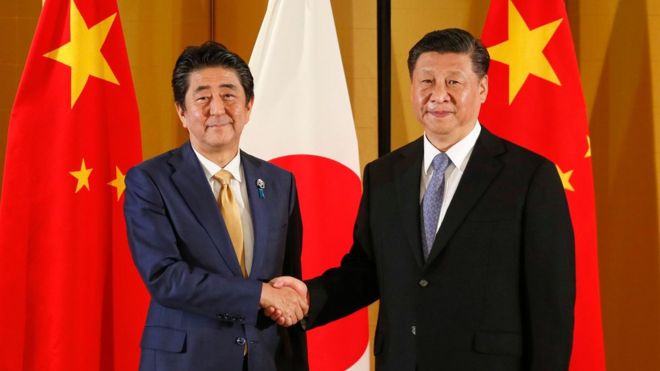
Japanese Prime Minister Shinzo Abe (R) shakes hands with Chinese President Xi JinpingImage copyright AFP

Chinese President Xi Jinping has met Japanese Prime Minister Shinzo Abe at a time of warming ties between the two nations.

Relations have historically been strained, but concerns over US trade policy and North Korea’s nuclear programme have shifted them closer.

The two leaders met on the sidelines of the forthcoming G20 summit in Japan.

“I want to open up a new age of Japan-China relations hand in hand with President Xi,” Mr Abe told reporters.

The pair agreed to work together to promote “free and fair trade” following a “very frank exchange”, a Japanese official said.

It is the first official visit Mr Xi has made to Japan since becoming president in 2013. At the outset of their talks on Thursday, Mr Abe invited him to return on a state visit next year.

“Around the time of the cherry blossoms next spring, I would like to welcome President Xi as a state guest to Japan,” he said. “[I] hope to further elevate ties to the next level.”

What did the leaders discuss?

Japan and China are by far Asia’s largest economies and the talks on Thursday focused strongly on business.

Last year, the two sides signed a deal to maintain annual dialogue and to co-operate on innovation. This time around, officials say, they pledged to develop a “free and fair trading system” in a “complicated” global economic landscape.

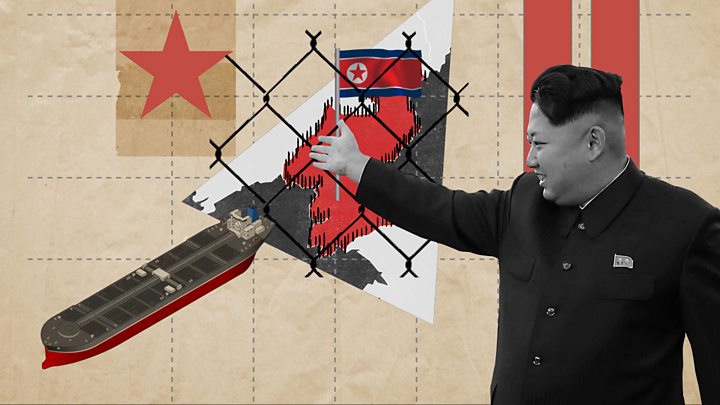
Media caption North Korea has been called out for evading UN sanctions

Another topic on the schedule would probably have been North Korea. While China is North Korea’s biggest trading partner, both Tokyo and Beijing want it to abandon its nuclear programme.

Mr Abe has only very limited leverage on the matter and will try to sway both the US and China to keep Tokyo’s interests in mind in any negotiations.

The G20 summit will begin on Saturday, but the main meeting is likely to be overshadowed by the many bilateral talks that are set to happen on the sidelines.

For example, Mr Xi will meet President Trump as China and the US try to resolve their trade dispute.

Do Japan and China get along?

In the past, relations have been tense. While the two countries do have close trade ties, politically things have been much more fragile.

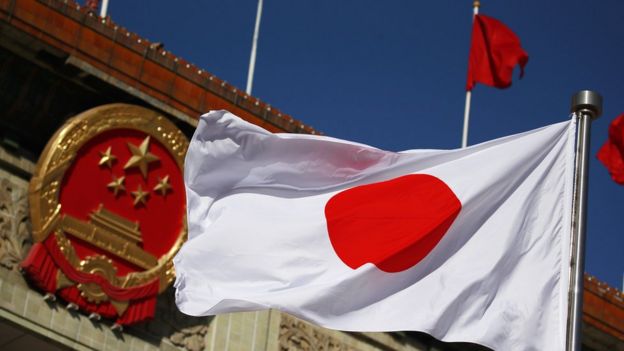
Japanese and Chinese flagsImage copyright EPA
Image caption Japan and China have not always had warm relations

Japan’s World War Two occupation of parts of China remains a very emotional issue. There are also several ongoing territorial disputes between Tokyo and Beijing.

But tensions with Washington over its protectionist trade policy have driven Japan and China into an unlikely friendship.

In 2018, Mr Abe hailed his high-profile visit to Beijing as an historic turning point. Both leaders have since promised to establish positive, constructive, relations.

Source: The BBC

27/06/2019

Chinese smog hotspot Hebei breathes a little easier after hitting air quality standard for first time

  • PM2.5 in steel heartland below 35 micrograms for first time since China started measuring pollutant in 2013
  • In May, Hebei’s air pollution index was down 6.6 per cent year on year
The environment bureau in Hebei province, China’s steelmaking heartland, says PM2.5 levels in May were below 35 micrograms for the first time since China began measuring the pollutants in 2013. Photo: Reuters
Smog-prone Hebei, China’s biggest steel producing region, met a national air quality standard for the first time in May, the province’s environment bureau said on Tuesday.

Hebei surrounds Beijing and has been on the front line of a war on pollution since 2014, after toxic smog spread to the Chinese capital.

Provincial authorities converted thousands of households to natural gas from coal, curbed pollution from vehicles and imposed ultra-low emissions standards on its many steel mills, cement factories and power plants.

In May, Hebei’s average concentration of lung-damaging small particles, known as PM2.5, stood at 33 micrograms per cubic metre, the Hebei Ecology and Environment Bureau said.
Blue skies over Hebei as province reports a reduction in air pollutants in May. Photo: Weibo

It was the first time that Hebei’s monthly average fell below the interim standard of 35 micrograms since China began measuring PM2.5 in 2013, the bureau said.

The World Health Organisation recommended average PM2.5 rates of no more than 10 micrograms.

Hebei’s overall air pollution index fell 6.6 per cent in May compared to the same month last year.

While the province has had success in reducing PM2.5 rates and other air pollutants, concentrations of ground-level ozone – known as “sunburn for the lungs” – have continued to rise.

Ozone levels reached 196 micrograms per cubic metre in May, up 5.9 per cent from the same month a year earlier, the bureau said.

China can become a renewable-energy superpower if it follows Norway’s path – away from coal
Ozone is caused when sunlight interacts with organic compounds found in car exhaust fumes.
Air pollution in China generally eases in May as weather improves and coal consumption falls.
From January to April, PM2.5 rates in Hebei rose year on year, raising fears that the war on pollution had stalled amid concerns about China’s slowing economy.
Source: SCMP
27/06/2019

Tough choices lie ahead on global warming

  • Both individuals and businesses need to play their part in lowering carbon emissions, and increasing the city’s proportion of clean energy seems inevitable
  • With two-thirds of Hong Kong’s carbon emissions coming from power generation, increasing the proportion of clean energy seems inevitable.
    With two-thirds of Hong Kong’s carbon emissions coming from power generation, increasing the proportion of clean energy seems inevitable.
    Switching off all air conditioning to achieve zero carbon emissions may sound a little extreme. But it underlines the challenges in fighting global warming, a common goal that involves behavioural and institutional changes from all stakeholders.
    As the threats loom larger and the clock for action ticks faster, it is time we made tough choices. The options for Hong Kong have been mapped out in the public consultation on the long-term decarbonisation strategy, with the focus being drawn to importing more nuclear energy from across the border.
    The idea strikes a raw nerve, not just because it touches on the issue of nuclear safety, but also resistance arising from the perceived higher reliance on the mainland. The lack of information about the actual impact on electricity tariffs also makes discussion difficult.
    With two-thirds of the city’s carbon emissions coming from power generation, increasing the proportion of clean energy seems inevitable.
    Currently, nuclear power from the mainland accounts for about a quarter of our energy supply. As long as safety is not an issue, there is no reason why we cannot develop on that basis, along with more use of solar and other renewable energies.
    In addition to other institutional options such as phasing out polluting fuels for vehicles and introducing more incentives for green buildings, a great deal can be achieved at both individual and corporate levels.

    For example, air conditioning will be just as comfortable when set at 24 degrees Celsius instead of 21. Cutting down on fashion and plastic consumption helps, as can replacing business trips by video conferencing.

    How far are you willing to go to save planet from climate change?
    These changes are simple and easy to do, but they go a long way in saving our planet.
    To combat climate change, the Paris Agreement has set a carbon reduction target to keep the increase in the global average temperature to well below 2 degrees Celsius.
    A small city like ours may seem too little to make an impact on climate change. But as a responsible global citizen and a heavily developed world city, we have a duty to help mitigate the impact.
    The consultation has put the relevant issues into perspective in a timely manner. For the sake of sustainable development and the well-being of future generations, tough choices will have to be made.
    Source: SCMP
Law of Unintended Consequences

continuously updated blog about China & India

ChiaHou's Book Reviews

continuously updated blog about China & India

What's wrong with the world; and its economy

continuously updated blog about China & India