- Quake hit about 18km east of the town of Xunchang and 43km southeast of Yibin city
killed 13 and left dozens injured.
continuously updated blog about China & India
killed 13 and left dozens injured.
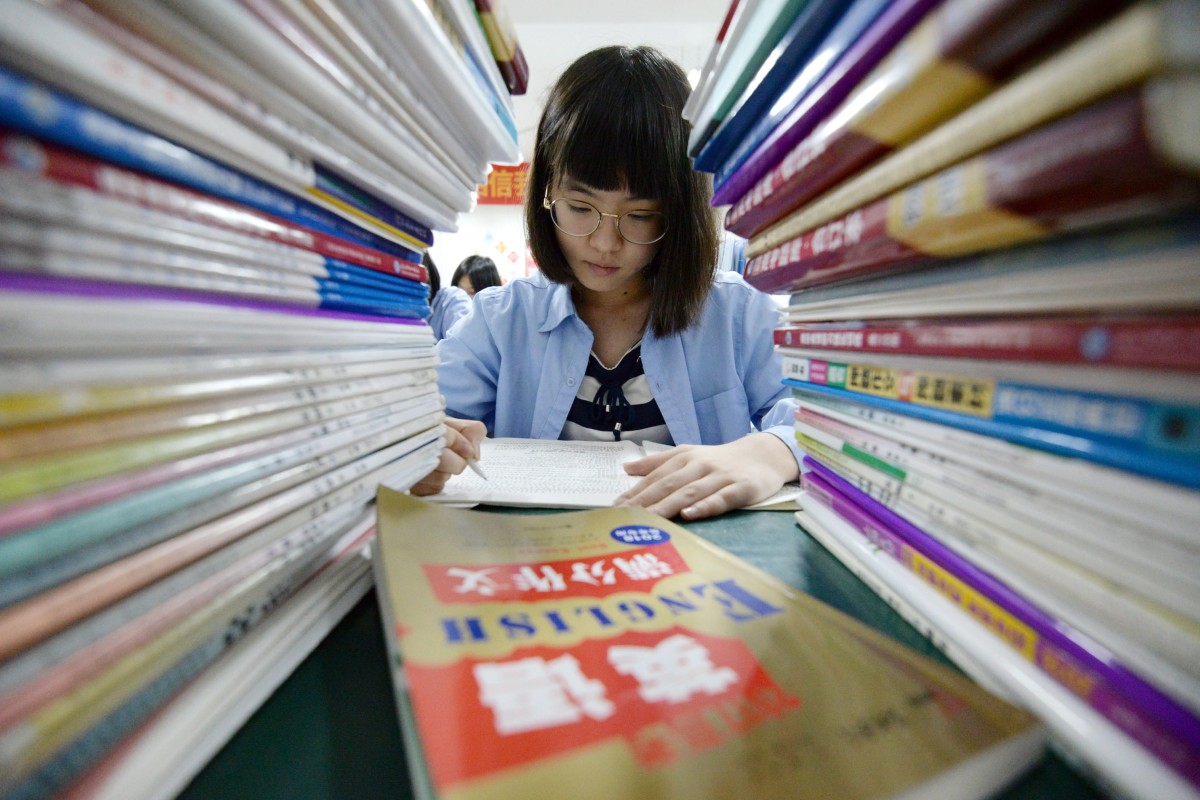
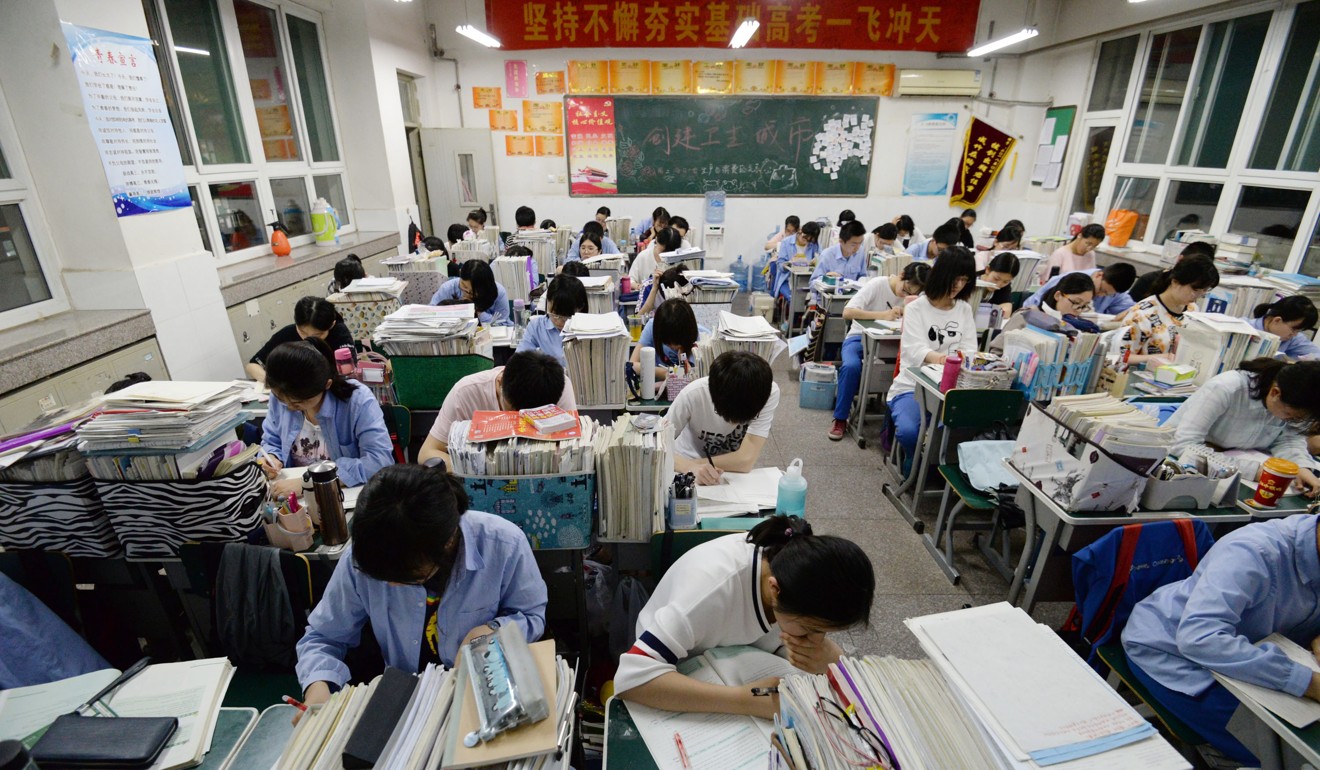
Apart from the compulsory subjects of Chinese, mathematics and English, students are now supposed to be able to choose any three of six other subjects: physics, chemistry, biology, politics, history and geography.
Previously, secondary school students had been split strictly into liberal arts or science majors in a system that was introduced in 1952 and revived in 1977 after being suspended during the Cultural Revolution.
Last go at exam success for China’s ‘gaokao grandpa’
Wen Dongmao, a professor from Peking University’s Graduate School of Education, said the changes expanded the opportunity for students to follow their interests.
“The new gaokao gives students plenty of choices of subjects to learn and to be evaluated on. I think people should choose which subject to learn based on what they are interested in,” Wen said.
“Gaokao reform is designed according to some methods by overseas universities, like American and Hong Kong schools. Its direction is right, but there will be inevitable problems brought by it.”
One of the problems is the uneven implementation of the changes throughout the country, with just 14 of China’s 31 provinces, municipalities and autonomous regions having introduced them.
In the eastern province of Anhui, for example, the reforms were supposed to go in effect from September last year but were postponed without reason, news portal Caixin.com reported.
The report quoted a teacher from Hefei No 1 Middle School in the provincial capital as saying the school was not ready for the changes.
Is the university entrance exam in China the worst anywhere?
“Shanghai and Zhejiang are economically advanced and we are not at that level,” he was quoted as saying. “It’s a big challenge for us to manage so many students’ choices of gaokao subjects.”
In neighbouring Jiangxi province, a high school history teacher said many places opposed the reform mainly “because of the shortage of resources”.
“It’s hard to roll out gaokao reform because we don’t have enough teachers or classrooms to handle the students’ various choices of subjects. Students can choose three out of six courses and that means there are 20 potential combinations,” the teacher was quoted as saying.
In addition, the system allows students to take the tests in more than one year and submit the highest scores when applying to universities.
“I heard from teachers in other provinces that students will take the tests of the selected subjects again and again for fear that other students will overtake them. That’s exhausting and will just put more burden on the students,” the Jiangxi teacher said.
He also said the gaokao process put extra pressure on teachers who feared the tests would push students to extremes. One of his students contemplated jumping from a bridge after she thought she had done poorly in the Chinese section of the exam.
“She called me, saying she felt it was the end of the world. I was shocked and hurried to the bridge,” he was quoted as saying. He spoke to her for more than an hour about before the girl came down, going on to get a decent score.
Critics also say the system is weighted in favour of students in bigger cities such as Beijing, Tianjin and Shanghai, home to the country’s top universities.
China private education industry is booming despite economic slowdown
Li Tao, an academic from the China Rural Development Institute at Northeast China Normal University in Changchun, Jilin province, said about 20-25 per cent of gaokao candidates from Beijing, Tianjin and Shanghai were admitted to China’s elite universities, compared with just 5 or 6 per cent in places like Sichuan, Henan and Guangdong.
Li said that was because the top universities were funded by local governments and gave preference to applicants from those areas.
“To make it fairer, the Ministry of Education has insisted over the years that elite universities cannot have more than 30 per cent of incoming students from the area in which it is located,” he said.
Despite these challenges, gaokao was still a “fair” way to get admitted to university in China, Li said.
“Gaokao is the fairest channel to screen applicants on such a large scale, to my knowledge,” he said. “It does not check your family background and every student does the same test paper [if they are from the same region]. Its score is the only factor in evaluating a university applicant.”
Fake nursing degree scandal prompts China-wide fraud check
In Shanghai, as the clock ticks closer to the gaokao test day, Xiao Qing said she was feeling the pressure.
She said she would keep up her test prep to ensure she got the score she needed to study art in Beijing.
“I am trying my utmost and don’t want to regret anything in the future,” she said.
At the same time, she is not pinning her entire life on it.
“Life is a long journey and it is not decided solely by gaokao,” she said.
“I don’t agree with my classmates that life will be easy after gaokao. I think we still need to study hard once we get to university.”
Source: SCMP
Zhang said other agencies in China arranged educational trips abroad, including to universities such as Harvard and Oxford.

The companies are part of an industry targeting an ever-growing market of parents who have high expectations for their children and who are anxious to ensure their children go to the best schools they can afford.
The services are also aimed at parents who see studying abroad as a way to avoid the intense competition and discipline of the Chinese education system.
Crunch time as gaokao exam season starts for China’s university hopefuls
An overseas education has long been reserved for the privileged few in China but it is becoming more of an option as people become more affluent and more services open up to cater to the demand to give the best to the next generation.
According to the Ministry of Education, 662,100 people studied abroad last year, 53,700 more than in 2017.
For Shanghai parent Iris Wang the best means a Western university. She said that not only were Western universities better than their Chinese equivalents but she had also lost faith in China’s secondary education system.
With her daughter starting at an international middle school in September, Wang is now planning for the child to go overseas for experience and study.
She said that although the teachers working in public schools in China were responsible, the system itself was too rigid.
“In summer, the pupils have to take naps at noon, and teachers write down the names of those who don’t sleep and tell their parents,” she said. “And even if you don’t want to take nap, you are not allowed to take a walk or talk; you must rest your heads and arms on the table.”

Such rules are common in Chinese public schools and meant to instil a sense of discipline among the pupils.
“But educating kids is not the same as making a product on an assembly line,” Wang said.
By withdrawing her daughter from the public system, Wang has forfeited her child’s chance to go to a Chinese high school or university.
It’s a route more Chinese parents are taking, according to a report released in April by the Social Sciences Academic Press and the 21st Century Education Research Institute, a Beijing-based think tank. In 2018, there were 821 international schools in China, up 12 per cent from a year earlier.
Wang has not just sent her daughter to an international school but has also begun researching the next steps, convinced that her daughter should leave China early to better adapt to university abroad.
“She will need to learn the language, develop a different learning mindset, as well as adapt to the lifestyle there,” Wang said.
China’s infamous gaokao university entrance exam
Shenzhen mother Yao Li has also decided that an early exit from the Chinese education system would be good for her daughter, who is still in primary school.
Yao plans to send her daughter to an international secondary school so she can receive a Western education and eventually apply to schools abroad.
Compared with the traditional Chinese education, which focused on exams as measures of excellence, an international education could give a child more possibilities, she said.
“The competition in China for a good education is so fierce that my child will not have sufficient room for development if she stays here,” she said. “We hope that she can become more international and have more diverse abilities as well.”
Why did one of China’s elite universities need to offer big money to get the best students?
Yao has already signed her daughter up for extracurricular classes such as English, art and public speaking, hoping that she can develop a diverse set of skills instead of focusing on academic results alone.
Zhang, the teacher at All In One Education, said there was a huge market in China catering to parents who are interested in such classes.
“The reason is simple, the university entrance examination in China is very difficult,” Zhang said. “So parents in areas like Shenzhen who are doing well will send their children abroad to study instead.”
But making the decision to send a child to an international school is just the start. For the middle-class parents who are preparing their children early, there are many more decisions to make, many more classes to attend and many more tests to take.
“We will have to think about which country to send her to in a year or so,” Wang from Shanghai said. “The options are different and so are the preparations – even the language tests required are different, one is TOEFL, one is IELTS.”
Source: SCMP
The man’s actions won him praise on social media, especially since stories of passengers’ bad behaviour on public transport make the news much more frequently.In recent months, members of the public have been jailed for taking up seats on trains booked by others, and verbally and physically assaulting bus drivers.
There have also been squabbles over younger people not giving up their seats to the elderly. In July last year, the video of an older man in Chengdu sitting on a young boy to force him off a bus seat went viral in China.
“When a good person turns old, they remain good,” read one top-rated comment on Weibo.
Source: SCMP
What struck Wang as the biggest difference is the culture of doing business. In the South, he said, abiding by rules is more rooted in people’s minds than in the North, where businessmen tend to give empty promises and spend their time building close relationships with those in power to facilitate business deals.

“As long as you do it well, they will be willing to spend money in your place,” Wang said. “‘Willingness to consume’ is also a feature of Shanghai, they are willing to spend on quality goods.”
Wang embodies the growing schism between China’s North and South, which are culturally diverse and becoming more
unbalanced.
Geographically, China is split in two by the Qinling mountain range, also known as the Sichuan Alps, and the Huai River. In recent years, these features have also served to slice the country in two economically. To the South lies China’s most affluent regions, home to most of its innovation hubs and busiest ports.
Southern China has the Pearl River and the Yangtze River Deltas, the nation’s two manufacturing hubs, and has seen its economic importance rise, with output covering 61.5 per cent of national gross domestic product (GDP) last year.
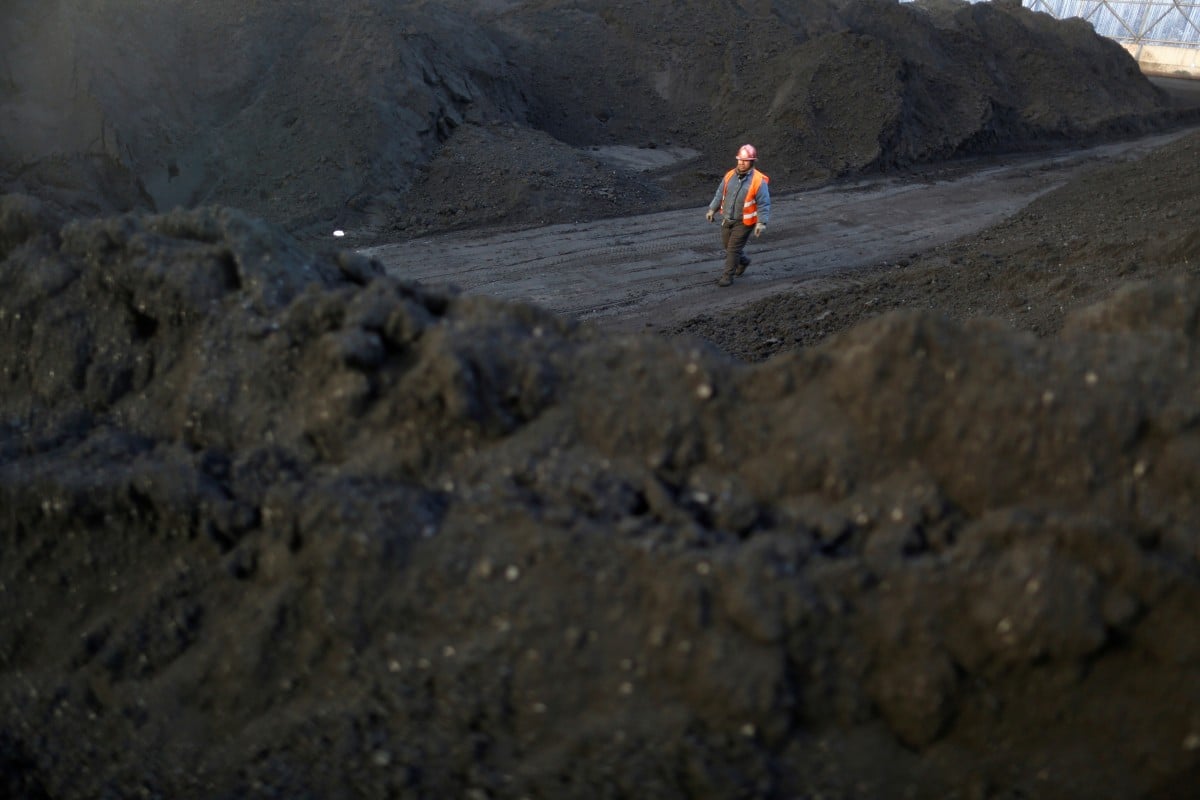
To the North lies much of its heavy industries, such as coal, which helped fuel China’s economic miracle of recent decades, but which will soon be relics of the past.
The North-South divide is growing and has become increasingly apparent since 2013 when the North’s share of economic output fell to 38.5 per cent, having previously been higher than 40 per cent. This is despite containing 15 provinces, 42 per cent of country’s population and 60 per cent of its territory.
In 2013, the average annual income in the South was lower in the North, but in 2018, the South’s per capita GDP was at least five per cent higher than the North, according to calculations made by the South China Morning Post.
to skilled labour. Guangdong in the South and Shandong in the North are China’s two most populous provinces, each of which has more than 100 million regular residents, however, in 2018 Guangdong attracted inflows of more than 800,000 people, while Shandong lost an estimated 400,000 people to other places.
The disparity is also apparent in the North’s reliance on government funding. As China’s economy slows and its old industries dwindle, northern governments last year generated enough revenue to cover less than half their spending. The South, in contrast, was able to fund 55 per cent of its own outlay, according to a recent study from the Chinese Academy of Fiscal Sciences, a think tank affiliated with the Ministry of Finance.
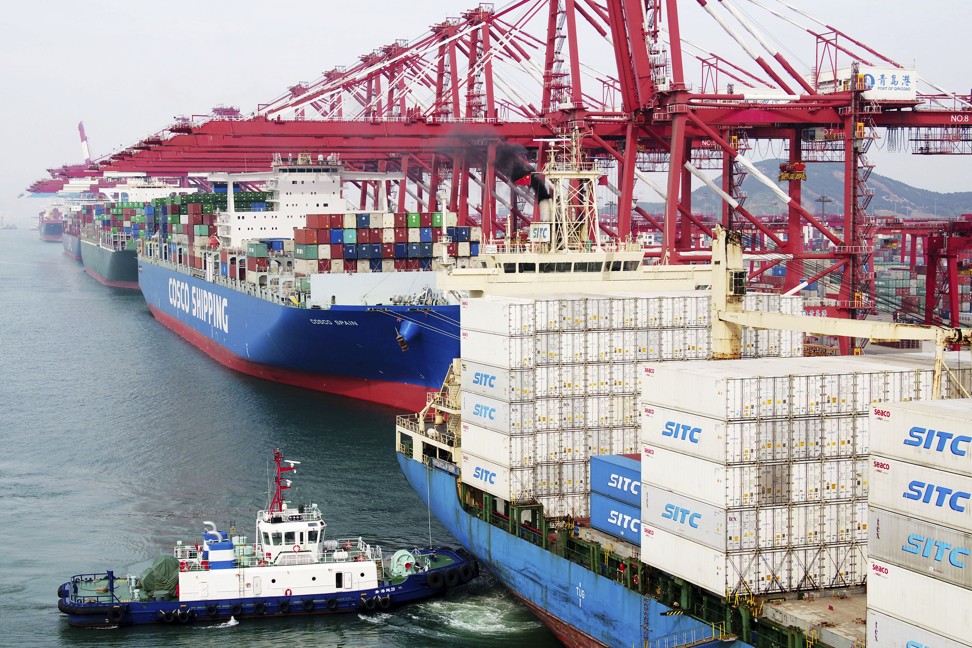
Furthermore, the infrastructure of the South, including the ports, make it a natural destination for foreign capital. This has helped it grow exponentially, as the resource rich North struggled with commodity price fluctuations.
The foreign investment helped the South become an export hub and home to hi-tech industries. Its private sector boomed, with firms able to react more quickly to market forces than the state-owned enterprises in the North.
Liu Qingfeng is a businessman from Liaoning, a northeastern Chinese province bordering North Korea and the Yellow Sea. Liu spent a decade in Shanghai and four years in Shenzhen, before moving to Beijing three years ago. He said that while businesspeople he dealt with from both China’s North and South are pragmatic and fast learners, those in the South are more “collegiate”. This attitude lends itself better to growing a private business, he thought.
“This means small and medium-sized family businesses in the south can expand to a bigger scale. The North cannot compete with that. If you read the story of successful entrepreneurs in the North, many of them are lonely heroes, fighting on their own,” Liu said.
Reforms in China’s economy are serving to accentuate this generalisation, strengthening private enterprise in the South, while hollowing out the heavy industry in the North.
By 2018, close to two thirds of the 579 special districts set up by Beijing across the country as test beds for opening to foreign investment were in the South, according to a study by Tsinghua University.
“[Government] supply-side structural reforms, including cutting excessive industrial capacity, are a tough test for many provincial economies. But for the northern provinces, the test is more profound,” said Chen Shu, an analyst from the Atlantis Finance Research Institute.
In an interview in May with Qiushi, a political journal run by the Communist Party, Liu Shijin, former vice-president of the Development Research Centre under the State Council, said the development imbalance is not all negative.
“China is a very large country and its development has been unbalanced in the past. It is often seen as a shortcoming, but in some respects, we found it could also be an advantage,” Liu said. “For example, when [consumers] start to buy television sets and computers, orders come from areas with high income levels first, then from low-income areas. In this way, the manufacturer’s production and sales periods can be extended and the economy continues to grow.”
Most analysts, however, feel the North-South gap should be urgently addressed, but not in the way that China addressed the East-West gap in the past. Lu Ming, a professor of economics at Shanghai Jiao Tong University, said much of the central funding and subsidies for western and central China have been wasted on building new cities and industrial zones, which people are now leaving.
“I suggest we conduct an investment return assessment for high-speed rail projects that have been planned in the central and western regions, and consider replacing them with airports, which are more suitable for areas with low population densities and complex terrain,” Lu said.
He added that those regions experiencing an exodus of human capital should not be judged by economic growth, but per capita income, which he considers a more fair metric.
This would be a small step in addressing an economic imbalance, which is threatening to get wider.
Source: SCMP
Other categories include prisoners sentenced as minors to terms of not more than three years, and those who were convicted of a crime while acting in self-defence and, again, sentenced to a maximum of three years.

Anyone convicted of a serious or violent crime, including murder, rape, kidnapping, corruption, arson and drug trafficking is ineligible for the amnesty, the report said. This group also encompasses those who refused to confess to their crimes or show remorse, and anyone deemed still a threat to society.
The amnesty is the second of Xi’s presidency and ninth in the country’s history. The previous seven were all during Mao Zedong’s leadership.
to commemorate the 70th anniversary of the end of the Sino-Japanese war, which also marked the end of World War II. Though, as will be the case this time around, none of them were serving prison terms for corruption.
“Considering the fight against corruption remains a challenge, and in order to maintain the pressure of the crackdown, it would be inappropriate to grant amnesties to corruption convicts,” the spokesperson said.
In December, the Communist Party declared a “crushing victory” in Xi’s war on corruption, which since 2012 has seen more than 1.3 million party officials – from powerful “tigers” to low-ranking “flies” – rounded up and convicted.
, former Politburo member
, and former vice-chairman of the Central Military Commission
.
, who was detained just months before Xi rose to power in 2012, is also serving a life sentence for taking millions of US dollars in bribes.
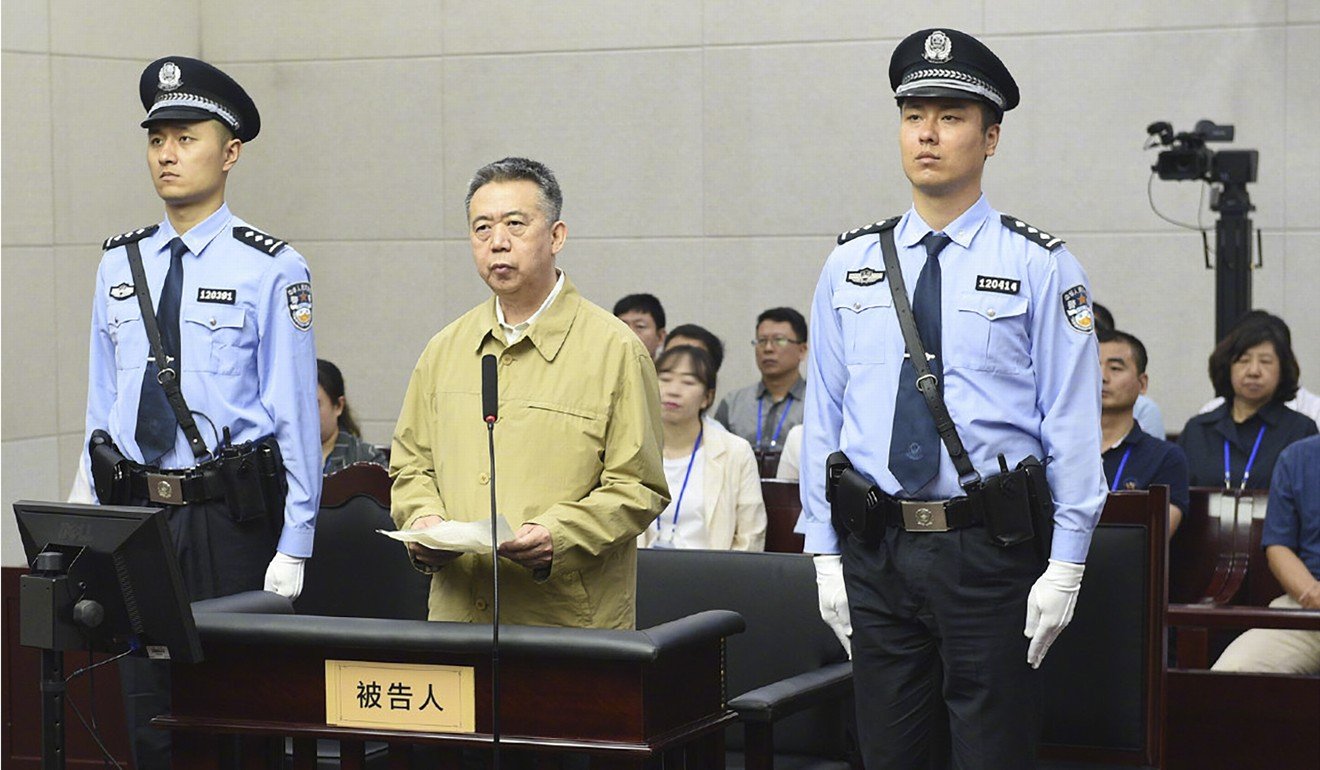
, the former president of Interpol, looks set to become the latest senior official to join the convicts’ club after pleading guilty in court earlier this month to taking bribes totalling more than 14 million yuan (US$2 million).
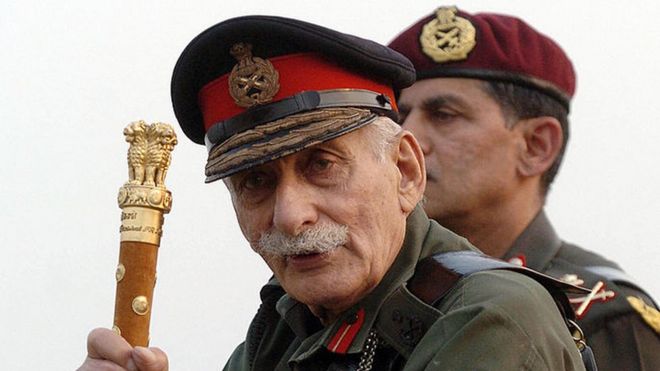
Image copyright GETTY IMAGESAn announcement that a Bollywood film will be made on Indian war hero Sam Manekshaw has seen him trend on social media 11 years after his death.
Manekshaw is arguably India’s best known army general.
He was the chief of the Indian army during the 1971 war with Pakistan, which led to the creation of Bangladesh, formerly East Pakistan.
He was also the first Indian army officer to be promoted to the rank of field marshal.
The film’s “first look” – a poster featuring lead actor Vicky Kaushal – was released on Thursday to coincide with Mankeshaw’s death anniversary.
It has generated chatter because of Kaushal’s “uncanny resemblance” to Manekshaw.


Filmmaker Meghna Gulzar told PTI news agency that while the film will be based on his life, it won’t necessarily be a biopic. “I’m looking at the man, his life and his times,” she said.
Kaushal also took to Twitter, saying he was “honoured and proud” to play the role of Manekshaw.
He was born in 1914 to Parsi parents in British India and began his military career in what was then known as the British Indian Army during World War Two.
He died in 2008, after a career that stretched over four decades and five wars, earning him the nickname of Sam Bahadur (which means Sam the Brave in Hindi).
Known as one of India’s greatest war heroes, Manekshaw was praised for his swift leadership during the 1971 India-Pakistan war.


He is a recipient of the Padma Vibhushan and Padma Bhushan – two of India’s highest civilian awards.
“Sam Manekshaw’s name will be etched in history as one of the greatest soldiers and minds India has ever seen,” Ronnie Screwvala, whose company RSVP is producing the film, told Indian media.
Source: The BBC
BEIJING, June 28 (Xinhua) – Set to build an “information bridge” for the Belt and Road Initiative (BRI) construction, attendees of the Belt and Road Economic Information Partnership (BREIP) in Beijing believed it would reduce the “information deficit” between countries.
The partnership, designed to eliminate information asymmetry in implementing the BRI, offers demonstration, guidance and services to participants of the BRI, and create a new platform for international cooperation.
The platform of BRInfo, operated and maintained by China Economic Information Service (CEIS) under Xinhua News Agency, allows BREIP members to share information and conduct cooperation.
Alfred Schipke, IMF Senior Resident Representative for China, said it would be important to strengthen policy frameworks and foster capacity development in China and in partner countries.
“The effective sharing of information will be more and more important. Here, the BREIP could be a key platform,” Schipke said.
New commercial opportunities will surely be created with information from professional institutions and needs of enterprises brought together, so as to promote mutual understanding, said Liu Zhengrong, vice president of Xinhua News Agency.
The BREIP, offering news service and information assurance, has provided a platform of news and economic information for countries and regions to expand cooperation, noted Marat Abulkhatin, first deputy chief editor of TASS Russian News Agency.
Domestic information reports growing significance now in global market, and under the BRInfo mechanism, news agencies can help to further eliminate information asymmetry, said Raphael Juan, director of markets at Brazilian CMA News Agency.
Polish government and enterprises look forward to better understanding different market situations and making better decisions with the economic information shared on the BREIP, said Ryszard Marcin Nizewski, product director with Polish Press Agency.
The BRI has made great contributions to international trade and the international economy, and its achievements have far exceeded expectations. It is believed that the BREIP will also become a multi-faceted cooperation tool, according to Dzmitry Prymshyts, deputy director for Research and Innovation of the Institute of Economics of the National Academy of Sciences of Belarus.
This platform could decrease the “information deficit” between countries while growing into a timely, objective and solid source of information, Prymshyts said.
The BREIP, established in Beijing on Thursday, was initiated by Xinhua News Agency and co-founded by more than 30 institutions including well-known news agencies, information service providers, research institutions, chambers of commerce and associations from more than 20 countries and regions in Asia, Europe, Africa, Latin America and Oceania.
Source: Xinhua
The deserts in China are constantly spreading, due in part to human activity. Now China is trying to reverse the negative impact the creeping sands are having on the environment.
Source: The BBC
OSAKA (Reuters) – The United States and China agreed on Saturday to restart trade talks with Washington holding off new tariffs on Chinese exports, signalling a pause in the trade hostilities between the world’s two largest economies.
“If we make a deal, it will be a very historic event.”
He gave no timeline for what he called a complex deal but said he was not in a rush. “I want to get it right.”
On Huawei, Trump said the U.S. commerce department would meet in the next few days on whether to take it off a list of firms banned from buying components and technology from U.S. companies without government approval.
China welcomed the step.
“If the U.S. does what it says, then of course, we welcome it,” said Wang Xiaolong, the Chinese foreign ministry’s envoy for G20 affairs.
U.S. microchip makers also applauded the move.
“We are encouraged the talks are restarting and additional tariffs are on hold and we look forward to getting more detail on the president’s remarks on Huawei,” John Neuffer, president of the U.S. Semiconductor Association, said in a statement.
Huawei has come under mounting scrutiny for over a year, led by U.S. allegations that “back doors” in its routers, switches and other gear could allow China to spy on U.S. communications.
While the company has denied its products pose a security threat, the United States has pressed its allies to shun Huawei in their fifth generation, or 5G, networks and has also suggested it could be a factor in a trade deal.
In a lengthy statement on the two-way talks, China’s foreign ministry quoted Xi as telling Trump he hoped the United States could treat Chinese companies fairly.
On the issues of sovereignty and respect, China must safeguard its core interests, Xi was cited as saying.
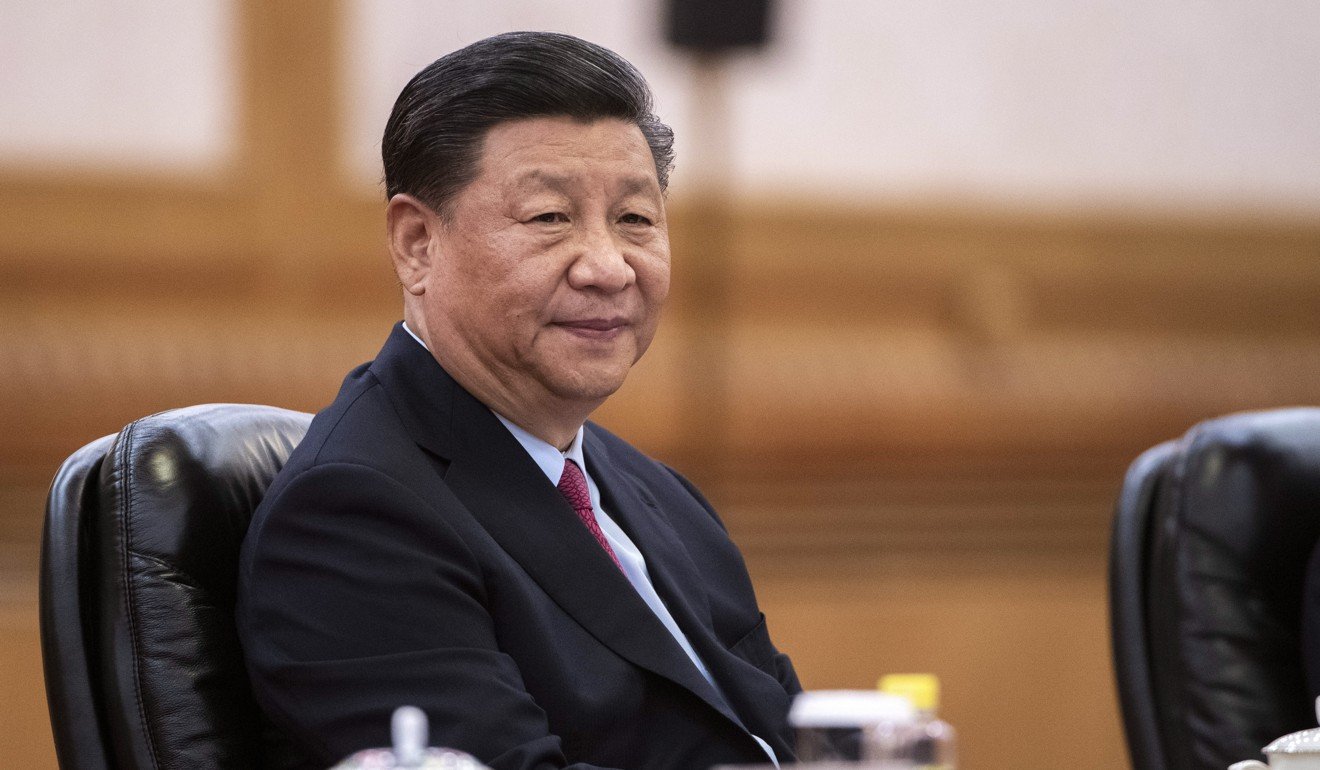
“China is sincere about continuing negotiations with the United States … but negotiations should be equal and show mutual respect,” the foreign ministry quoted Xi as saying.
Trump had threatened to extend existing tariffs to almost all Chinese imports into the United States if the meeting brought no progress on wide-ranging U.S. demands for reforms.
Source: Reuters
Slideshow (4 Images)
Financial markets are likely to breathe a sigh of relief on news of the resumption in U.S.-China trade talks.
“Returning to negotiations is good news for the business community and breathes some much needed certainty into a slowly deteriorating relationship,” said Jacob Parker, a vice-president of China operations at the U.S.-China Business Council.
“Now comes the hard work of finding consensus on the most difficult issues in the relationship, but with a commitment from the top we’re hopeful this will put the two sides on a sustained path to resolution,” he said.
Some, however, warned the pause might not last.
“Even if a truce happens this weekend, a subsequent breakdown of talks followed by further escalation still seems likely,” Capital Economics said in a commentary on Friday.
The United States says China has been stealing American intellectual property for years, forces U.S. firms to share trade secrets as a condition for doing business in China, and subsidizes state-owned firms to dominate industries.
ADVERTISEMENT
China has said the United States is making unreasonable demands and must also make concessions.
Talks collapsed in May after Washington accused Beijing of reneging on reform pledges. Trump raised tariffs to 25% from 10% on $200 billion of Chinese goods, and China retaliated with levies on U.S. imports.
The U.S.-China feud had cast a pall over the two-day G20 gathering, with leaders pointing to the threat to global growth.
In their communique, the leaders warned of growing risks to the world economy but stopped short of denouncing protectionism, calling instead for a free, fair trade environment after talks some members described as difficult.
continuously updated blog about China & India