Chindia Alert: You’ll be Living in their World Very Soon
aims to alert you to the threats and opportunities that China and India present. China and India require serious attention; case of ‘hidden dragon and crouching tiger’.
Without this attention, governments, businesses and, indeed, individuals may find themselves at a great disadvantage sooner rather than later.
The POSTs (front webpages) are mainly 'cuttings' from reliable sources, updated continuously.
The PAGEs (see Tabs, above) attempt to make the information more meaningful by putting some structure to the information we have researched and assembled since 2006.
with punitive environmental trade regulations that should leave the waste exporting nations in delirium. Last week, the Malaysian Environment Minister, Yeo Bee Yin,
that countries should manage their own waste, and that Malaysia will take care of its own.
Modern economic theory maintains that the trade of global “goods” and services should be optimised by countries embracing their competitive advantages – letting others excel where their own advantages exist.
What it did not account for is the trade in “bads” between nations, whereby a country’s externalities (in this case waste) are sent to another’s shores to take advantage of the other country’s “competitive advantages” – low labour costs and lax environmental enforcement.
As a result of the planet’s awakening to the vast challenges of what do to with plastic in its second life, we now have two large-scale trade wars to contend with. One is between the two largest economies, the
. The other is much broader in scope, undercutting the previously perceived values of globalisation, using environmental trade barriers as a proxy for national benefit.
is not the only ill which countries share with one another, but it is one that has generated the most sharing of ideas and momentum across virtually every country on the planet.
To put the scale into context, one can conservatively estimate that at least 10 per cent of the plastic waste sent to Asia for recycling was of quality too poor to make value from.
If all of this “poor quality” material from the European Union alone was returned to its rightful exporting countries for the past 10 years of their exports, they would receive over 95,000 40-feet containers, each containing 35 metric tons of material. This would create a line of containers over 1,150km (715 miles) long.
A global reckoning on waste is under way, thanks to China
It may not be likely that all 95,000 containers will be returned to their ports of origin, but it is clear that the ability to keep moving this volume of material offshore will quickly evaporate, creating all types of disruptions and needing innovative interventions to solve the complex plastic waste challenge.
Join us, and industry leaders and influencers, at our action-based plastic circular economy forum –
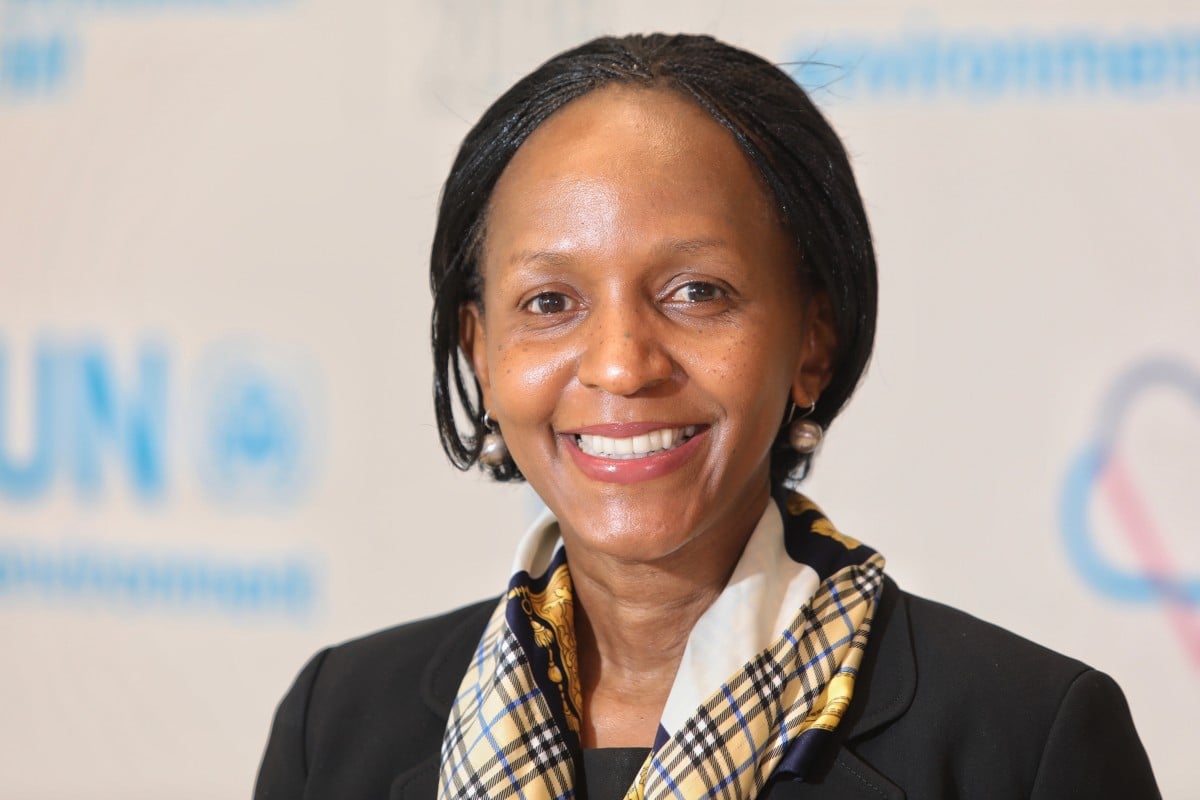
Joyce Msuya of the UN Environment Programme is full of praise for Beijing’s success in tackling air pollution but says there is work still to be done
Commitment to environmental protection seen at home must be extended to infrastructure projects developed overseas, she says
Joyce Msuya, acting head of the UN Environment Programme, says bad infrastructure can have a negative environmental impact. Photo: Simon Song
The United Nations’ environment chief has appealed to China to apply the same environmental standards to infrastructure projects it develops overseas under its Belt and Road Initiative as it does to those built on its own soil.
“We know from history, bad infrastructure can lead to negative environmental impact,” said Joyce Msuya, acting executive director of the UN Environment Programme. “Given China’s record on and interest in environmental protection, we hope and expect they will apply the same spirit as they invest in developing countries.”
While acknowledging the value of infrastructure building in developing nations, Msuya said it was equally important to consider the environmental implications of
“We are interested in working with member countries that have been beneficiaries [of Chinese investment] to see what concerns, if any, what risks, if any, they see,” she said in an interview on the sidelines of an event in Hangzhou, capital of east China’s Zhejiang province, to mark World Environment Day, which fell on Wednesday.
Scores of countries are involved in Beijing’s multibillion-dollar belt and road plan in one way or another, but as it has expanded so too have the concerns over its environmental impact.
In late 2017, the WWF issued a report claiming that the development of two motorway projects in Myanmar would have a negative environmental impact on about half of its population.
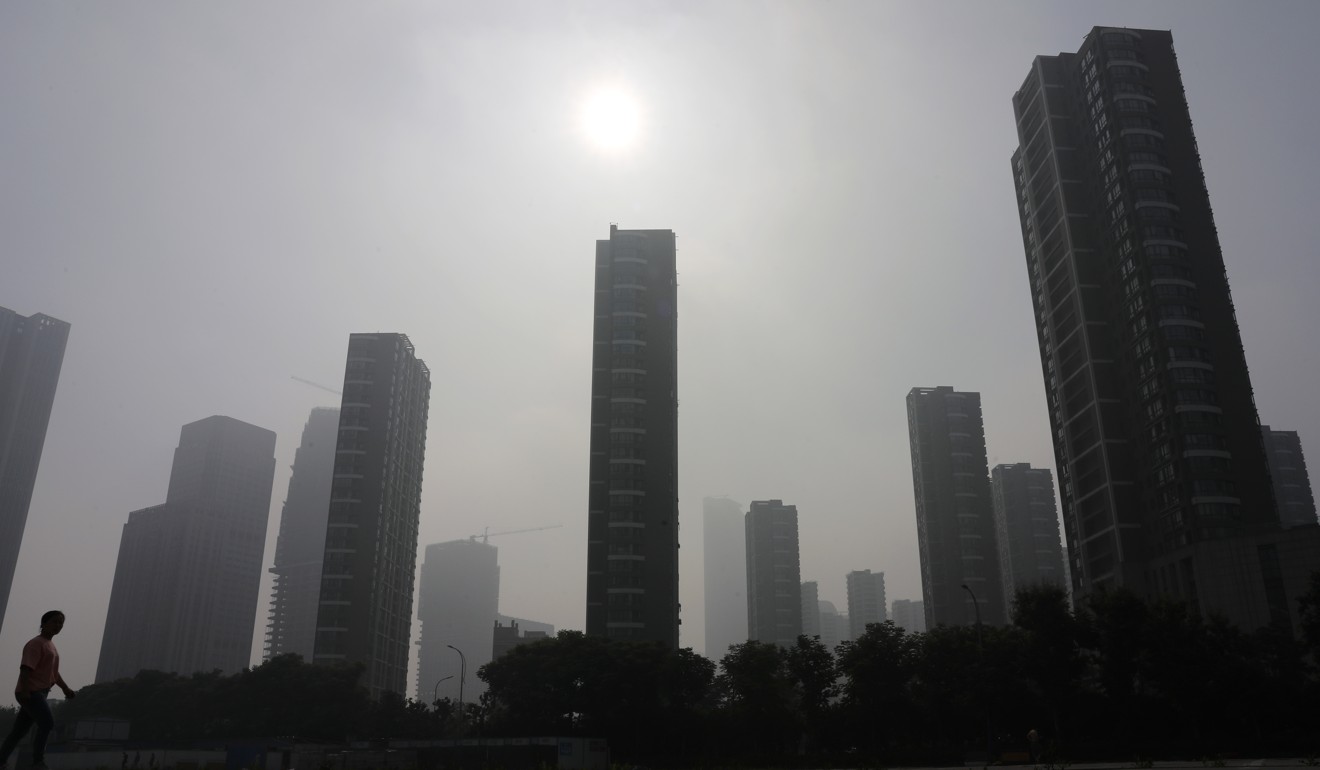
China ‘facing uphill struggle’ in fight against pollution
On China’s efforts to tackle pollution at home, Msuya said that although the move towards a greener economy might require communities to make sacrifices in the short term, these would be outweighed by the long-term benefits.
China has been fighting a “war on pollution” since 2013 but as
have grown so too have concerns that industry unfriendly environmental efforts might be relegated to the back burner. The nation’s gross domestic product grew by just 6.6 per cent in 2018, its slowest rate since 1990, and for the past year it has been embroiled in a stinging trade war with the United States.
China has been fighting a “war on pollution” since 2013. Photo: Simon Song
Msuya said that while Beijing had done a good job in improving air quality, it still had some way to go on issues like water, soil and noise pollution.
“China is quite diverse, with many provinces … so the scale of the challenge of dealing with pollution is more complex,” she said. “[But] by building on its experience of cleaning the air, I have full confidence in the Chinese government.”
Pollution in northern China up 16 per cent in January as industrial activity spikes
According to a report issued by Beijing on Wednesday, average levels of PM2.5 – the tiny airborne particles that are particularly harmful to health – in more than 70 cities across
China fell by an average of 42 per cent in the five years through 2018.
Smog levels in the Chinese capital fell 43 per cent in the period, but the average reading in the city last year was still more than five times the World Health Organisation’s recommended safe level.
Air quality was the main theme of the Hangzhou event.
Msuya has first-hand experience of Beijing’s air quality having worked in the city as the World Bank Group’s regional coordinator for East Asia and the Pacific between 2011 and 2014.
“When I moved to Beijing in 2011, I honestly didn’t know how bad the air pollution was.
My son was six at the time and I always made sure he wore a mask when he went out to play,” she said.
“Fast forward to now, and China has shown us that the problem of air pollution can be tackled if everyone participates.”
First Qatar, and now Saudi Arabia, are competing to dominate China’s fast-growing natural gas market, already the third largest in the world, as Beijing encourages the switch from coal to cleaner, greener energy
A PetroChina LNG tank at Rudong port in Nantong, Jiangsu province. China’s massive and rapidly growing appetite for natural gas is sparking off a scramble in the Middle East, as energy producers compete to become the biggest player in the market. Photo: Reuters
As more countries turn towards clean energy, the geoeconomic impact of natural gas as a fuel has become second only to that of oil. Over the past decade, the global demand for this carbon-free energy source has risen considerably and one major buyer is China.
The third largest global market for natural gas, China has implemented government policies to replace the use of coal as fuel and millions of households are switching over to clean energy. Consequently, China’s market for gas expanded by a record 43 billion cubic metres last year to reach 280 billion cubic metres at the end of 2018.
, China’s gas consumption should continue to grow in the year ahead. As the demand spirals further, natural gas consumption in China is estimated to grow to around 620 billion cubic metres in 2030.
Prioritising its energy security, Beijing last year approved a 22-year gas supply deal between QatarGas and PetroChina International Co. The agreement is PetroChina’s largest LNG supply deal by volume, and will provide 3.4 million tonnes of liquefied natural gas annually.
With this deal, which QatarGas initiated with Total and ExxonMobil Corp as partners, Qatar achieved regional dominance and filled a vacuum left by major gas producer Iran, currently the target of US sanctions. Interestingly, Beijing has also unwittingly sparked off a competition between Qatar and Saudi Arabia, the kingpins of the Middle Eastern energy industry.
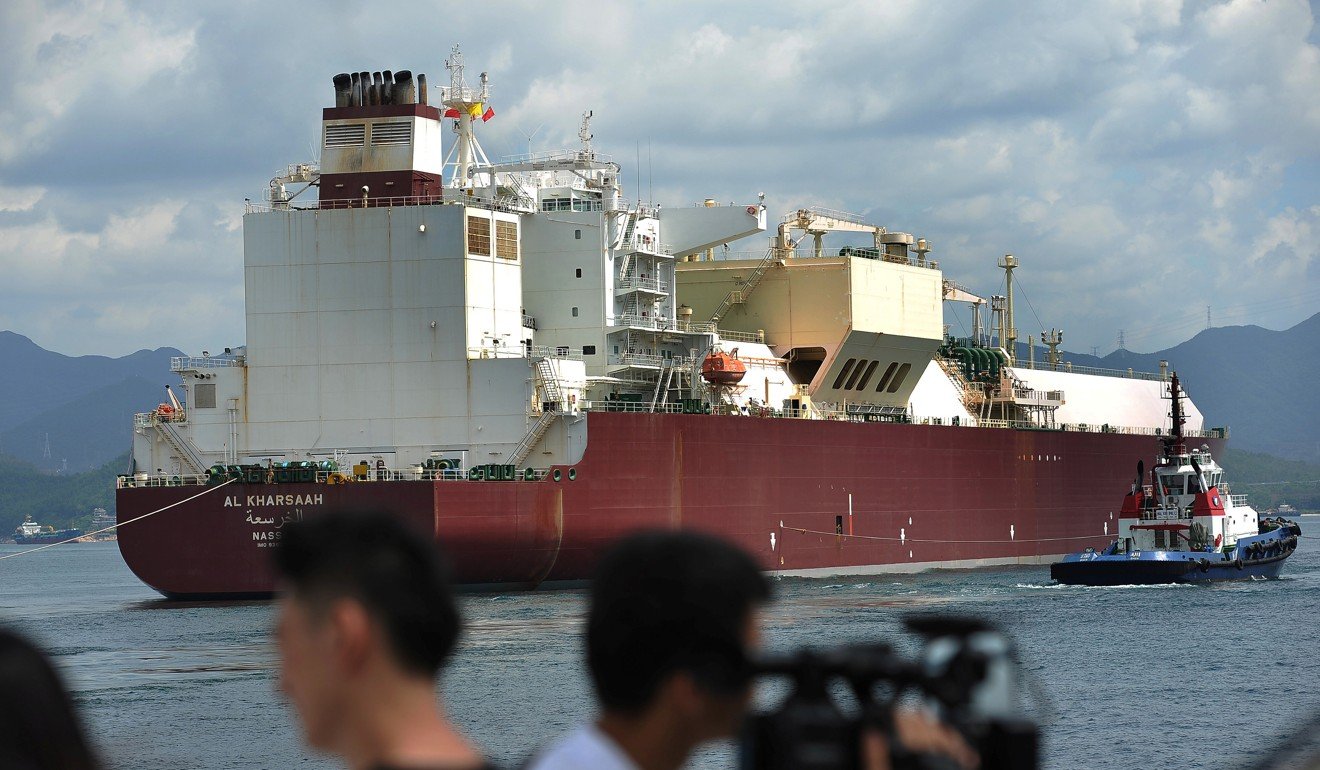
A vessel carrying Qatar LNG looking to berth in Shenzhen, China last August. Qatar’s recent deal highlighted the massive and growing Chinese appetite for natural gas. Photo: Reuters
China to become world’s top natural gas importer in 2019: report
By exporting gas, as well as oil, Qatar sail unruffled through the
imposed by Saudi Arabia, the United Arab Emirates, Bahrain and Egypt in June 2017, over allegations that Qatar supports terrorism and is friendly with Iran, which the region sees as an enemy. Qatar denies this. Meantime, Qatar plans to further increase its gas output. To attract more buyers, it is offering attractive long-term supply contracts to other countries in the region.
Inspired by the success of Qatar Gas, Saudi Arabia has stepped up its efforts to capture this new market. The Saudi state-owned oil giant Aramco plans to build an “energy bridge” between Saudi Arabia and China to better meet Beijing’s growing requirements for oil, gas, including LNG, said Aramco’s chief executive Amin Nasser at an industry event in Beijing in March.
Aramco, already a major supplier of crude oil to China, would need to invest US$150 billion over the next decade to realise its plans to convert crude oil into chemicals, and eventually become a gas producer. “We need to help our stakeholders – including here in China and the wider Asia region – realise that oil and gas will remain vital to world energy for decades to come,” said Nasser.
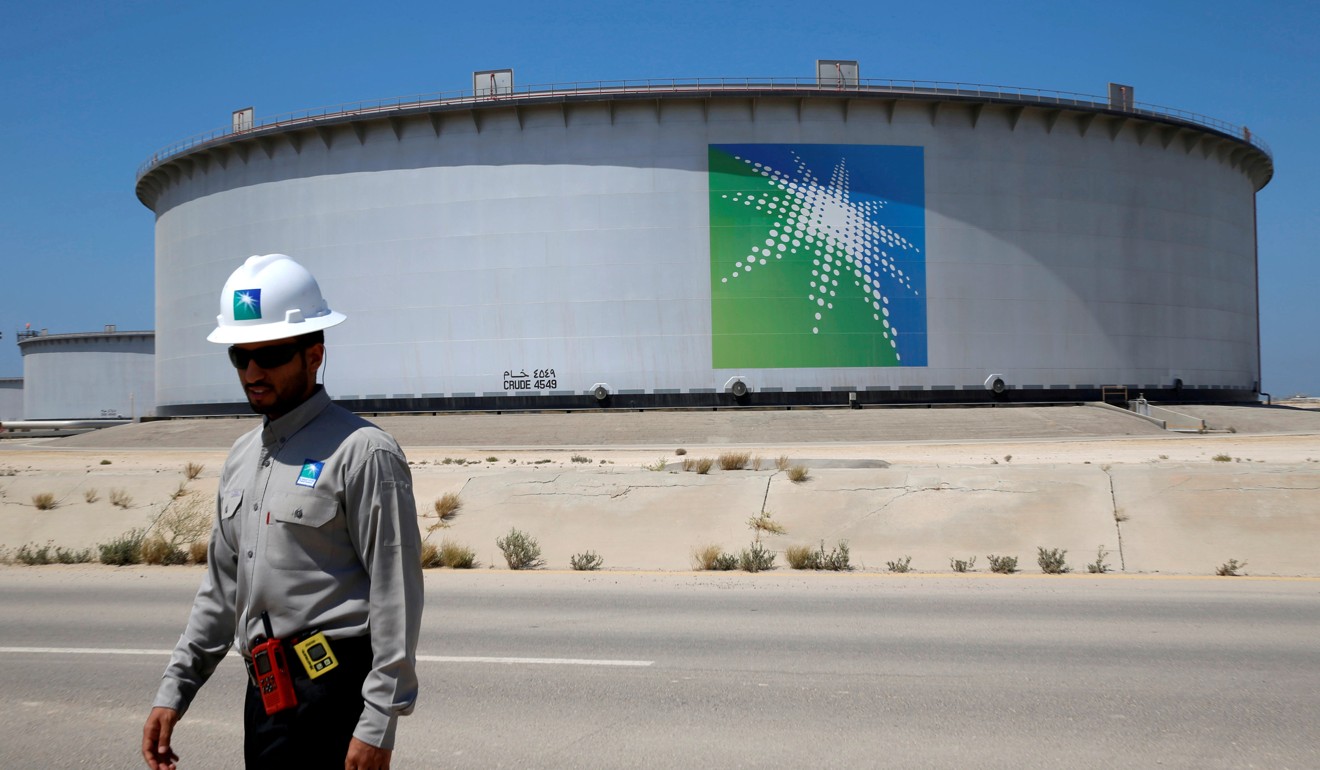
An Aramco employee near an oil tank in Saudi Arabia. Aramco has grand ambitions to become a major producer of natural gas. Photo: Reuters
The vision of Saudi Arabia as a major natural gas producer is in in line with Saudi Crown Prince Mohammed bin Salman’s economic plan Vision 2030. Riyadh has only Qatar to beat, with Iran on the back foot. Under sanctions pressure, Tehran, despite plans to increase gas exports, has clung on to just 1 per cent of the natural gas market, exporting 36.24 million cubic metres daily. Yet Iran was once part of the so-called regional gas troika along with Russia and Qatar, and is located at the cusp of several energy transit corridors. China, defying sanctions, continues to buy oil from Iran.
In around five years, Riyadh could become a major gas exporter. Saudi Arabia has already replaced Iran as the main energy provider in countries such as China, Pakistan and India, and has made huge investments in energy projects in these countries.
However, Qatar is also playing smart, sharply lowering its prices to clinch deals and make the right business connections. The competition for the growing natural gas market is a long game. The main possible setback for Riyadh is that its gas reserves do not match those in Qatar and Iran.
Compact plants proposed to ease pollution but backers must win over wary public
China is exploring the idea of using small nuclear power plants to phase out coal- and gas-fired heating generators in smog-afflicted northern China. Photo: Reuters
China plans to build a pilot small-scale nuclear reactor that could replace coal or gas to heat towns and cities in its colder northern regions, an official with the state-owned developer in charge of the project said on Monday.
The small heating reactor was planned for the city of Jiamusi in northeastern Heilongjiang province, one of two proposed units with a combined capacity of 400 megawatts, Wang Xujia, a senior engineer with the State Power Investment Corp, said on the sidelines of an industry conference.
“The project is still under central government review for approval,” Wang said, adding that the developer aimed to put the project into operation by 2024.
China has been exploring the use of small nuclear reactors – less than a fifth of the size of a standard reactor – as alternative heating systems in smog-prone northern regions.
The state provides heating throughout northern China from November to March, using predominantly coal- or gas-fired boilers.
State-owned China National Nuclear Corp (CNNC) has already conducted trial runs for a “district heating reactor” (DHR) design, which it says can supply heat to 200,000 urban households.
China-built nuclear reactors may enjoy home advantage as delays and costs stymie foreign competitors
The DHR model consists of a reactor core immersed in a water-filled tank. It is estimated to require investment of 1.5 billion yuan (US$217 million) and take three years to build, making it cheaper and quicker to construct than conventional reactors.
However, while the various designs will use only a fraction of the radioactive material of a conventional nuclear plant, officials acknowledge the biggest challenge is convincing the public the reactors are safe and reliable.
“The planned project in Jiamusi will be located in a remote area of the city which undermines its economic efficiency, but since it is just a demonstration project we just want to complete one first and show it to the public,” Wang said.
China aims to raise total nuclear capacity to 58 gigawatts by the end of next year, but it has not launched any new conventional reactors in more than three years.
China expected to miss target for 2020 nuclear capacity
After Japan’s Fukushima accident in 2011, China conducted a root-and-branch safety review and decided it would only use the most advanced “third generation” technology for any new projects.
However, those technologies – including Westinghouse’s AP1000 and the Areva-developed EPR – have proved to be expensive, complex and prone to long construction delays.
In a bid to broaden its options, the country is developing smaller units and plans to launch its first “small modular reactor” on the island province of Hainan at the end of this year.
China also planned to launch floating nuclear reactors with the aim of developing a fleet of ship-mounted nuclear generators that could be deployed on islands in Southeast Asia, Song Danrong, a reactor designer at CNNC, told Monday’s conference.
Customs authority at southern port of Sanshan brings forward deadline for scrap cargoes to arrive
Capacity has been ‘seriously exceeded’ and there are temporary controls on how many boats can dock
China is restricting imports of scrap metal as part of its efforts to reduce pollution. Photo: Reuters
The port of Sanshan in southern China’s Guangdong province stopped accepting scrap metal shipments on Thursday after an excessive build-up of stockpiles caused by importers racing to bring in cargoes ahead of new rules starting next week.
China, the world’s biggest metals consumer, is restricting imports of eight types of scrap metal, including high-grade copper scrap, from July 1 in a
Because scrap stockpiles at the port have grown too large, customs decided to bring forward the deadline for scrap cargoes to arrive at Sanshan from June 29 to June 26, according to a notice from the Sanshan port authority sent to customers and reviewed by Reuters.
Shipments arriving from June 27 could not be accepted, said the notice, whose authenticity was confirmed by a port official who asked to remain unidentified.
Sanshan’s import capacity had “already been seriously exceeded” and there were temporary controls on the number of boats allowed to dock, the official added.
It was not immediately clear when shipments would be able to resume. Firms that have received quotas from China’s Ministry of Ecology and Environment will still be allowed to import the soon-to-be-restricted metal after July 1, but no quotas have been issued so far for Guangdong and its key scrap hub of Foshan.
The Sanshan port official said cargoes declared to customs before July 1 would be able to pass.
The environment ministry last week released the first batch of quotas, which for copper scrap totalled around 240,000 tonnes, mostly for companies in Zhejiang, another of China’s metal recycling centres.
China to issue scrap metal import licences as restrictions tighten
The port of Sanshan, which is near Foshan and under the jurisdiction of Guangzhou customs, is one of only 18 seaports in China authorised to handle solid waste imports.
Guangzhou customs did not immediately respond to a faxed request for comment.
The $430m iconic Statue of Unity in the western state of Gujarat was hailed as a symbol of development in the state. But for those who live near the statue, they’re afraid they will lose their homes and livelihoods.
NEW DELHI (Reuters) – U.S. Secretary of State Mike Pompeo met India’s Prime Minister Narendra Modi on Wednesday for talks on trade and defence issues that have strained ties between the countries.
Just days before Pompeo’s visit, India slapped higher retaliatory tariffs on 28 U.S. products following Washington’s withdrawal of key trade privileges for New Delhi.
Indian broadcasters showed footage of Pompeo exchanging handshakes with Modi at the prime minister’s official residence in the capital New Delhi on Wednesday morning. Neither side released details of the meeting.
India’s relations with Russia and Iran – both under U.S. sanctions – are also a sore point.
Under U.S. pressure, India has stopped buying oil from Iran, one of its top suppliers. The United States has also stepped up pressure on India not to proceed with its purchase of S-400 surface-to-air missile systems from Russia.
Pompeo is scheduled to have lunch with foreign minister Subrahmanyam Jaishankar, followed by a news conference at 1400 local time (0930 GMT), the foreign ministry said.
He is expected to round off the trip with a policy speech hosted by the U.S. Embassy on Wednesday evening, before departing on Thursday for the G20 summit in Japan.
Yang Jiechi, a member of the Political Bureau of the Central Committee of the Communist Party of China (CPC) and director of the Office of the Foreign Affairs Commission of the CPC Central Committee, meets with South African Foreign Minister Naledi Pandor in Beijing, capital of China, June 25, 2019. (Xinhua/Zhang Ling)
BEIJING, June 25 (Xinhua) — China on Tuesday vowed to work with African countries to enhance cooperation based on equality and openness to build a community of shared future.
That came as Chinese State Councilor and Foreign Minister Wang Yi addressed the opening ceremony of the Coordinators’ Meeting on the Implementation of the Follow-up Actions of the Beijing Summit of the Forum on the China-Africa Cooperation (FOCAC).
After reading Chinese President Xi Jinping’s congratulatory letter to the meeting, Wang said the letter fully expressed Xi’s profound friendship toward African countries and their people, and demonstrated the Chinese government’s strong willingness to engage in friendly cooperation.
In delivering on the blueprint for China-Africa cooperation in the new era, China stands ready to work with the African side in implementing promises with concrete and effective actions, and achieving full implementation of consensus and outcomes concluded at the FOCAC Beijing Summit, Wang said.
Wang also called for sticking to the fundamental purpose of building a community of shared future and the development path of jointly constructing the Belt and Road, upholding multilateralism, and safeguarding the common interests of developing countries and emerging markets.
“Any disturbance will not affect our resolve to enhance cooperation, and any difficulty will not hinder our joint advancement in achieving rejuvenation,” he said.
After the opening ceremony, Yang Jiechi, a member of the Political Bureau of the Central Committee of the Communist Party of China (CPC) and director of the Office of the Foreign Affairs Commission of the CPC Central Committee, met with four foreign ministers from African countries, including Nabeela Tunis from Sierra Leone, Simeon Oyono Esono Angue from Equatorial Guinea, Naledi Pandor from South Africa, and Amadou Ba from Senegal.
Also on Tuesday, Wang Yi met with foreign ministers from Zimbabwe, Lesotho, Cote d’Ivoire, Equatorial Guinea, Ghana, Uganda and Libya, and an official on economics from Eritrea.
BEIJING, June 25 (Xinhua) — Chinese President Xi Jinping and visiting Ugandan President Yoweri Museveni agreed to lift their countries’ relationship to a comprehensive cooperative partnership on Tuesday.
At present, China-Uganda ties are at their best in history, as the political mutual trust has been continuously enhanced, pragmatic cooperation has yielded fruitful results, and the two sides maintain close collaboration in international and regional affairs, Xi said.
He said China was willing to work with Uganda to promote the ties in the process of the joint building of the Belt and Road and the implementation of the outcomes of the Forum on China-Africa Cooperation (FOCAC) Beijing Summit.
Xi said China and Uganda should continue to understand and support each other on issues related to each other’s core interests and major concerns.
He said China is willing to strengthen exchanges with Uganda on the experience of governance, and deepen cooperation in areas such as infrastructure construction, trade, energy, agriculture, epidemic prevention and control, human resources, industrial parks and tourism.
“Chinese enterprises are encouraged to invest in Uganda in accordance with market-oriented principles,” Xi said.
The Chinese side appreciates the positive role played by Uganda in maintaining regional peace and stability and supports Uganda’s efforts to safeguard its own security, he said.
The Chinese president called on the two sides to jointly and clearly oppose protectionism and unilateralism, safeguard the international system and international order with the United Nations as the core, and commit themselves to building a new type of international relations and fostering a community with a shared future for mankind.
Uganda will take the establishment of the comprehensive cooperative partnership as an opportunity to deepen cooperation with China, Museveni said, expressing the willingness to learn from the Communist Party of China’s experience in state governance.
Museveni added that unilateralism was very dangerous, and that Uganda and China should strengthen communication and coordination in multilateral affairs such as those within the framework of the United Nations.
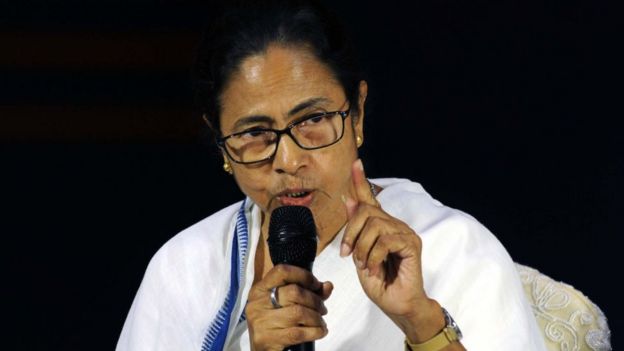
But there is some indication that her popularity has been waning in recent months, which correspondents say has left her rattled.
It could be that this latest statement is an attempt to regain some of the ground she lost to Prime Minister Narendra Modi’s ruling Bharatiya Janata Party (BJP) in the recently concluded general election.
Her party won only 22 of West Bengal’s 42 seats – a big drop from the 32 she won in 2014 – in an election marred by violence which saw a number of political activists in the state killed.