16/06/2019

Xi receives Crown Order from Tajik President Rahmon

TAJIKISTAN-DUSHANBE-XI JINPING-ORDER OF THE CROWN

Chinese President Xi Jinping (L) receives the Order of the Crown, Tajikistan’s highest decoration, from Tajik President Emomali Rahmon during a ceremony in Dushanbe, Tajikistan, June 15, 2019. (Xinhua/Sadat)

DUSHANBE, June 15 (Xinhua) — Chinese President Xi Jinping received the Order of the Crown, Tajikistan’s highest decoration, from Tajik President Emomali Rahmon here on Saturday.

During the ceremony held at the presidential palace, Rahmon spoke highly of Xi’s positive contributions to the development of Tajikistan-China relations, saying he is ready to work together with Xi to guide bilateral relations toward greater achievements.

Noting that the Order of the Crown embodies the profound friendship the people of Tajikistan have kept with the people of China, Xi said he attaches great significance to the decoration.

“I am willing to join hands with President Rahmon in lifting China-Tajikistan comprehensive strategic partnership to higher levels and better serving the two peoples,” Xi said.

Xi arrived here Friday for the fifth summit of the Conference on Interaction and Confidence Building Measures in Asia and a state visit to Tajikistan.

Tajikistan is the second leg of Xi’s two-country Central Asia trip, which also took him to Kyrgyzstan for a state visit and the 19th Shanghai Cooperation Organization summit.

Source: Xinhua

16/06/2019

Beijing sees ‘broad consensus’ with UN on Xinjiang as human rights groups blast envoy’s visit

  • UN counterterrorism chief Vladimir Voronkov not expected to make statement after visiting region last week
  • Trip prompts calls for independent observation in Muslim-majority area where an estimated 1 million people are held in detention facilities
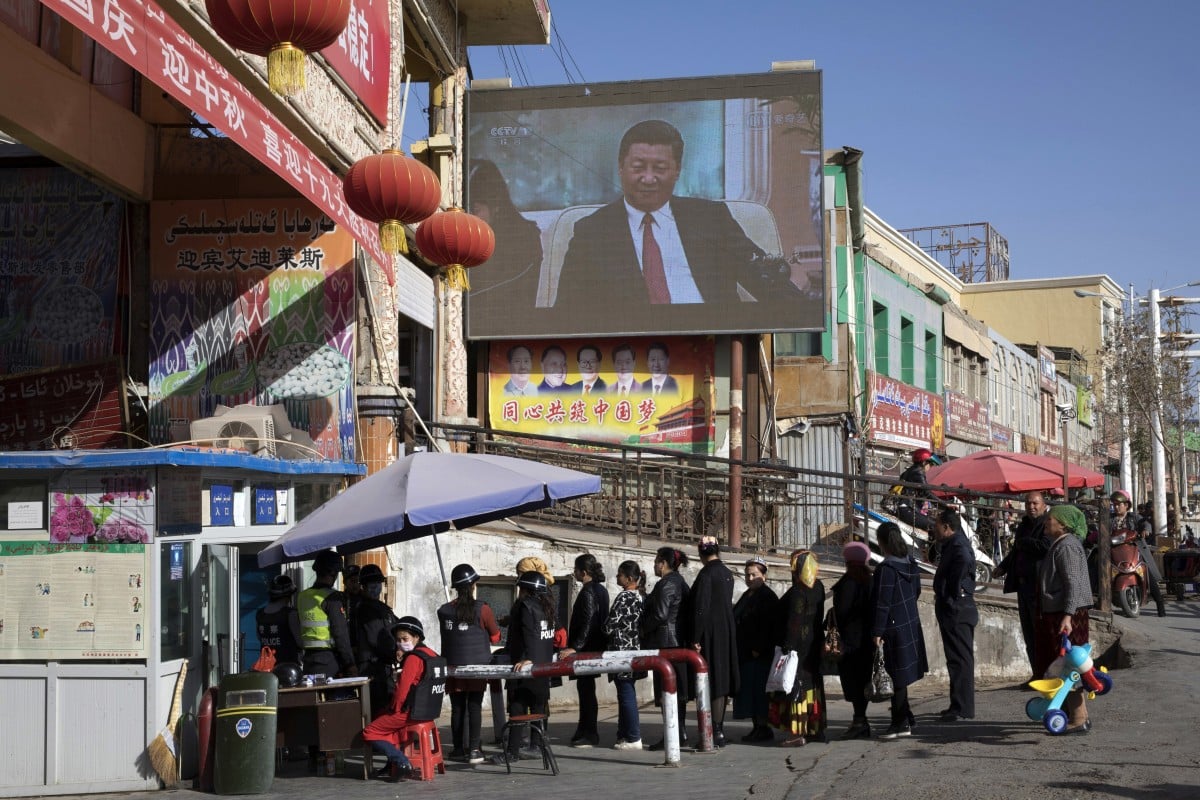
Residents go through a security checkpoint at the entrance to a bazaar in Hotan, Xinjiang. The UN’s counterterrorism chief visited the far western region last week. Photo: AP
Human rights group Amnesty International has joined growing criticism of a top UN official’s visit to China’s 
Xinjiang region

, echoing calls for more independent investigations of detention facilities for ethnic Uygurs.

The invitation to the United Nations envoy to visit was Beijing’s latest attempt to show it has nothing to hide in what it calls “re-education facilities” that hold an estimated 1 million people in the Muslim-majority area in western China.
But critics have warned that state-led media tours and diplomatic visits lack the unfettered access needed to make a proper assessment of alleged rights abuses in the region.
UN counterterrorism chief Vladimir Voronkov 
visited Beijing and Xinjiang

from Thursday to Saturday and met Le Yucheng, the vice foreign minister, according to a statement from the foreign ministry on Sunday. The statement said the two sides had reached a “broad consensus”.

UN human rights chief ‘is welcome to visit Xinjiang’

Voronkov’s visit follows months of pressure to allow the UN to investigate alleged human rights abuses in Xinjiang. China has so far only allowed guided tours of the region for foreign journalists and diplomatic envoys.

Reuters reported on Saturday that Voronkov’s itinerary was planned by China and that his UN office did not expect to make any public statement about the trip, according to an email from Voronkov’s office seen by the news agency.

The United Nations said in August last year it had credible reports that detention facilities in Xinjiang held 1 million Uygurs and other Muslims. Beijing says the facilities are for “vocational training” and tied to deradicalisation and anti-terrorism efforts.

Patrick Poon, a Hong Kong-based researcher with Amnesty International, said he was “very much concerned” about how the UN envoy’s visit had been arranged.

“From what we saw in the previous visits orchestrated by the Chinese government for diplomats, it’s very difficult for anyone to believe how this visit will be able to show any authentic situation on the ground,” Poon said.

“If the Chinese government is sincere, let independent UN experts, such as the special rapporteurs, have independent observation of what’s happening in Xinjiang.”

Xinjiang’s vanishing mosques highlight pressure on China’s Muslims
His remarks followed criticism of the trip from Human Rights Watch on Friday.
“The UN allowing its counterterrorism chief to go to Xinjiang risks confirming China’s false narrative that this is a counterterrorism issue, not a question of massive human rights abuses,” Human Rights Watch UN director Louis Charbonneau told Agence France-Presse.
Also on Friday, US Deputy Secretary of State John Sullivan called UN Secretary General Antonio Guterres to express “deep concerns” about Voronkov’s visit, according to the State Department website. Sullivan called for “unmonitored and unhindered access to all camps and detainees in Xinjiang by UN human rights officials”.
The United States has been increasingly vocal about China’s human rights abuses. Vice-President Mike Pence is due to give a speech on China’s “control and oppression” of citizens on June 24, but according to Bloomberg it could be postponed to avoid inflaming tensions with Beijing ahead of a possible meeting between US President Donald Trump and his Chinese counterpart Xi Jinping at the Group of 20 leaders summit in Japan on June 28-29. The speech was originally scheduled for June 4 but was delayed by Trump, Bloomberg reported, citing sources familiar with the matter.
Source: SCMP
16/06/2019

Maoist rebels kill five policemen in eastern India

BHUBANESWAR, India (Reuters) – Maoist rebels killed five policemen in the eastern Indian state of Jharkhand on Friday, a senior police official said, the latest in a series of attacks on security forces.

The policemen were patrolling a weekly market, M. L. Meena, additional director general of police in Jharkhand, told Reuters by telephone from Ranchi, the state capital.

The attack took place near the state border with West Bengal, Meena added.

Last month, suspected leftist insurgents killed at least 15 police and a civilian in a landmine attack on two security vehicles in the western Indian state of Maharashtra.

The Maoist insurgents, also known as Naxals, have battled a number of state governments for decades. They say they are fighting on behalf of people who have not benefited from a long economic boom in India, Asia’s third largest economy.

Source: Reuters

15/06/2019

Chinese president arrives in Tajikistan for CICA summit, state visit

TAJIKISTAN-DUSHANBE-XI JINPING-CICA SUMMIT AND STATE VISIT-ARRIVAL

Chinese President Xi Jinping (L) is warmly received by Tajik President Emomali Rahmon upon his arrival at the airport in Dushanbe, Tajikistan, June 14, 2019. Xi arrived here Friday for the fifth summit of the Conference on Interaction and Confidence Building Measures in Asia (CICA) and a state visit to Tajikistan. (Xinhua/Xie Huanchi)

DUSHANBE, June 14 (Xinhua) — Chinese President Xi Jinping arrived here Friday for the fifth summit of the Conference on Interaction and Confidence Building Measures in Asia (CICA) and a state visit to Tajikistan.

Xi was warmly received by Tajik President Emomali Rahmon at the airport.

The two heads of state had a cordial talk. Xi thanked Rahmon for meeting him in person at the airport and conveyed to the Tajik government and people sincere greetings on behalf of the Chinese government and people.

As good neighbours, friends and brothers, China and Tajikistan have maintained sound and steady development in relations ever since they forged diplomatic ties 27 years ago, he said.

Xi said he and Rahmon decided to establish the China-Tajikistan comprehensive strategic partnership in 2017, which has ushered bilateral relations into a new phase of rapid development.

“My visit this time aims to push bilateral ties to an even higher level,” he said. “I look forward to having in-depth communication with my old friend President Rahmon, and jointly outlining the beautiful blueprint of China-Tajikistan relations.”

He pledged China’s willingness to work with Tajikistan to further promote bilateral ties and cooperation in various fields to bring more benefits to both peoples.

The Dushanbe summit bears great significance to the development of the CICA, where all sides will discuss the mechanism’s future development and decide on priorities for cooperation, Xi said, praising Tajikistan’s efforts in preparing for the event and expressing belief in its success.

Recalling Xi’s visit to Tajikistan five years ago, Rahmon extended a warm welcome to the Chinese leader for the state visit and his participation in the CICA summit.

Rahmon wished the visit a complete success and better and faster development of bilateral ties.

Tajikistan is the second leg of Xi’s two-country Central Asia trip, which also took him to Kyrgyzstan for a state visit and the 19th Shanghai Cooperation Organization summit.

Source: Xinhua

15/06/2019

Chinese, Turkish presidents vow to promote bilateral cooperation

TAJIKISTAN-DUSHANBE-XI JINPING-TURKISH PRESIDENT-MEETING

Chinese President Xi Jinping (R) meets with his Turkish counterpart Recep Tayyip Erdogan in Dushanbe, Tajikistan, June 15, 2019. (Xinhua/Wang Ye)

DUSHANBE, June 15 (Xinhua) — Chinese President Xi Jinping met his Turkish counterpart, Recep Tayyip Erdogan, here on Saturday, agreeing to promote bilateral cooperation on the sidelines of the fifth summit of the Conference on Interaction and Confidence Building Measures in Asia.

Xi said that he highly values China-Turkey relations and is willing to work with Erdogan to translate bilateral friendship into mutual trust, and constantly open new chapters in promoting the China-Turkey strategic cooperative relationship.

China and Turkey should give each other firm support on issues that touch their respective core interests and major concerns, and step up the anti-terrorism cooperation, Xi said.

Calling Turkey a traditional Silk Road country, Xi said that China stands ready to enhance their mutually beneficial cooperation within the Belt and Road framework.

The Chinese president also called on the two countries, both important members of the Group of 20 (G20), to strengthen their communication and coordination on multilateral arenas such as the G20.

Agreeing with Xi, Erdogan said that Turkey attaches great importance to relations with China, adding that Turkey is willing to strengthen high-level exchanges between the two countries and expand their cooperation in economy, trade, finance, infrastructure construction and other fields.

The Belt and Road Initiative is very important to Turkey, he said, adding that his country is willing to actively participate in its joint construction and cooperation.

Source: Xinhua

15/06/2019

China, Qatar pledge to deepen political trust, boost cooperation

TAJIKISTAN-DUSHANBE-XI JINPING-QATARI EMIR-MEETING

Chinese President Xi Jinping (R) meets with Qatari Emir Sheikh Tamim Bin Hamad Al-Thani in Dushanbe, Tajikistan, June 15, 2019. (Xinhua/Zhang Ling)

DUSHANBE, June 15 (Xinhua) — Chinese President Xi Jinping met with Qatari Emir Sheikh Tamim Bin Hamad Al-Thani here on Saturday, pledging to deepen political mutual trust and boost cooperation between the two nations.

Voicing his appreciation for Tamim’s commitment to promoting the bilateral ties, Xi recalled the emir’s state visit to China in January this year during which the two heads of state had an in-depth exchange of views and reached extensive consensus on developing the China-Qatar strategic partnership under new circumstances.

During Saturday’s meeting on the sidelines of the fifth summit of the Conference on Interaction and Confidence Building Measures in Asia, Xi said China and Qatar should consolidate their political mutual trust and continue understanding and supporting each other on issues involving their core interests.

The two sides should accelerate the all-round cooperation in energy, trade and economy, infrastructure construction, investment, the fifth-generation (5G) telecommunications and other areas, said the Chinese president.

On the cooperation on fighting terrorism, Xi expressed gratitude to the Qatari side for its support for China’s counter-terrorism and de-extremization efforts, stressing that the Chinese side stands ready to step up coordination and cooperation with Qatar in multilateral affairs.

Tamim hailed the strategic significance of the Qatar-China relationship, calling his China visit in January a great success.

The Qatari side is ready to work with China to boost cooperation in key areas including investment and energy, as well as increase cultural and people-to-people exchanges, Tamim said.

Qatar firmly supports China’s push to safeguard sovereignty and fight against terrorism, said the emir. He spoke highly of China’s fair stance on international affairs, where the Chinese side upholds that disputes should be resolved through dialogue between nations, and pledged to increase coordination with the Chinese side in multilateral affairs.

Source: Xinhua

15/06/2019

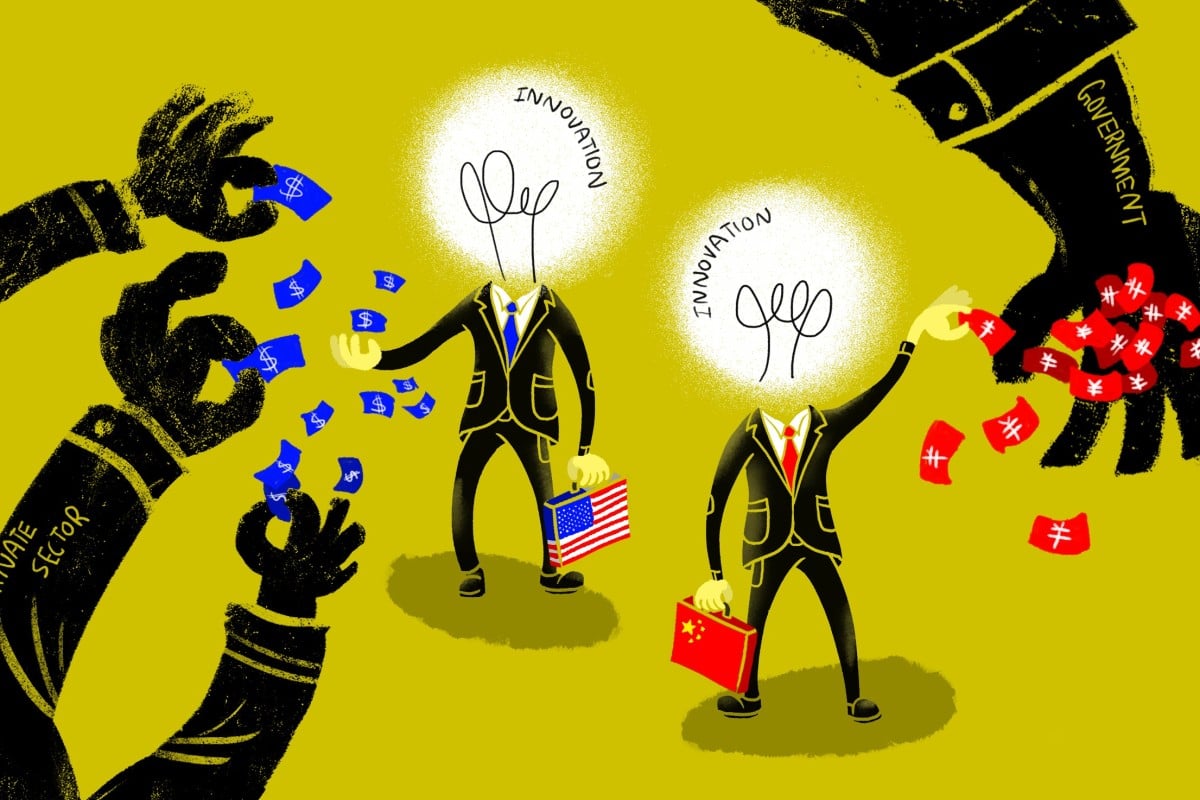
Does top-down, state-led innovation work? Just ask Silicon Valley

  • In 2017 alone, China’s central and local governments allocated US$7.7 billion in subsidies to both carmakers and buyers
  • But how big should the state’s role be in fostering innovation?
China has fostered development of its own technologies for decades, and the continuing trade war with the US makes it more imperative than ever. Illustration: Yan Jing Tian
It was the 1950s and 60s, a time of high tension among the superpowers.
As one national government was funding elite research institutes and enlisting its country’s top scientific minds to develop military technology, it likely had little inkling the move would form the basis of a broader, civilian technology industry in the coming decades.
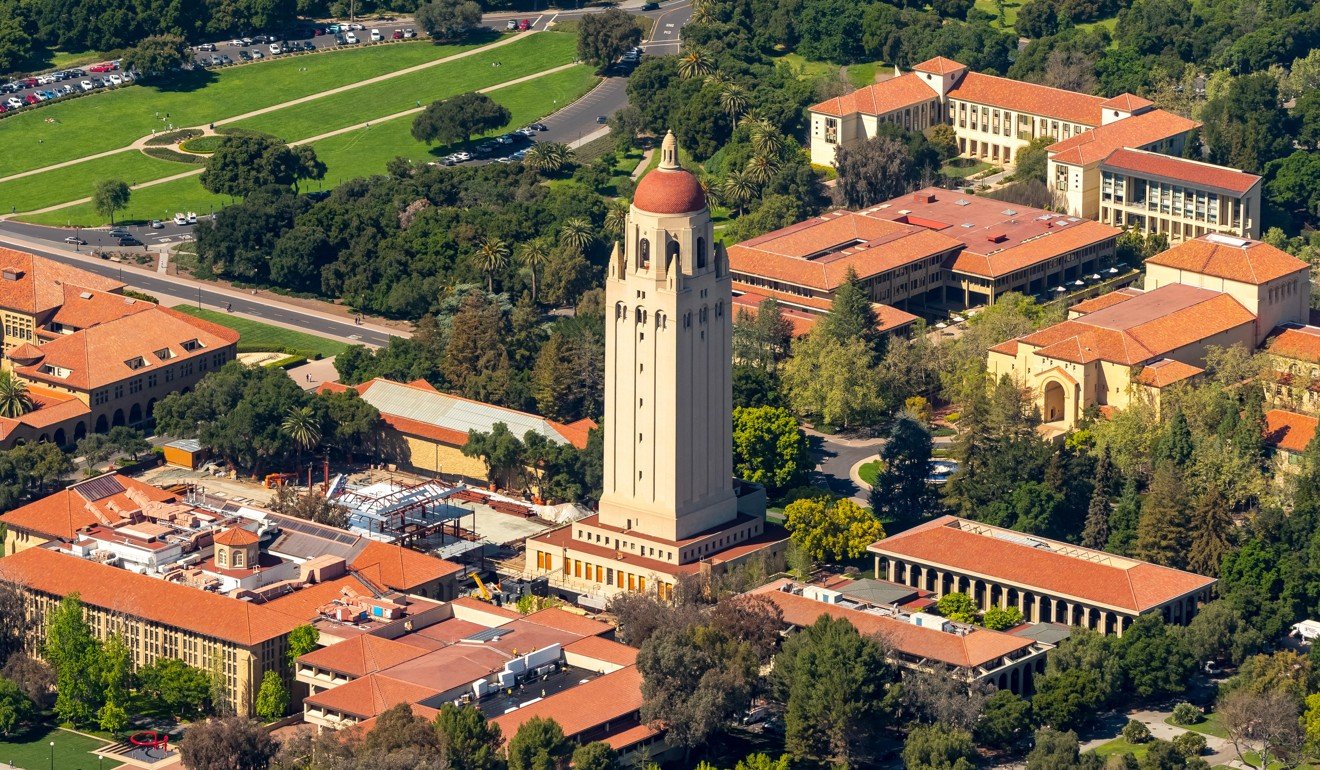
The force behind this state-led initiative – a style of innovation commonly associated with China – was the US government, which seeded California’s Silicon Valley with funding for military research at Stanford University.

It was there that the dean of engineering, Frederick Terman, actively encouraged students to launch companies to exploit these technologies for profit – the most famous of his disciples being Hewlett-Packard founders Bill Hewlett and Dave Packard.

“Most people who came here after the 1980s just assumed it’s all silicon and chips,” said Steve Blank, a Silicon Valley entrepreneur and adjunct professor at Stanford.

“But innovation in Silicon Valley actually started in Stanford University, thanks to a single professor who changed the entire culture.”

After the second world war, Terman, whose background was in electrical engineering, drew upon his wartime experience heading a radio research lab at Harvard to help turn Stanford into a top-tier university specialising in electronic warfare and with government contracts.

“Americans are not smarter than the Chinese. The only thing that holds China back, is that the nature of dissent and creativity are related.”Steve Blank, Silicon Valley entrepreneur

Since then, Silicon Valley has been seen as the mecca of technology innovation, producing some of the world’s largest tech companies, such as Intel, Amazon, Facebook and Google.

The region has been lauded for its culture and openness, with countries globally hoping to learn from its success and emulate it by design.

“There’s something special that happens in a city or a region when people are able to pursue new ideas in a very free way,” said Eric Ries, author of the book The Lean Startup.

“When I first came to Silicon Valley, I had a failed start-up on my resume … nobody saw that as a negative, they saw it as a sign that I showed initiative, tried to do something new.

“It’s not that Silicon Valley embraces failure, but it has a different understanding of the likelihood of success of anything new.”

The fact that Silicon Valley also had its beginnings in federal funding suggests that the state has an important role to play when it comes to fostering innovation.

Countries like China, Singapore and Israel have sought to emulate Silicon Valley’s success by designing strategies at a government level to encourage entrepreneurship and innovation.

The US government seeded California’s Silicon Valley with funding for military research at Stanford University in Palo Alto, California. Photo: Alamy

For China, the need to foster innovation comes at a critical time. The country is caught in an escalating trade and tech war with the US.

As the two nations slap billions in tariffs on each other, the US has also moved to cut off some Chinese technology firms from accessing US technology, with the country’s 5G champion, Huawei Technologies, directly in the firing line.

Why China’s top-down approach can only take tech innovation so far

The Chinese government has now vowed to double down on developing core competencies, including semiconductor manufacturing – a central part of its Made in China 2025 plan which aims to locally produce 70 per cent of the chips the country needs within 10 years.

But Silicon Valley’s history and China’s push in state-led innovation also beg the question: how much of a role does the state play in fostering innovation?

China’s efforts to strengthen its indigenous technology have been ongoing for several decades.

The first big push to boost modern technology capabilities came during the 1980s, putting in place the Torch programme – resulting in Zhongguancun Science Park in Beijing and a variety of other parks across the country.

The period also saw the establishing of the 973 and 863 programmes, which focused on developing basic research and hi-tech R&D, respectively.

The world’s fastest supercomputer, Tianhe-2, and China’s self-developed spacecraft, Shenzhou, were among the fruits of the 863 programme, which was set up in 1988, while 1997’s 973 programme funded research projects in agriculture, energy, material science and other areas.

US and China’s mutual distrust is hampering tech innovation, experts fear

In 2006, China proposed a 15-year road map for the nation to join the ranks of innovation-oriented countries by the end of 2020. Science and research spending would rise above 2.5 per cent of GDP under the guide to future goals, known as the National Medium to Long-Term Plan for Science and Technology Development.

The master plan identified industries, technologies and research areas such as energy, biotech, human health and diseases that were considered of “utmost importance to the technological advancement of China”.

These goals were elaborated on in three separate five-year plans, the blueprint for China’s social and economic policies, and translated to a string of government efforts in building the infrastructure to support the country’s technology ambitions.

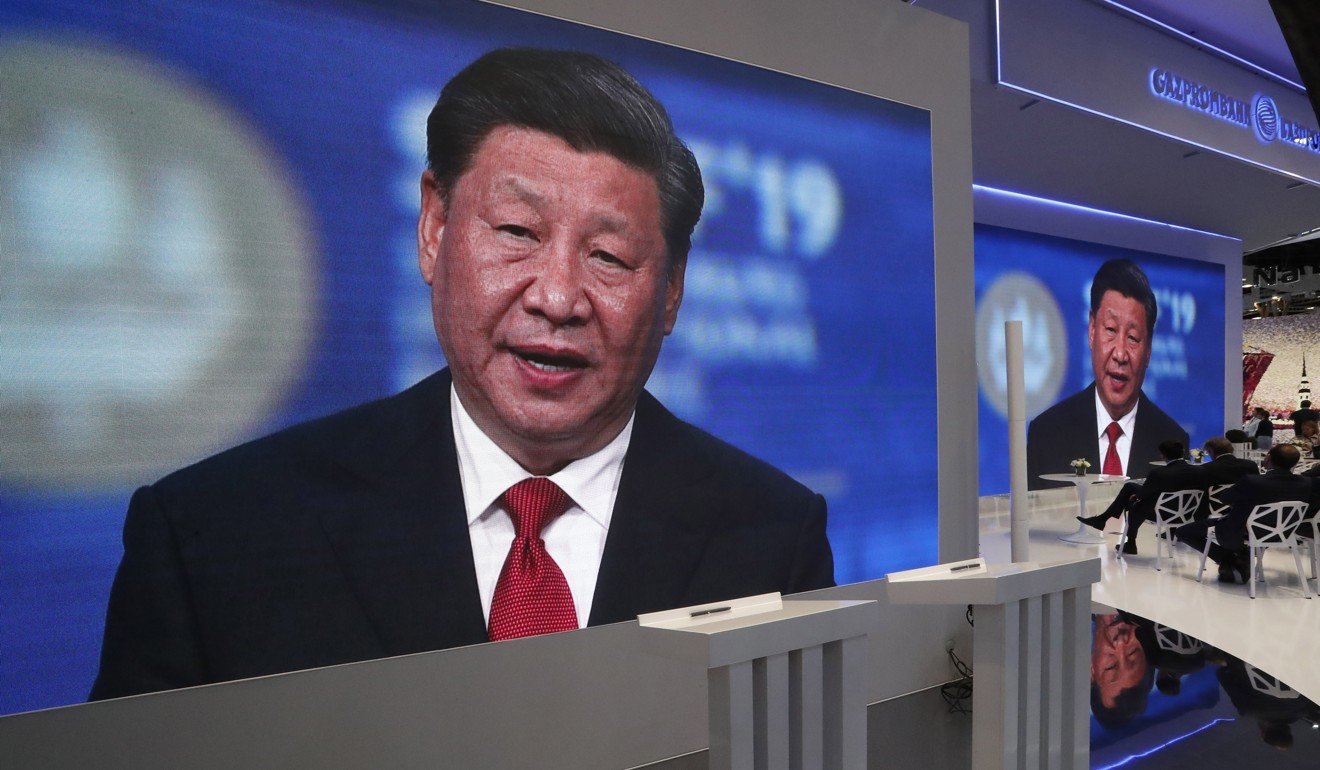
Screens show Chinese President Xi Jinping speaking at an international economic forum in St. Petersburg, Russia on June 7. Xi has called for the construction of an “innovation-driven economy” to make China a global innovation leader by 2035. Photo: EPA-EFE

This came in the form of industrial estates and the Thousand Talents plan to nurture and attract talent back to the country, not to mention a wealth of funding that ranged from research grants and subsidies to tax cuts for the private sector and academia.

China’s tech ambitions strengthened under President Xi Jinping, who, on numerous occasions, has called for the construction of an “innovation-driven economy” to make the country a global innovation leader by 2035.

An important initiative under Xi’s leadership was Made in China 2025. First announced in 2015, the programme called for upgrading China’s manufacturing model to better take on the US in strategic industries such as robotics, aerospace and new-energy vehicles.

Can China’s tech industry innovate its way to leadership?

These efforts have boosted some of Beijing’s favoured industries, turning them into rivals of global peers. In 2001, China identified electric vehicles (EV) as a major technology.

Sixteen years later, Shenzhen company BYD has become the world’s biggest EV maker, and a crop of start-ups including WM Motor, Xpeng Motors and the US-listed NIO have joined the race with funding from some of the country’s biggest tech companies and property developers.

In 2017 alone, China’s central and local governments allocated US$7.7 billion in subsidies to both carmakers and the consumers who bought their vehicles, cementing the country’s position as the world’s largest EV market.

Some 770,000 EVs were made and sold in China in 2017, compared with just 199,000 in the US that year.

The planning for domestic integrated circuit (IC) production, a strategically important sector identified in the 15-year programme, was further developed in the 12th and 13th five-year plans.

Those concepts grew into an industry involving over 20,000 researchers that aimed to reduce reliance on foreign chip technology, according to China’s Ministry of Science and Technology in 2017.

Yet, as self-reliance is more relevant than ever to China amid the tech war, it still lags behind the US and Taiwan in chip making, despite the billions of dollars in state backing the sector has received.

China’s semiconductor industry needs more than 10 years to catch up with global peers, Jay Huang Jie, founding partner of Jadestone Capital and former Intel managing director in China, said in May.

Some have pointed to China’s tech gap with the US as evidence that the Asian giant does not have what it takes to achieve technological competitiveness.

China, however, is still in the early stages when it comes to developing technology, according to Andy Mok, senior research fellow at the Centre for China and Globalisation, a Beijing-based non-government think tank.

A visitor at the Consumer Electronics Show in Shanghai on June 11 checks a Huawei 3D Virtual Reality headset. Huawei, China’s 56 champion, is feeling the brunt of US efforts to cut Chinese tech firms’ access to US technology amid the trade war. Photo: AFP

“A lot of research universities in the US – like MIT, Caltech – they’ve had decades of operations [since the second world war and the cold war],” said Mok.

“It’d be quite a myth to say that the US system is so successful technologically because of its political or economic system.”

While semiconductors may not have been a top priority for China until recently, threats of a tech cold war which could cut off the country from US technology, including chips, mean China will double down on developing its own proprietary technology.

In the short term, China could fall further behind the US, Mok said.

Uninspiring Apple shows the US’ best tech days are behind it

“Some of these indigenously produced components were a ‘nice to have’ but not a ‘must-have’ before … it was one priority among many,” Mok said. “Will China’s chips be cutting edge? Probably not, but they will be good enough to be used in the short term.”

But while state-led innovation has helped drive industries, broadly labelling China’s technology achievements as state-driven could be an inaccurate generalisation, said Zhang Jun, dean of the School of Economics at Fudan University and director of the China Centre for Economic Studies, a Shanghai-based think tank.

Some of the more notable innovations in China – like mobile payments – took place on the application level and were driven by private companies such as Alibaba and Tencent.

Alibaba owns the South China Morning Post.

“These companies succeeded by banking on the huge consumer market in China in the internet age,” Zhang said.

Zhang pointed out that while the state did not actively drive those innovations, it too contributed by giving the companies leeway to experiment instead of immediately regulating the industries, which could have stifled innovation.

How the US trade war has accelerated China’s rise

China’s state support comes primarily in basic science and core technology, where it needs to play catch-up with countries like the US, and in the form of investment in universities and research labs that is likely to accelerate due to the trade war with the US.

“Basic scientific research will still rely on the state’s continuous investment into the academic field and into nurturing talents, but in terms of the application of the technology, the government will need to work with the market, and control less,” Zhang said.

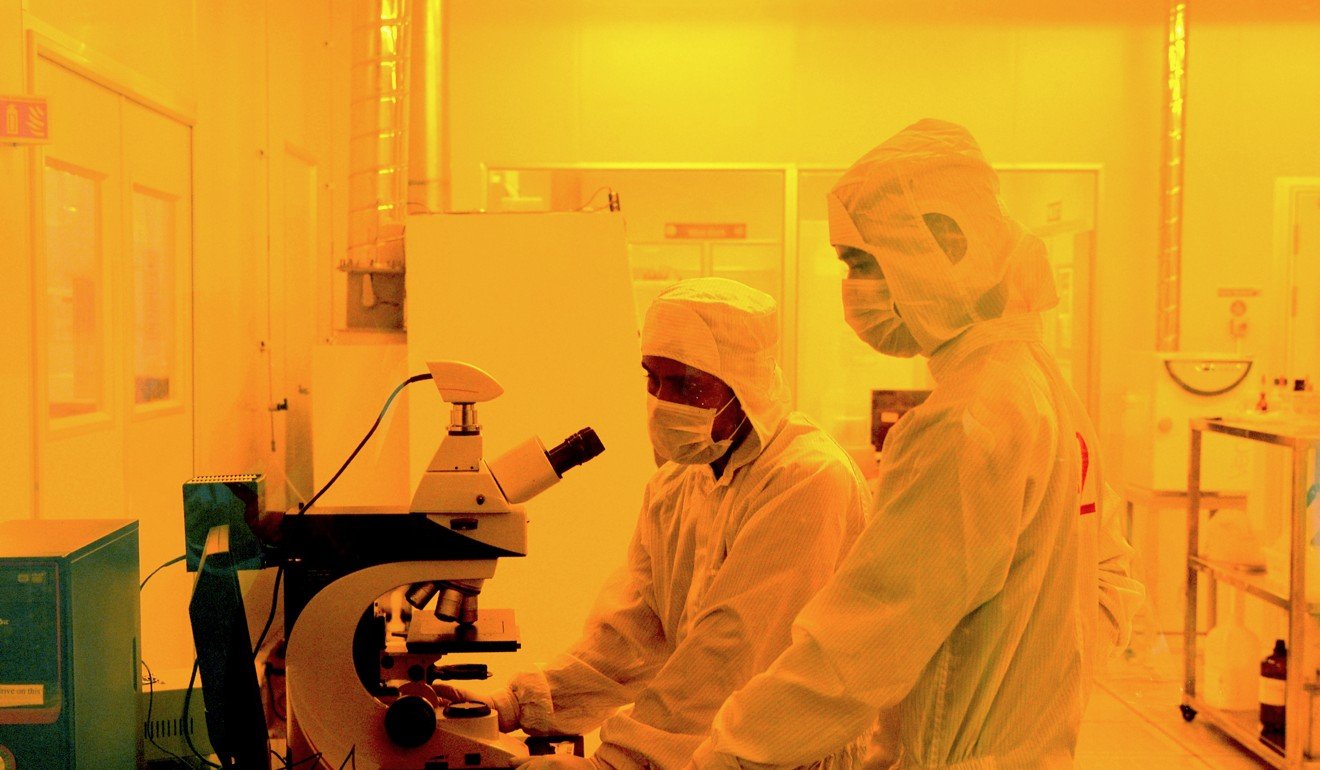
Researchers wearing suits work inside a semiconductor fabrication lab. China is 10 years behind the US in chips, according to one expert. Photo: AFP

Countries that adopt a largely top-down approach to innovation are not uncommon.

In Singapore, a tiny island-nation that lacks natural resources, the Economic Development Board has been instrumental in providing grants and incentives to small business, including low-rent office space for start-ups.

The country also has a nationally-supported artificial intelligence programme called AI Singapore, which is aimed at fostering AI research and talent and bringing private and public sectors closer together when it comes to AI applications.

Israel, which has billed itself as a start-up nation, also has a central agency in charge of planning and executing its innovation policy.

It can also trace its leadership in cybersecurity to the Israel defence forces, whose military intelligence unit 8200 has trained and provided a lot of the manpower for the civilian sector.

Ultimately, despite the role the US and Chinese governments play in driving their respective tech ecosystems, many other factors contribute to the flourishing of an innovation cluster, including private capital and a culture that accepts failure and allows individuals to exercise creativity.

“Getting the state out of the tech ecosystem should be the goal for private capital to take over,” said Stanford’s Blank. “At some point, the government needs to let go.”

Federal funding in the US helped get technology and innovation off the ground in Silicon Valley, but once venture capital started to flow into the region, a culture where innovation was left to the entrepreneurs and tech talent was created.

Blank pointed out that culture also has a big part to play. The US, for example, encourages individualism. Furthermore, in technology hubs like Silicon Valley, Boston and New York, failure is seen as good experience rather than as shameful.

“Americans are not smarter than the Chinese,” said Blank. “The only thing that holds China back, is that the nature of dissent and creativity are related.”

“Great entrepreneurs, great founders are dissidents. Steve Job was a dissident, Elon Musk is a dissident,” he said.

“They tell the status quo, the leadership of whatever industry they’re in that they’re wrong. In the US, that’s in fact part of our culture and we encourage that, but in China you can only do that within the bounds of what the [Communist] Party allows you to do.”

However, Mok disagrees. “Many of the most valuable US companies today are seen as tech leaders because they were able to piggyback on US hegemony,” he said. “If you could win in the US, you could probably win everywhere else.”

Source: SCMP

15/06/2019

Lessons from an old trade war: China can learn from the Japan experience

  • In the last half of the 20th century US worries about a rising Japan led to tariffs and technology mistrust
  • Differences in the Chinese experience may predict a different outcome
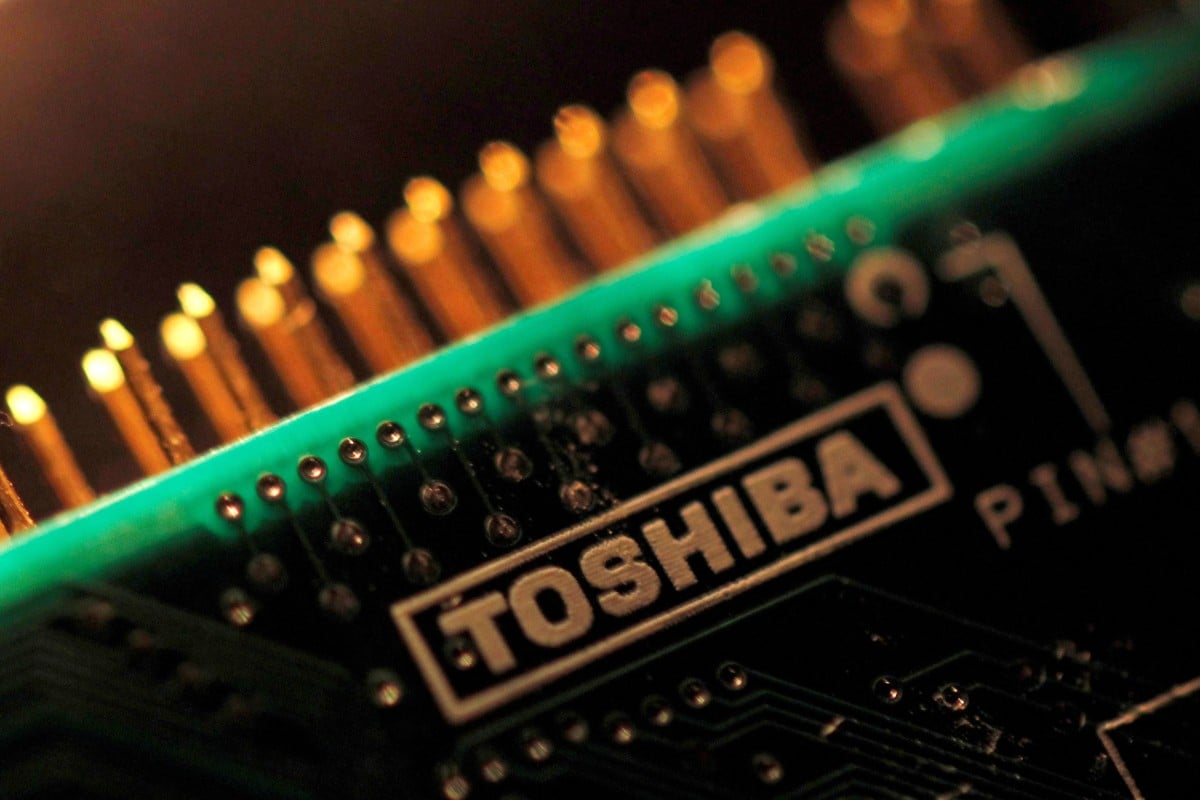
Toshiba was one of the companies affected by US actions to prevent the rise of Japan in a trade war that echoes in today’s tensions between the US and China. Photo: Reuters
If history is a mirror to the future, the similarities between the spiralling technology stand-off between China and the US and the economic wars waged by the US with Japan – which peaked in the 1980s and 1990s – may be instructive. But there are differences between the two which may predict a different outcome.
The US-Japan economic tensions started in the 1950s over textiles, extended to synthetic fibres and steel in the 1960s, and escalated – from the 1970s to 1990s – to colour televisions, cars and semiconductors, as Japan’s adjusted industrial policy and technology development moved it up the industrial chain.
Boosted by government support, Japan’s semiconductor industry surpassed the US as the world’s largest chip supplier in the early 1980s, causing wariness and discontent in the US over national security risks and its loss of competitiveness in core technologies.

The Reagan administration regarded Japan as the biggest economic threat to the US. Washington accused Tokyo of state-sponsored industrial policies, intellectual property theft from US companies, and of dumping products on the American market.

The US punished Japanese companies for allegedly stealing US technology and illegally selling military sensitive products to the Soviet Union. It also forced Japan to sign deals to share its semiconductor technologies and increase its purchases of US semiconductor products.

“The Trump administration is using similar tactics against China that were used against Japan in the 1980s and 1990s,” said an adviser to the Chinese government, on condition of anonymity, adding that the US was continuing its hegemony to curtail China’s tech development and was trying to mobilise its allies to follow suit.

After talks to end the US-China trade faltered last month, Huawei – a global leader in the 5G market – is now standing at centre stage of a protracted technology stand-off between Beijing and Washington, which has grown increasingly wary of the rising competitiveness of Chinese tech companies.

Zhang Monan, a researcher with the Beijing-based China Centre for International Economic Exchanges, does not foresee an easing of the rivalry between the US and China.

“The current US-China conflicts are more complicated than those between the US and Japan,” she said.

“The US will only get more intense in its containment of China and the tech rivalry won’t ease, even if China and the US could reach a deal to de-escalate the trade tensions.”

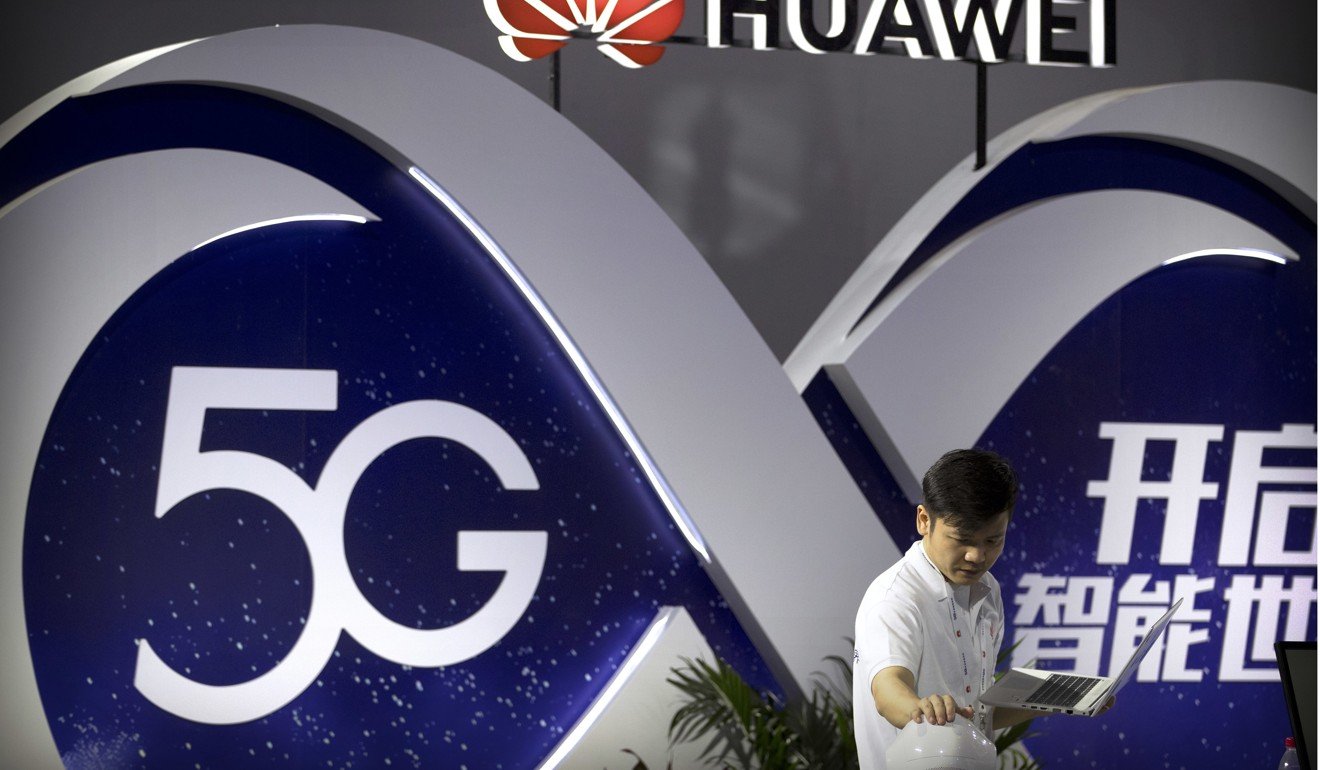
Huawei is at the centre of a technology stand-off between Beijing and Washington. Photo: AP

Back in 1982, the US justice department charged senior officials at Hitachi with conspiracy to steal confidential computer information from IBM and take it back to Japan. IBM also sued Hitachi. The two companies settled the case out of court and Hitachi paid 10 billion yen (US$92.3 million) to IBM in royalties in 1983, while accepting IBM inspections of its new software products for the next five years.

Toshiba, a major electronics producer in Japan, and Norway’s Kongsberg Vaapenfabrikk secretly sold sophisticated milling machines to the Soviet Union from 1982 to 1984, helping to make its submarines quieter and harder to detect. This transfer of sensitive military technology in the middle of an arms race between the US and the Soviet Union was not revealed until 1986.

The US issued a three-year ban on Toshiba products in 1987 and the company ran full-page advertisements in more than 90 American newspapers apologising for its actions.

In 1985, the US imposed 100 per cent tariffs on Japanese semiconductors. A year later, in its five-year semiconductor deal with the US, Japan agreed to monitor its export prices, increase imports from the US, and submit to inspections by the Office of the United States Trade Representative.

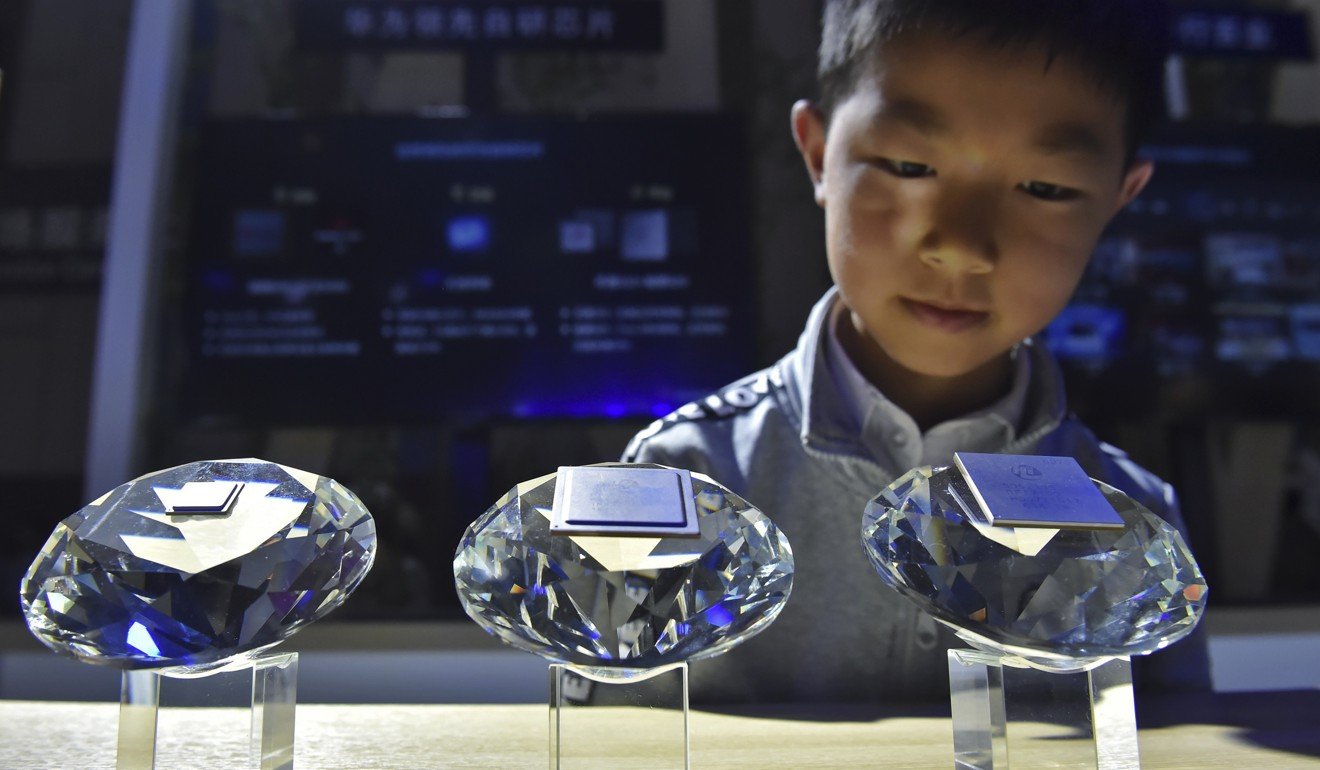
A display of chips designed by Huawei for 5G base stations on show at the China International Big Data Industry Expo. Photo: AP

This was followed by a second five-year semiconductor deal in 1991, in which Japan agreed to double the US market share in Japan to 20 per cent. In yet another bilateral semiconductor deal in 1989 Japan was required to open its semiconductor patents to the US.

Meanwhile, the US government boosted its efforts to help American businesses cement their industrial leverage in the chip sector and unveiled rules to protect its domestic chip industry.

The two countries were irreconcilable in 1996 on how to measure their respective market share. Overall market circumstances had also changed by then, with the US becoming competitive in microprocessing, and South Korea and Taiwan emerging as strong rivals to Japan.

Its dominance in semiconductors lost, Japan reached out to Europe for a range of cooperative technology deals.

Cooperate, don’t confront: academic advises Beijing on trade war tactics

“History can tell that high technology matters greatly to national security strategies. It is not a process of mere market competition. It follows the law of the jungle,” Zhang said.

The US has intensified its investment scrutiny by rolling out the Foreign Investment Risk Review Modernisation Act last year, which extends the regulation to key industrial technology sectors.

Zhang predicted the US would continue to contain China’s technological development in key sectors such as AI, aerospace, robots and nanotechnology – all of which are of great importance to Beijing.

The US has said Chinese tech giants Huawei and ZTE present a national security risk. Last April it cut US supplies to ZTE, citing violations of sanctions against Iran and North Korea. The ban was removed three months later after ZTE paid US$1.4 billion in fines.

It was a wake-up call for China to develop its own core technologies. The subsequent US ban on Huawei added to the urgency to do so, observers said.

Wang Yiwei, a professor in international relations with Renmin University, said China had to develop its own hi-tech know-how while continuing the opening up process.

“China has paid a price to learn whose globalisation it is,” he said.

“We may see some extent of disengagement with the US in technology and dual-use sectors, but China can speed up cooperation with European countries, and other countries such as Israel, to offset the risks from the US.”

In December, the US filed criminal charges against Huawei and its chief financial officer Sabrina Meng Wanzhou, alleging bank fraud, obstruction of justice and technology theft.

The squeeze continued last month with the US blacklisting Huawei, restricting its access to American hi-tech supplies and putting pressure on its allies to freeze the company out of the 5G market. So far, those allies, including Germany and Japan, have remained hesitant about meeting the US request and refrained from siding with either country.

Chinese foreign ministry spokesman Geng Shuang said on Monday that Huawei had obtained 46 commercial contracts in 30 countries as of June 6, “including some US allies and some European countries that the US has been working hard to persuade out of the contracts”.

For Zhang, the differences between Japan’s experience of US concerns of technological advancement and China’s may offer some hope for Chinese ambitions.

“Dependent on US for security protection, Japan was limited in [its ability to] push back and was already a developed country,” she said.

“But China has huge domestic market potential to address the imbalance [between] economic and technology development. This remains a big attraction to multinational companies, which would enable China to integrate into global innovation and technology cooperation, but China has to figure out how to dispel the doubts on its growth model.”

Source: SCMP

14/06/2019

China, Kyrgyzstan agree to enhance ties to new heights

KYRGYZSTAN-BISHKEK-CHINA-PRESIDENTS-TALKS

Chinese President Xi Jinping and his Kyrgyz counterpart Sooronbay Jeenbekov hold talks in Bishkek, Kyrgyzstan, June 13, 2019. Xi and Jeenbekov held talks here Thursday, agreeing to take their countries’ comprehensive strategic partnership to new heights. (Xinhua/Li Xueren)

BISHKEK, June 13 (Xinhua) — Chinese President Xi Jinping and his Kyrgyz counterpart, Sooronbay Jeenbekov, held talks here Thursday, agreeing to take their countries’ comprehensive strategic partnership to new heights.

Xi arrived in the Central Asian country Wednesday for a state visit and the Shanghai Cooperation Organization (SCO) summit.

China-Kyrgyzstan relations have withstood the test of international vicissitudes and achieved leapfrog development over the past 27 years since the establishment of the diplomatic relationship. The two countries have set a fine example of a new type of state-to-state relations featuring mutual respect, equality and win-win cooperation, Xi said.

China will continue to support Kyrgyzstan’s own choice of development path and all policy measures taken by the Kyrgyz government to safeguard national independence, sovereignty and security, Xi said.

Xi also said China is ready to join hands with Kyrgyzstan to deepen their traditional friendship and mutually beneficial cooperation, so as to better benefit the two peoples.

The Chinese president stressed that jointly building the Belt and Road has become the focus of China-Kyrgyzstan cooperation, calling on the two countries to deepen the alignment of their development strategies, tap new potential of partnerships and explore new space of cooperation.

Cooperation in trade and investment should be expanded and major programs must be well implemented, Xi said, adding that China is willing to import more green and quality agro-products from Kyrgyzstan.

China will continue to support Kyrgyzstan’s economic and social development, including jointly building drinking water facilities, roads, hospitals and other projects to improve people’s livelihood.

Xi also called for closer people-to-people and sub-national exchanges.

Amid efforts to enhance security cooperation, the two countries should step up fight against the “three forces” of terrorism, separatism and extremism, transnational organized crime and drug trafficking, Xi said.

On the SCO, Xi said China applauds Kyrgyzstan’s efforts to promote cooperation in various fields since taking over the rotating presidency of the SCO.

China supports Kyrgyzstan in hosting the Bishkek summit, which will be held on Friday, and encourages the SCO member states to gather more consensus, tap potential of cooperation and build a community with a shared future that benefits all sides, Xi said.

For his part, Jeenbekov said he has met with the Chinese president for three times in more than a year, fully demonstrating the high level of the bilateral relations and the willingness of both sides to strengthen cooperation.

Kyrgyzstan will always be “a good neighbor, good friend and good partner” of China, he said.

Jeenbekov conveyed congratulations on the 70th anniversary of the founding of the People’s Republic of China and on the remarkable achievements made by the Chinese people under the leadership of Xi and the Communist Party of China.

Xi’s vision and experience on state governance are of great significance to Kyrgyzstan, Jeenbekov said.

The president thanked China for its long-term and huge assistance and support to Kyrgyzstan in its national development and the improvement of the people’s livelihood.

Kyrgyzstan firmly adheres to the one-China policy, Jeenbekov said, adding that the affairs of ethnic minorities in China are its internal affairs and that his country supports policies and measures taken by the Chinese government in this regard.

Kyrgyzstan stays committed to the fight against the “three forces,” he said.

Noting that Kyrgyzstan’s national development strategy corresponds to the Belt and Road Initiative (BRI), Jeenbekov said his country is ready to set up institutionalized arrangements to promote their alignment, deepen cooperation with China in areas such as trade, investment, energy, agriculture, transport and on local levels, as well as increase cultural and people-to-people exchanges.

Kyrgyzstan and China hold similar stances on international and regional issues, laying a sound foundation for the two countries to strengthen multilateral coordination, he said.

The Kyrgyz side appreciates China’s valuable support to Kyrgyzstan during its SCO presidency and in hosting the Bishkek summit, he said.

After the talks, the two presidents signed a joint statement on further deepening the comprehensive strategic partnership between the two countries, and witnessed the exchanges of bilateral cooperation documents.

The two sides will continue the visits and meetings between leaders of the two countries to regularly exchange views on bilateral relations and international and regional issues of common concern, according to the joint statement.

Both sides will continue to support each other on issues related to their core interests, such as national sovereignty, security and territorial integrity, said the statement.

Noting that there is great potential for cooperation to synergize the BRI with Kyrgyzstan’s national development strategy 2018-2040, the statement said the two sides will look for more common grounds of interests and realize common development based on the principle of win-win cooperation.

The two sides also pledged to support the central role of the United Nations in international affairs and the building of an open world economy, voicing resolute opposition to unilateralism and protectionism.

Source: Xinhua

14/06/2019

Chinese, Afghan presidents pledge joint efforts to promote ties

KYRGYZSTAN-BISHKEK-CHINA-AFGHANISTAN-PRESIDENTS-MEETING

Chinese President Xi Jinping meets with Afghan President Mohammad Ashraf Ghani in Bishkek, Kyrgyzstan, June 13, 2019. (Xinhua/Xie Huanchi)

BISHKEK, June 13 (Xinhua) — Chinese President Xi Jinping and his Afghan counterpart, Mohammad Ashraf Ghani, met here Thursday, pledging joint efforts to promote bilateral relations.

Xi congratulated Afghanistan on the 100th anniversary of its independence and wished the country an early restoration of peace, stability and development.

China and Afghanistan are neighbors that enjoy traditional friendship and strategic partnership of cooperation, Xi said.

China is willing to deepen the mutually beneficial cooperation with Afghanistan in various sectors within the framework of the Belt and Road Initiative (BRI), steadily promote practical cooperation in economy and trade, and support the two countries’ enterprises to strengthen cooperation based on the principles of mutual benefit and win-win outcomes, he said.

Xi said China will, as always, continue to help Afghanistan build its capacity in fighting terrorism and maintaining stability.

He called on the Afghan side to continue to firmly support China in its fight against the terrorist force of East Turkistan Islamic Movement (ETIM).

The Chinese side firmly supports a comprehensive and inclusive Afghan-led and Afghan-owned peace and reconciliation process, and will continue to actively encourage and promote talks through various channels to help the Afghan people achieve internal dialogue, Xi said.

China supports Afghanistan and Pakistan to improve relations, enhance mutual trust and carry out cooperation, and is ready to further promote the China-Afghanistan-Pakistan trilateral cooperation, he said.

Ghani conveyed congratulations on the 70th anniversary of the founding of the People’s Republic of China.

By proposing to build a community with a shared future for mankind and supporting the economic globalization, China has set an example of promoting the construction of a new type of international relations in the 21st century, Ghani said.

Ghani thanked China for the active role it has played in his country’s peace process and in safeguarding regional peace and stability, adding that Afghanistan is committed to fighting, side by side with China, against the “three forces” including the ETIM.

Afghanistan stands ready to align its plan of reconstruction and development with the BRI and set up an even closer trade and economic partnership with China, Ghani added.

Source: Xinhua

Law of Unintended Consequences

continuously updated blog about China & India

ChiaHou's Book Reviews

continuously updated blog about China & India

What's wrong with the world; and its economy

continuously updated blog about China & India