Chindia Alert: You’ll be Living in their World Very Soon
aims to alert you to the threats and opportunities that China and India present. China and India require serious attention; case of ‘hidden dragon and crouching tiger’.
Without this attention, governments, businesses and, indeed, individuals may find themselves at a great disadvantage sooner rather than later.
The POSTs (front webpages) are mainly 'cuttings' from reliable sources, updated continuously.
The PAGEs (see Tabs, above) attempt to make the information more meaningful by putting some structure to the information we have researched and assembled since 2006.
BEIJING, Feb. 12 (Xinhua) — China highly appreciates a BRICS chairmanship statement in support of China’s fight against the novel coronavirus epidemic, Foreign Ministry Spokesperson Geng Shuang said Wednesday at an online press briefing.
Russia, holding this year’s chairmanship of the emerging-market bloc that groups Brazil, Russia, India, China and South Africa, on Tuesday issued the statement representing the BRICS countries to support the “firm commitment and decisive efforts of the Chinese government” to combat the epidemic.
The statement also called for international cooperation and coordination within the World Health Organization framework to protect regional and global public health security, and underlined the importance of avoiding discrimination, stigmatization and overreaction while responding to the outbreak.
Calling other BRICS countries as important partners for China, Geng said this statement delivered positive and constructive messages, voiced support for China’s efforts and called for greater international cooperation in safeguarding public health security.
“This demonstrates the BRICS spirit of helping each other during difficult times. It also epitomizes the support China has received from the international community. We highly appreciate it,” he said.
“We will continue to work with the international community including the BRICS countries to combat the epidemic and safeguard regional and global public health security,” said the spokesperson.
BEIJING, Feb. 12 (Xinhua) — The number of daily new confirmed cases of the novel coronavirus infection fell from a peak of 3,887 on Feb. 4 to 2,015 on Tuesday, with a decrease of 48.2 percent, according to the National Health Commission (NHC).
Noting that the epidemic situation remains grave at the moment, NHC spokesperson Mi Feng identified some positive changes in the statistics as a result of a series of effective measures.
For example, the number of newly reported suspected cases dropped by 37.3 percent from 5,328 on Feb. 5 to Tuesday’s 3,342.
He also highlighted the rapid increase in the number of people cured and discharged from hospitals, bringing the recovery rate to 10.6 percent by Tuesday from the lowest level of 1.3 percent on Jan. 27.
The overall confirmed cases on the Chinese mainland reached 44,653 by the end of Tuesday, and 16,067 people remain suspected of being infected with the virus.
A total of 4,740 people had been discharged from hospitals after recovery.
BEIJING, Feb. 12 (Xinhua) — World Health Organization’s professional advice should be respected and overreactions will only make things worse, Chinese Foreign Ministry Spokesperson Geng Shuang said Wednesday.
He made the remarks while commending the Canadian foreign ministry’s recent comment in support of China’s efforts in fighting the coronavirus epidemic. Canada’s health minister had also reportedly said that the country will not impose travel restrictions on Chinese nationals.
“Our heartfelt thanks go to Canada for its support and assistance in China’s fight against the epidemic,” Geng said, adding that the Canadian health minister’s statement reflected science-based and rational judgment.
“I’d like to reiterate that countries need to respect the WHO’s professional advice. Overreactions will only make things worse,” he said.
Chinese President Xi Jinping, also general secretary of the Communist Party of China (CPC) Central Committee and chairman of the Central Military Commission, inspects the center for disease control and prevention of Chaoyang District in Beijing, capital of China, on Feb. 10, 2020. (Xinhua/Liu Bin)
WHO Spokesperson Fadela Chaib said that the visit has sent a very important signal to both China and the international community.
BEIJING, Feb. 12 (Xinhua) — The international community have spoke highly of Chinese President Xi Jinping’s inspection tour of the epidemic prevention and control work in Beijing, saying it has injected enormous confidence into the battle against the novel coronavirus pneumonia (NCP).
Xi, also general secretary of the Communist Party of China Central Committee and chairman of the Central Military Commission, visited a residential community, a hospital and a district center for disease control and prevention in Beijing on Monday.
The World Health Organization (WHO) has expressed firm support for China’s fight against the NCP and spoken highly of Xi’s field visit. WHO Spokesperson Fadela Chaib said that the visit has sent a very important signal to both China and the international community.
Chinese President Xi Jinping, also general secretary of the Communist Party of China (CPC) Central Committee and chairman of the Central Military Commission, inspects the novel coronavirus pneumonia prevention and control work in Beijing, capital of China, on Feb. 10, 2020. (Xinhua/Ju Peng)
Stephen Perry, chairman of Britain’s 48 Group Club, told Xinhua that through his inspection visit, Xi has shown his concern for the people and strong determination to fight against the epidemic.
The government has carried out anti-epidemic steps with great accuracy, and the whole population of China has united behind the government to carry out the steps necessary in different areas, Perry said.
Subhomoy Bhattacharjee, a consultant at India’s Research and Information System for Developing Countries based in India, said that Xi’s inspection visit has greatly encouraged the medical staff there and sent a positive signal to citizens and investors about the health of the society and economy.
Thai former Deputy Prime Minister Pinij Charusombat said that Xi’s field visit at this crucial moment has shown that the government truly put the people’s lives on top priority, sending out a message to the international community that the Chinese people united as one will get through the difficulties with joint efforts.
Chinese President Xi Jinping, also general secretary of the Communist Party of China (CPC) Central Committee and chairman of the Central Military Commission, checks the treatment of hospitalized patients at the monitoring center and talks to medical staff on duty via a video link at Beijing Ditan Hospital in Beijing, capital of China, on Feb. 10, 2020. (Xinhua/Ju Peng)
Oh Ei Sun, principal advisor for Malaysia’s Pacific Research Center, said Xi’s visit to the residential community has shown the Chinese government’s concern for the people, focus on the people’s voice and understanding of the people’s needs in the fight against epidemic.
Xi’s remarks during the inspection sent out a positive signal that scientific prevention and control measures and targeted policies are needed in the fight against the epidemic, Oh Ei Sun said.
Abdalmuhdi Abumotawi, director of Egypt’s Middle East Forum for Strategic Studies & National Security, said that as China has now entered a critical stage in the fight against the NCP epidemic, President Xi gave everyone more confidence by inspecting the relevant sites in Beijing.
The measures taken by the Chinese government and the response and interaction of the Chinese people confirm once again that China has the ability to eliminate the virus, the Egyptian expert added.
BEIJING, Feb. 12 (Xinhua) — Chinese State Councilor and Foreign Minister Wang Yi will travel to Germany to attend the 56th Munich Security Conference (MSC) and co-chair the 5th round of China-Germany strategic dialogue on diplomacy and security with German Foreign Minister Heiko Maas from Feb. 13 to 15.
Foreign Ministry spokesperson Geng Shuang made the announcement on Wednesday.
Wang was invited by the German foreign minister and the MSC Chairman Wolfgang Ischinger.
Excluded from the World Health Organisation on mainland China’s objections, Taipei said it dealt directly with organisation on outbreak
Beijing and the WHO say they ensured Taiwan was kept up to date with virus developments
Taiwan says it dealt directly with the WHO over the virus outbreak and did not need mainland China’s permission to do so. Photo: Getty Images
Taiwan’s presence at a World Health Organisation (WHO) meeting this week on the coronavirus outbreak that started in mainland China was the result of direct talks between the island and the body, and did not require Beijing’s permission, Taipei
said on Wednesday.
Its exclusion from WHO membership because of Chinese objections has been an increasingly sore point for Taiwan during the outbreak. It complained that it was unable to get timely information from the WHO and accused Beijing of passing incorrect information about Taiwan’s total virus case numbers, which stand at 18.
But in a small diplomatic breakthrough for the island – which mainland China regards as a wayward province – its health experts were this week allowed to attend an online technical meeting on the virus.
The Chinese foreign ministry said that was because Beijing gave approval for Taiwan’s participation. Taiwan foreign ministry spokeswoman Joanne Ou said China was trying to take credit for something it did not deserve.
Coronavirus: Taiwan restricts travellers from Hong Kong and Macau amid outbreak crisis
“The participation of our experts at this WHO forum was an arrangement made by our government and the WHO directly. It did not need China’s approval,” Ou said.
Taiwan’s experts took part in a personal capacity to avoid political disputes, and did not give their nationality when joining the online forum, she said.
Coronavirus: Everything you need to know in a visual explainer
Taiwan’s WHO exclusion became another point of contention between China and the United States last week, after the US ambassador to the UN in Geneva told the WHO’s executive board that the agency should deal directly with Taipei.
Mainland China, which said Beijing adequately represents Taiwan at the WHO, accused the US of a political “hype-up” about the issue.
Beijing and the WHO said they had ensured Taiwan was kept up to date with virus developments and that communication with the island was smooth.
Beijing insists that Taiwan cannot be part of the World Health Organisation as the island is part of “one China”. Photo: AFP
Taipei said that it alone had the right to represent the island’s 23 million people, that it has never been a part of the People’s Republic of China, and that it has no need to be represented by it.
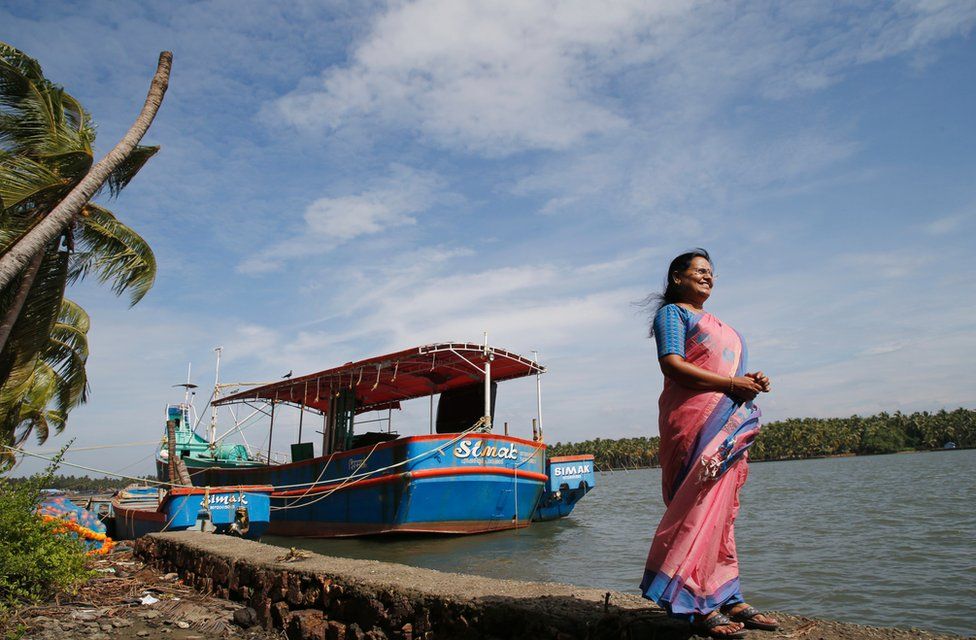
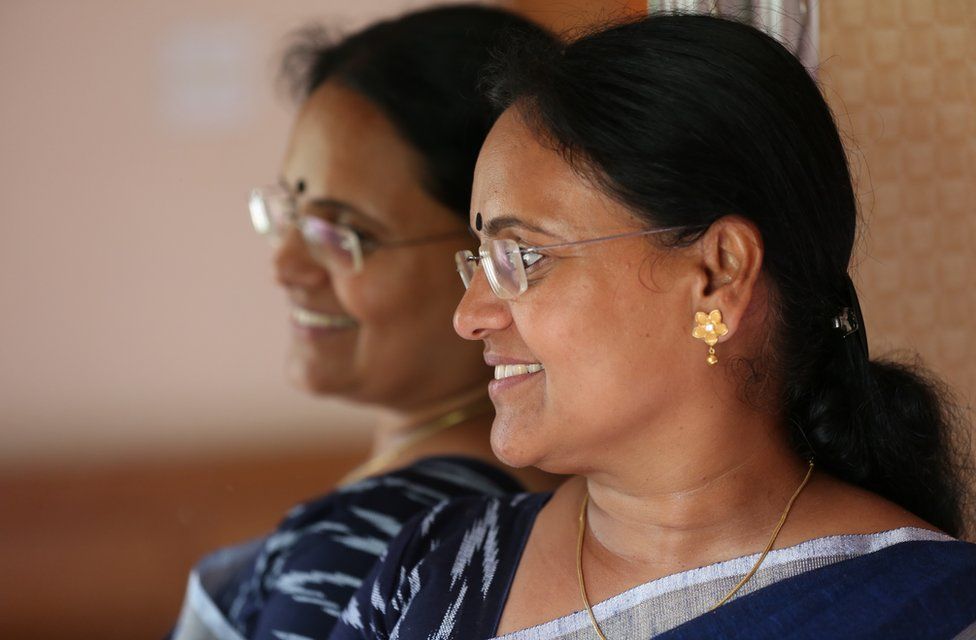
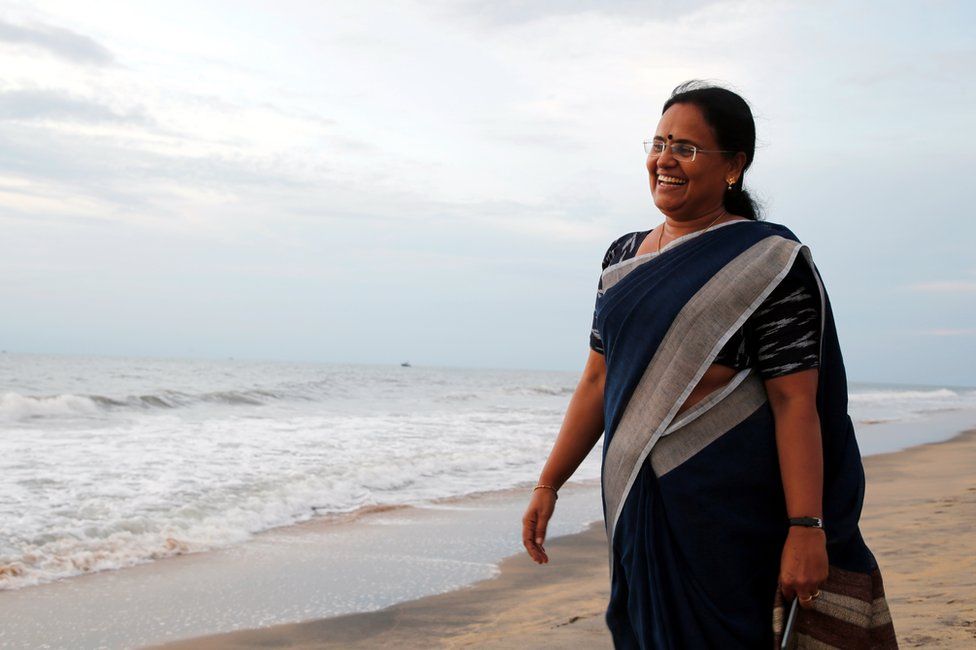
Arranged marriages can often throw up surprises. Uma Preman’s unhappy marriage transformed not only her life, but also the lives of thousands of others – because it left her with the skills and motivation to help disadvantaged Indians gain access to medical treatment.
The moment
Uma always dreamed of a perfect wedding in a traditional south Indian temple. She imagined it decorated throughout with colourful flowers – and a big party by the beach.
But it never happened.
Uma still remembers the grey February morning 30 years ago when her mother introduced her to Preman Thaikad. Uma was only 19, and Preman was 26 years older.
They had never met before, but she was told he was her husband. There were no festivities and no music – in fact there wasn’t even a wedding.
“My mother told me that I was now Preman’s property. He told me that I was his wife but I had no rights over his property,” says Uma.
Preman took her to his house and left her there for the night. She still remembers that she couldn’t sleep and just stared at the pale yellow ceiling and the rickety fan.
The next morning, Preman returned at 6am and asked her to accompany him to a bar. He kept drinking for several hours while she sat in silence, trying to figure out the strange direction her life had taken.
He told her that she was his second wife, but she quickly learned that she was actually his fourth. He also revealed that he had a severe form of tuberculosis – and that her main job was to be his carer.
Before
Uma grew up in Coimbatore, a busy town in the southern Indian state of Tamil Nadu. As a child, she wanted to become a doctor like her father, TK Balakrishnan.
Balakrishnan had studied medicine for a year before his uncle asked him to drop out and work on his farm. He had learned the basics and would use his knowledge to dress wounds, change dressings and treat fevers with basic medicines. Uma heard that the families of the patients would often give him treats – so she began to accompany him on his rounds.
“I just loved food and eating and that’s why I went with him,” she says.
But one day she saw something that made her realise how serious her father’s work was. Her father was treating a patient with gangrene. The stench, Uma says, was unbearable.
“He was using gardening gloves because he didn’t have surgical ones, but he was so calm.”
See below for more stories in the Interrupted Lives series, produced by the BBC’s Geeta Pandey in Delhi
But Uma’s mother hated the fact that her husband was spending most of his time helping others, Uma says.
When she was eight, her mother gave her some money to buy firecrackers for the Hindu festival of Diwali – and when she came back, her mother was gone.
“I found out later that she loved another man and she left with him,” Uma says.
Suddenly it was up to Uma to take care of her three-year-old brother. She says she didn’t know how to cook, but she decided to learn because she couldn’t bear the food her father made for them.
“I went to nearby homes and requested the ladies to teach me. They said I wouldn’t be able to cook because I was small,” Uma says. But within days they had taught her to make a variety of dishes, and cooking became part of her daily routine.
“I would wake up at 5am to make breakfast and lunch. Then I would go to school at 9am. I would come back in the evening and take care of my brother and cook dinner,” Uma says.
“My friends played every evening – they were enjoying their life. But I was happy taking care of my family.”
She kept thinking about her mother though, and worrying that she might never see her again.
Years later, when Uma was 17, she went with some neighbours to visit a famous temple in Guruvayur – 87 miles from Coimbatore – and there she met a man who told her he’d seen a woman who looked exactly like her.
Uma left her address with him and a few days later a letter arrived in the post.
It was from her mother.
Uma rushed back to Guruvayur to be reunited with her, but it quickly became clear there was a problem. Her second husband had borrowed large sums of money, then abandoned her – and the lenders were demanding payment.
“I would see people coming to her house every day to harass her for money,” Uma says. “It was painful to see.”
Her mother’s solution was for her to marry Preman, who was wealthy enough to clear her debts. Uma was reluctant. She tried to get work instead, but failed. Then she returned to her father – but he felt betrayed by her decision to resume contact with her mother, and turned his back on her.
Eventually, Uma gave in.
“I felt worthless. I just accepted my fate and went with Preman.”
After
“Every day before he left for work, Preman would lock me inside the house,” Uma remembers.
“I wasn’t allowed to meet anybody or to go out – not even for a minute. For six months, I was alone. I started talking to walls. I lost my confidence and self-respect.”
As the years passed, Preman’s tuberculosis worsened. The couple started spending most of their time in hospitals, and in 1997, seven years after Uma had moved in with him, Preman died. Although he had once said she would have no right over his property, he left her comfortably off.
Uma says she felt free for the first time in her life.
“I didn’t want him to die, but I couldn’t help but feel that life had given me a second chance.”
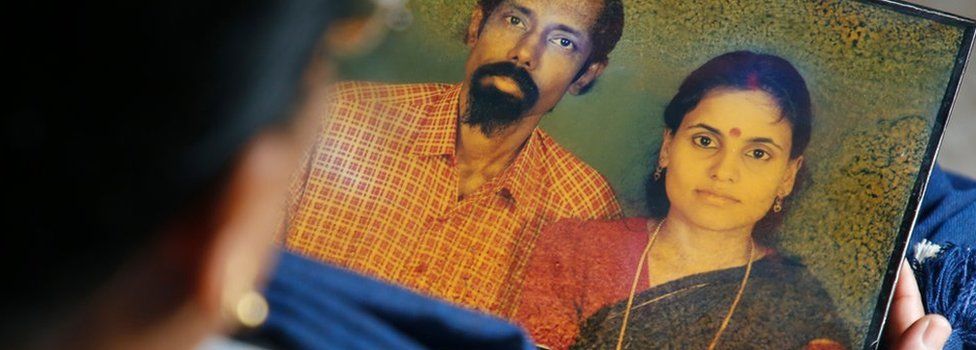
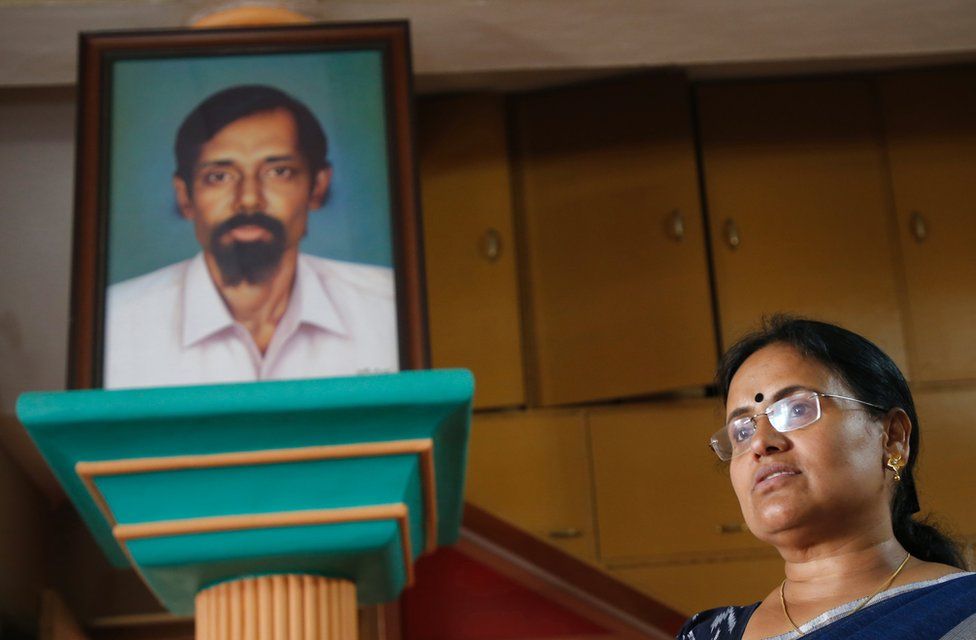
Image caption Uma with Preman’s portrait in the background
It took a while for it to become clear what she would do with this new freedom.
During her years with Preman, Uma had observed that poor people were often unable to get proper medical treatment, not only because they couldn’t afford it but also because they didn’t have the right information – they didn’t know what treatments and facilities were available.
So Uma had started helping them, filling in forms for them, guiding them to the right doctors and sometimes just listening to their problems.
When she left the hospital in Trivandrum where Preman had spent the last six months of his life, she was missed. But she wasn’t completely beyond reach. There was a booth where she had often called Preman’s family, she says, and the person who owned it gave her number to people in need of help.
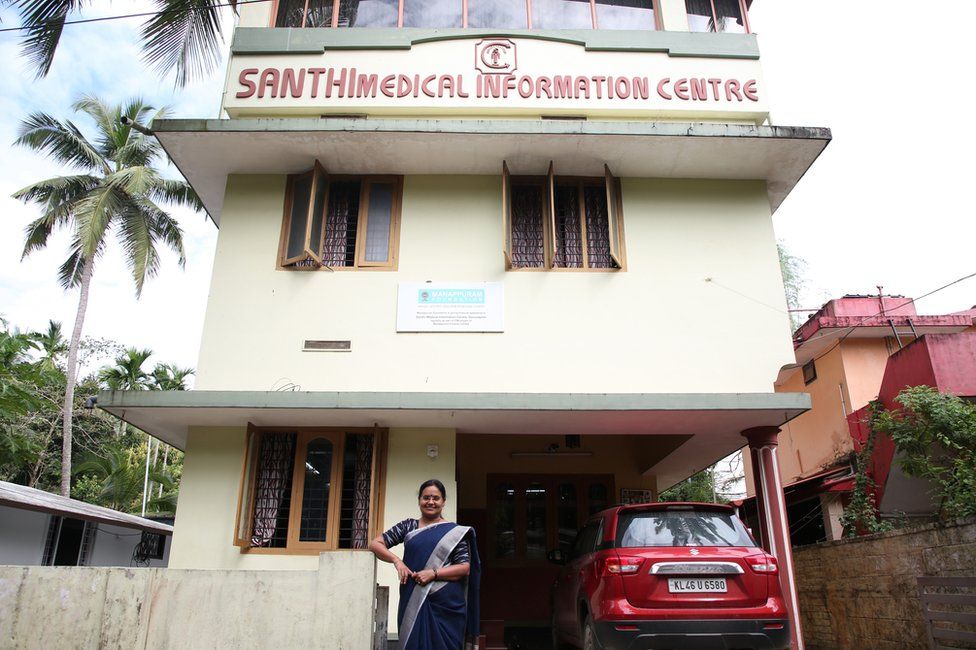
Soon hundreds of people started calling for advice and that’s how the Santhi Medical Information Centre was born. Uma had found her life’s calling – she wasn’t treating people, as her father had done, but she was helping them get treatment.
However, to help other people Uma had to acquire knowledge herself, and in the late 1990s the internet wasn’t yet widely available in India. She had to travel across the country to collect data about treatments, hospitals and the places where people could get free or subsidised treatment.
“I had to travel because no hospital replied to my letters,” she says.
Even when she met people face to face, they often didn’t take her seriously. In other Indian states there was also a language barrier, as Uma spoke only Tamil.
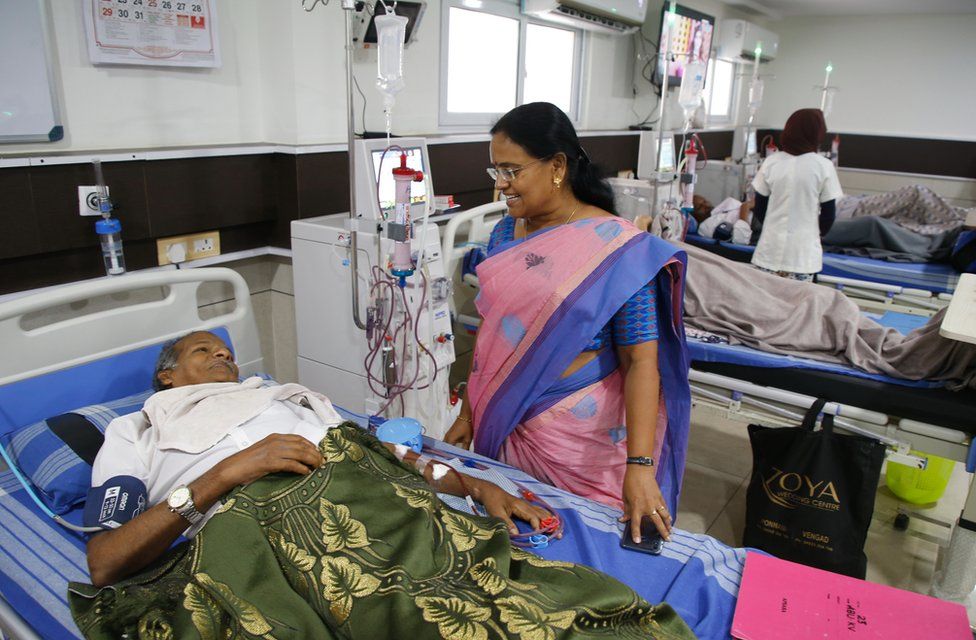
In the past decade, the Santhi Centre’s top priority has been helping people with kidney disease.
There are not enough dialysis centres in the country and the rate of kidney donation is poor. Uma has been working to change this, raising funds for new facilities open to all.
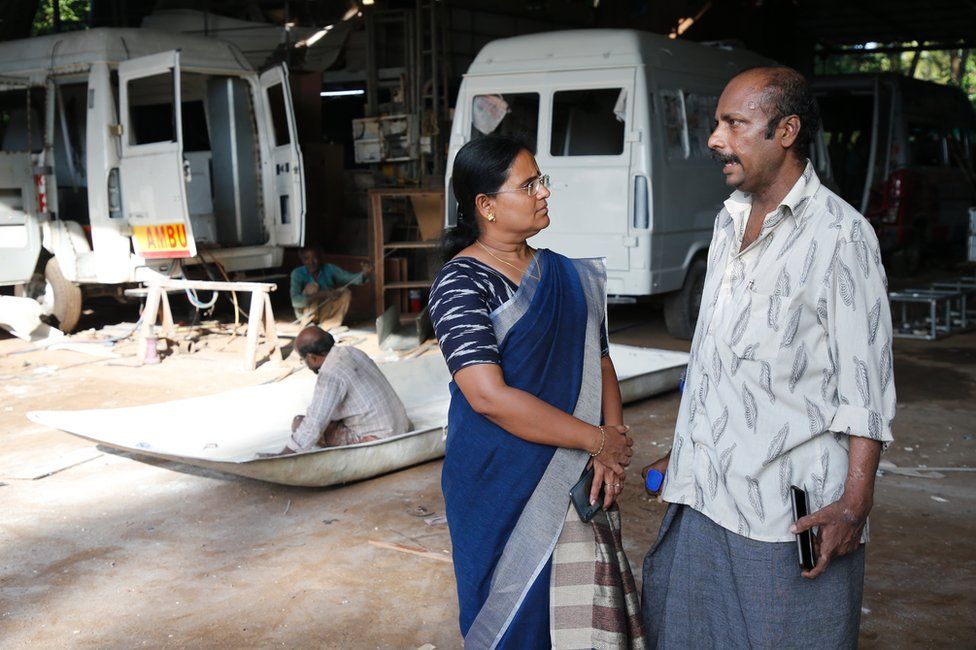
“Our first dialysis centre started in Thrissur district in Kerala. Now we have 20 centres across India. Many rich people donated for the cause,” she says.
Uma says persuading people to donate a kidney is not easy because they often worry about the impact on their own health.
So she decided to set an example, and donated one of her own kidneys. She gave it to an orphan whose kidneys had failed.
Image caption One of Uma’s kidneys enables Salil to live a normal life
Salil says he owes his life to her.
“I was 26 when I was undergoing dialysis. When she met me, she told me that she would donate her kidney on the condition that I continued to work after the transplant.”
He did continue to work – in fact, after a while he went to work for Uma.
Salil says Uma is a woman who truly believes in Mahatma Gandhi’s words that “you have to be the change you want to see”.
“Everyone wants to change the world but no-one is ready to change themselves,” Uma says. “I changed my attitude and I donated one kidney, but I also got a brother in return.”
BEIJING/SINGAPORE (Reuters) – China reported on Wednesday its smallest number of coronavirus cases since January, lending weight to a prediction by its top medical adviser for the outbreak to end by April, but a global infectious diseases expert warned of the spread elsewhere.
Financial markets took heart from the outlook of the Chinese official, epidemiologist Zhong Nanshan, who said on Tuesday the number of new cases was falling in some provinces, and forecast the epidemic would peak this month, even as the death toll in China rose to more than 1,100 people.
World stocks, which had seen rounds of sell-offs over the virus, surged to record highs on hopes of a peak in cases. The Dow industrials, S&P 500 and Nasdaq all hit new highs, and Asian shares nudged higher on Wednesday.
But the World Health Organization (WHO) has warned that the epidemic poses a global threat akin to terrorism and one expert coordinating its response said while the outbreak may be peaking at its epicentre in China, it was likely to spread elsewhere in the world, where it had just begun.
RELATED COVERAGE
Chess, squabbles aboard cruise ship cast away by coronavirus fears
Singapore’s DBS evacuates 300 staff after employee contracts coronavirus
See more stories
“It has spread to other places where it’s the beginning of the outbreak,” the official, Dale Fisher, head of the Global Outbreak Alert and Response Network coordinated by the WHO, said in an interview in Singapore.
“In Singapore, we are at the beginning of the outbreak.”
Singapore has reported 47 cases and worry about the spread is growing. Its biggest bank, DBS (DBSM.SI), evacuated 300 staff from its head office on Wednesday after a confirmed coronavirus case in the building.
Hundreds of cases have been reported in dozens of other countries and territories around the world, but only two people have died outside mainland China – one in Hong Kong and another in the Philippines.
WHO chief Tedros Adhanom Ghebreyesus said on Tuesday the world had to “wake up and consider this enemy virus as public enemy number one” and the first vaccine was 18 months away.
In China, total infections have hit 44,653, health officials said, including 2,015 new confirmed cases on Tuesday. That was the lowest daily rise in new cases since Jan. 30.
The number of deaths on the mainland rose by 97 to 1,113 by the end of Tuesday.
But doubts have been aired on social media about how reliable the figures are, after the government last week amended guidelines on the classification of cases.
‘STAY HOPEFUL’
The biggest cluster of cases outside China is aboard the Diamond Princess cruise ship quarantined off Japan’s port of Yokohama, with about 3,700 people on board. Japanese officials on Wednesday said 39 more people had tested positive for the virus, taking the total to 175.
One of the new cases was a quarantine officer.
Thailand said it was barring passengers from another cruise ship, MS Westerdam, from disembarking, the latest country to turn it away amid fears of the coronavirus, despite no confirmed infections on board.
“We try to stay hopeful,” American passenger Angela Jones told Reuters in a video recording. “But each day, that becomes a little bit more difficult, when country after country rejects us.”
Echoing the comparison with the fight against terrorism, China’s state news agency Xinhua said late on Tuesday the epidemic was a “battle that has no gunpowder smoke but must be won”.
The epidemic was a big test of China’s governance and capabilities and some officials were still “dropping the ball” in places where it was most severe, it said, adding: “This is a wake-up call.”
The government of Hubei, the central province at the outbreak’s epicentre, dismissed the provincial health commission’s Communist Party boss, state media said on Tuesday, amid mounting public anger over the crisis.
China’s censors had allowed criticism of local officials but have begun cracking down on reporting of the outbreak, issuing reprimands to tech firms that gave free rein to online speech, Chinese journalists said.
The pathogen has been named COVID-19 – CO for corona, VI for virus, D for disease and 19 for the year it emerged. It is suspected to have come from a market that illegally traded wildlife in Hubei’s capital of Wuhan in December.
The city of 11 million people remains under virtual lockdown as part of China’s unprecedented measures to seal infected regions and limit transmission routes.
Travel restrictions that have paralysed the world’s second-biggest economy have left Wuhan and other Chinese cities resembling ghost towns.
Even if the epidemic ends soon, it has taken a toll of China’s economy, with companies laying off workers and needing loans running into billions of dollars to stay afloat. Supply chains for makers of items from cars to smartphones have broken down.
ANZ Bank said China’s first-quarter growth would probably slow to 3.2% to 4.0%, down from a projection of 5.0%.
The likely slowdown in China could shave 0.1 to 0.2 percentage points off both euro zone and British growth this year, credit rating agency S&P Global estimated.
The US has charged four Chinese military officers over the huge cyber-attack on credit rating giant Equifax.
More than 147 million Americans were affected in 2017 when hackers stole sensitive personal data including names and addresses.
Some UK and Canadian customers were also affected.
China has denied the allegations and insisted it does not engage in cyber-theft.
Announcing the indictments on Monday, Attorney General William Barr called the hack “one of the largest data breaches in history”.
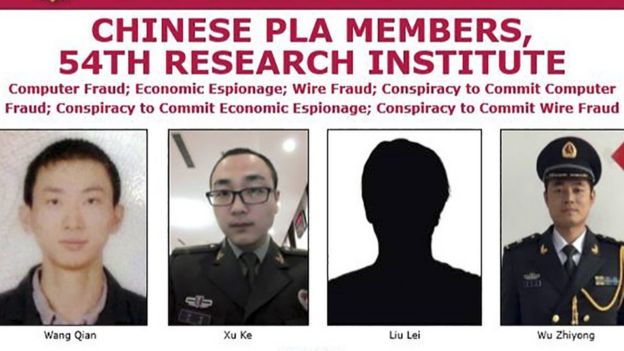
According to court documents, the four – Wu Zhiyong, Wang Qian, Xu Ke and Liu Lei – are allegedly members of the People’s Liberation Army’s 54th Research Institute, a component of the Chinese military.
They spent weeks in the company’s system, breaking into security networks and stealing personal data, the documents said.
The nine-count indictment also accuses the group of stealing trade secrets including data compilation and database designs.
Chinese foreign ministry spokesman Geng Shuang denied the allegations on Tuesday and said China’s government, military and their personnel “never engage in cyber theft of trade secrets”.
He said China was itself a victim of cyber-crime, surveillance and monitoring by the US, Reuters reported.
The whereabouts of the four suspects is unknown and it is highly unlikely that they will stand trial in the US.
FBI Deputy Director David Bowdich said: “We can’t take them into custody, try them in a court of law, and lock them up – not today, anyway.”
What happened in 2017?
Equifax said hackers accessed the information between mid-May and the end of July 2017 when the company discovered the breach.
The accused allegedly routed traffic through 34 servers in nearly 20 countries to try to hide their true location.
Image copyright FBIImage caption The FBI released this wanted picture of the suspects
The credit rating firm holds data on more than 820 million consumers as well as information on 91 million businesses.
Mr Bowdich said there was no evidence so far of the data being used to hijack a person’s bank account or credit card.
Equifax CEO Mark Begor said in a statement that the company was grateful for the investigation.
“It is reassuring that our federal law enforcement agencies treat cybercrime – especially state-sponsored crime – with the seriousness it deserves.”
Critics have accused the company of failing to take proper steps to guard information and for waiting too long to inform the public about the hack.
Richard Smith, CEO of Equifax at the time of the hacking, resigned a month after the breach. He apologised for the firm’s failings, ahead of testifying in Congress.
Equifax was forced to pay a $700m (£541m) settlement to the Federal Trade Commission.
The US regulator alleged the Atlanta-based firm failed to take reasonable steps to secure its network. At least $300m of the settlement went towards paying for identity theft services and other related expenses run up by the victims.
In a statement Mr Barr said: “This was a deliberate and sweeping intrusion into the private information of the American people.
“Today we hold PLA hackers accountable for their criminal actions, and we remind the Chinese government that we have the capability to remove the internet’s cloak of anonymity and find the hackers that nation repeatedly deploys against us.”
This is not the first time the US has charged members of the Chinese military with hacking US companies.
The first indictment came back in 2014 and helped lead to a deal the following year to try to restrain such activity.
But clearly the US feels that it needs to return to the weapon of public indictments to increase pressure again.
The US has become increasingly concerned not just at the alleged theft of economic secrets but also the intelligence risks.
Equifax was one of a series of large data breaches linked to China – others include health care providers and, most significantly, the theft of data from the Office of Personnel Management which carried sensitive records for almost all US federal employees.
One of the concerns for US security officials is how Chinese spies may be able to put together these vast databases about US citizens.
Officials say the information could be used to create “targeting packages”, establishing which individuals have access to sensitive information and potential vulnerabilities which would allow them to be approached. They add, though, that so far they have not seen the Equifax information being used for that purpose.
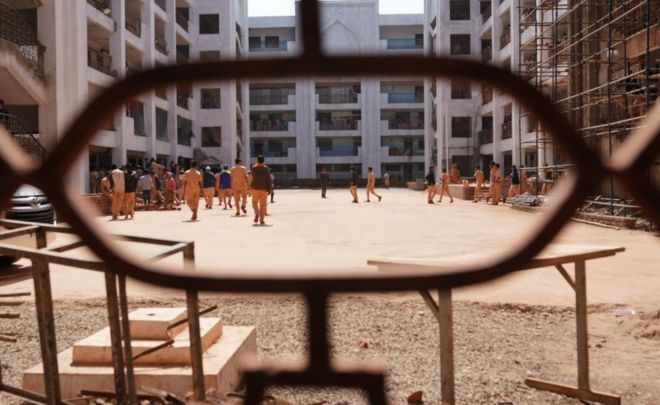
Image caption A play staged at Shaheen School has led to the arrest of a parent and a teacher
An Indian school play involving nine to 12-year-olds became the subject of national attention after it landed a young mother and a teacher in jail. BBC Telugu’s Deepthi Bathini reports.
“I’m not sure how I ended up here,” says 26-year-old Nazbunnisa, a single mother who did not give her last name and who works as a domestic help.
She was arrested on 30 January, along with Farida Begum, a teacher at her daughter’s school. The charge against them: sedition, which the women, both Muslim, deny.
They spoke to the BBC in a prison official’s office at Bidar district jail in the southern state of Karnataka. Both were on the verge of tears – they said they are trying to be “strong”, but their lives have suddenly turned “upside down”.
Their bail hearing is scheduled for Tuesday. Their lawyer says the charge of sedition is being misused.
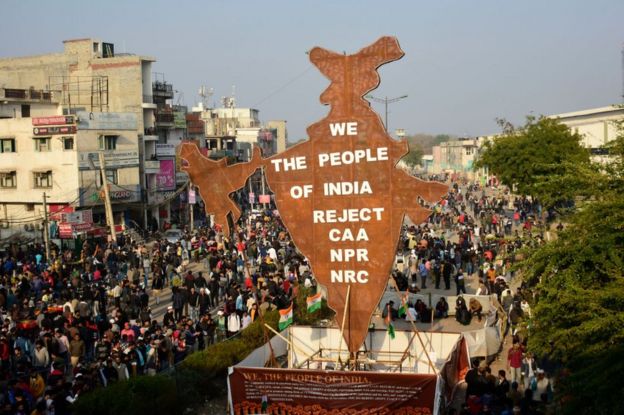
Image copyright GETTY IMAGESImage caption The citizenship law has sparked huge protests
The two women are accused of spreading “false information” and of “spreading fear among [the] Muslim community” and of using children to insult India’s Prime Minister, Narendra Modi.
Their ordeal began with a play put on by the students and staff at Shaheen School in Bidar, where Ms Nazbunnisa’s daughter studies and Farida Begum, 52, teaches.
The play was about a controversial new citizenship law, which has polarised India since it was passed in December by the governing Hindu nationalist Bharatiya Janata Party (BJP).
The Citizenship Amendment Act (CAA), offers amnesty to non-Muslim immigrants from Pakistan, Bangladesh and Afghanistan. It sparked fear among India’s 200 million-plus Muslims as it came in the wake of the government’s plans to introduce a National Register of Citizens (or NRC) based on those who can prove their ancestors were Indian citizens.
Authorities are yet to clarify what documents would be needed to prove citizenship, but taken together, the measures have spurred massive protests – critics say the government is marginalising Muslims while offering a path to citizenship for people of other religious communities who fail to make it on to the NRC.
The governing BJP denies these charges, and insists India’s Muslims have nothing to worry about.
So, given the contentious subject, after one of the parents streamed the school play live on Facebook, the recording quickly went viral. Local resident Neelesh Rakshal was among those who watched it.
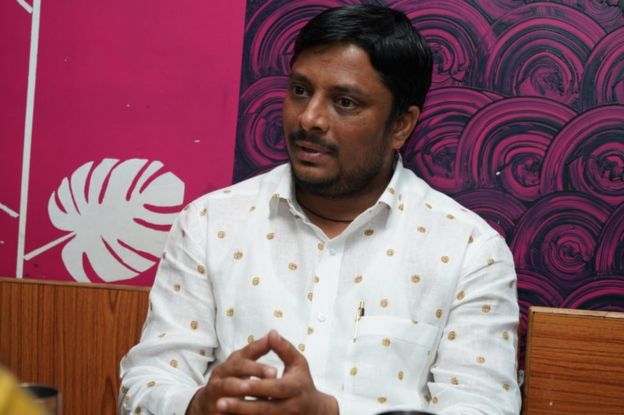
Mr Rakshal, who describes himself as a social activist, says he became furious over a scene where a man approaches an elderly woman and tells her that Narendra Modi wants Muslims to produce documents proving their Indian citizenship and that of their ancestors, and if they fail to do so, they will be asked to leave the country.
Image caption Mr Rakshal says the play “spreads hatred”
The woman responds that she has been in India for generations and would have to dig up the graves of her ancestors to look for documents. She then says a “boy who was selling tea”, a reference to Mr Modi who has said he used to sell tea as a teenager, is now demanding that she show him her documents.
“I will ask him for his documents and if he doesn’t show them to me, I will hit him with slippers,” she adds.
Mr Rakshal says he immediately registered a police complaint against the school for “using children in a school play to abuse the prime minister and also for spreading hatred”.
The complaint named the school management and the parent who streamed the play. While several members of the school management and the president of the school have also been charged with sedition, police told the court they are still looking for them.
“We do not know for what reason sedition charges have been invoked against the school. It is beyond the imagination of any reasonable person. We will fight it in court,” the school’s CEO, Thouseef Madikeri, says.
Image copyright GETTY IMAGESImage caption School officials allege that they are being targeted because most of the students are Muslim
Police also questioned students – videos and screen grabs of CCTV footage showing them speaking to students were shared widely on social media, prompting criticism.
Mr Madikeri alleges that on one occasion, police in uniform questioned students, with no child welfare officials present – an accusation denied by police superintendent DL Nagesh.
“The students were questioned five times. It’s mental harassment to students and this may have an impact on them in [the] long run,” Mr Madikeri says.
The Karnataka State Commission for Protection of Child Rights has asked police to explain why they questioned students so many times. Police say it was because not all the students were available at the same time.
Mr Madikeri told the BBC it was the questioning of students that led to the arrest of Farida Begum and Ms Nazbunnisa.
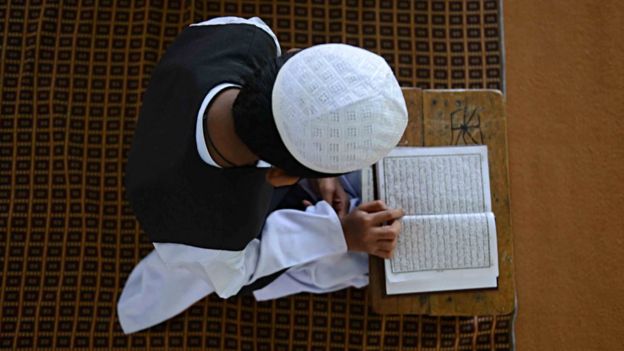
One parent whose child was questioned says she is now scared of going to school.
“My daughter told me police repeatedly asked her to identify the teachers and others who might have taught them the [play’s] dialogues,” he said.
“I do not understand what was wrong in the play. Children have been seeing what has been happening around the country. They picked up the dialogues from social media.”
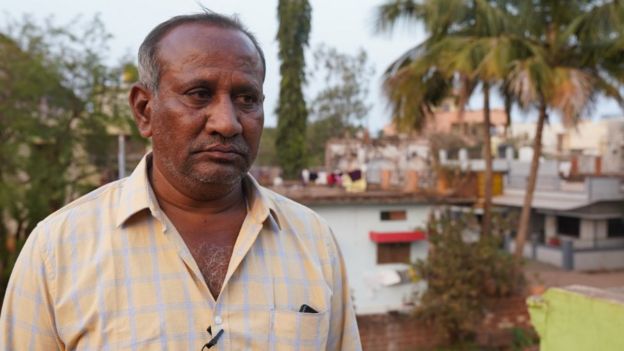
Image caption Farida Begum’s husband is worried about what will happen
Ms Nazbunnisa is also perplexed as to why she was arrested.
“My daughter was rehearsing for the play at home,” she says. “But I did not know what it was about, or what this controversy about CAA or NRC is about. I did not even go to see her play.”
Ms Nazbunnisa has met her daughter only once since she was jailed: “It was just for a few minutes, and even then only through a window. I held back my tears. I did not want to scare her further.”
The girl is staying with a friends of the family – they told the BBC she is having nightmares and often wakes up crying for her mother.
“She has been pleading that her mother not be punished for her mistake. She is sorry for what has happened,” one of them says.
Farida Begum, who suffers from high blood pressure, says she is “scared of what the future holds”. Her husband, Mirza Baig, says he fears that his wife being in jail will affect his daughter’s marriage prospects.





 CHINDIA ALERT: You'll be living in their world, very soon