

 A Recent History of India Through Western Magazine Covers – NYTimes.com.
02/07/2012
* India to launch $75m mission to forecast rains
BBC News: “India is launching a $75m (£48m) scheme using computer models to understand the south-west monsoonand forecast the rains more accurately, officials say.

Rains have come down pretty heavily this monsoon (Photo credit: Wikipedia)
India receives 80% of its annual rainfall during the summer monsoon between June and September.
A significant shortfall in rain can trigger drought, which can cause great damage to India’s 235 million farmers.
There have been reports that this year’s monsoon has been poor.
“Understanding the monsoon will be a major priority of the government for the next five years,” says Shailesh Nayak, a senior official in the ministry of earth sciences.
He said efforts will be made to understand the rains using computer models developed by the UK and the US and gathering fresh data.
Forecasting the monsoon is a tricky task, as India’s meteorologists have discovered time and again.
Last year they predicted a bad monsoon, but in the end the rains turned out to be in excess of what was forecast.
The Indian Meteorological Department (IMD) admitted later that it was “not very accurate” in its forecasts.
In its 137-year history the IMD has never been able to predict a drought or a flood – the two extremes of a monsoon season – successfully.
Experts say scientists all over the world struggle to forecast weather patterns.
They say the IMD does a “commendable job, putting its reputation on the block” by making monsoon forecasts every year.
Monsoon watchers like Prof J Srinivasan from the Indian Institute of Science says seasonal forecasts for drought and floods are relatively accurate for the Sub-Saharan region in Africa, but no agency in the world has ever been able to predict a drought or flood for the Indian region.”
via BBC News – India to launch $75m mission to forecast rains.
Related articles
- Monsoon becomes weak again (thehindu.com)
24/06/2012
* Ikea Applies for Big Indian Investment
WSJ: “Swedish housewares giant IKEA Group asked India for permission to invest €1.5 billion ($1.9 billion) in the country to set up 25 retail stores in coming years, a commitment that provides some relief for New Delhi policy makers who have been trying to boost sagging foreign-investor sentiment.
IKEA’s foray into India, made possible by a policy change last year that allowed some retailers to own 100% of their Indian units, could help transform India’s largely unorganized, $500 billion retail sector. But the company will face significant challenges, including meeting the government’s mandate that it source 30% of inventory from local small-scale industries.
IKEA, which has 290 stores in 26 countries and is known for selling affordable, modern-looking furniture and housewares, said that if the Indian government approves its application it could have a significant effect on the country’s retail sector, “vastly improving availability of high-quality, low-price products not available in India.”
The company announced its decision after its chief executive, Mikael Ohlsson, met with Indian Commerce Minister Anand Sharma on Friday at a conference in St. Petersburg, Russia.”
via Ikea Applies for Big Indian Investment – WSJ.com.
See also: Consumerism grows in India
21/06/2012
* Imagine if every resident of Mumbai had a car?
IT Decisions: “Professor Stéphane Garelli of IMD Business School and the University of Lausanne delivered one of the opening keynotes, describing the future of the world economy. One of the key points he made related to consumers in emerging economies creating ‘needs’ from what were previously ‘wants’.
“In China, everybody is buying a fridge. How many times have you bought a fridge? Once you have one then it lasts a long time before you replace it. You are living in a replacement economy where you are just upgrading what you already have. In China, you have no fridge, you want one. You have no TV set, you want one. You have no telephone, you want one…” he said.
The idea that enormous tranches of humanity are about to start consuming items they have never used before, such as cars, washing machines, fridges, and air conditioning, is a scary thought for environmental campaigners. Economic growth benefits those who are lifted from poverty, but how can the world really cope with billions of new drivers all expecting their own car?
Professor Garelli said: “The problem for the environment is that the infrastructure is not following [consumption]. For example in China, in 2020 they will buy 30m cars and only 15m will be sold in the USA. So everybody wants a car, but there are not enough roads for all of them. You need growth, you need traffic control, etc – the infrastructure has to grow in parallel.”
Professor Garelli went on to explain: “This means there is an enormous environmental impact and I think that this growth has to be checked. At a certain stage they will have to slow down some access. There are some countries where people can perhaps wait for a car – can you imagine if every single person in Mumbai has a car?” … “
via Imagine if every resident of Mumbai had a car? | IT Decisions.
Related articles
- Making the most of Mumbai (ebookers.com)
- Mumbai’s fashion and film (ebookers.com)
15/06/2012
* Toilets Become a Battle Cry in India
NY Times: “You could be forgiven for thinking that safety is the top concern for travelers brave enough to venture on Indian railways. It’s not. Unclean toilets appear to be their main grouse, according to a recent survey.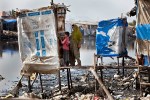
Across India, toilets appear to be the new battleground on which wars are being waged, whether it’s about hygiene, austerity, gender equality or corruption.
On India Ink, we’ve previously written how sanitation is a dump in India, with more than half of all households having no toilet facilities.
Even Bill Gates, one of the world’s richest people, has made his new mission to “reinvent the toilet.” “One of my ultimate dreams now is to reinvent the toilet — find a cheaper alternative to the flush toilet that does not require running water, has smell characteristics better than the flush toilet and is cheap,” he told the Times of India newspaper.
But it’s mostly the women in India who are paying a price for toilets -– literally. On Thursday Jim Yardley wrote in The New York Times that unlike men, many women in Mumbai often have to pay to urinate –- an injustice that has started a “Right to Pee” campaign.
Toilets have also been flushed into the austerity debate last week, when India’s Planning Commission ran up a 3 million rupee, or $54,100, bill for renovating the toilets at its headquarters, a move viewed by some as lavish and a drain on public funds. That was followed by news that the western state of Goa had given 2 million rupees, or $35,700, to build a single air-conditioned toilet in the constituency of the former chief minister of the state.
Think that raises a stink? In India, where the government is reeling with corruption scandals, the innocuous toilet made a brief swirl when many reportedly went missing. According to an April report in an Indian daily, the Telegraph, the federal government says it delivered about 87.1 million toilets to households across villages over the last decade. But the census shows that only about 51.6 million had toilets in 2011. That’s a case of 35 million missing toilets.”
via Toilets Become a Battle Cry in India – NYTimes.com.
Another example of discrimination against women in India. See: https://chindia-alert.org/2012/06/14/india-the-worst-big-country-to-be-a-woman/
See also: Will India overtake China in 25 years?
14/06/2012
* What Happens if India Is Downgraded to ‘Junk’?
NY Times: “Since Standard & Poor’s warned Monday that India could be the first among the BRIC nations to lose its investment grade rating, politicians in India have moved quickly to discount the report.
Finance Minister Pranab Mukherjee “rejects” the report, the ministry said in a statement, which added that there are “several positives” for the Indian economy in the future. Rajkumar Dhoot, a member of Parliament and head of an industry trade group, referred to the report as “drawing room talk,” while Veerappa Moily, the minister of corporate affairs, said “S&P can not speak like this,” the Press Trust of India reported.
The criticism of Standard & Poor’s is overlooking an important point, analysts say. Whether politicians and industry leaders agree with the rating agency or not, a downgrade to so-called ‘junk’ status, could have very serious, very negative connotations.
“We shouldn’t ignore foreign rating agencies, either right or wrong,” said Vikram Limaye, deputy managing director at the Infrastructure Development Finance Company. “We should take their concerns into account. It is incumbent upon us to explain why their fears are misplaced or exaggerated in a reasonable way. Dismissal will not get us anywhere.”
A rating downgrade to junk status would mean that there would be an increase in the overseas borrowing costs for Indian companies and the country’s ability to attract foreign investment would be considerably diminished.
“This could have a major impact on overall fund flows, which rely heavily on international ratings,” said Dipen Shah, who leads fundamental research at Kotak Securities. “While the overall international debt is not so alarming as a proportion of the G.D.P., India needs a lot of capital flows to cover up its balance of payment deficit.”
While the cost of borrowing will increase, India’s borrowing capability will also be materially reduced, as certain investors who only invest in investment-grade paper will shun India.”
via What Happens if India Is Downgraded to ‘Junk’? – NYTimes.com.
14/06/2012
* India the Worst Big Country to Be a Woman
NY Times: ““India, a country best-known for its rising economic might, is the worst place to be a woman among the world’s biggest economies, and Canada the best, according to a survey of experts published Wednesday,” Katrin Bennhold wrote on The Rendezvous blog.
“The Group of 20 survey by TrustLaw, a legal news service of the Thomson Reuters Foundation, found that a combination of infanticide, child marriage and slavery left India at the bottom of the ranking, lagging even Saudi Arabia, where women are still not allowed to drive and only gained the vote in 2011,” she wrote.”
via India the Worst Big Country to Be a Woman – NYTimes.com.
See also: Women in India
09/06/2012
* India’s Failed Food System
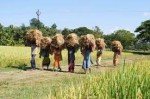
NY Times: ““Spurred by agricultural innovation and generous farm subsidies, India now grows so much food that it has a bigger grain stockpile than any country except China, and it exports some of it to countries like Saudi Arabia and Australia,” Vikas Bajaj writes in The New York TImes. “Yet one-fifth of its people are malnourished — double the rate of other developing countries like Vietnam and China — because of pervasive corruption, mismanagement and waste in the programs that are supposed to distribute food to the poor. ”
The biggest gap is the inefficient, corrupt system used to get the food to those who need it. Just 41.4 percent of the grain picked up by the states from federal warehouses reaches Indian homes, according to a recent World Bank study. Critics say officials all along the chain, from warehouse managers to shopkeepers, steal food and sell it to traders, pocketing tidy, illicit profits. Poor Indians who have ration cards often complain about both the quality and quantity of grain available at government stores, called fair price shops.”
via Indias Failed Food System – NYTimes.com.
See also: How close will India be in 25 years?
31/05/2012
* Myanmar can be link between India, China: Indian PM
Times of India: “Looking to quell speculation about India and China taking their rivalry to gas-rich Myanmar, PM Manmohan Singh said the country was perfectly placed to play the role of an economic bridge between China and India. While Indian officials have often described Myanmar as India’s gateway to Aseancountries, this is the first time Myanmar has been spoken about by the government as a link between India and China.

English: Manmohan Singh, current prime minister of India. (Photo credit: Wikipedia)
While China alone accounts for more than 70% of investments into Myanmar, India stands at the 13th position in terms of its investments into the country. Despite its attempts to play a larger economic role there, India continues to be looked upon as a Johnny-come-lately whose infrastructure projects, including the ambitious Kaladan multimodal transport facility, have hardly taken off. On the other hand, Beijing is even building a gas pipeline from Myanmar to China.”
via Myanmar can be link between India, China: PM – The Times of India.
29/05/2012
* India PM Manmohan Singh in historic Burma visit
BBC News: “Manmohan Singh has held talks with Burmese President Thein Sein as he makes the first official visit to Burma by an Indian prime minister since 1987. The two sides signed 12 agreements to strengthen trade and diplomatic ties. During his three-day trip, Mr Singh will meet opposition leader Aung San Suu Kyi, whose mother once served as Burma’s ambassador to India.
The two nations share a 1,600km (1,000 mile) border, but relations have often been uneasy. On Monday, they signed agreements on border area development, air services, cultural exchanges, a $500m credit line between India’s Export-Import Bank and Myanmar [Burma] Foreign Trade bank, and establishment of a joint trade and investment forum, the BBC’s Sanjoy Majumder reports from the Burmese capital, Nay Pyi Taw.
Delhi cold-shouldered Burma’s military rulers during the 1990s, infuriating the generals by openly supporting Ms Suu Kyi. But Mr Singh, who arrived in the Burmese capital on Sunday, has overseen a dramatic turnaround in Delhi’s policy, and hosted former ruler Than Shwe on a state visit in 2010. Earlier, on his arrival in Burma, Mr Singh said: “I am coming here after 25 years when the last prime minister of India visited here. We have centuries-old ties of religion, culture and civilisation with the people of Myanmar. He had earlier said he wanted “stronger trade and investment links, development of border areas, improving connectivity between our two countries and building capacity and human resources”.”
via BBC News – India PM Manmohan Singh in historic Burma visit.


