Posts tagged ‘mumbai’

02/01/2014

Private Schools for Poor Pressured by Right to Education Act – NYTimes.com

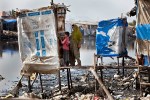
In Dharavi, a Mumbai slum, a  ramshackle building houses the Bombay South Indian Adi-Dravida Sangh school, where 1,000 students from poor families take their classes in English, a language increasingly perceived as the key to a white-collar job.

Dharavi Slum in Mumbai, India

Dharavi Slum in Mumbai, India (Photo credit: Wikipedia)

Tuition at the school is 400 rupees, or $6, a month, which represents about three days’ pay for the students’ parents, but they’d rather send their children here rather than to the free local public school because the quality of education is better. “We want our children to fare well, but we don’t have the capacity to put them in schools with very high fees,” said P. Ganesan, who stitches clothes at a garment factory nearby.

However, this school is in danger of being shut down because of the Right to Education Act, introduced by the Indian government in 2009. The landmark legislation, which mandated free and compulsory education for all children from the ages of 6 and 14, ordered all schools to have infrastructure like a playground and separate toilets for boys, among other requirements, by March 31.

The two-floor structure that houses the Bombay South Indian Adi-Dravida Sangh School is topped by a corrugated iron roof and lacks a playground, sports equipment and a ramp for disabled children, which are all required under the law. While the school has a library, the teachers complained that it is understocked. Of the seven computers in the school’s computer room, only one is in working condition

Many education experts argue that the Right to Education Act, while lofty in its goals, does not pay attention to the ground realities of low-budget private schools. In a study of 15 budget private schools in New Delhi by the Center for Civil Society, it was found that to comply with the infrastructure requirements in the Right to Education Act, the schools would have to have an approximately four-fold increase in their fees, making them unaffordable for the section of society they currently serve.

The Bombay South Indian Adi-Dravida Sangh School is undergoing some renovations, putting up concrete walls between classrooms and adding a second floor, but it doesn’t have the funds to make all the changes required by the Right to Education Act.

via Private Schools for Poor Pressured by Right to Education Act – NYTimes.com.

21/10/2013

Movie Review: Shahid | India Insight

(Any opinions expressed here are those of the author and not of Thomson Reuters)

The best thing about Hansal Mehta’s “Shahid” is that the filmmaker tries to tell a fascinating story. In a way, it is the story of the city of Mumbai — beginning with the riots that followed the 1992 demolition of the Babri Masjid in Ayodhya, and leading up to the attack on Mumbai that killed 166 people in 2008.

These events are depicted through the real-life story of Shahid Azmi, a teenager who gets caught up in the Mumbai riots, and a few months later, finds himself in Pakistan at a training camp for militants. A disillusioned Azmi returns to India but is tortured and imprisoned under the country’s anti-terror laws.

Azmi completes his schooling in jail, and after his release, studies law to help defend those he believes were wrongly accused and jailed on charges of terrorism.

Azmi, who was from a poor family that lived in a slum for a while, got as many as 17 people acquitted before he was shot dead in his office in the suburbs in 2010, while he was handling the case of a defendant in the Mumbai attacks.

Given the source material Mehta has, this is a film that promises to be gripping, and thankfully, the director doesn’t over-dramatize events. He uses a restrained, subtle narrative to tell the audiences Shahid’s story, rarely judging his motives or intentions. Mehta touches all aspects of Shahid’s life — his strained marriage, his relationship with his mother and brothers — never lingering for longer than necessary, and giving us a glimpse into a world not many of us are exposed to.

Even the drudgery of daily court proceedings is made fascinating, thanks to its lead actor. As Shahid, Raj Kumar injects the right amount of earnestness, anger and vulnerability into his role, to make this one of the best performances we have seen this year. The other actors, including Baljinder Kaur as Shahid’s mother, and Mohammed Zeeshan Ayyub as his elder brother are excellent. None of the performances feel like acting — right from the locations to the people who live there, they all seem completely real, and this is a huge strength of the film.

The one grouse with “Shahid” is perhaps it doesn’t tell the whole story, especially at the beginning. I wish Mehta had answered questions of how and why Shahid went to Pakistan, what caused his disillusionment, and made him return. Nevertheless, this is a small grouse with a film that is otherwise uplifting.

via Movie Review: Shahid | India Insight.

21/10/2013

Documentary ‘Katiyabaaz’ shines spotlight on India’s power shortage | India Insight

A documentary about a power thief, the government official who tries to stop him, and the larger story about the lack of power and infrastructure in India’s small towns is making news at the Mumbai Film Festival.

“Katiyabaaz” (Powerless) chronicles the clash between Loha Singh, a Robin Hood-style power thief who claims to be the best in the business, and Ritu Maheshwari, a government official who is determined to stop power theft in the industrial town of Kanpur in Uttar Pradesh.

The film will screen at the Mumbai Film Festival, which begins Friday.

Directed by documentary filmmakers Fahad Mustafa and Deepti Kakkar, the 84-minute movie screened at the Berlin and Tribeca film festivals before appearing in Mumbai.

“The film is as much about the energy crisis in India and globally as it is about the ingenuity and tenacity of the people in Kanpur. It is also a film about the challenges of governance, the numbers and scale that our policymakers must contend with,” Kakkar told Reuters in an email interview.

Mustafa, who is from Kanpur, and Kakkar spent more than two years following Loha Singh as he climbed electricity poles, strung together wires and brought power to several small workshops and businesses that need uninterrupted power to function.

“It’s all because of him – it is his blessing that this workshop is running,” one worker says as the lights flicker on.

The Indian government estimates that almost 20 percent of power generated in the country is stolen. The country has never overcome its chronic power crisis, and some analysts say it is a key reason why it might fall behind in its quest to compete with China and other developing nations. Peak demand shortage is pegged at 10 percent, according to government estimates.

In an industrial town like Kanpur, known for its leather and textile industries, lack of power can be crippling, and lives and livelihoods are at stake, Mustafa said.

“It is ostensibly a story about a lack of infrastructure, but I like to think that it also touches upon many other aspects of life in cities in India, the inequalities and struggles therein. For me, the city of Kanpur itself is a character to be reckoned with on film,”  he said.

The protagonist of the film, he said was a “discovery’, and symbolic of the travails that his city had to face.

“We met a lot of electricity thieves in Kanpur (indeed, it seems half the city steals electricity), but no one like Loha, a person who owned himself, a legend in his neighborhood, foul-mouthed, fiercely independent, a true working class hero, and a product of the travails of the city,” said Mustafa.

In the trailer of the film, Singh is shown biting off wires, attaching them to electricity poles, and laughing off threats from Maheshwari’s people, who are determined to stop power theft. Often, he is supported by citizens, who blame the government for not providing them with uninterrupted power.

“The electricity people force even an honest man to become a thief,” an irate man tells the  camera.

It is this inequality and dichotomy that both film-makers said stood out starkly during their film-making process.

“The scale of energy paucity in India is staggering. Of the 1.5 billion people worldwide who live without power, 400 million live in India. We want to put this crisis into perspective and bring it home to people,” Kakkar said.

via Documentary ‘Katiyabaaz’ shines spotlight on India’s power shortage | India Insight.

19/08/2013

Powerful Beijing doctor’s illegal structure tops them all

This doctor’s structure beats the Ambani edifice in Bombay!

21/06/2013

Mumbai building collapse kills nine

BBC News: “At least nine people have been killed in the collapse of a building on the outskirts of the Indian city of Mumbai.

map

More people are trapped inside the three-storey building in Thane district, 35km (20 miles) from Mumbai. Rescue operations are continuing.

The cause of the collapse in not known, but correspondents say such incidents are common in India and often blamed on poor construction practices.

In April, 74 people were killed in another building collapsed in Thane.

And earlier this month, four people were killed when a five-storey building collapsed in Mumbai.

The latest incident happened early on Friday when the residential building caved in, officials said.

————————————————————————————————————————-

India’s deadly collapses

4 April 2013: 74 die in Thane, near Mumbai

19 Dec 2012: 13 die in Wagholi, Maharashtra

24 Sept 2012: 6 die in Pune, Maharashtra

15 April 2012: 23 workers killed in blanket factory collapse in Jalandhar

16 Nov 2010: 69 killed and more than 80 injured in Delhi

18 Aug 2010: School building collapse kills 18 children in Uttarakhand

26 Jan 2010: 23 killed in Bellary, Karnataka

23 Sept 2009: Chimney of a power plant in Chhattisgarh caves in, 40 killed

13 Aug 2008: 20 die in Mumbai

18 July 2007: 29 killed in Mumbai”

via BBC News – Mumbai building collapse kills nine.

14/05/2013

* Britain launches ‘super priority’ same-day visa service for Indians

Times of India: “Britain on Tuesday rolled out the same-day visa for Indians, making it the first country to get a visa to visit UK within 24 hours.

Taj Mahal, Agra, India. Deutsch: Taj Mahal im ...

Taj Mahal, Agra, India. Deutsch: Taj Mahal im indischen Agra. Español: Vista del Taj Mahal, Agra, India. Français : Le Taj Mahal, à Âgrâ, en Inde. Русский: Мавзолей Тадж-Махал, Агра, Индия. (Photo credit: Wikipedia)

The same-day visa service was announced by British prime minister David Cameron during his recent visit to India.

However, it comes with a fat price – it will cost £600 (nearly Rs 50,000) in addition to the price of the visa.

Those in Delhi and Mumbai will be able to apply for this service.

The UK home ministry said the ‘super priority’ visa is the first-of-its-kind to be launched ever and there are plans to expand the scheme to Chennai in the next few weeks.

Immigration minister Mark Harper said “this government is committed to encouraging international business to invest in Britain. India and Britain have a long history of trade and we run our largest visa operation in the world there. We are delighted to be able to launch our first same-day visa service in Delhi and Mumbai, and make our world class visa service even better.”

UK home office added that the service will be available to those who are applying for a six-month or two-year multiple entry visitor visa (excluding student visit visas) and have travelled without difficulty in the last five years to one of the following countries – UK, US, Australia, New Zealand, Canada or a Schengen country. Those who are employees of companies that are members of the Business Express Programme (managed by UK Trade and Investment in India) and are travelling as an official business visitor will also be able to apply.

The Home office added “We strongly recommend that customers with any form of adverse immigration history do not use this service. Using the super priority visa service does not imply or guarantee in any way that your visa application will be successful. All applicants must meet the requirements of the UK’s immigration rules.””

via Britain launches ‘super priority’ same-day visa service for Indians – The Times of India.

21/11/2012

* India outraged: voices rise in crescendo against ‘Facebook arrests’

Technoholik: “Oppressive, deplorable, arbitrary… the adjectives flew freely Tuesday as Indians across all sectors verbalised their outrage at the arrest of two young women who questioned on Facebook the shutdown in Mumbai after Shiv Sena chief Bal Thackeray‘s death.

Shaheen Dhada, left, and Renu Srinivas, who were arrested for their Facebook posts, leave a court in Mumbai on Nov 20, 2012

A day after 21-year-old Shaheen Dabha was arrested with her friend, who had ‘liked’ the post on Facebook, and her uncle’s clinic in Thane was vandalised, police arrested nine people believed to be from the Shiv Sena. Both the women were arrested Sunday – for “hurting religious sentiments” and under the Information Technology Act, 2000 – and released on bail Monday. Police also launched an inquiry against the arrests and the vandalism in Thane, near India’s financial and entertainment hub Mumbai.

But that did little to curb the democracy vs dictatorship debate and the mounting fury over police high-handedness. The topic was hotly discussed in college and school classrooms, in offices, on social networking sites and was also the top trending topic on Twitter. From corporates and students to politicians and academics, the voices of protest, young and old, rose in unison. “I am so scared to write on facebook… My freedom of expression is killed by the arrest of two young ladies in Mumbai,” wrote Guwahati-based wildlife activist Firoz Ahmed on his Facebook wall.

“Police officers who arrested the two girls in Mumbai shud be immediately dismissed. That’s minimum that the govt ought to do,” tweeted activist-turned-politician Arvind Kejriwal. “Now you can’t ask questions about why there should be a bandh? Did anyone notify the police that this is actually a democracy?” Mumbai-based author Jerry Pinto wrote angrily on his Facebook wall. In Mumbai-based communications professional Kumar Manish’s view, the arrests were an “oppressive way of muzzling voices”. “It is unfortunate and deplorable that Maharashtra Police, a state functionary, acts and reacts within couple of hours for an action which is within the laws enshrined in the Constitution of India… We are living in a democracy, let us not make it ‘demo-crazy’,” he added.”

via India outraged: voices rise in crescendo against ‘Facebook arrests’ | Technoholik.com.

21/11/2012

* Hope rule of law will prevail in Pak in 26/11 case: Khurshid

The Hindu: “With the execution of lone surviving Mumbai attacks gunman Ajmal Kasab, India hopes “rule of law” will prevail in Pakistan as well, said External Affairs Minister Salman Khurshid even as civil society organisations were saddened by the end to the country’s moratorium on capital punishment.

Mr. Khurshid was referering to a trial in Pakistan of seven persons accused of masterminding the Mumbai attacks. The Minister said India had not received any request from Pakistan for handing over the body of Kasab whose hanging came barely 12 hours after India voted against a non-binding resolution in the United Nations banning the death penalty.”

via The Hindu : News / National : Hope rule of law will prevail in Pak in 26/11 case: Khurshid.

21/06/2012

* Imagine if every resident of Mumbai had a car?

IT Decisions: “Professor Stéphane Garelli of IMD Business School and the University of Lausanne delivered one of the opening keynotes, describing the future of the world economy. One of the key points he made related to consumers in emerging economies creating ‘needs’ from what were previously ‘wants’.

“In China, everybody is buying a fridge. How many times have you bought a fridge? Once you have one then it lasts a long time before you replace it. You are living in a replacement economy where you are just upgrading what you already have. In China, you have no fridge, you want one. You have no TV set, you want one. You have no telephone, you want one…” he said.

The idea that enormous tranches of humanity are about to start consuming items they have never used before, such as cars, washing machines, fridges, and air conditioning, is a scary thought for environmental campaigners. Economic growth benefits those who are lifted from poverty, but how can the world really cope with billions of new drivers all expecting their own car?

Professor Garelli said: “The problem for the environment is that the infrastructure is not following [consumption].  For example in China, in 2020 they will buy 30m cars and only 15m will be sold in the USA. So everybody wants a car, but there are not enough roads for all of them. You need growth, you need traffic control, etc – the infrastructure has to grow in parallel.”

Professor Garelli went on to explain: “This means there is an enormous environmental impact and I think that this growth has to be checked. At a certain stage they will have to slow down some access. There are some countries where people can perhaps wait for a car – can you imagine if every single person in Mumbai has a car?”  …  “

via Imagine if every resident of Mumbai had a car? | IT Decisions.

15/06/2012

* Toilets Become a Battle Cry in India

NY Times: “You could be forgiven for thinking that safety is the top concern for travelers brave enough to venture on Indian railways. It’s not. Unclean toilets appear to be their main grouse, according to a recent survey.

Across India, toilets appear to be the new battleground on which wars are being waged, whether it’s about hygiene, austerity, gender equality or corruption.

On India Ink, we’ve previously written how sanitation is a dump in India, with more than half of all households having no toilet facilities.

Even Bill Gates, one of the world’s richest people, has made his new mission to “reinvent the toilet.” “One of my ultimate dreams now is to reinvent the toilet — find a cheaper alternative to the flush toilet that does not require running water, has smell characteristics better than the flush toilet and is cheap,” he told the Times of India newspaper.

But it’s mostly the women in India who are paying a price for toilets -– literally. On Thursday Jim Yardley wrote in The New York Times that unlike men, many women in Mumbai often have to pay to urinate –- an injustice that has started a “Right to Pee” campaign.

Toilets have also been flushed into the austerity debate last week, when India’s Planning Commission ran up a 3 million rupee, or $54,100, bill for renovating the toilets at its headquarters, a move viewed by some as lavish and a drain on public funds. That was followed by news that the western state of Goa had given 2 million rupees, or $35,700, to build a single air-conditioned toilet in the constituency of the former chief minister of the state.

Think that raises a stink? In India, where the government is reeling with corruption scandals, the innocuous toilet made a brief swirl when many reportedly went missing. According to an April report in an Indian daily, the Telegraph, the federal government says it delivered about 87.1 million toilets to households across villages over the last decade. But the census shows that only about 51.6 million had toilets in 2011. That’s a case of 35 million missing toilets.”

via Toilets Become a Battle Cry in India – NYTimes.com.

Another example of discrimination against women in India.  See: https://chindia-alert.org/2012/06/14/india-the-worst-big-country-to-be-a-woman/

See also: Will India overtake China in 25 years?

Law of Unintended Consequences

continuously updated blog about China & India

ChiaHou's Book Reviews

continuously updated blog about China & India

What's wrong with the world; and its economy

continuously updated blog about China & India